43°33'31.2"N 70°12'18.2"W
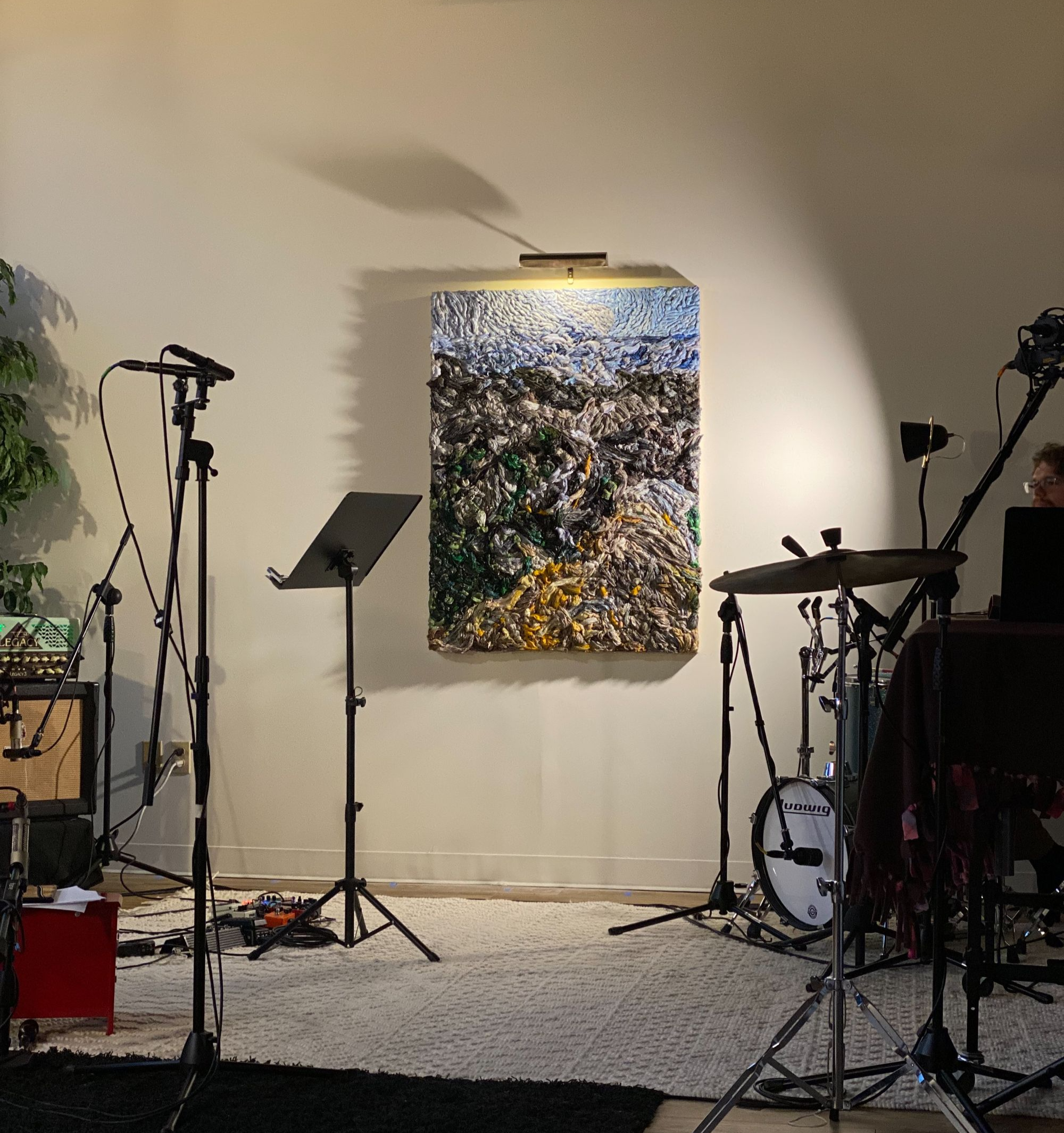
Notes, Ramblings, and Ideas for 43°33'31.2"N 70°12'18.2"W
This is the process story behind my oil painting 43°33'31.2"N 70°12'18.2"W. It began as a return to the coast in Cape Elizabeth, Maine, where the light is so sharp and brilliant it feels almost demanding. I kept coming back, not to “capture” the place, but to understand what it does to attention.
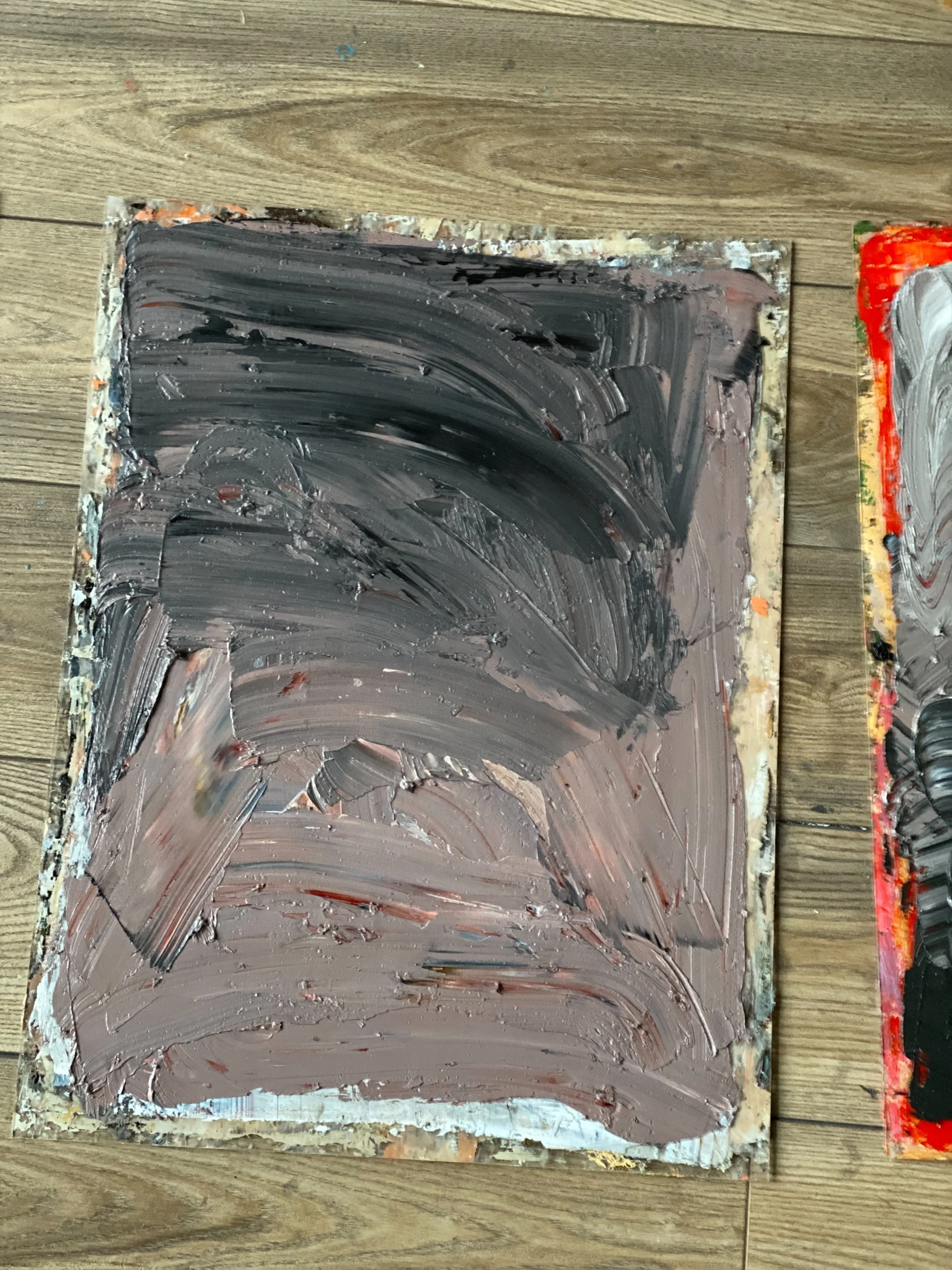
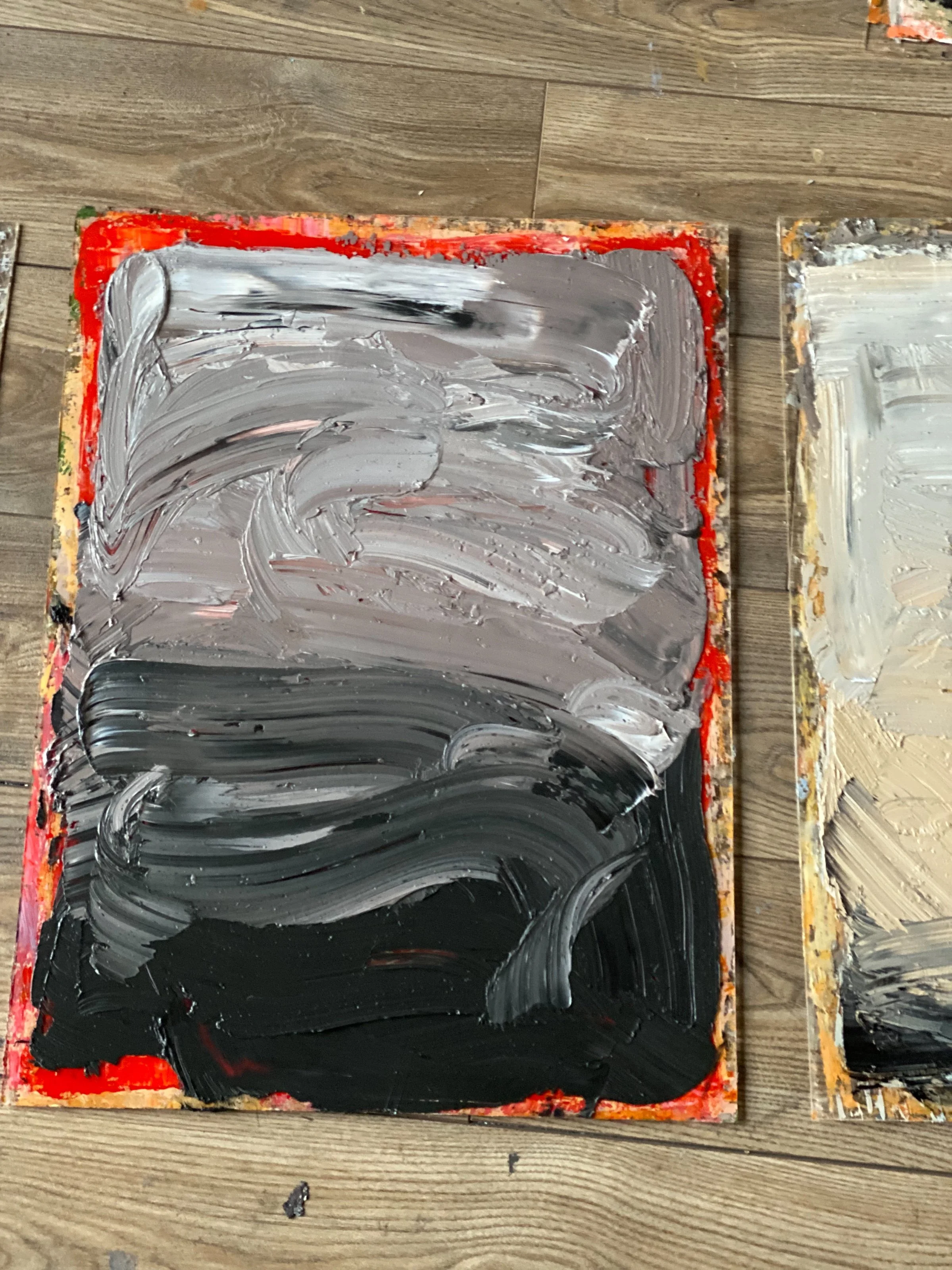
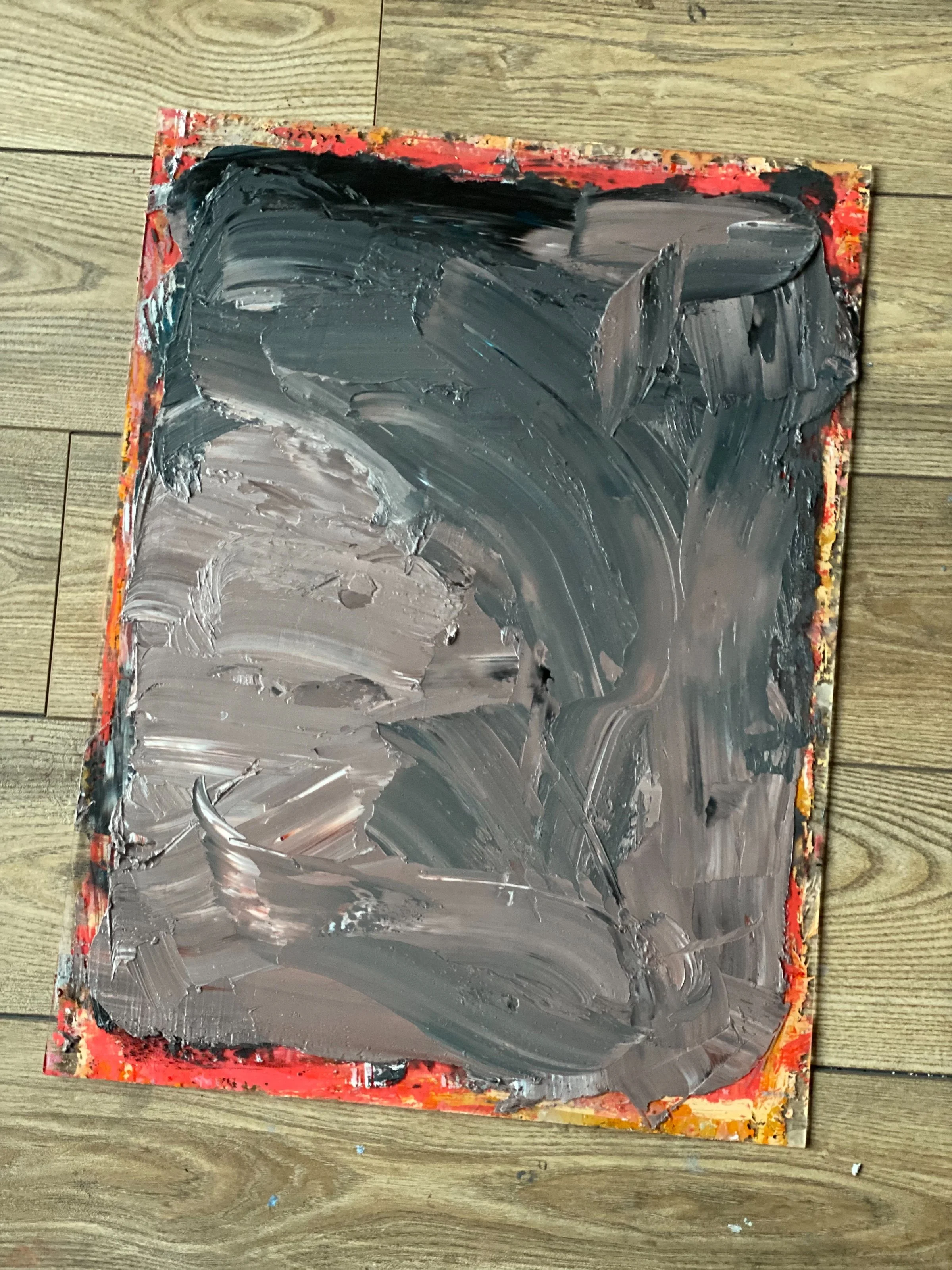
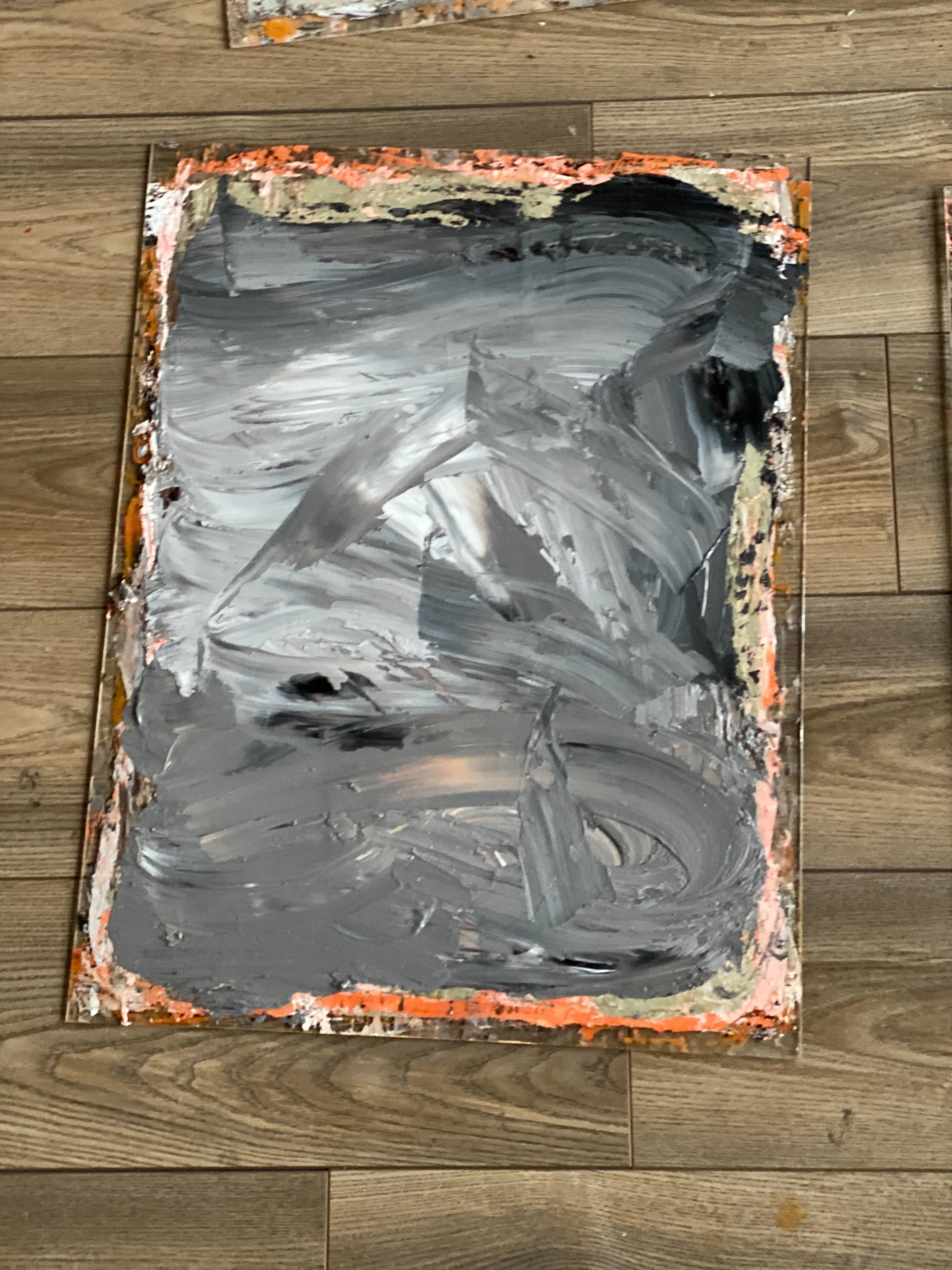
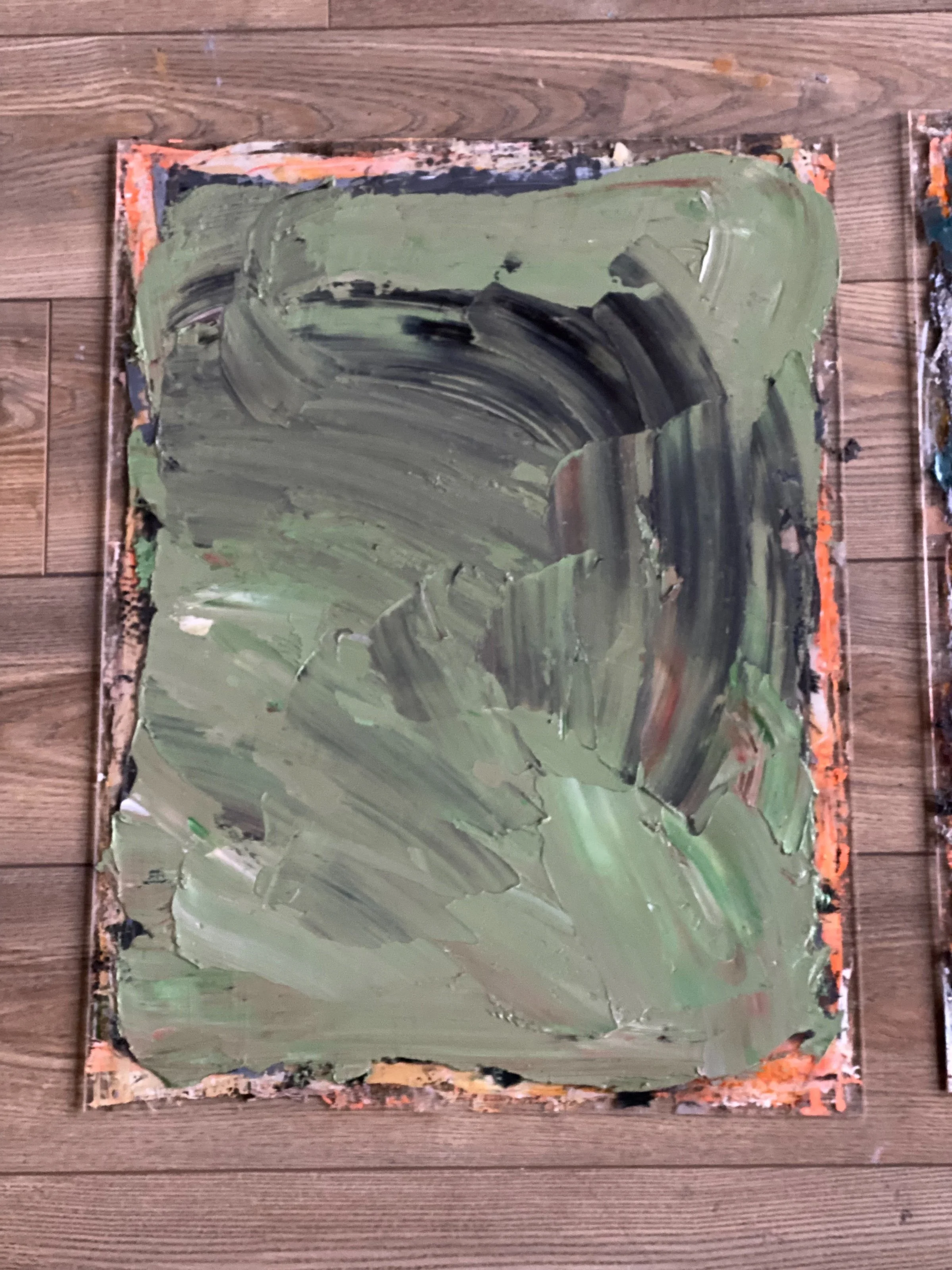
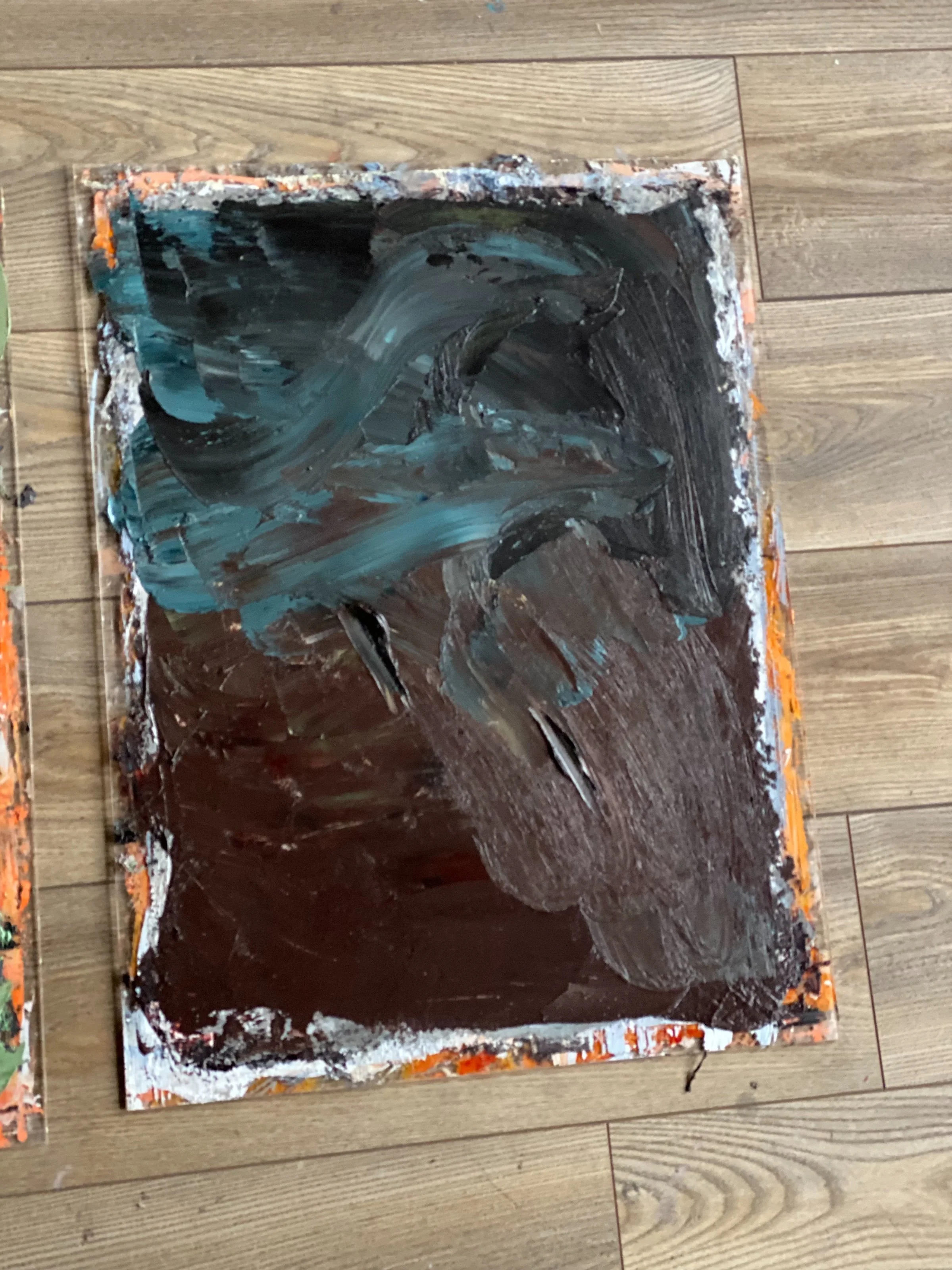
My paintings are built from a stack of small studies. I’ll make dozens from the same area, then bring them into the studio and lay them out across the floor. From above, I start “stealing” the sections that feel charged. A collision of shapes, an edge that turns just right, a pocket of color that holds pressure. I rebuild those fragments like a mosaic, not as a copy of nature, but as a way of reassembling experience.
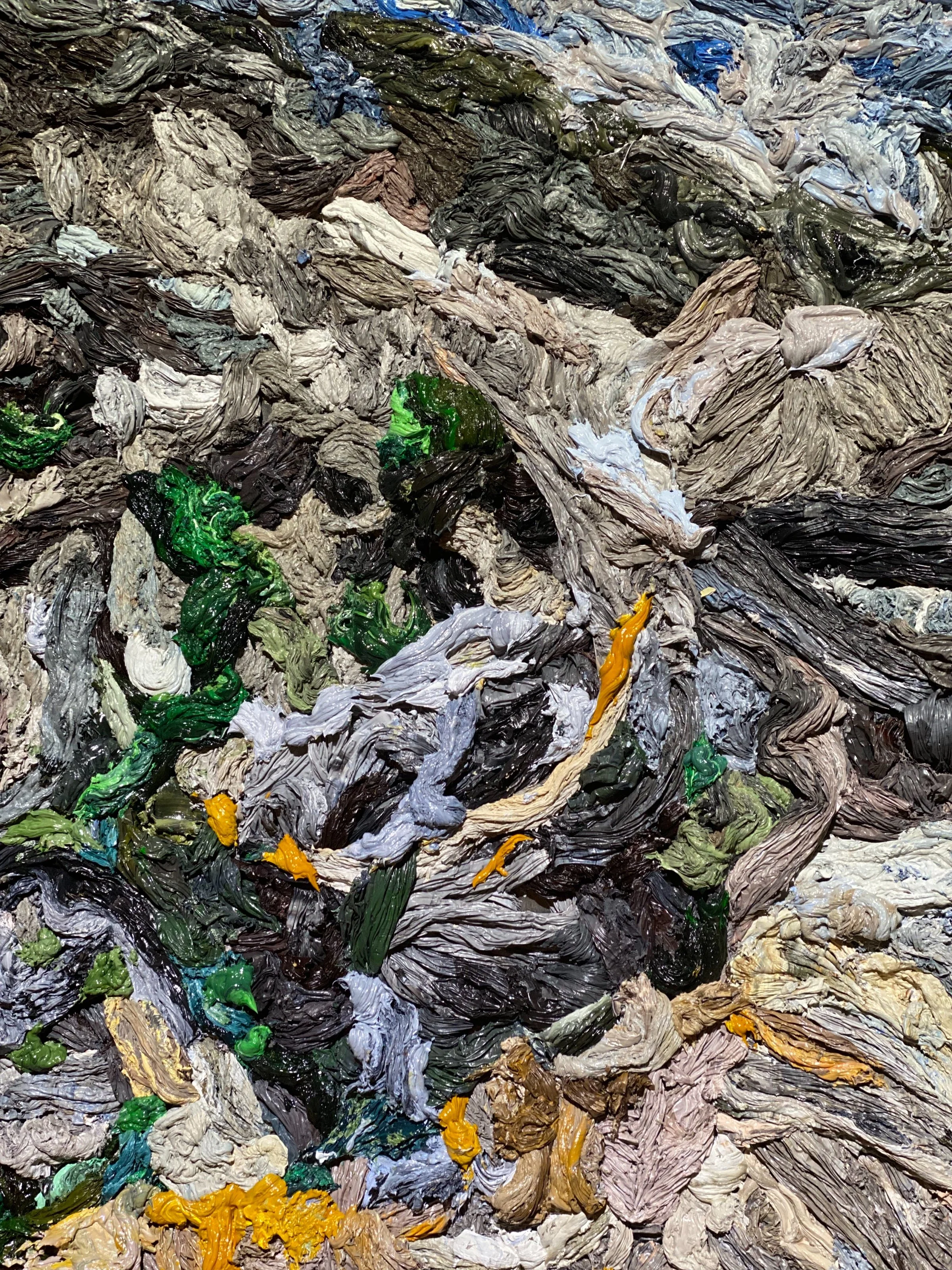
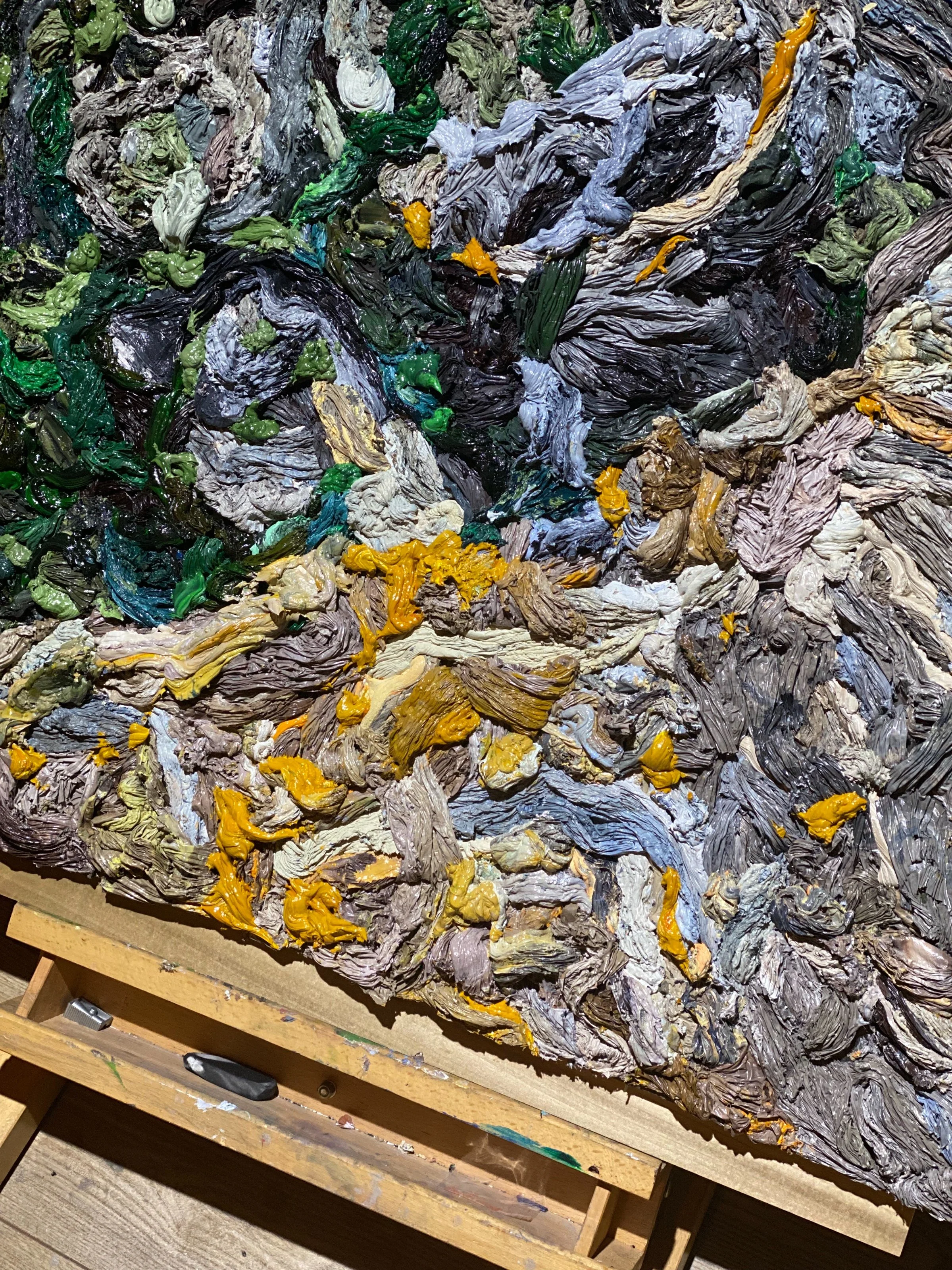
Mechanically, this means I’m constantly editing the surface. I scrape, carve, and re-draw into the paint. I sculpt edges. I reposition relationships. Even the shadows cast by raised forms become tools I can use on purpose, creating new values and new hinges in the composition. The goal is a surface that rewards attention at every distance: up close it is physical and alive, and from across the room it locks together as one body.
If this is the only thing you read here, this is what I want you to know: I paint as a way of slowing down and rebuilding clarity. I want the finished work to feel like standing in that place felt to me, not just what it looked like.
At the end of this post, I also share how the painting eventually found its owner, and how it took on a life beyond my studio.
Inception: Gathering Reference Materials
August 8, 2021
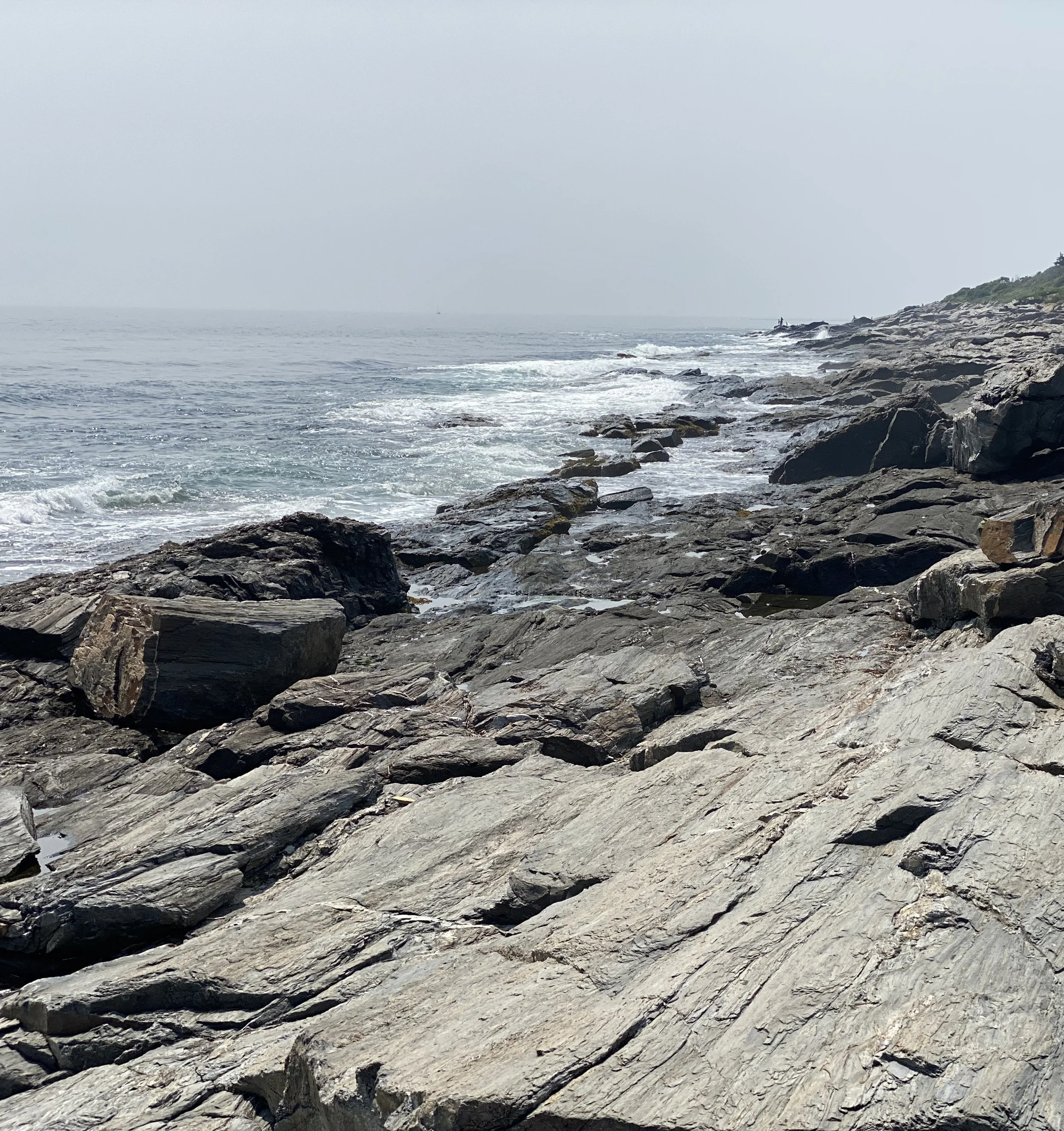
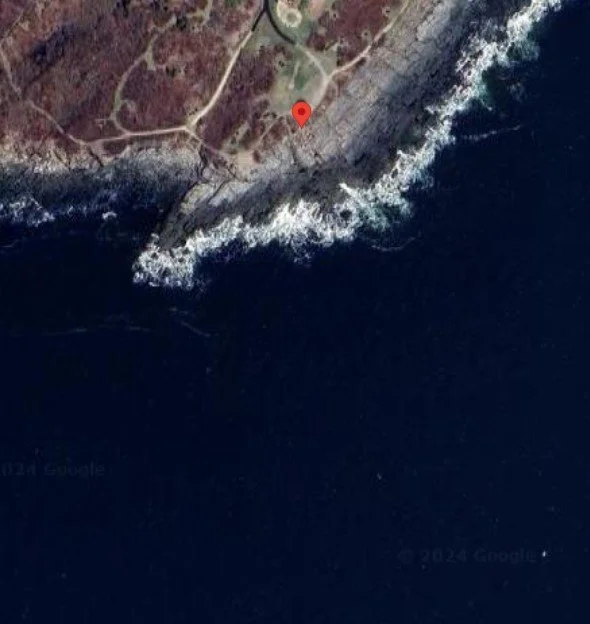
Exploring Cape Elizabeth, I noticed the light by the ocean—sharp and brilliant. In the many places I've traveled, light behaves differently. Sometimes it has a distinct color, like the ochre hue of Florence, Italy. Here in Cape Elizabeth, the light is brilliantly white, bringing clarity to everything in a slightly awe-inspiring way. I have to strain my vision. There is no relaxation for my eyes.
This quality of light transforms the landscape, highlighting every detail with surreal precision. The rocks, the waves, the distant horizon—all stand out with extraordinary clarity. It's as if the light strips away any ambiguity, leaving the scene in stark, vivid detail.
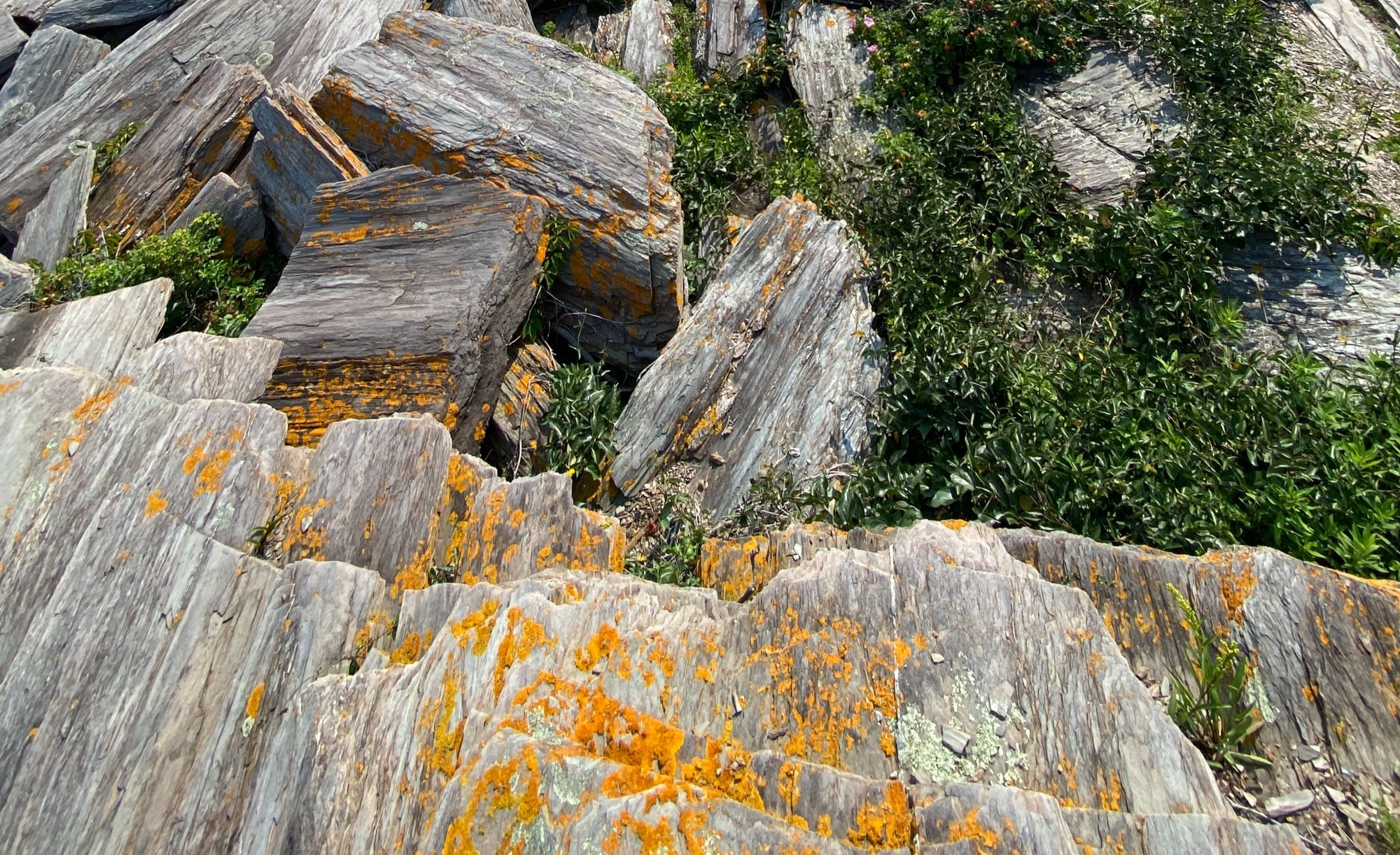
This yellow is incredible. It is known as Maritime Sunburst Lichen.
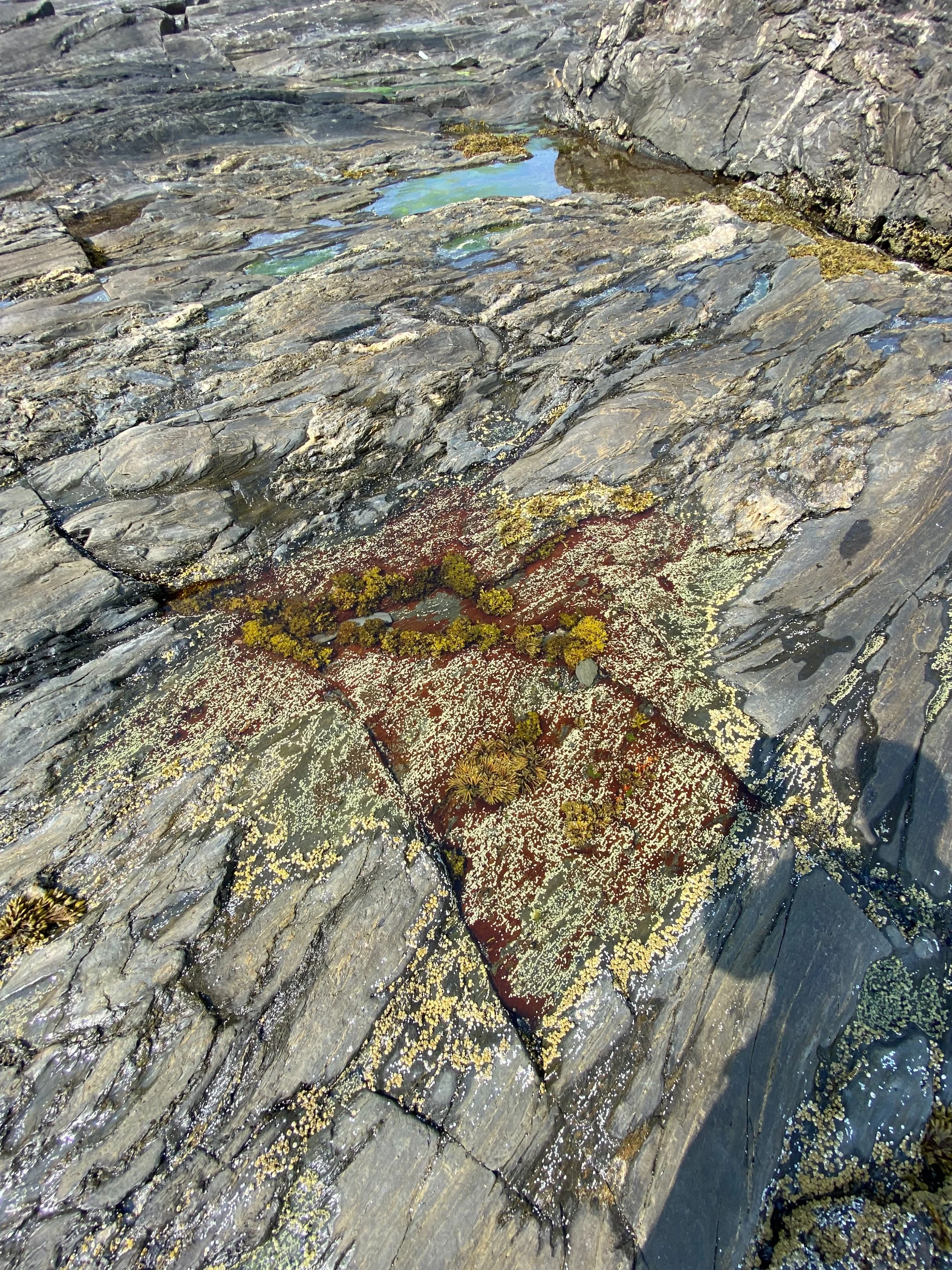
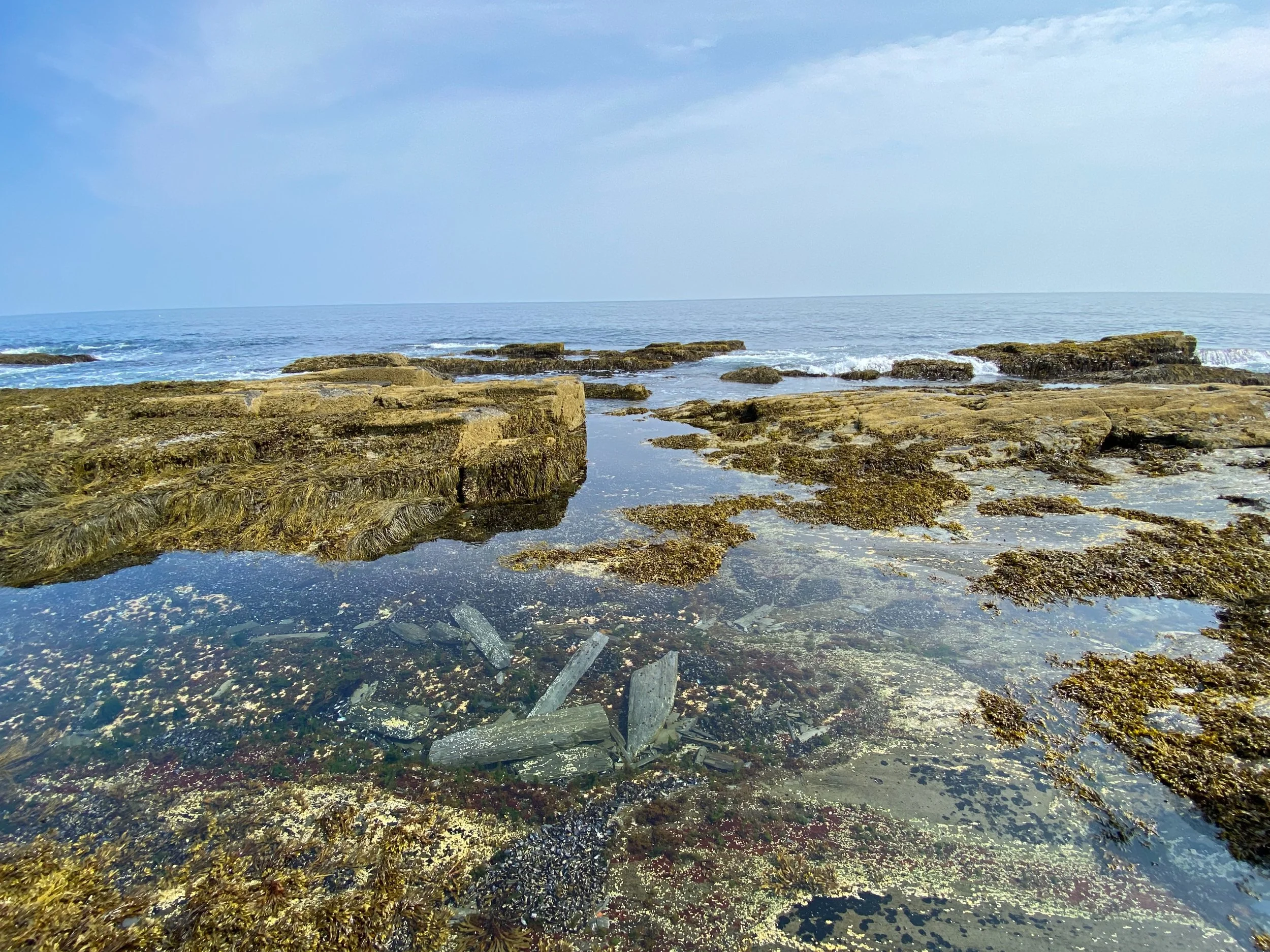
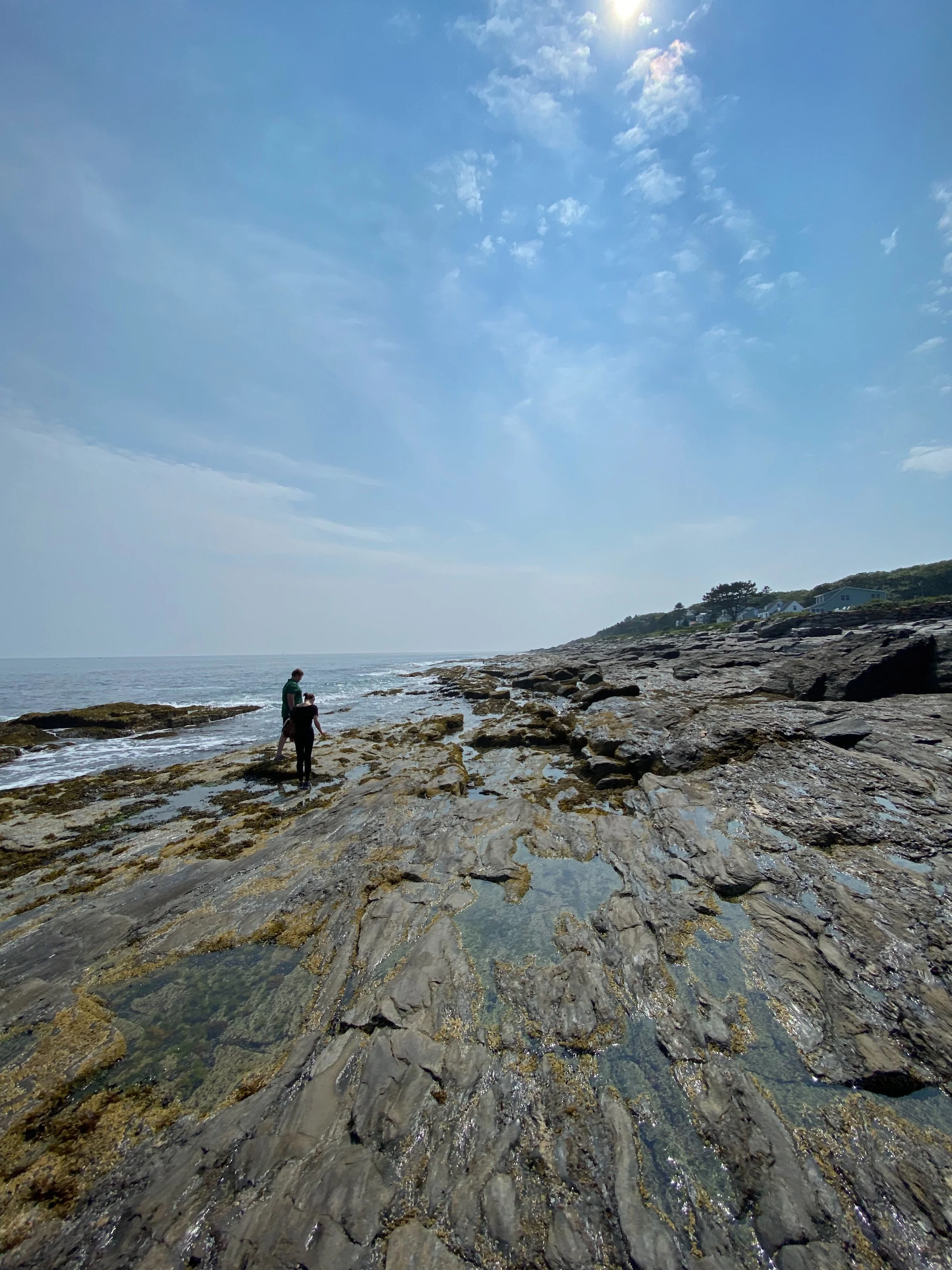
I love peering into these pools, surprised by the organisms’ rich colors. The greens look a little gross, but next to the reddish algae they seem even more brilliant.
It started with a feeling: standing near the ocean in Cape Elizabeth, overwhelmed by a light so clear and relentless it made the landscape feel almost unreal.
September 7, 2021 - Initial Sketch
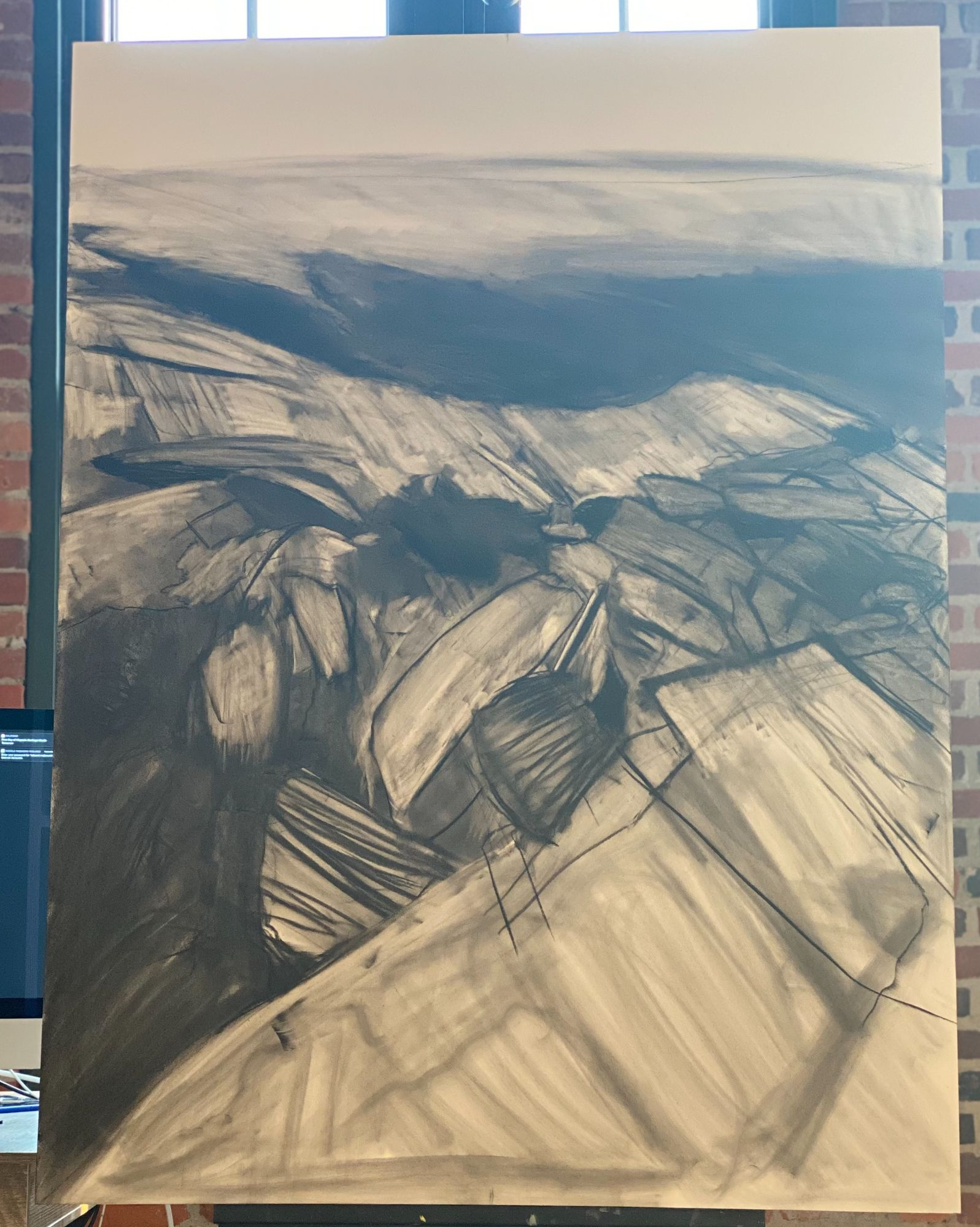
For my underdrawing, I'm focusing mostly on large forms. This feels more like an architectural drawing than anything else. I've gathered everything I need from my reference materials on color and detail. Now I need to understand how the forms will move. This type of painting needs to be built more like a mosaic.
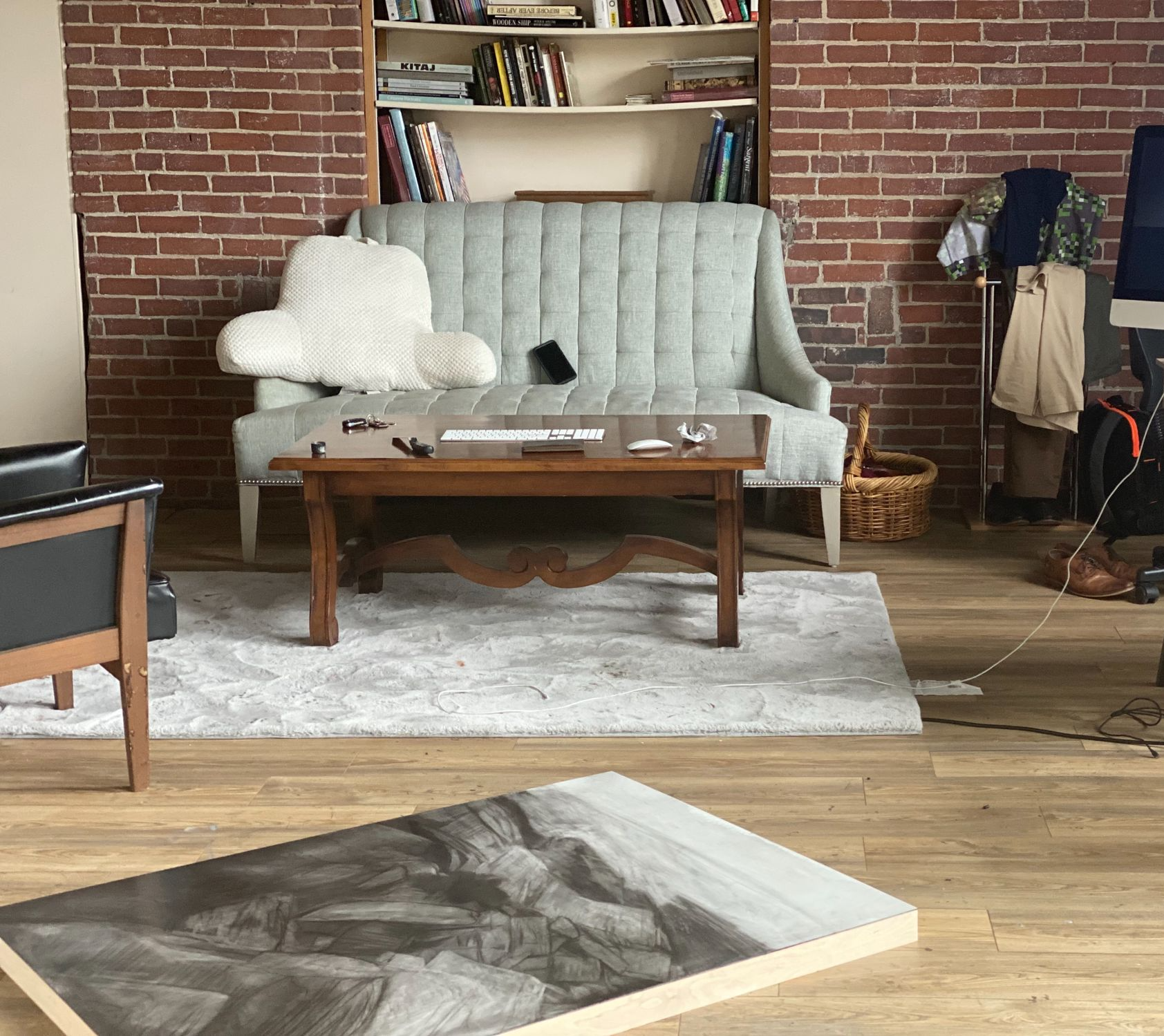
After using graphite for my sketch, I come back with a glazing medium and black paint to reinforce the areas of interest. In this process, I like standing over my piece from above and engaging my full shoulder to make large, gestural marks. I find that this swinging motion gives my mark making access to the full panel from top to bottom, much like how, when I’m holding a small sketchbook, I can reach the top and bottom of the page with a small lift of my wrist.
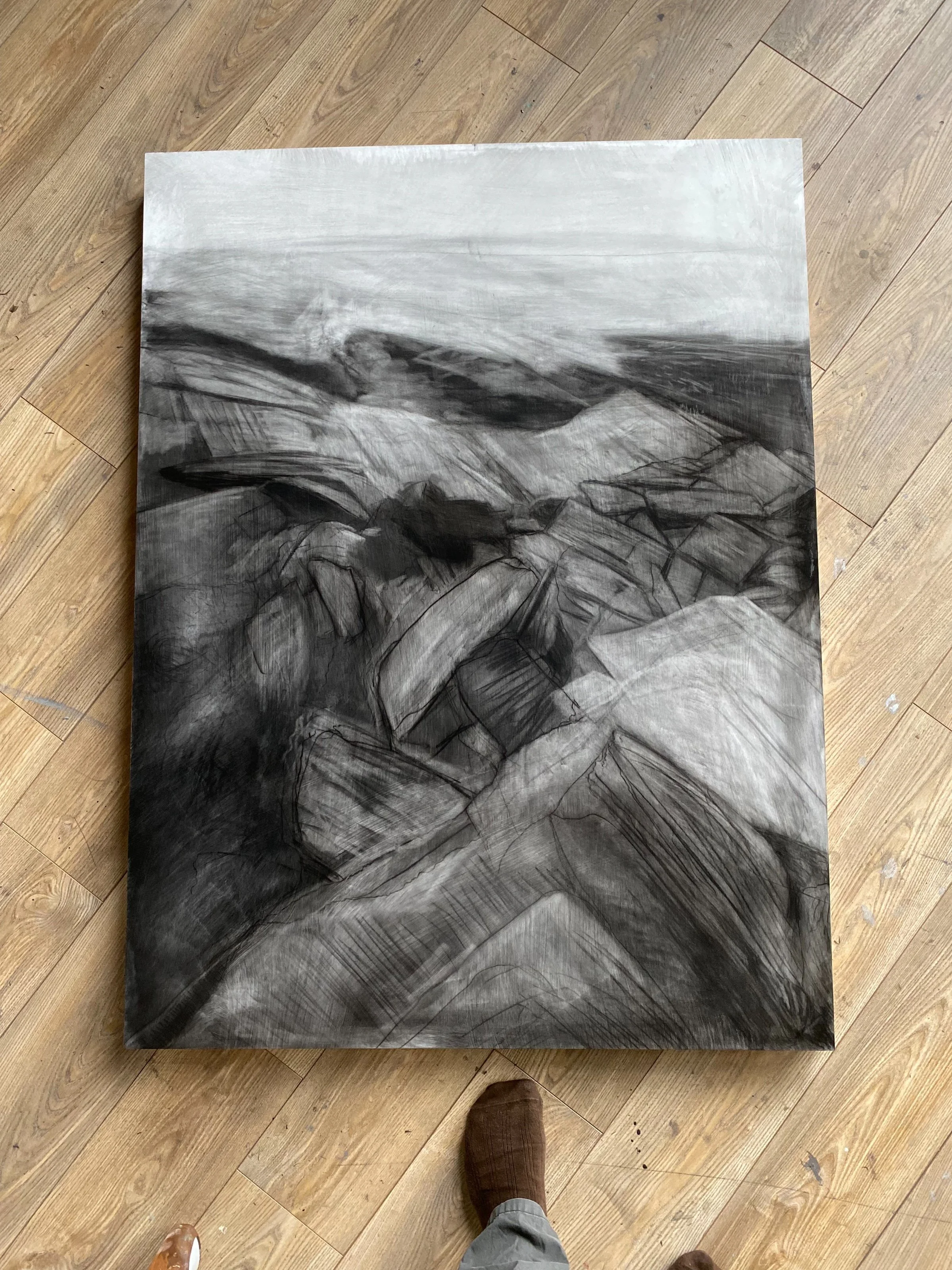
Standing over my piece, it feels good and right. I have a clear plan for how my forms will move and where I can improvise. The sky needs to behave differently from the sea, and the stones in the foreground need to behave differently from those closer to the ocean. This is a challenge I enjoy.
September 9, 2021 - Painting Begins
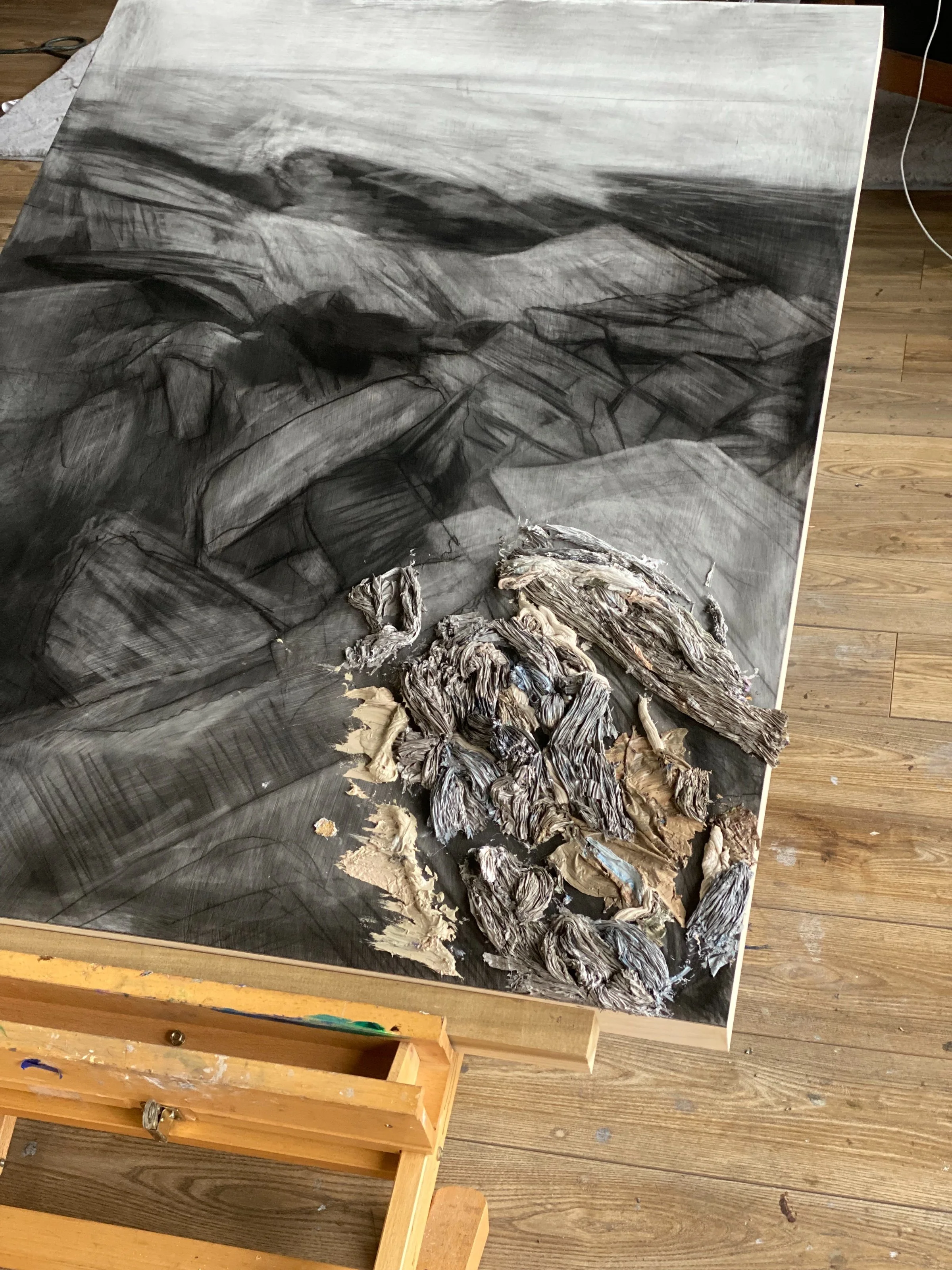
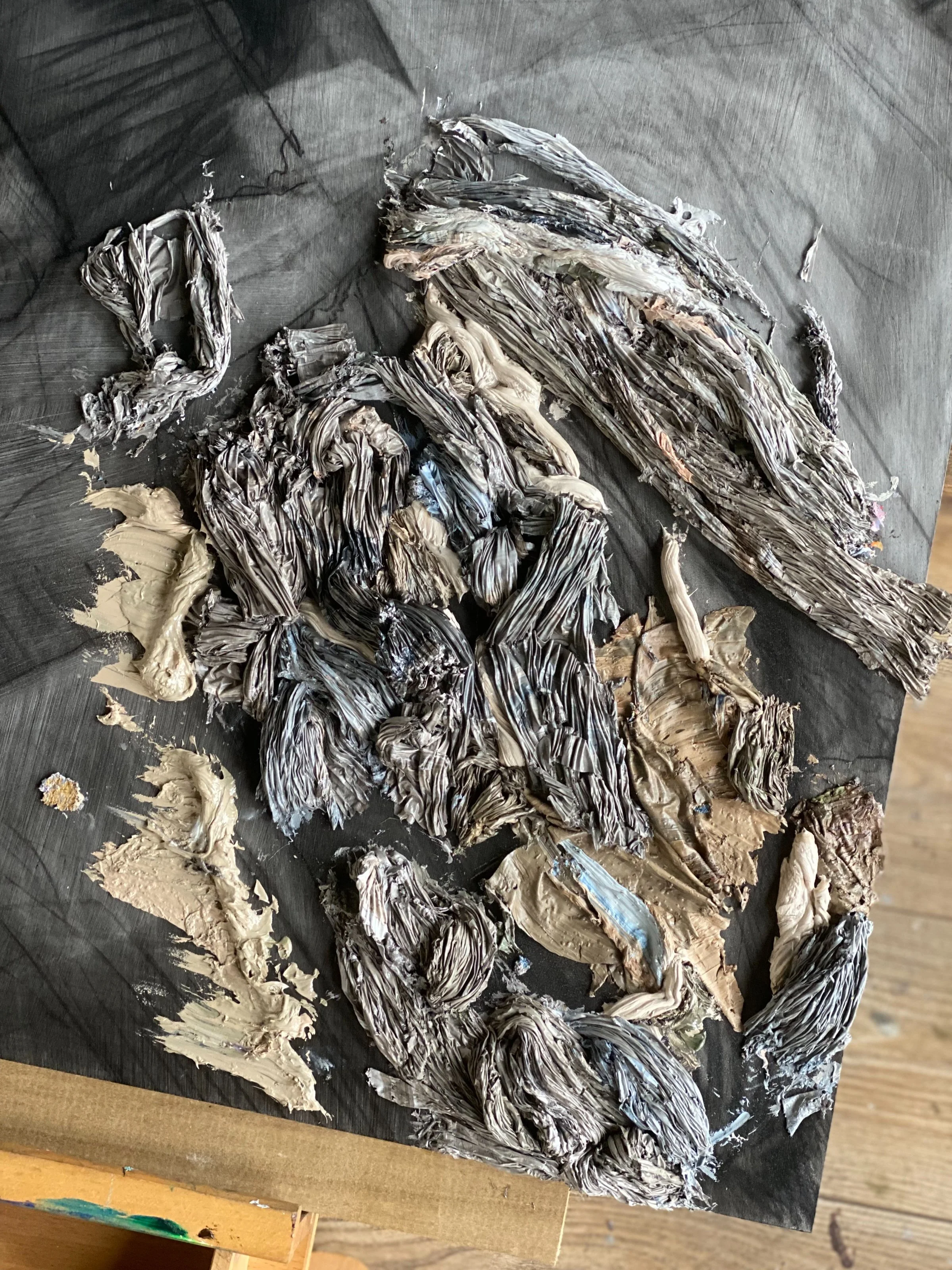
Sculpting what feels like the skin of my stone studies. Each form was once its own painting. I am focusing on midtones, and on building a base for the lighter tones that will come next. Once the base was established, the work became less about describing individual stones and more about engineering relationships: scale, edge logic, and the way the surface could carry light.
september 22, 2021
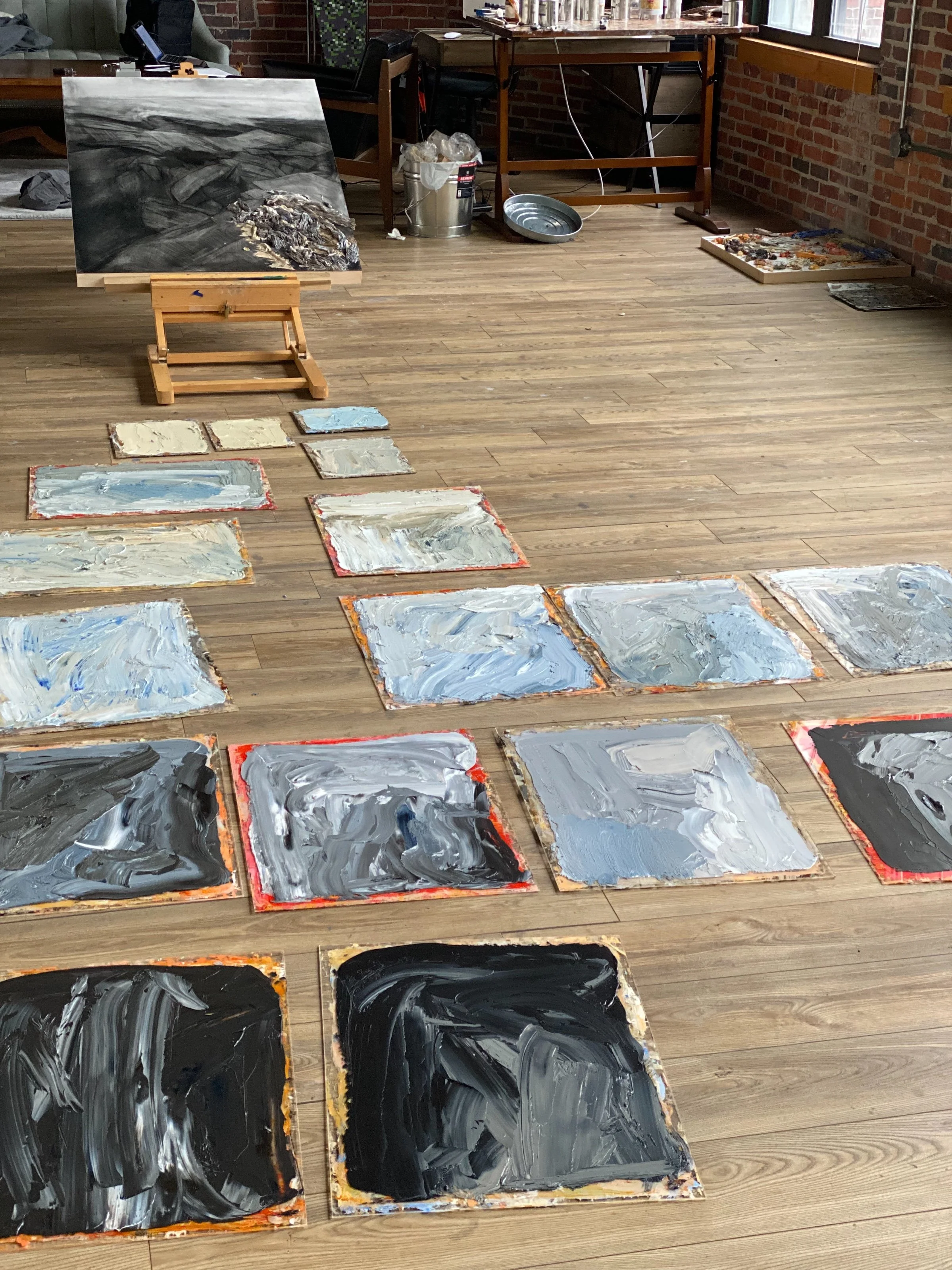
I return to the same place again and again, not to describe it, but to understand it. Each study is a way of testing relationships: how one form leans against another, how edges meet, how space holds between them. I’m painting the in-between things, the shifts and tensions that make a place feel alive.
I paint this way because it mirrors how my mind moves through the world. When everything feels loud, fast, and overfilled with information, building a painting from fragments helps me slow down and rebuild clarity. Laying studies out, comparing them, and piecing them together becomes a way to deconstruct experience and then reconstruct it into something I can actually stand inside of.
September 27, 2021
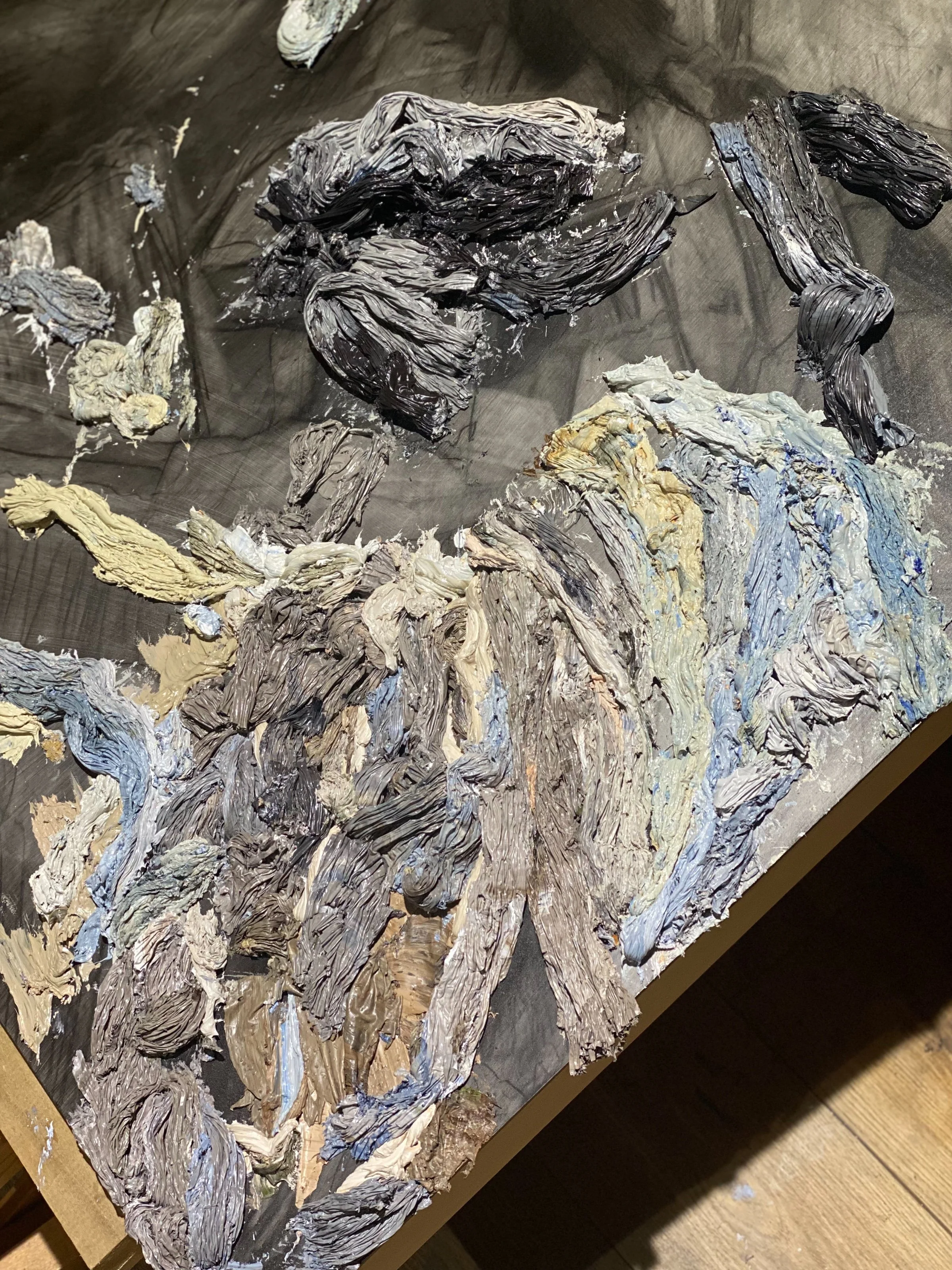
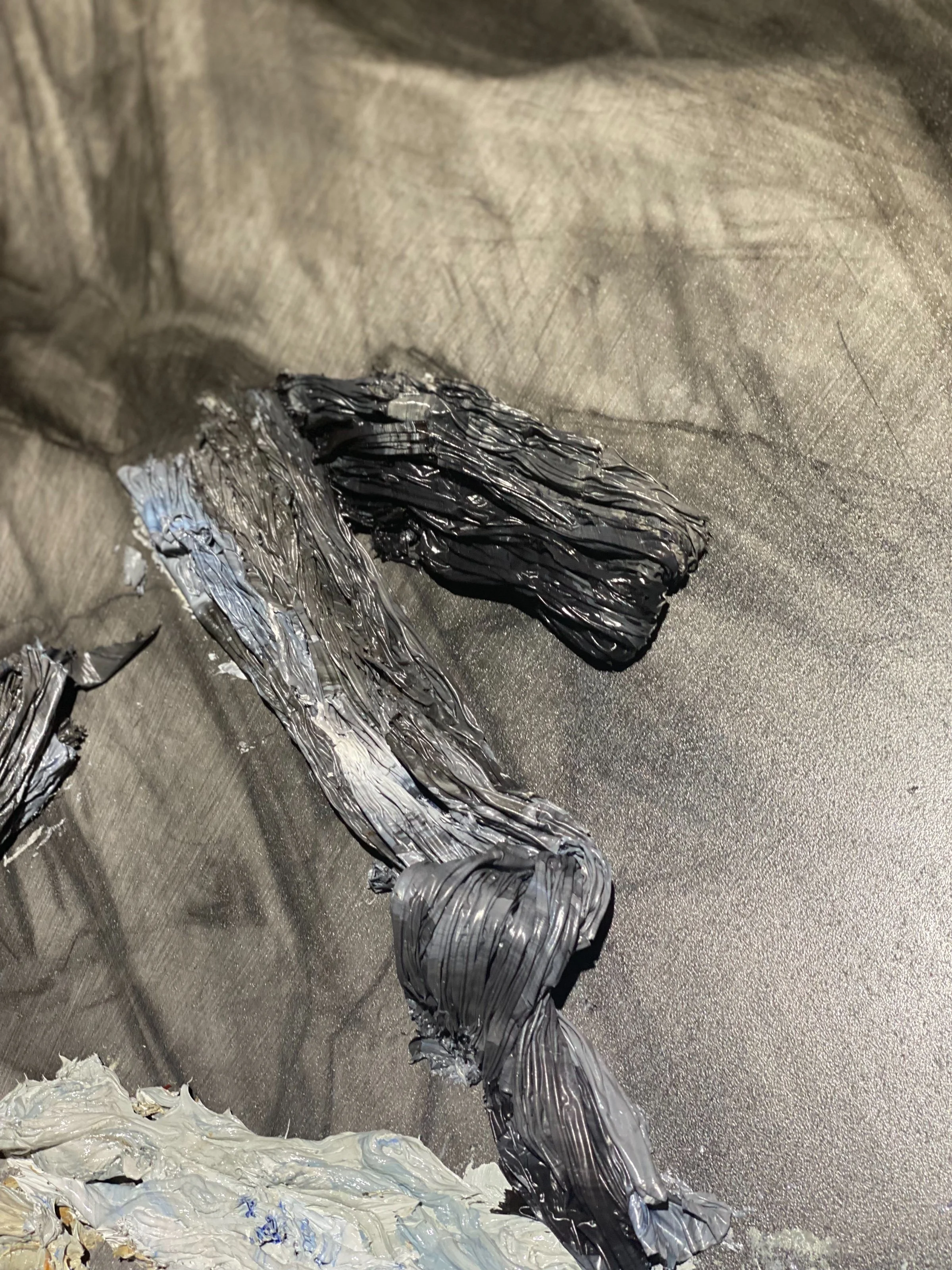
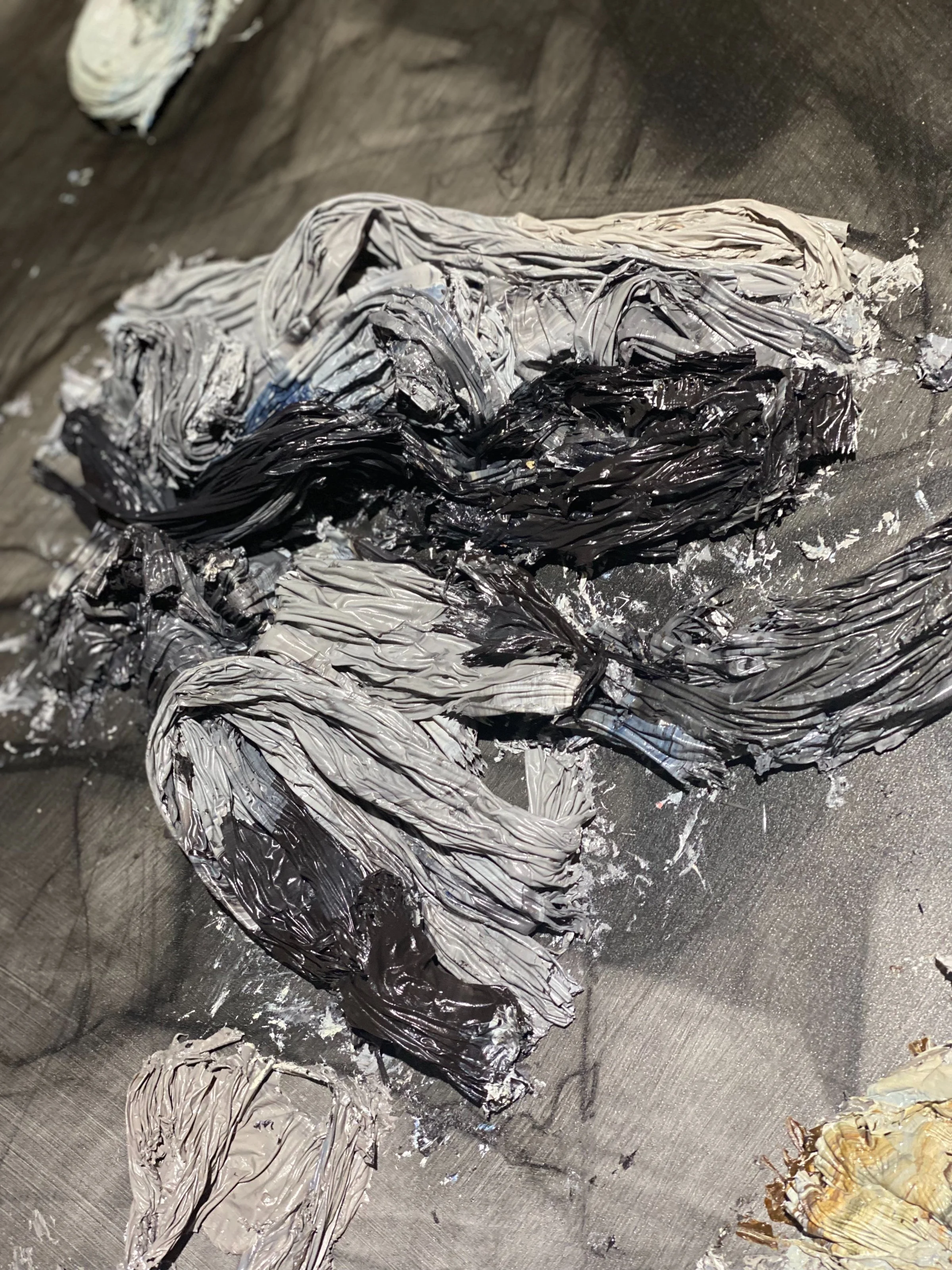
Mechanically, the work starts with a stack of small studies. I’ll make around a dozen from the same area, then bring them back to the studio and lay them out across the floor. From above, I “steal” sections that feel charged, an edge, a turn, a collision of shapes, and I begin to curate them the way you might arrange pieces of a mosaic. I scrape, carve, and re-draw into the surface, sculpting the composition by subtracting and rebuilding until the forms start to lock into place and the painting begins to move as one body.
September 28, 2021
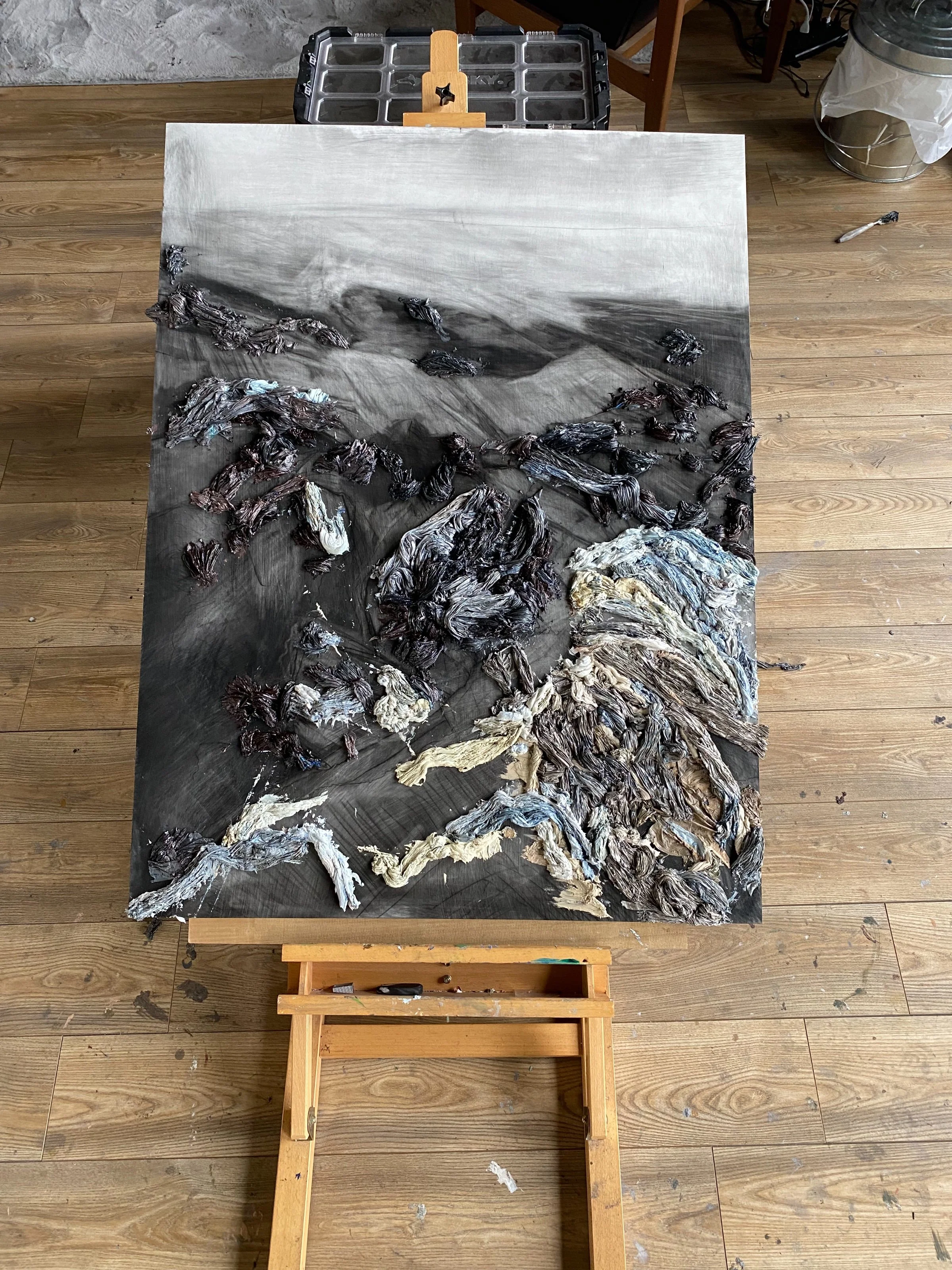
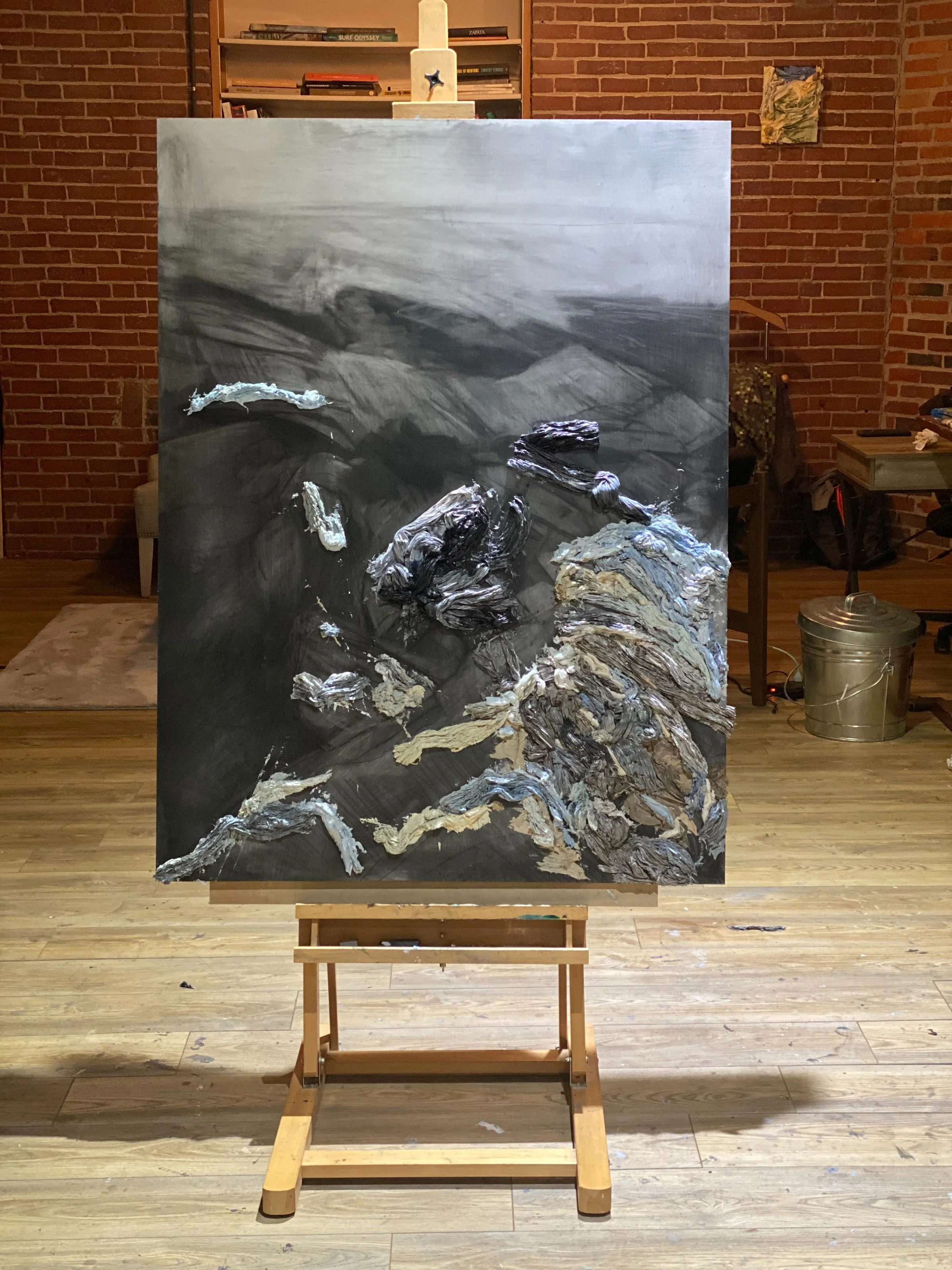
I’m very happy with the progress here. I’m setting myself up with a lot of spontaneity and improvisation before bringing controlling forms into the mix.
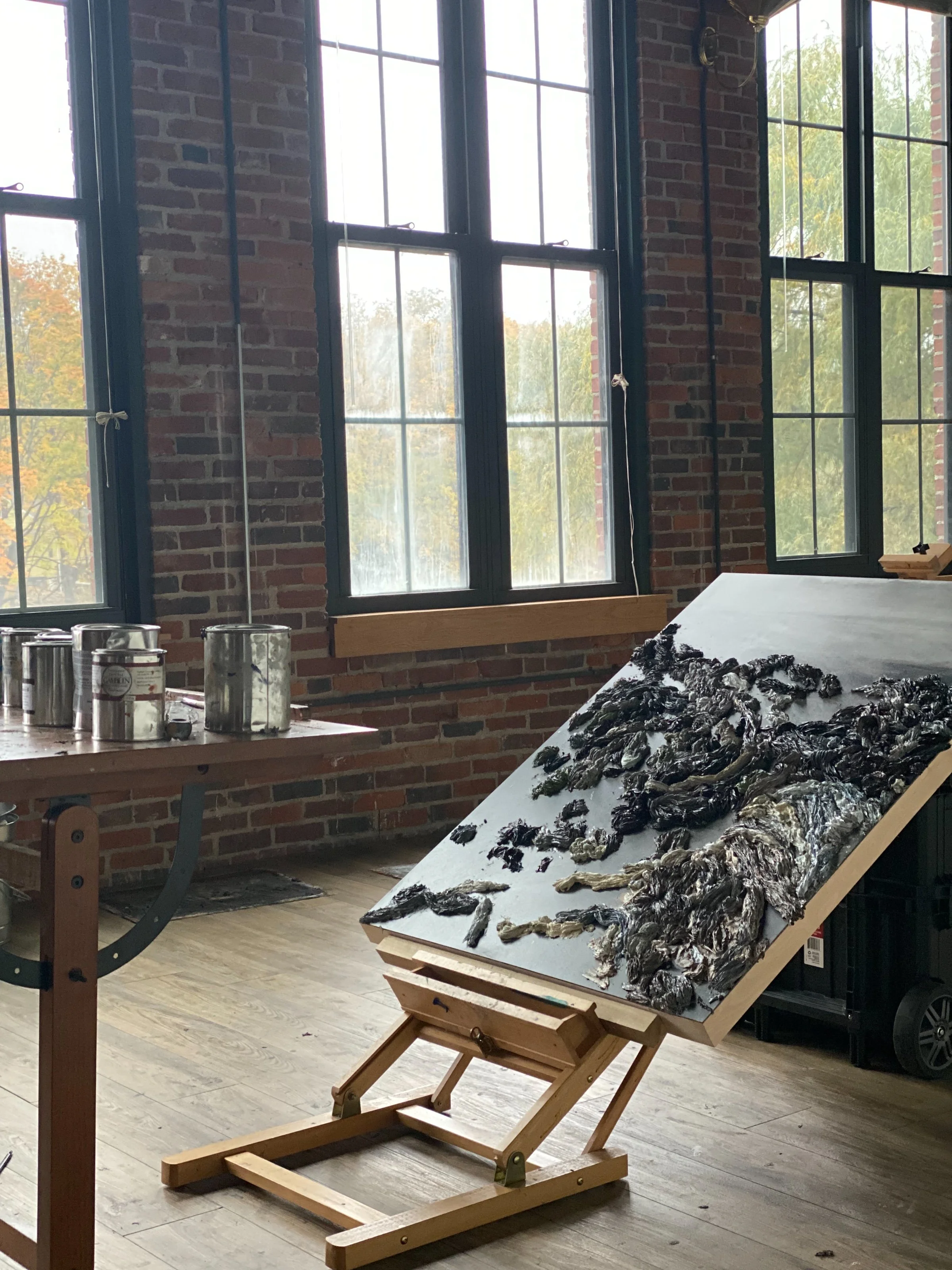
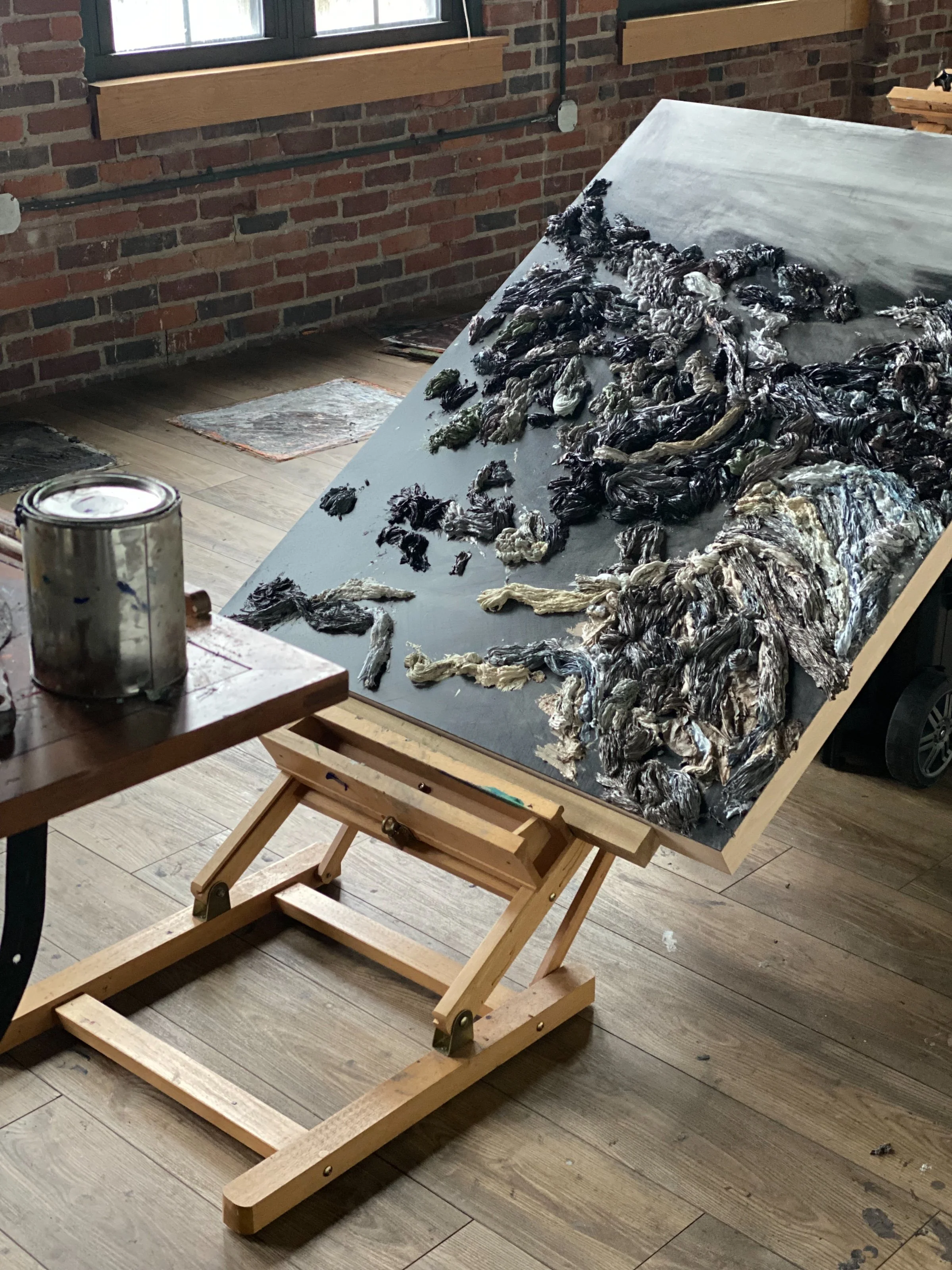
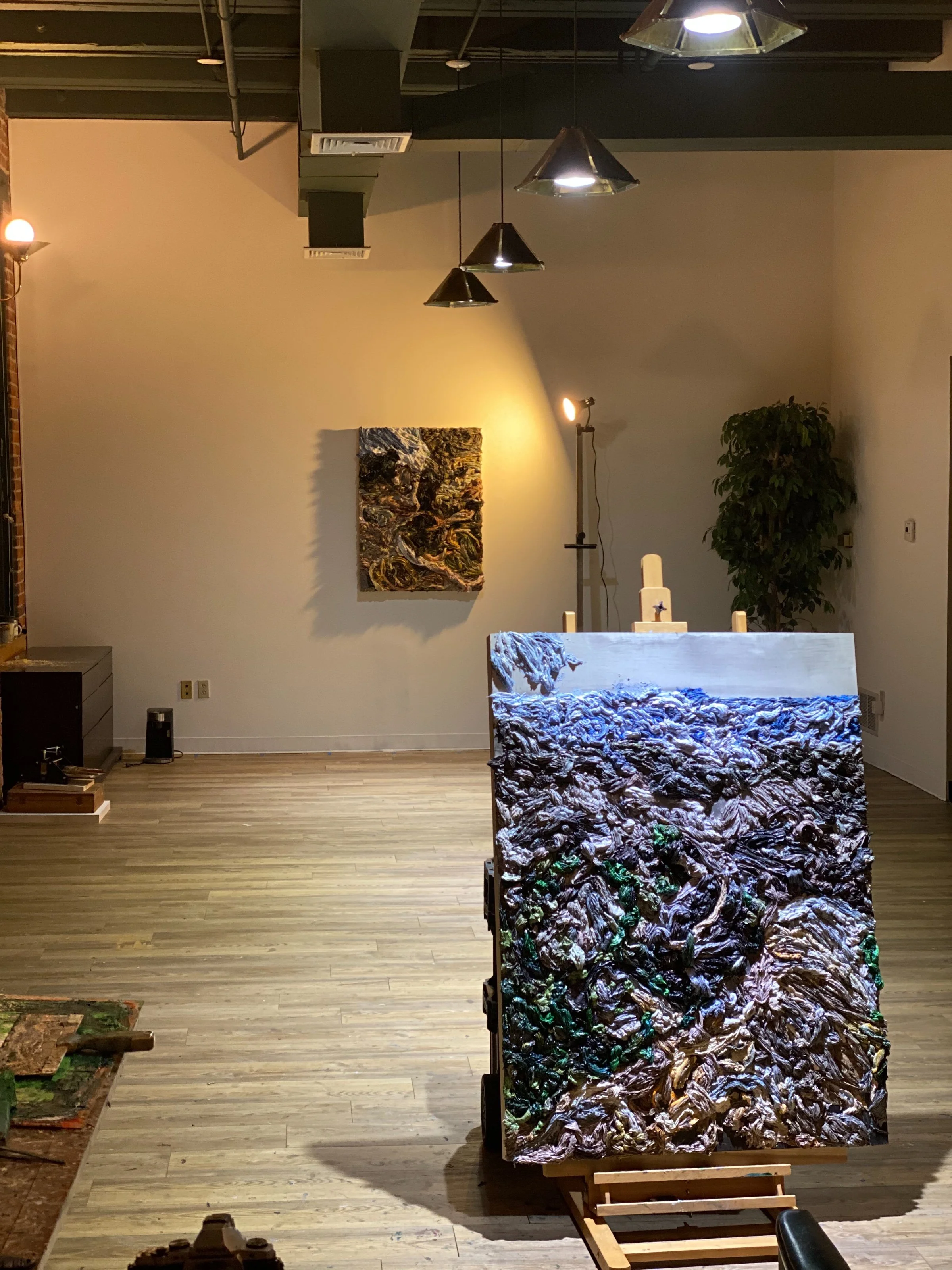
Having an easel that adjusts to lay flat is very important. If the light hits my forms in a way that creates an unintended shape, I will lose control of the outcome.
September 29, 2021
I’m currently working in the stones and grassy areas. In my reference material, the larger rocks feel balanced, almost stacked, with lichens and greens wedged between them, wrapping around edges, and pooling on top like a living mortar. That growth becomes its own structure. I am less interested in describing each rock than I am in locating the windows the greenery creates, the negative shapes that briefly reveal the foundation stone underneath. Those in-between pockets are where the painting starts to organize itself.
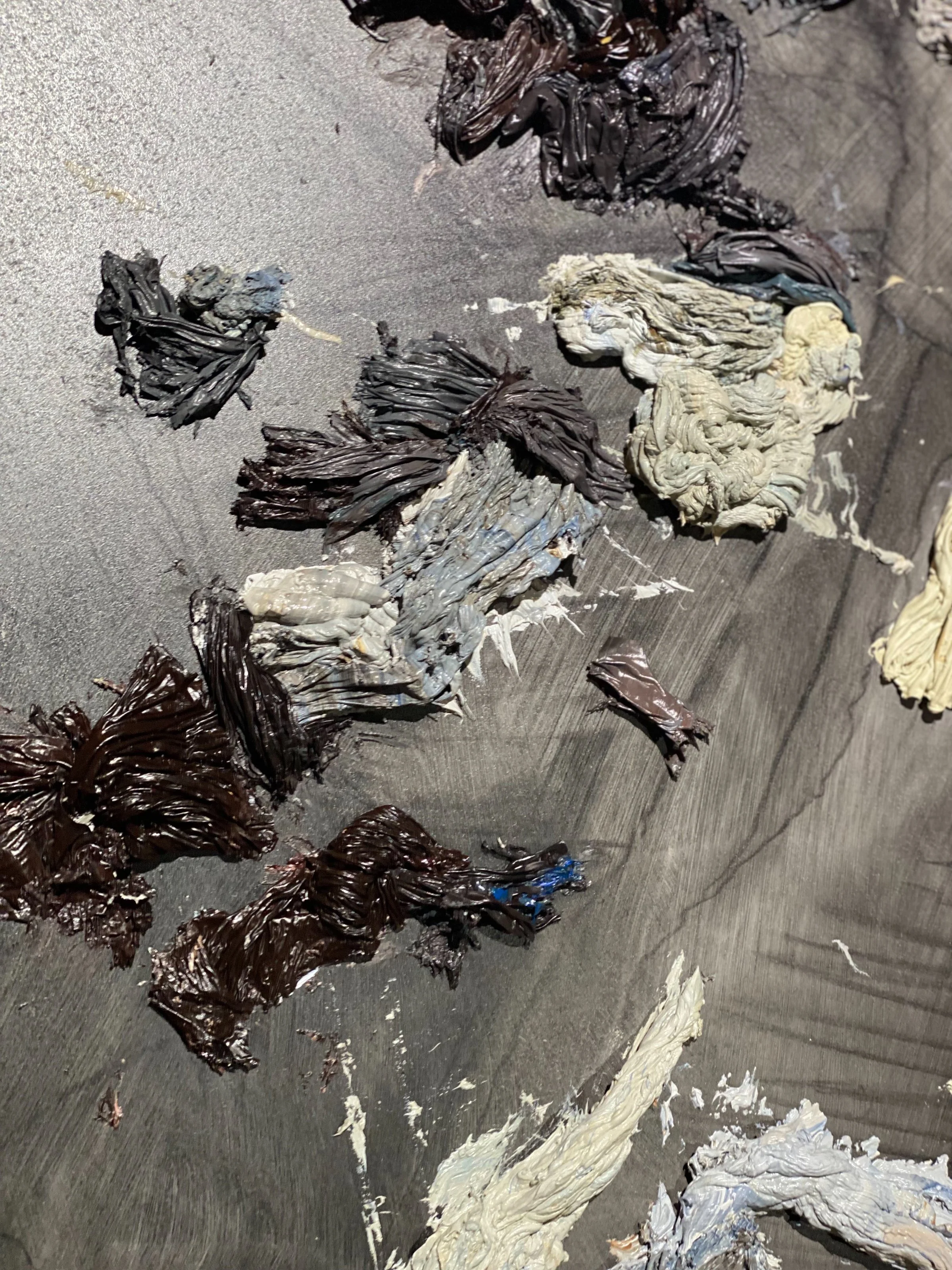
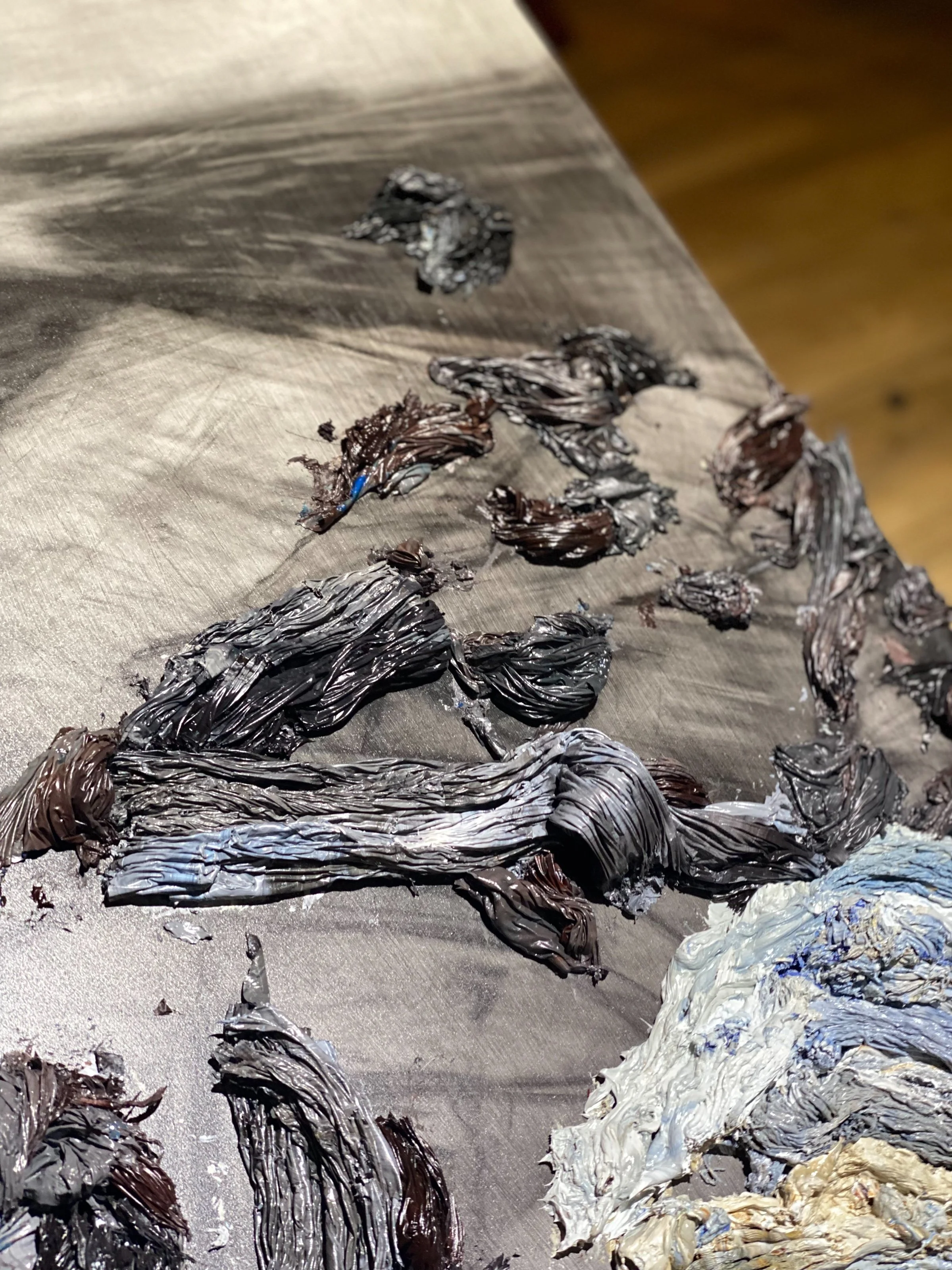
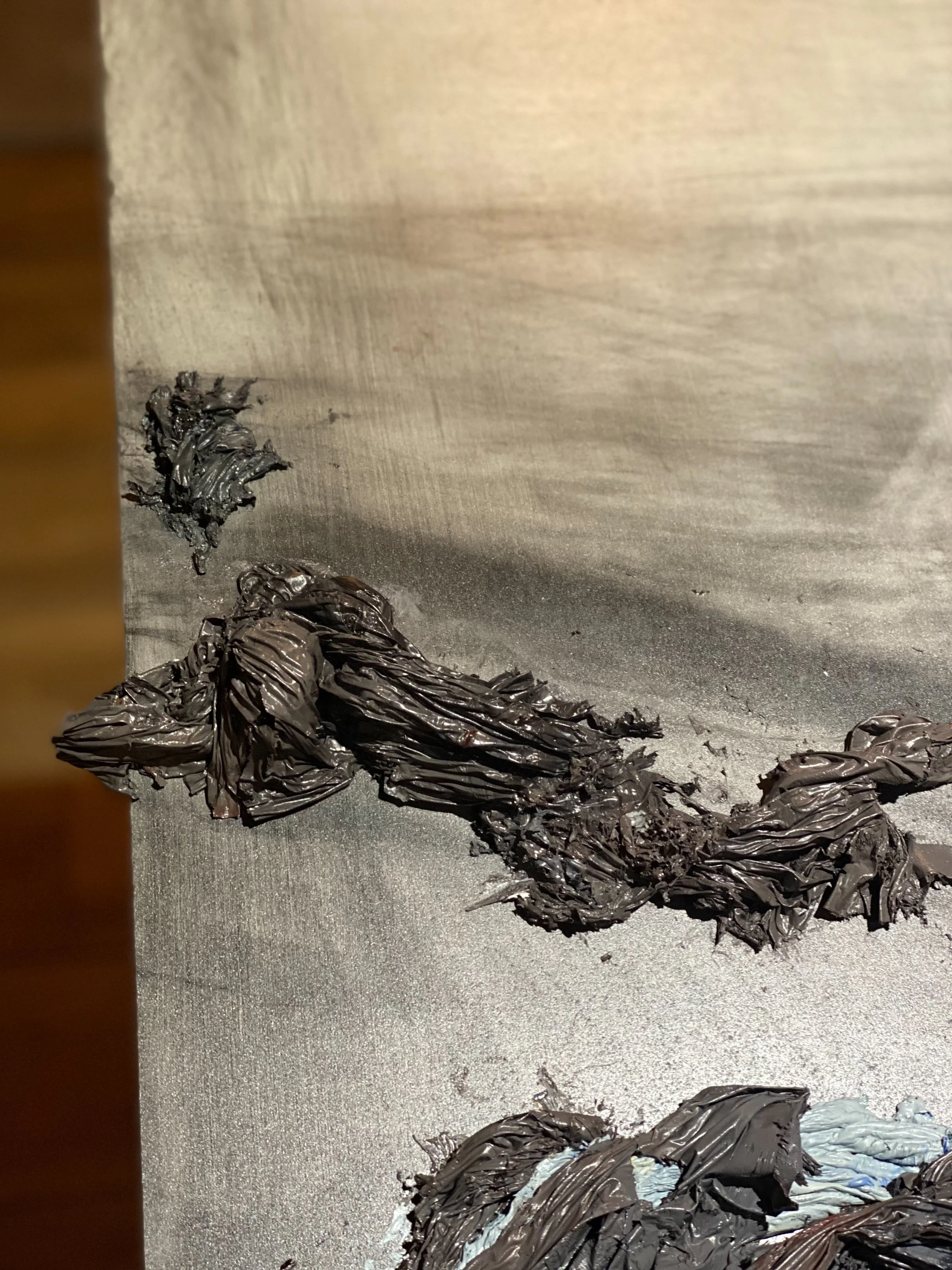
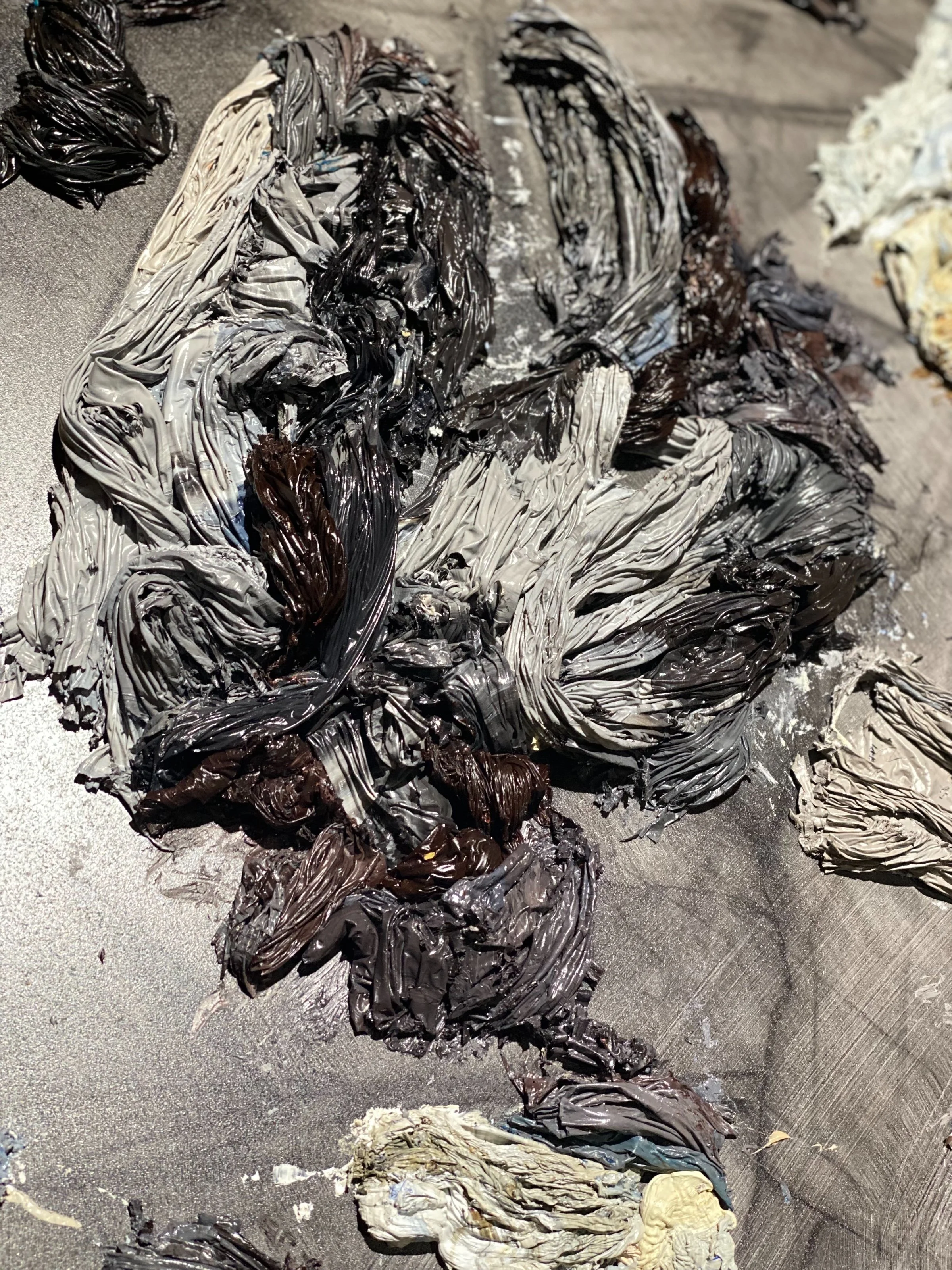
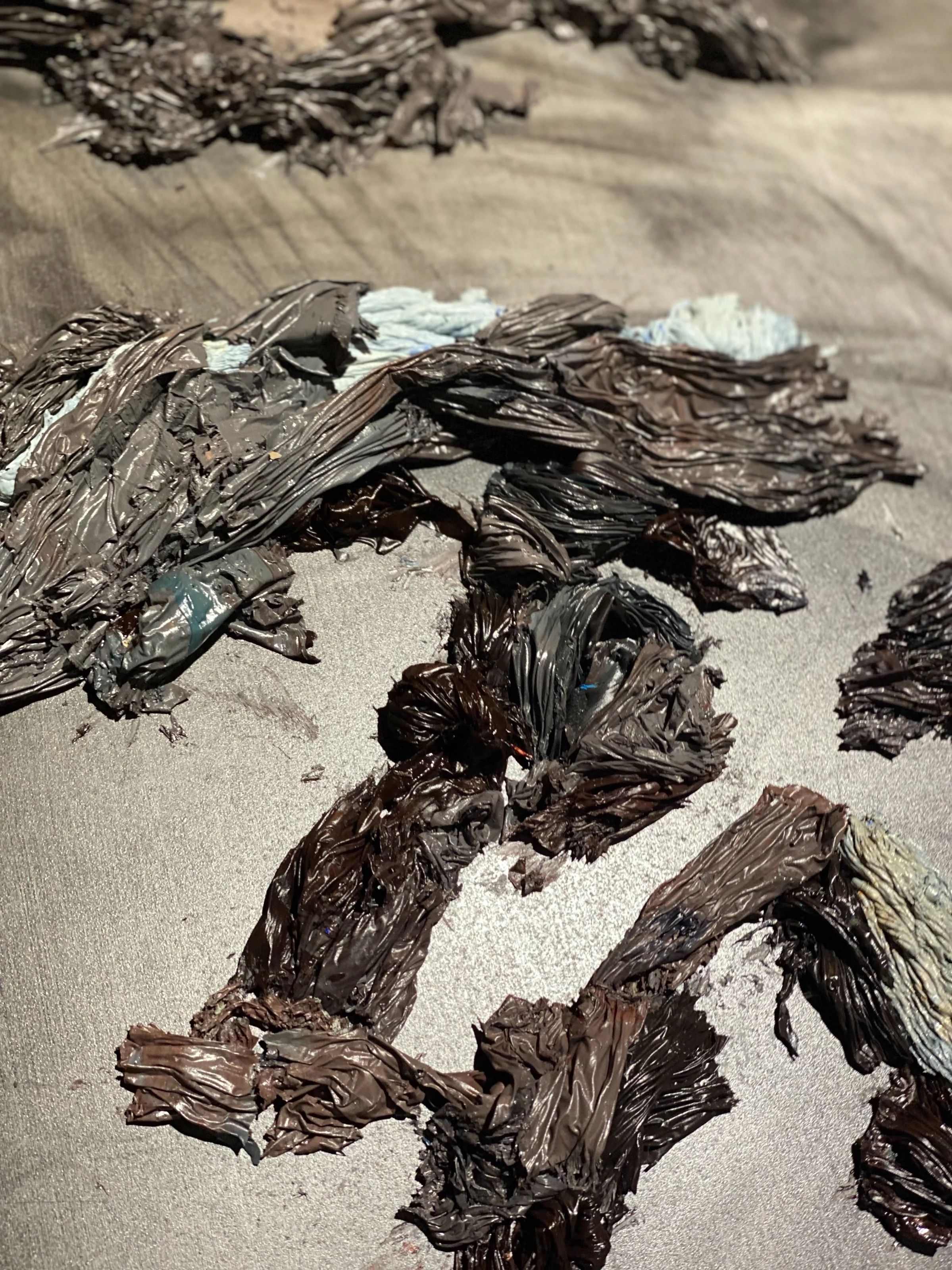
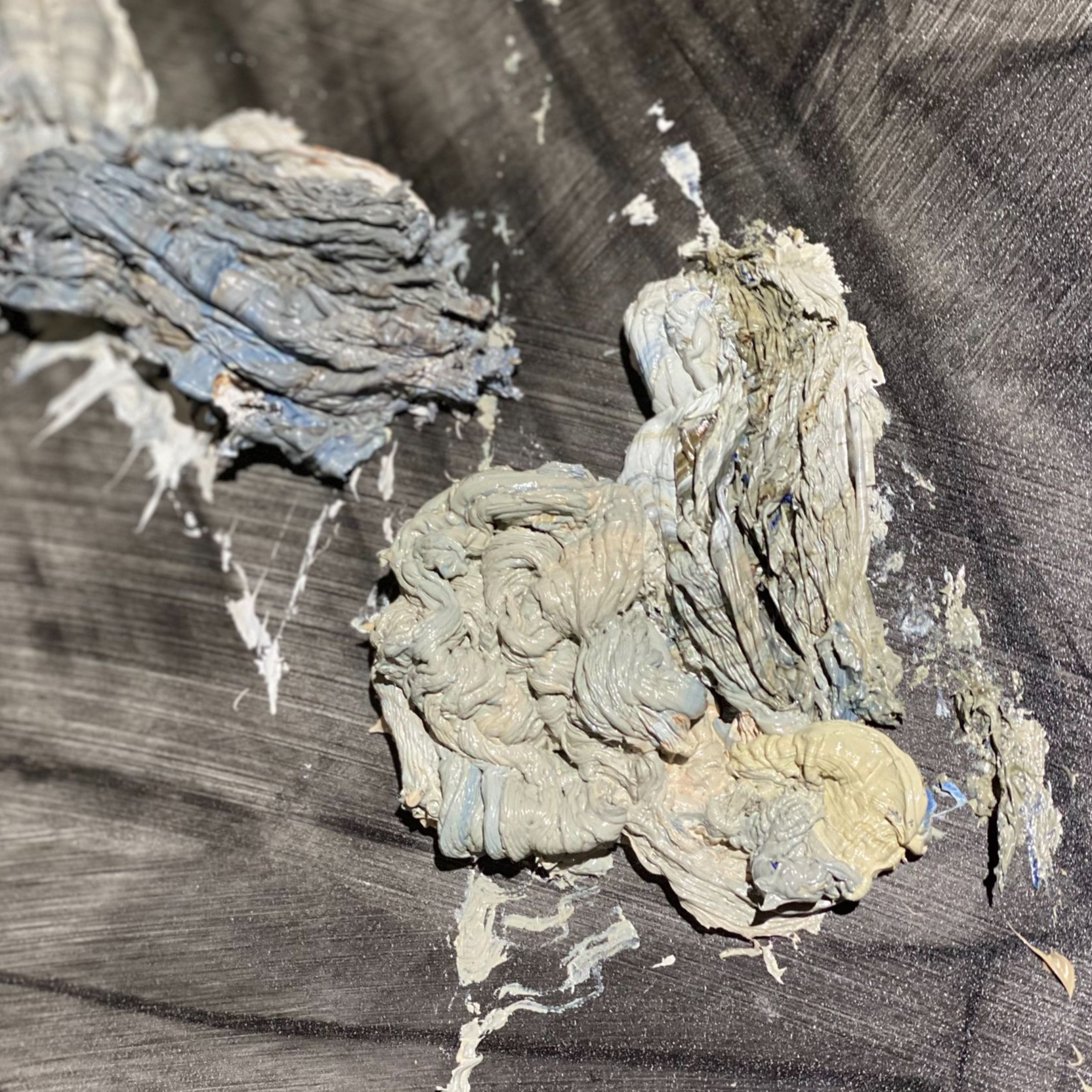
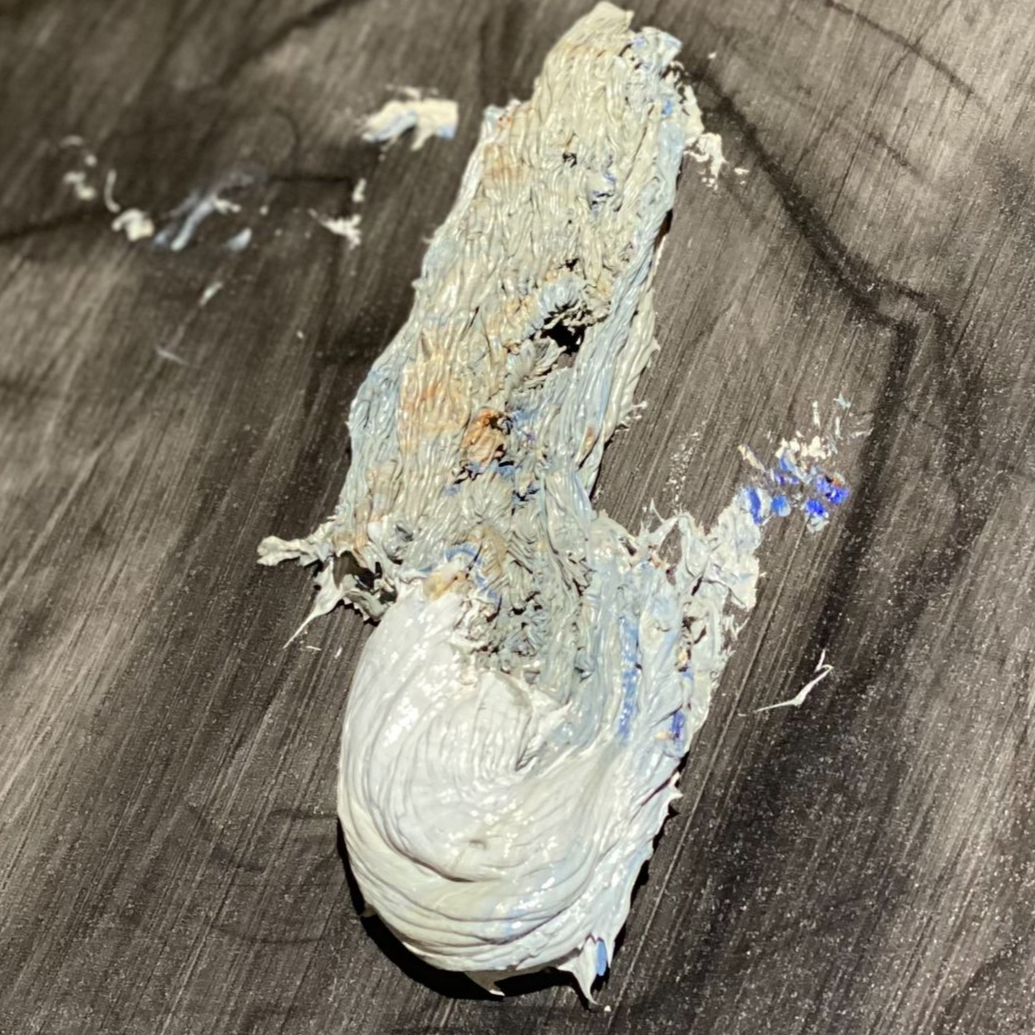
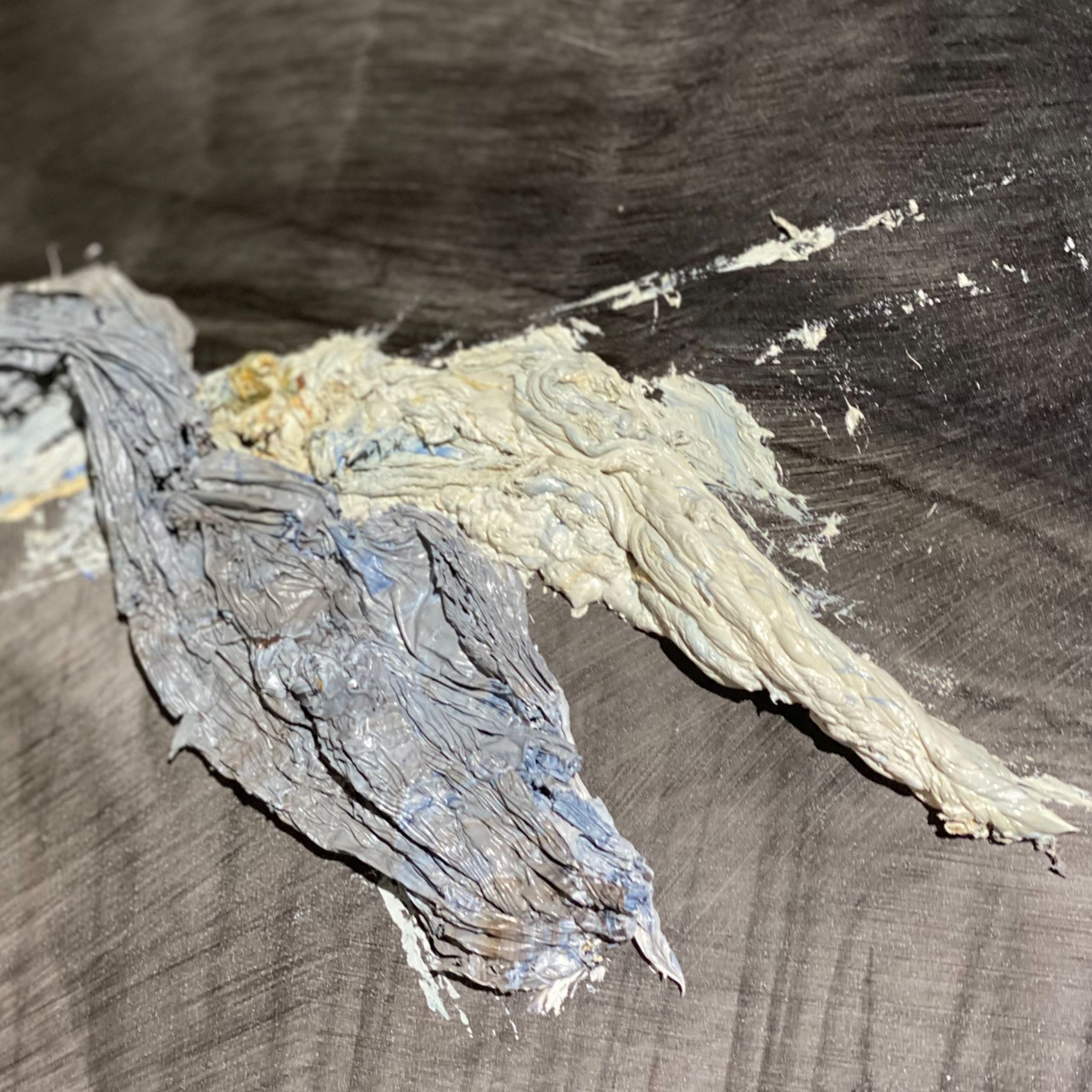
As I build, the forms sometimes begin to curl, like a bent cloth lifting off a surface. That curl matters, because I am essentially manipulating and sculpting the skin of one painting so it can be transported onto another surface while keeping its integrity. Sometimes I need a color on one side of a form to sit beside a different color within that same form, so I sculpt and re-position the edge until the relationship feels inevitable.
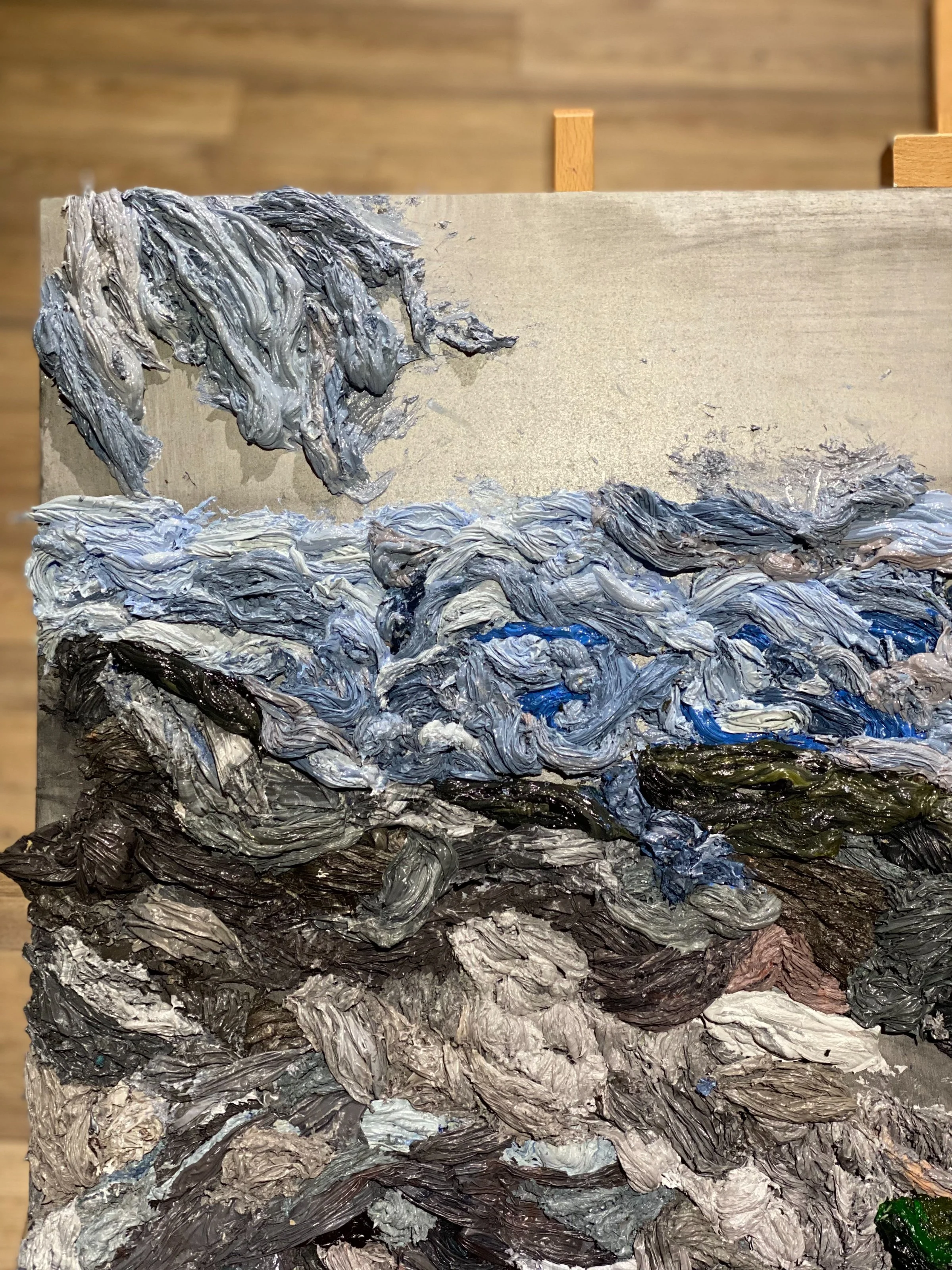
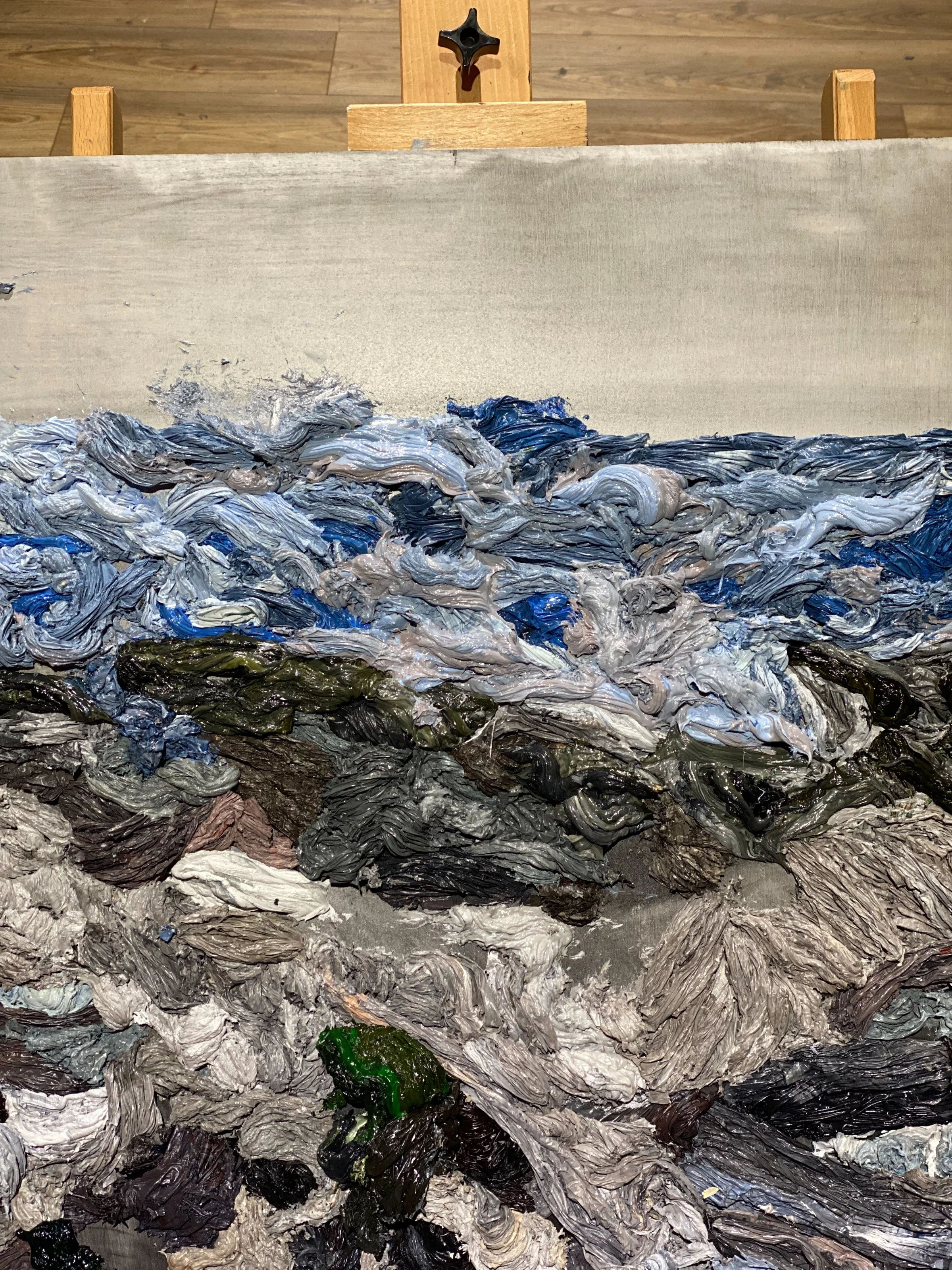
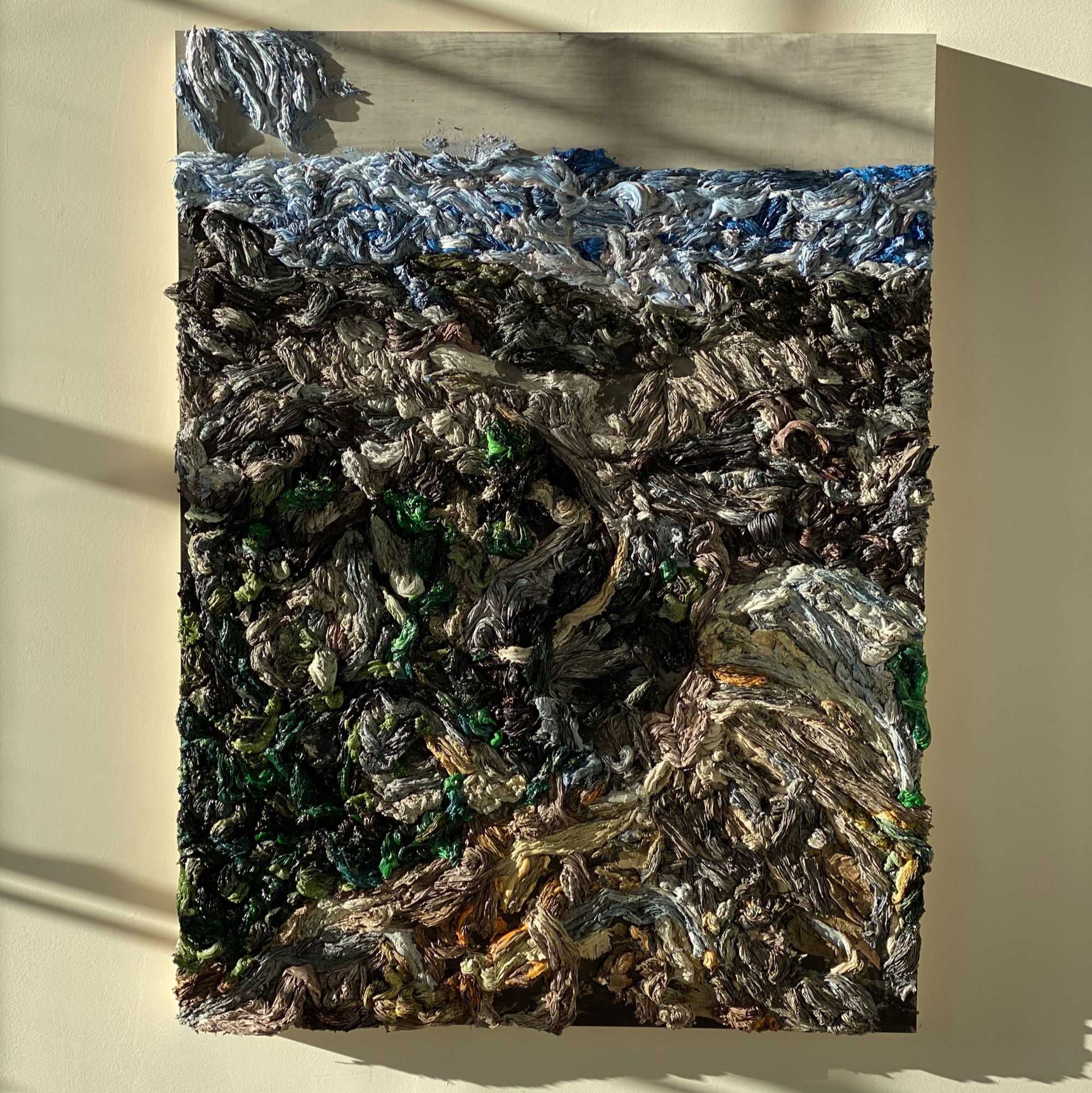
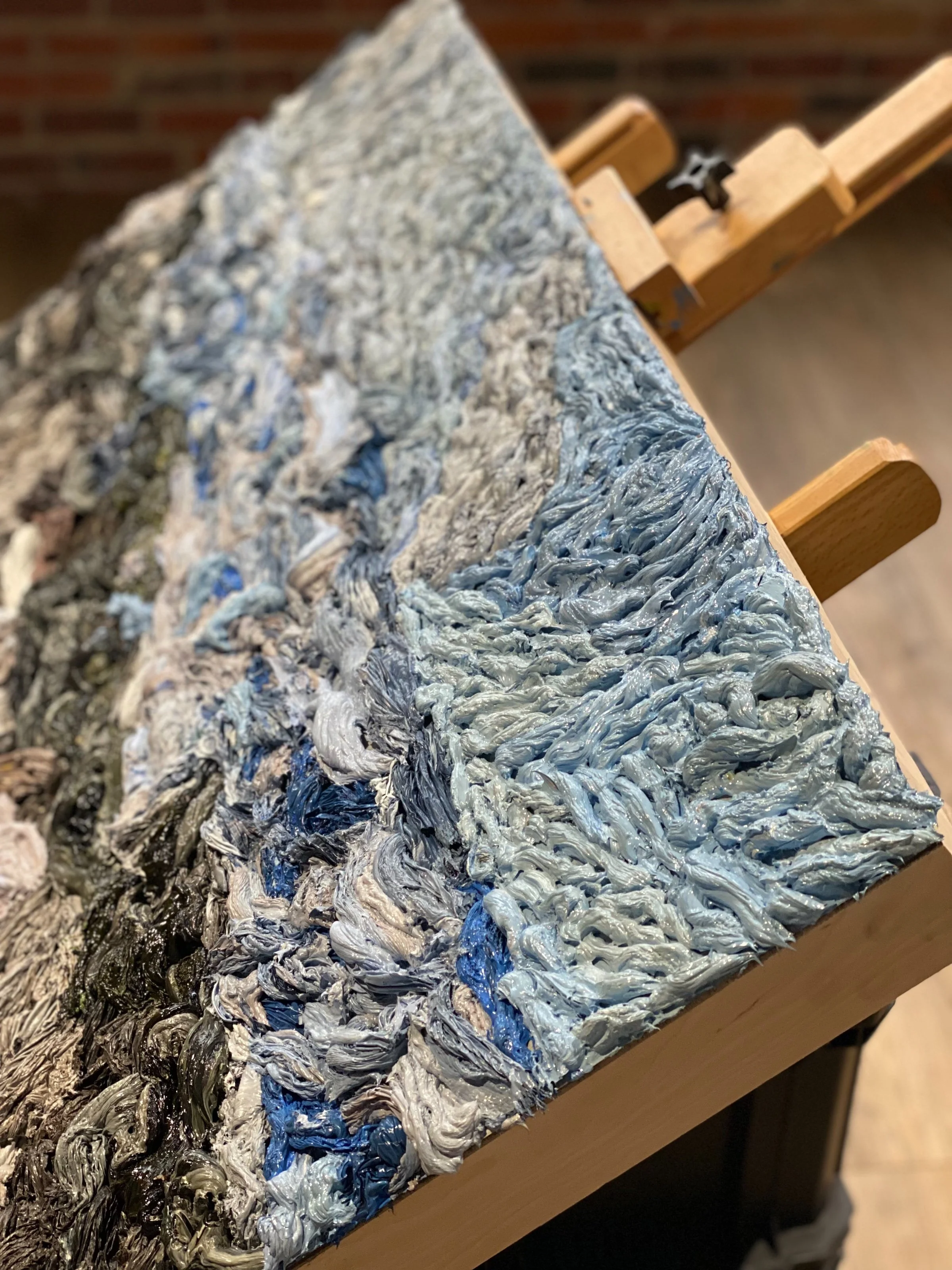
I also pay close attention to the shadows these raised forms cast. The shadows are not accidents. They are compositional tools that create new relationships and new values. If a shadow moves across the lightest area of the painting, it immediately generates a mid-tone, and that mid-tone becomes a hinge for everything around it. Every action is an opportunity.
Today, the curl gave me a way to emphasize the light blues in the same form twice: once through the color itself, and again through the shadow it throws. It is a small shift, but it changes the whole logic of the passage. The painting starts to feel less like separate studies stitched together and more like one body, turning in light.
October 5, 2021
At this point the painting started to read as a whole, and new problems appeared. The biggest one was spatial: how to preserve a foreground without making the distance feel too loud.
The final result is starting to emerge, but I still need to develop the rest of the image and the relationships within it. I'm a bit concerned about the size of the forms at the top of the piece. Although the shapes are correct, if the forms at the top are larger than those at the bottom, it will affect the viewer’s ability to perceive a foreground.
That might be interesting, but it’s not what I’m aiming for this time.
October 6, 2021
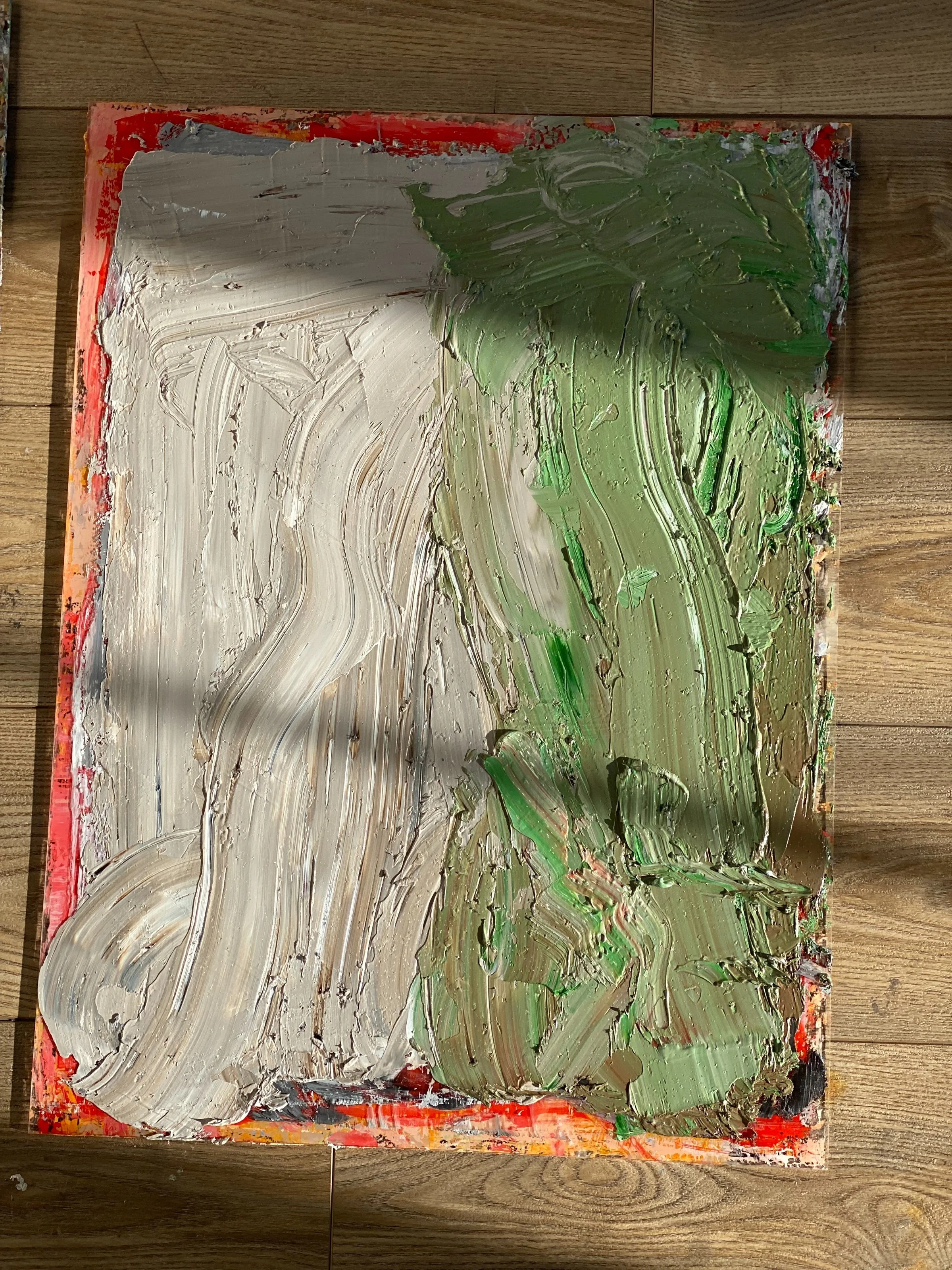
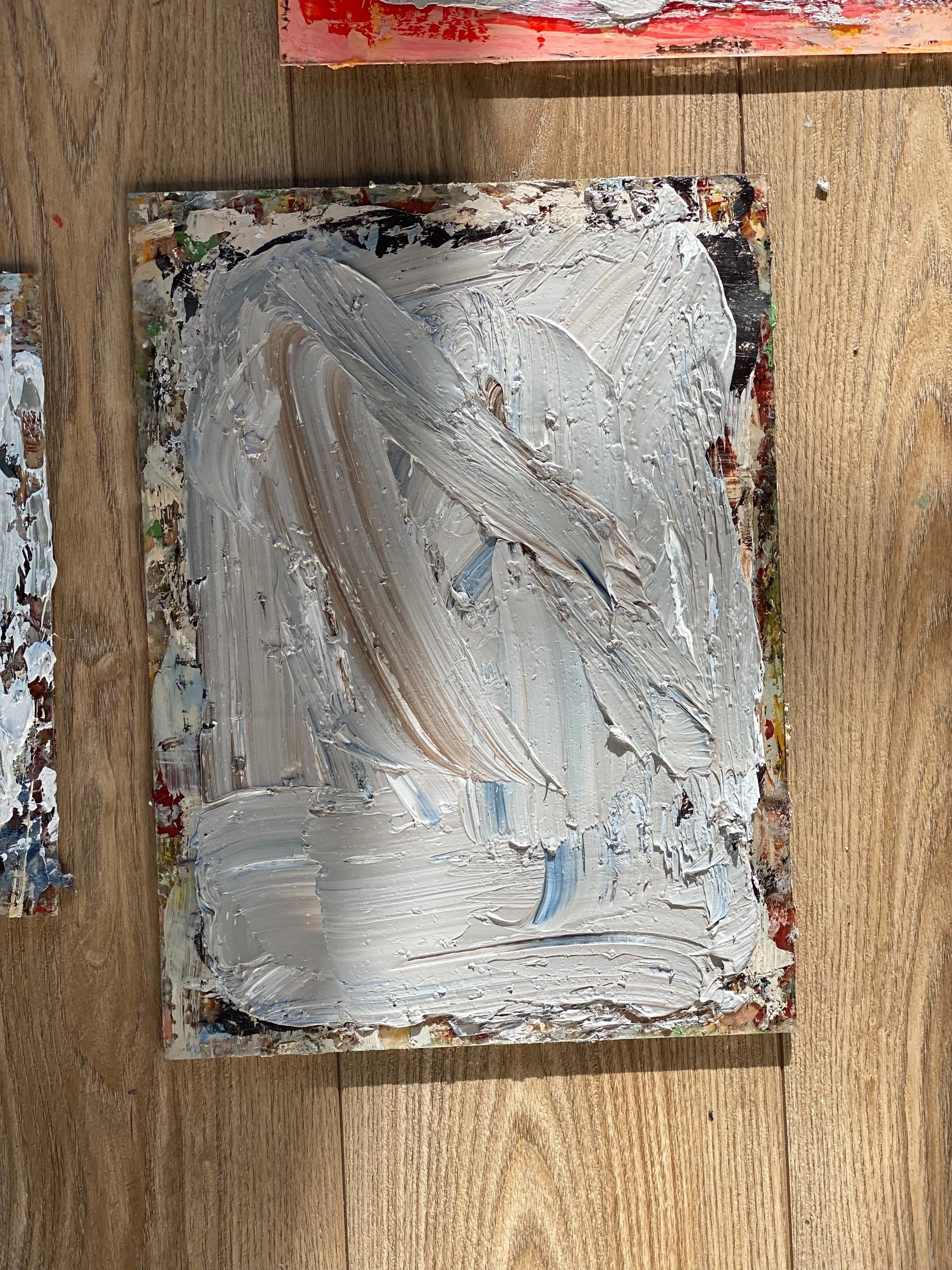
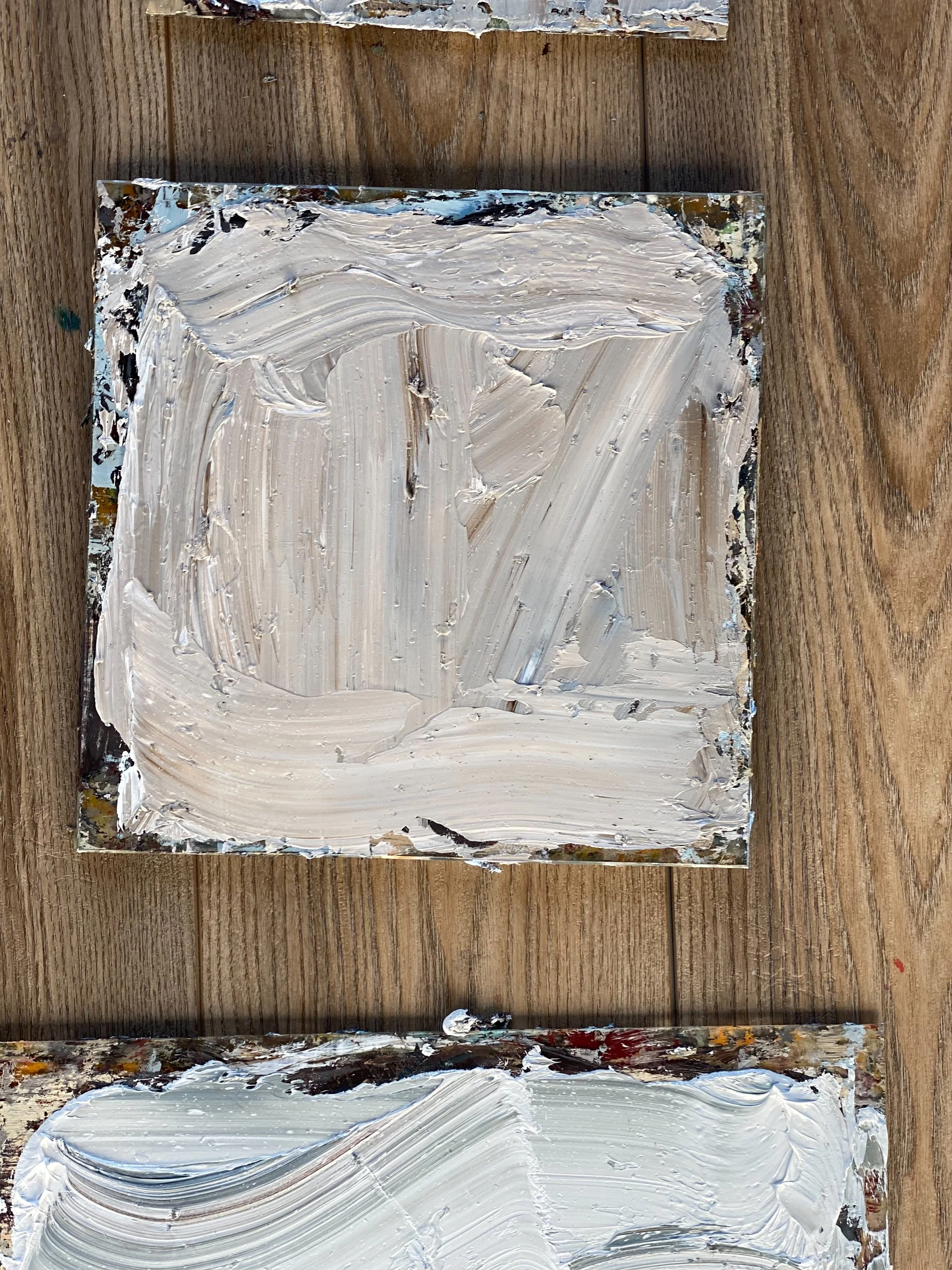
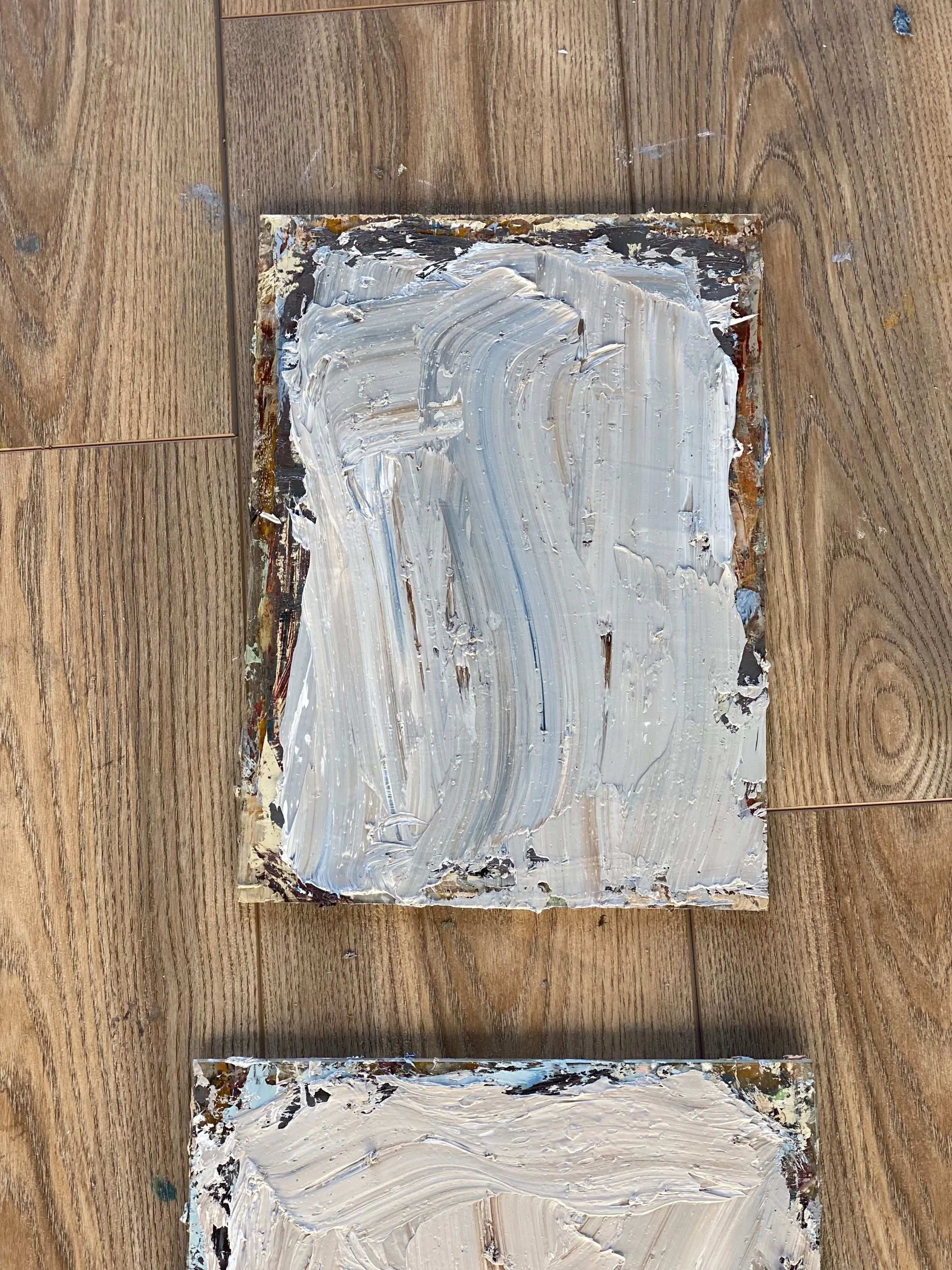
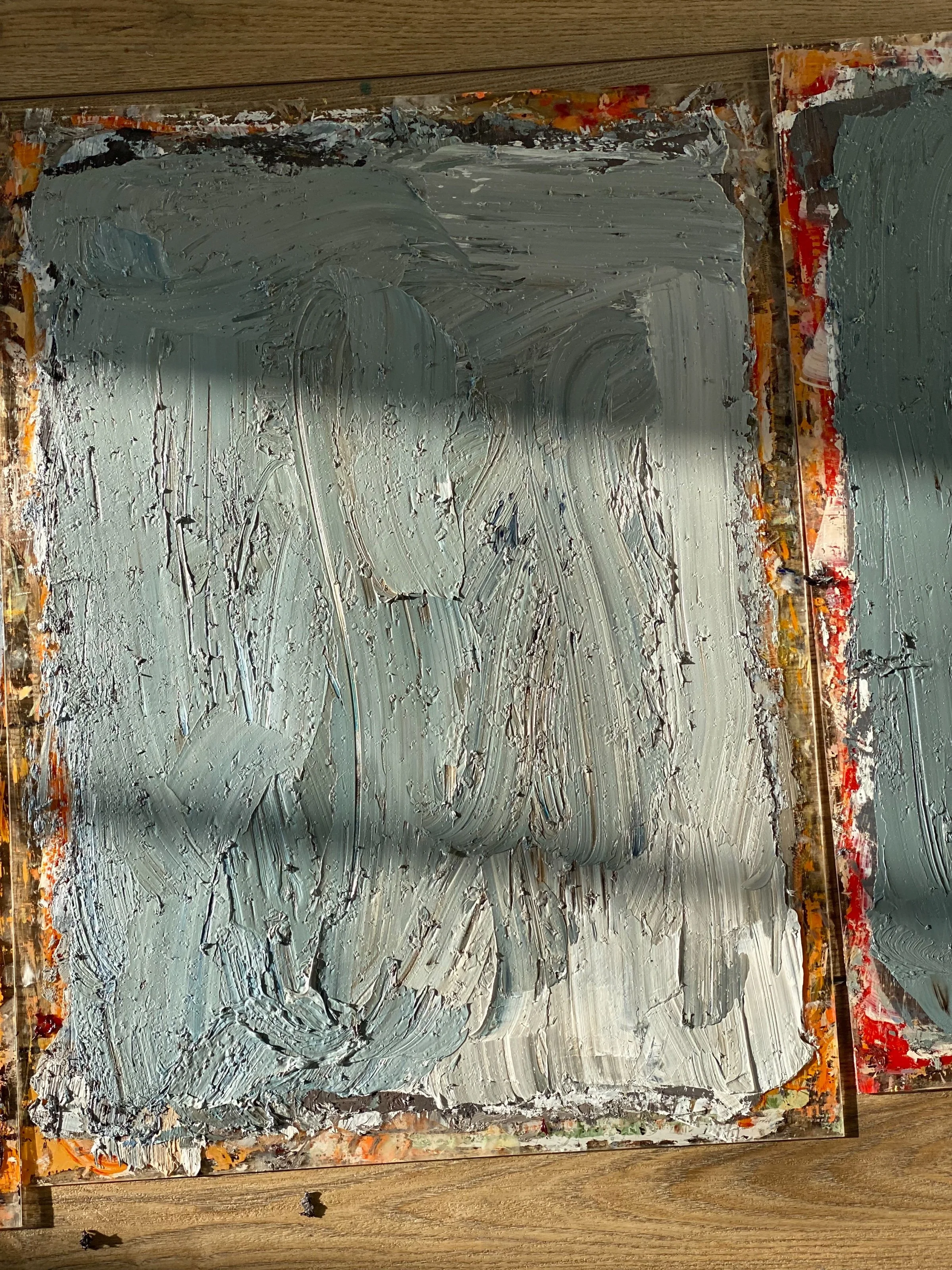
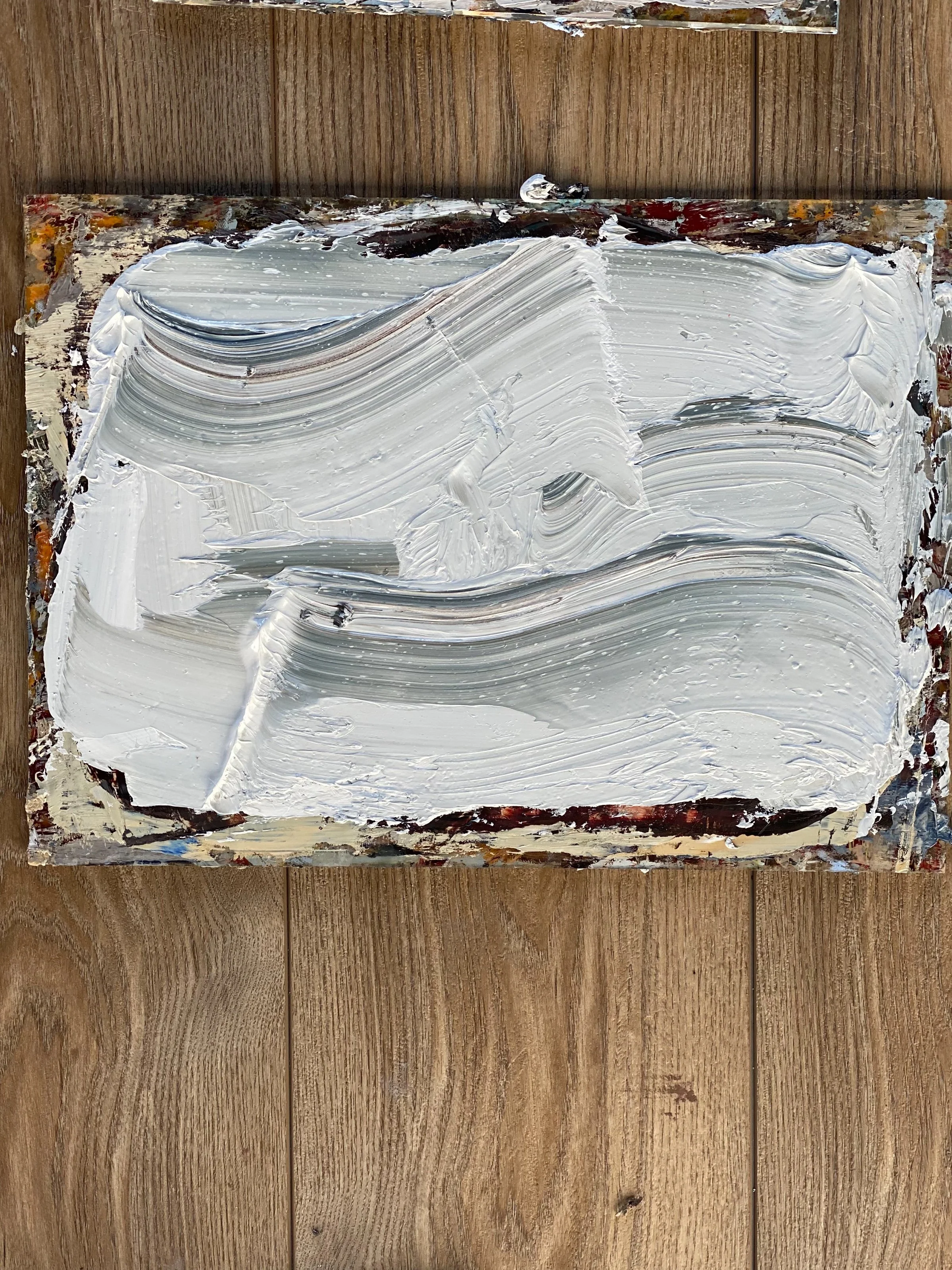
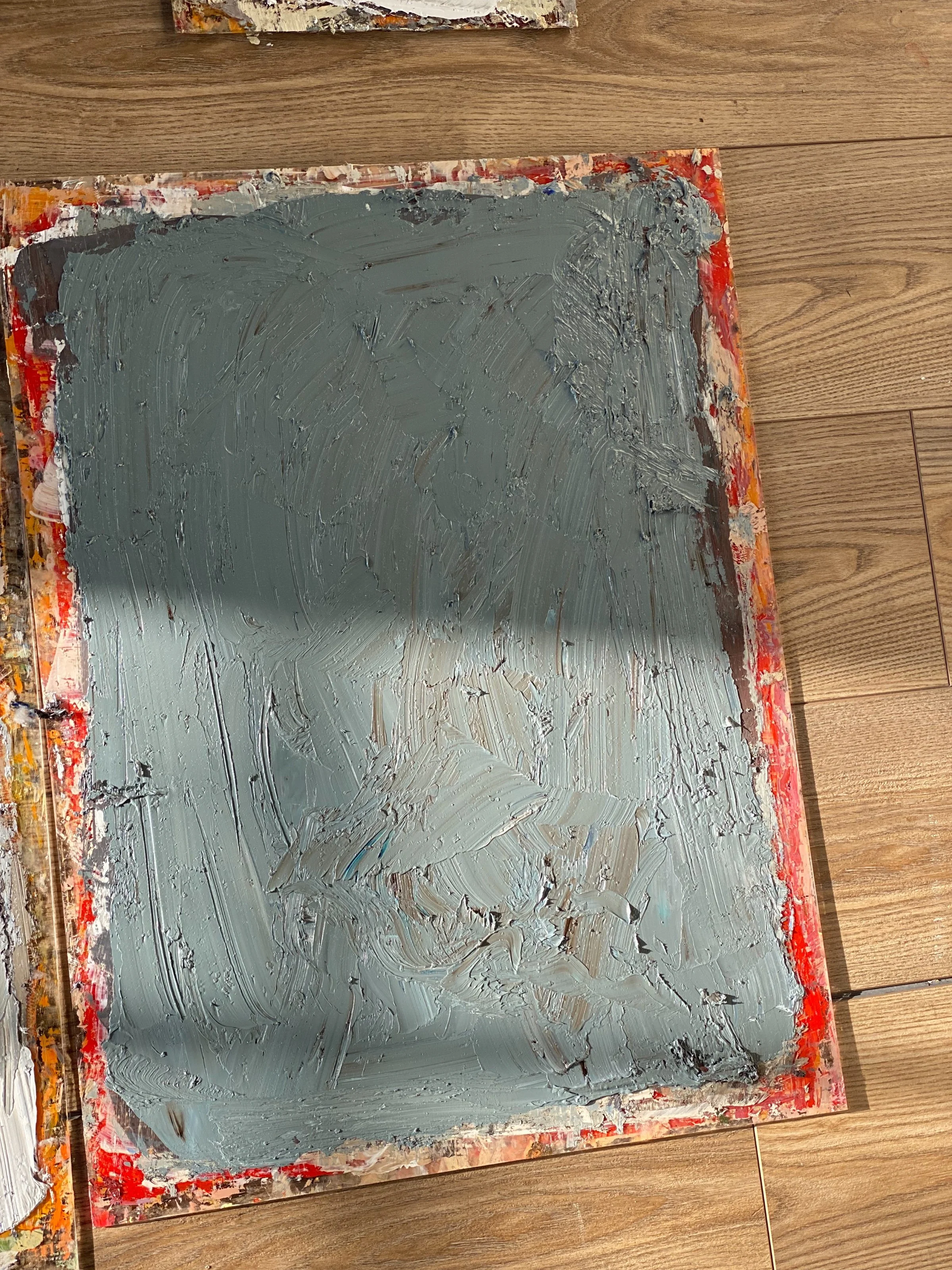
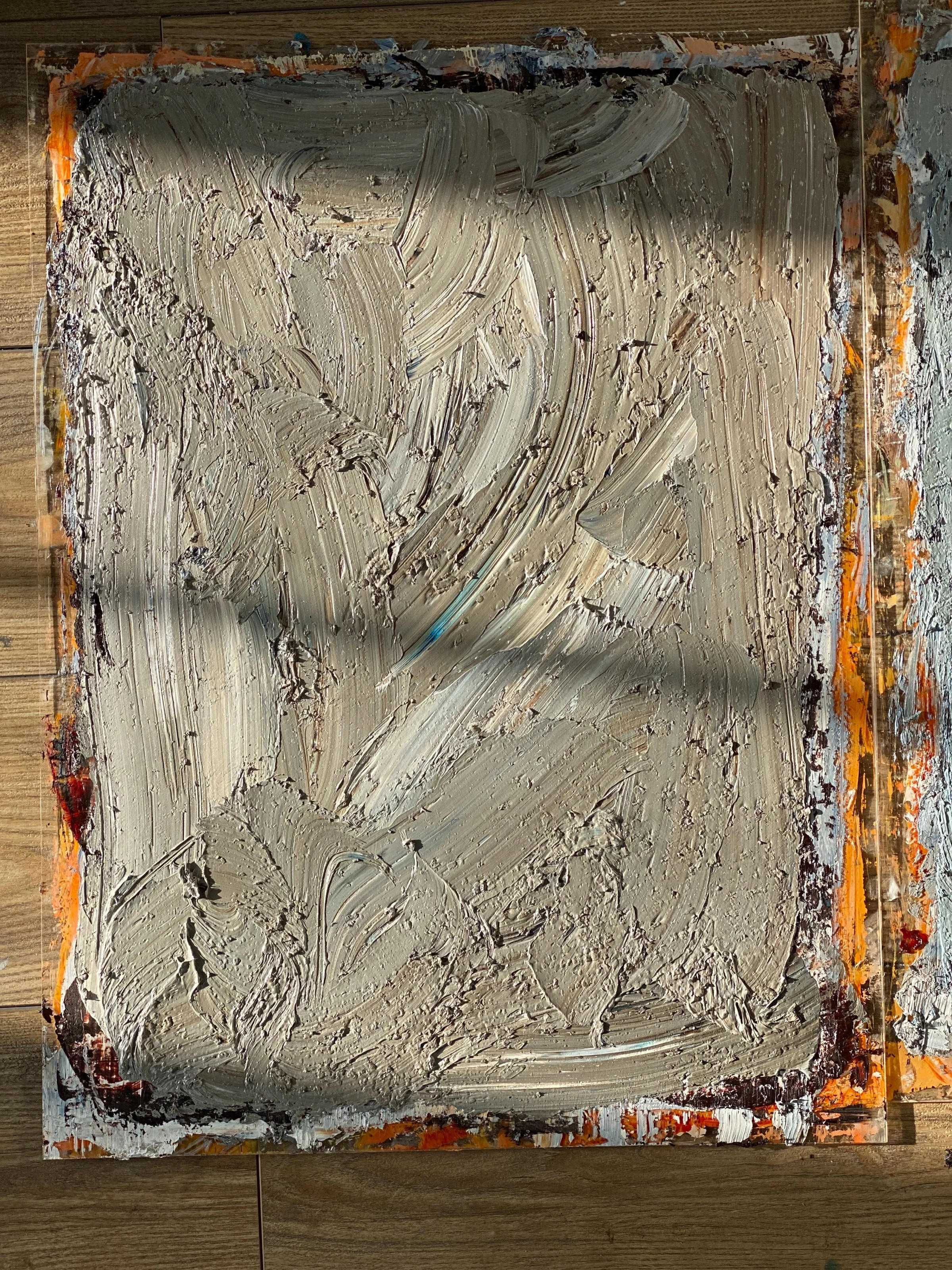
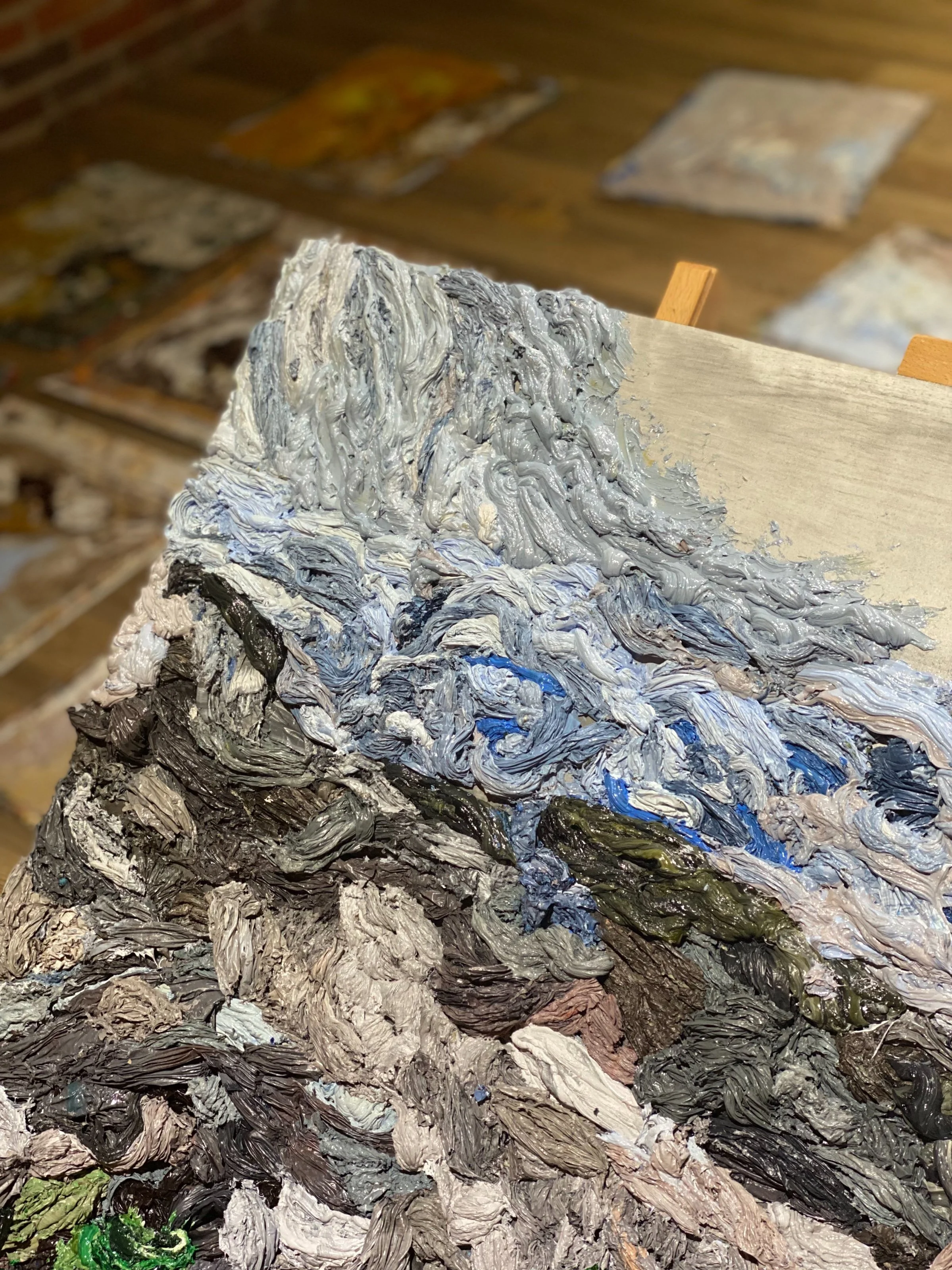
I’m looking to build on the progress I made the other day, but I can feel what the surface is asking for next. The forms I have already created carry a sheen, a kind of light-catching clarity, and now I need a texture that can sit beside that gloss without competing with it. It has to complement the shine, not flatten it. It has to give the eye somewhere else to land.
This is where the studies become more than references. In each one, I’m testing not only what needs to be added, but how it needs to behave. I am hunting for textures I might need, and noticing the ones I should avoid or neglect. Some marks look exciting in isolation, but collapse the structure when they are asked to live next to a quieter passage. Other textures do the opposite, they hold the painting together, they create a rhythm, they let the sharper forms feel even sharper.
Up close, I want the experience of looking at this work to feel as vivid as being there in person. That is the point of the controlled variety. I want the surface to shift as you move: slick against matte, scraped edges against soft transitions, dense clusters of information against open breathing room. The painting needs to reward attention at every distance, but it still has to read as one coherent body.
October 9, 2021
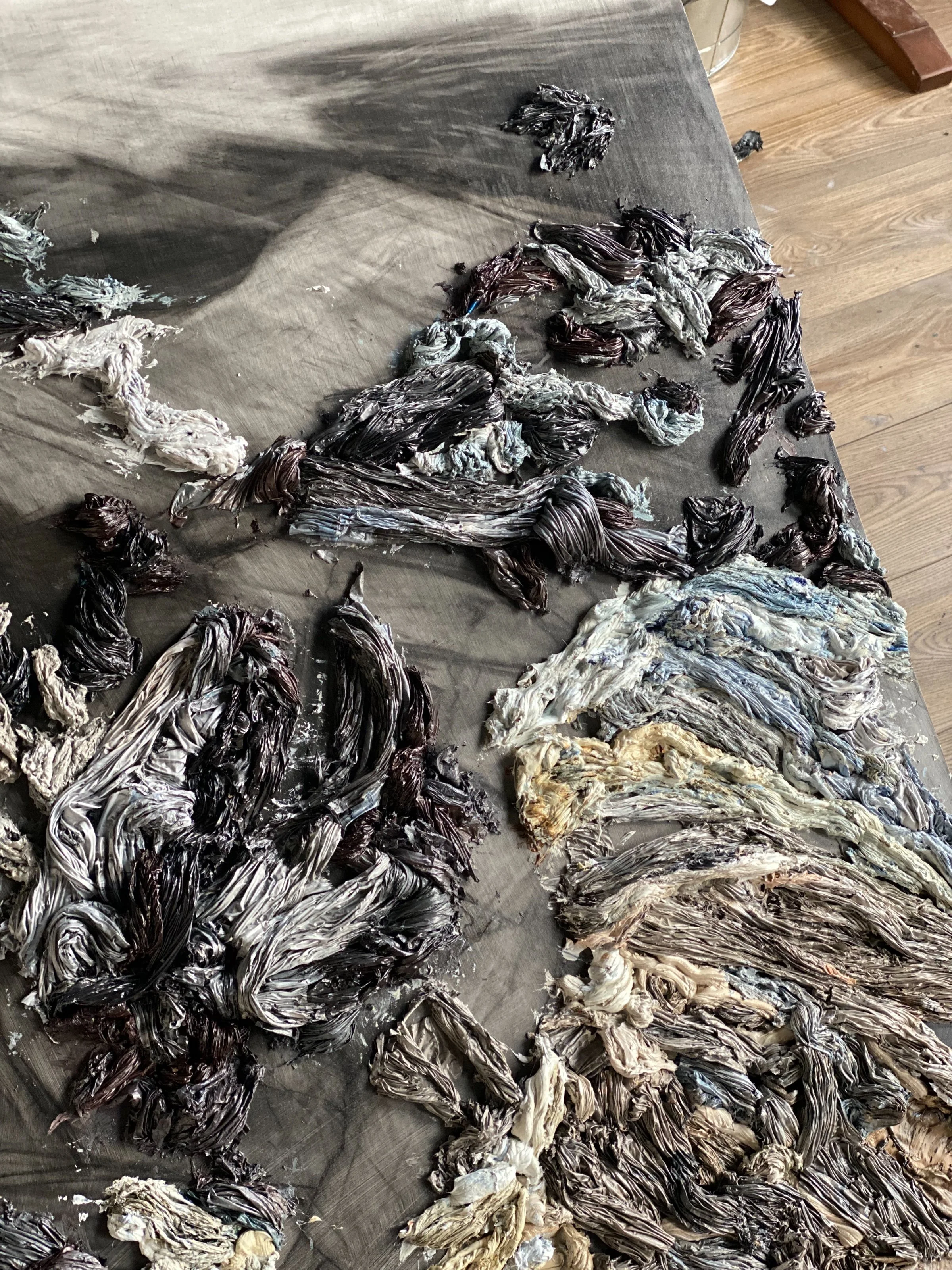
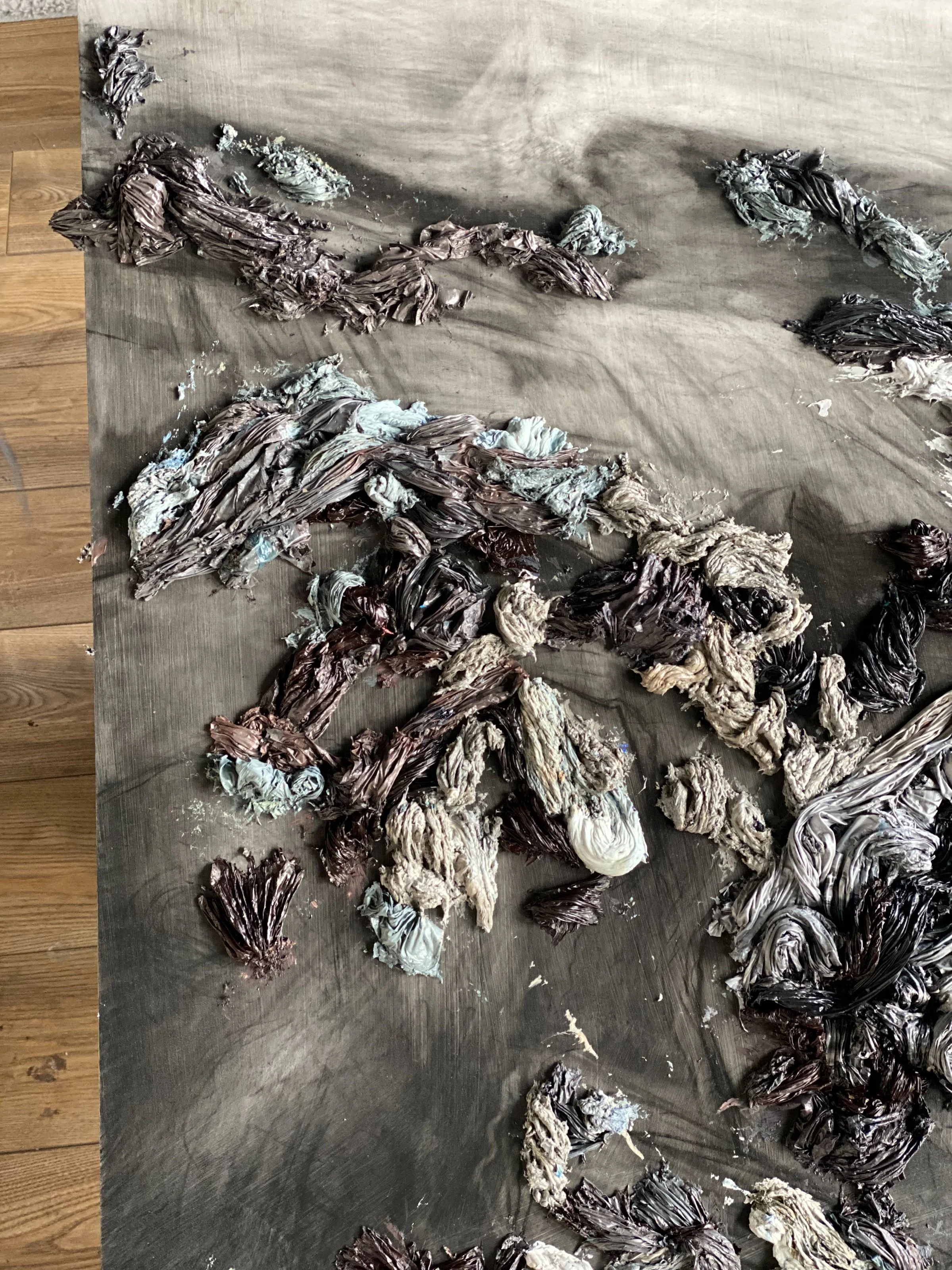
I’m very excited about this progress. I get a lot of enjoyment from sitting and deliberating over my work. Before I touch the surface again, I take time to think through my objectives, define the next steps, and strategize a few possible outcomes. This kind of painting I’m developing, my painting, lets me deliberate over decisions in a way that actually suits how I think. The work is built to be paused, reconsidered, and re-entered with intention.
In a more traditional academic sense, when I sit down to paint, it is on one primed and ready surface. I continue to apply, thin, and manipulate material until a satisfactory state is achieved. Then I step away, and I can theorize how the next session will go.
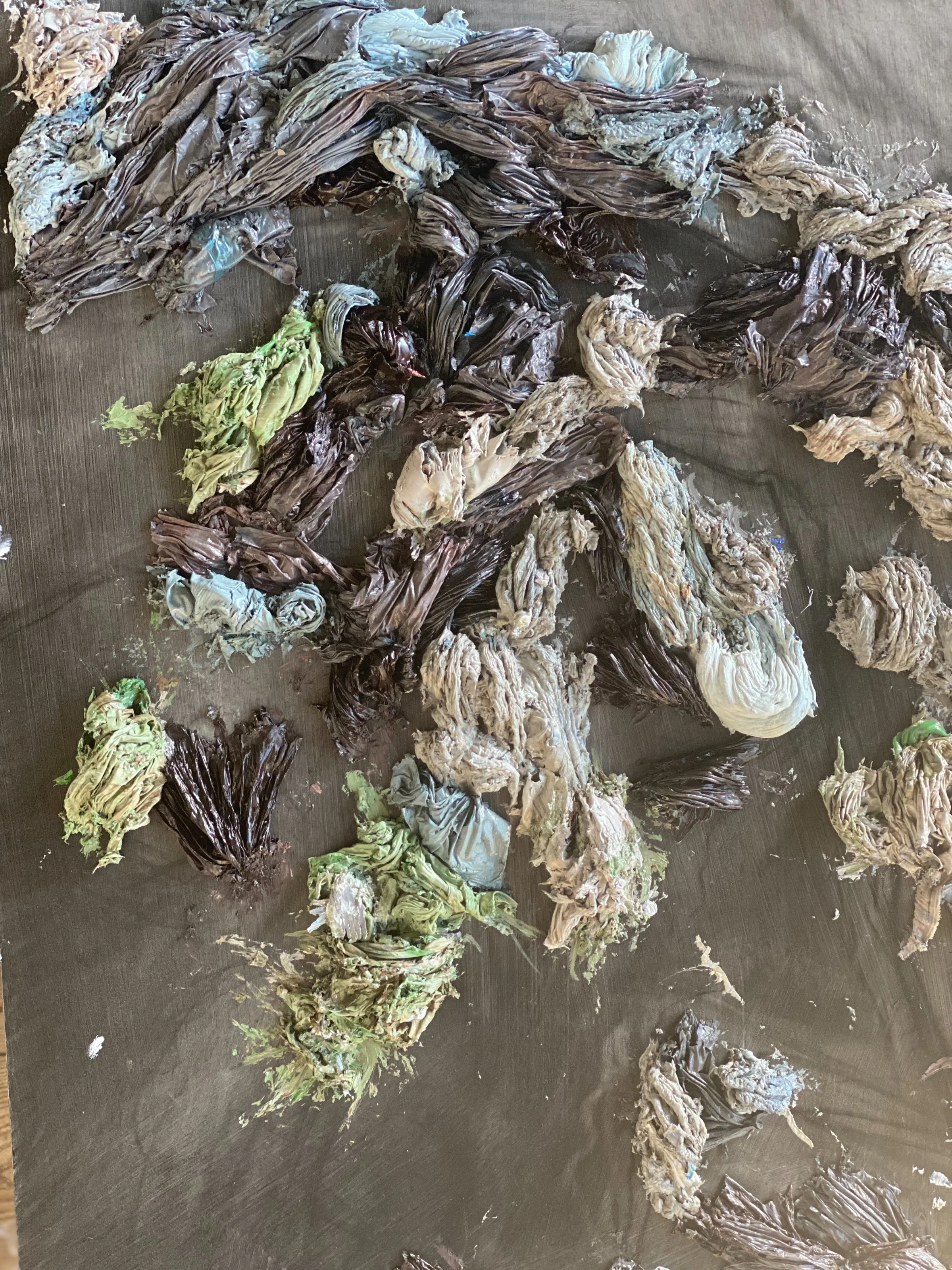
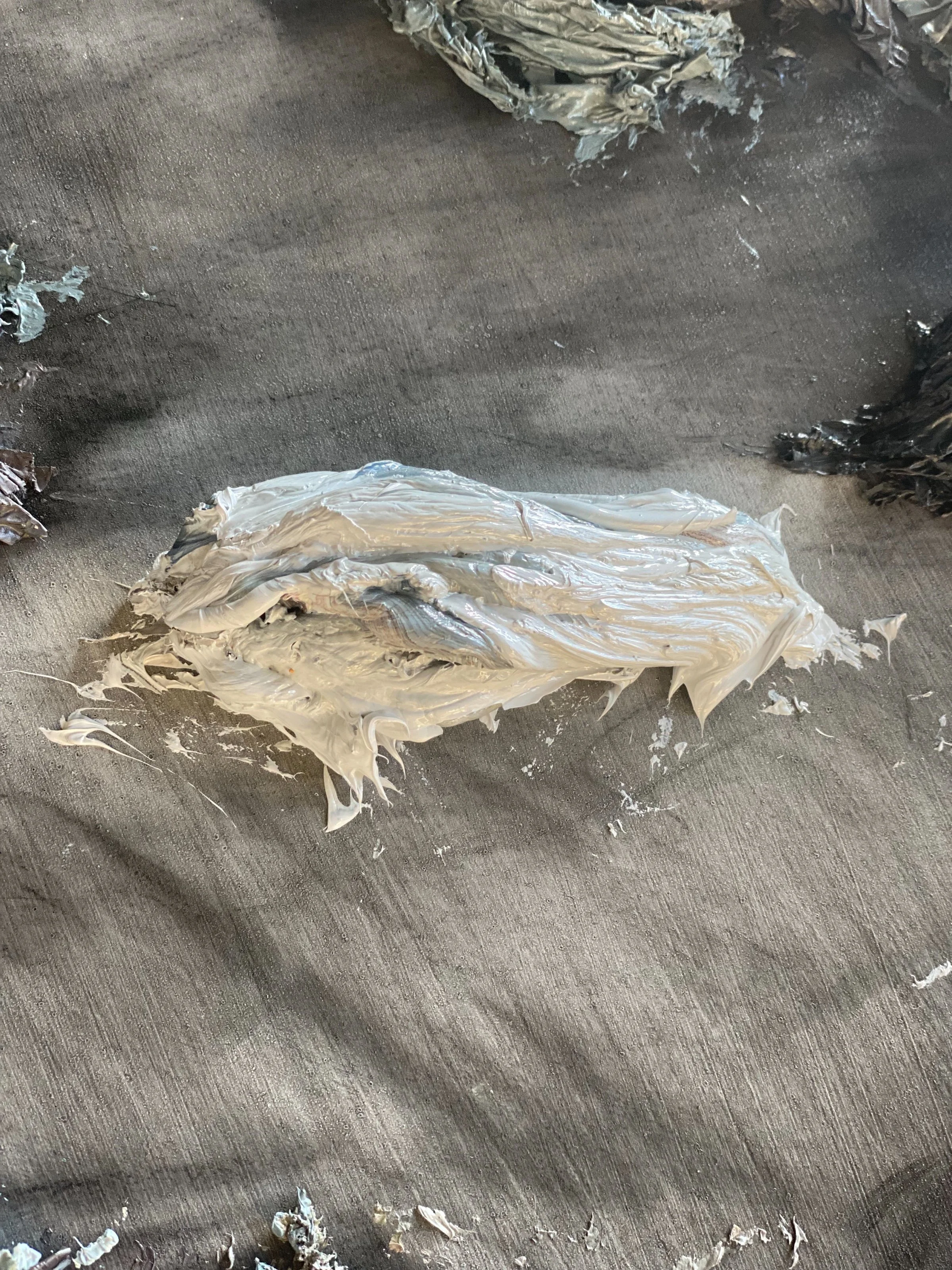
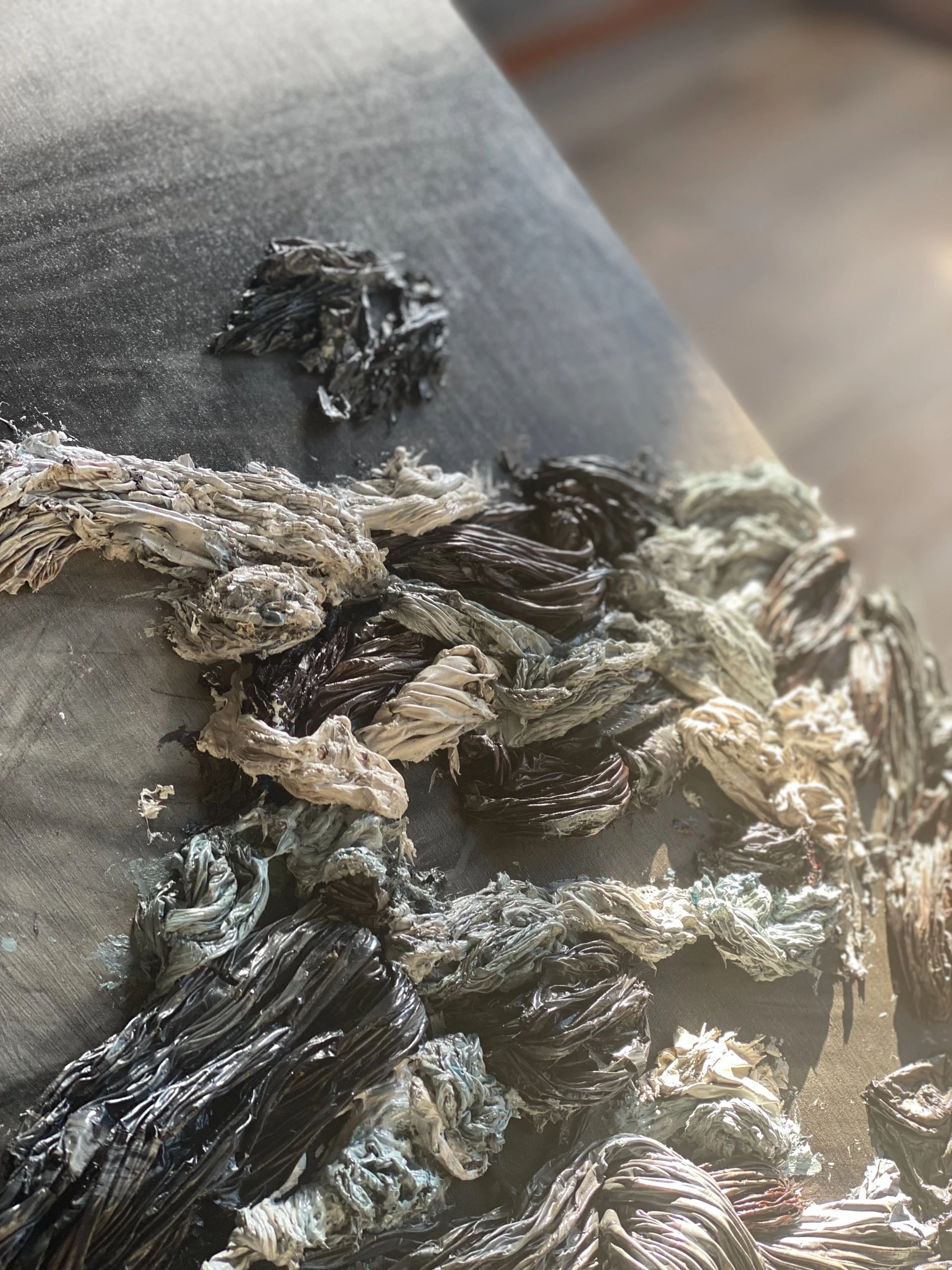
But with these works, the theorizing is not something that only happens after a stopping point. It happens inside the making. Because I’m working from multiple studies, building relationships, and physically sculpting the surface into new arrangements, each session becomes a series of decisions I can weigh against one another. I can test a direction, pull back, and re-compose without losing the integrity of what I have already learned. The process is not just execution. It is planning, revision, and discovery happening in the same breath.
October 18, 2021
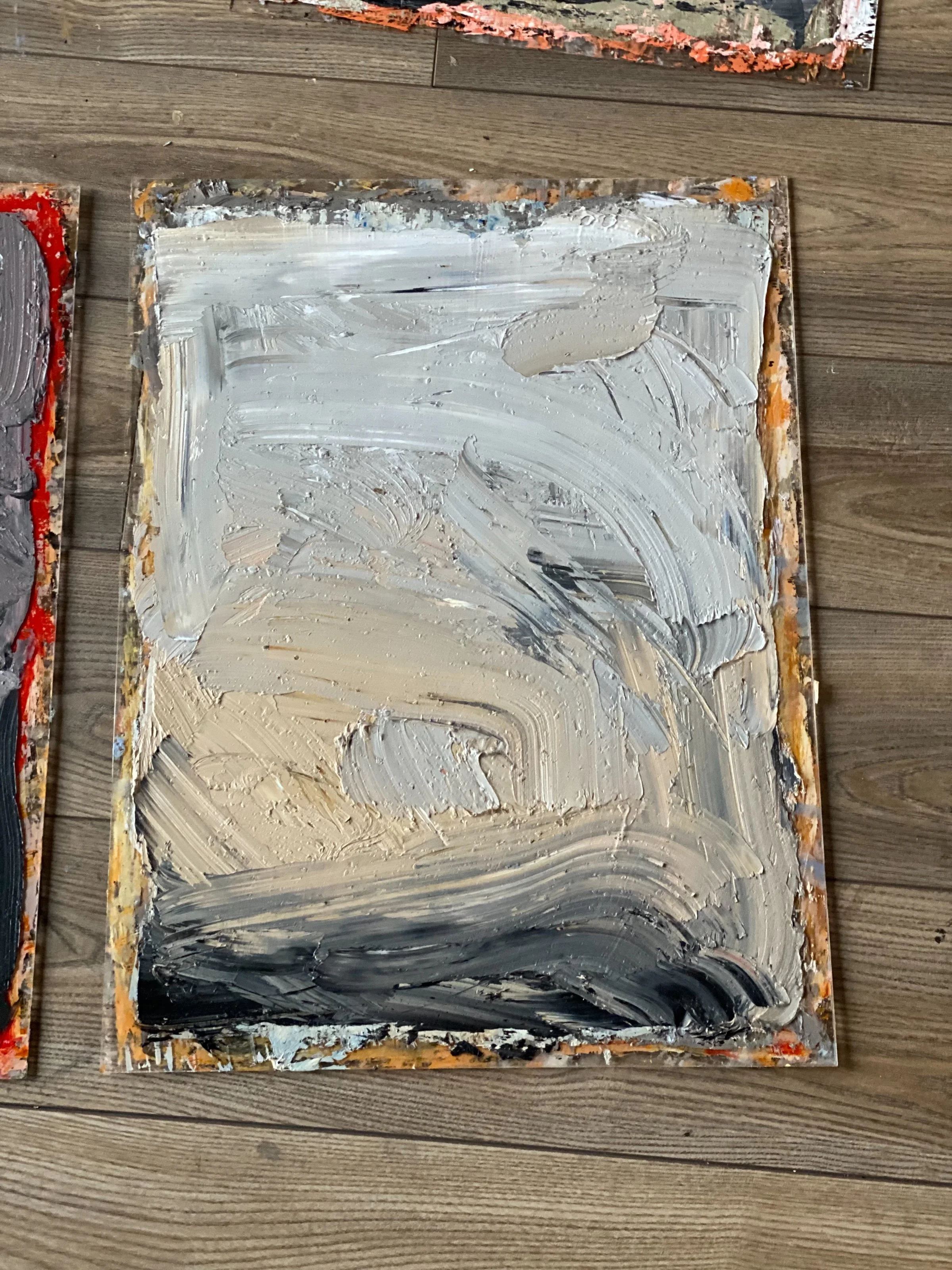
More Panels today. I need to flush out all of the in-between spaces.
October 20, 2021
Mission accomplished. At times, a single form can extend across subjects. A form can be a stone, but it can also be the ocean. A more obvious example is focusing on panels with a stark distinction between colors.
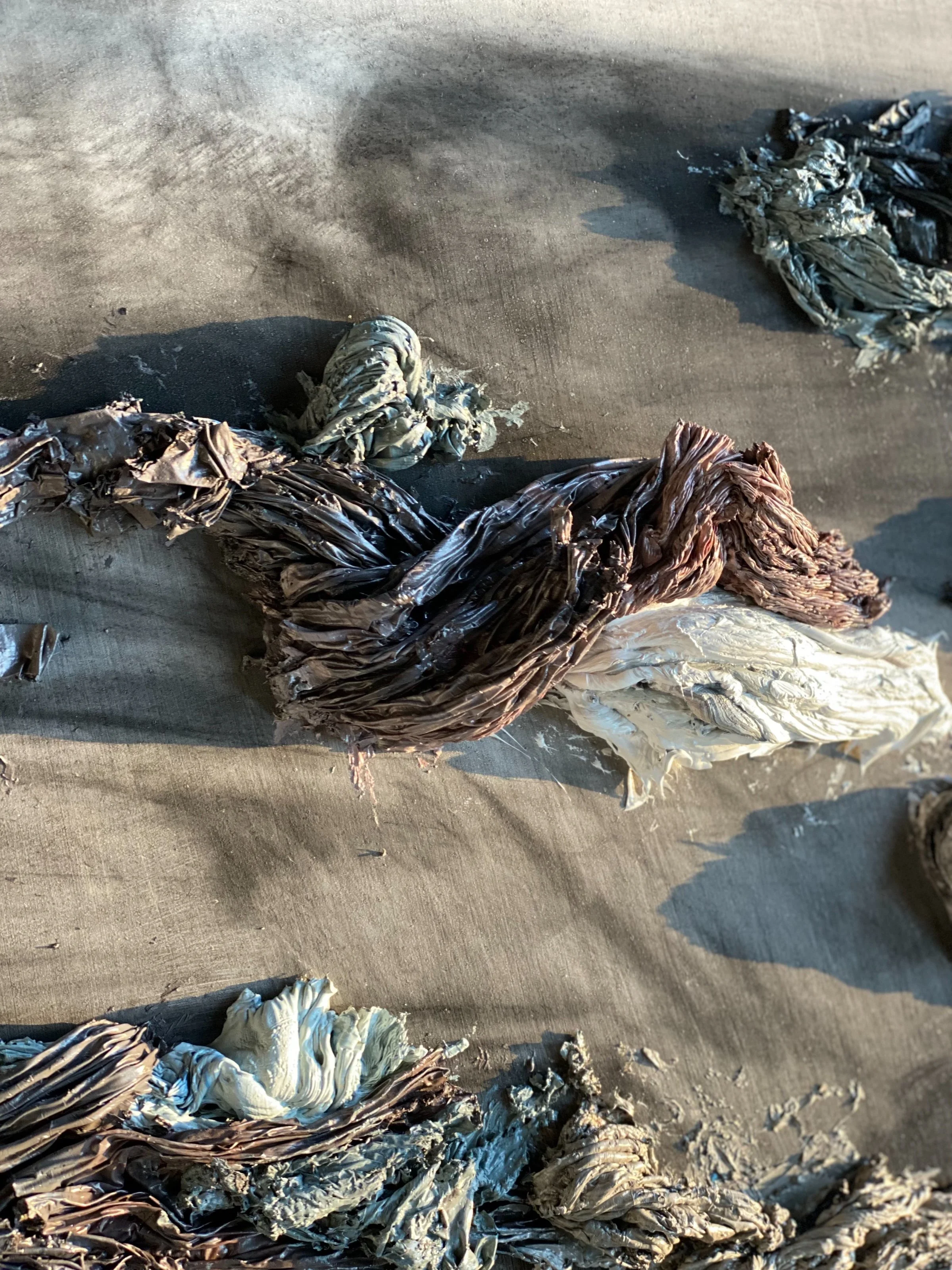
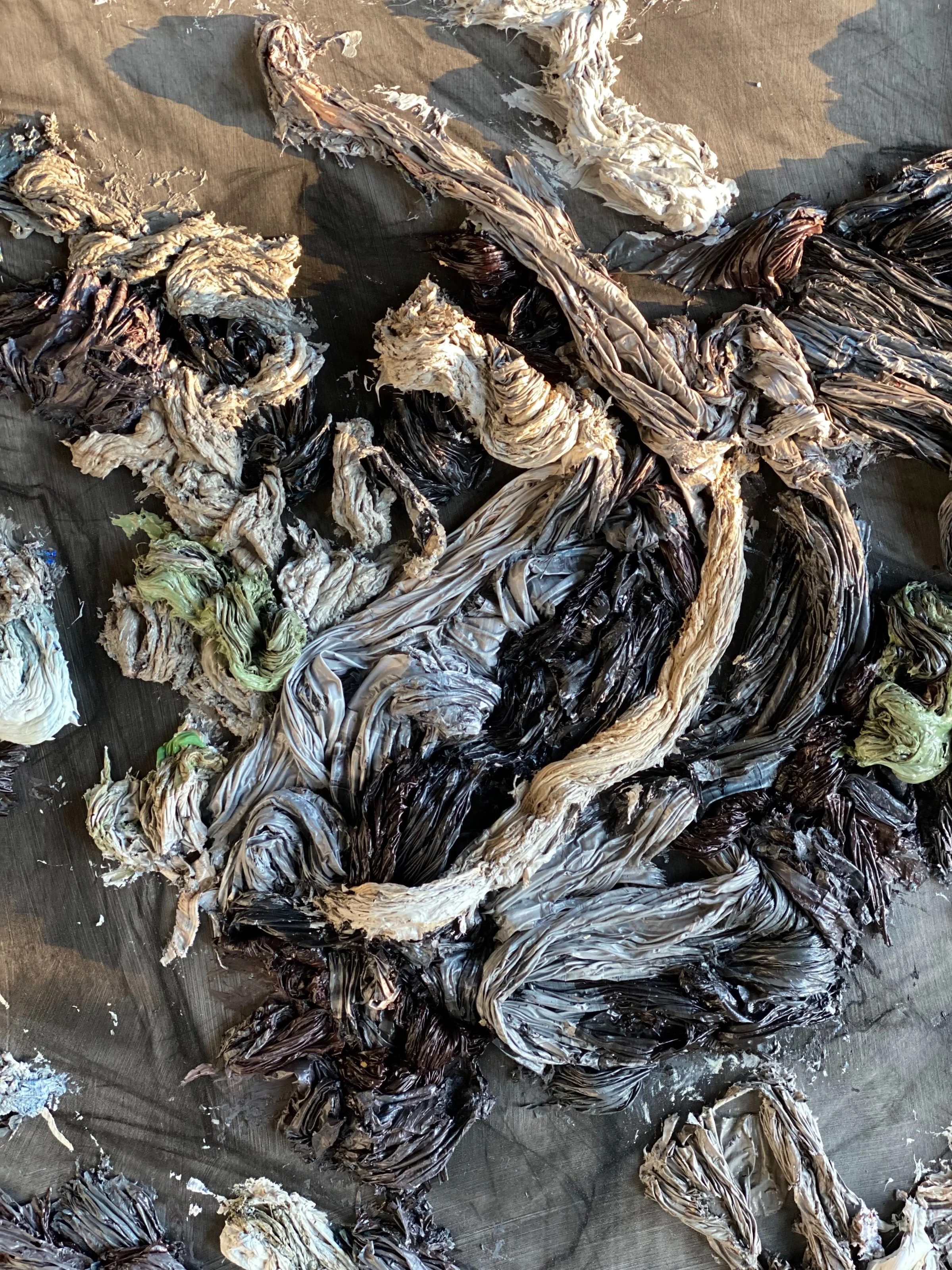
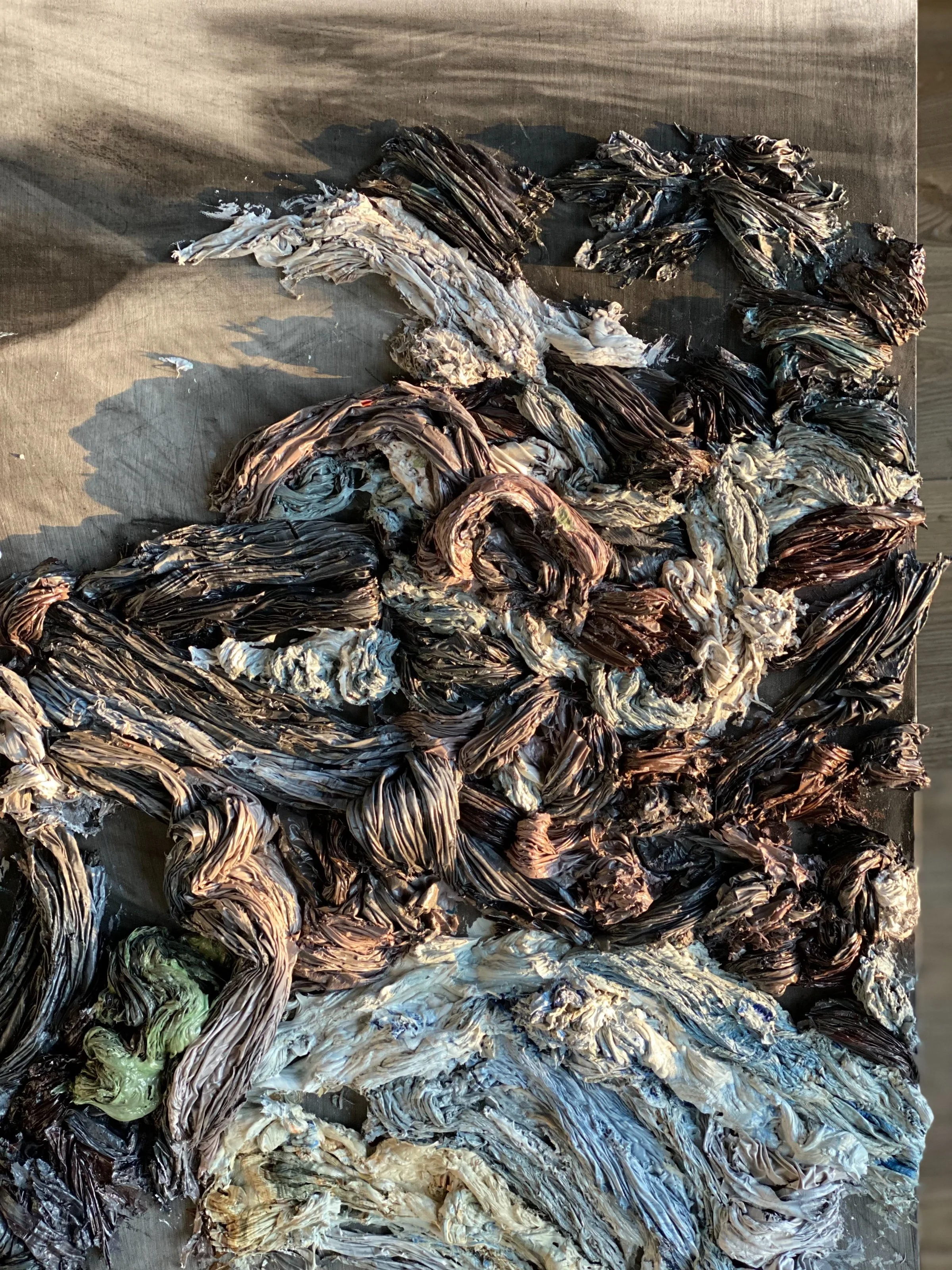
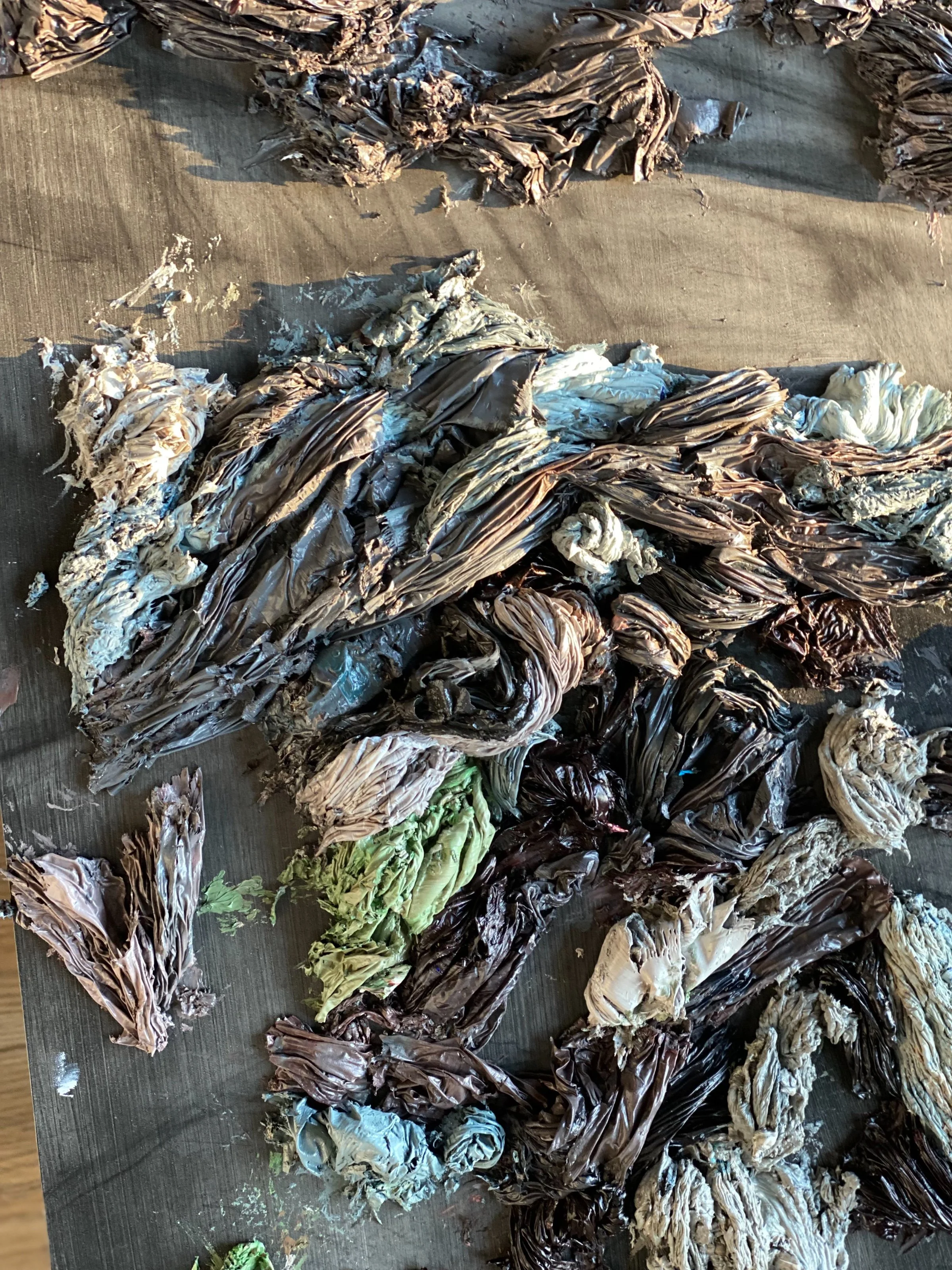
Today was a great day to be in the studio.
October 25, 2021
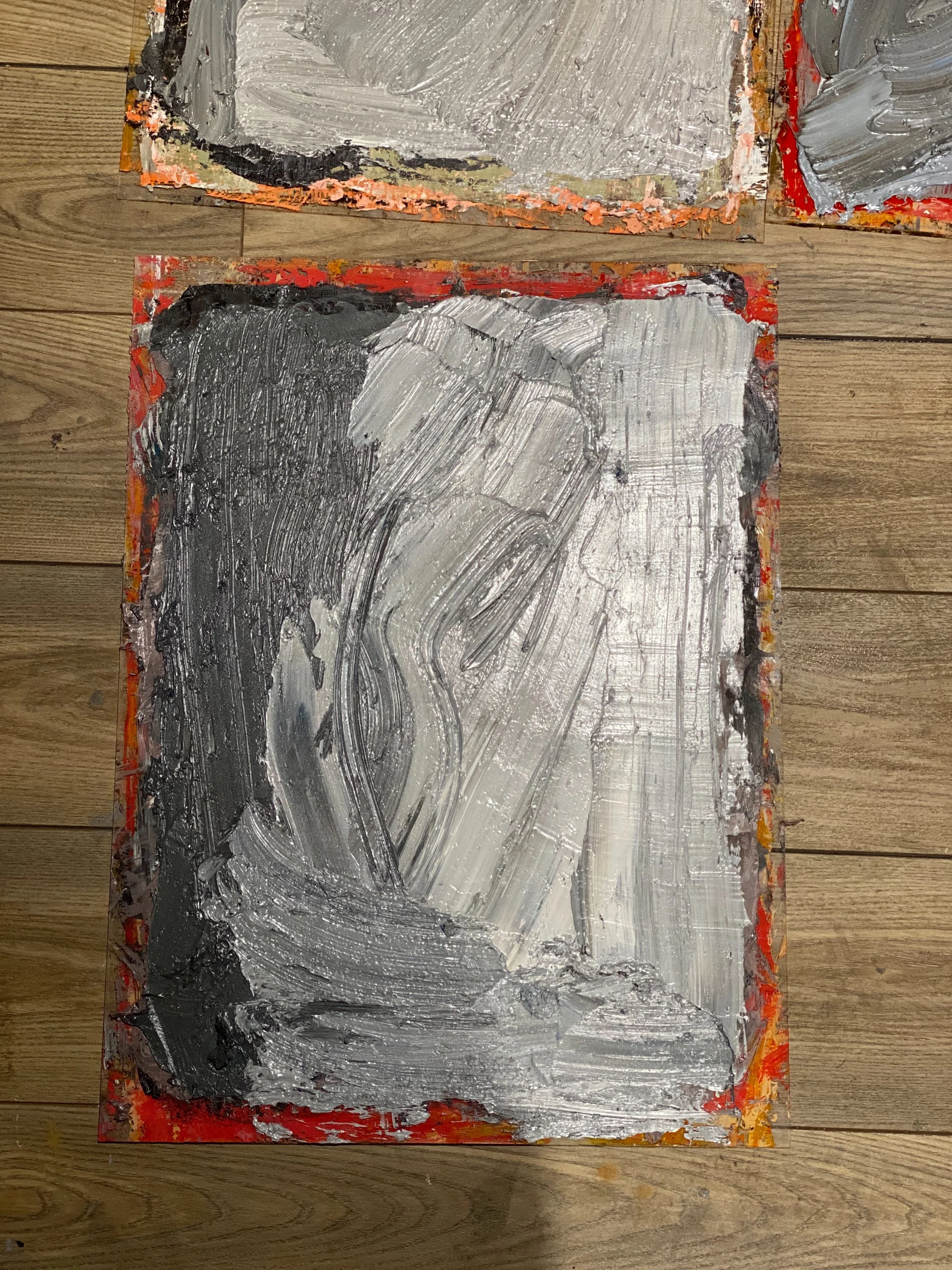
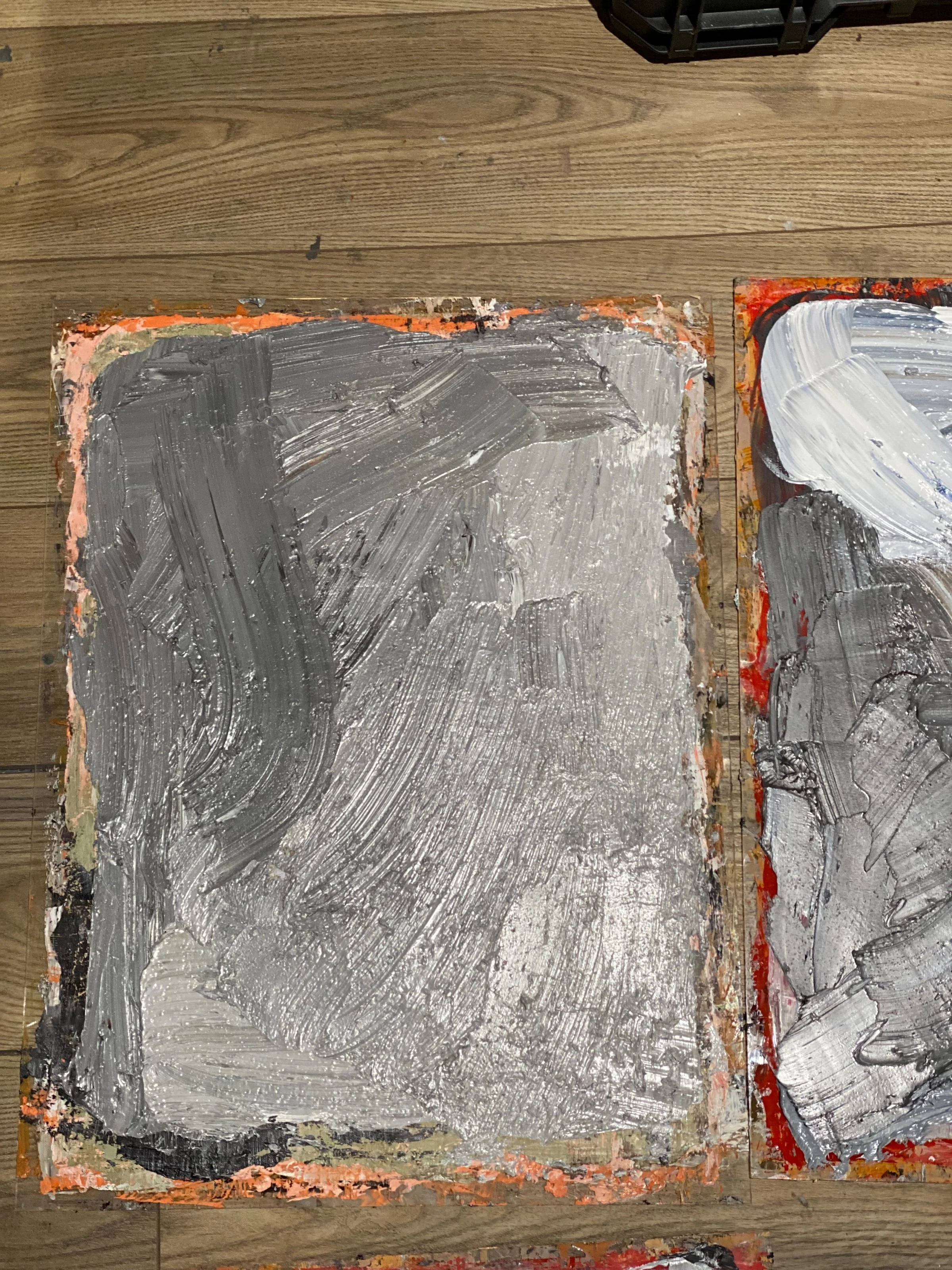
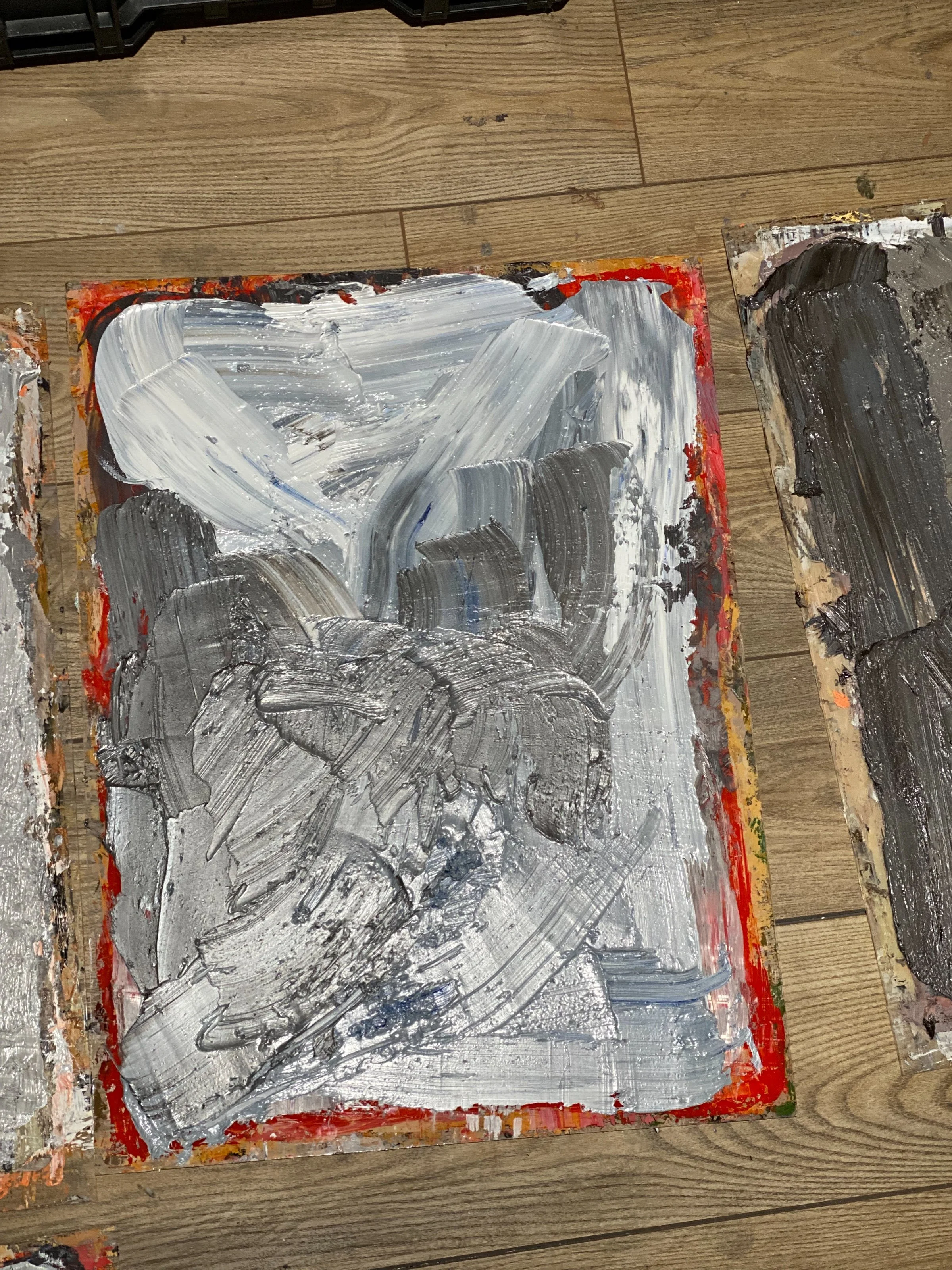
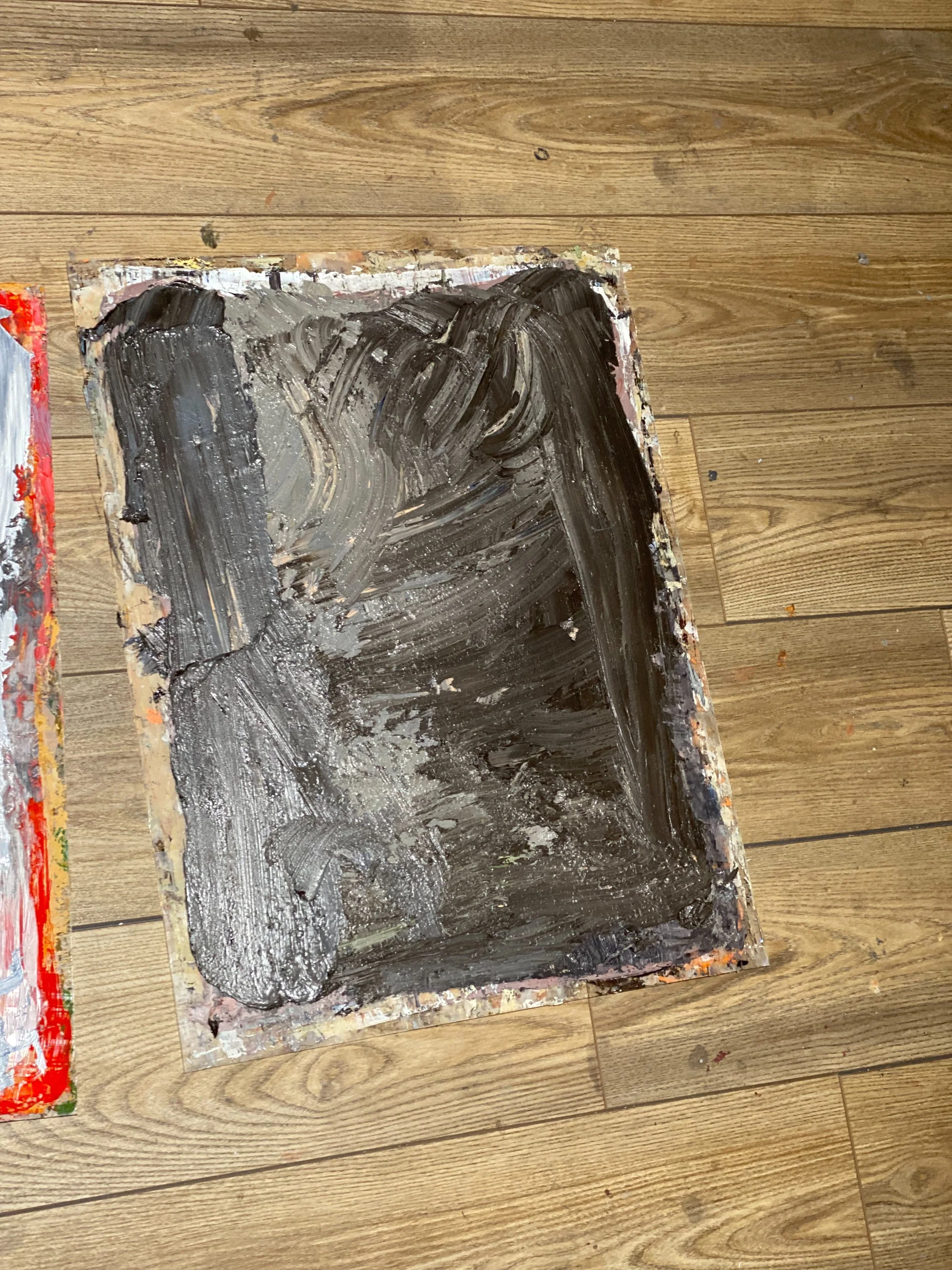
I am focusing on the unique textures and structures where the stones meet, isolating those elements. I am wary of the steps required when I move on to more fluid shapes.
October 27, 2021
Great progress made. I want to be in the grays for as long as I can.
October 30, 2021
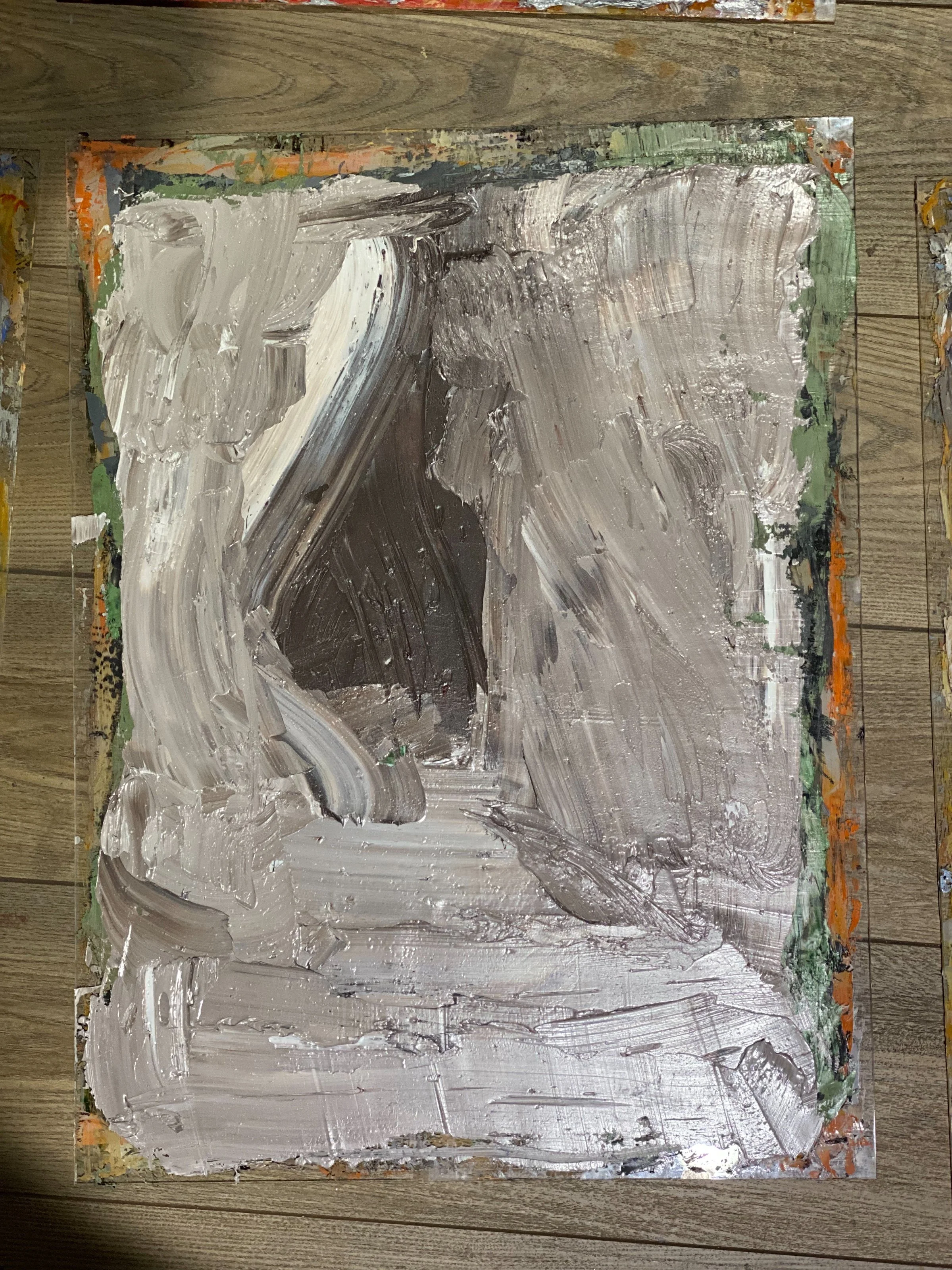
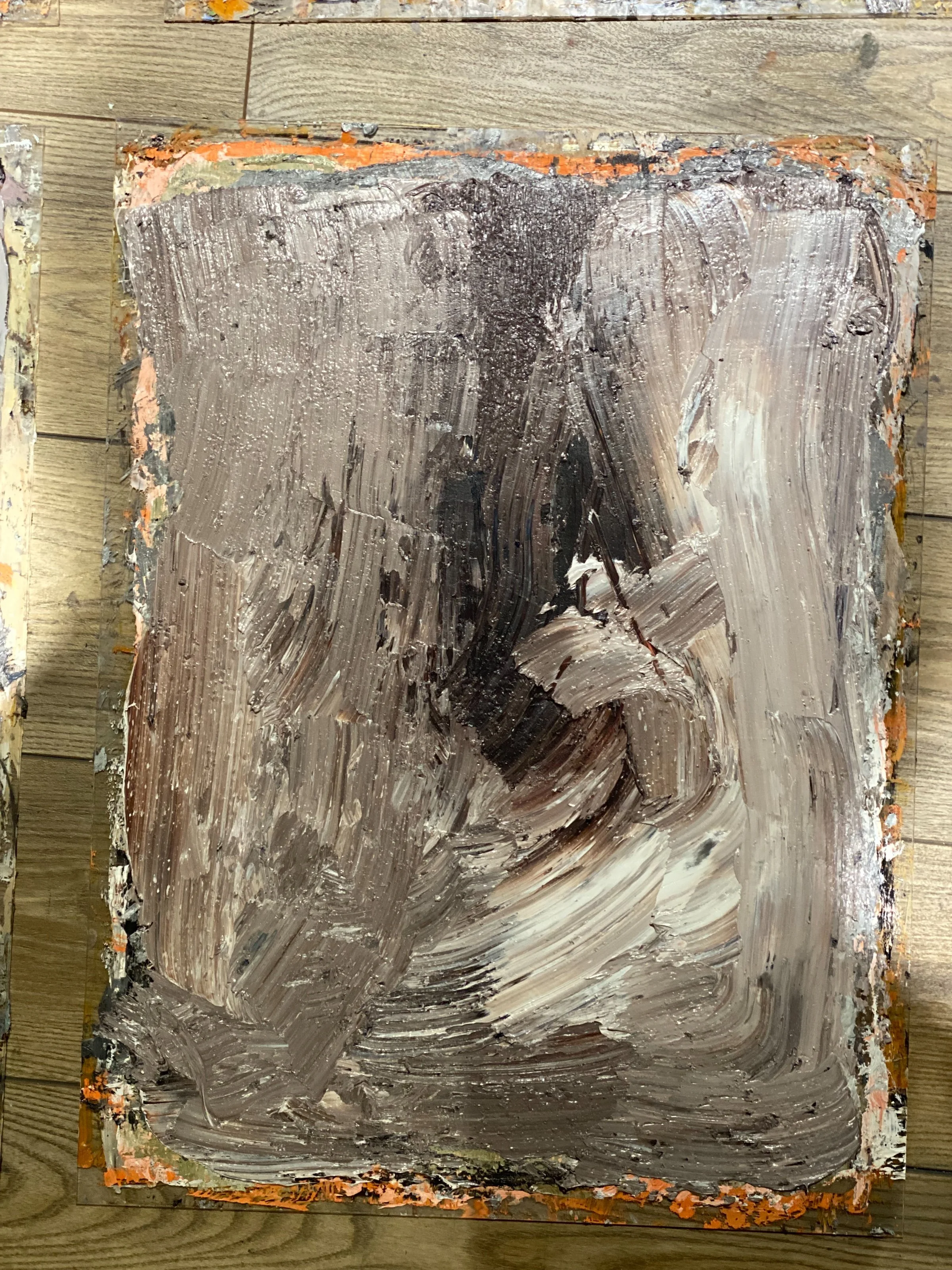
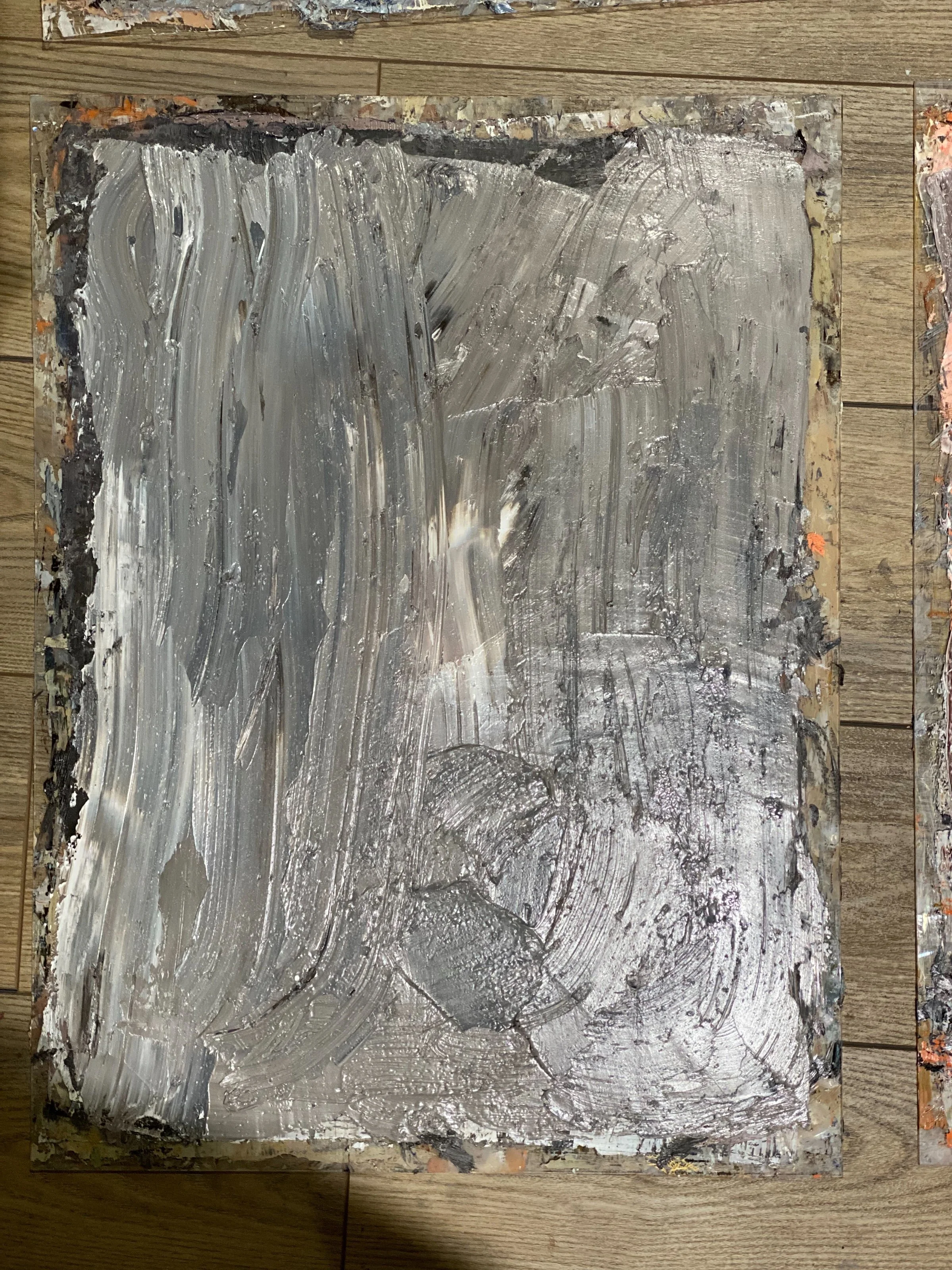
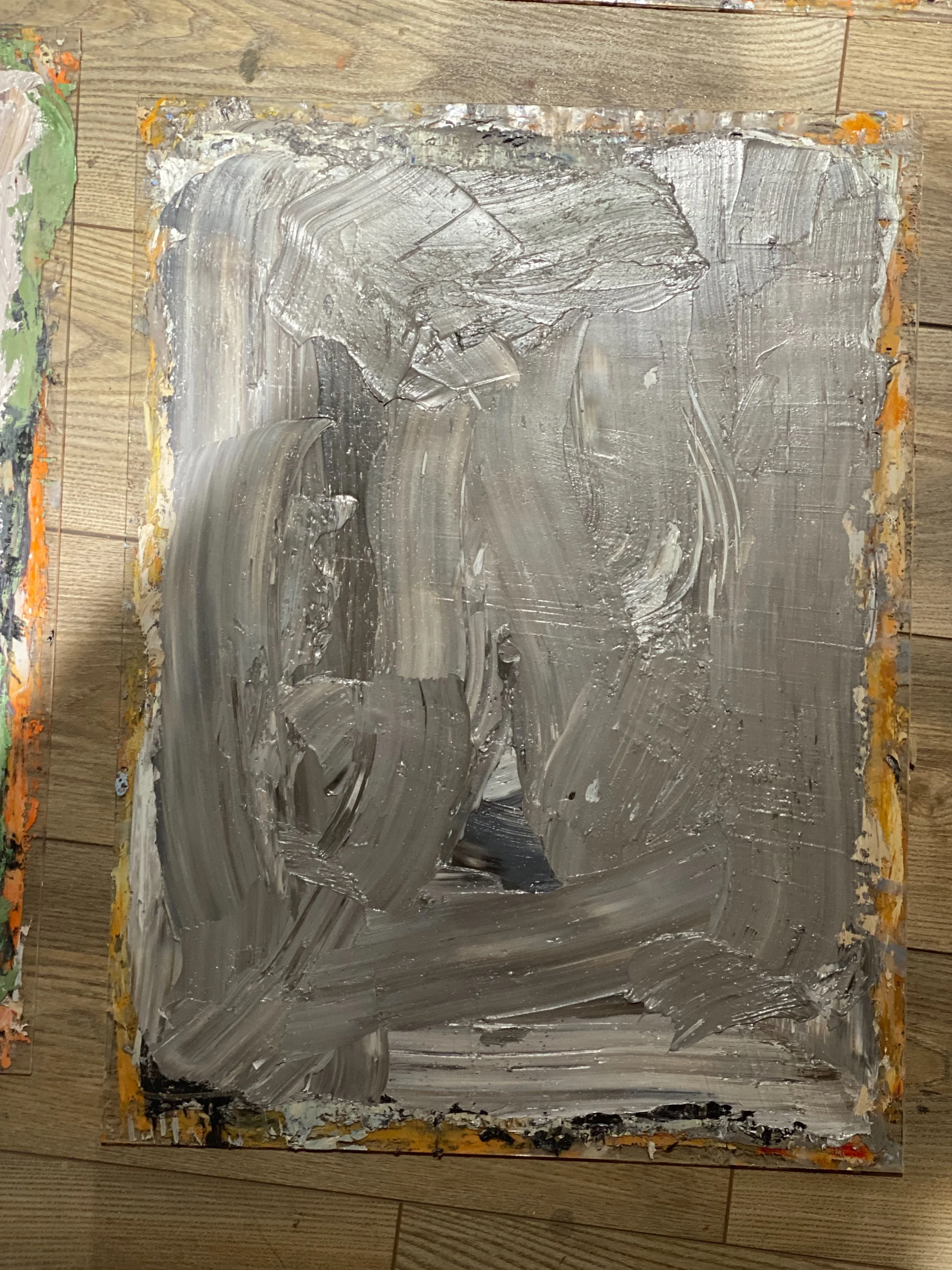
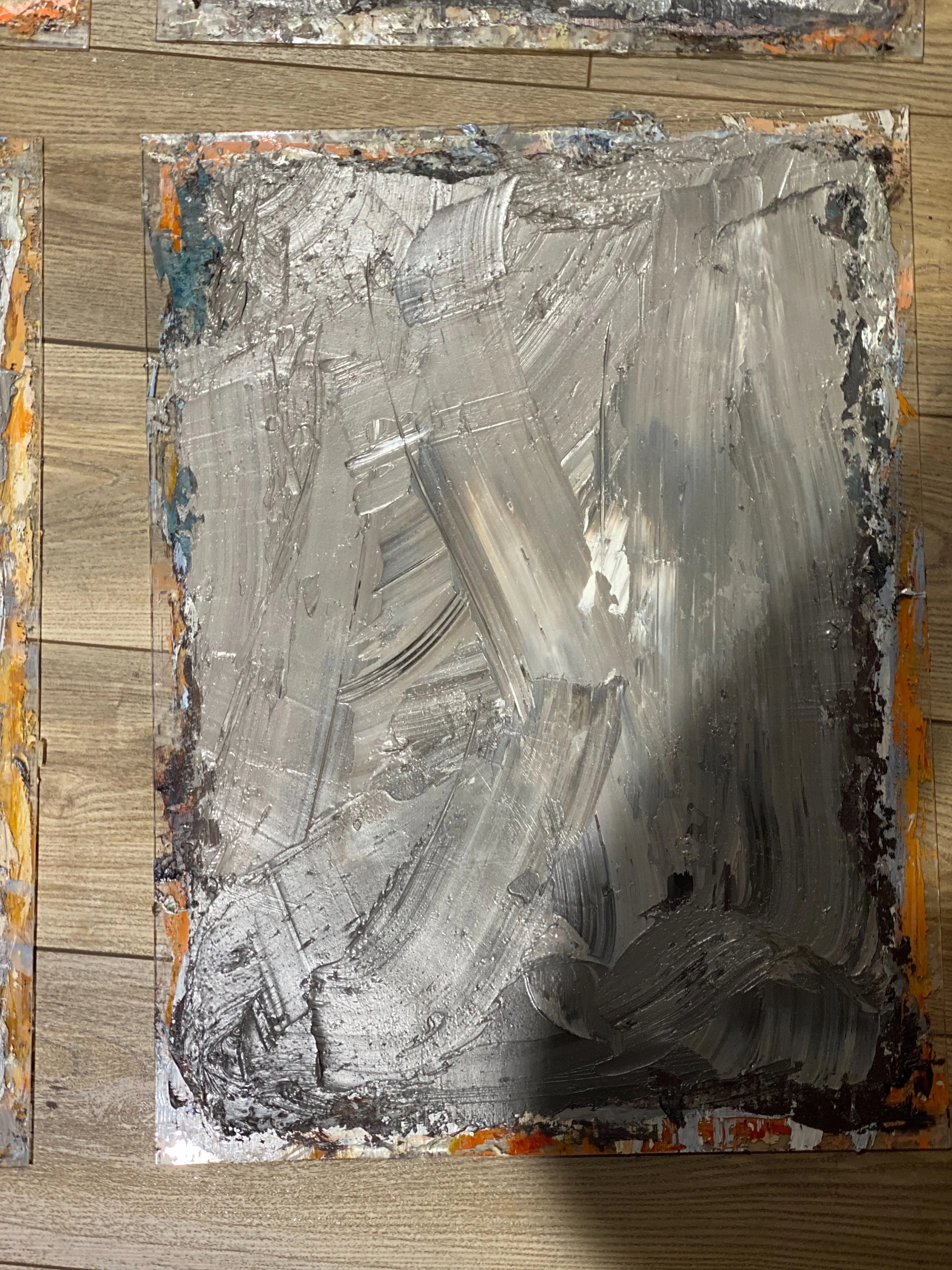
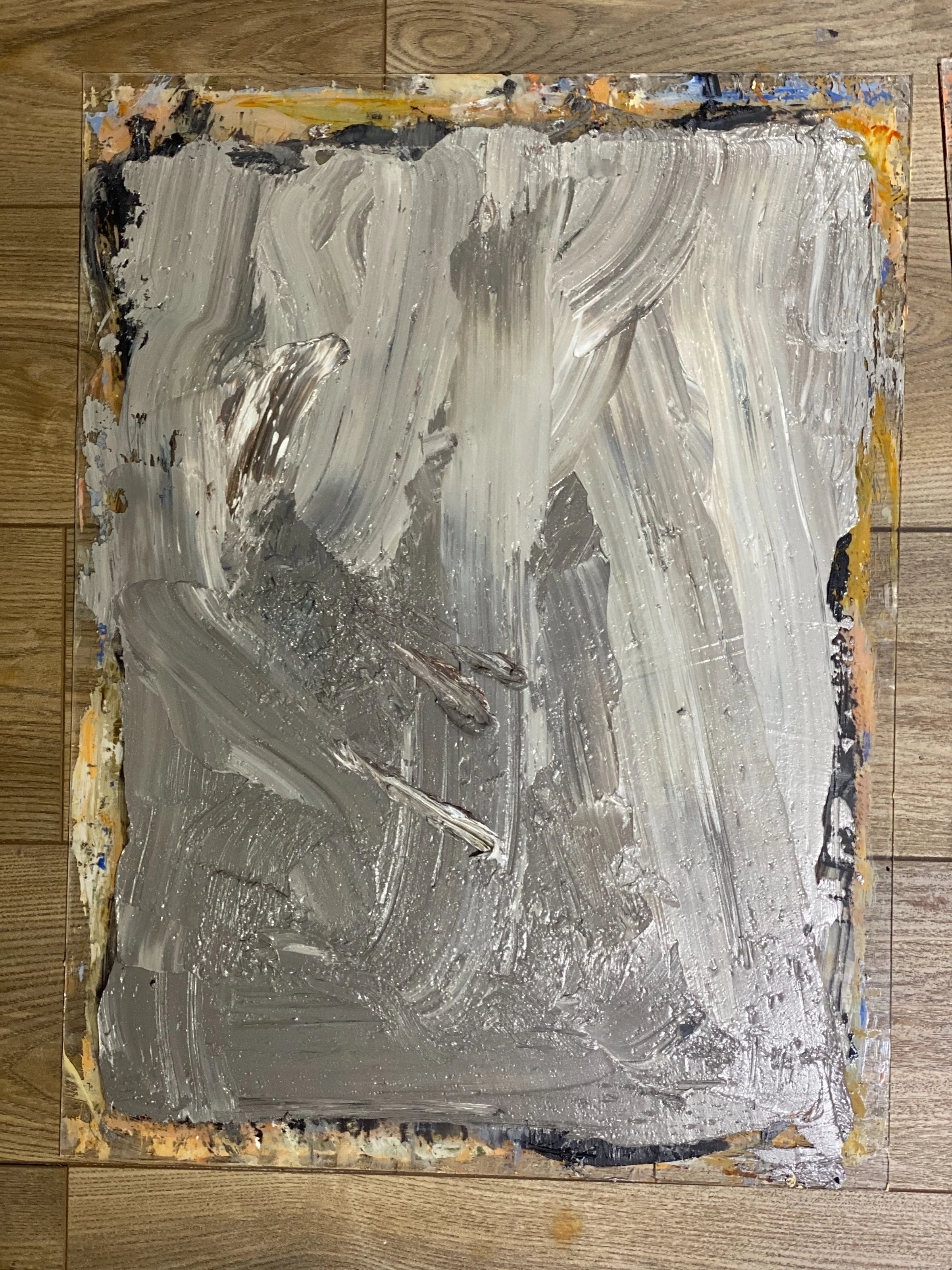
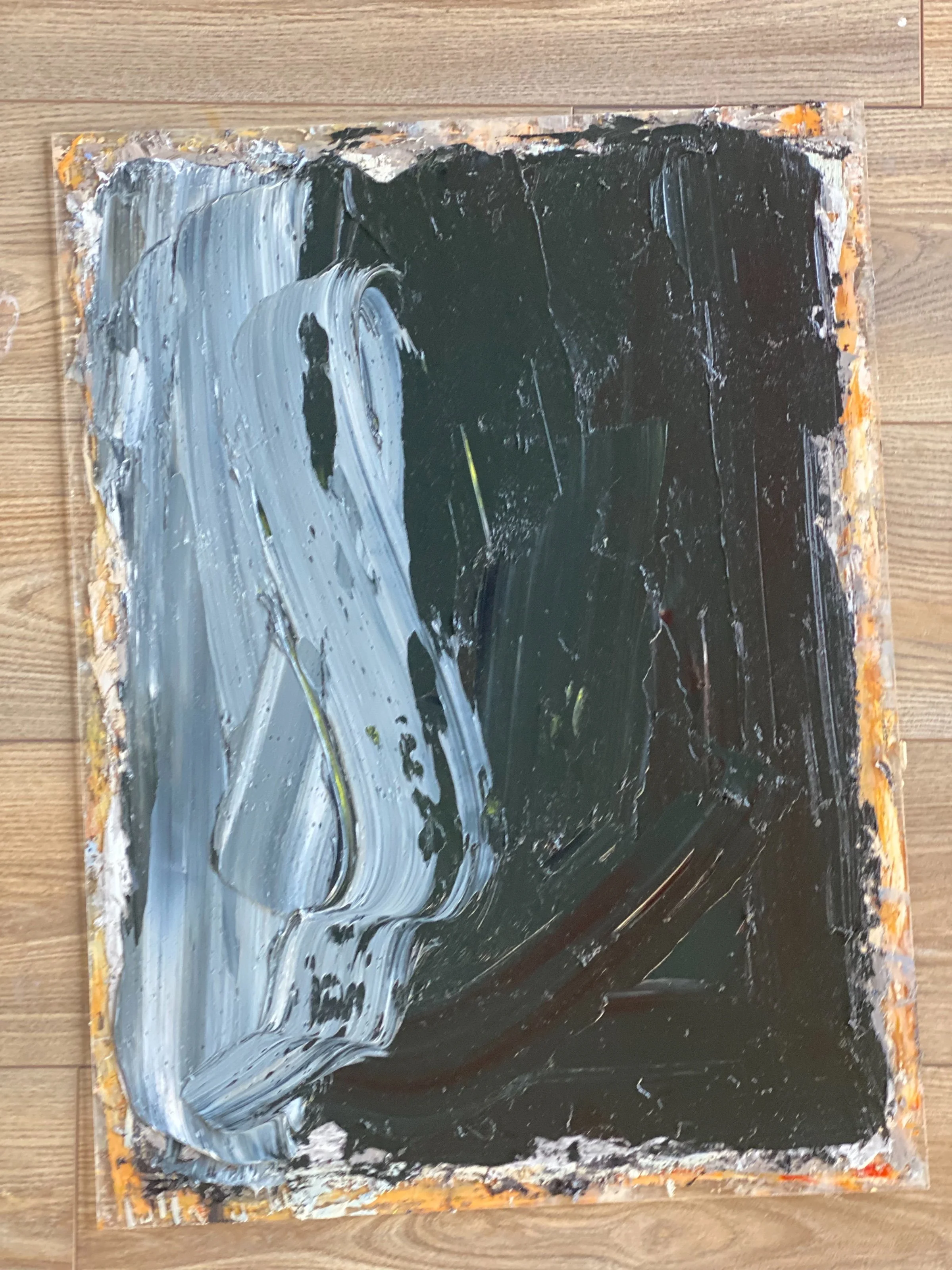
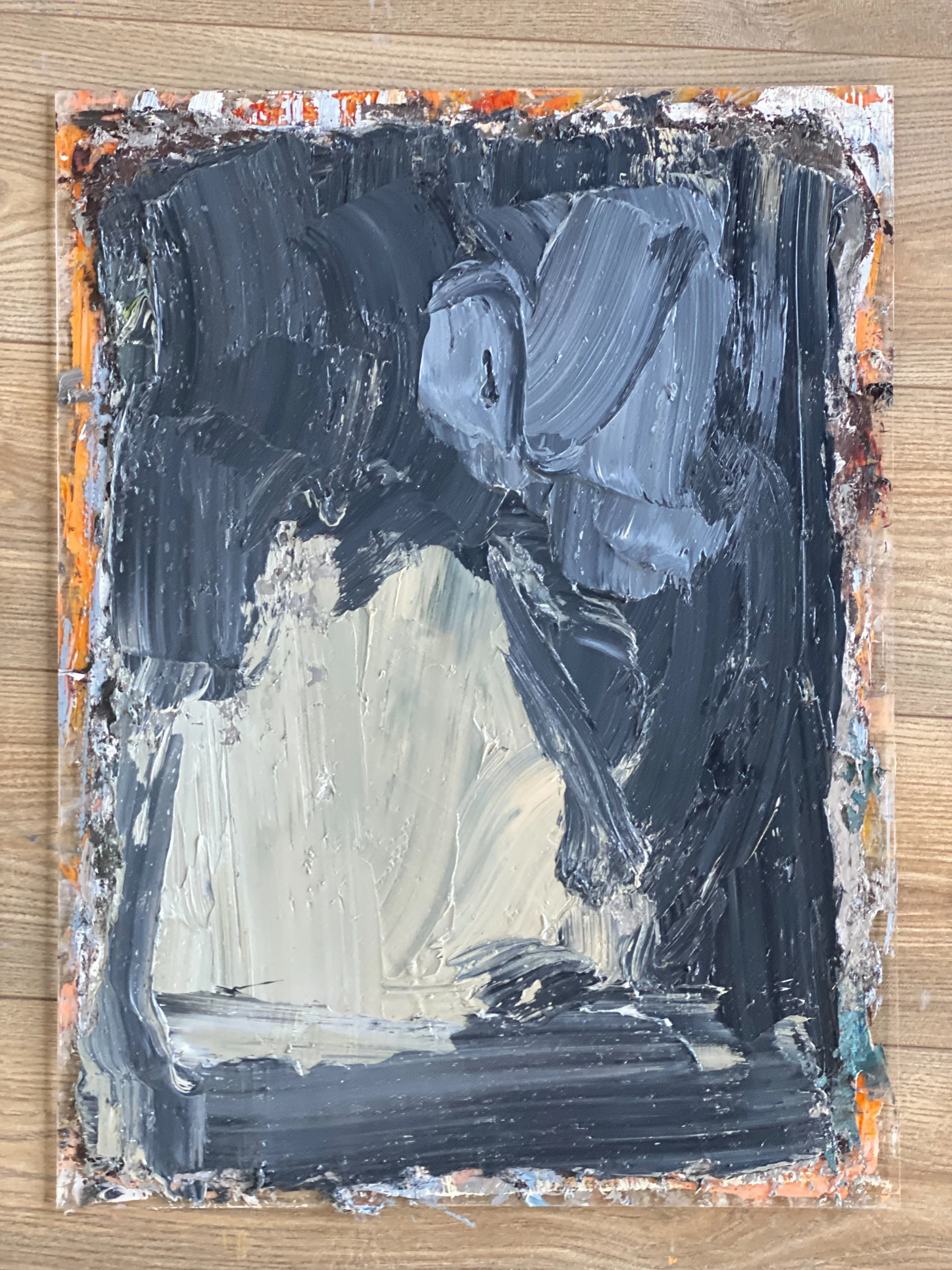
It’s raining hard today—my favorite time of year to be in the studio. I’m creating panels that will become smaller forms in the upper part of the work. These stones should feel very far from the viewer.
November 1, 2021
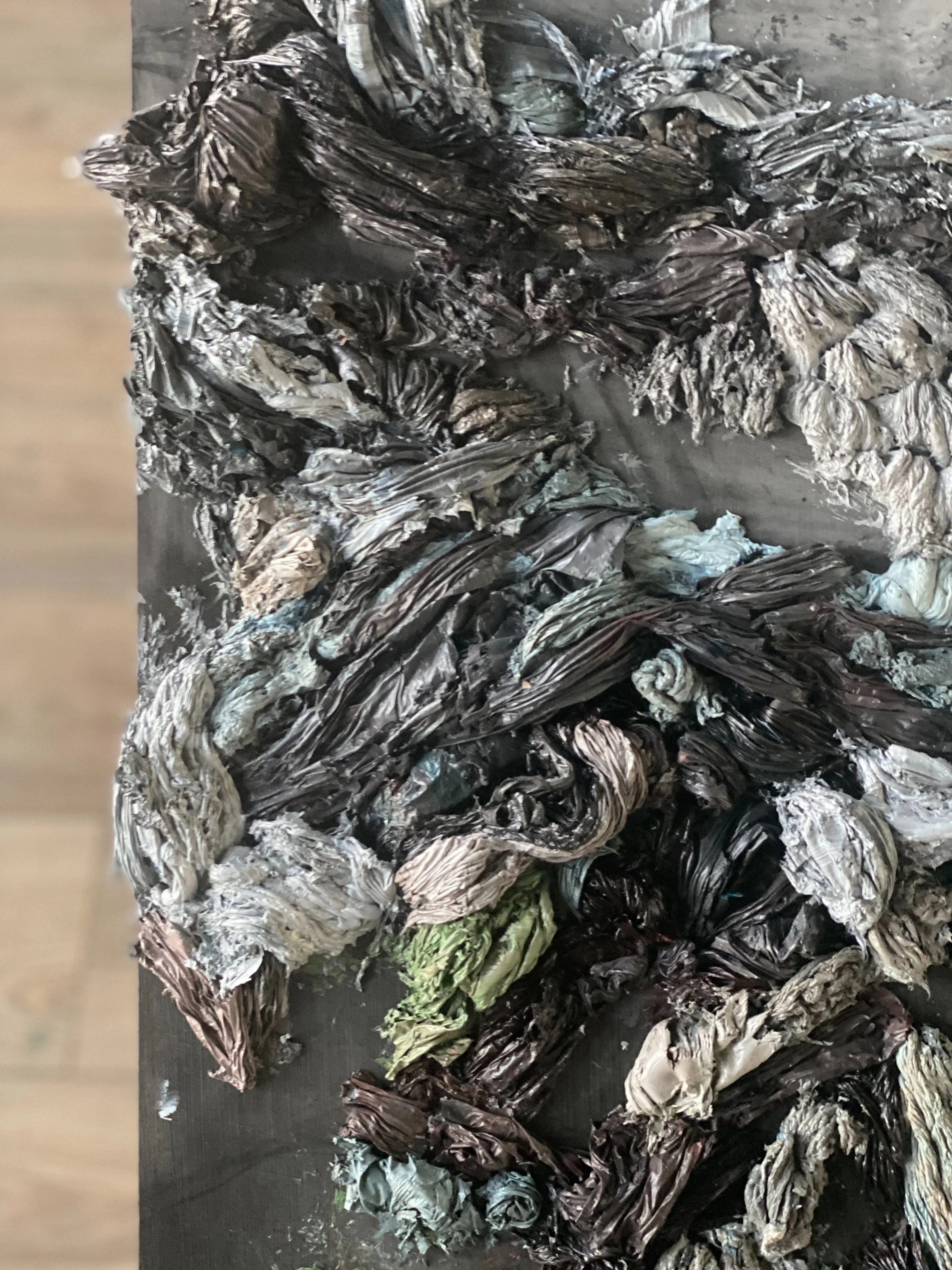
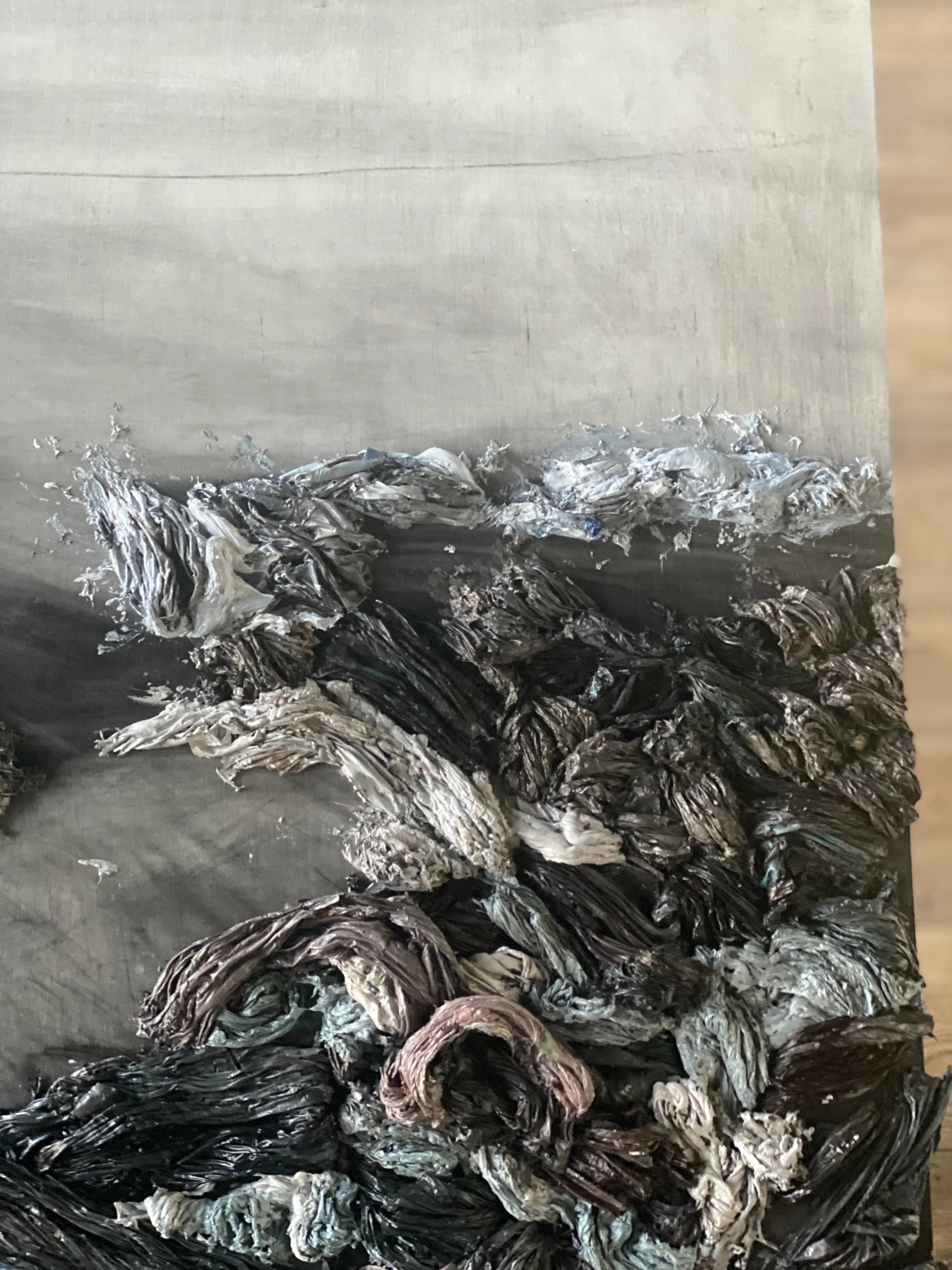
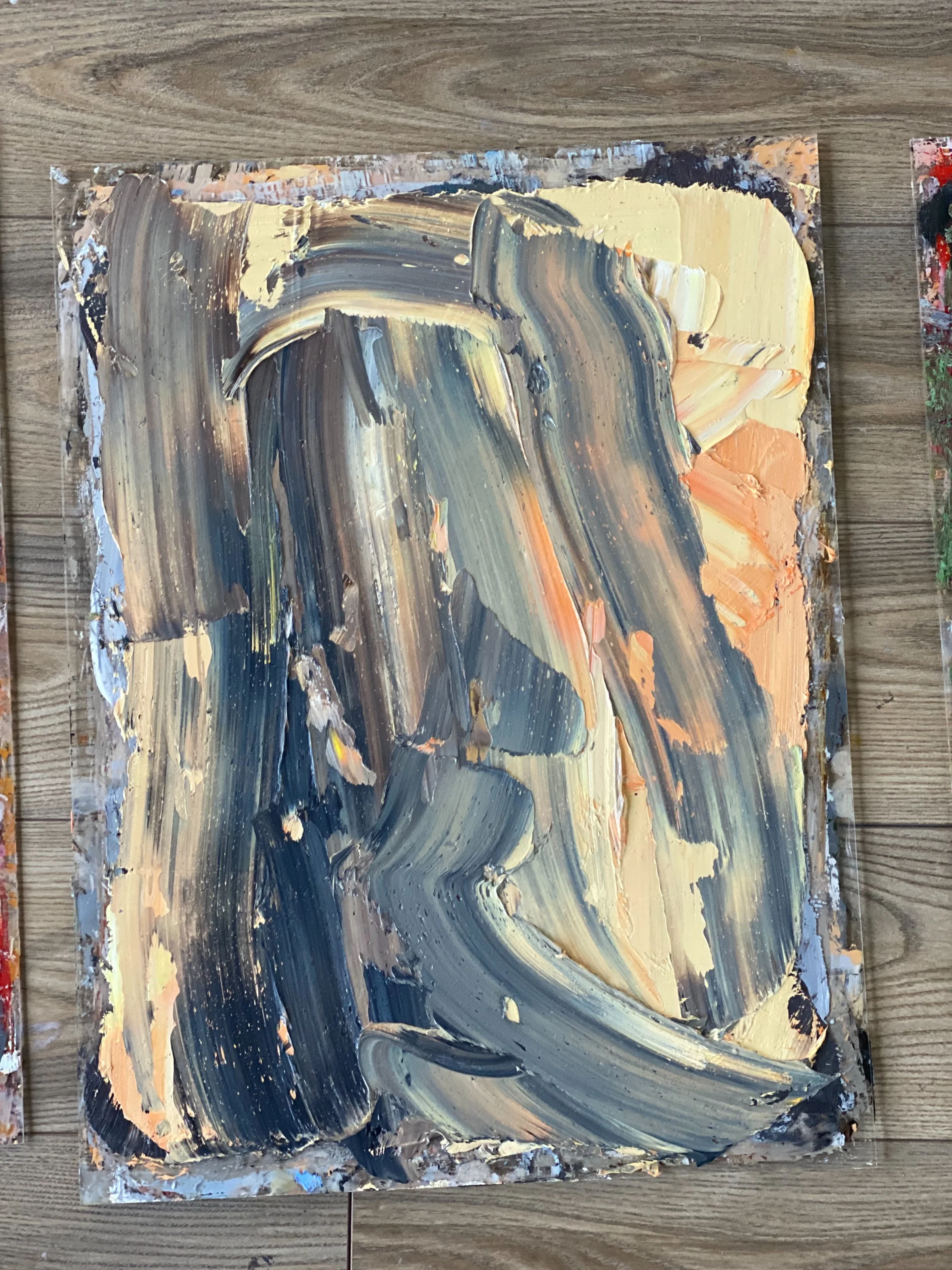
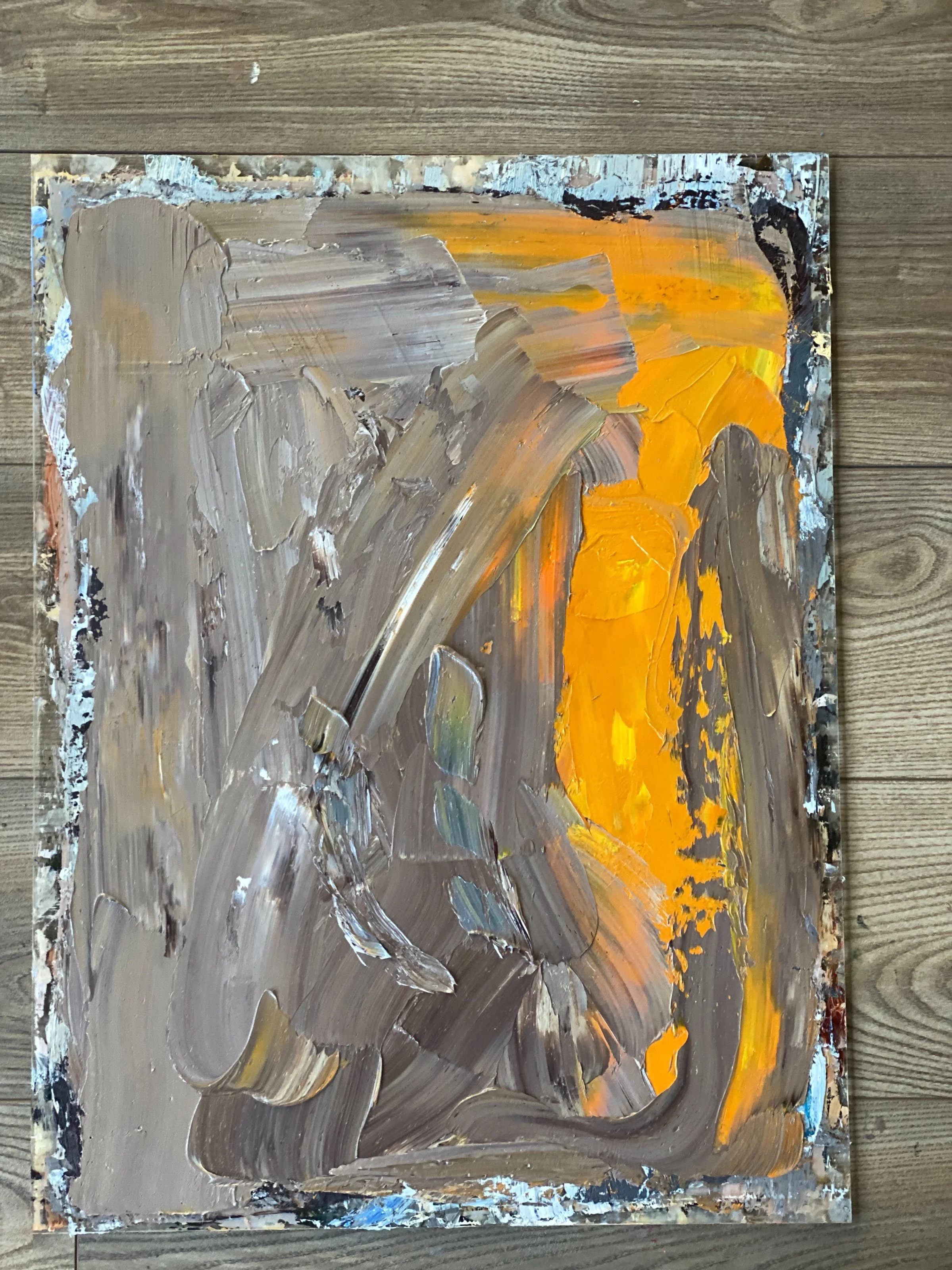
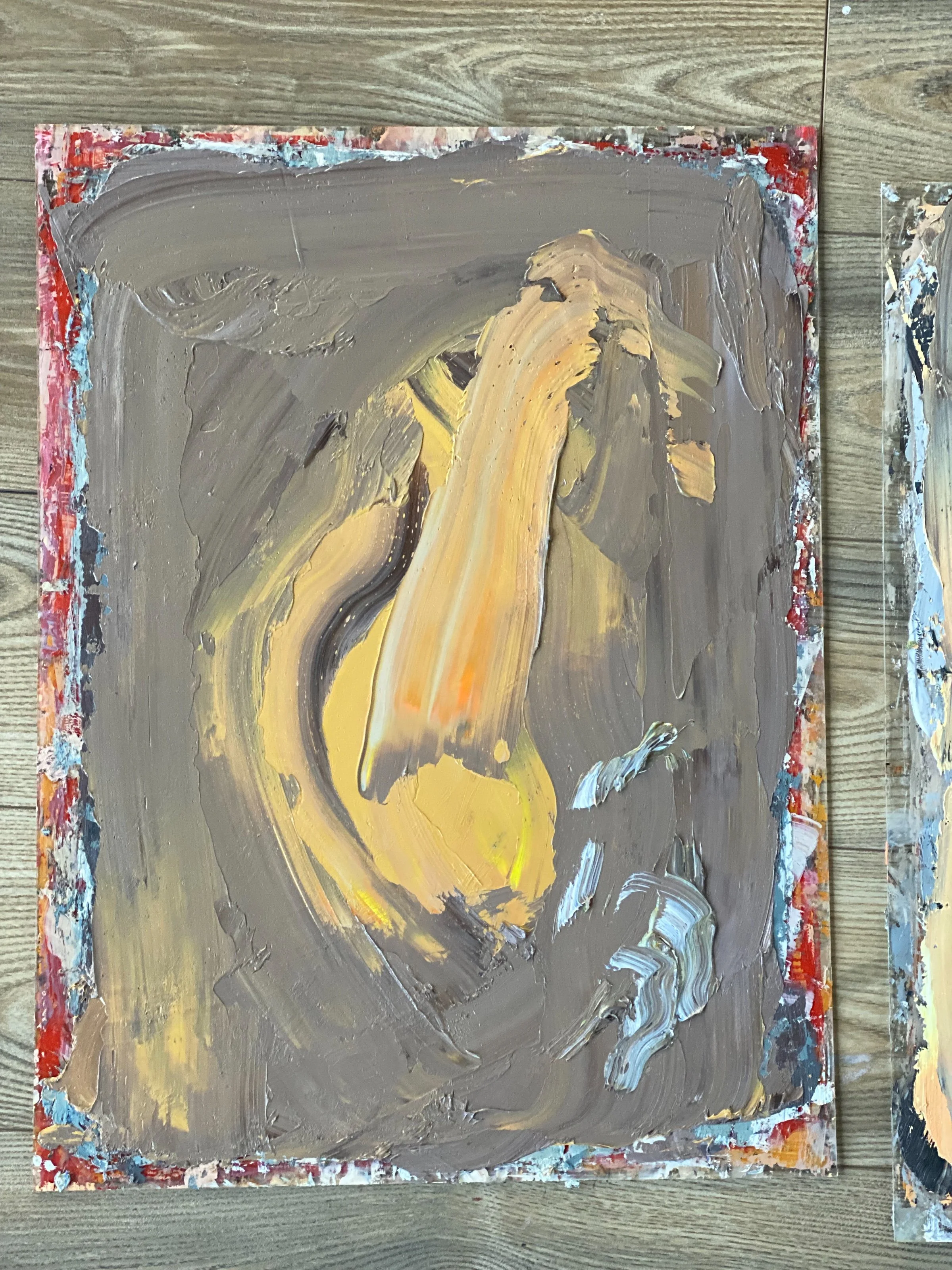
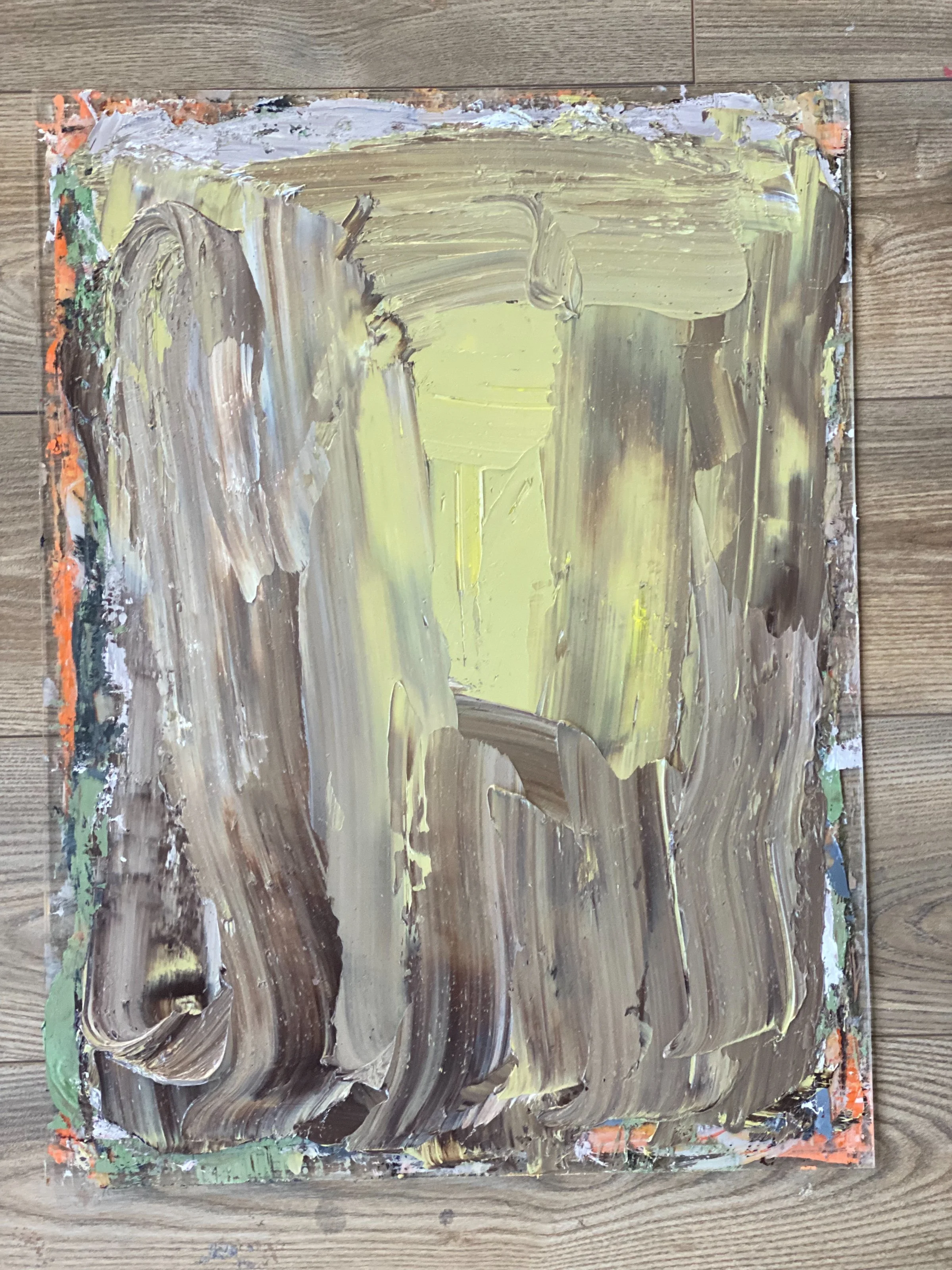
Last of the grays for now. For weeks I stayed in grays to keep the structure honest. Eventually the painting asked for risk again. Color changes the rules.
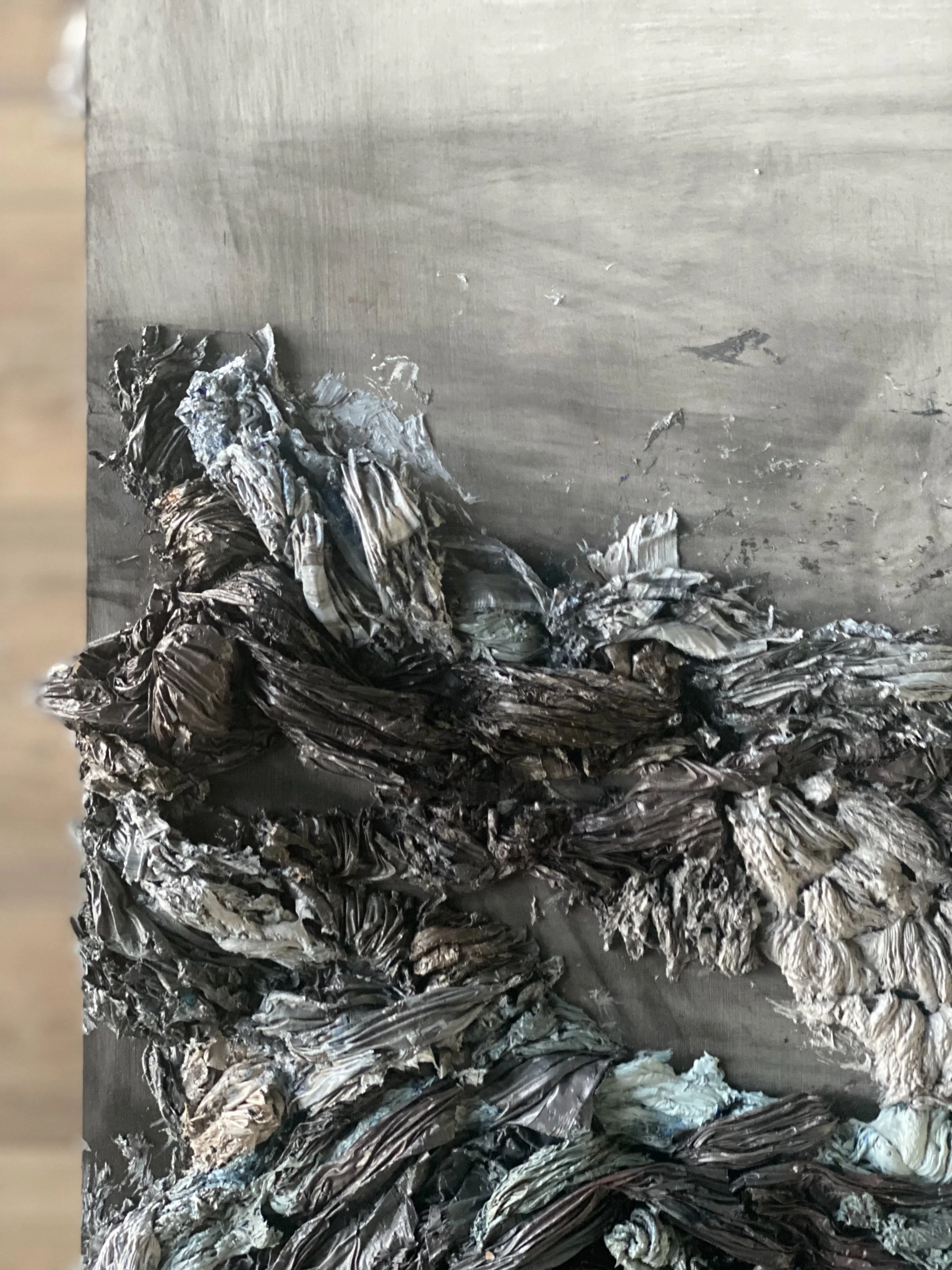
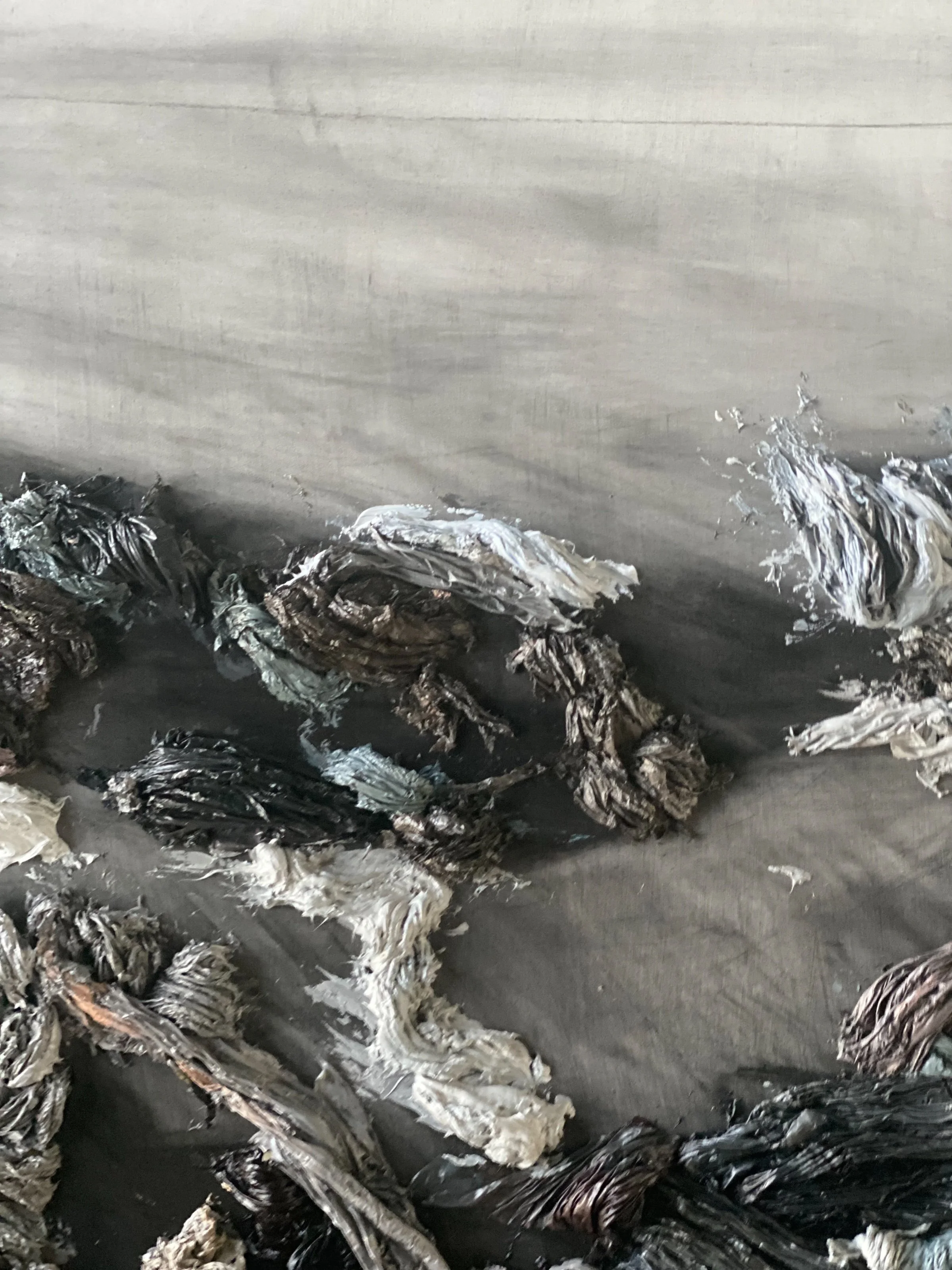
November 2, 2021
Throwing caution to the wind, time for color.
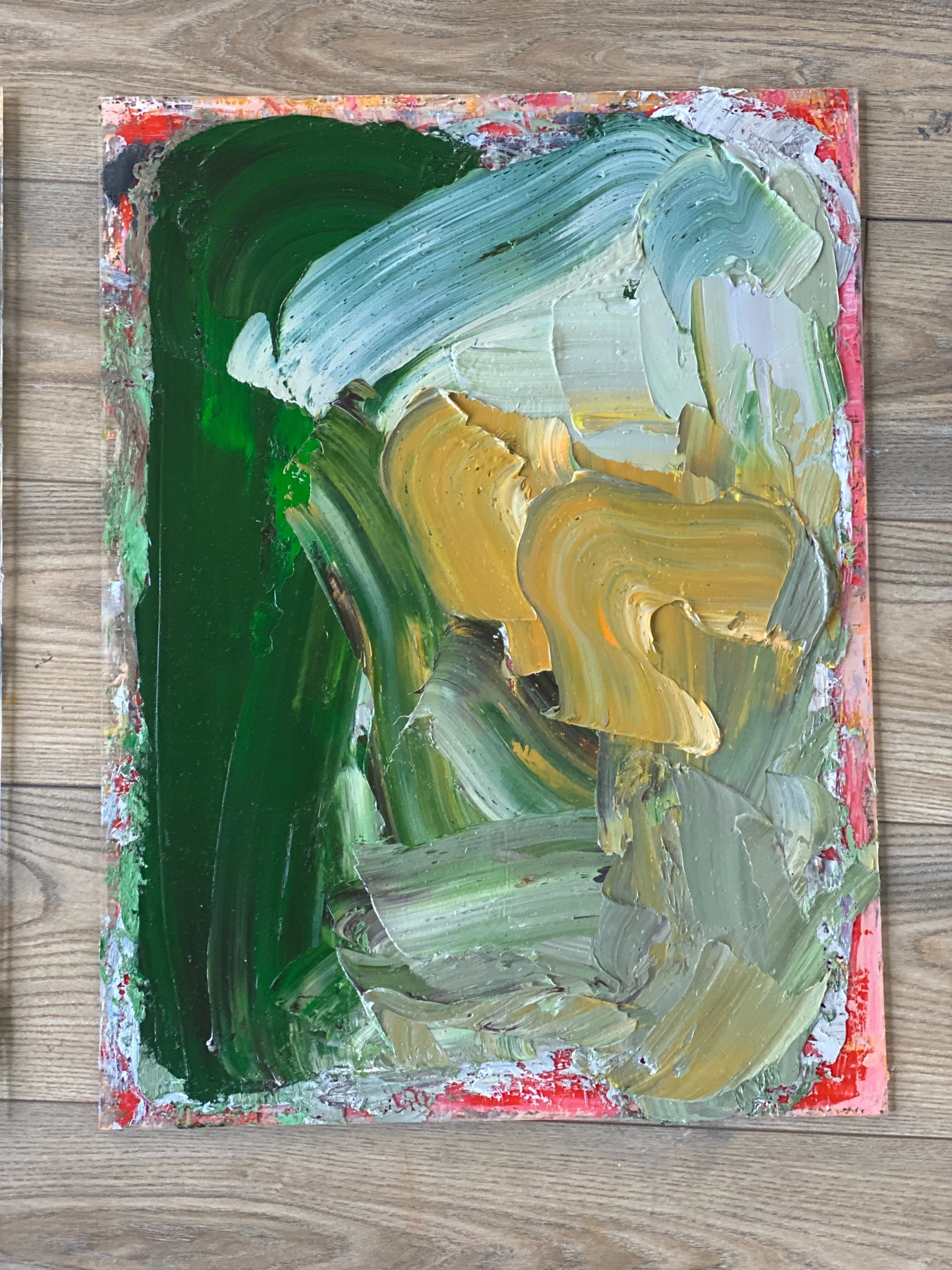
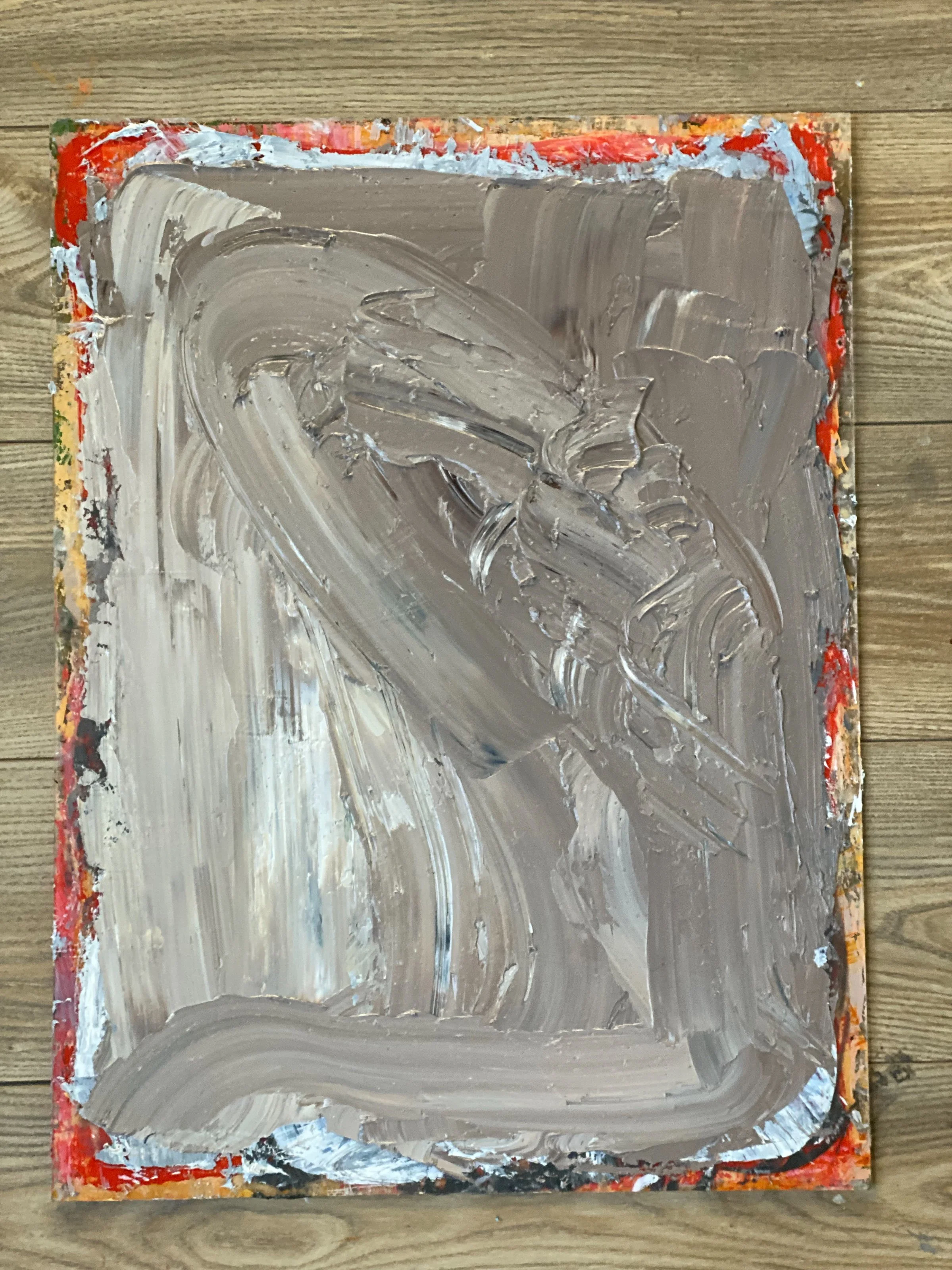
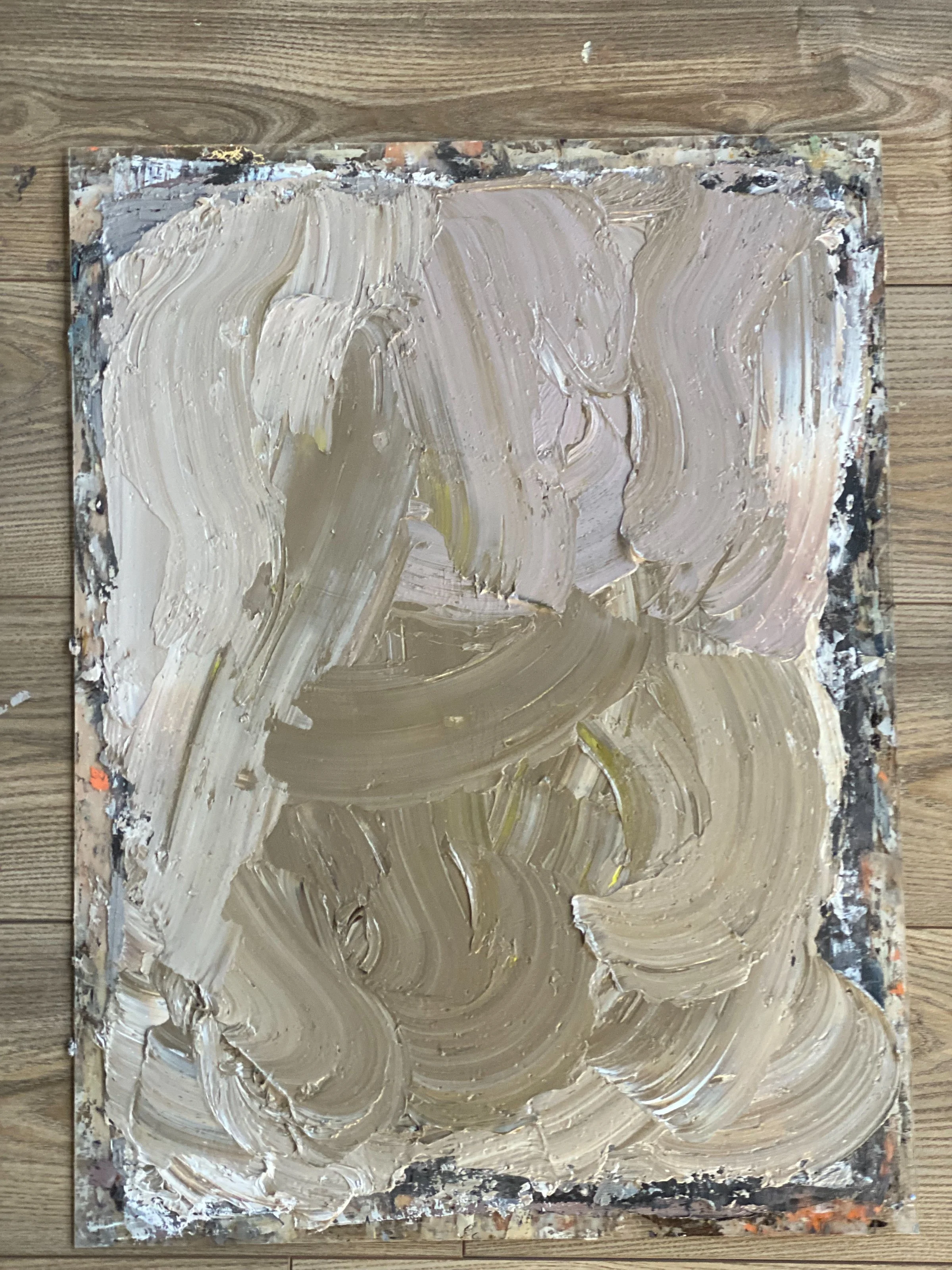
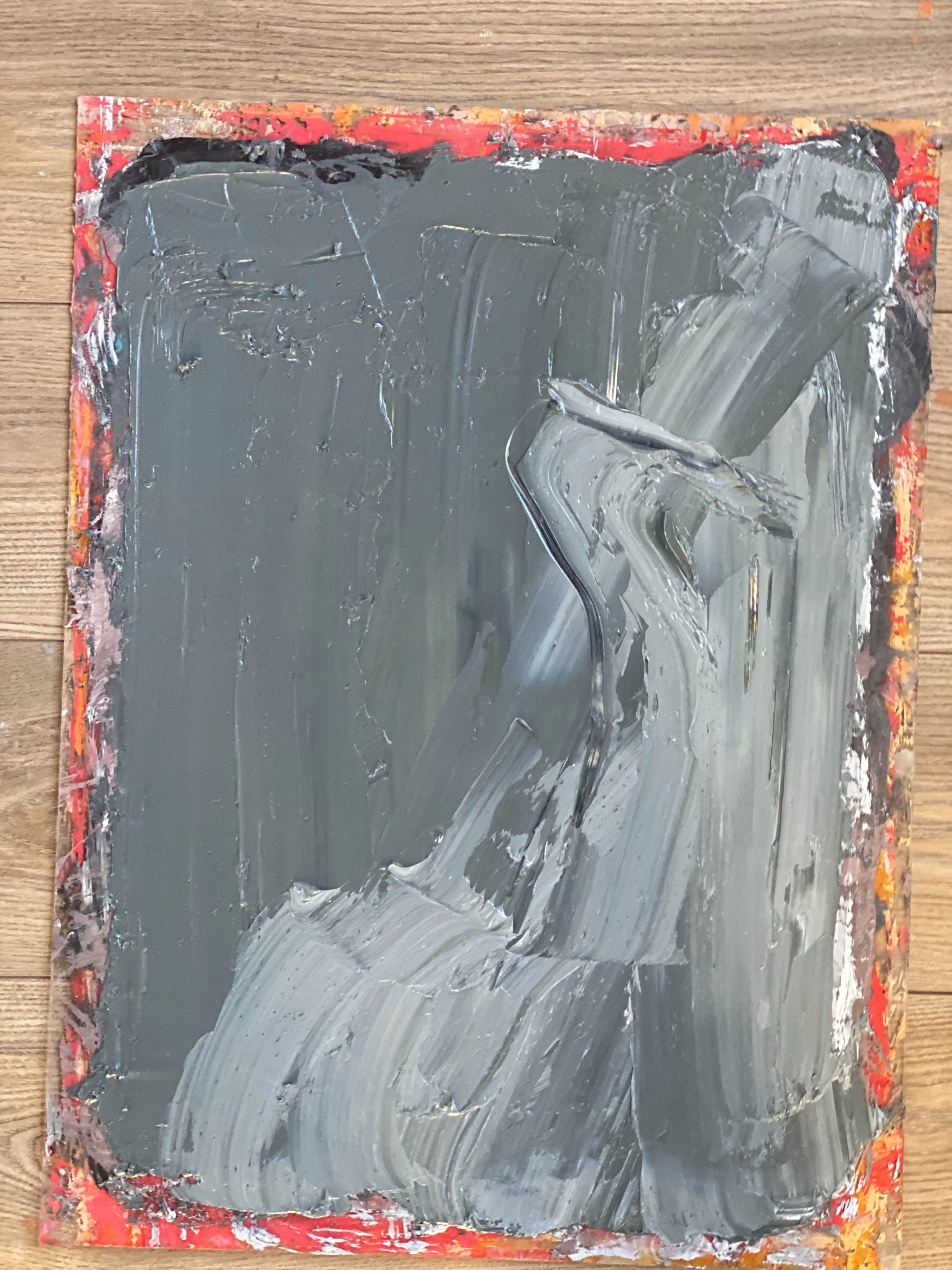
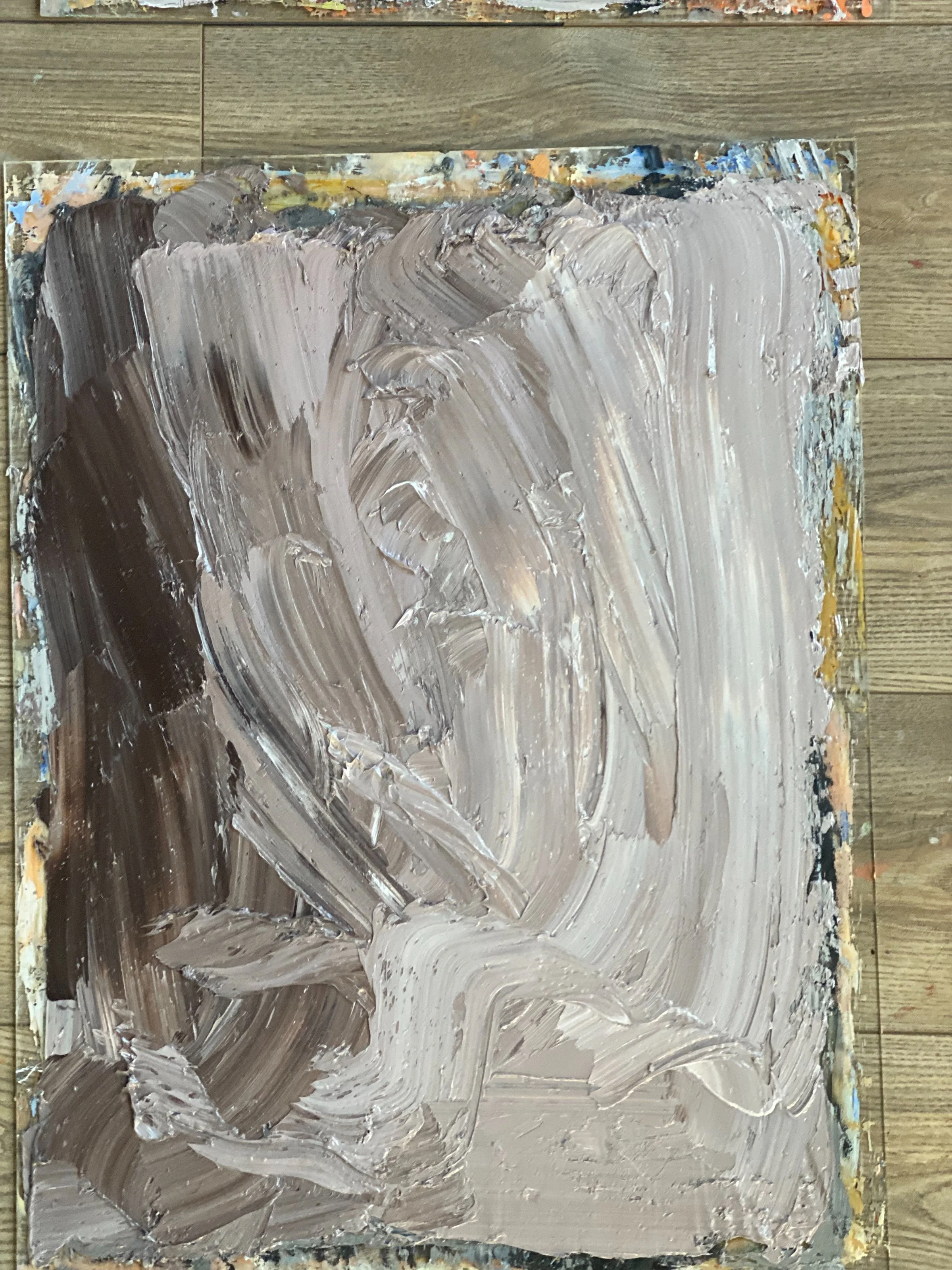
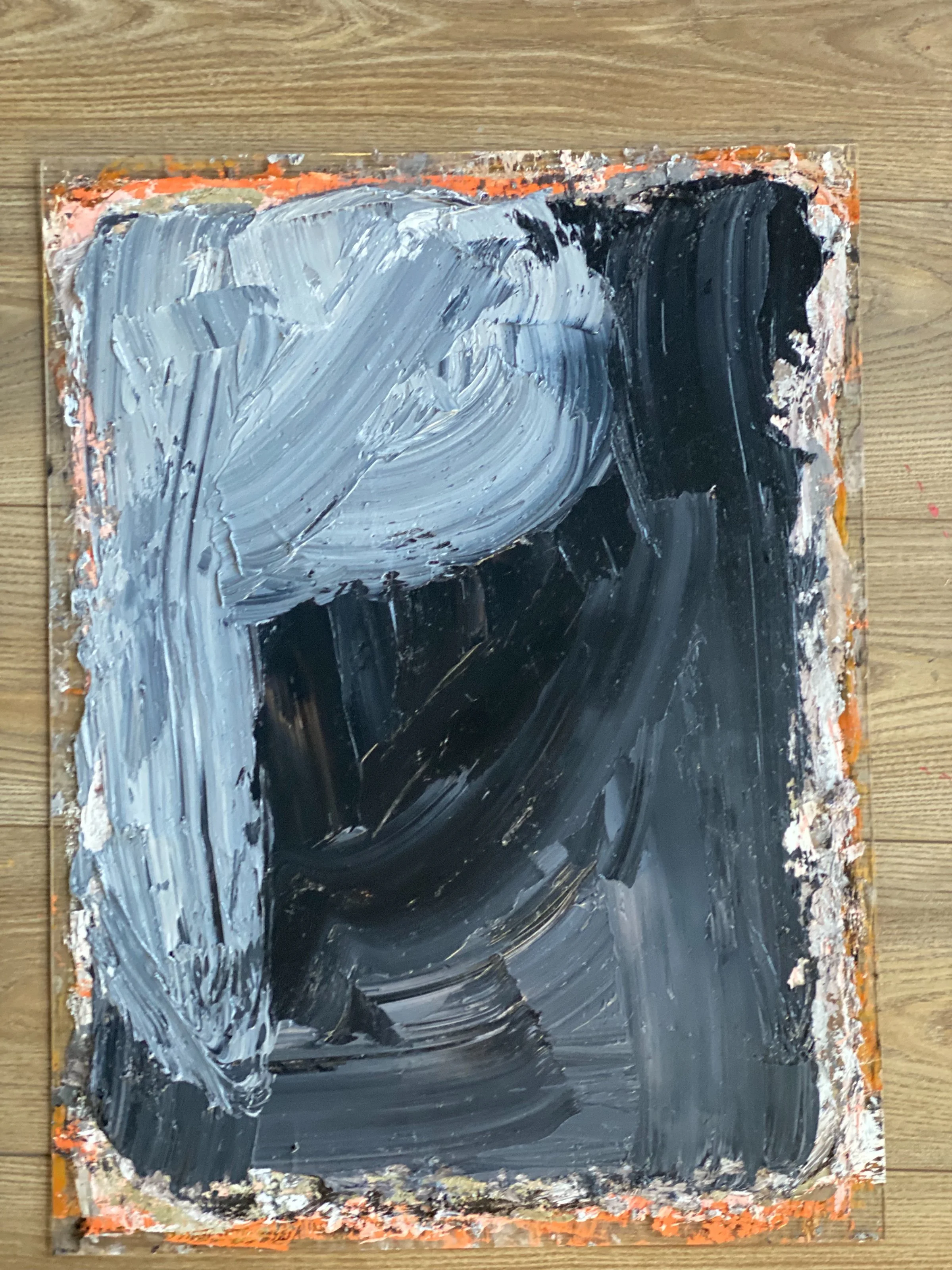
November 7, 2021
November 10, 2021
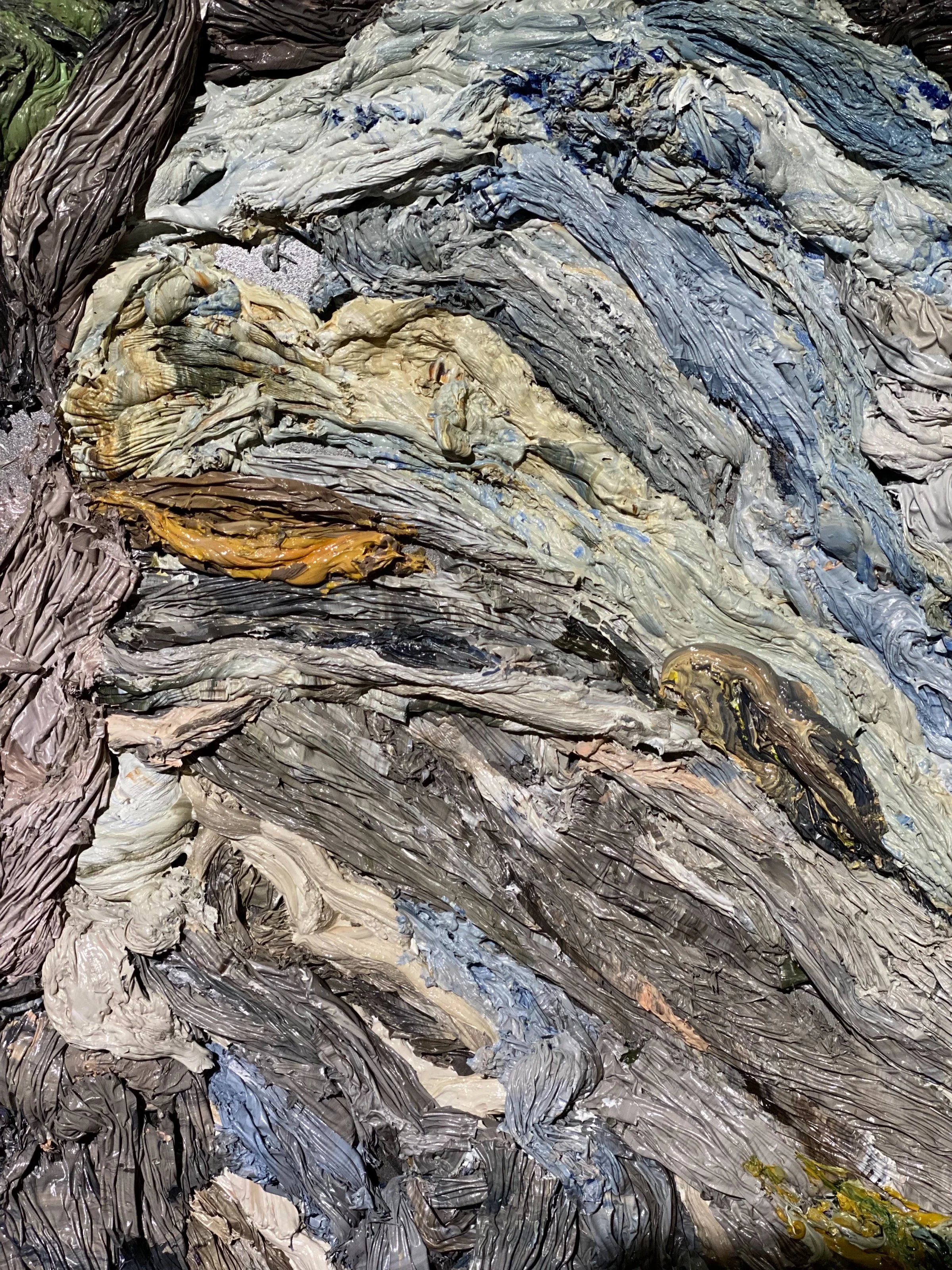
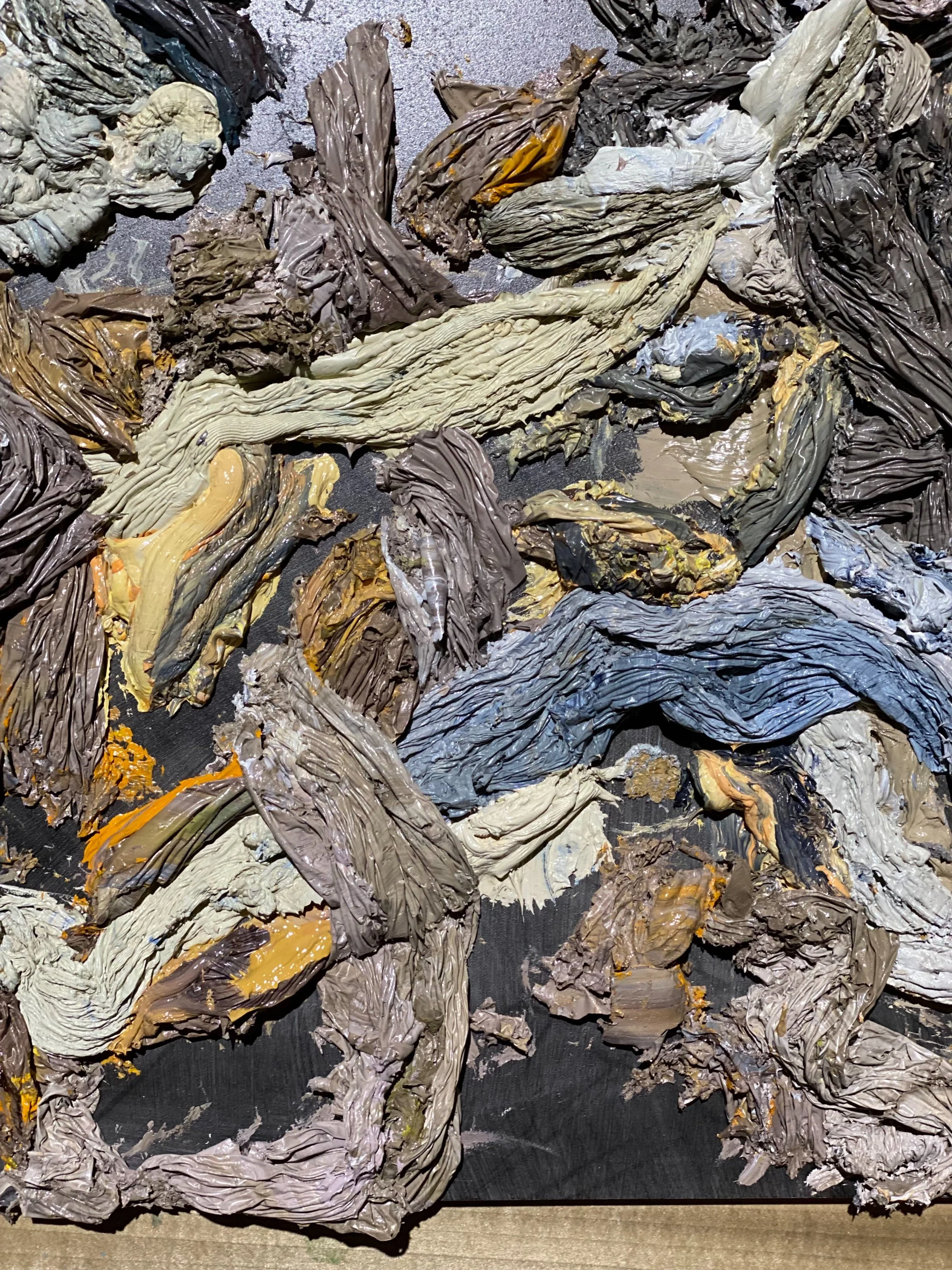
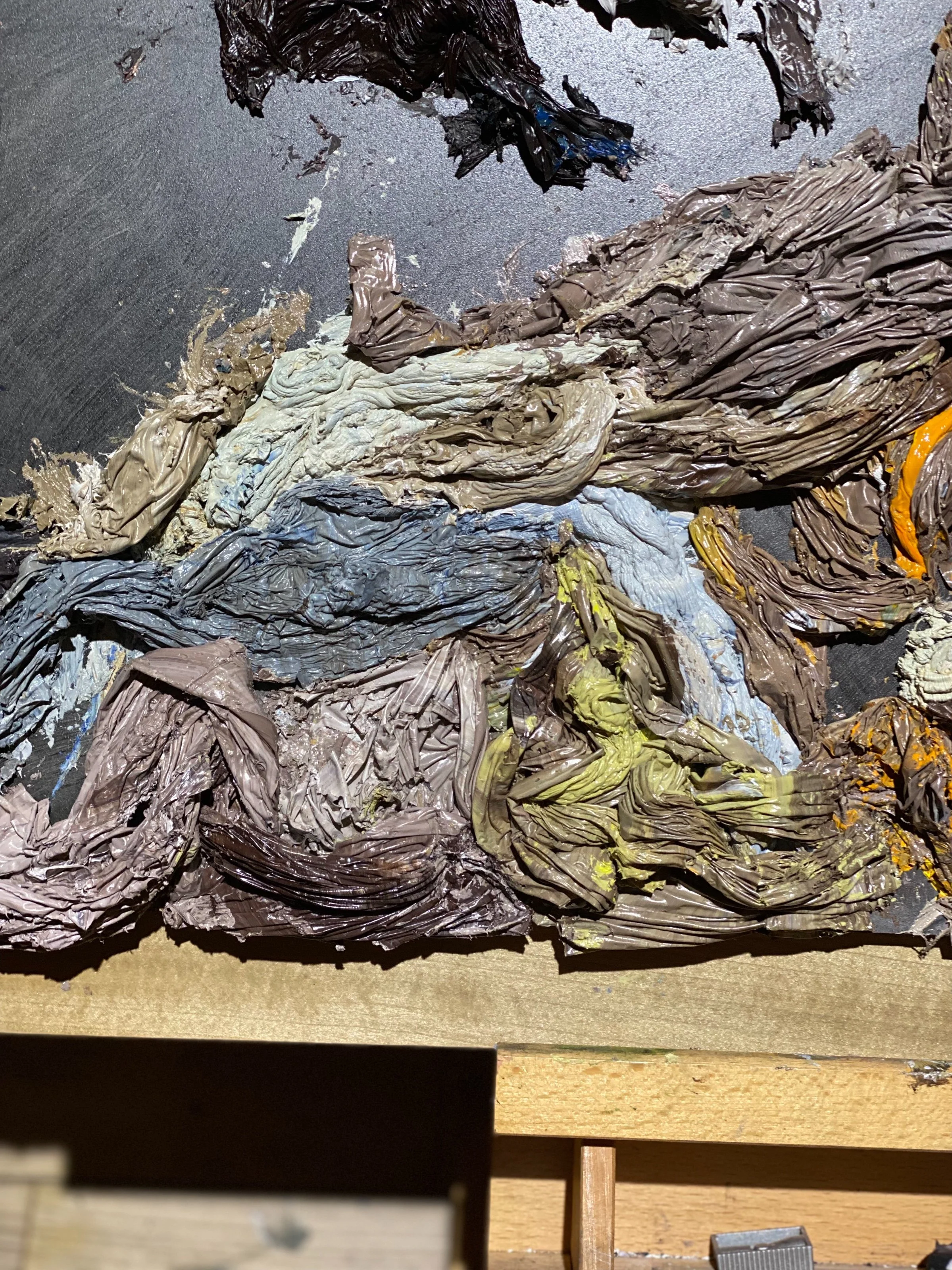
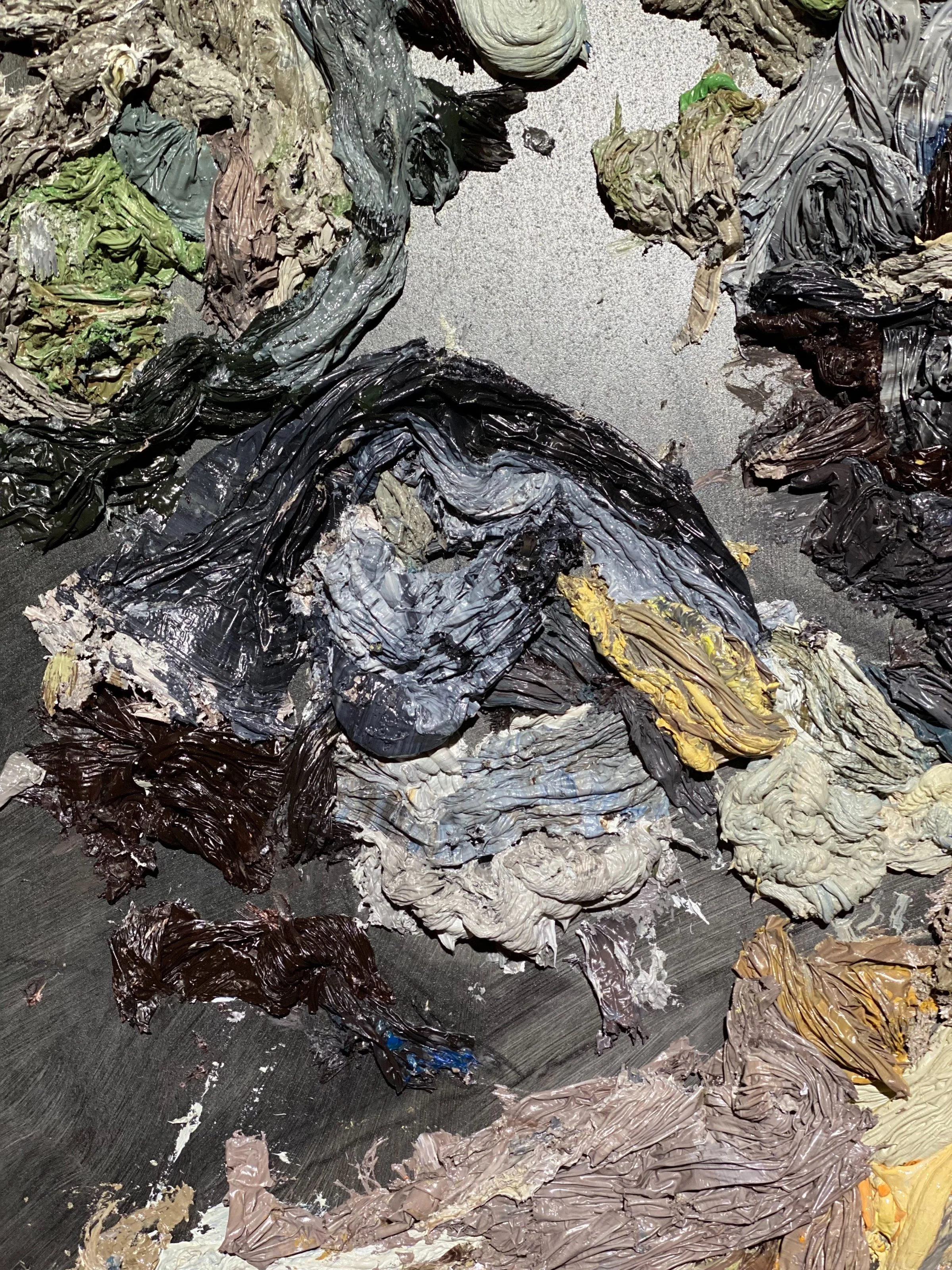
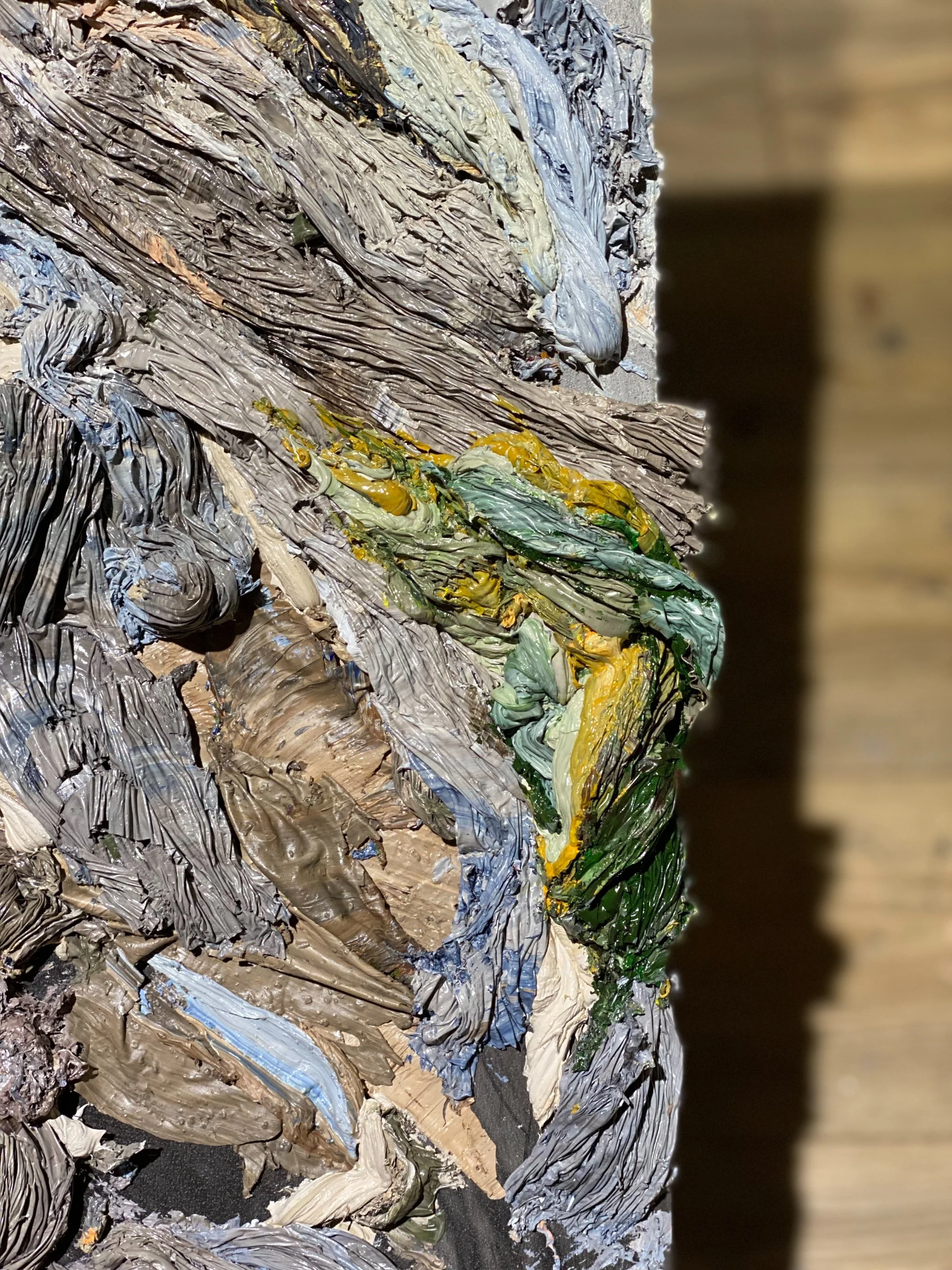
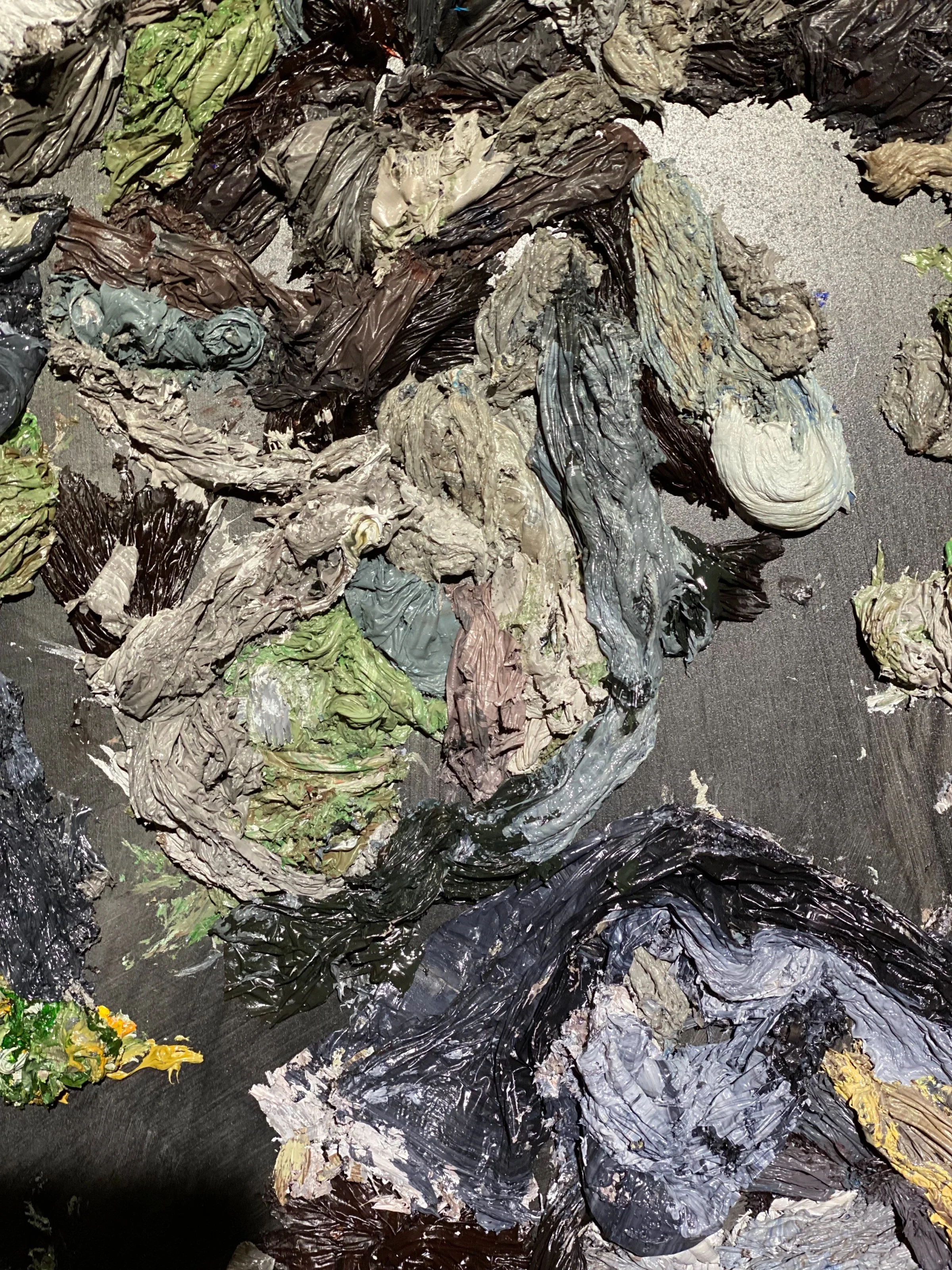
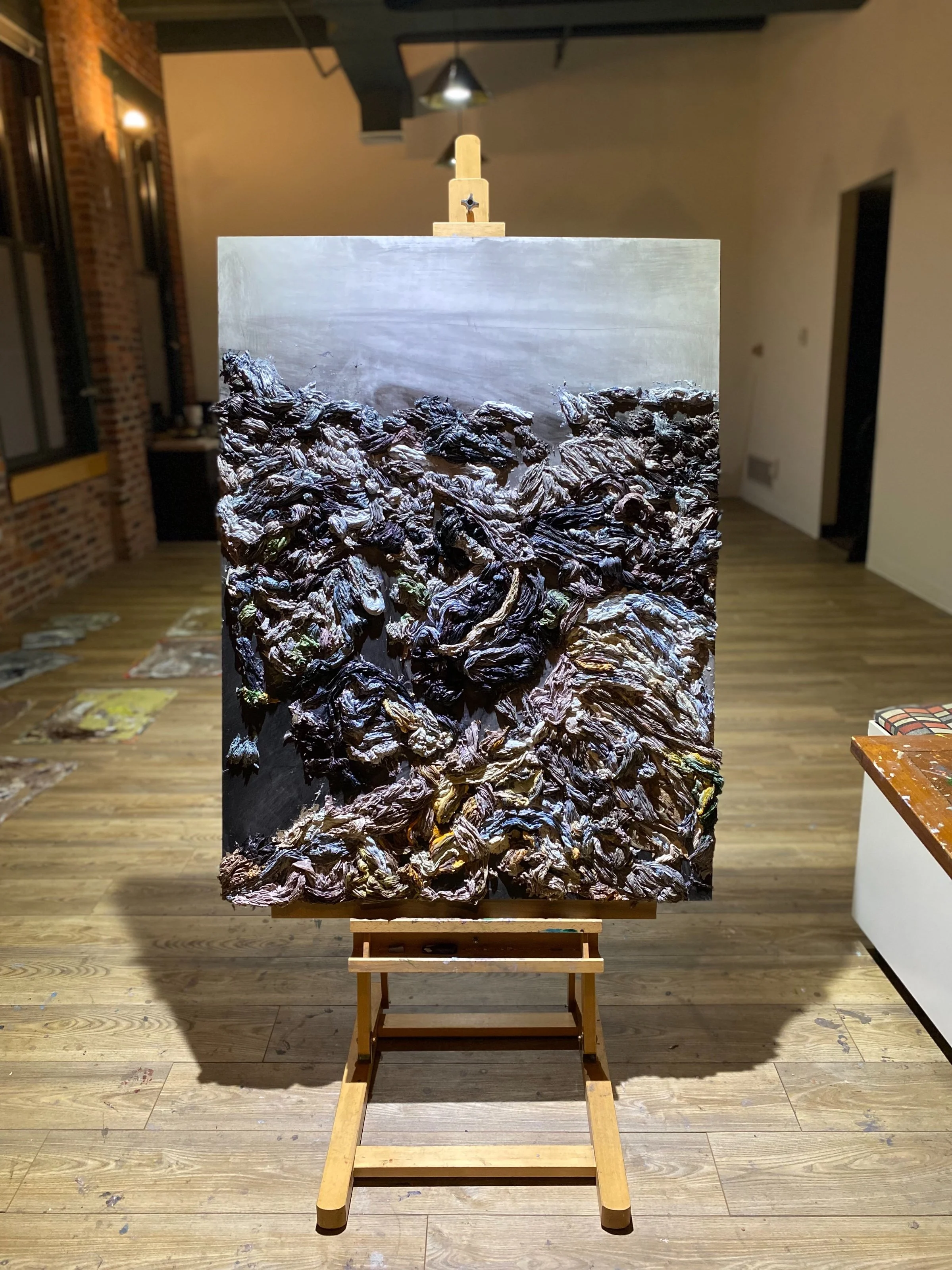
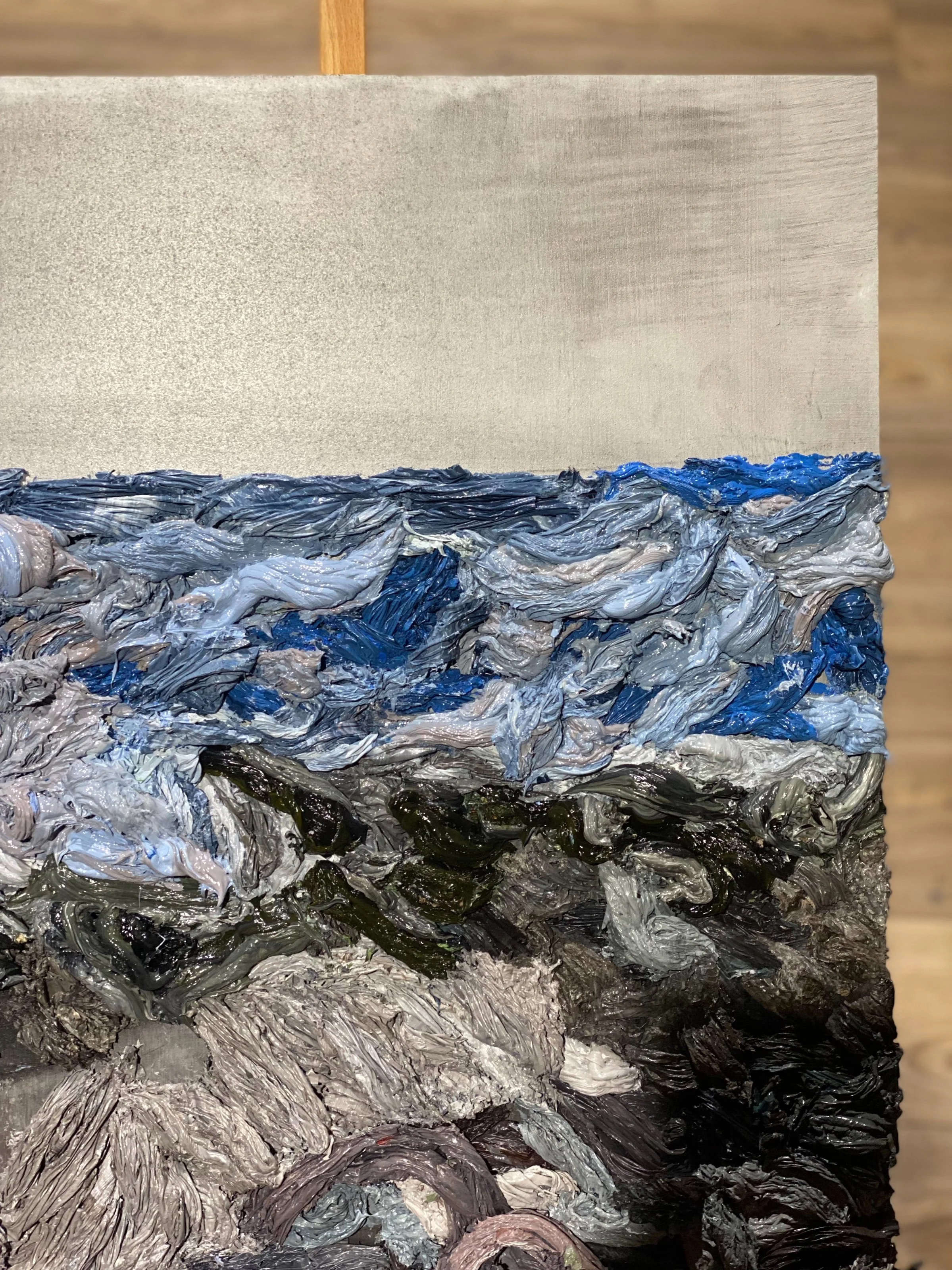
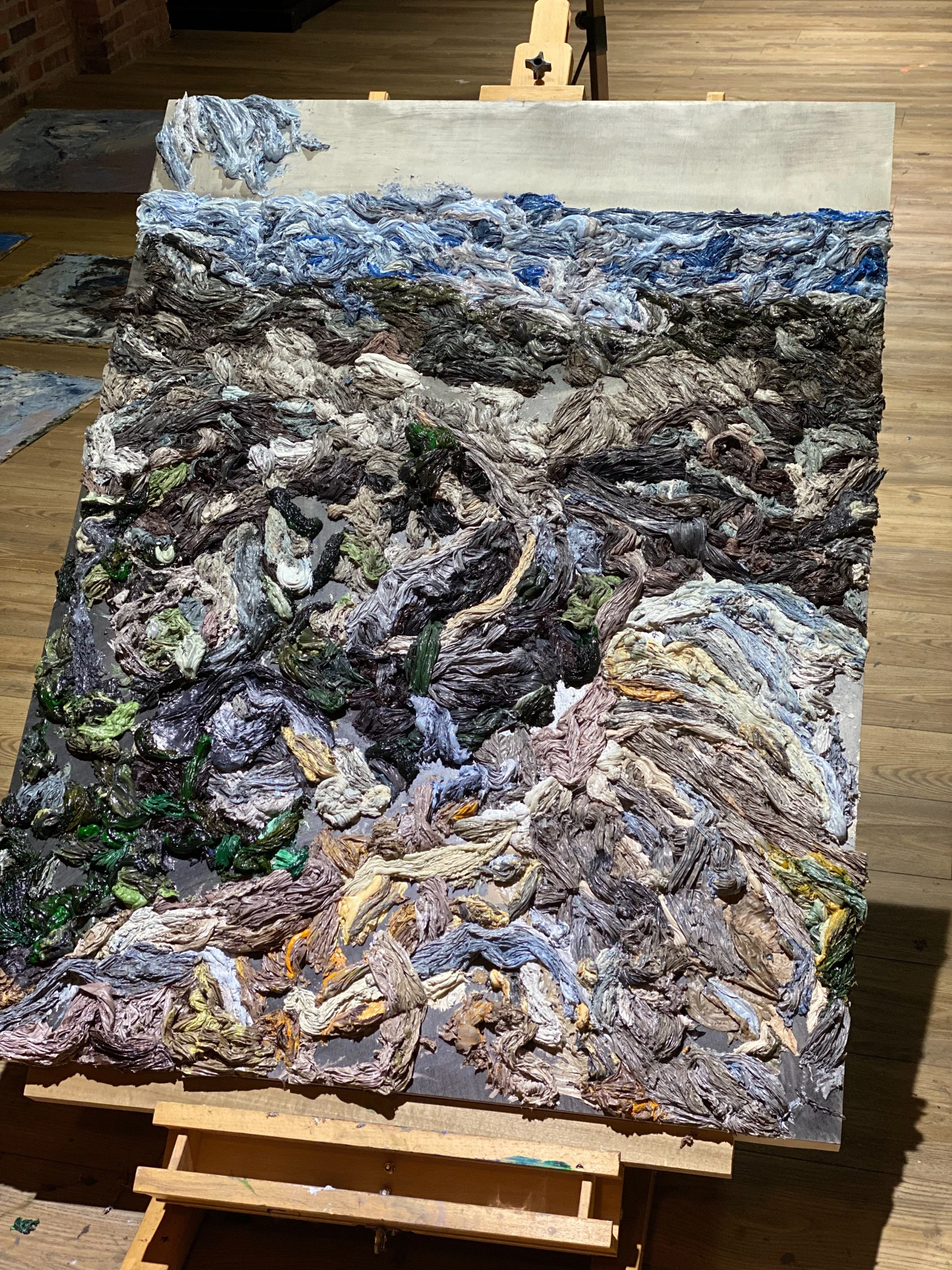
There is a kind of weaving happening here. Being close to this work is overwhelming. It’s a dance of paint that isn't just a rendering of shapes floating in space but actual material. Each form has its own character.
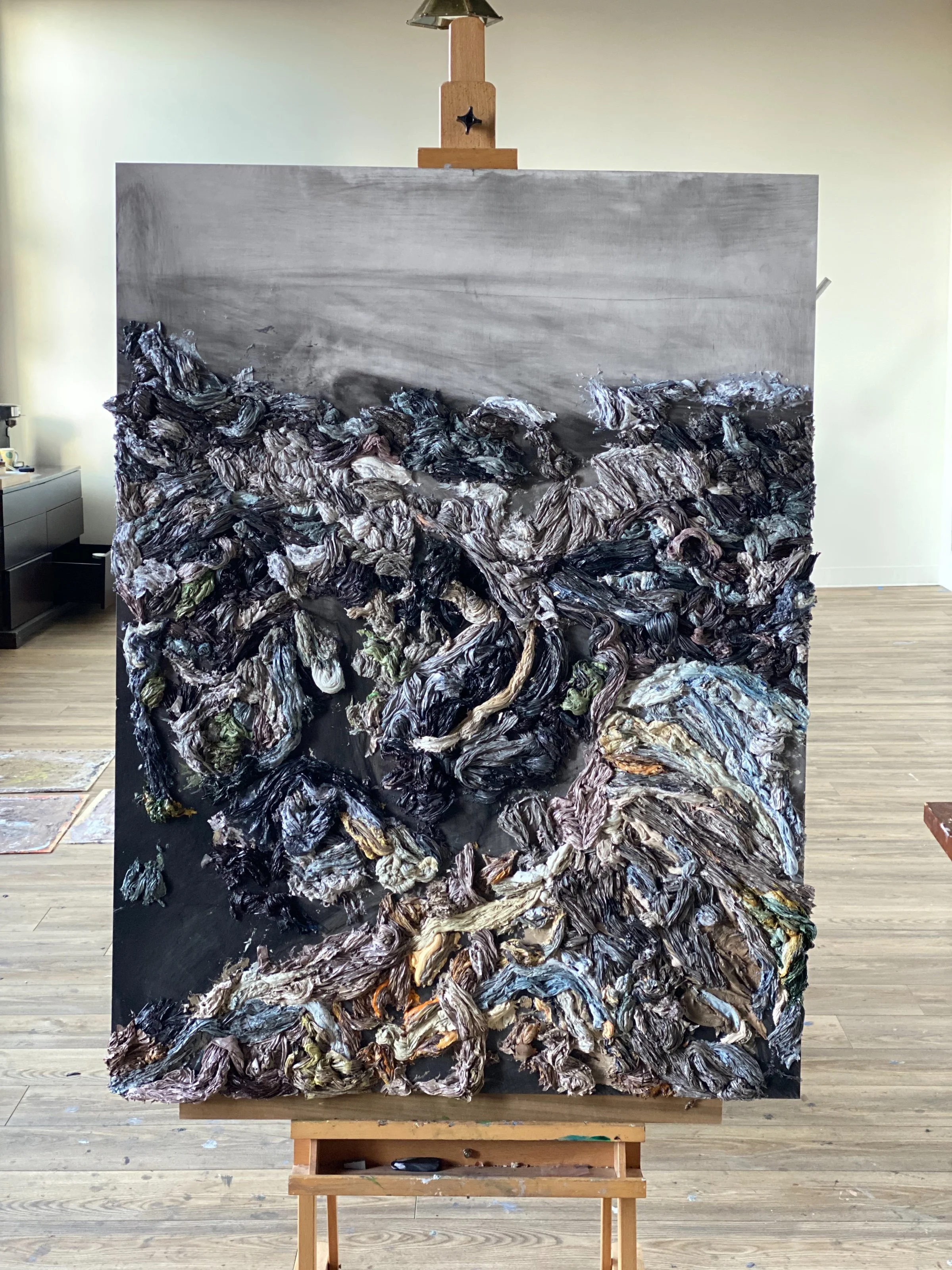
November 19, 2021
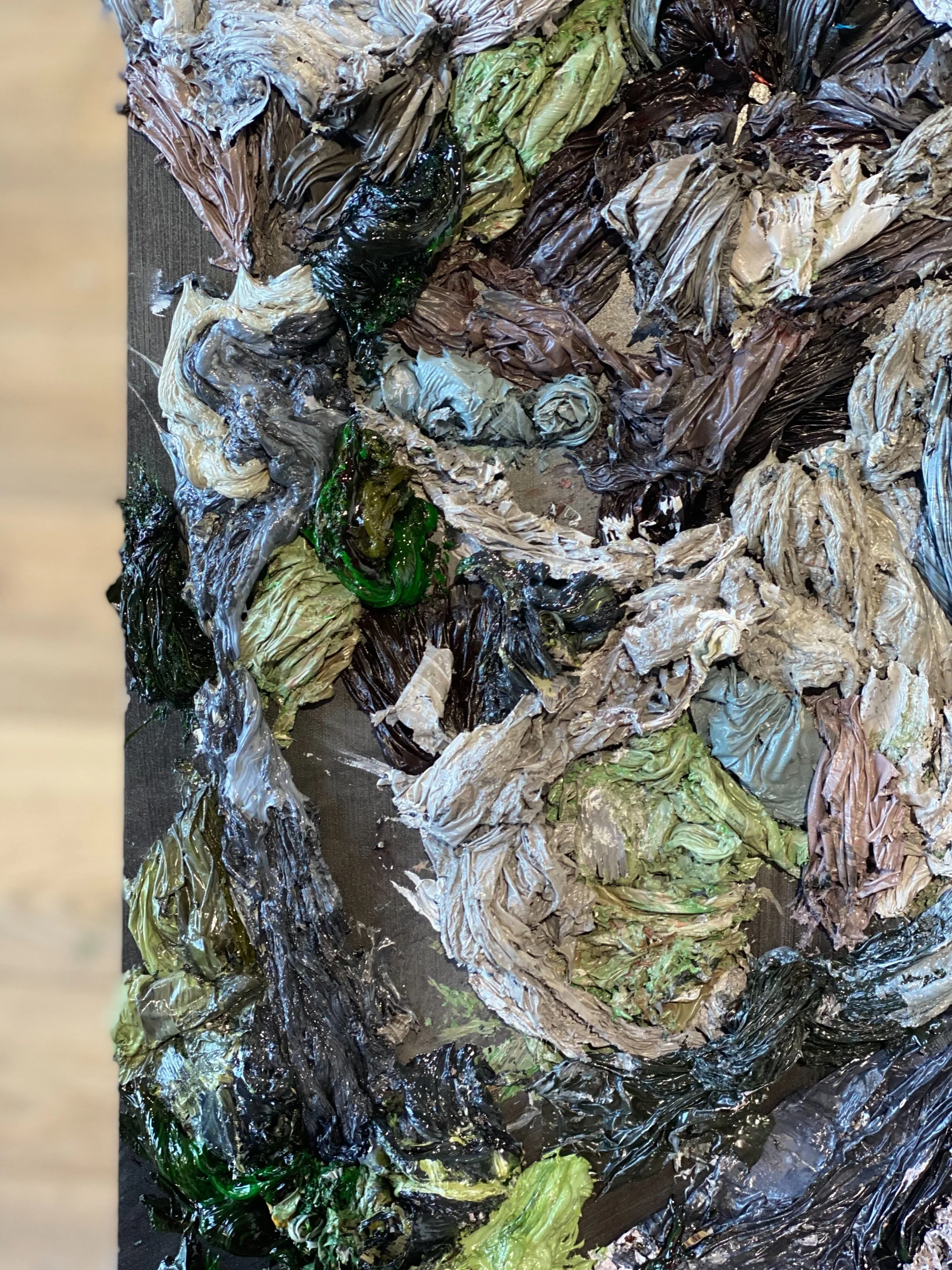
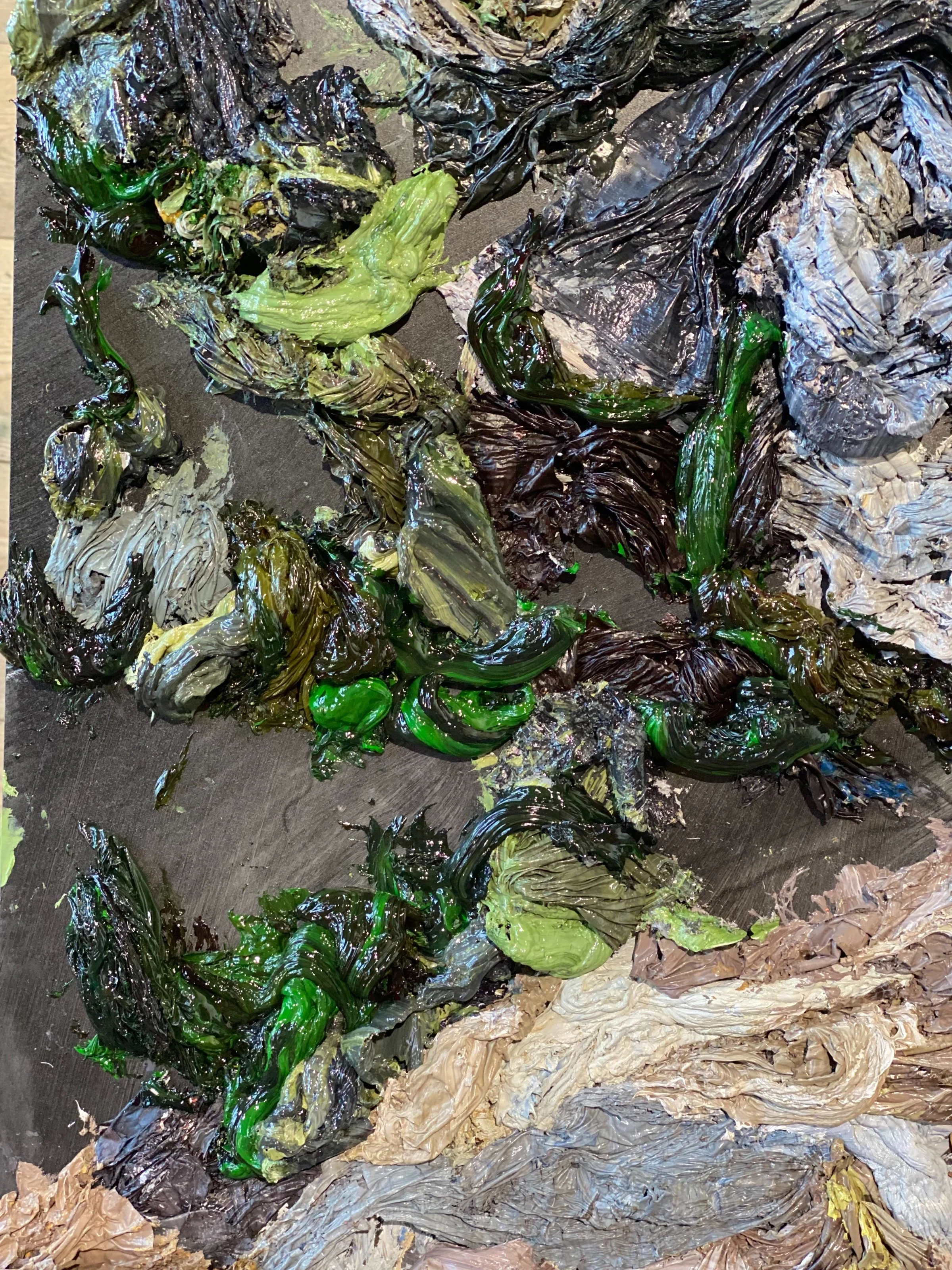
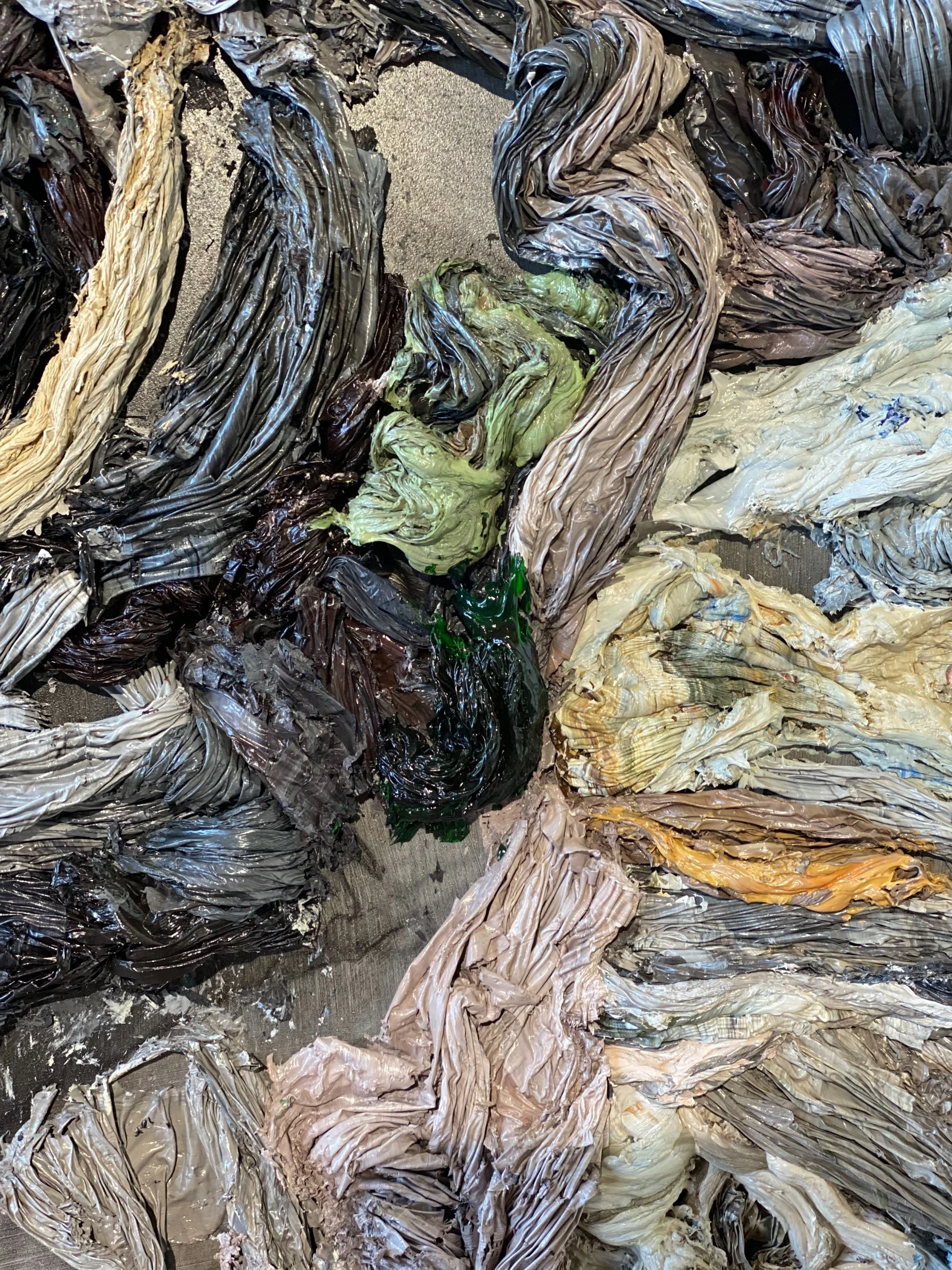
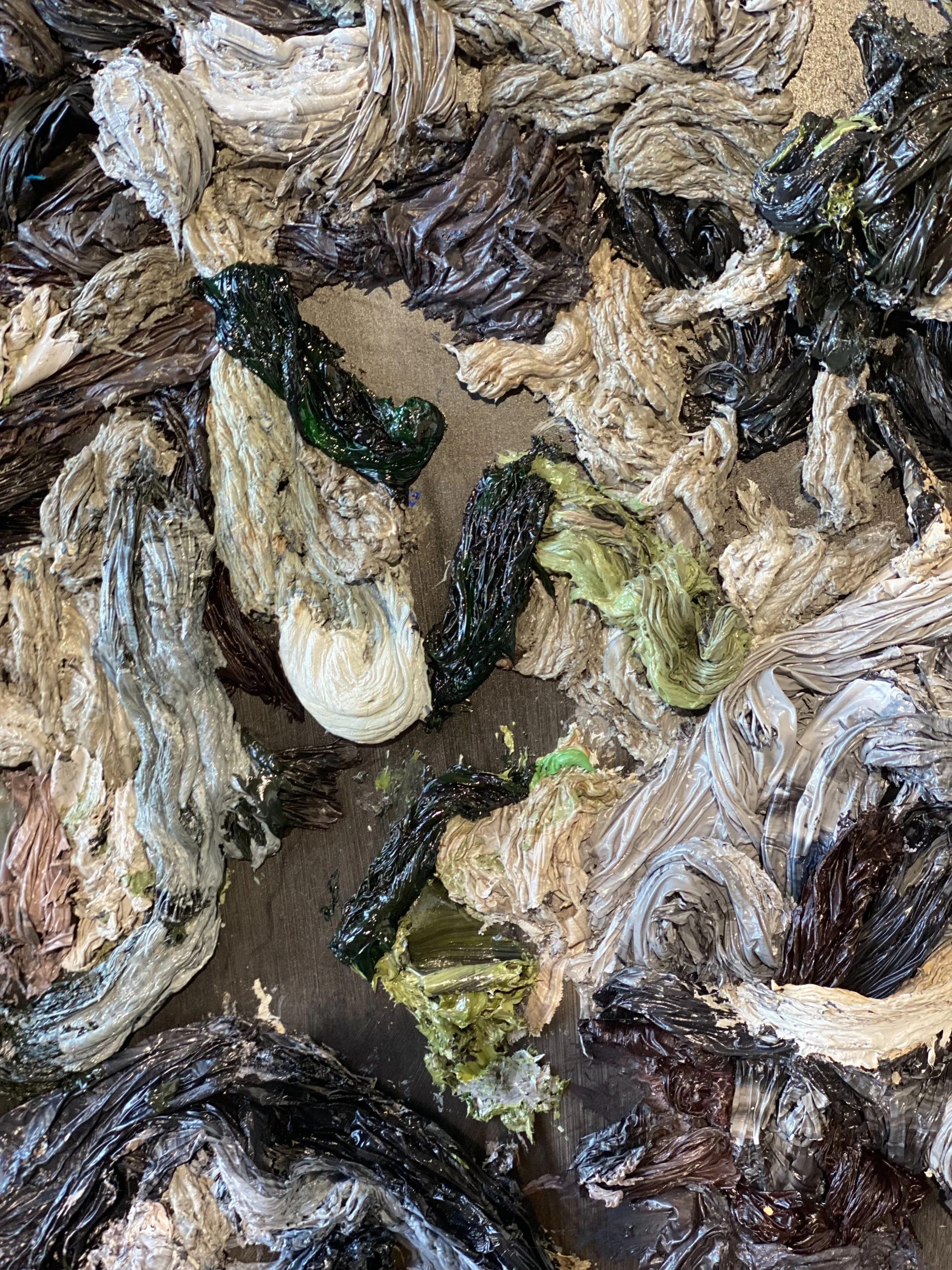
Finally working through the greens, I wanted to establish as much of the image as possible before focusing on these forms. That way, they would have distinct character and behavior, and they could dance differently.
November 20, 2021
december 1, 2021
So much painting today, leaving the studio physically drained.
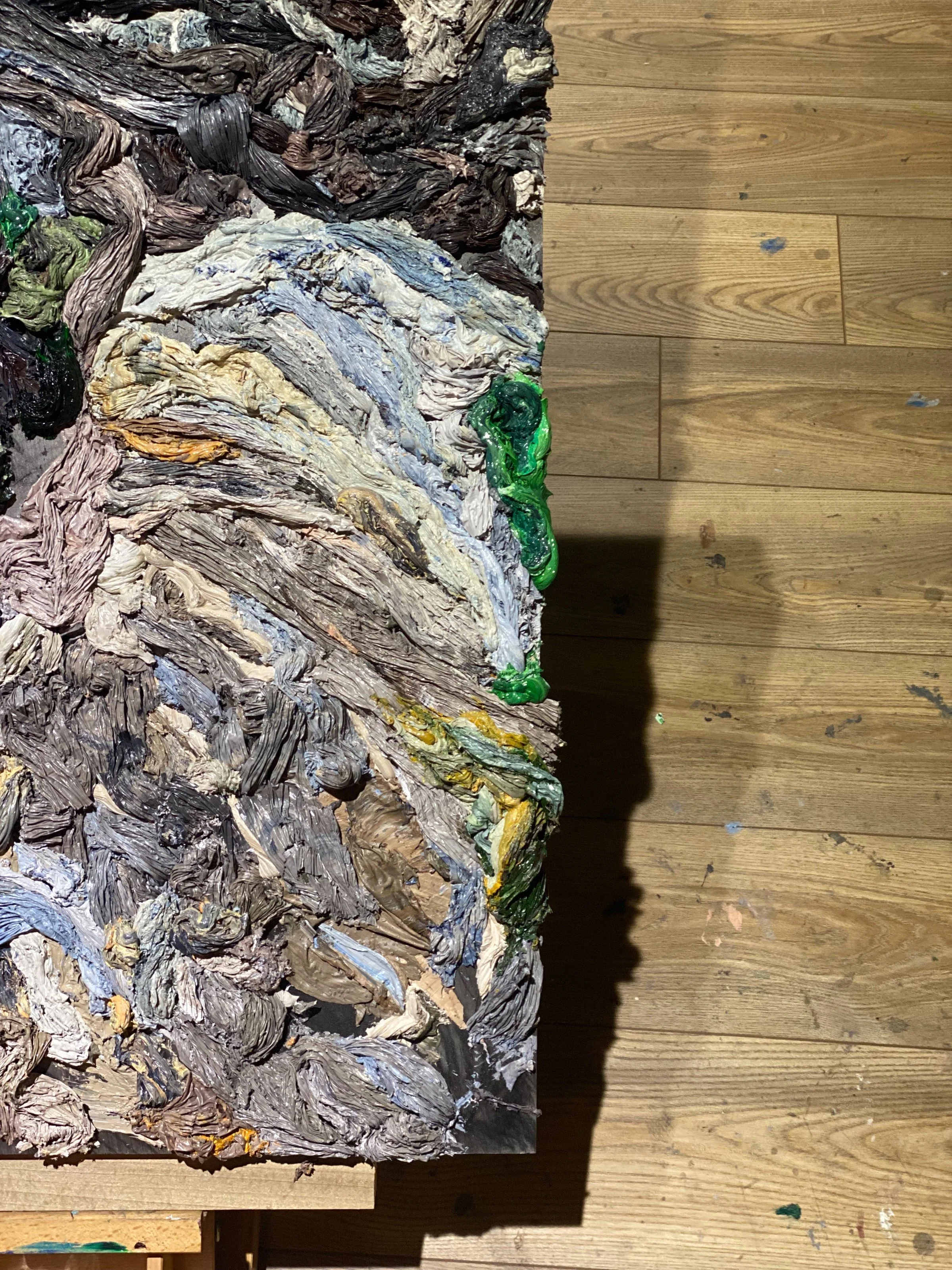
December 2, 2021
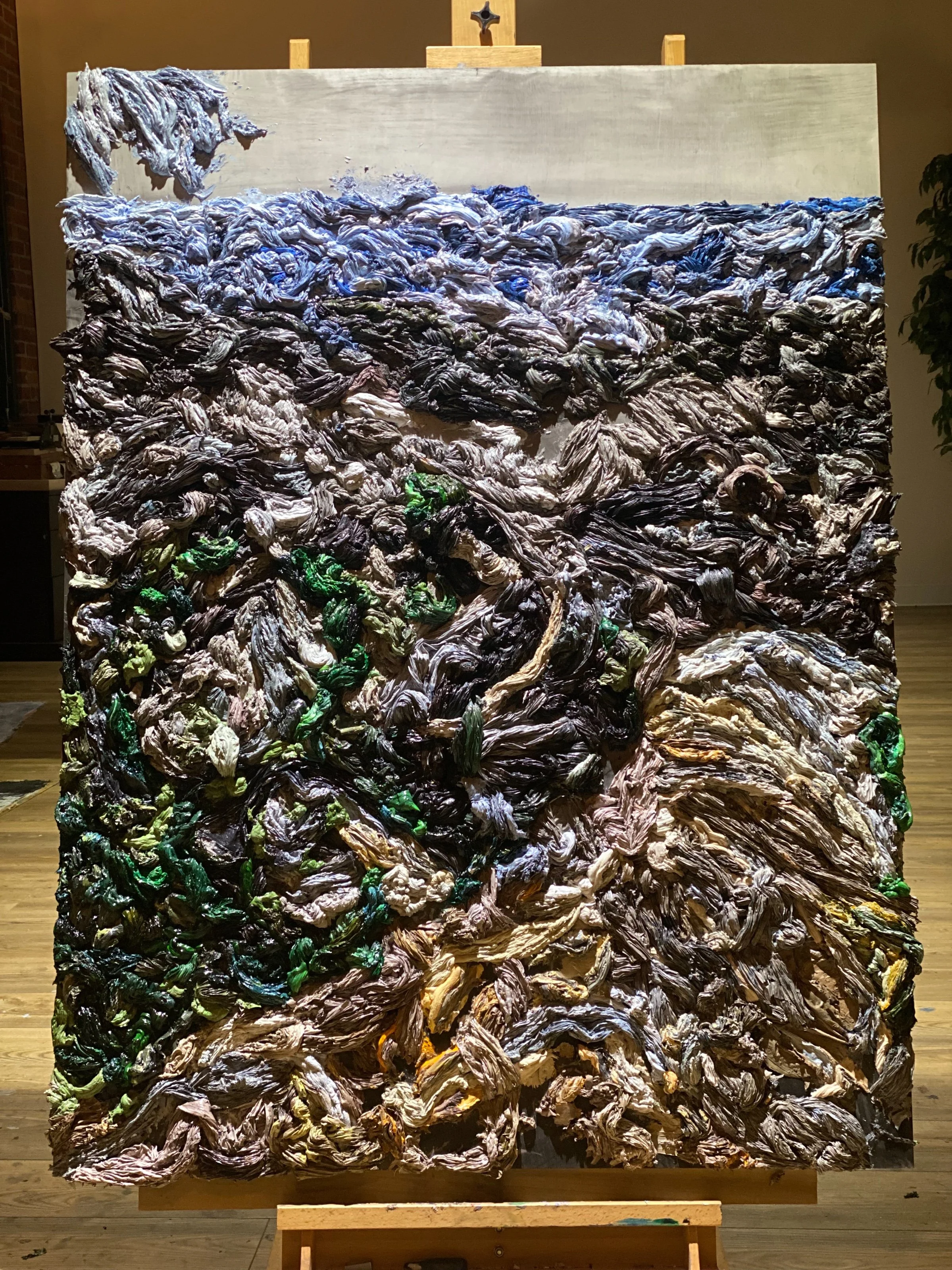
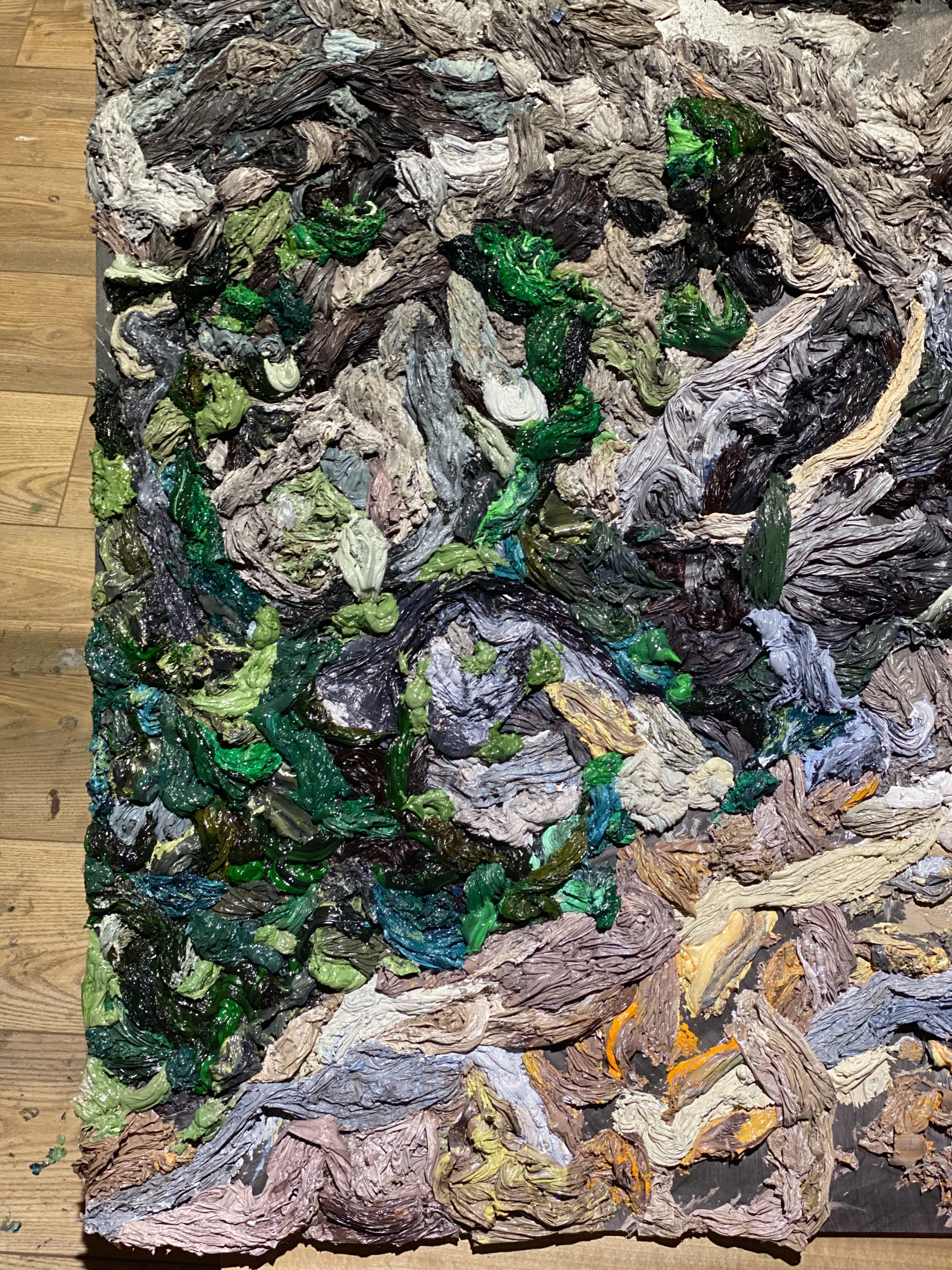
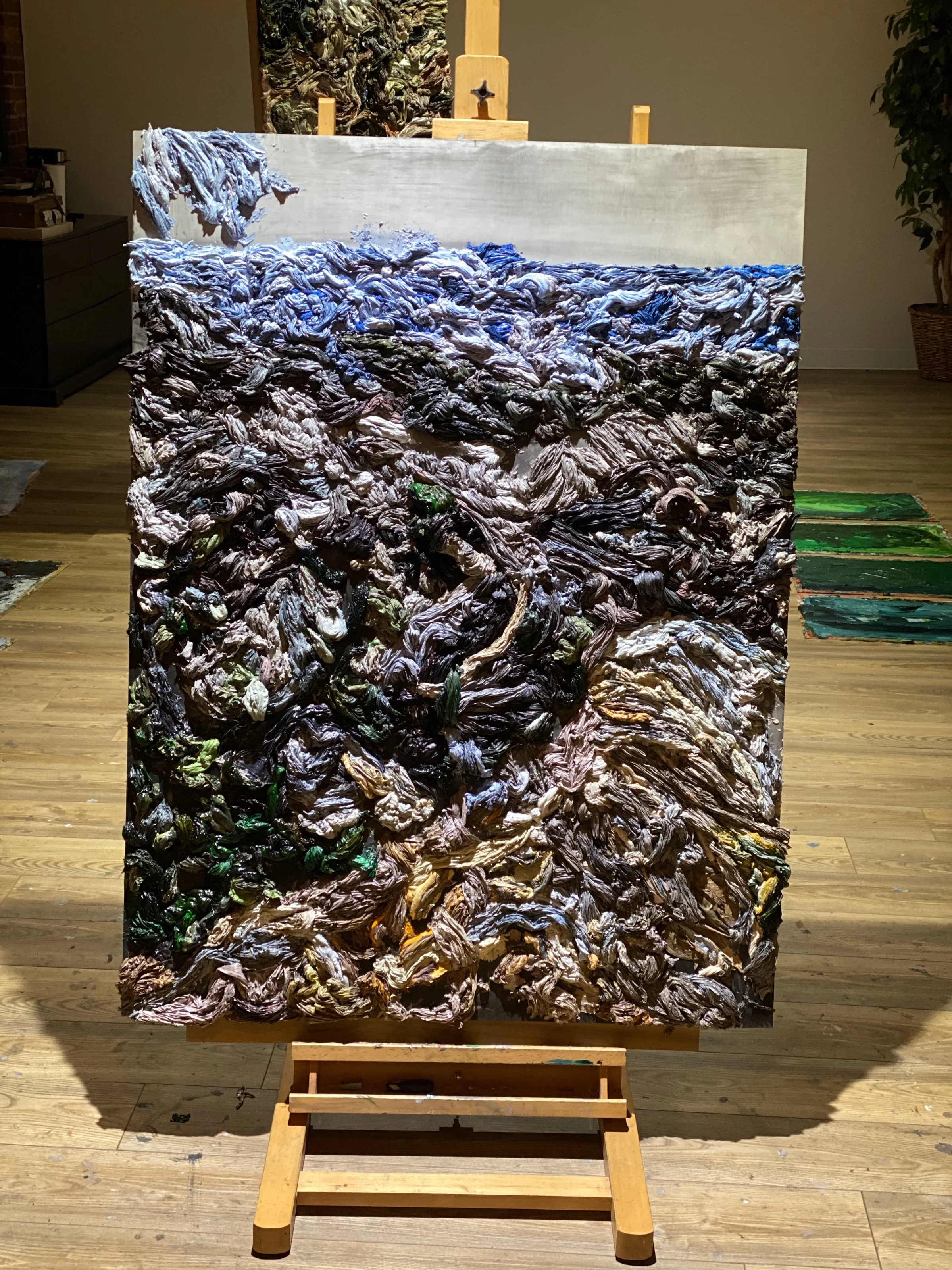
More Green.
Studio is in Factory mode. My Favorite.
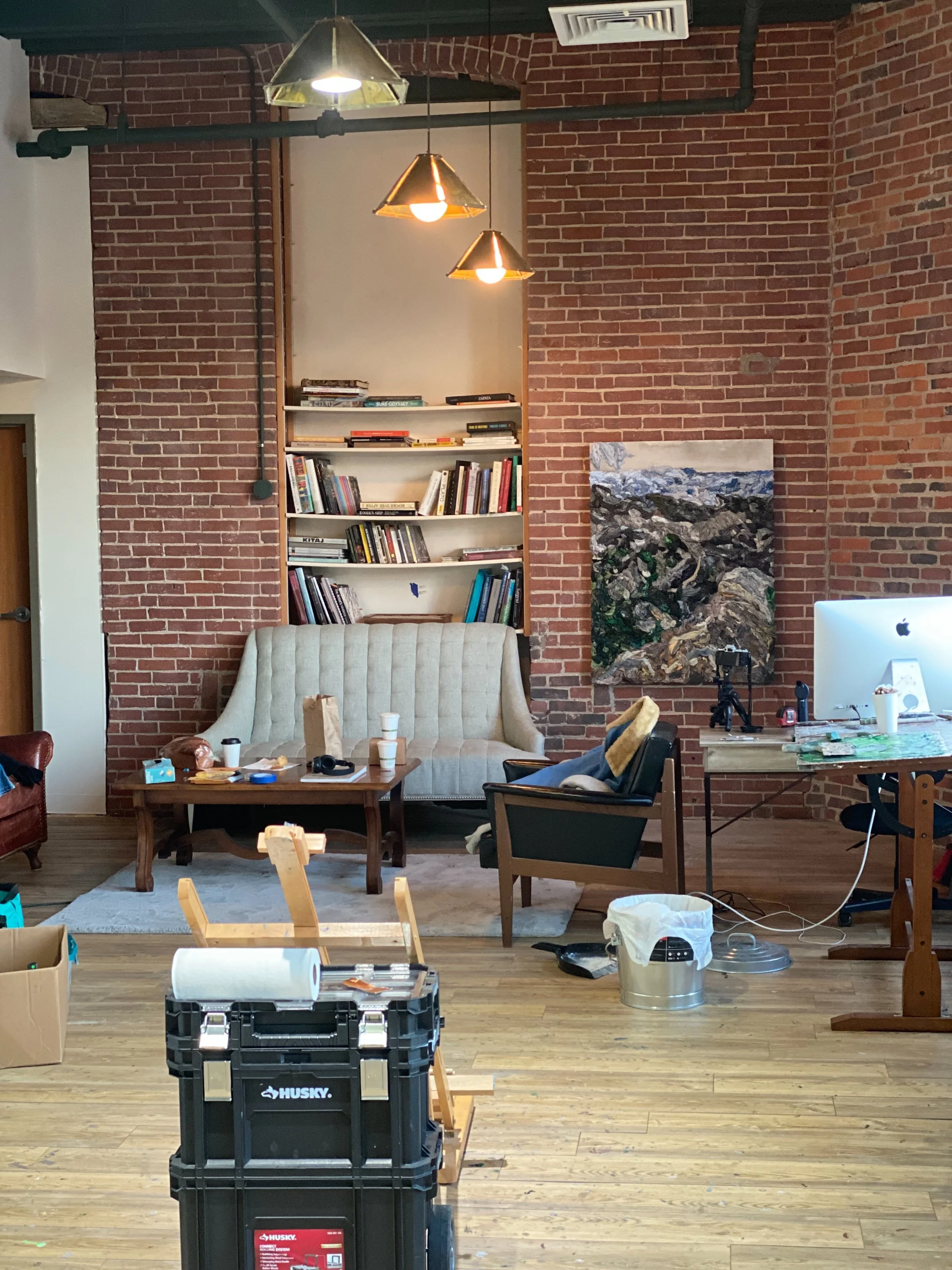
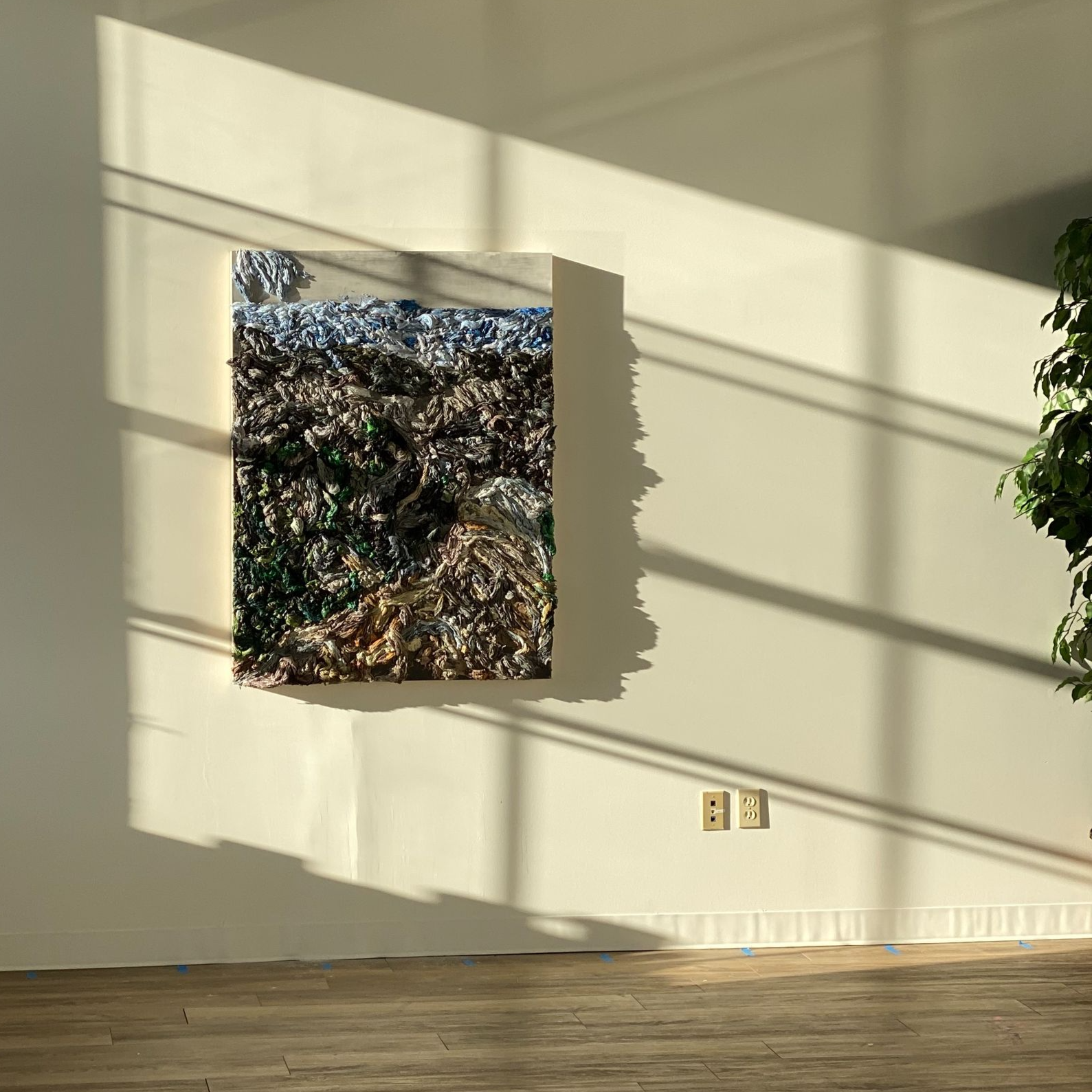
December 4, 2021 - Installing Hanging Hardware
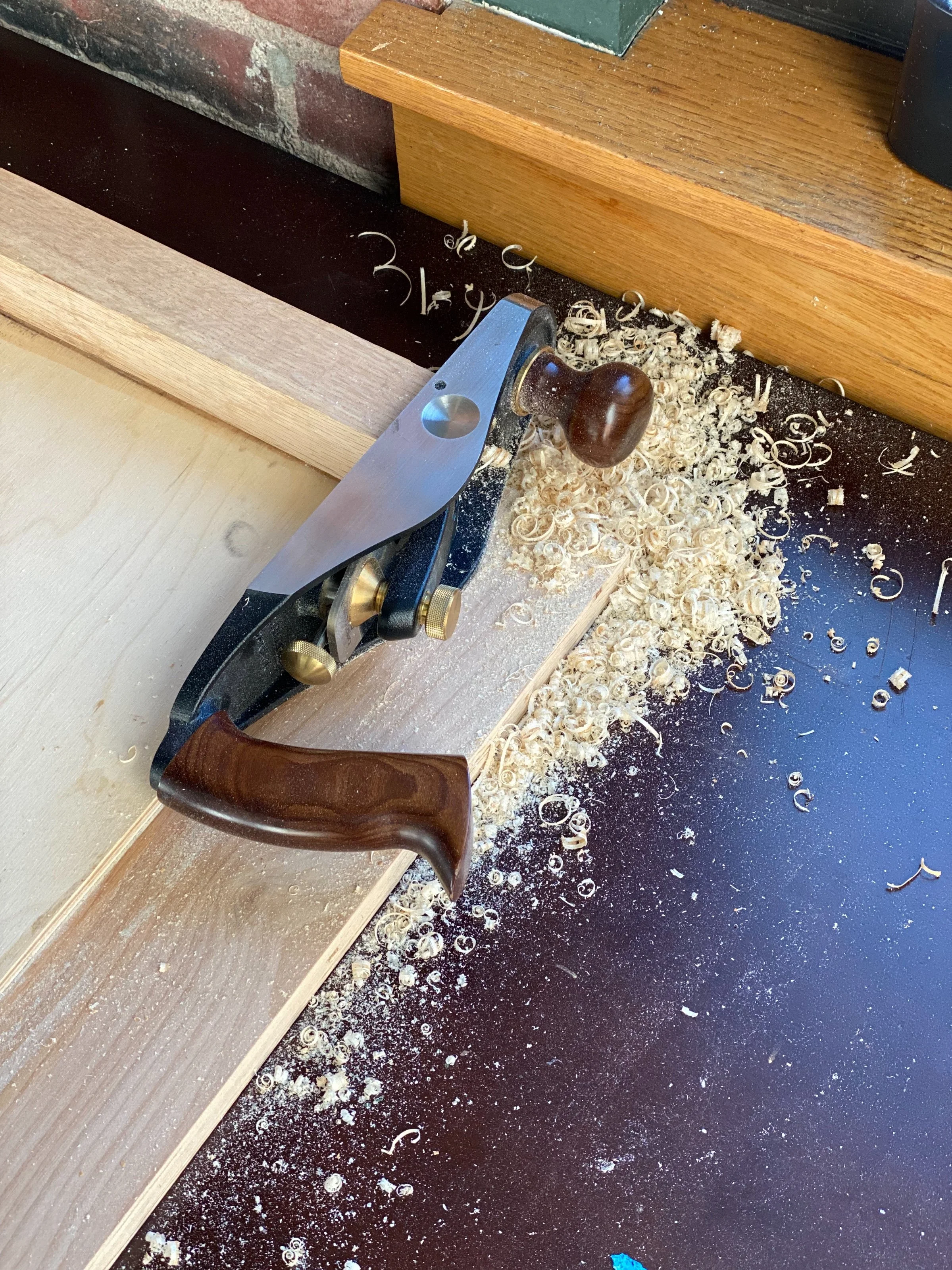
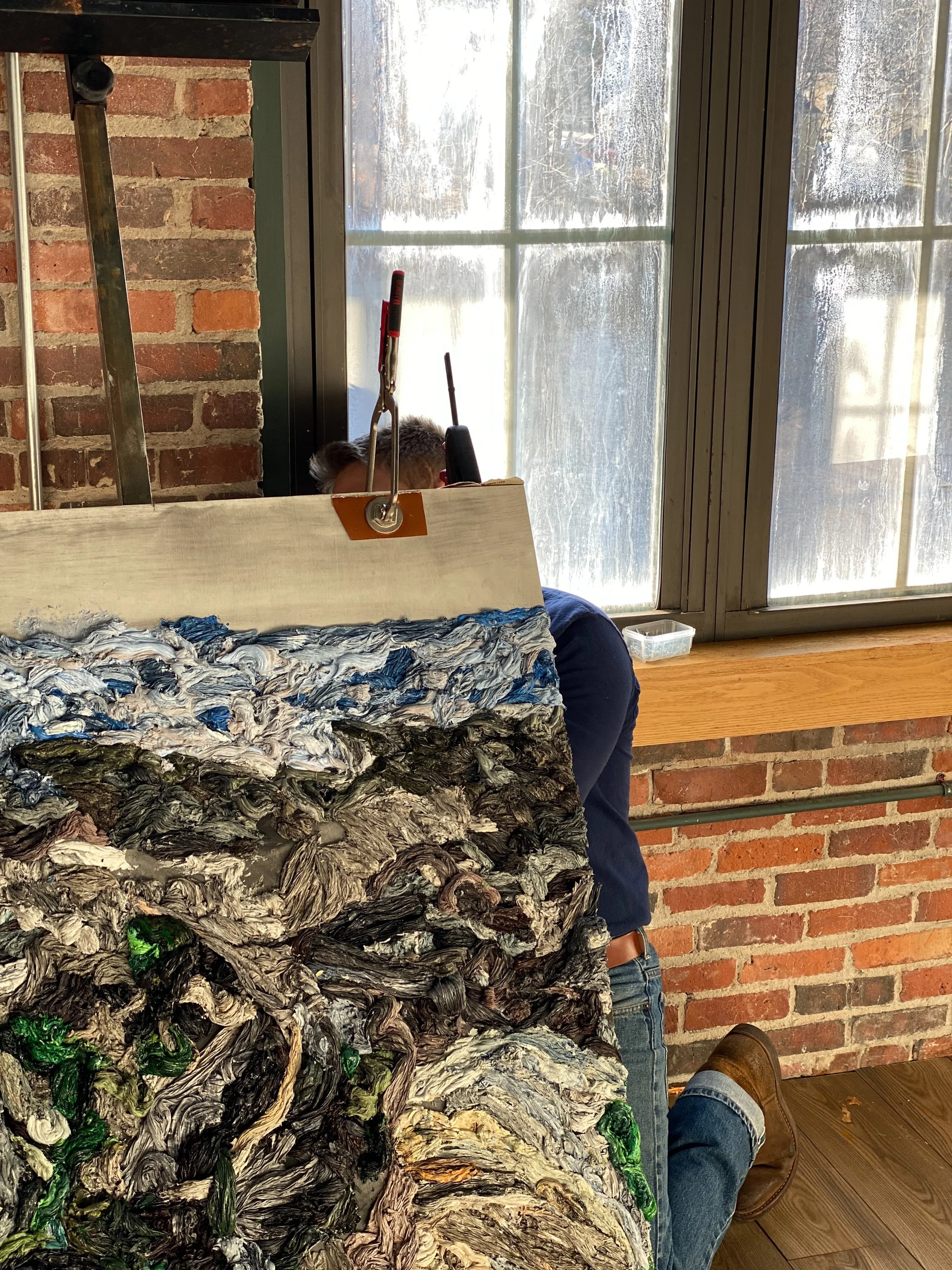
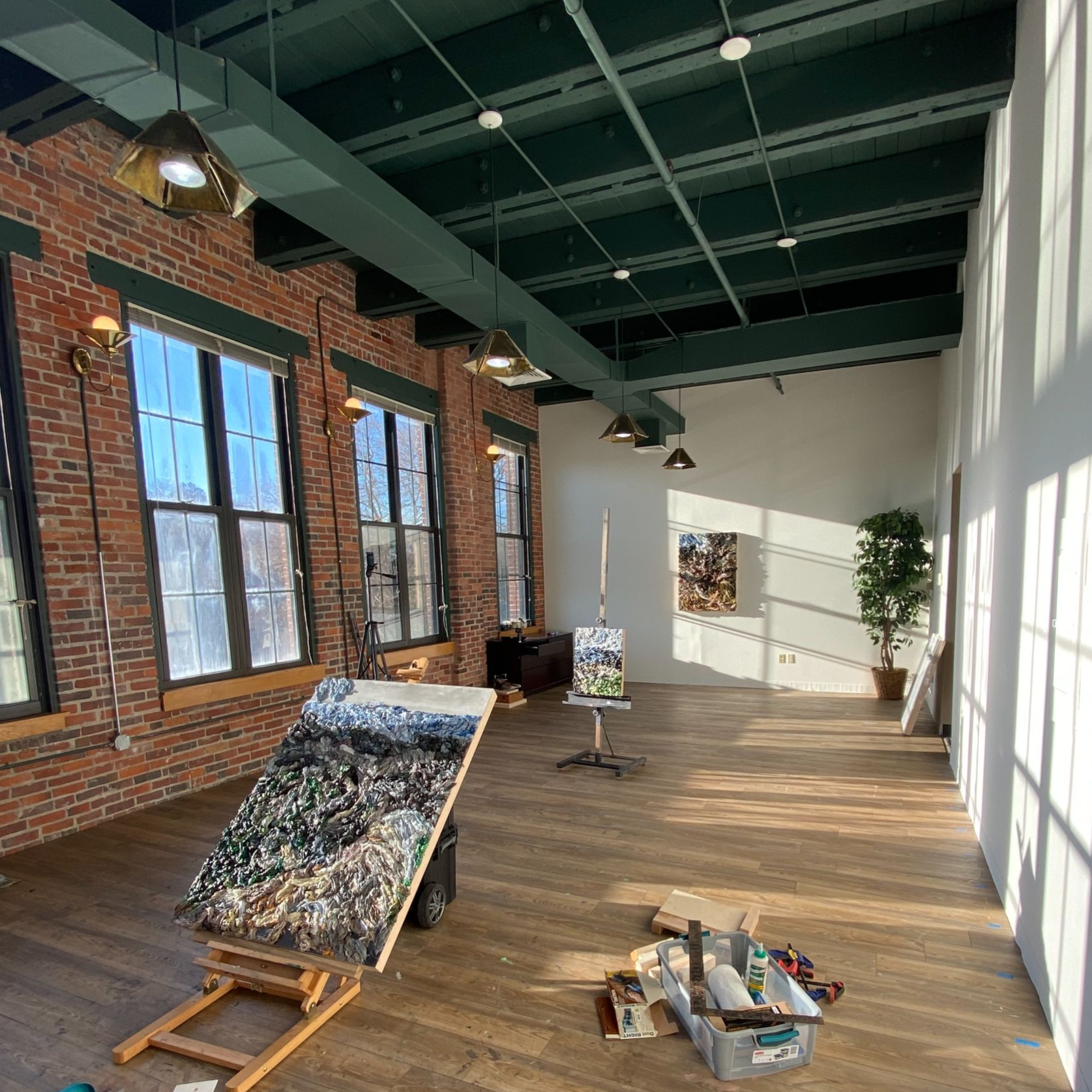
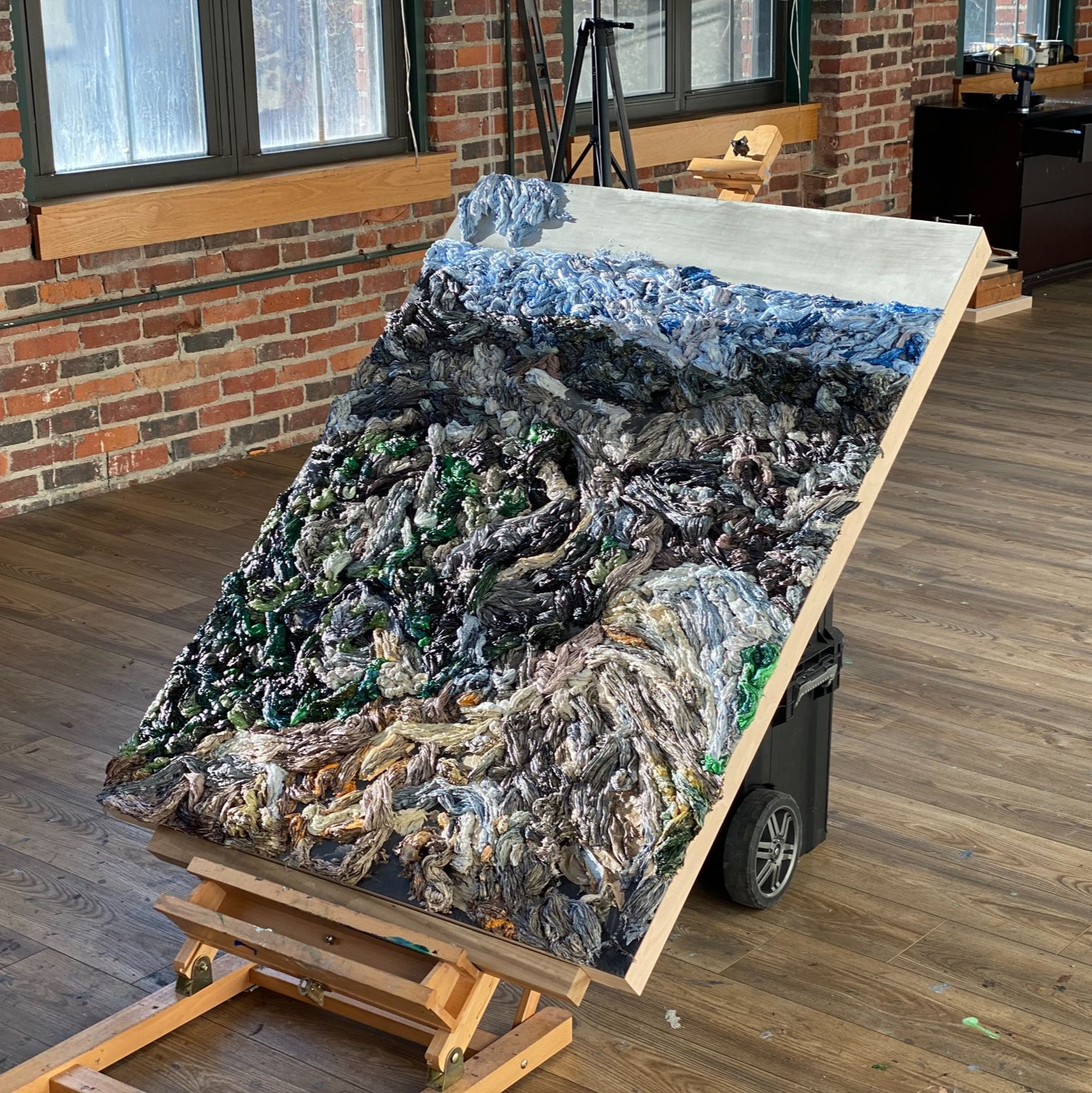
Cody is our woodworker for the studio, assisting with hanging, installing, and infrastructure. We want to ensure that our paintings are safely hung.
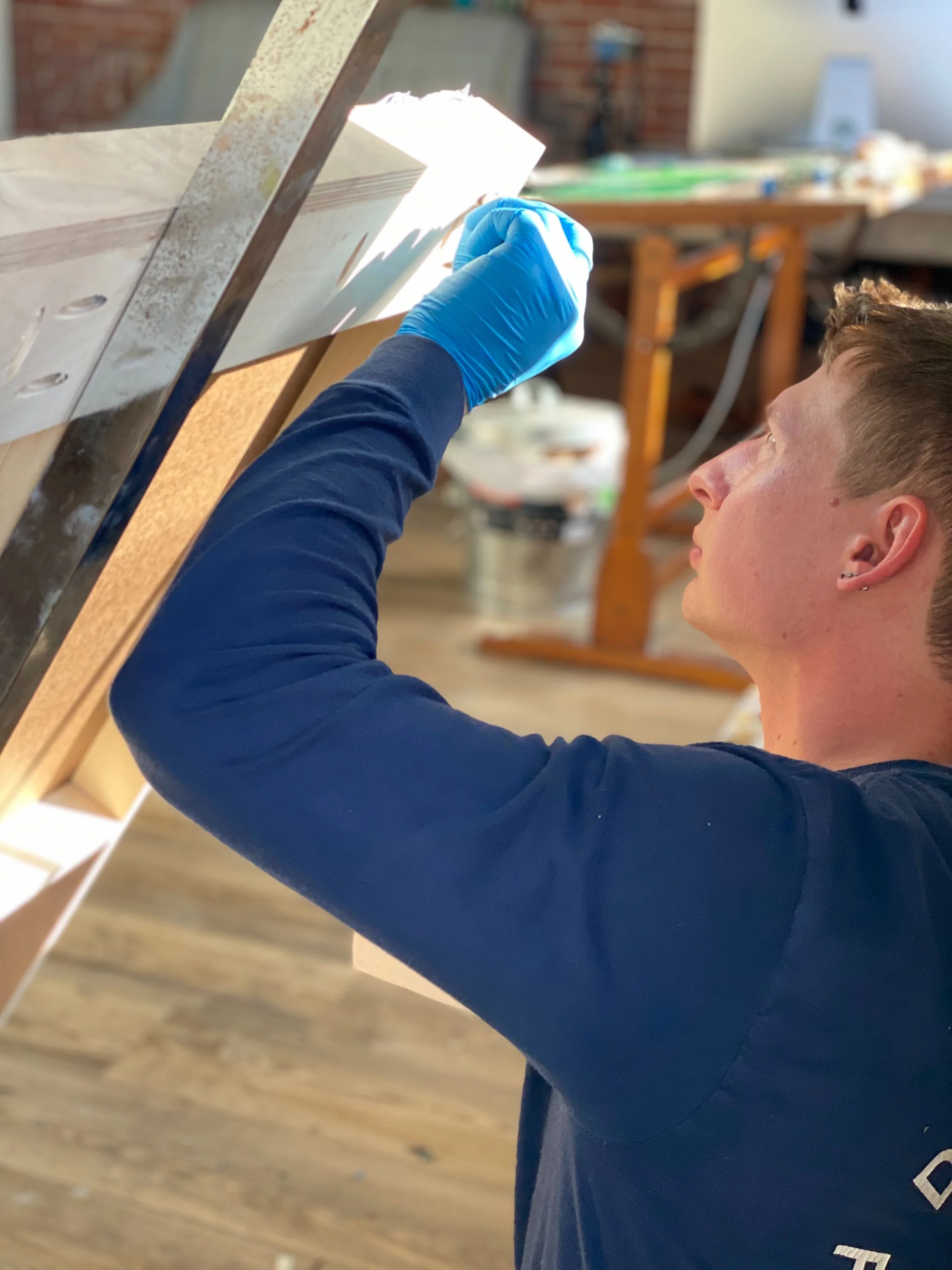
December 5, 2021
Thrilled with the progress made so far, my photos make the painting appear much closer to being finished than it actually is. It’s amazing how much the shadows contribute to the overall composition.
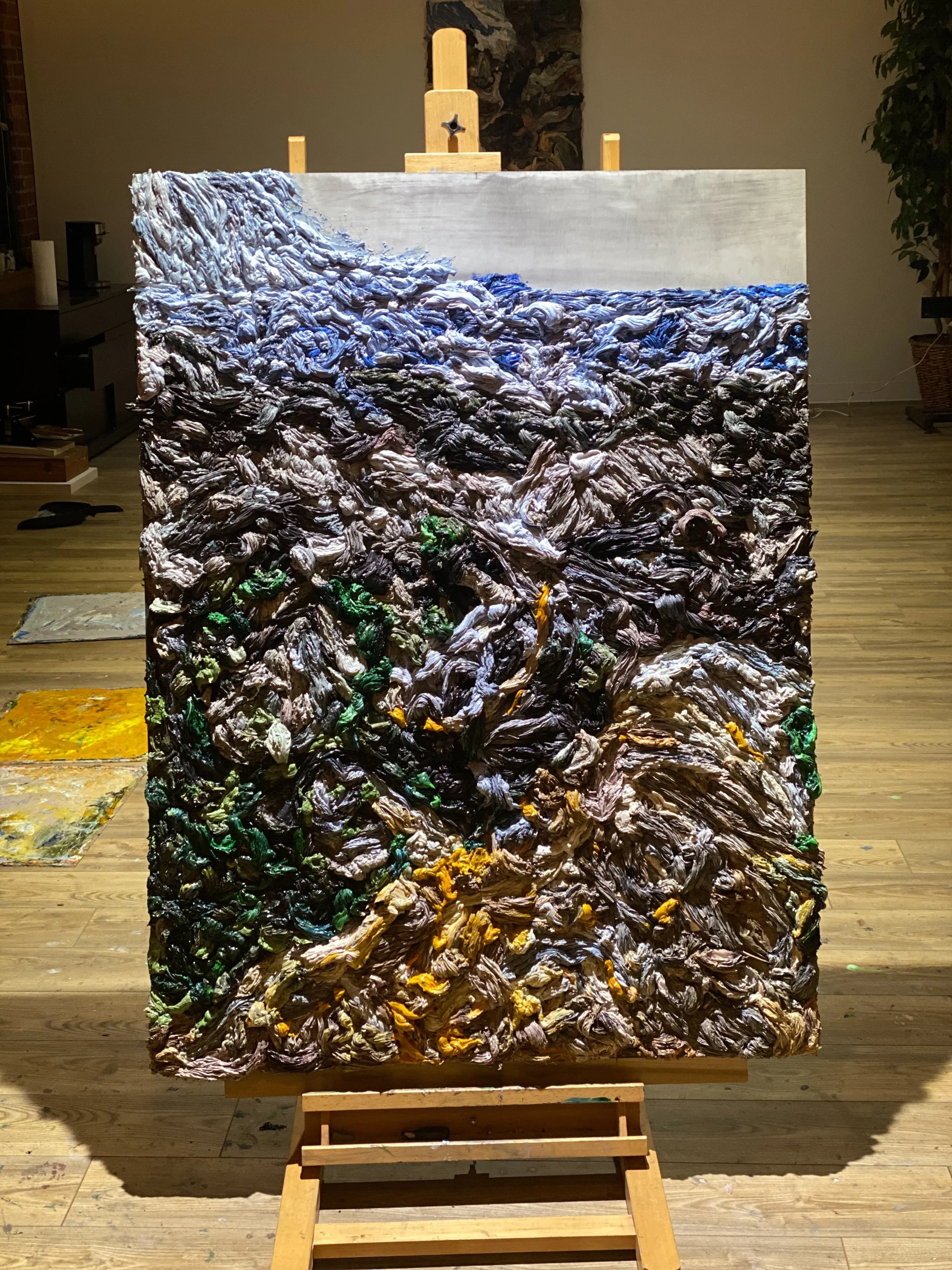
December 6, 2021 - Final Touches
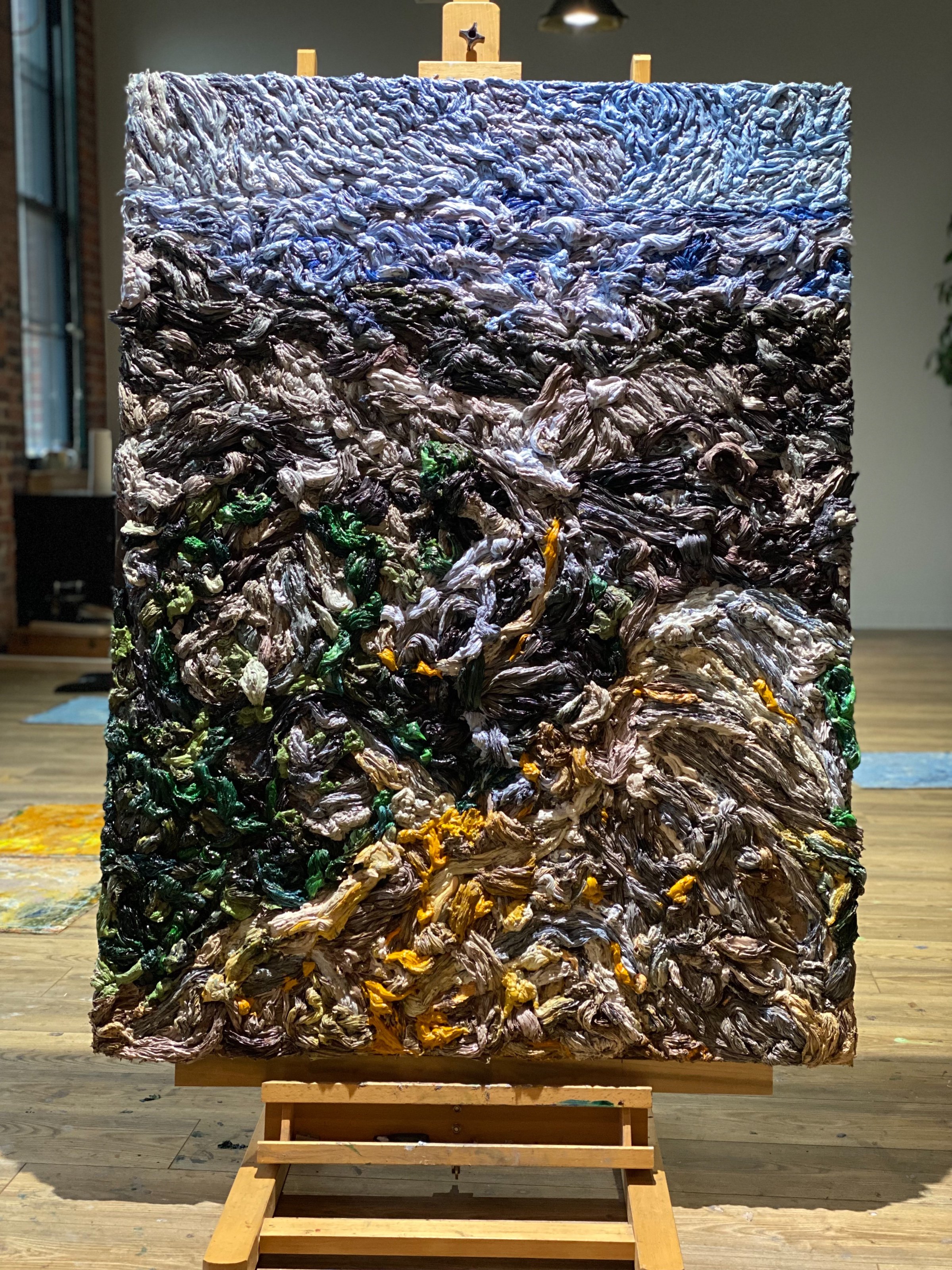
By December 10th, the painting was finished.
That night, we hosted a concert in the studio for our friends’ new album release. The event happened as the weather turned cold and COVID lockdowns began tightening again, which made gathering in person feel especially rare.
Finishing, for me, isn’t a clean ending where I sit down and summarize what happened. It’s more like a switch flips and suddenly the painting is no longer “in progress” or “a problem I’m solving.” It becomes a presence in the room.
I didn’t really have time to think after the last touch. We immediately moved into the concert, and the studio filled up with sound and people and energy. But I kept circling back to the work all night, pacing, admiring it, watching it from different angles, letting it exist without my hands on it for the first time. That was the first real moment of finished: not a conclusion, but a kind of release, where the painting could finally hold its own weight and I could just witness what we had made.
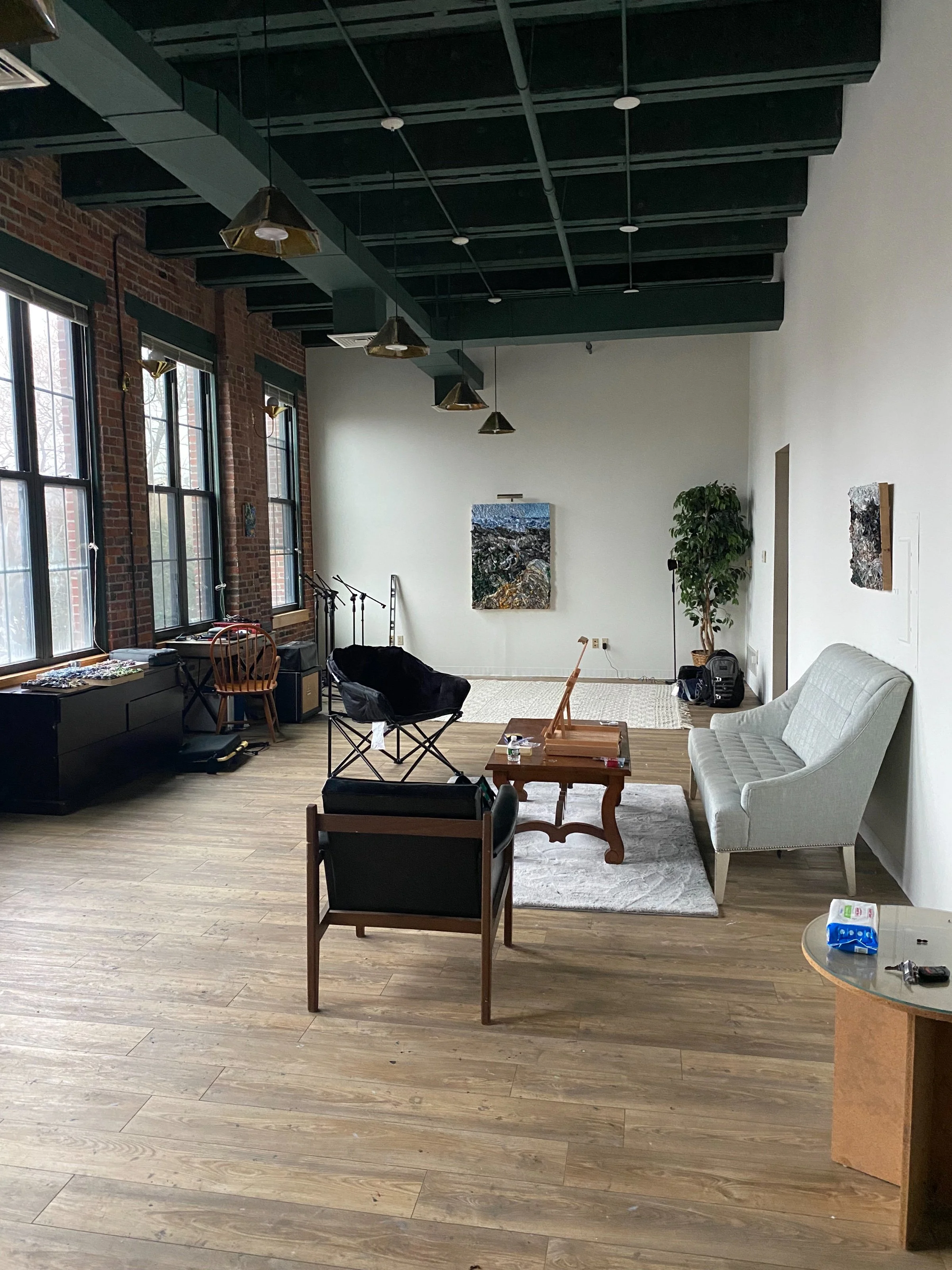
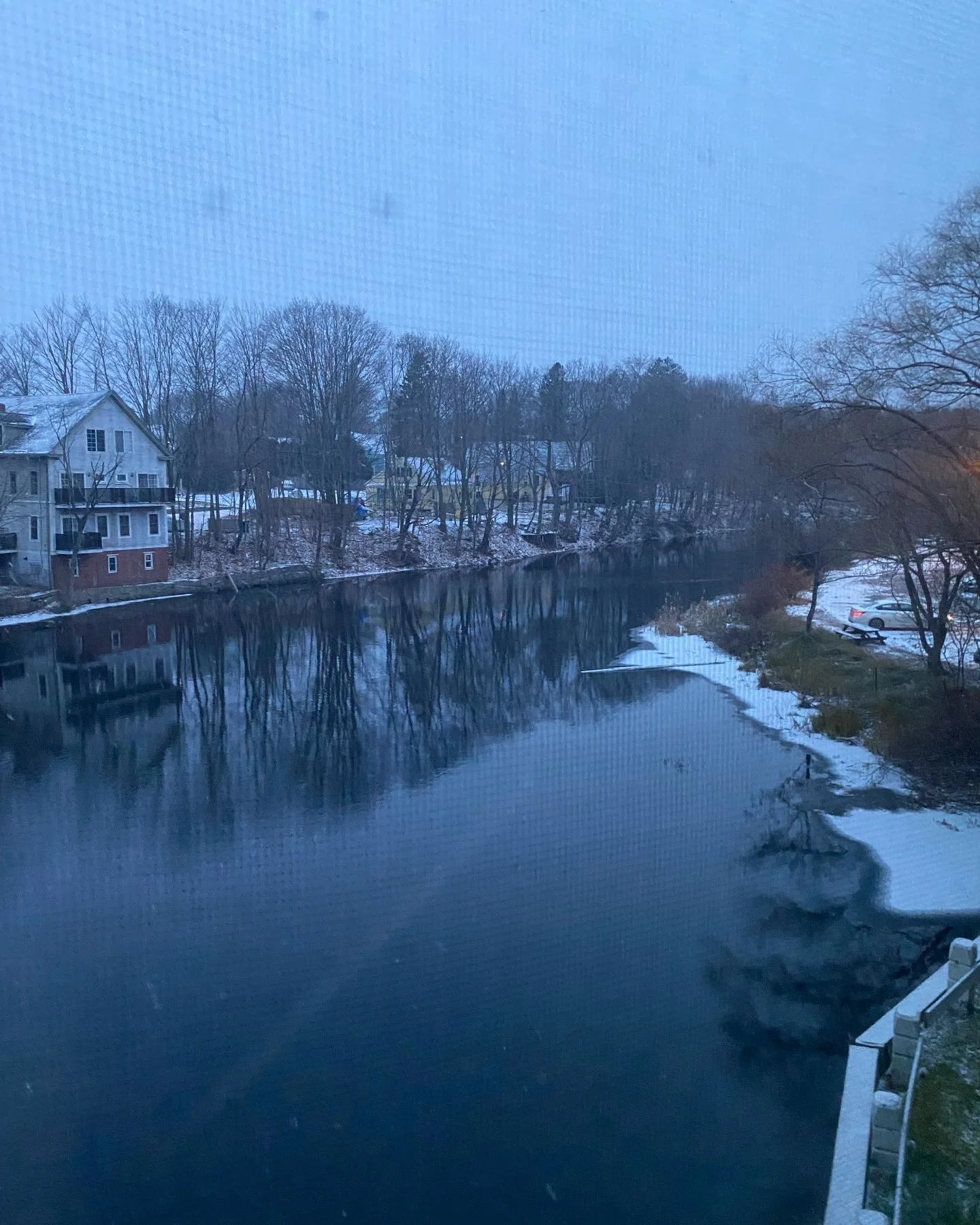
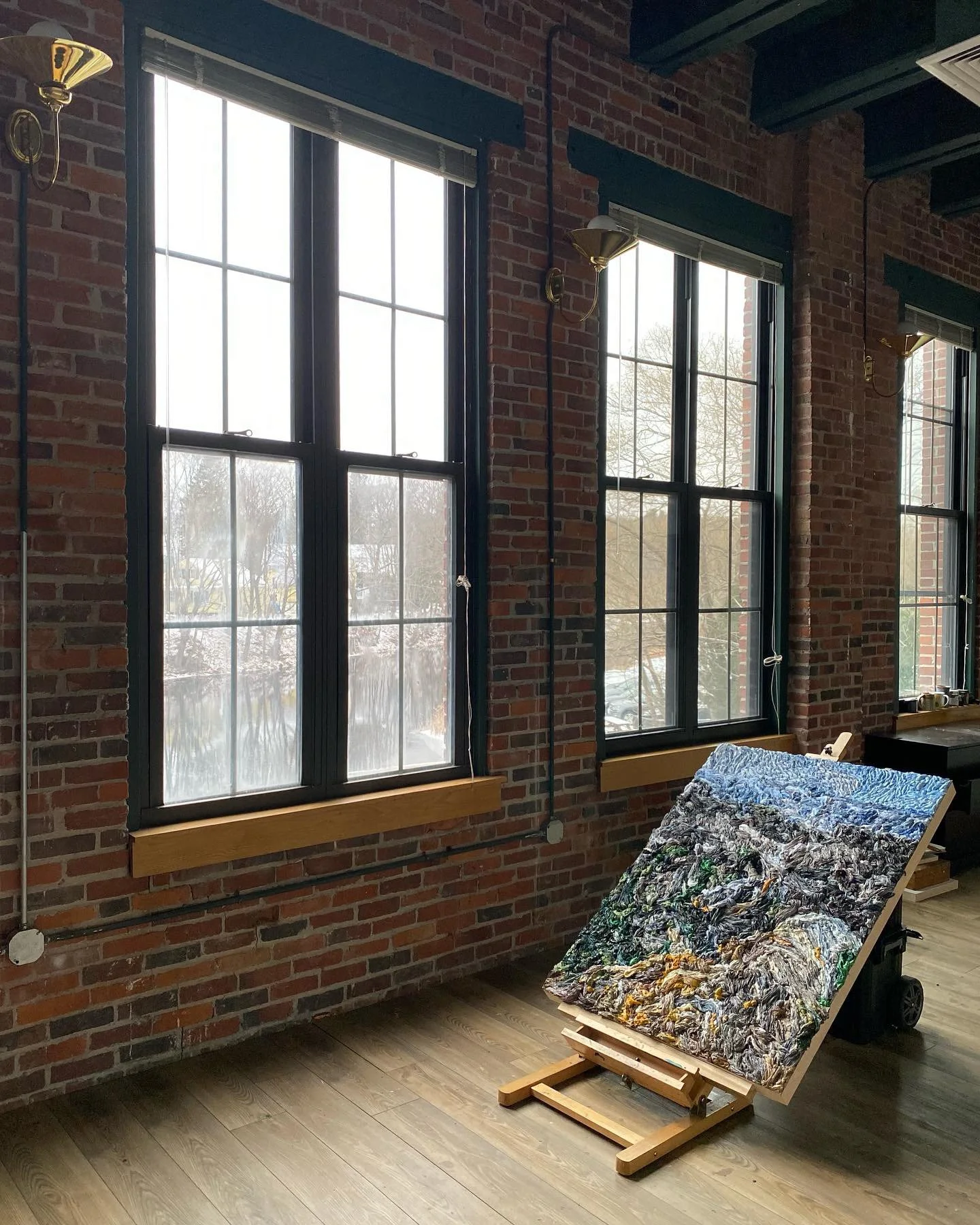
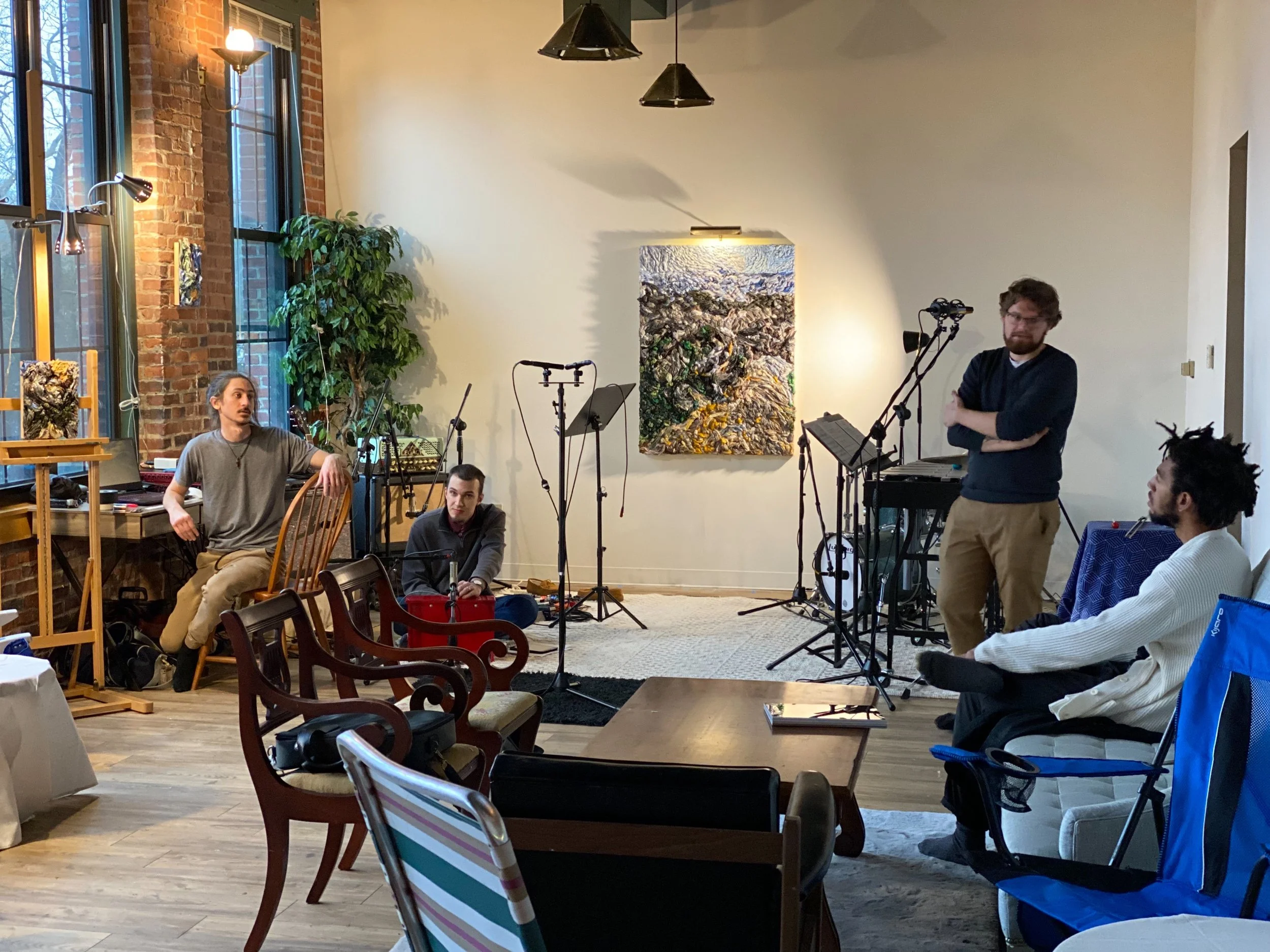
Concert with Ictus Novus - December 11, 2021
Covid was a very challenging time for many. In the summer of 2021, there was a brief break in restrictions in New England. But as the weather got colder and people started getting sick again, it became difficult to find venues, and even harder to plan gatherings that felt safe.
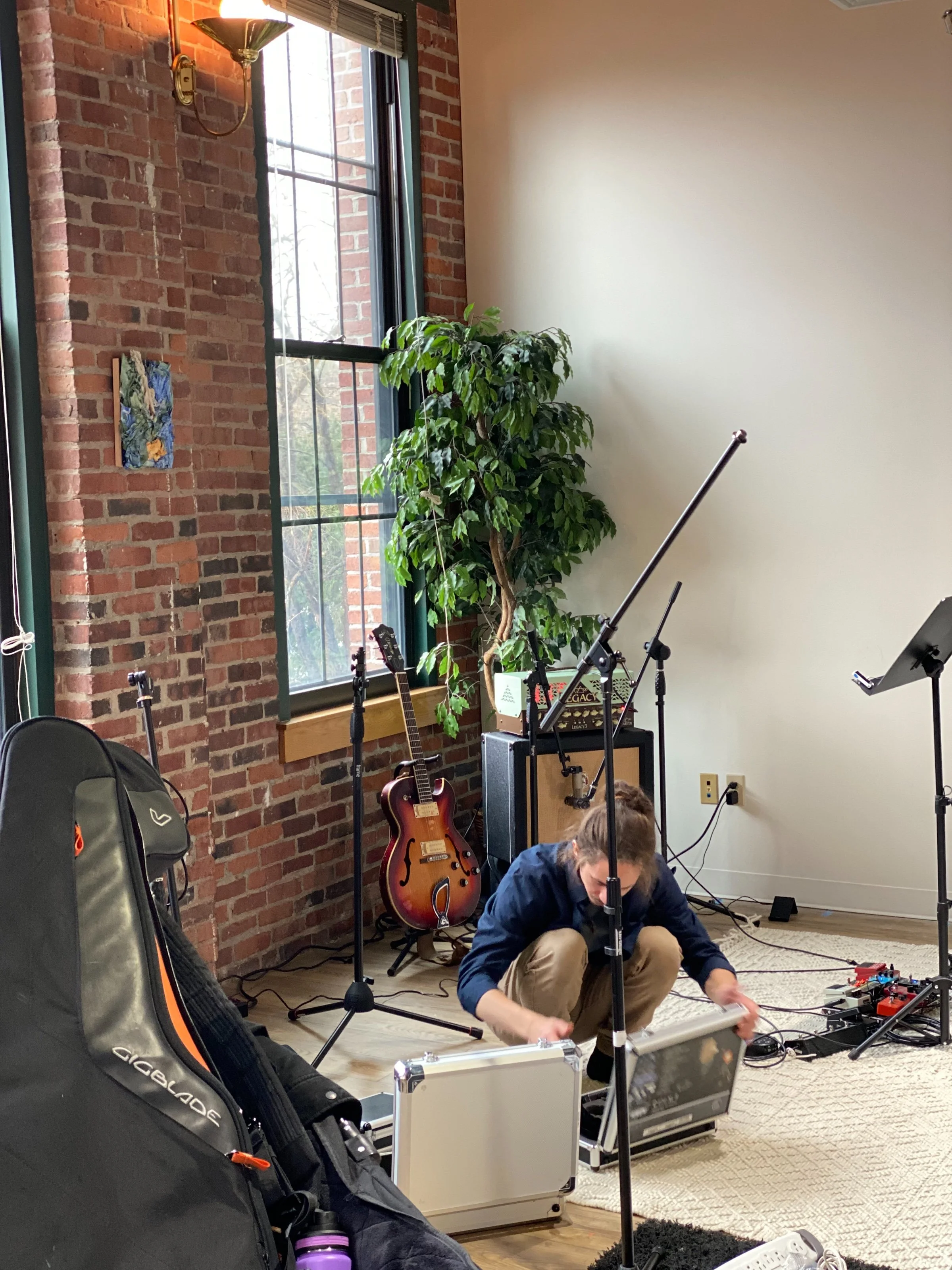
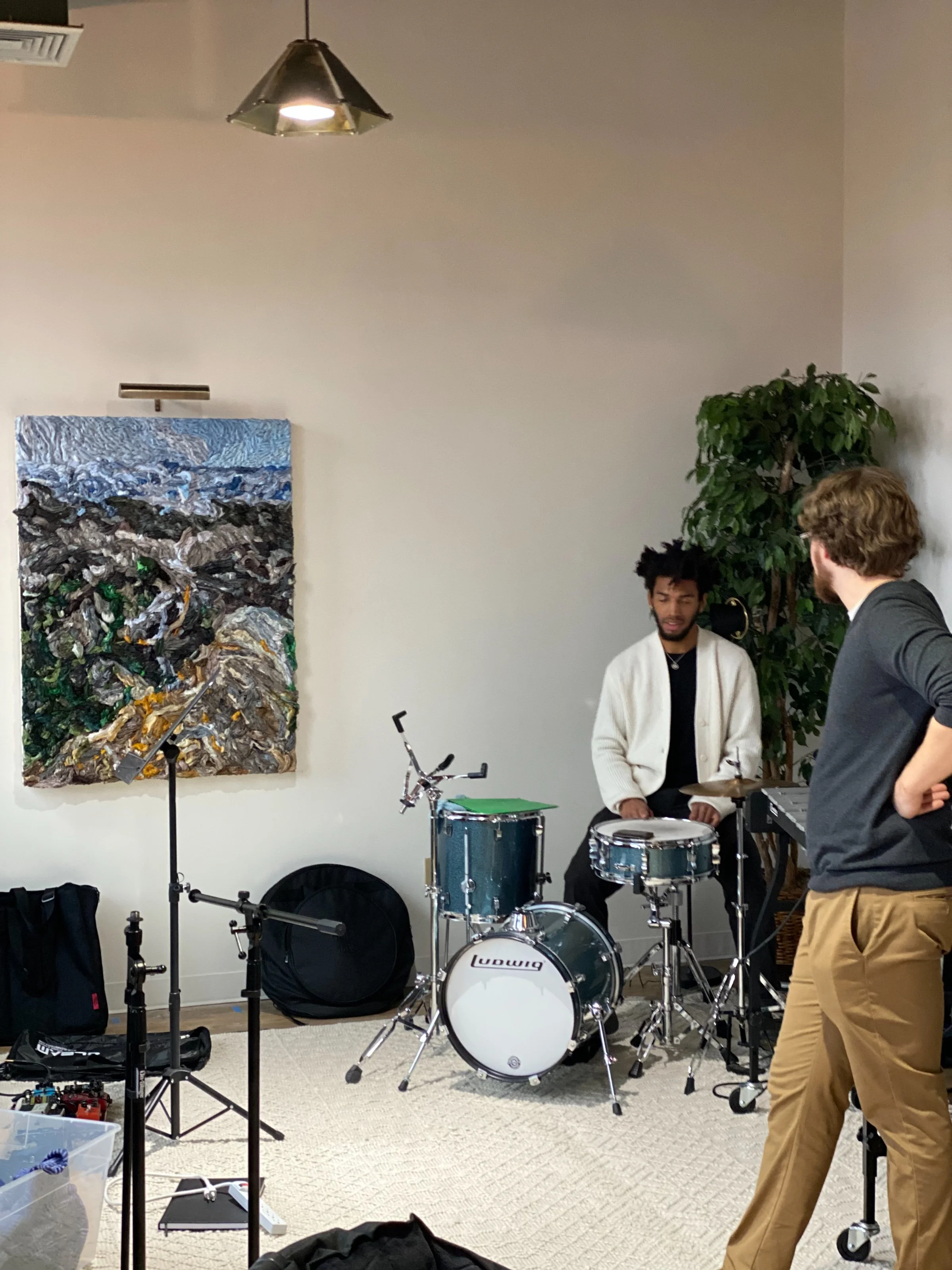
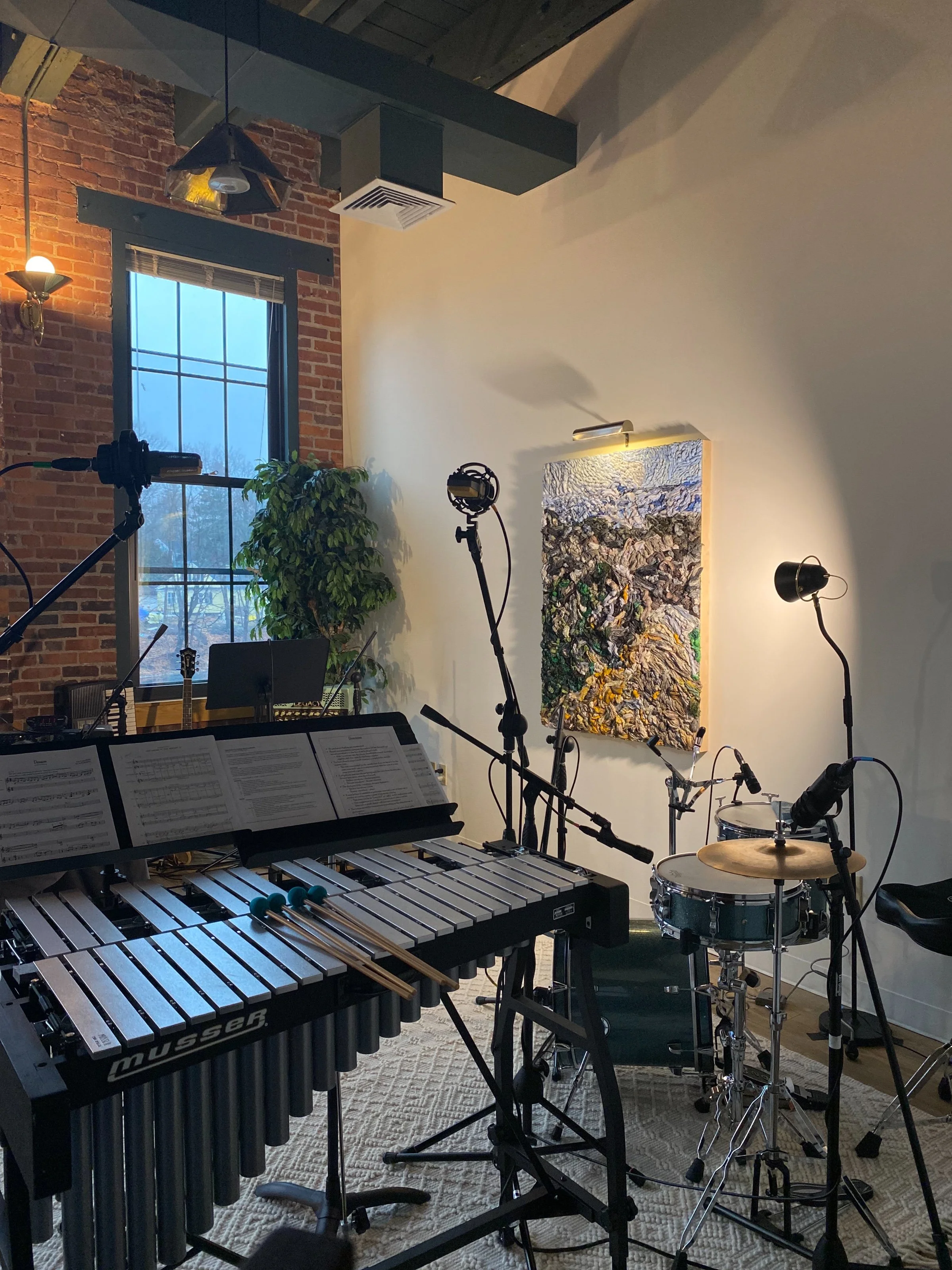
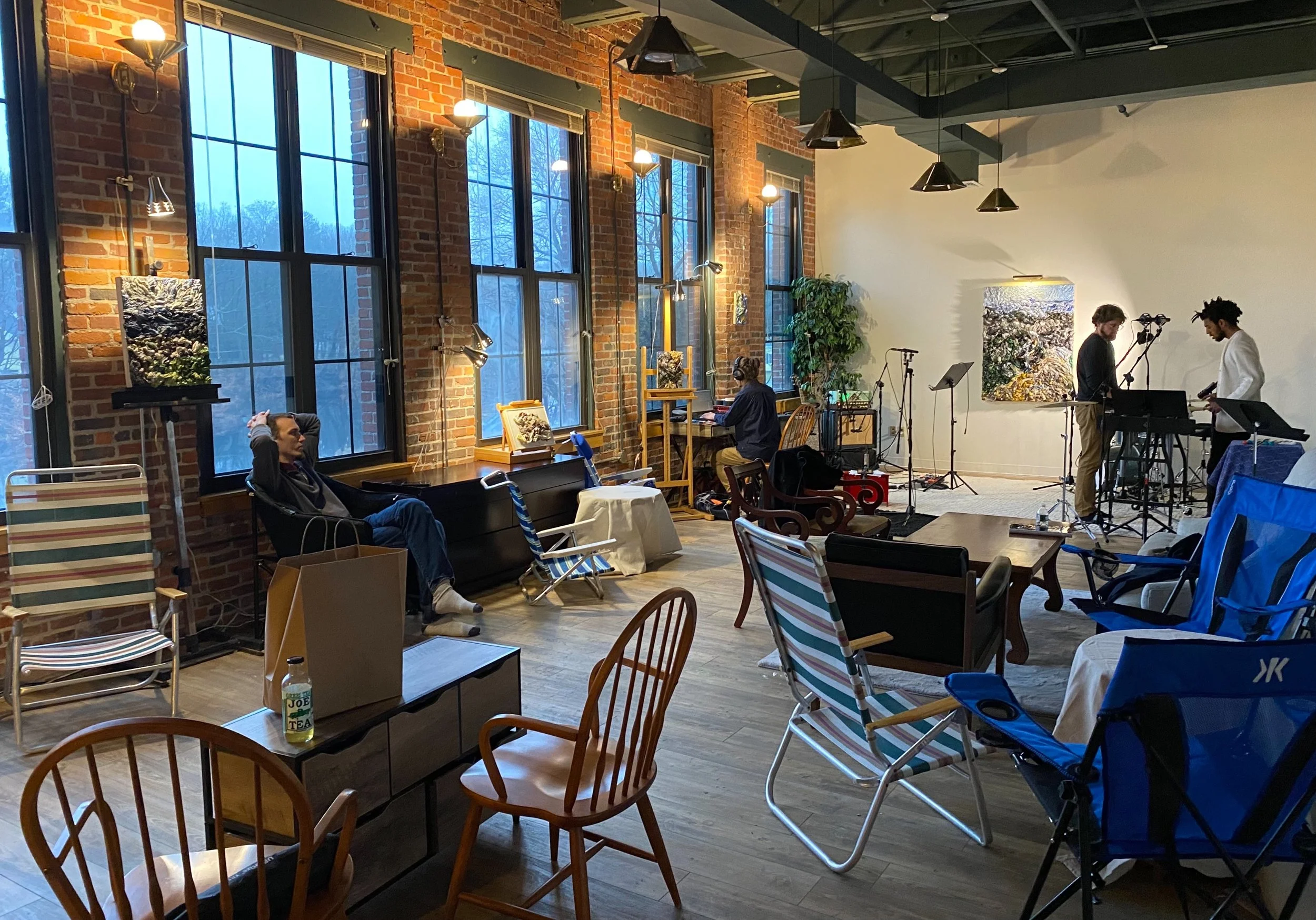
I had done several album artworks for my friends in Ictus Novus, and I wanted to offer them a small, controlled space to rehearse and put the show together. The studio was familiar, easy to manage, and large enough for people to spread out.
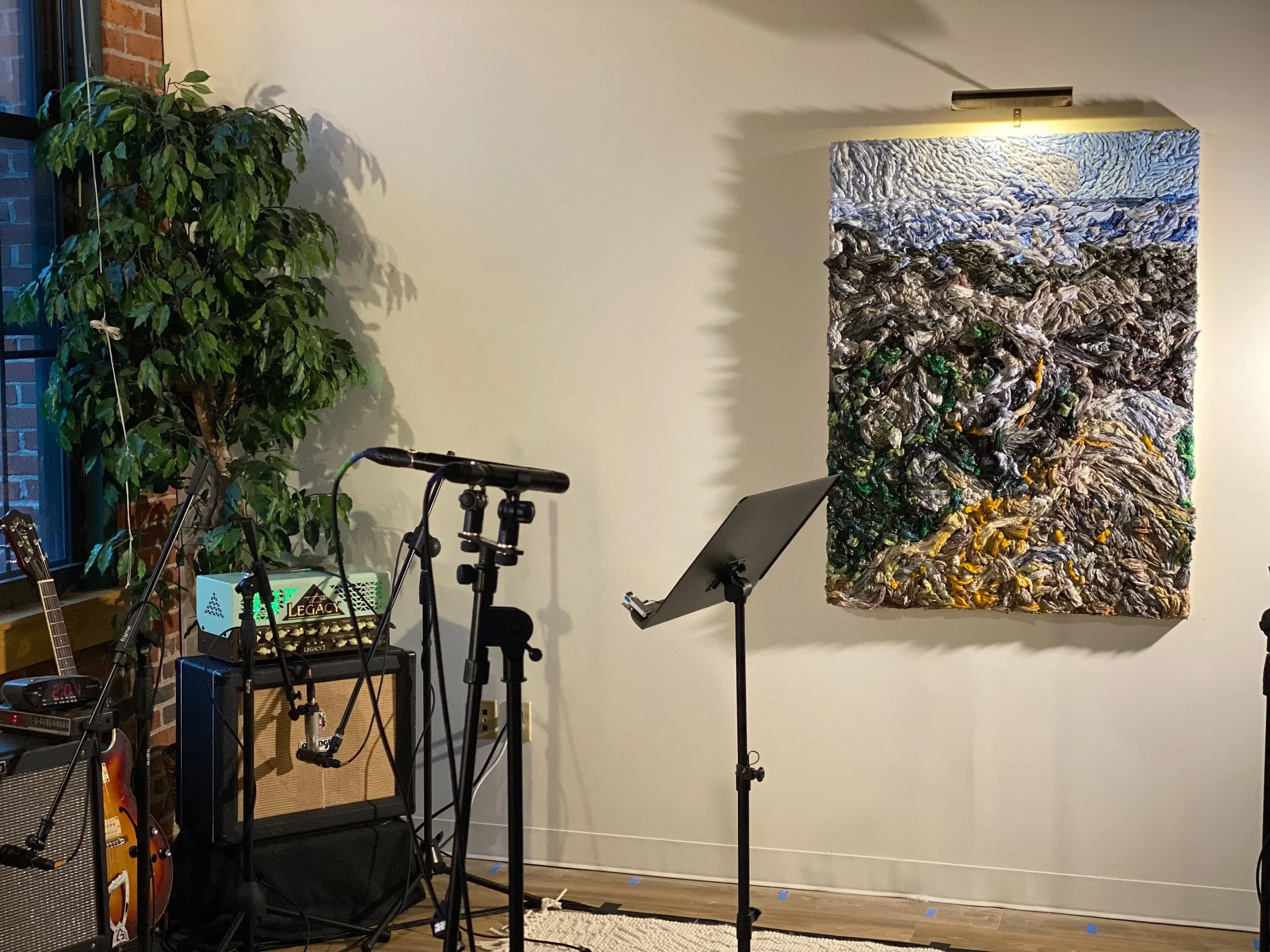
Here are a few photos from the rehearsal before the show:
SOLD! Collector Interview with Rachel Wells of Headwater Wellness.
After the painting and the concert, the work took on an unexpected life before it found its new home.
In the video below, I speak with Rachel about how the painting 43°33'31.2"N 70°12'18.2"W became part of her Expressive Arts practice, and how it helped shape the way she approaches her work through Headwaters Wellness.
In this conversation, we cover:
How Rachel brings together music, art, and therapy in the structure of Headwaters Wellness
Rachel’s relationship with art
Why the painting resonated with Rachel
What Rachel hoped the painting would offer her practice and patients
What reactions and outcomes she has seen from the collaboration
How and why the painting has had an impact in Rachel’s professional and personal life, and more
For the full story on how Rachel and I met , check out the video below:
