In Abundance
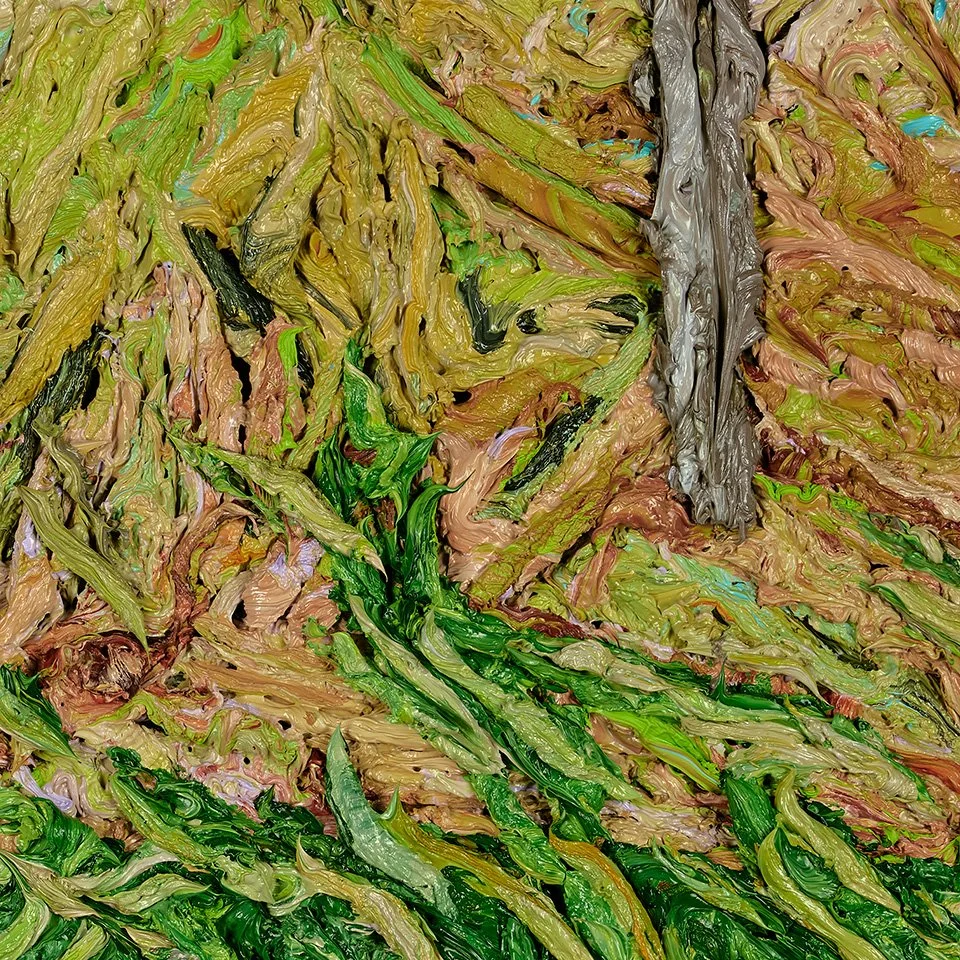
A painting begins long before the first sketch or mark. Often, it starts with moments I can’t forget or let go of. They persist, then surface again when I’m priming a panel for a new piece. A kind of long, intense procrastination.
This is the story behind In Abundance—born from a path I walked to the ocean again and again, letting the world reassemble itself in my head.
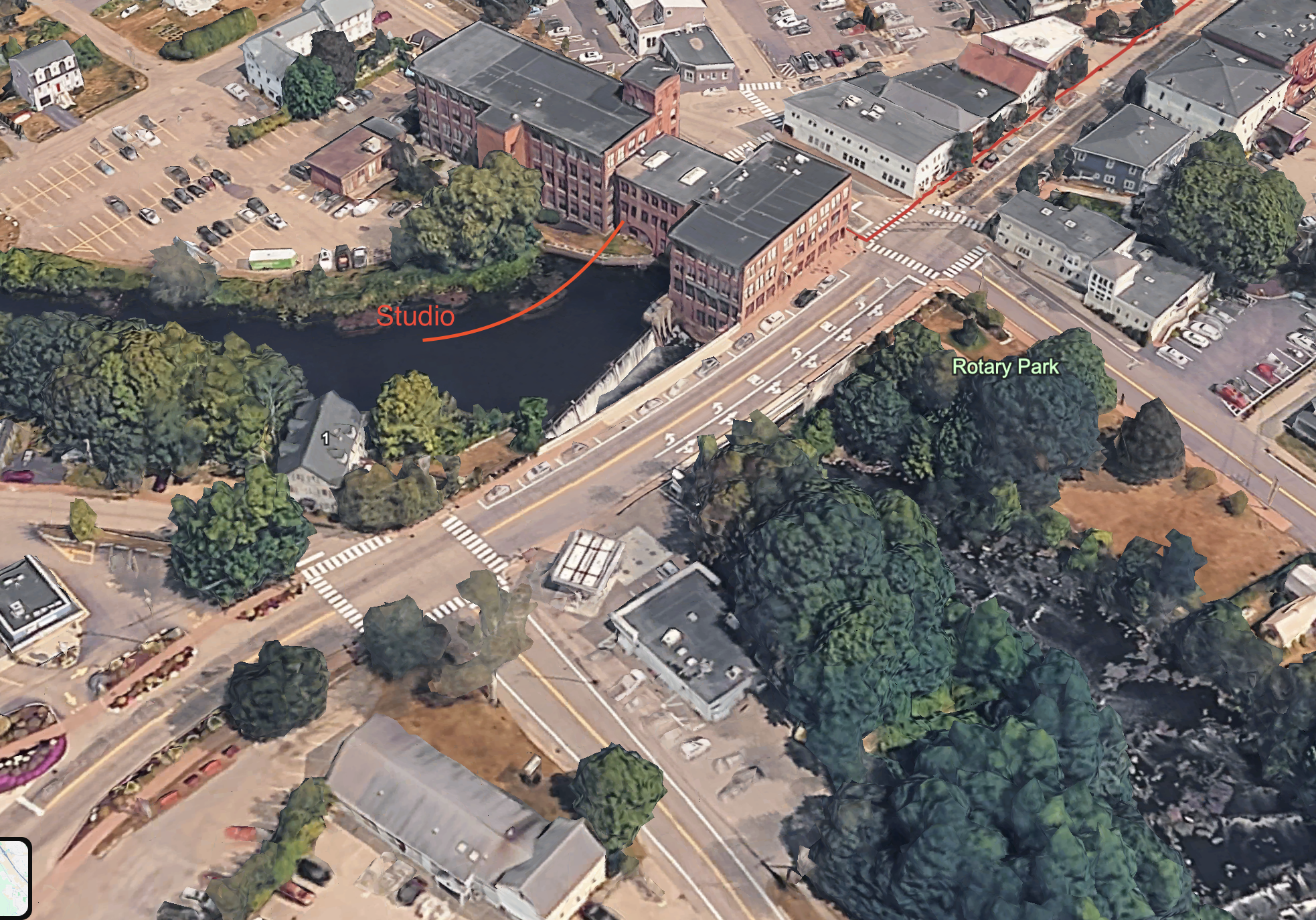
Ed’s Studio on the Mousam River
The Walk: Studio to Beach (A Route for Thinking)
In late spring and summer, I’d step out of my studio on 2 Storer Street. Kennebunk is so close to the ocean, and I’d heard there might be a way to get there without taking the main roads—just back alleys and trails—so it felt only fitting to explore it.
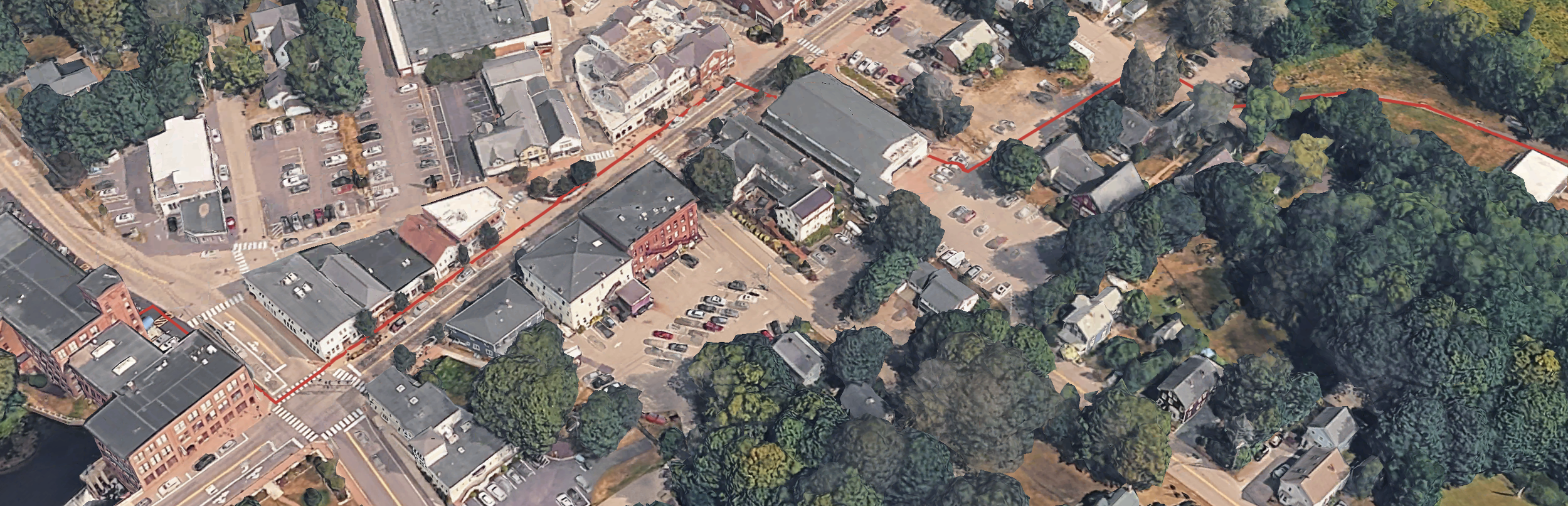
I’d cross the street and head downtown. The town has that familiar quiet bustle—small movements, small errands, people converging and dispersing. And then I’d cut directly through the ice rink area. In winter it becomes an indoor rink—bright, contained, a kind of manufactured season—but in the warm months it’s wide open in a way I love. Filled with people playing tennis or Pickleball.
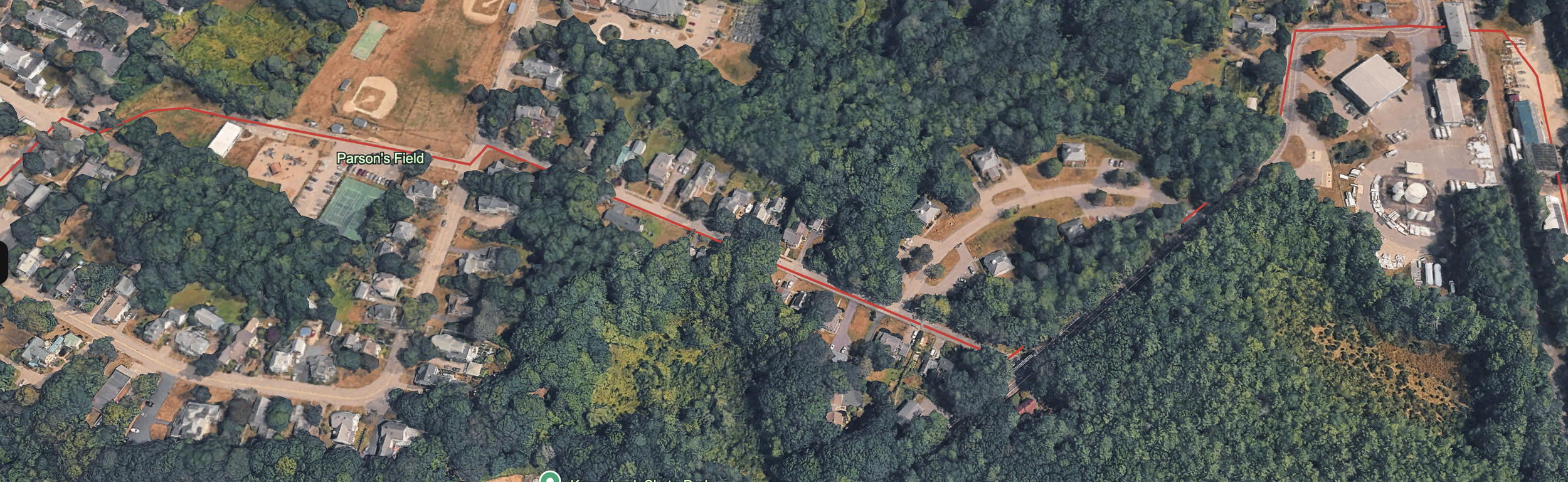
From there: straight through the park. The architectural salvage store is the small building pictured all the way on the right.
I’d cross the street and head downtown, into that familiar quiet bustle—small movements, small errands, people converging and dispersing. Then I’d cut through the park, the kind of family park that feels like the center of town. There’s a small patch of grass where people walk their dogs, tennis courts humming in the background, and fields where little kids swarm and shout. If you pass through at the right time, you might catch a Little League game underway—classic small-town America.
On the other side: the architectural salvage store.
It’s one of those places that feels like a collage of other lives—not a typical Maine antique shop full of tchotchkes, but a salvage-packed archive of old house parts. It’s like every small-town shed where someone’s grandfather tucked away the door that got replaced, the extra doorknob, the hinge, the lone piece of tile—too useful to toss, saved “just in case.” Decade after decade, as houses change hands, all those still-good leftovers seem to migrate here: an old New England home stacked with doors lined up in rows, windows by the hundreds, bins of knobs and hardware, everything improbably sorted into a beautiful array. It sits tucked behind an industrial park, right alongside the train tracks—and if you walk behind it and keep going, you’ll find a trail that starts in Kennebunk and carries you all the way down to the ocean.
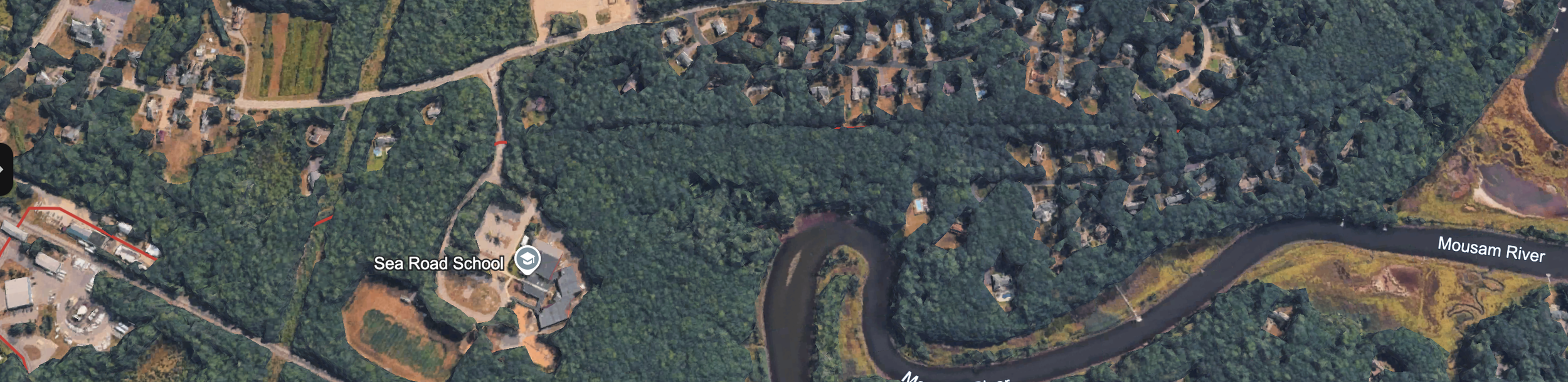
At first the trail is dense forest, almost closed in. Then, as you keep walking, you begin to pass more residential pockets, and the landscape starts to open. Eventually the view widens into the Mousam River, the jetties, and the estuaries—the whole area spreading out like a long exhale. It’s the same river whose waterfall I overlook from my studio, and there’s something romantic about being able to follow that exact water all the way to the ocean.
In certain light it feels almost staged, like it’s daring you to reduce it to a tidy postcard.

But it never is tidy.
You keep going until you hit the crossroads at the beach.
Note: There is a distinct air shift as you move from inland toward the water. Maine beaches often feel cool and slightly removed, like you want a light sweater even in early spring or summer. At this turning point, the air flips from warm and pleasant inland to very cool and crisp, like pulling a water bottle from a cooler after the ice has melted: not so cold it hurts, but perfectly refreshing, clean, and beaded with condensation.
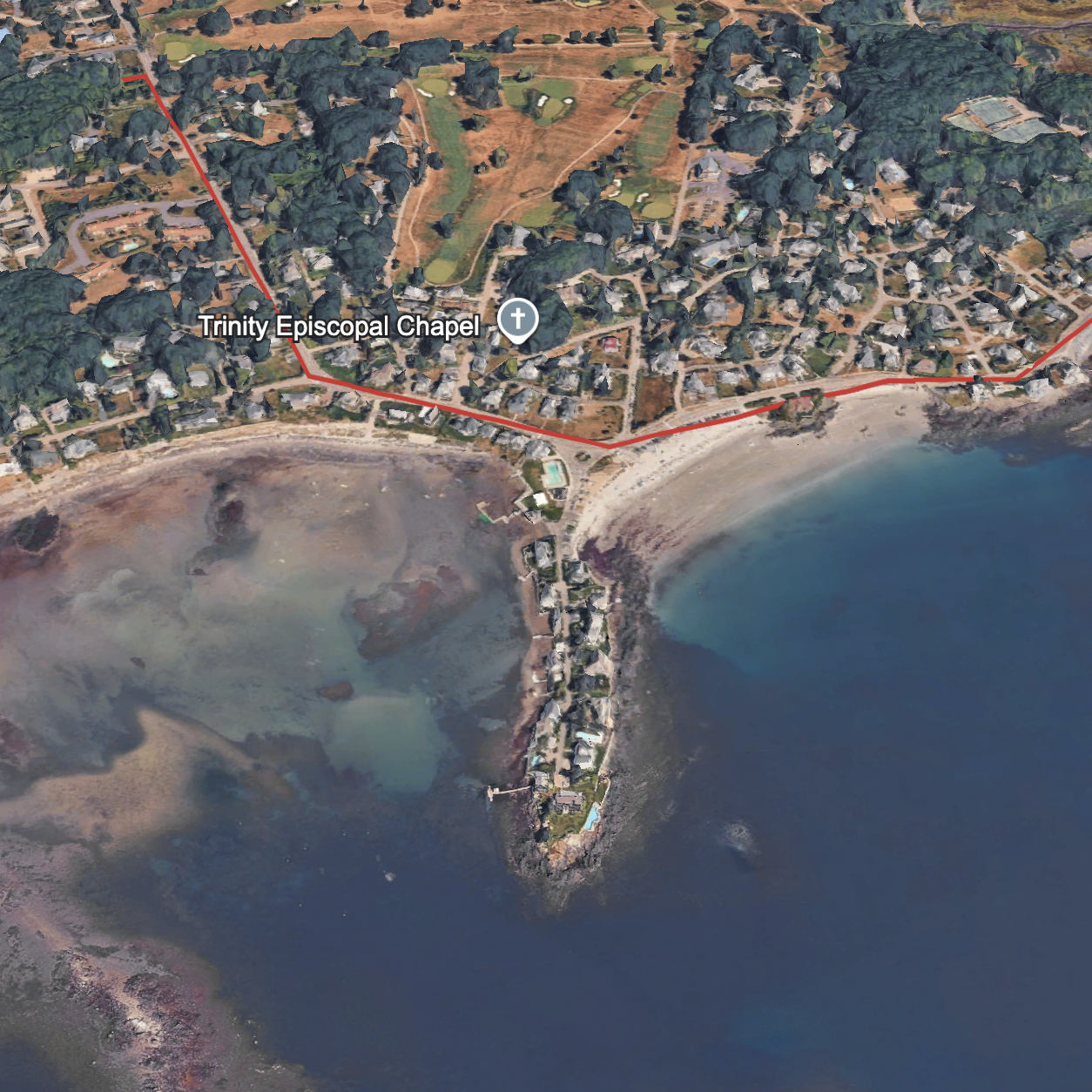
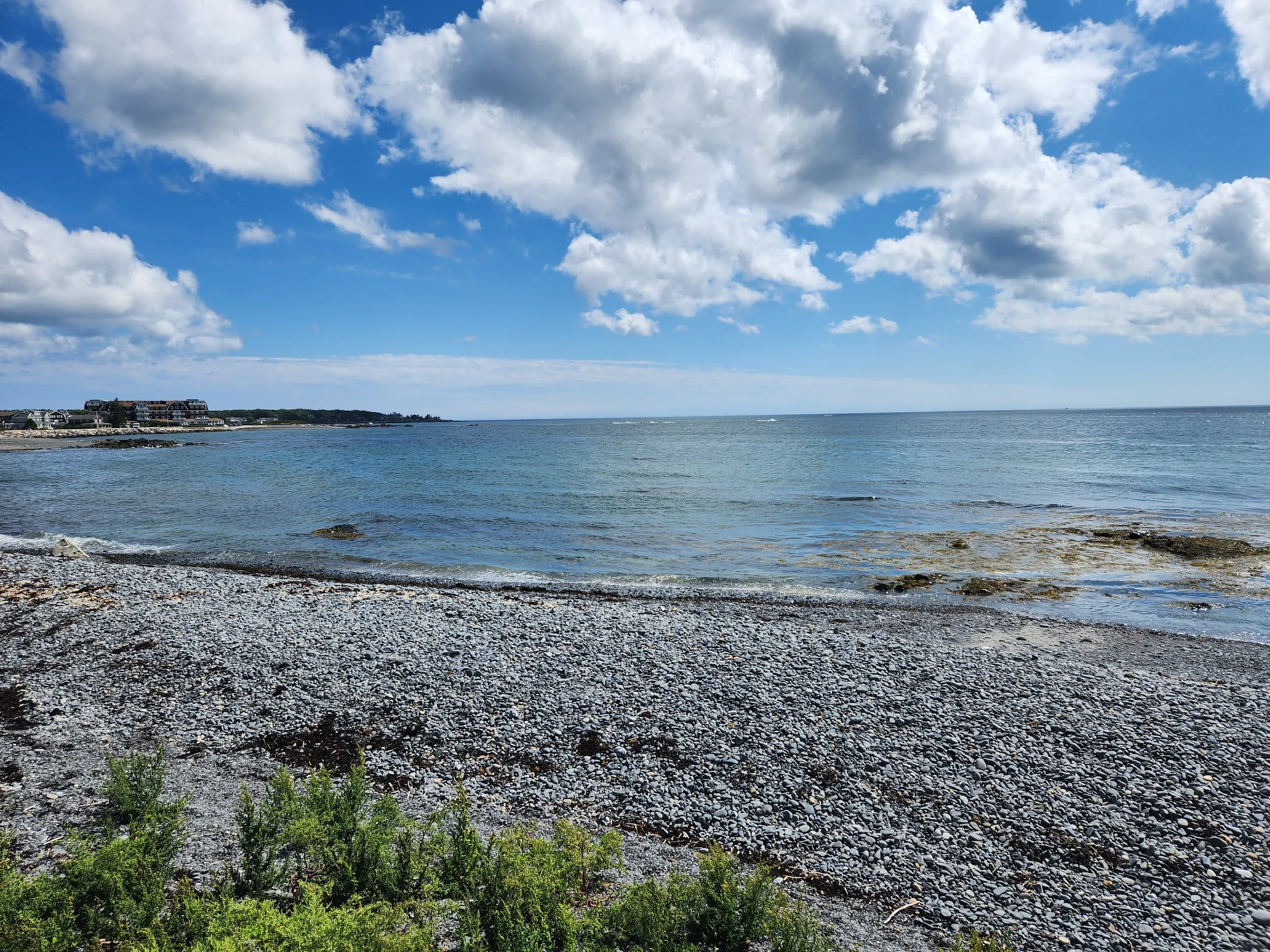
It’s a few hours to walk from the studio to that point. When you finally arrive, you end up in this incredibly rocky stretch—one of those places where the sound is as physical as the sight. Ocean water rolling and shifting the rocks around, endless pressure and release.
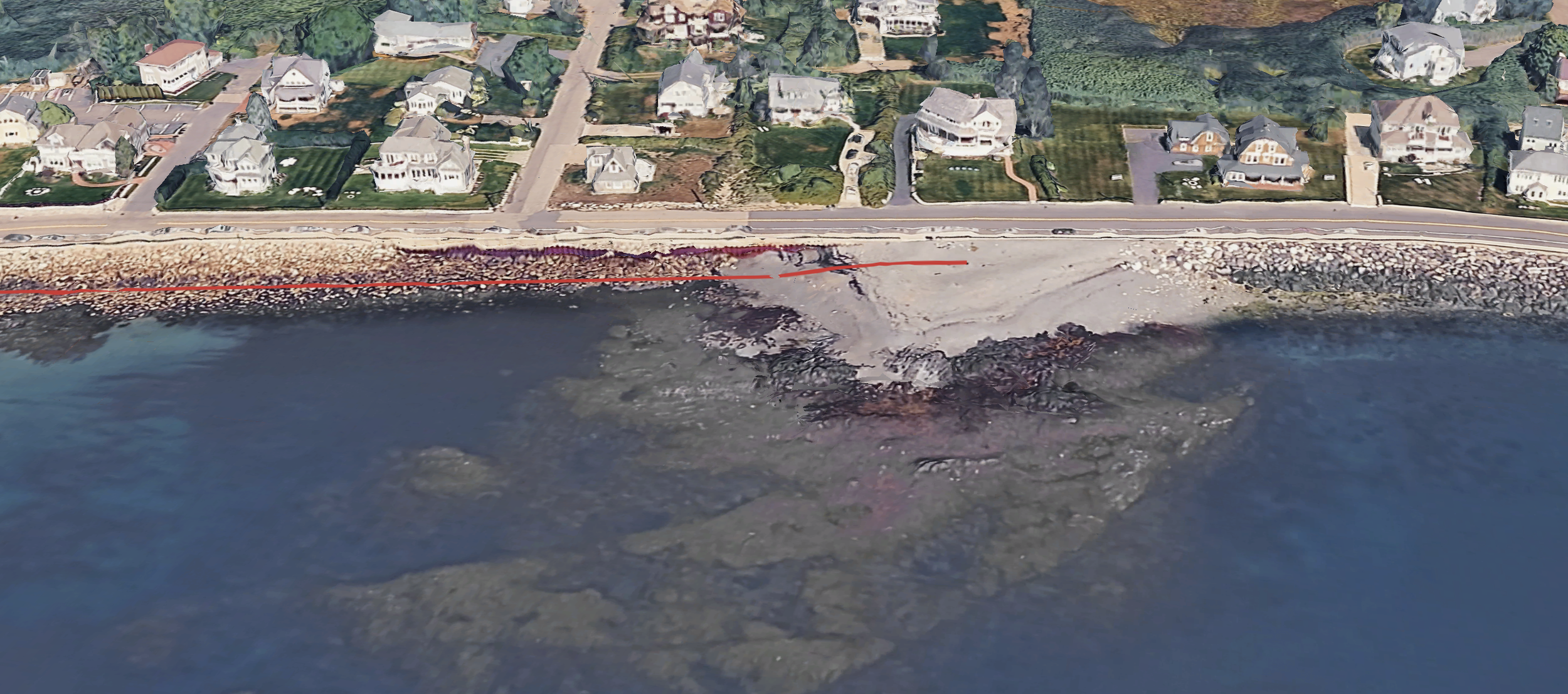
This is where I came to think.
Not the clean, productive thinking people like to imagine, but the kind that follows intensity. The kind where you have time to sit with the questions that bubble up and realize how malleable each answer can be.
2022: The Landscape After COVID (And the Frustration That Followed)
On August 8th, 2022, it still felt like we were living inside the second year of COVID—past the initial shock, but deep in the adjustment. People were learning new patterns, new rituals, new thresholds for what counted as “normal.”
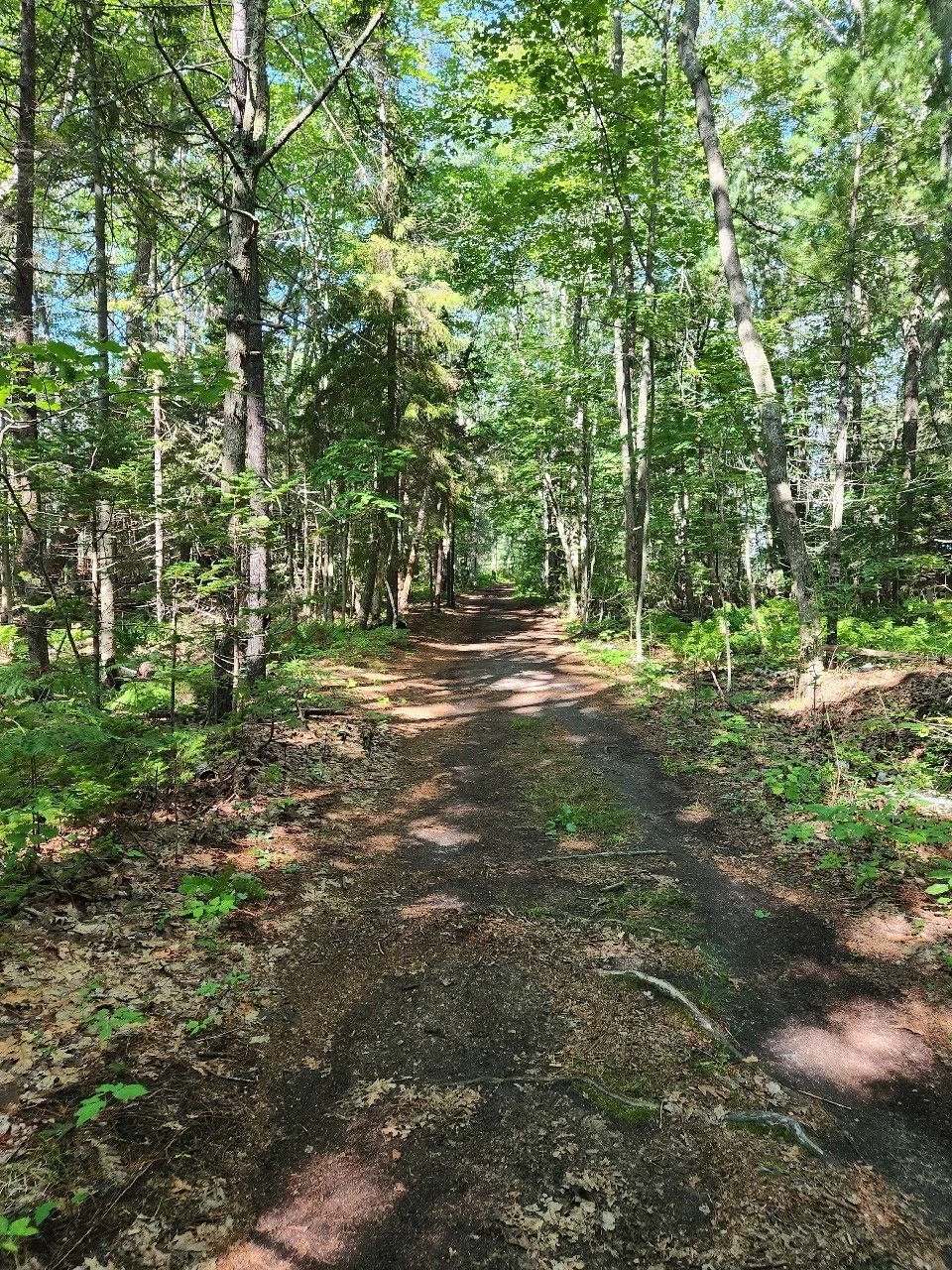
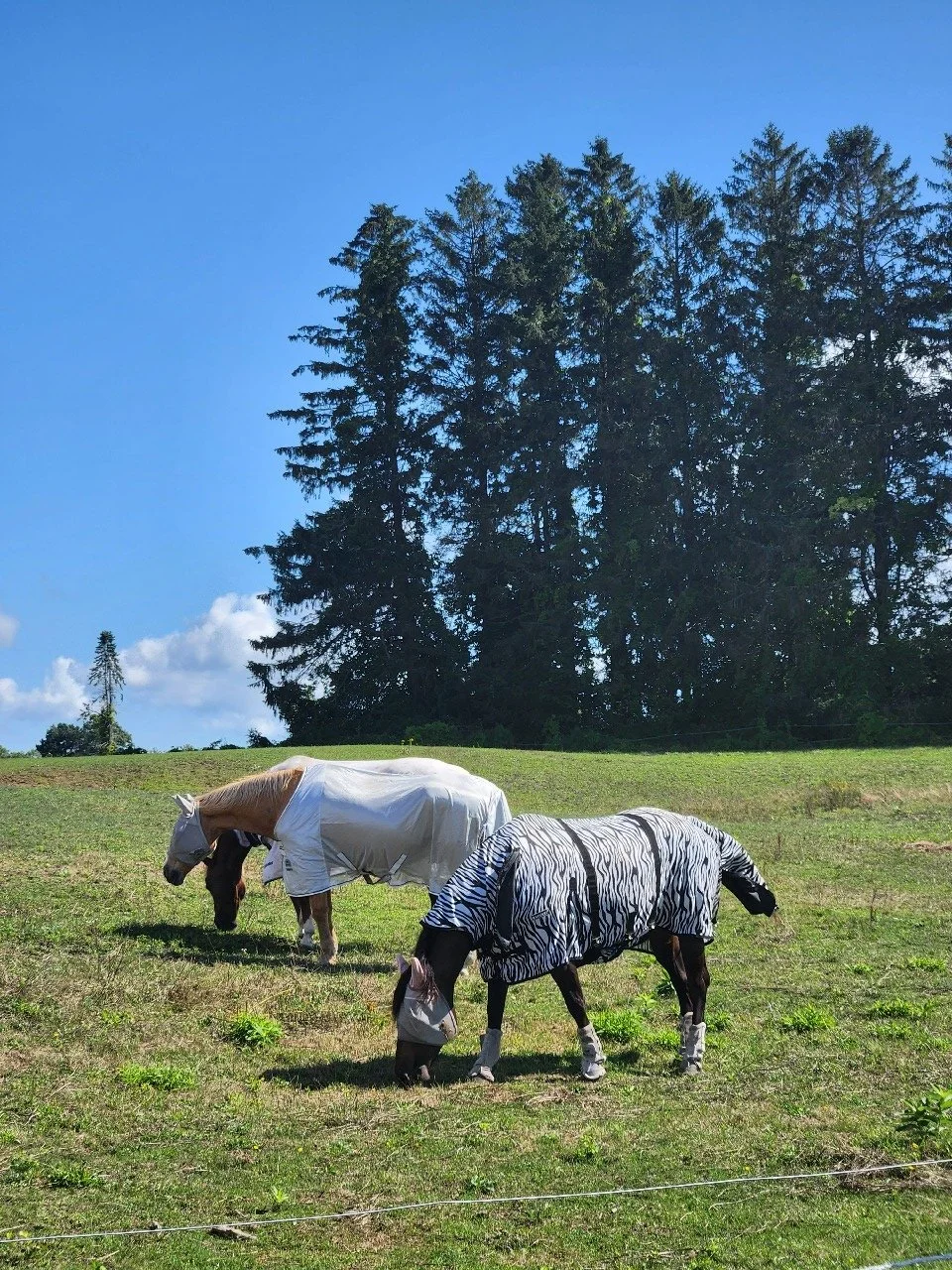
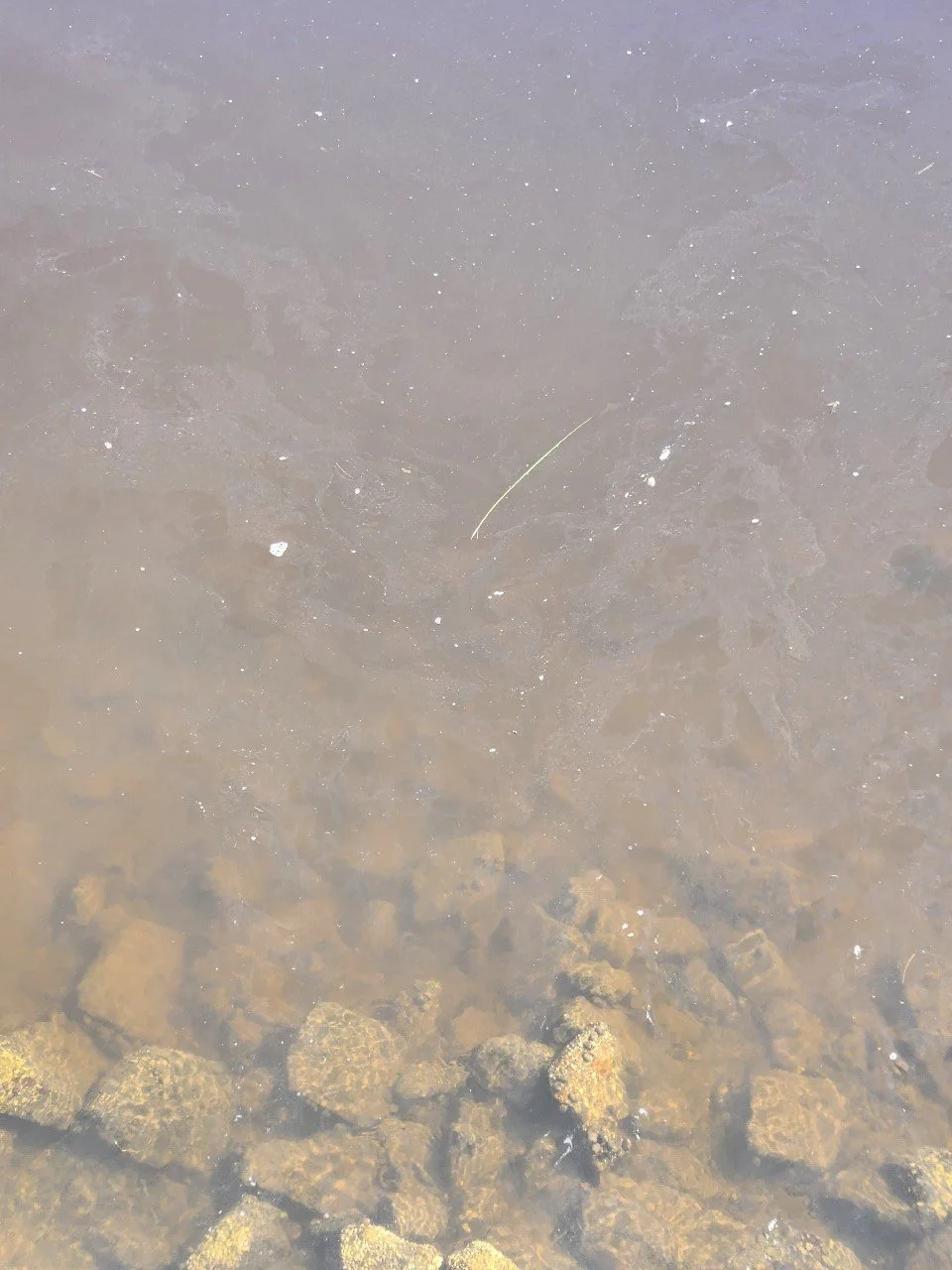
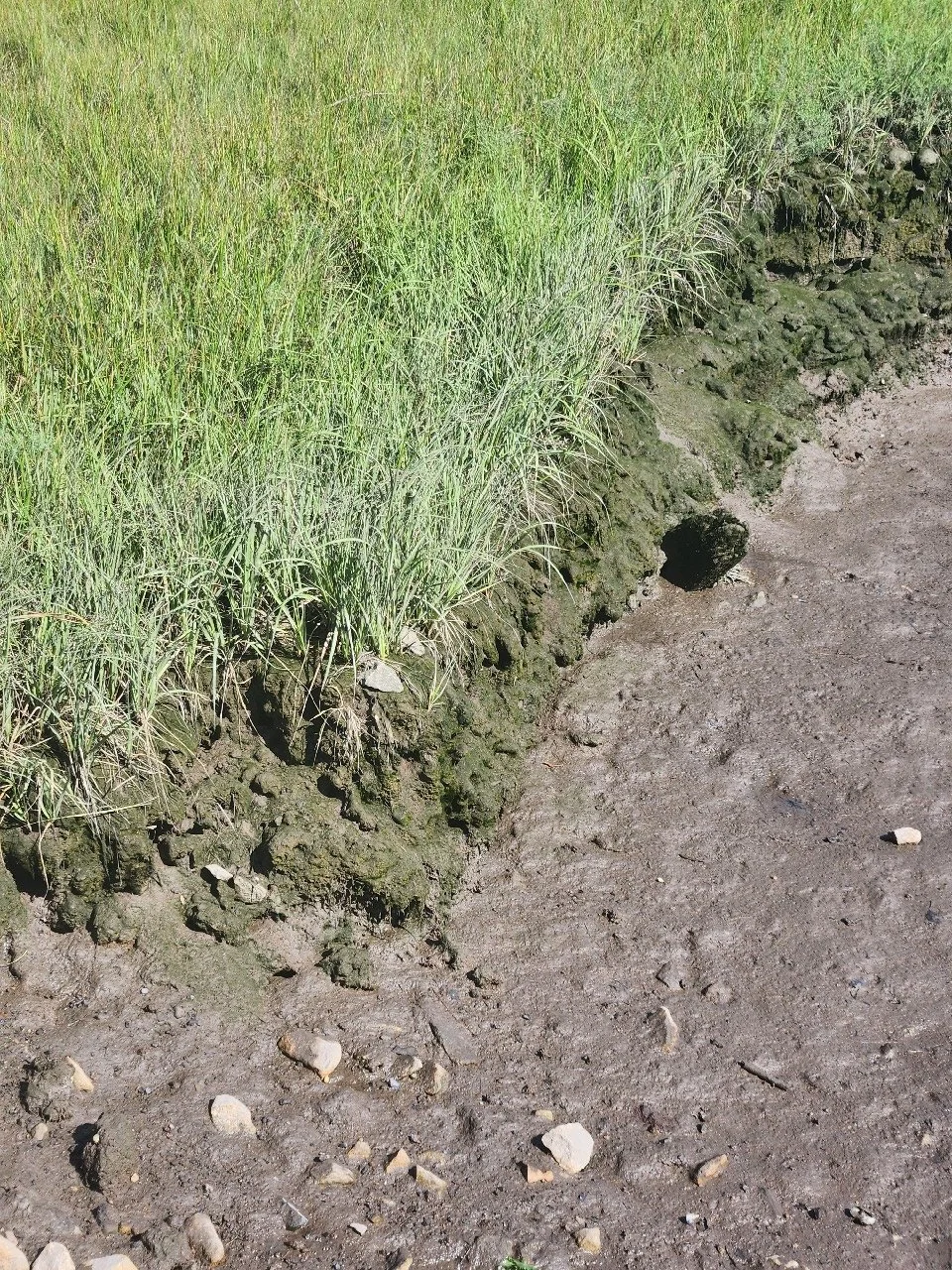
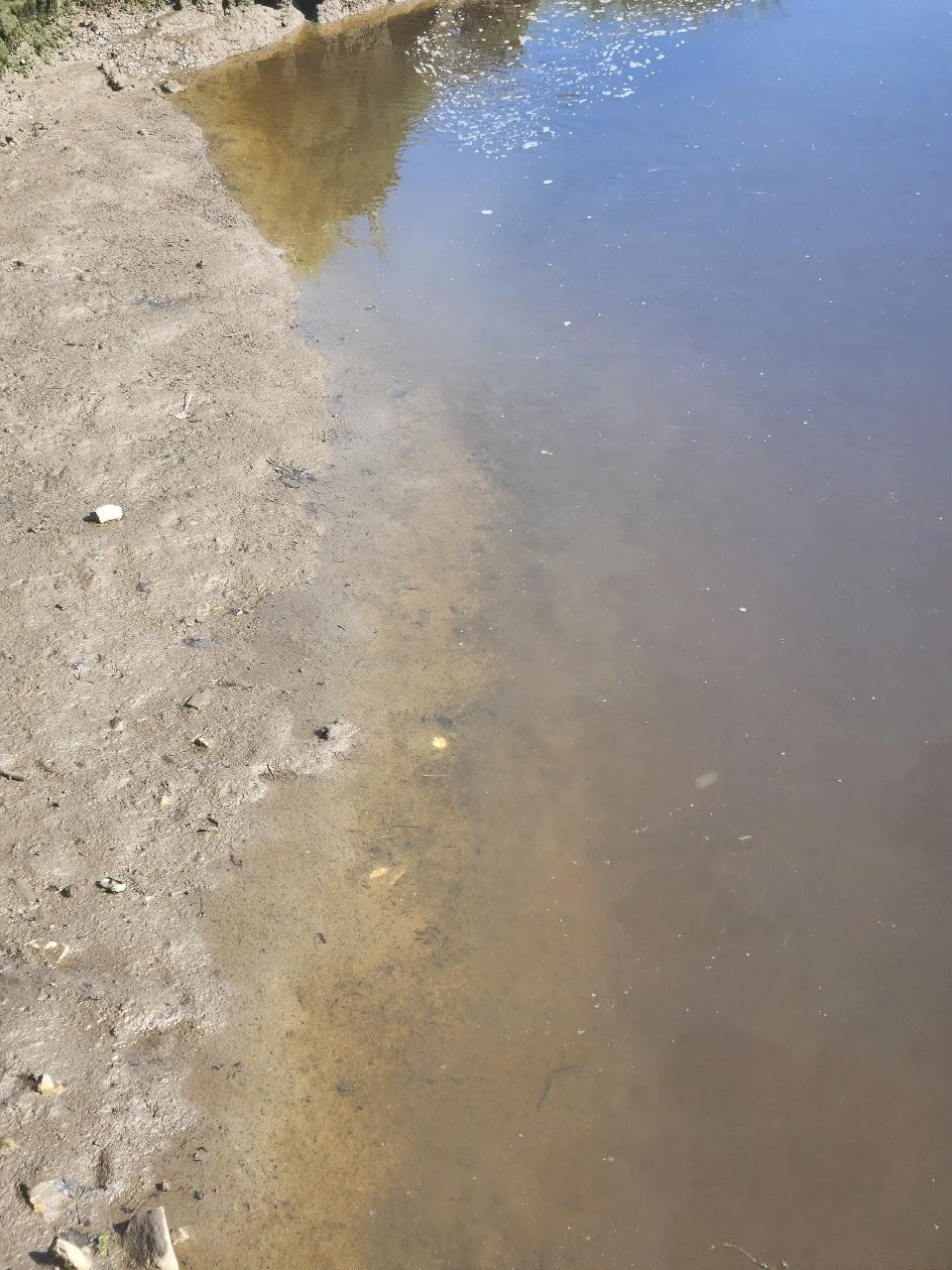
Being on these trails, moving through these places, felt necessary—like you could only understand your day by walking through it.
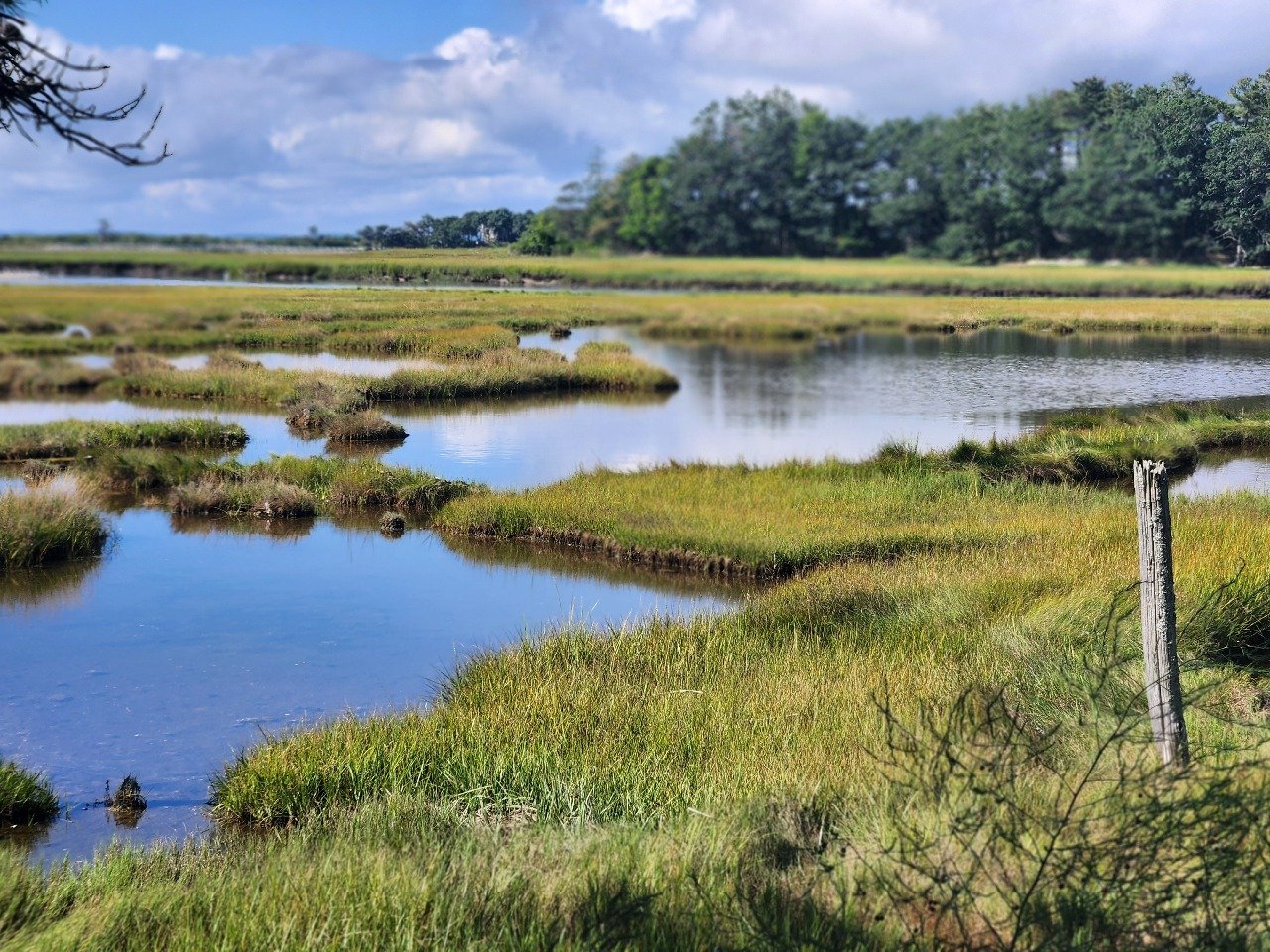
And Maine—New England in general—has always had a certain kind of landscape painting baked into its identity. Estuaries: grassy edges, mud, reflective water. That soft meeting point where the land gives way to the sky’s reflection. It’s a subject that’s been painted again and again, with a kind of devotion.
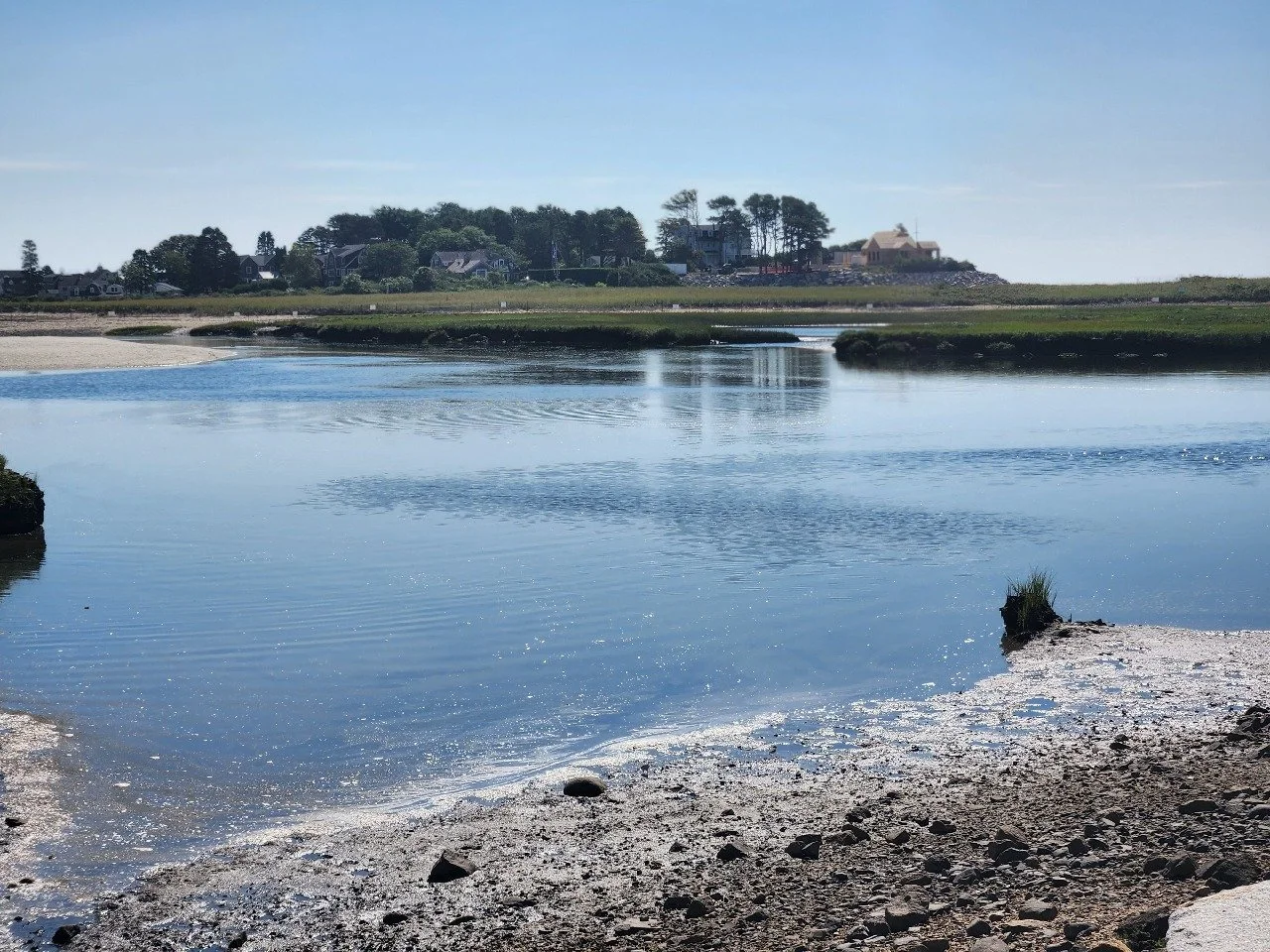
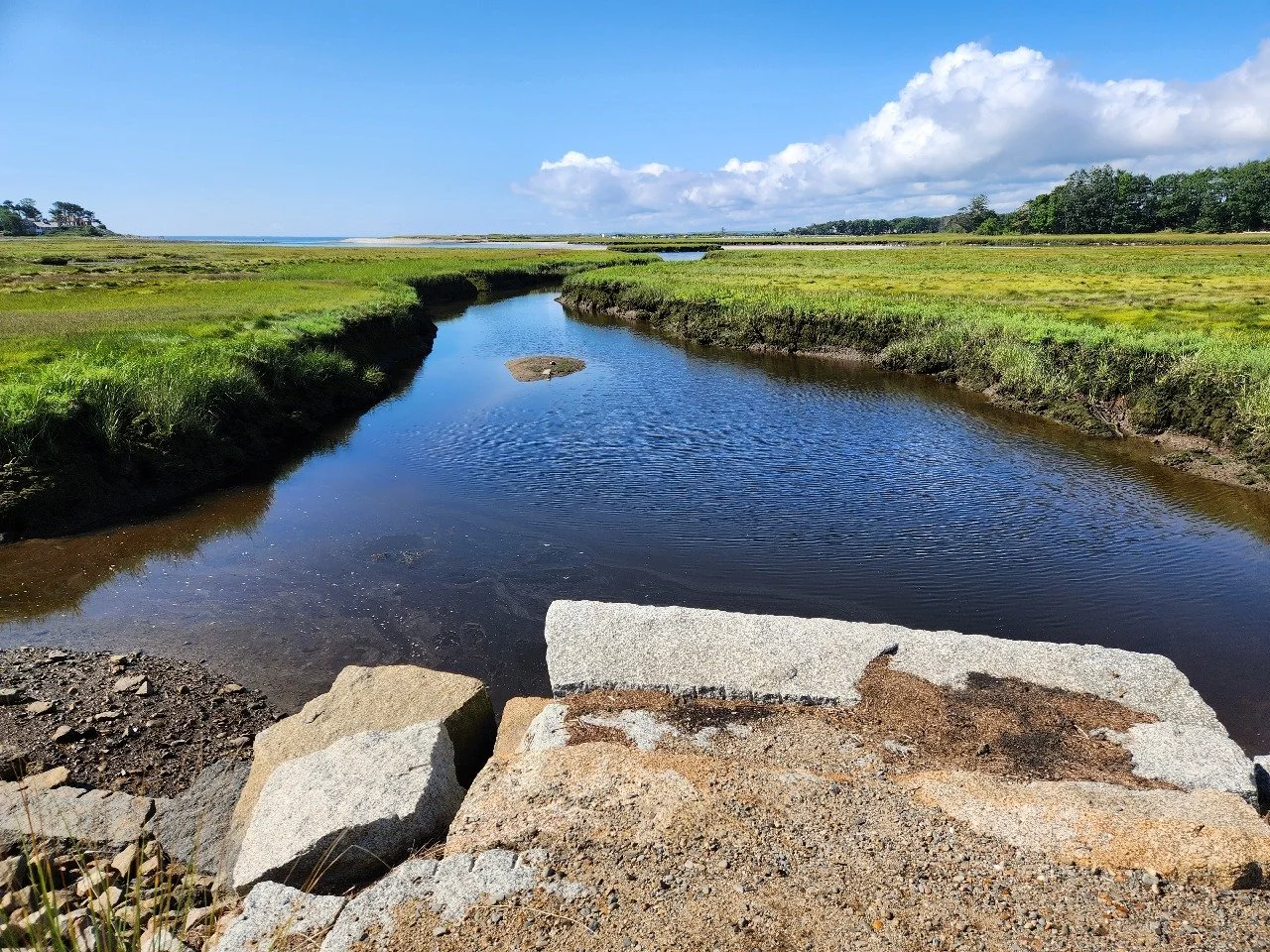
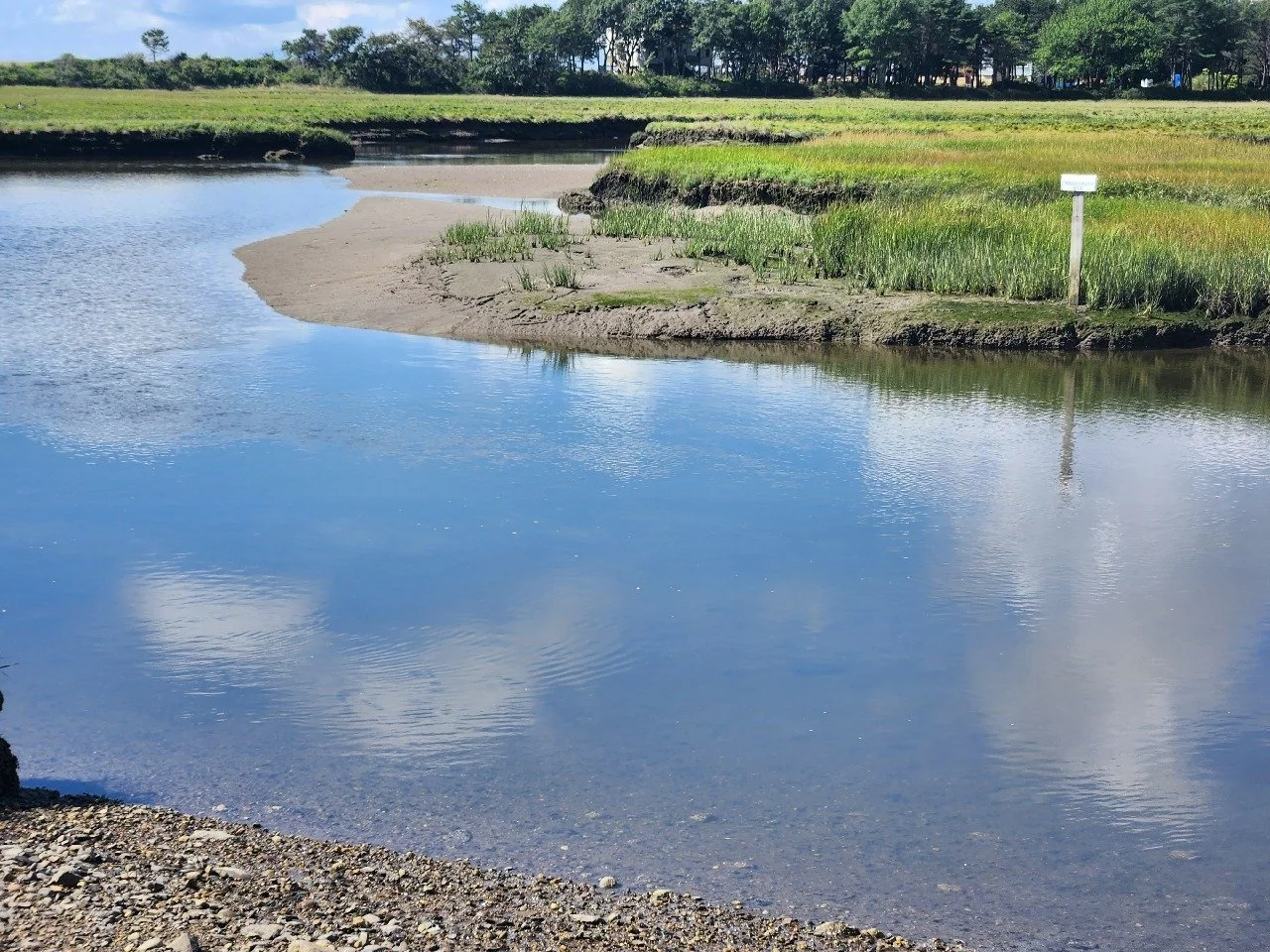
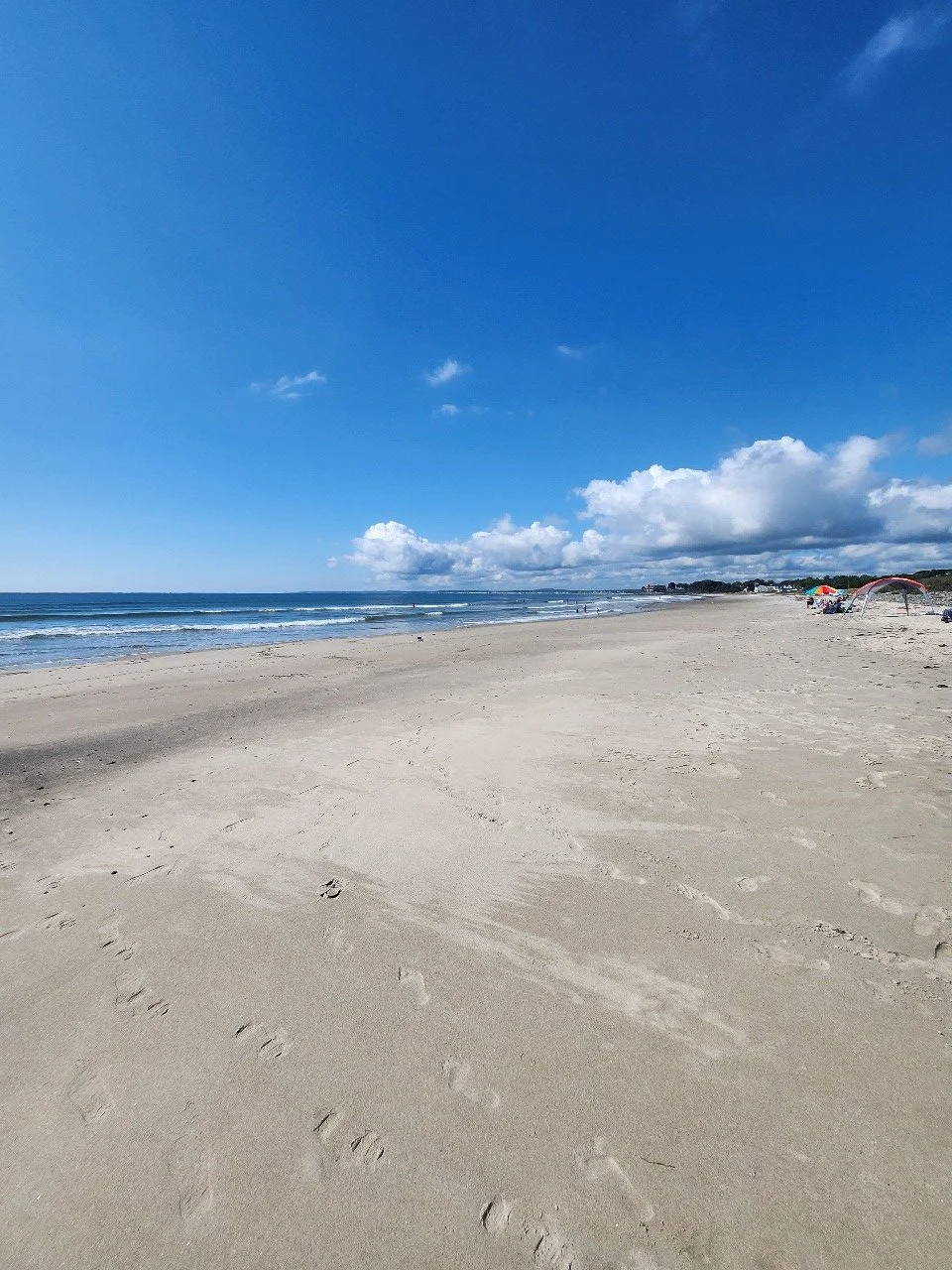
But during that time, I felt disappointed.
Because something had changed—massively.
The meaning of “landscape” had changed for people. The role it played in their lives had changed. When lockdown happened, there were people who could move around the boundaries—who could escape to places like this, who could get to nature and breathe. And there were people who couldn’t—trapped in cities, trapped in systems, trapped in the places they were.
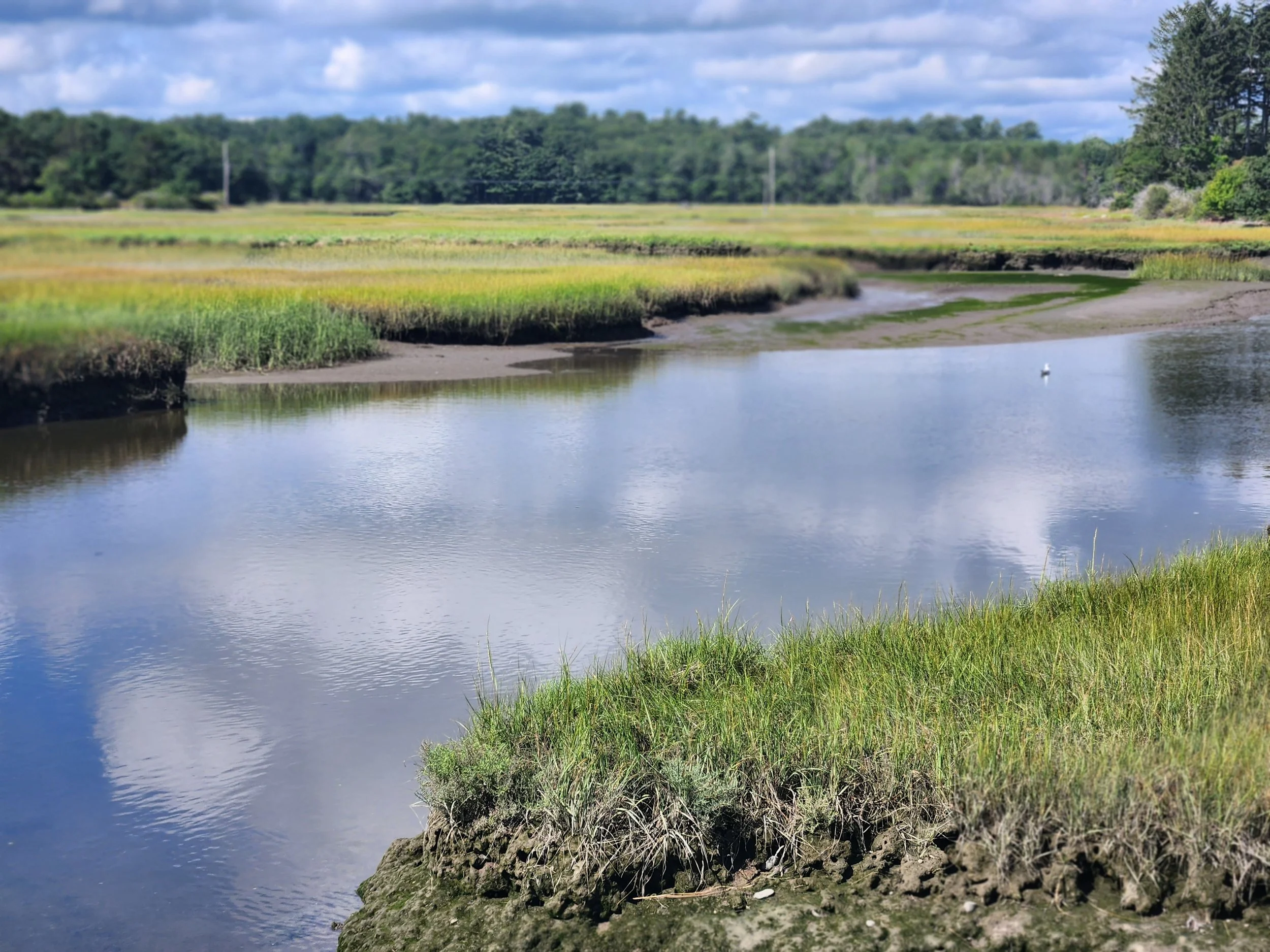
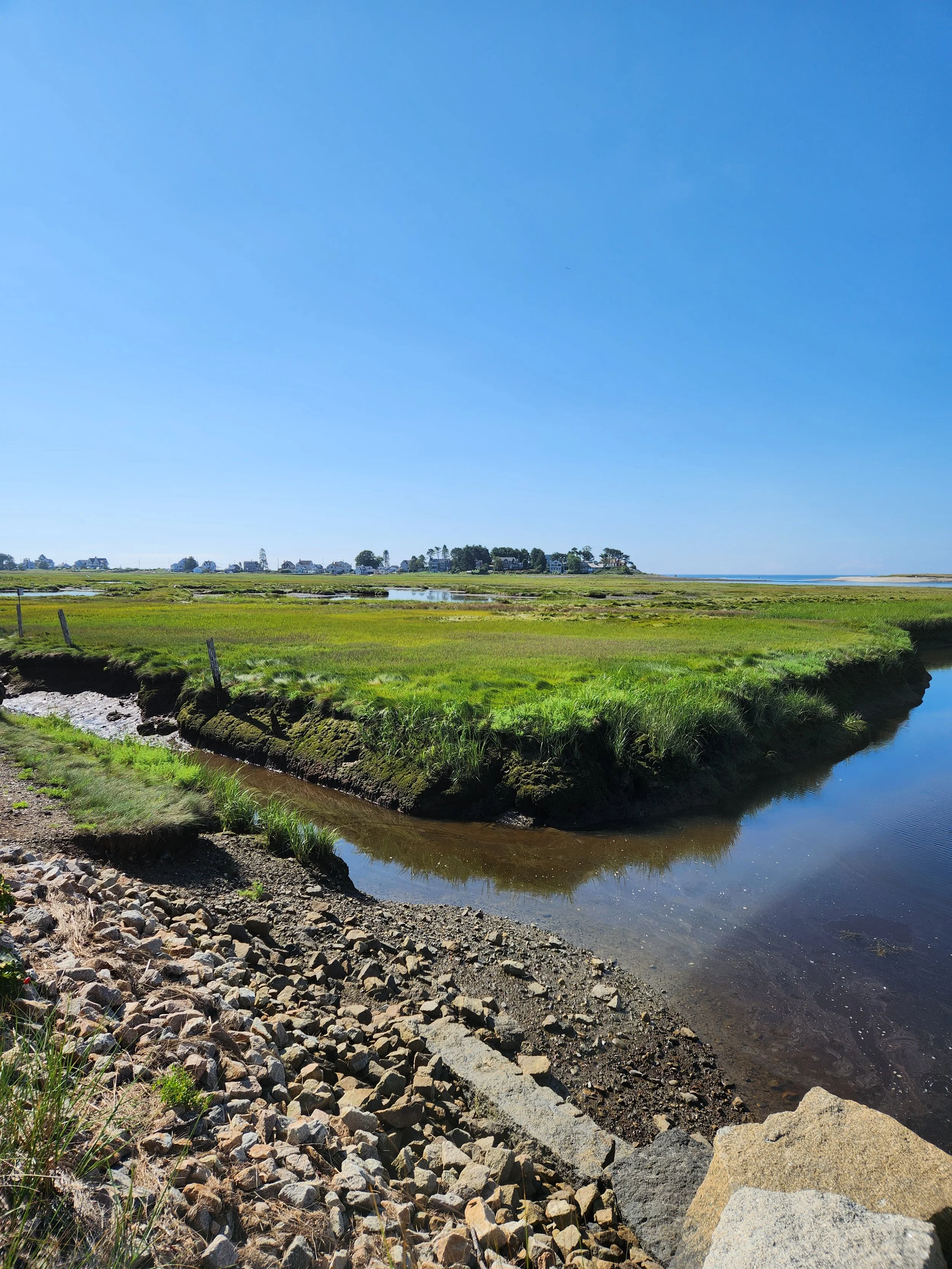
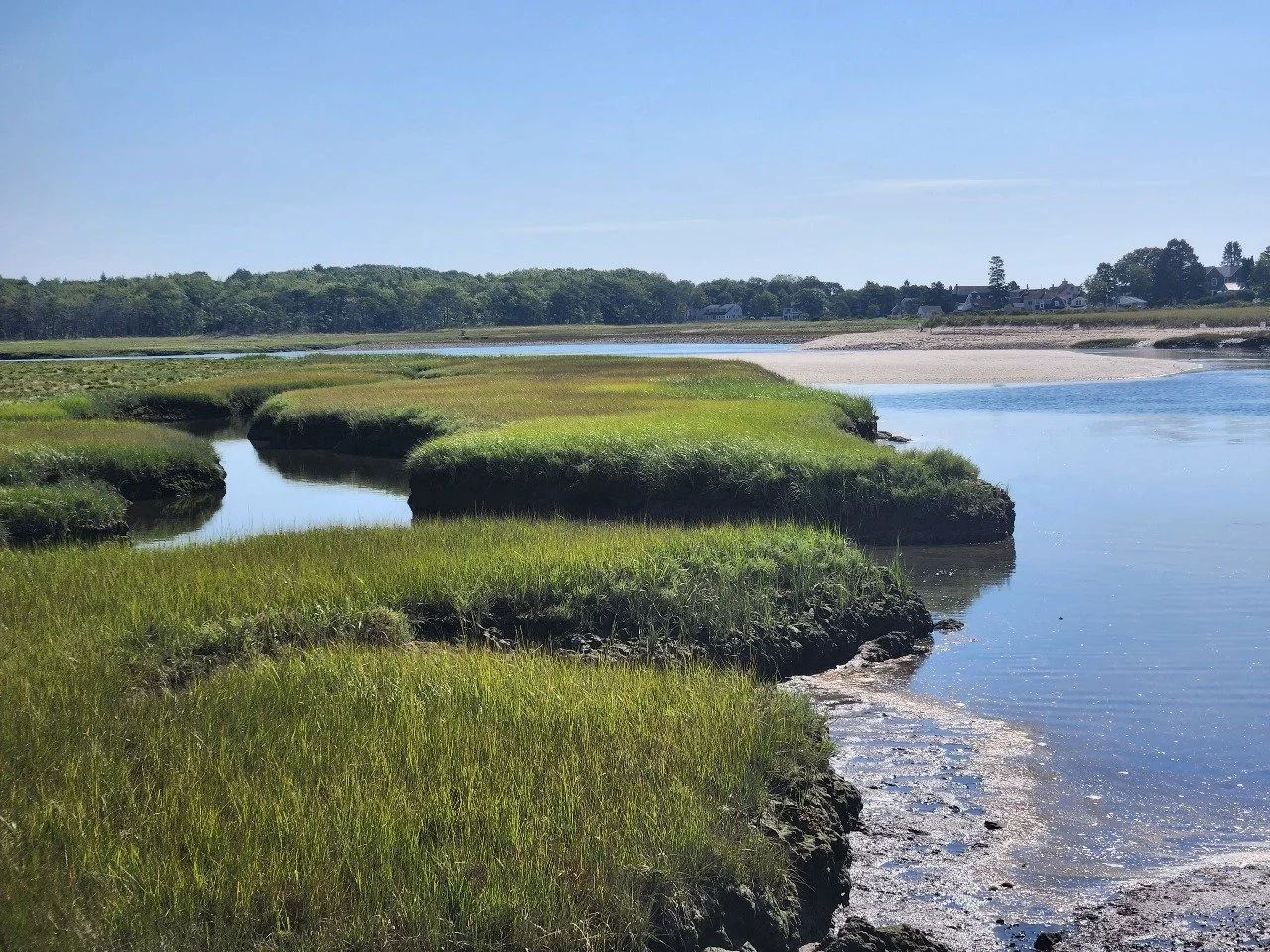
A shift in scenery, yes.
Also a shift in what the world meant.
And yet, the way people were recording the landscape—the way people were painting it—didn’t feel fundamentally challenged. Not before COVID, not after. Even though our relationship to place had been altered, the language of painting often kept speaking in the same old sentences.
So I kept circling one question:
How do I express what it’s like to live today?
How do I paint what changed—without making a painting that simply “illustrates” the idea of change?
Decision Making as a Subject (Or: Taking the World Apart)
Eventually, everything came down to decision making.
Not in some motivational, productivity sense—more like the feeling of being alive in a time where everything hits you all at once. Information, pressure, expectations, options. The constant awareness that you’re choosing—always choosing—what to pay attention to, what to ignore, what to carry forward.
Painting has always been where I metabolize experience.
So I started wondering: what if I could paint like that?
What if the painting process itself became the metaphor—taking everything I know about the world, putting it on the ground, and rebuilding it piece by piece?
Not a single image built smoothly from start to finish. (rendered)
But a world reconstructed—fragment by fragment—by force of choice.
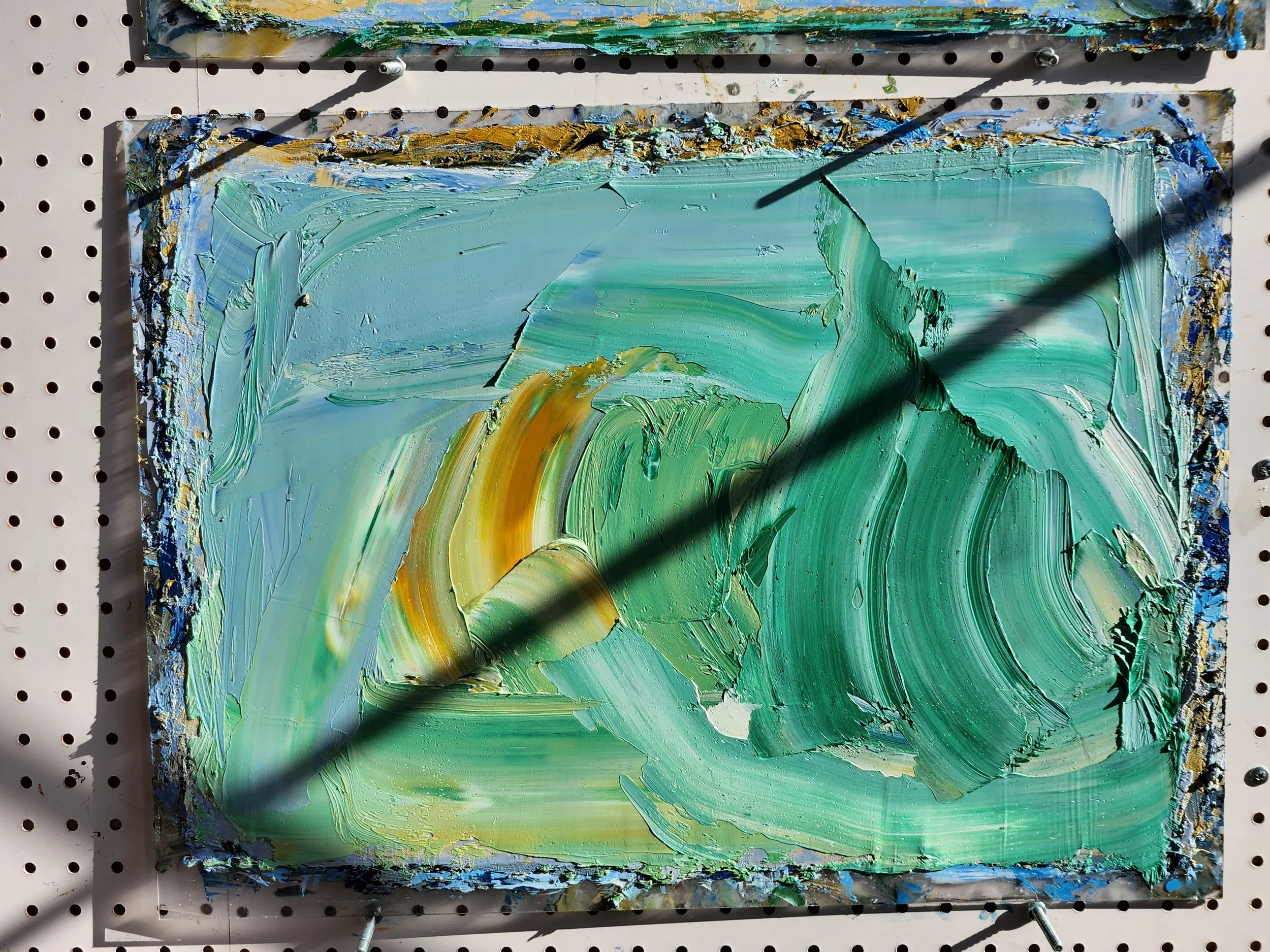
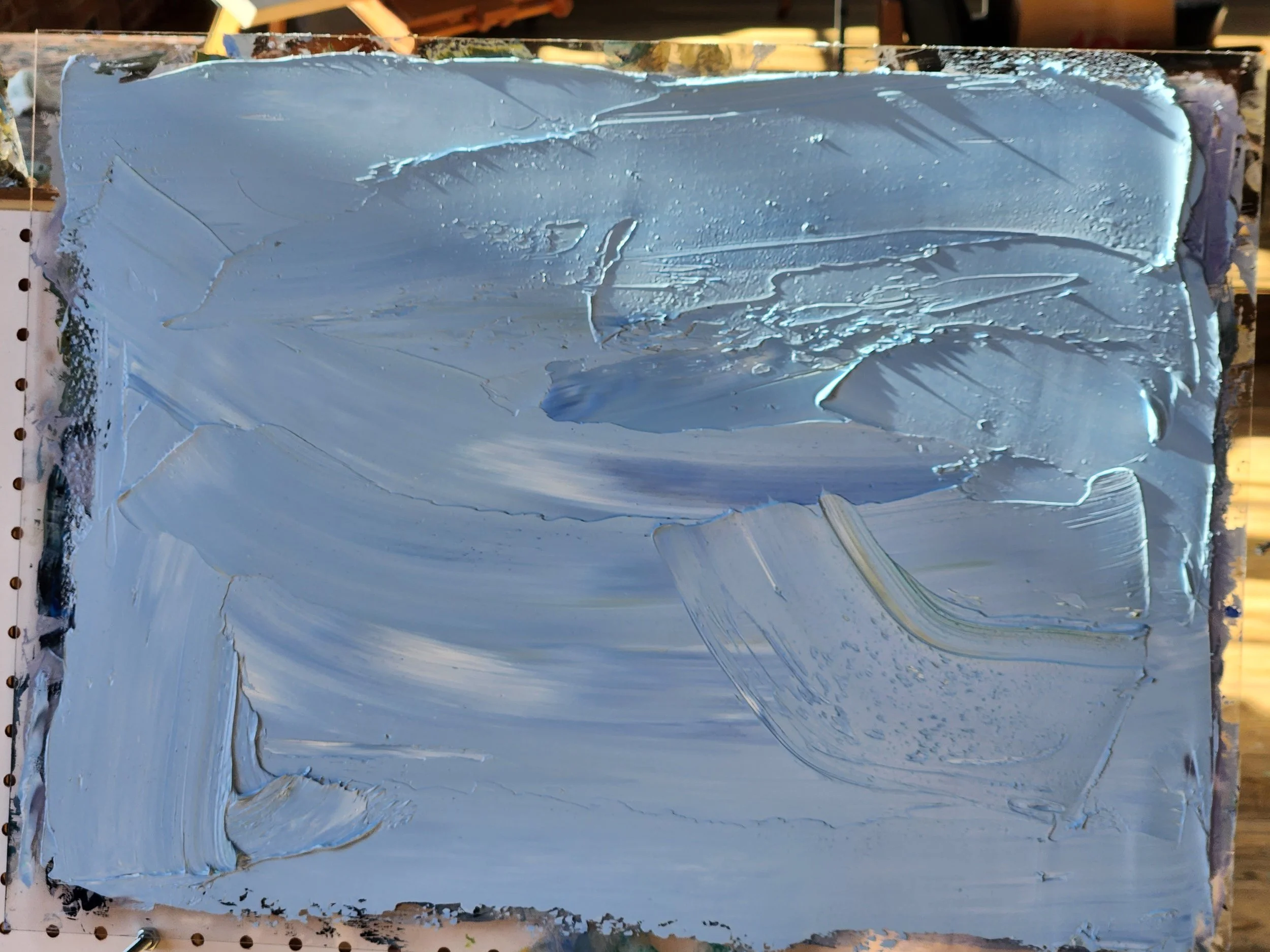
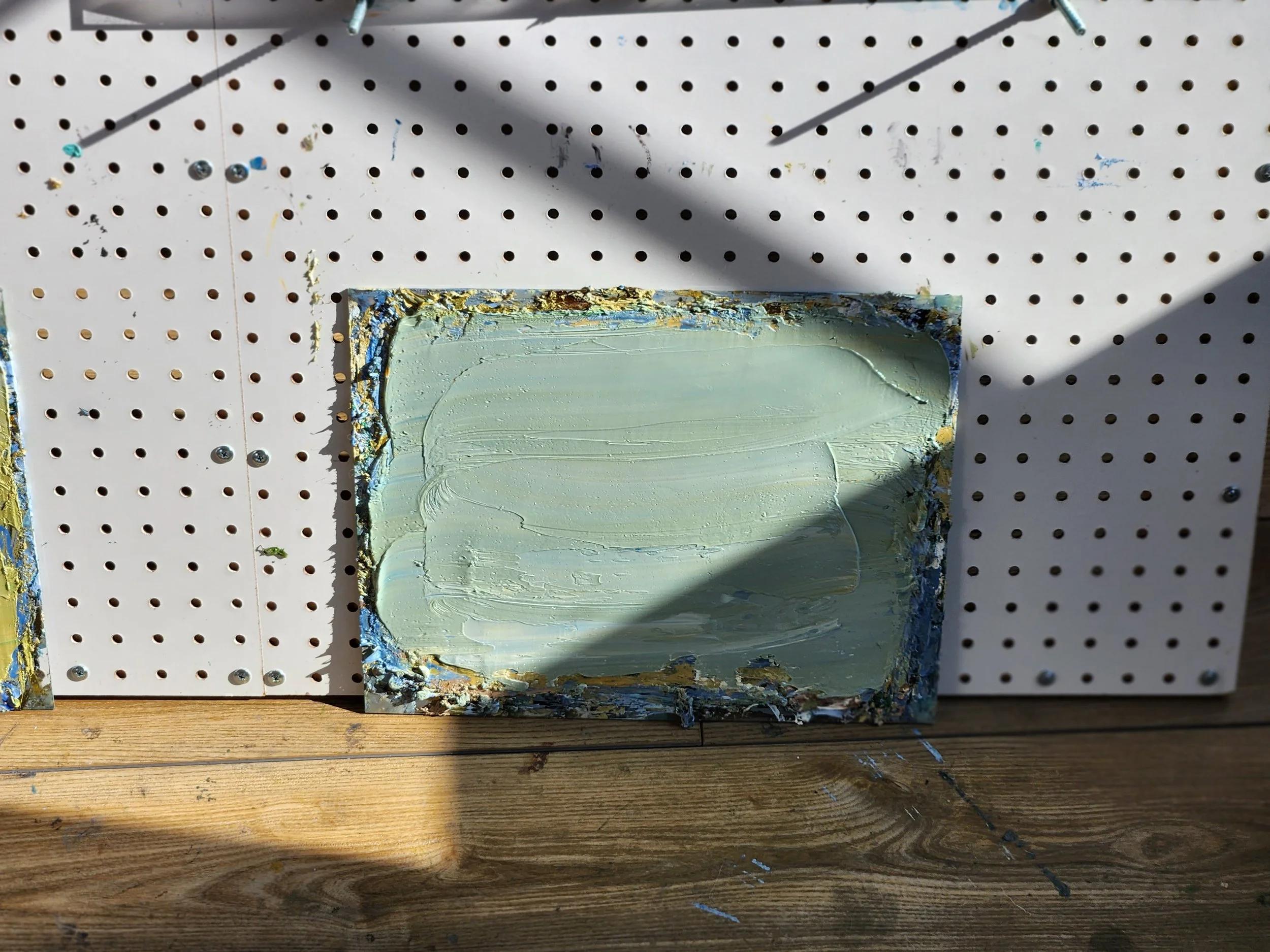
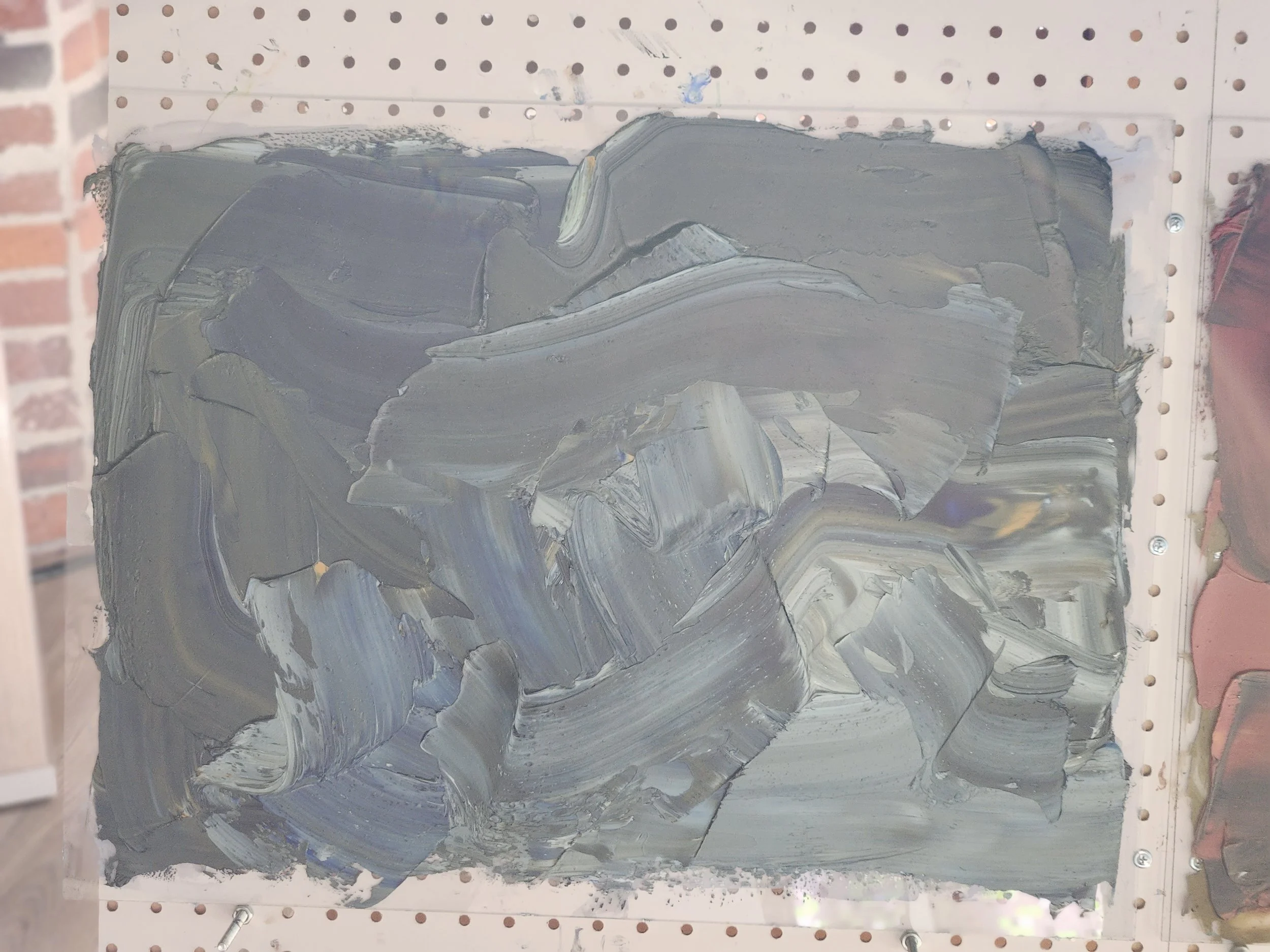
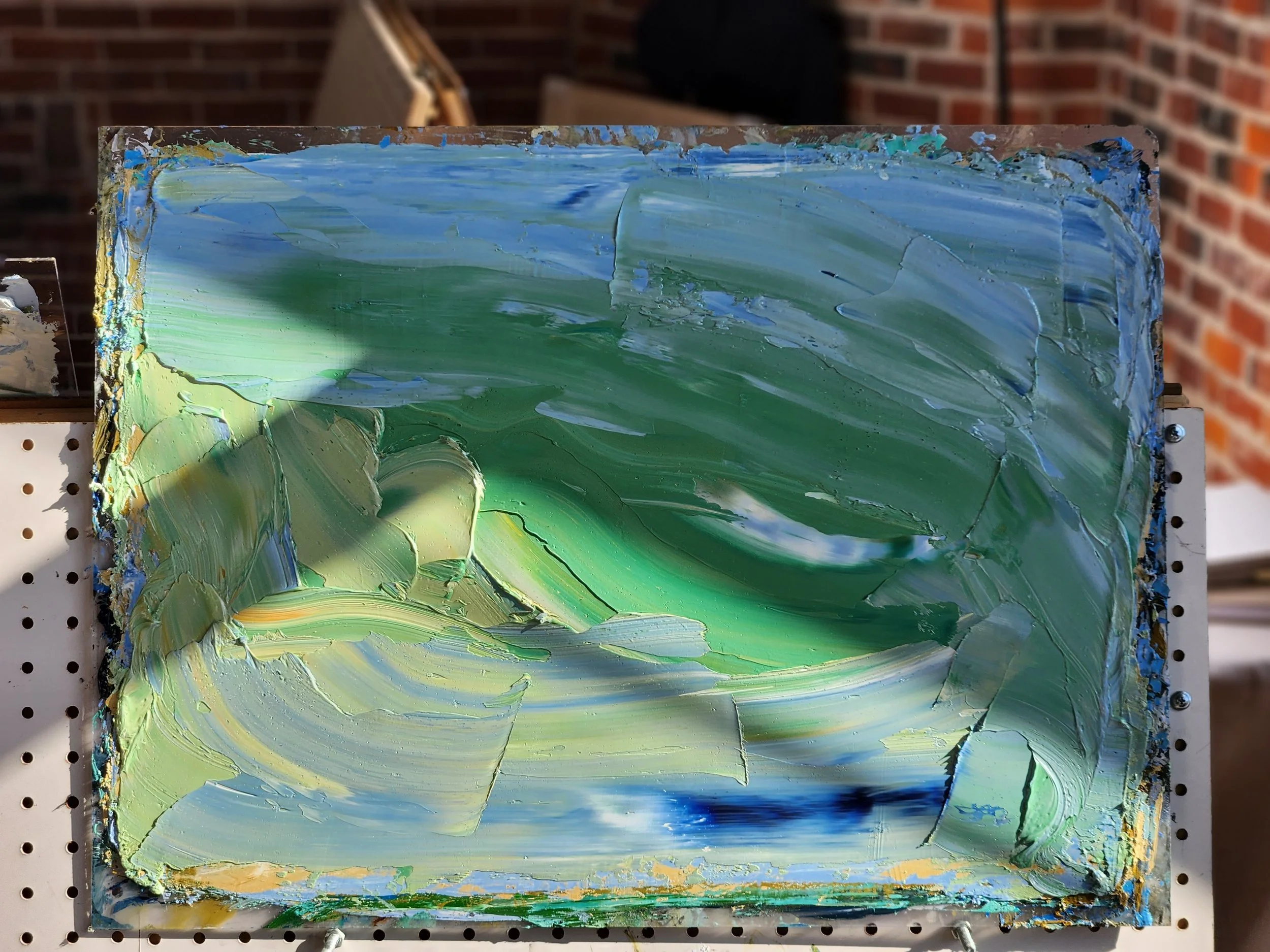
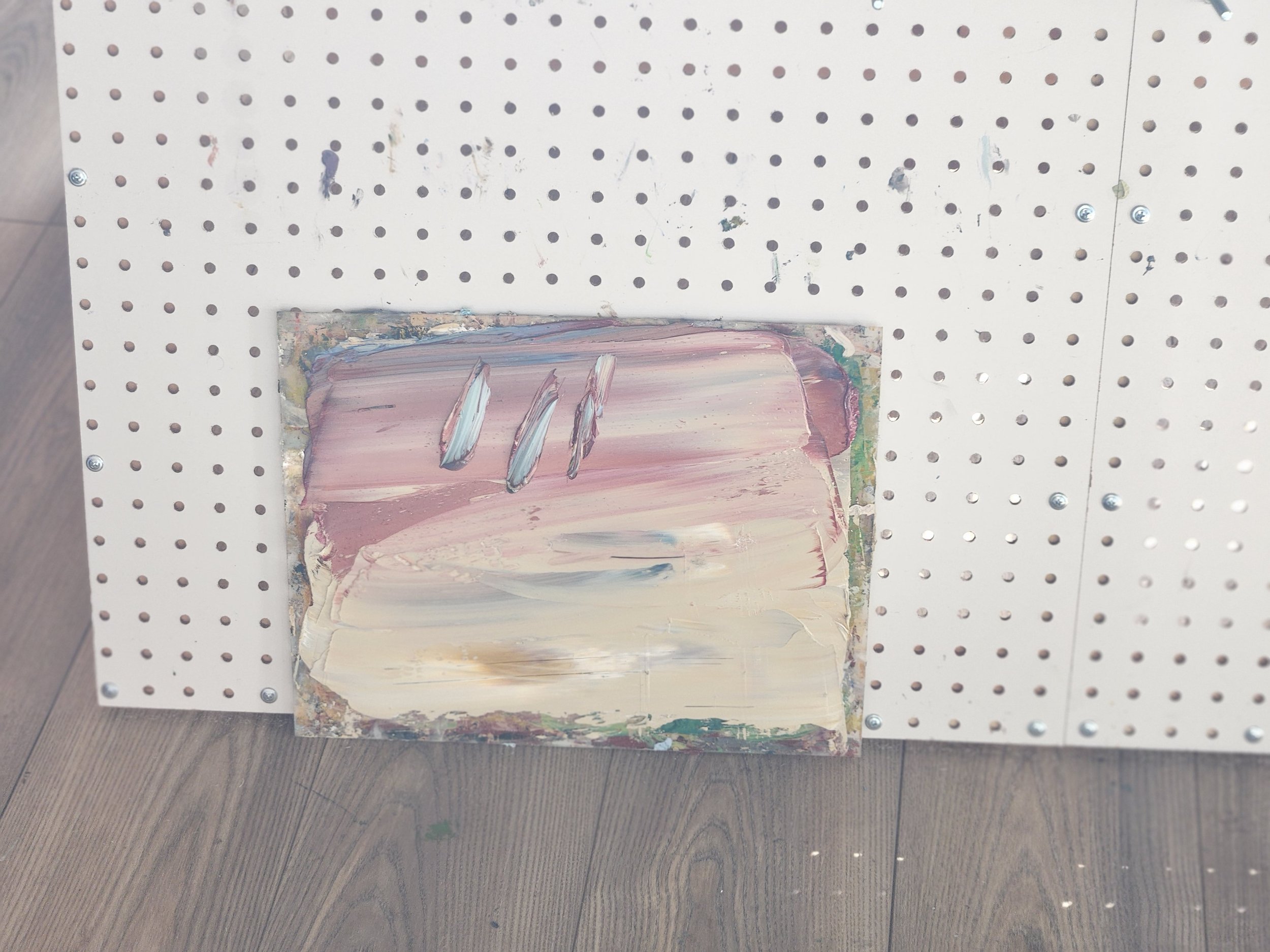
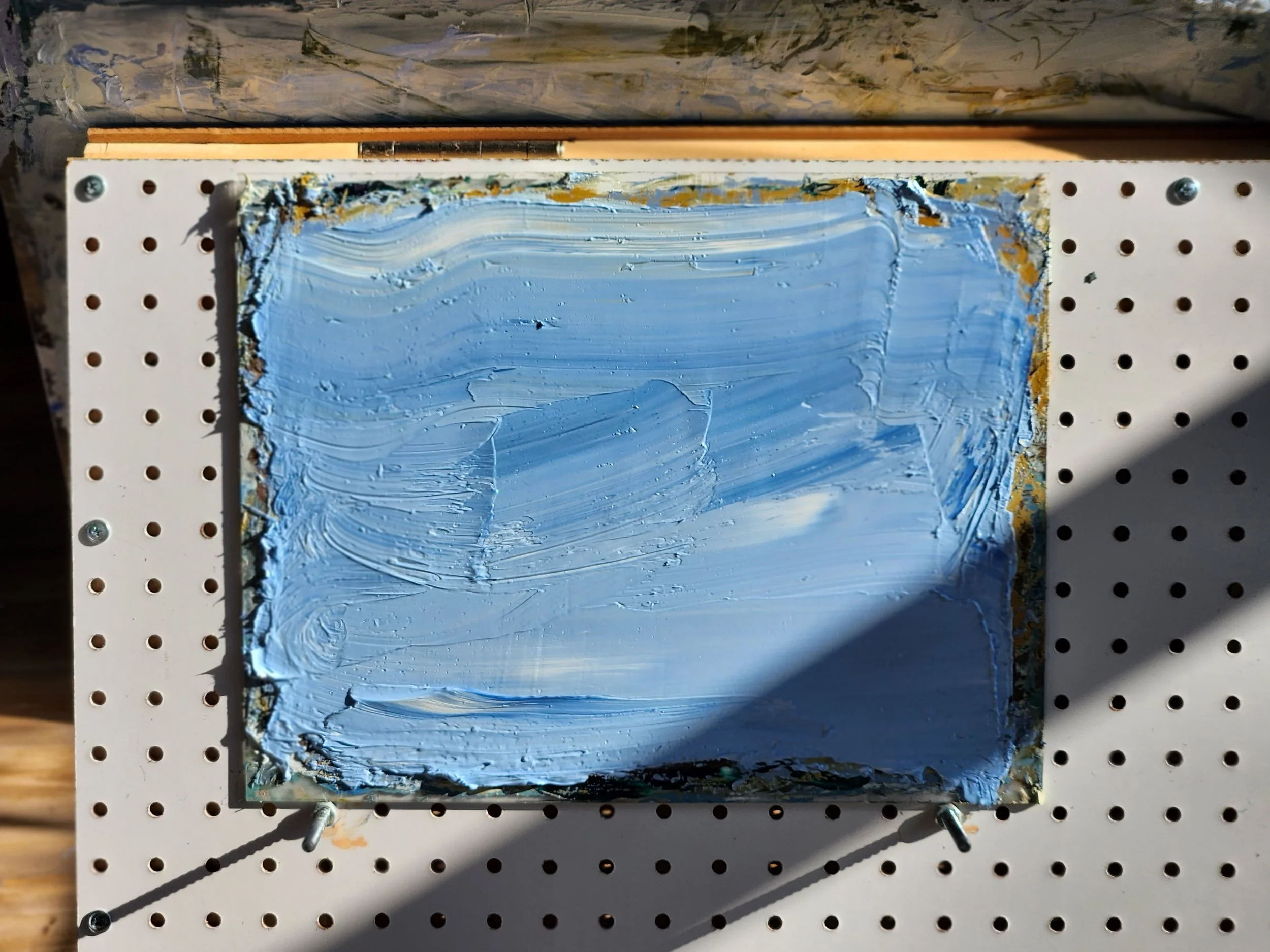
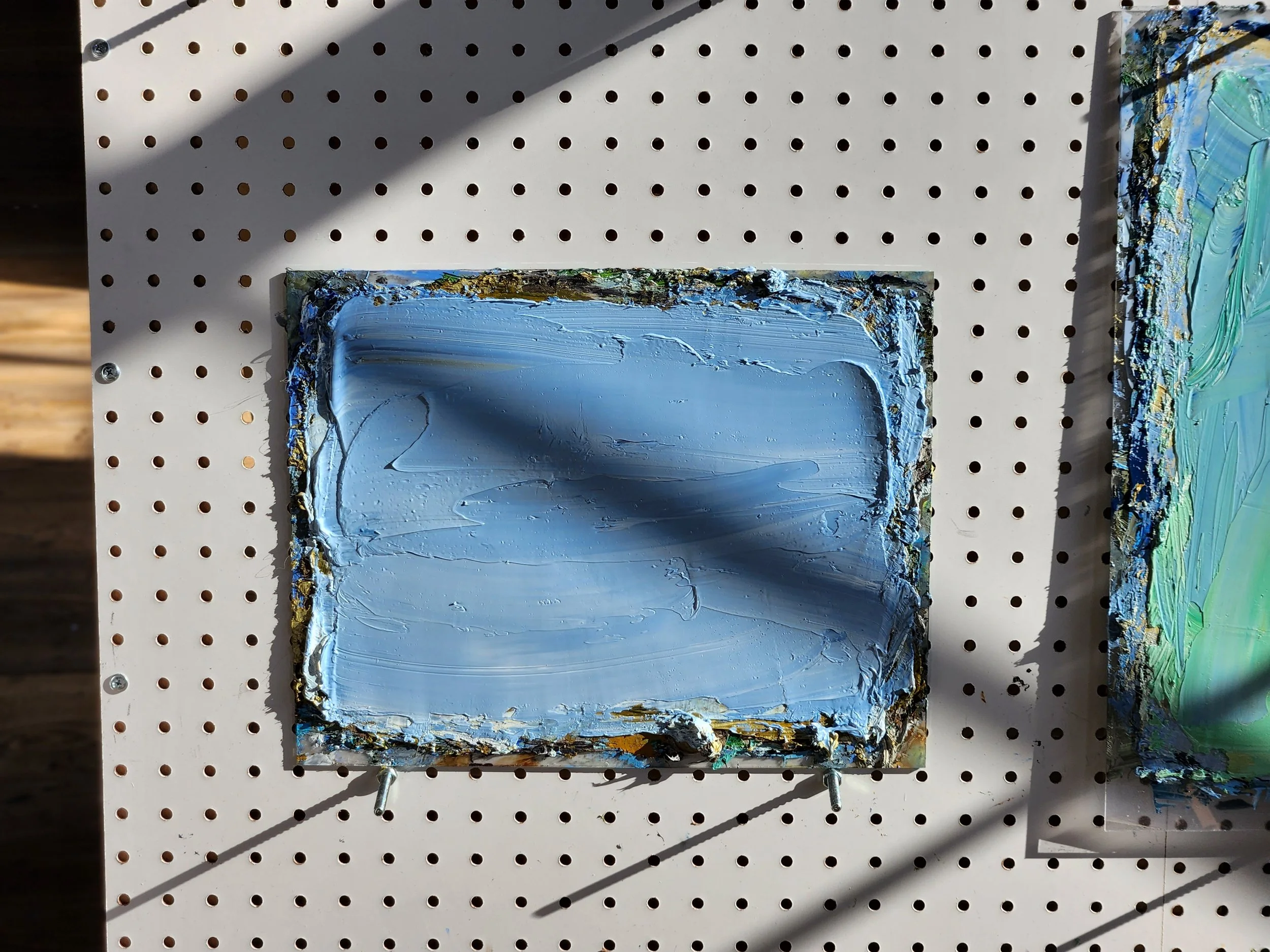
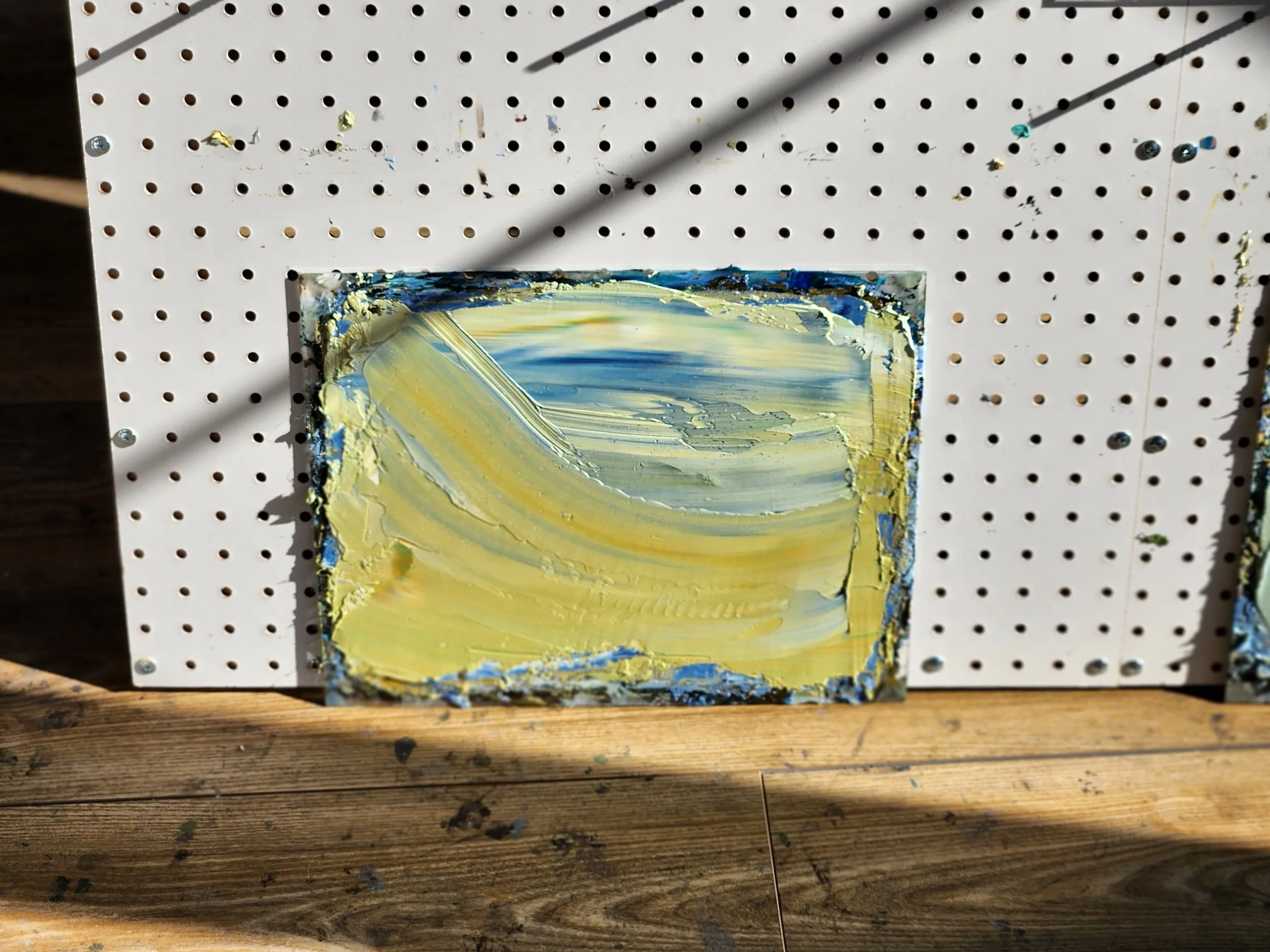
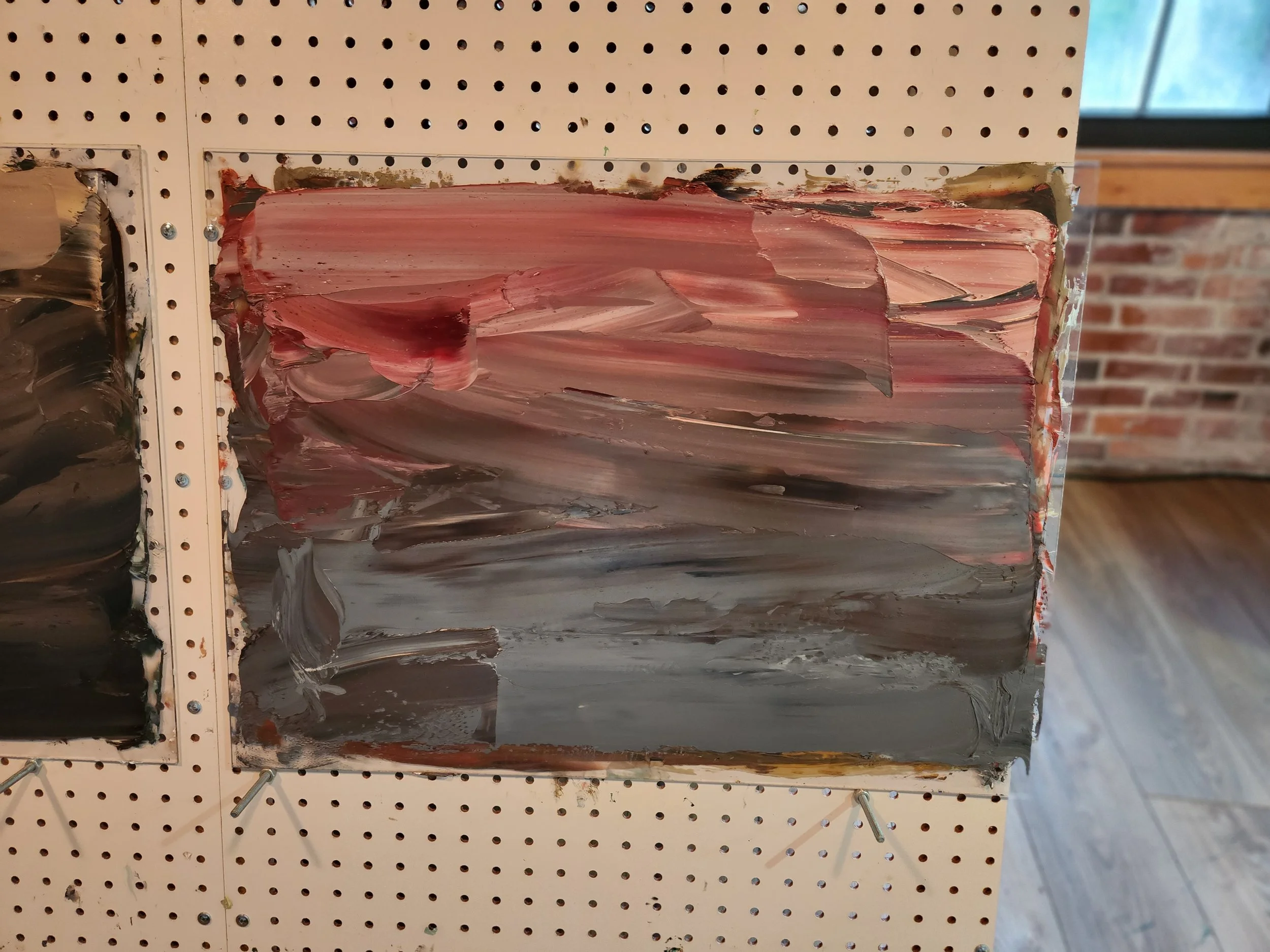
At the time I was thinking through these ideas and taking these walks, I was also working on another large painting of a marsh—similar subject matter pulled from this same geography. But it felt like there was more to say. More to push. More to rebuild.
And that’s where In Abundance begins.
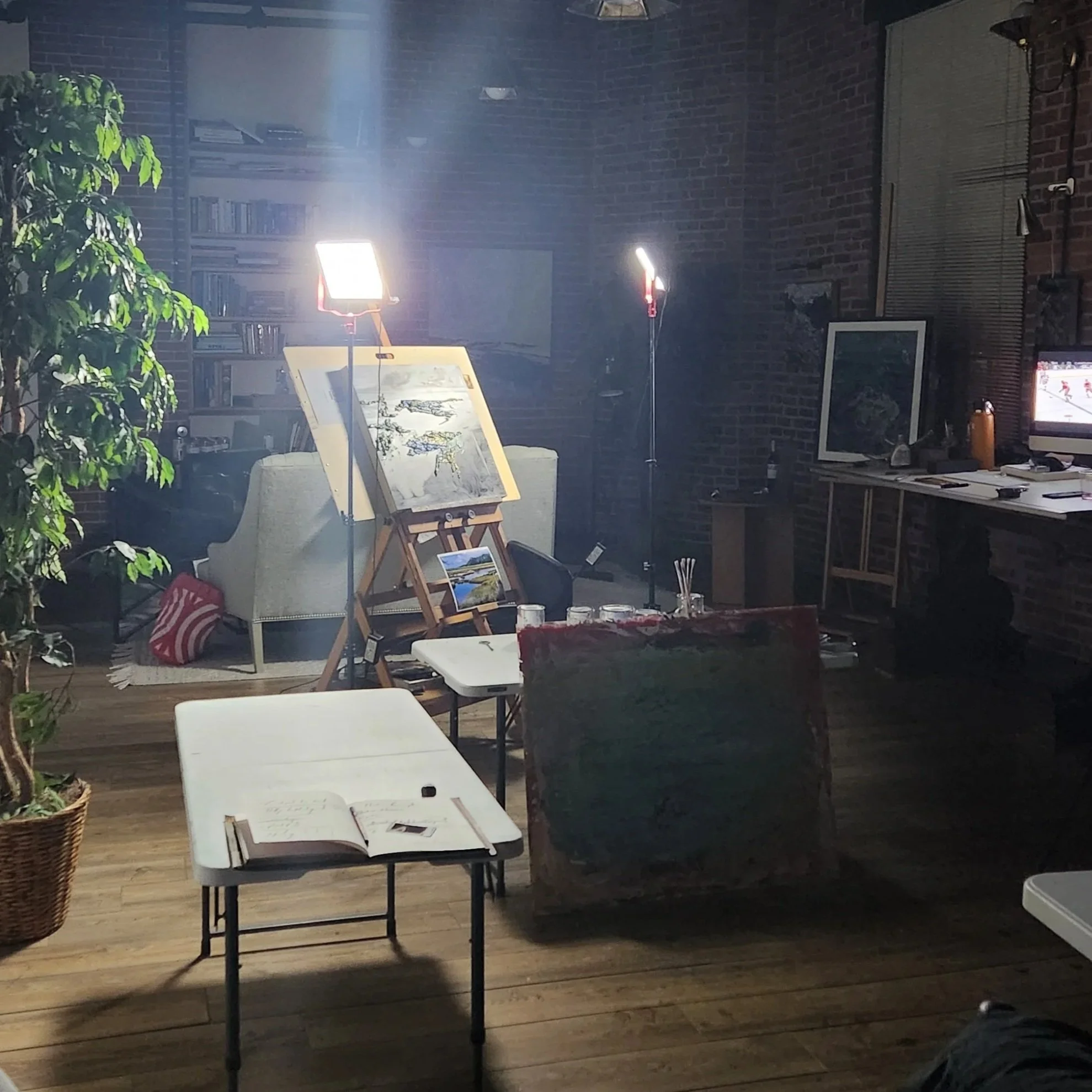
March 24, 2025: Beginning “In Abundance” (Going Big)
March 24th, 2025: I restarted.
With this painting, my first instinct was scale—not the size of the painting alone, but the size of the forms. I wanted large structural decisions. Big movements. A feeling of architecture.
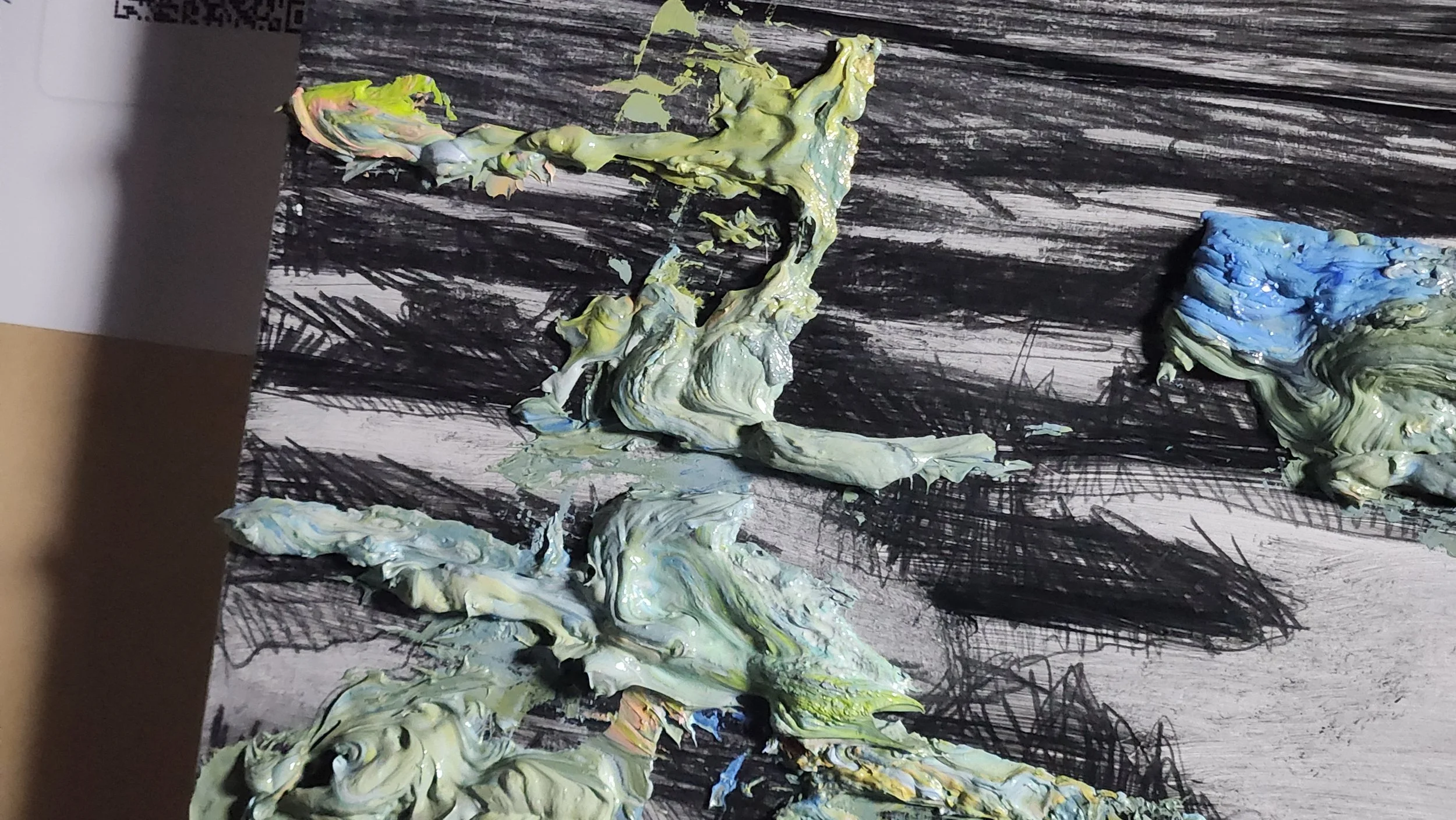
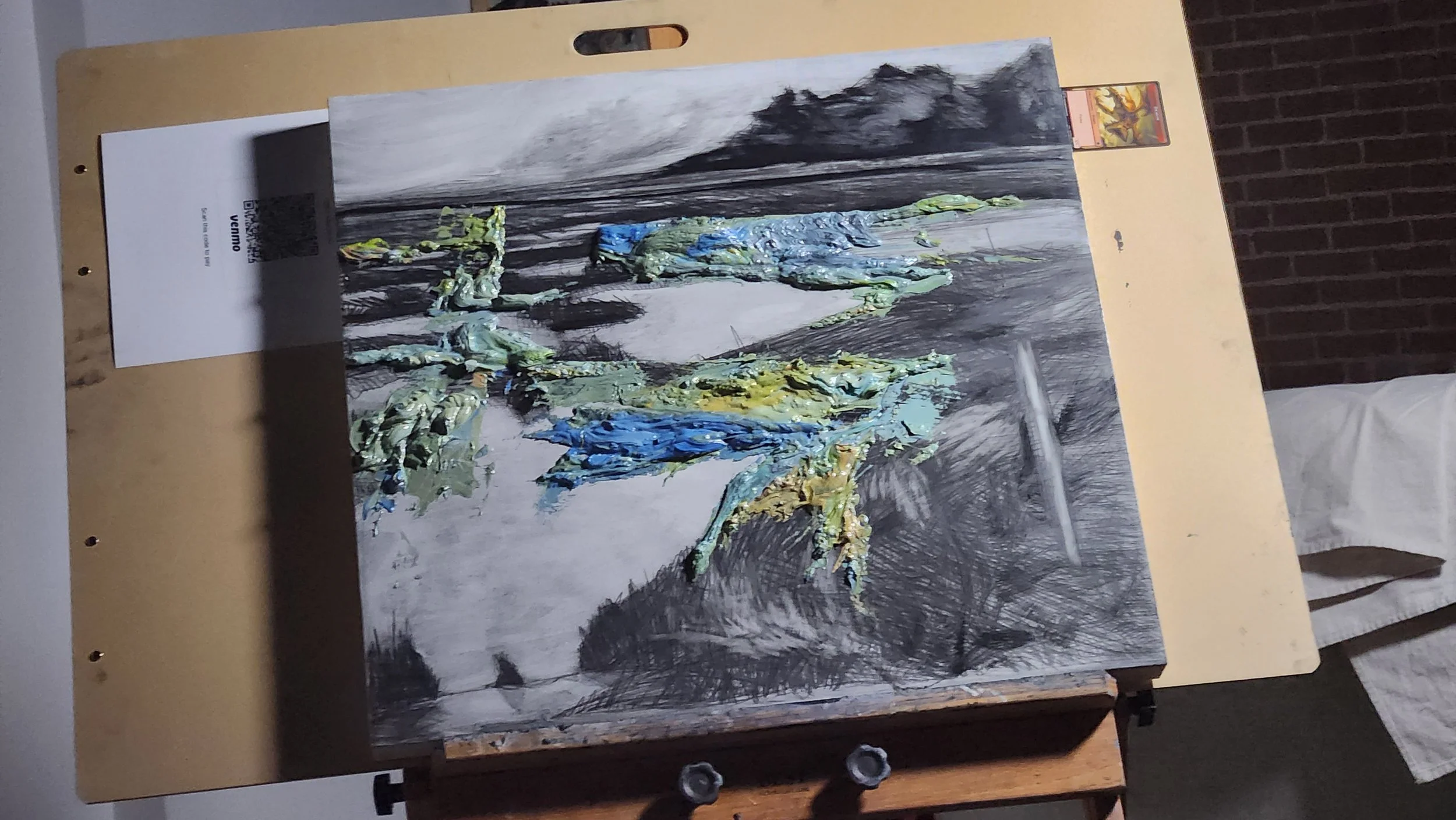
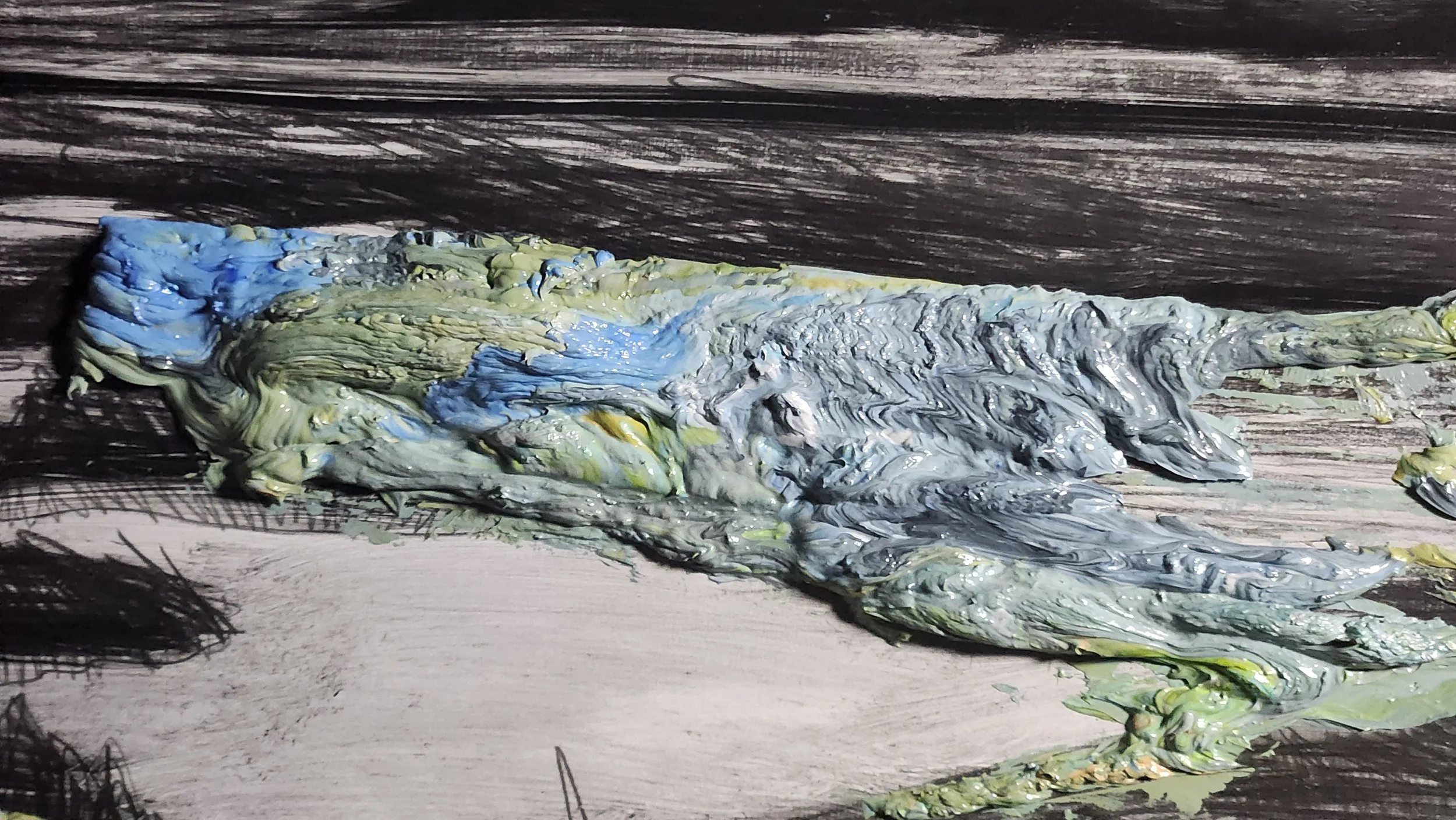
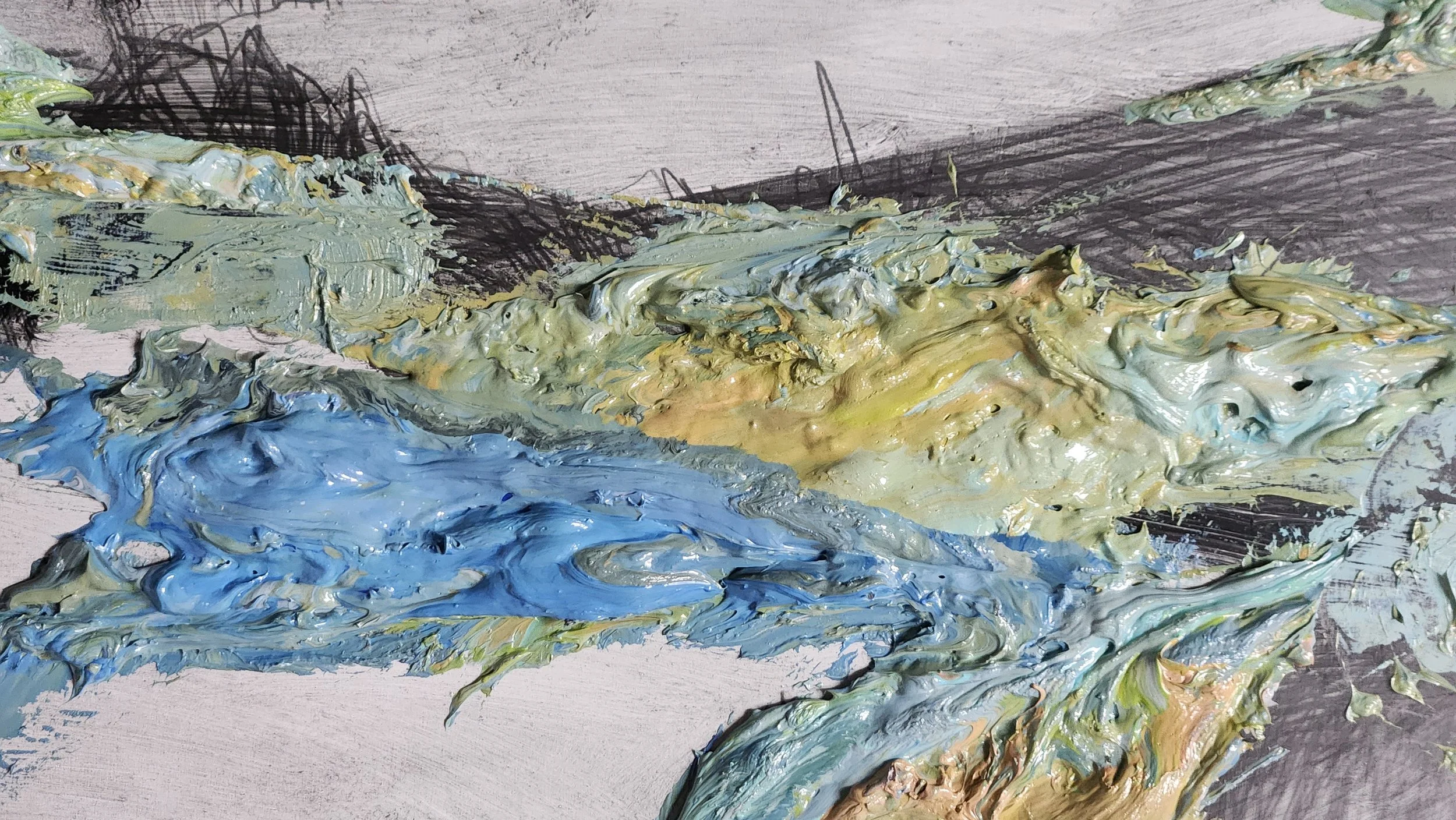
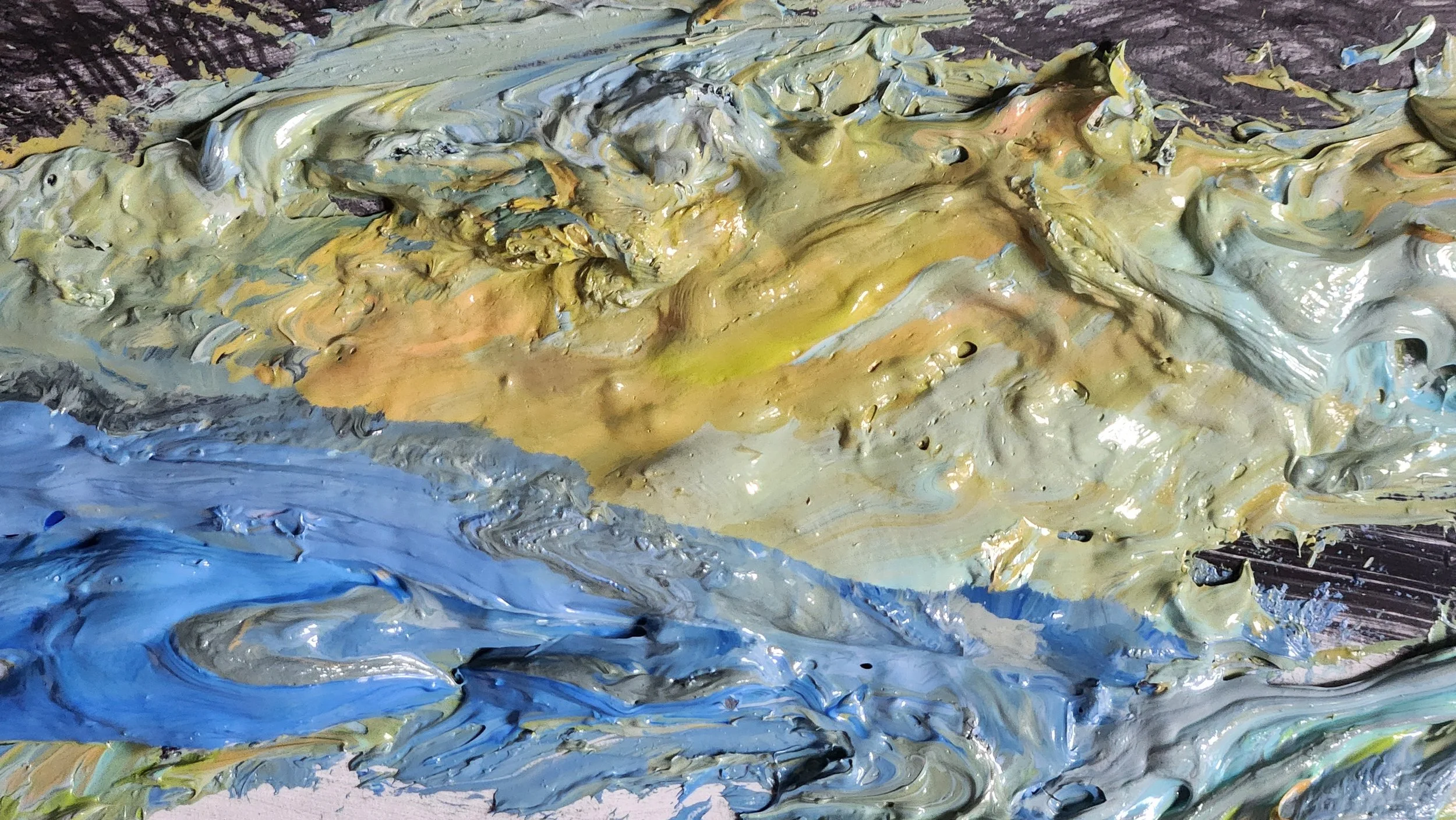
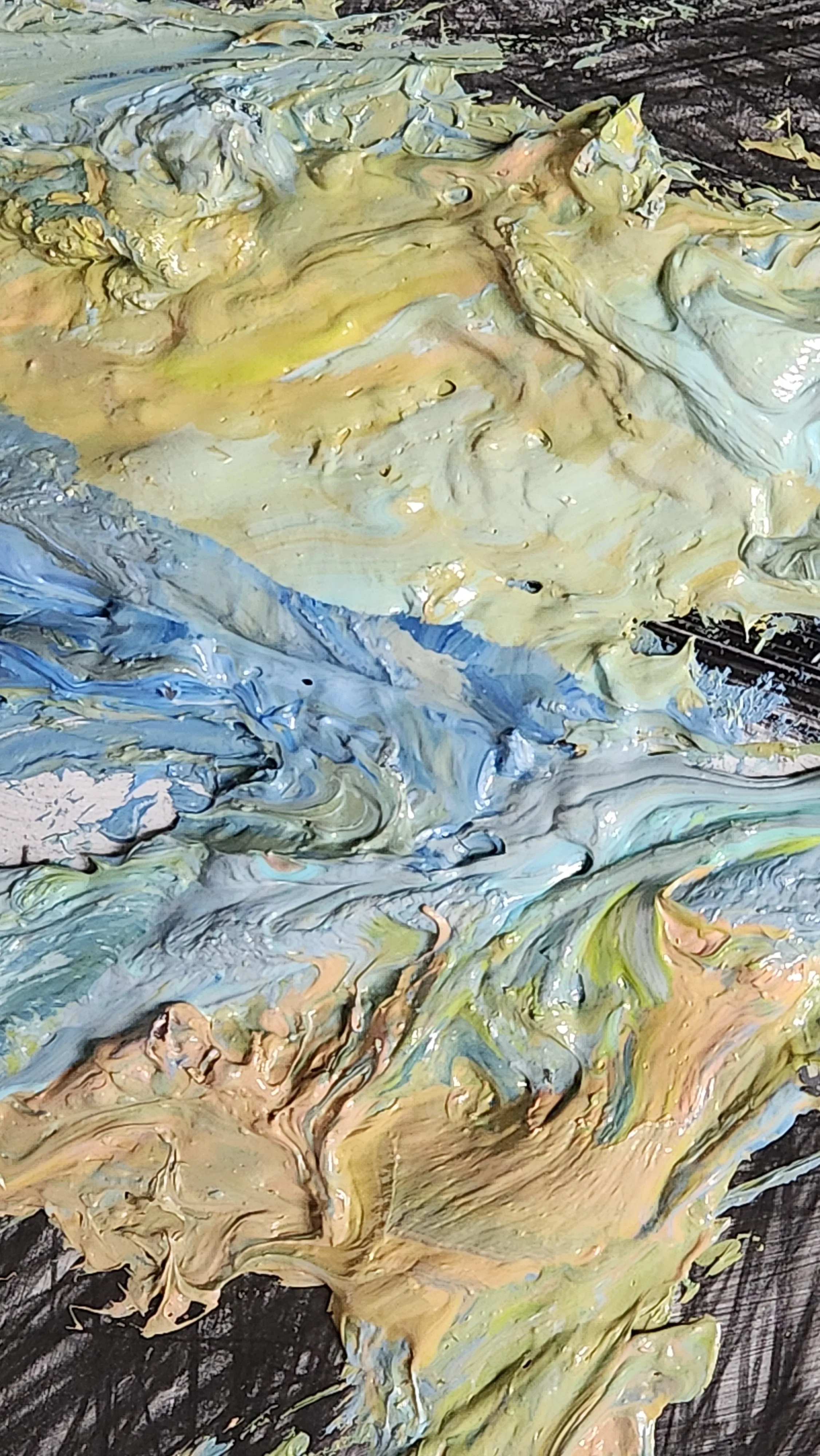
Istart by making a detailed, representational version of the place on a temporary support, just to hold the literal information.
Then I make dozens of versions of that same place.
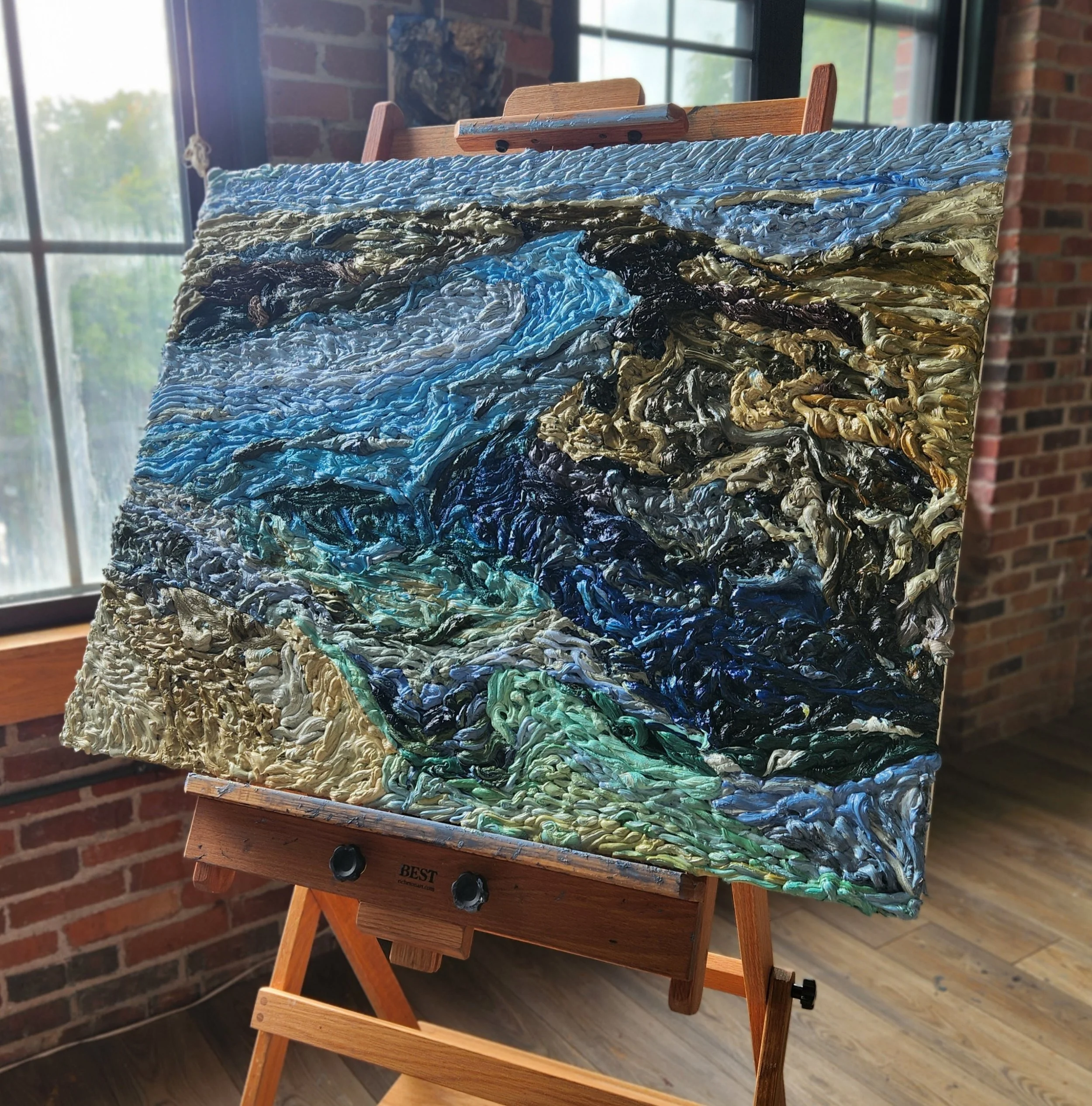
From there, I sculpt those versions into what I call forms. I call them forms because I do not have a better word, but they feel like ideas or thoughts, almost like actors in a play.
Except the play is the painting.
I paint with these forms. I move them around, lift from them, drag through them, and scrape them into a new central movement.
It is not copying.
It is stealing.
And I think about that stealing as a way to show how my thoughts move in real time: how they distract, react, and pull away from what I am actually experiencing, and how the painting marks those small turning points and small changes.
March 25, 2025
The next day, March 25th, I leaned into speed.
In other paintings (like the ones you might see on my site and beyond), I’ve always found novel, interesting ways to create these forms and make them play. Each painting isn’t just about the reference material or the place I’m painting. The place itself seems to pull a certain kind of form out of me.
With this one, I wanted to be as detailed as possible, and to create enough interest and intrigue on these temporary supports that I could then sculpt into larger forms. In some paintings, my forms are tiny, almost like pieces of a mosaic. Here, I wanted them to be big and bold, and placed with real distance between them, so the scale of each form could help the integrity of the surface hold as I build them.
I get that I'm being very esoteric in how I'm describing what I feel - but that's why I make images because I don't always have the exact words..
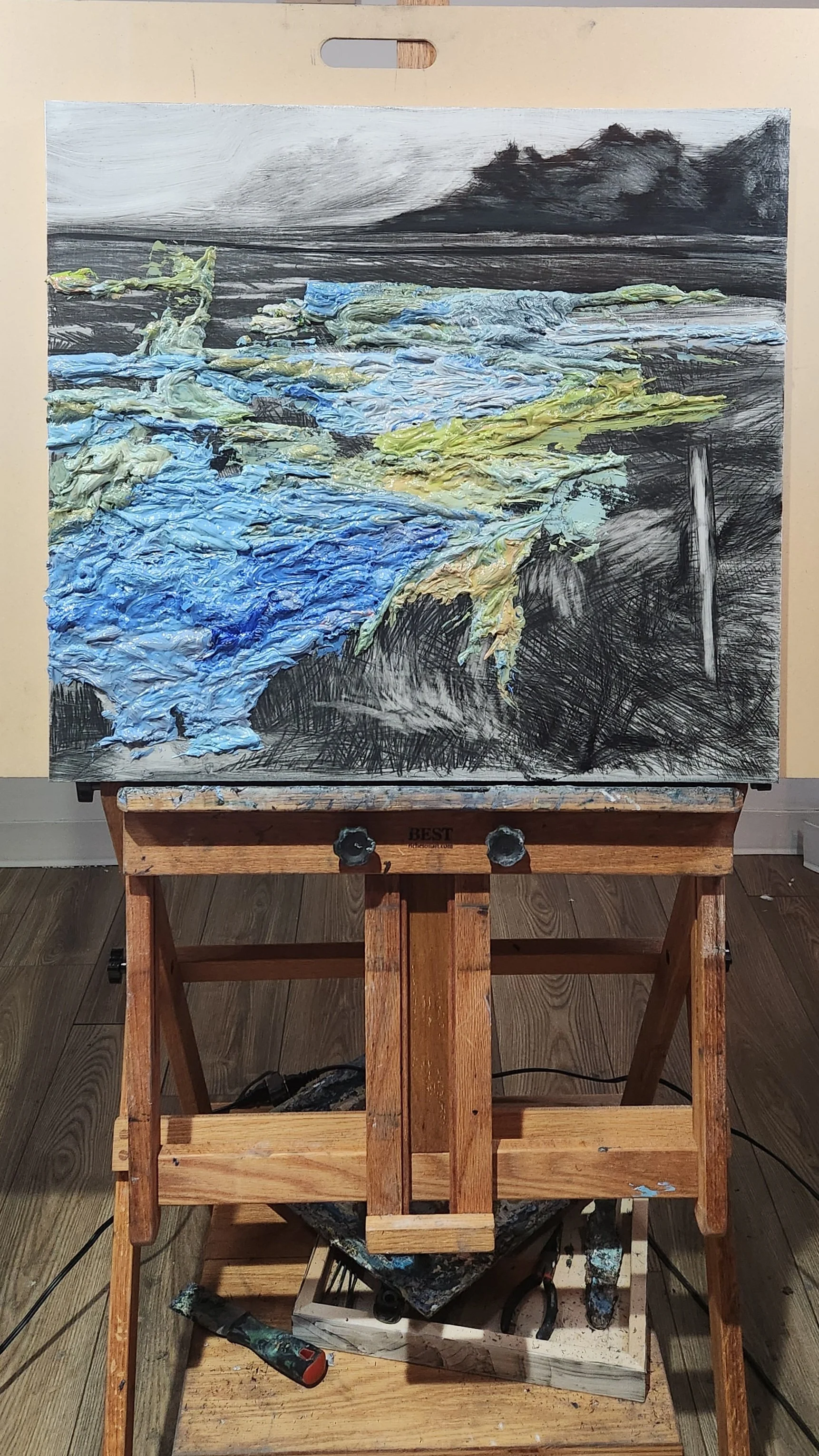
March 31 – April 1, 2025
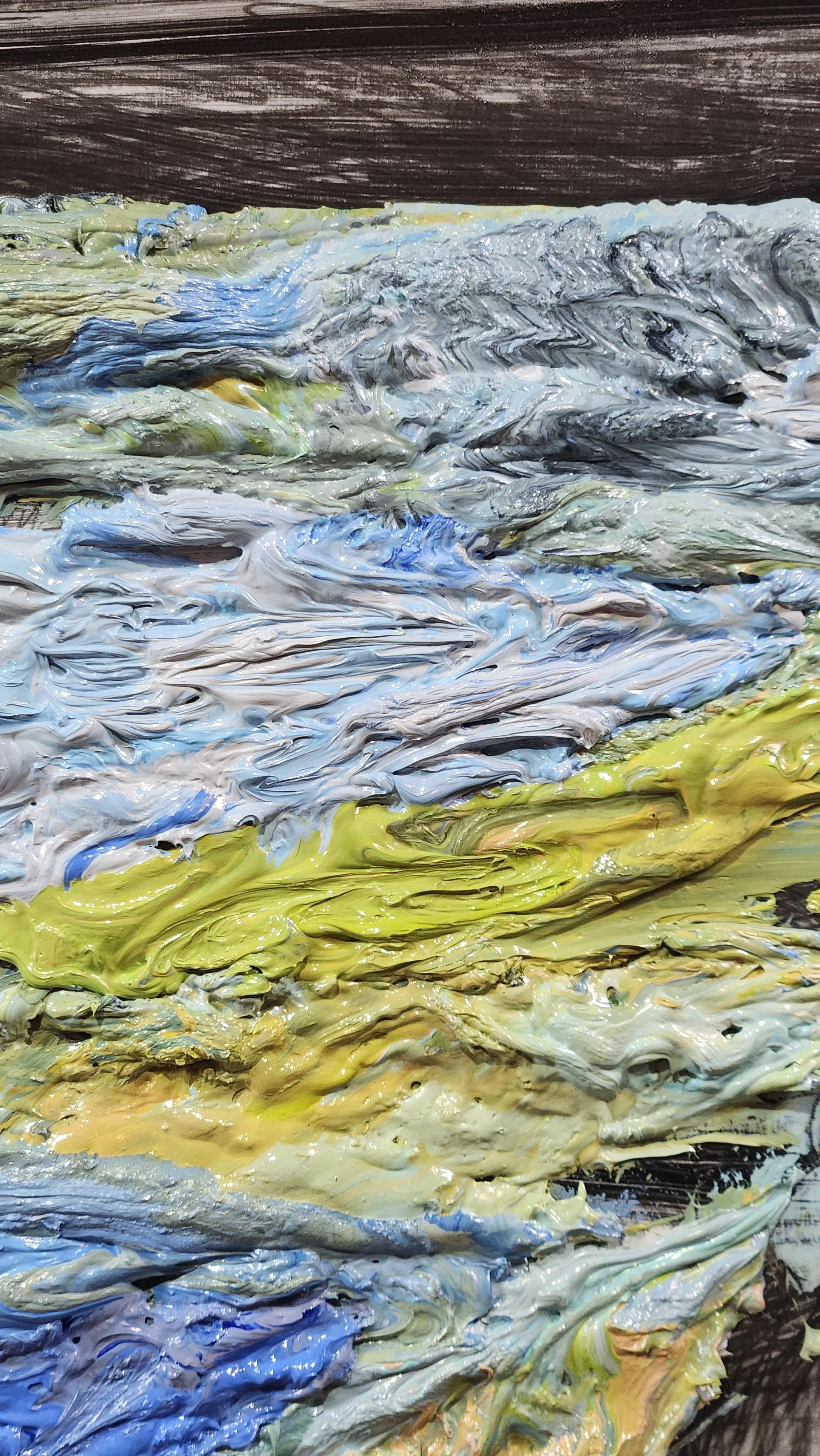
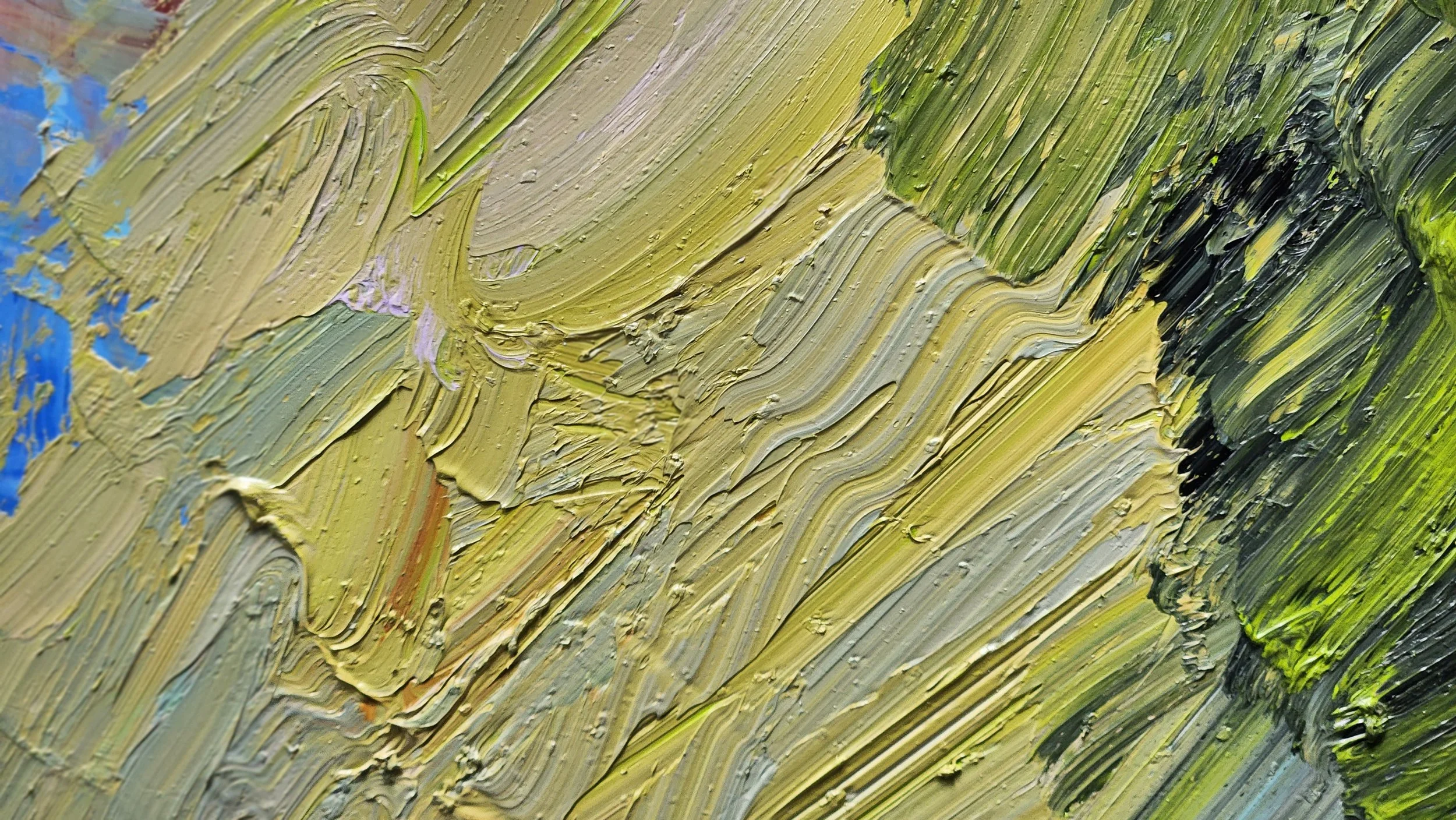
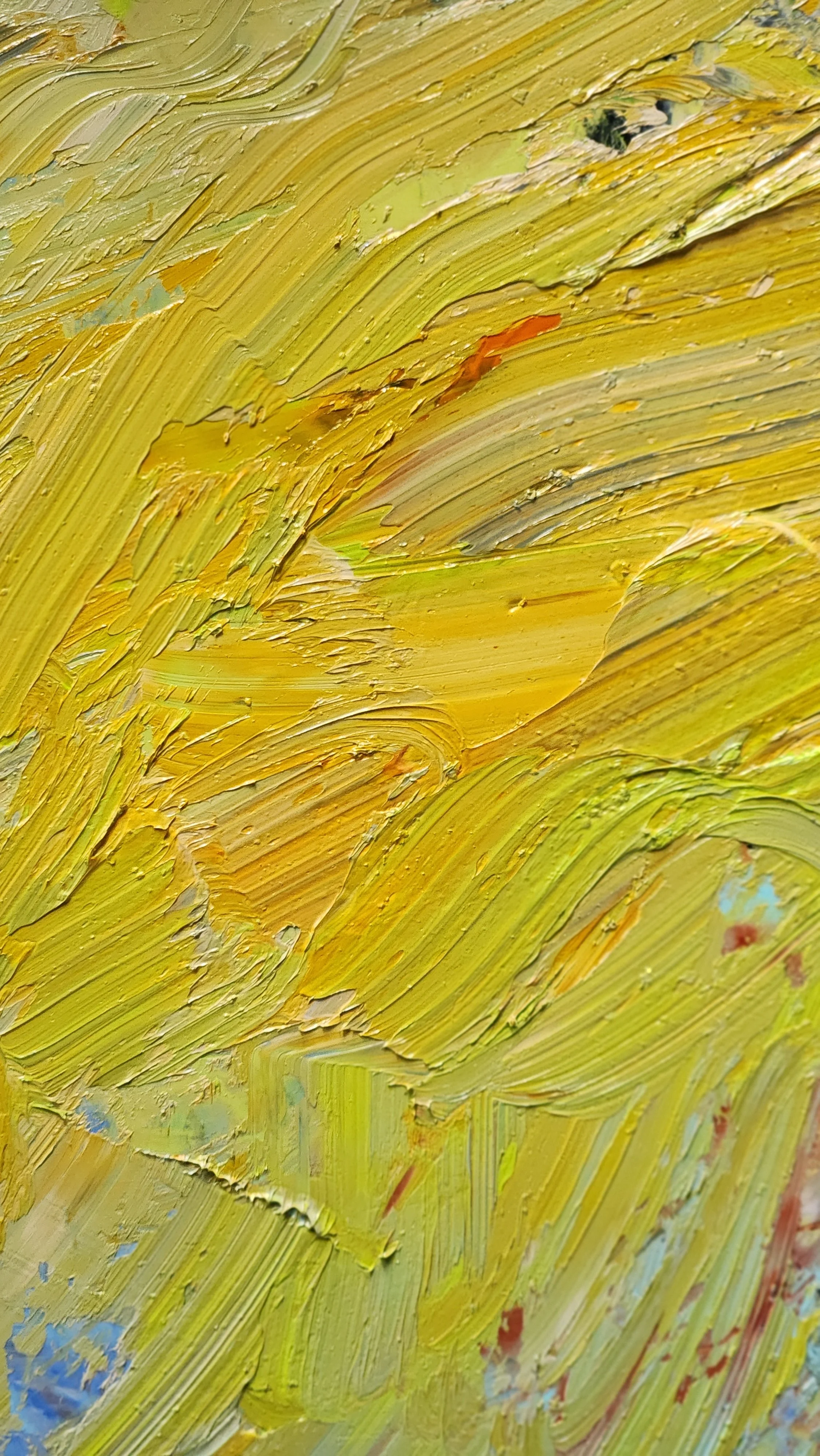
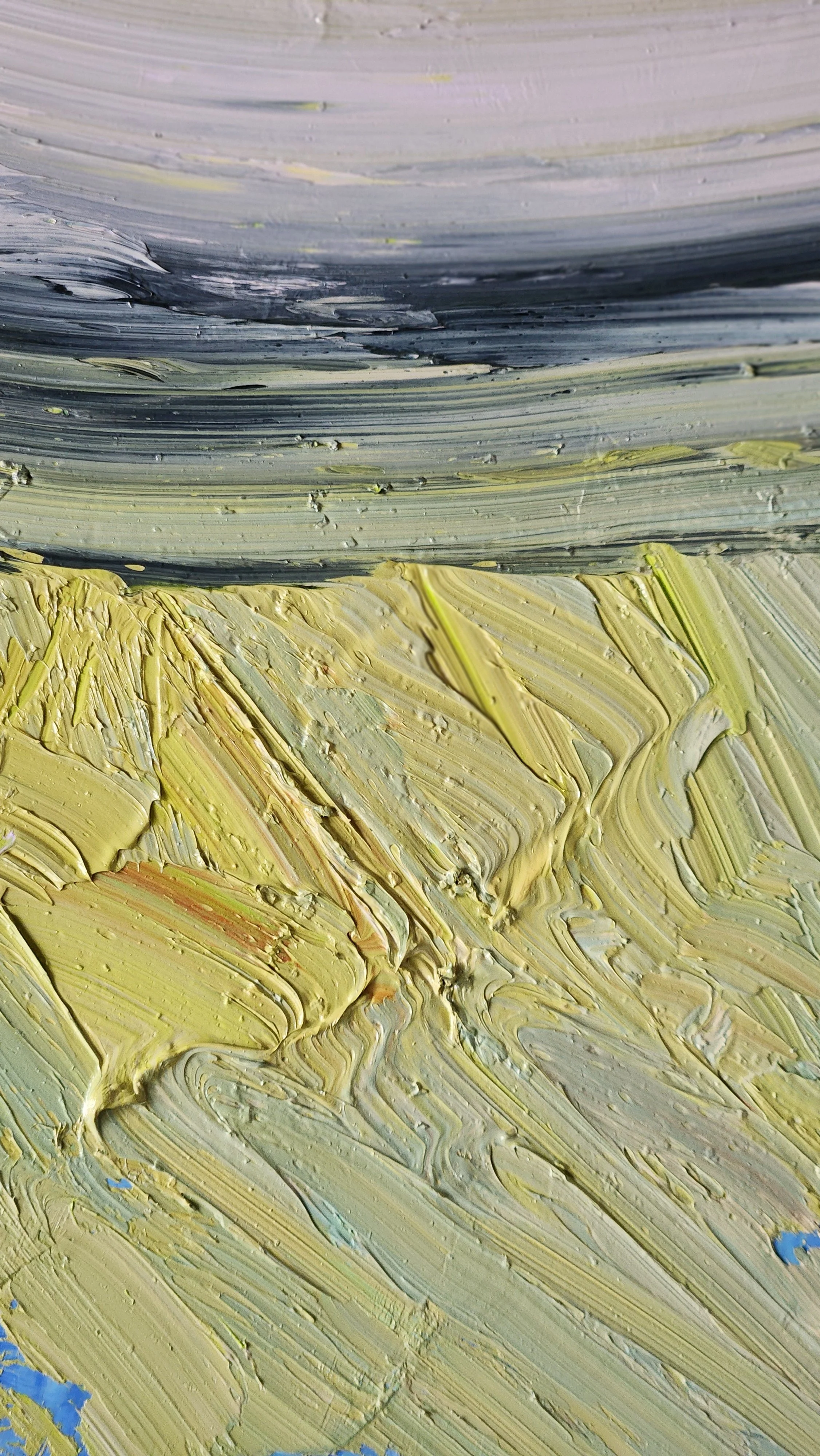
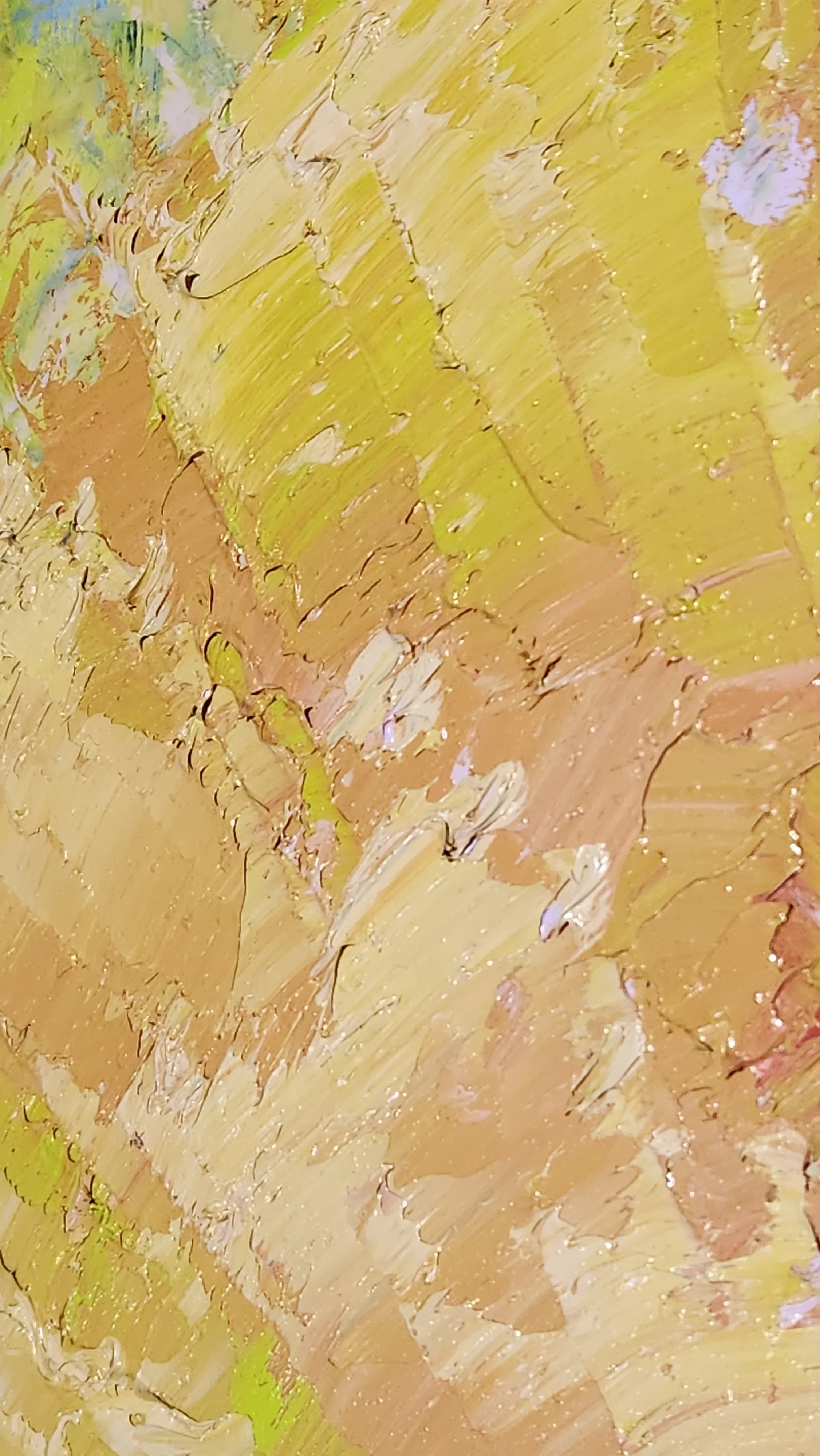
April 19, 2025: Integration
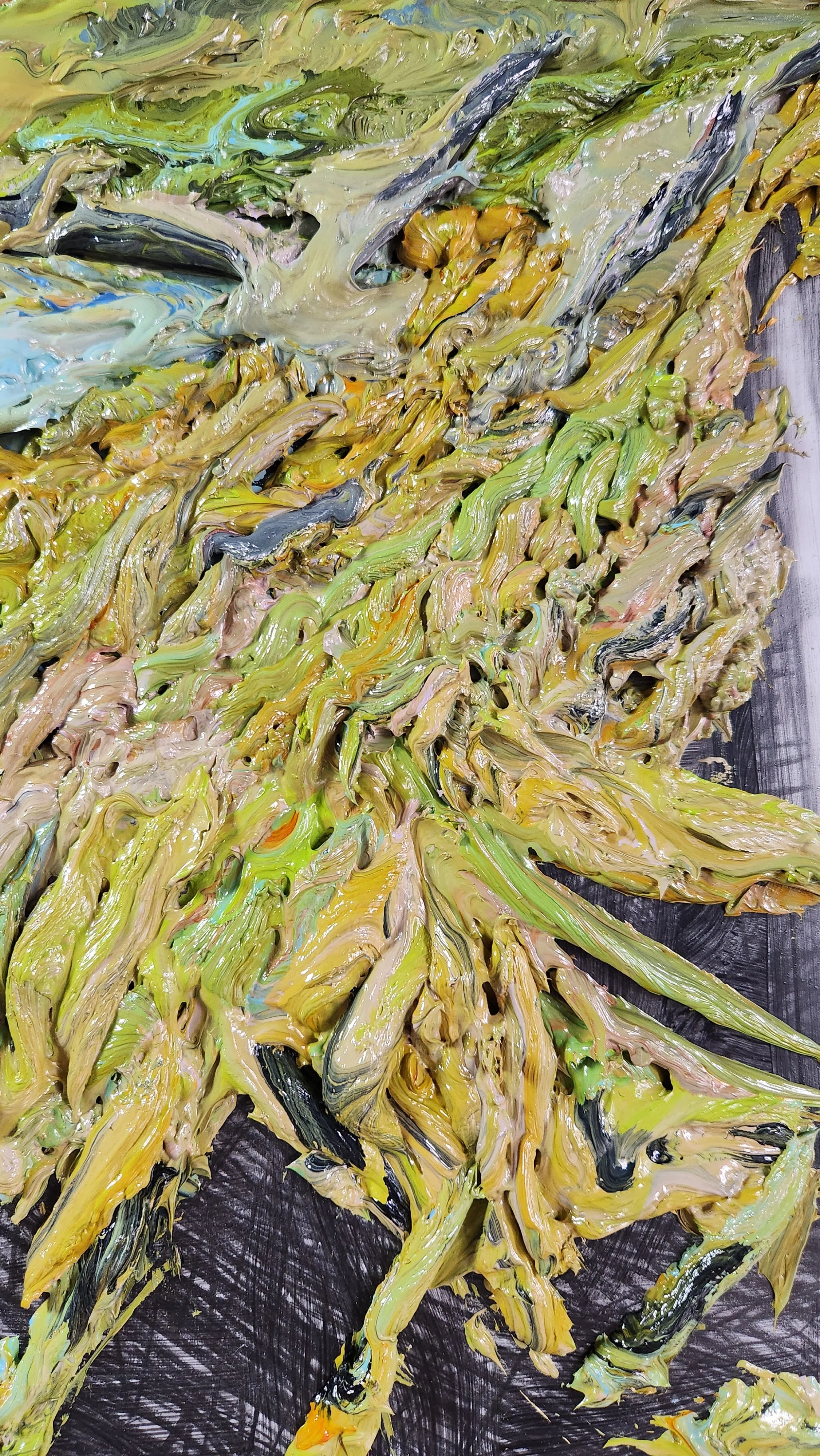
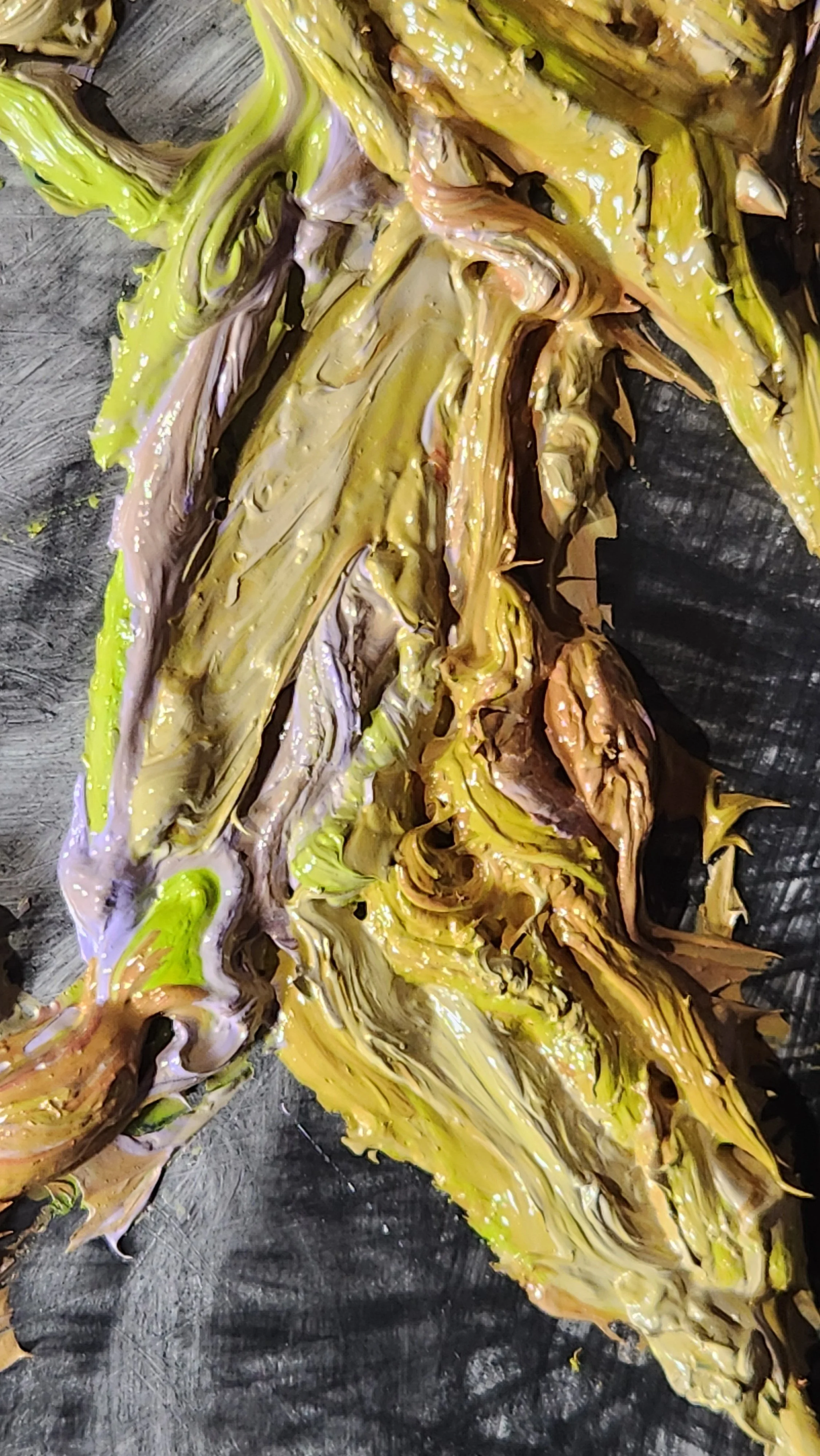
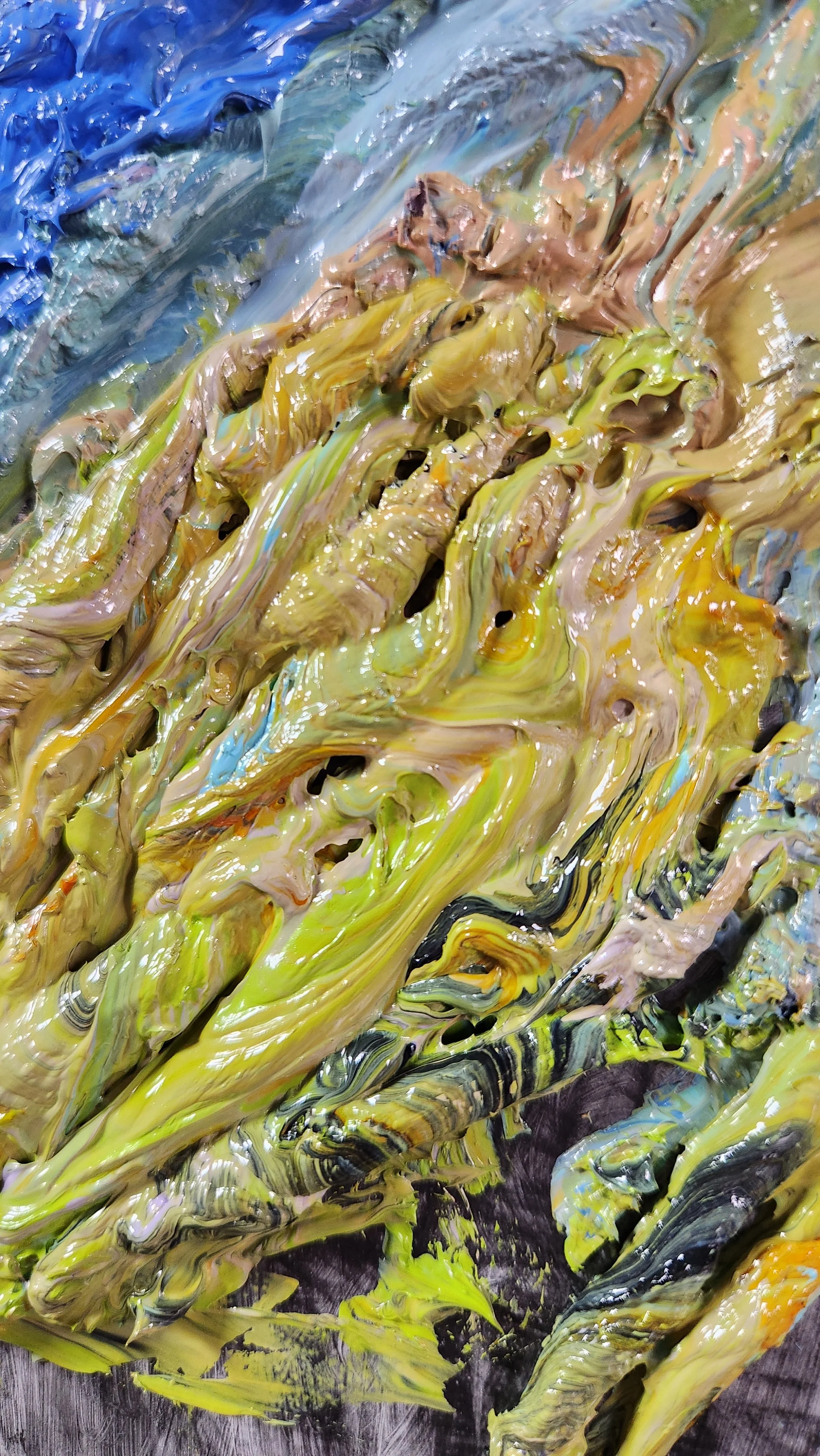
By April 19th, the larger forms had begun to establish their natural play—the big architecture of the thing. And that’s when I started integrating smaller forms, paying close attention to surface integrity. I was hunting for color relationships that felt alive.
And I started adding elements that were surprising—things you wouldn’t expect. Not for gimmick, but for disruption. A way to create a little more chaos inside each section, so the painting couldn’t settle into being “just” a landscape.
This was the moment where everything started coming together.
Not finished, but coherent.
Not resolved, but speaking.
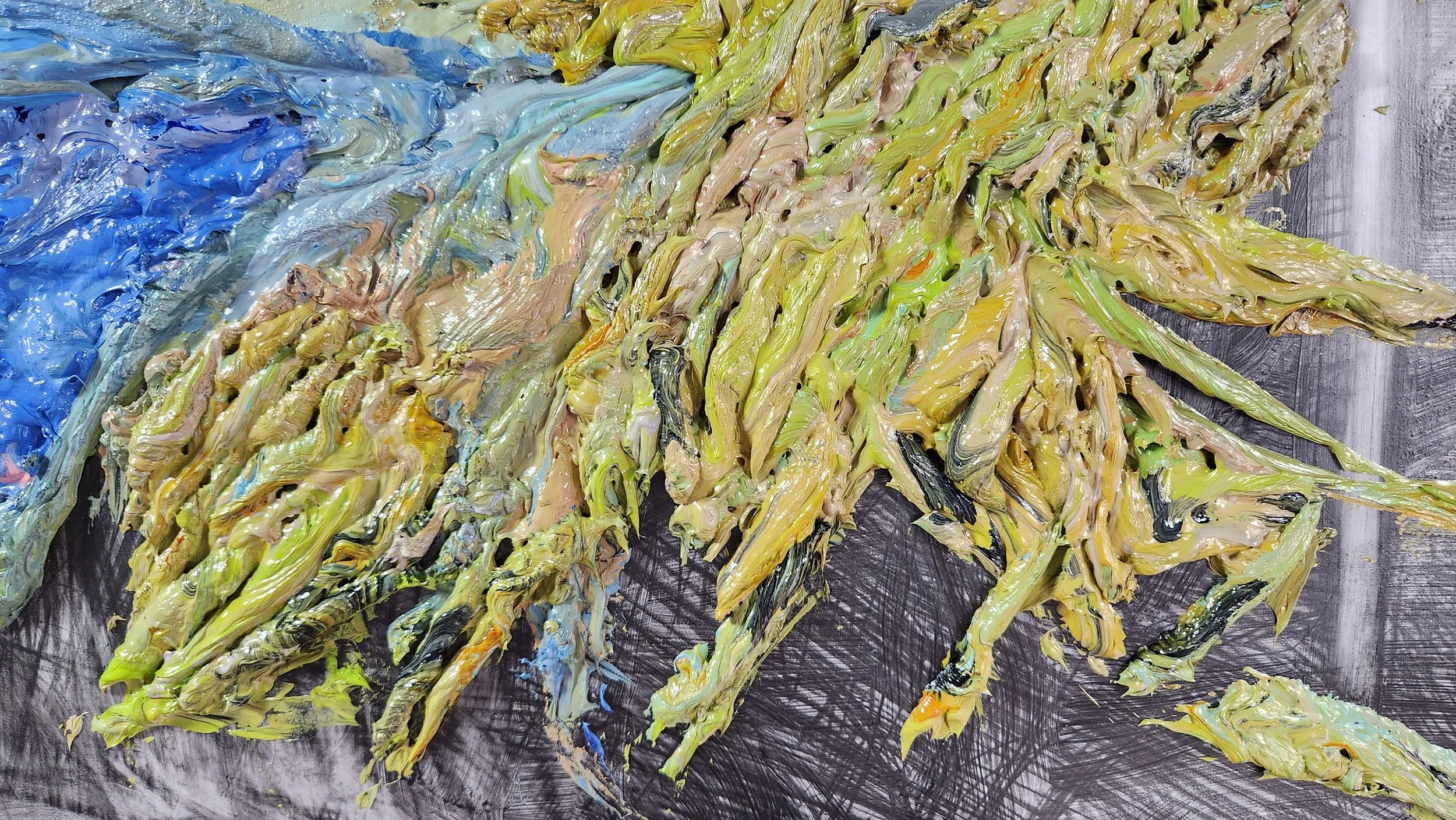
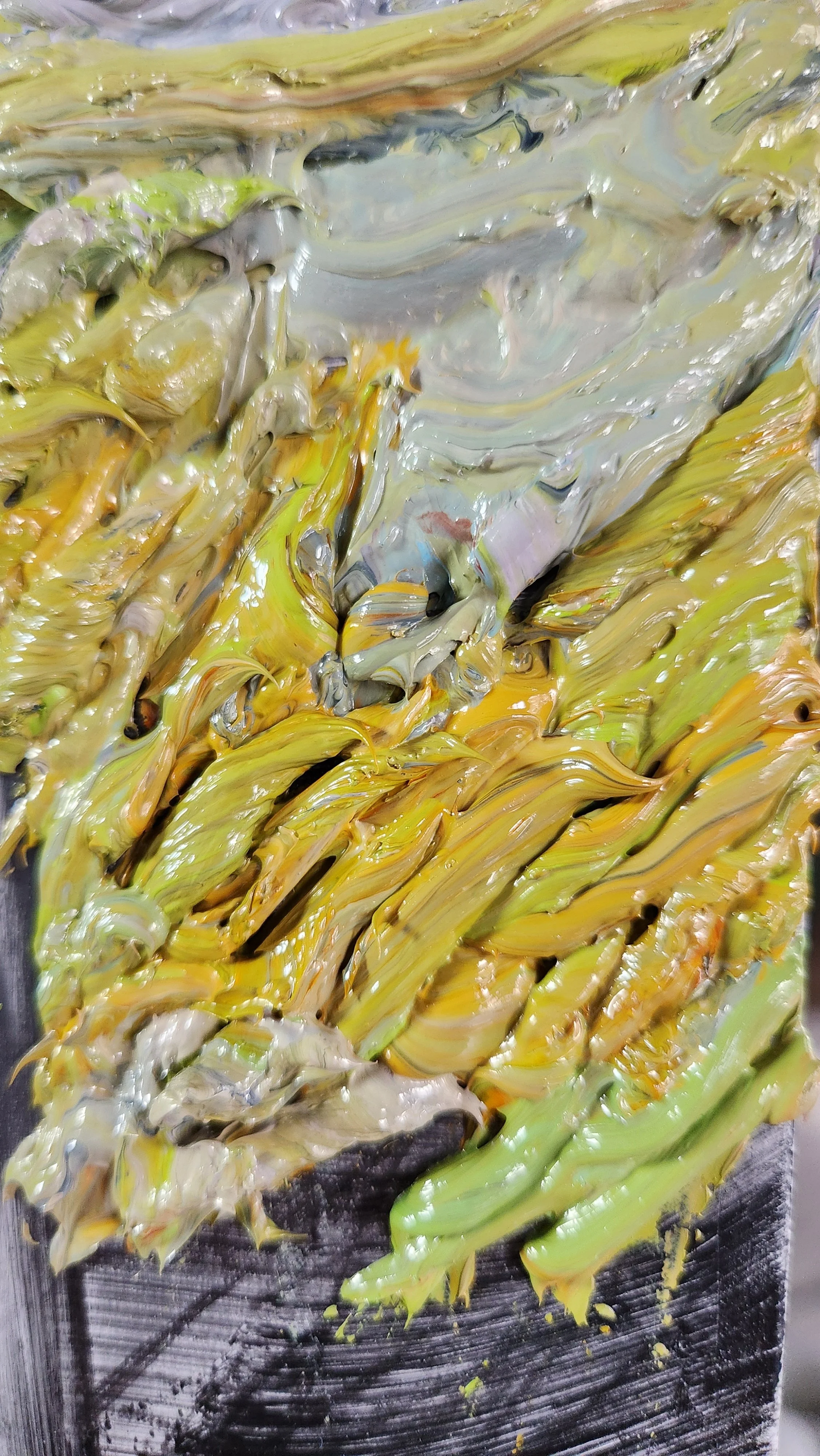
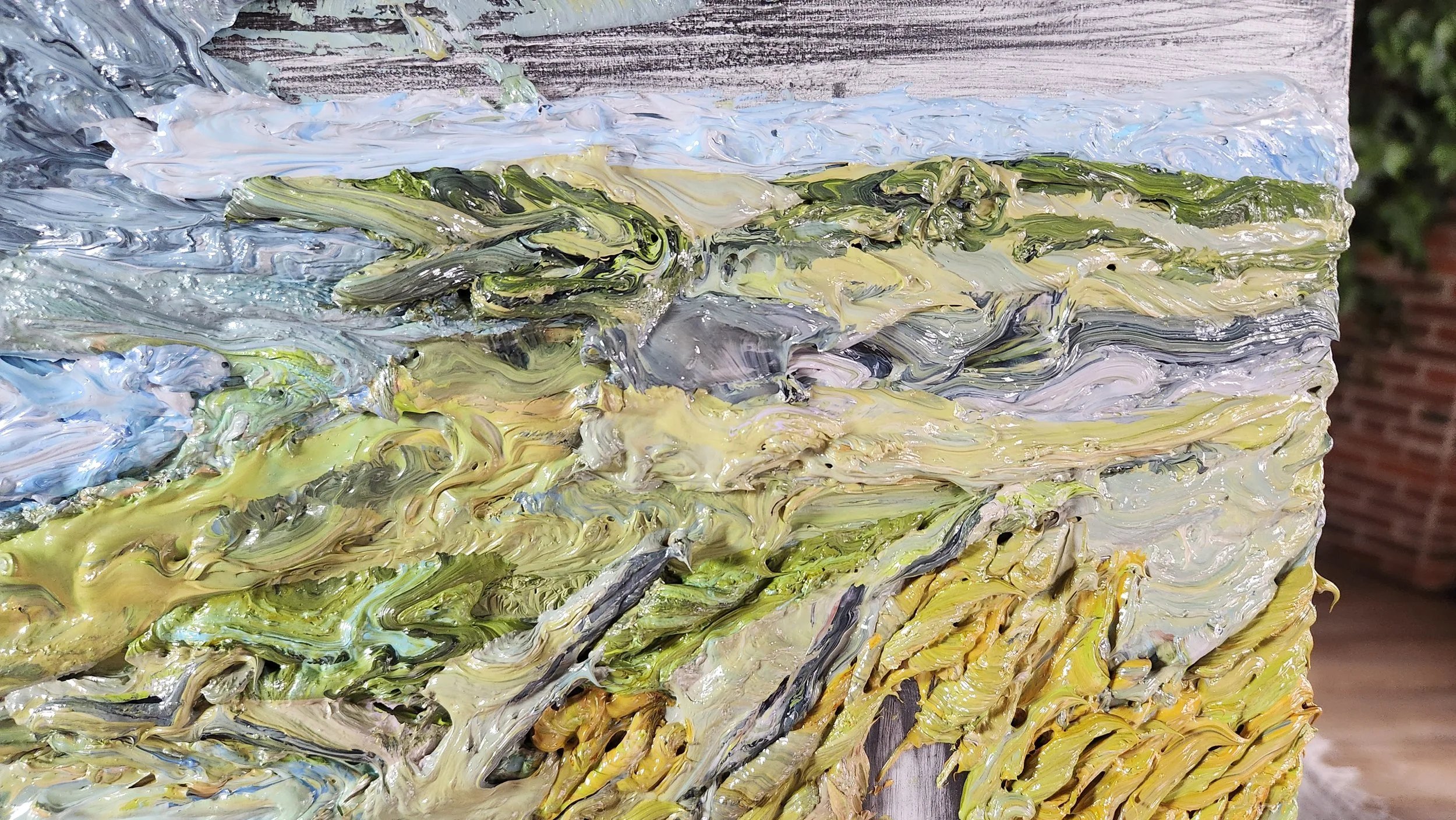
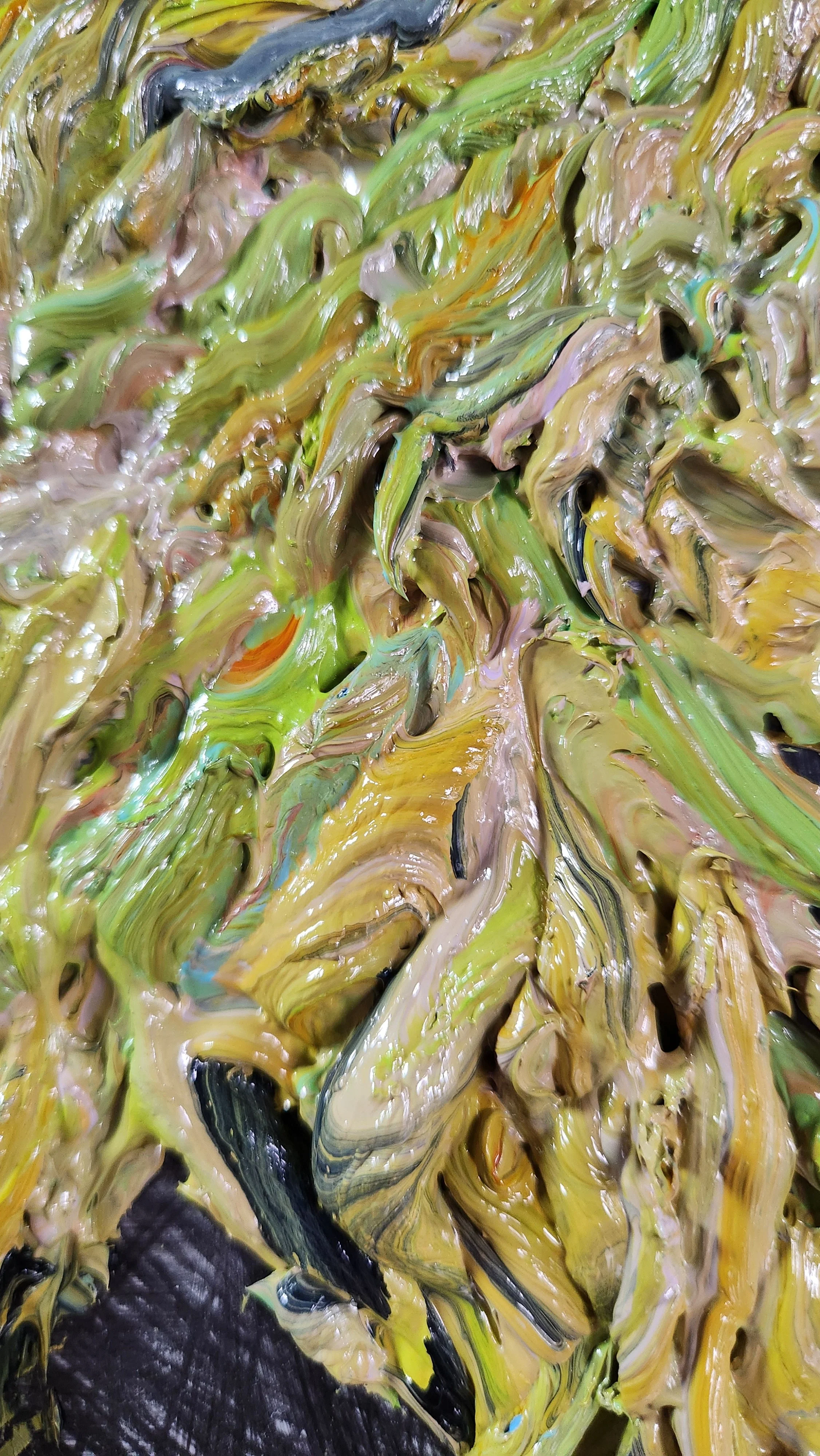
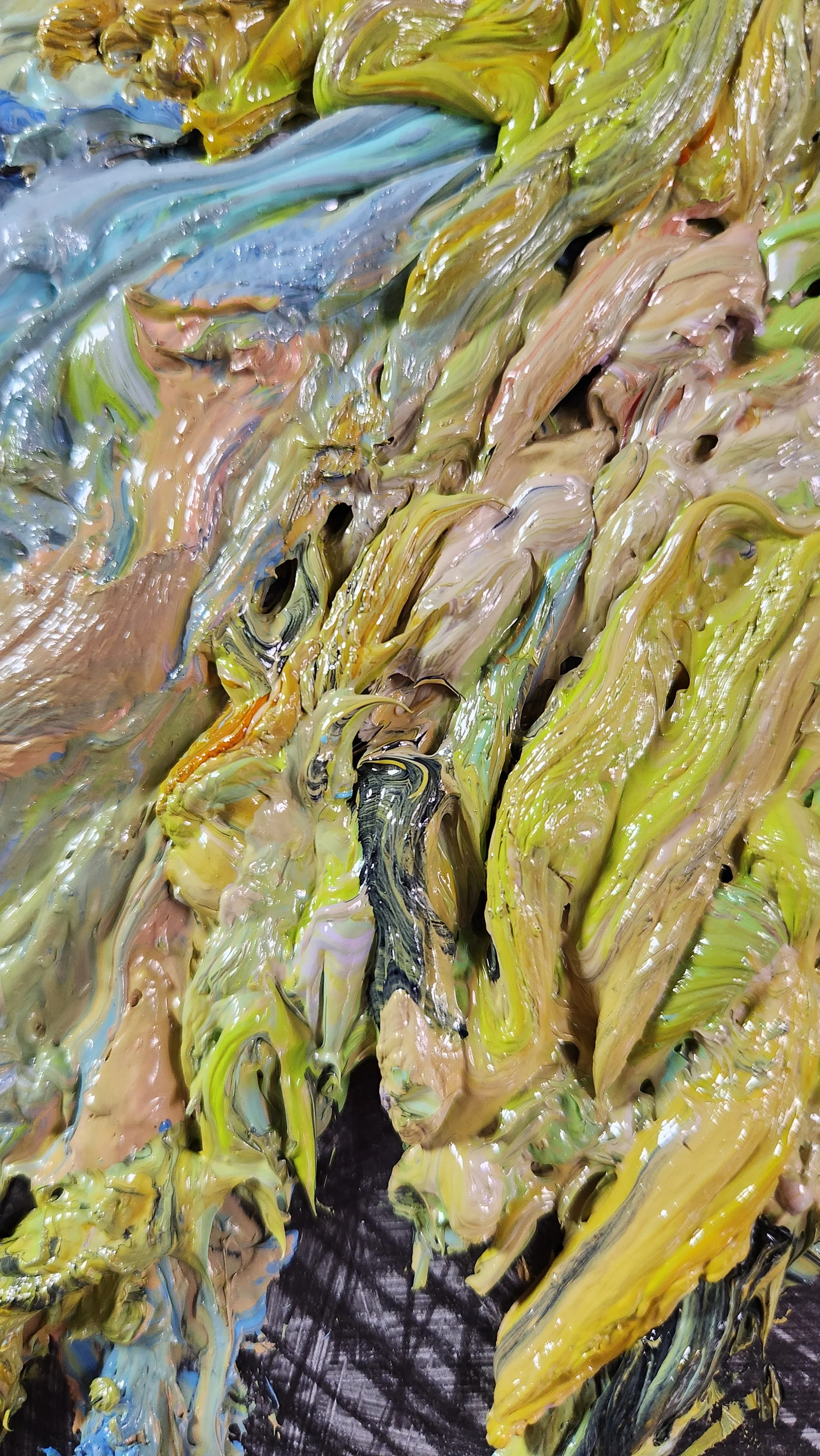
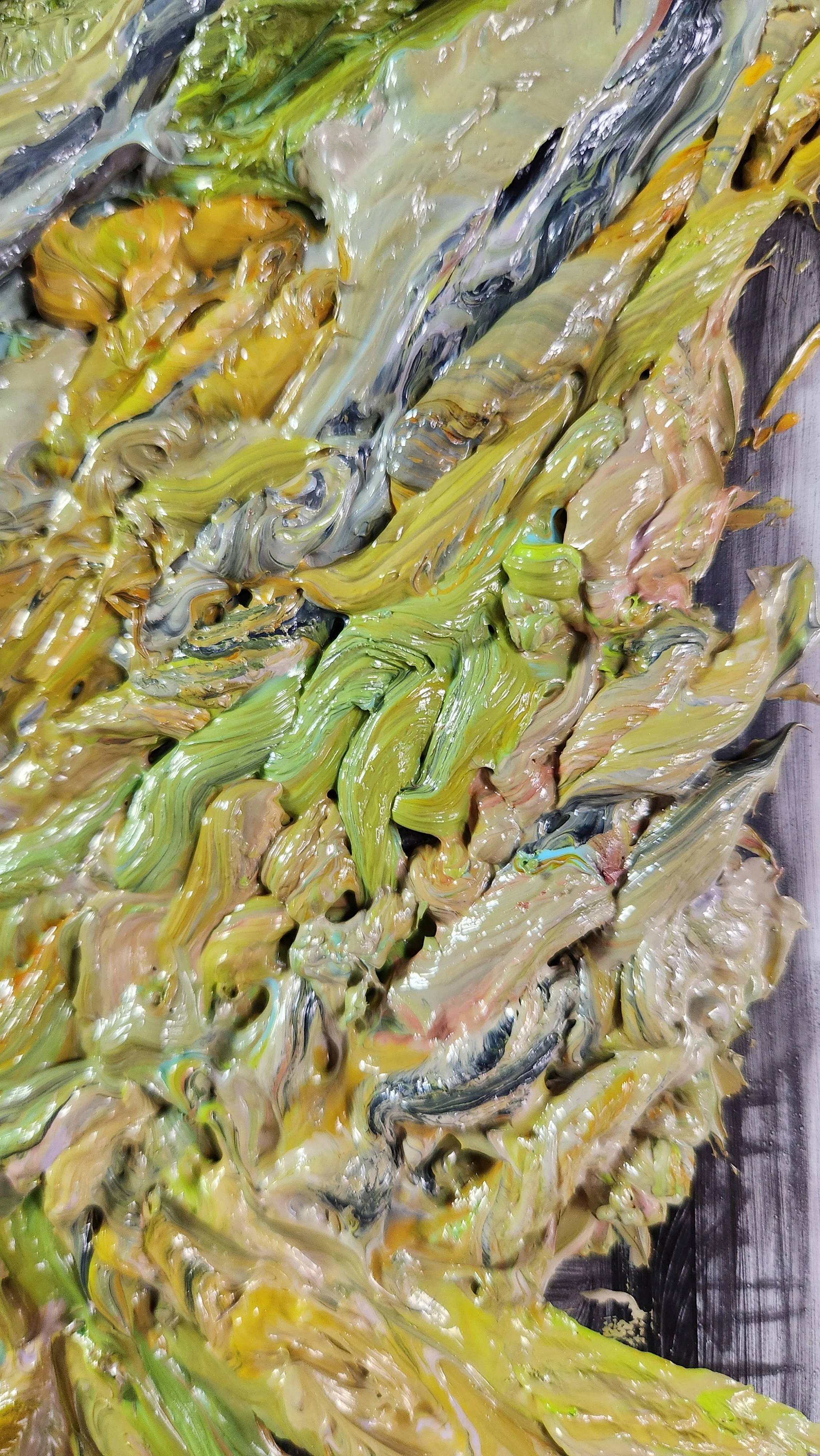
April 28, 2025: Returning After Drying (Pinks, Violets, New Sensations)
After letting it dry for a few weeks, I came back on April 28th with a different kind of hunger.
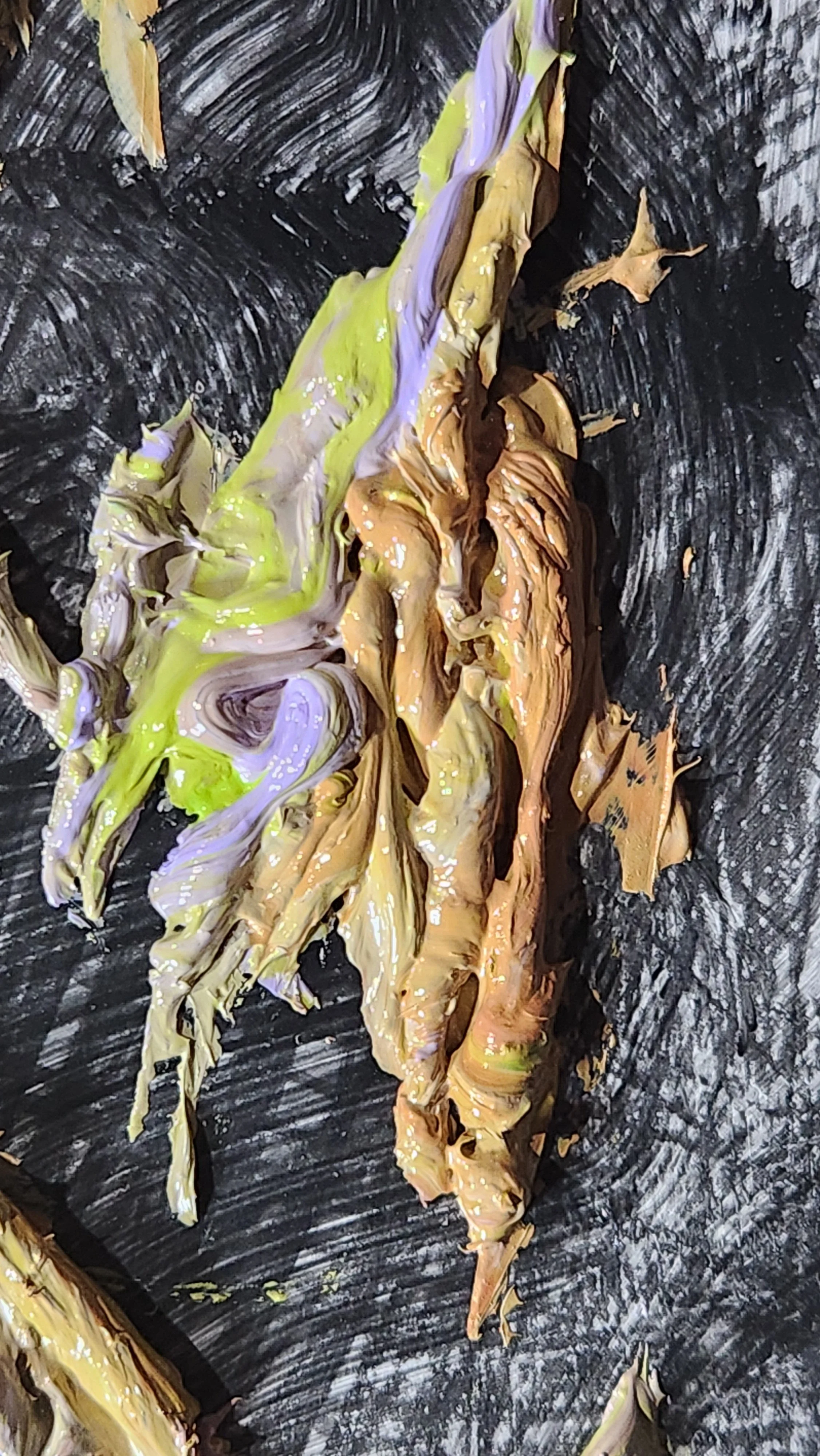
I started adding more exciting combinations—pinks, violets, sensations I hadn’t seen in the work before. It felt like stepping into the same room but hearing it at a new frequency.
Dry time changes the painting.
It creates distance, and distance creates new decisions.
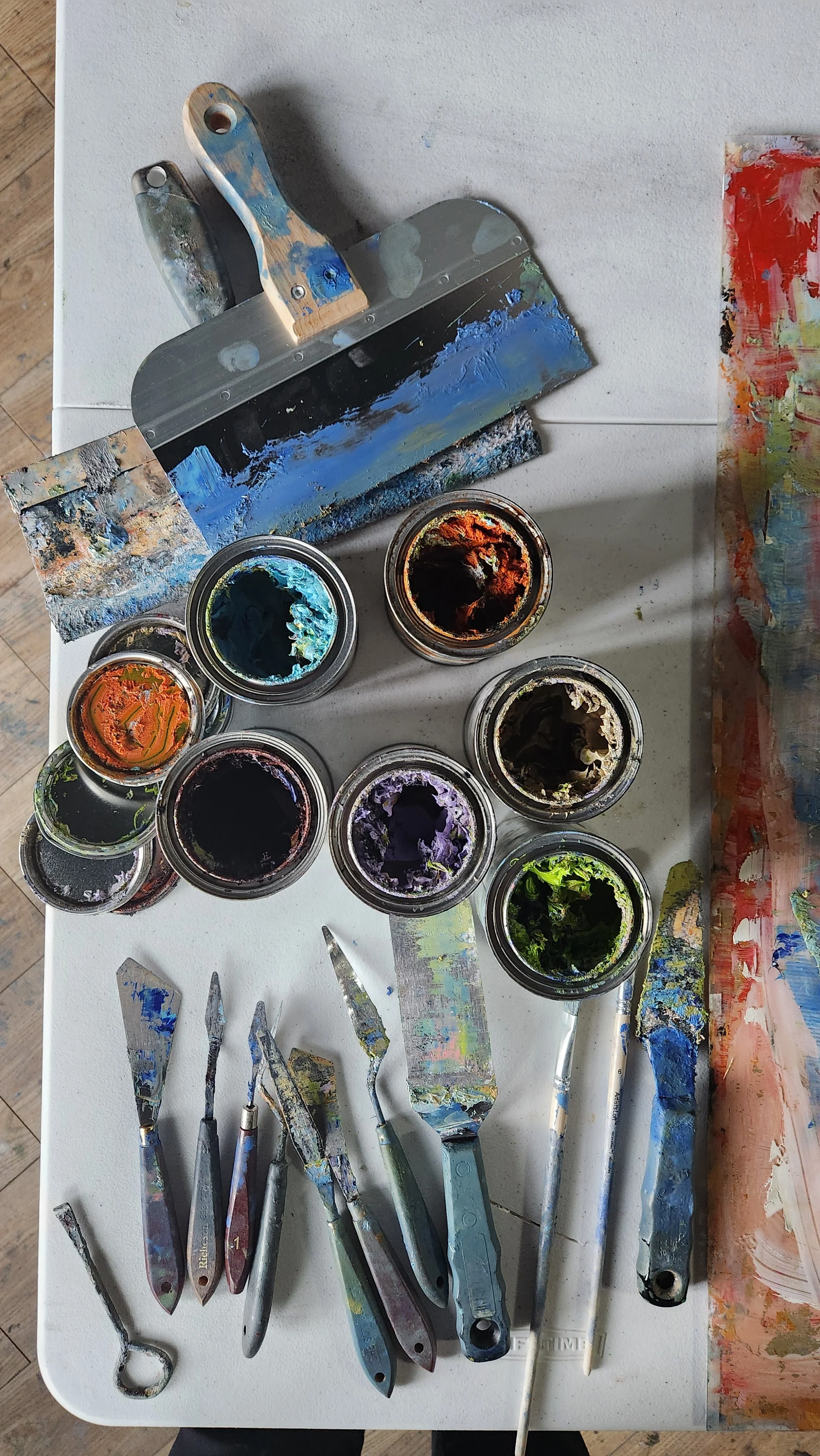
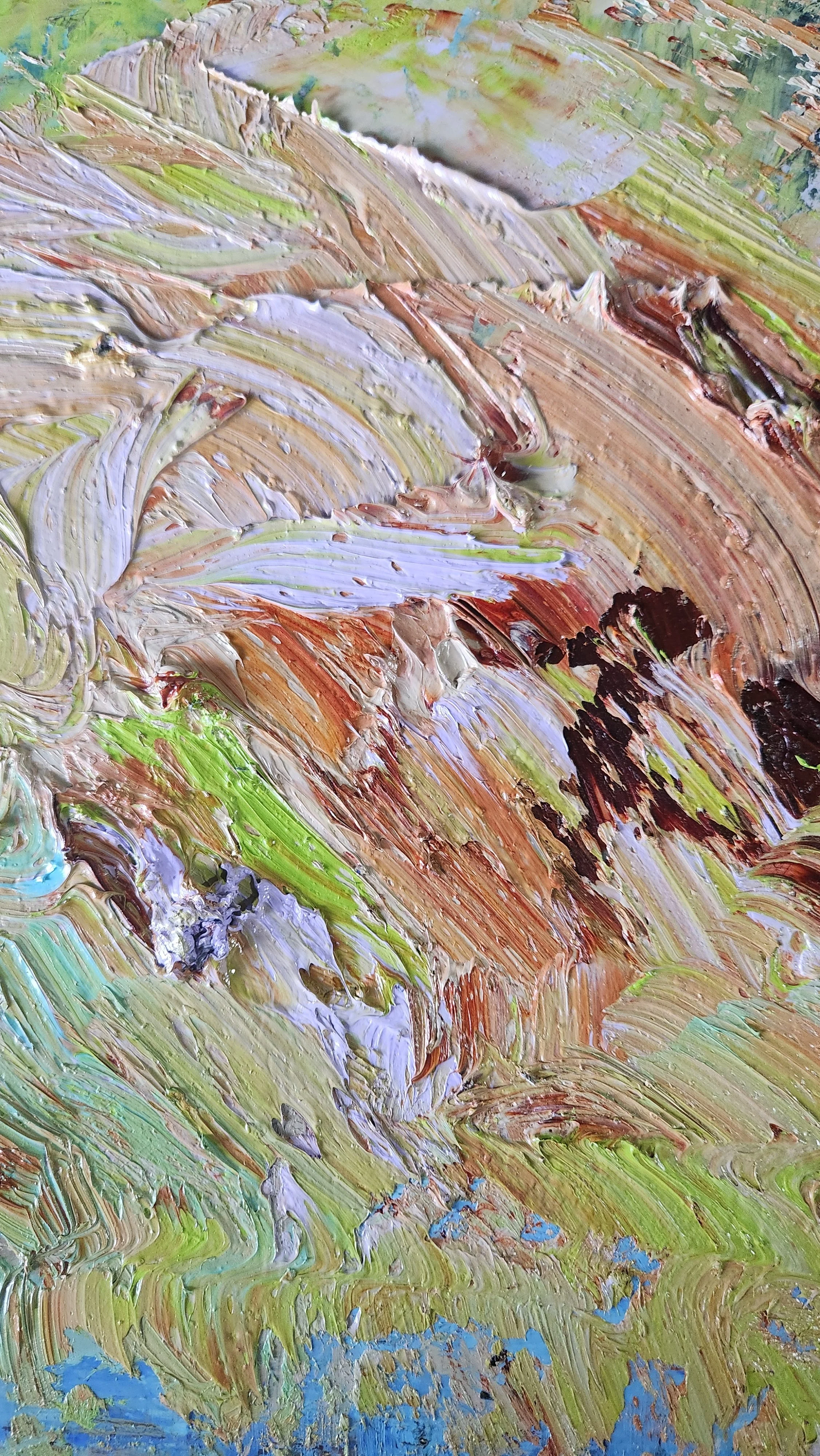
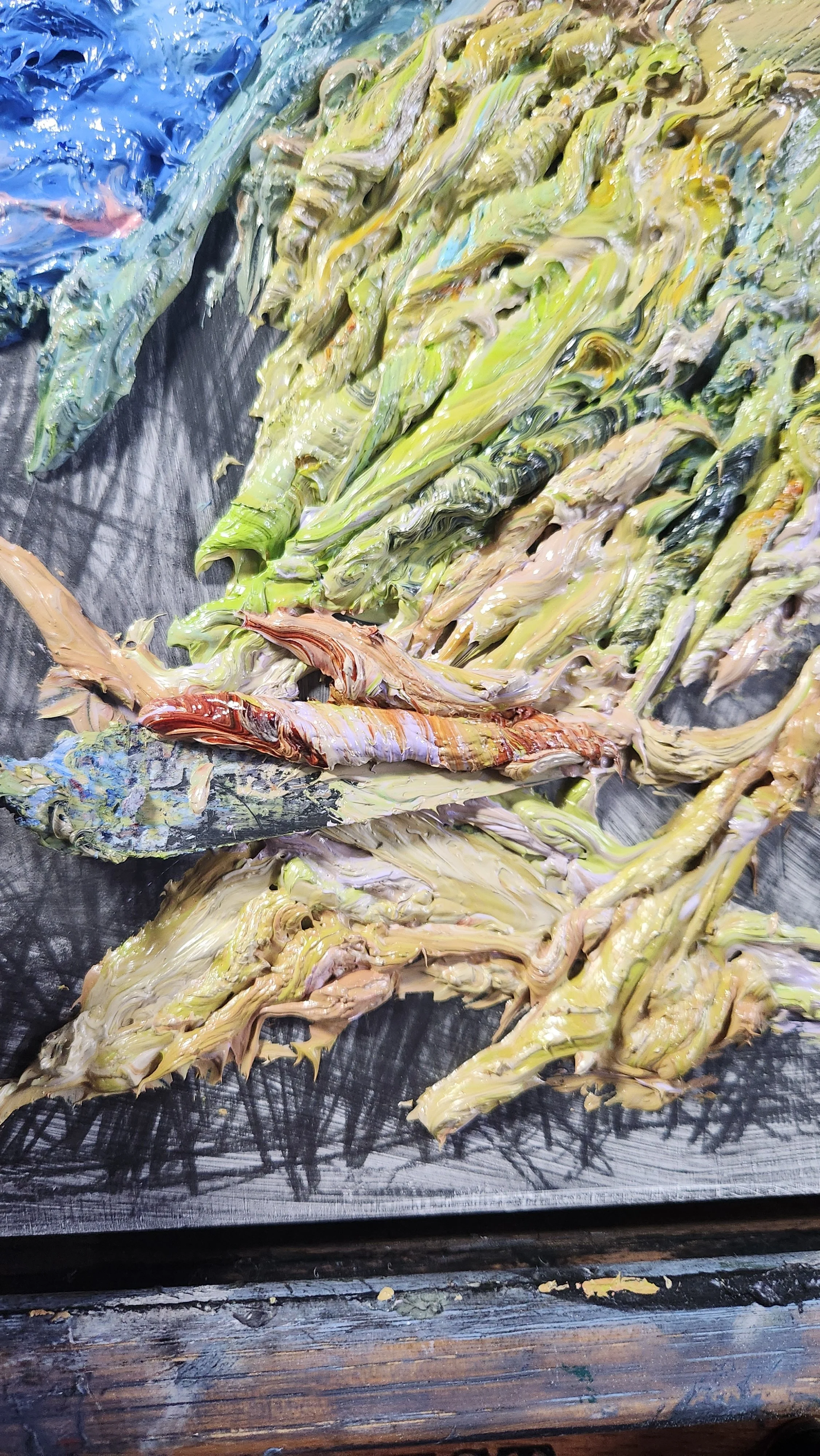
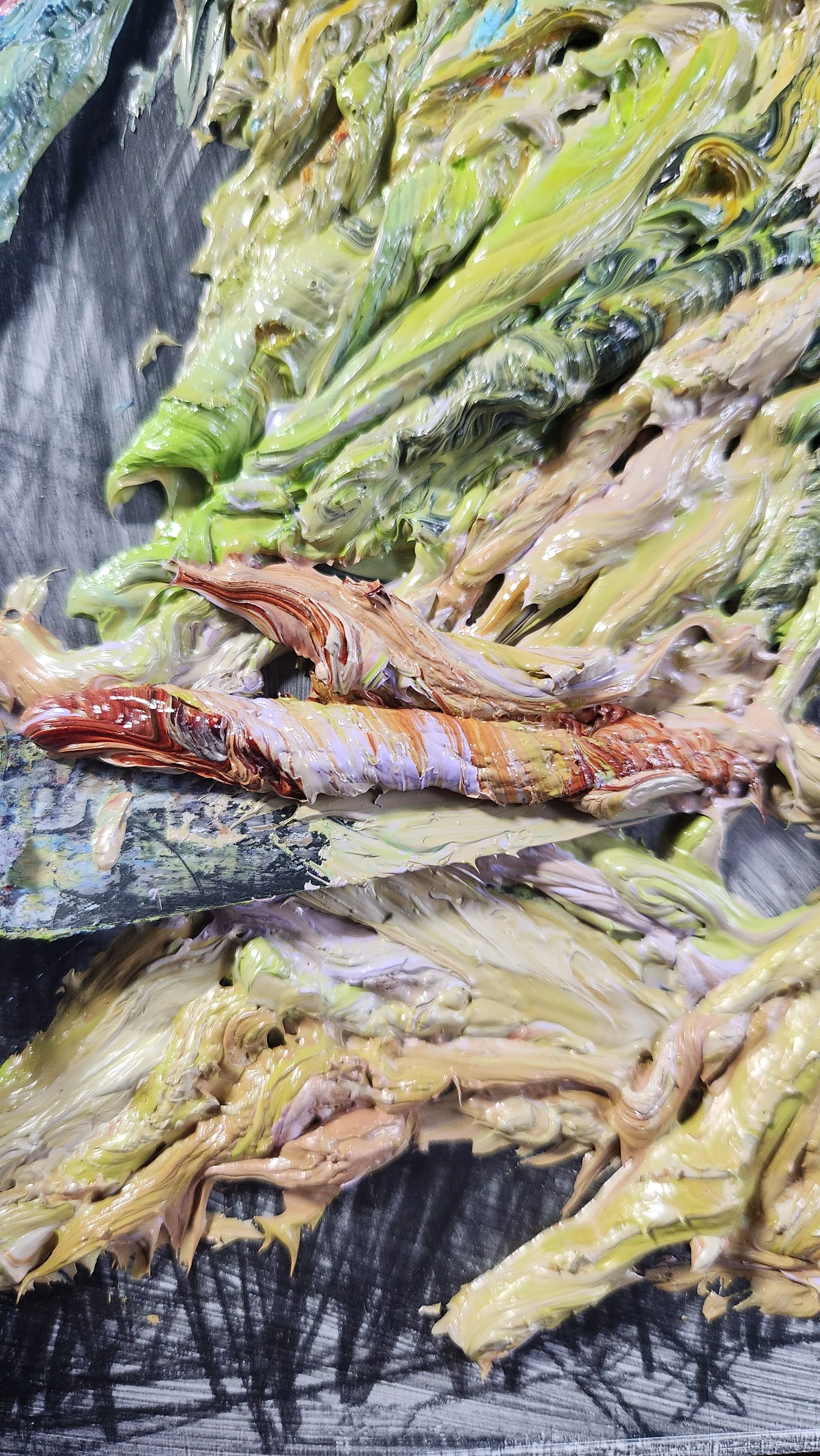
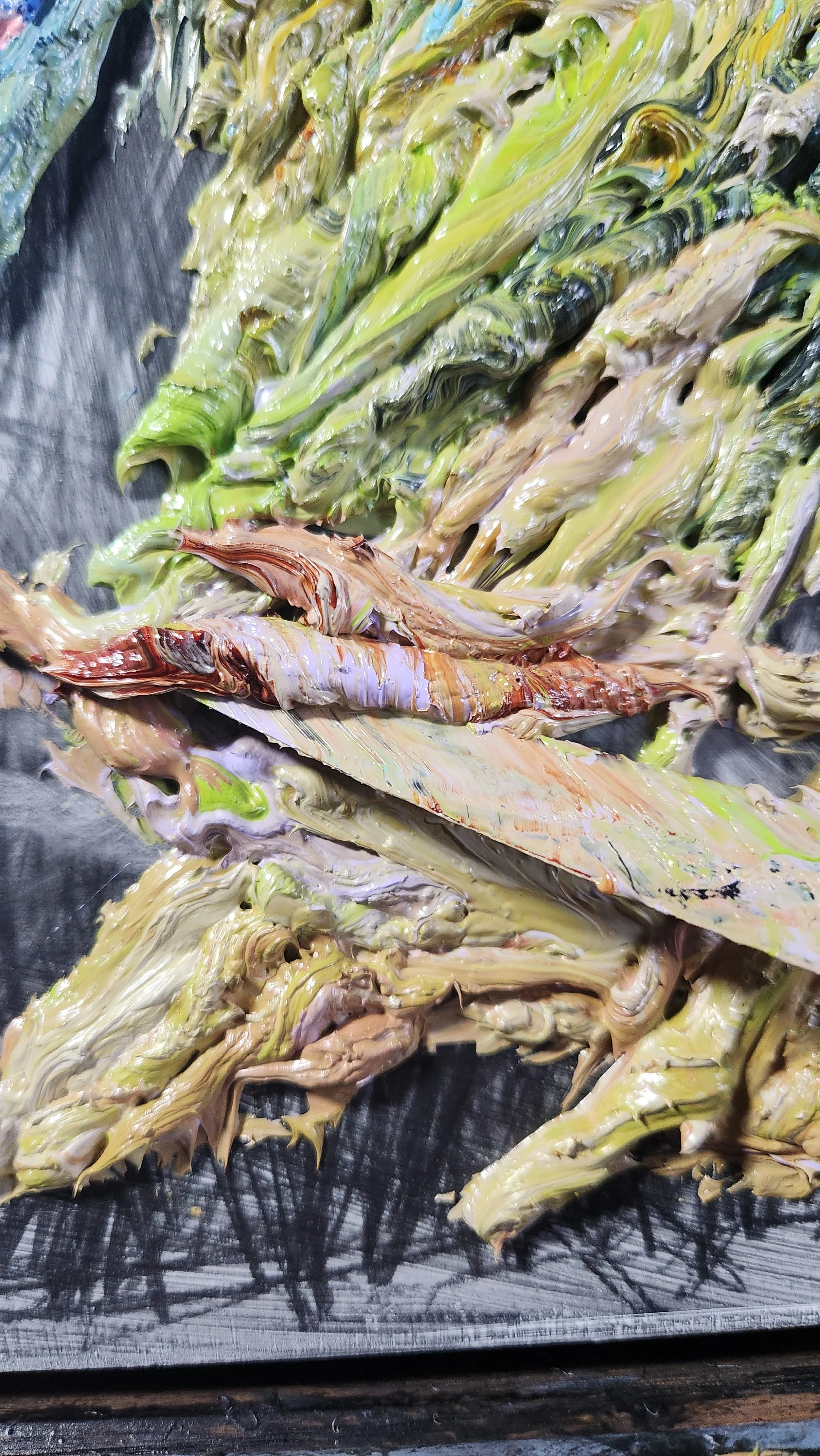
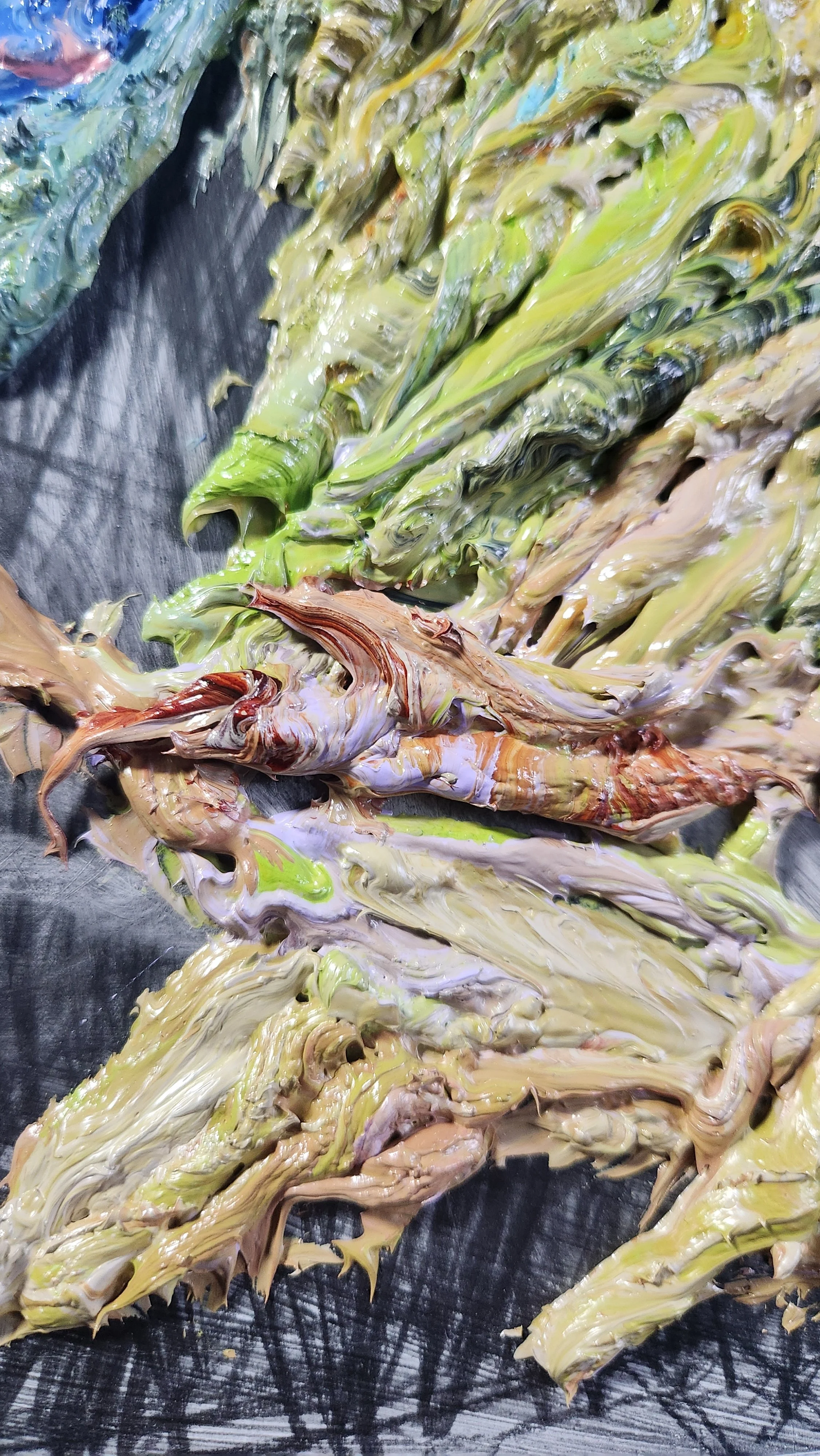
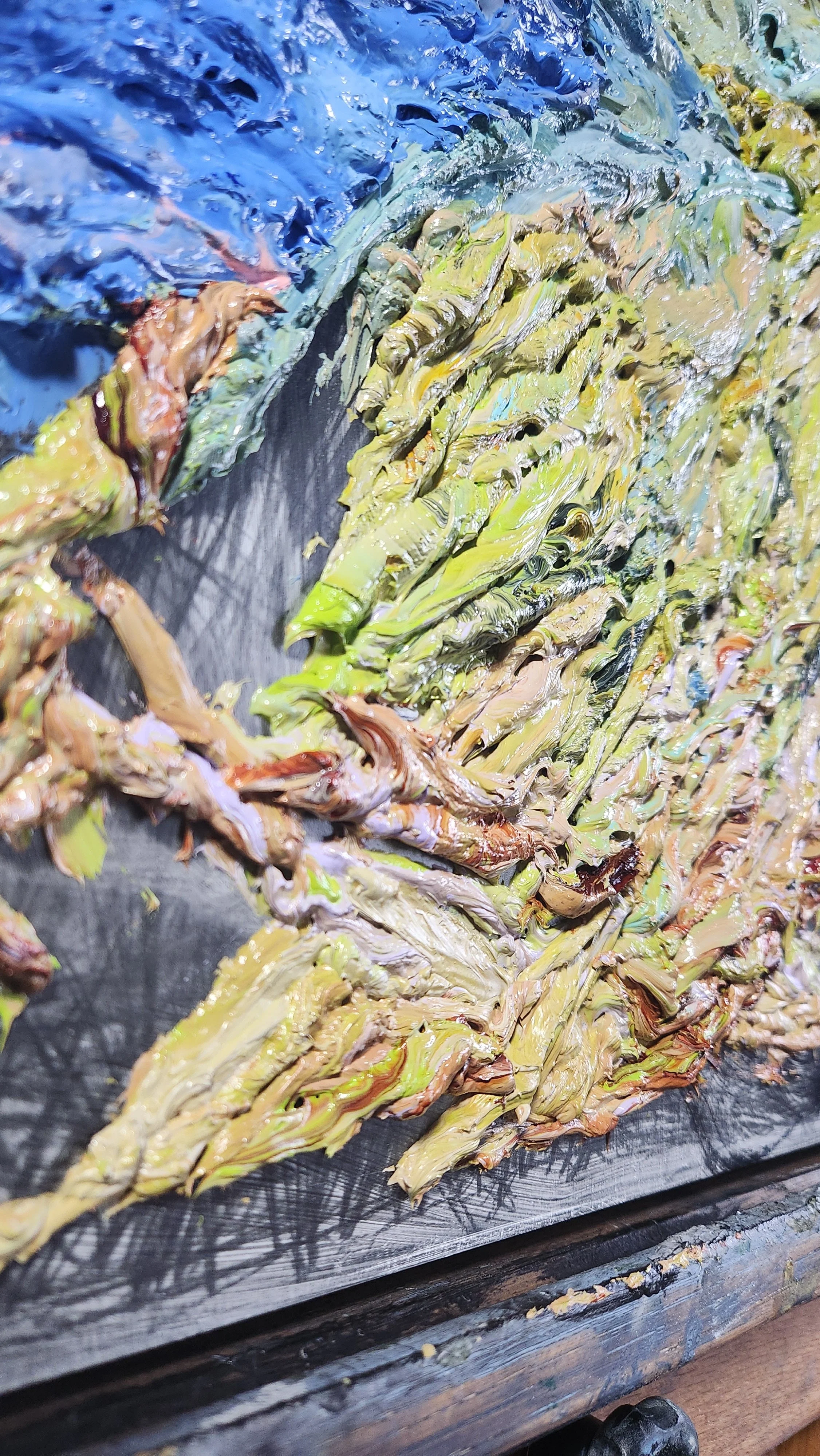
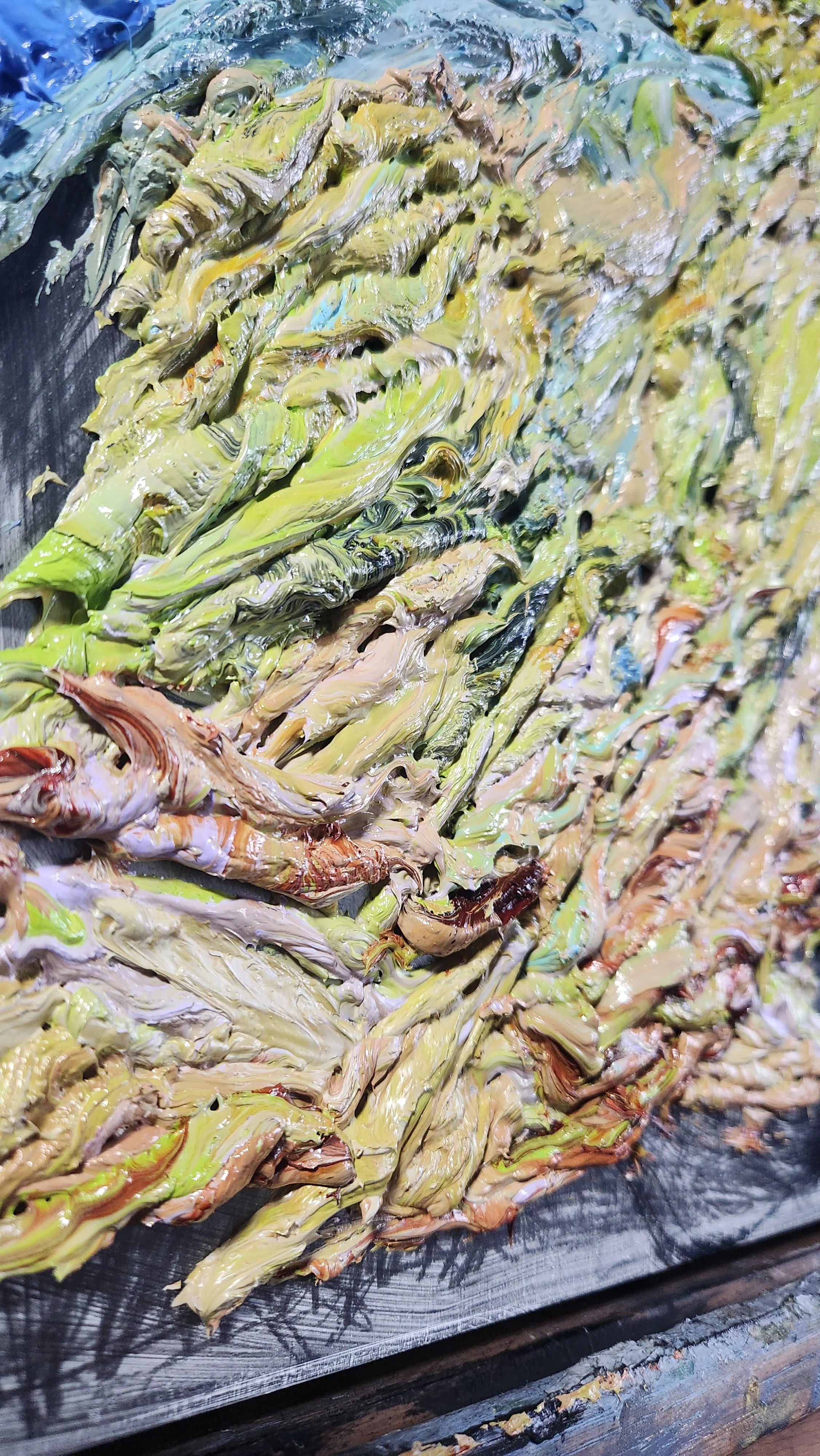
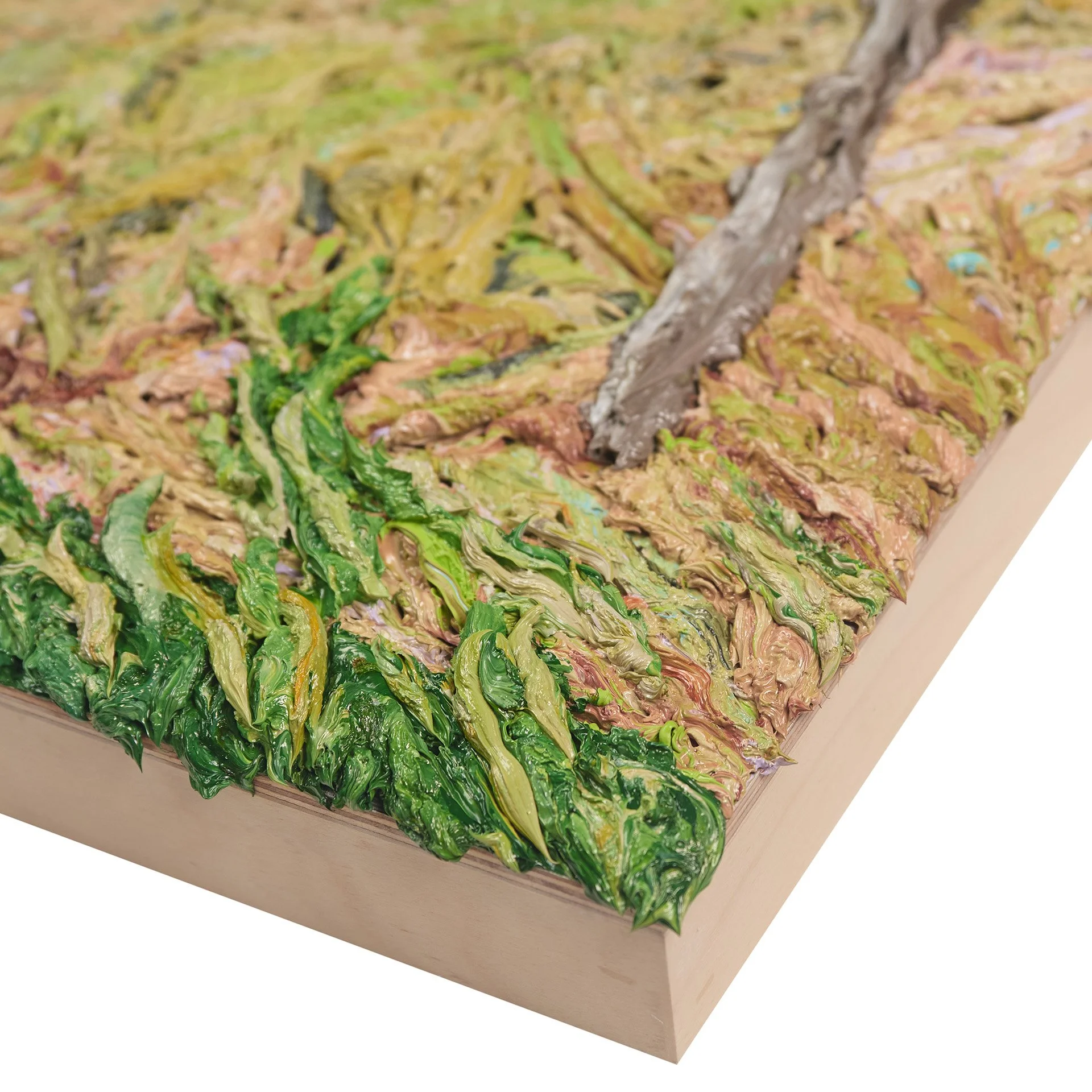
Note: Something that’s very important to me is that, as an artist, I’ve always found joy in understanding how a work is made. When I go to a museum or a gallery, beyond how the work makes me feel, I’m also looking at the object itself: getting up close, looking from different angles, noticing the side of the frame, and seeing what support it’s on.
Pro tip: if you see someone studying a painting like an object, they were likely trained as an artist.
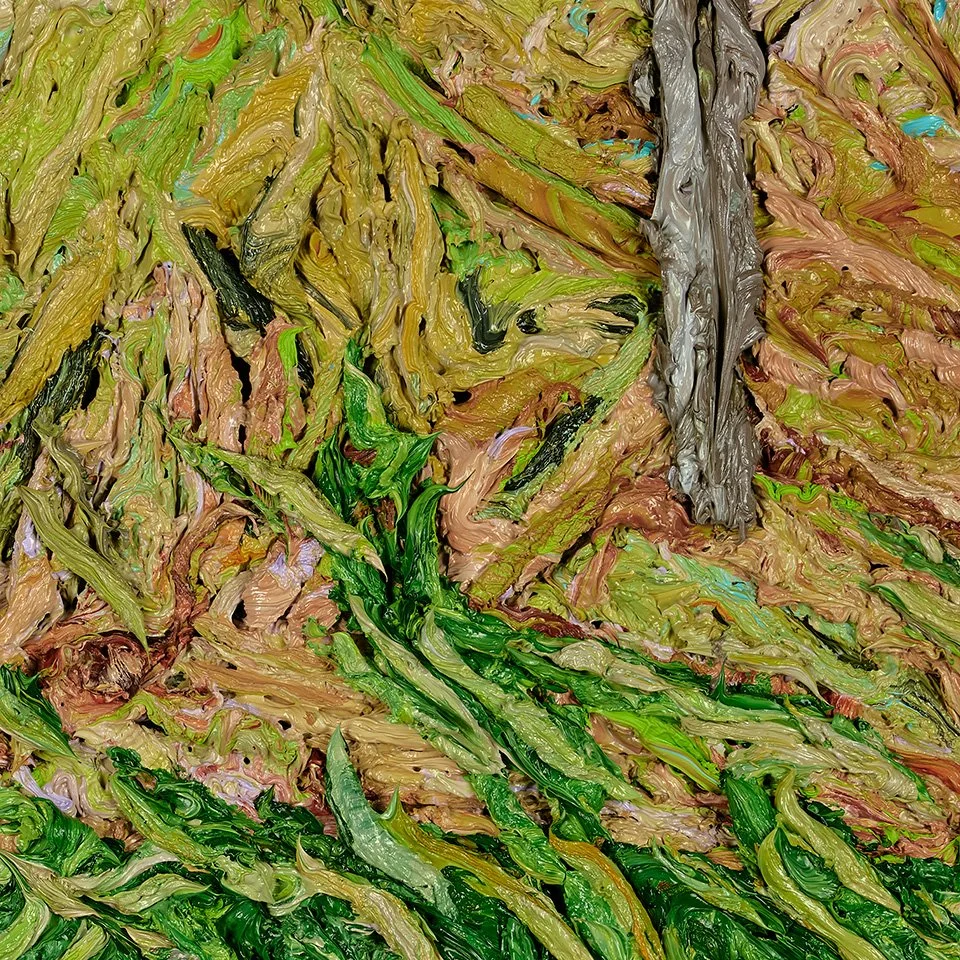
Historically, I think impasto painting has rewarded that kind of close looking. But I also felt there was something missing, something that could be more exciting in the act of getting close. With these works, I’m trying to reward the viewer for approaching closely by building temporary supports that are incredibly detailed, with small moments that might otherwise be discarded or absorbed later as I sculpt the form into something bigger. It still surprises me how much those early marks show through. If you look at the small images I take, you’ll notice little dots of red, pink, or blue maintained from the surface integrity. Uncovering those details and letting yourself explore them is an exciting benefit of looking at my work.
May 4, 2025: Starting With Surprise
On May 4th, I started with a chaotic, surprising initial panel—something that didn’t feel safe.
And then I built outward from it—stealing and building, letting the surprising thing become the foundation rather than the accent.
There’s a moment in every painting where you can either protect what you’ve made, or you can threaten it.
This was a day for threatening it.
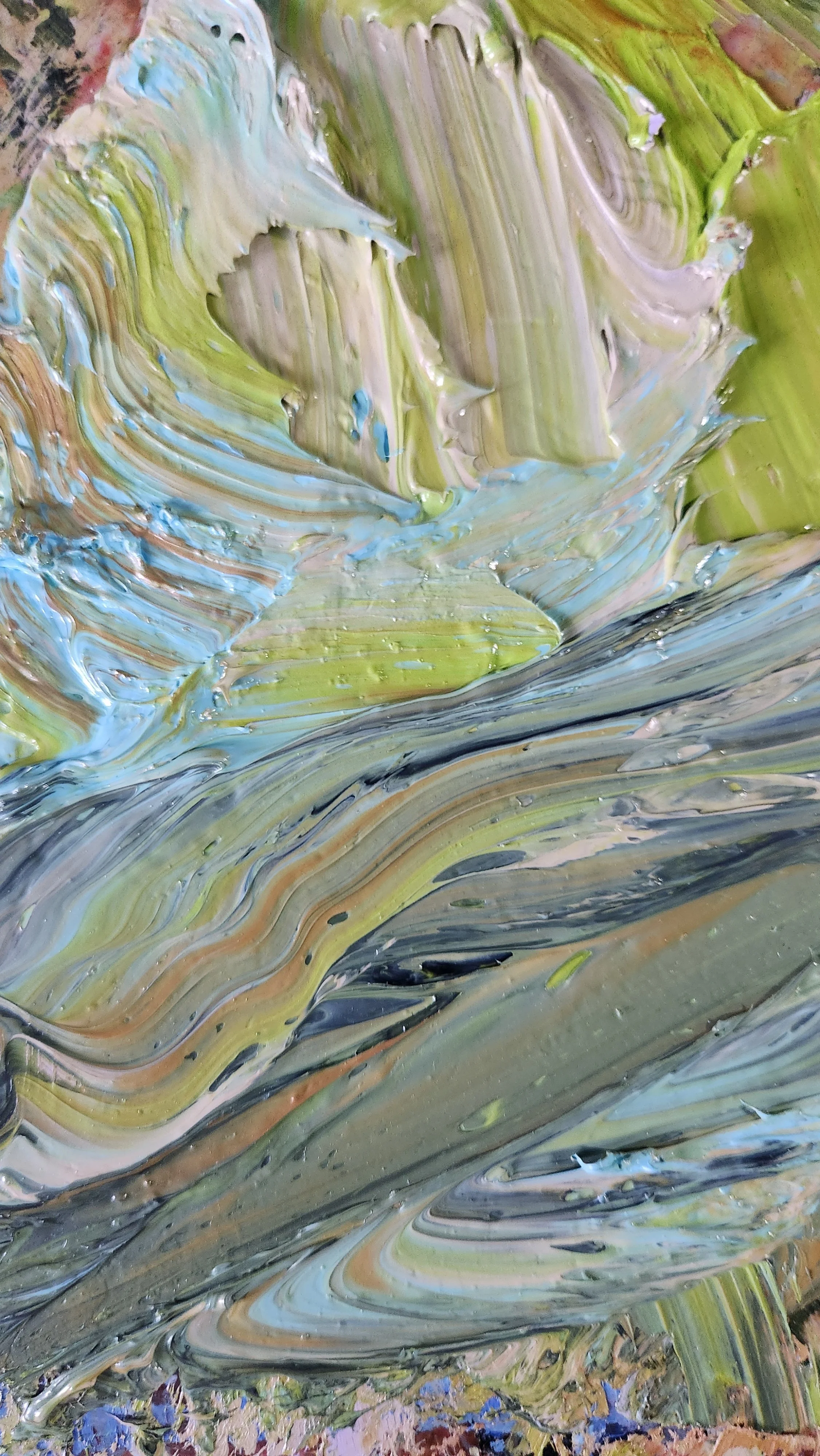
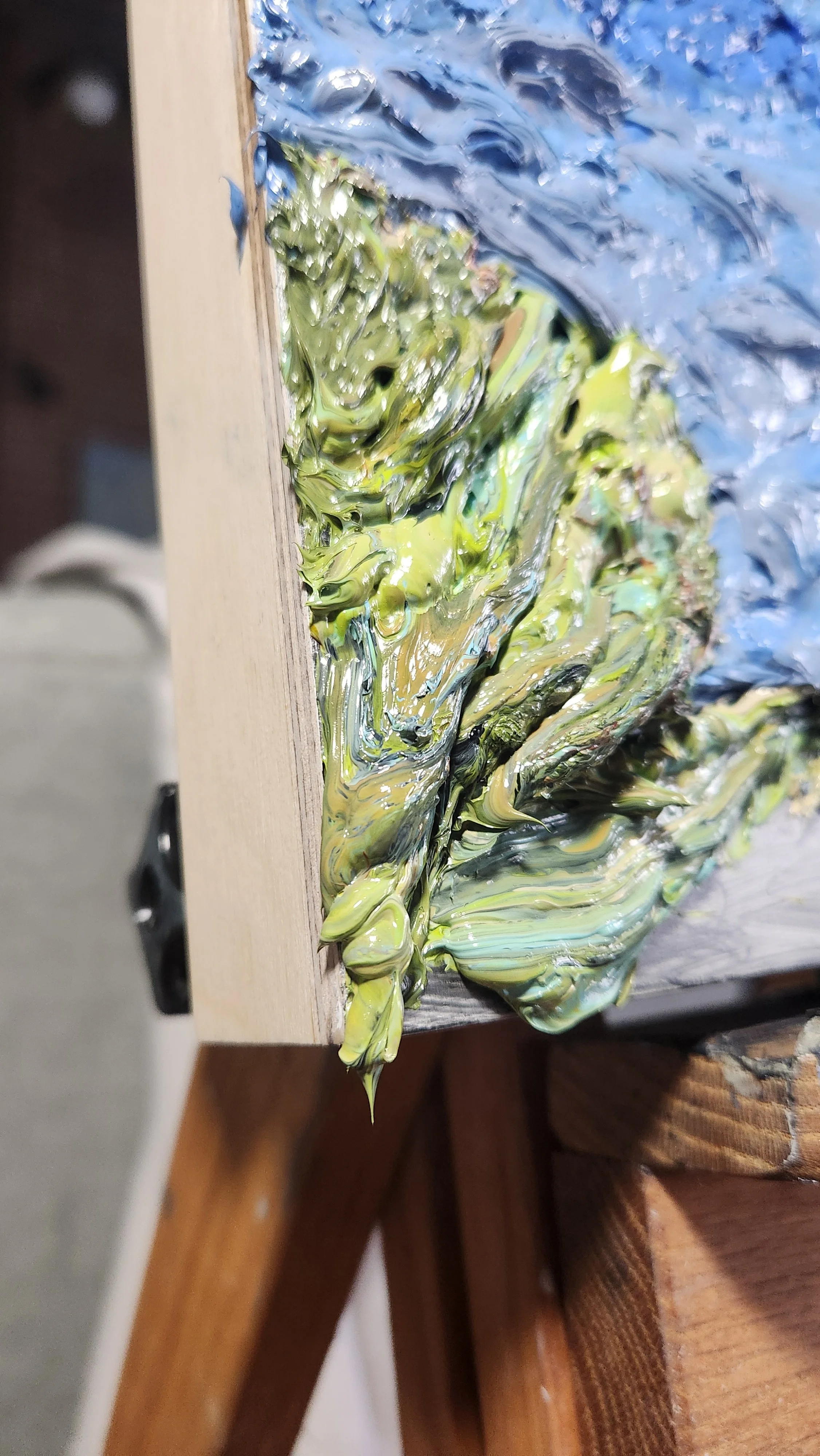
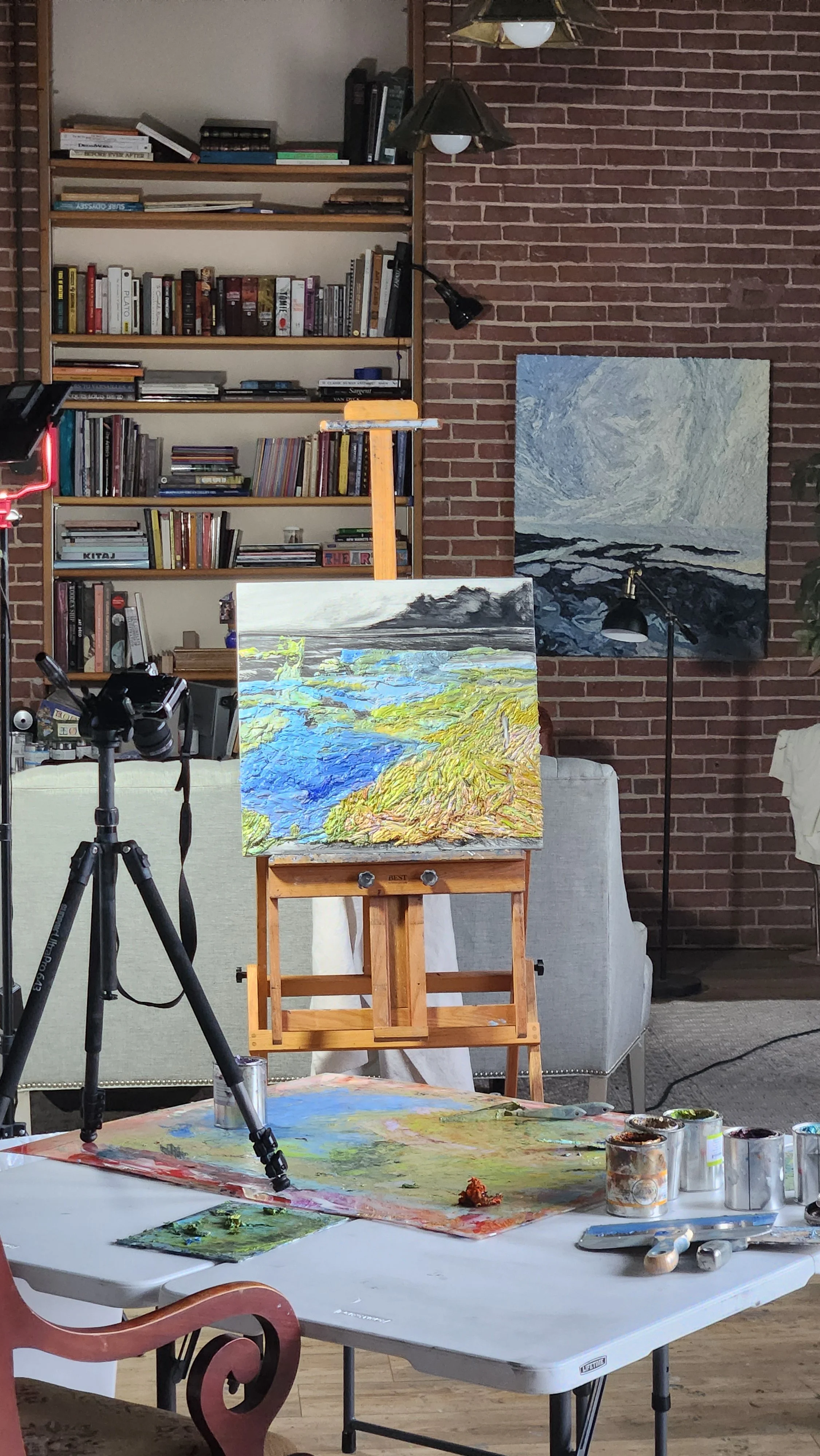
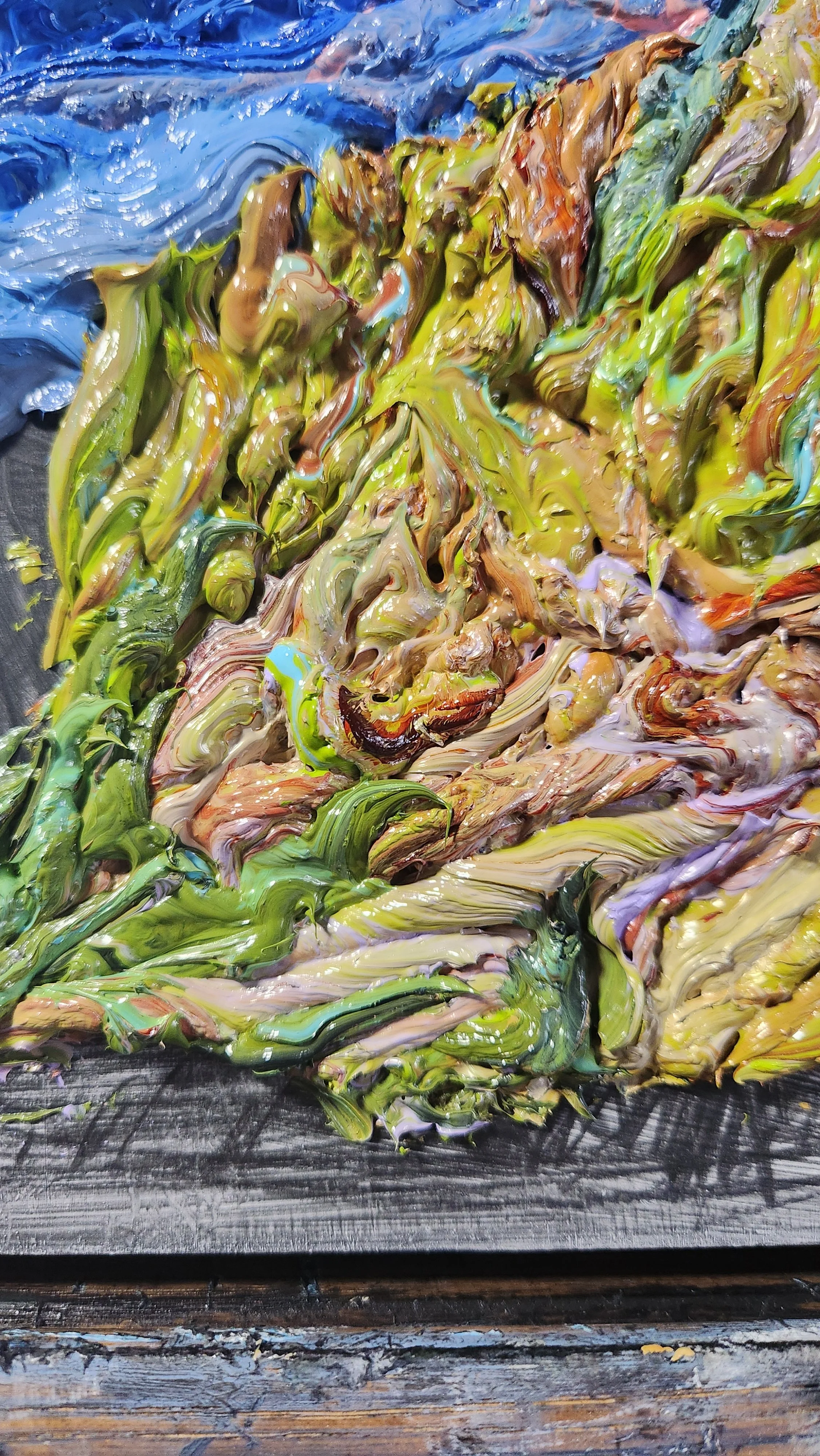
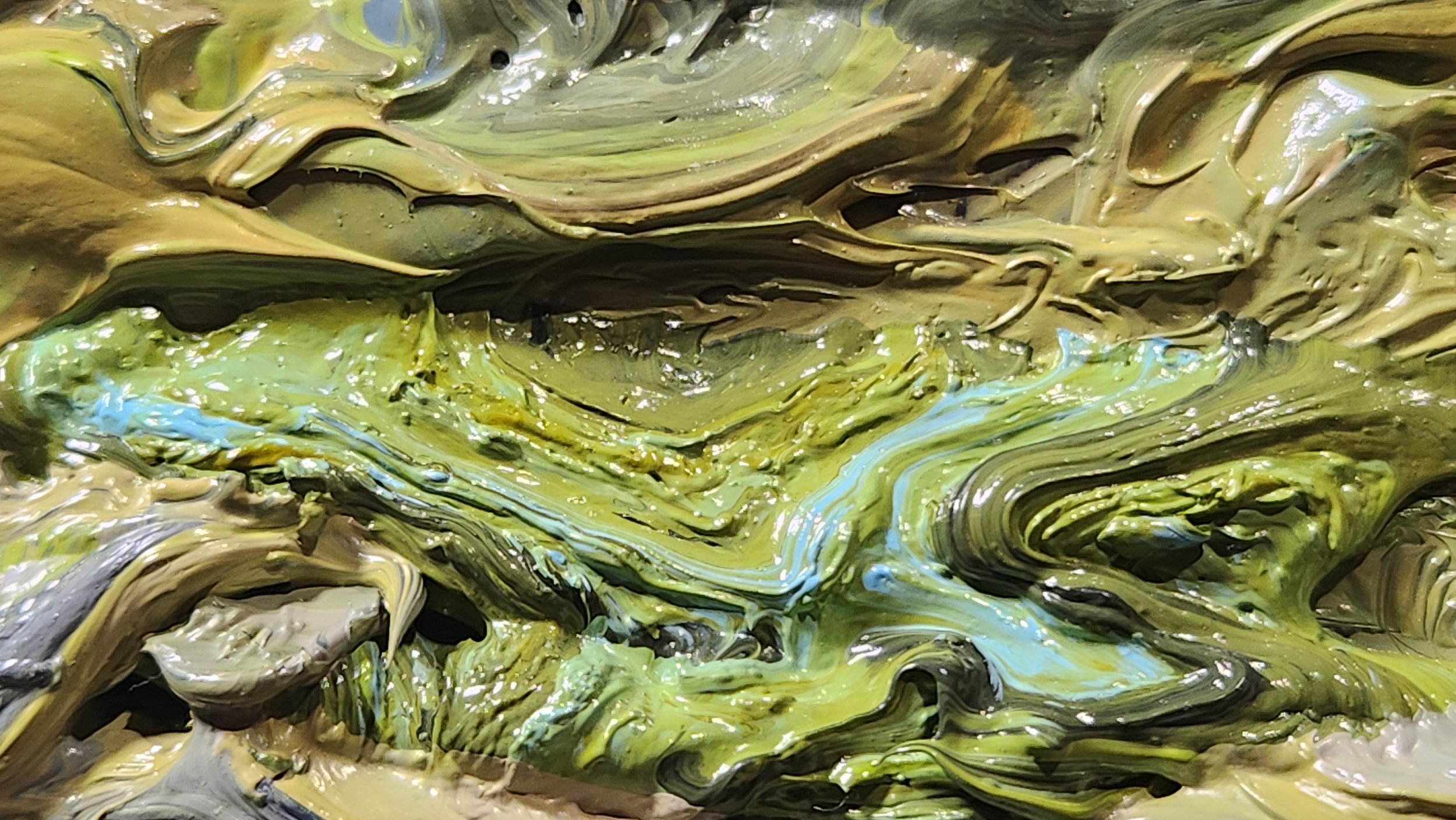
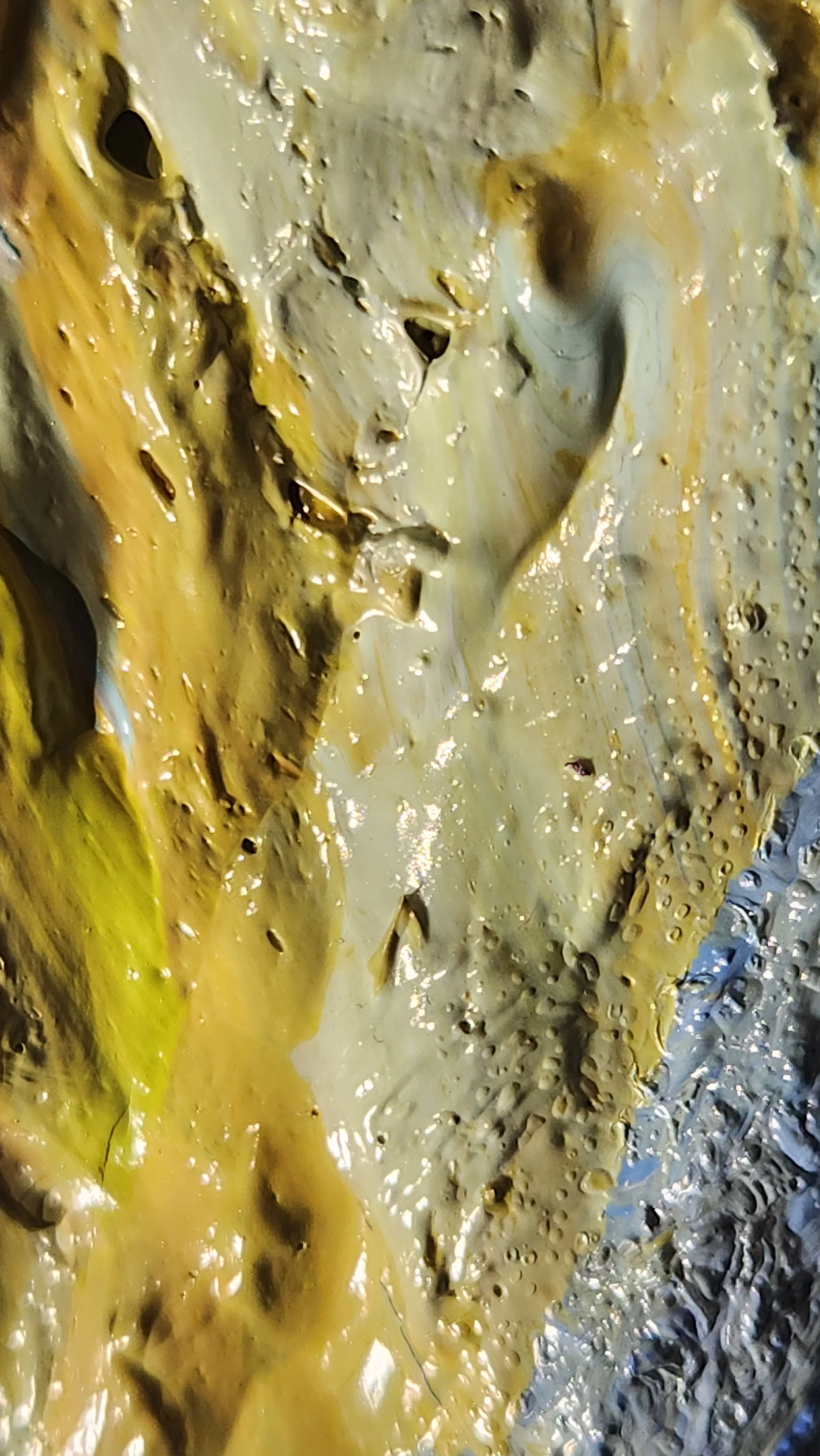
May 16, 2025: Near Completion (Weaving Paint)
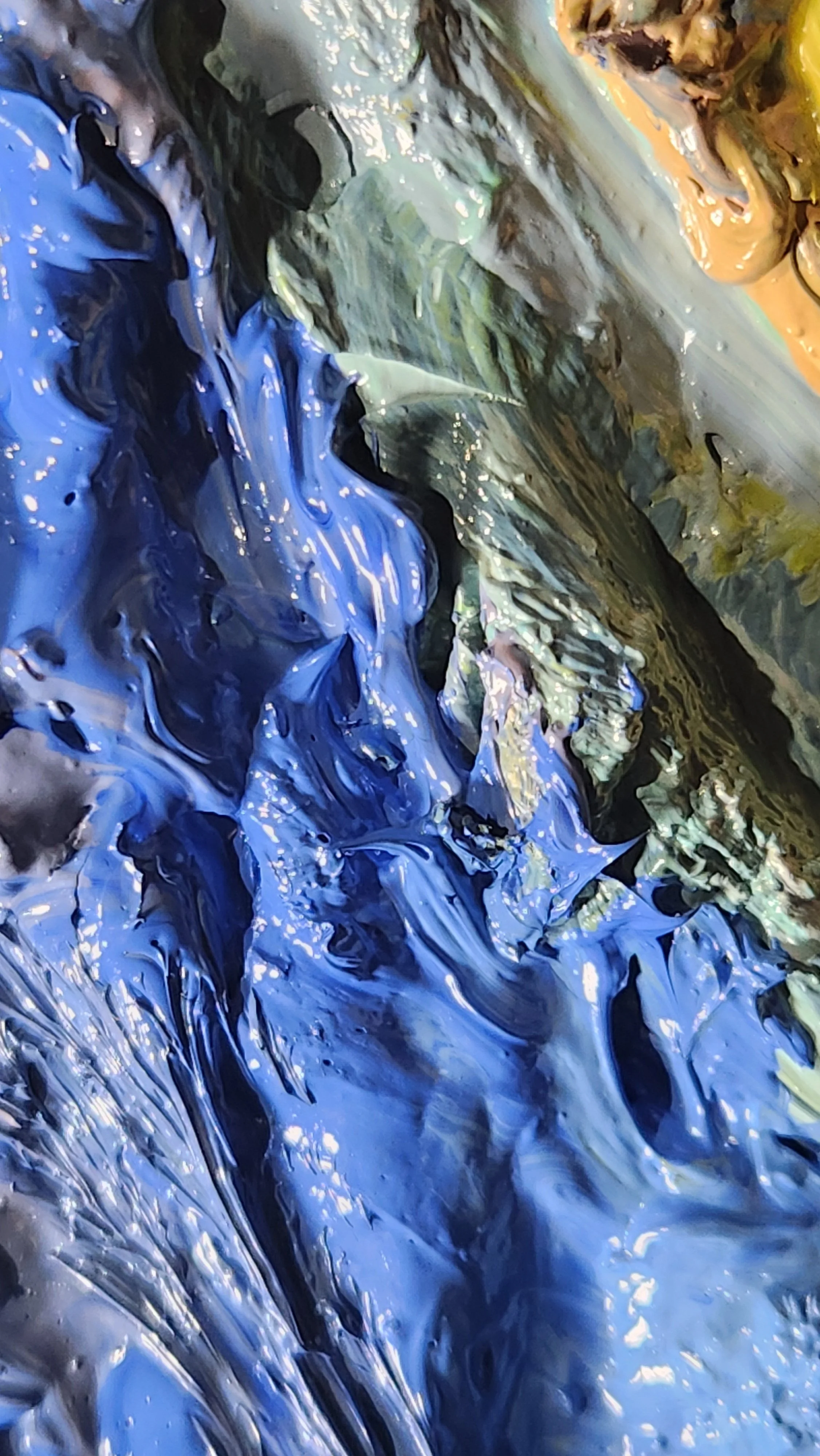
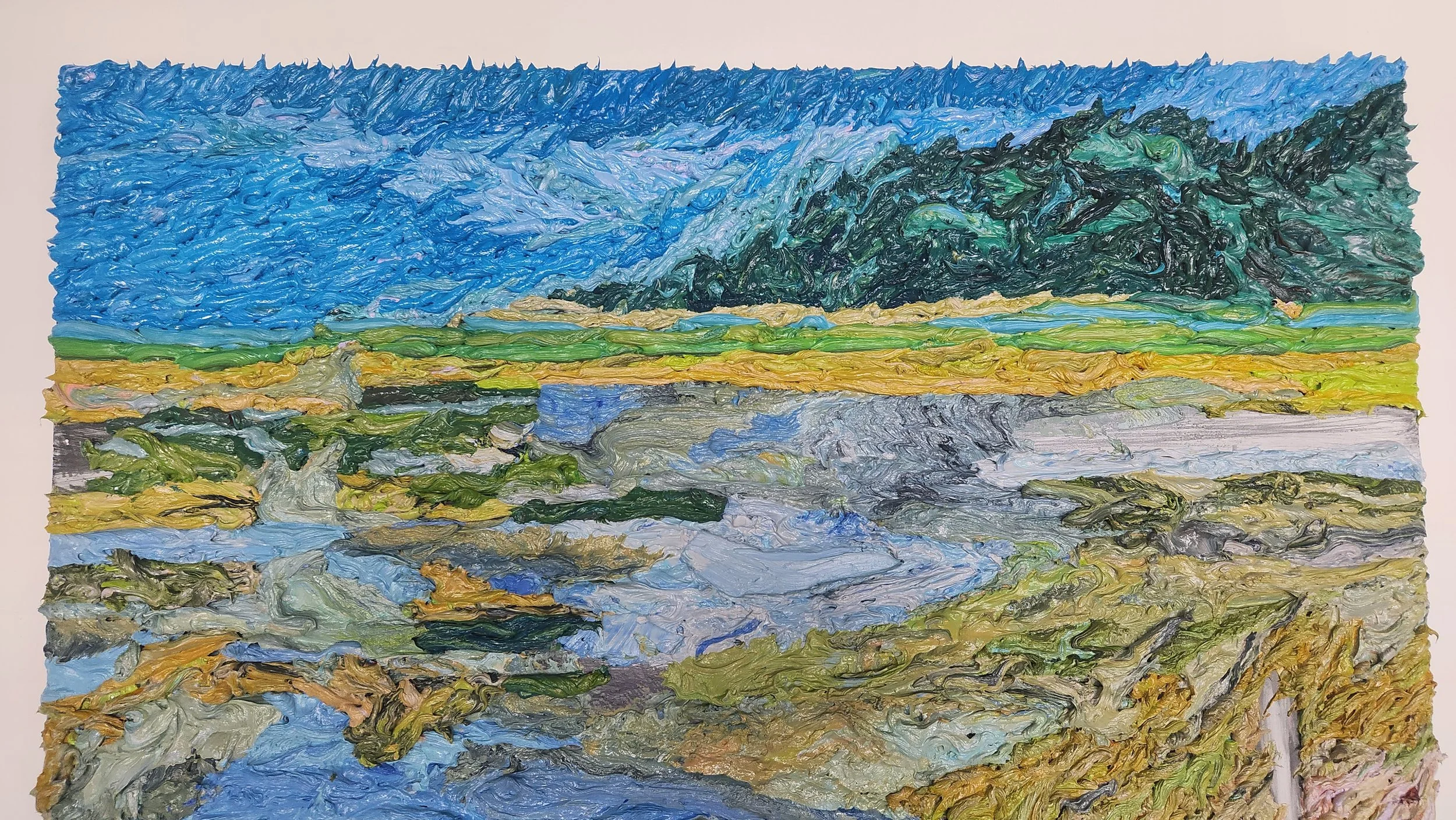
By May 16th, the painting was nearly finished. There were still open holes—places that hadn’t decided what they were yet—but the large problems were solved.
This stage is about overlap. Cutting through. Identifying. Weaving in colors that weren’t there before—colors that change the meaning of everything around them.
It’s less about adding.
More about insisting.
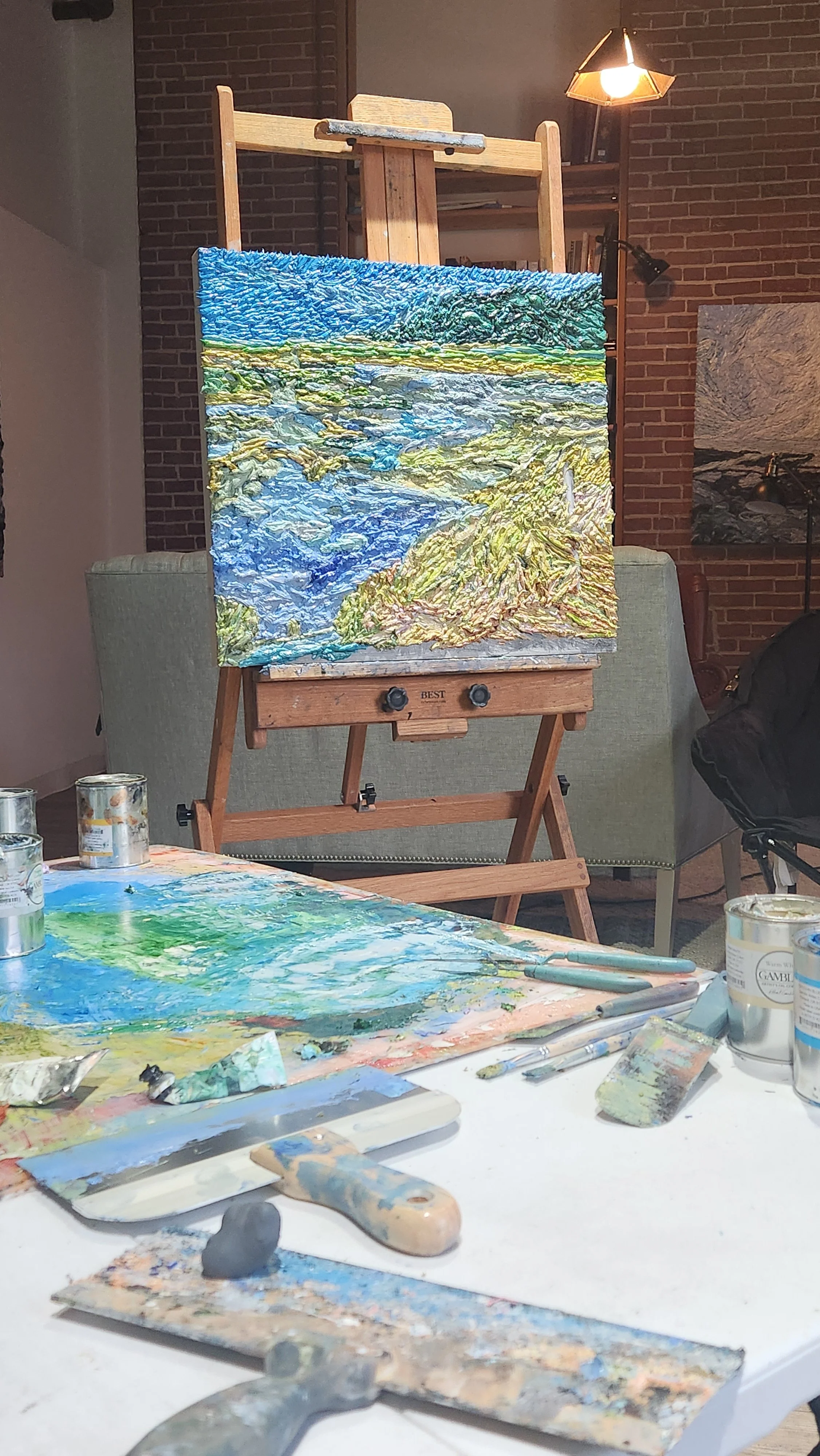
When I say a new color can change the meaning of everything around it, I don’t mean it only as a poetic idea. A color is only itself in relationship to what it sits next to. At this stage, I’m not thinking in a flat, two-dimensional way where a paint mixture simply “locks in” next to another so the cools recede and the warms come forward.
I’m adding a three-dimensional element: light. Shadows from forms create new relationships and new colors, and I’m trying not to be surprised by them. The architecture of the painting is already set—how the whole thing flows—so now it’s about building it out so the full cast supports the leads.
Another way to say it: I’ve done the exhaustive work of choosing the top performers in the ballet. Now I add the ensemble, the scenery, and the orchestra so everything complements the main pillars.
June 15, 2025: Finishing
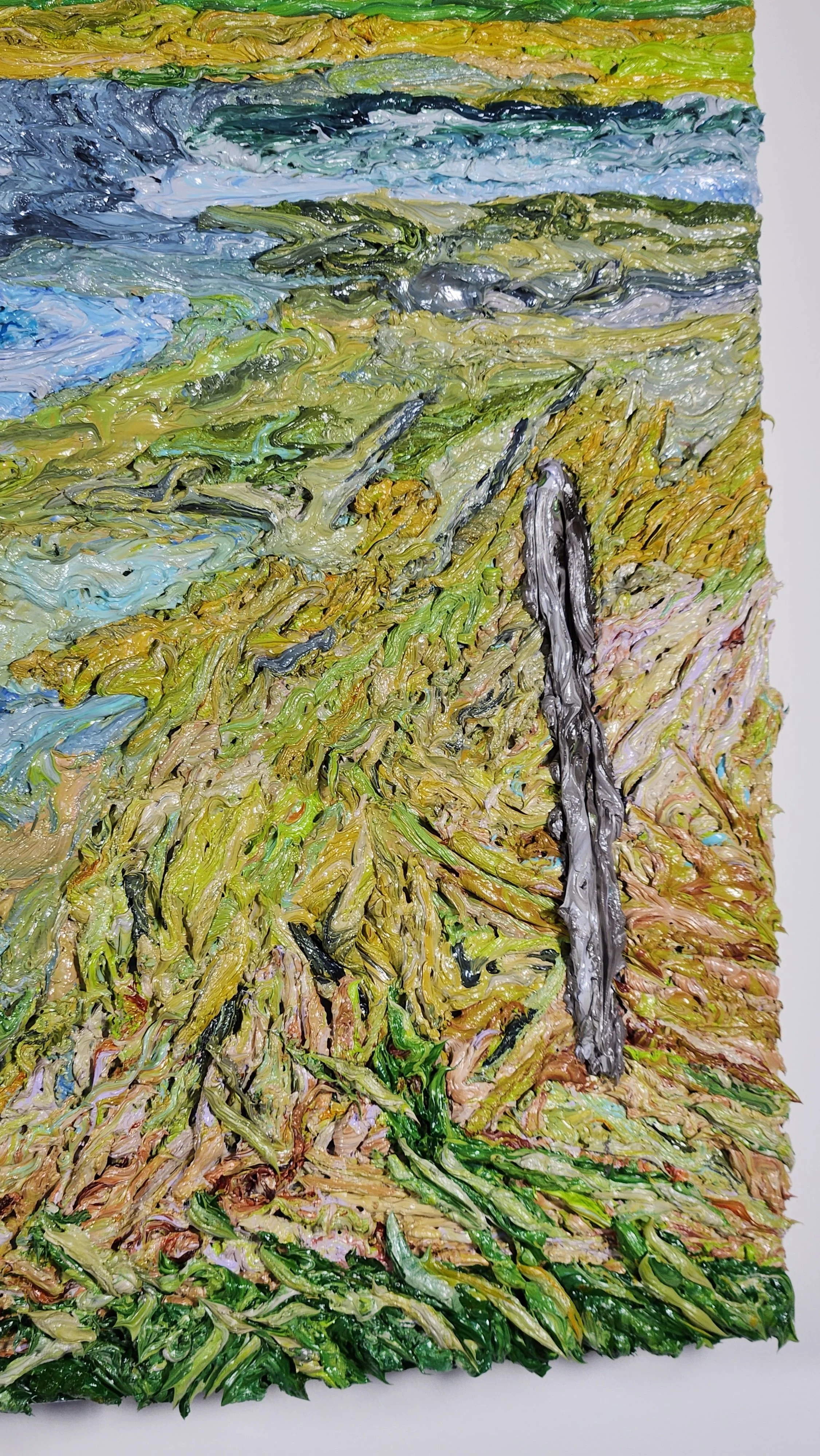
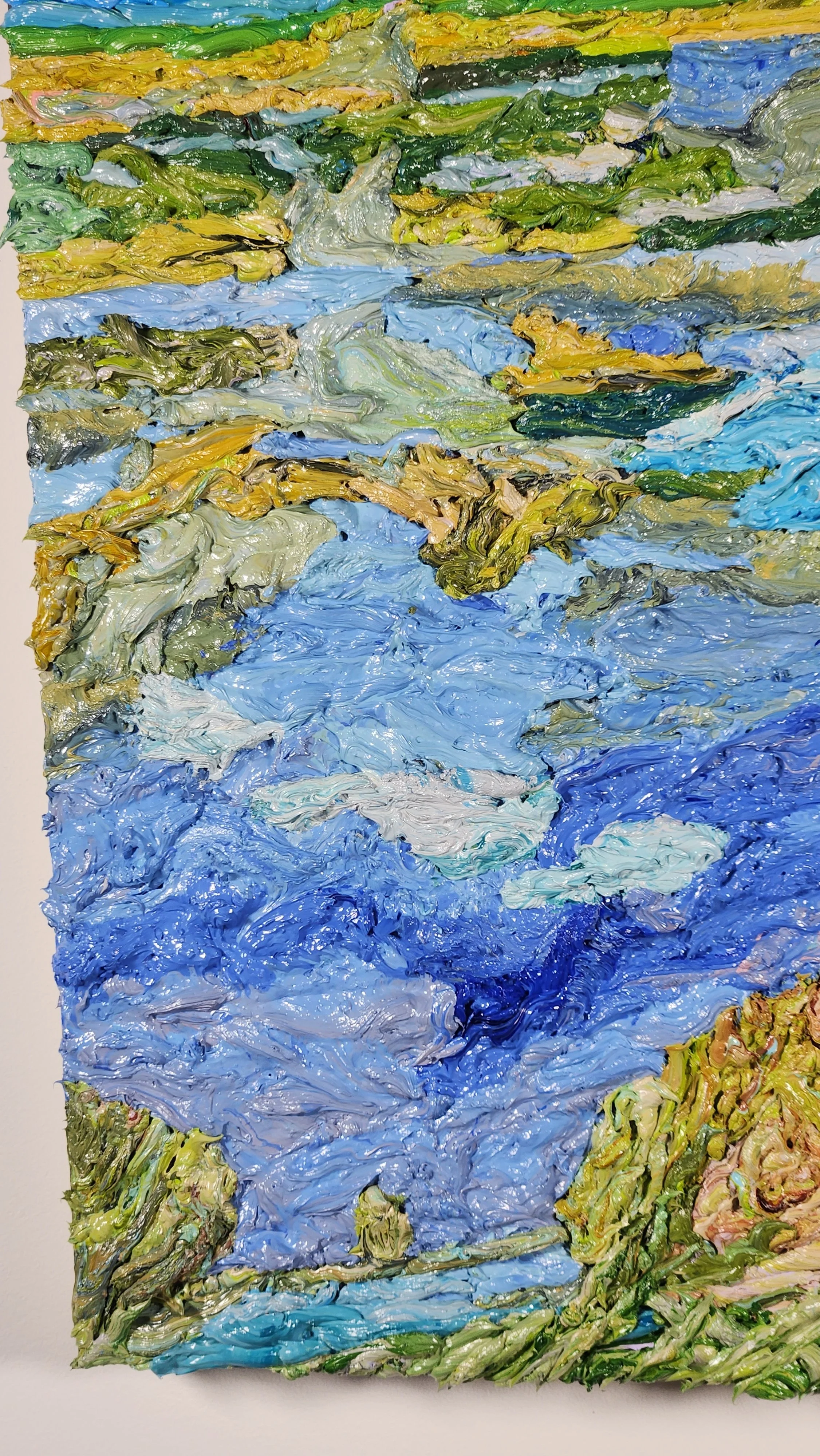
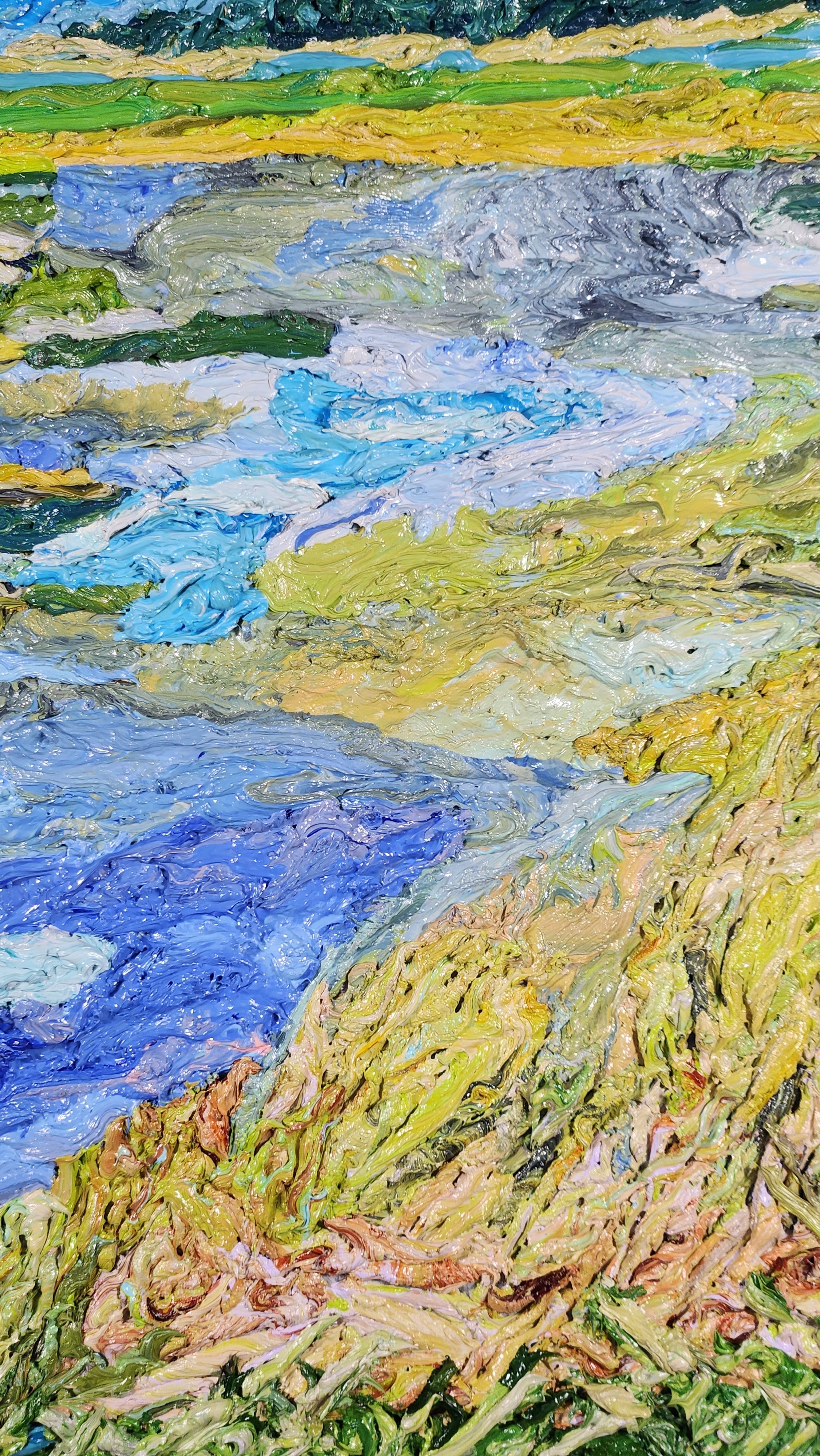
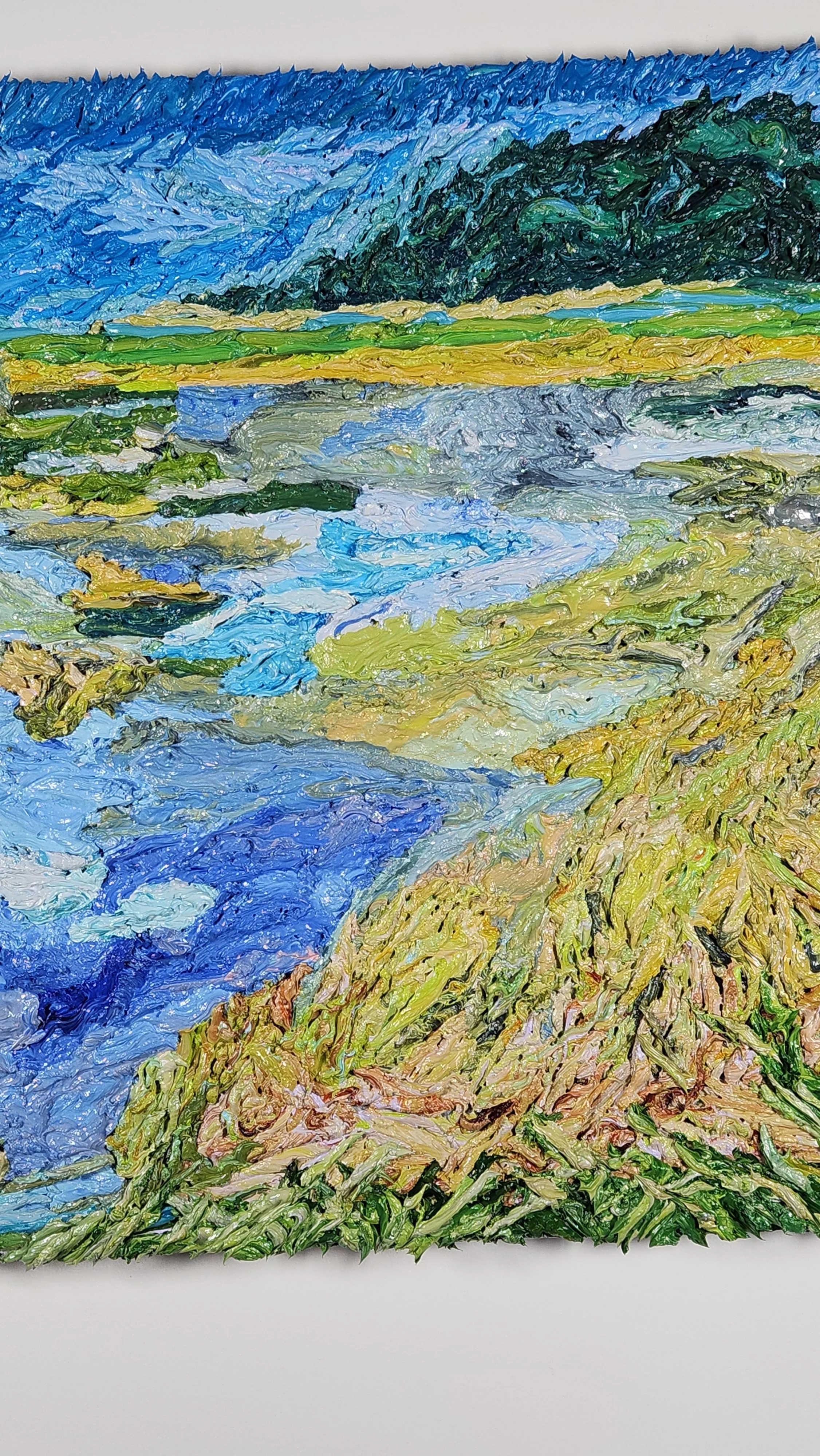
June 15th: the painting was finished.
That doesn’t mean every question was answered. It means the painting reached a point where it could stand on its own without me explaining it. Where the decisions held each other in place.
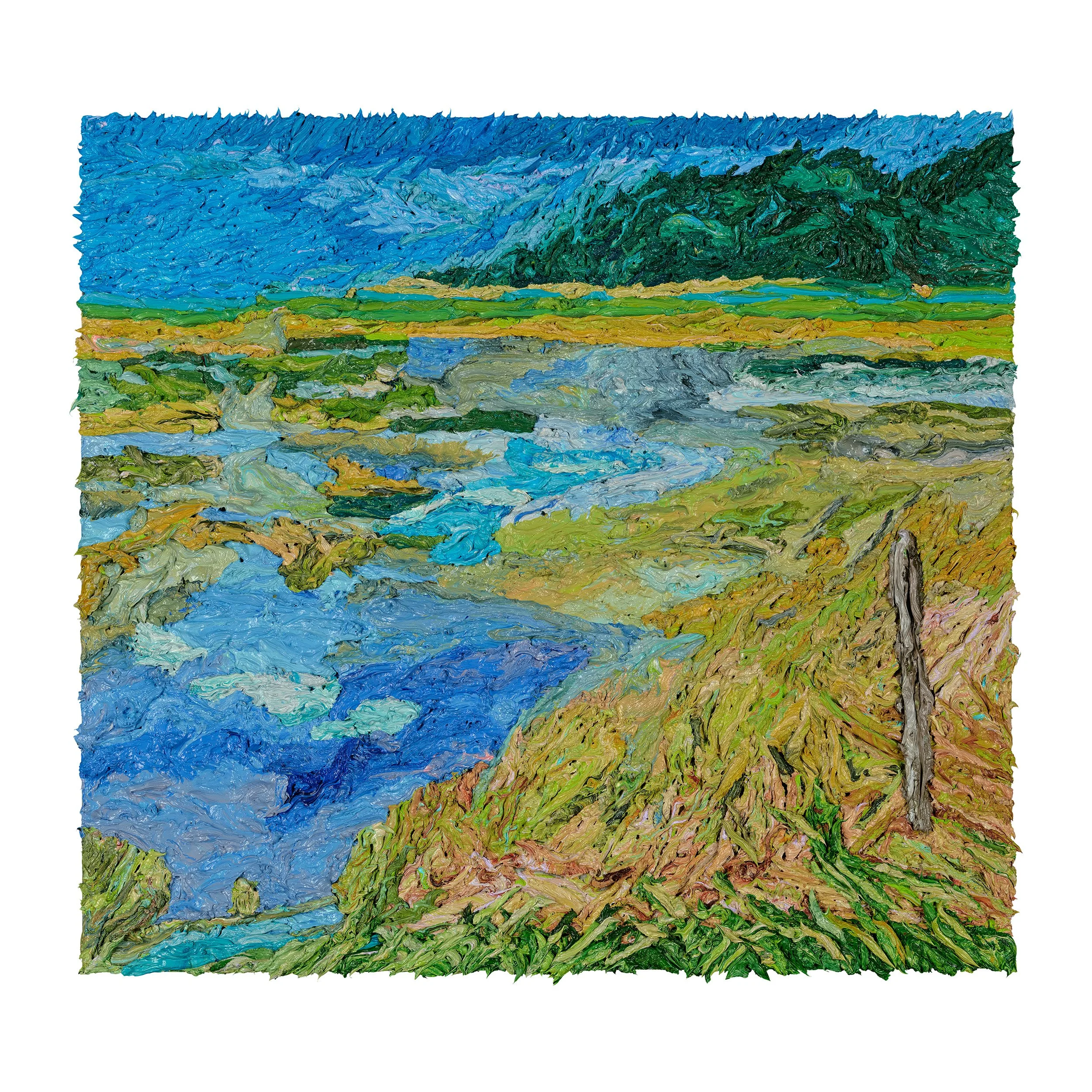
In Abundance
22in x 24in
Oil Paint on Panel
March 2026
In Abundance is brighter than what I typically do—more vibrant, more colorful, more openly energized. It sits a little outside my usual center of gravity.
But I’m excited by that.
Because it feels honest to what I was trying to do: not simply paint a place, but paint the act of rebuilding the world—one decision at a time.
**Bonus**
I’m adding this little section at the bottom because I’m grateful to say that a print of In Abundance will be available in our October print drop. More details are coming soon.
But for March, to celebrate this release, we’re doing a print giveaway: I’m producing one original print and I’ll ship it to the winner!!
To enter:
If you’re already a newsletter subscriber, you’re basically in — just reply to this email, shoot me a message, or submit the form through the button below and I’ll make sure you’re entered.
If you’re new here, the only “requirement” is to join the newsletter using the button below — and you’ll be entered immediately.
