NARRATIVE
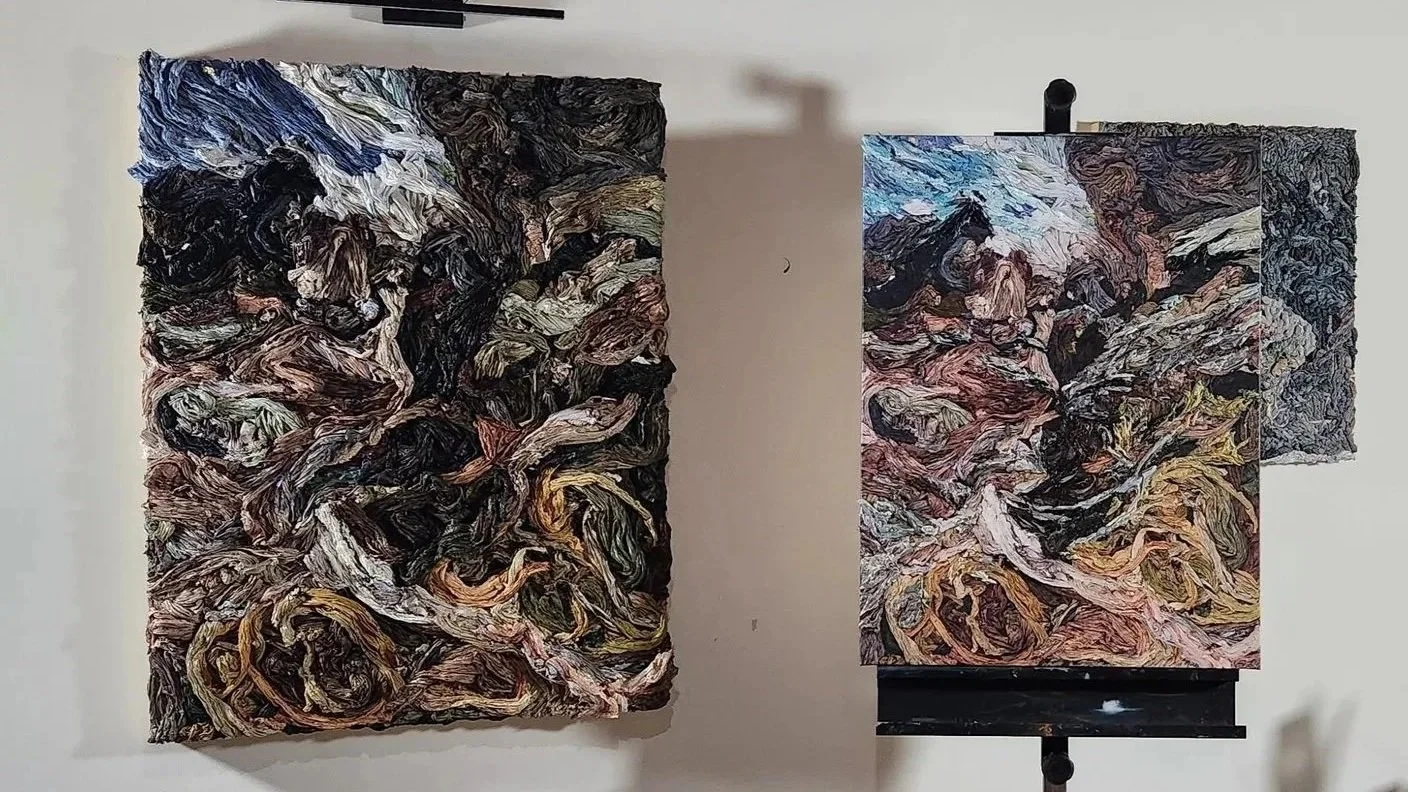
Endless Outcomes / The Painted Edition
In April of last year a family wrote to me.
They wanted an engagement gift for their son and his fiancée, a couple drawn to the great cliffs and the intense landscape of Acadia National Park in Maine, and to the stargazing there. The photograph from the engagement was taken high above the ocean. It happened to be the same ground I had painted in Cliffside Symphony in 2021, which none of them knew when they found the work.
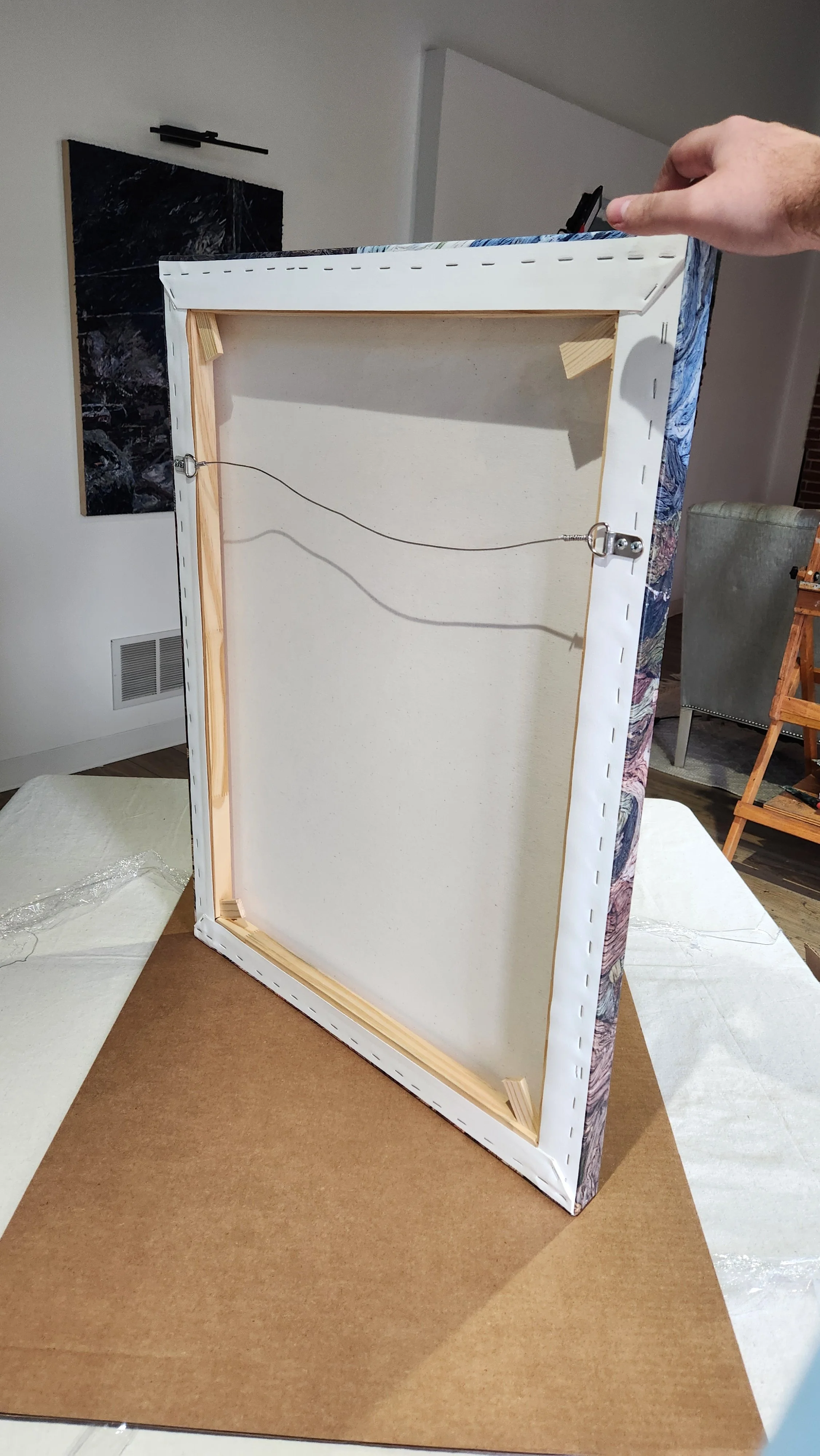
The original is sculpted oil paint on panel, heavy and hard to ship and hang. The couple was young and had not settled anywhere yet, so it was the wrong gift for the life they were in.
I needed a solution.
A painting that carried the soul of the original but was structurally appropriate.
First - what makes a Painting
I think of a painting, the process and the result together, as the artifact of a performance. You take everything you know about the world, empty it out onto the ground, and rebuild yourself from it. The painting is what is left on the table afterward.
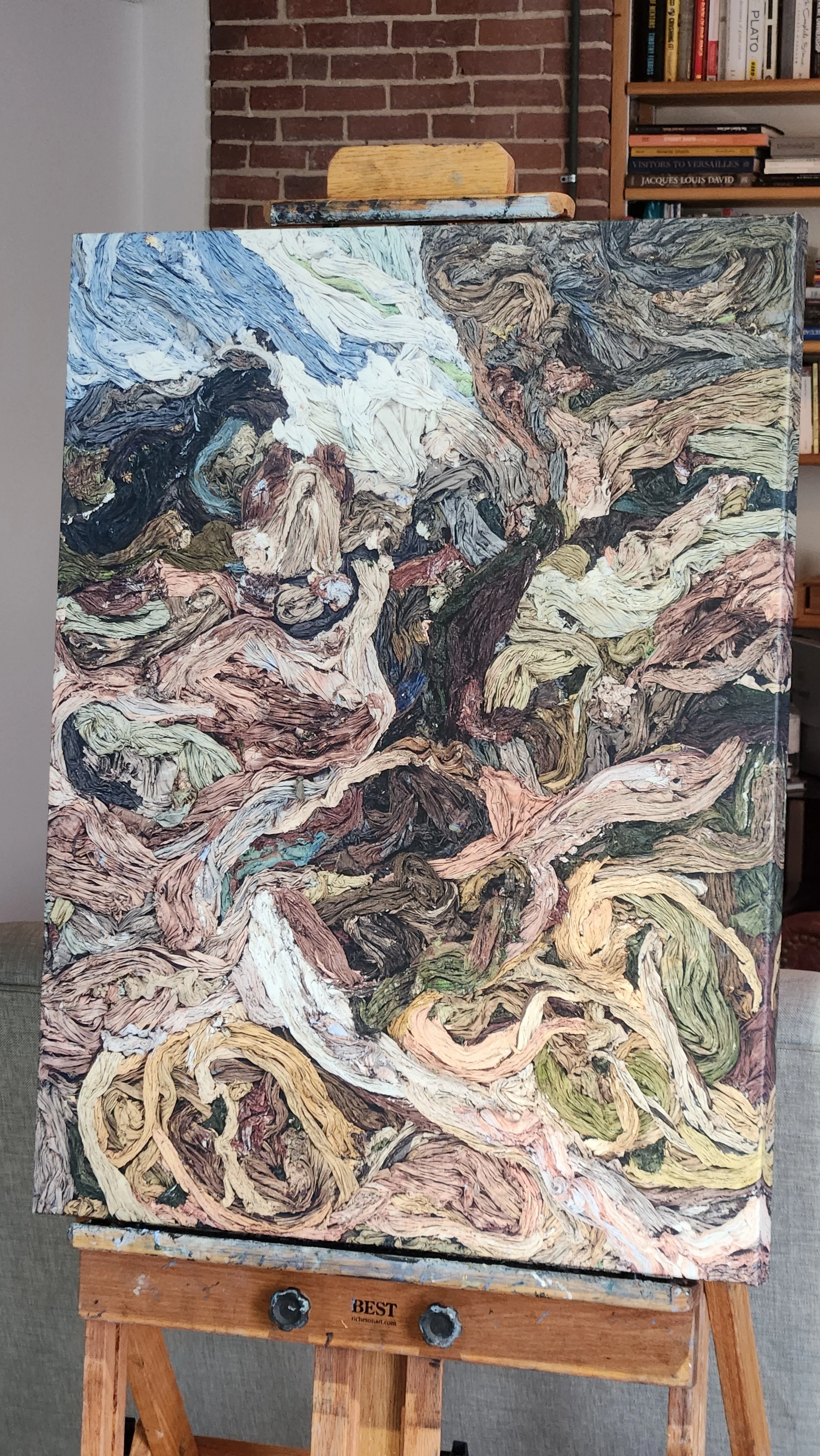
That performance does not happen once. I am a different painter than I was in 2021, and the same subject does not have to exist in only one form. The panel in the studio is one version and the canvas I painted for that couple is another. There is room for many more, each one made by hand and each one different, all of them the same painting.
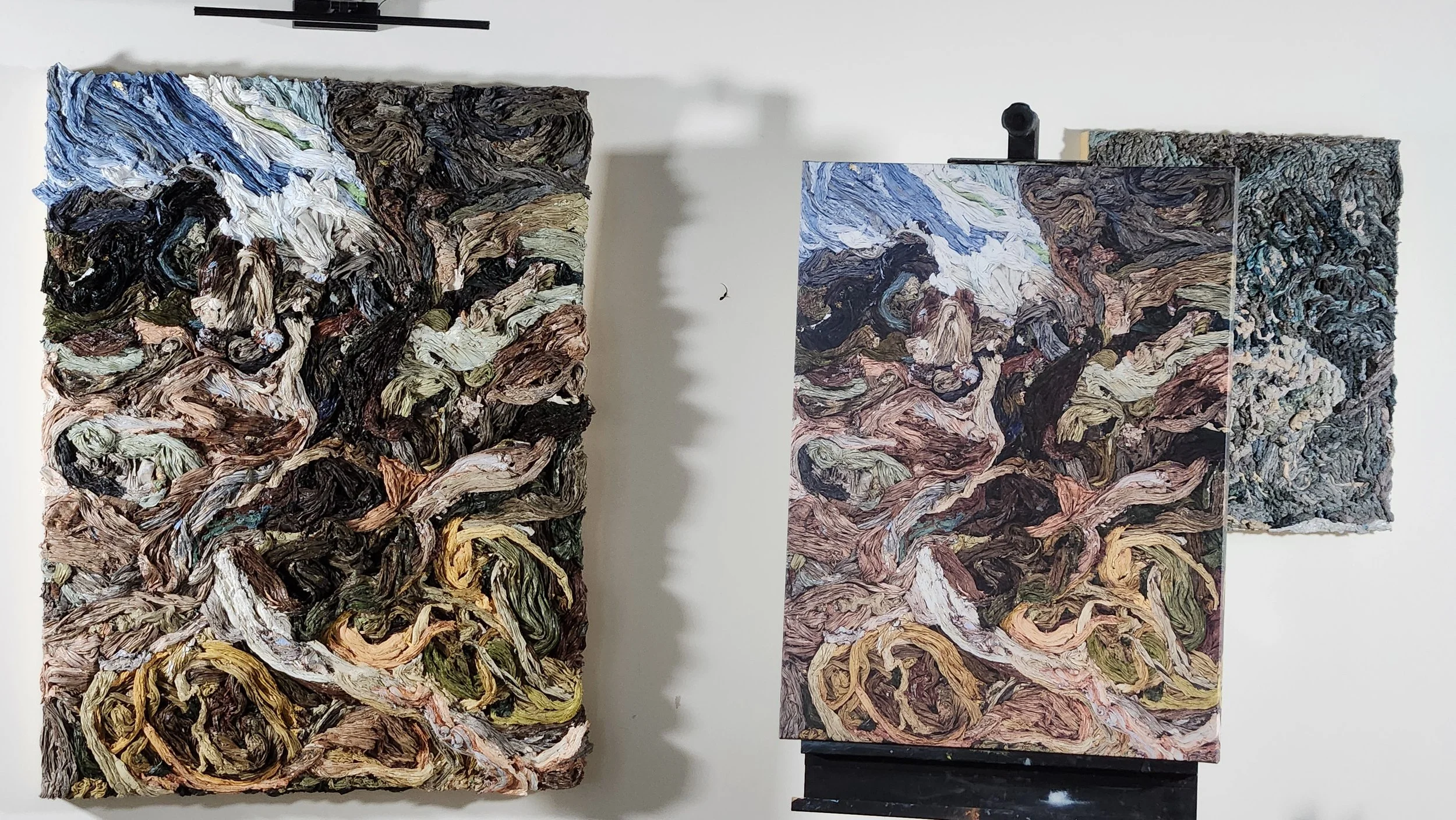
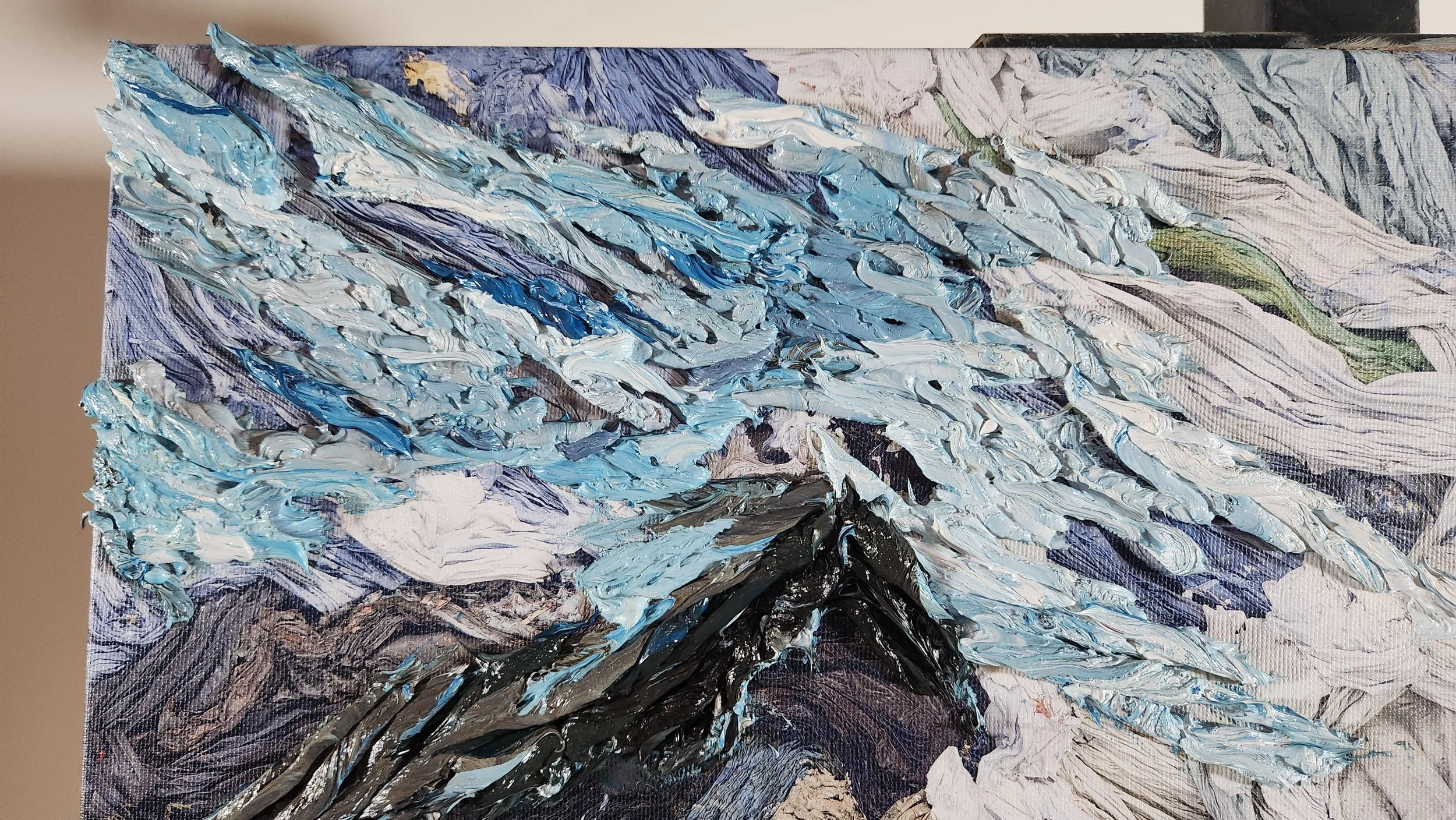
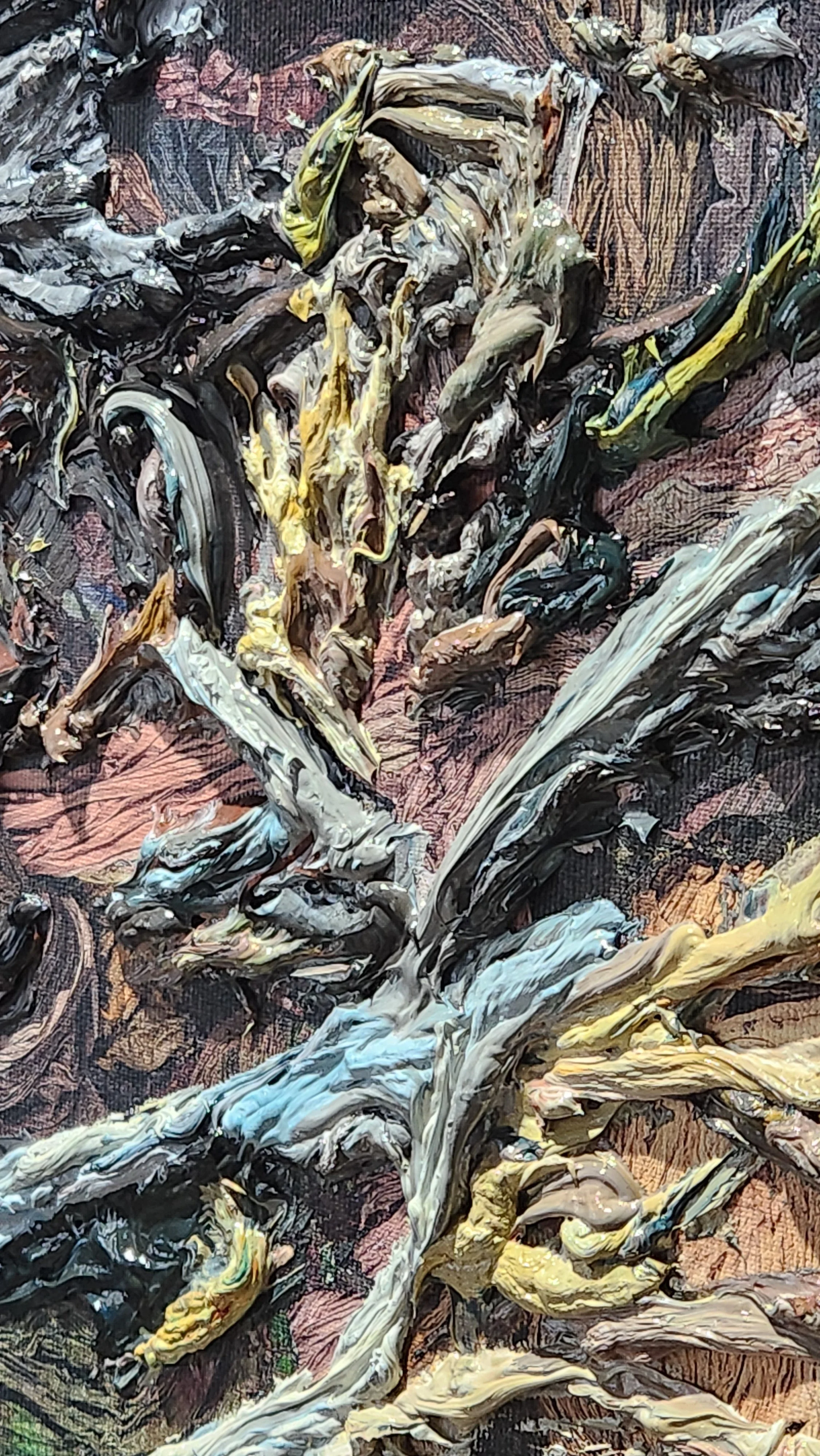
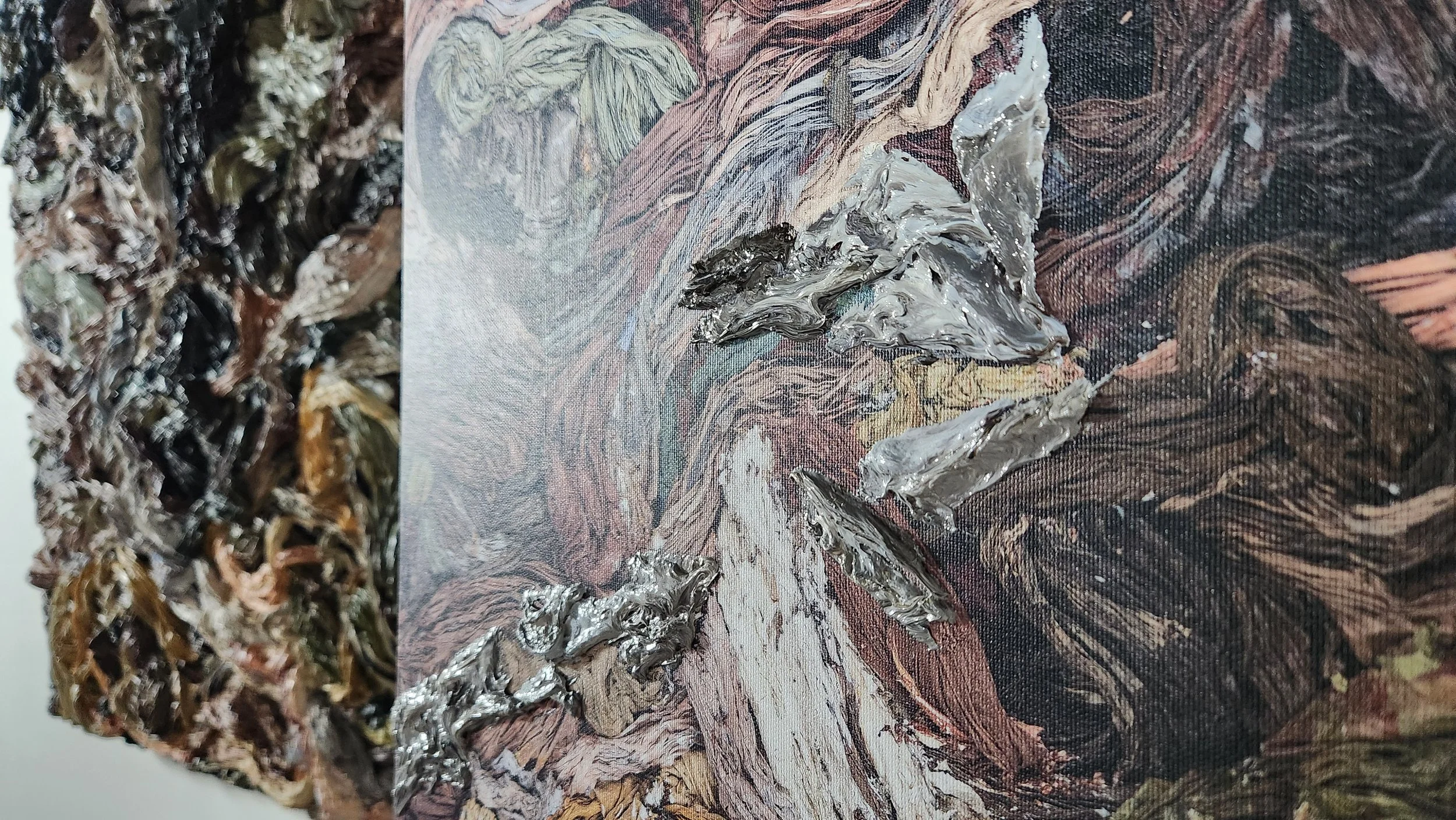
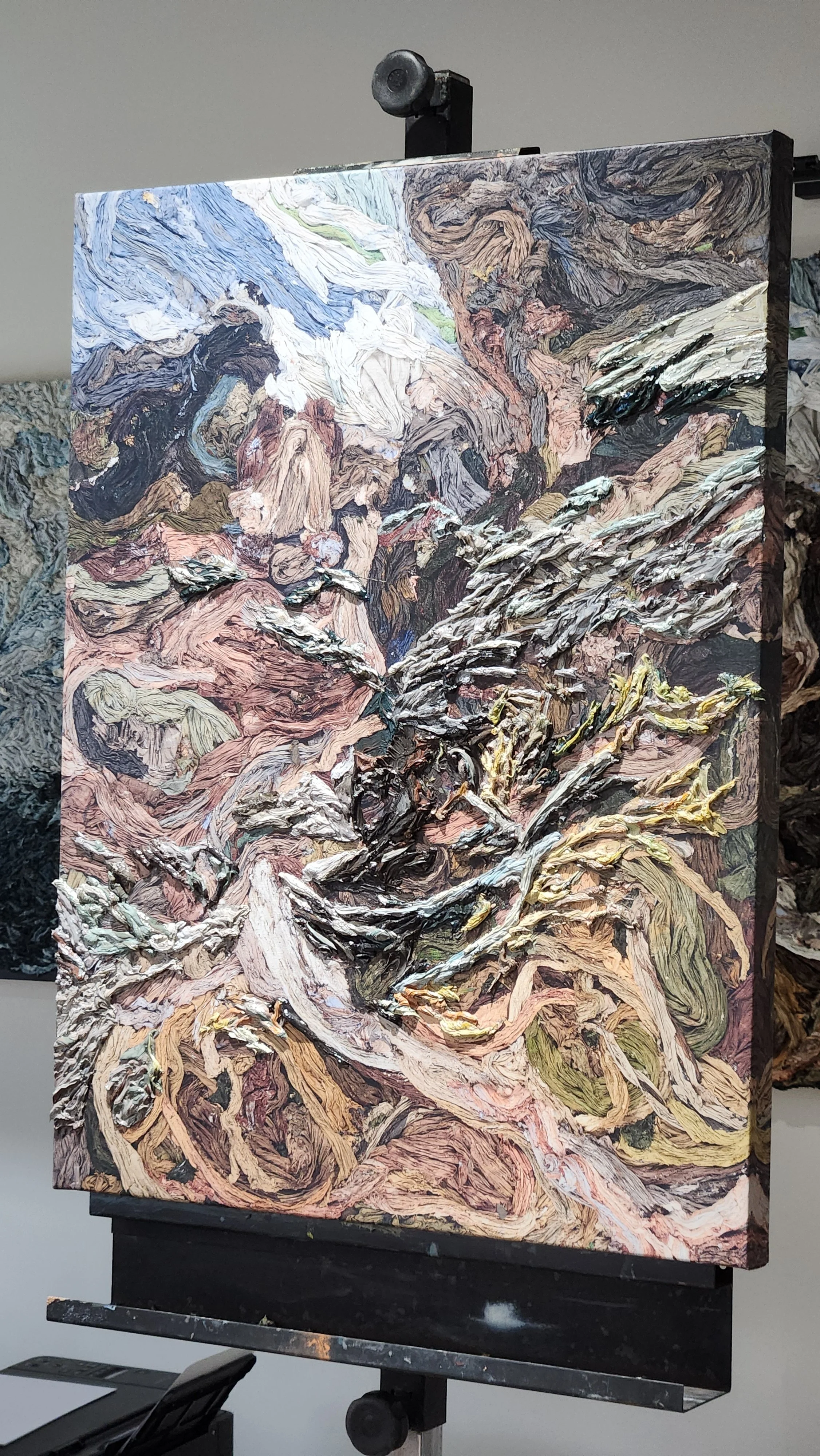
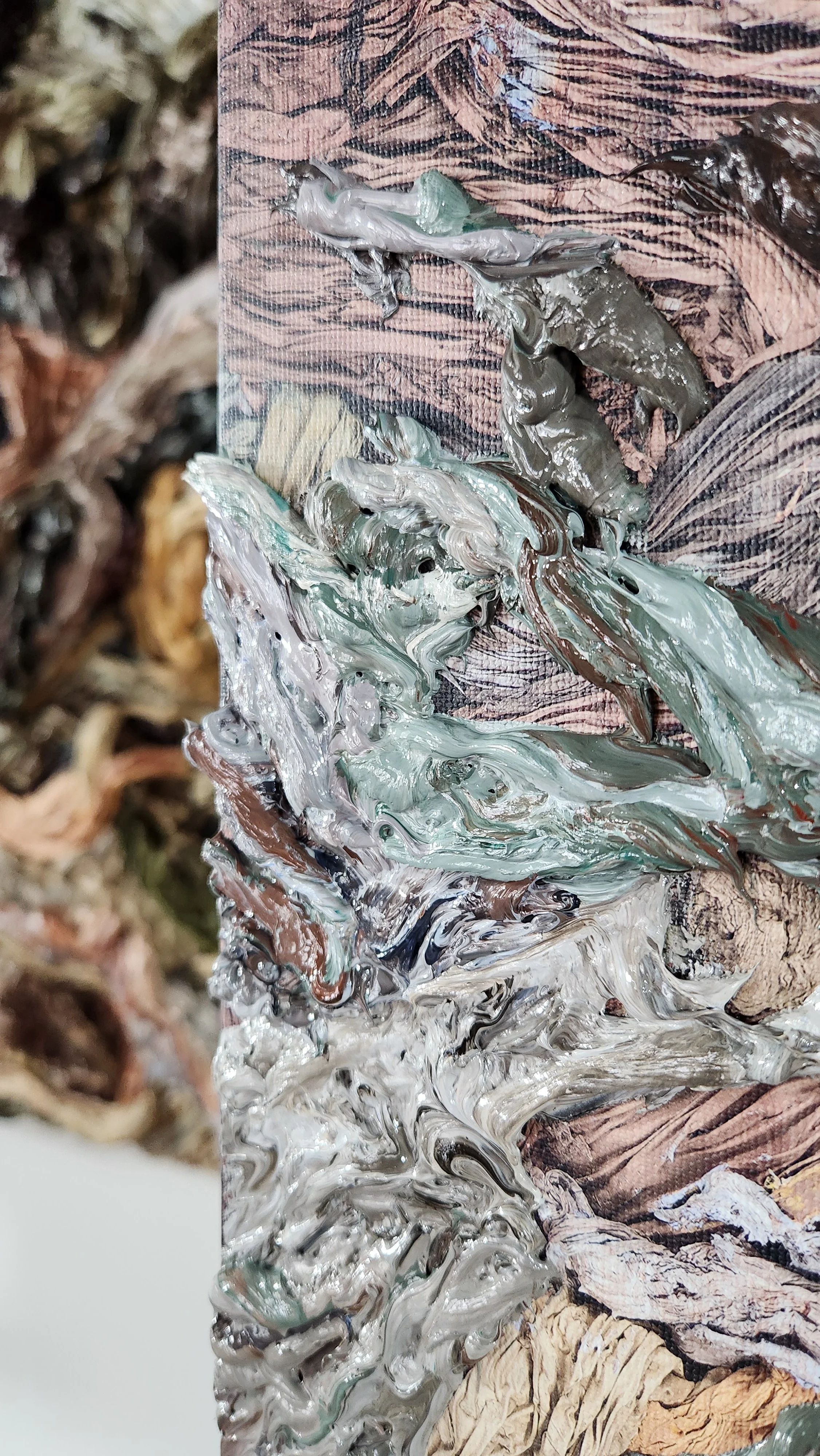
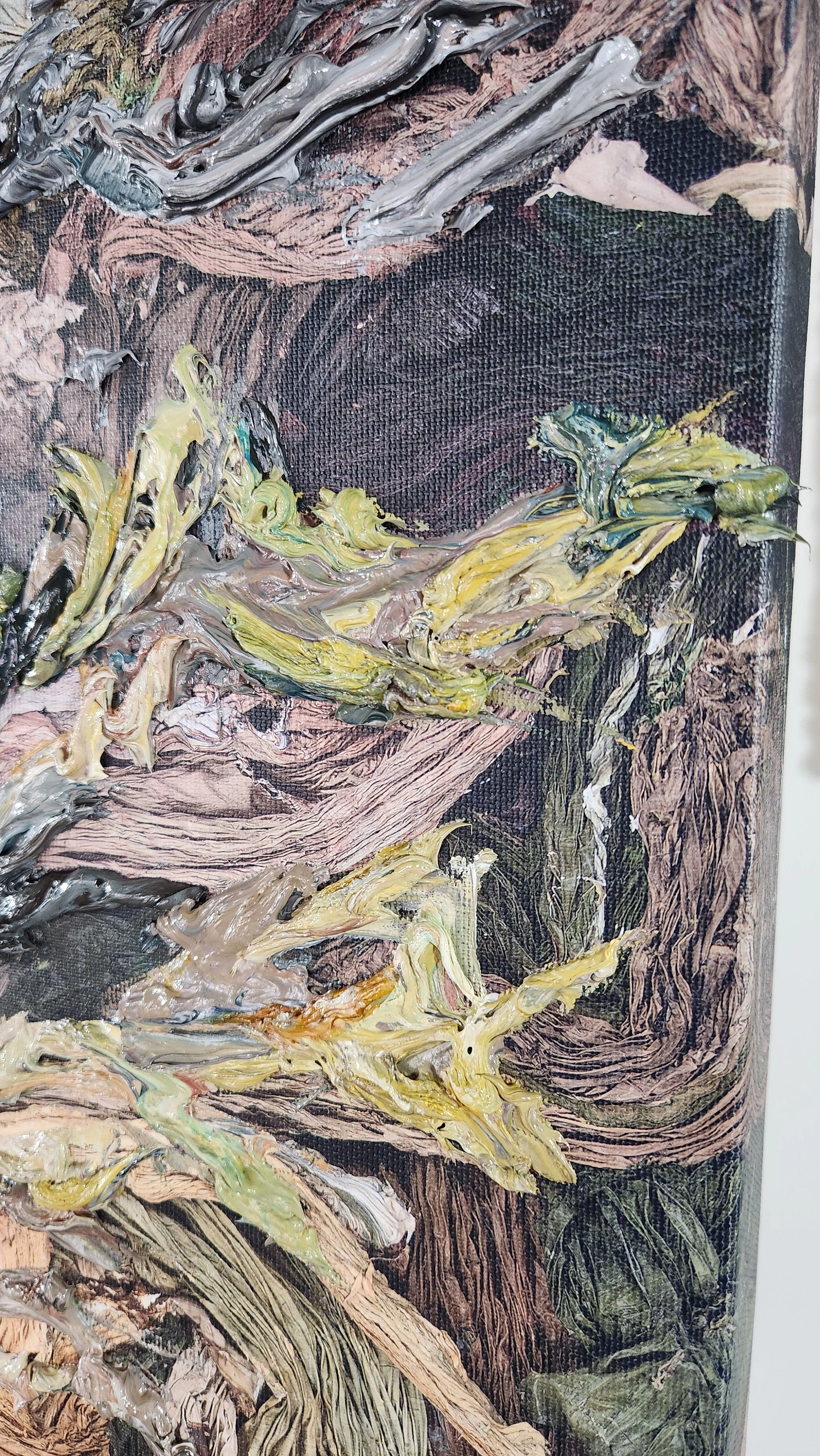
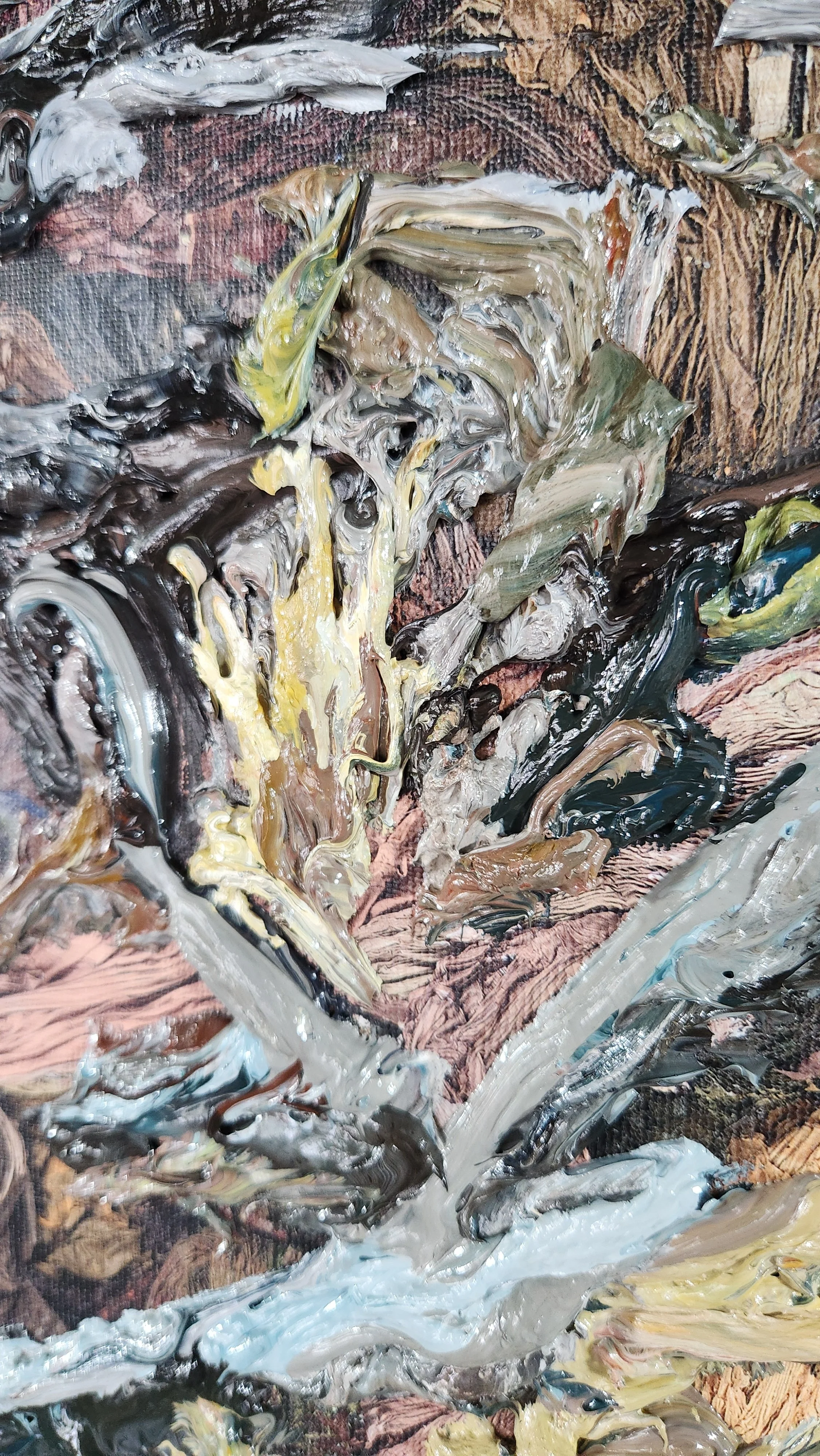
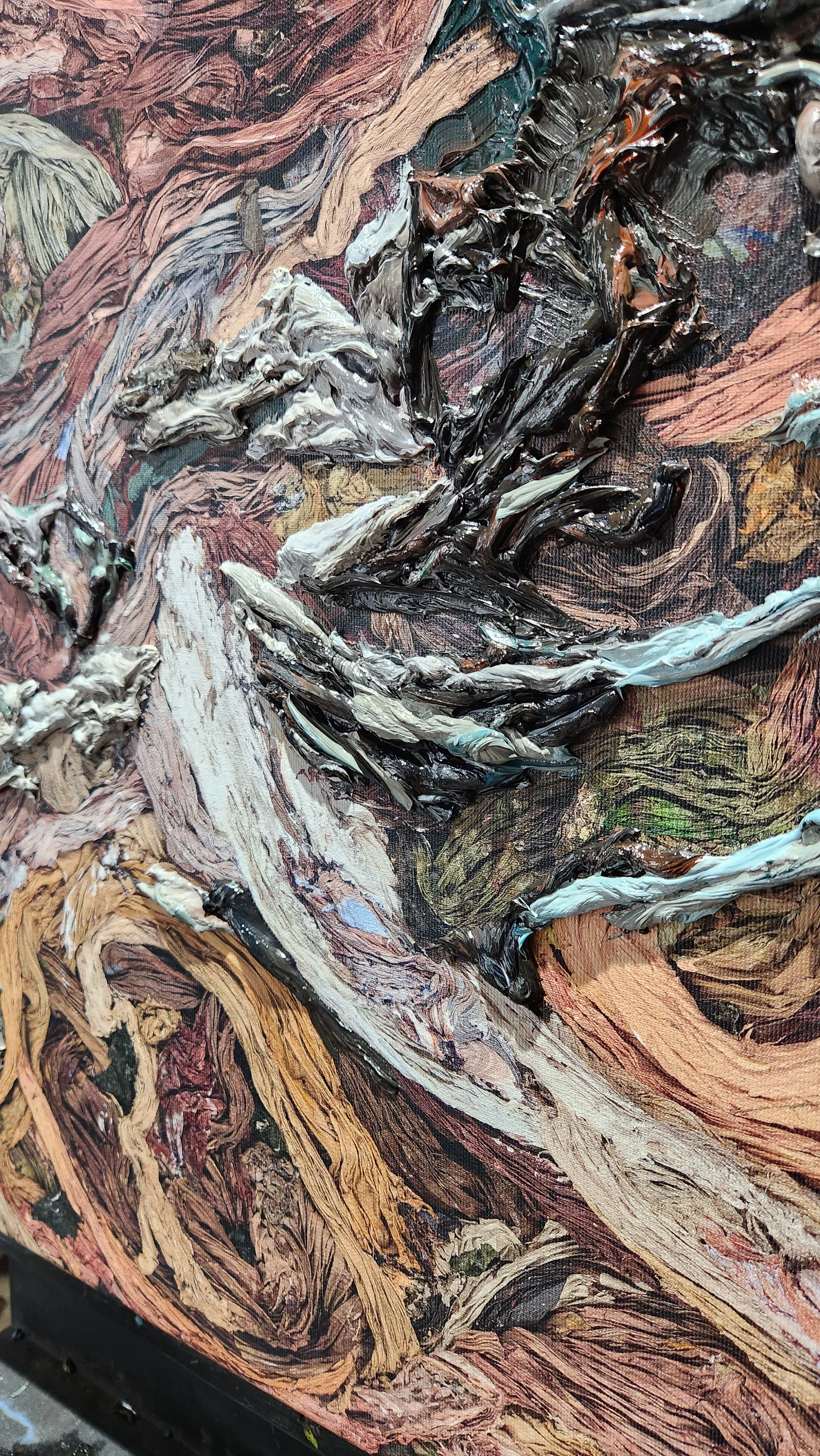
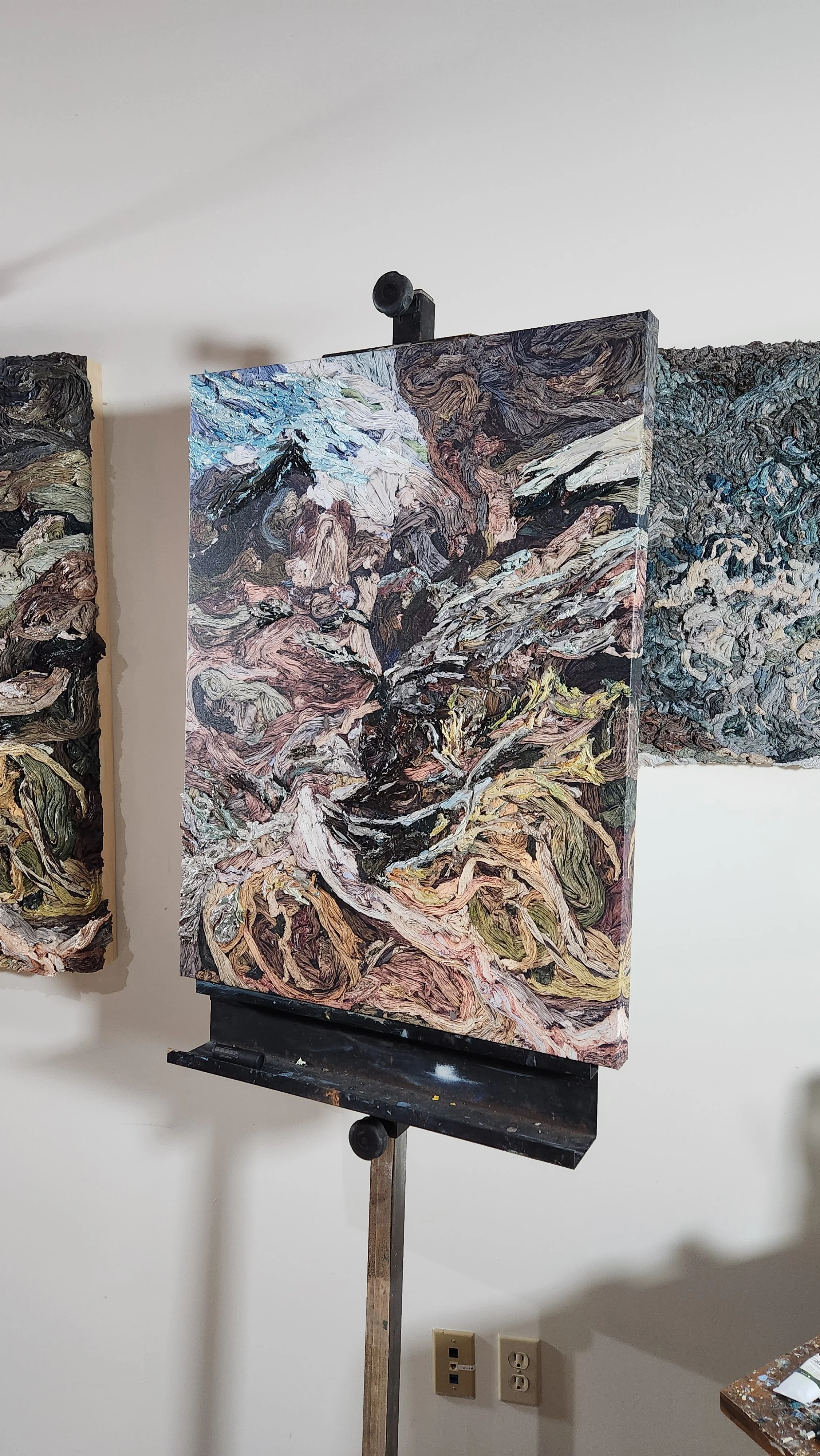
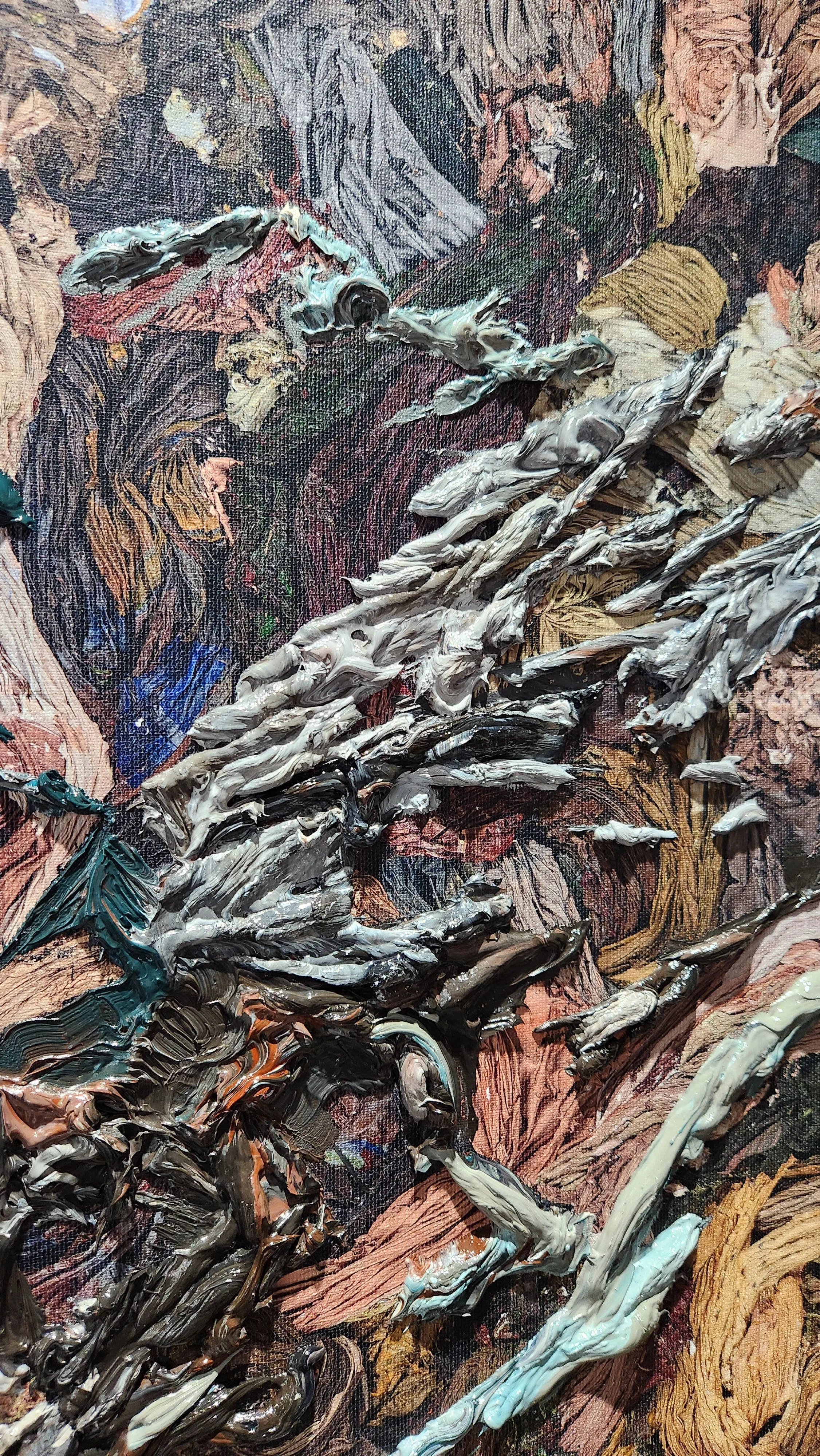
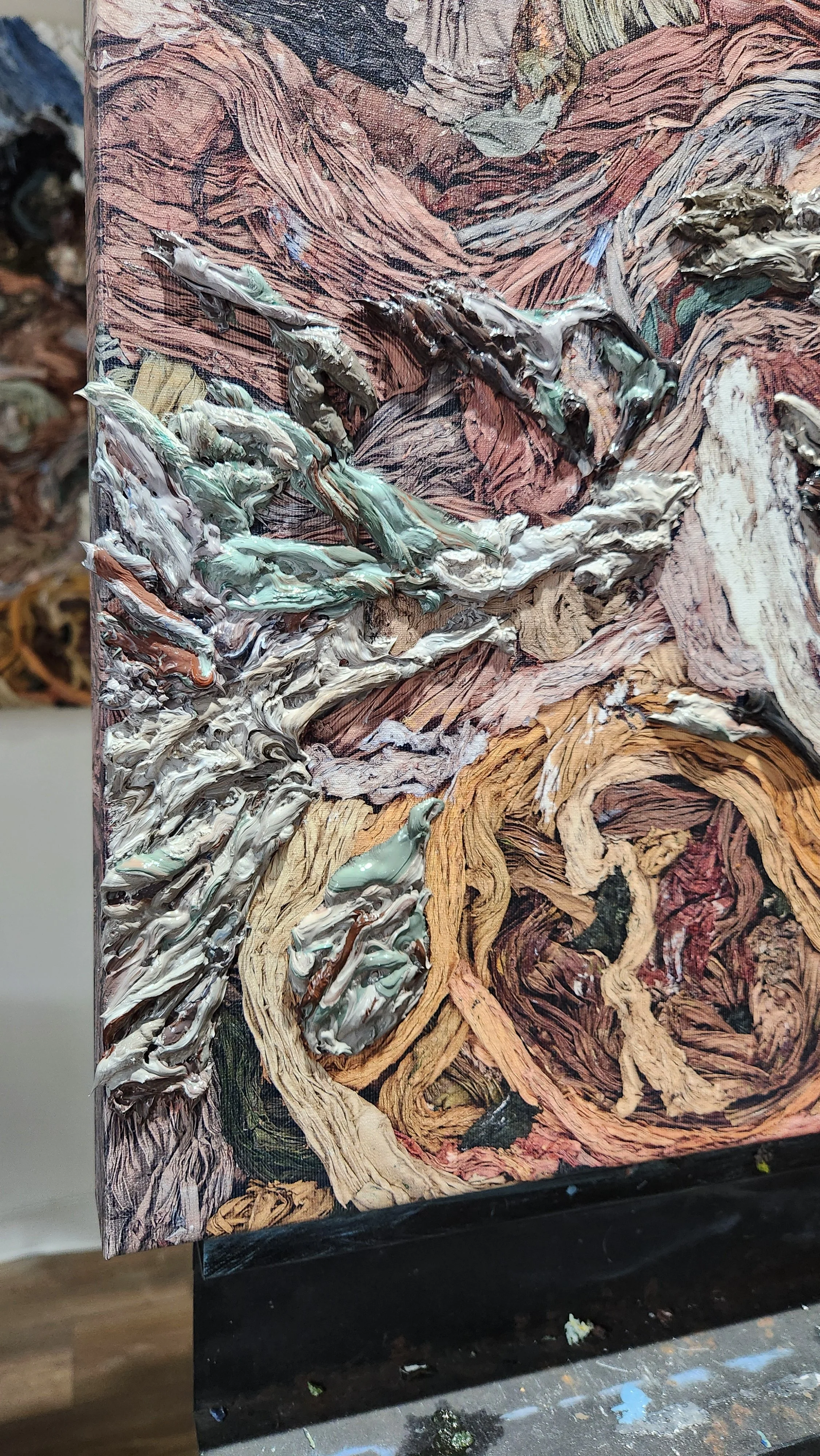
This year, for the first time, I am opening this up.
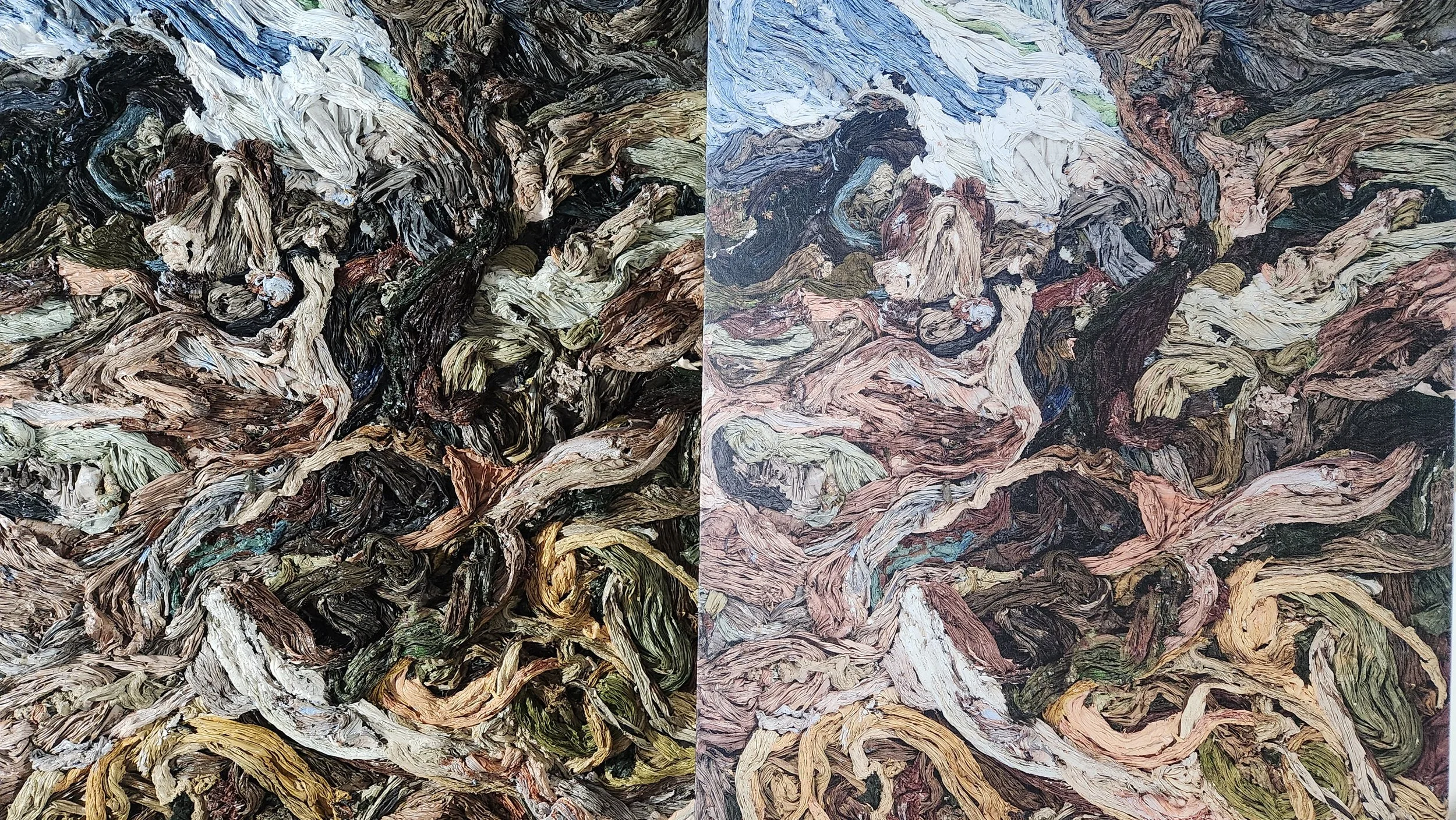
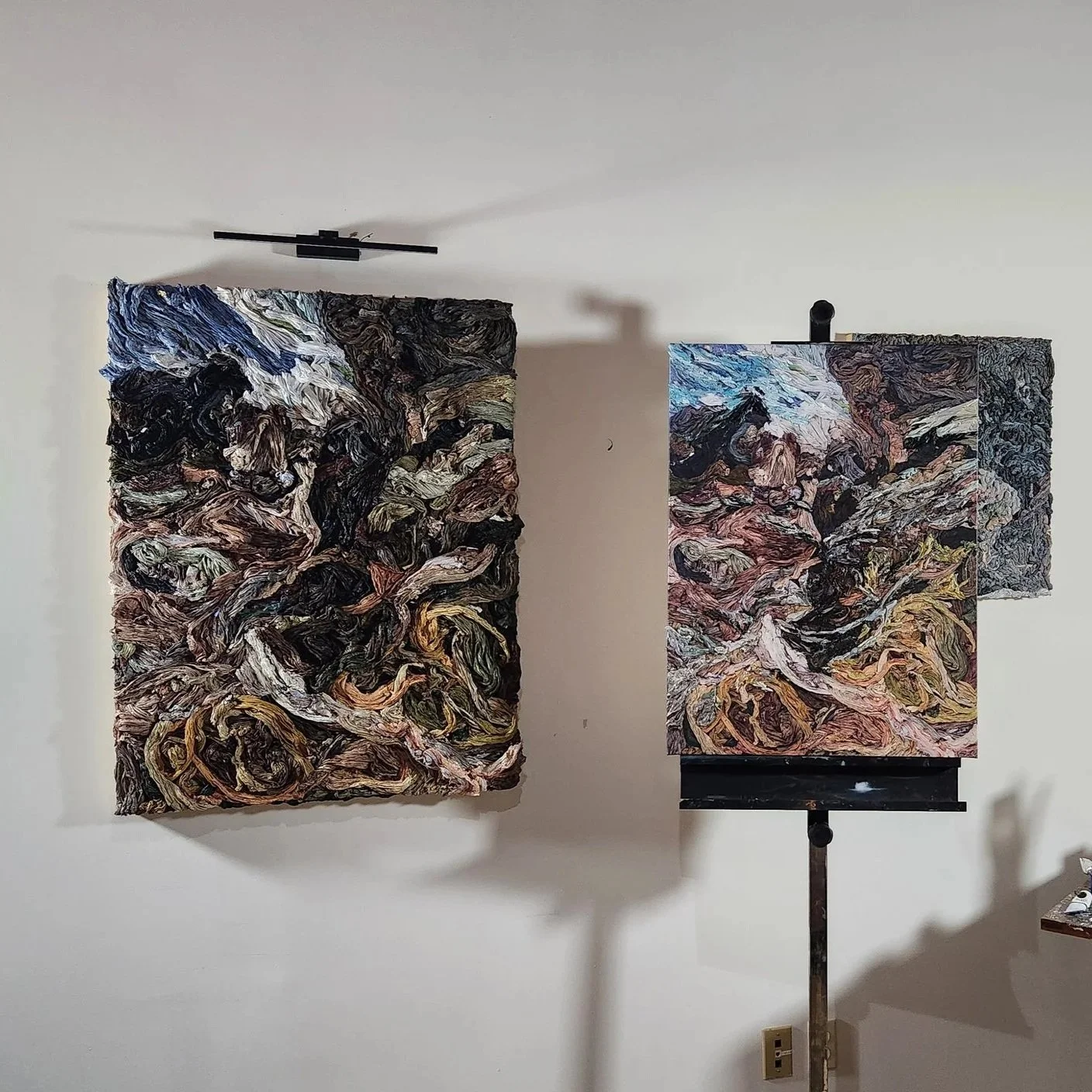
During the print drop, each of the seven paintings will be available as a Painted Edition, in a series I am calling Endless Outcomes. Every finished painting is one ending I chose out of many, and the others are still sitting in the work. Imagine a mosaic shaken off the wall, all the stones on the ground, and then rebuilt. That is what these are.
You order in the same forty-eight hours as the prints. I have the canvas printed and stretched, and then I paint into it in the studio in sculpted oil, by hand.
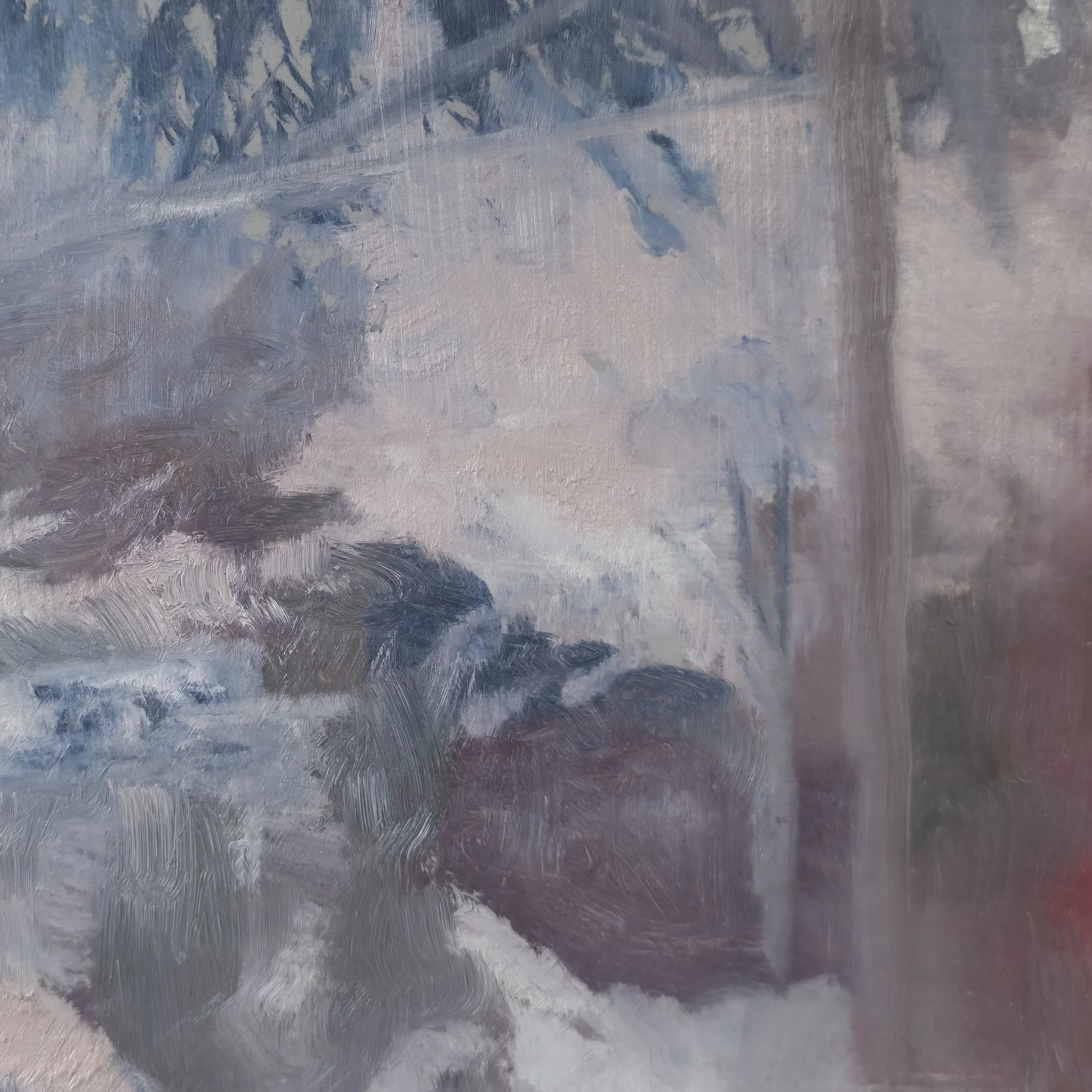
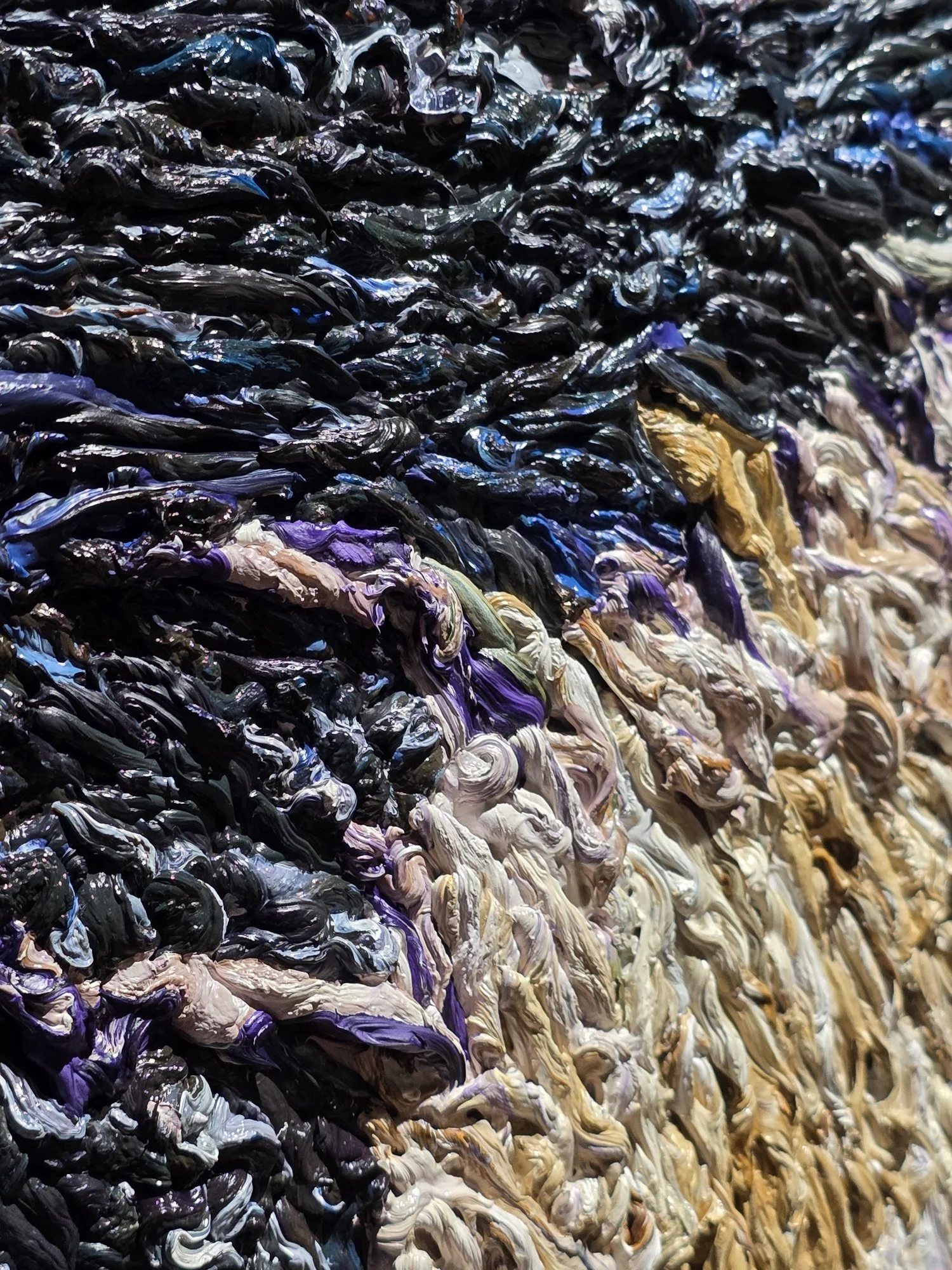
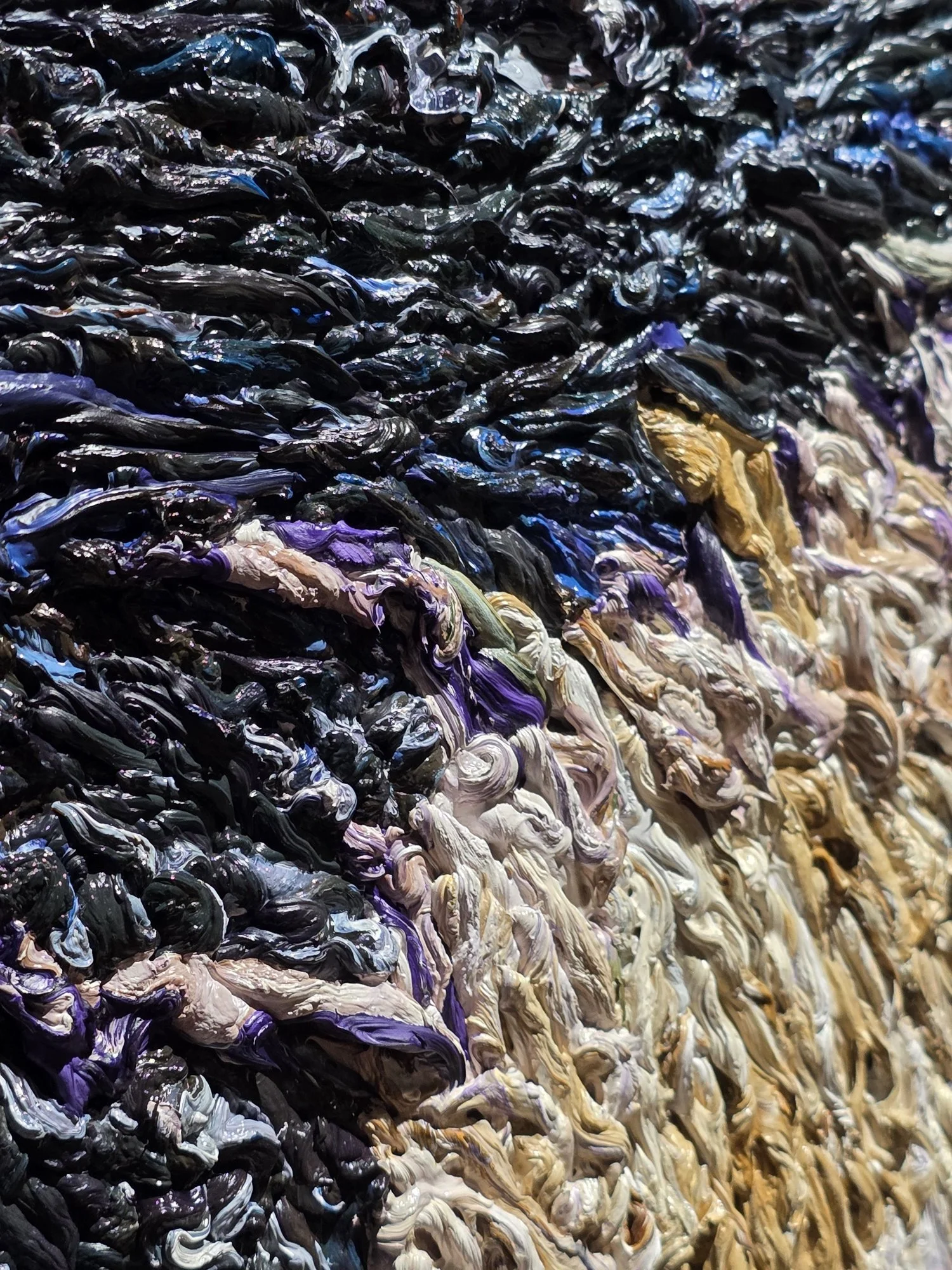
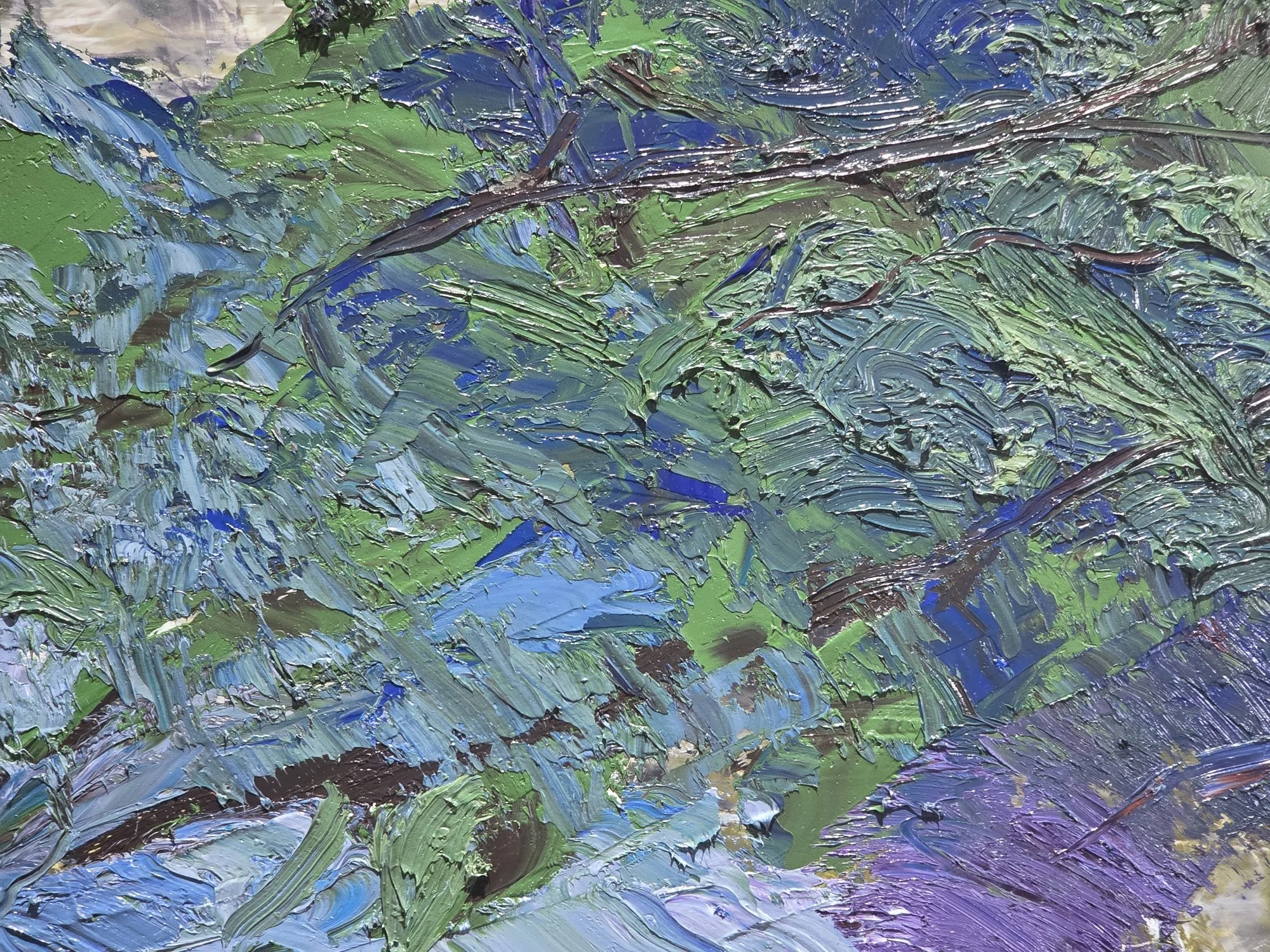
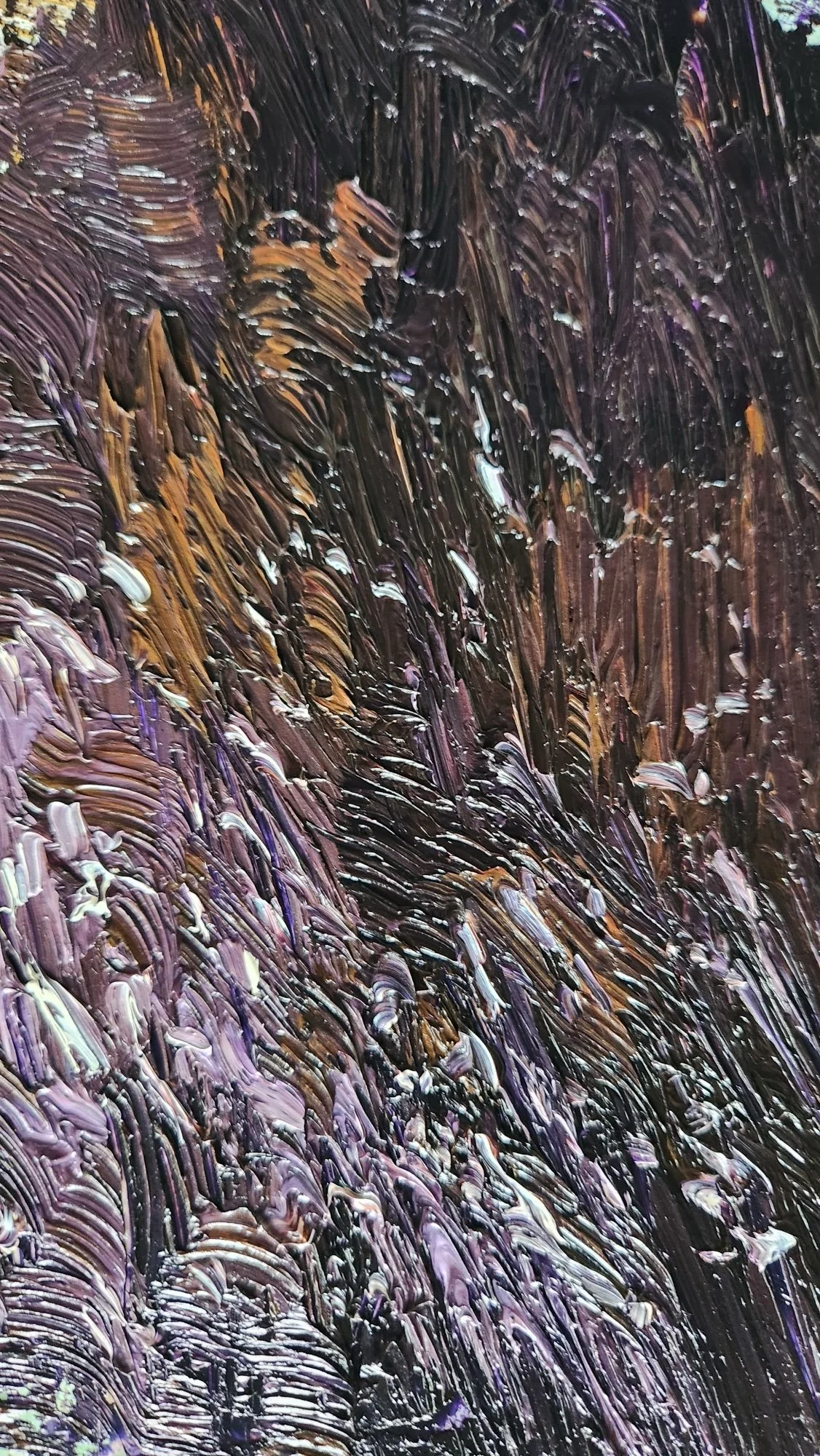
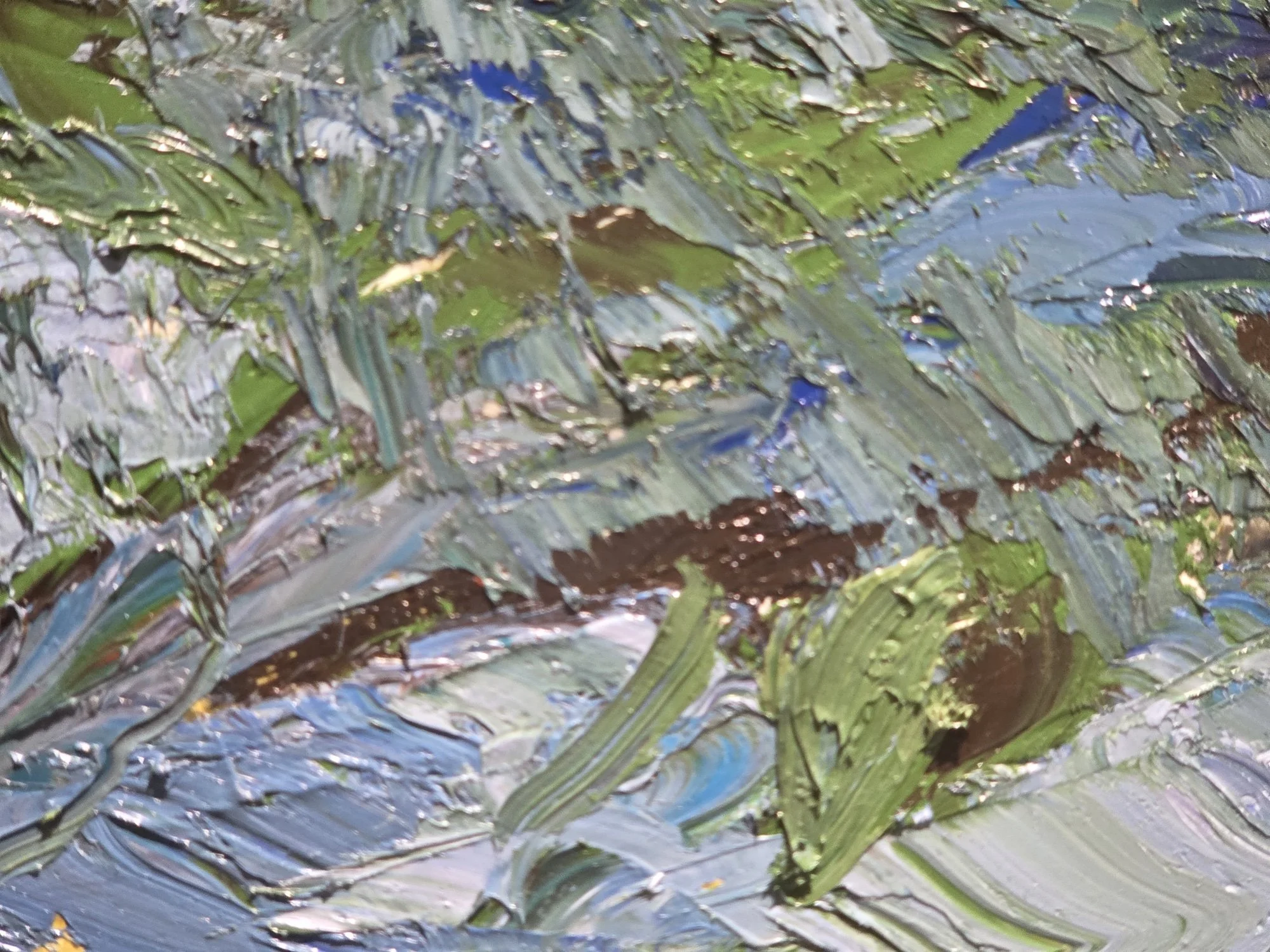
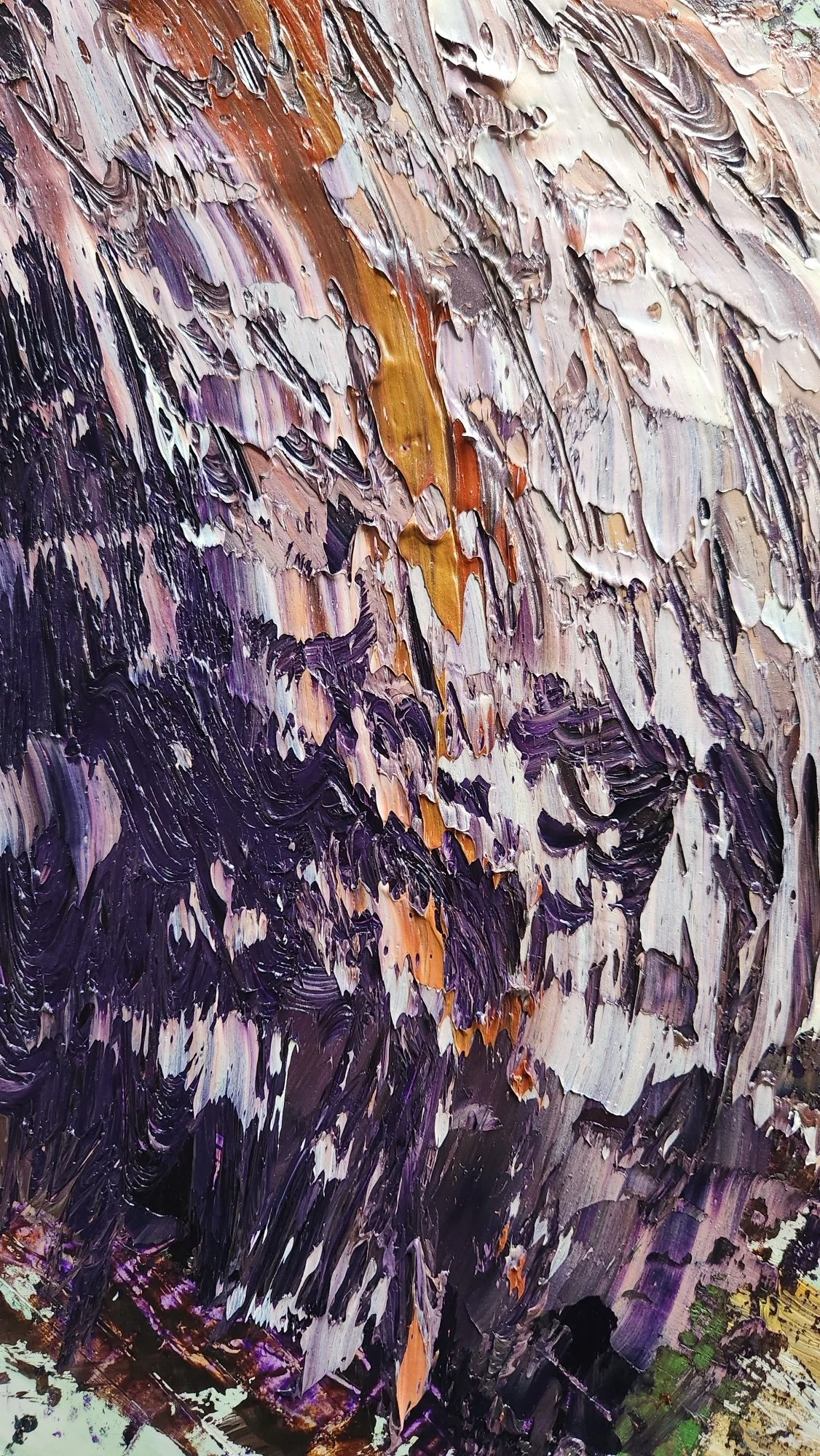
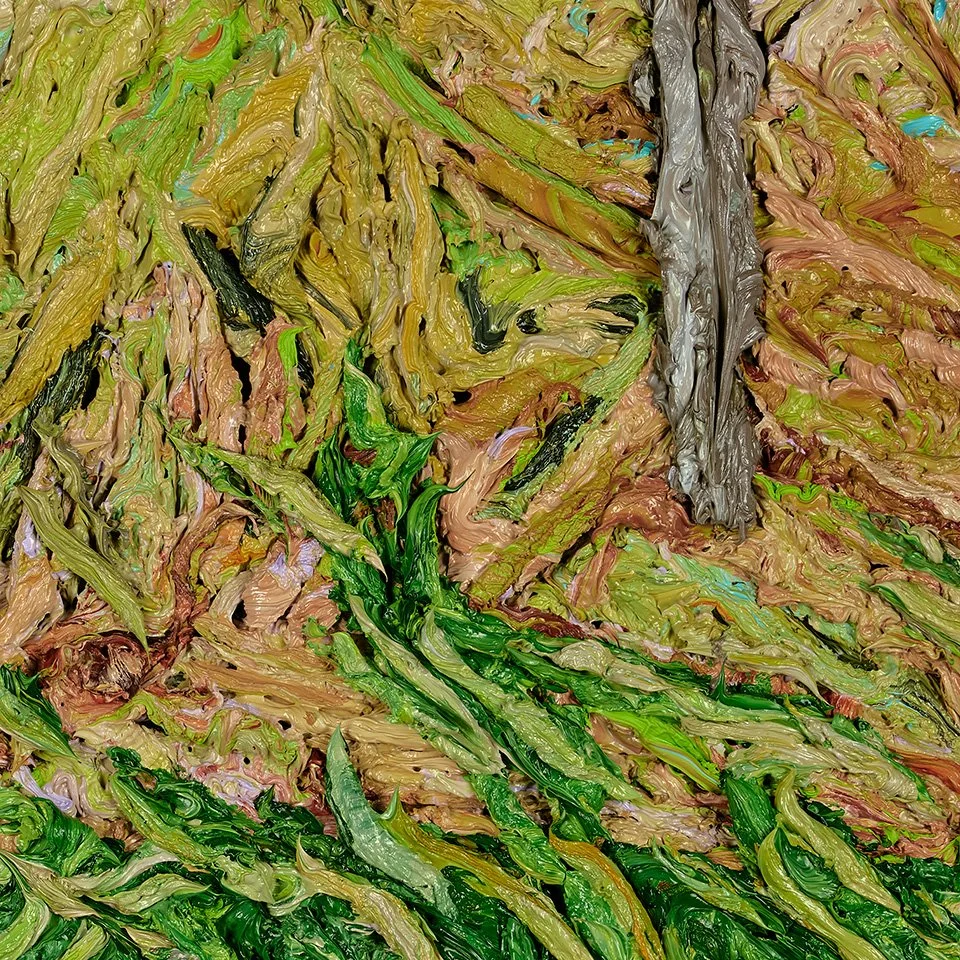
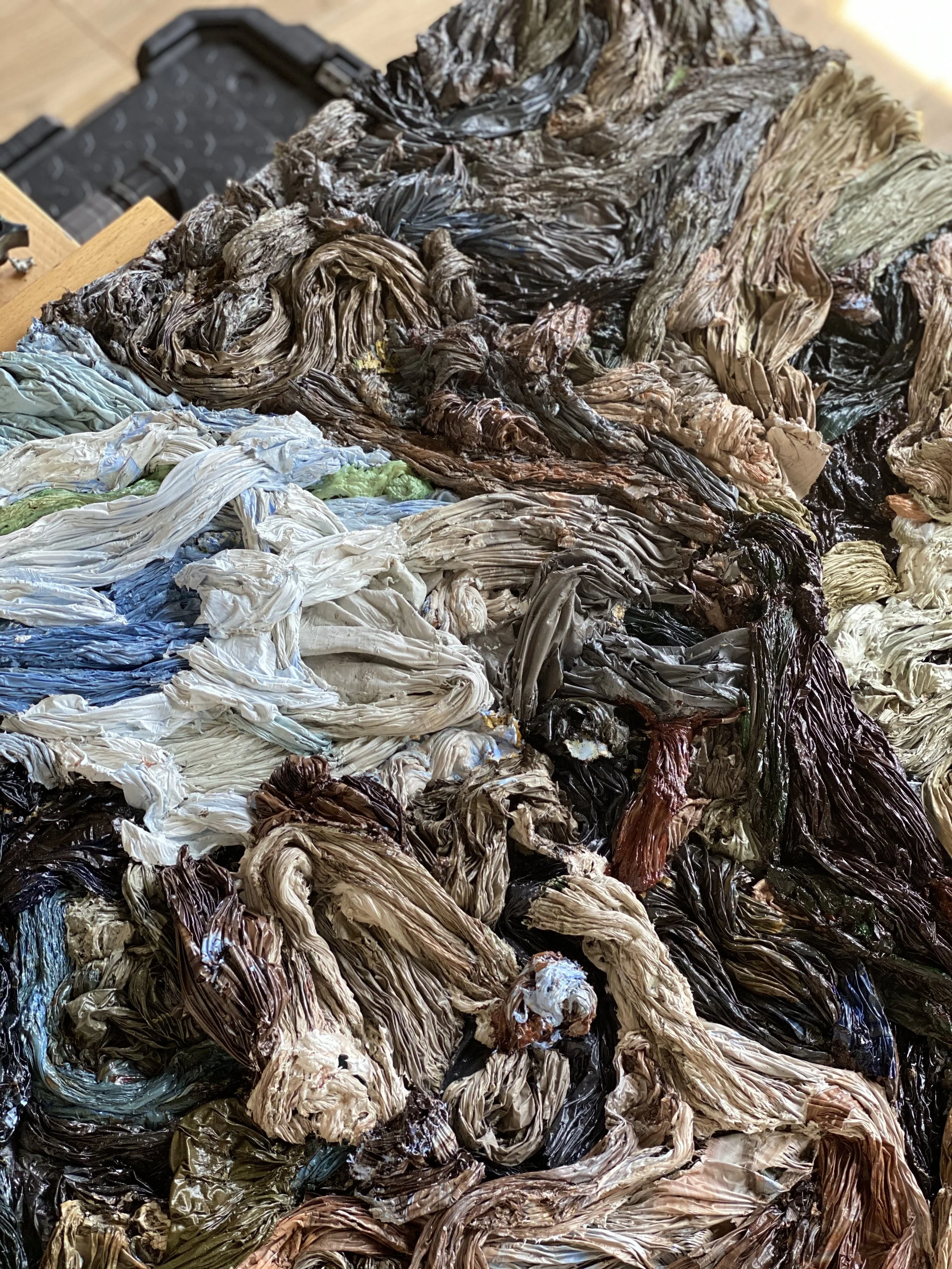
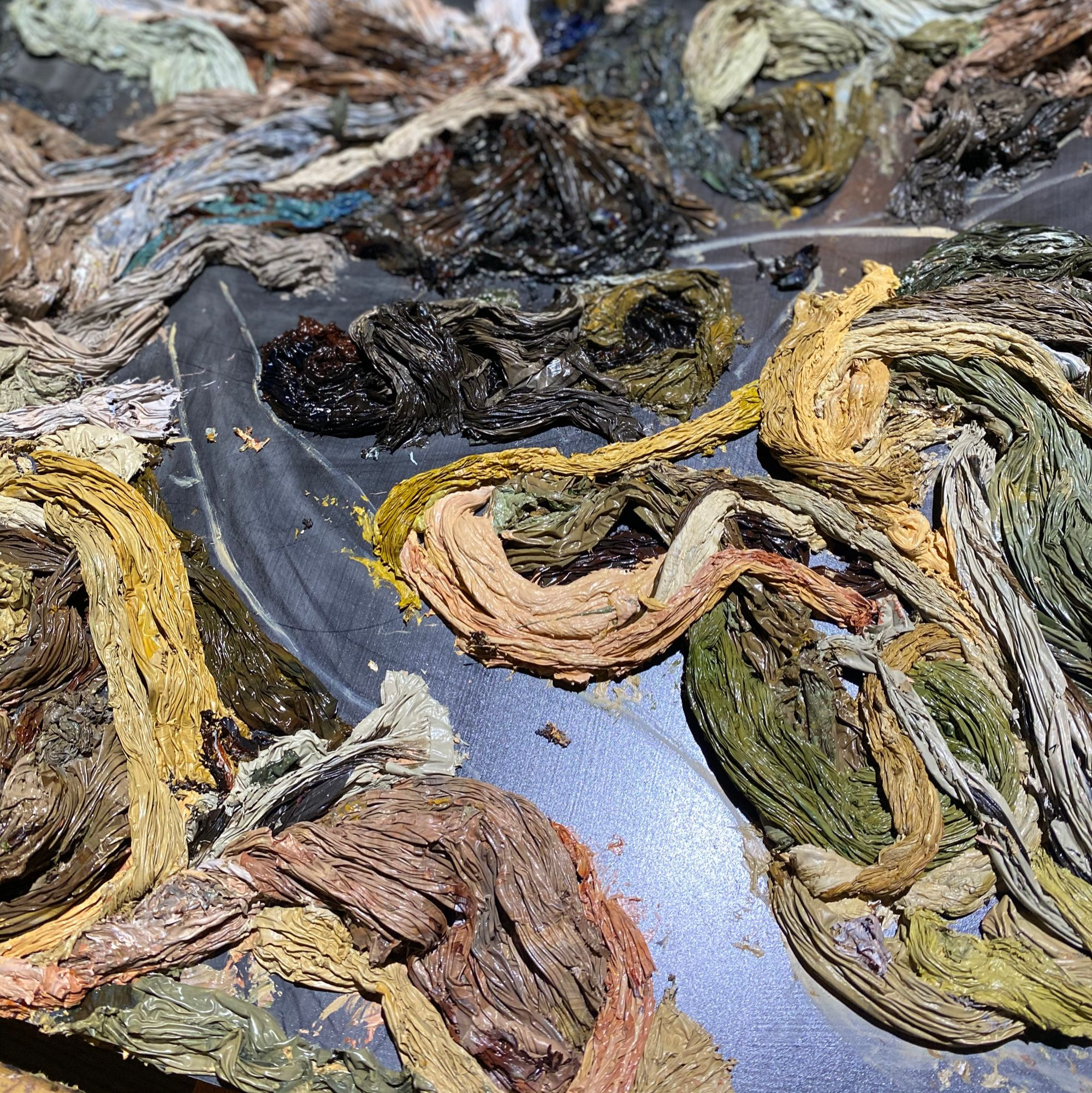
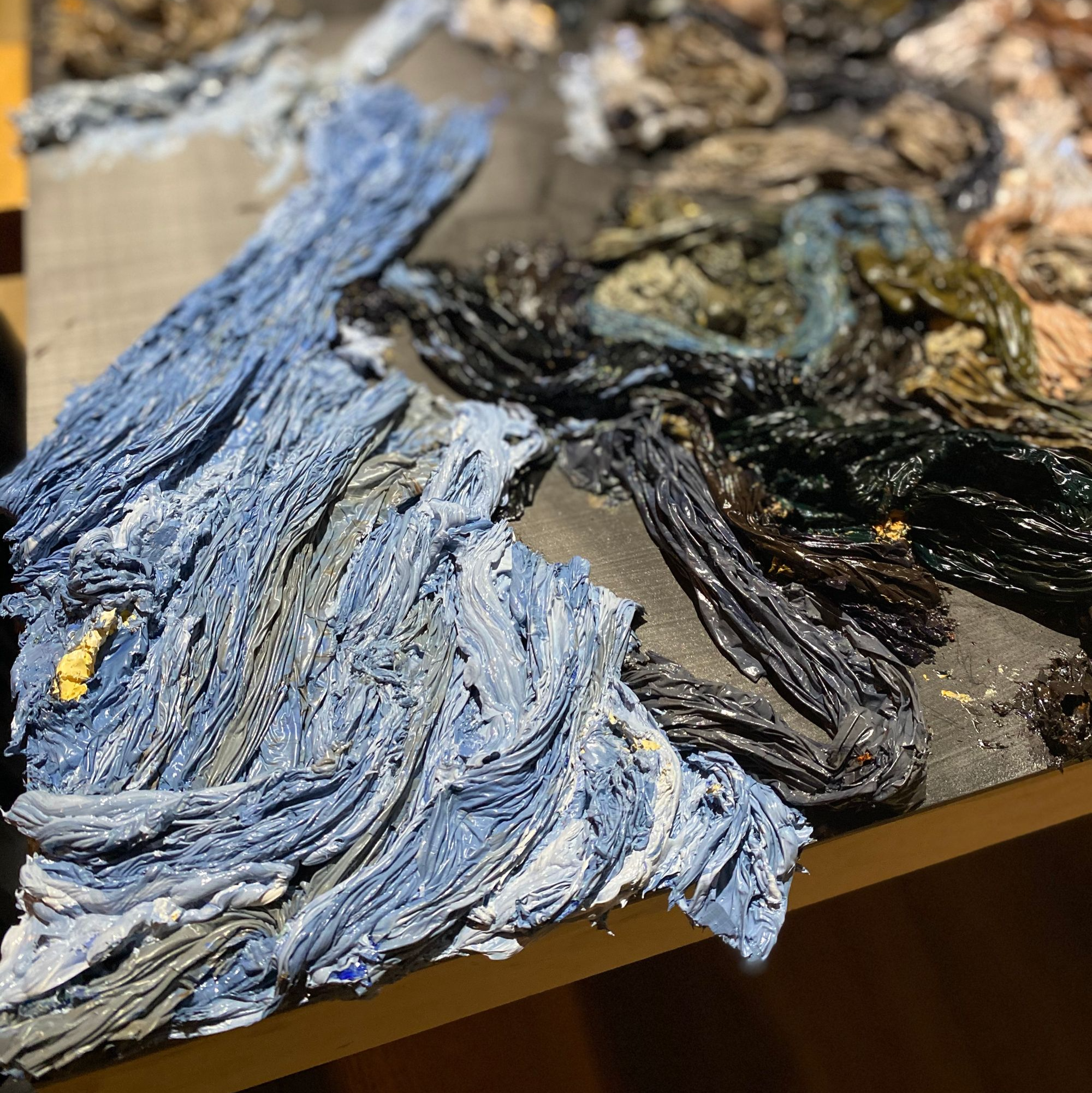
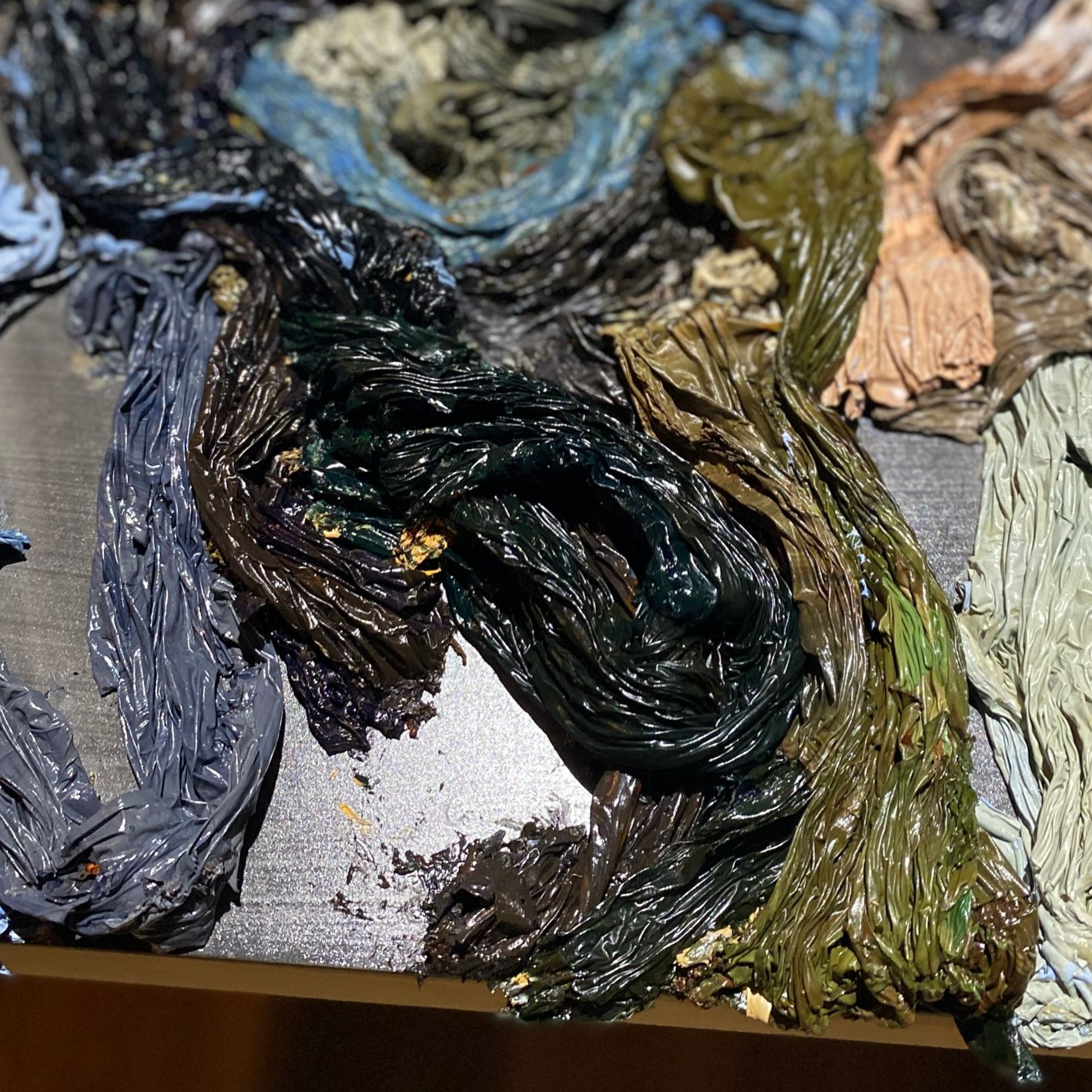
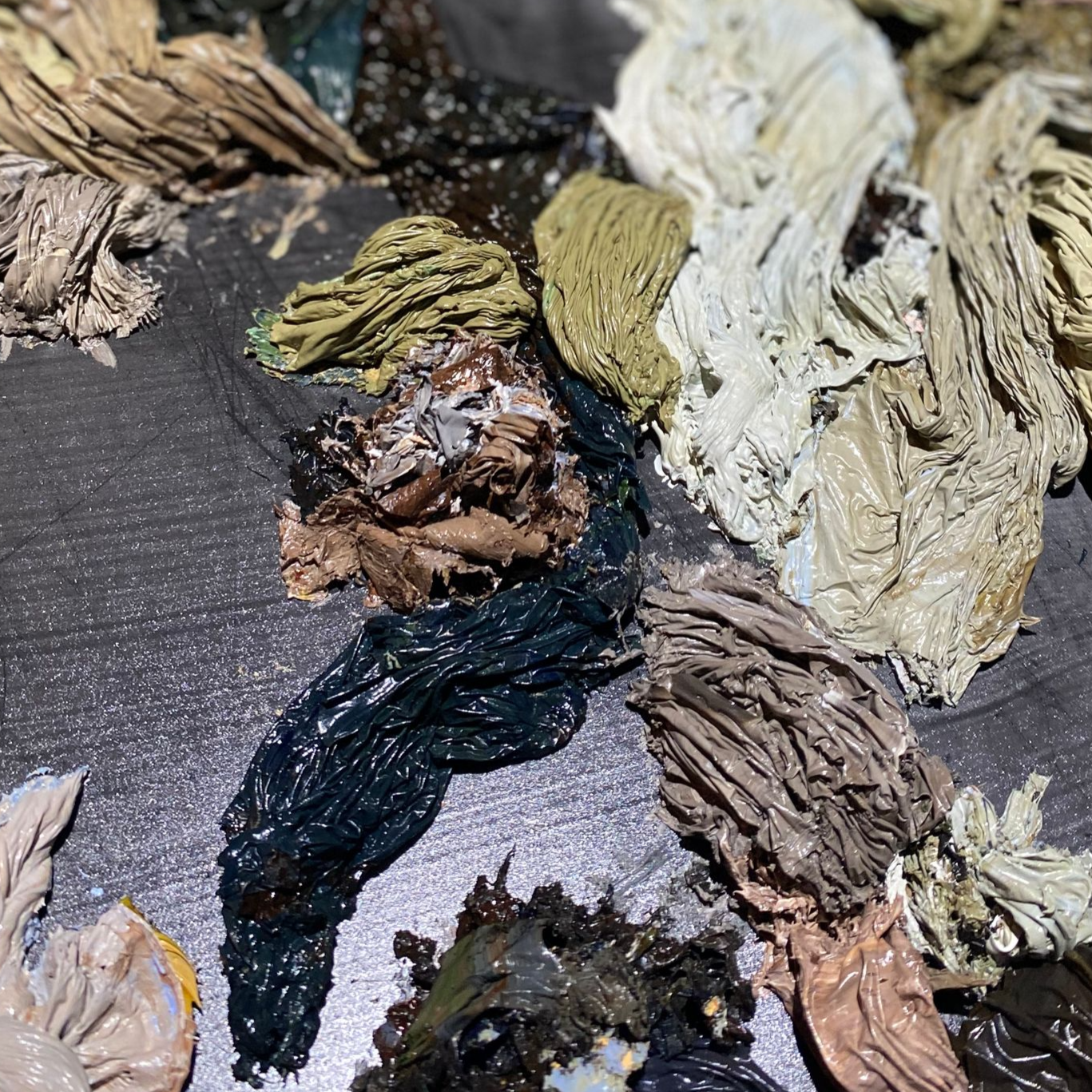
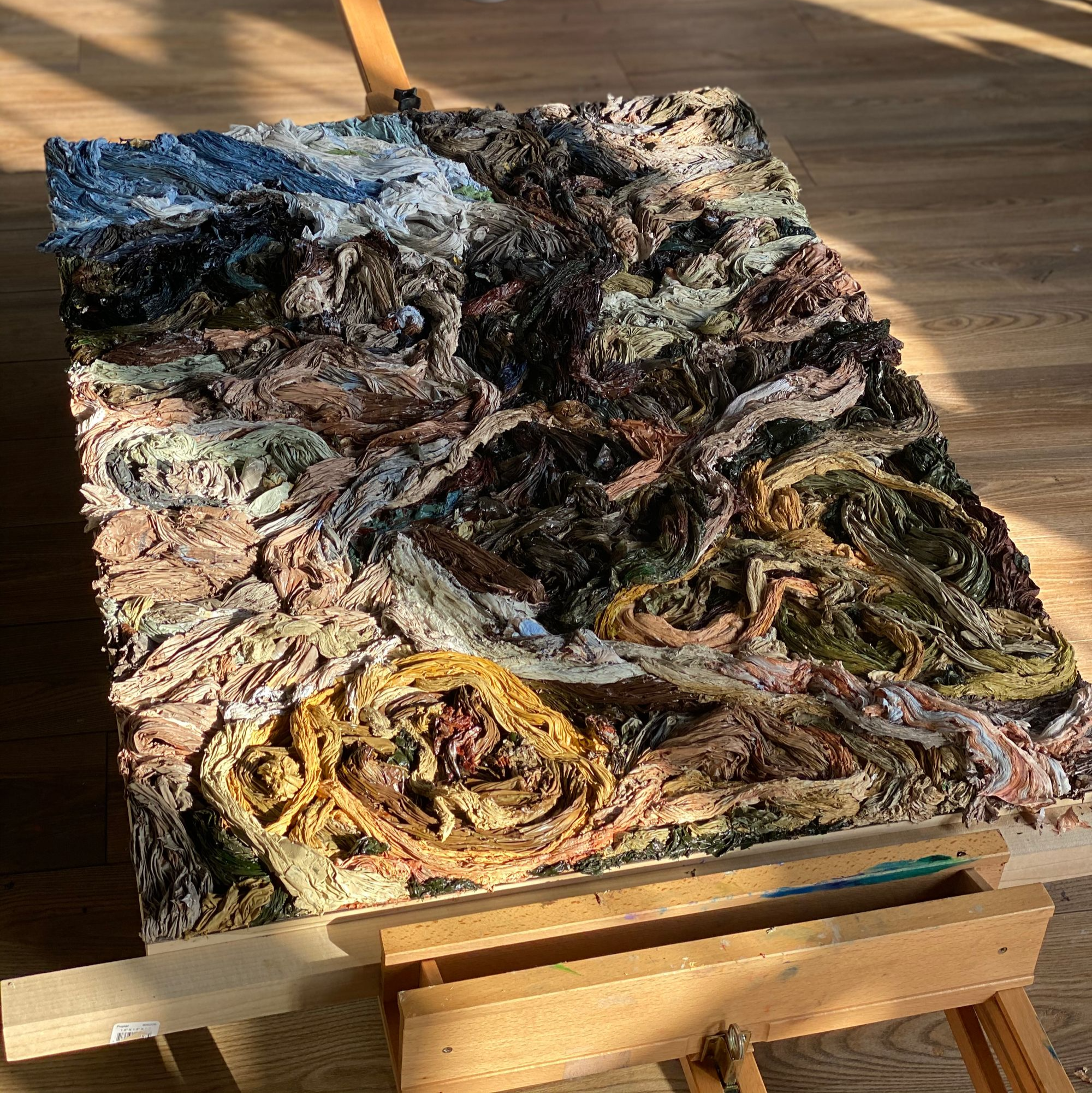
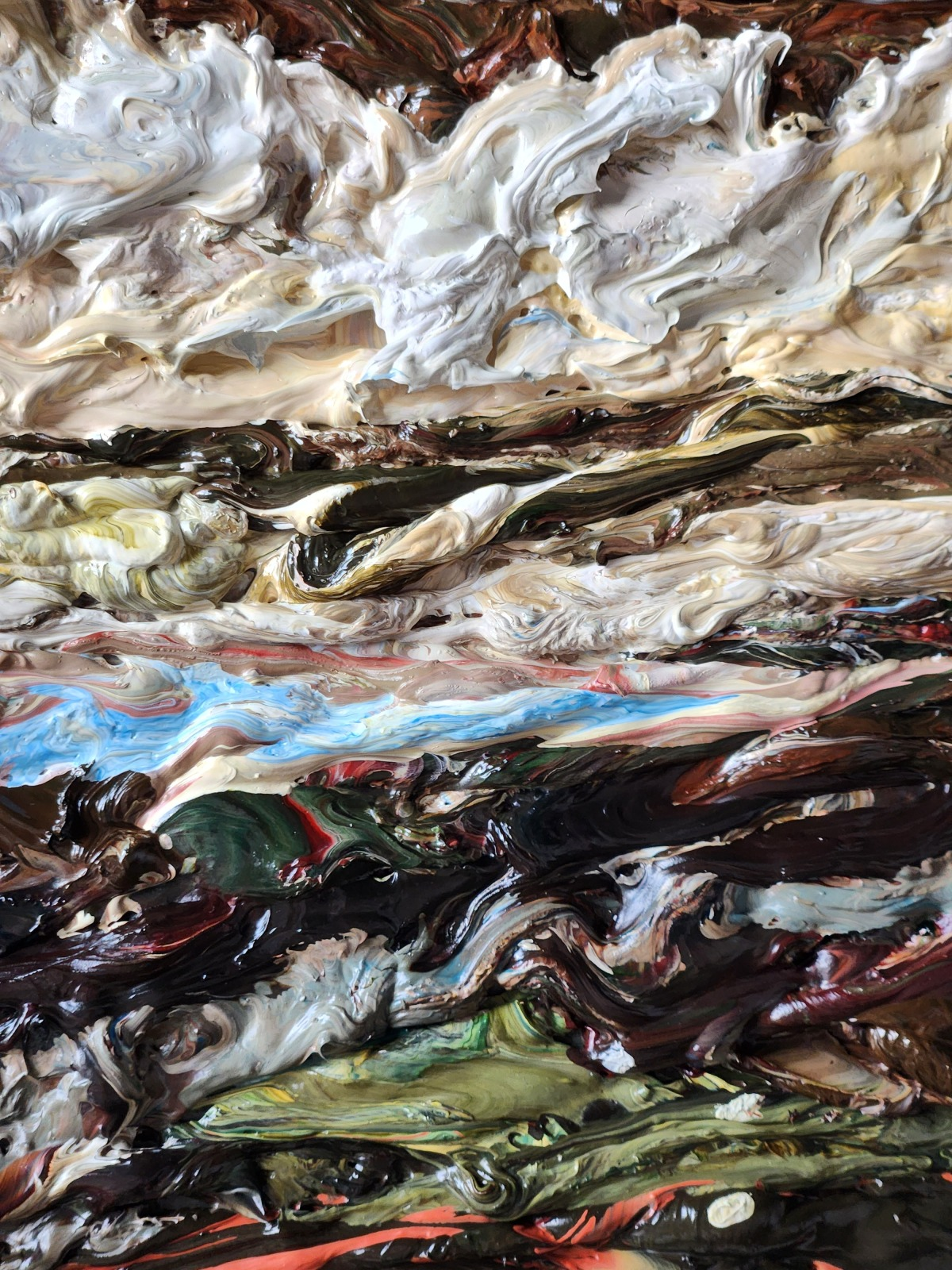
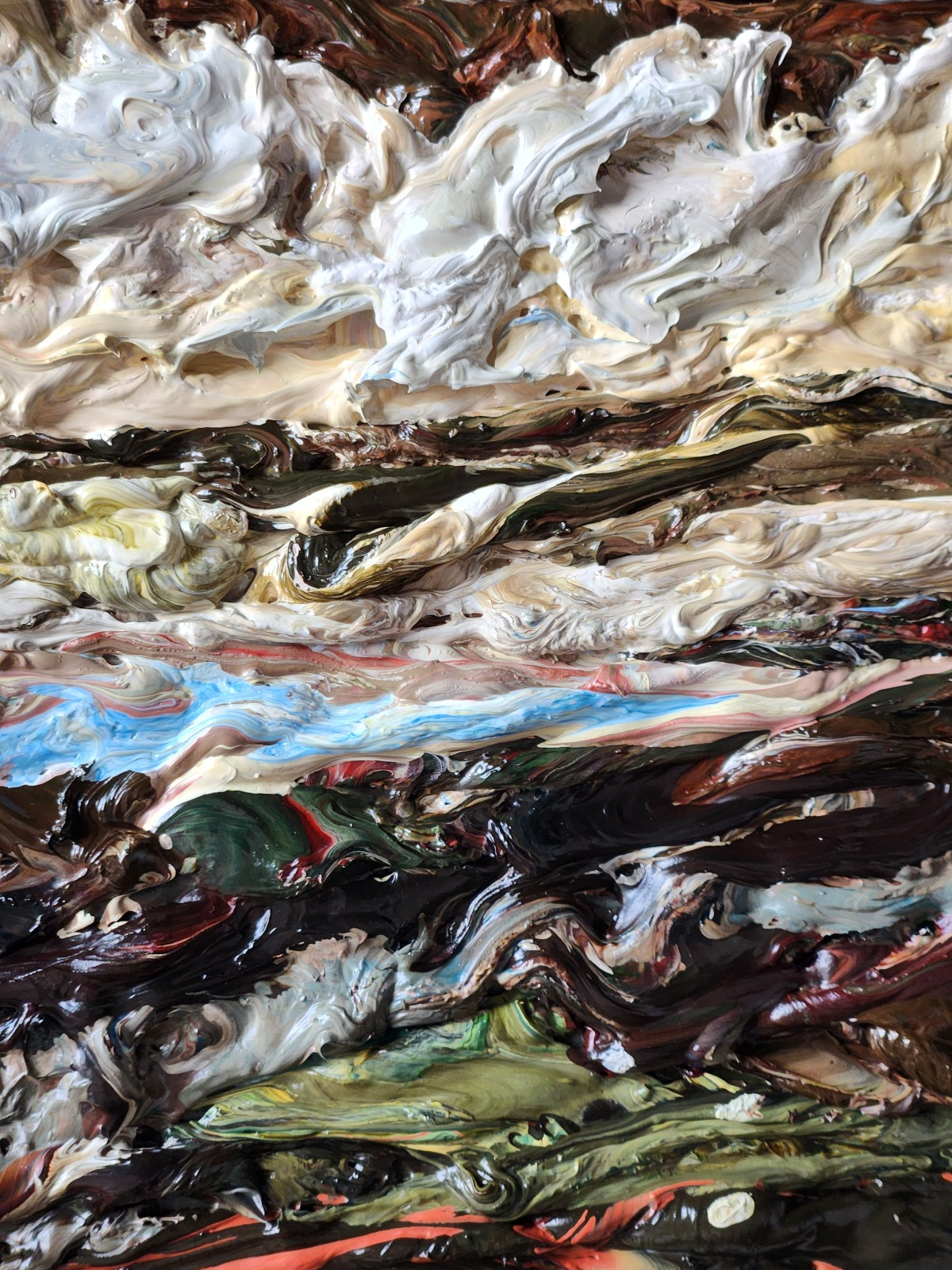
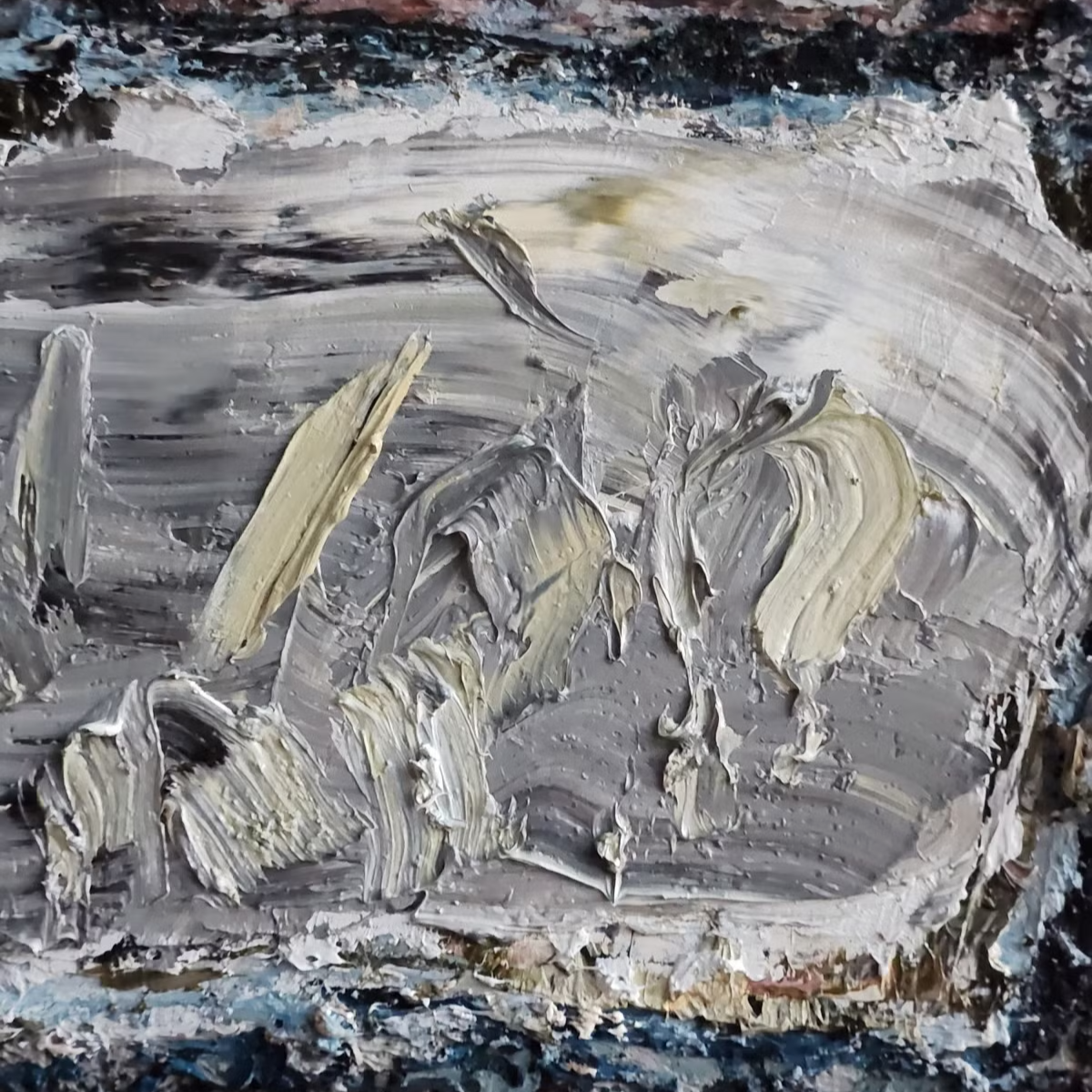
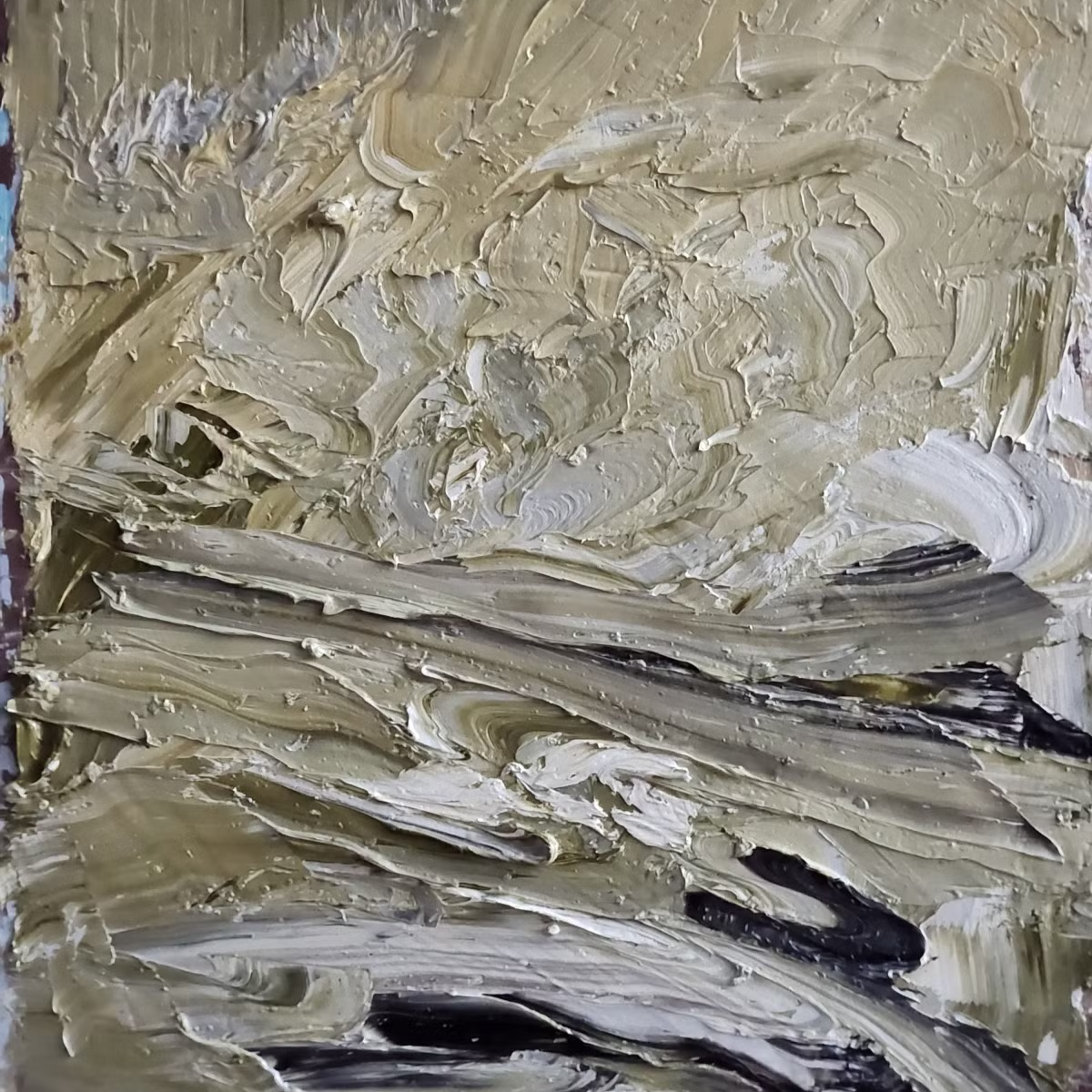
What goes into it is wherever I am now. The painting on my easel is always the most refined thing I have made, and each new work carries the most current way I have of building these surfaces. Going into an image from 2021 with that in hand makes something that is different from the original and the same as it. The detail photographs show it better than I can describe it.
No two will be the same. Each one is treated as its own work with its own spirit, an iteration rather than a copy.
The seven: Finally, the Sun. Night Lights. Violet Rapids. Cave of Emerald Waters. Snow, Stone, Salt. In Abundance. Letting the Blizzard In.
Images of each one and the available sizes will be shared when early access opens.
Each one is signed, comes with a certificate, and ships ready to hang with wire on the back. Allow eight to ten weeks. They are painted after the window closes, and the paint needs time to dry before anything can go in a box. Frames are not required. If you want one, a shadow box suits the texture and the canvas edge.
The shop opens Friday, October 9, at 9:00 AM Eastern and closes Sunday, October 11, at 9:00 AM. Painted Editions are only made from orders placed in that window. The email list gets the link at 8:00 AM.
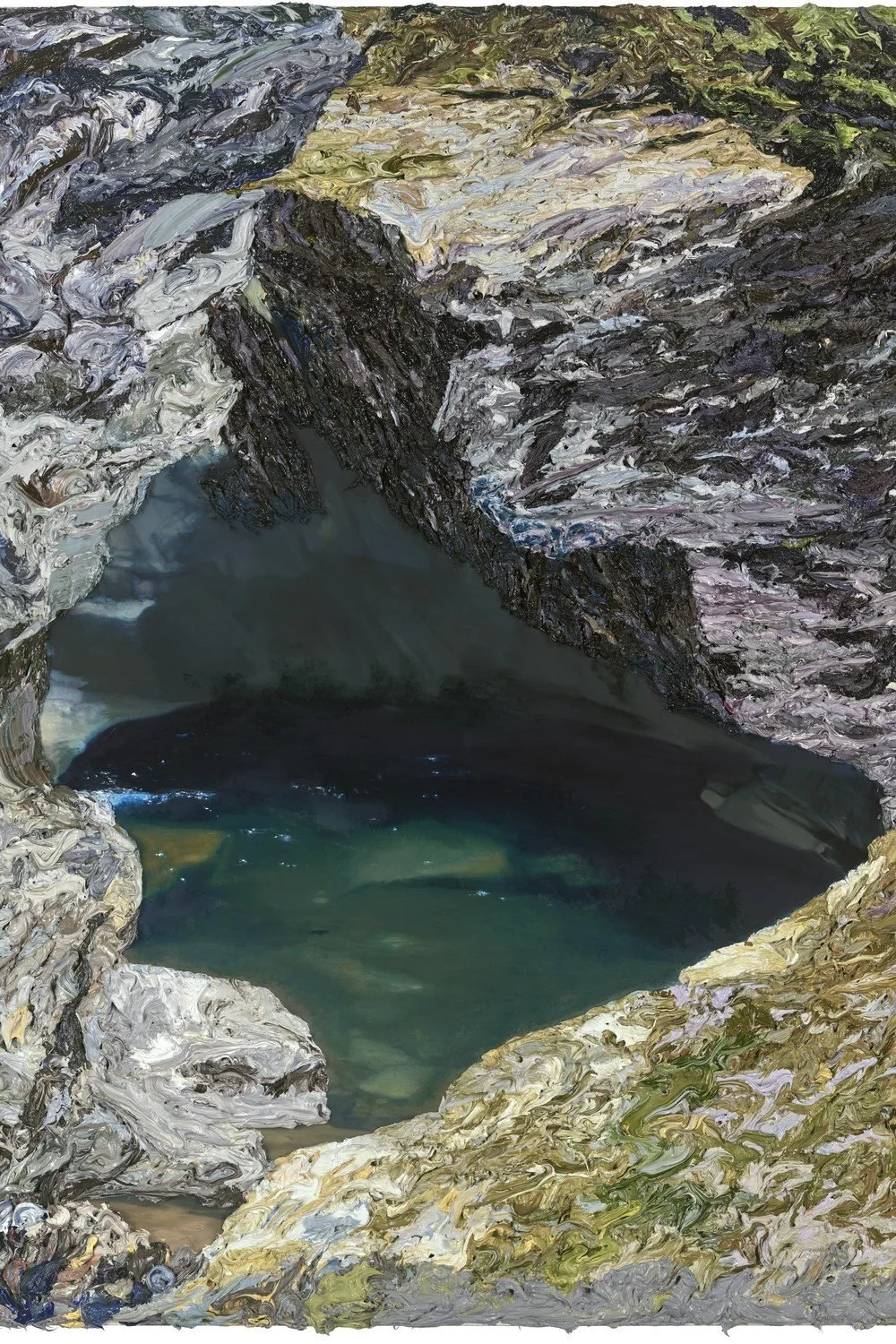
Cave of emerald Waters
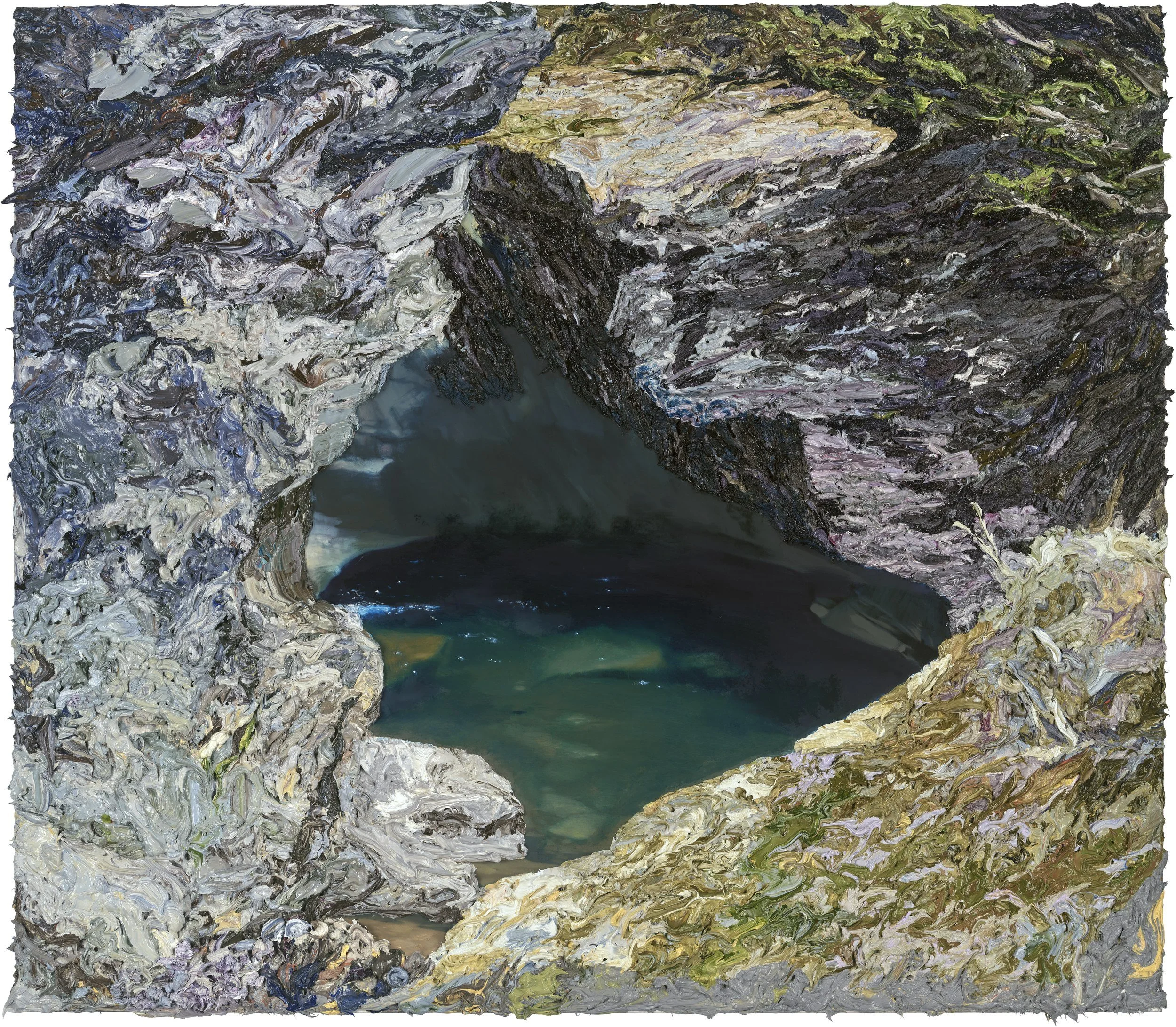
Green water held between a mountain and a cave. I found the pool in August of last year and did nothing with the photographs for eight months. Then Elliott Earls opened his calendar, I drove fourteen hours to Cranbrook.
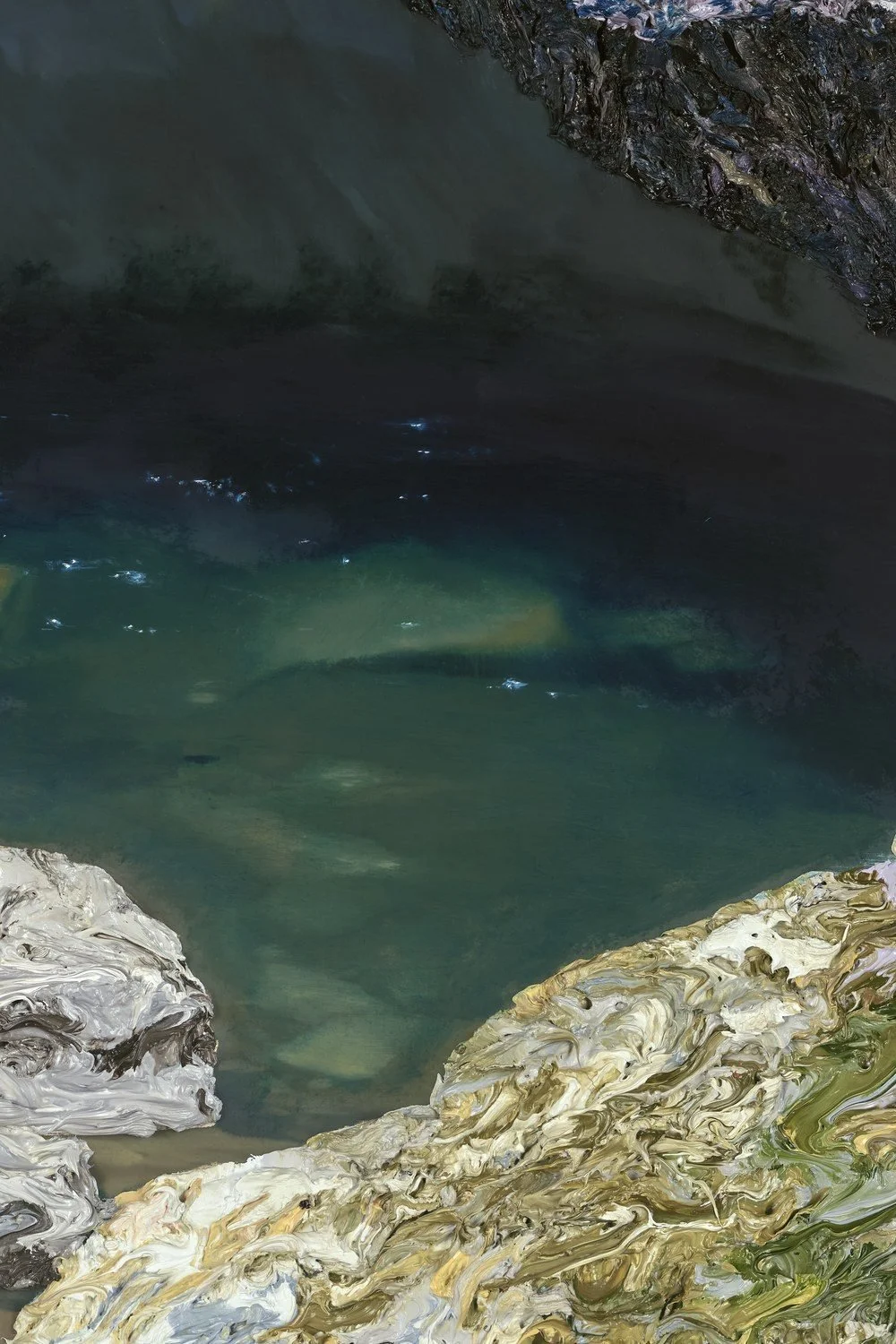
Cave Of Emerald Water
Sculpted oil paintings on panel.
30 × 34 × 2 in. 2026.
Green water held between a mountain and a cave.
The water is cold and completely still. I stand at the edge, unsure whether to enter or leave it untouched. Whether to swim or be quiet.
I found the pool in August of last year. I was not looking for it. I photographed it and did nothing with the photographs for eight months.
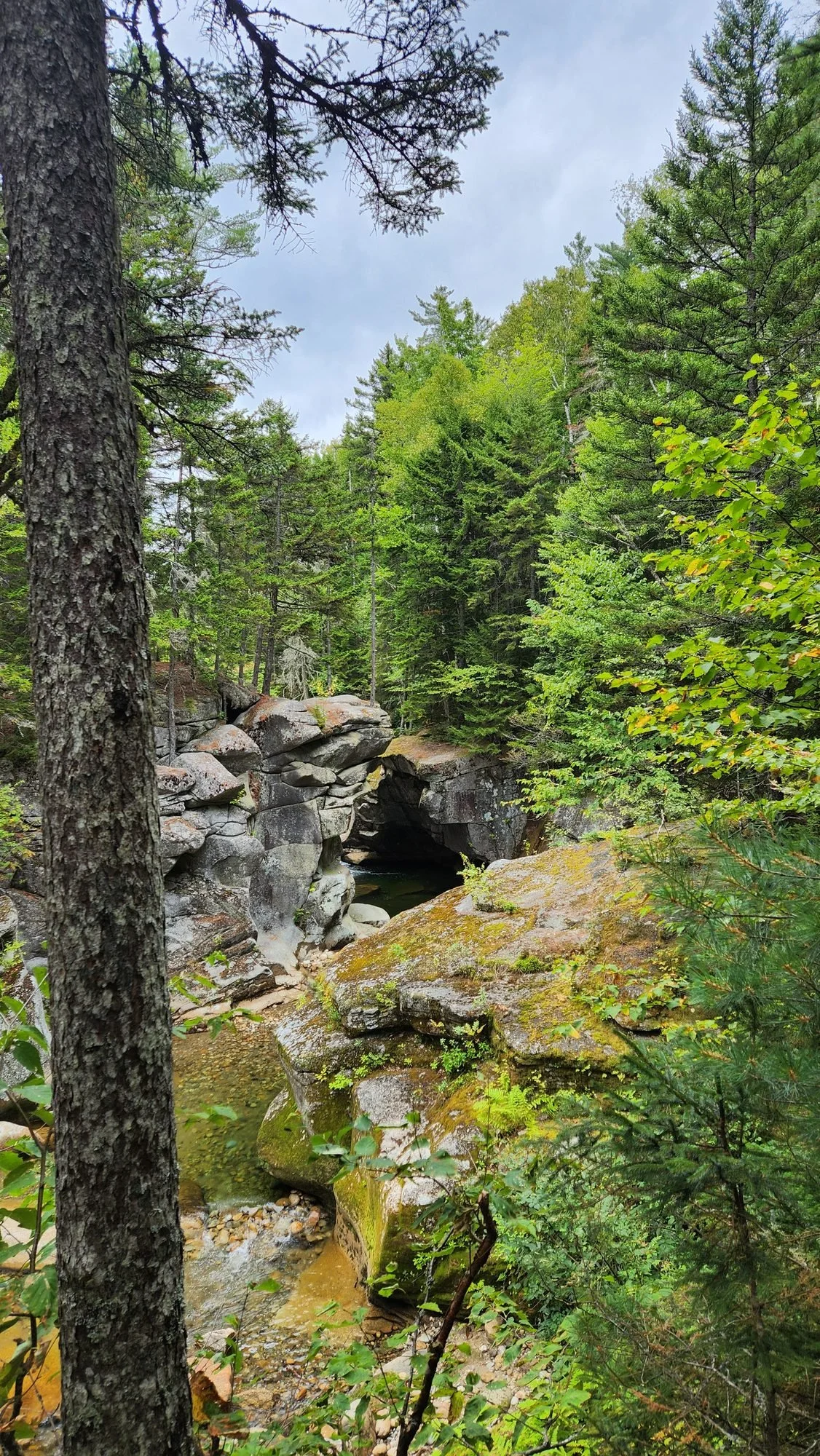
The place
The rock at the edge of that pool is smooth. It is smooth because of a thing that happens every year without fail. The snow up there is harsh and relentless. Then it melts, and all of it comes crashing down at once in summer while everything else is tearing green. The pools fill with what came down from the heavens months earlier.
Thousands of years of exactly that, and you get an edge you could run your hand along.
I am not going to tell you where it is. The culture around these places is find, jump, consume, leave. I would rather you stood at the edge for a while.
Elliott
Elliott Earls is an artist, designer, and filmmaker, and has led the graphic design department at Cranbrook Academy of Art, in Michigan, since 2001. His typefaces from the nineties sit in the permanent collection of the Cooper Hewitt, Smithsonian Design Museum. His YouTube channel, Studio Practice, is one of the few places where someone with real authority talks plainly about what a studio is for. He is one of the important critical voices of our moment, and he is generous with it.
This past winter he opened his calendar to his audience. Anyone could book a virtual studio visit. I got one of the slots.
I told him the story of the work and asked for his honest reaction. He gave it. The whole conversation is here.
Two things from that hour changed how I work.
The first was about the paintings. I had been carrying a worry that the work reads as a reference to impressionism, and that art-literate viewers stop at the reference and go no deeper. He told me the historical reference is a strength. In a room full of people chasing the contemporary, standing apart is where the creativity lives.
The second was about the phone. I had treated my presence online as a performance I could not make honest. He told me to treat it as a sketchbook. Post the way you draw. Regularly, and without checking the numbers. The reels I have been making since are that advice, taken literally.
At the end of the call he invited me to Cranbrook.
The drive
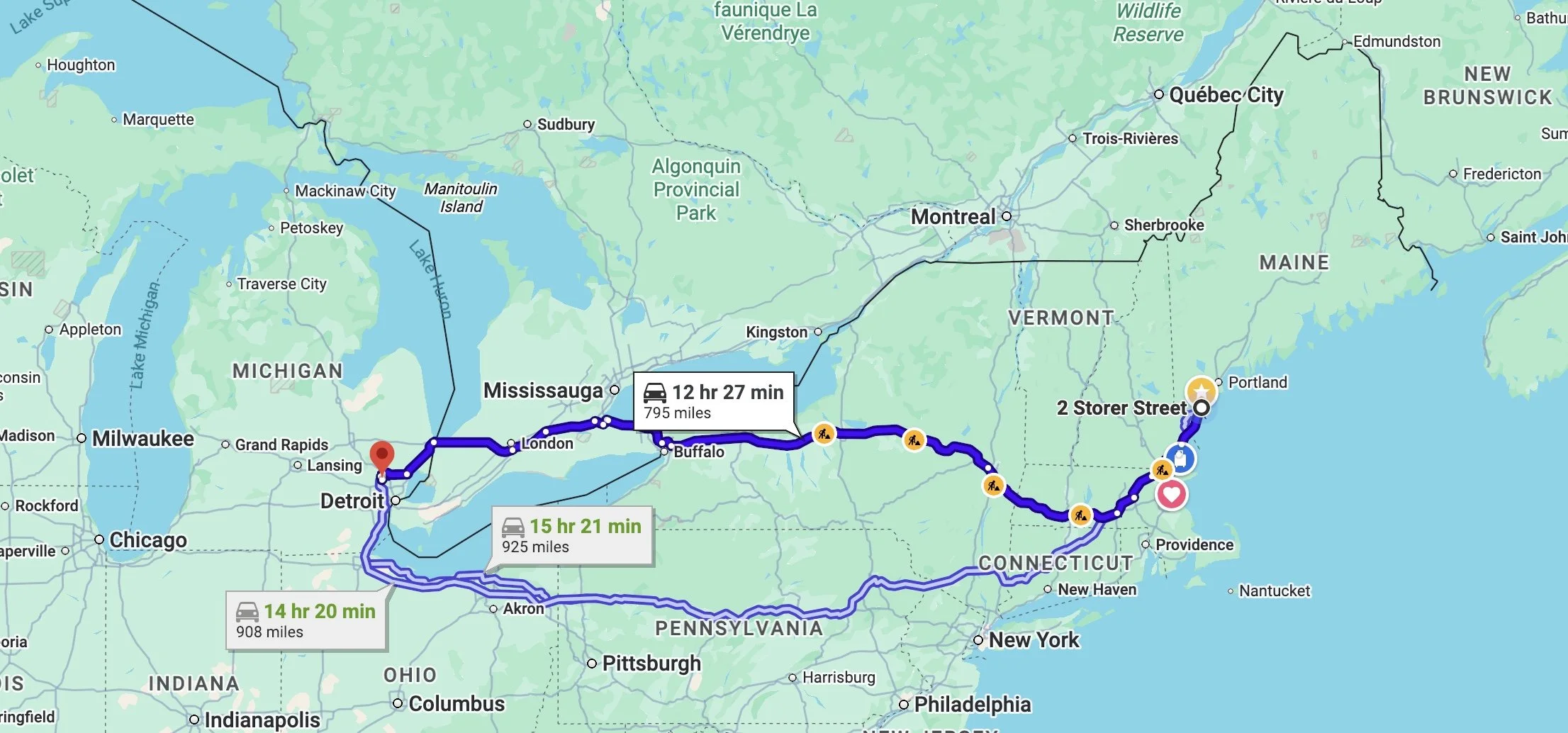
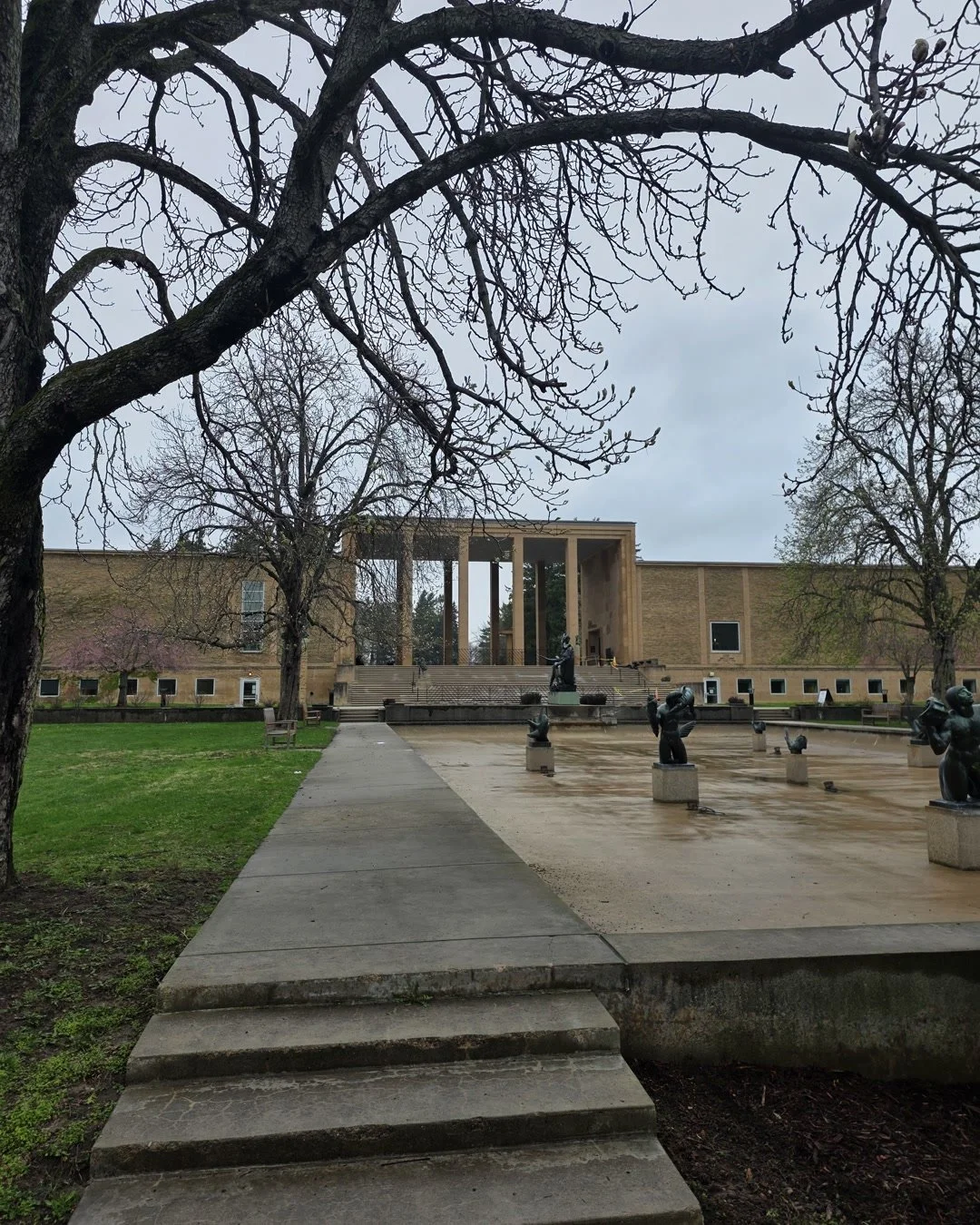
Fourteen hours to Michigan. I left at 5:42 in the morning.
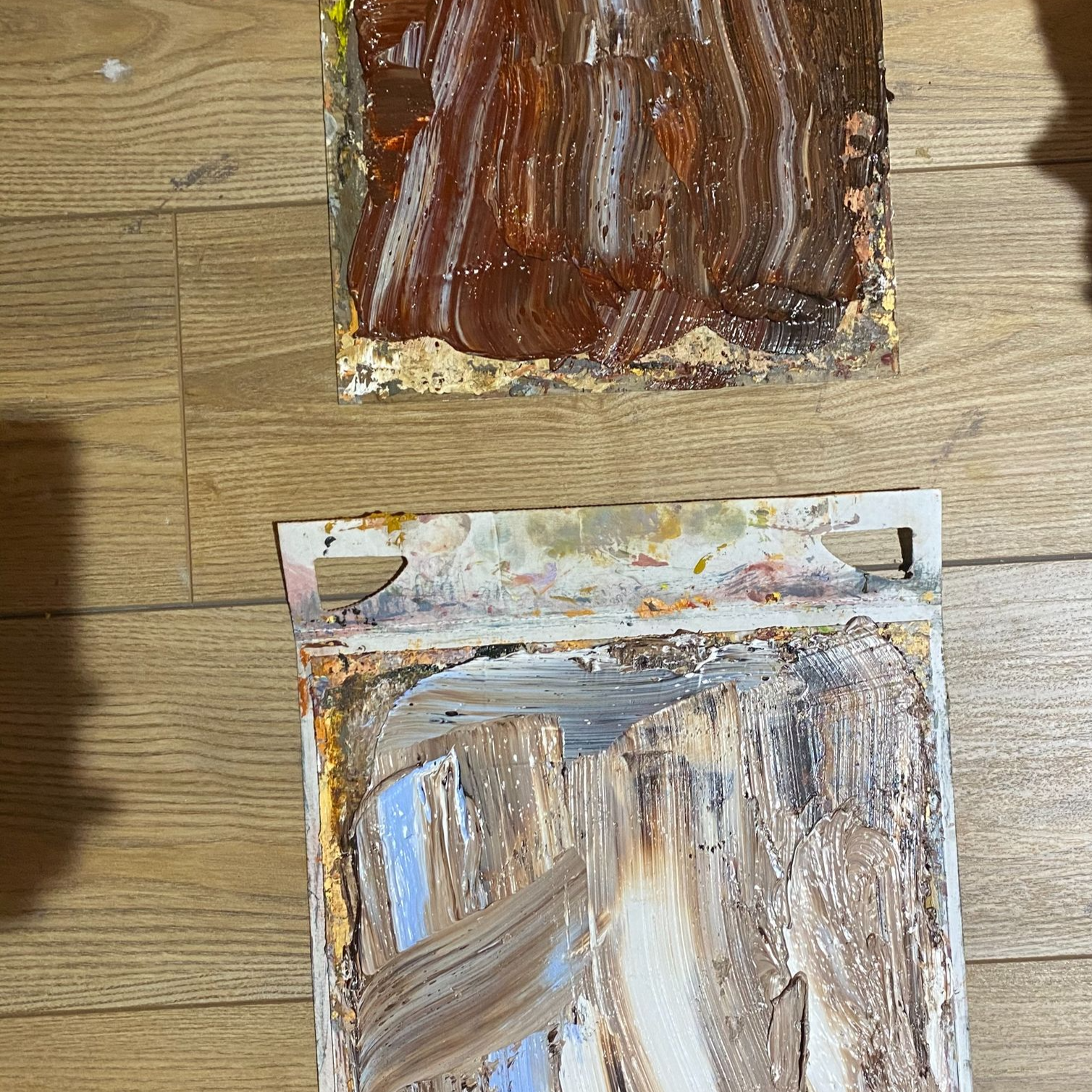
I loaded a stack of plexiglass panels that already carried years of other paintings dried onto them, drove up through Ontario, slept in Cleveland, and arrived the next day.
Elliott Earls had invited me to Cranbrook Academy of Art to make a painting in front of graduate students over one week. Not a lecture. The actual work, in the room.
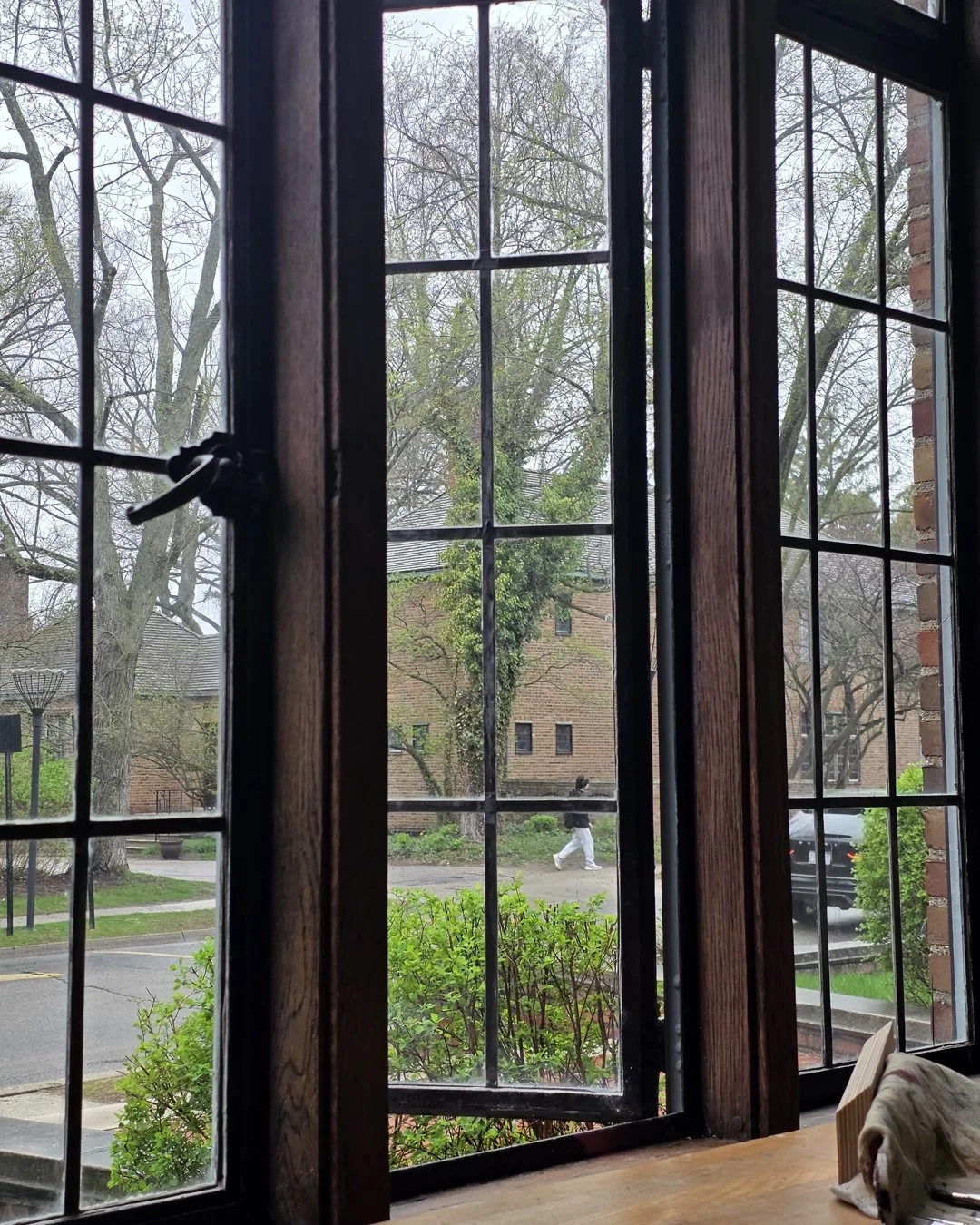
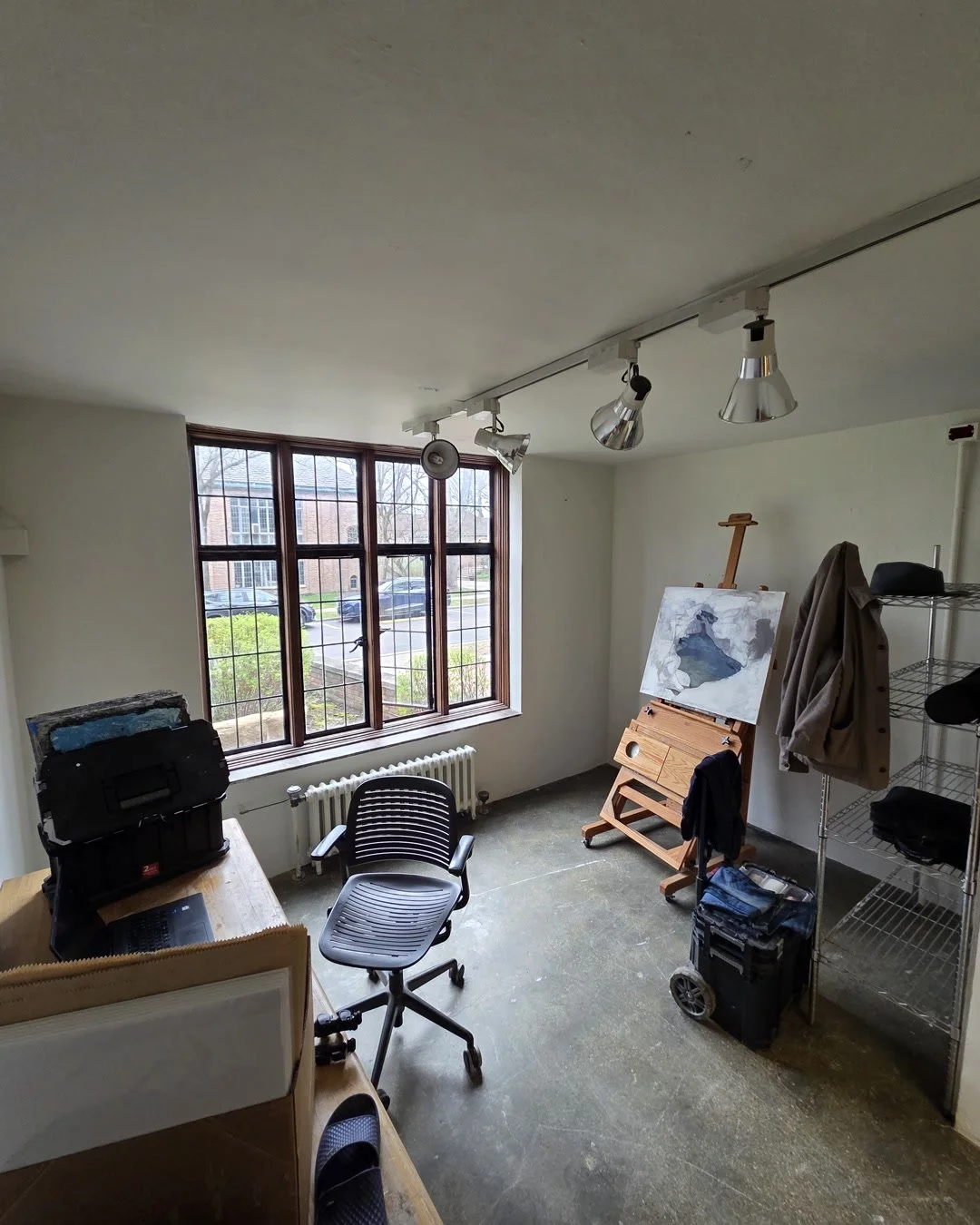
The room
It starts as charcoal. No colour for days.
People assume a painting this thick begins thick. It begins as a tonal drawing worked out on the panel, and the paint only goes on once the dark and the light are already decided. Everything after that is surface.
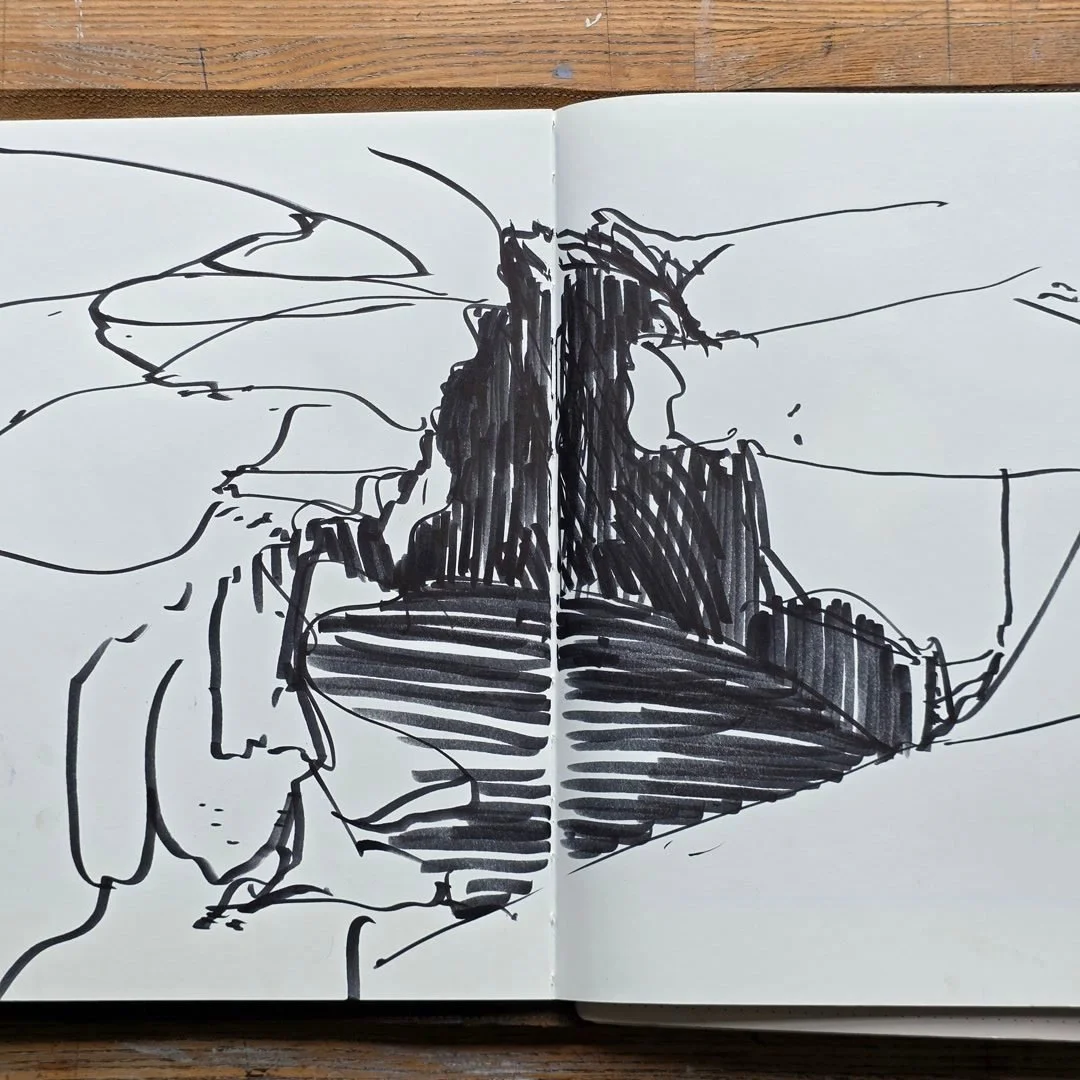
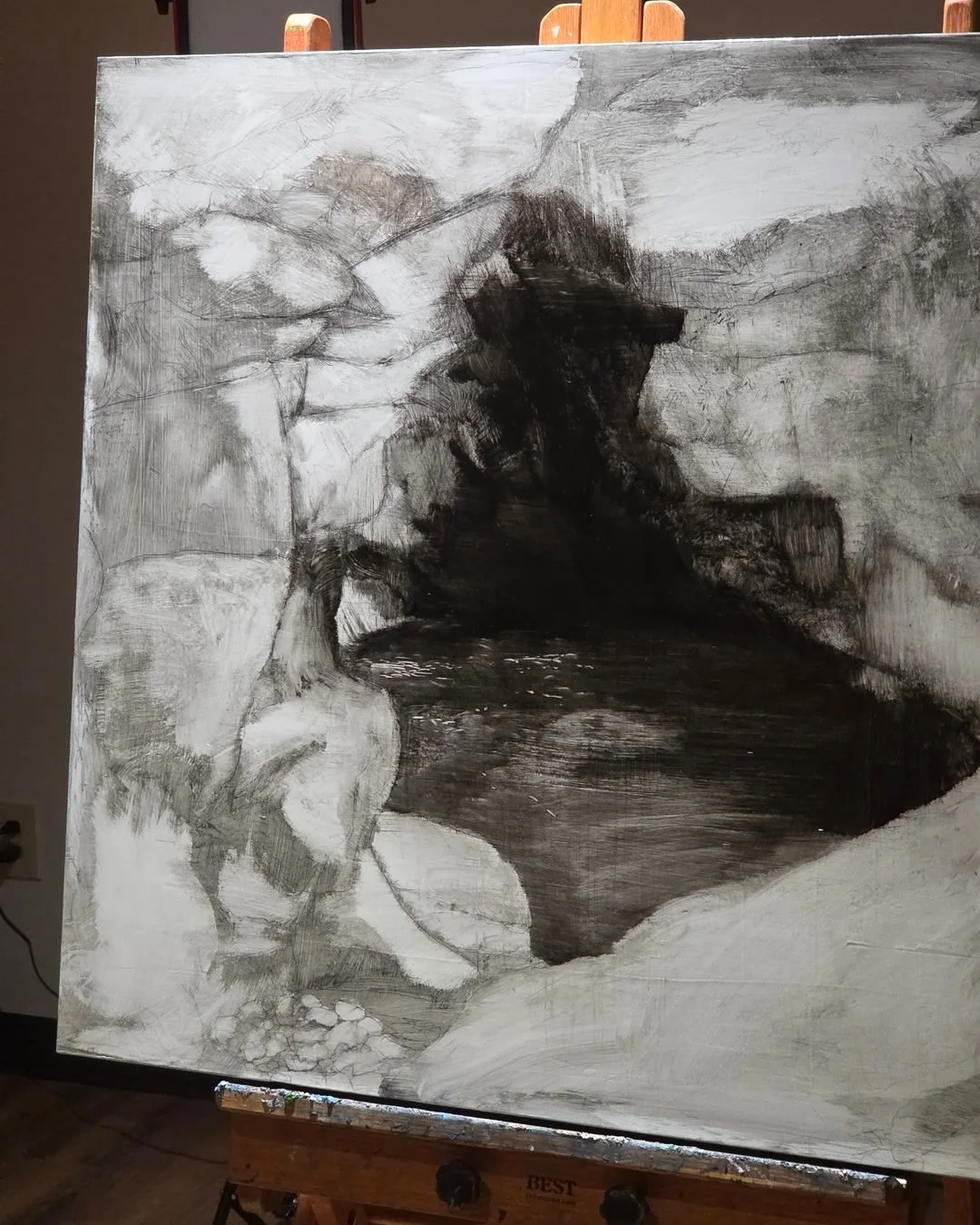
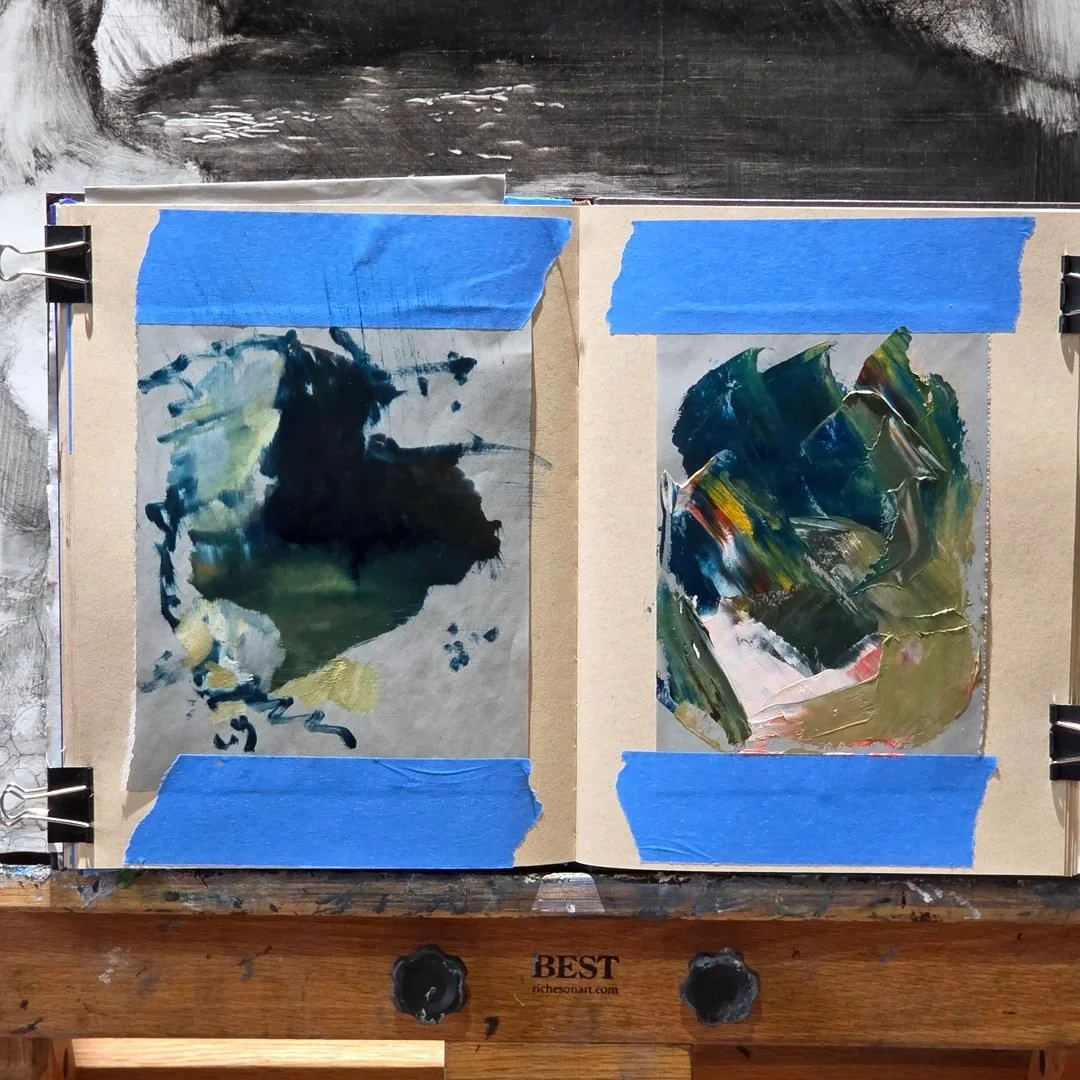
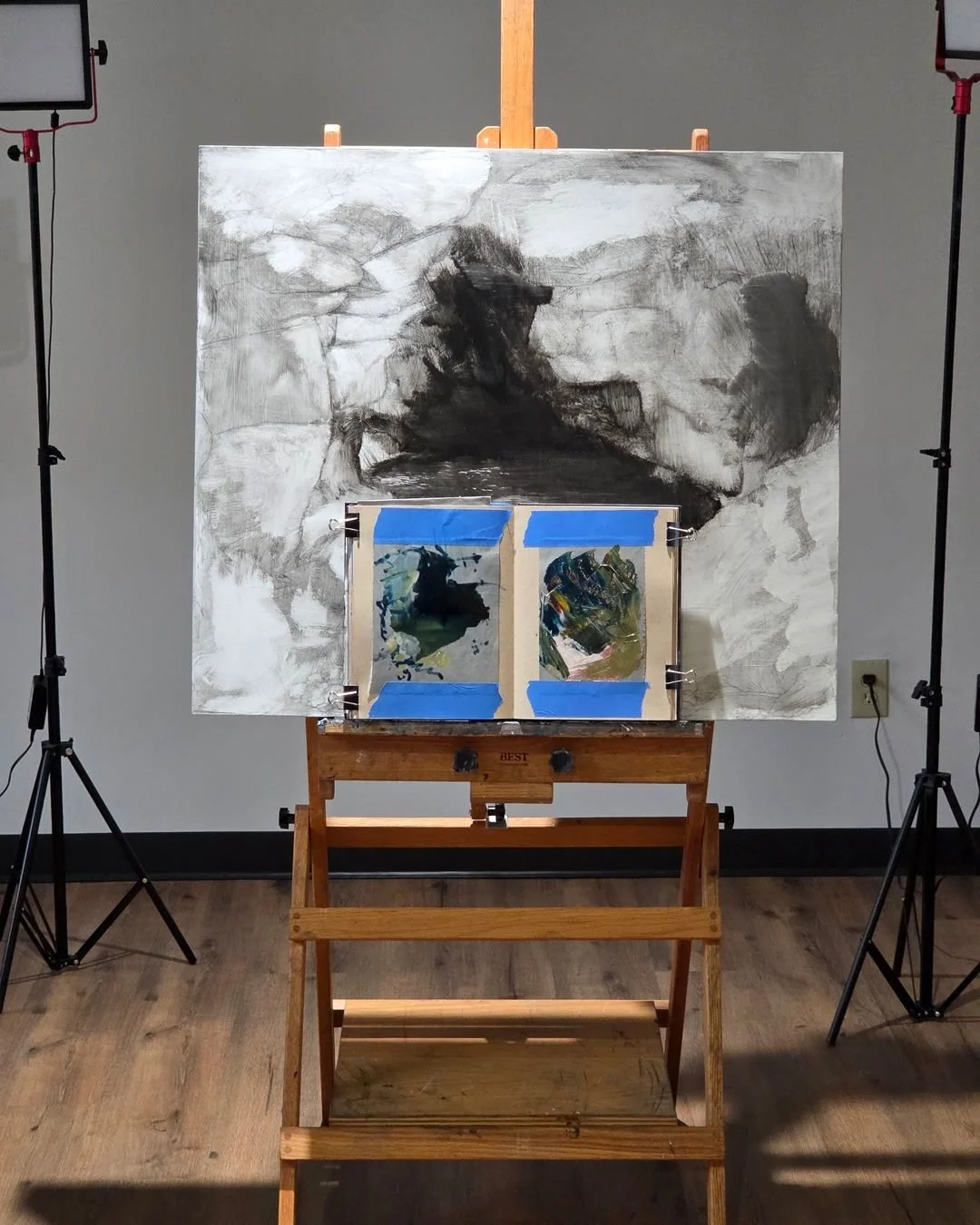
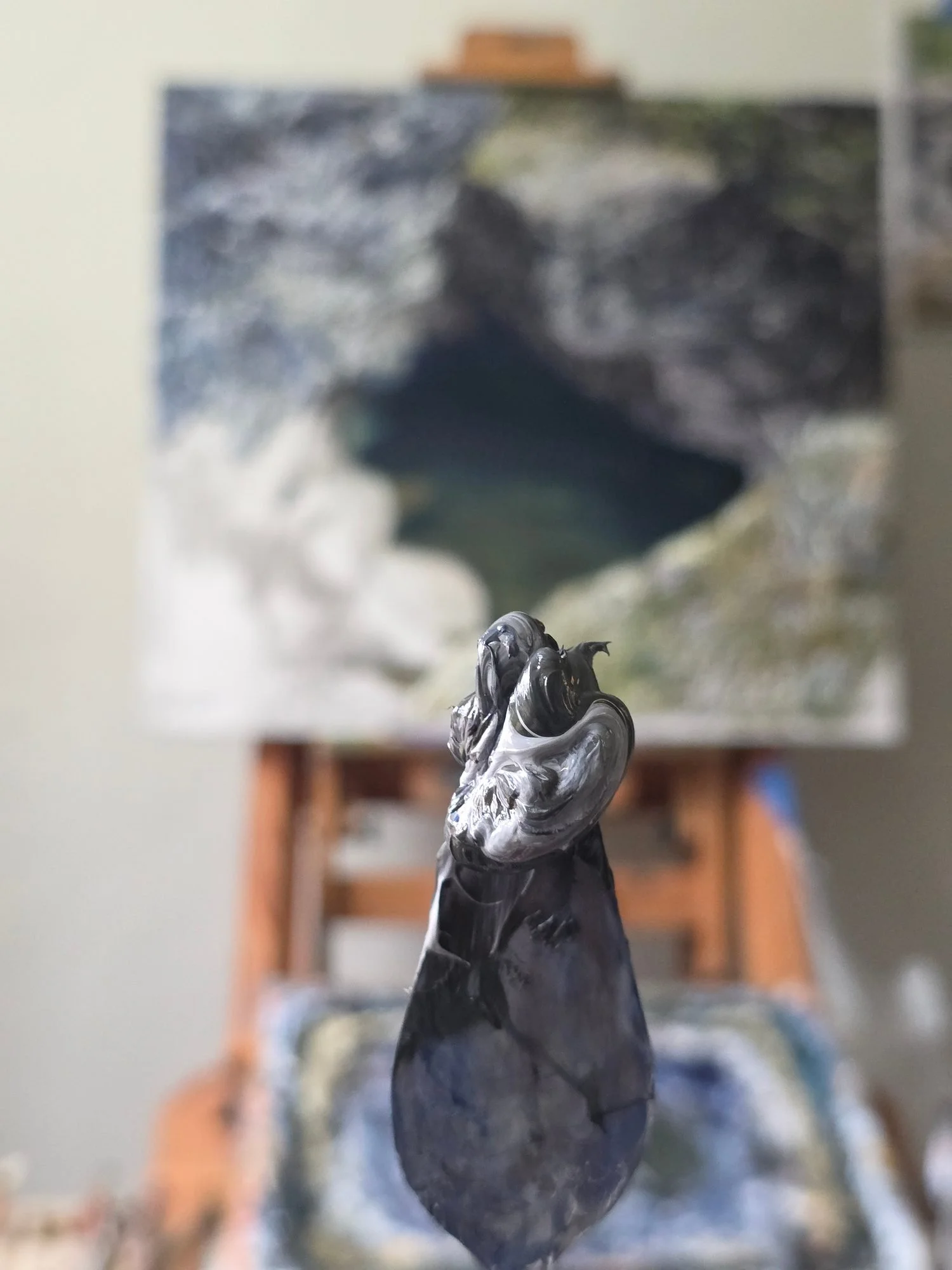
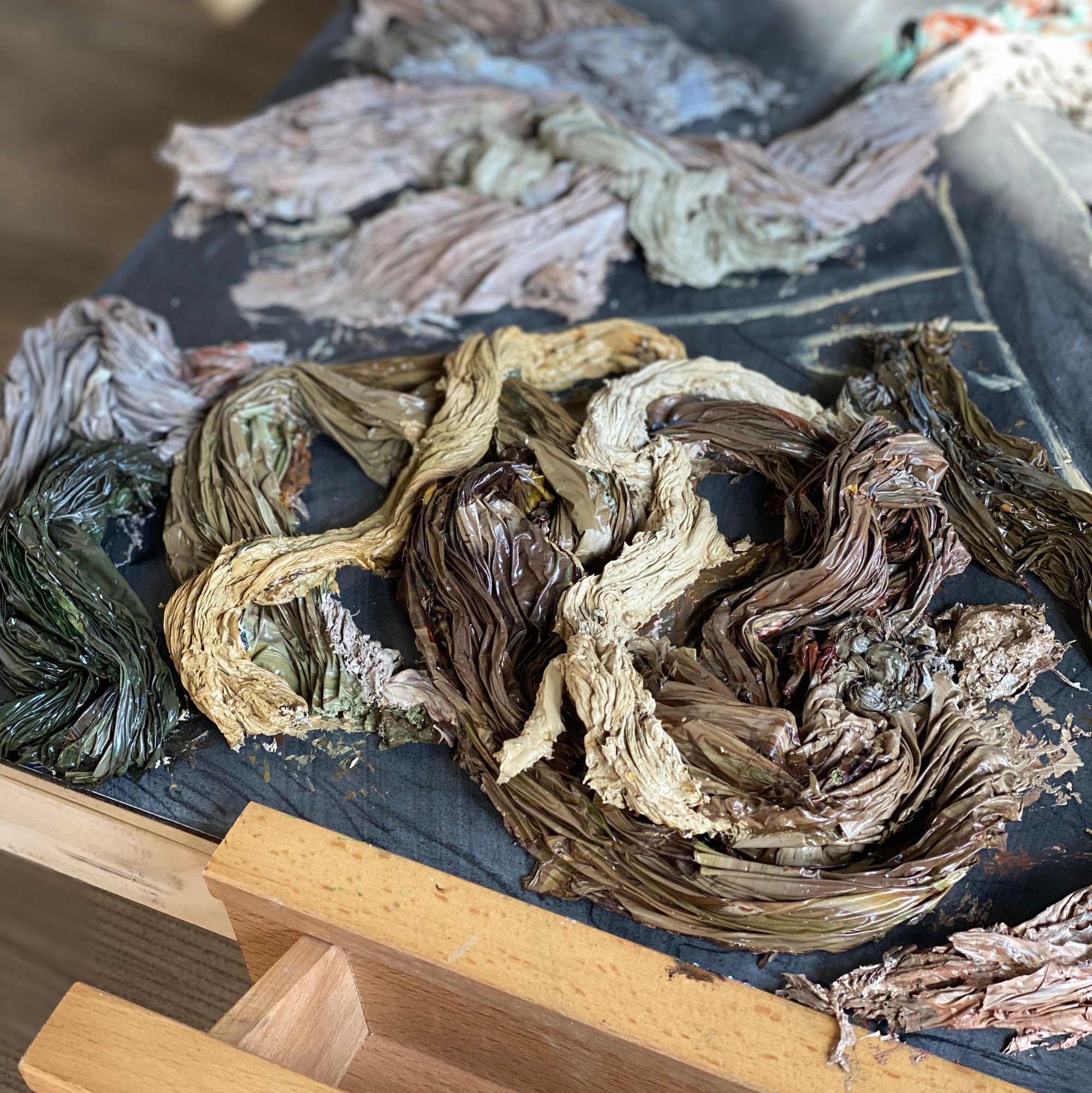
The students watched me take paint off the old plexiglass panels and build it into a new one. That is the whole method. It is much less impressive to describe than it is to watch.
I had not been in that kind of room in a long time. I had forgotten what it does to you. People looking hard at what you are making and asking you why. It was warm in a way I was not expecting.
I did the bulk of the painting there and finished it at home.
The painting
This one arrived fully formed. I do not have a better word for it.
Most paintings I fight. This one came together without me forcing it. The drawing, the colour, the surface, all of it landing where it needed to. That happens a few times in a life and you do not get to schedule it.
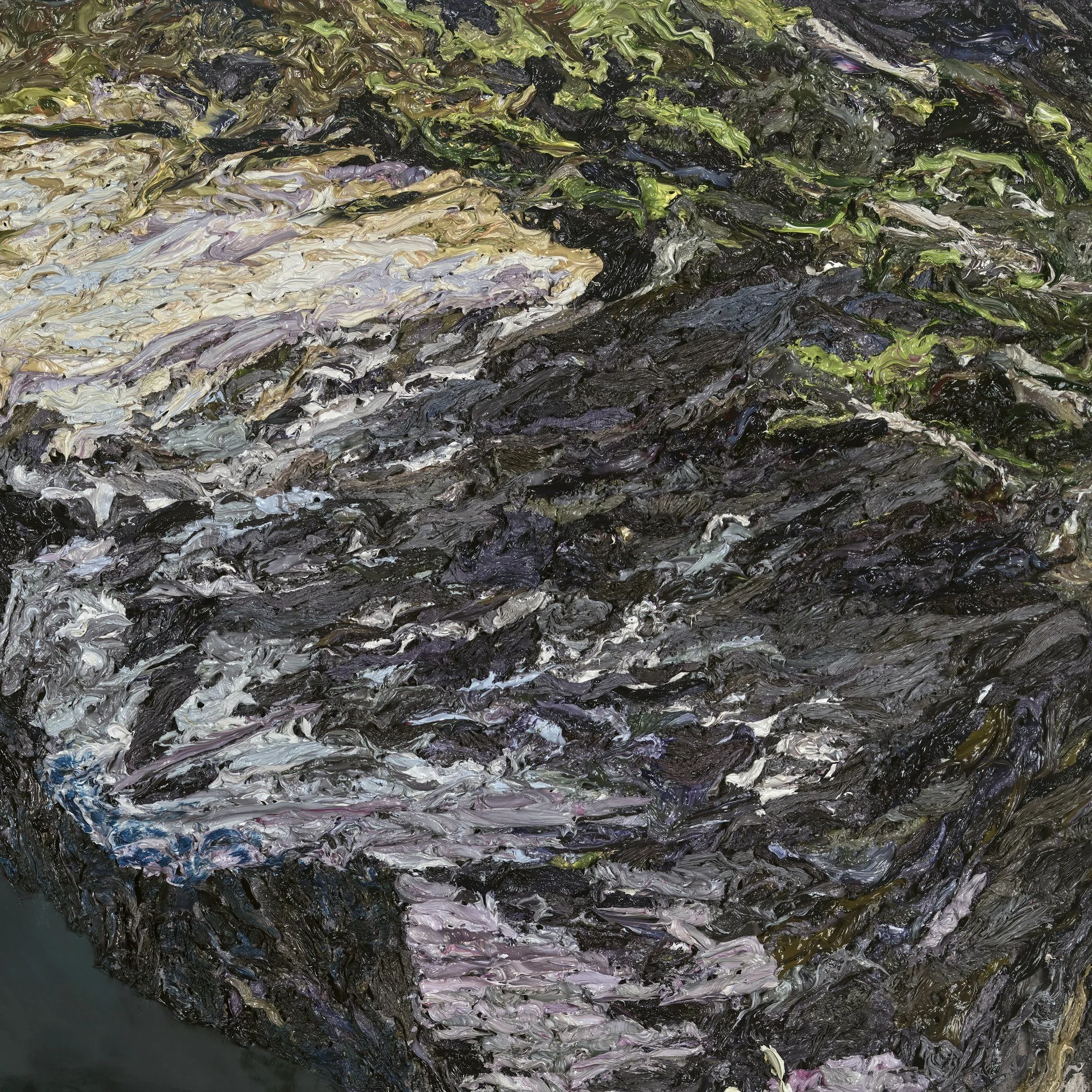
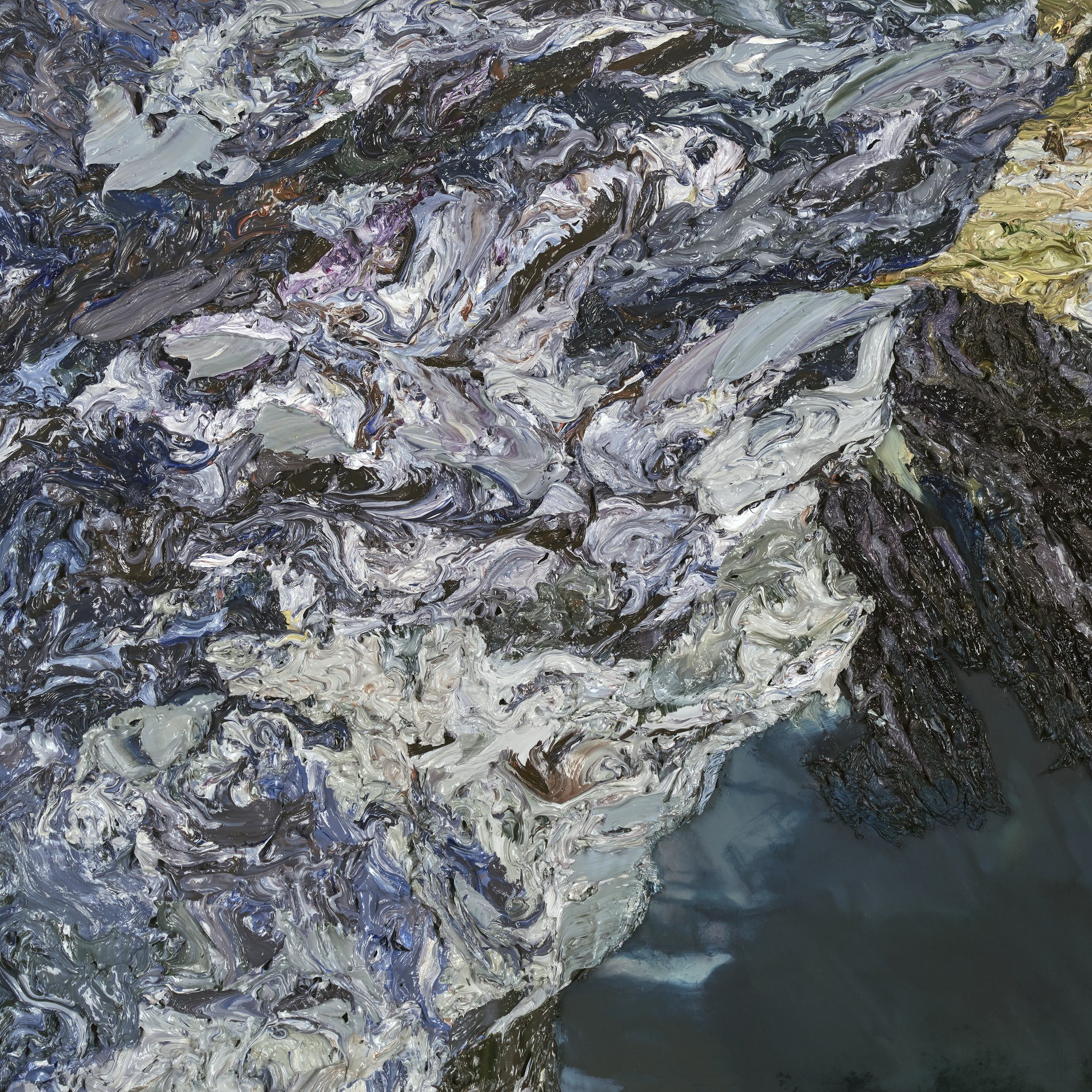
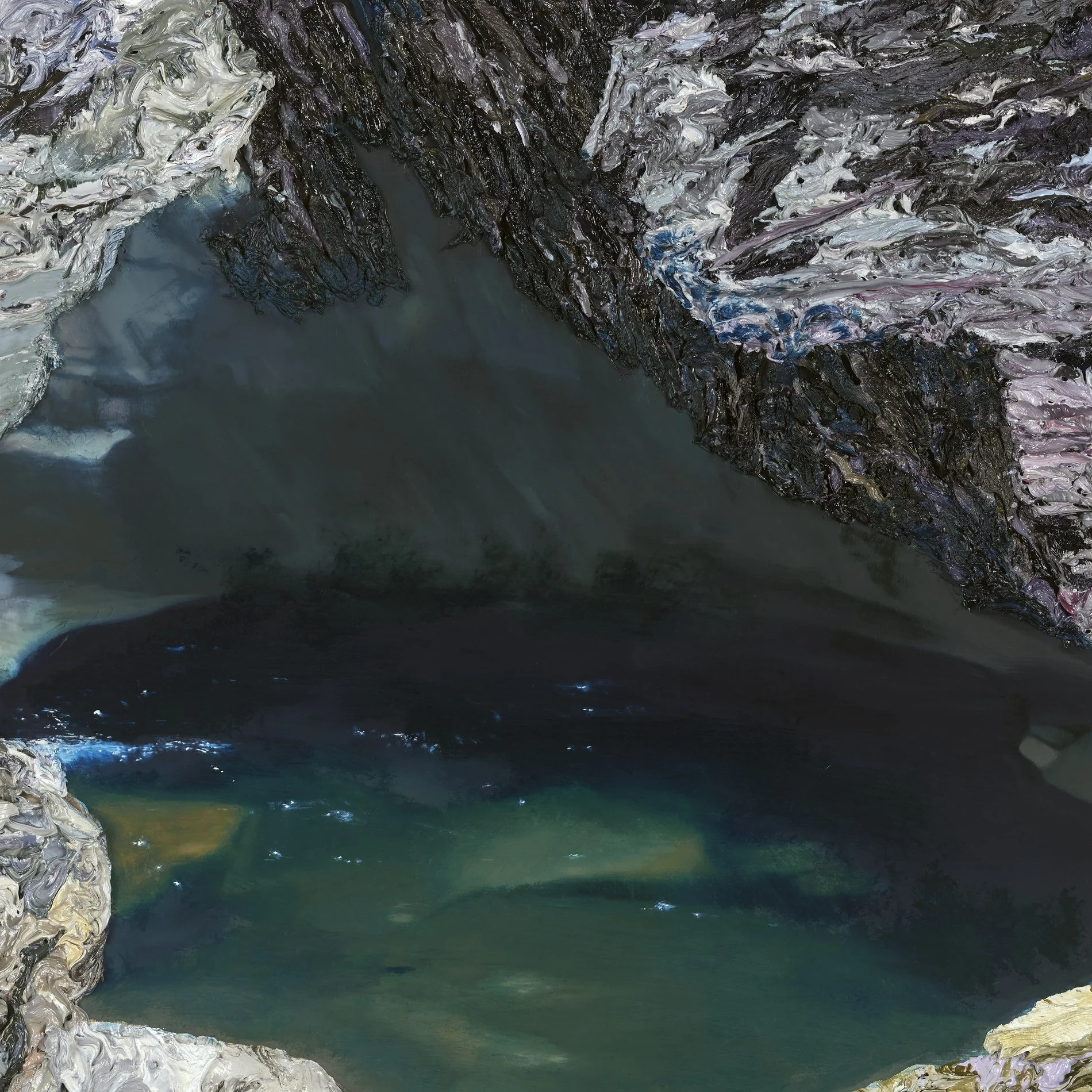
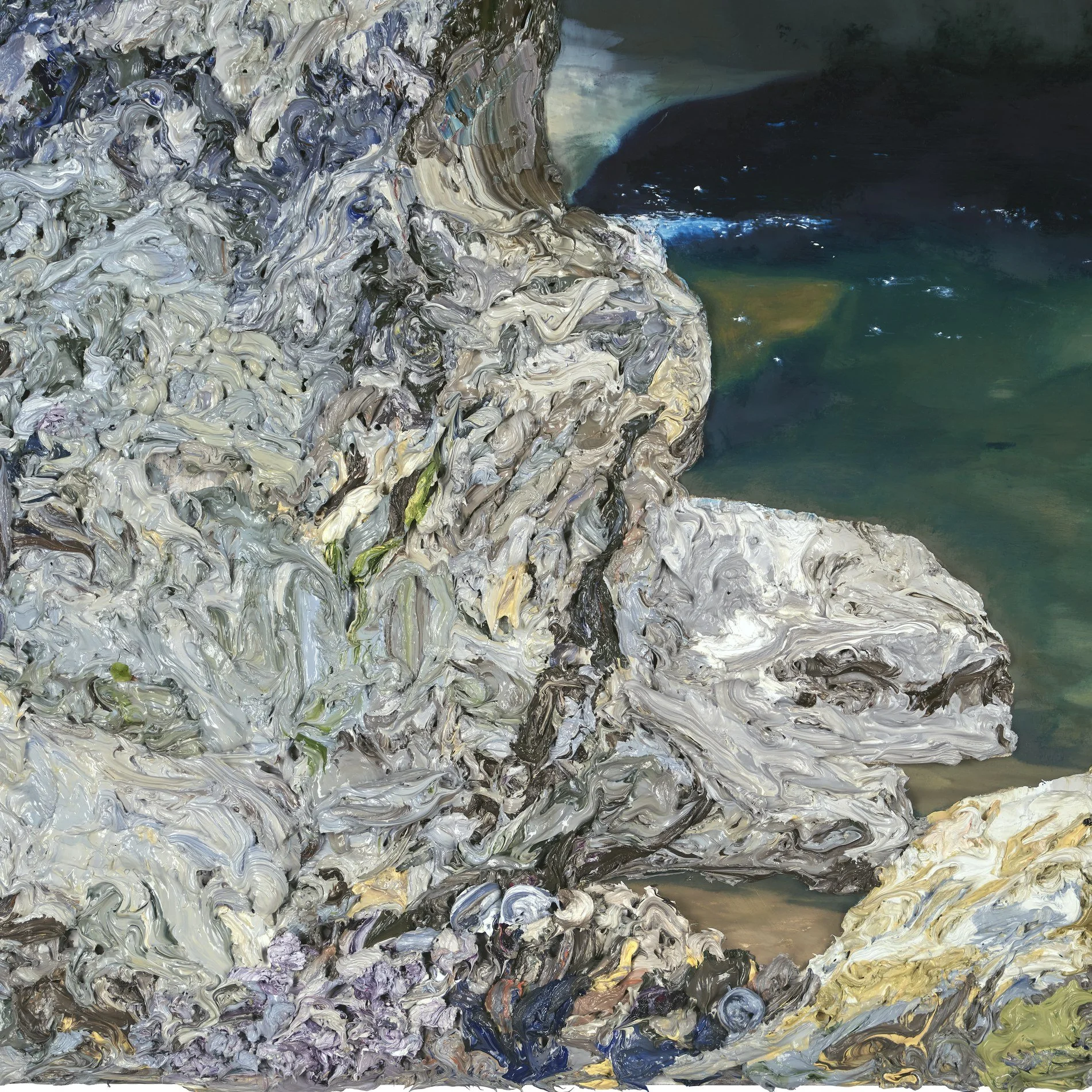
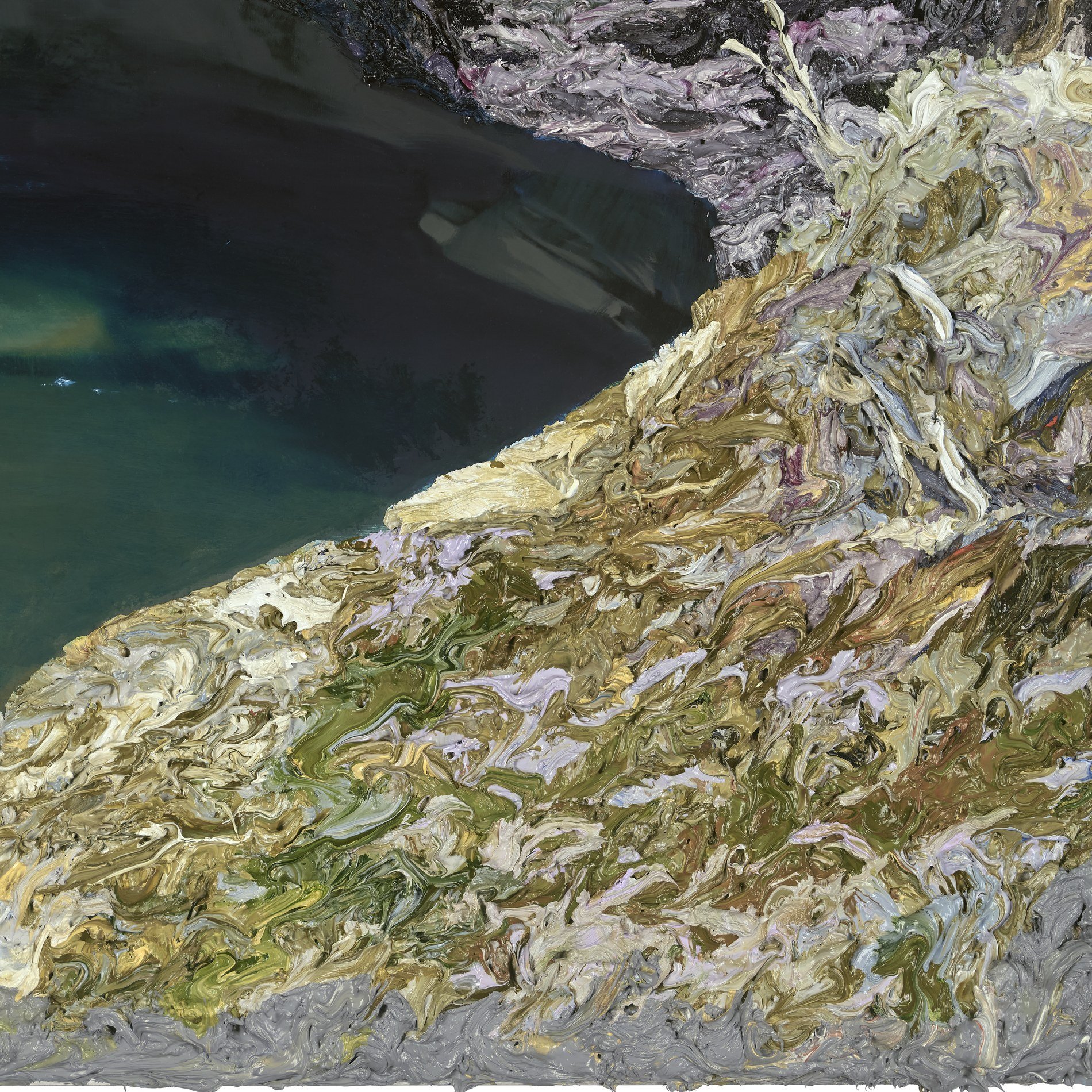
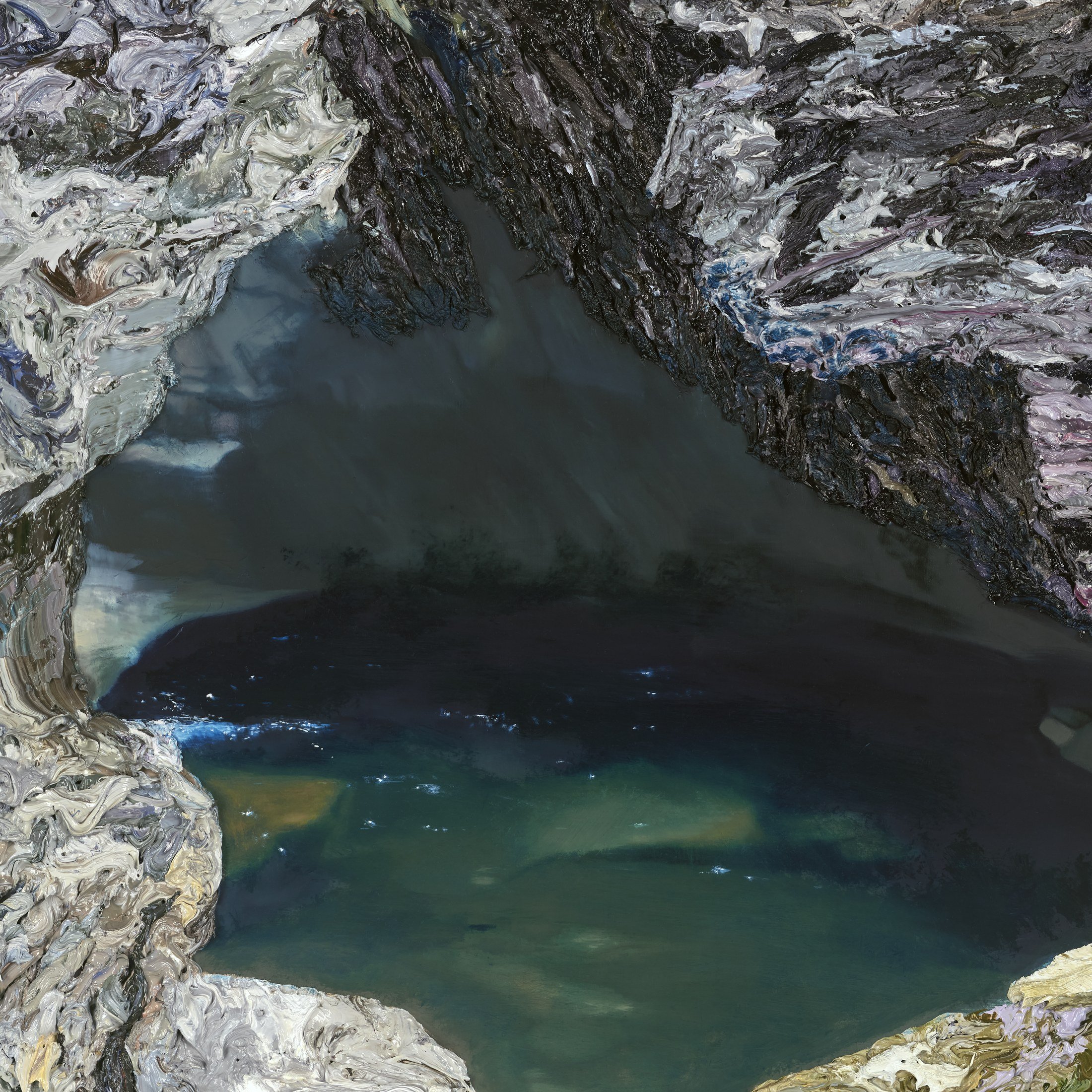
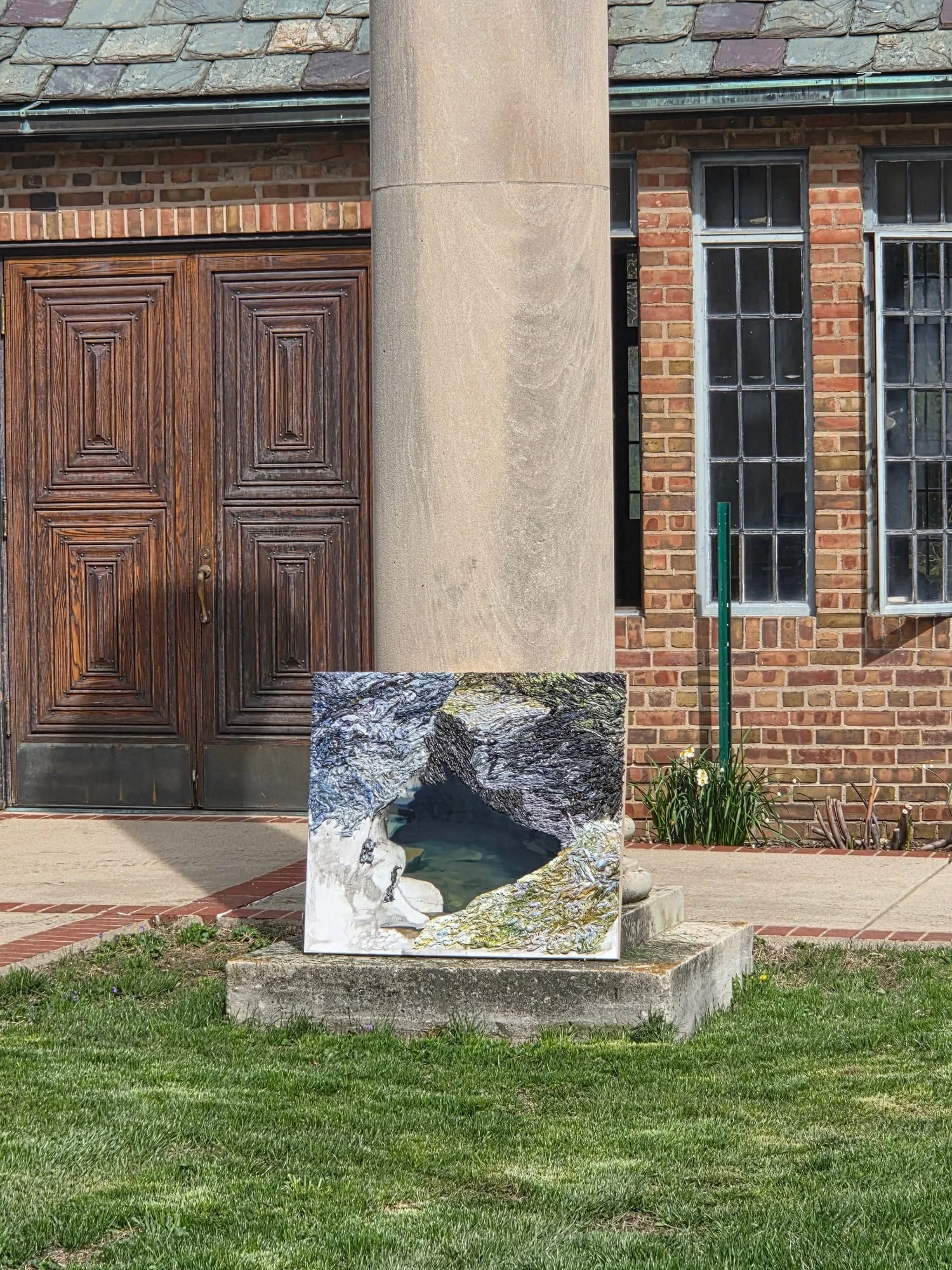
You cannot photograph this painting straight on. In flat light it disappears and reads as a picture of a cave. It takes a low sun coming across the surface to show that the cave is inches of paint standing off the panel. You can put a hand into the shadow.
At one scale, a landscape. At another, a jewel. Small enough to hold. Intense enough to feel endless.
The print
Cave of Emerald Waters becomes a print on Friday, October 9, at 9:00 AM Eastern. The shop closes Sunday, October 11, at 9:00 AM. Forty-eight hours, then the page comes down.
It is a timed edition. However many are ordered in those forty-eight hours is the entire edition. I print exactly that many, and sign and number each one out of that total.
The email list gets the link at 8:00 AM, a full hour before it goes public. That hour is the whole advantage. Sign up for the list here.
The original is available. Write me at majkowski.studio@gmail.com
ARTIFACTS
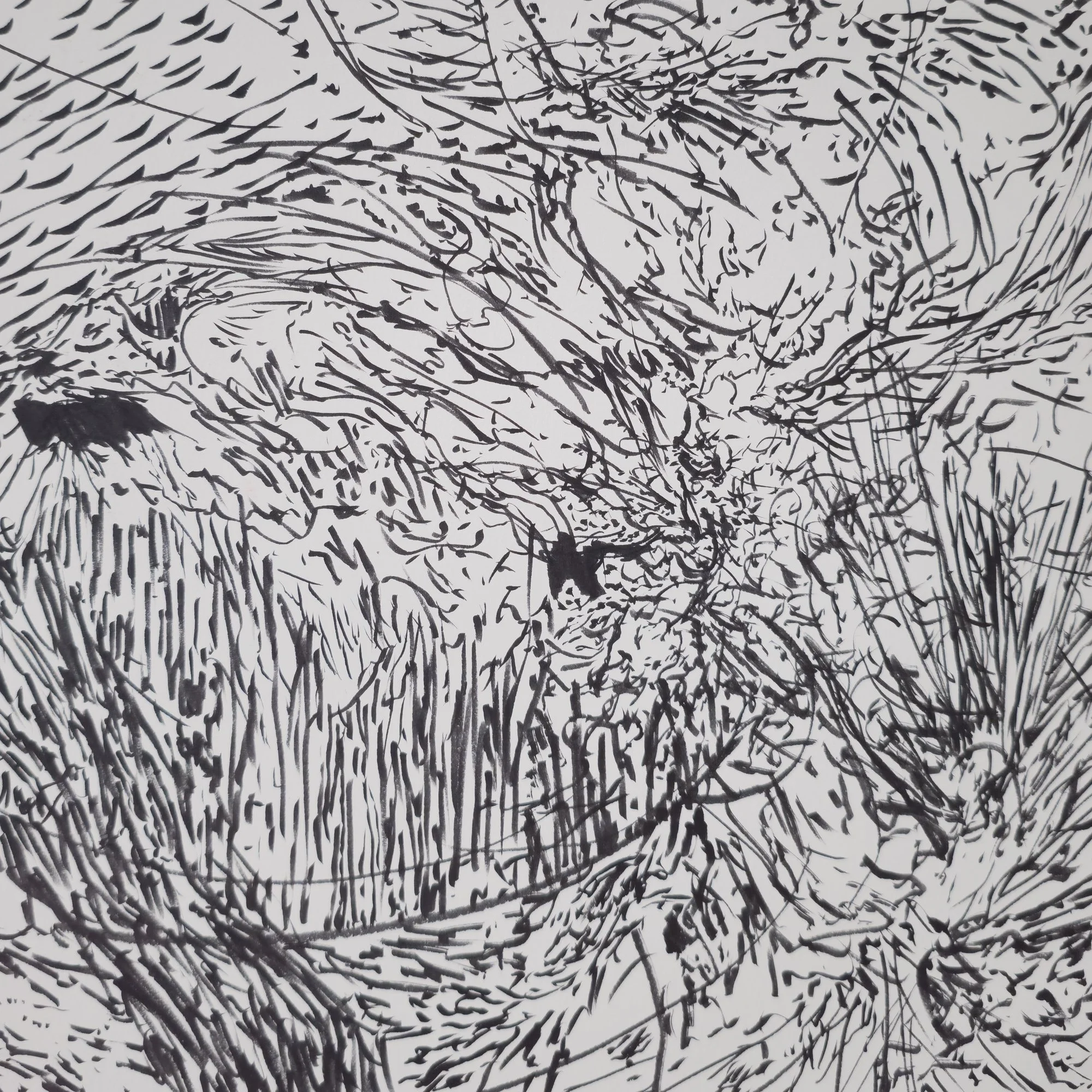
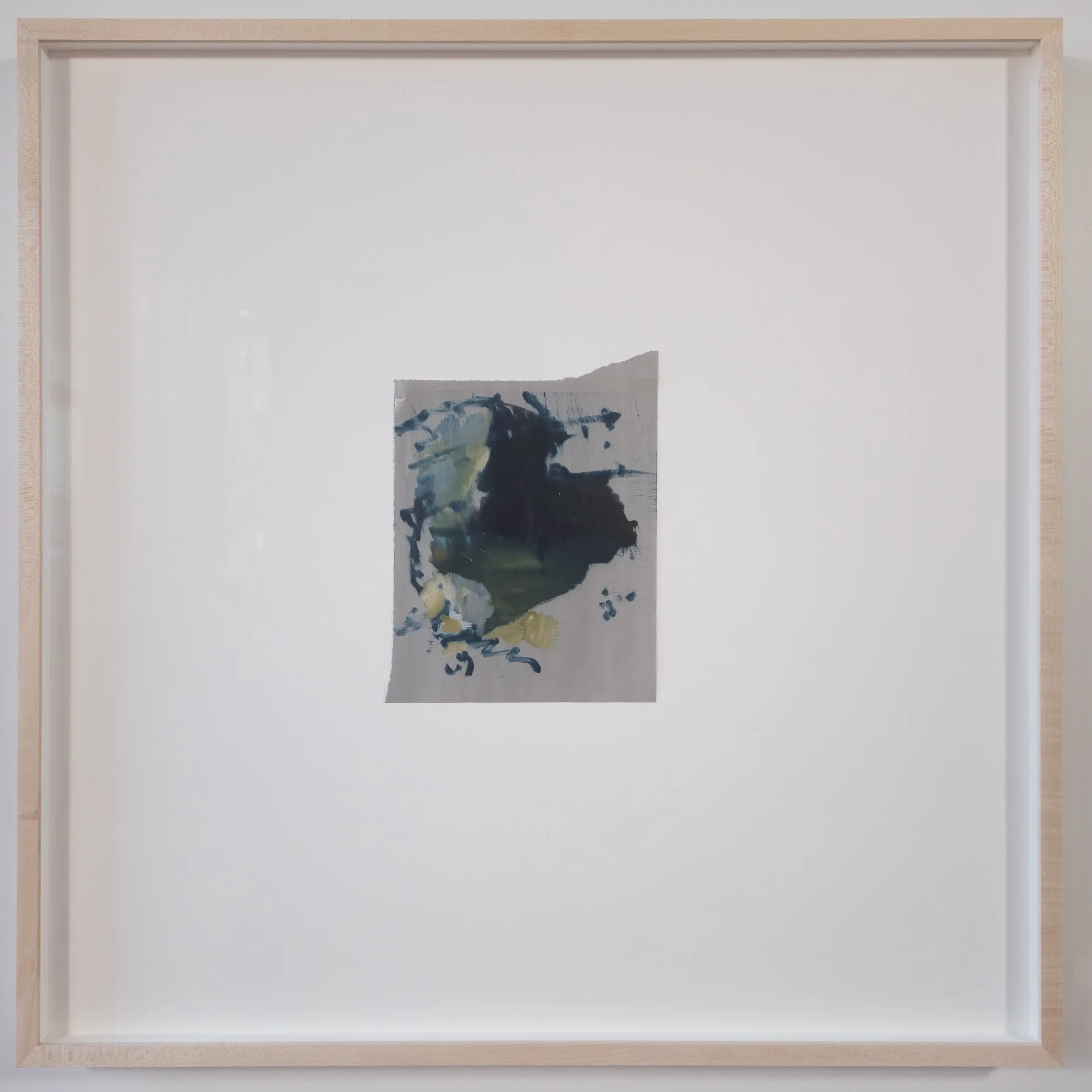
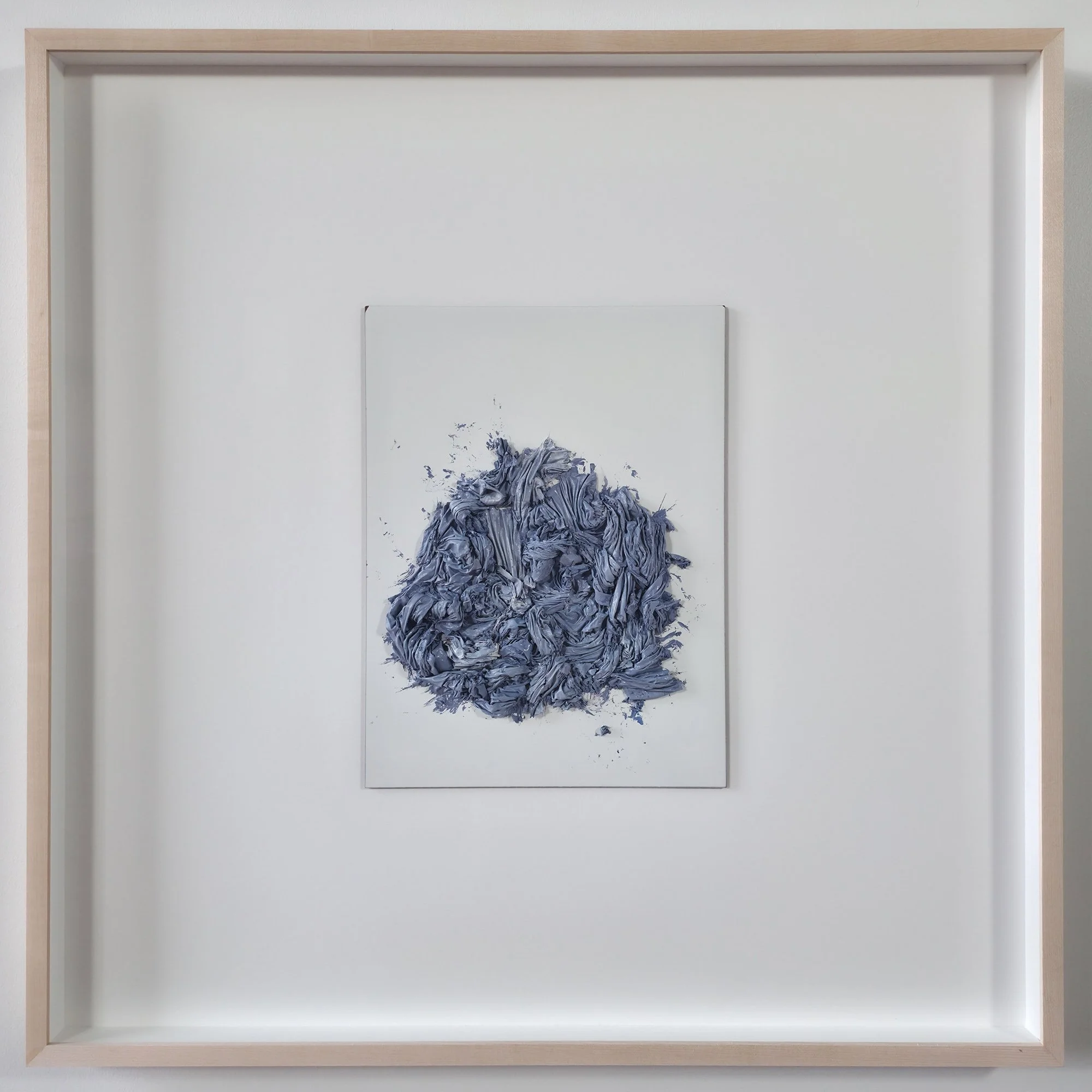
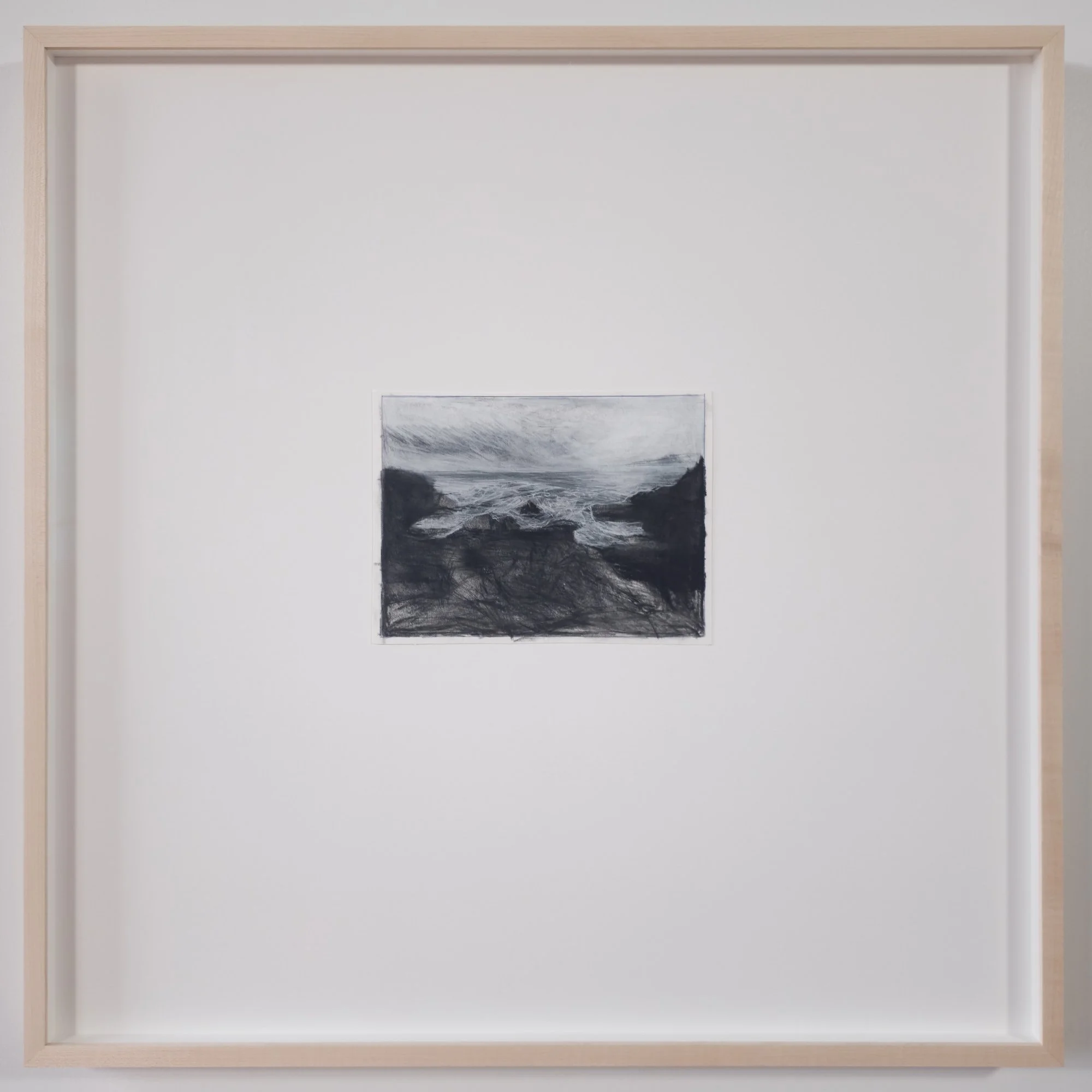
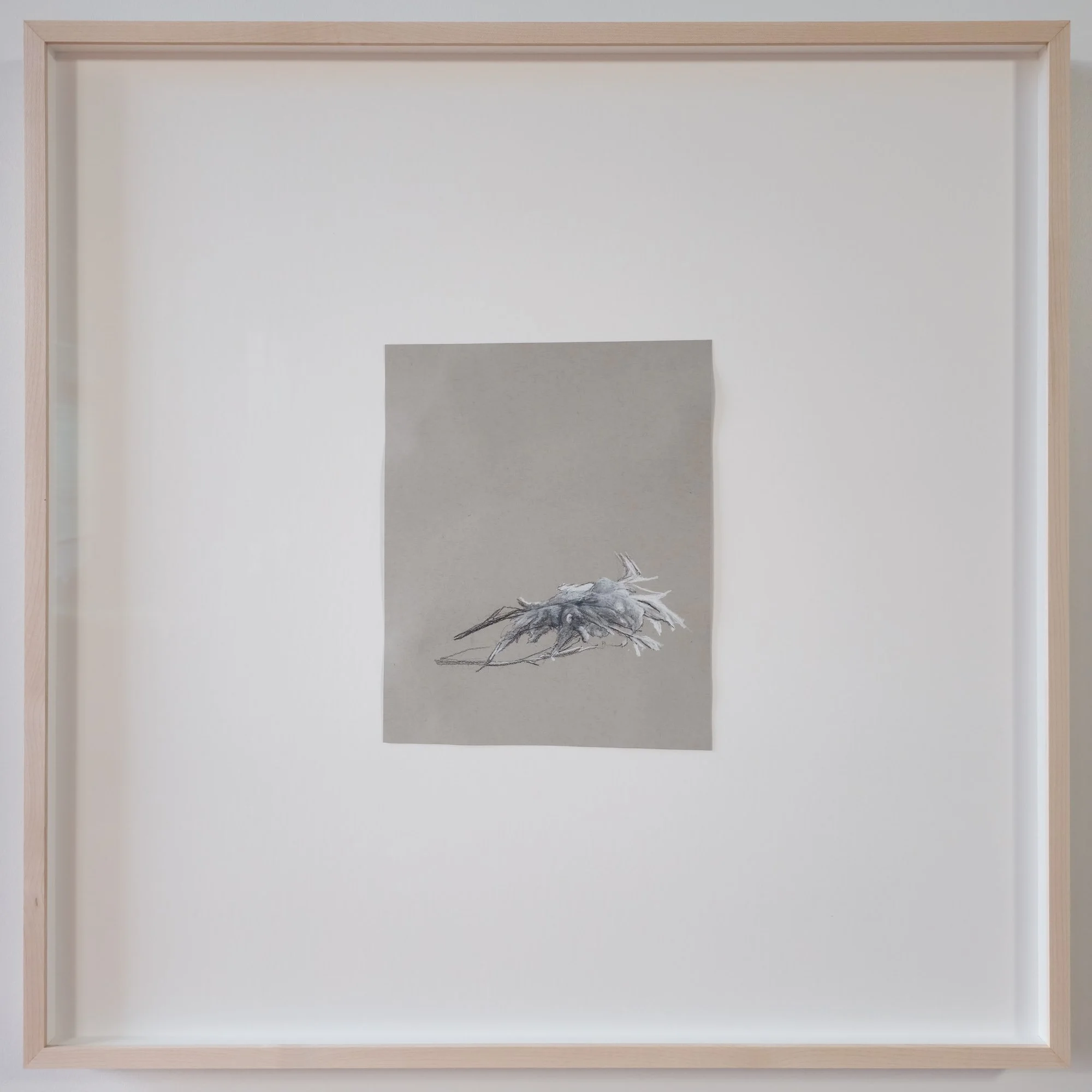
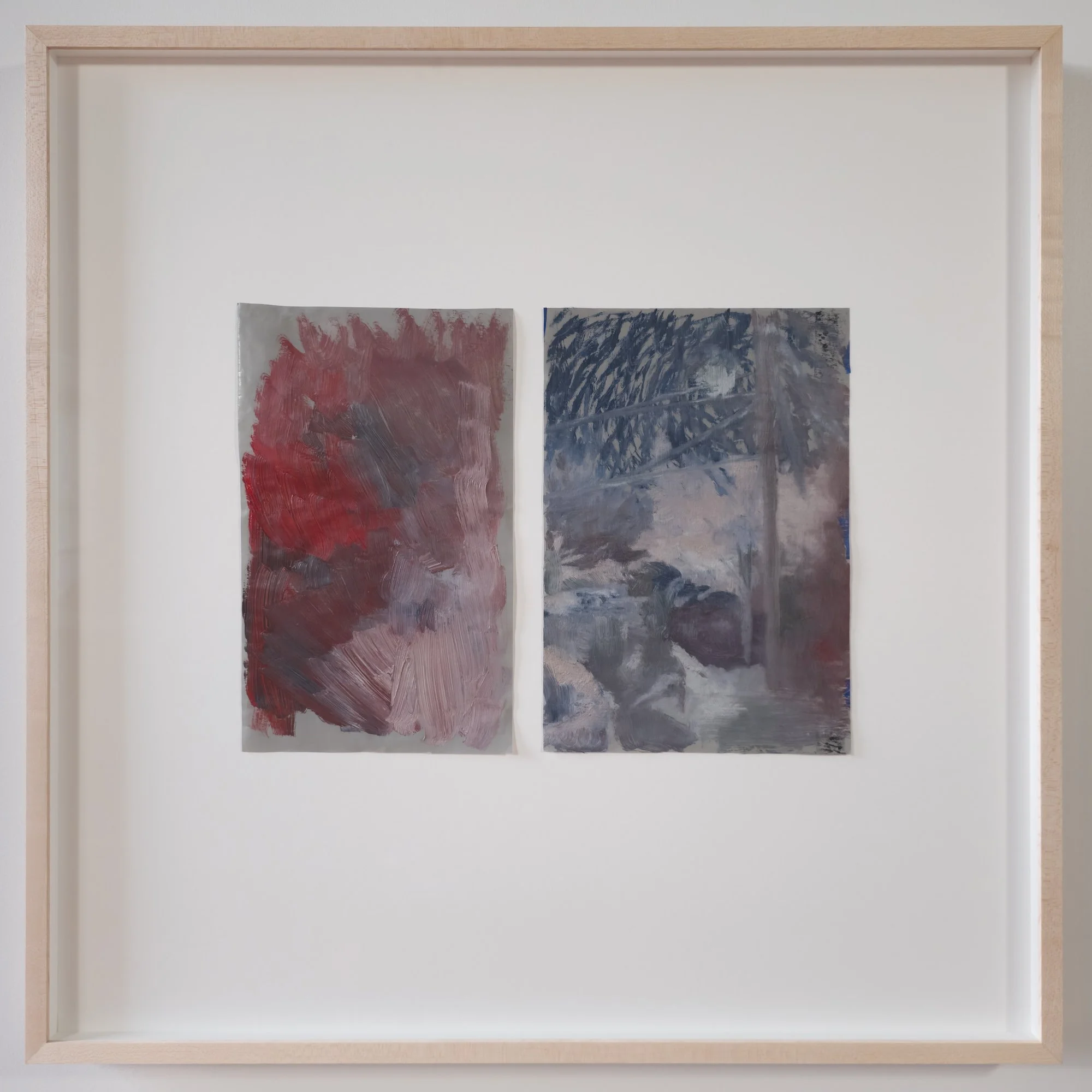
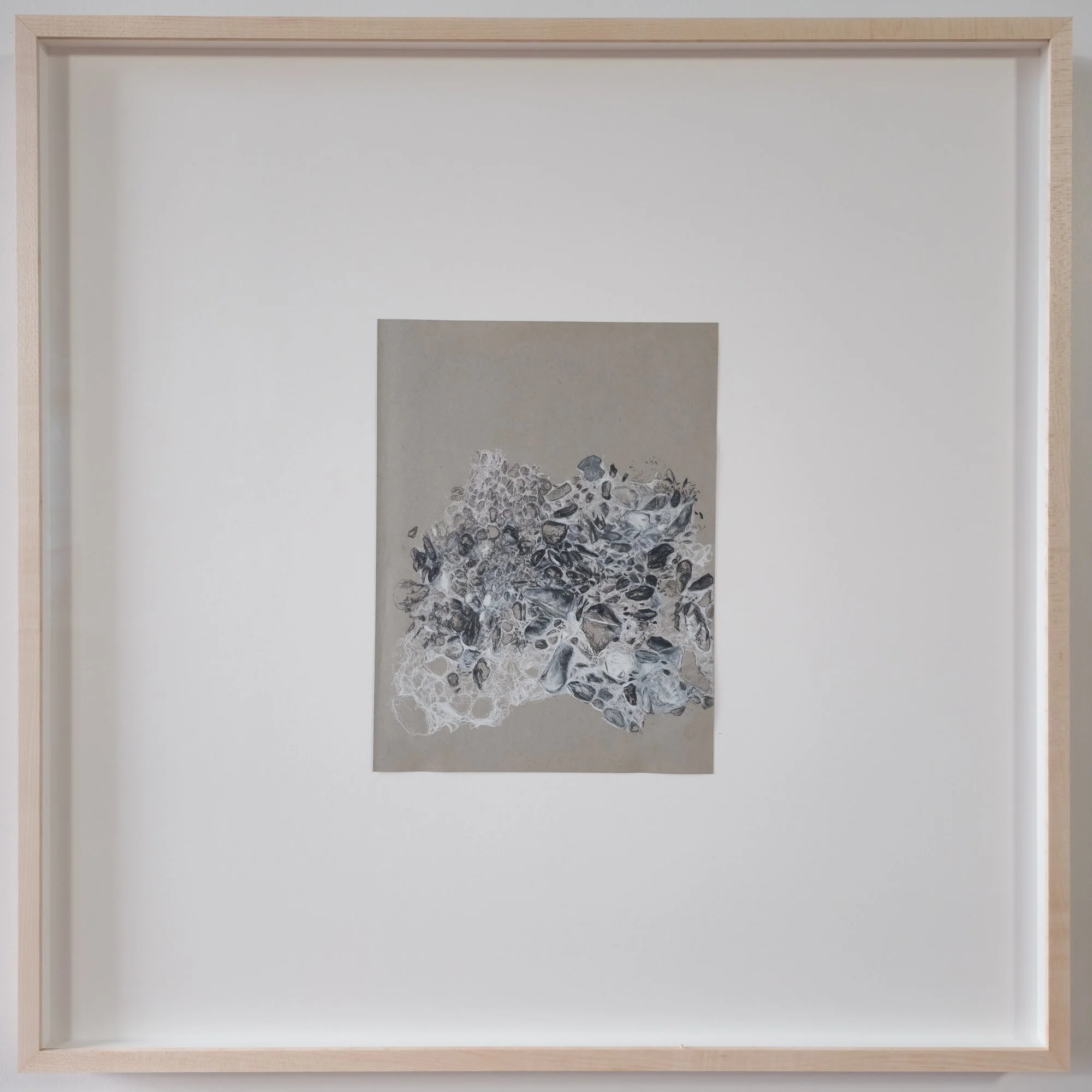
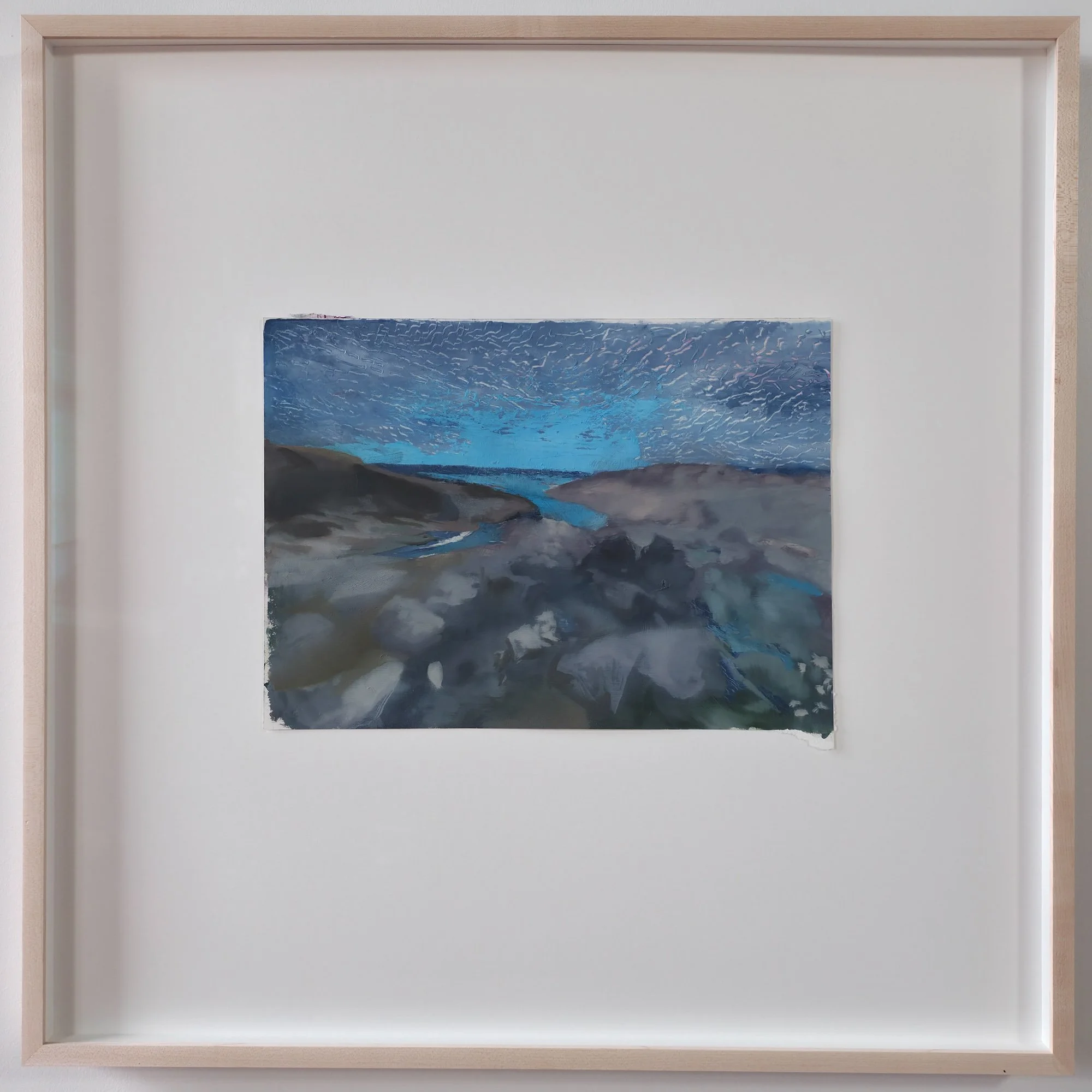
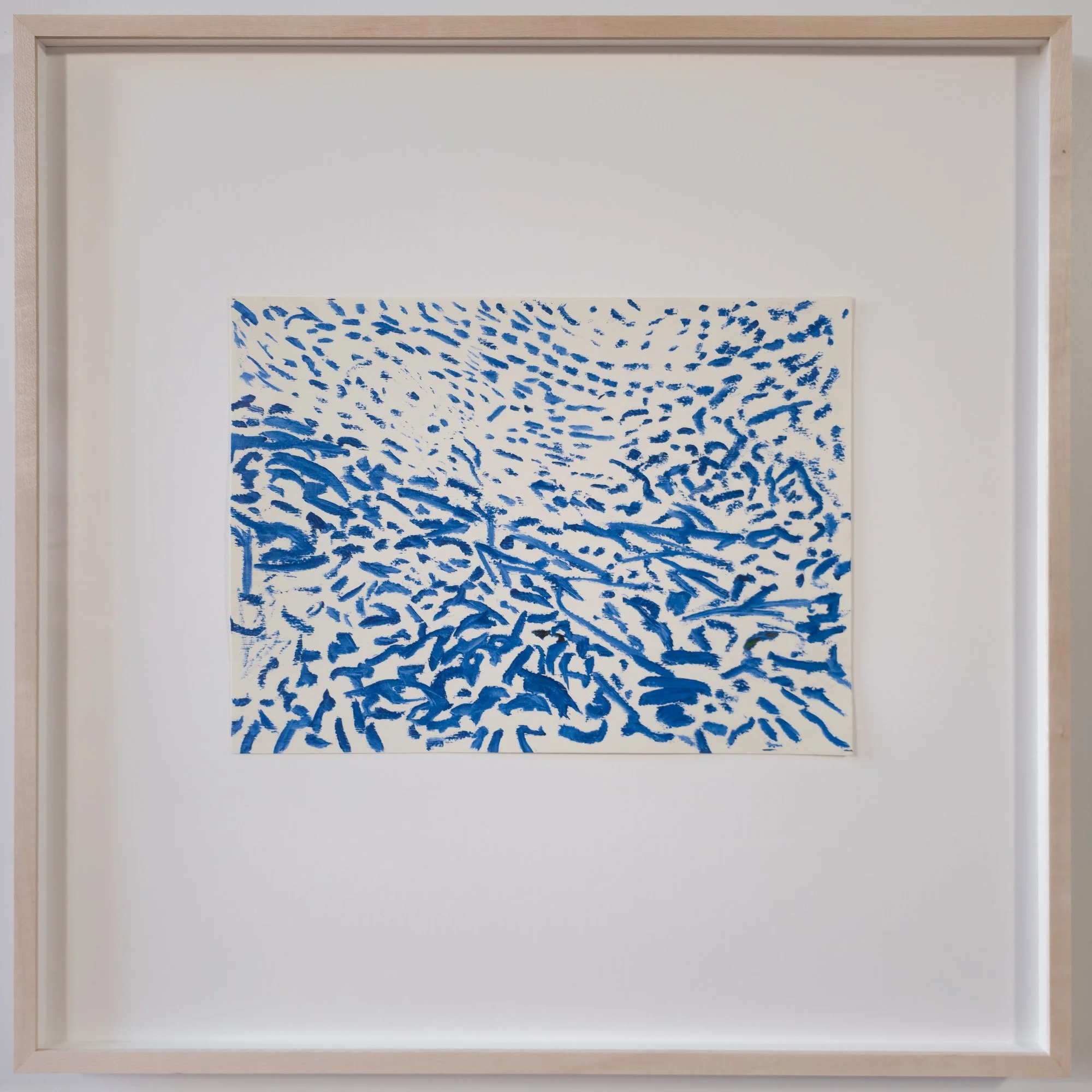
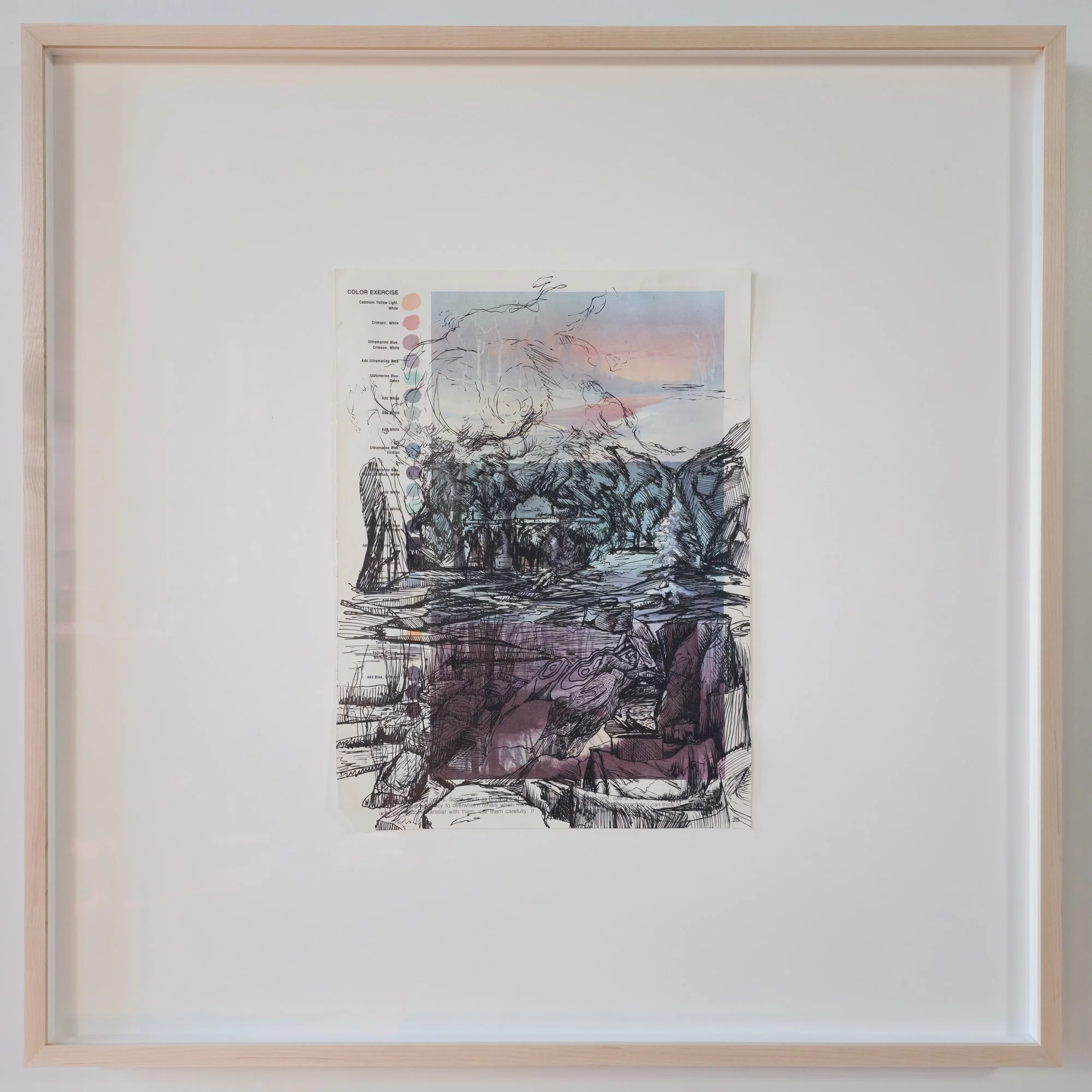
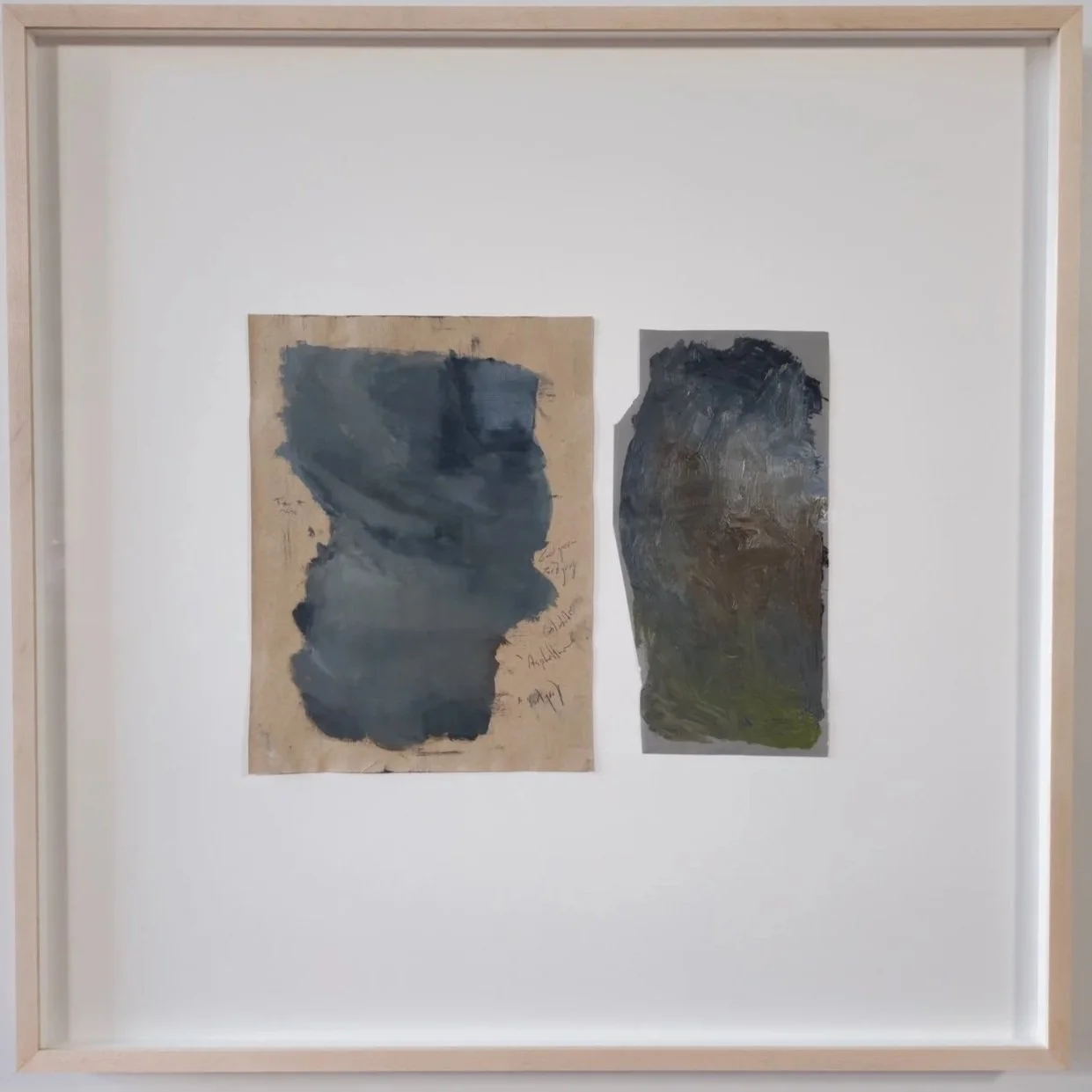
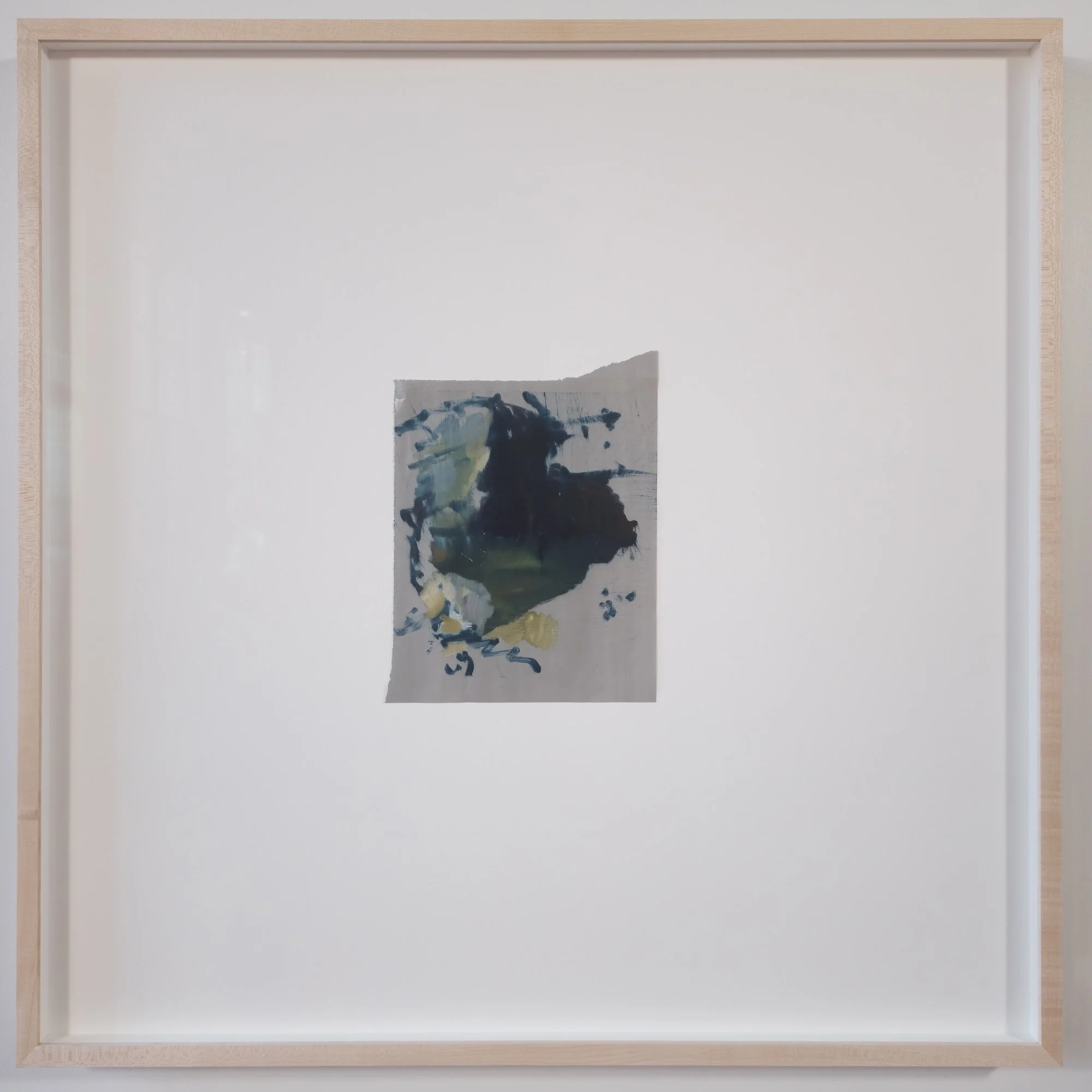
In July 2025, a pipe burst above my studio and the flood took a wall of storage. Counting what survived, I found thirteen small objects I never meant to show — the studies, plans, and false starts my finished paintings are built from. Artifacts is what the work leaves behind.
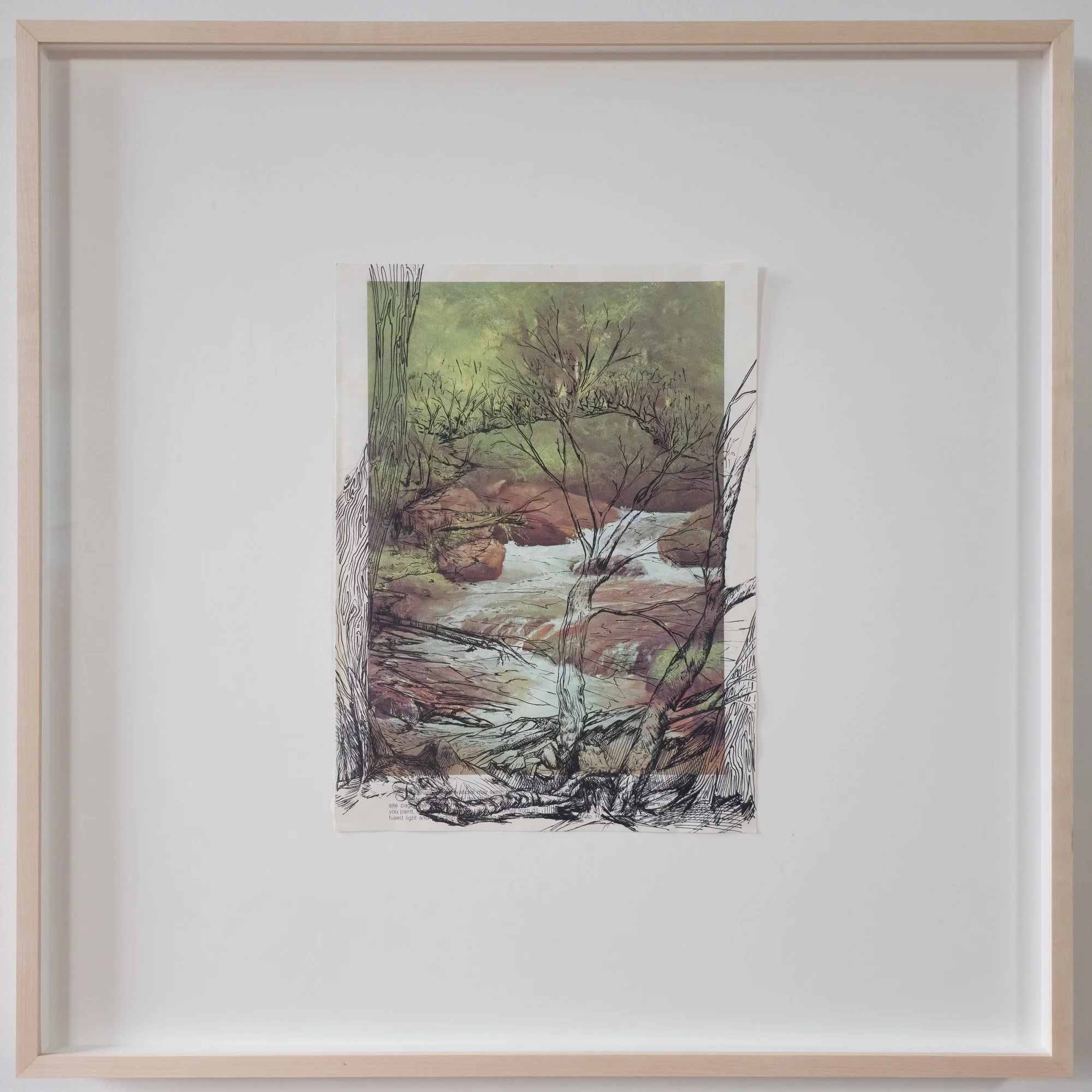
What the Work Leaves Behind
Thirteen small objects from the studio archive.
In July 2025, a pipe burst in the floor above my studio. The flood took a wall of storage. I spent that night cleaning up, and I spent the weeks after opening everything I owned to count what was left. Flat files. Boxes. The shelf of filled sketchbooks. The loose pages living between books.
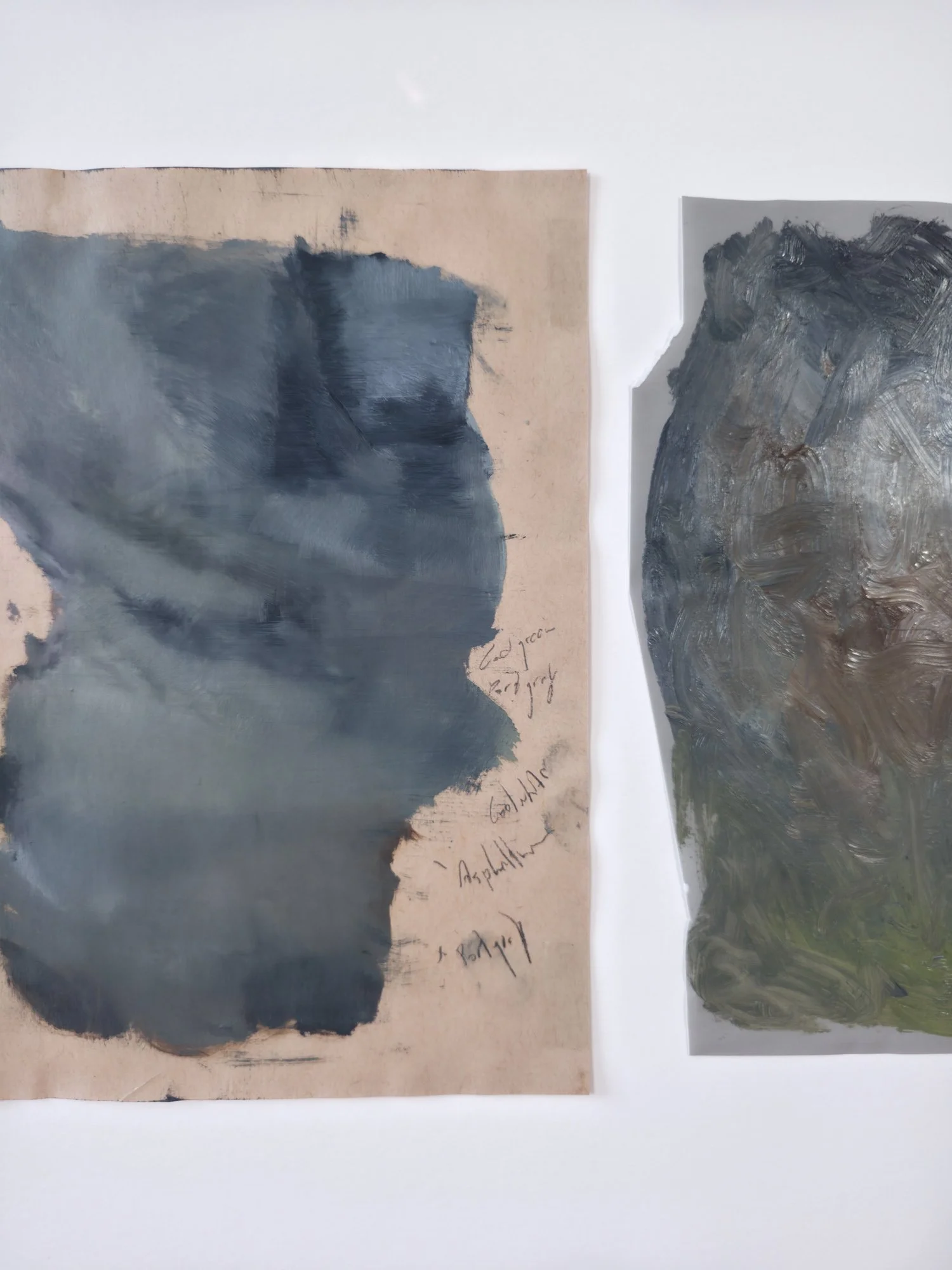
The count turned up small works I never intended to show anyone. I made them in frustration, or during a stretch of intense thinking, or after a period of silence, to find my way back into the work. Each one spent weeks propped on the studio wall while the finished painting went on nearby. Then the sketchbook closed and went to the shelf. The loose pages went into the stacks. For years I glanced at them and moved on.
I had just discarded work I can never remake. I kept these out.
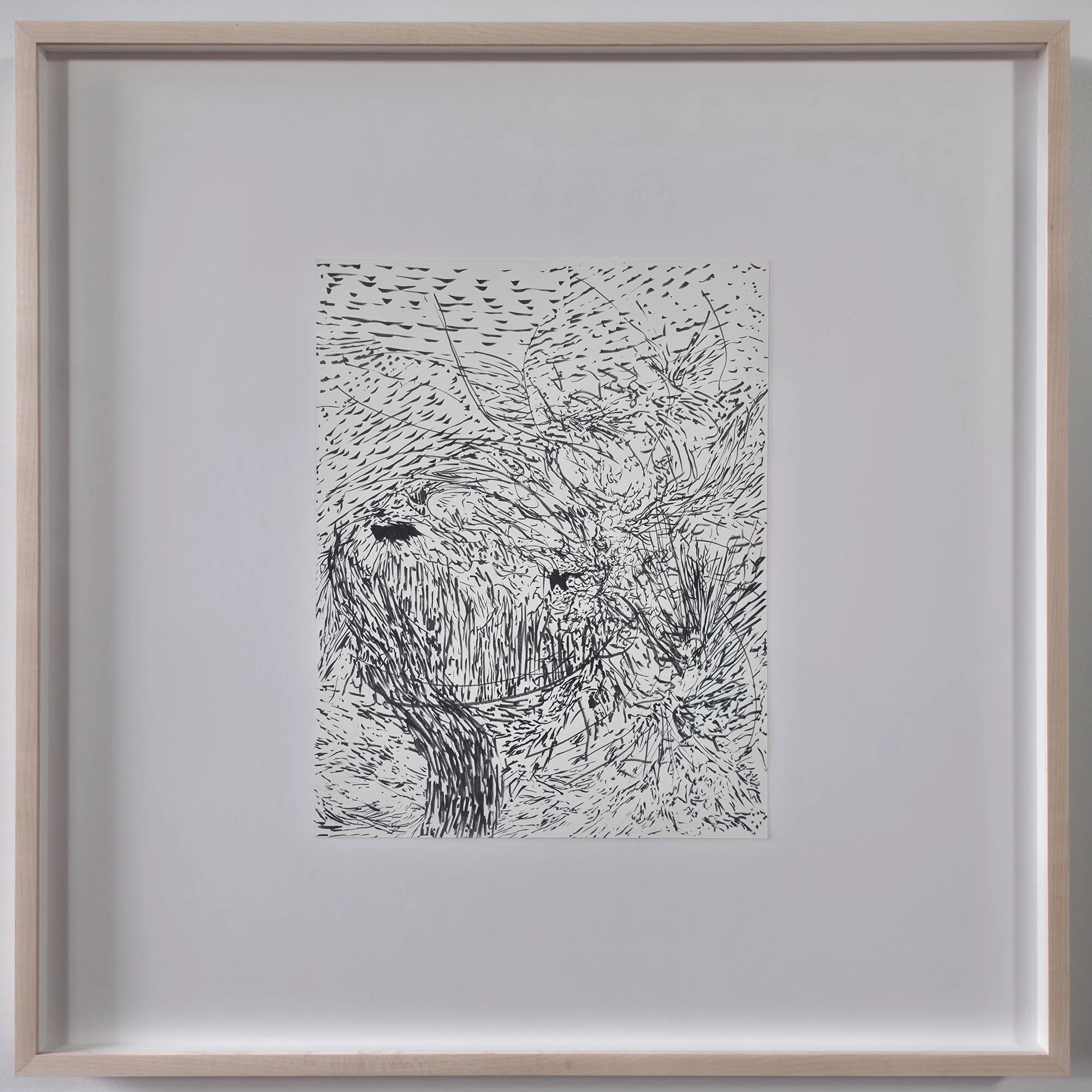
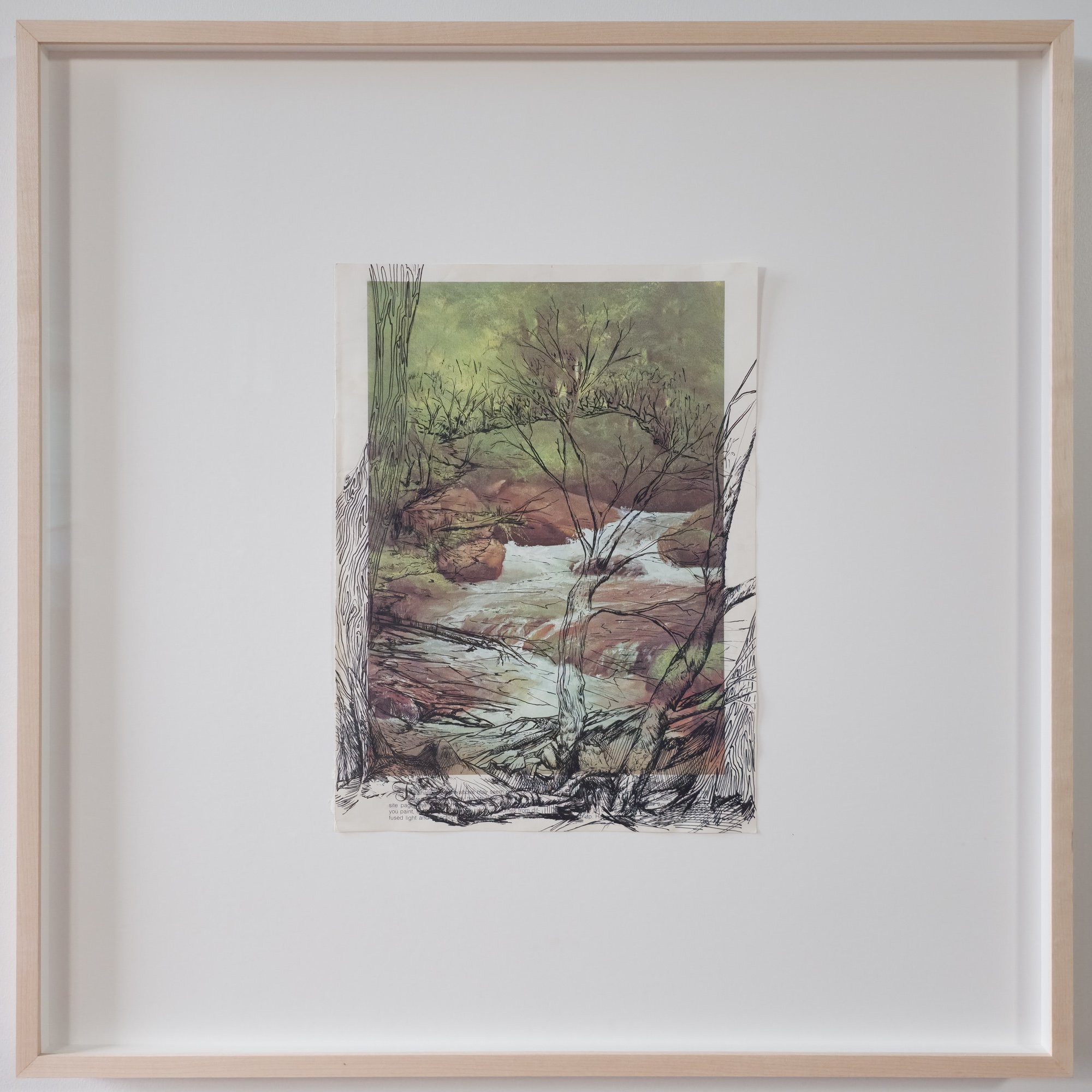
This series is called Artifacts. Thirteen of those objects, preserved, framed, and shown for the first time.
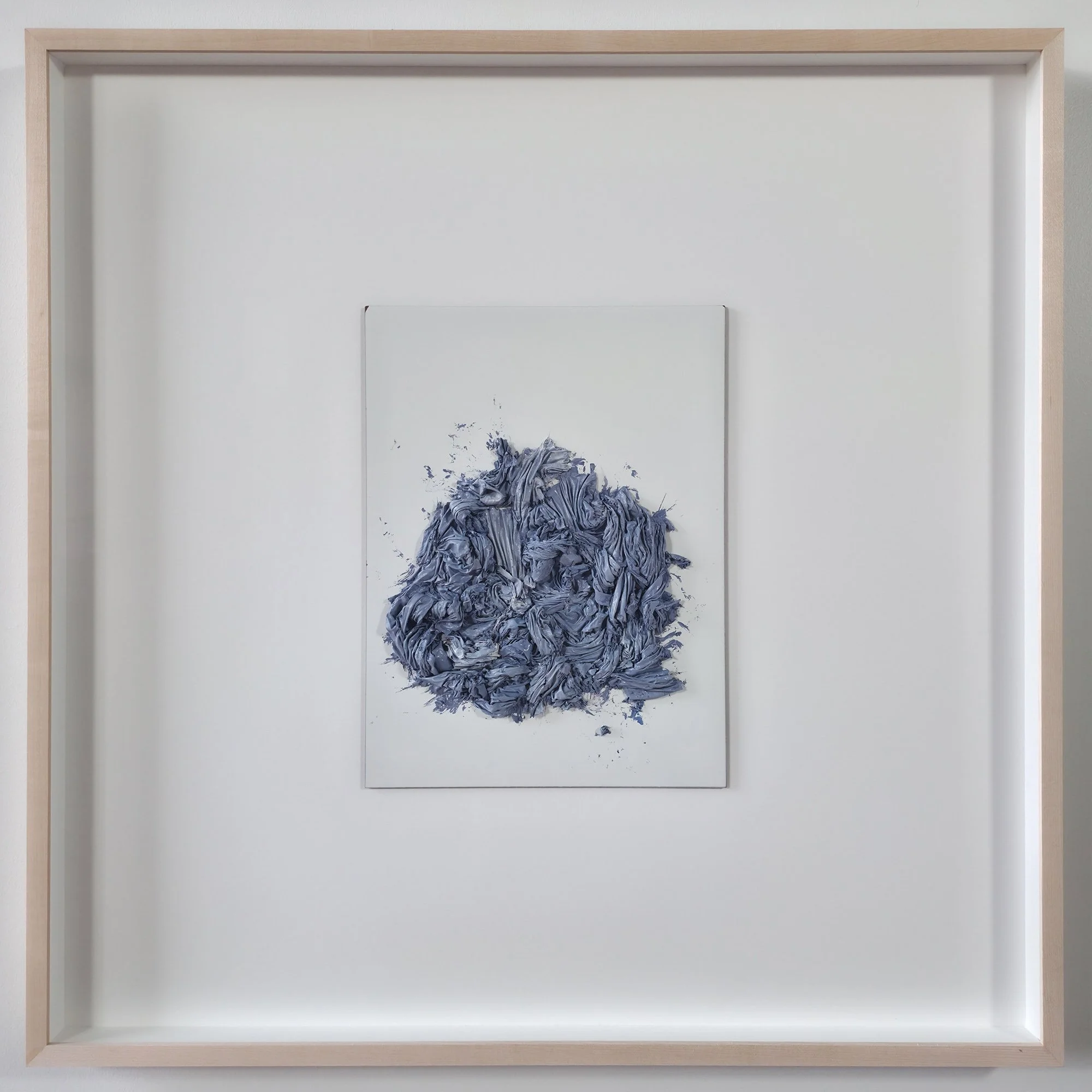
What these objects are
A bucket sits in the corner of a garage with motor oil pooled at the bottom. Most people walk past it. A careful observer stops, because the oil is evidence. It came out of an engine. The engine propelled a car. The car carried an owner. The owner had a life. The bucket is seven steps removed from that life and part of every step of it.
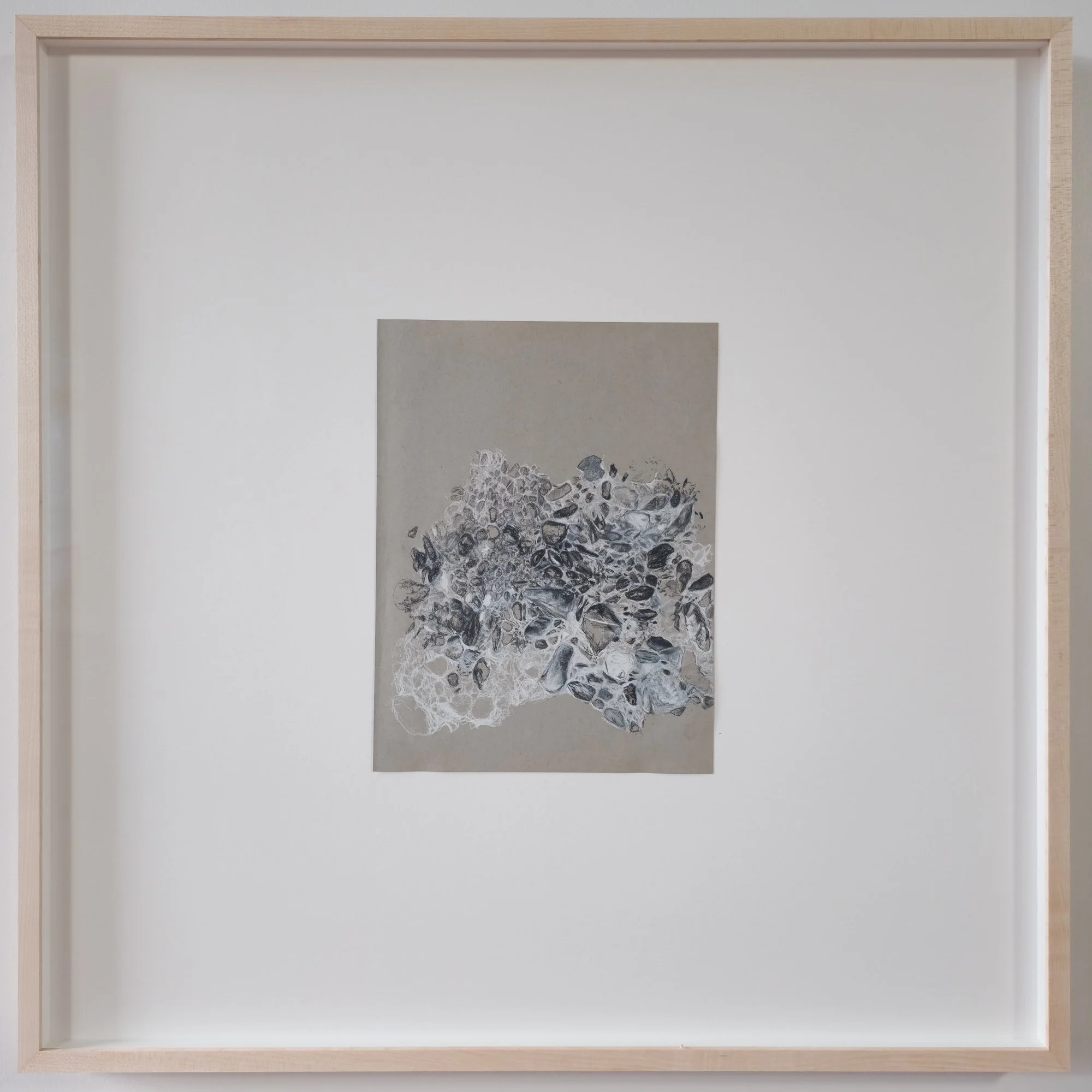
These objects work the same way. I could have called them studies, and several carry the word in their titles. A study names a purpose. These outlived their purposes. An artifact is a made thing that testifies to a process, to a set of hands, to the how and the who behind the need to make anything at all. That is what they give back when I look at them.
The titles are the studio's private grammar, published without translation. Flow Instruction. Overwritten Rules. A Study of Instincts. Architecture of Thoughts. They are documents from an internal rulebook.
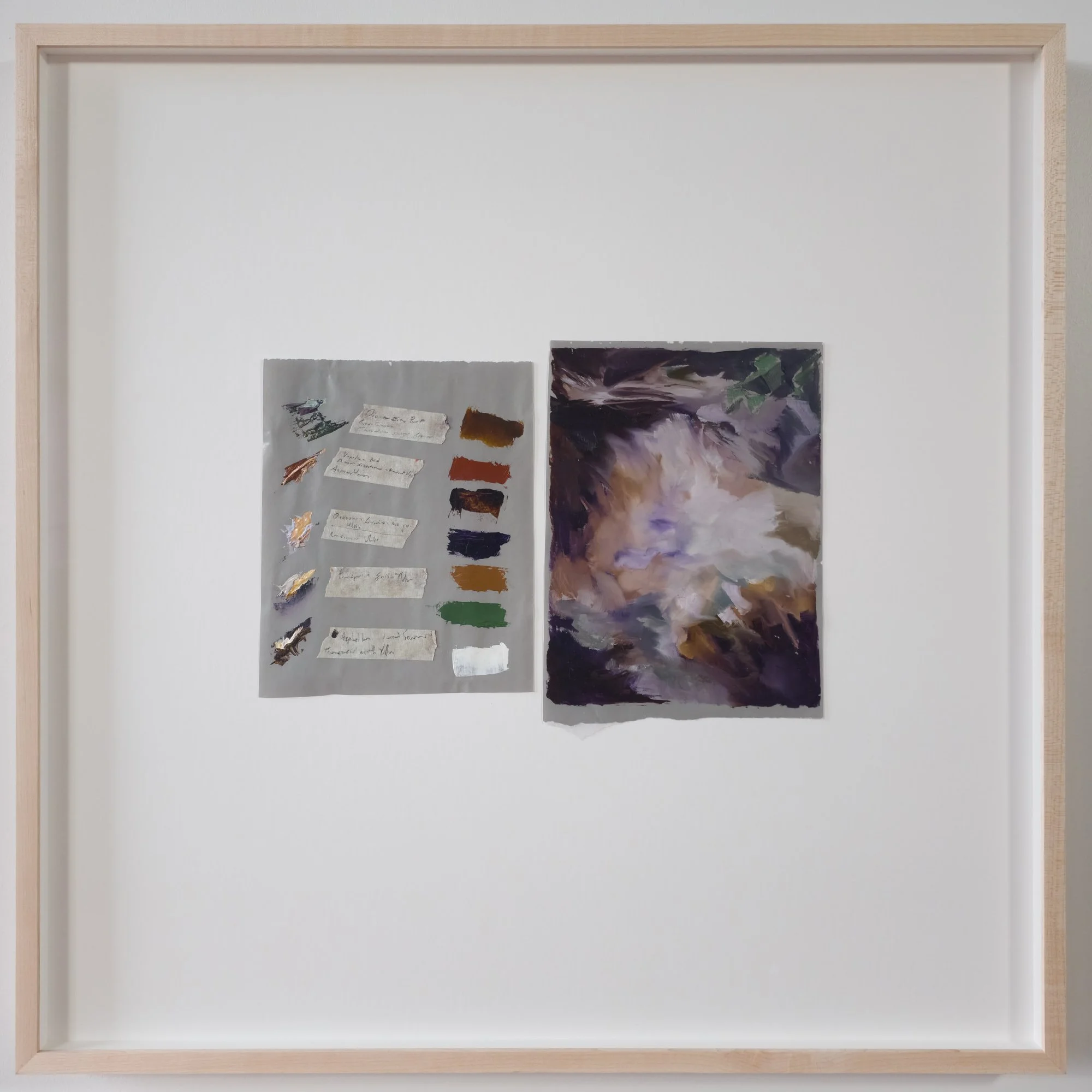
What the method leaves behind
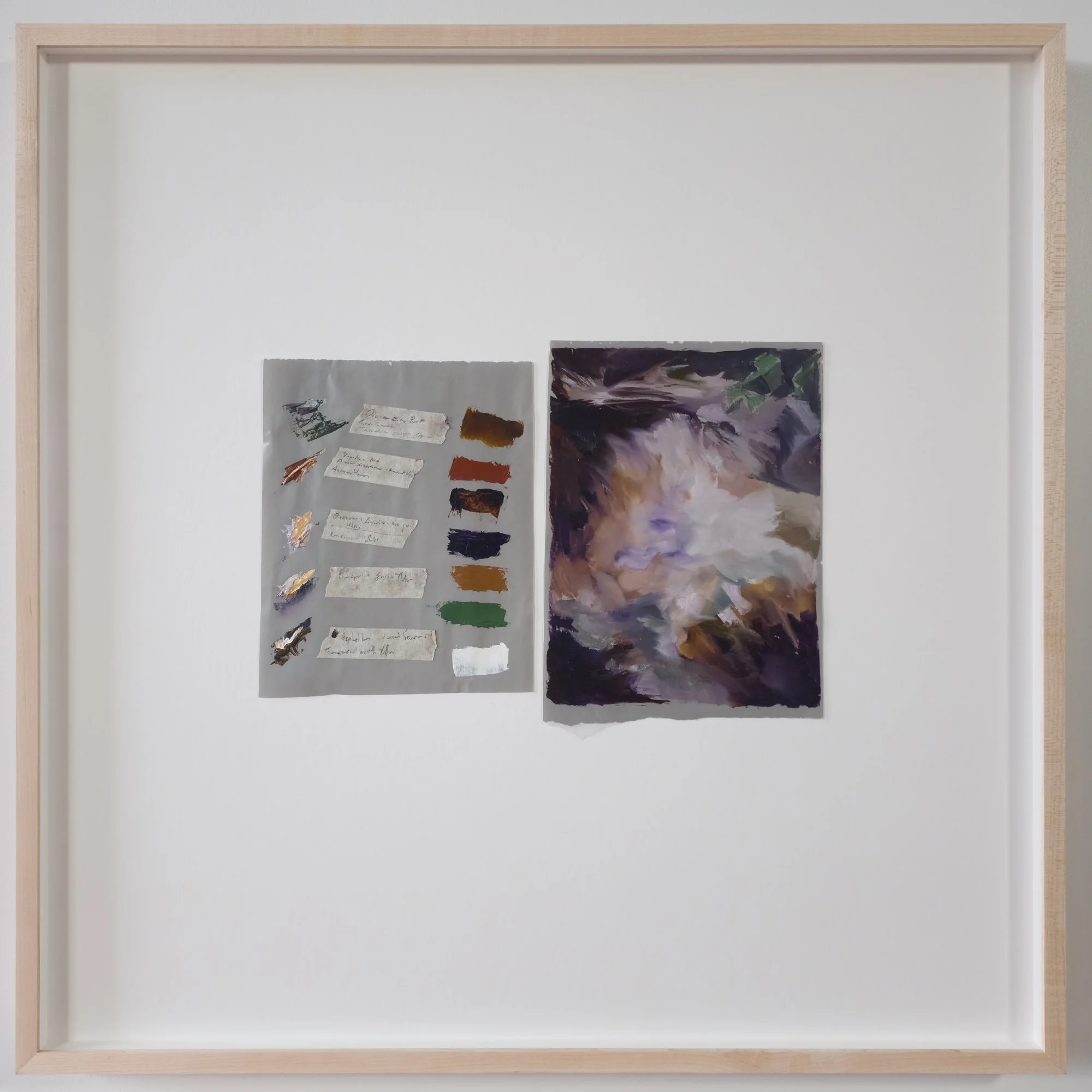
Readers of the Violet Rapids essay know the method. I paint a place many times, outside, on temporary supports. The studies are the thinking. I lay them across the studio floor, find the few square inches where something happened that I did not engineer, cut those free, and sculpt them together onto a single panel. The finished works are sculpted oil paintings on panel.
The method requires me to empty myself completely — every motivation, every crevice of ability — and build something new from what I find. Most of that thinking never reaches the panel. The Architecture of Thoughts drawings are plans: which direction the forms will move, what sizes they will take, how they will dance across a surface. Planning exercises. Illustrations of what could be.
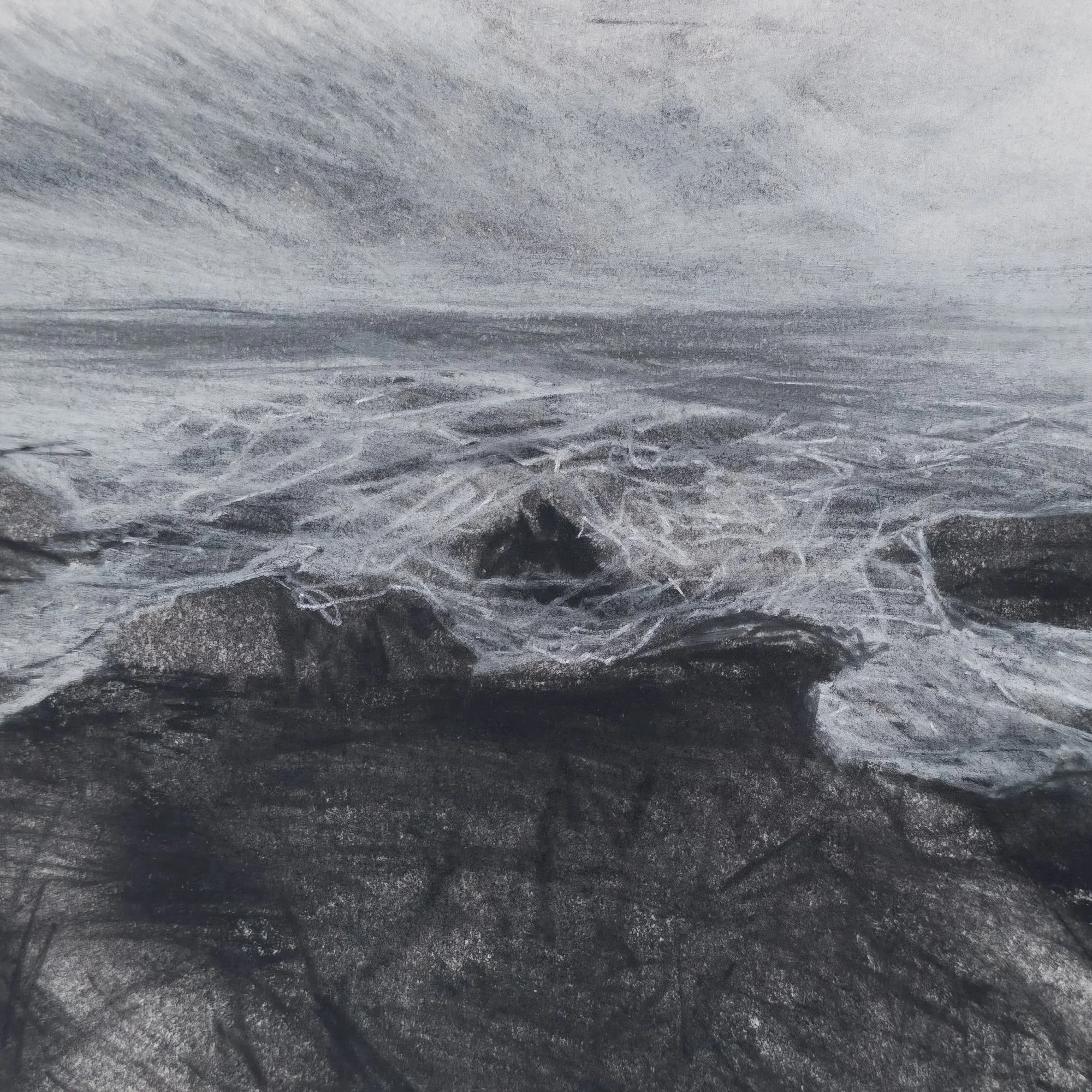
I want to paint the way a great chef cooks. Every ingredient considered. Some components rebuilt from scratch to reach an uncommon result. Applied to painting, that means unraveling every component: the inception of the subject, the process of the final work, each element seen and unseen, and the story each element tells — one that would stay true spoken plainly in an entirely different context.
The artifacts are those components. Showing them is publishing the field notes behind a book. These are what I used to build. Beside the finished paintings, they show what something could be.
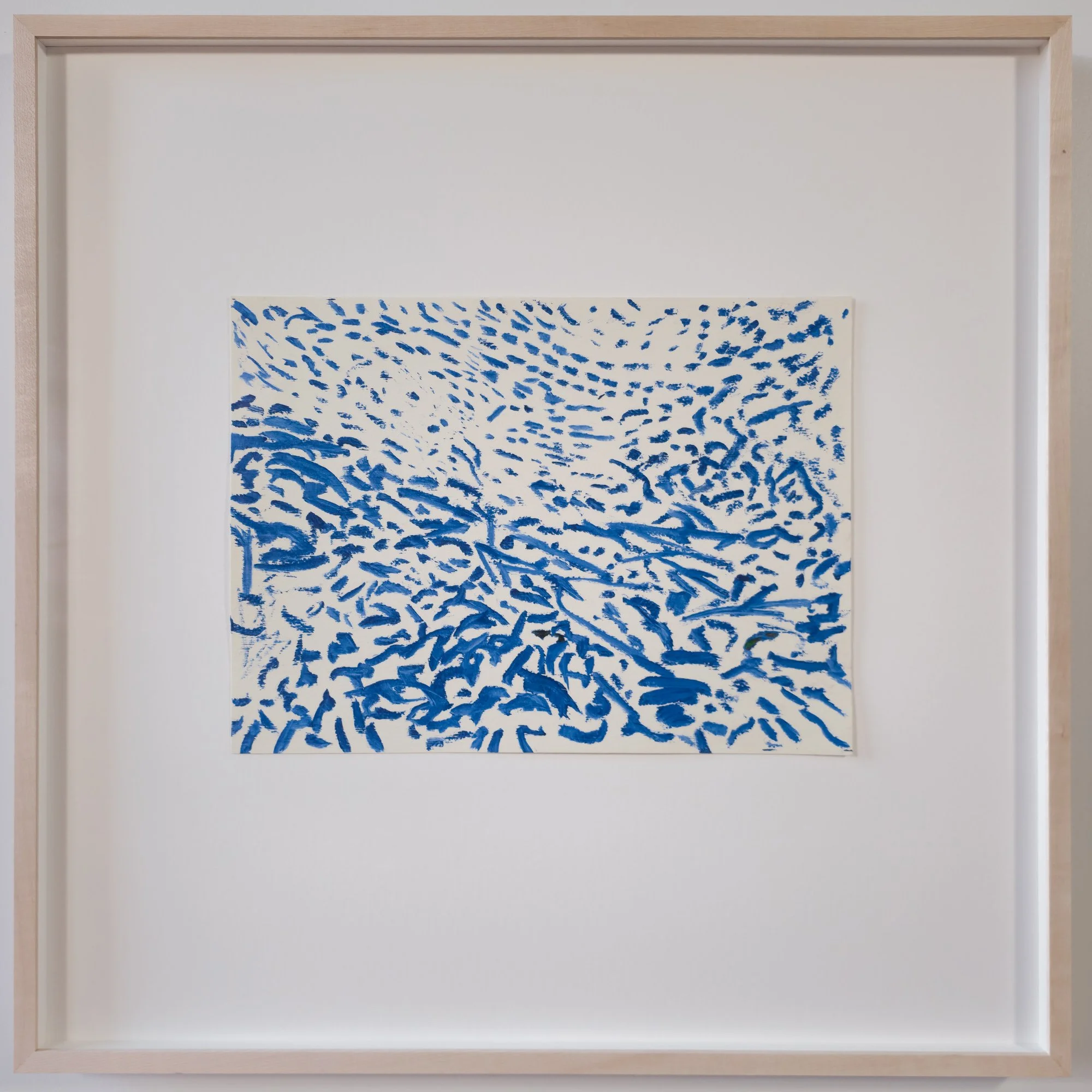
The frame
Each artifact is small. Each is floated in a wide white mat, behind museum glass that prevents glare, in a slim frame of raw pale wood. Framed size: 24 × 24 inches. The proportion of mat to image is deliberate. These objects spent years pressed into stacks and drawers. I wanted each one to have room, and I wanted them approached.
Stand three feet away. Then come closer. The glass holds no glare to push you back. Read them at the distance of a page, where the marks stop being an image and become decisions.
For the stranger
I want someone who has never read a word of mine to stop at one of these the way the careful observer stops at the bucket of motor oil. Notice the utility first: this object was used, and it served something now out of view. Then follow the utility backward. Engine, car, owner. By the time they walk away, I want them to hold a clearer picture of what the owner values.
Values the process of relentless becoming.
Violet Rapids
We're being trained to ask for exactly what we want and receive it instantly. Violet Rapids is a painting made the opposite way — by going out empty, gathering dozens of studies, and choosing what survives. A note on stillness, overwhelm, and why it's harder to sit still than we think.
A note on a painting, and the conversation that pulled it out of me.
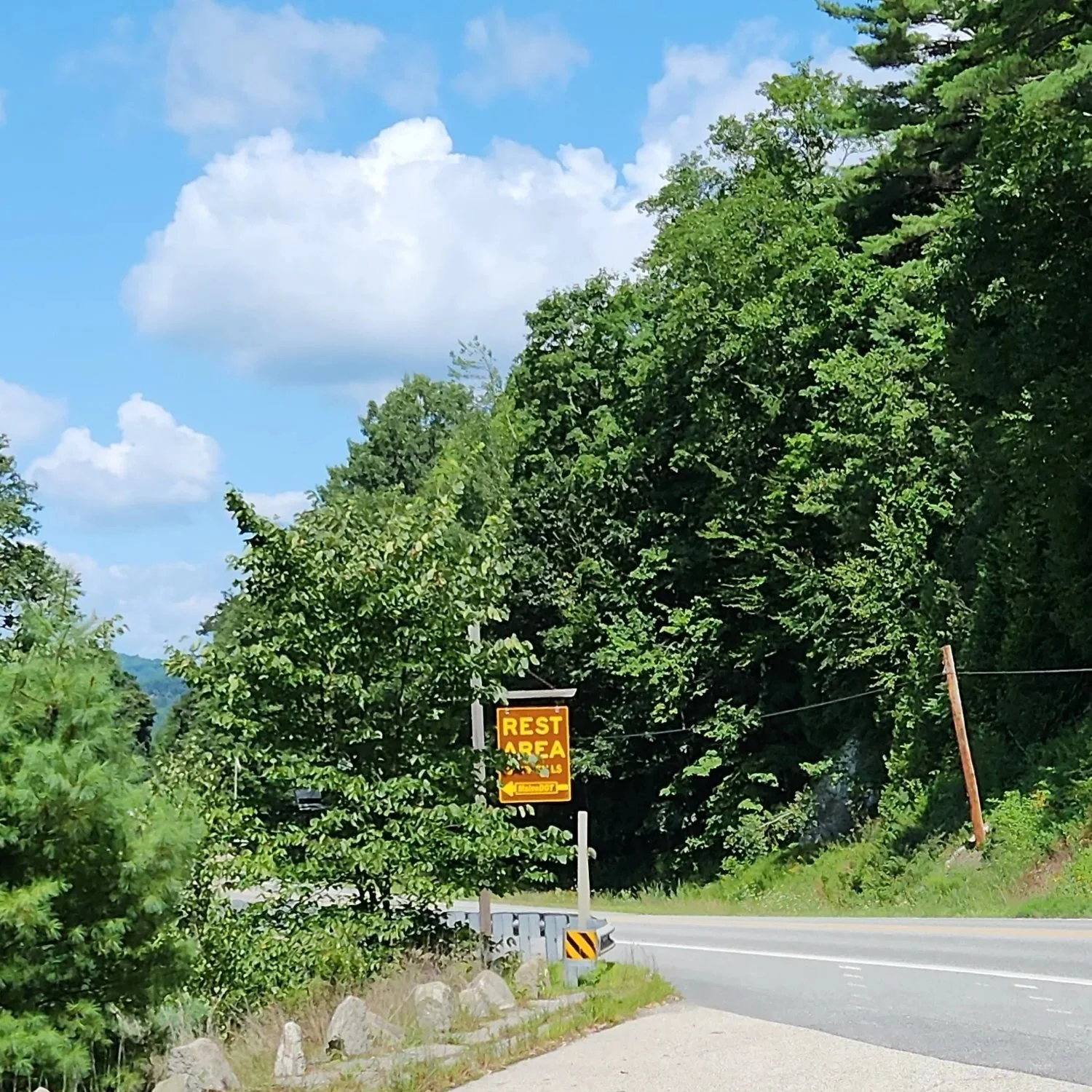
The bug was orange.
We don't get orange bugs in Maine — not like this, not bee-shaped and not the size of a thumb. It must have come through my car window somewhere between Paris and Mexico, landed on the passenger seat.
My finger jabbed the button lowering the passenger side window — wind blowing, shoving the beast into a deep panic, and now I was swerving. I was insane to be swerving. A rest stop sign appeared at the edge of my vision and I pulled in without thinking.
It turned out to be a waterfall.
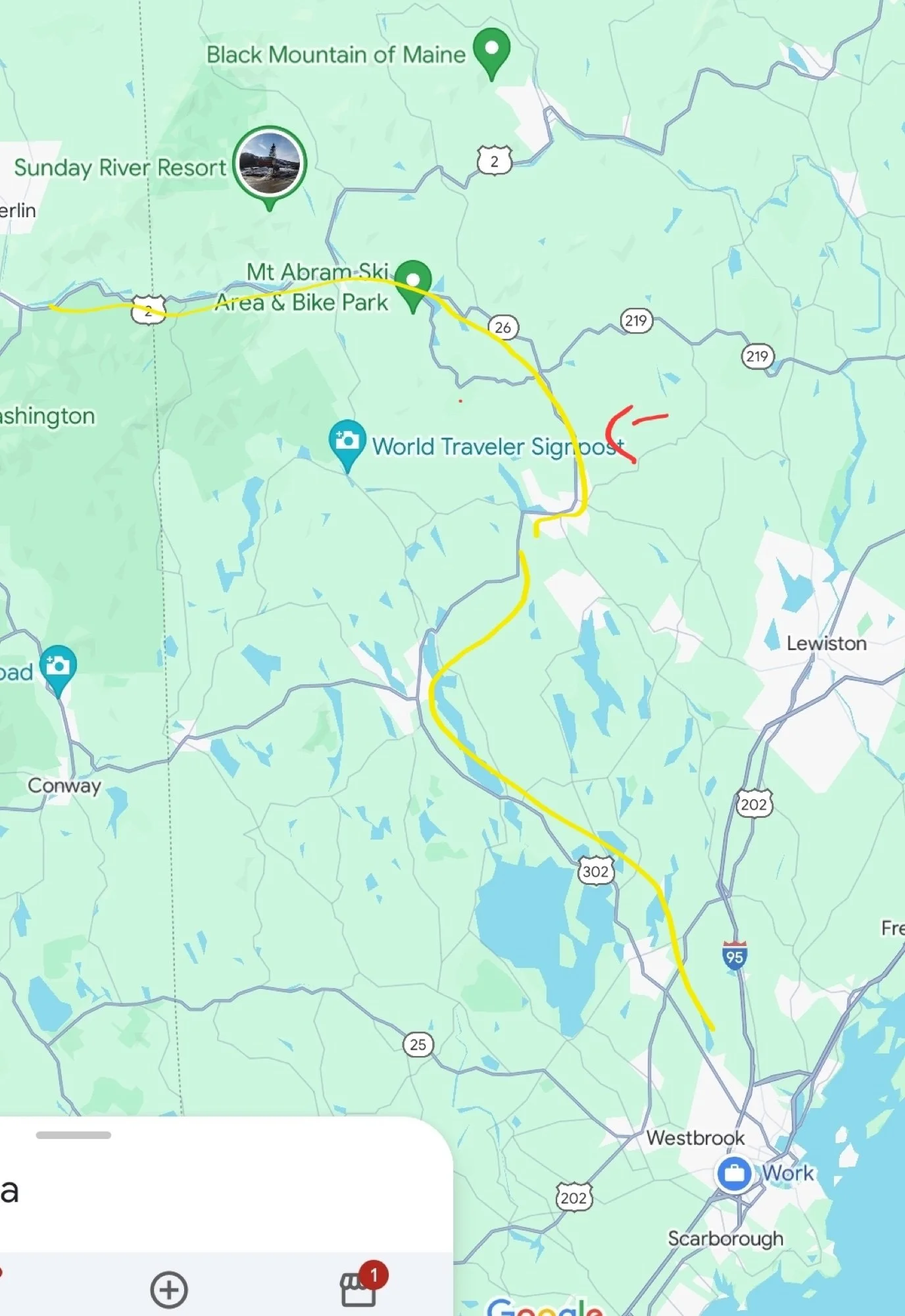
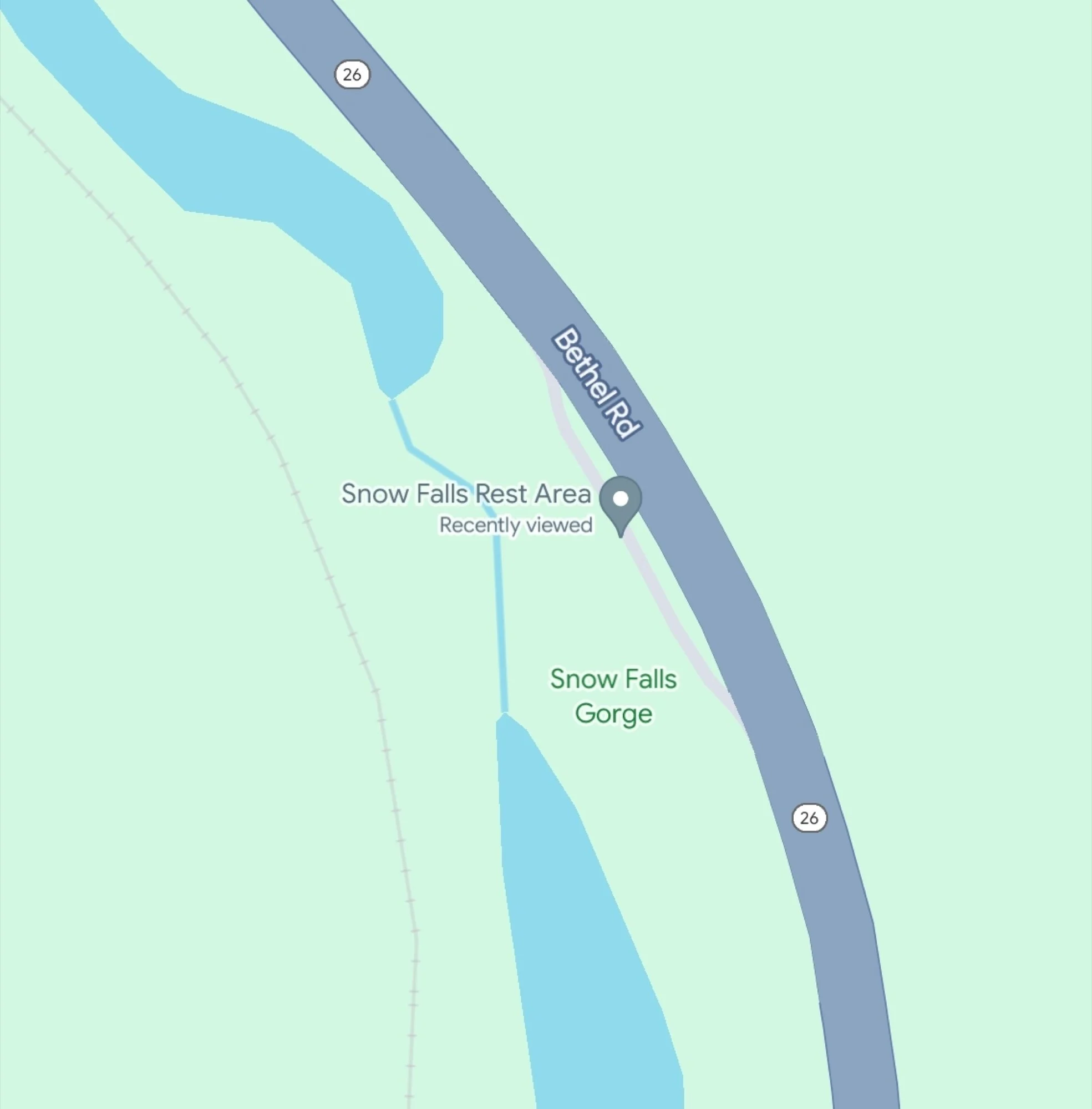
Not a scenic overlook. Not a place you'd find on purpose. A national park tucked into a wedge of land between a fast-moving highway and a set of railroad tracks — protected, I imagined, because no one could build on it and no one wanted to live there. Too loud, too close to the road, too cornered. But the water still moved through the rocks the way water moves, and it had been doing it for longer than any of us. Civilization built itself around this thing and preserved it by accident.
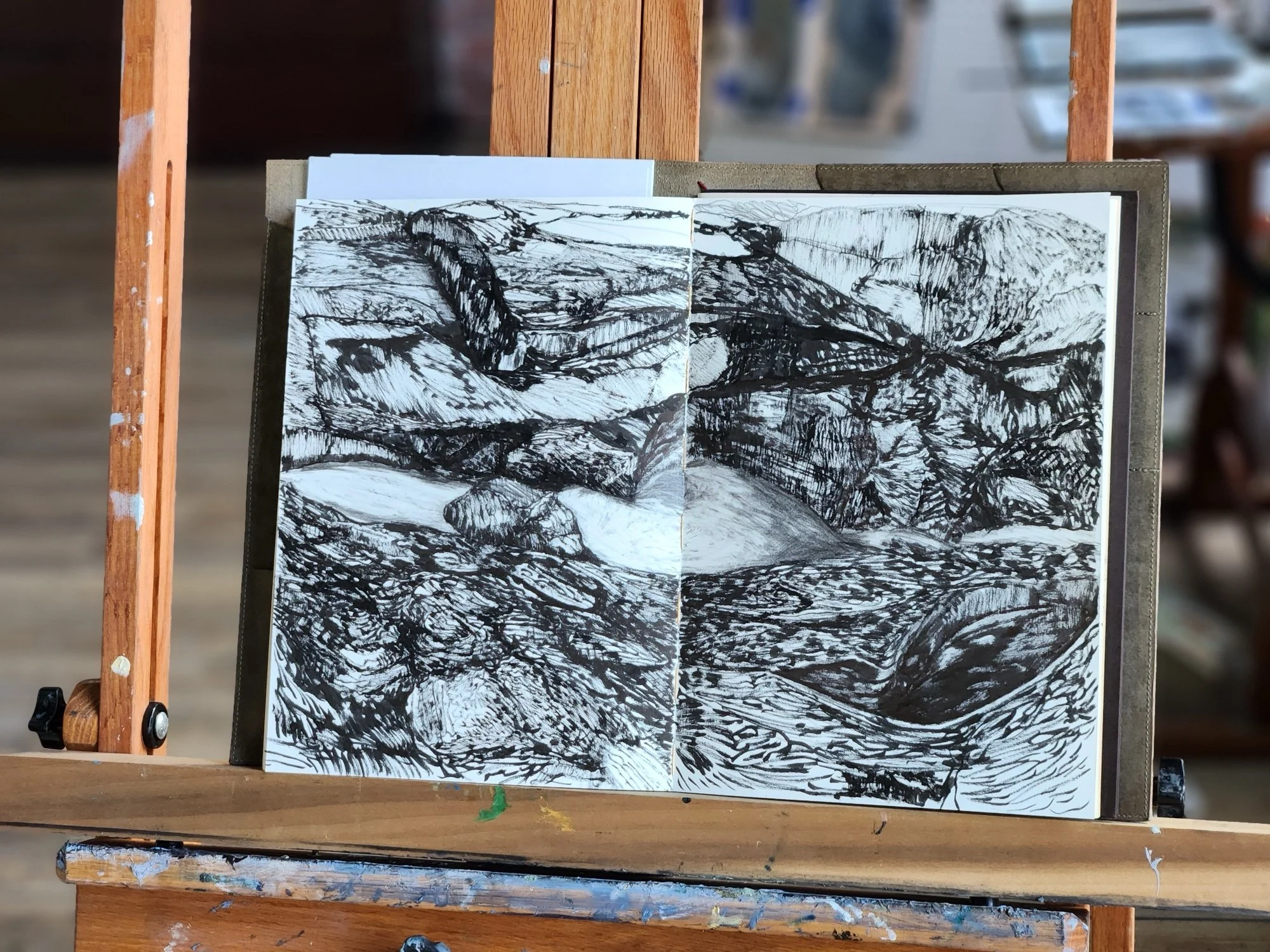
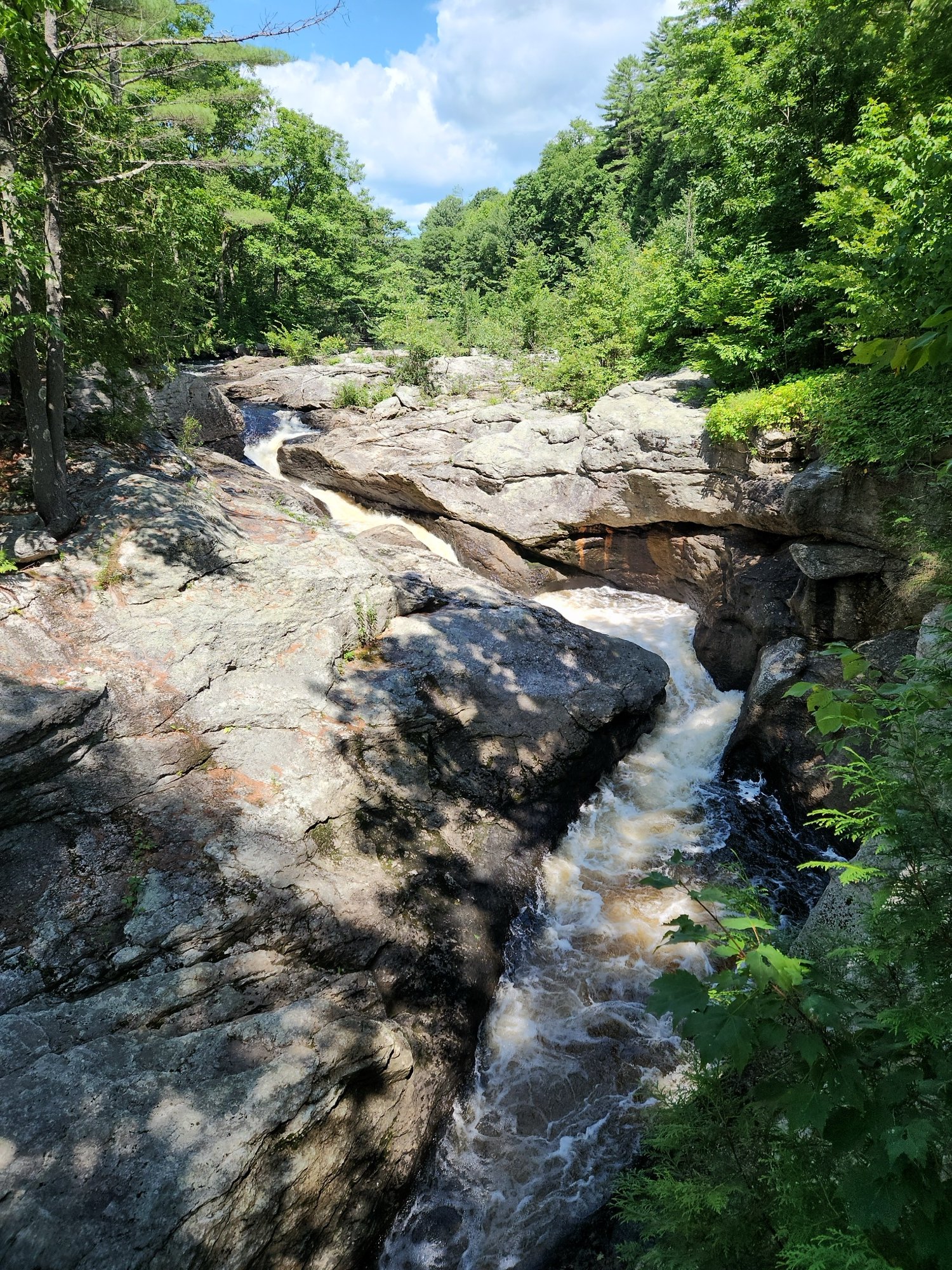
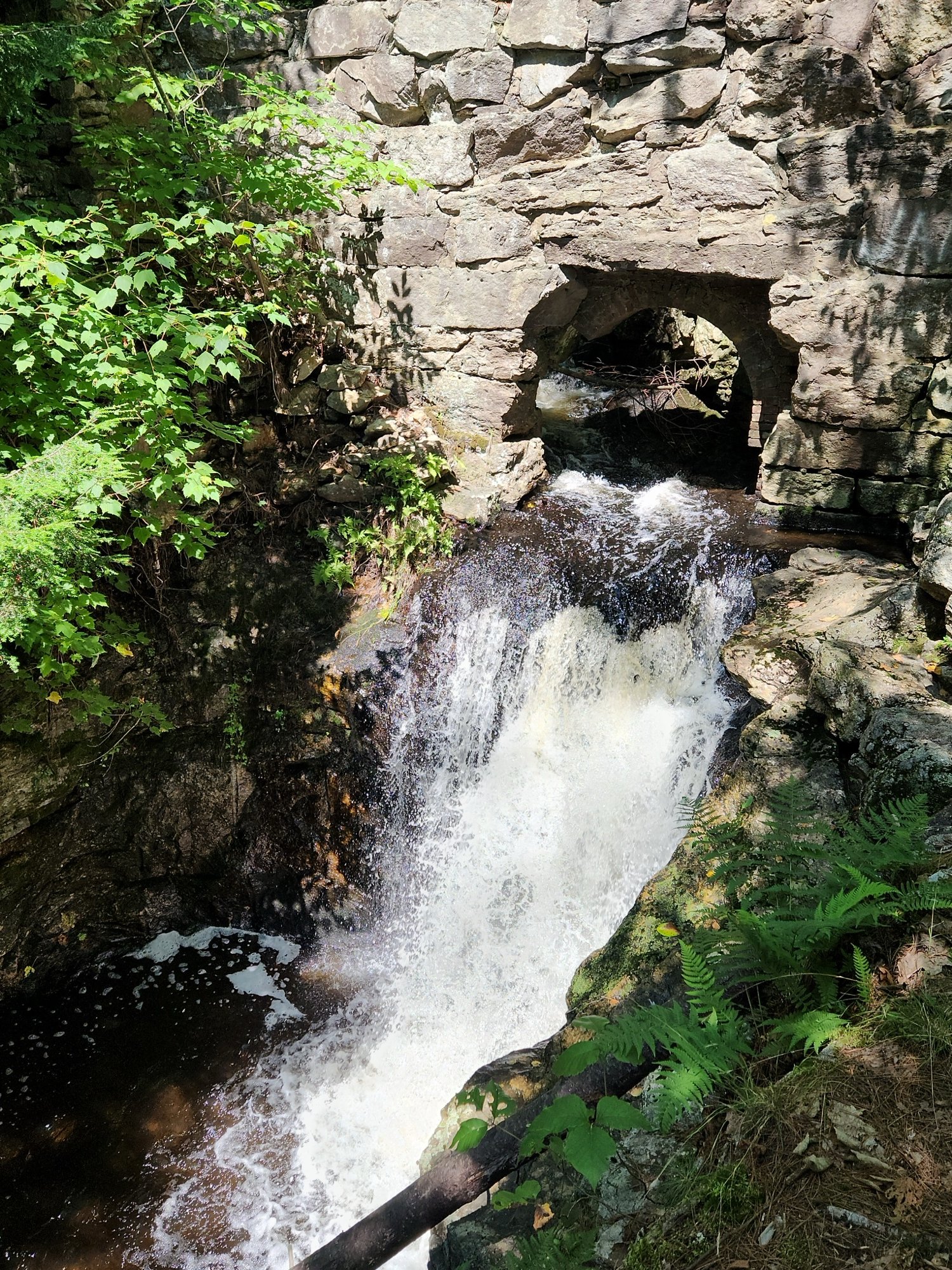
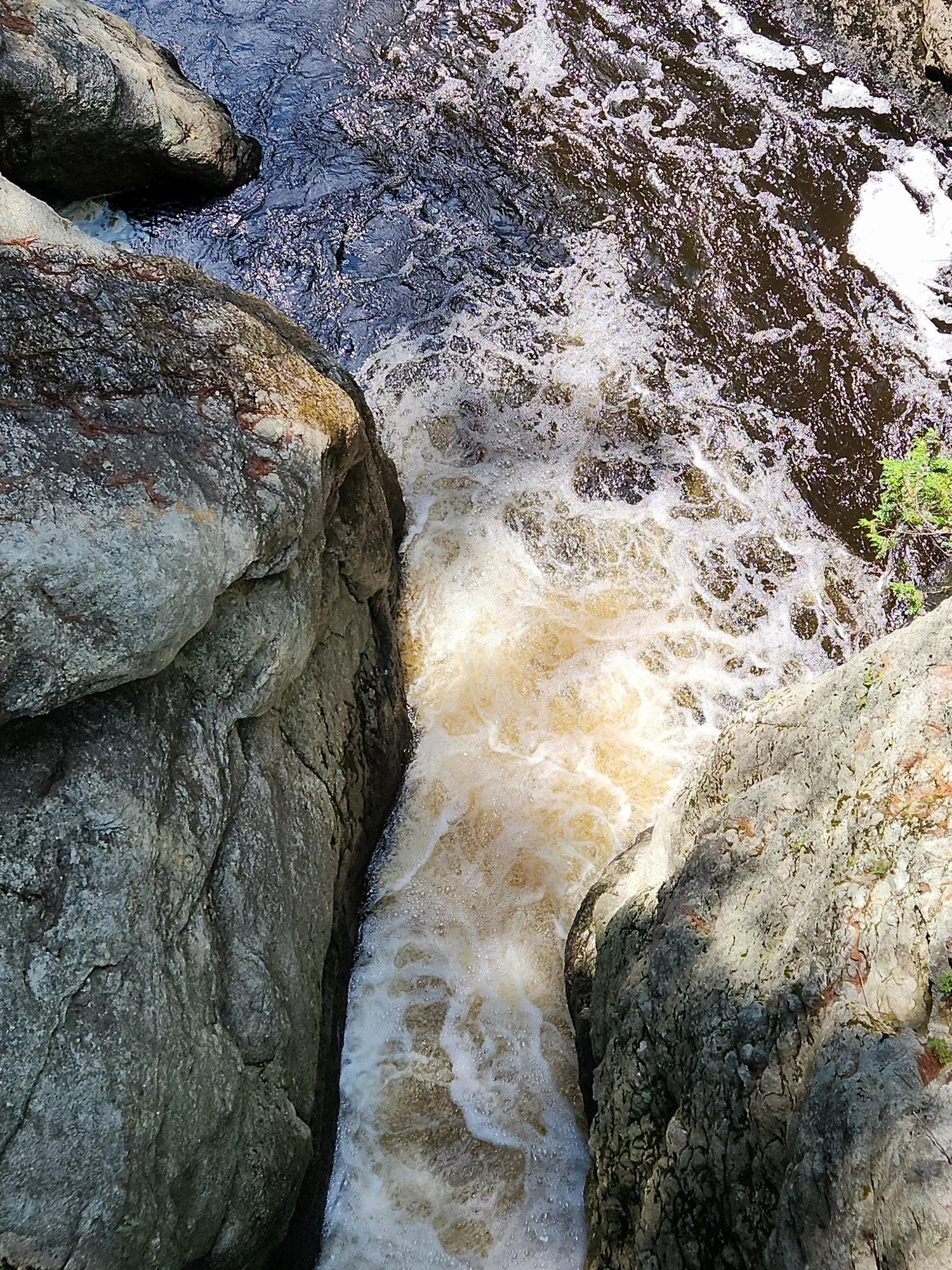
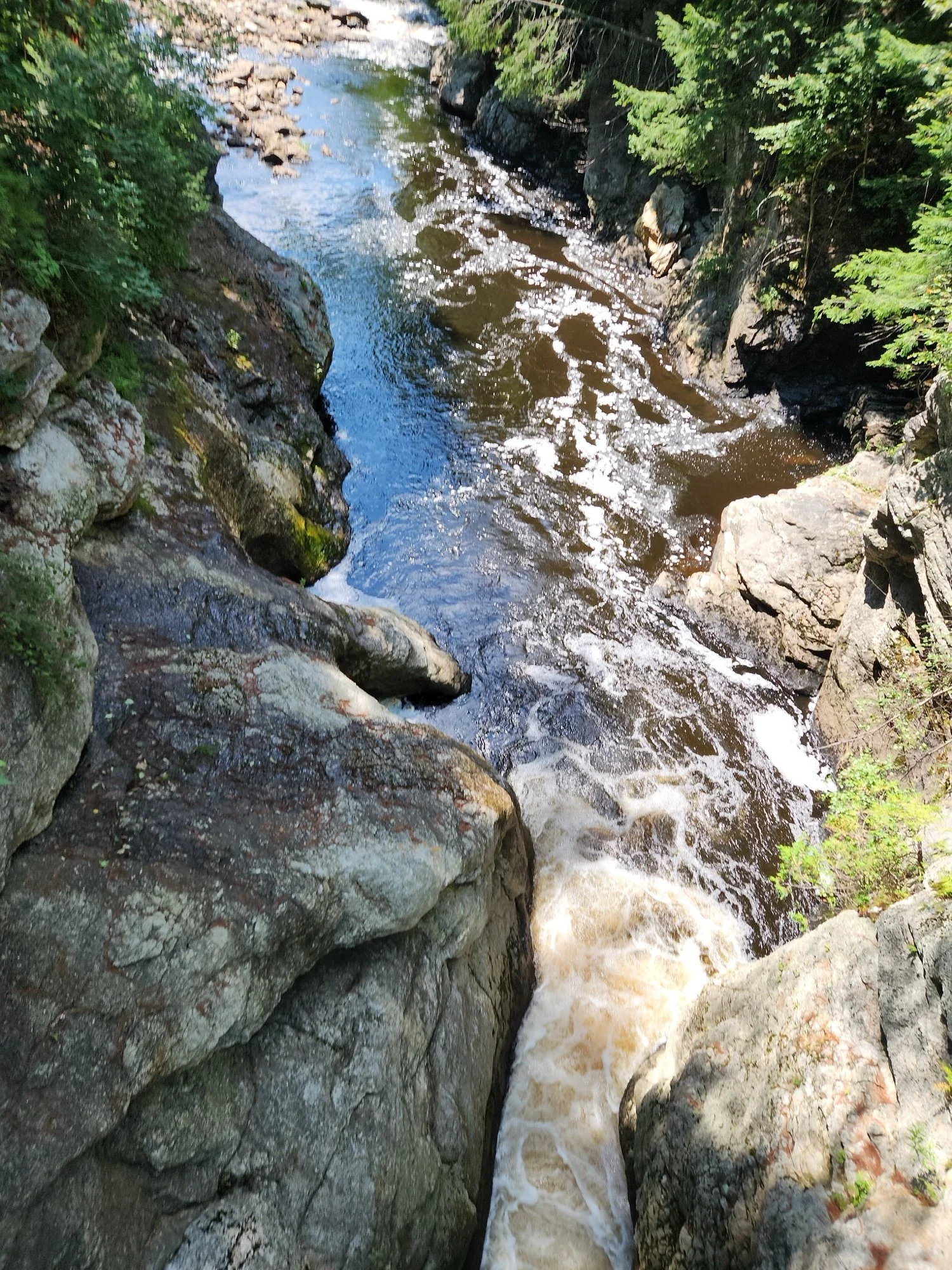
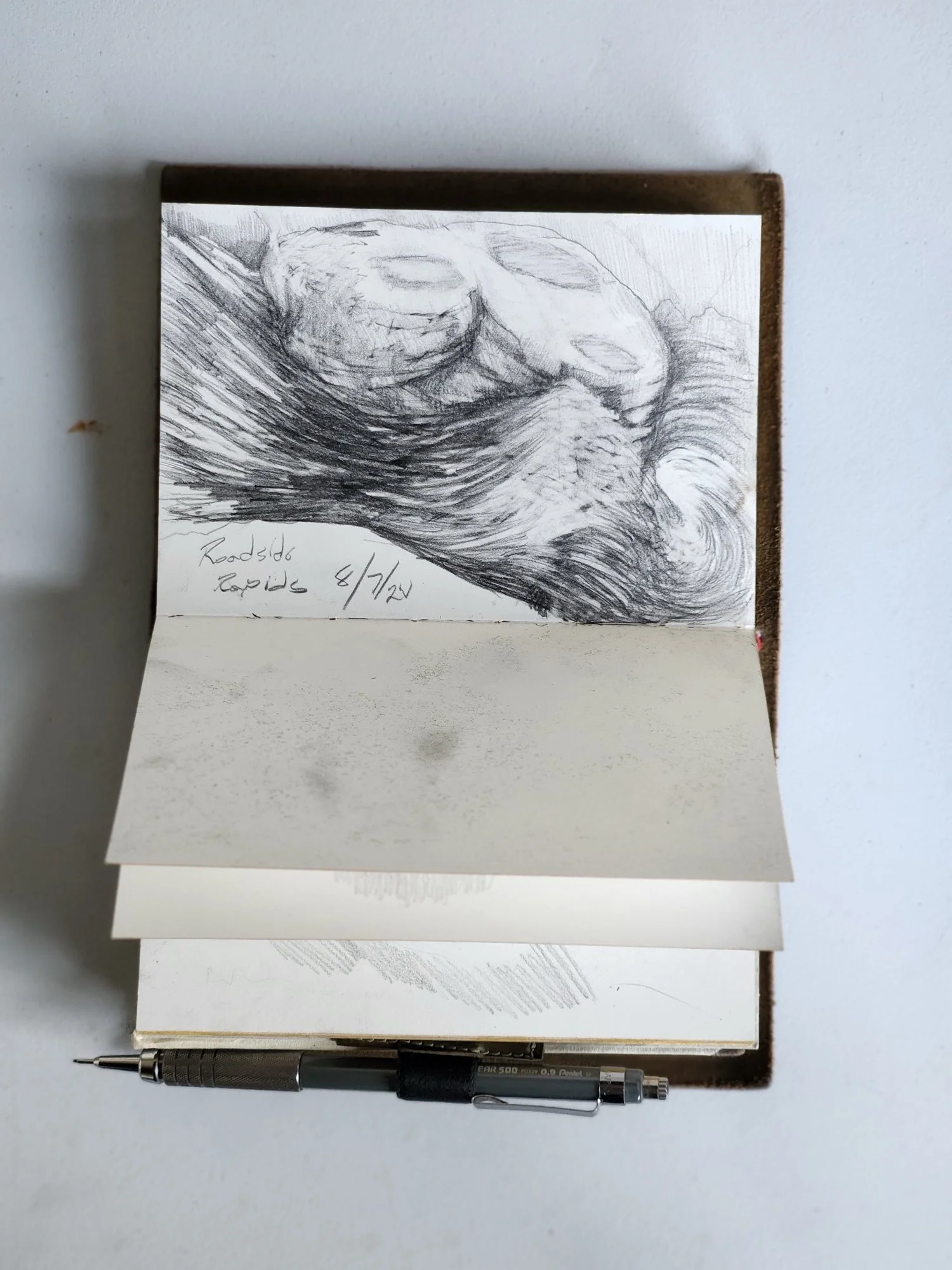
I stood there longer than I had time for. I took out my phone and recorded a few seconds. I drove on to my appointment.
That was August 2024. The painting I eventually made from that day is called Violet Rapids, and last week Catherine sat across from me with a list of questions — and asked me to defend it. What follows is what I found while answering.
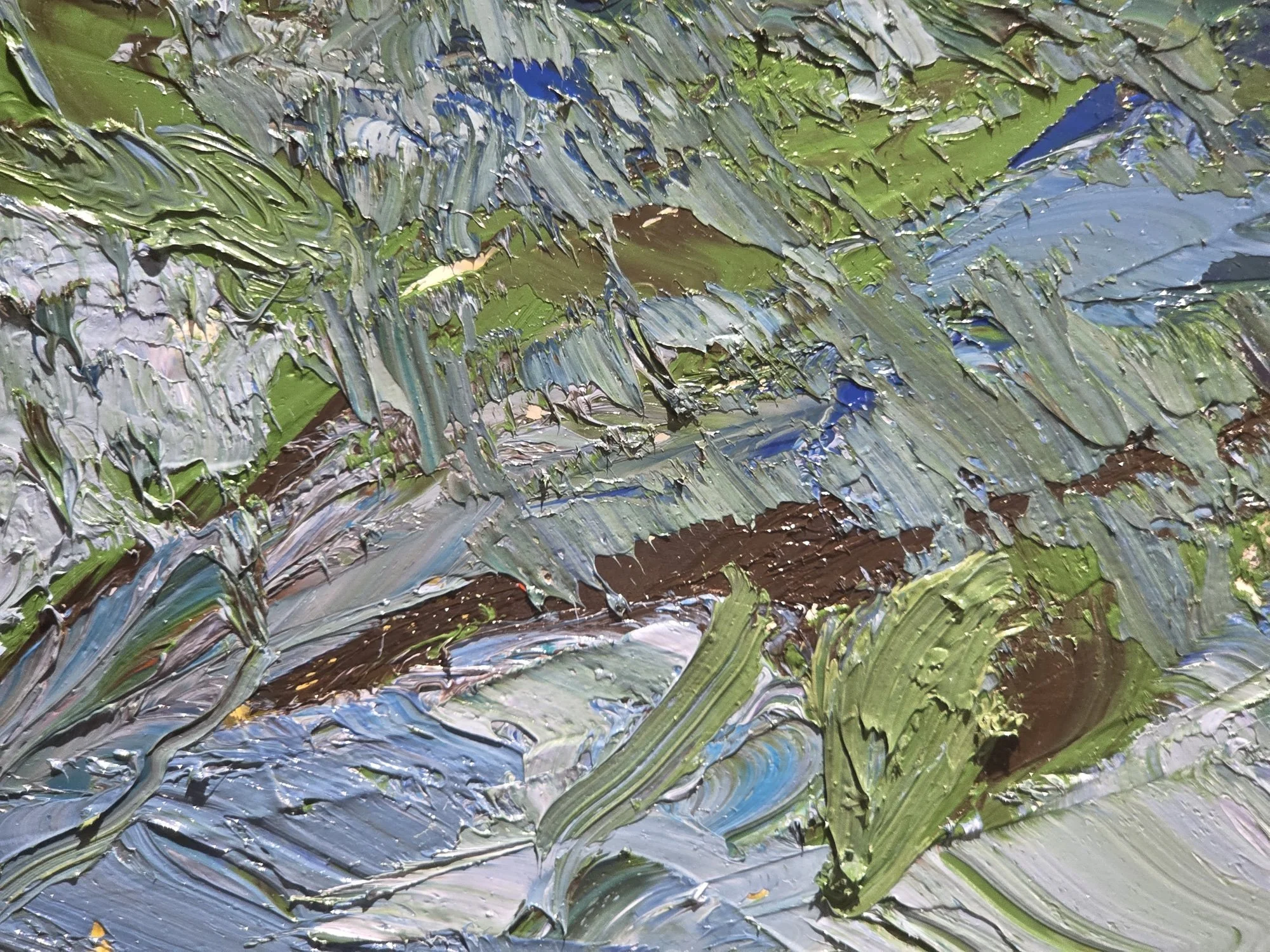
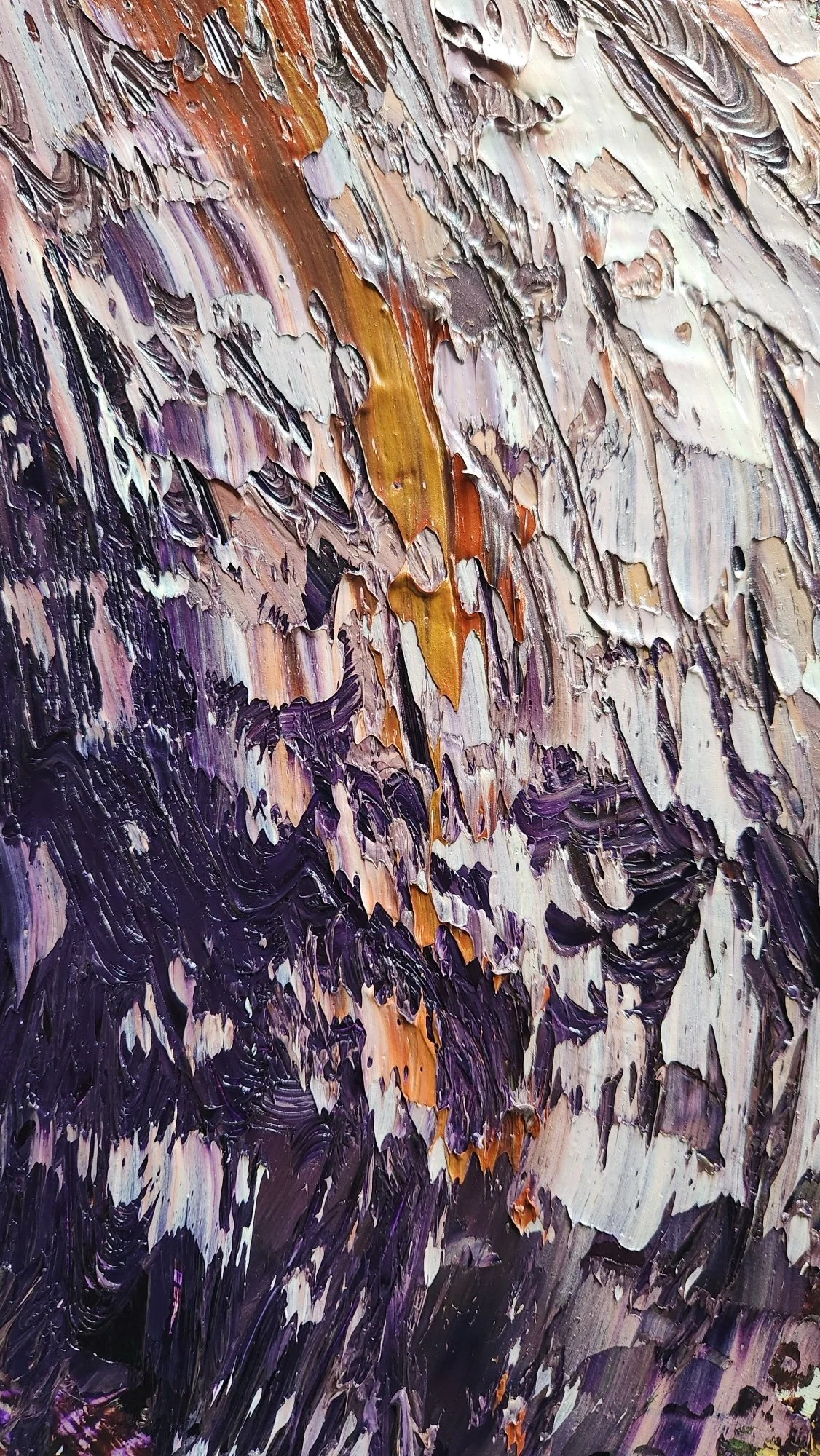
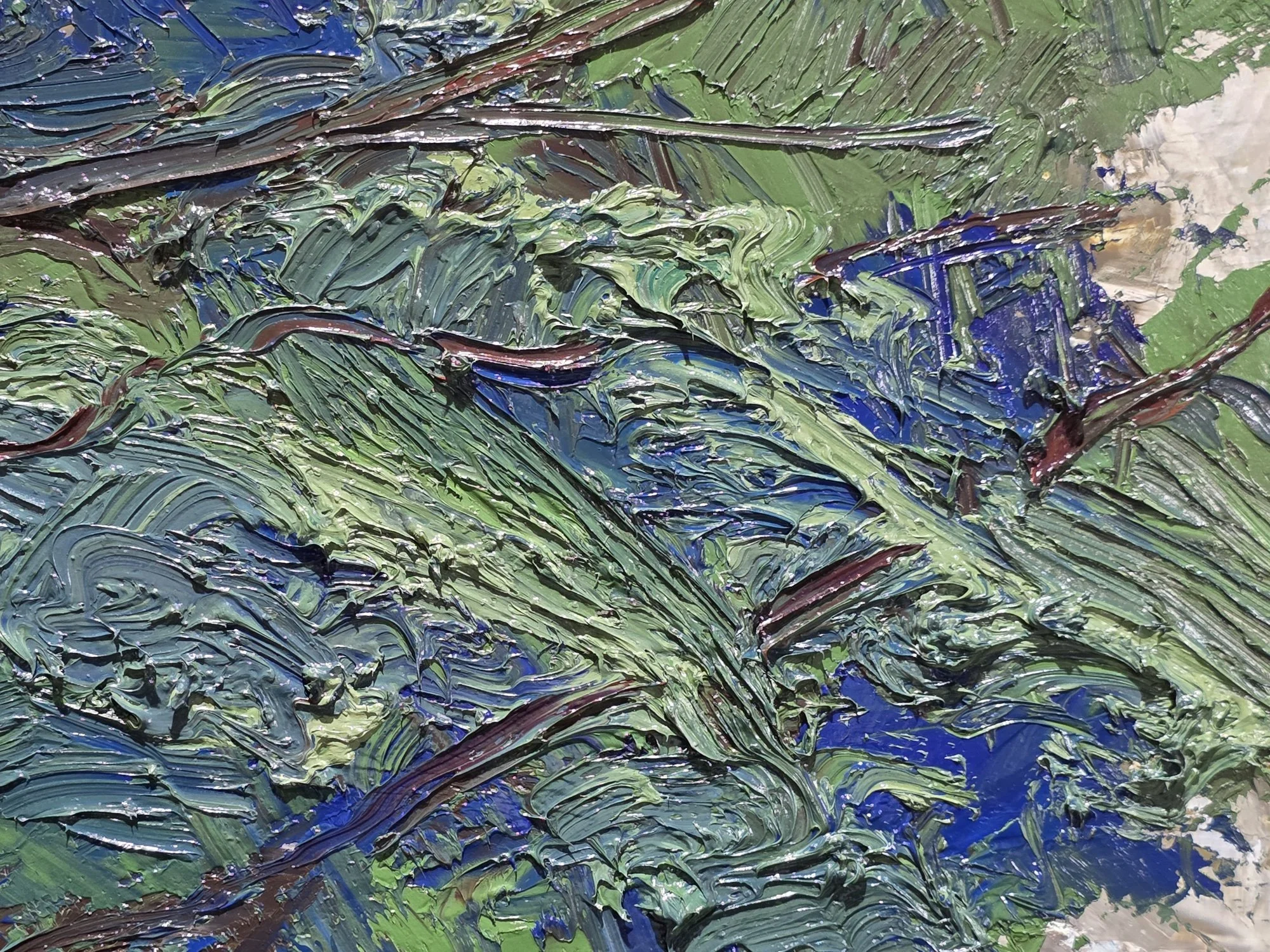
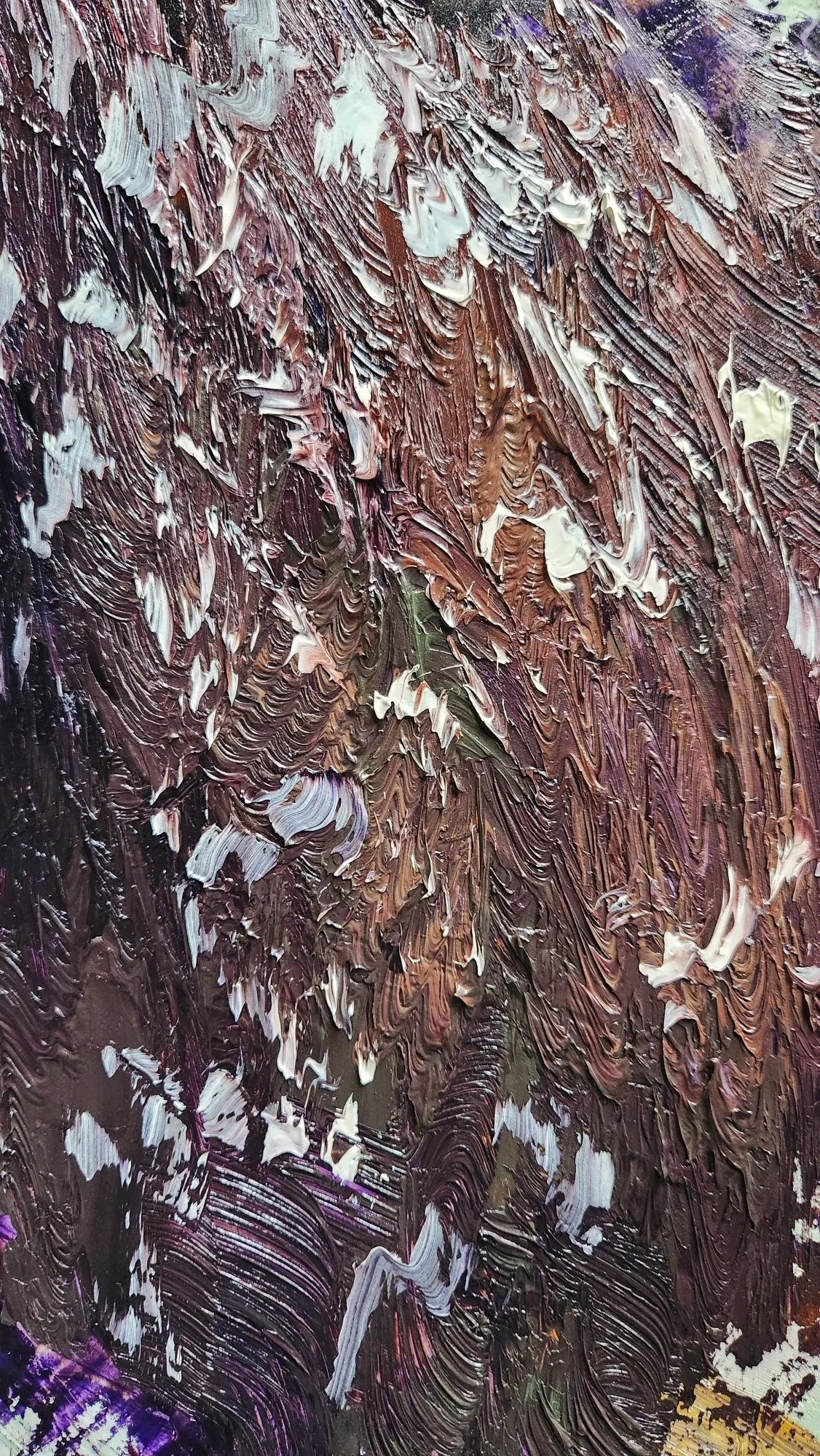
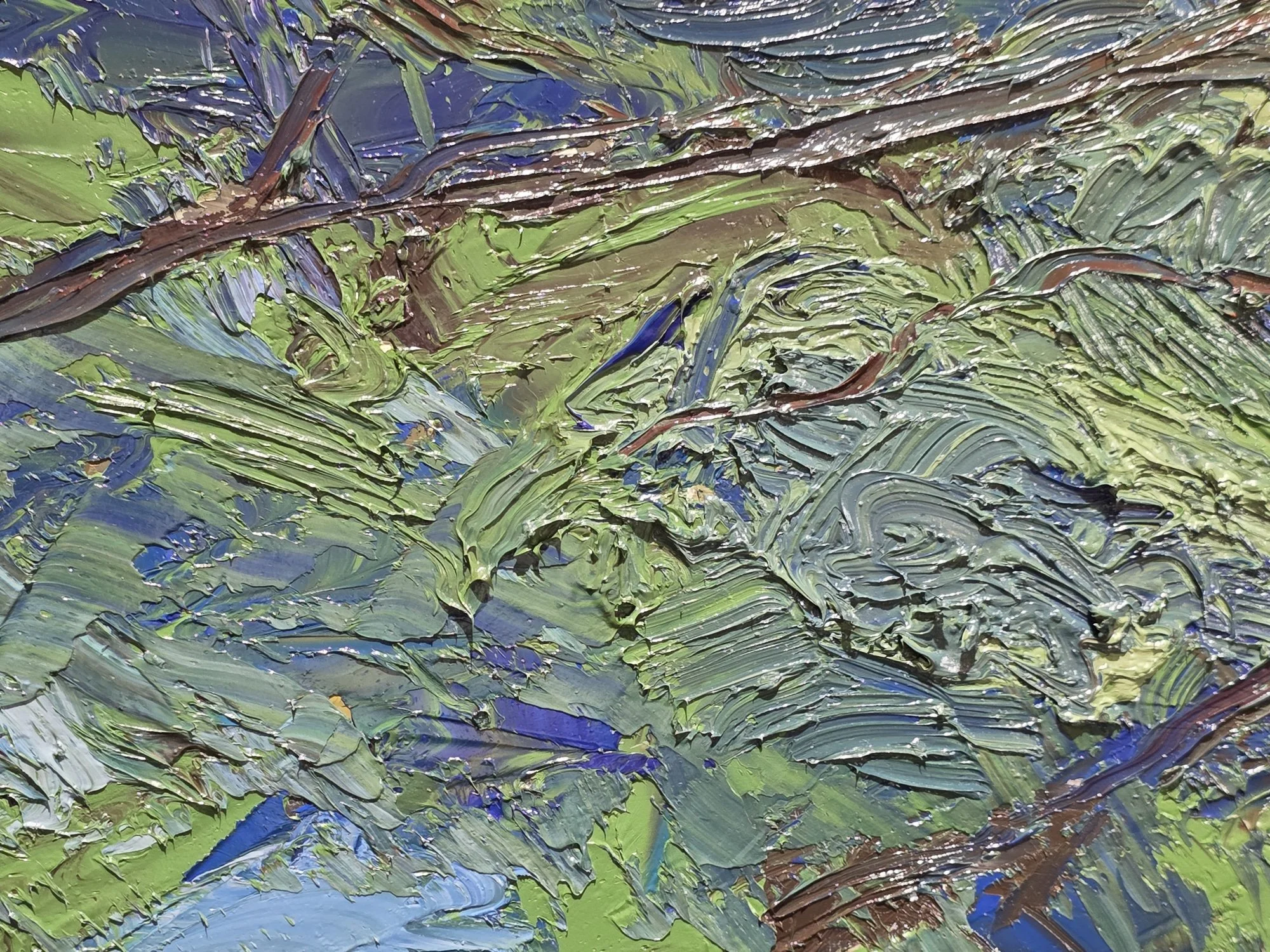
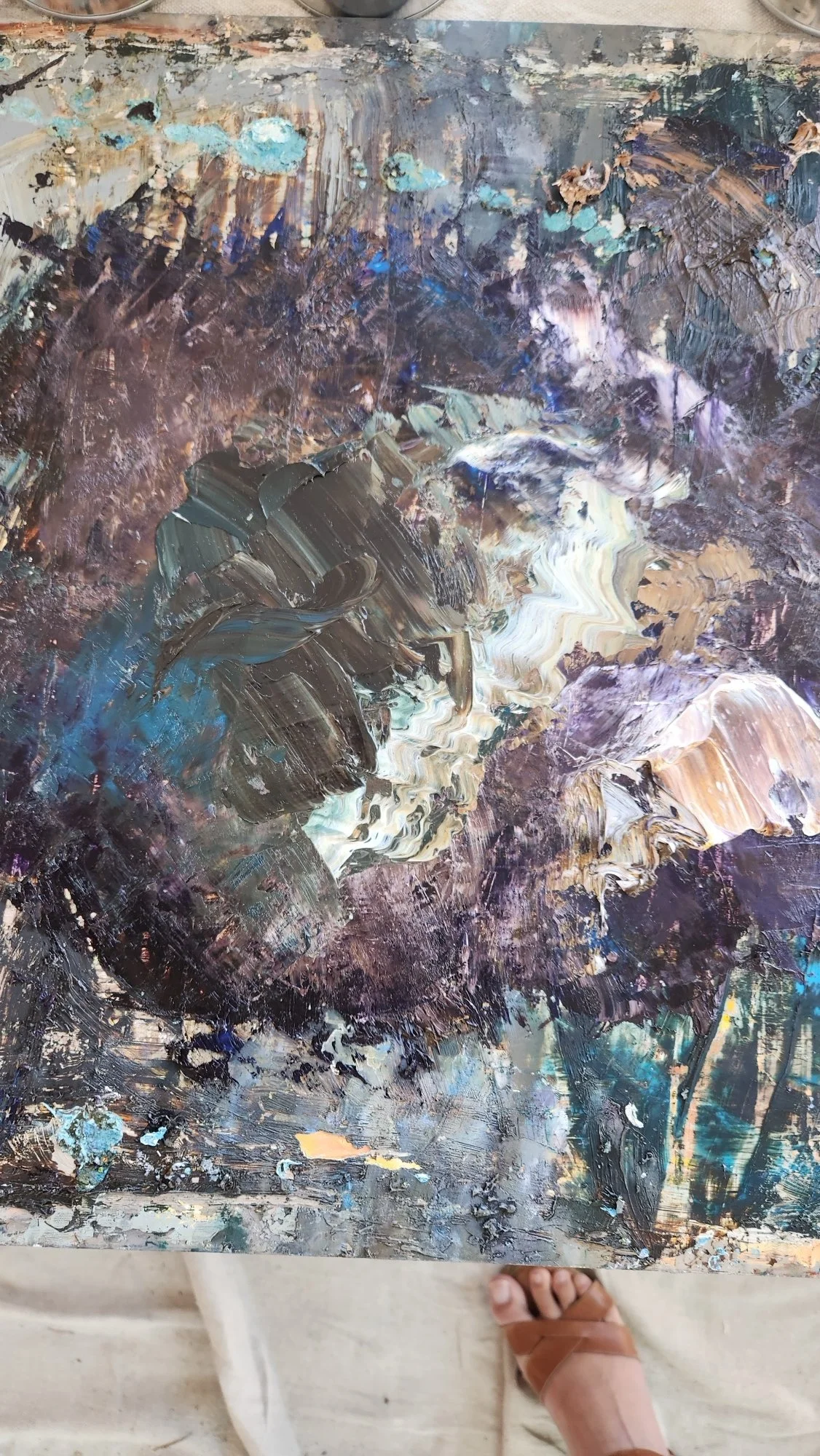
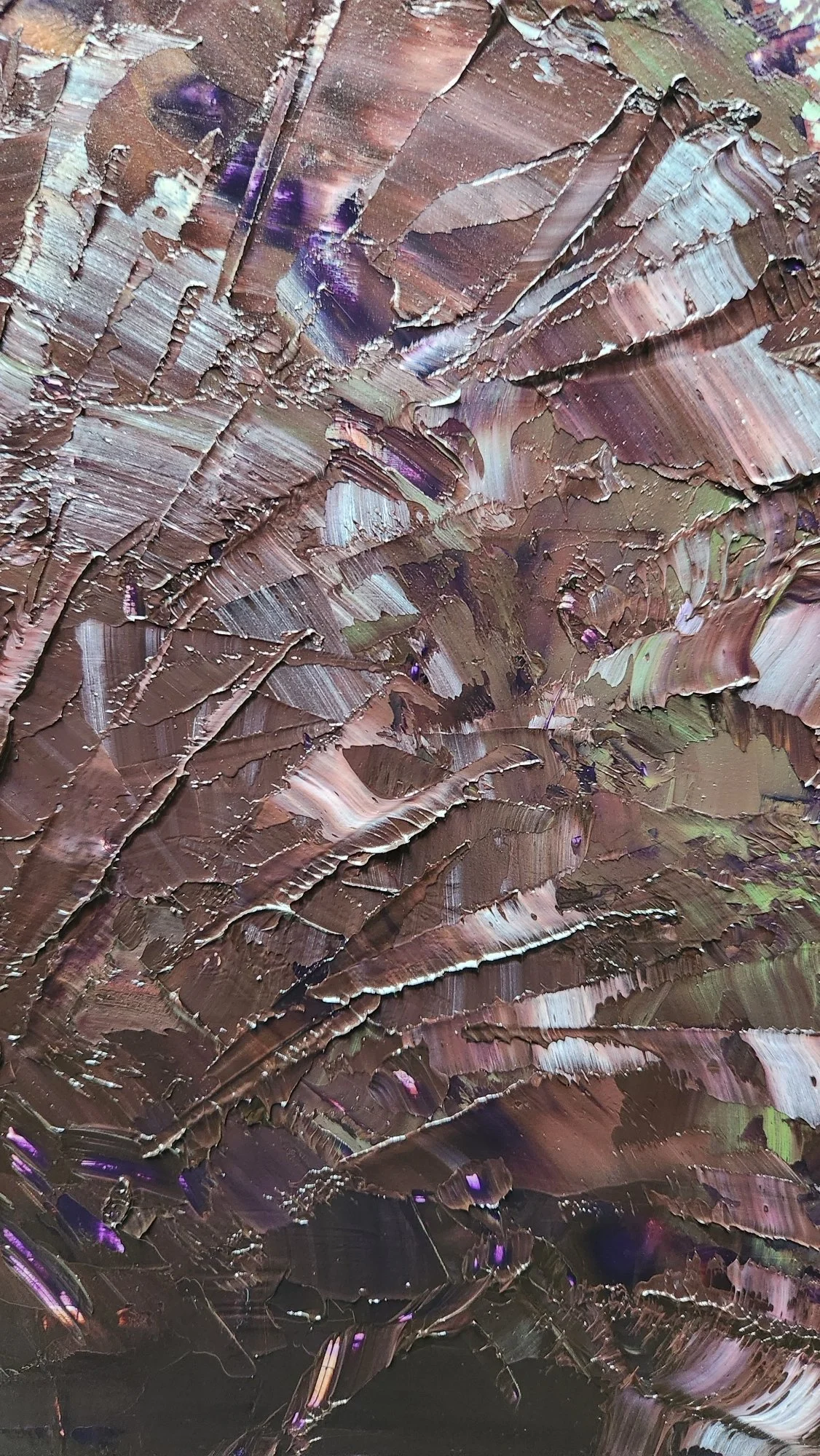
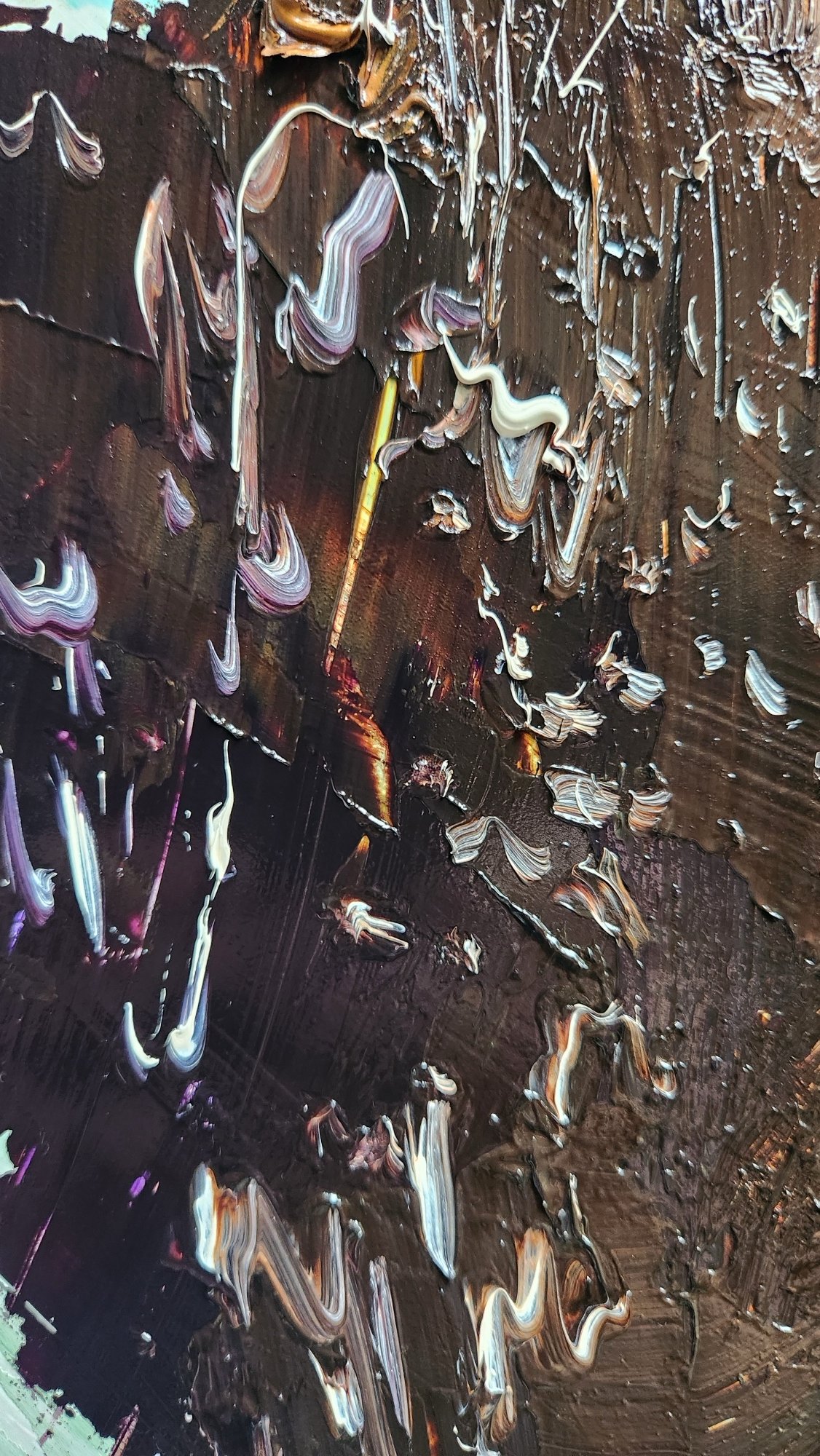
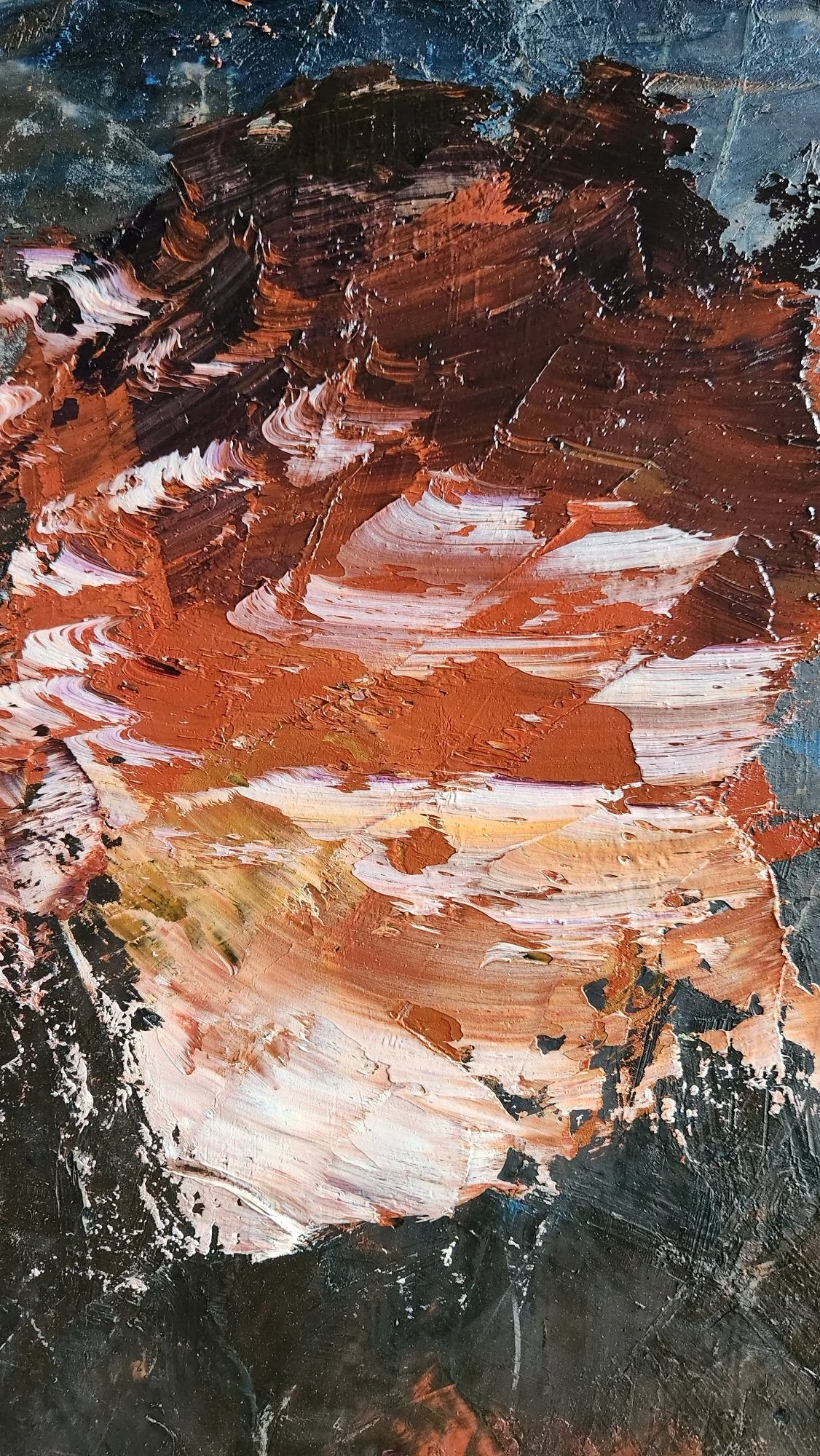
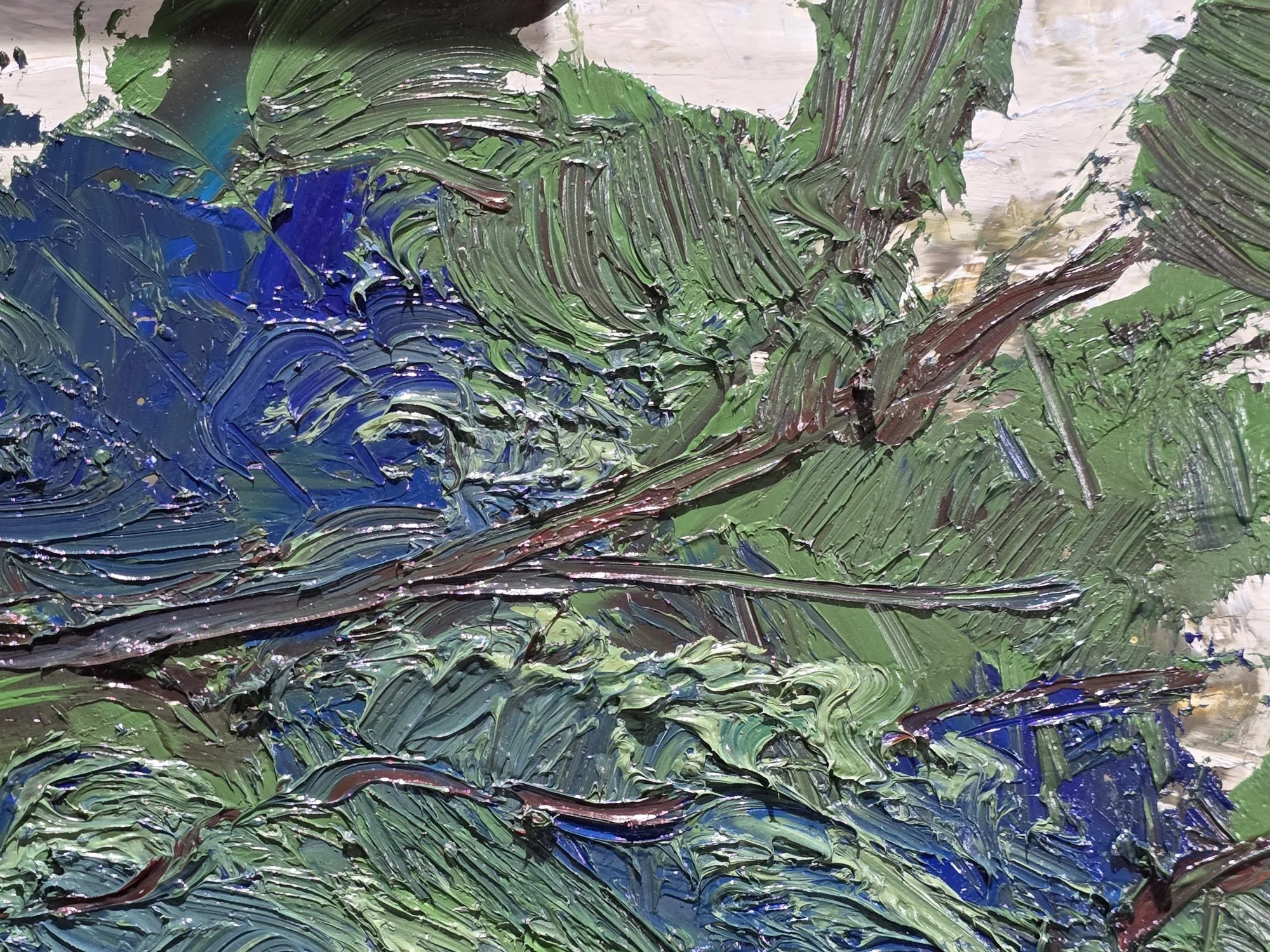
The method, briefly
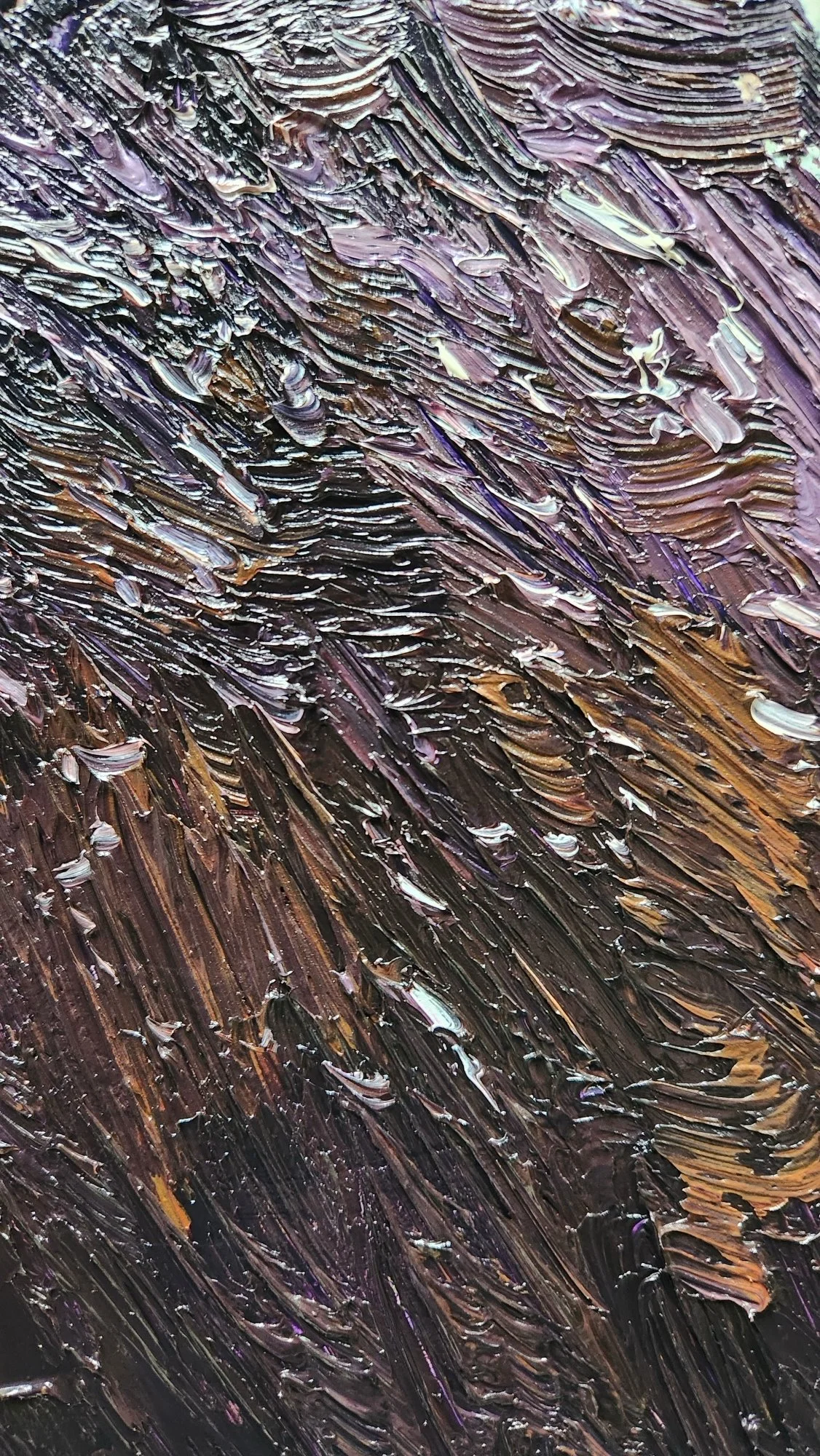
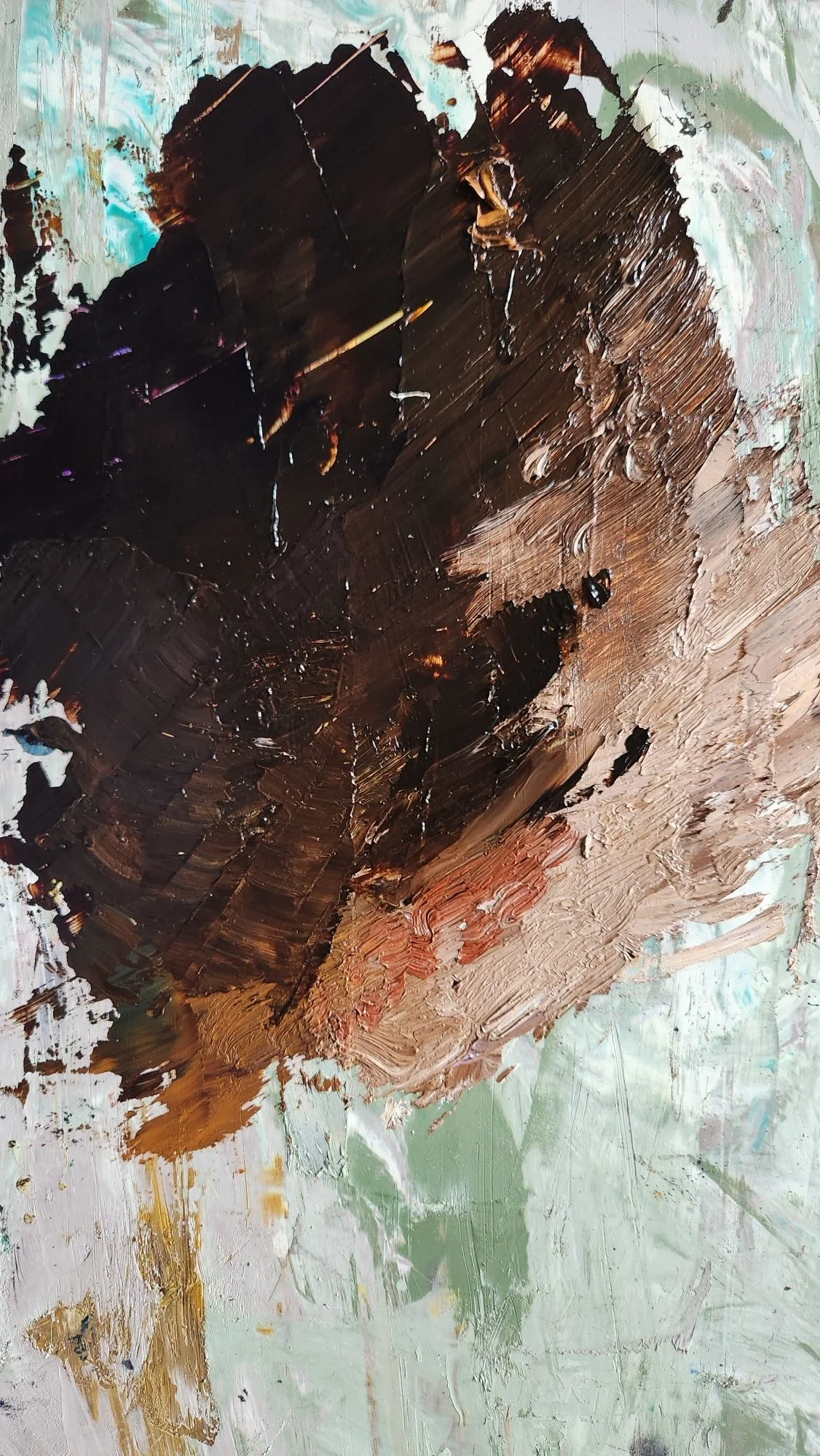
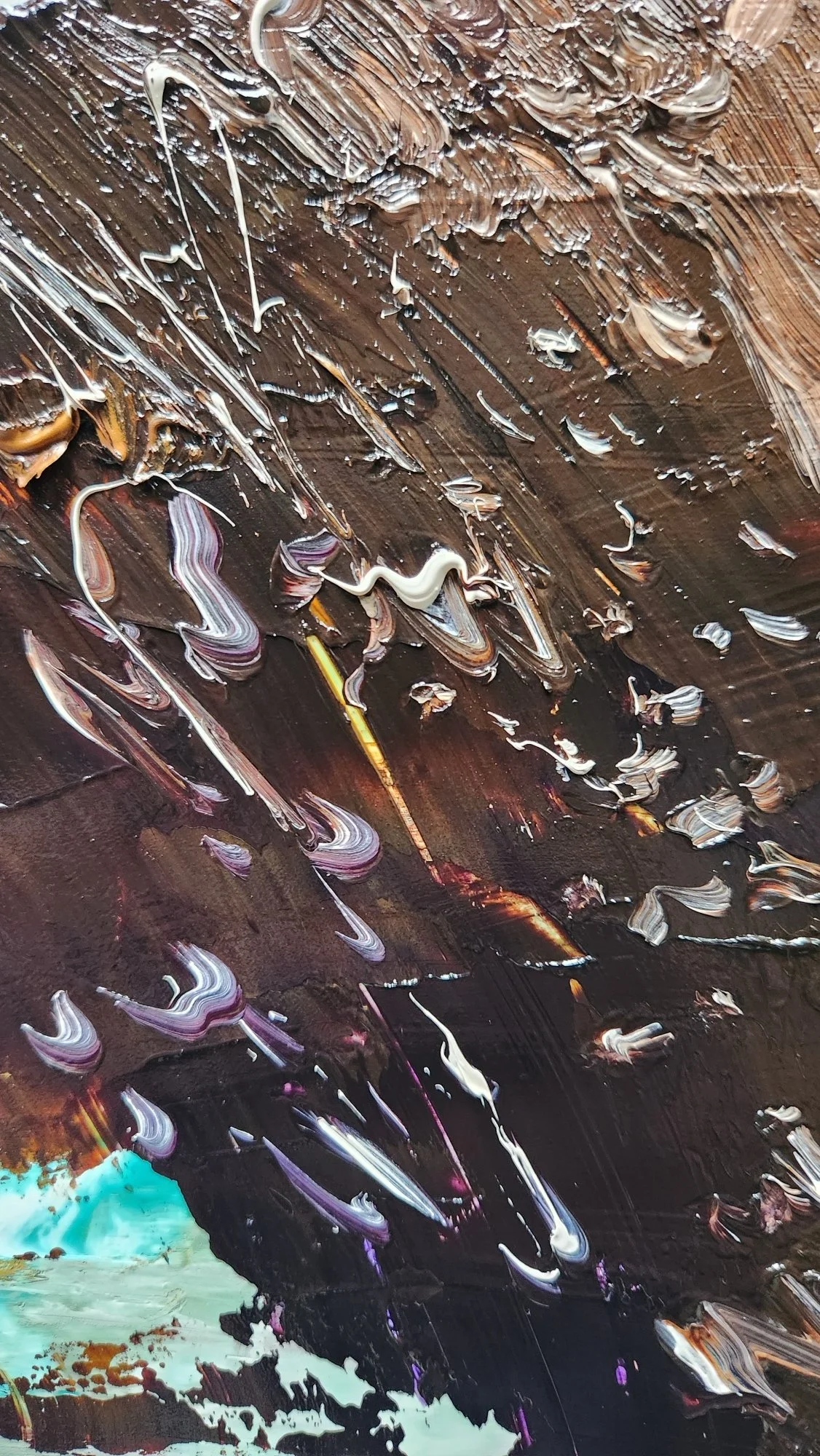
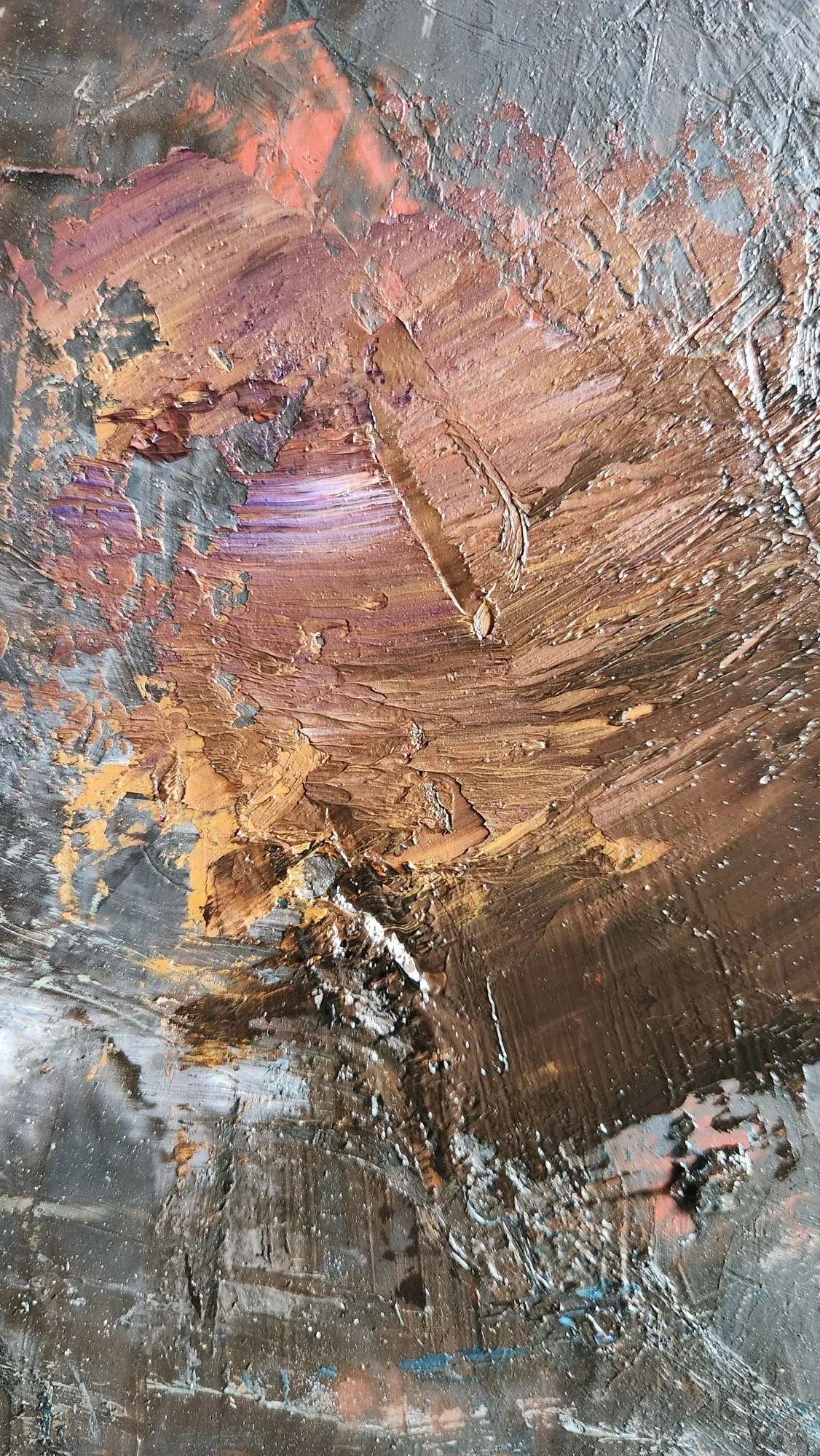
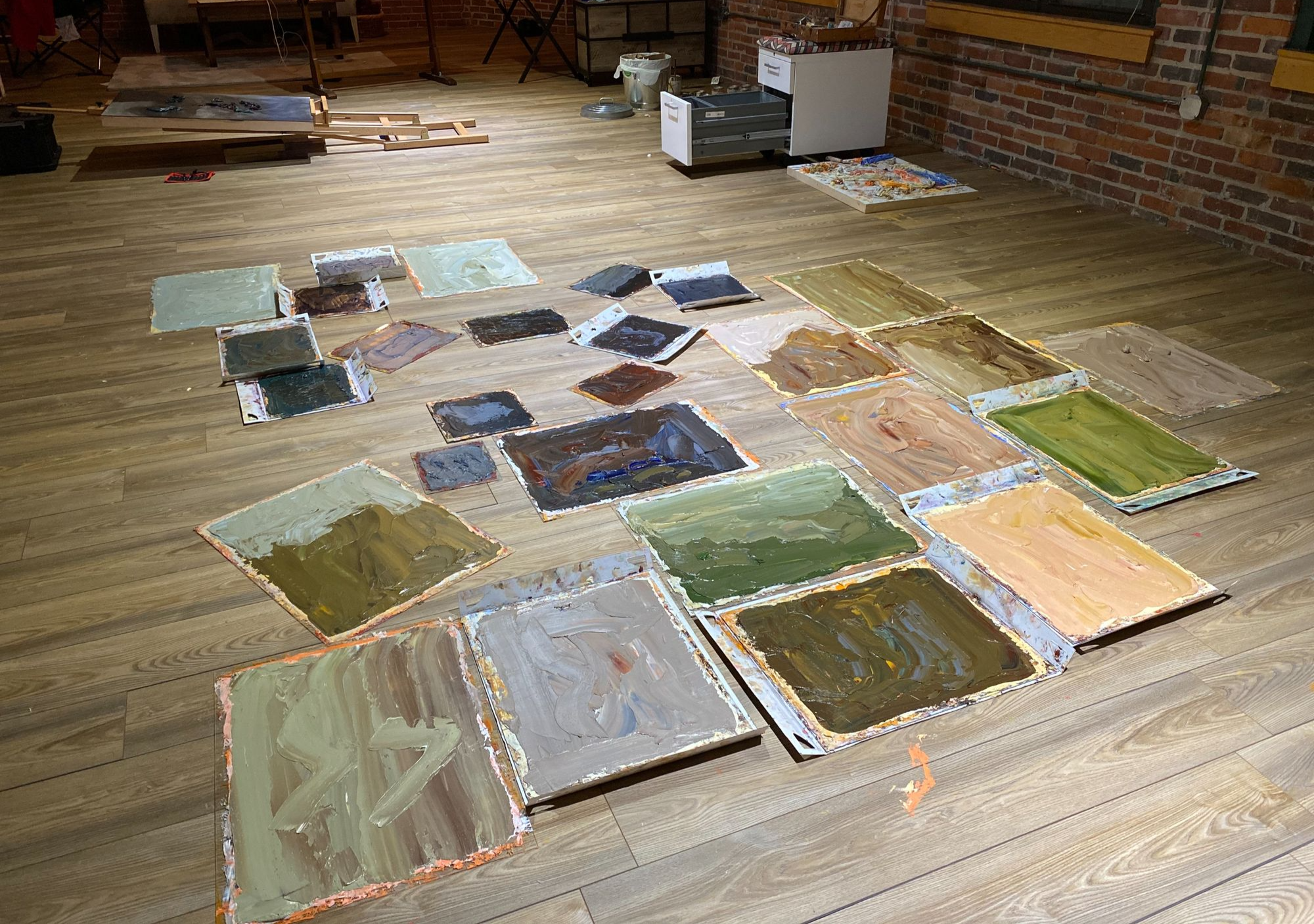
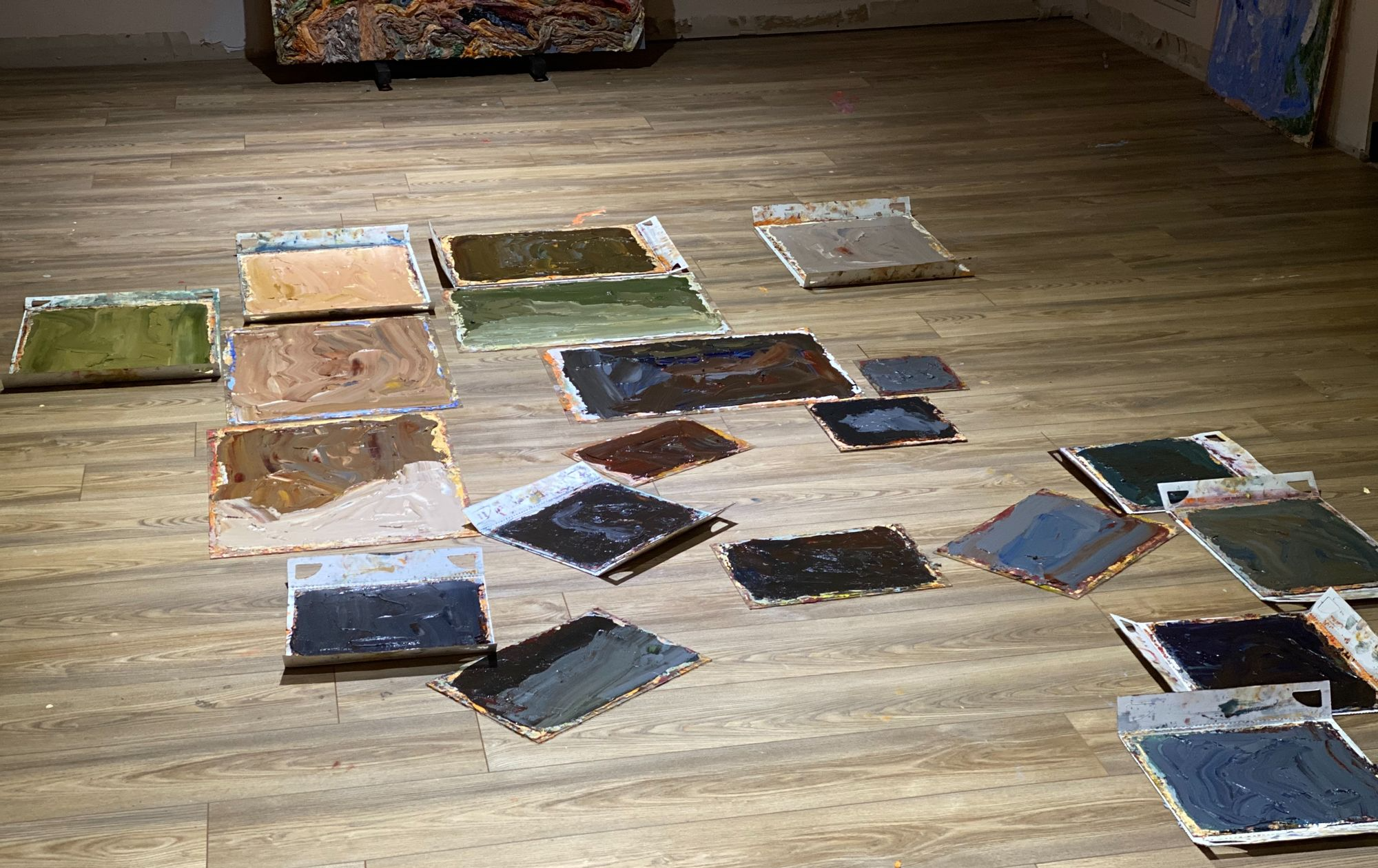
I make these paintings outside. I visit the same place many times and paint dozens of versions of it on temporary supports. The studies are not practice for the painting. The studies are the thinking. When I have enough of them, I bring them back to the studio and lay them on the floor.
Then I begin to steal.
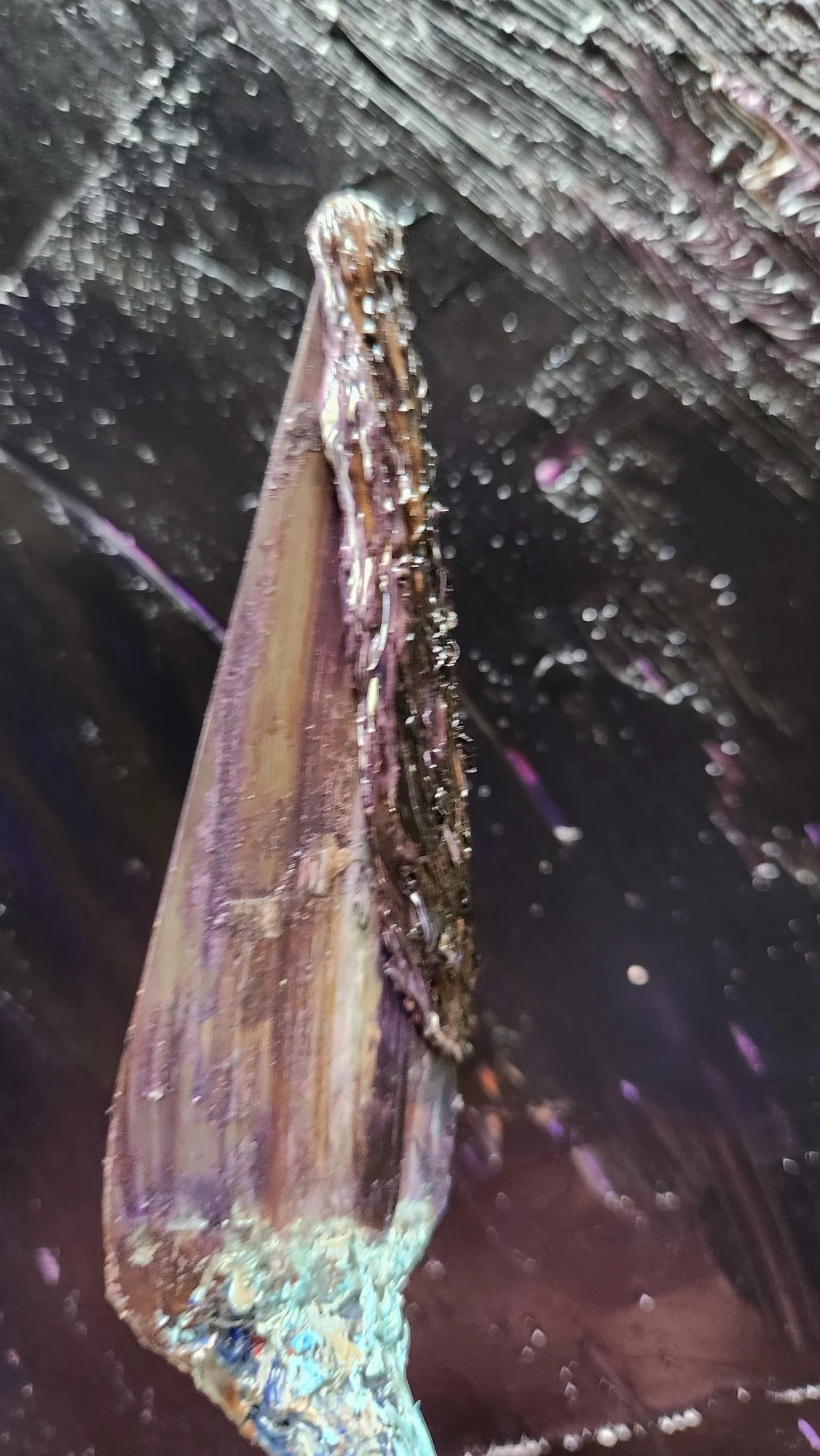
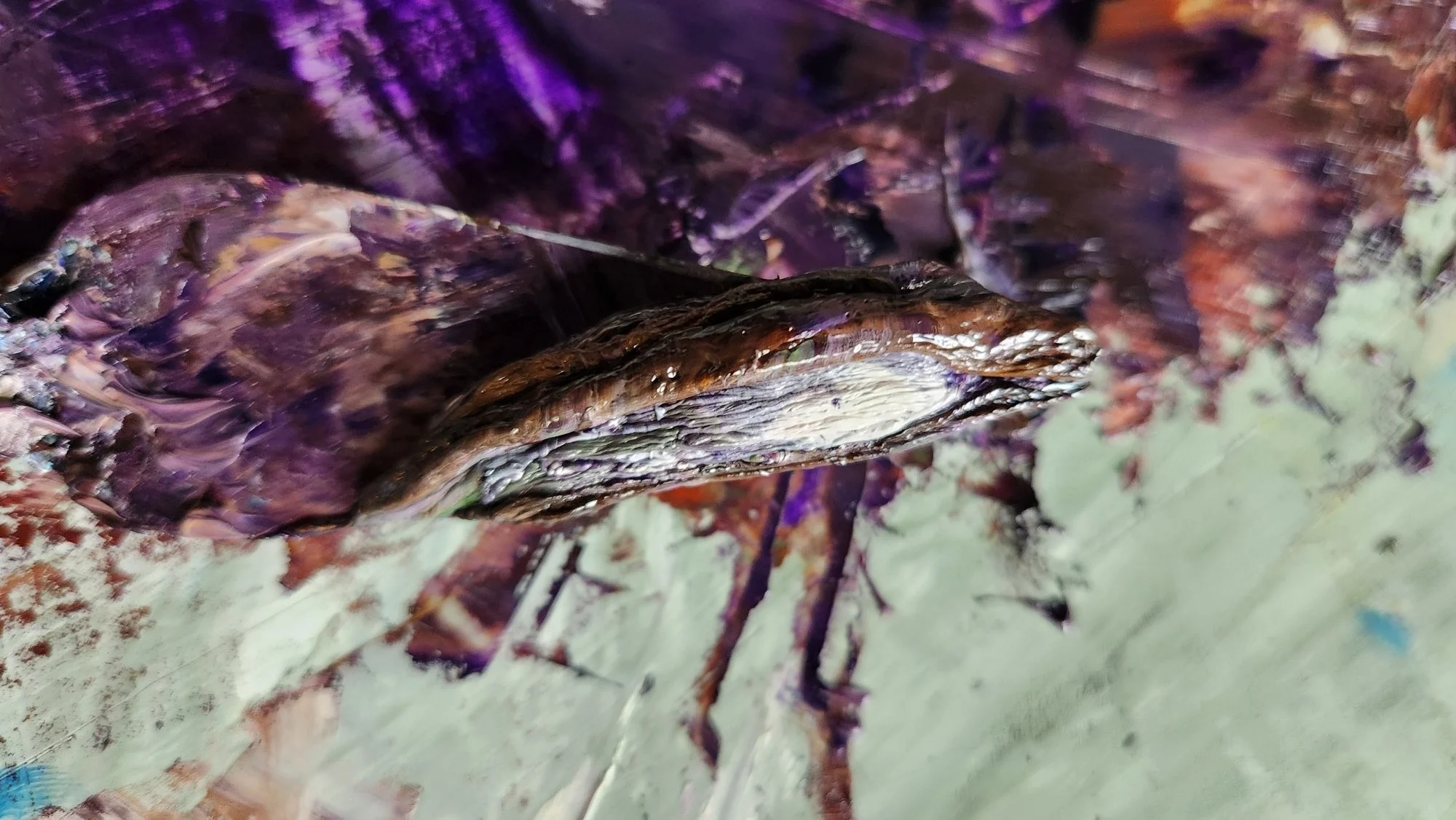
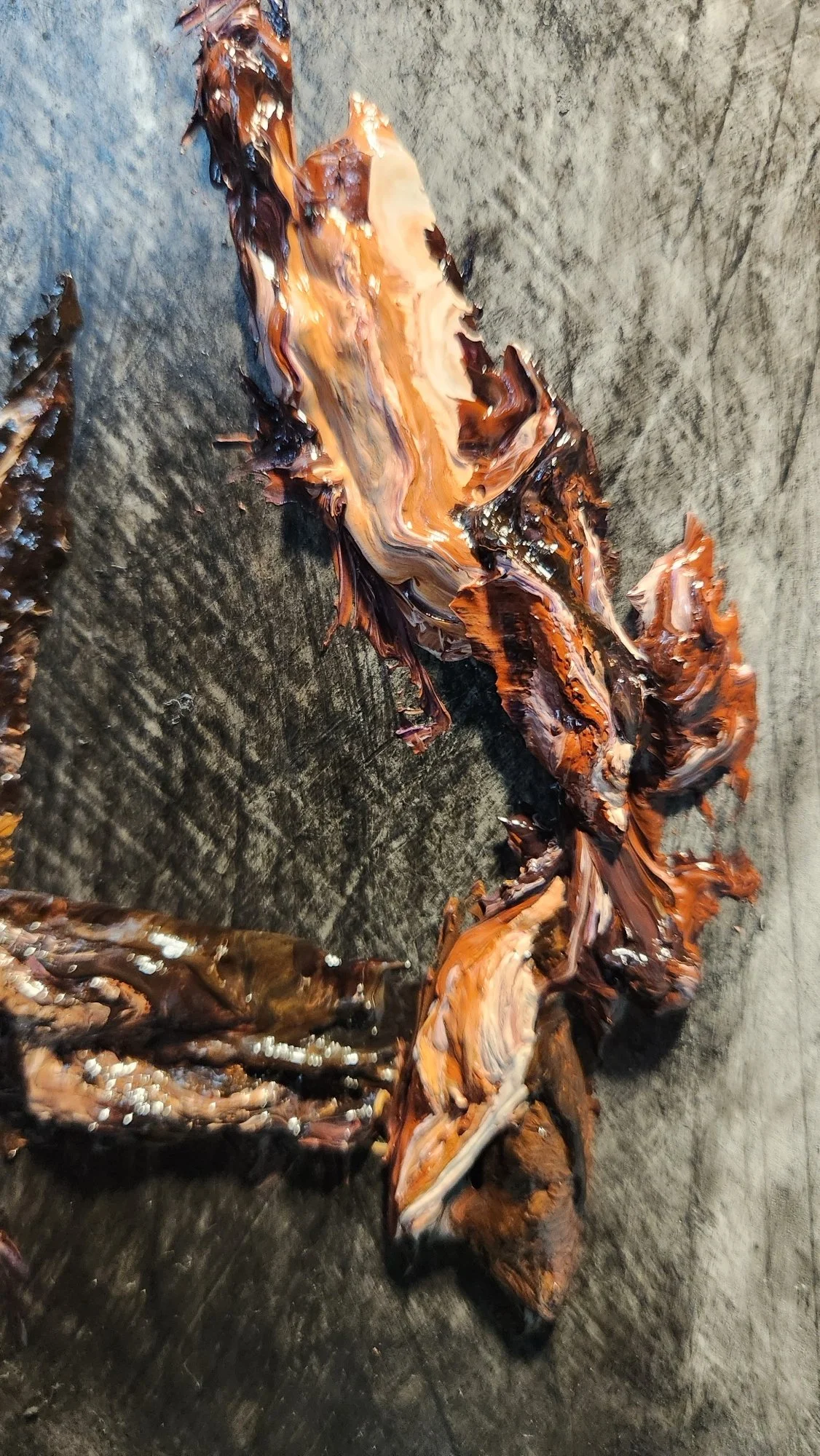
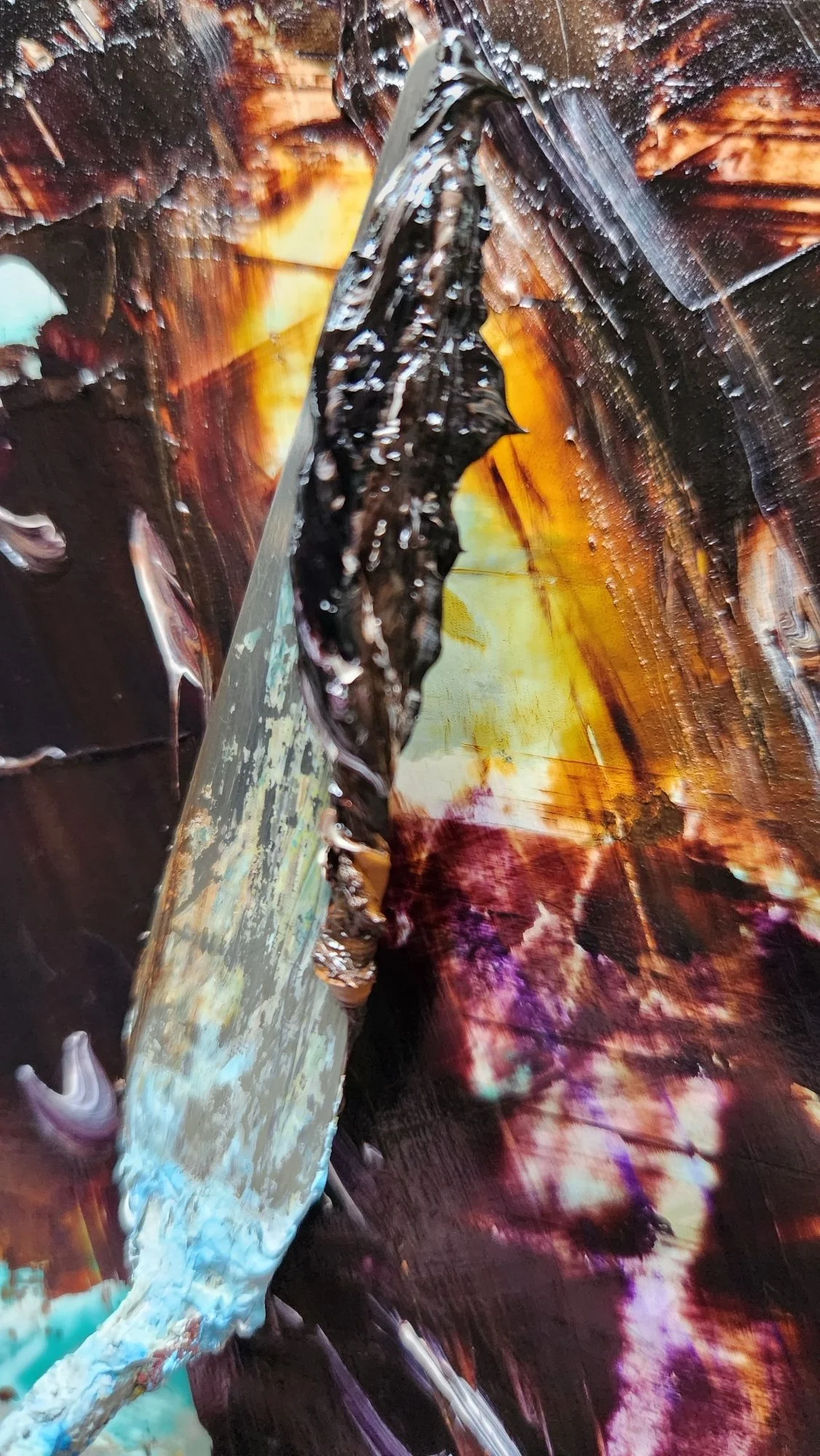
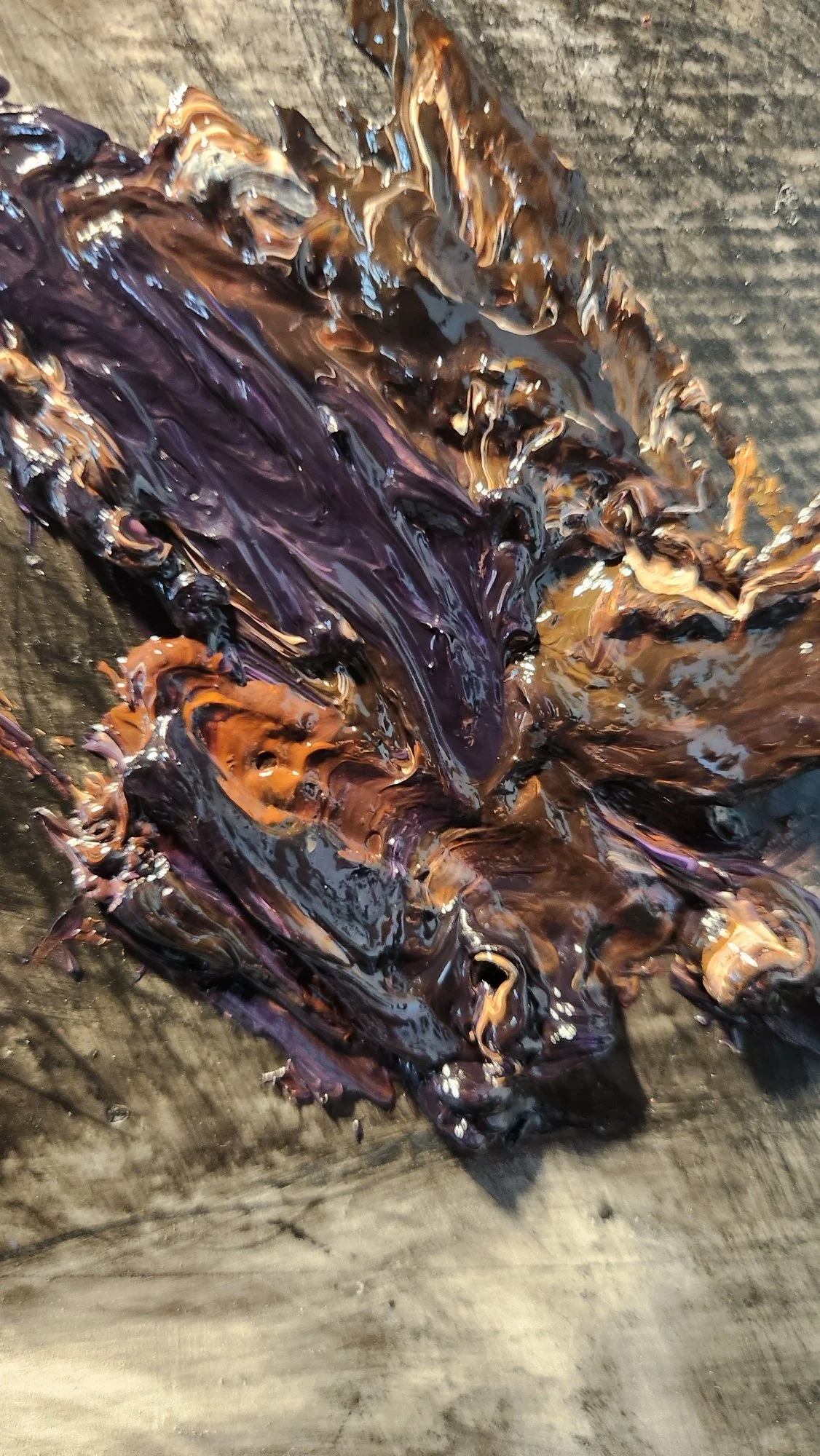
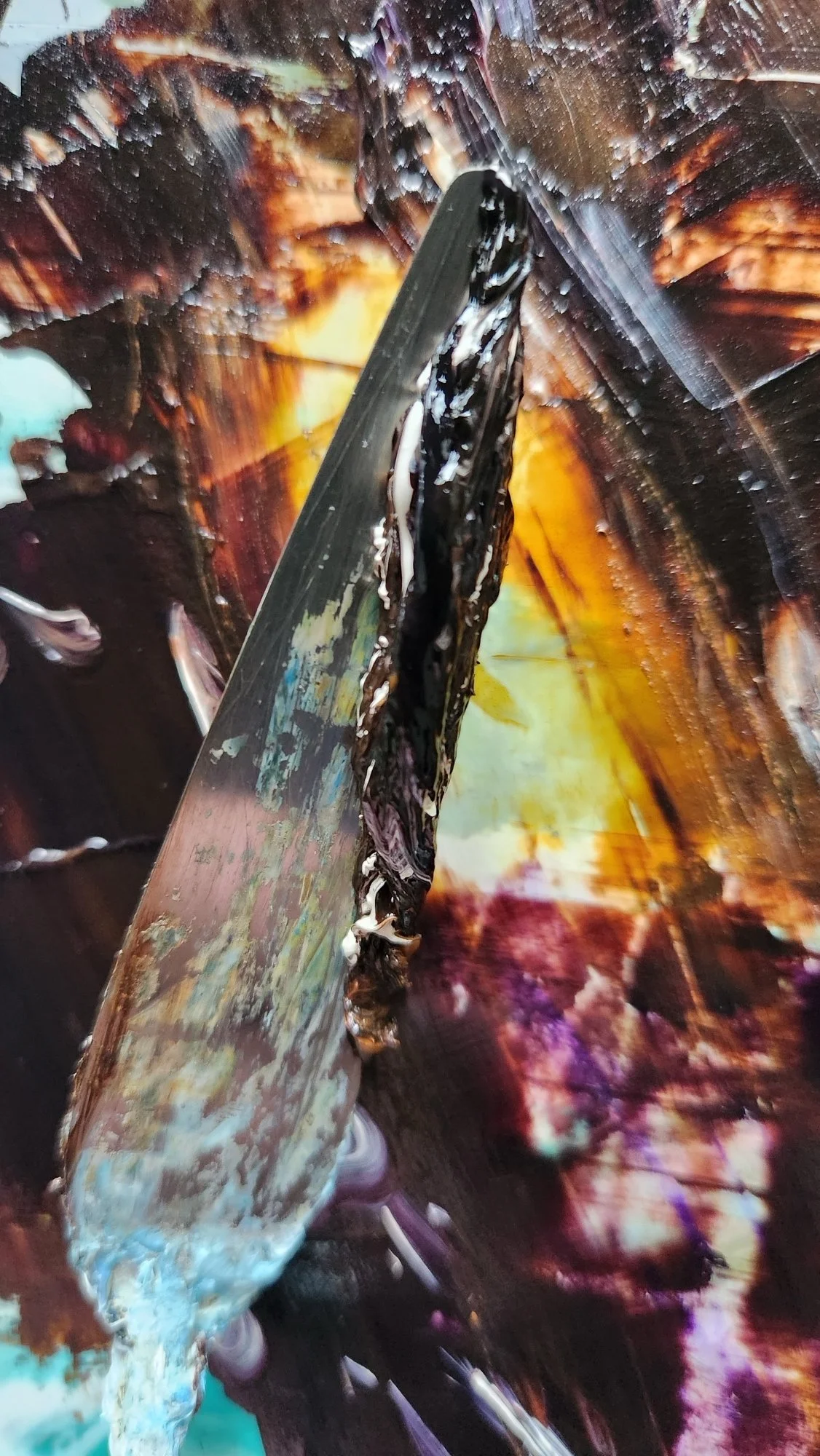
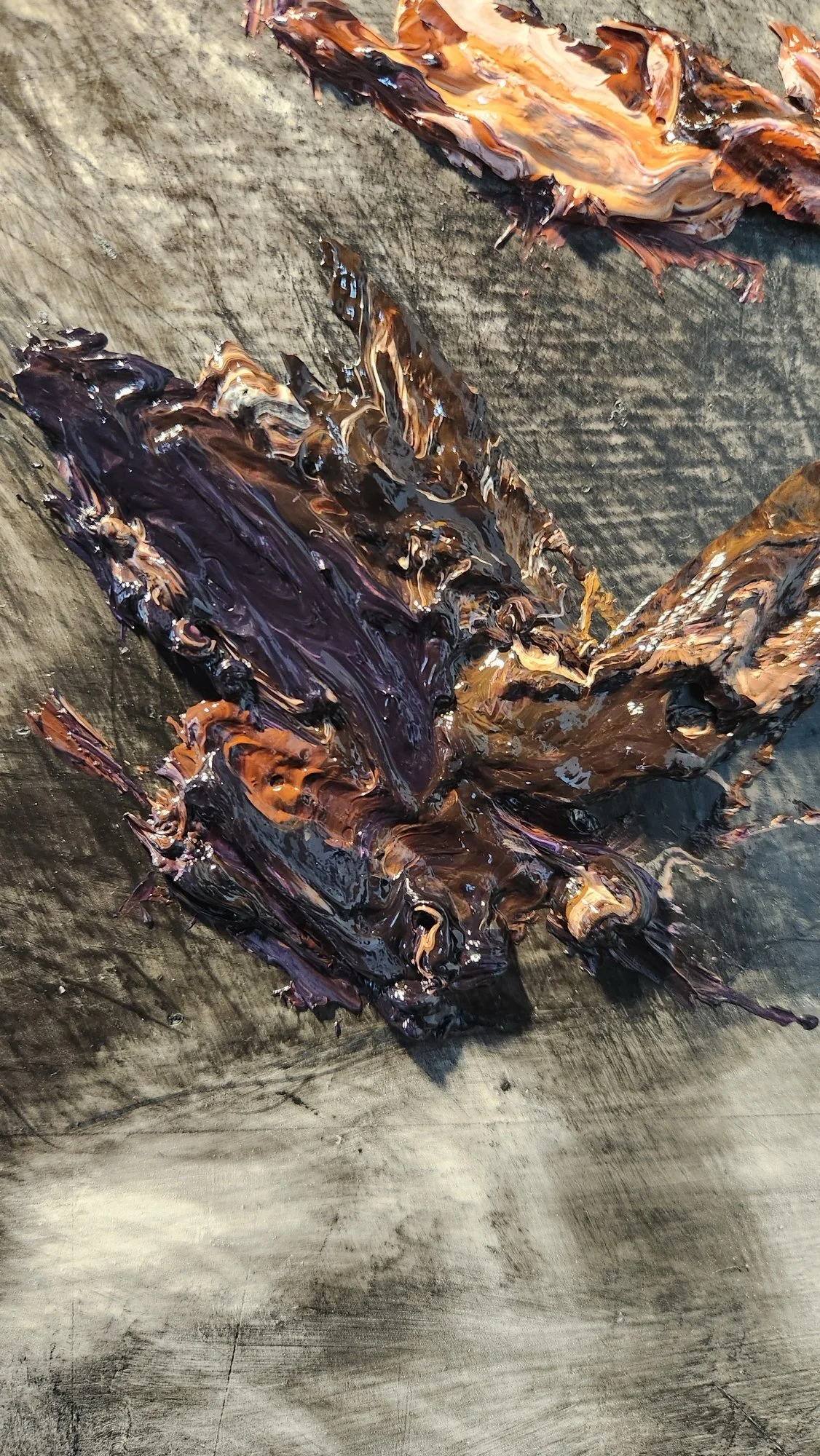
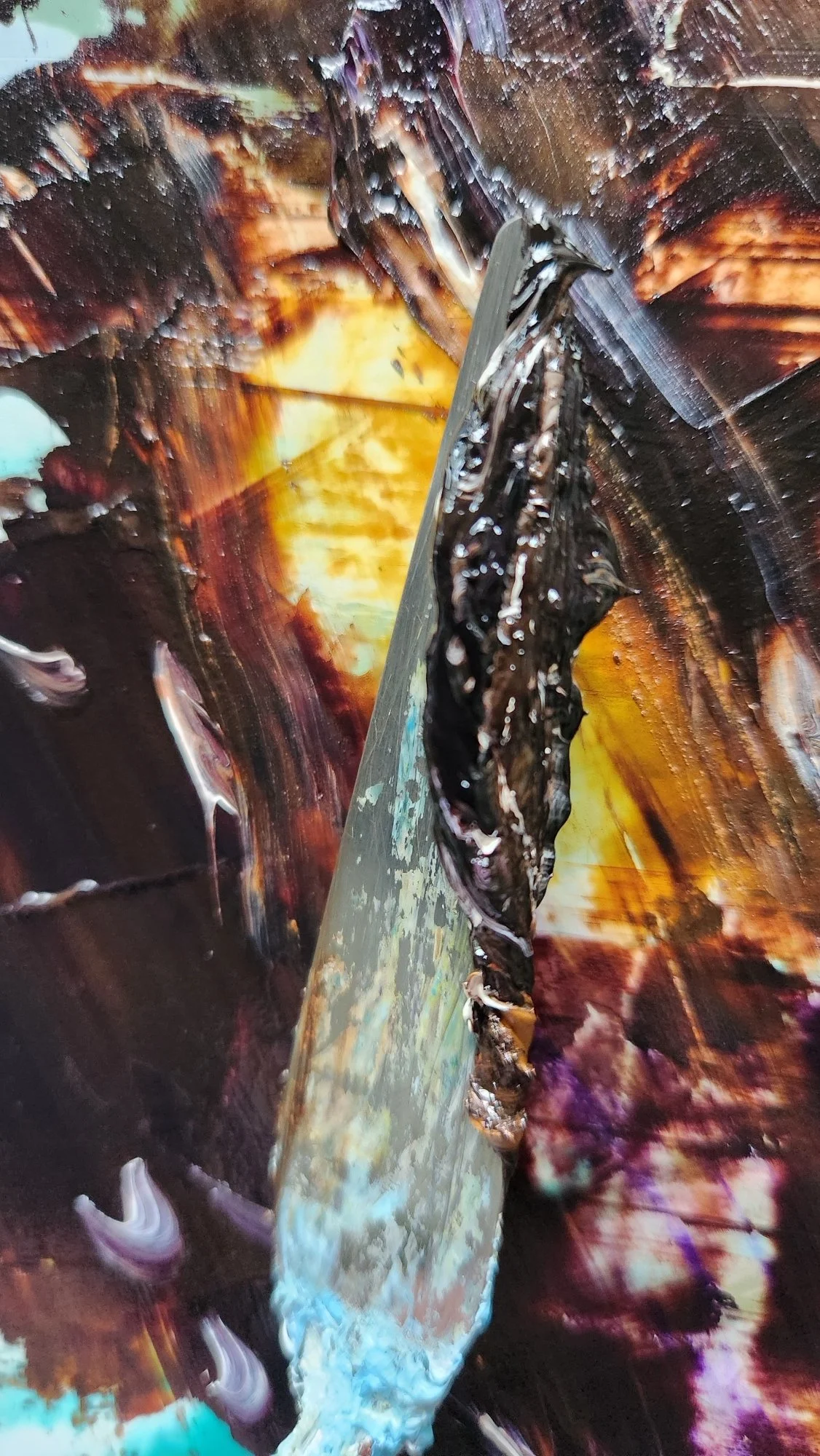
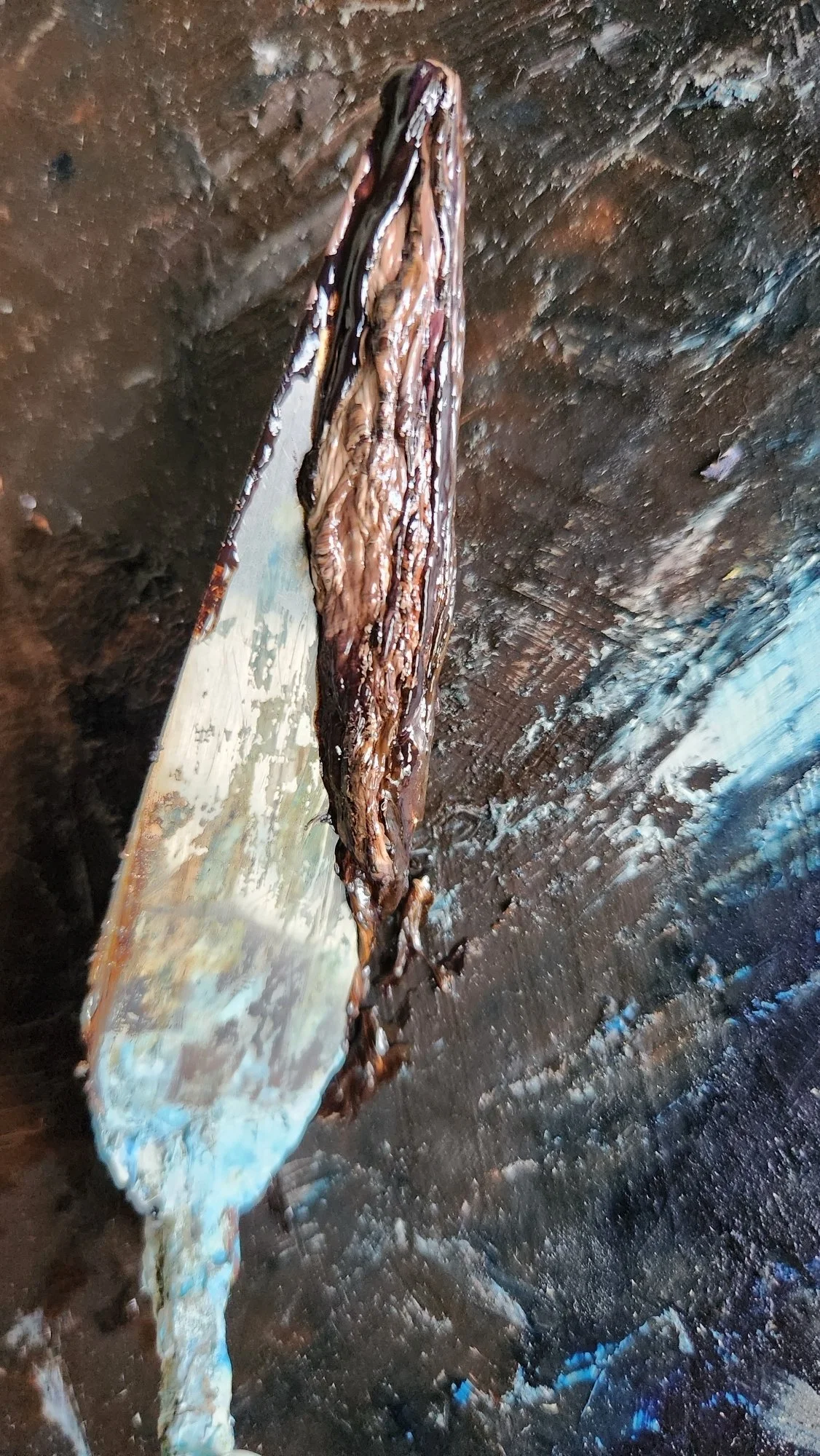
I look across the field of studies and I find the small areas where something happened that I didn't engineer. A few square inches of a mark that has its own life. I cut those out and I sculpt them together onto a single panel. Each painting becomes a mosaic of stolen moments, preserved with their surface intact, arranged into forms that read as landscape from far away and refuse to read as landscape up close.
I have been asked, often, why I work this way. I used to give a craft answer. The conversation last week pushed me into a different one.
What the method is for
When I am rendering an image the traditional way — building up layers, pushing brushes around, adjusting until the thing in front of me starts to look like the thing I'm studying — I do not feel like I am describing what it is like to be alive right now. I feel like I am describing what it was like to be alive in another century.
The tools we use now reward a different muscle. We are being trained, by the technologies most of us use every day, to articulate exactly what we want so that we can be given exactly what we want. The precision lives in the language. The skill lives in the prompt. It is a real skill. It is also turning each of us into something close to an omnipotent figure inside our own day — we think, and we receive.
There is a strange flatness to that. I don't have a complaint about it. I have a description of it.
Plein air painting, for many people today, is a discipline practiced as a kind of hobby and a method for relaxation. It aligns the painter with careful observation, and there is a peace in that — layer after layer of paint, decision after decision, rendering an image until you arrive at a finishing point.
I'm not the first person to name painting as disconnected from the time. But what I am naming is that the peace this practice has traditionally offered is itself getting harder to reach. The overwhelm follows the painter to the easel the way it follows everyone else into the room they hoped would be quiet. So I wanted a method that didn't pretend otherwise.
The mosaic — going out, getting completely empty, then standing over a floor full of studies and choosing what to save — is closer to how decisions actually feel now. You do not arrive at the final painting by adding. You arrive by selecting from a glut. You arrive by being honest about what was actually alive in the work versus what you wanted to be alive in it. What a painting made this way can give a viewer is the experience the method itself runs on — the felt difference between articulation and discovery, between asking and finding. That is something a generated image, by definition, cannot offer. It can describe a place. It cannot offer the residue of a person standing in front of a place across many afternoons, deciding what was true. That is not a story about painting. That is a description of being inside any work that matters right now.
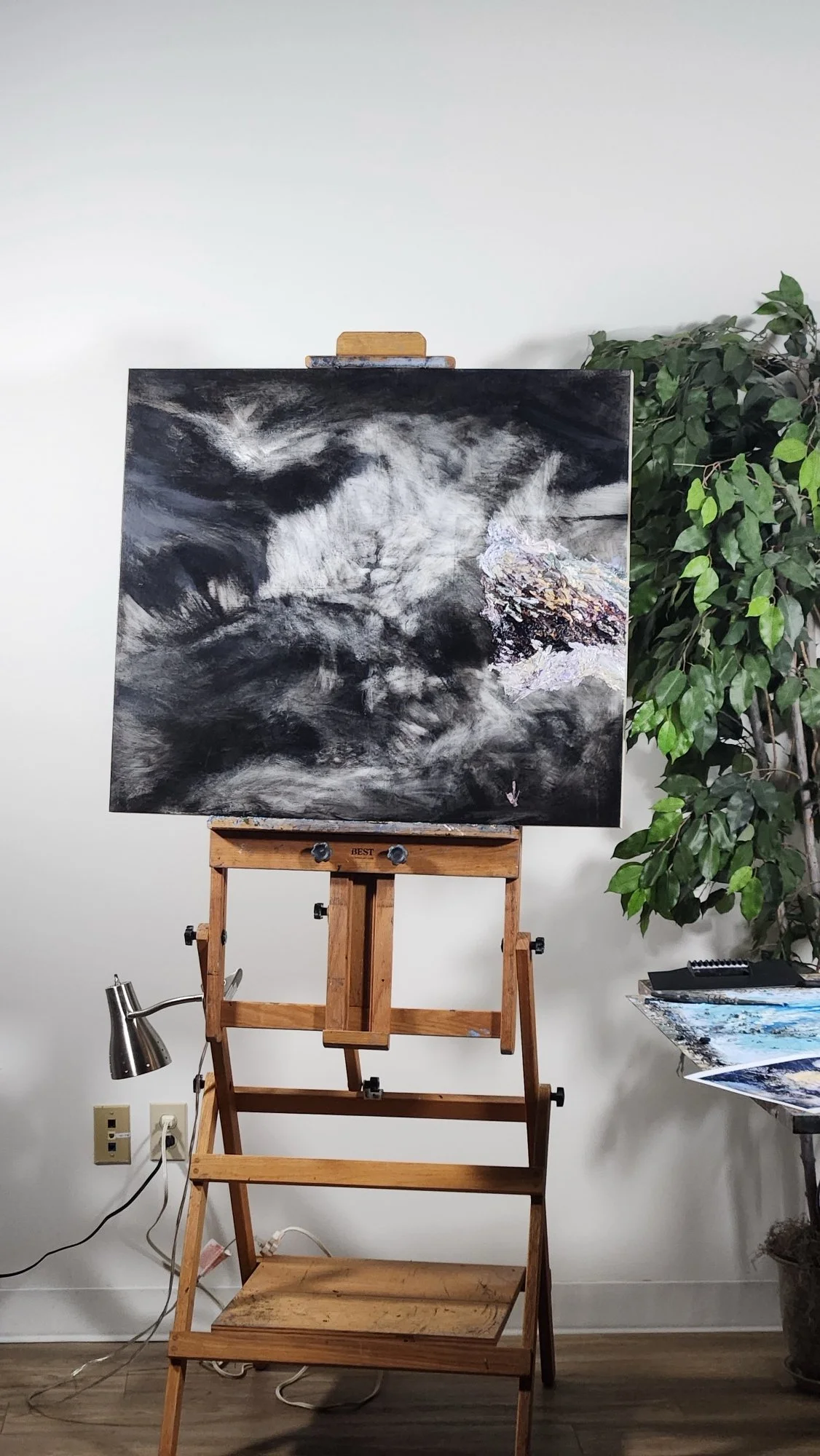
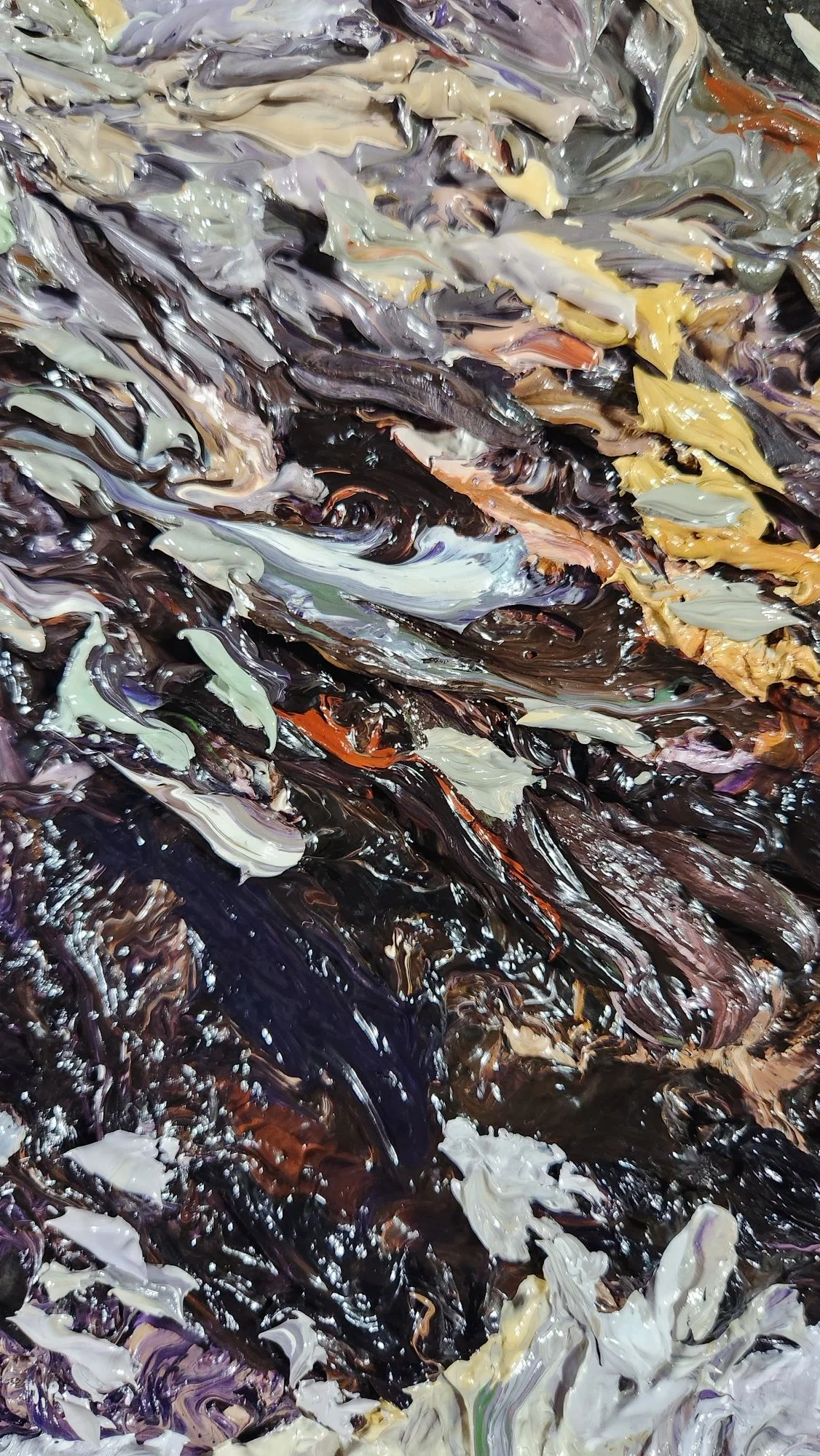
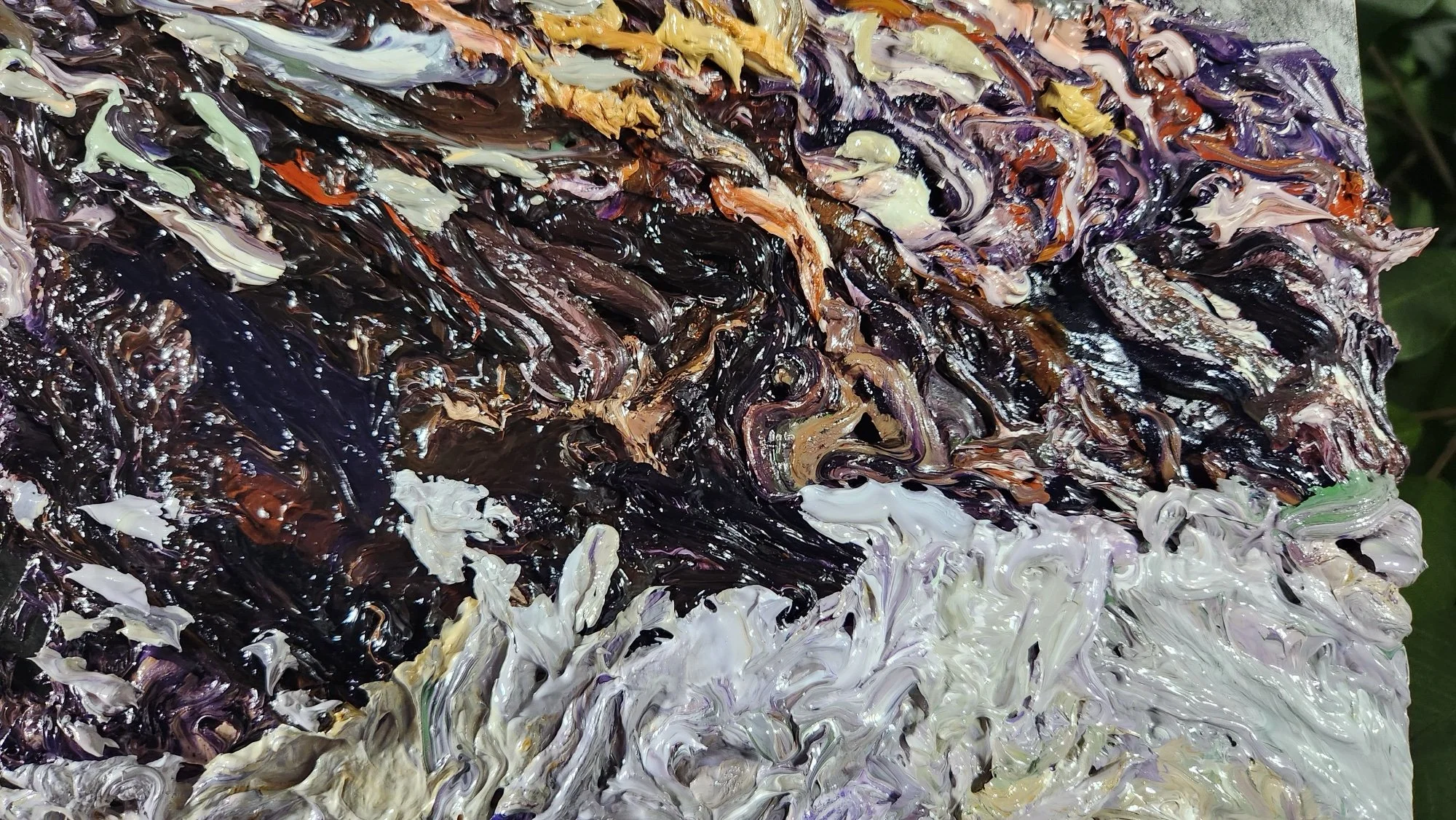
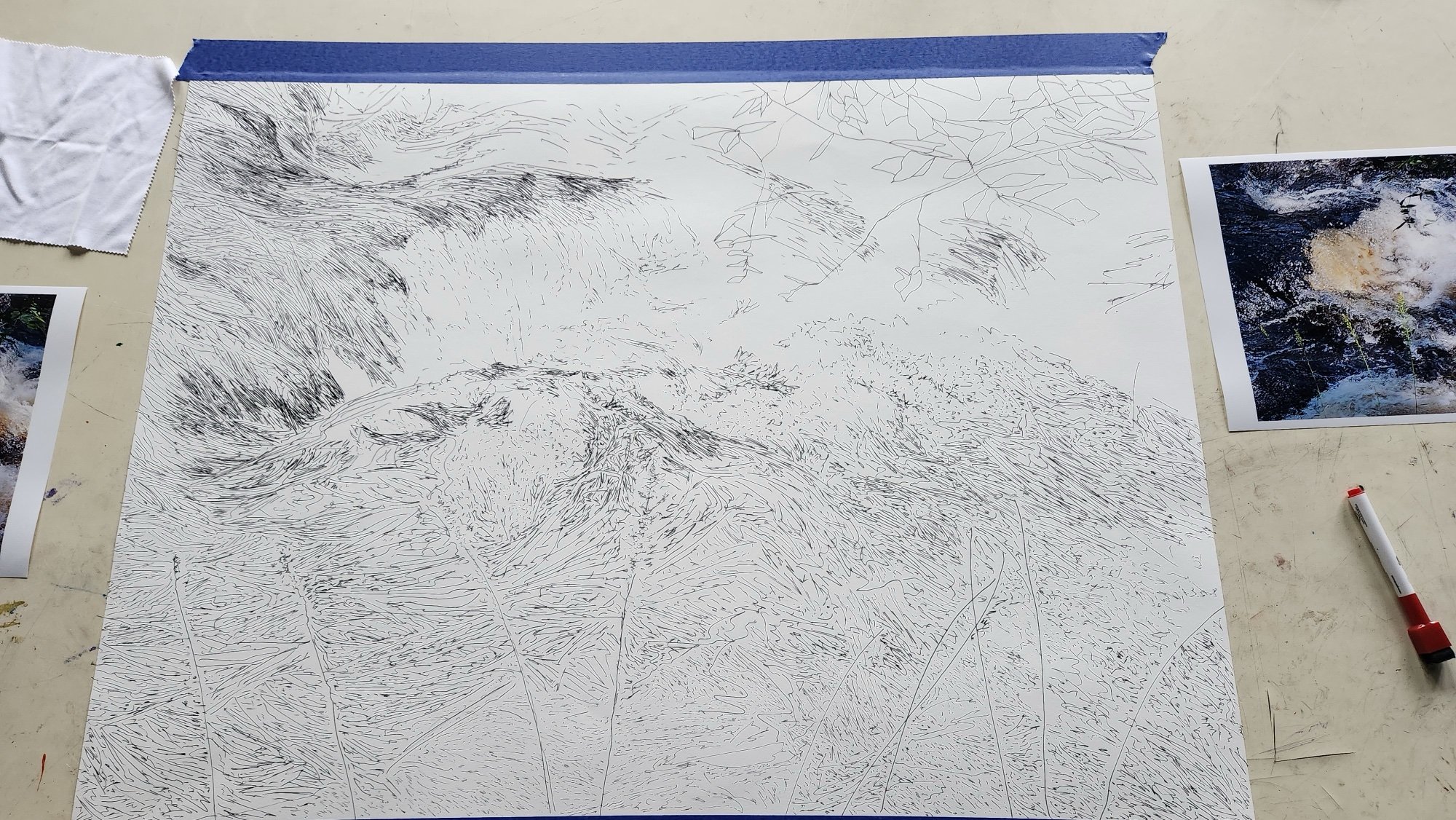
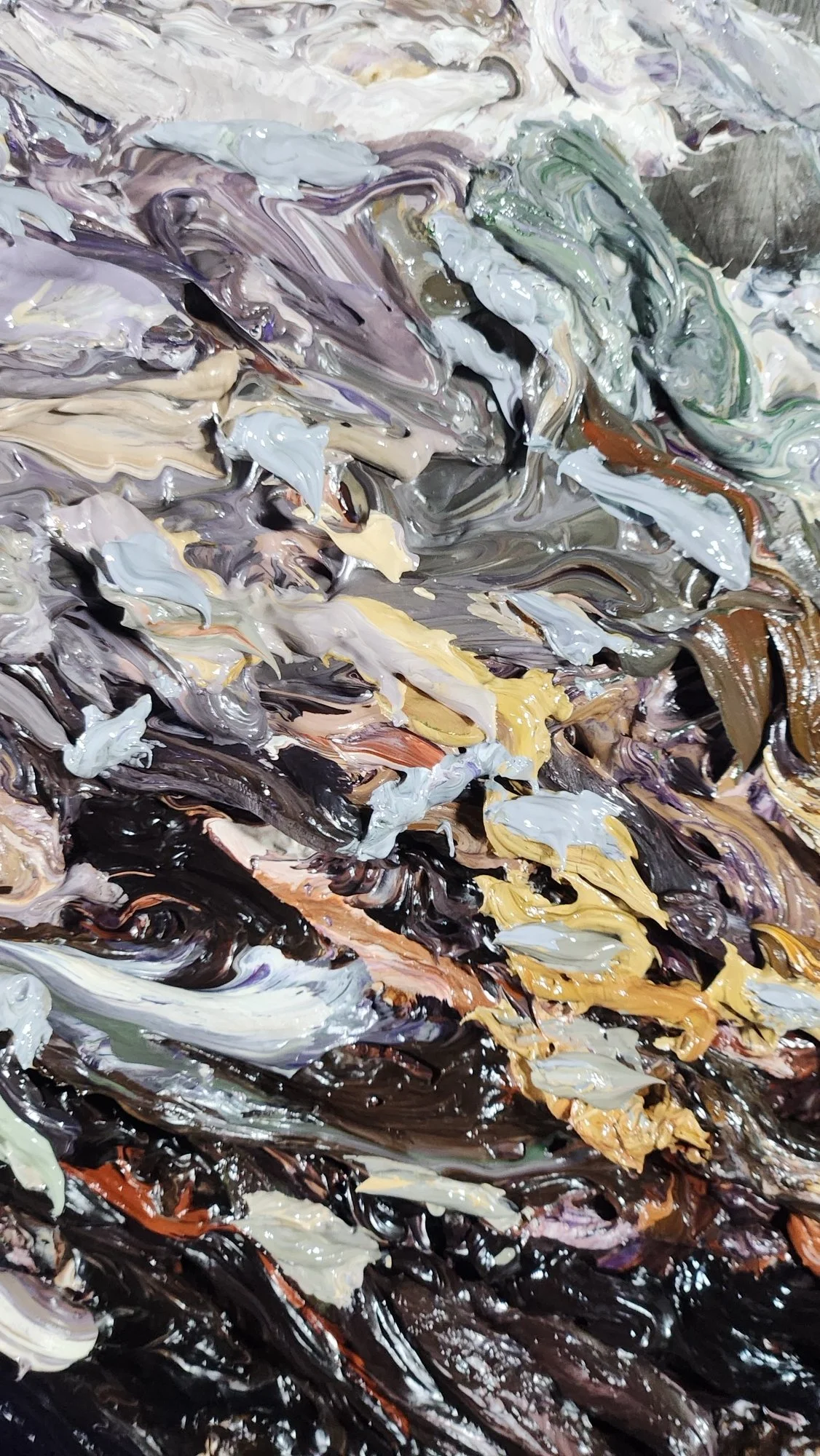
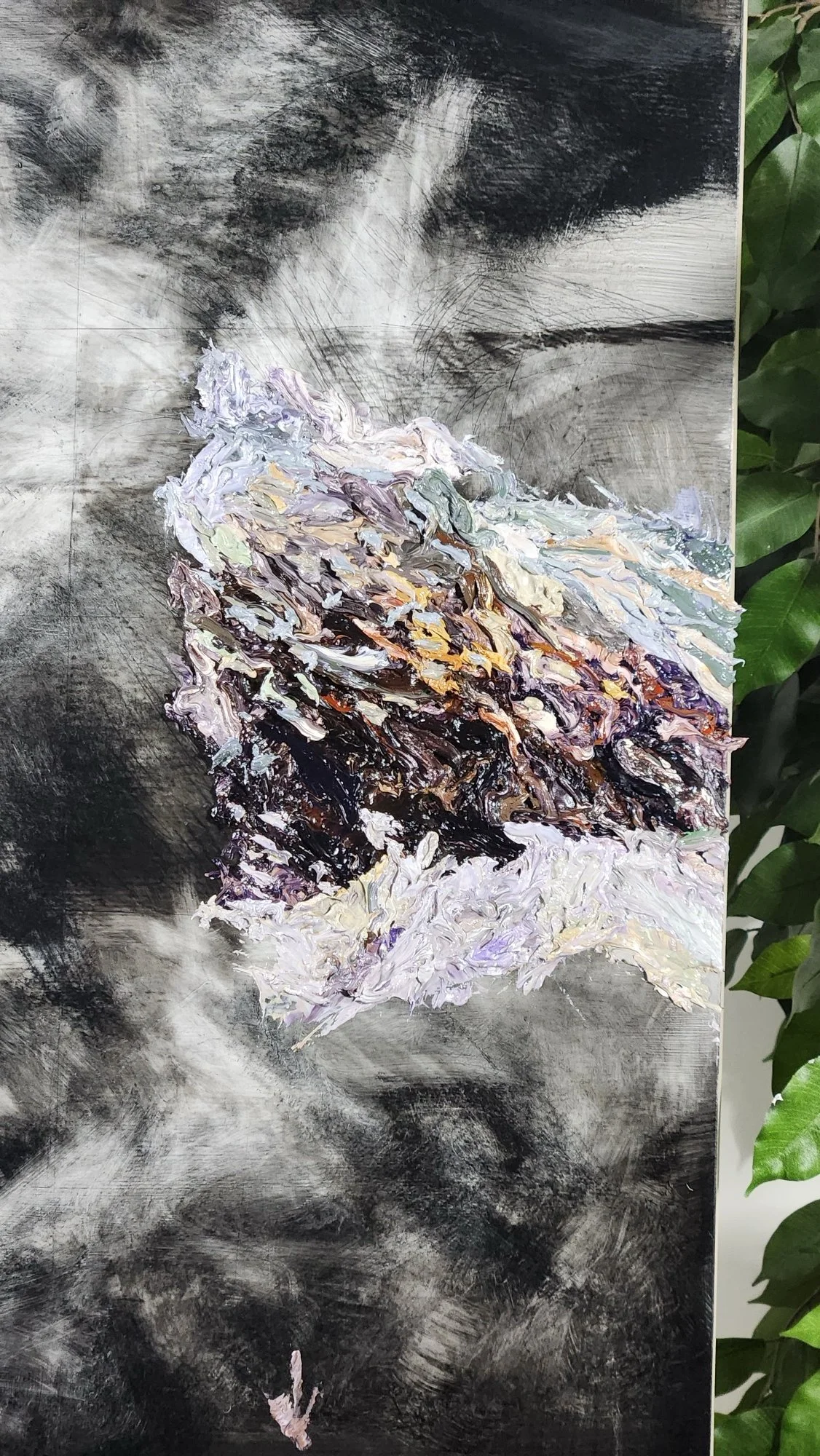
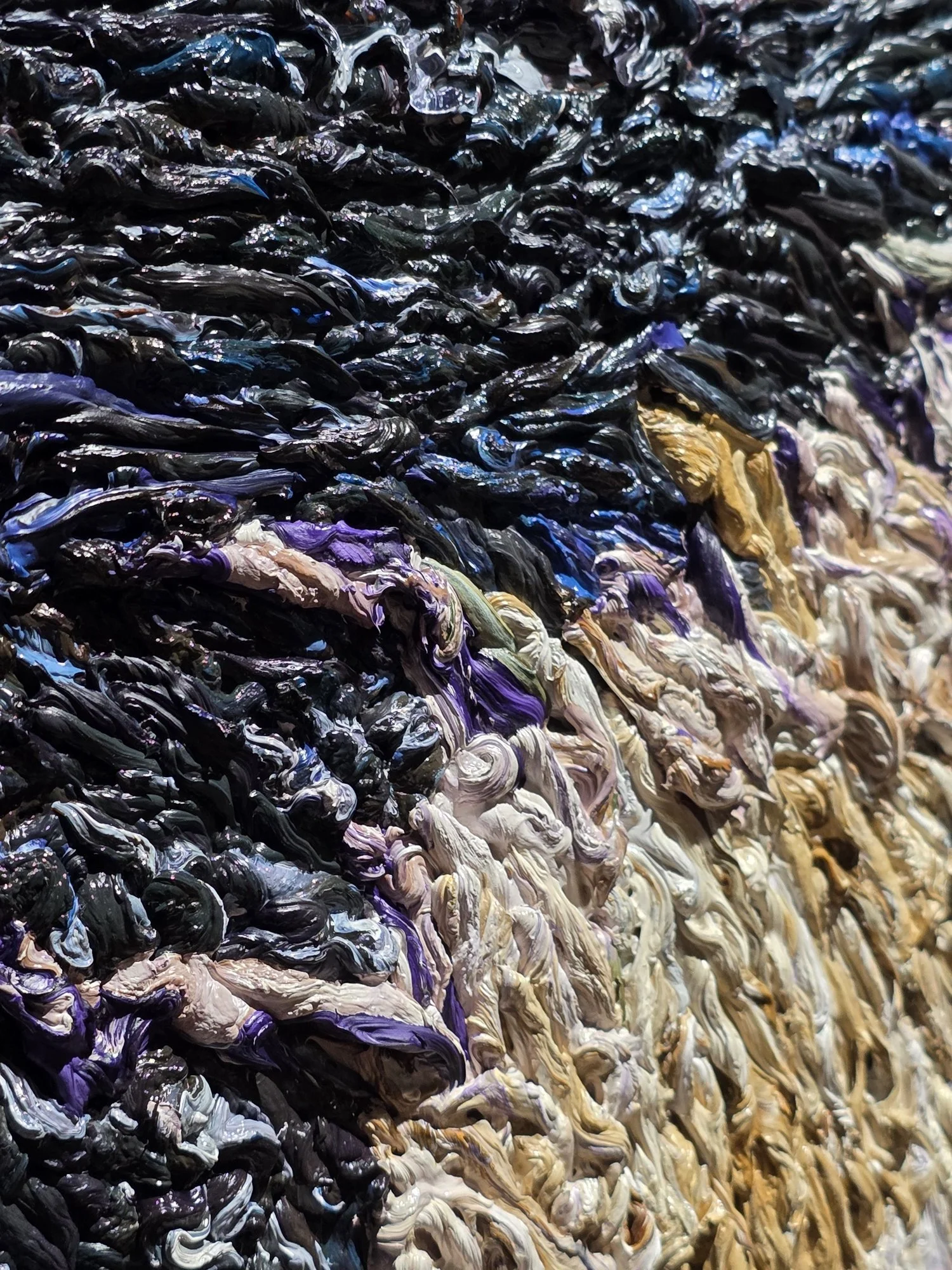
What I refused
The first instinct with Violet Rapids was to use very few forms. Large, bold, declarative. I drew it that way. I tested it that way.
I refused it.
The painting wanted smaller forms. More of them, packed tighter, intentionally pushing toward something hypnotic and chaotic.
Enjoying a painting — seeking out the experience of being in front of an excellent one — isn't exactly akin to seeking entertainment. Perhaps my reader can relate to this: walking through a museum like the Met or the Louvre, filled with incredible paintings, has very little in common with scrolling Netflix while your dinner cools on the table in front of you. Both involve looking at something. Only one of them is asking anything of you.
I paint, and I seek out great painting, for the same reason I want to wake up early to watch a sunrise — there is a fullness there, a spiritual quality, a sensation you can stand inside for a minute. Violet Rapids wanted to be a place you could stand inside but exist in the room with you. Simultaneously.
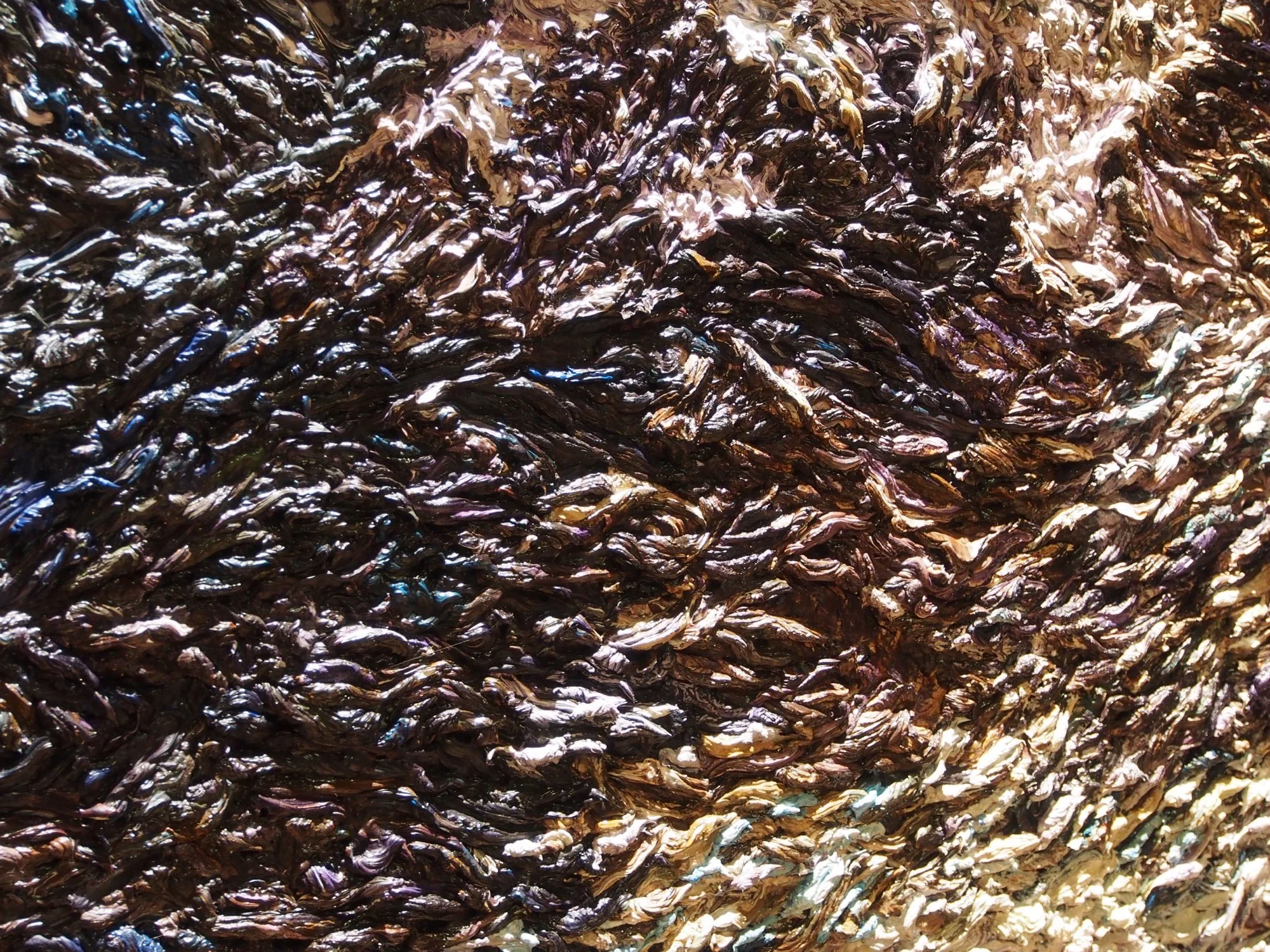
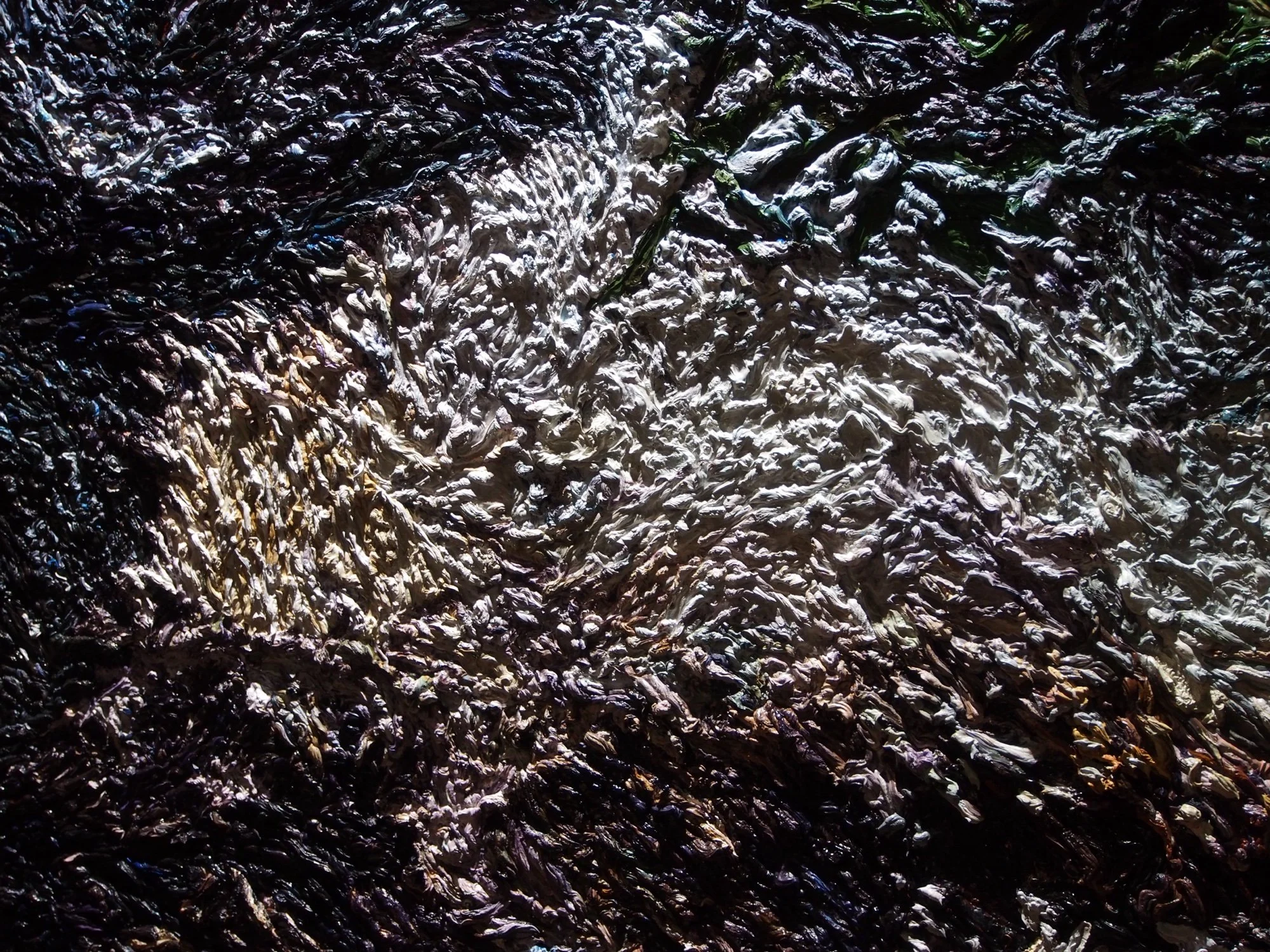
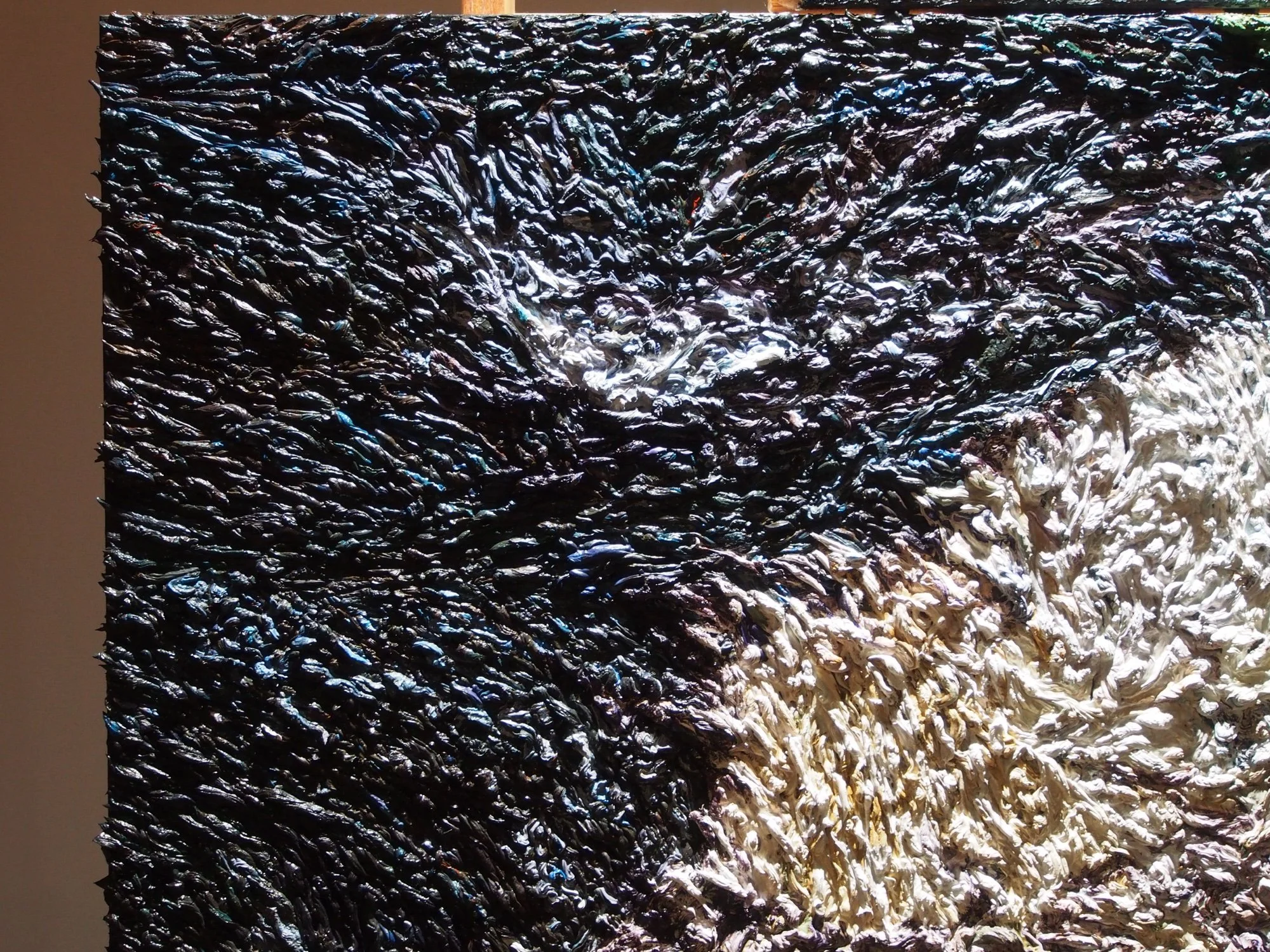
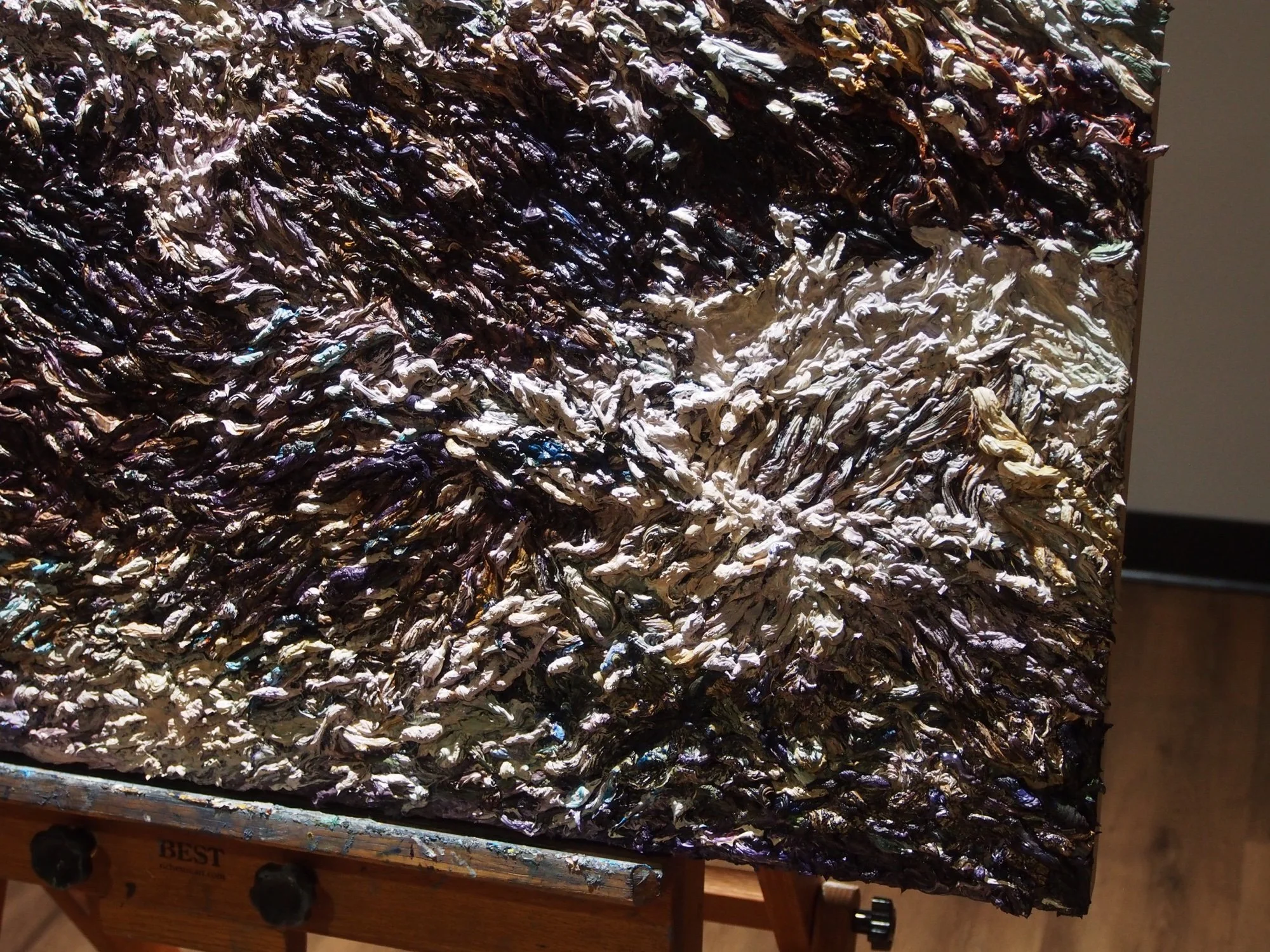
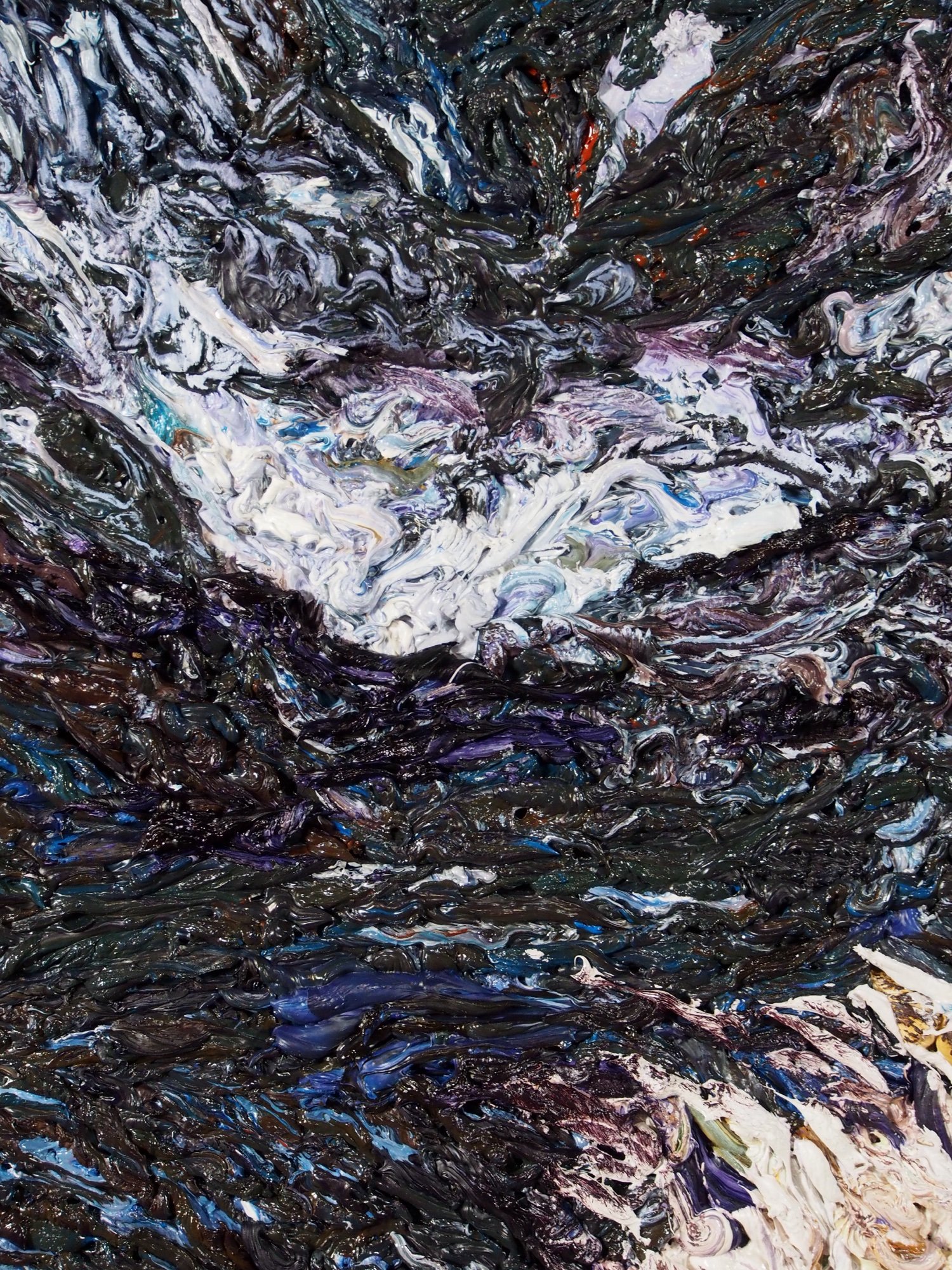
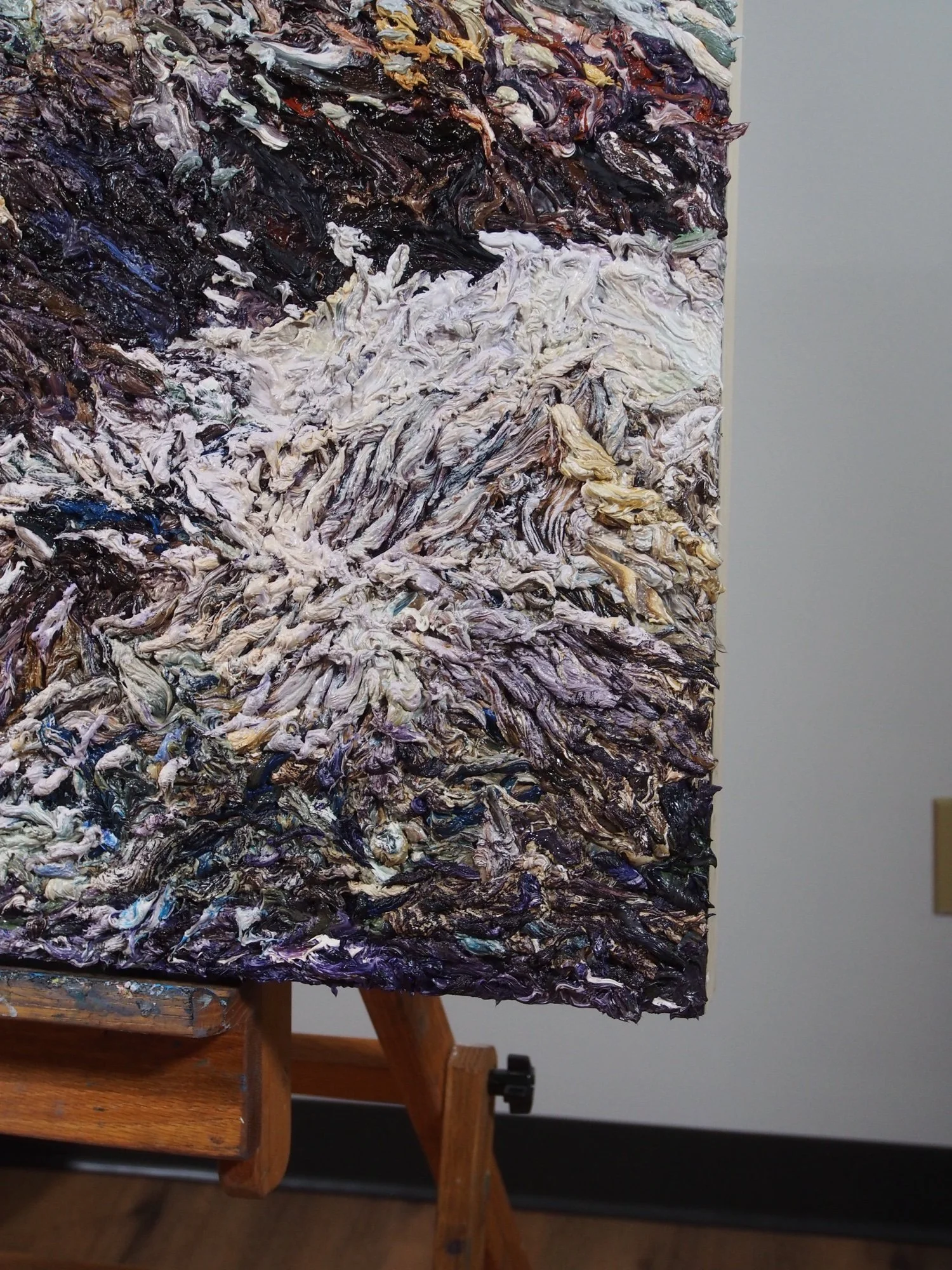
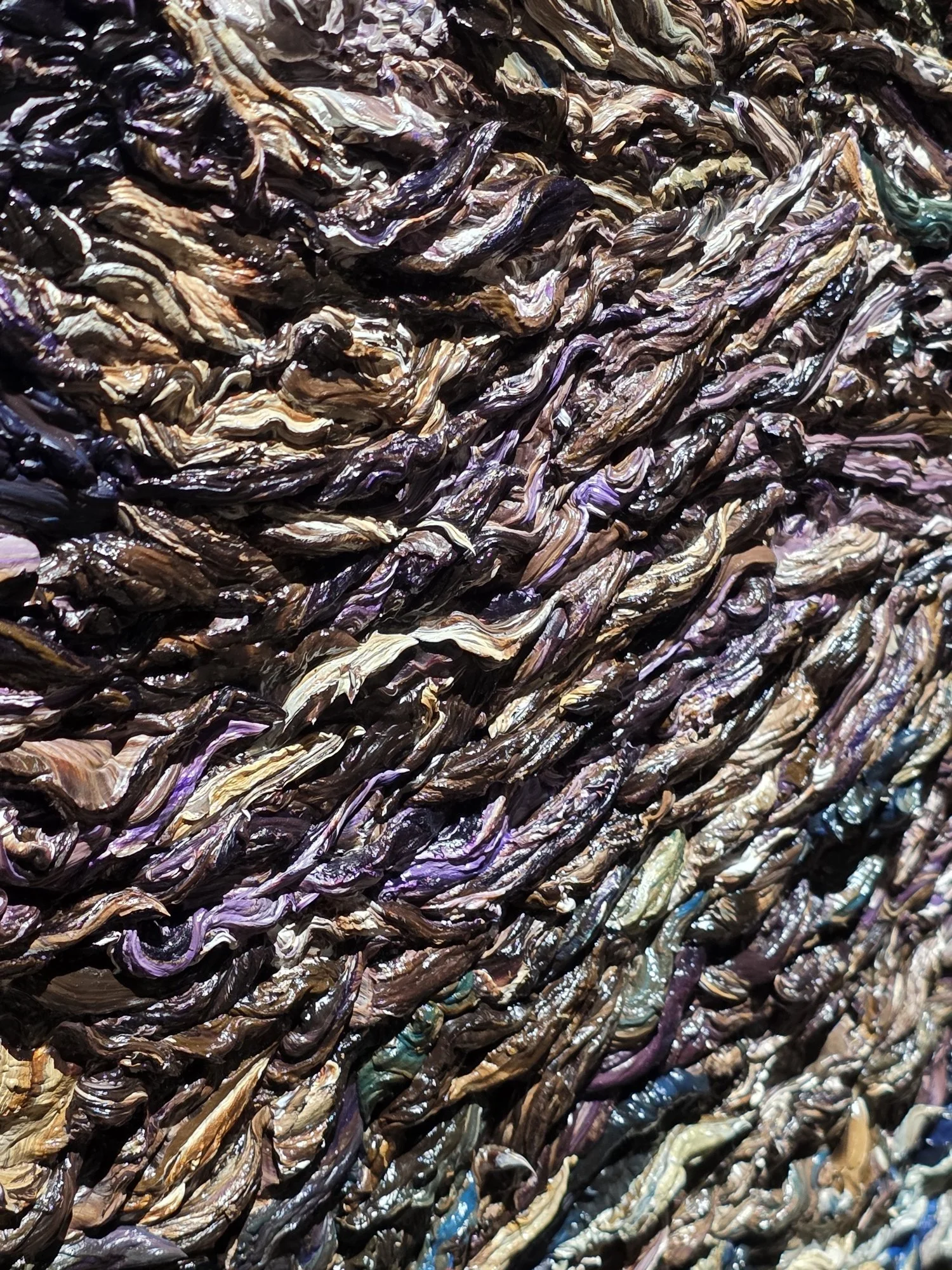
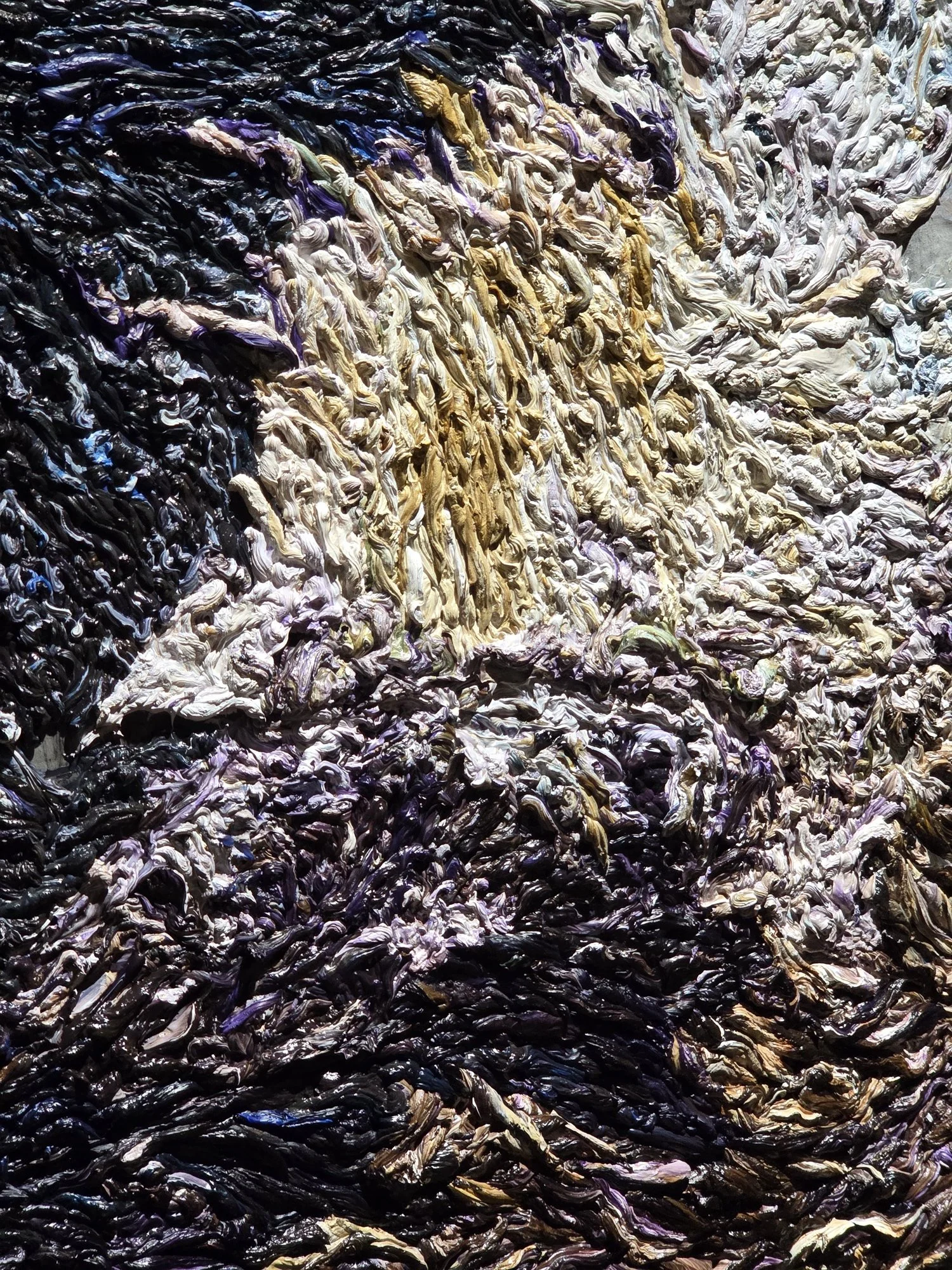
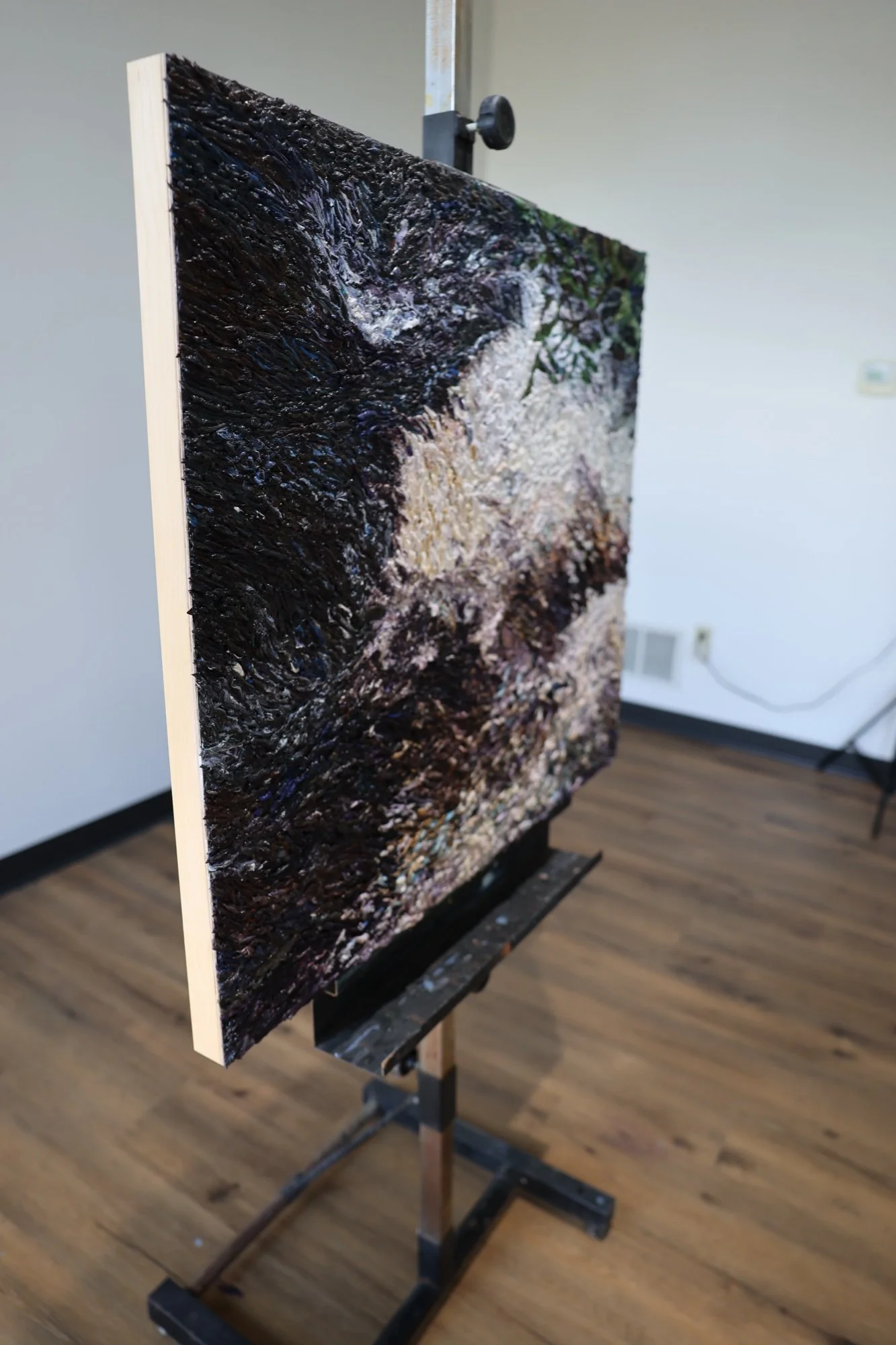
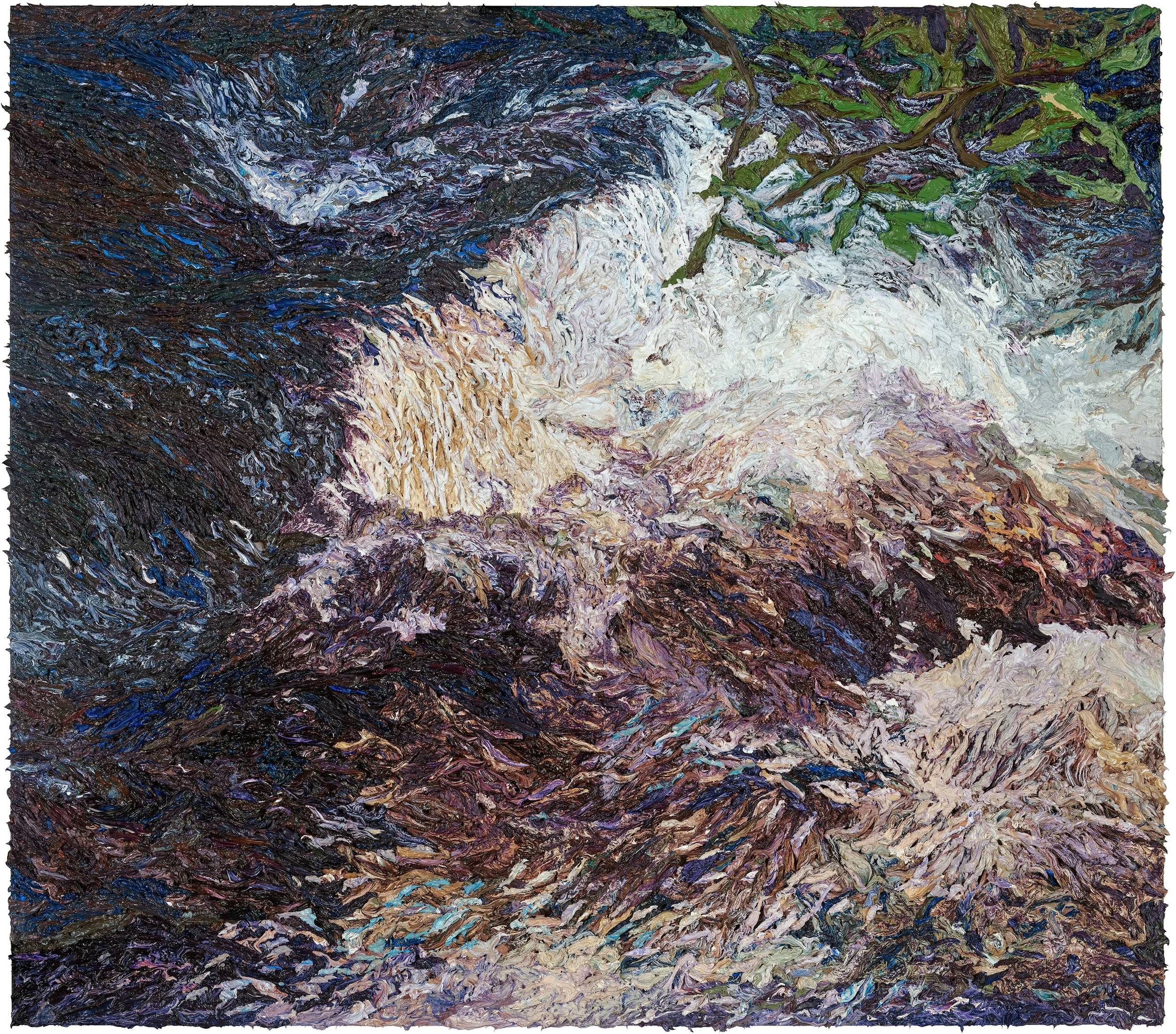
The bold version would have given the viewer a thing to admire. The dense version gives them somewhere to go. You can see what I mean in the lower-right quadrant of the painting, where the smaller forms crowd together against the current — the eye keeps trying to settle on one and slipping to the next, and the slipping is the point. A few large declarative forms in that same passage would have closed the door the painting is meant to leave open.
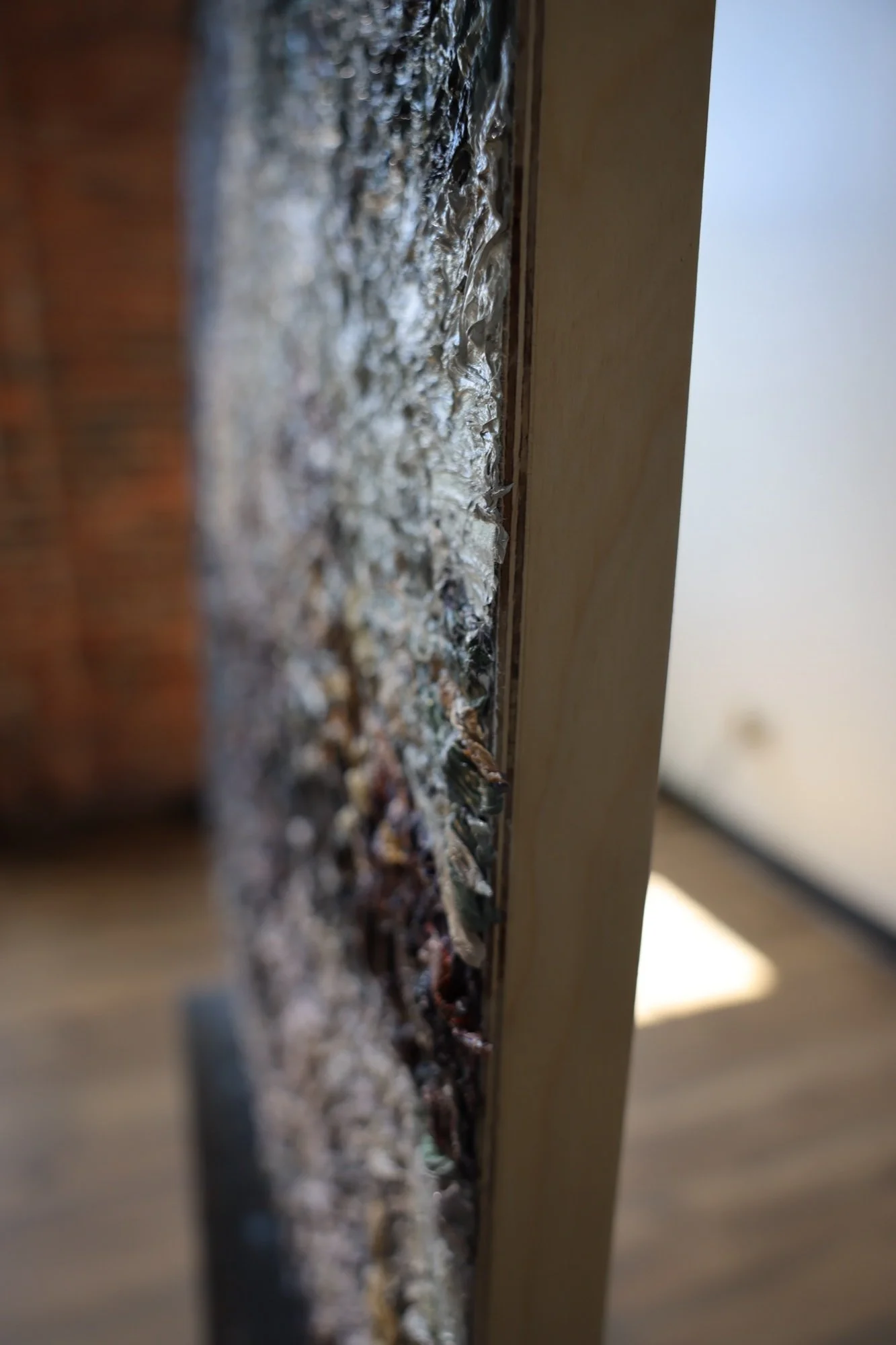
(There were material refusals alongside the formal one. Some of the stolen pieces were dried for weeks before I cut them — those have a thicker, almost plastic-bag quality, and they cast small shadows that make their own color relationships I didn't plan. Other pieces were lifted within a day of being painted, while they were still wet, and those moved and shifted into the sculpt. The dry forms and the wet forms behave like different actors in the play. I had to let them be different. I had to work around what they did.)
What it does up close that it does not do far away
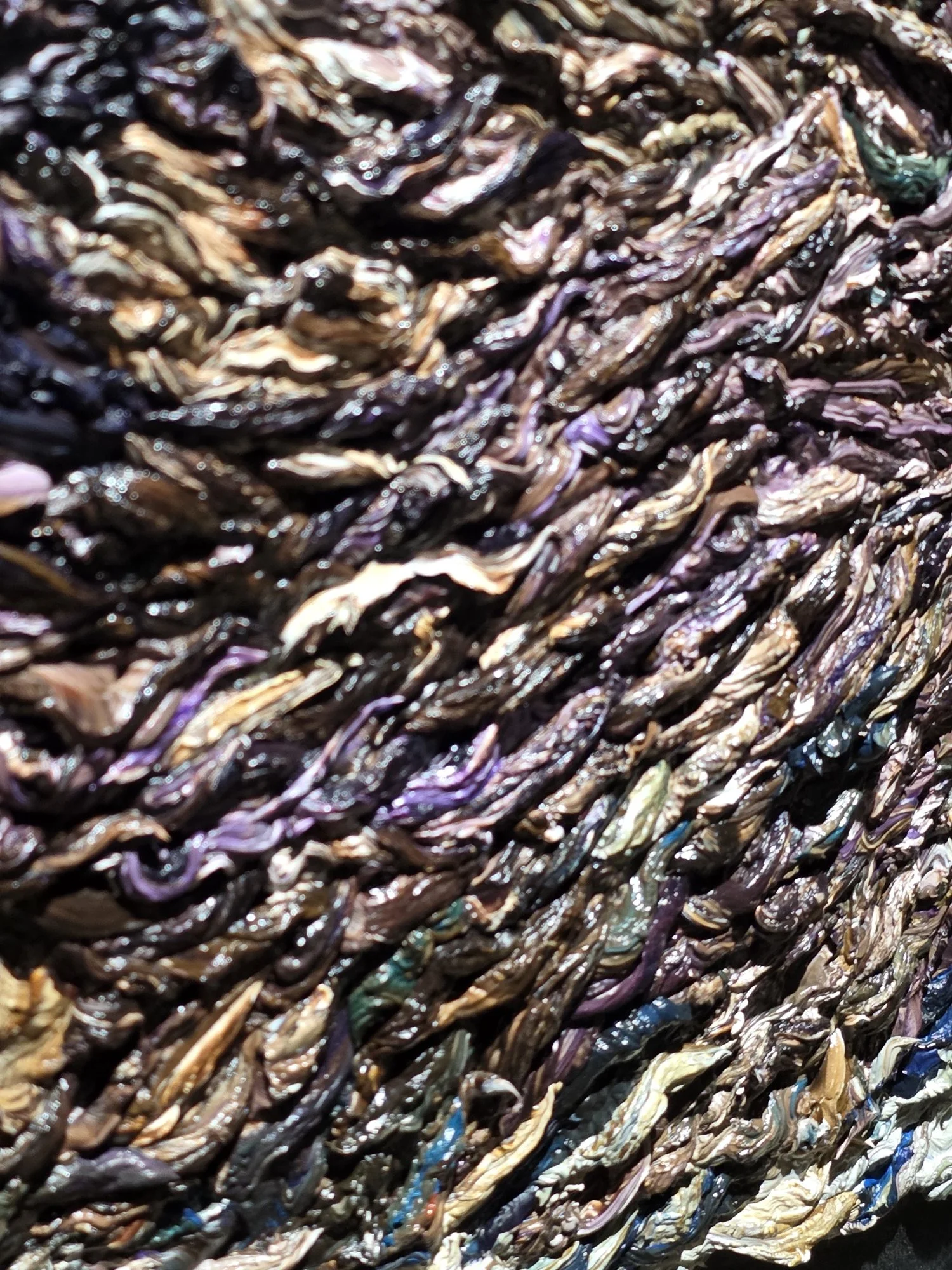
A painting like this should reward two distances and nothing in between. From across the room, the forms cohere — there is a landscape there, water moving through rock. Up close, the landscape disappears and what remains is the texture of dozens of separate small decisions, each preserved with their original surface.
The painting is about spacing out. About losing yourself and rebuilding from the field of what's left. The moments I am most aware that this is happening are the moments I am zoned out — and what Violet Rapids does up close is enhance that condition. It rewards the kind of looking where you've forgotten you're looking.
The flood
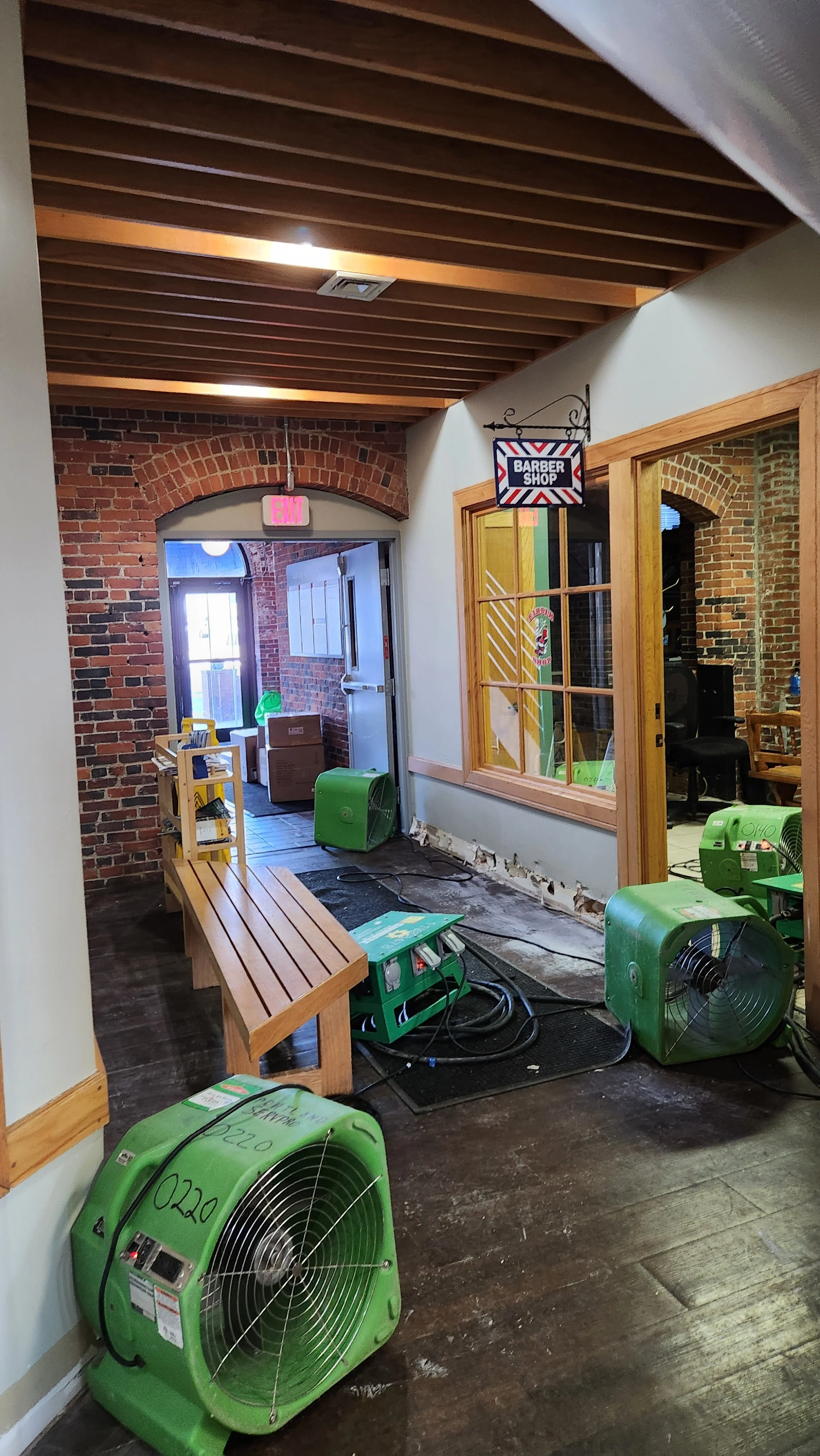
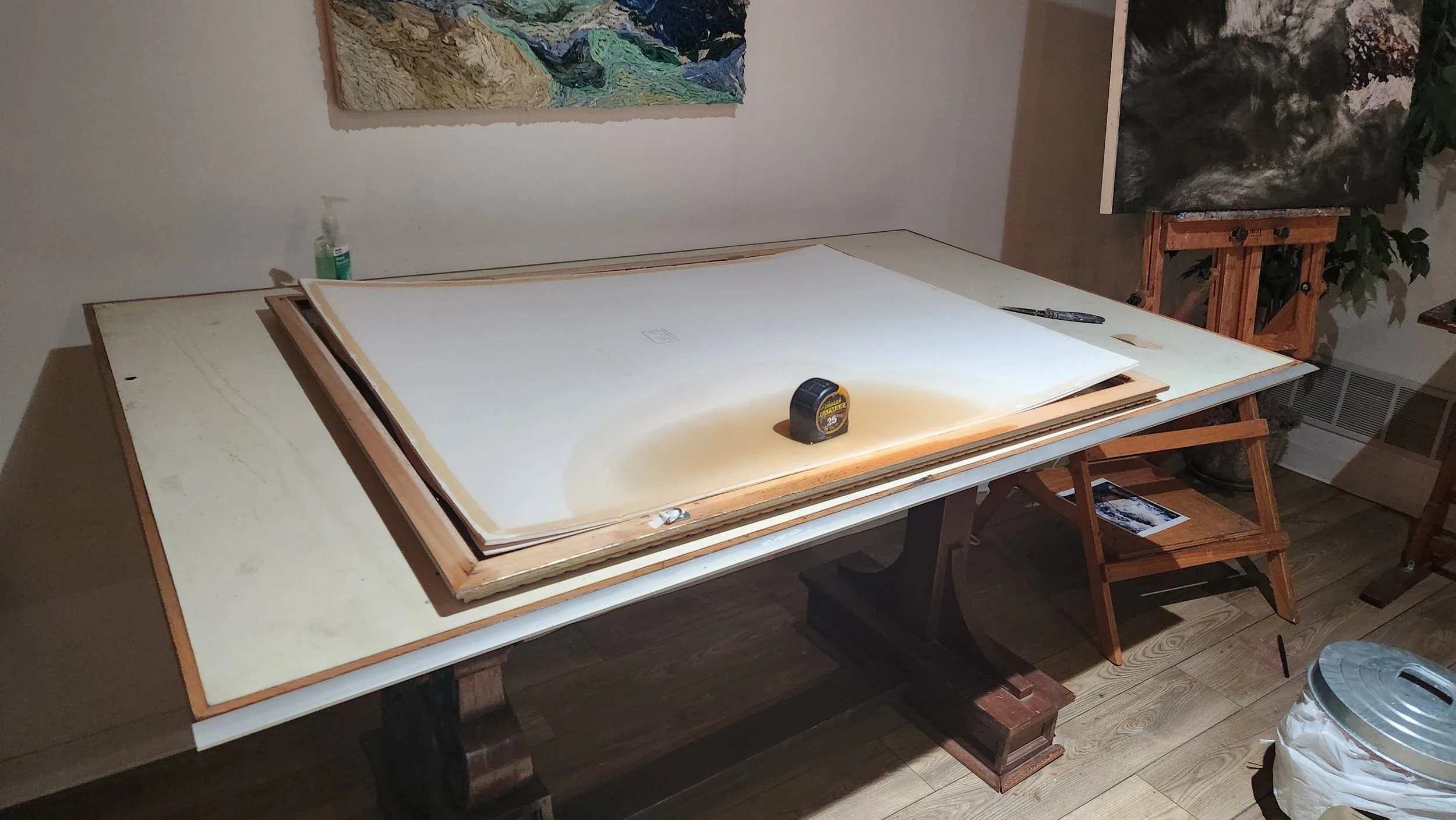
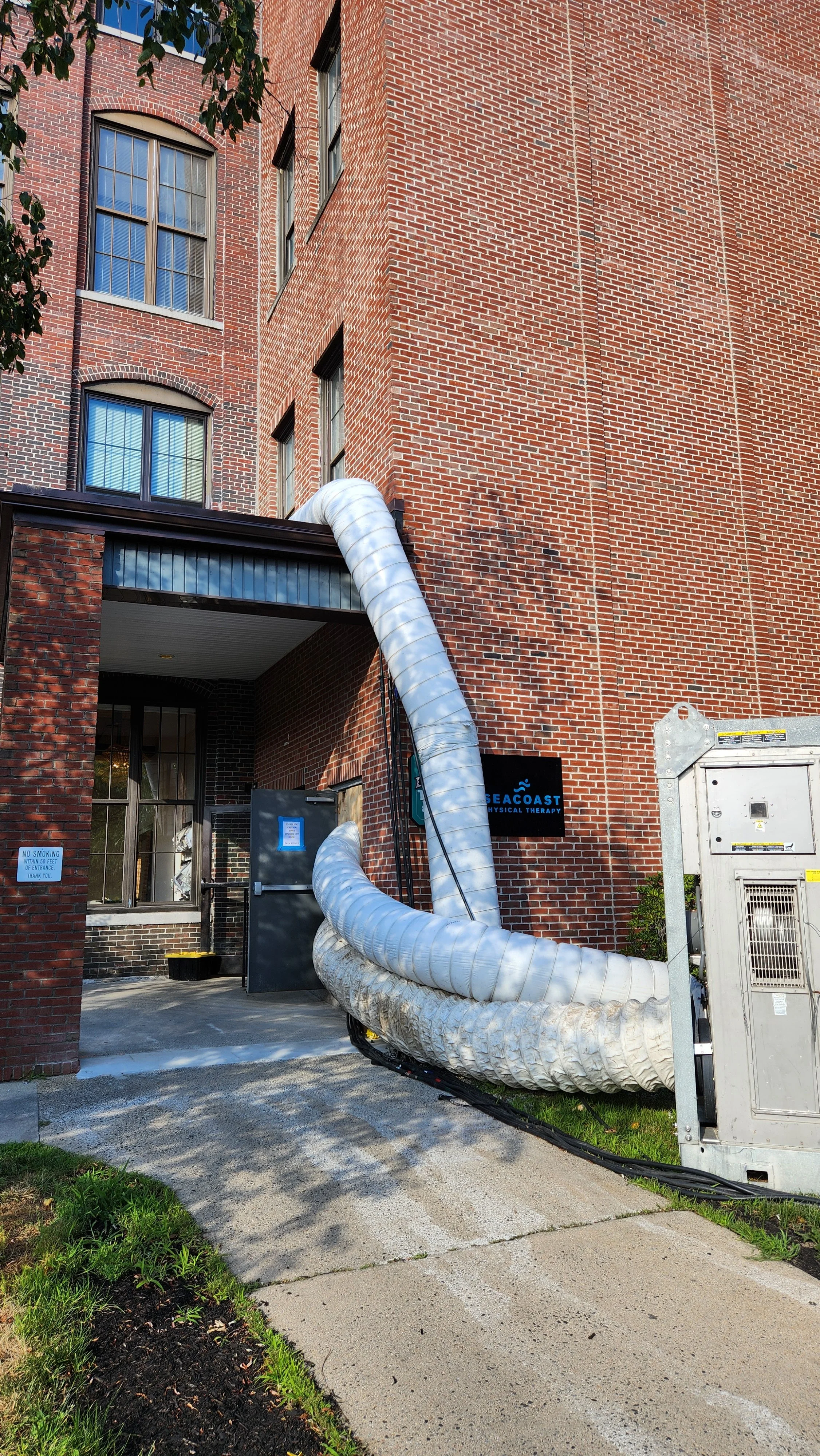
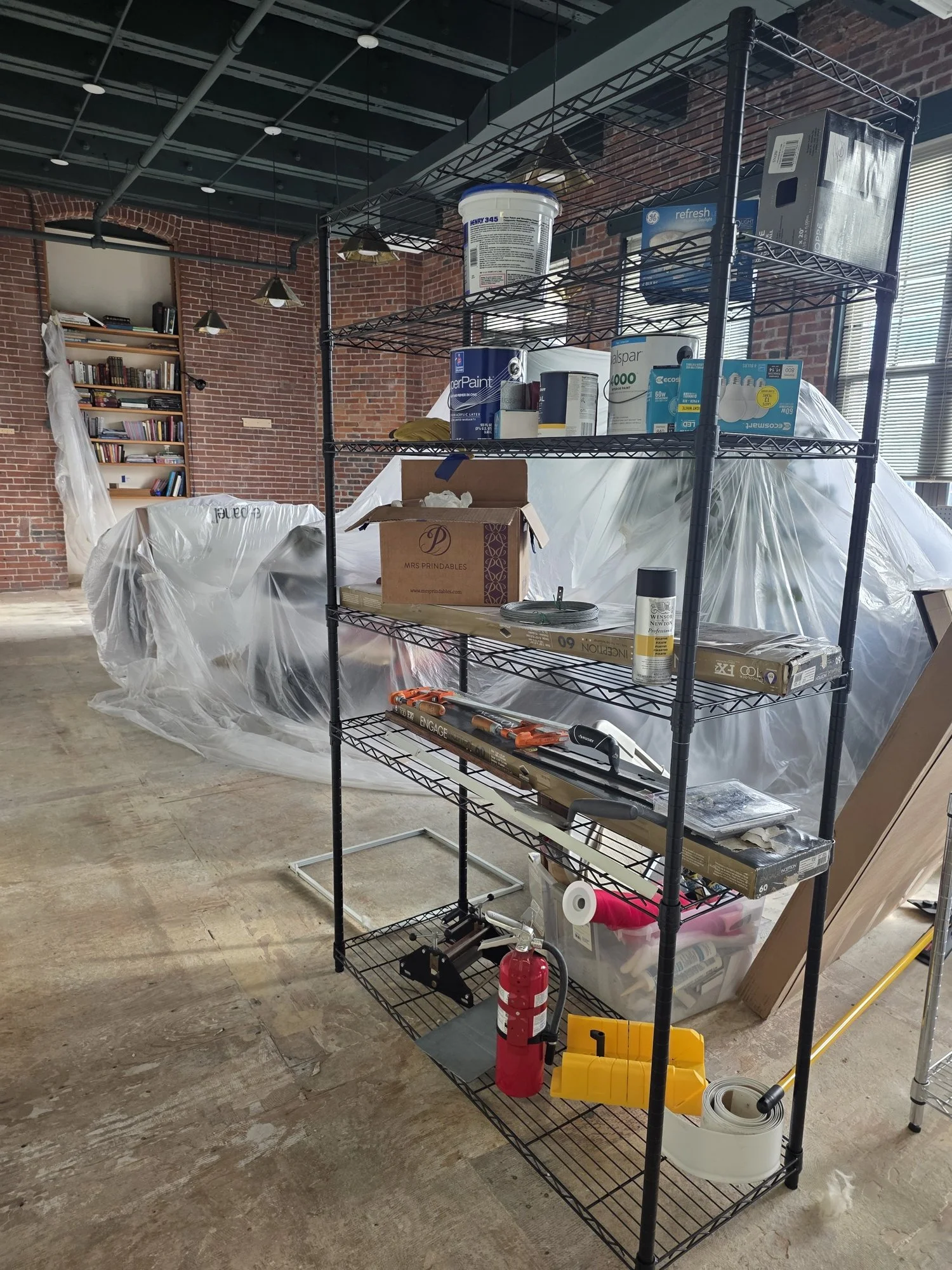
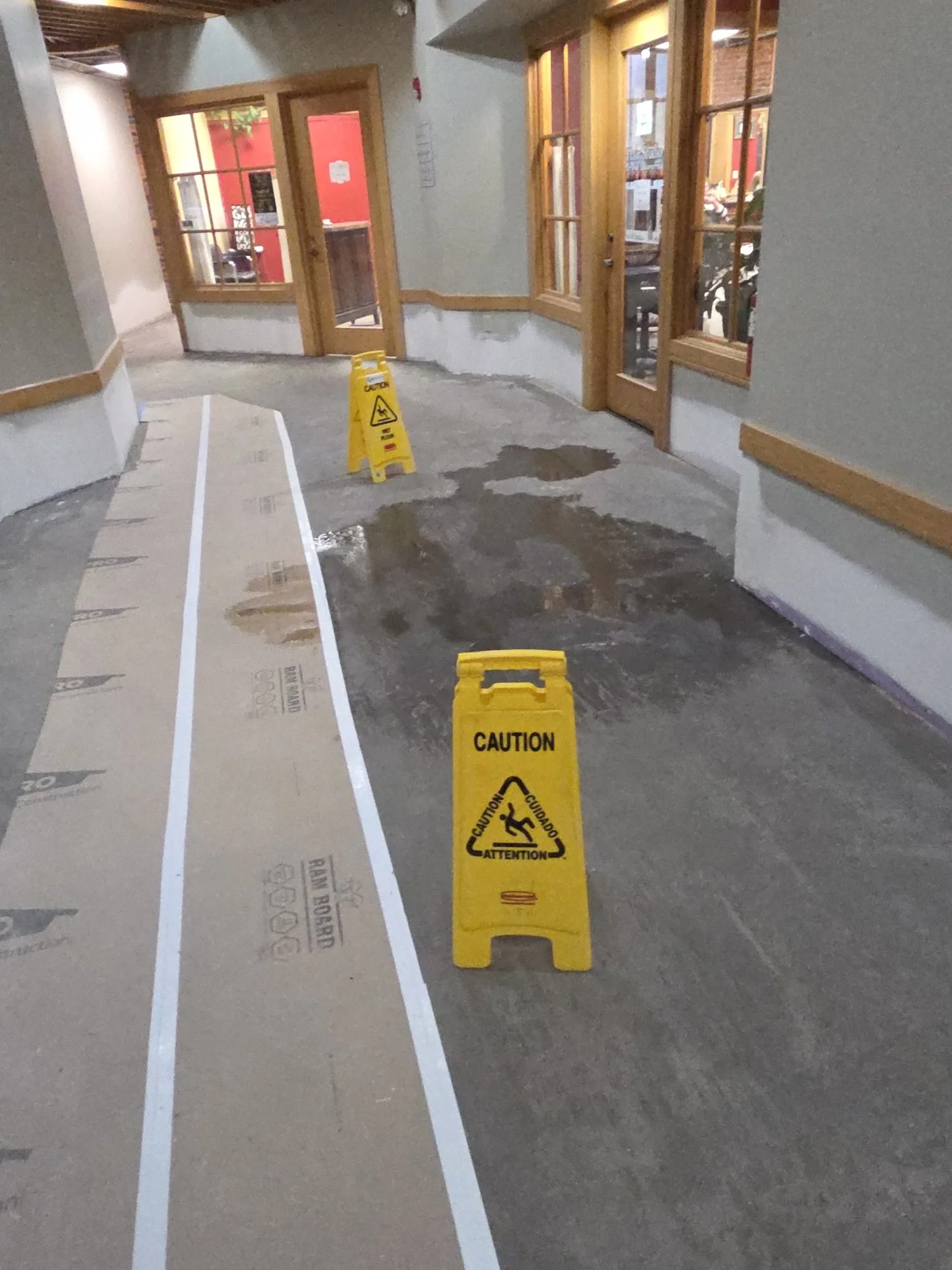
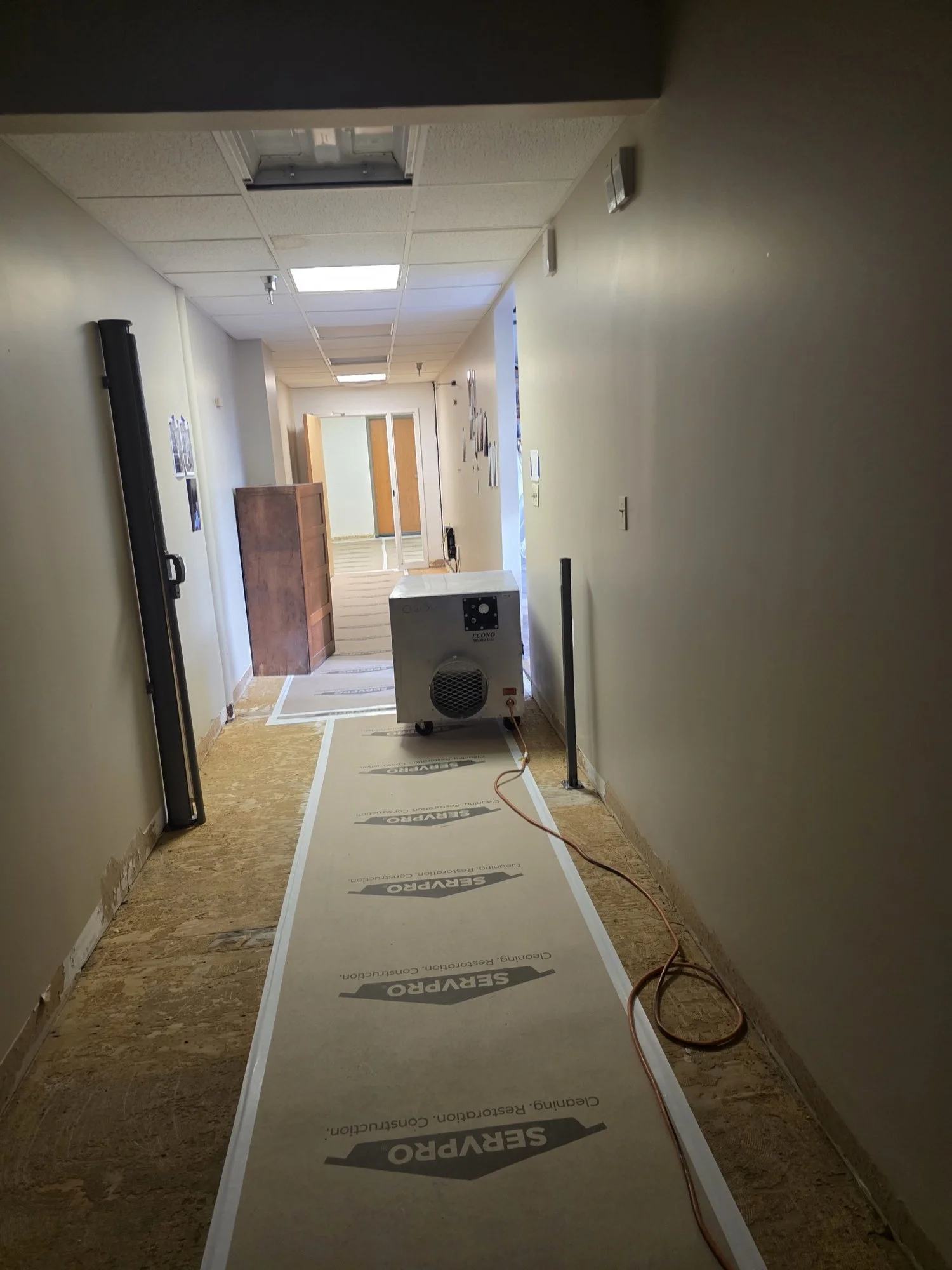
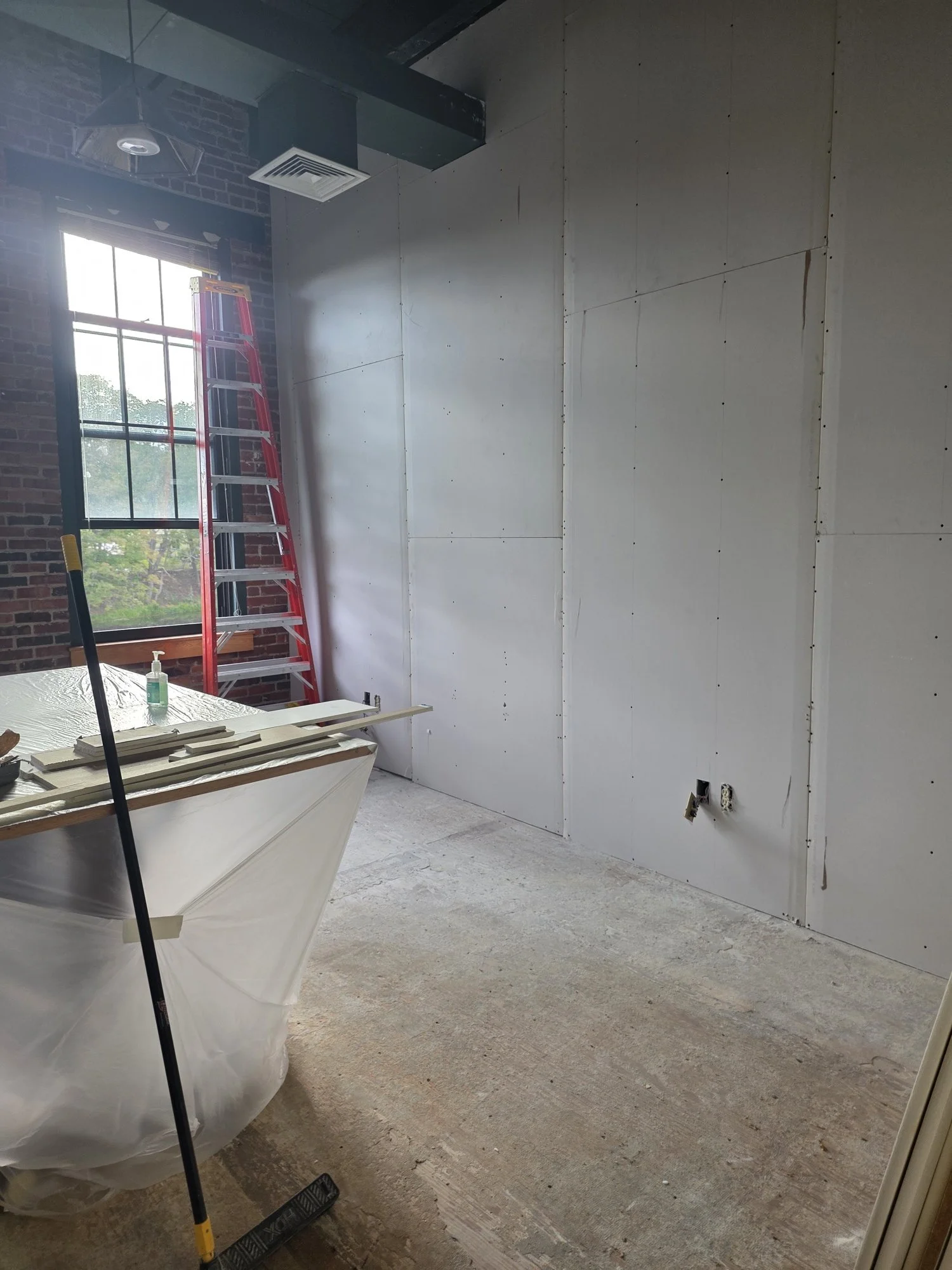
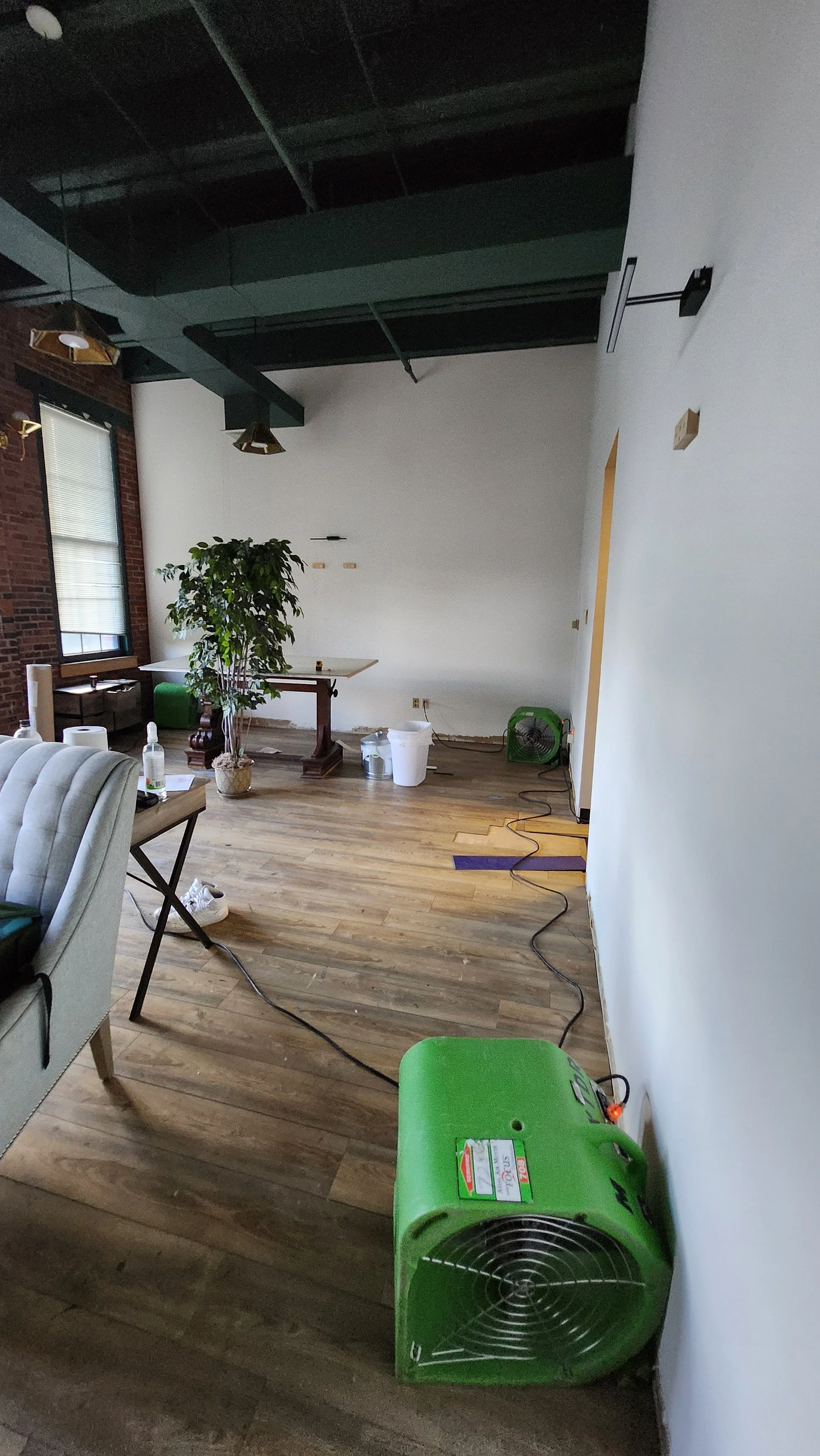
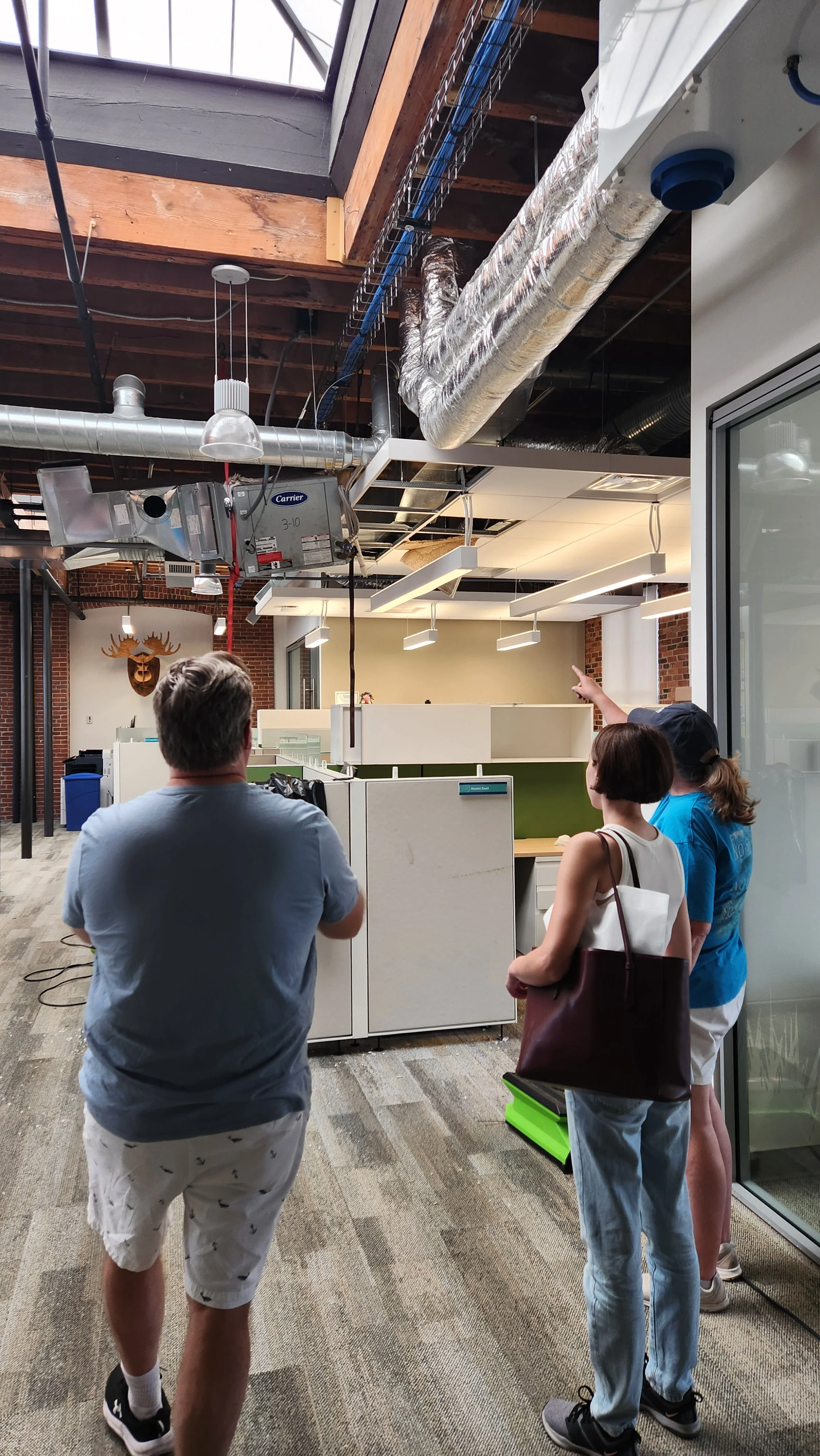
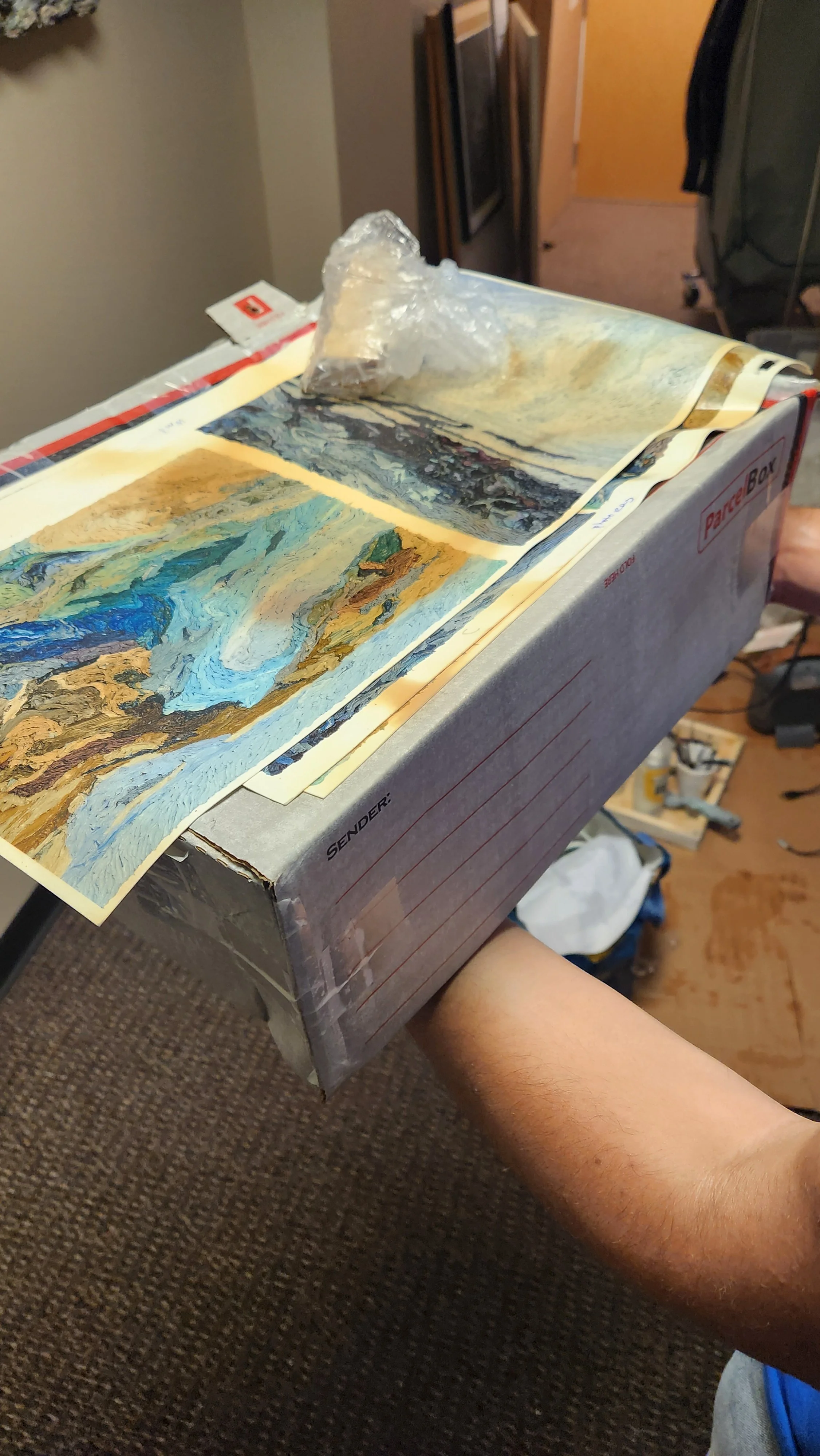
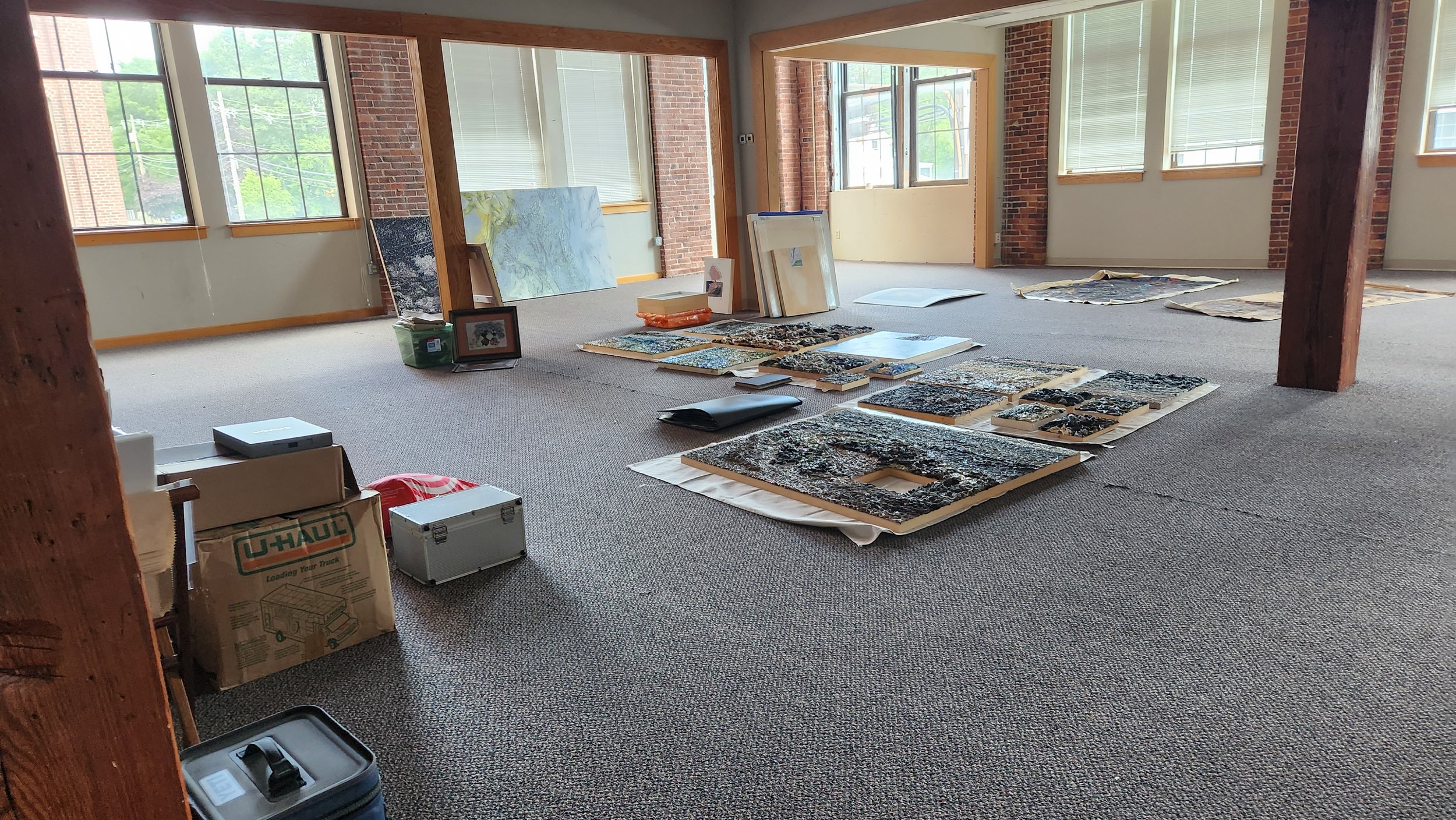
In July 2025, a pipe burst in the floor above my studio. It flooded the wall behind where this painting now hangs. Several works were severely damaged. A significant portion of my storage was destroyed. I was in the building at two in the morning trying to clean it up, looking up at the green-painted ceiling and the cracks where over a hundred years of dust from the old shoe-mill above have been transmuted into mud covering and penetrating the crevices of my paintings.
I wanted to stop. I wanted to let it bury me. The dust and the flood and the long nights were saying, enough now.
What got me through was a small and slightly stubborn idea: that I needed to look back at these years — the long nights, the cleanup, the failure — with fondness. Not because they were good. Because they were mine. I have worked hard to make a space where I can chase my own version of an authentic painting practice, and giving up on that practice in the middle of cleaning up after a flood felt like the wrong story to end with. And I knew, in a way I cannot fully defend, that someone needed this painting. Not in an abstract way. Someone. And the way I knew that was simpler — I needed to know that this painting existed.
I finished Violet Rapids not long after that.
What I want a stranger to take away
I was asked, at the end of the conversation, what would have to be different in someone's life if they watched the whole thing and went back to it unchanged.
I have one sentence.
It is not so simple to sit still.
People know this already. When the overwhelm gets loud, we make a pilgrimage — to the woods, to a trail, to the side of a road, to water. We go looking for a stillness we are pretty sure exists somewhere outside the rooms we work in. Most of the time we are right that it is there. What I have come to observe is that just occupying the place is no longer enough. The stimulus follows us in. Finding the stillness, once we've made the drive, takes work.
That is frustrating, and it is largely outside our control. What I have noticed is that the people who don't give up on the settling are the ones who eventually notice the in-between — a moment, somewhere between arrival at a place and stillness within it, where you are neither still nor hyper-stimulated. A dynamism. An awareness specific to the in-between. It does not last long, and most of us miss it because we are still negotiating with the overwhelm we brought with us.
That is the place I want to paint. The only way I know how to paint it is to build a situation — a method, a series of circumstances — where it can reveal itself.
Violet Rapids is one of those situations.
Not arrival. The opposite of arrival.
A place you keep returning to, and a discipline you keep failing to fully possess.
Violet Rapids will be on view at my studio in Kennebunk on the second Friday of June, July, and August, 11am–8:30pm — part of my solo summer exhibition, The Pressure of Looking — Studies in Stillness. Walk in those days, or visit by appointment. Book at majkowski.studio.
If you'd like to know when the next one of these is finished, I write about the work occasionally — sign up for the list below.
For inquiries about availability, write me at majkowski.studio@gmail.com
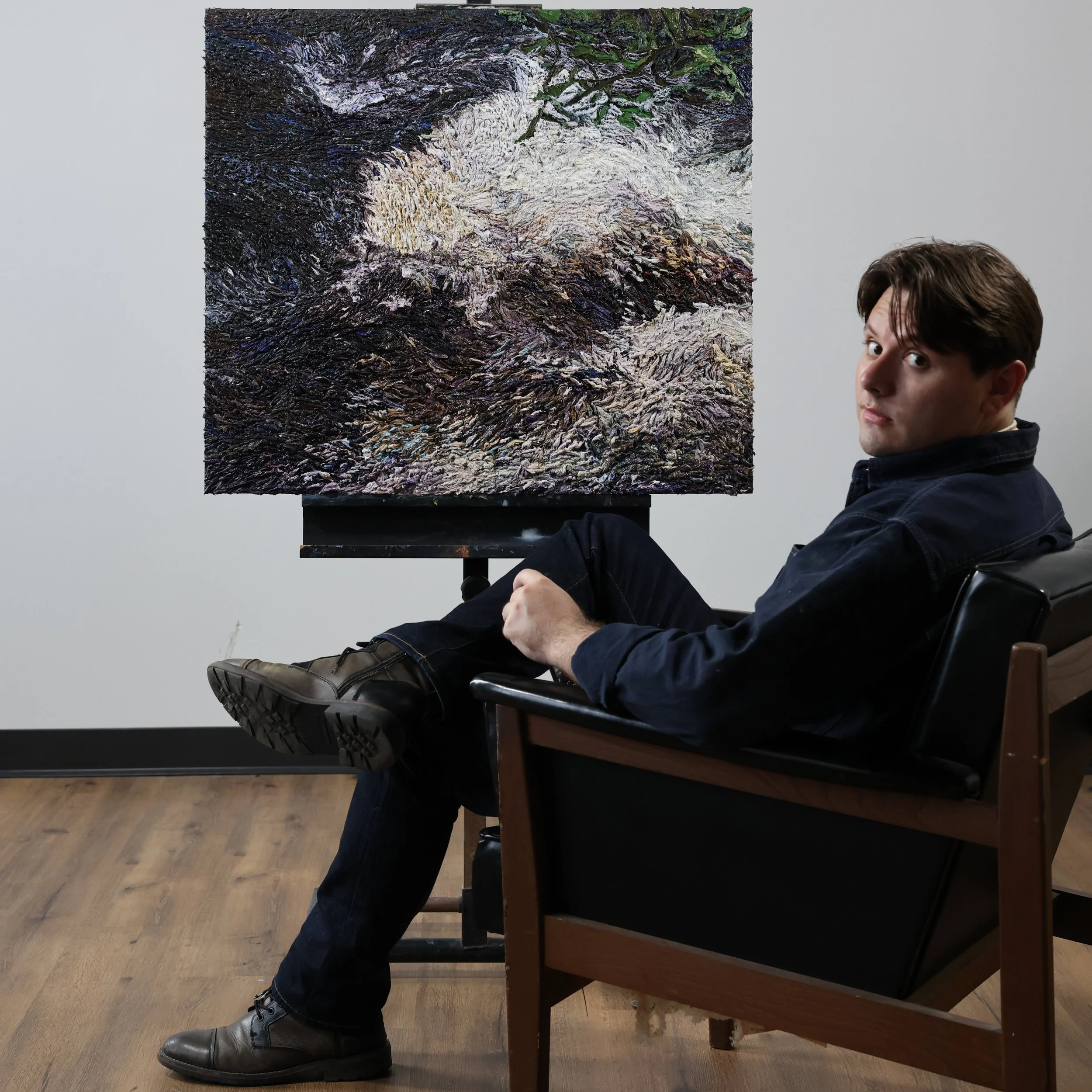
Violet Rapids, oil on panel, 2025. Studio: Biddeford, Maine. The waterfall is on Route 26 between Paris and Mexico, Maine — the Saco watershed begins not far from there and ends at the sea fifteen minutes from my studio. This work was made on land originally cared for by the Wabanaki peoples, including the Pequawket and Abenaki.
In Abundance
A painting begins long before the first sketch or mark. Often, it starts with moments I can’t forget or let go of. They persist, then surface again when I’m priming a panel for a new piece. A kind of long, intense procrastination.
This is the story behind In Abundance—born from a path I walked to the ocean again and again, letting the world reassemble itself in my head.
A painting begins long before the first sketch or mark. Often, it starts with moments I can’t forget or let go of. They persist, then surface again when I’m priming a panel for a new piece. A kind of long, intense procrastination.
This is the story behind In Abundance—born from a path I walked to the ocean again and again, letting the world reassemble itself in my head.
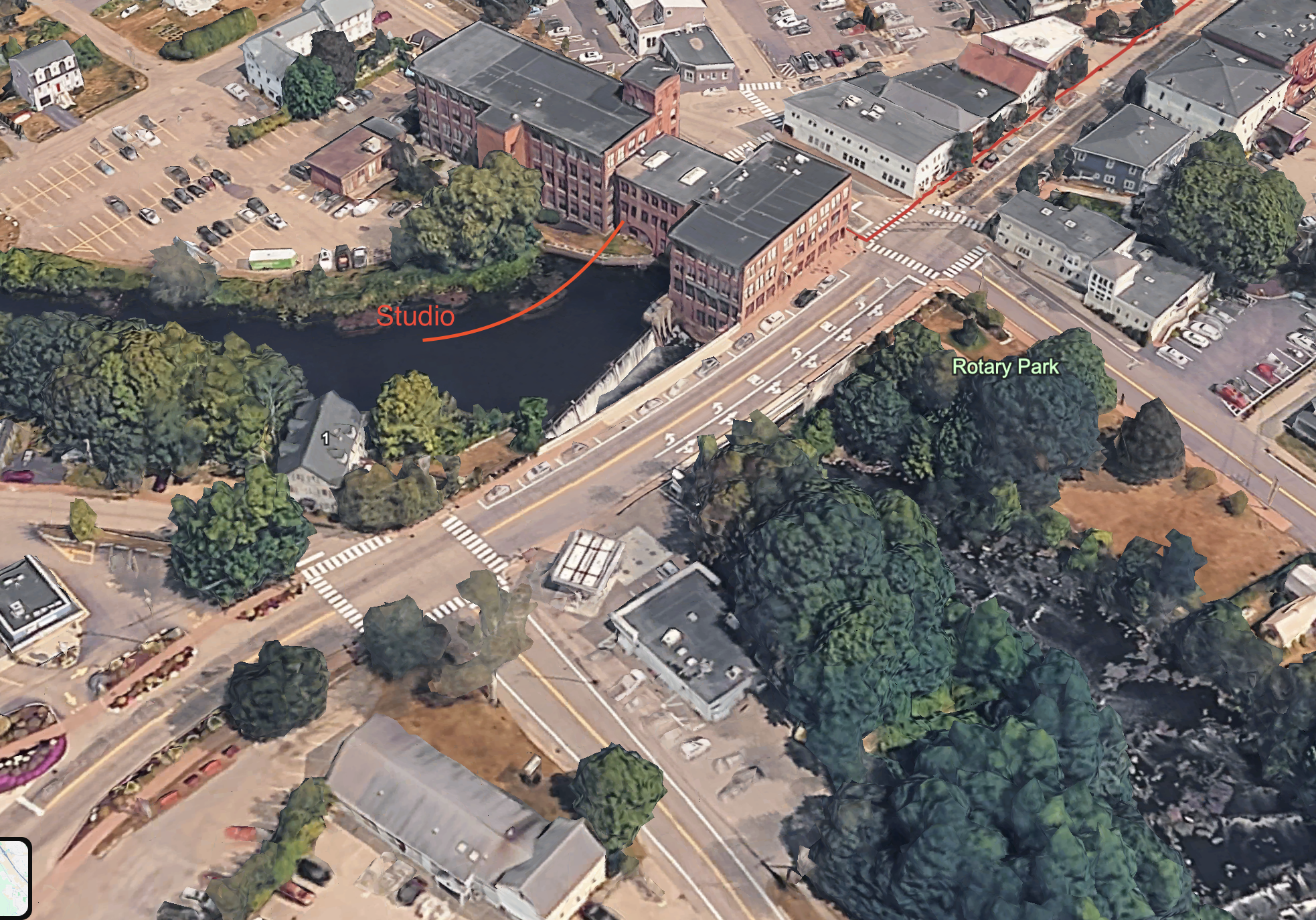
Ed’s Studio on the Mousam River
The Walk: Studio to Beach (A Route for Thinking)
In late spring and summer, I’d step out of my studio on 2 Storer Street. Kennebunk is so close to the ocean, and I’d heard there might be a way to get there without taking the main roads—just back alleys and trails—so it felt only fitting to explore it.
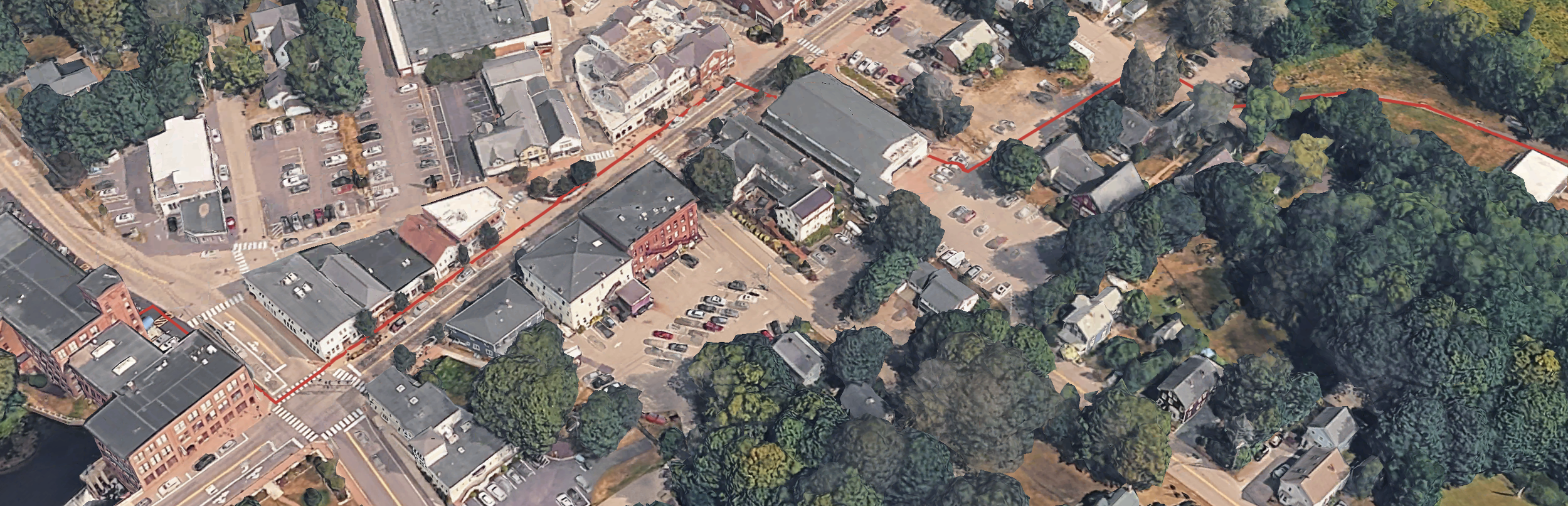
I’d cross the street and head downtown. The town has that familiar quiet bustle—small movements, small errands, people converging and dispersing. And then I’d cut directly through the ice rink area. In winter it becomes an indoor rink—bright, contained, a kind of manufactured season—but in the warm months it’s wide open in a way I love. Filled with people playing tennis or Pickleball.
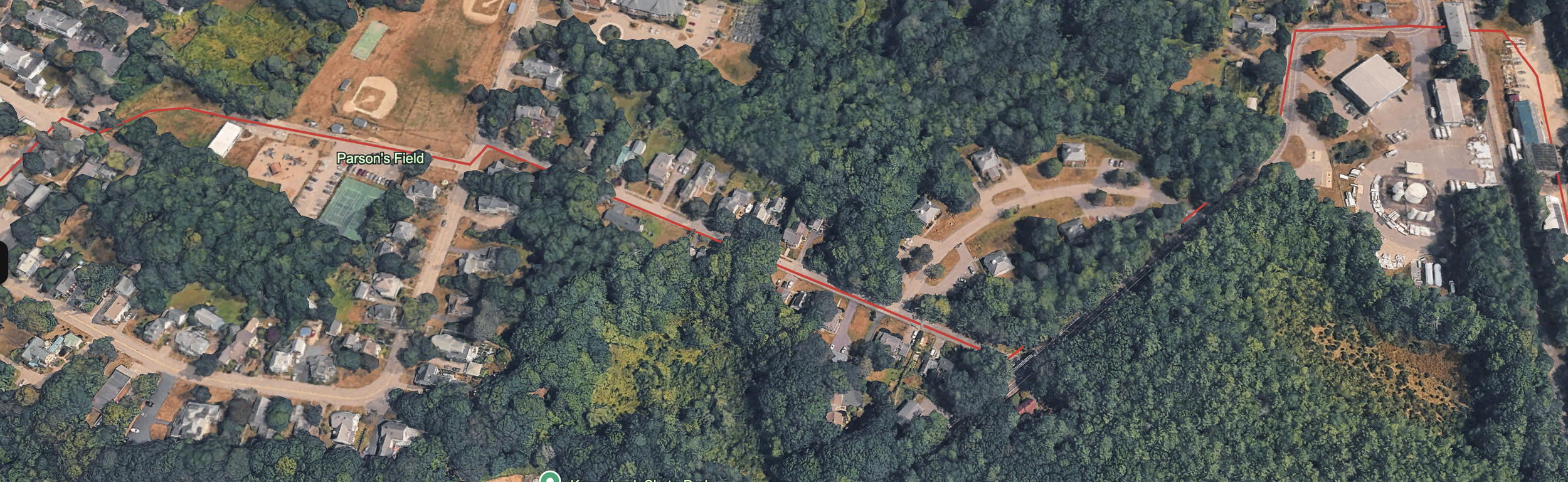
From there: straight through the park. The architectural salvage store is the small building pictured all the way on the right.
I’d cross the street and head downtown, into that familiar quiet bustle—small movements, small errands, people converging and dispersing. Then I’d cut through the park, the kind of family park that feels like the center of town. There’s a small patch of grass where people walk their dogs, tennis courts humming in the background, and fields where little kids swarm and shout. If you pass through at the right time, you might catch a Little League game underway—classic small-town America.
On the other side: the architectural salvage store.
It’s one of those places that feels like a collage of other lives—not a typical Maine antique shop full of tchotchkes, but a salvage-packed archive of old house parts. It’s like every small-town shed where someone’s grandfather tucked away the door that got replaced, the extra doorknob, the hinge, the lone piece of tile—too useful to toss, saved “just in case.” Decade after decade, as houses change hands, all those still-good leftovers seem to migrate here: an old New England home stacked with doors lined up in rows, windows by the hundreds, bins of knobs and hardware, everything improbably sorted into a beautiful array. It sits tucked behind an industrial park, right alongside the train tracks—and if you walk behind it and keep going, you’ll find a trail that starts in Kennebunk and carries you all the way down to the ocean.
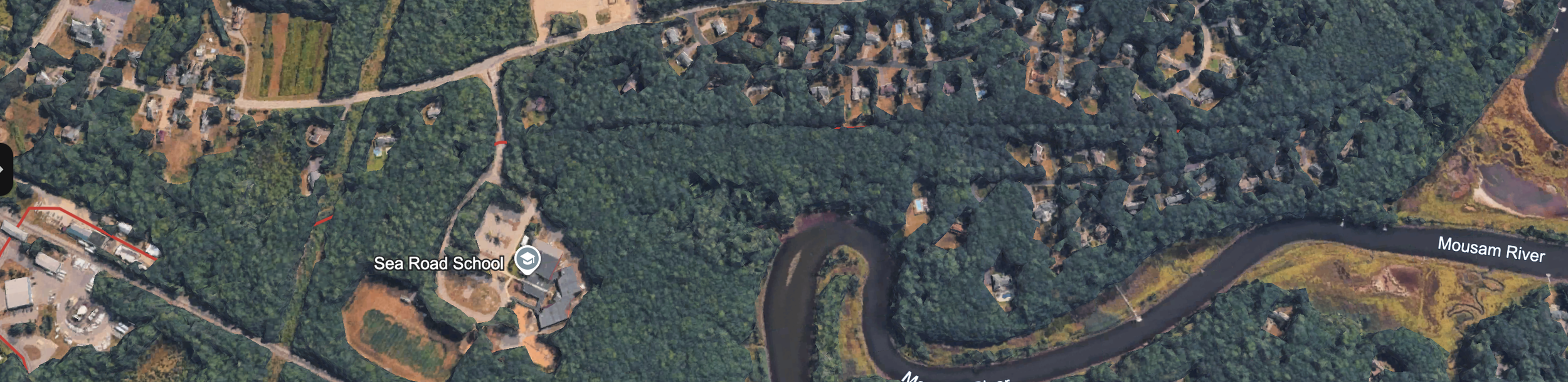
At first the trail is dense forest, almost closed in. Then, as you keep walking, you begin to pass more residential pockets, and the landscape starts to open. Eventually the view widens into the Mousam River, the jetties, and the estuaries—the whole area spreading out like a long exhale. It’s the same river whose waterfall I overlook from my studio, and there’s something romantic about being able to follow that exact water all the way to the ocean.
In certain light it feels almost staged, like it’s daring you to reduce it to a tidy postcard.

But it never is tidy.
You keep going until you hit the crossroads at the beach.
Note: There is a distinct air shift as you move from inland toward the water. Maine beaches often feel cool and slightly removed, like you want a light sweater even in early spring or summer. At this turning point, the air flips from warm and pleasant inland to very cool and crisp, like pulling a water bottle from a cooler after the ice has melted: not so cold it hurts, but perfectly refreshing, clean, and beaded with condensation.
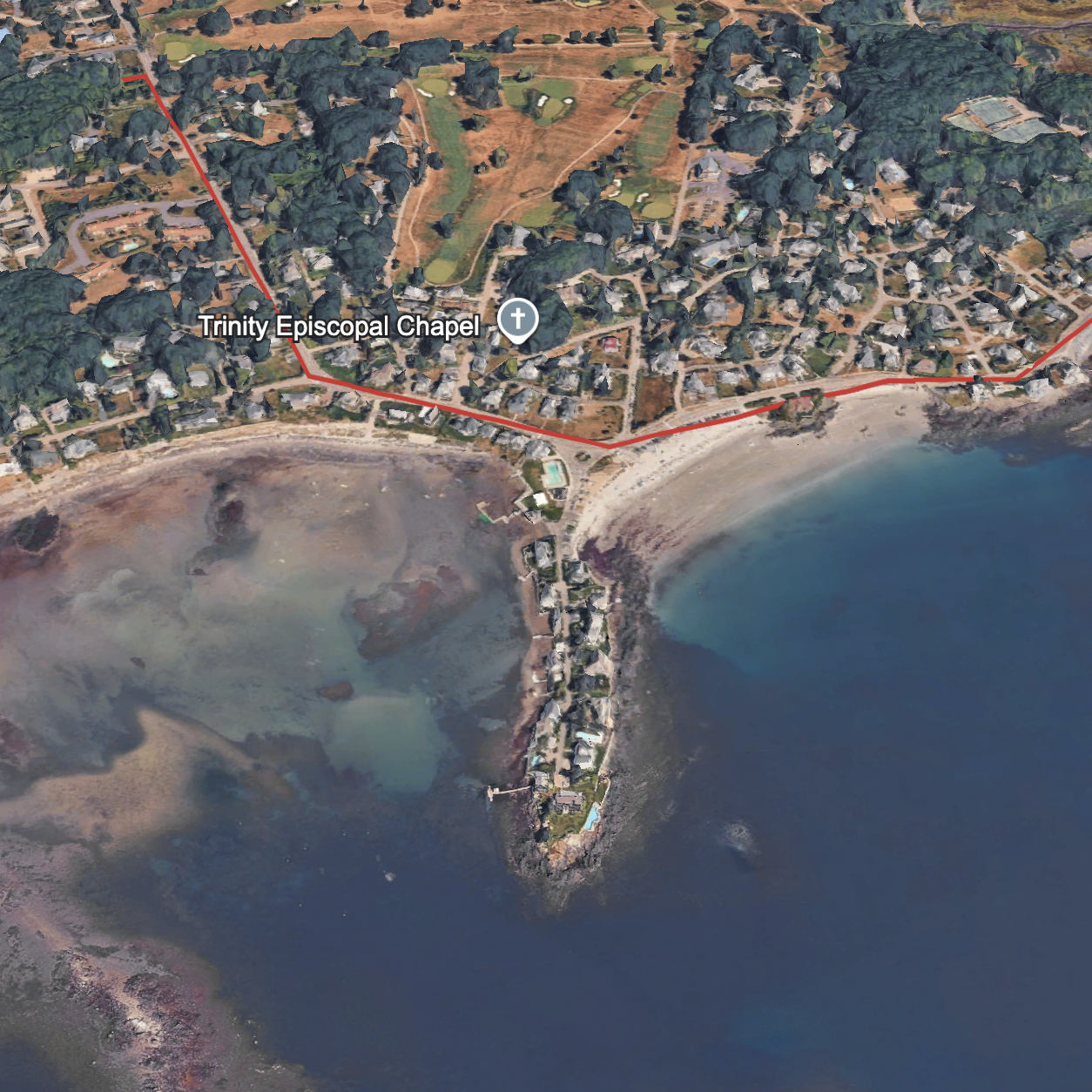
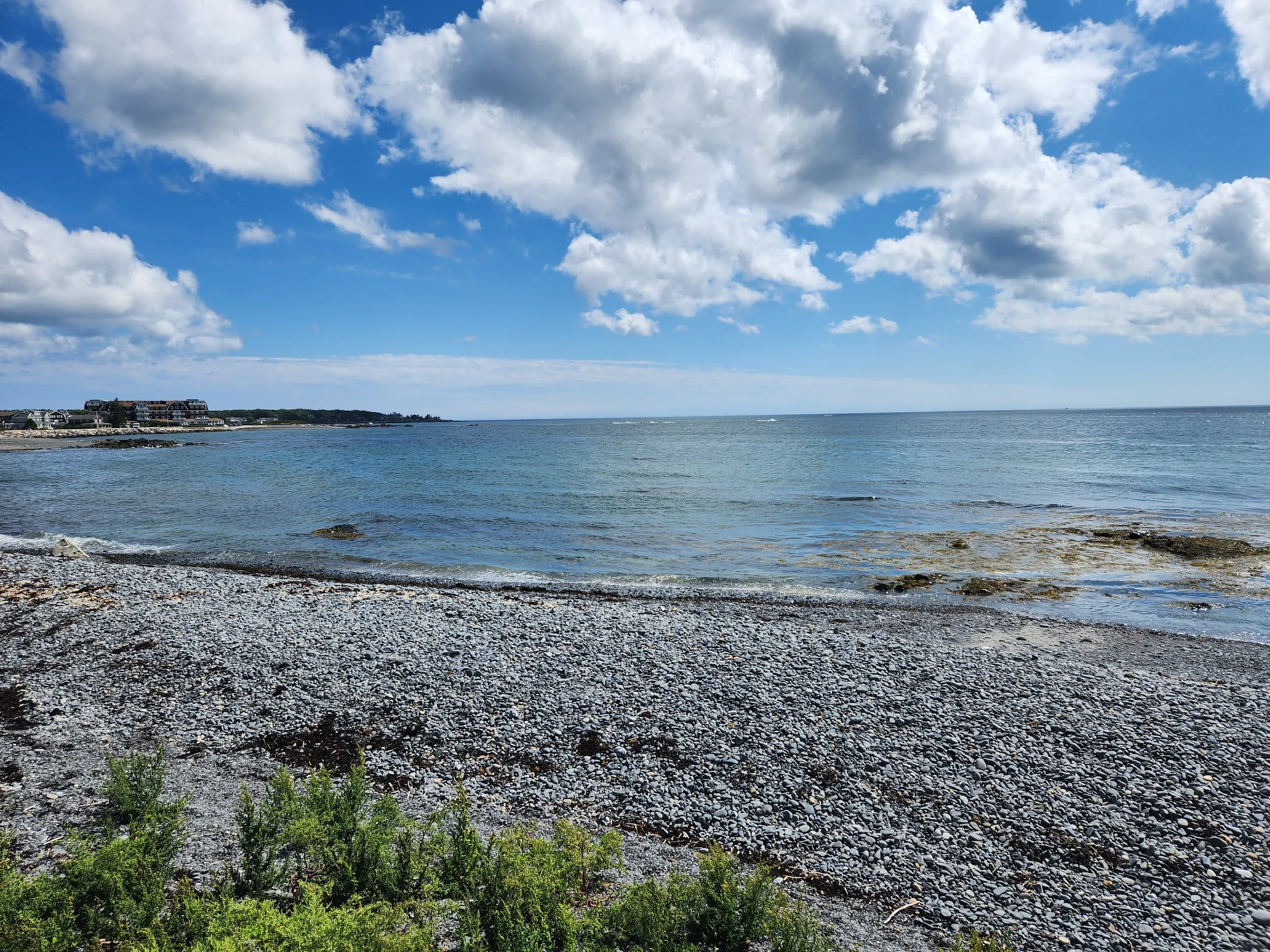
It’s a few hours to walk from the studio to that point. When you finally arrive, you end up in this incredibly rocky stretch—one of those places where the sound is as physical as the sight. Ocean water rolling and shifting the rocks around, endless pressure and release.
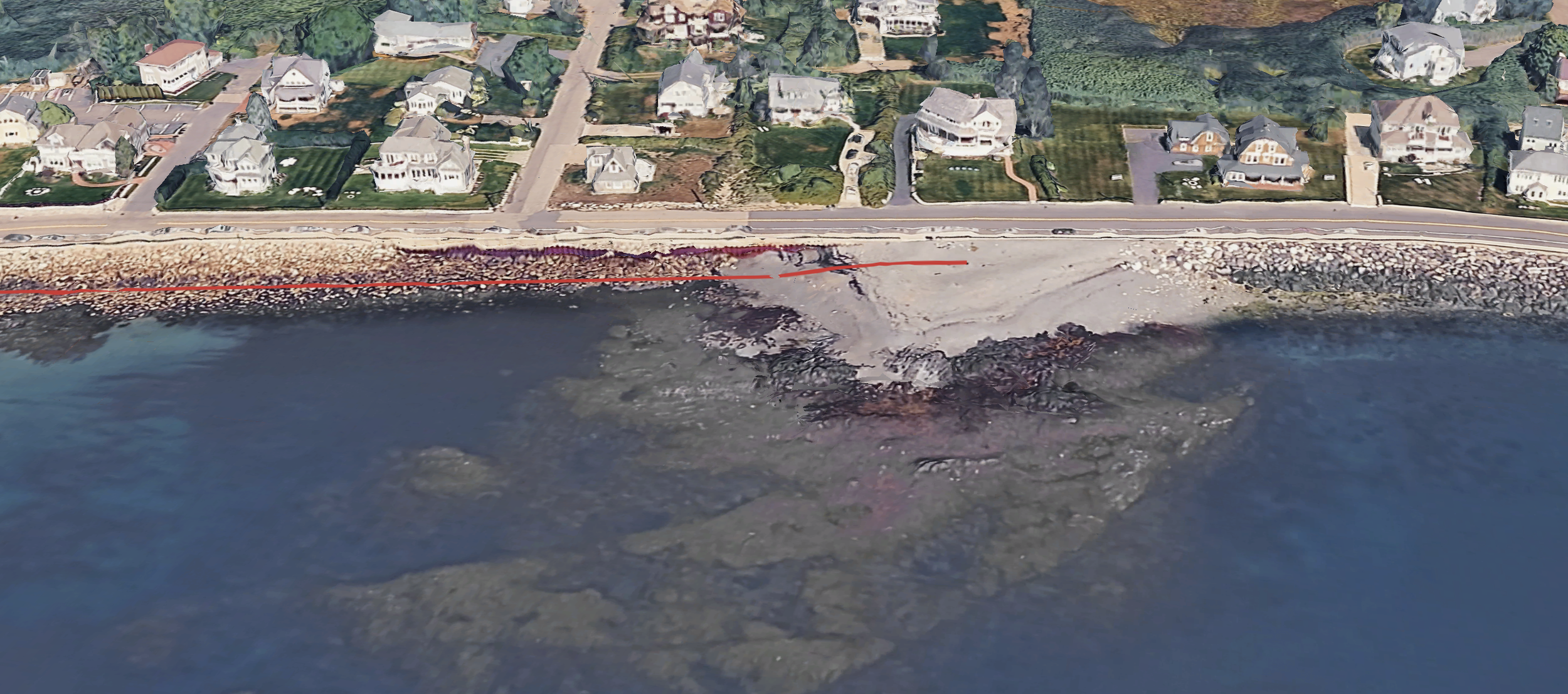
This is where I came to think.
Not the clean, productive thinking people like to imagine, but the kind that follows intensity. The kind where you have time to sit with the questions that bubble up and realize how malleable each answer can be.
2022: The Landscape After COVID (And the Frustration That Followed)
On August 8th, 2022, it still felt like we were living inside the second year of COVID—past the initial shock, but deep in the adjustment. People were learning new patterns, new rituals, new thresholds for what counted as “normal.”
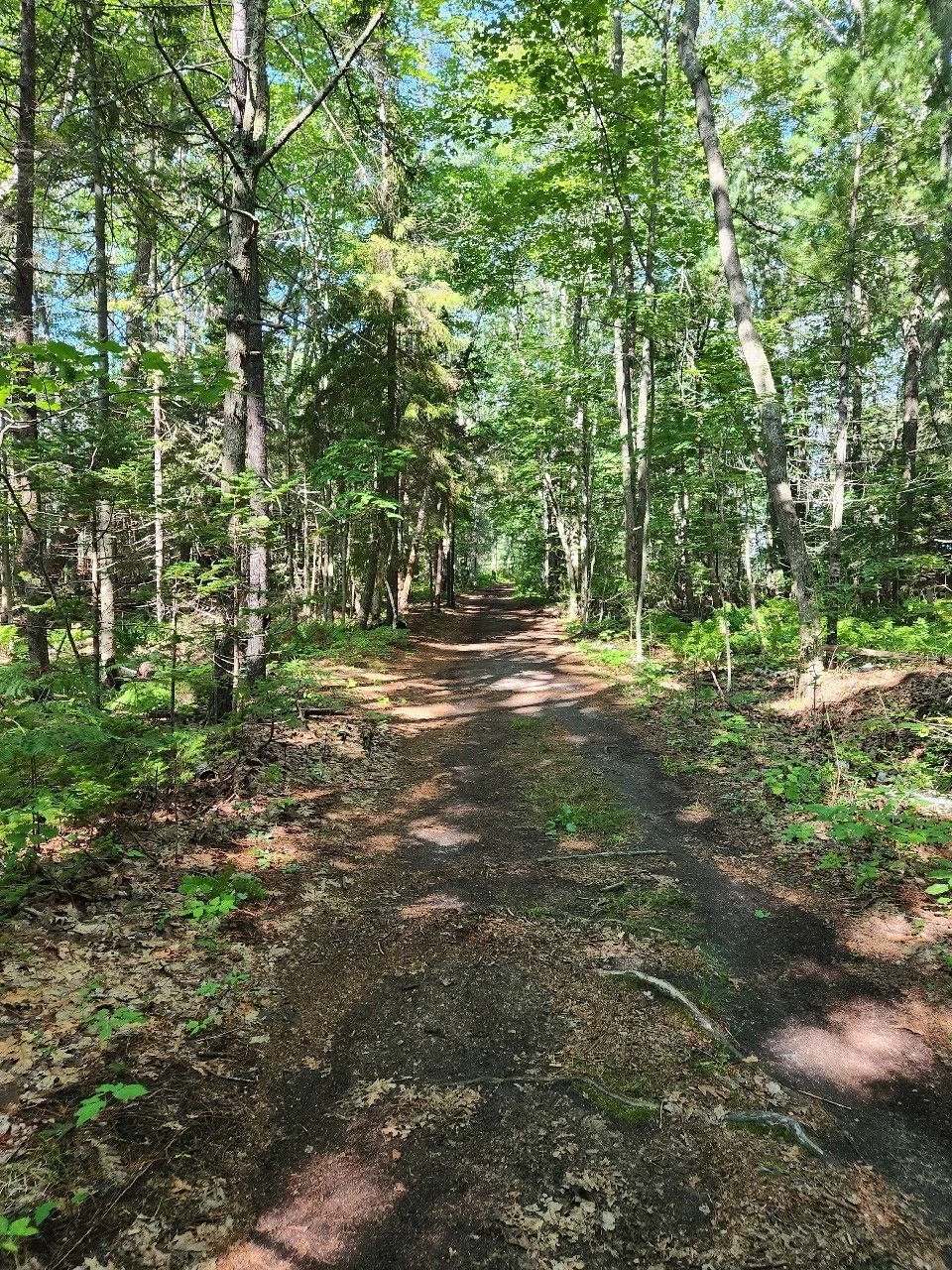
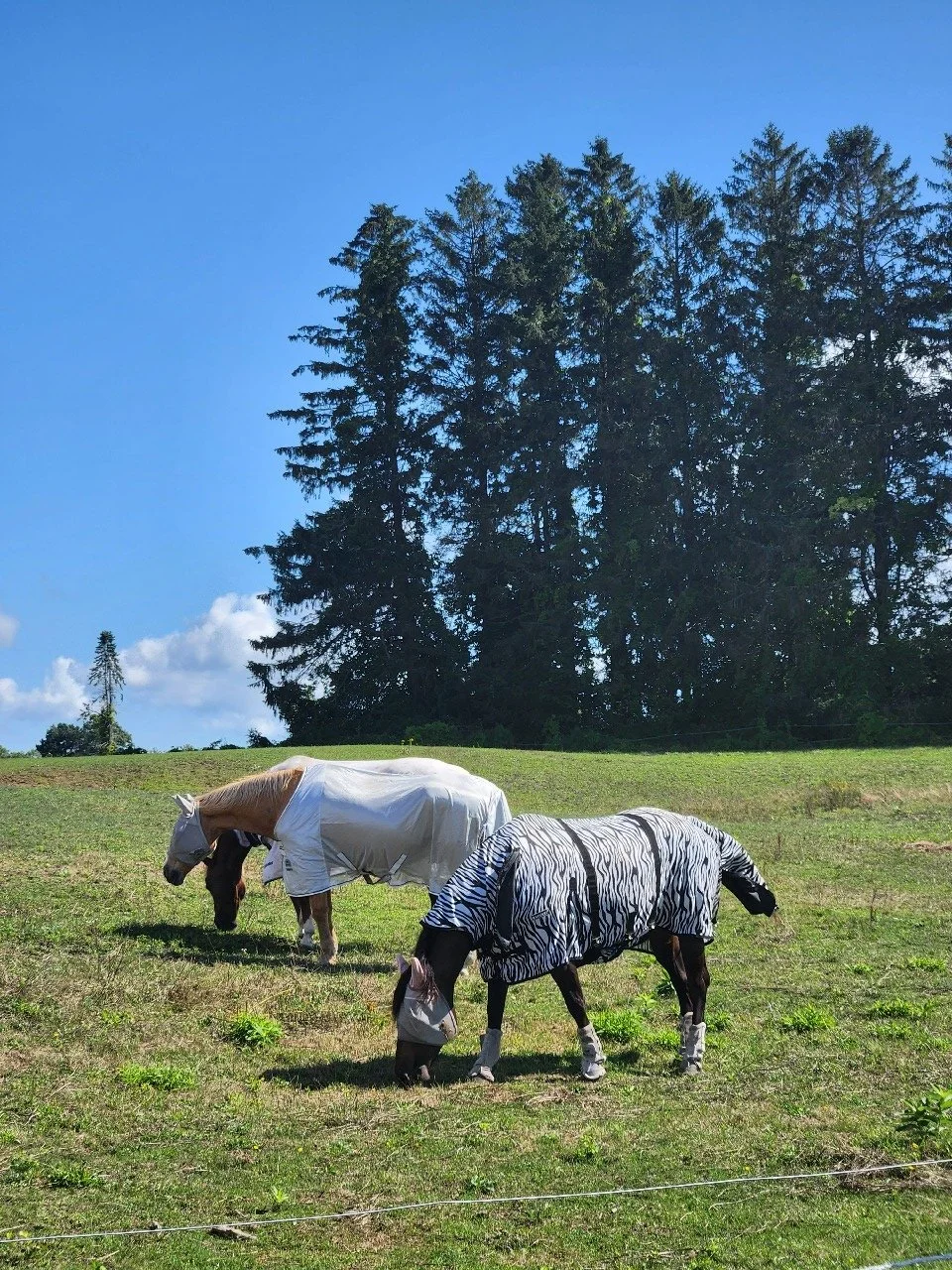
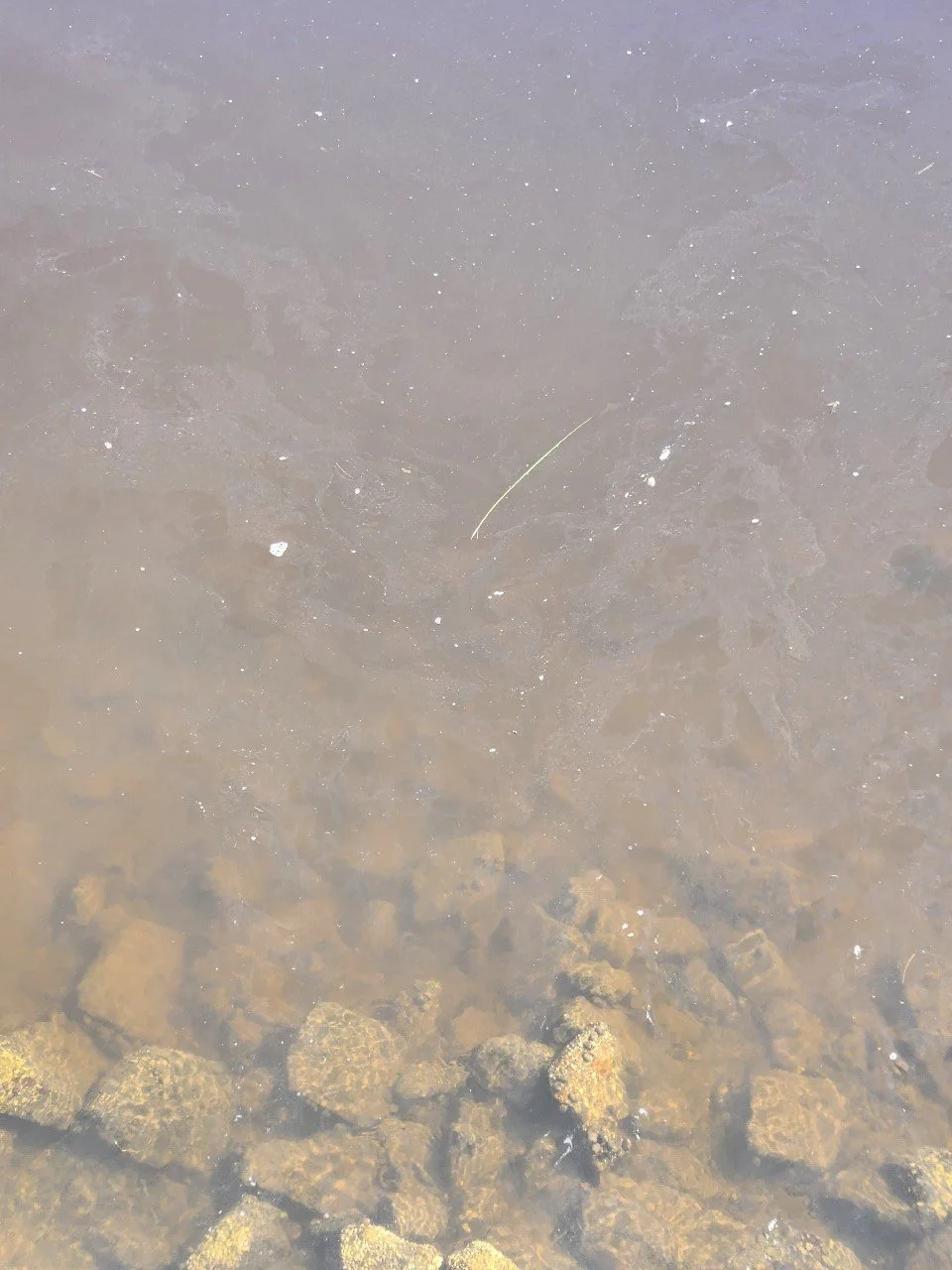
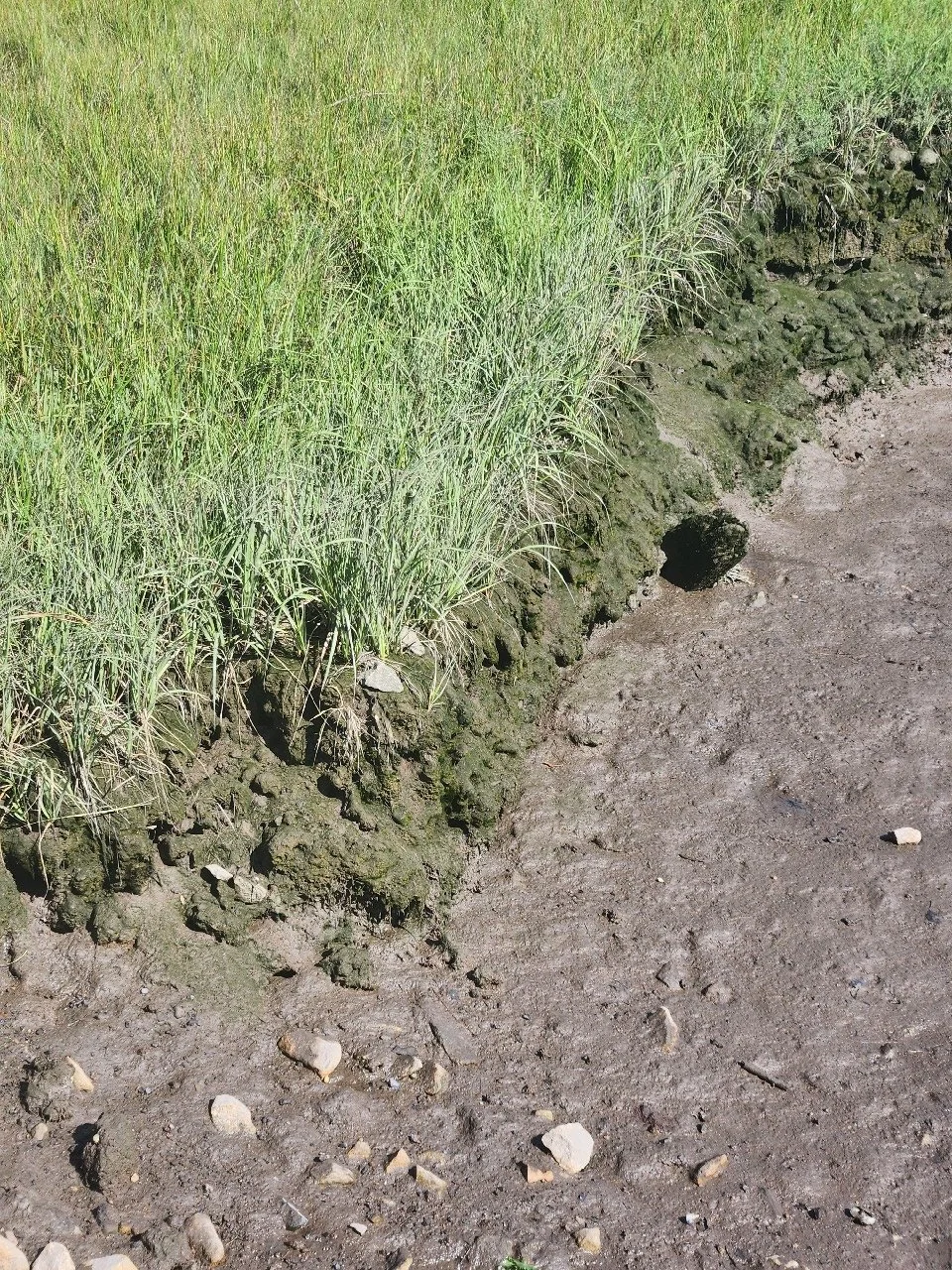
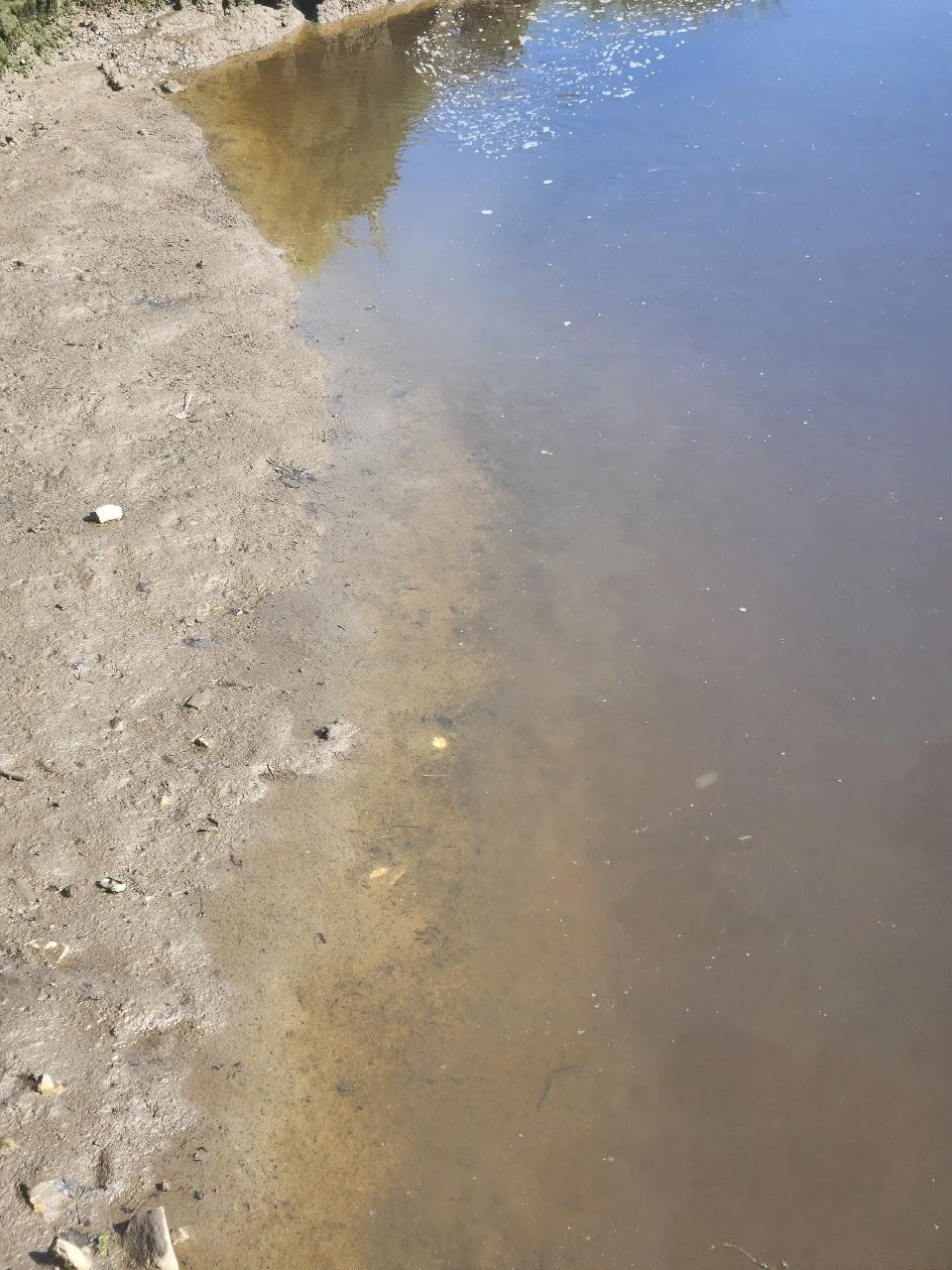
Being on these trails, moving through these places, felt necessary—like you could only understand your day by walking through it.
And Maine—New England in general—has always had a certain kind of landscape painting baked into its identity. Estuaries: grassy edges, mud, reflective water. That soft meeting point where the land gives way to the sky’s reflection. It’s a subject that’s been painted again and again, with a kind of devotion.
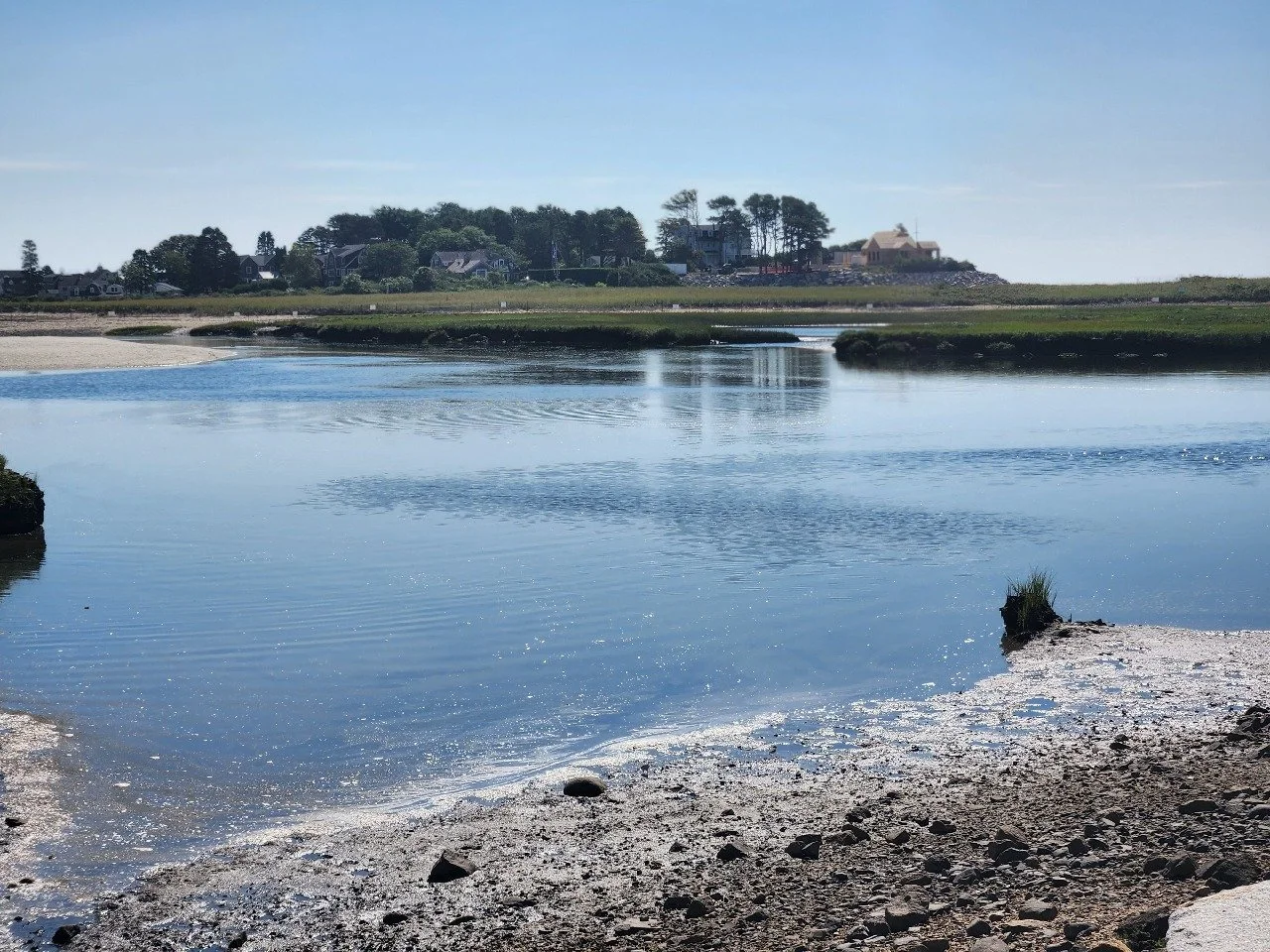
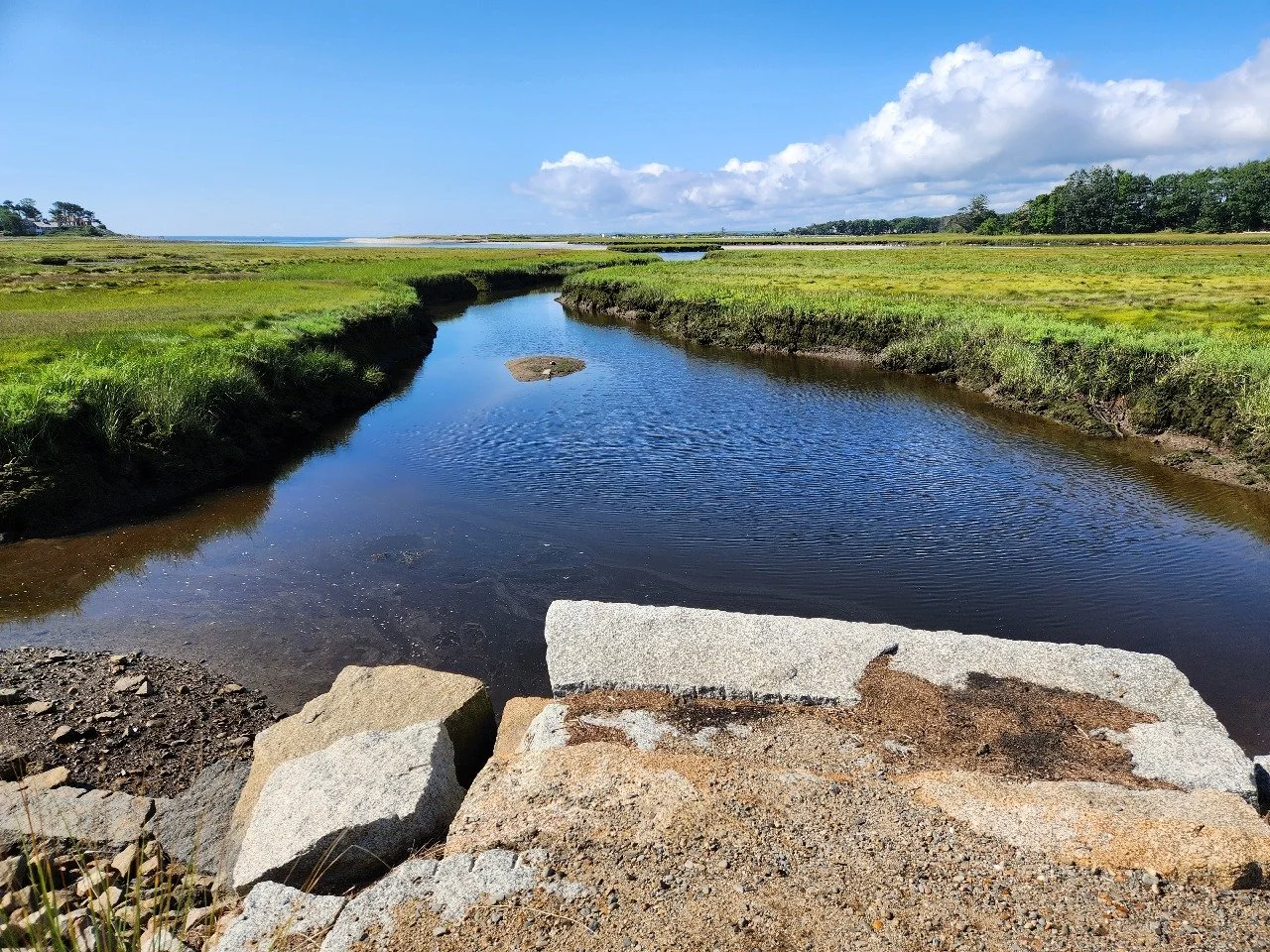
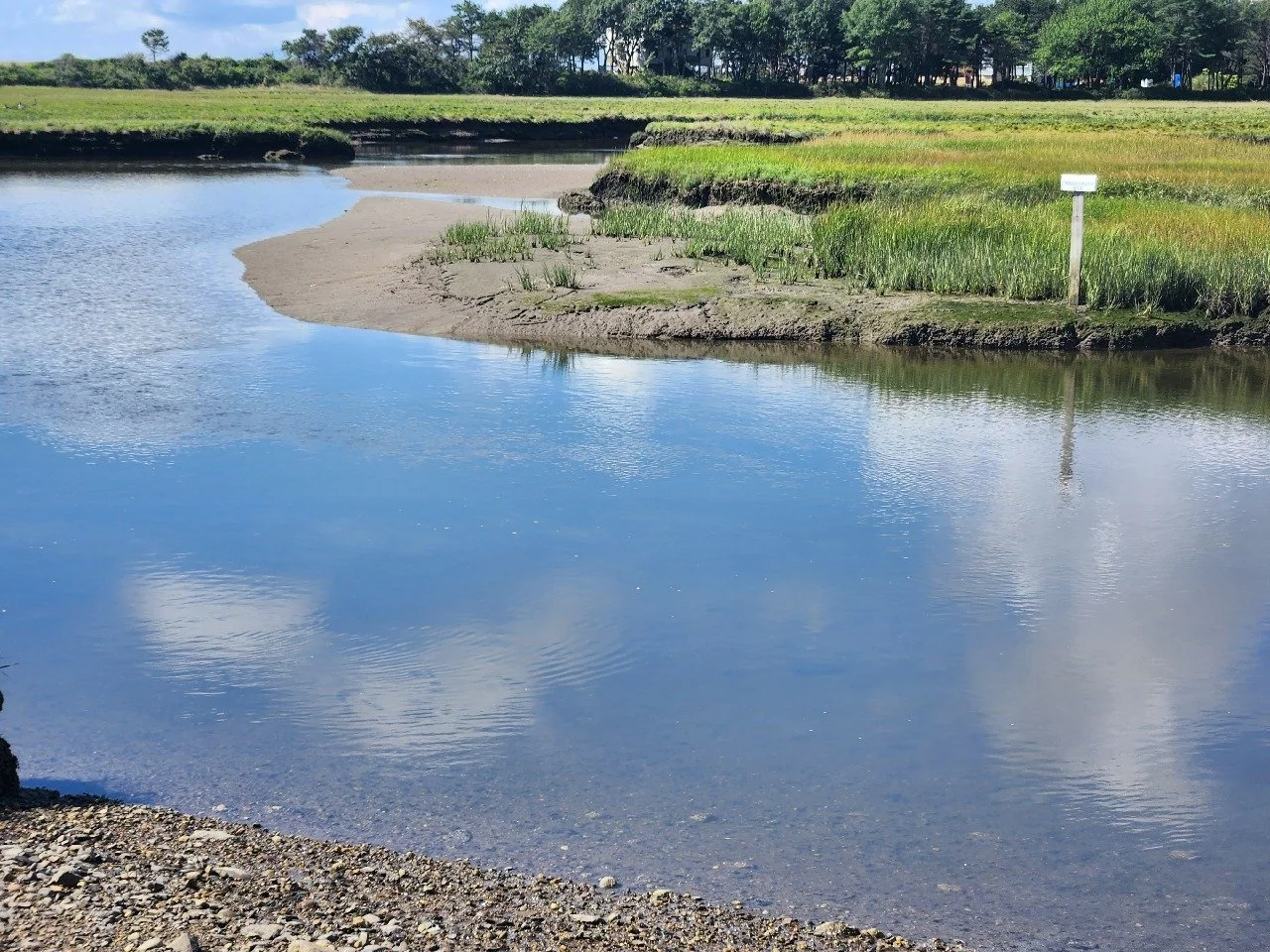
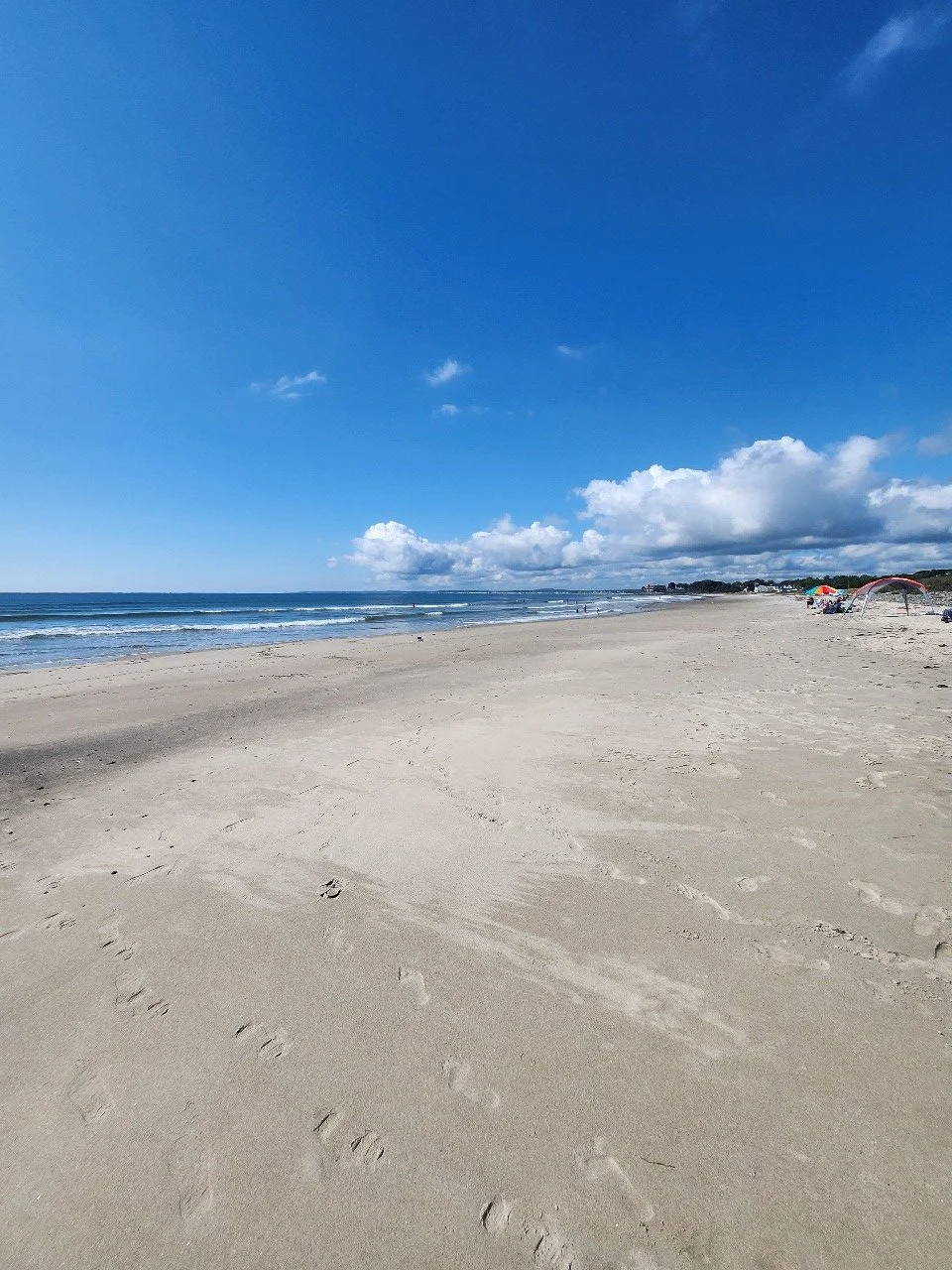
But during that time, I felt disappointed.
Because something had changed—massively.
The meaning of “landscape” had changed for people. The role it played in their lives had changed. When lockdown happened, there were people who could move around the boundaries—who could escape to places like this, who could get to nature and breathe. And there were people who couldn’t—trapped in cities, trapped in systems, trapped in the places they were.
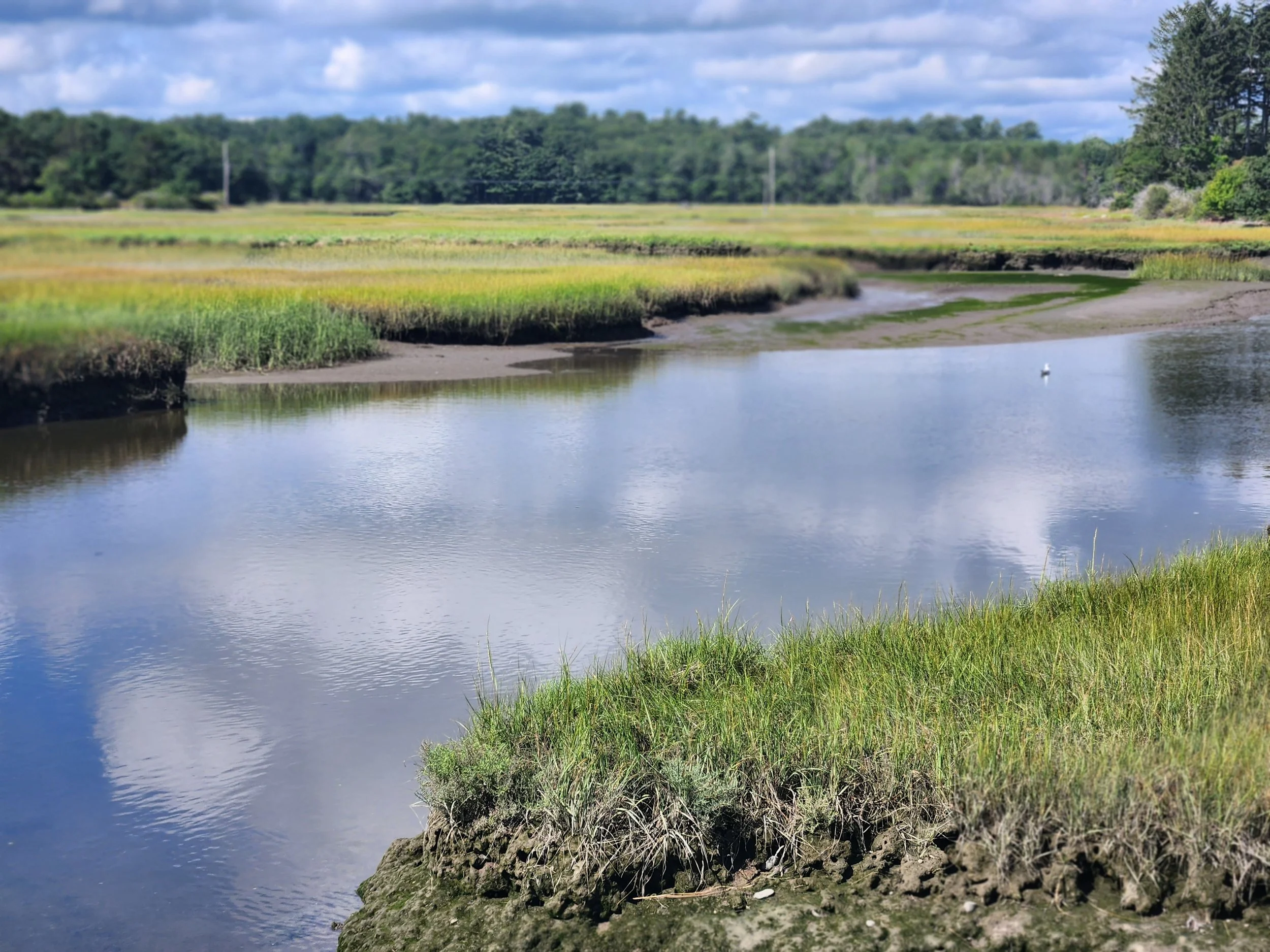
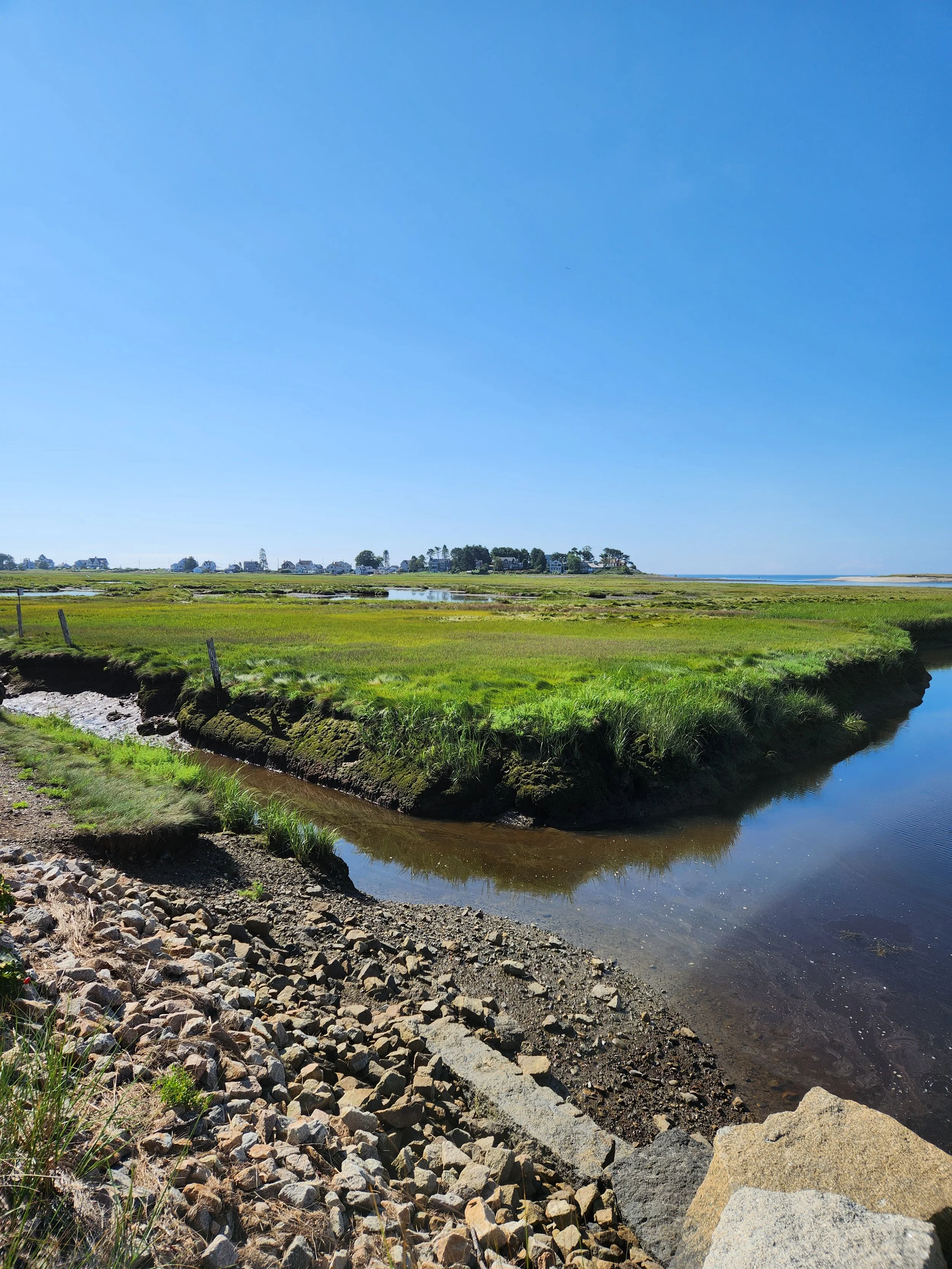
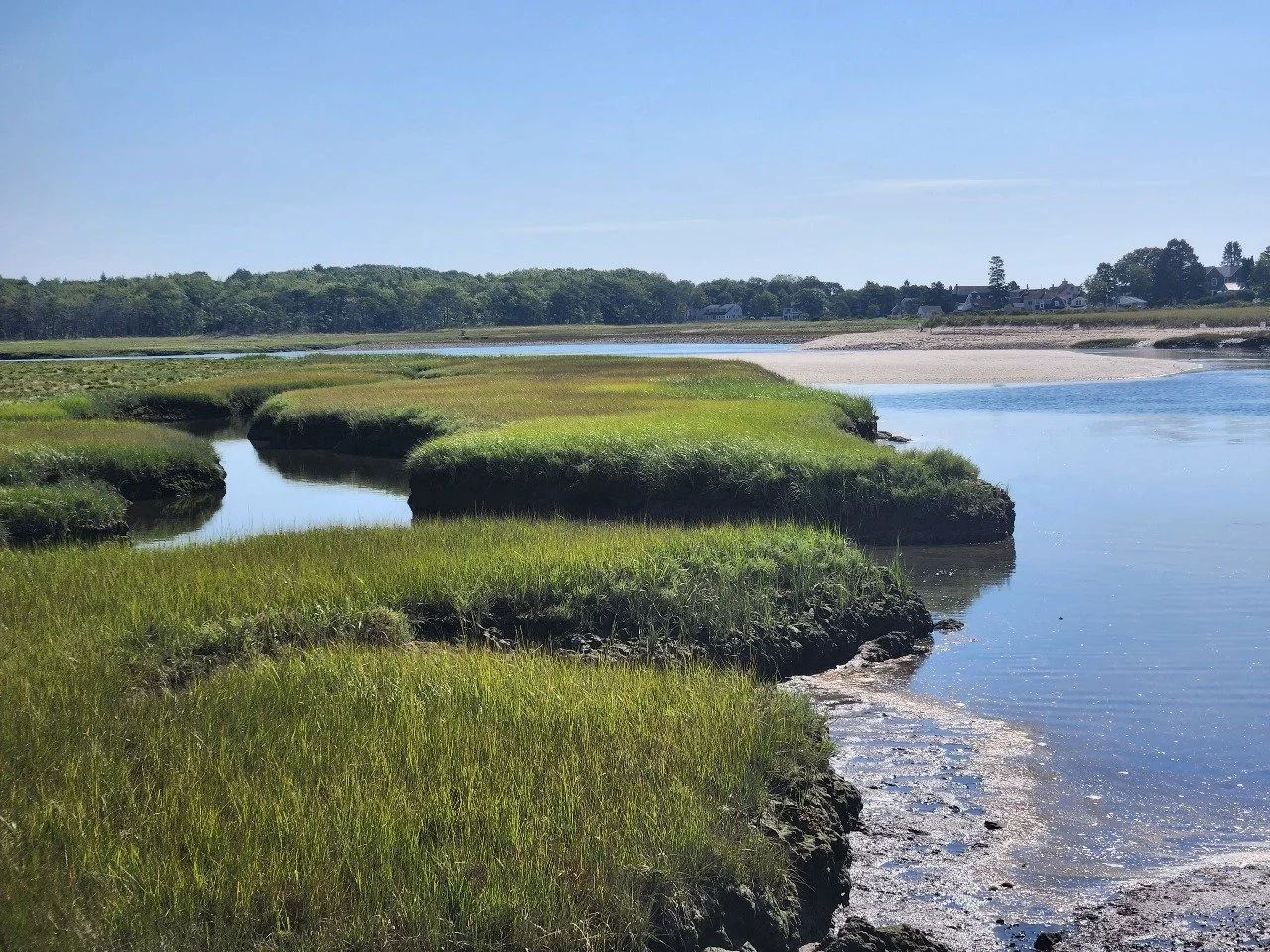
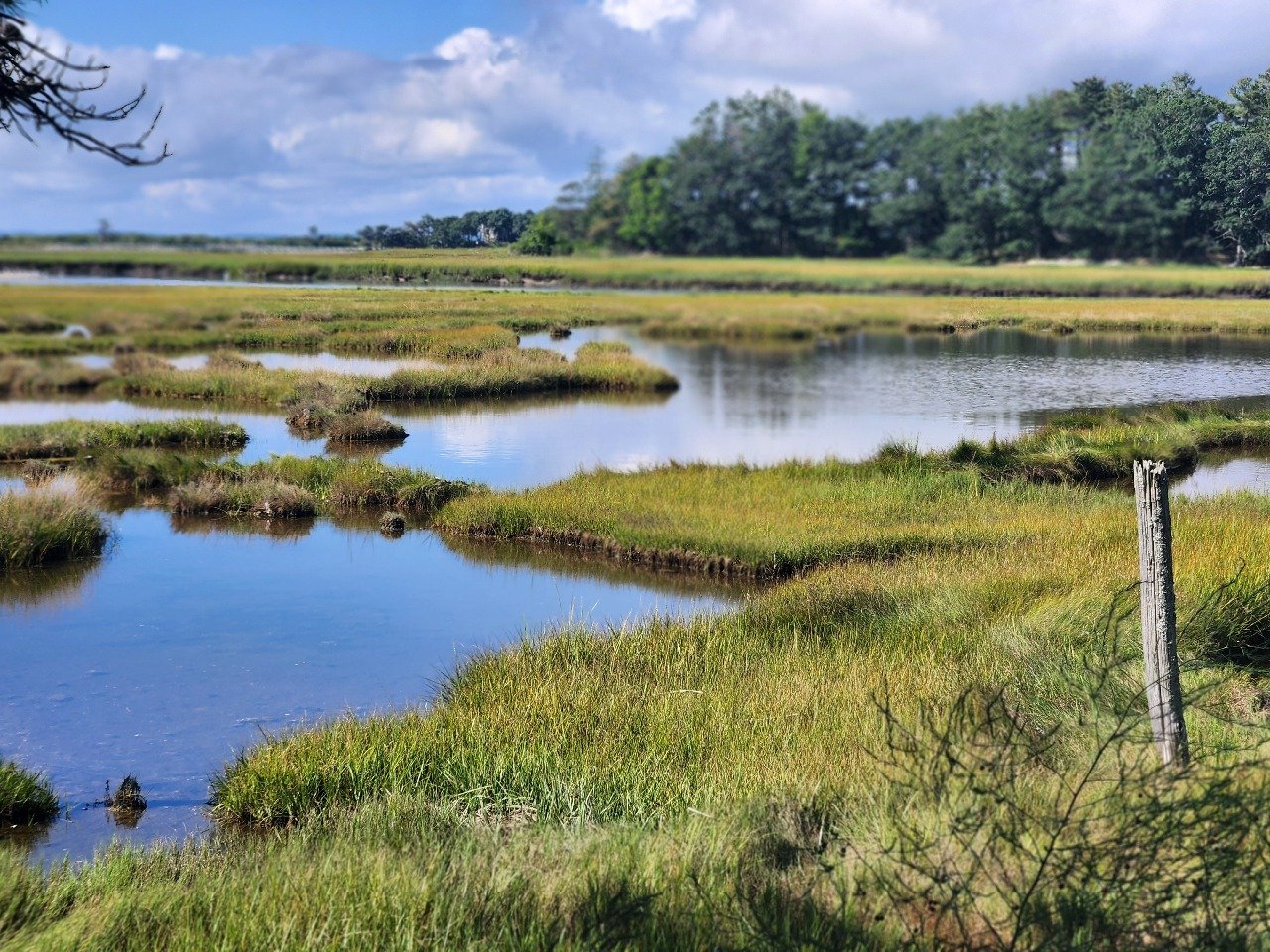
A shift in scenery, yes.
Also a shift in what the world meant.
And yet, the way people were recording the landscape—the way people were painting it—didn’t feel fundamentally challenged. Not before COVID, not after. Even though our relationship to place had been altered, the language of painting often kept speaking in the same old sentences.
So I kept circling one question:
How do I express what it’s like to live today?
How do I paint what changed—without making a painting that simply “illustrates” the idea of change?
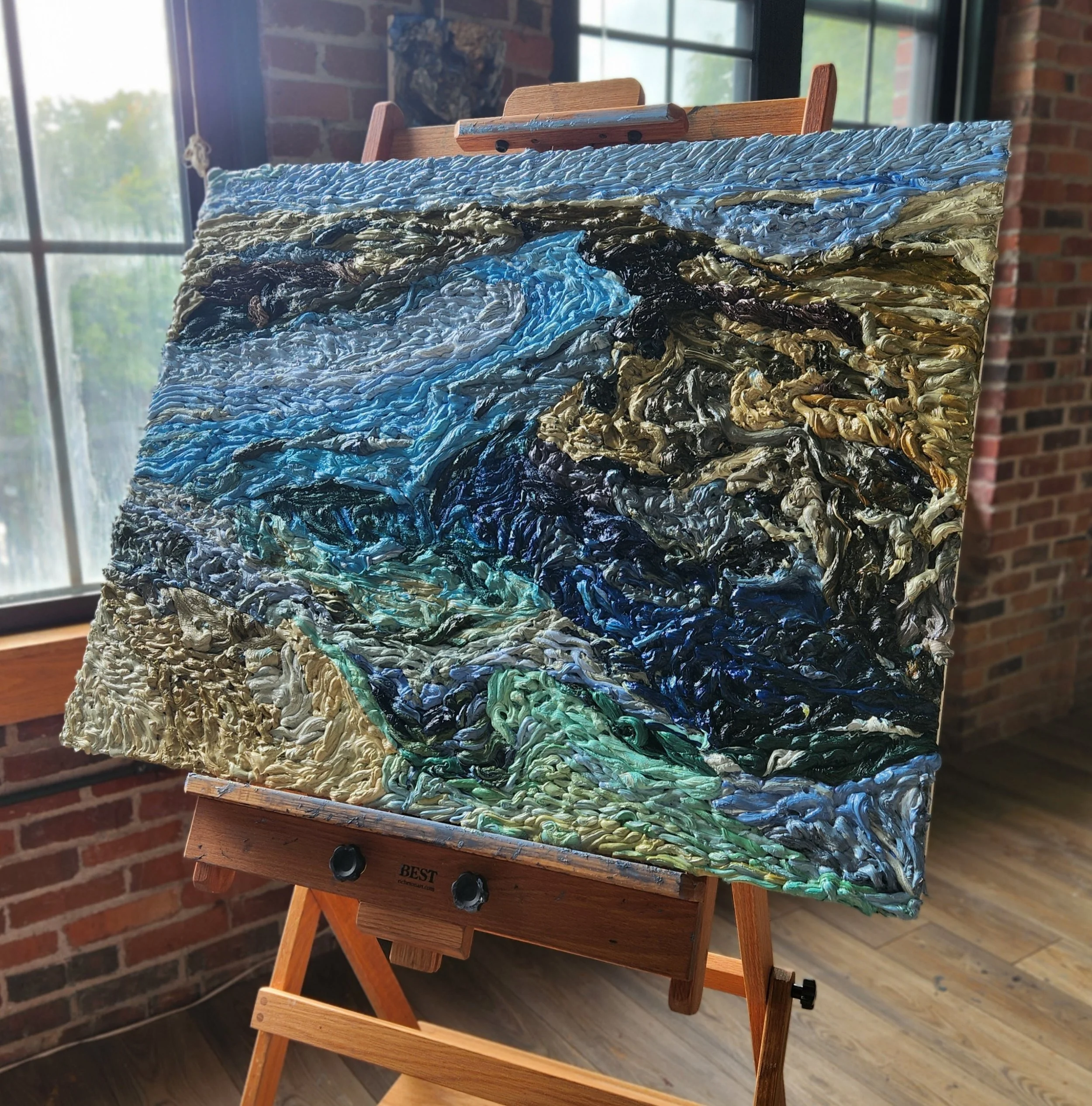
Decision Making as a Subject (Or: Taking the World Apart)
Eventually, everything came down to decision making.
Not in some motivational, productivity sense—more like the feeling of being alive in a time where everything hits you all at once. Information, pressure, expectations, options. The constant awareness that you’re choosing—always choosing—what to pay attention to, what to ignore, what to carry forward.
Painting has always been where I metabolize experience.
So I started wondering: what if I could paint like that?
What if the painting process itself became the metaphor—taking everything I know about the world, putting it on the ground, and rebuilding it piece by piece?
Not a single image built smoothly from start to finish. (rendered)
But a world reconstructed—fragment by fragment—by force of choice.
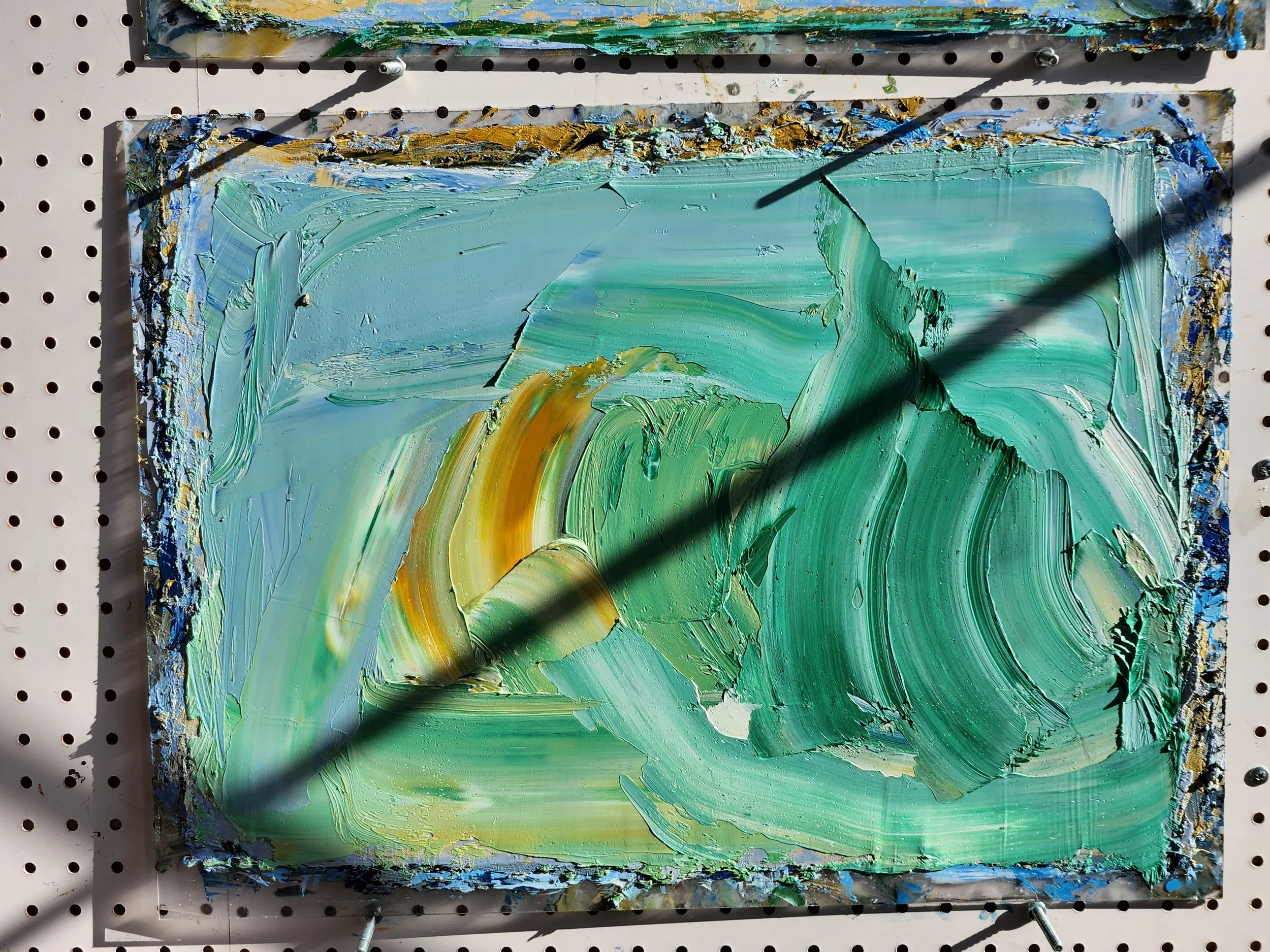
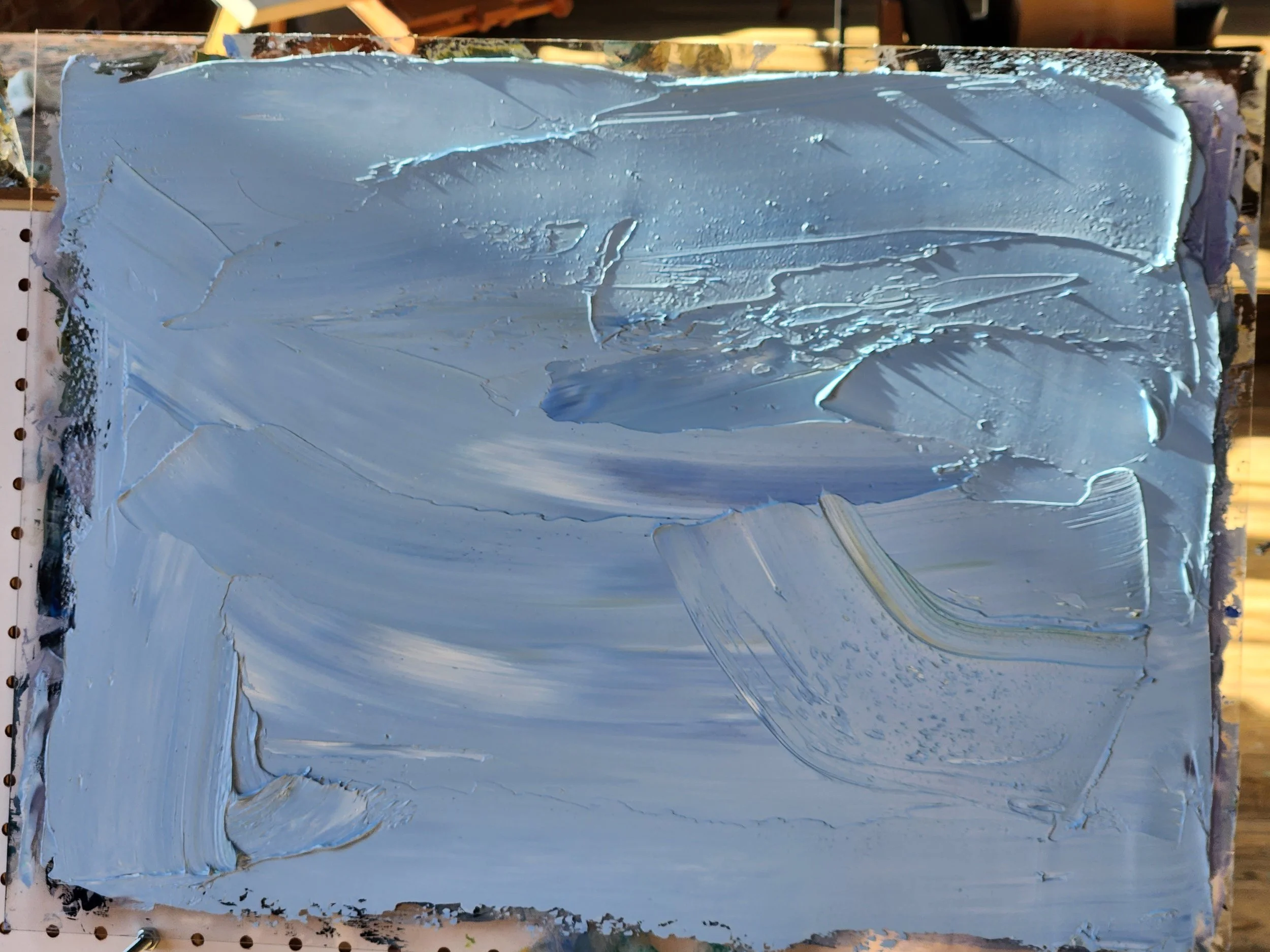
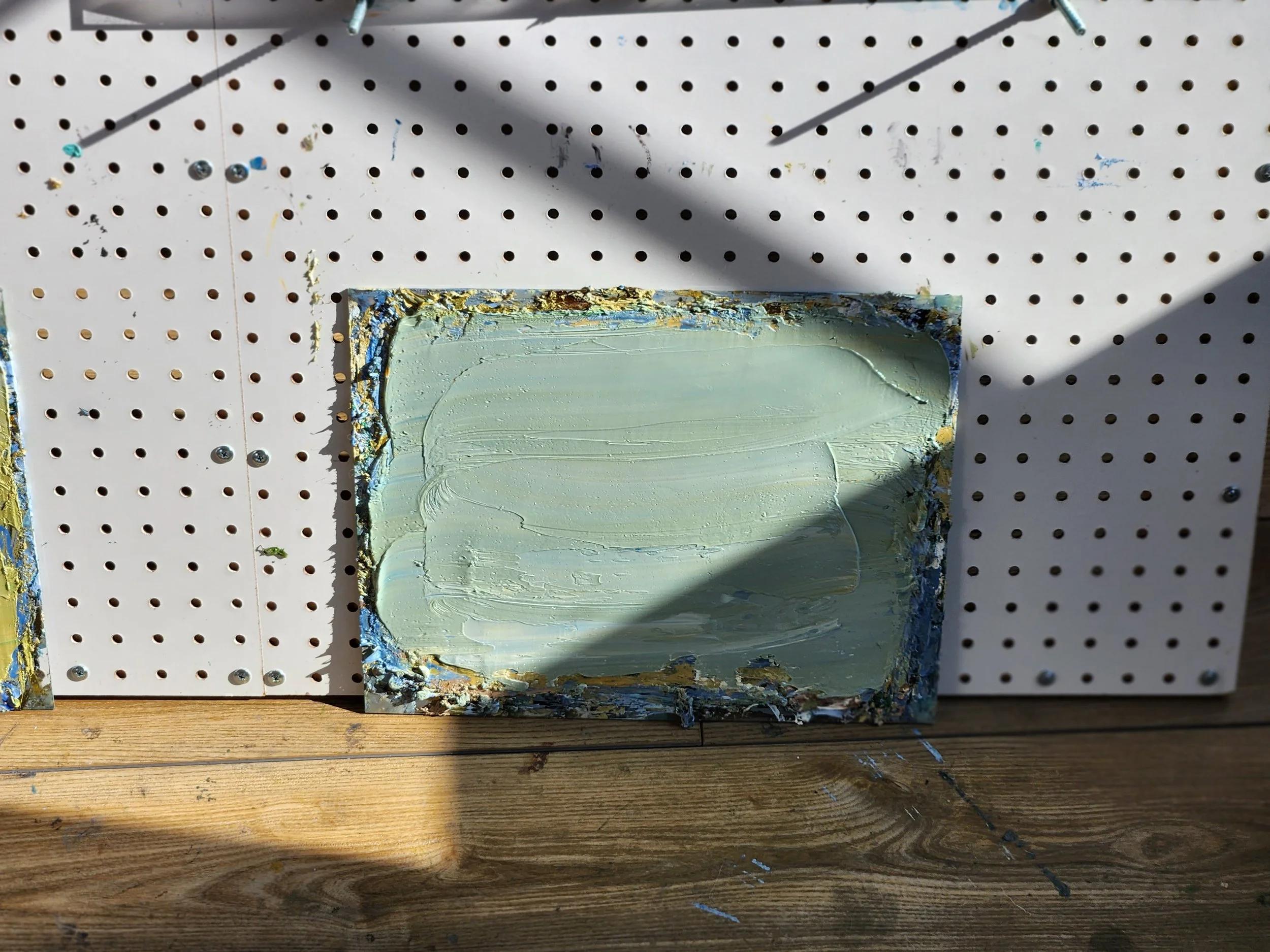
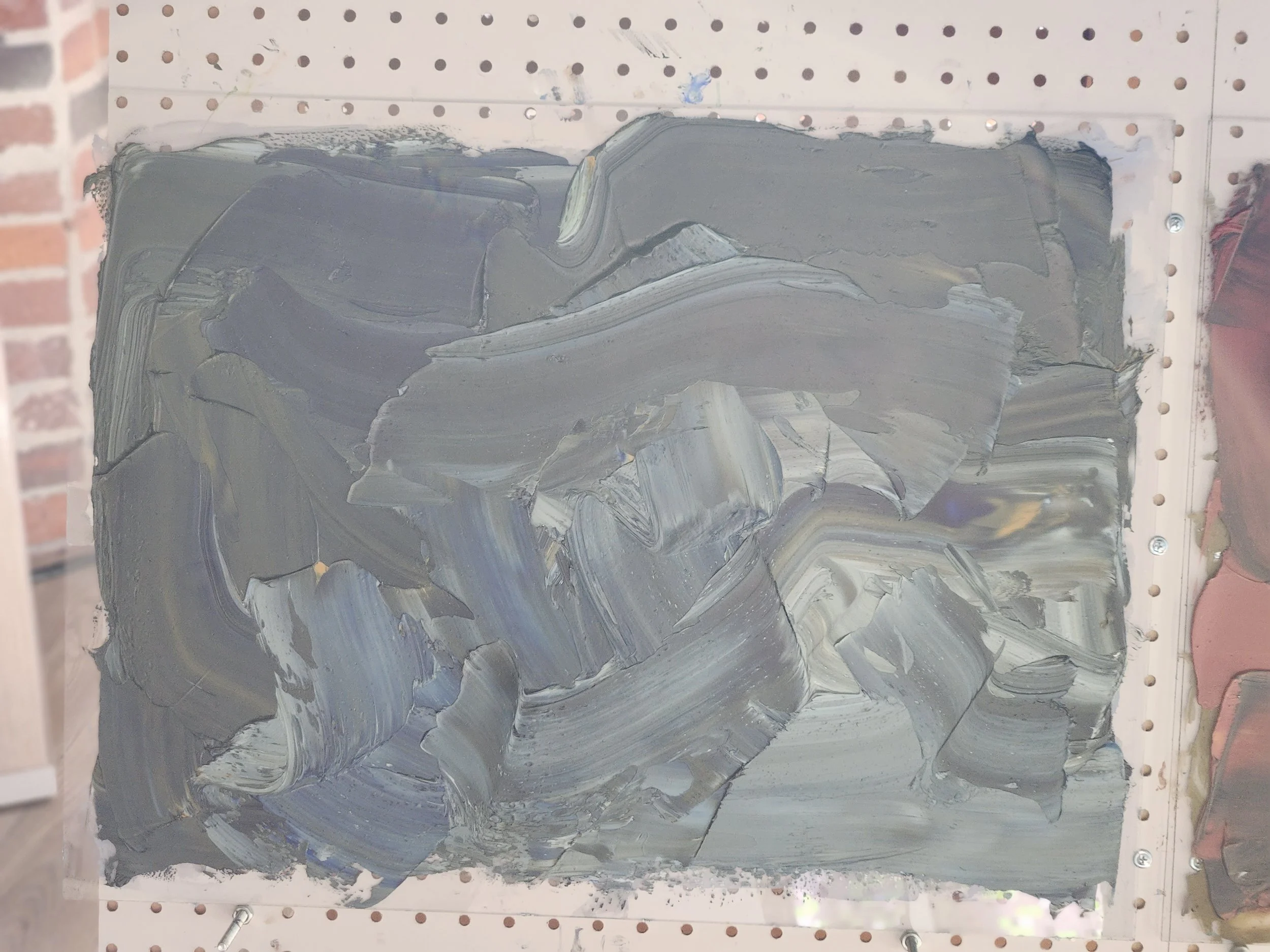
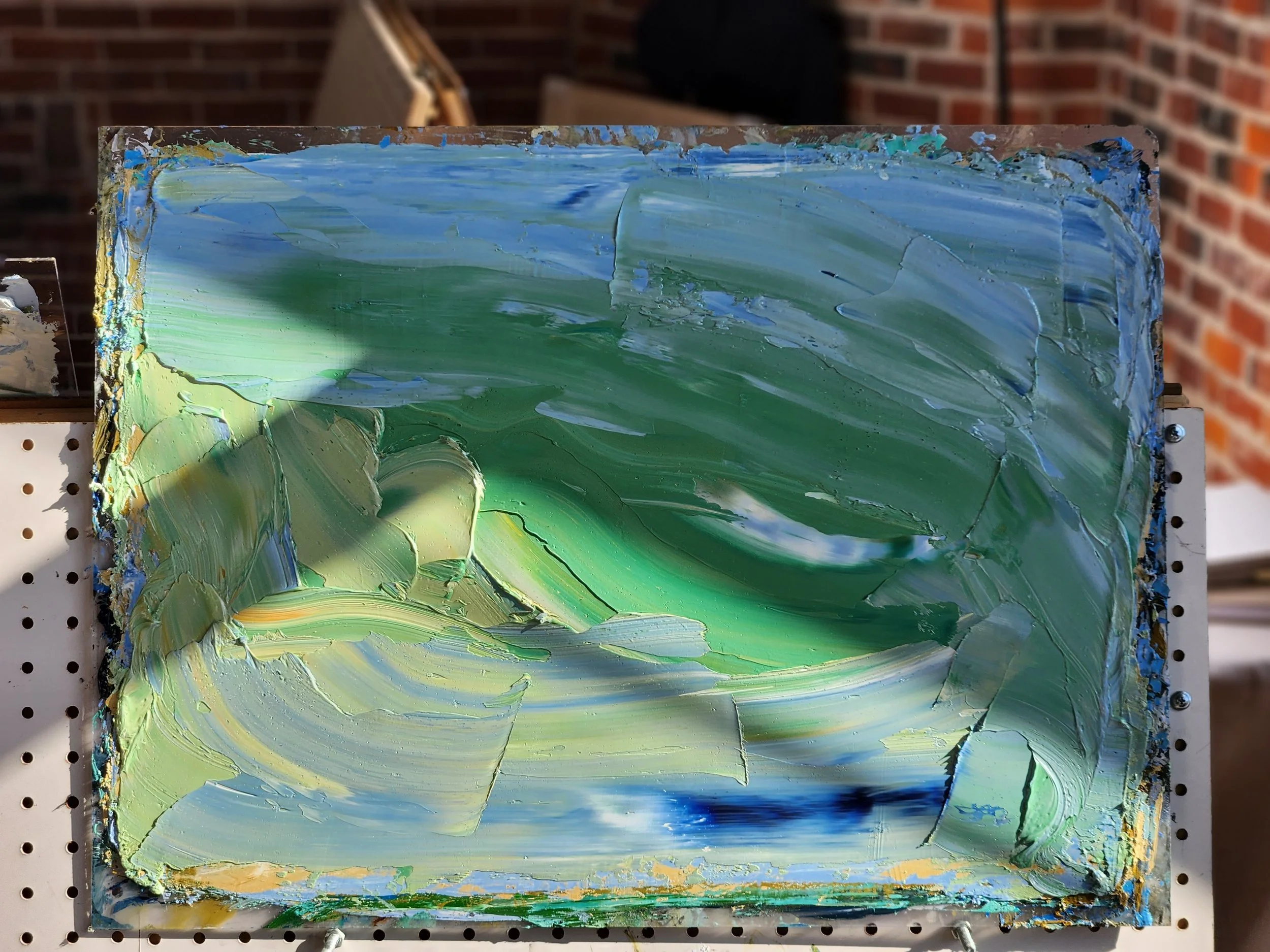
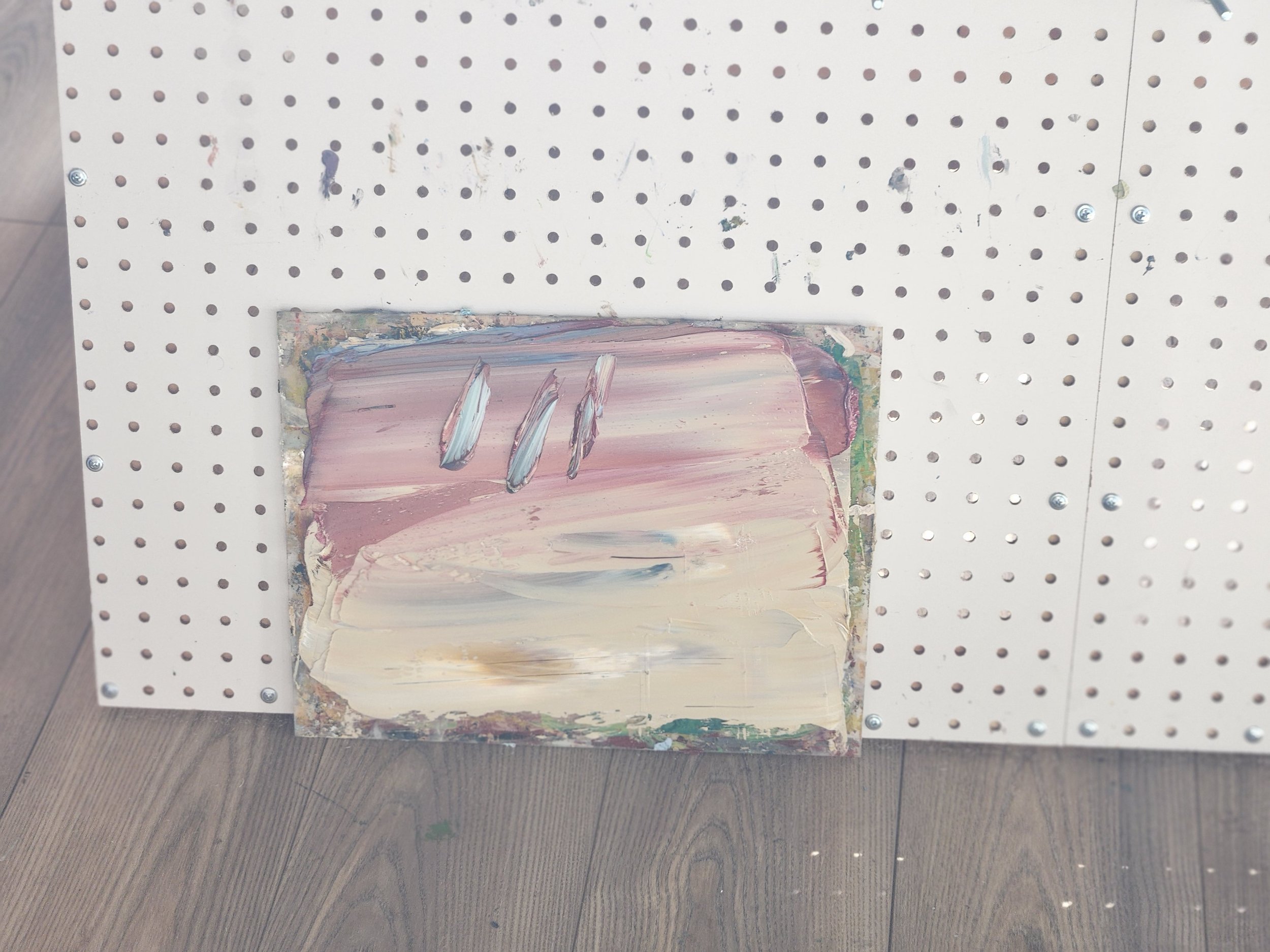
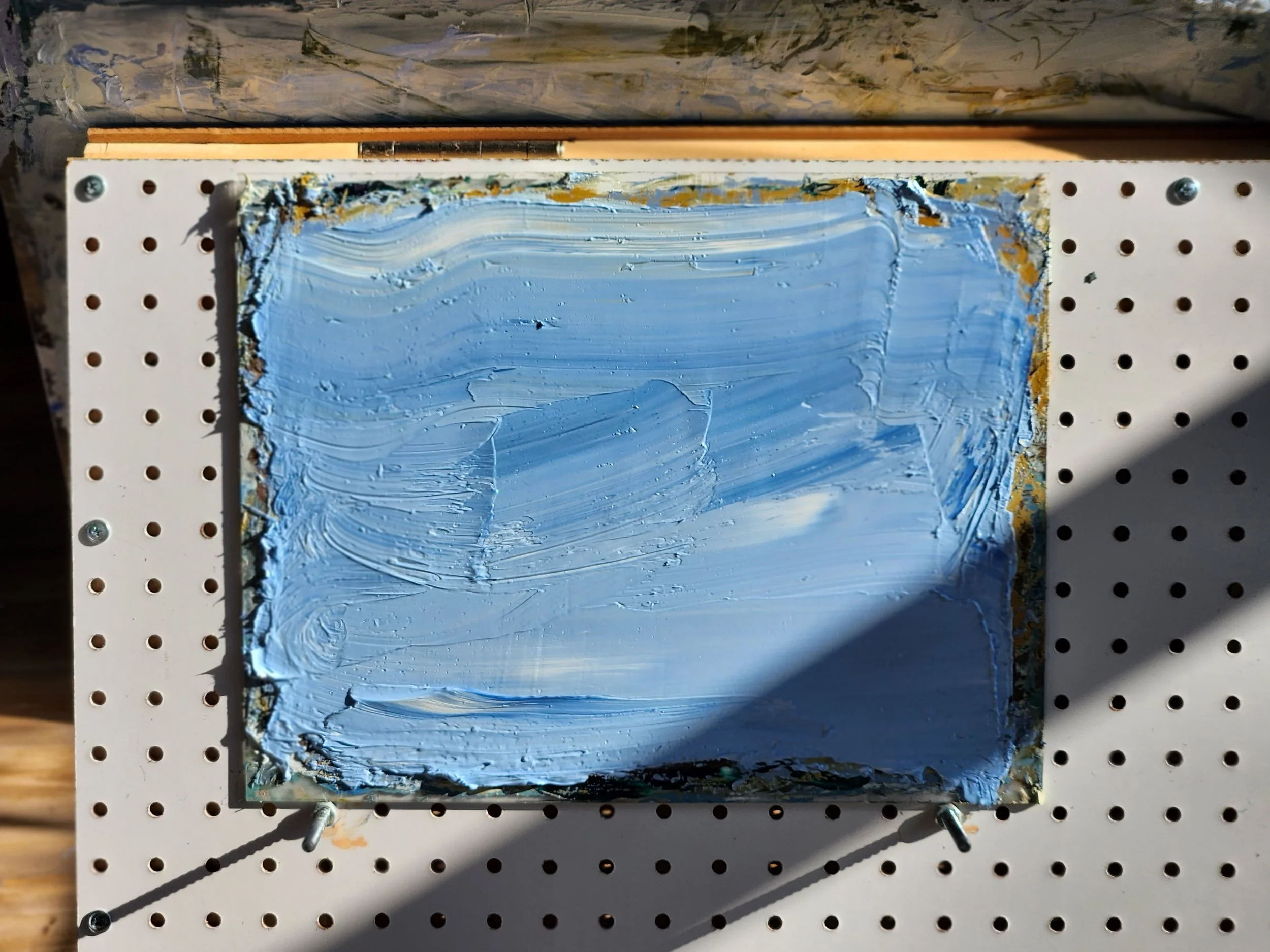
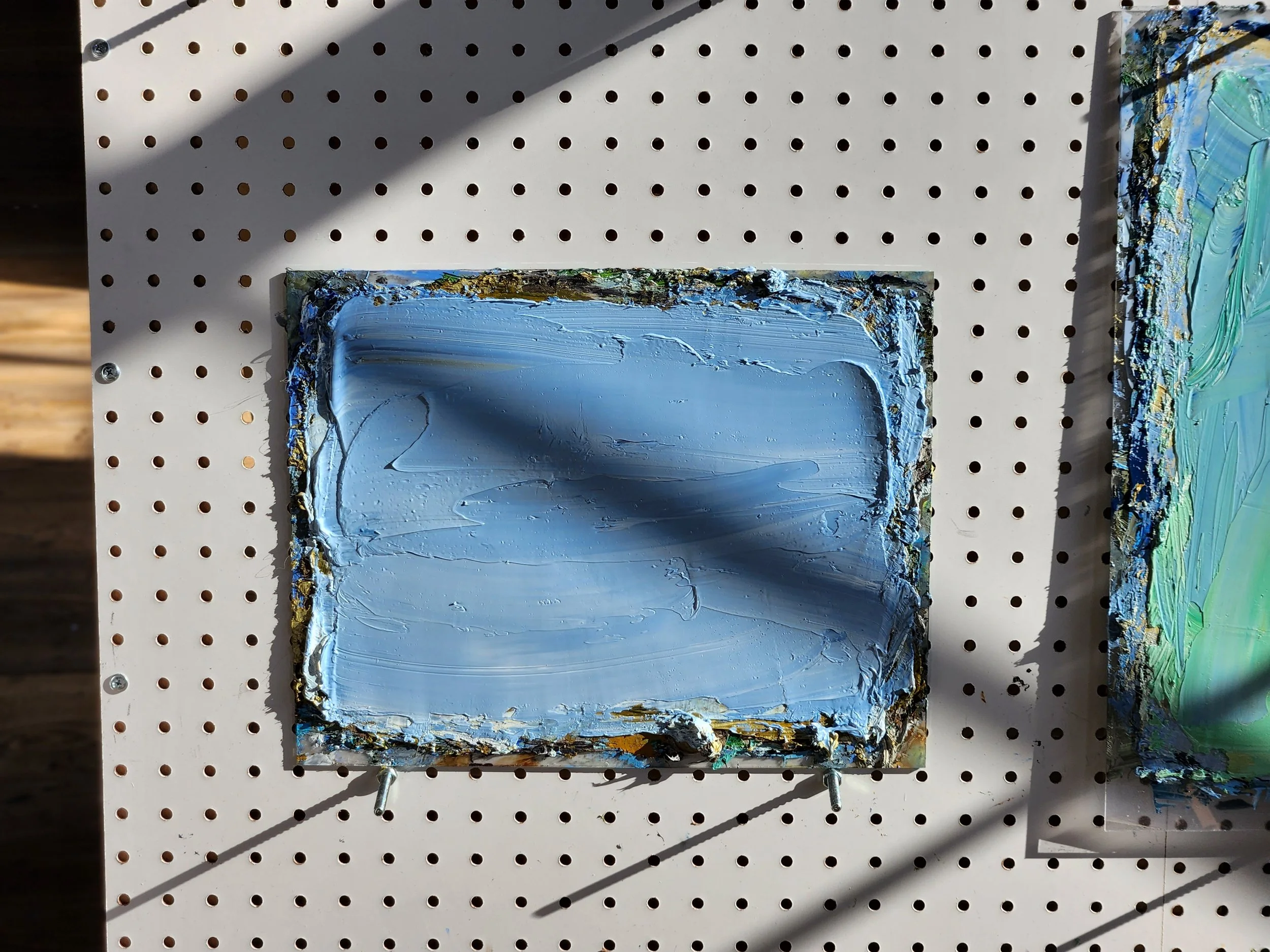
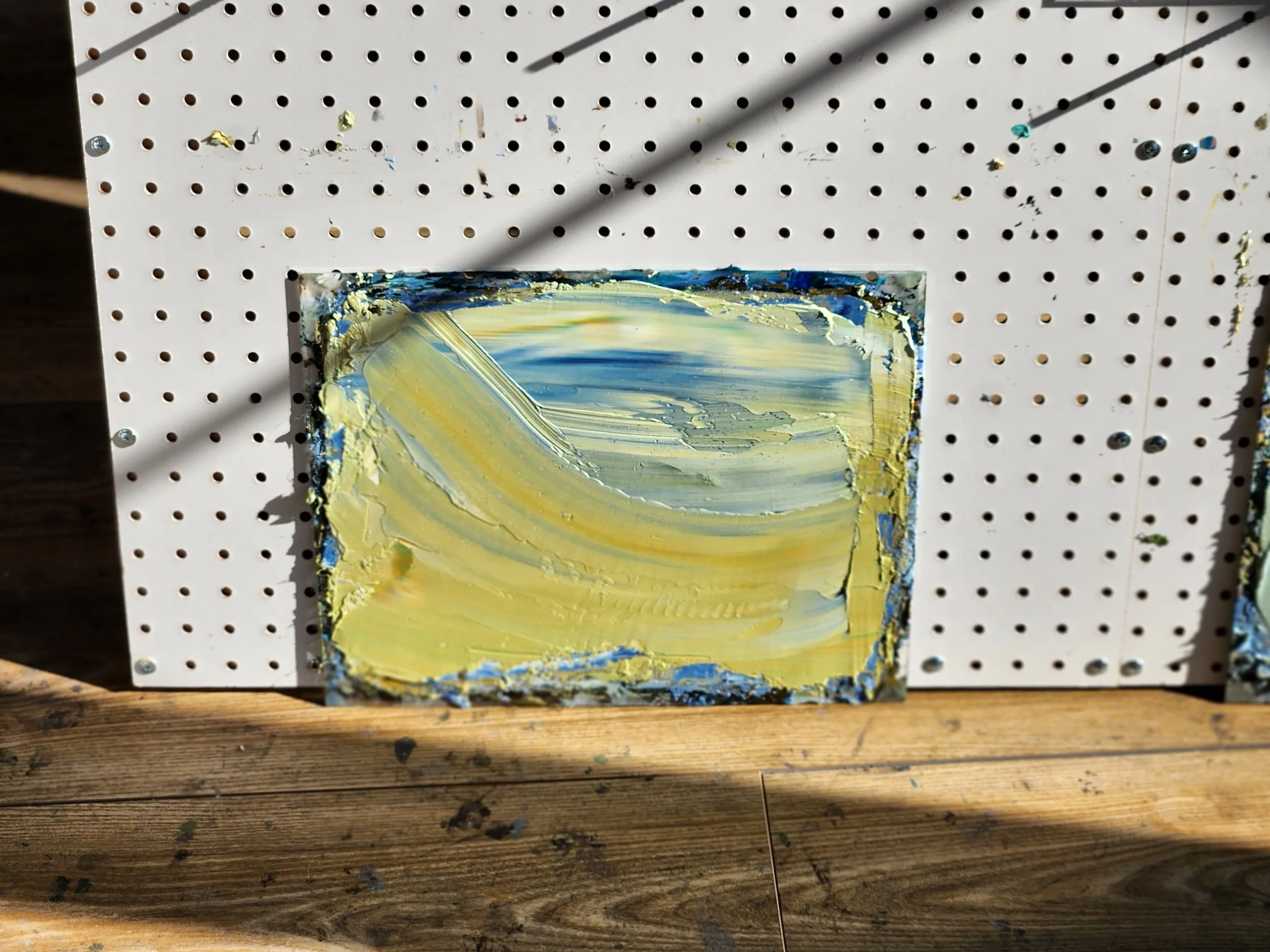
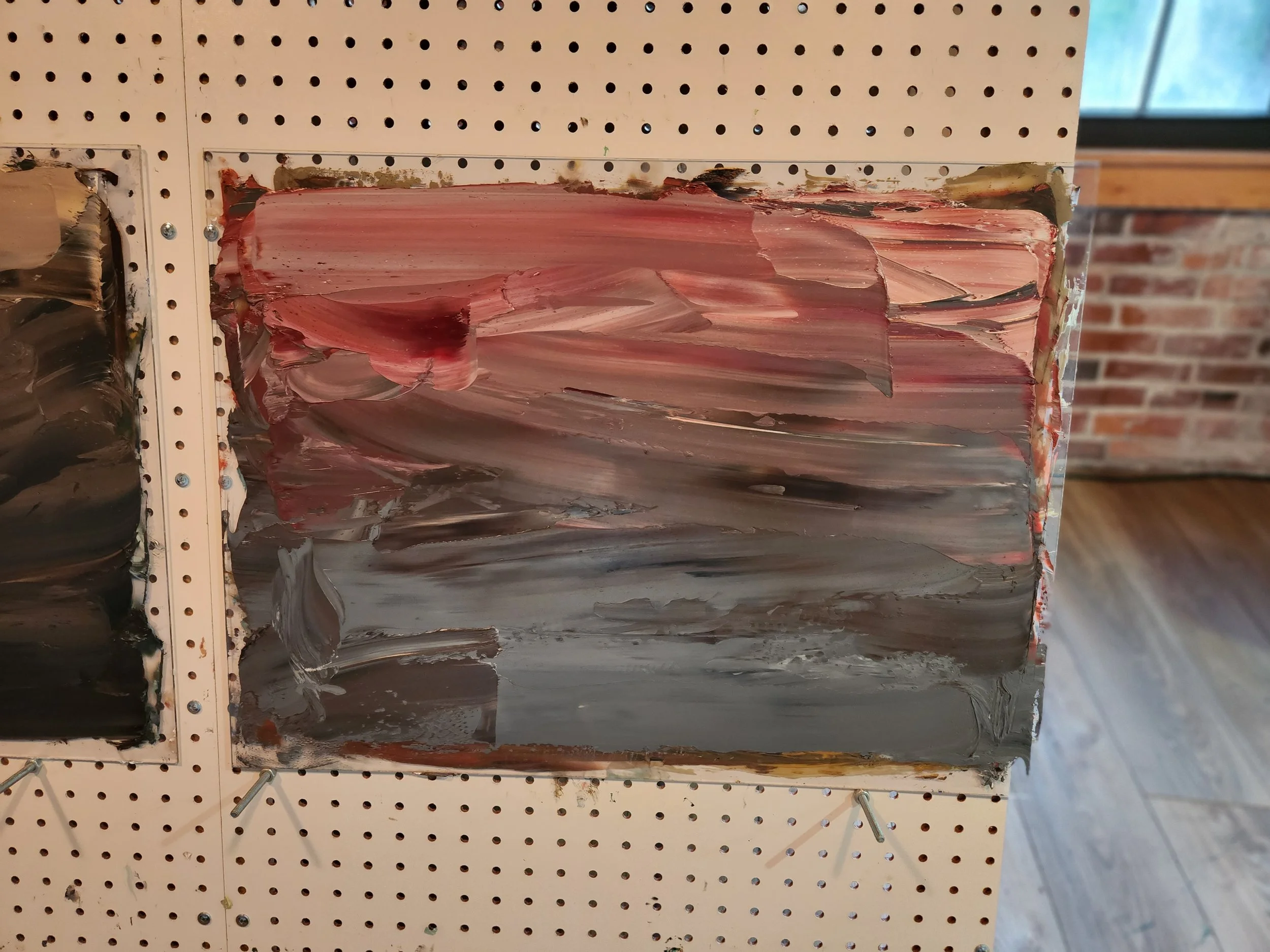
At the time I was thinking through these ideas and taking these walks, I was also working on another large painting of a marsh—similar subject matter pulled from this same geography. But it felt like there was more to say. More to push. More to rebuild.
And that’s where In Abundance begins.
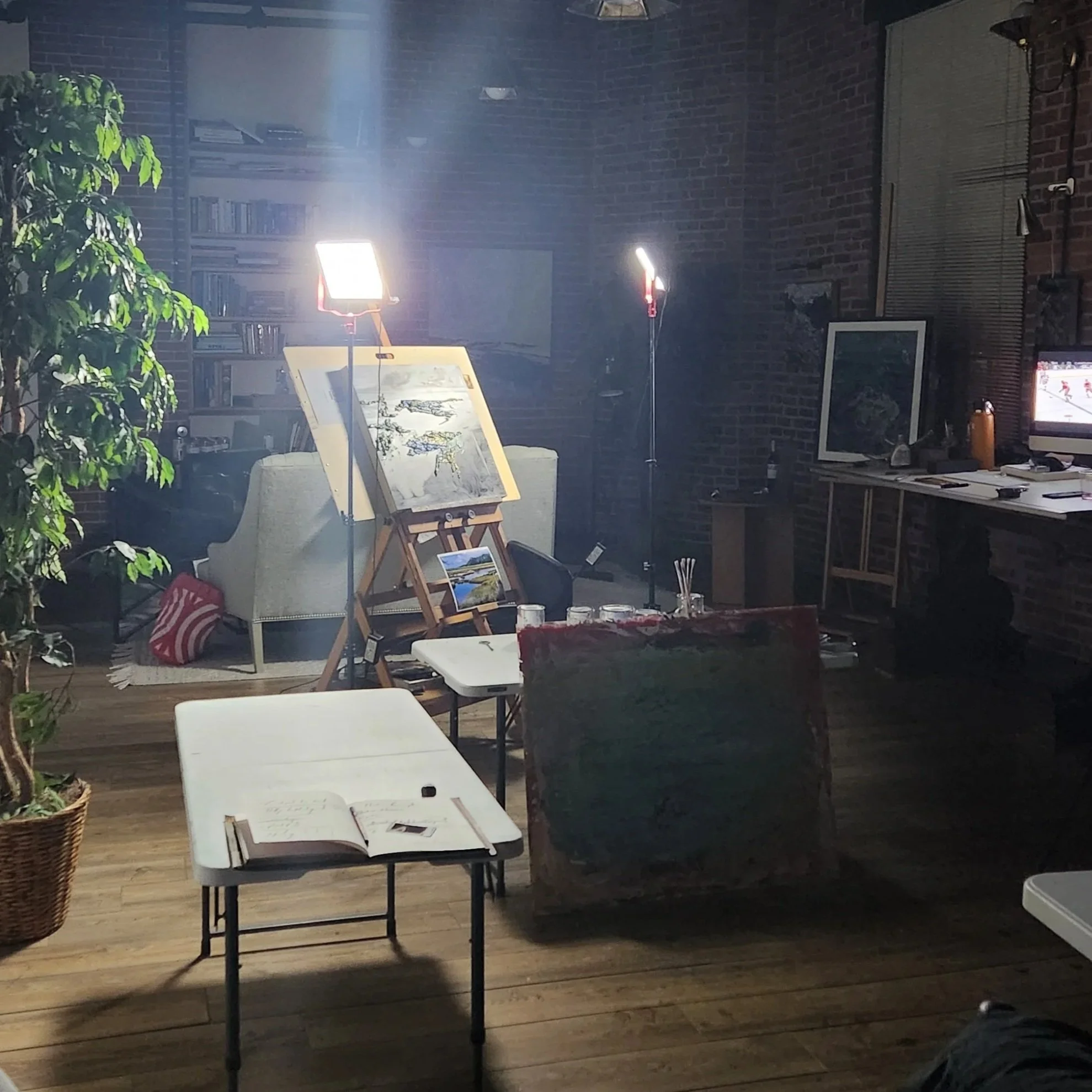
March 24, 2025: Beginning “In Abundance” (Going Big)
March 24th, 2025: I restarted.
With this painting, my first instinct was scale—not the size of the painting alone, but the size of the forms. I wanted large structural decisions. Big movements. A feeling of architecture.
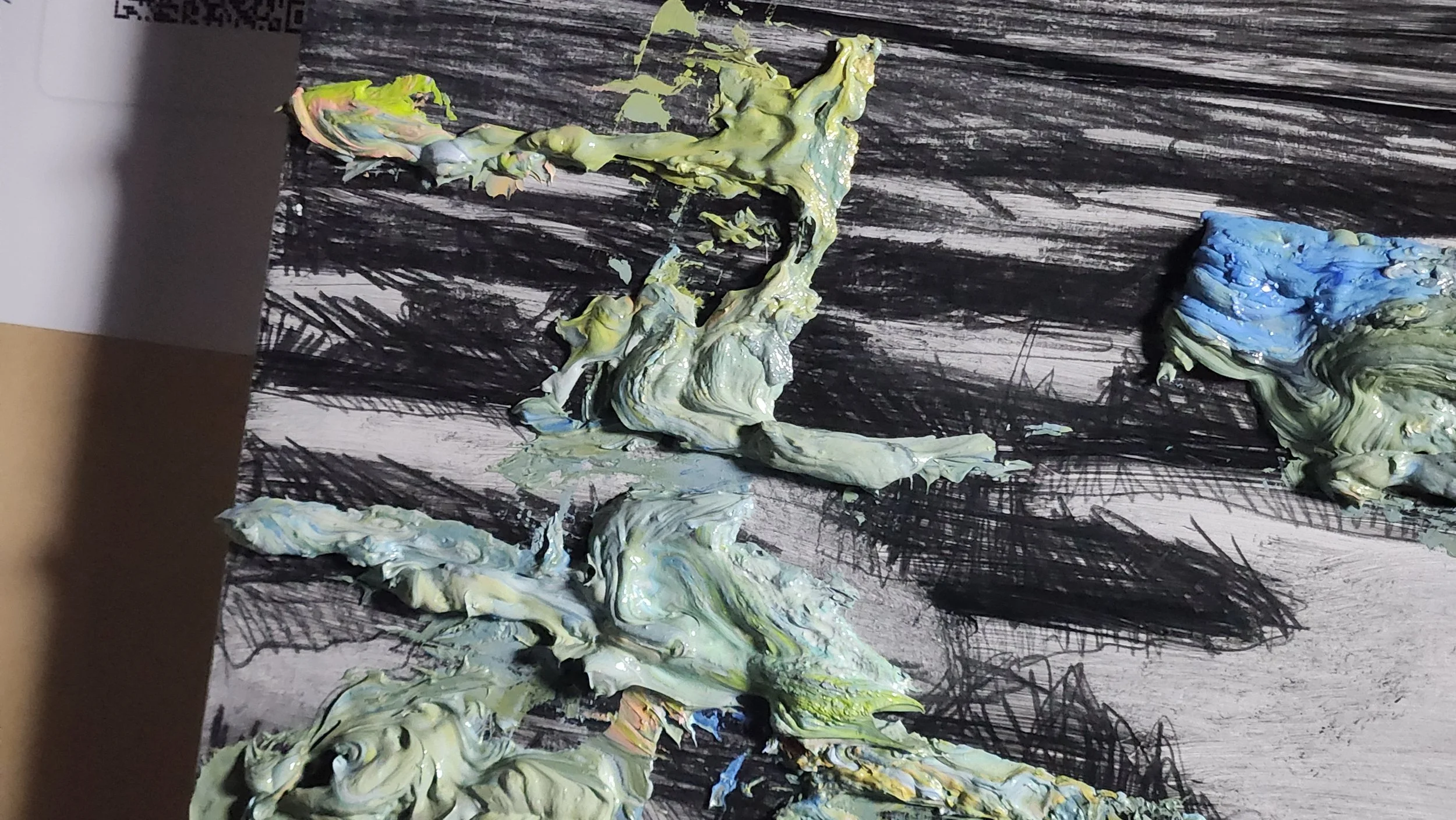
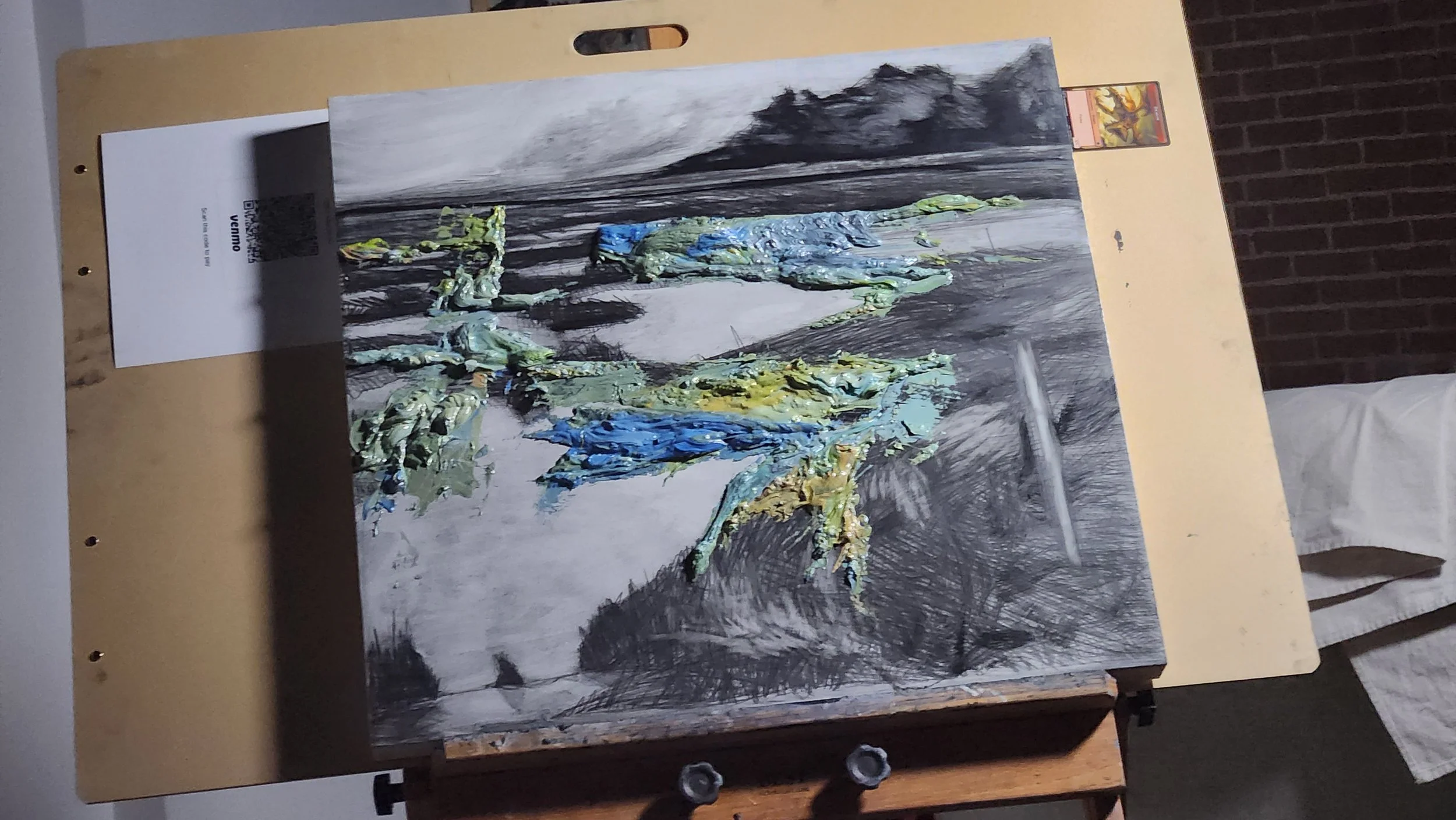
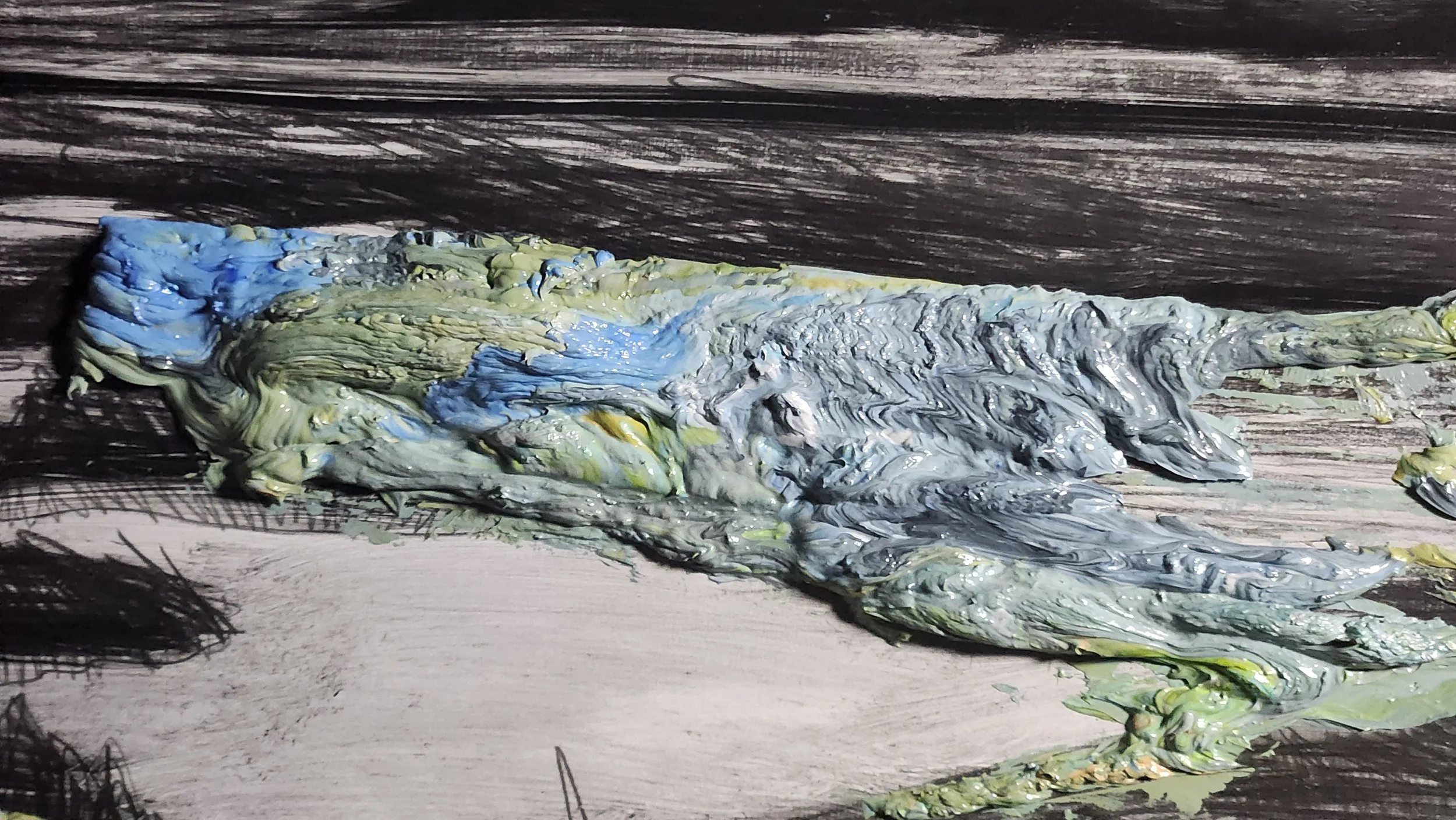
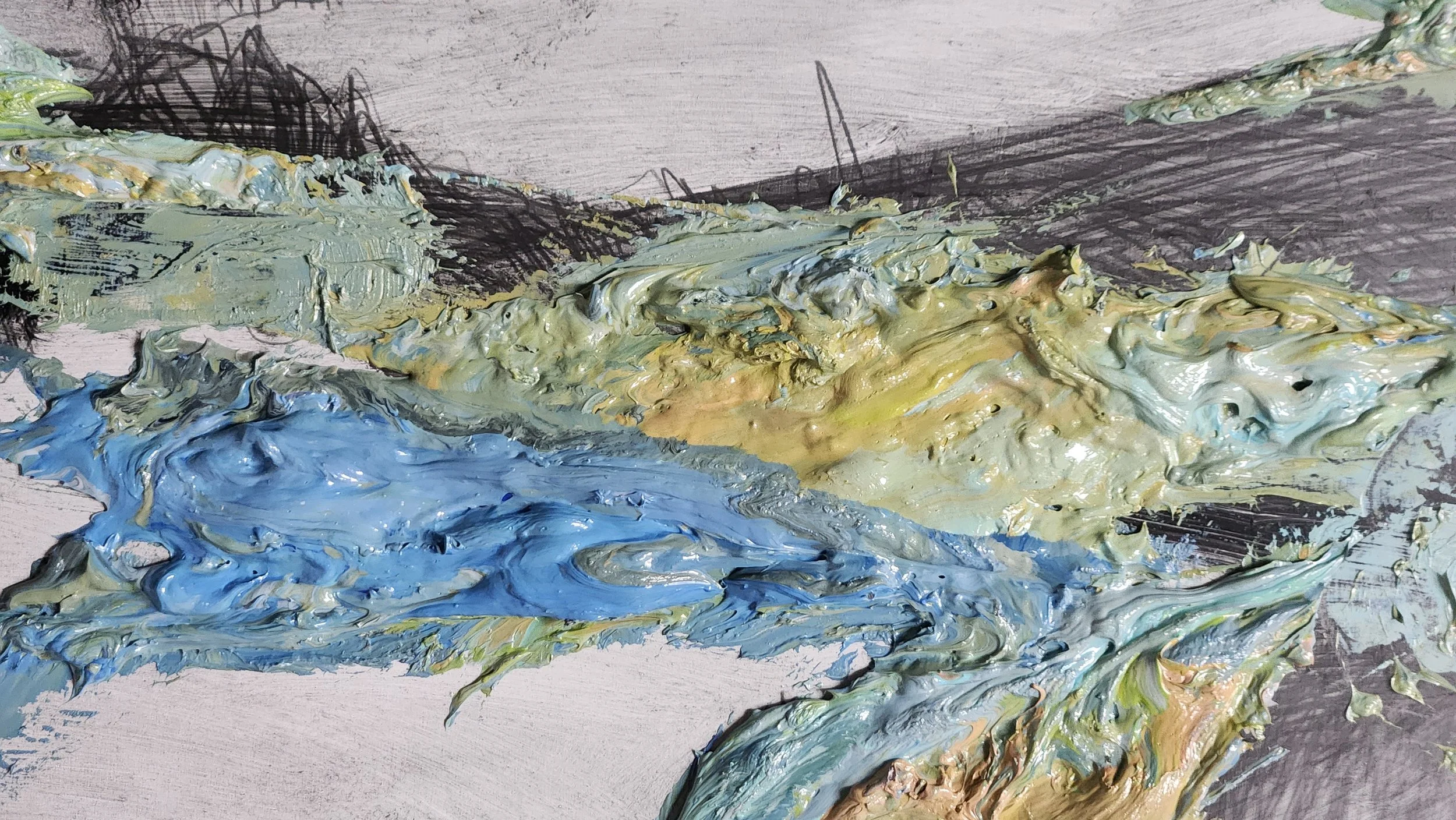
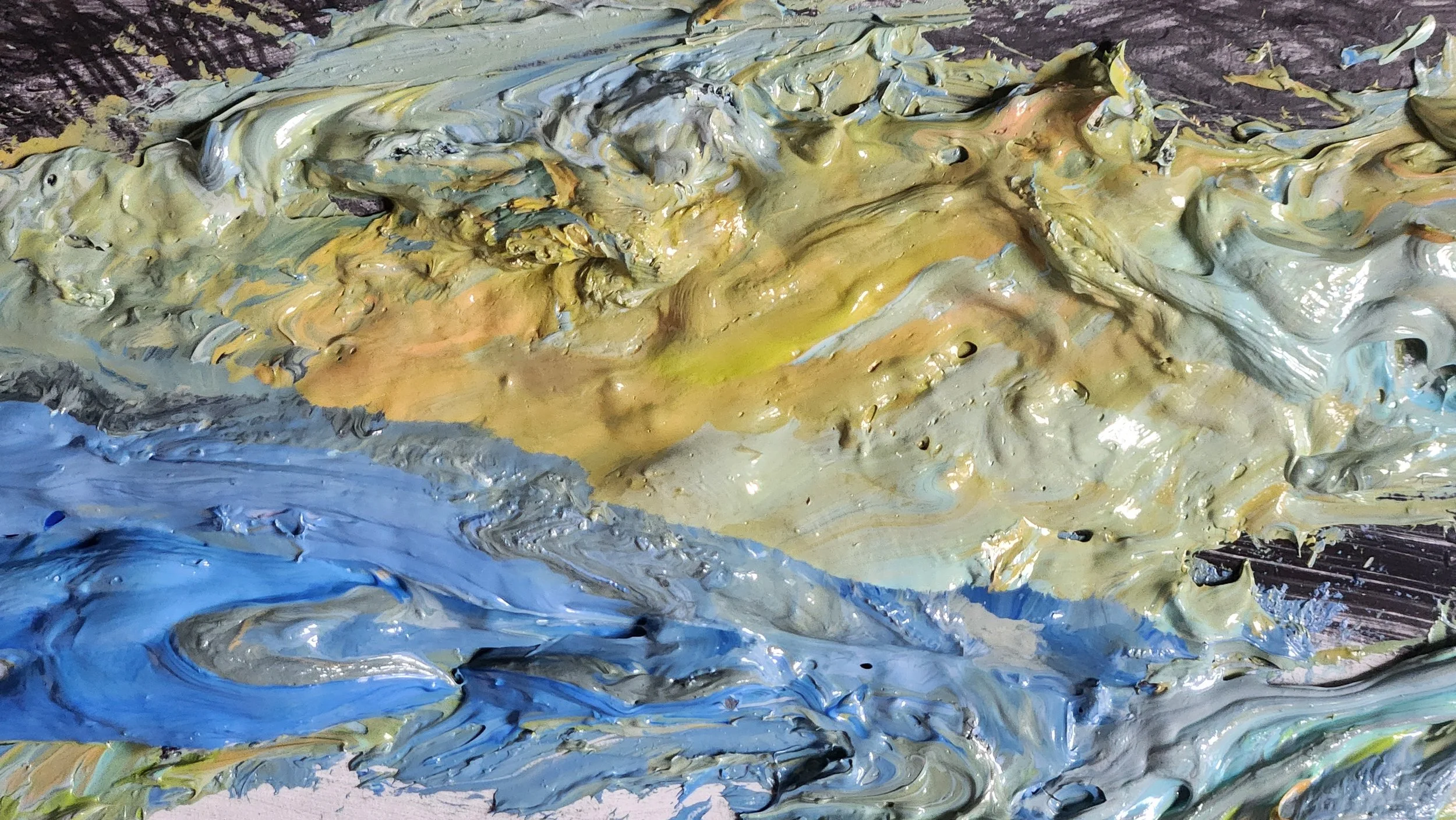
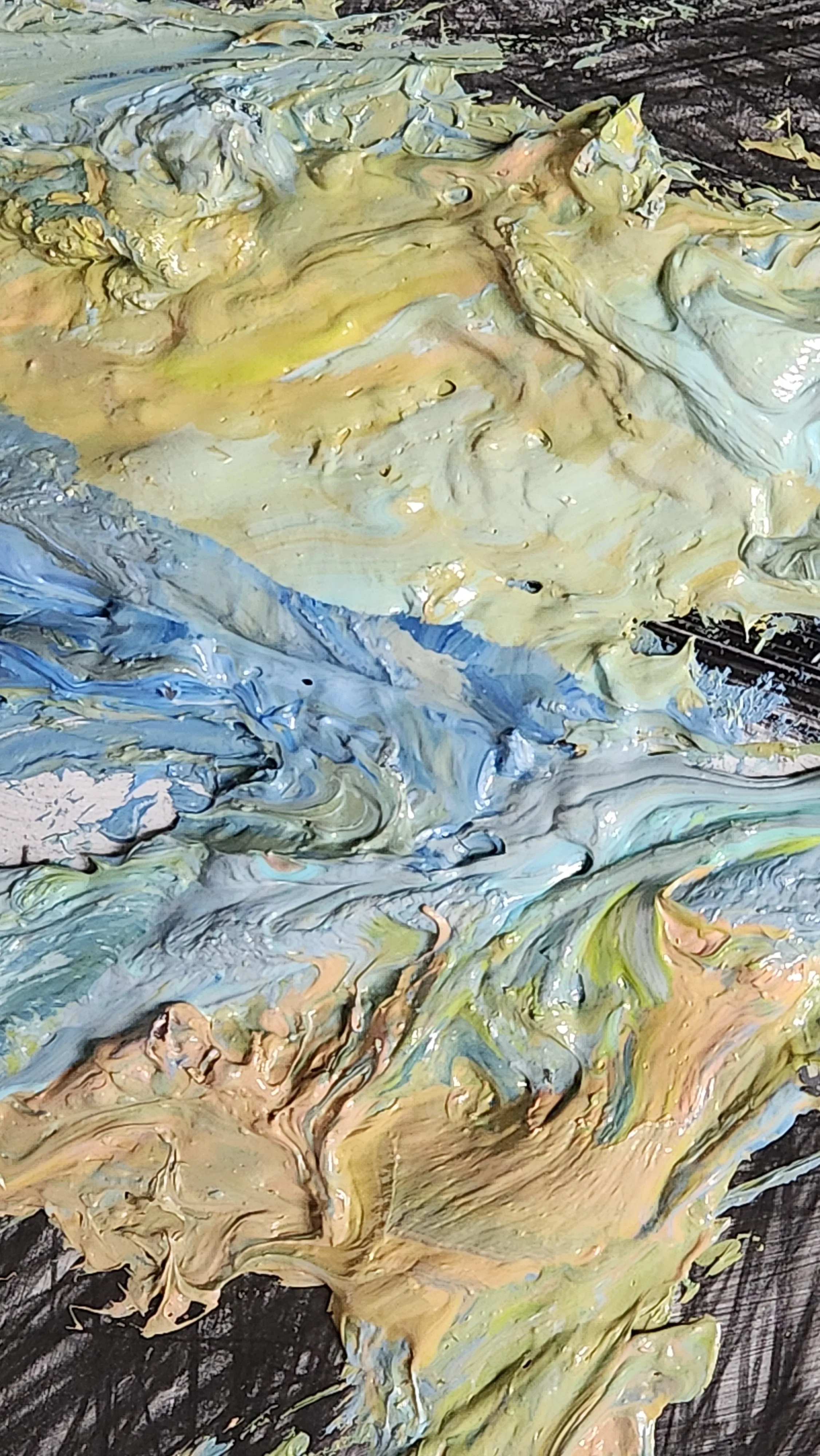
Istart by making a detailed, representational version of the place on a temporary support, just to hold the literal information.
Then I make dozens of versions of that same place.
From there, I sculpt those versions into what I call forms. I call them forms because I do not have a better word, but they feel like ideas or thoughts, almost like actors in a play.
Except the play is the painting.
I paint with these forms. I move them around, lift from them, drag through them, and scrape them into a new central movement.
It is not copying.
It is stealing.
And I think about that stealing as a way to show how my thoughts move in real time: how they distract, react, and pull away from what I am actually experiencing, and how the painting marks those small turning points and small changes.
March 25, 2025
The next day, March 25th, I leaned into speed.
In other paintings (like the ones you might see on my site and beyond), I’ve always found novel, interesting ways to create these forms and make them play. Each painting isn’t just about the reference material or the place I’m painting. The place itself seems to pull a certain kind of form out of me.
With this one, I wanted to be as detailed as possible, and to create enough interest and intrigue on these temporary supports that I could then sculpt into larger forms. In some paintings, my forms are tiny, almost like pieces of a mosaic. Here, I wanted them to be big and bold, and placed with real distance between them, so the scale of each form could help the integrity of the surface hold as I build them.
I get that I'm being very esoteric in how I'm describing what I feel - but that's why I make images because I don't always have the exact words..
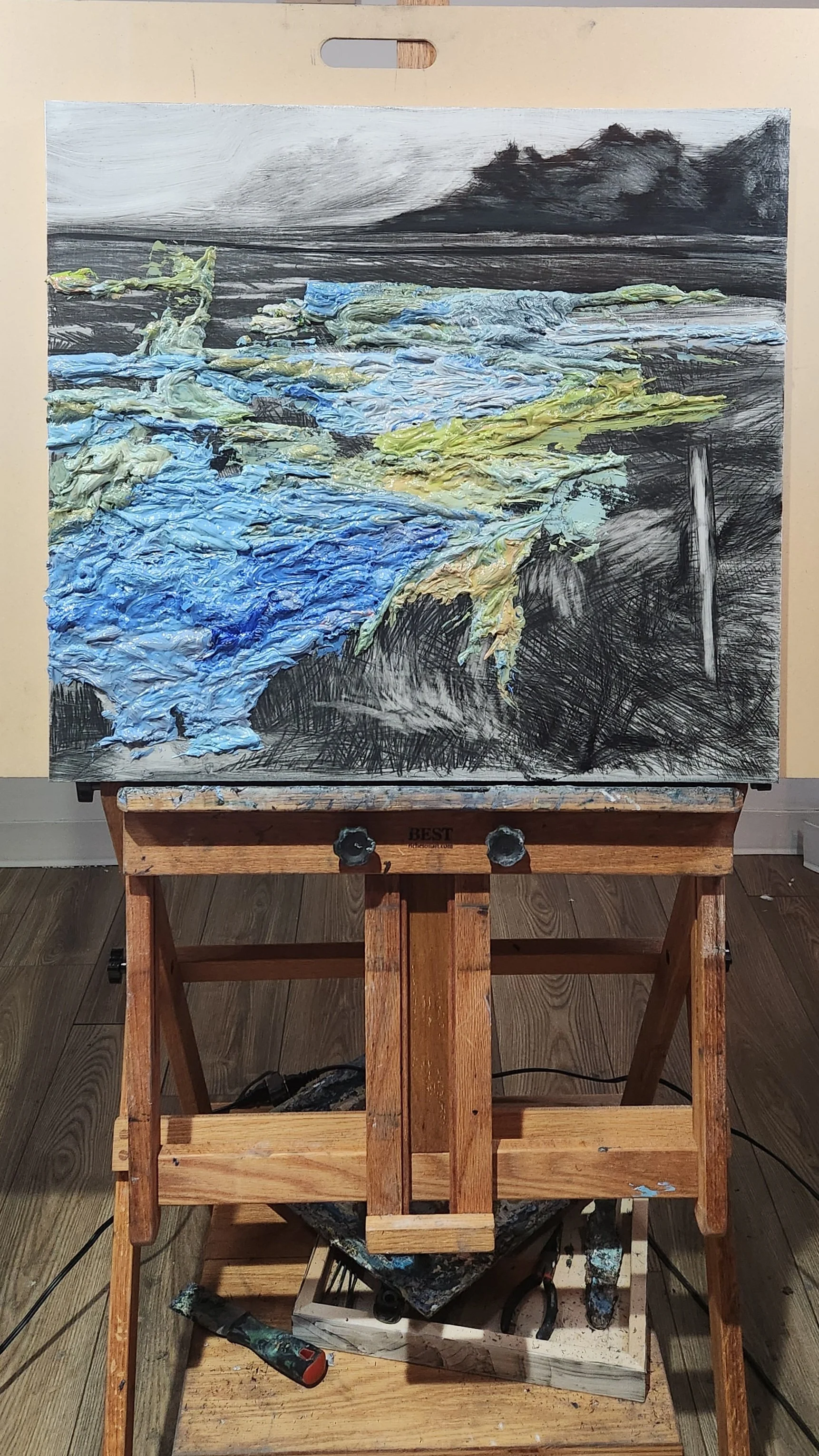
March 31 – April 1, 2025
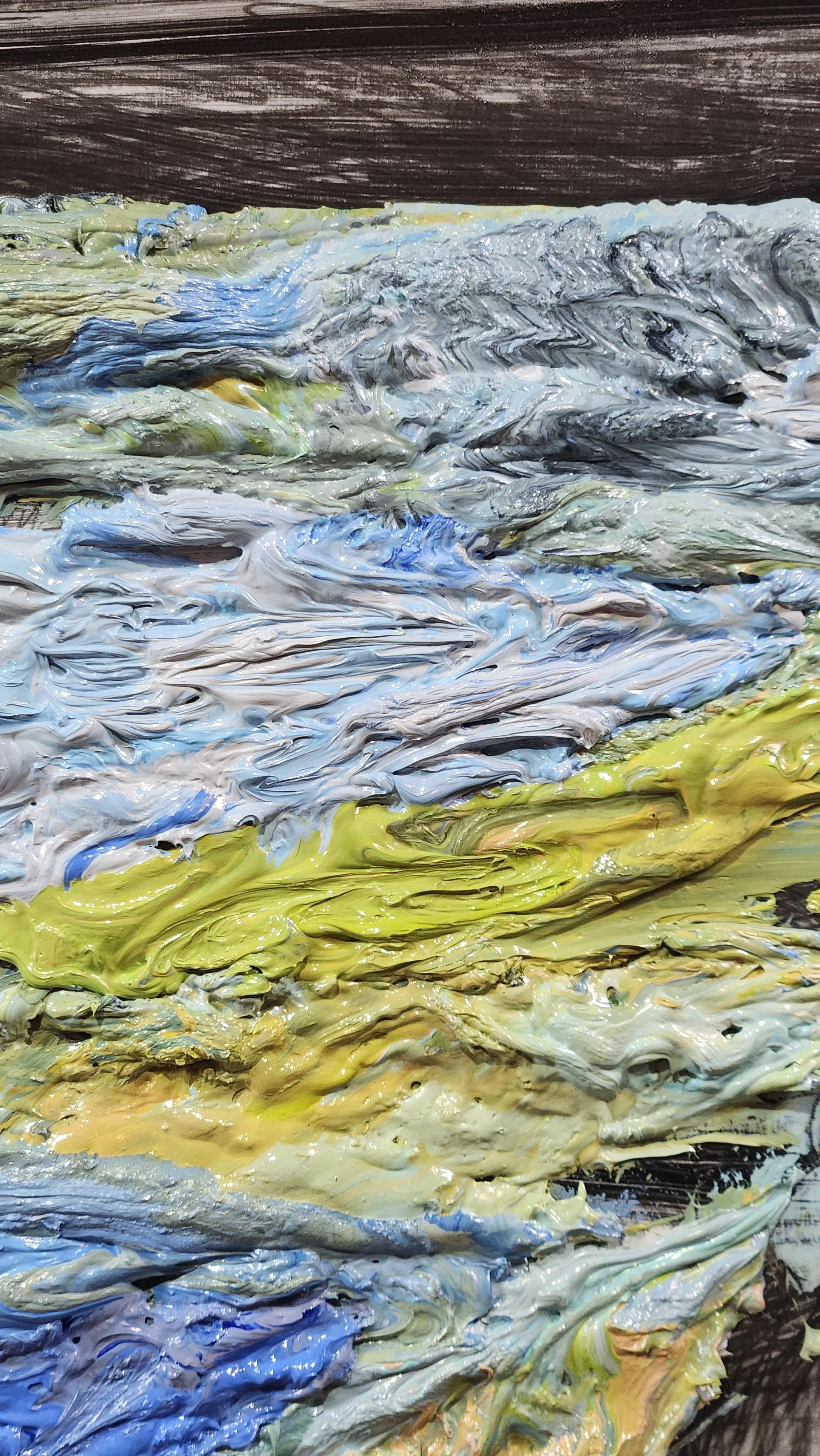
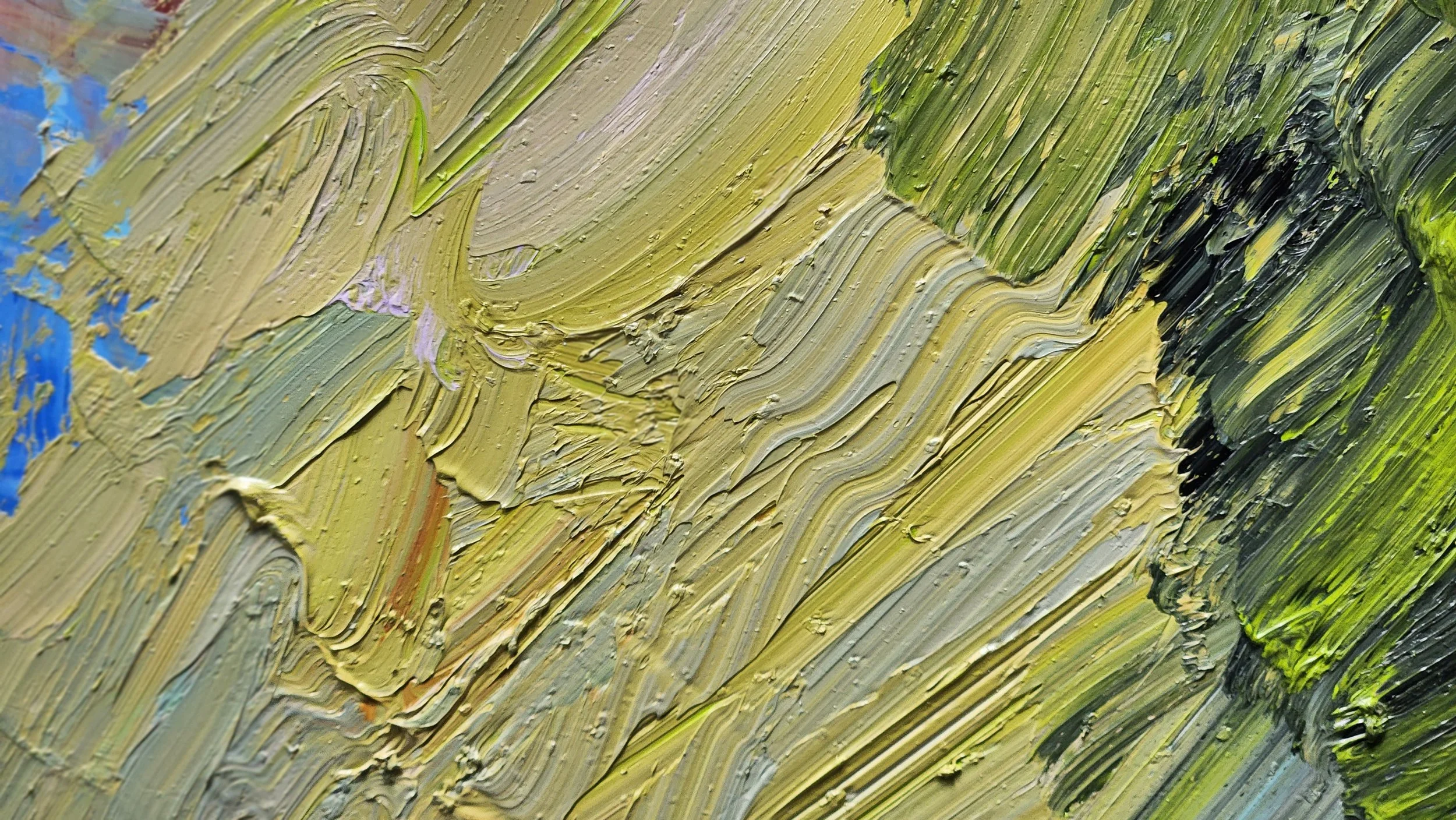
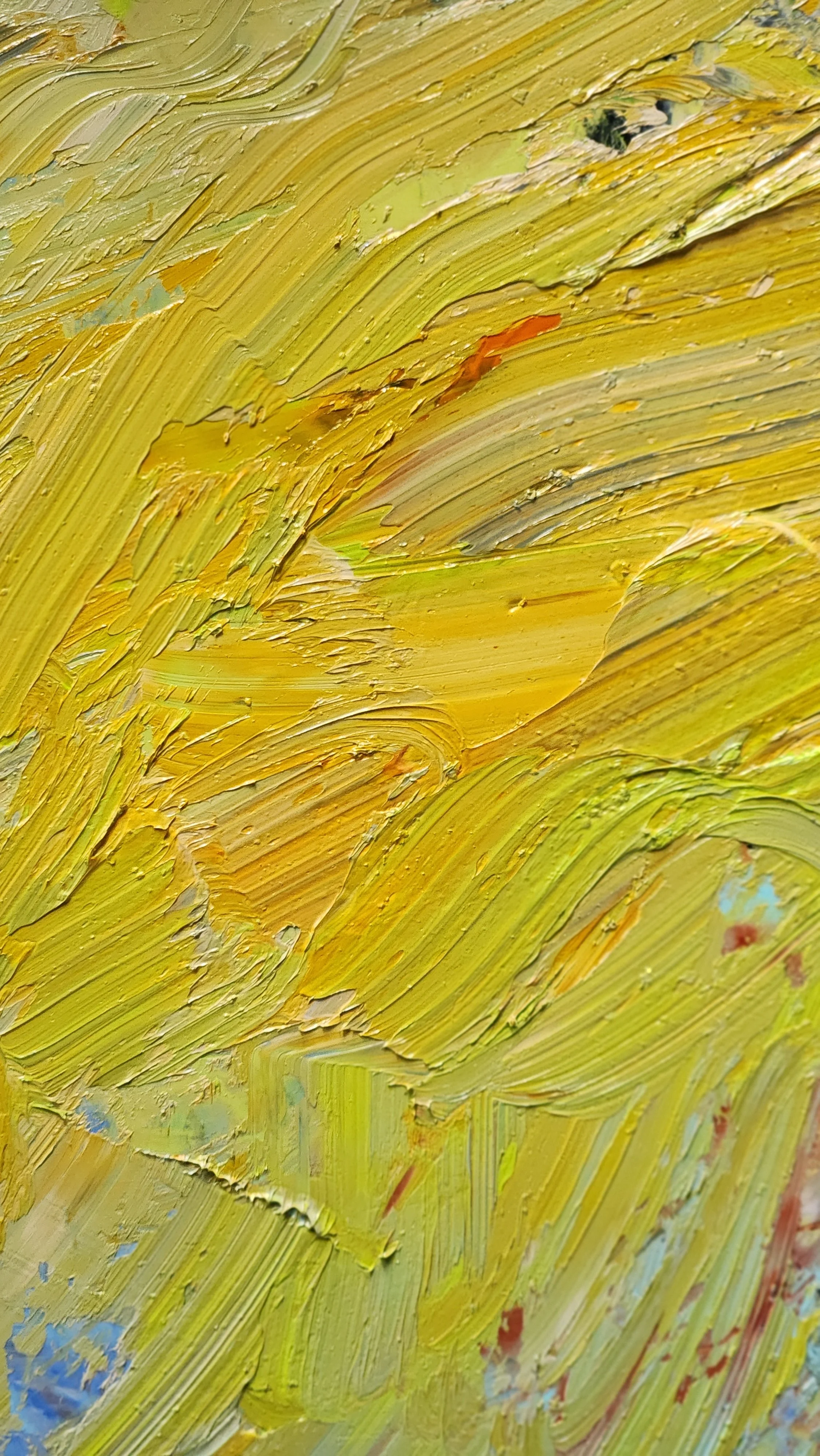
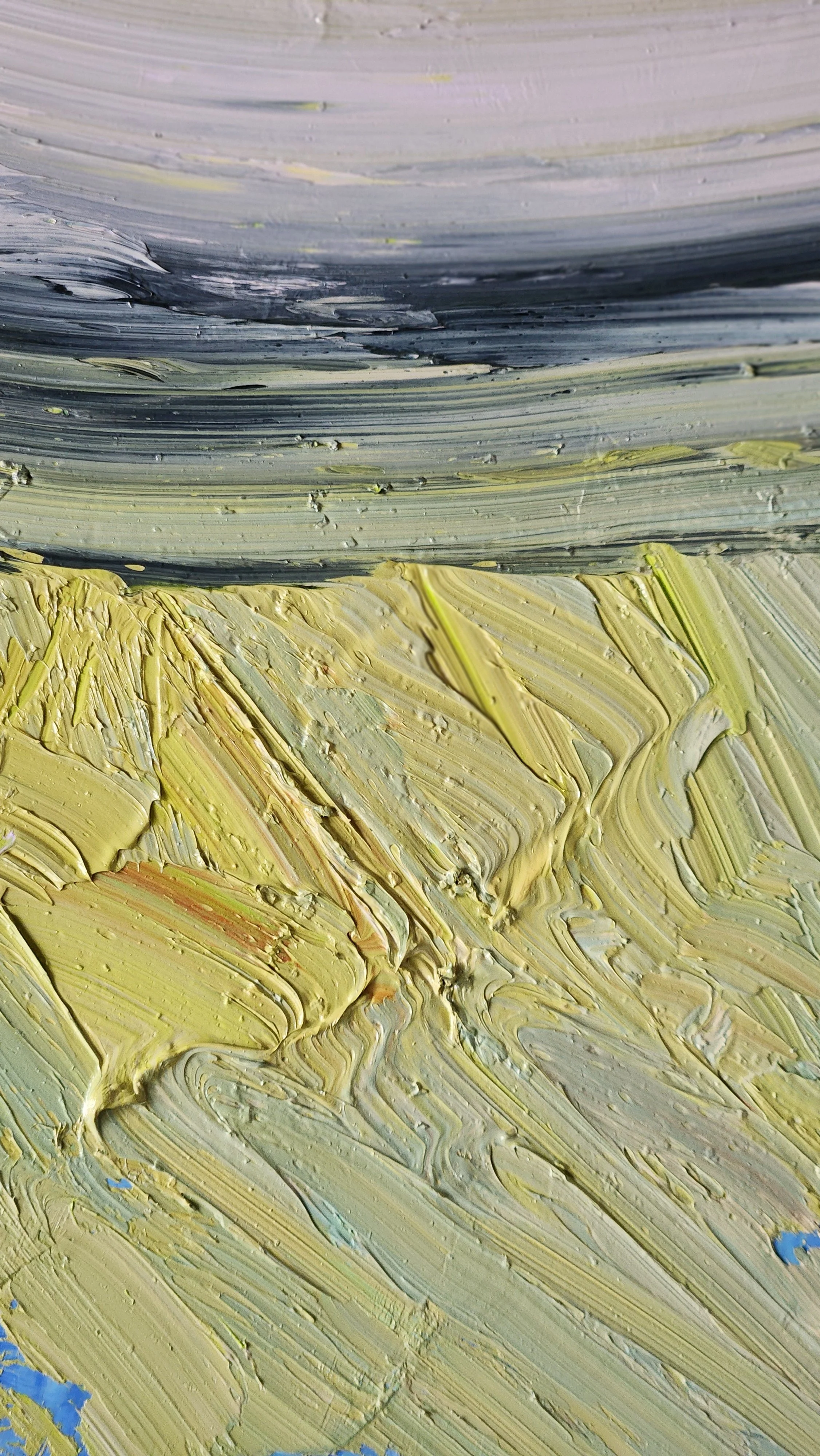
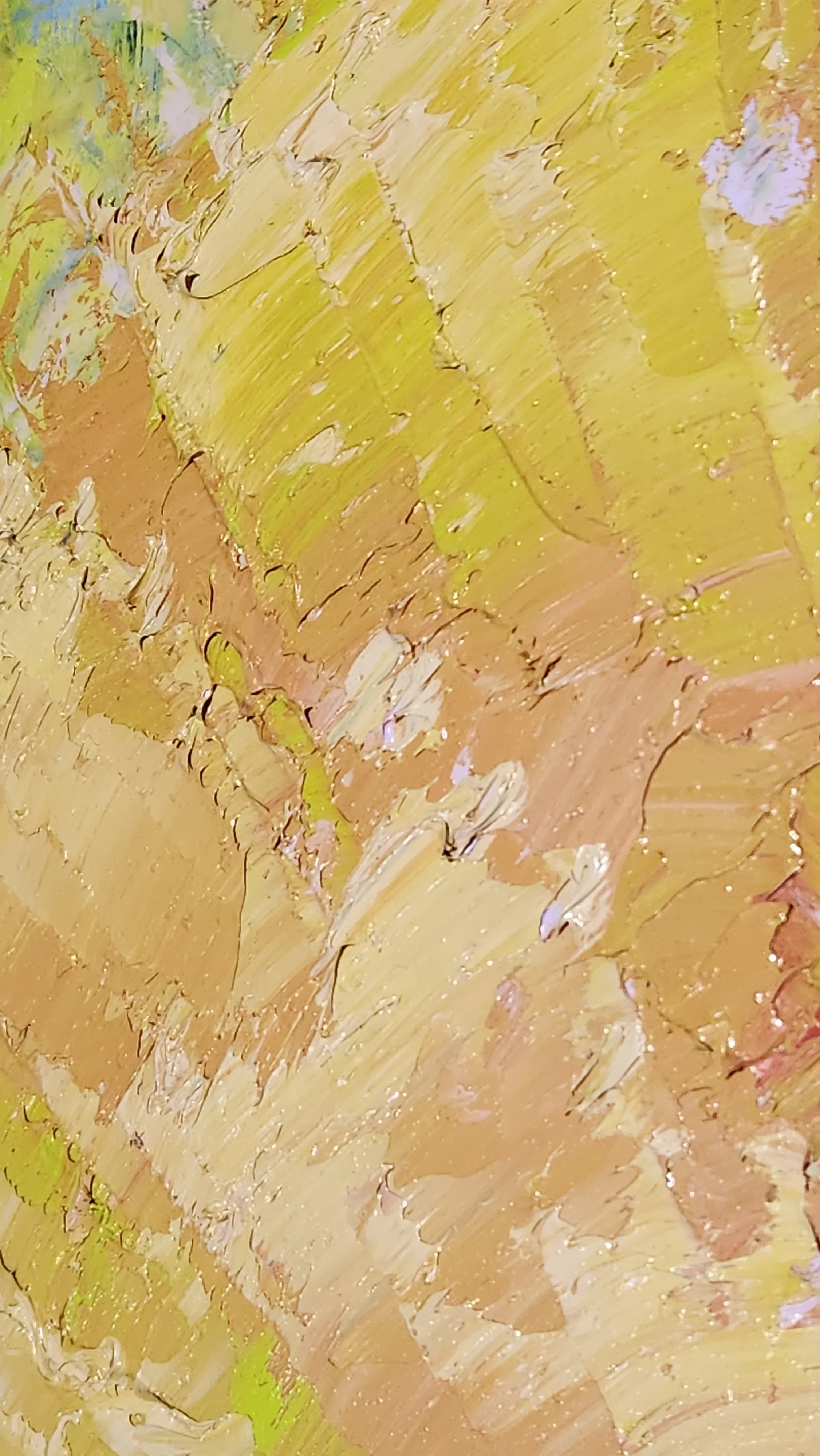
April 19, 2025: Integration
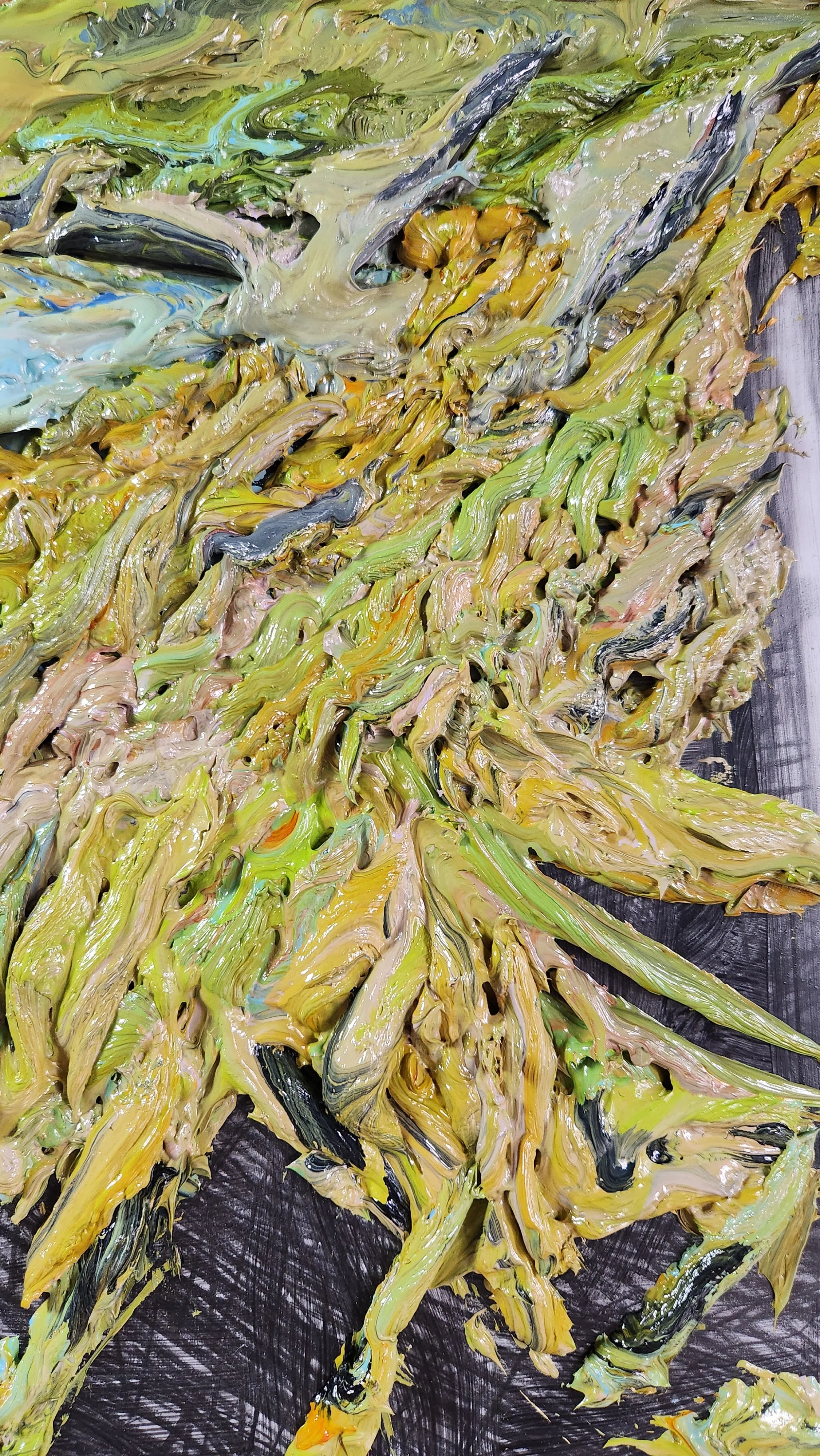
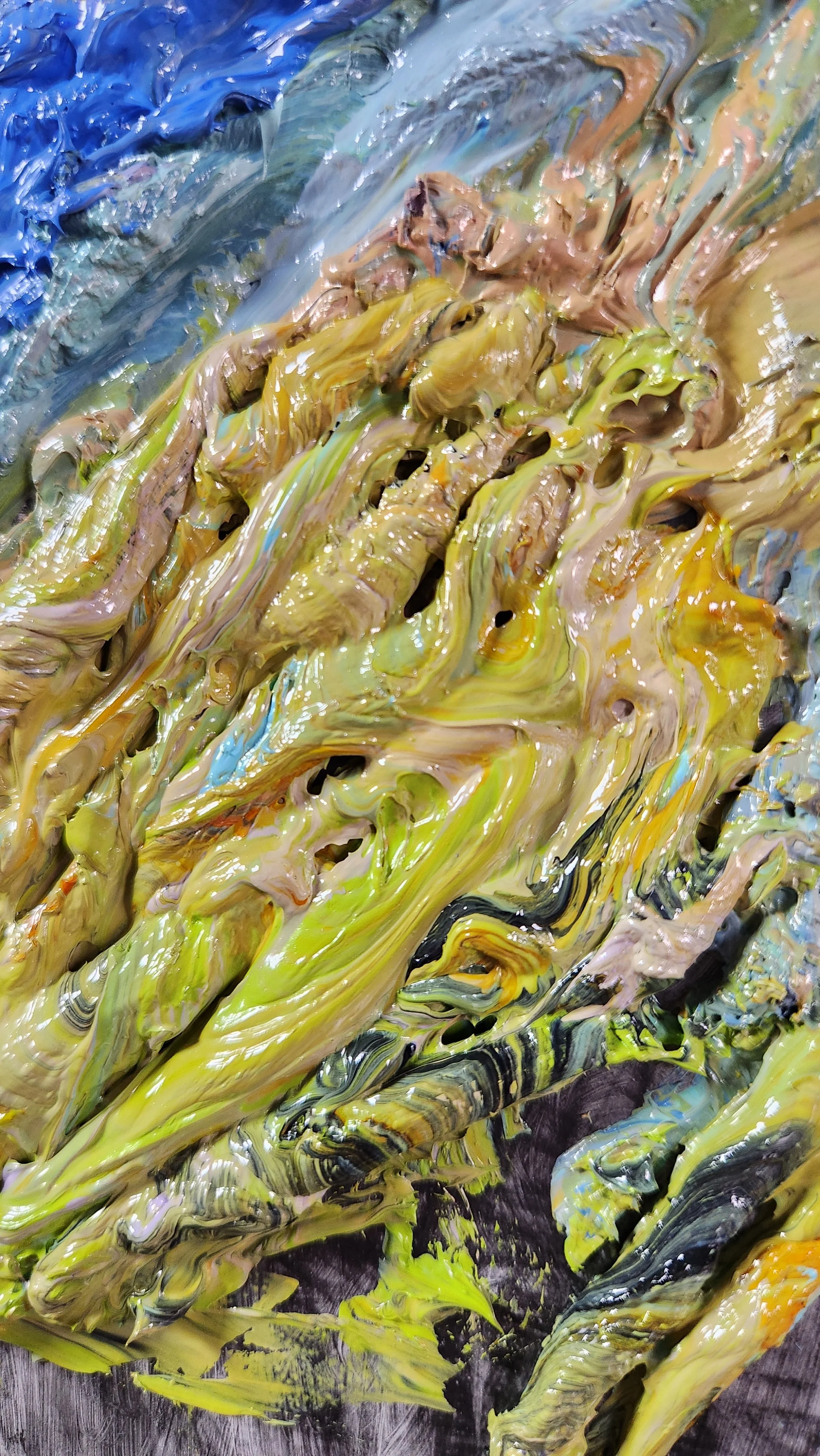
By April 19th, the larger forms had begun to establish their natural play—the big architecture of the thing. And that’s when I started integrating smaller forms, paying close attention to surface integrity. I was hunting for color relationships that felt alive.
And I started adding elements that were surprising—things you wouldn’t expect. Not for gimmick, but for disruption. A way to create a little more chaos inside each section, so the painting couldn’t settle into being “just” a landscape.
This was the moment where everything started coming together.
Not finished, but coherent.
Not resolved, but speaking.
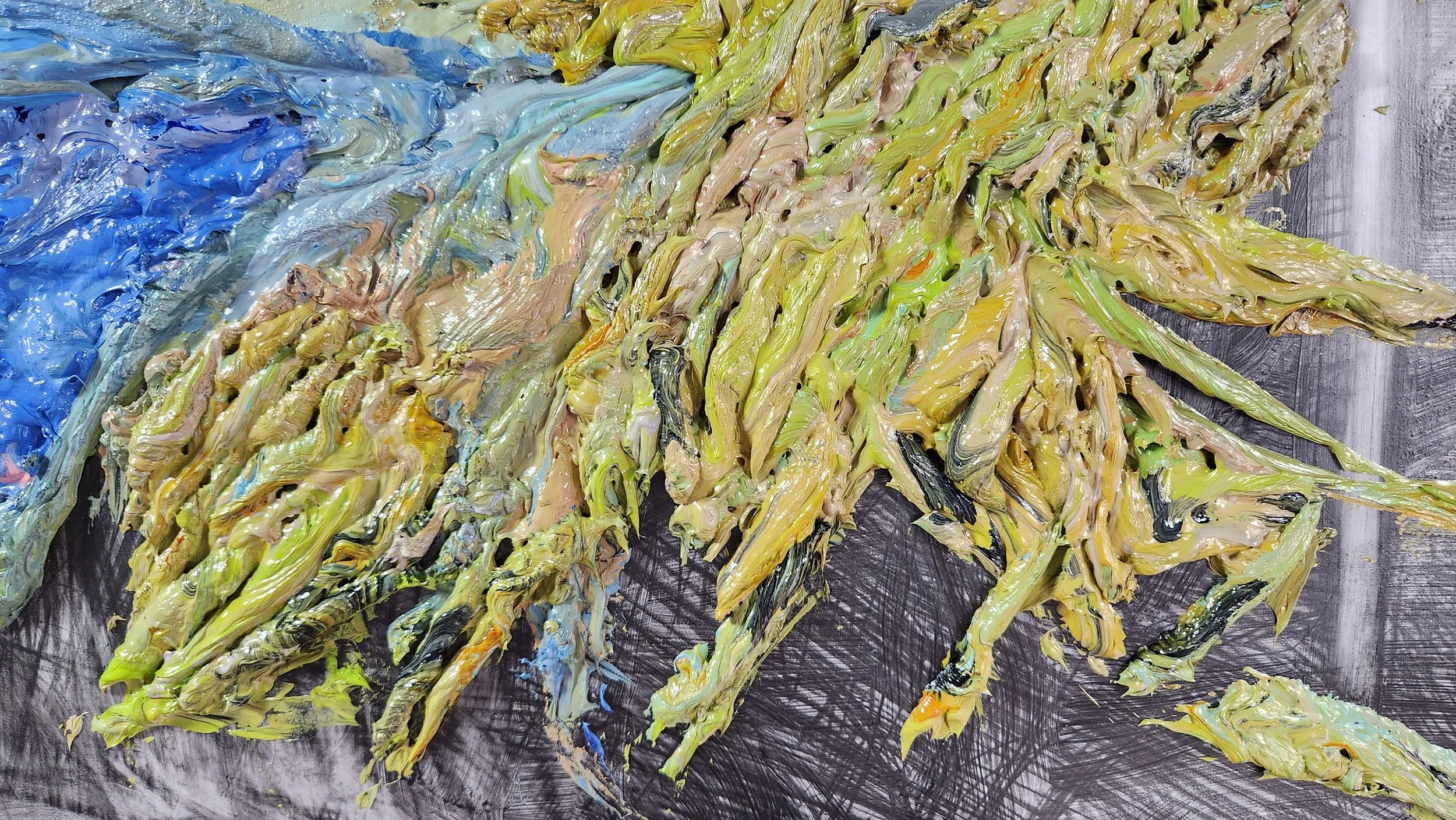
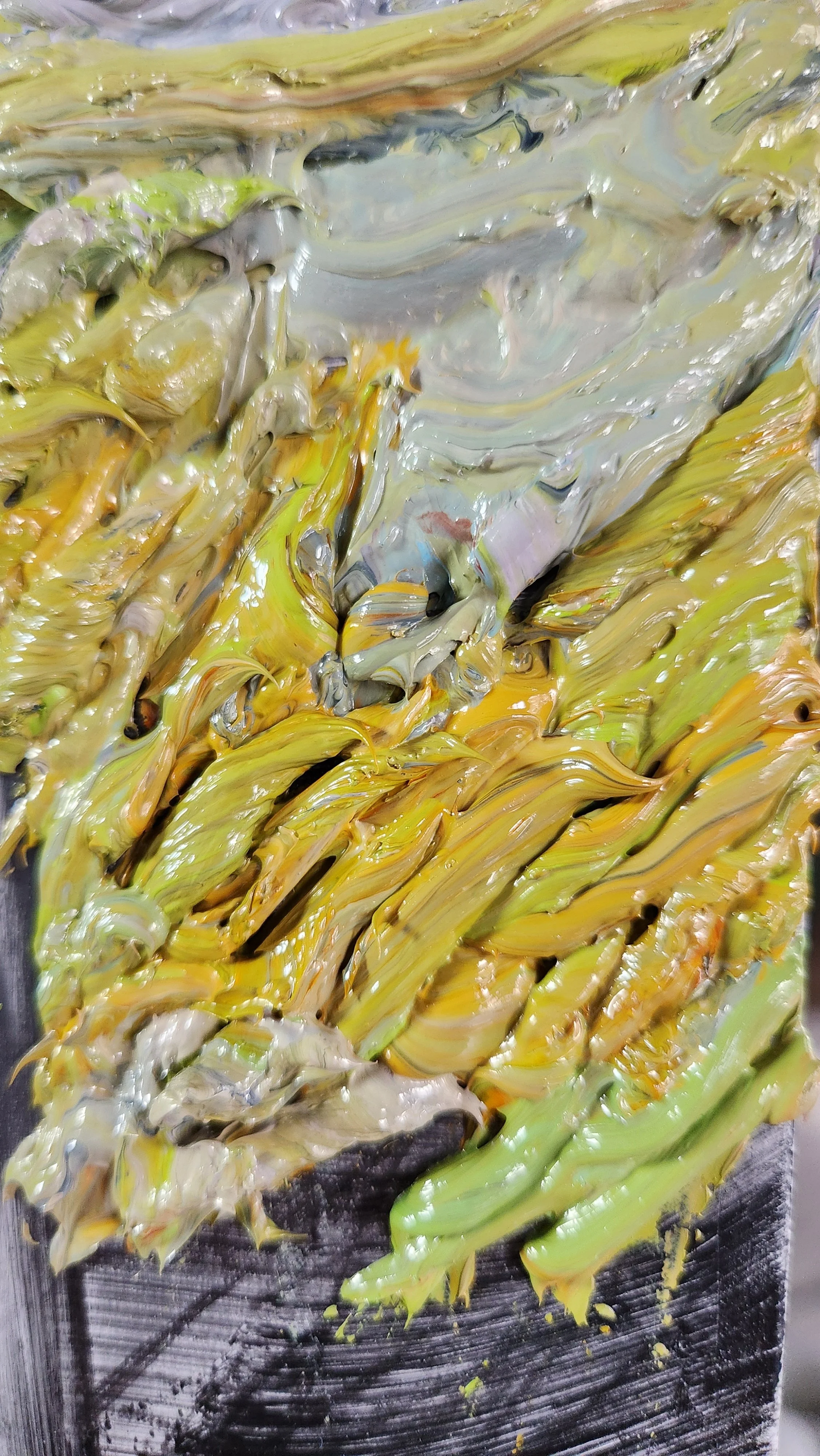
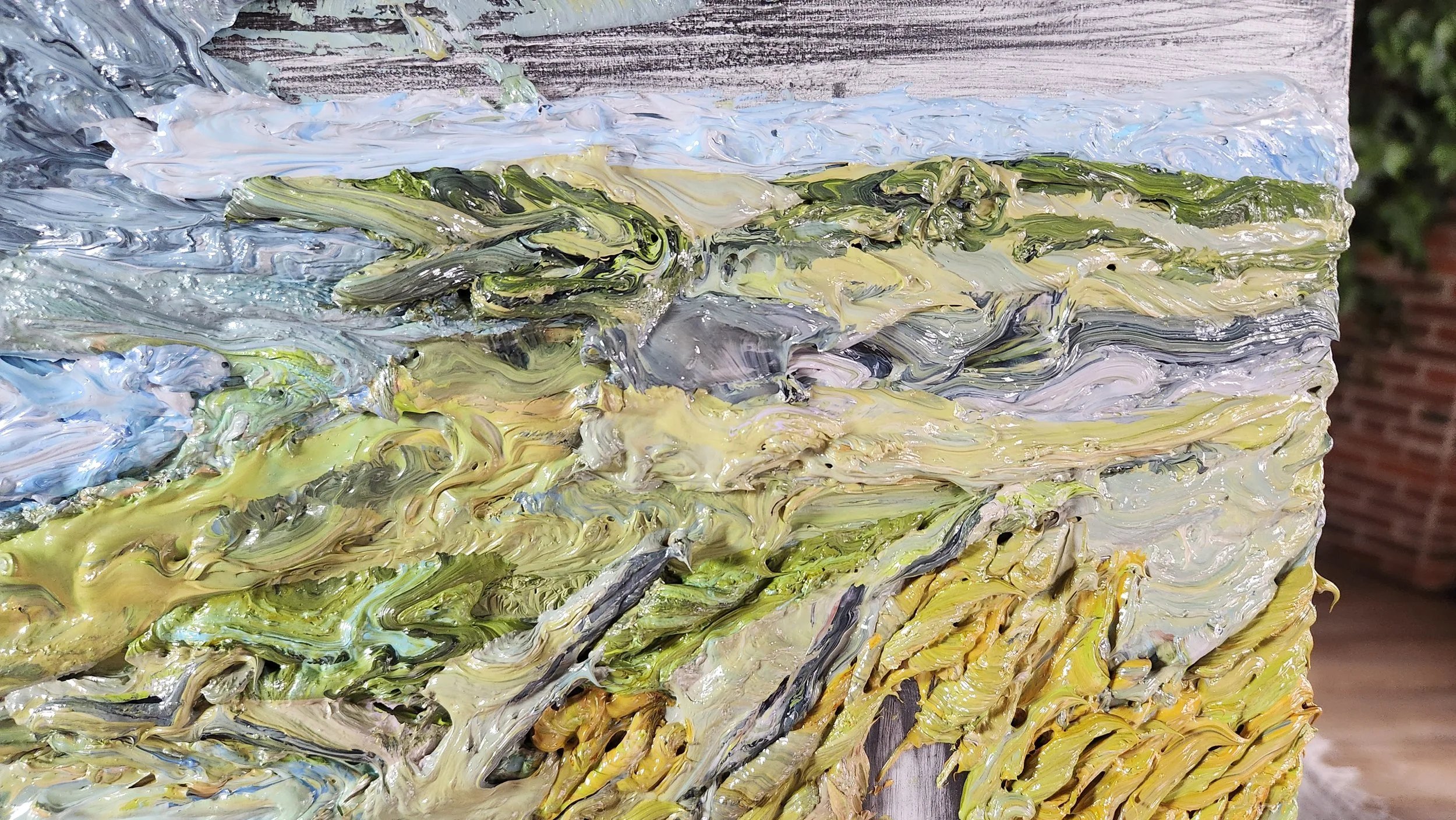
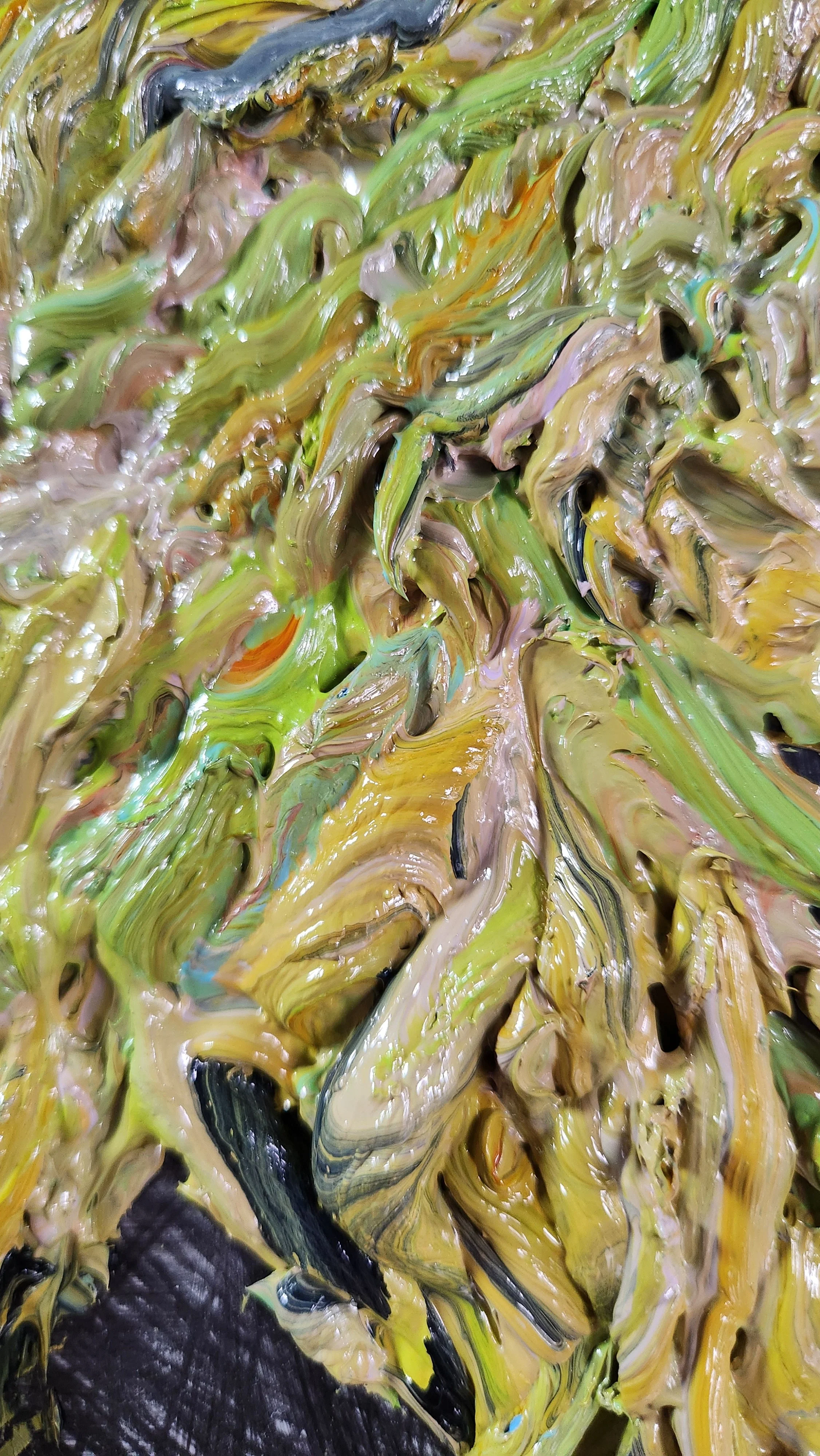
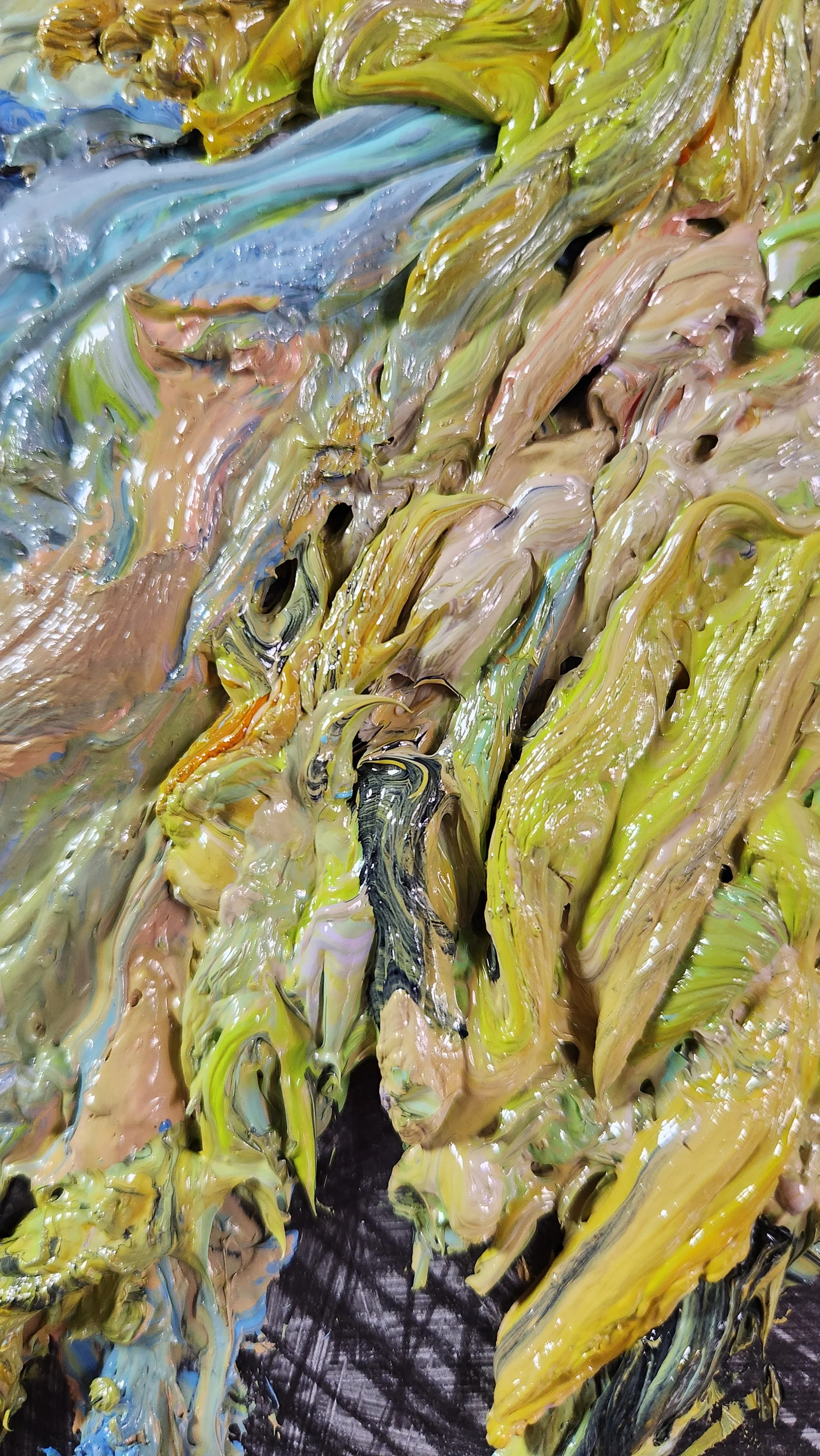
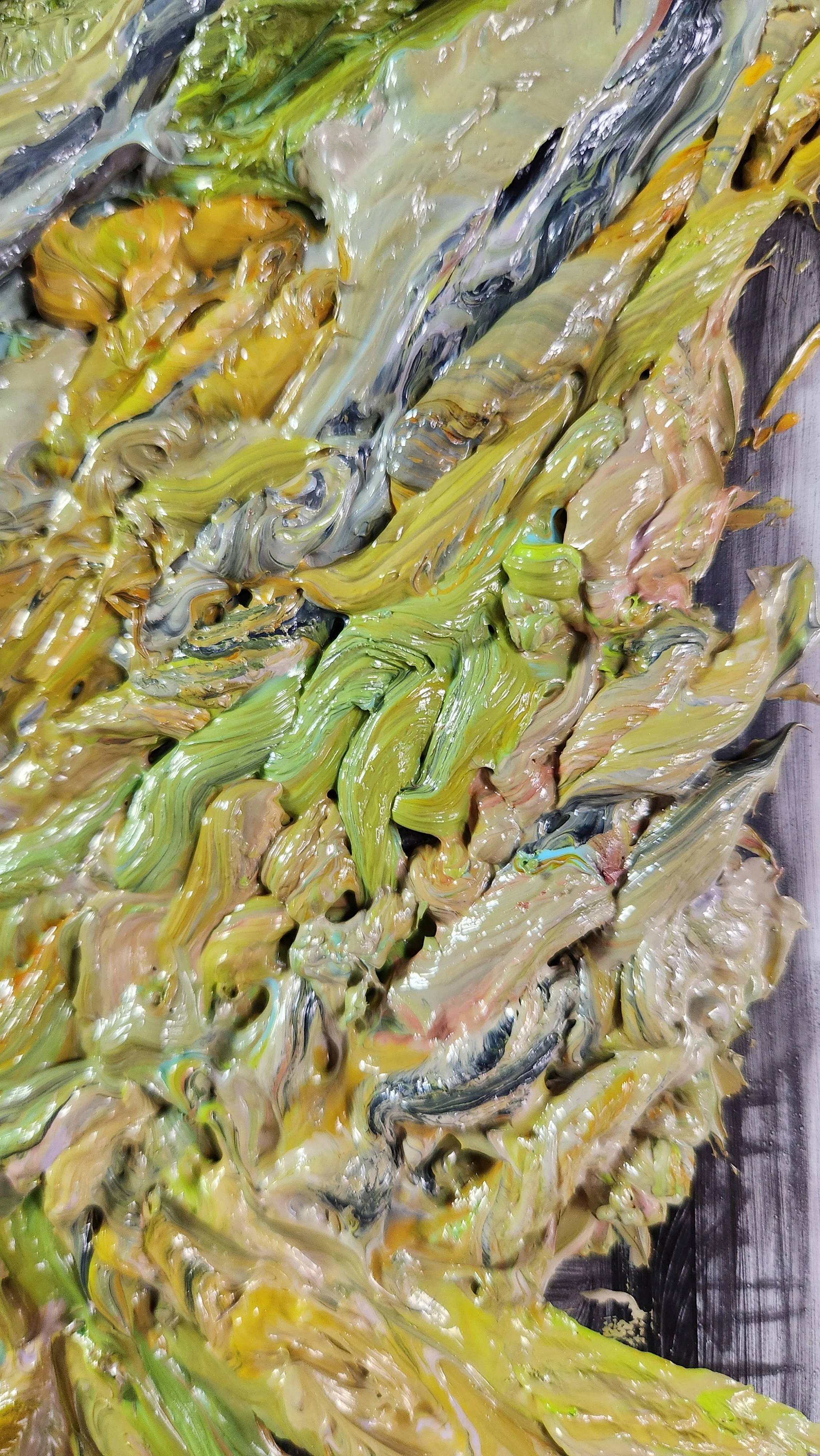
April 28, 2025: Returning After Drying (Pinks, Violets, New Sensations)
After letting it dry for a few weeks, I came back on April 28th with a different kind of hunger.
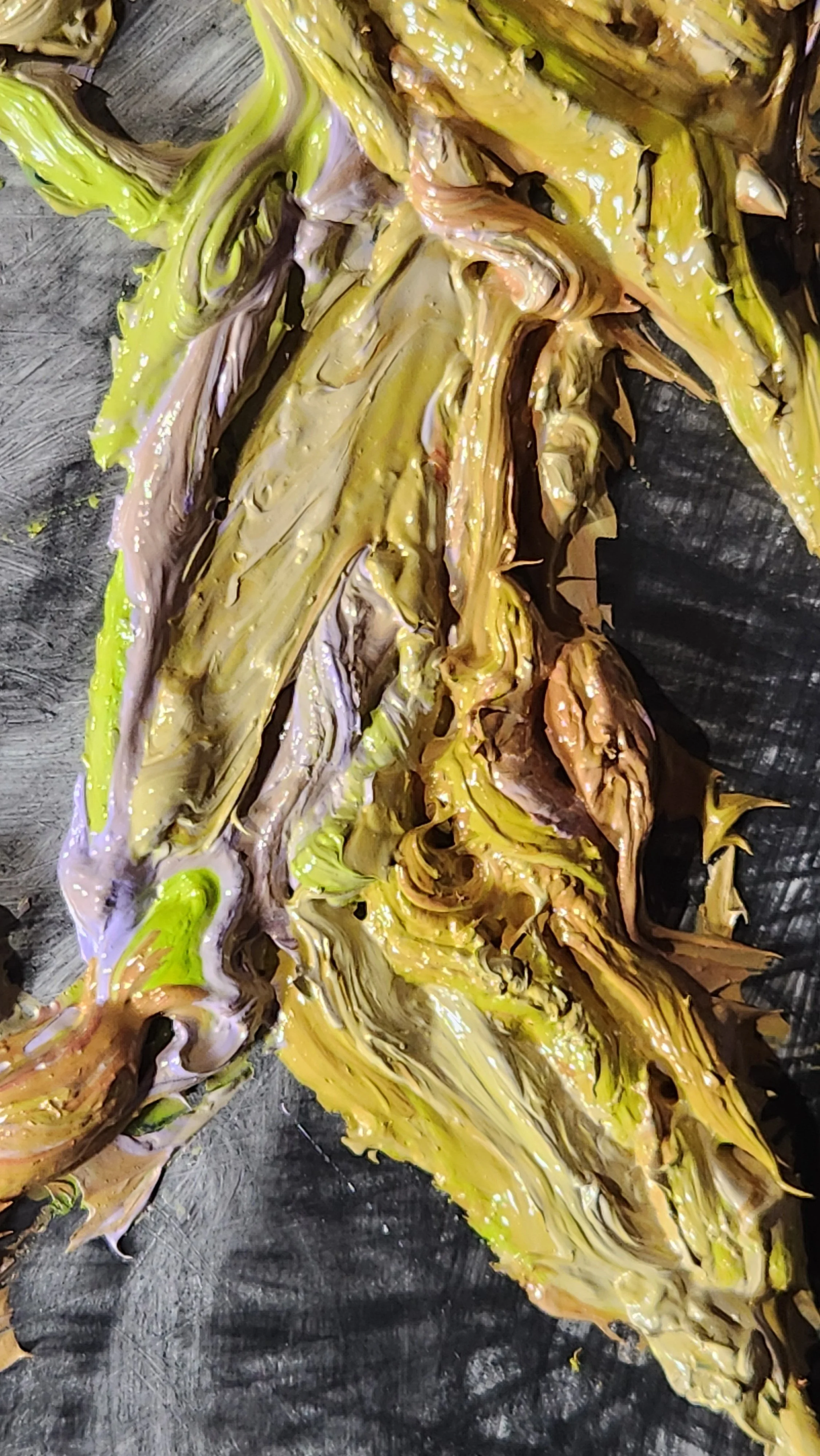
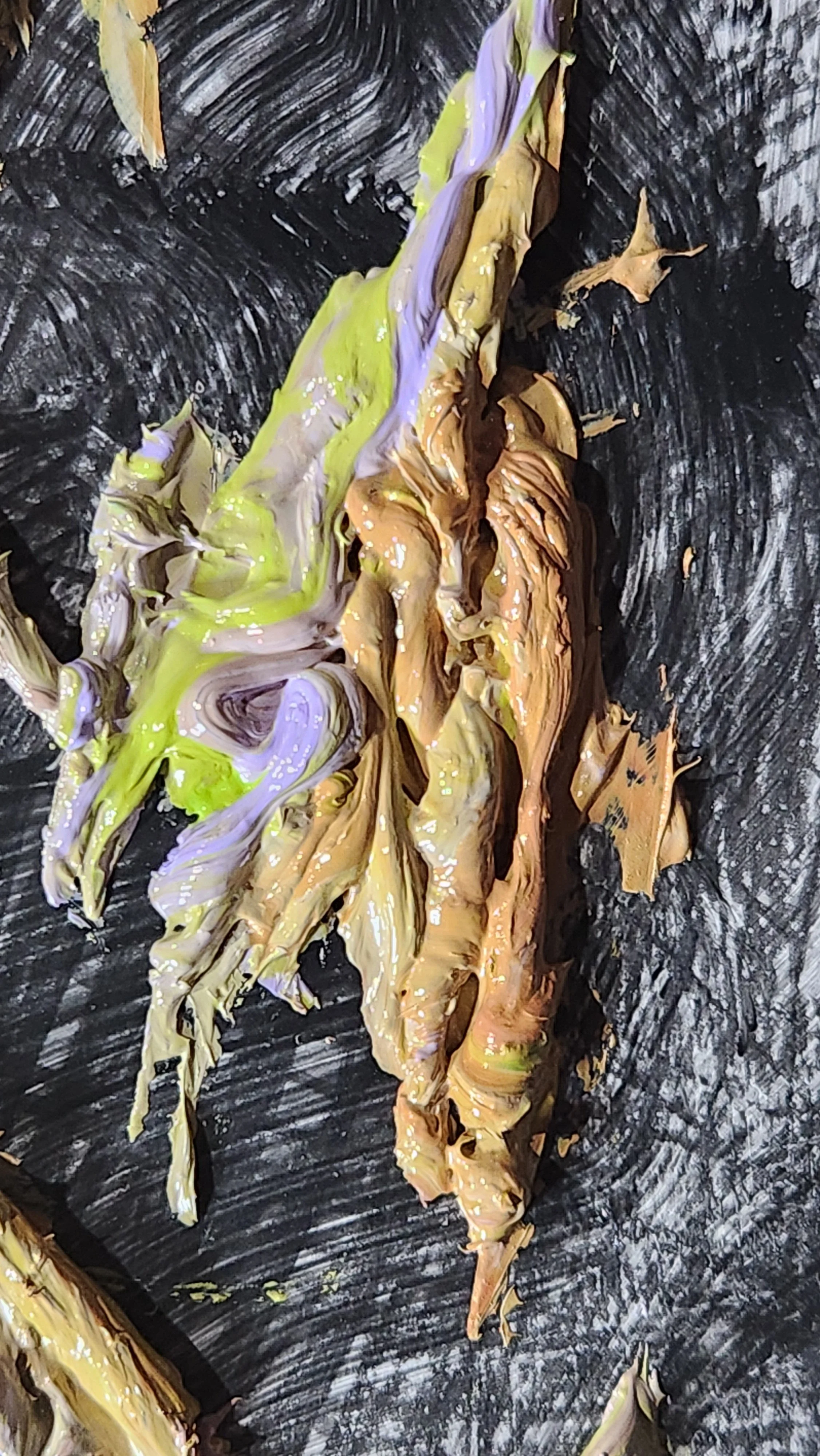
I started adding more exciting combinations—pinks, violets, sensations I hadn’t seen in the work before. It felt like stepping into the same room but hearing it at a new frequency.
Dry time changes the painting.
It creates distance, and distance creates new decisions.
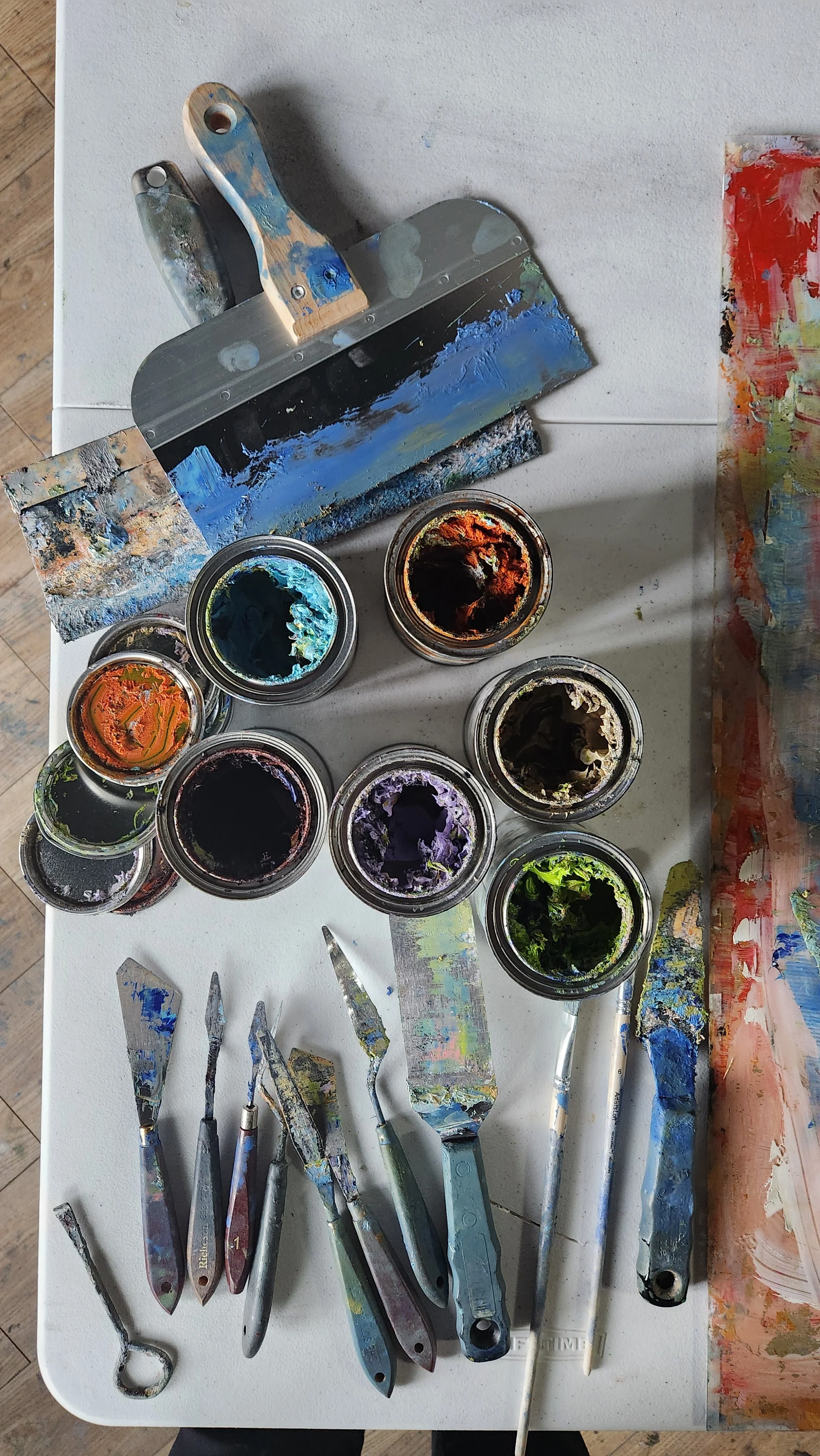
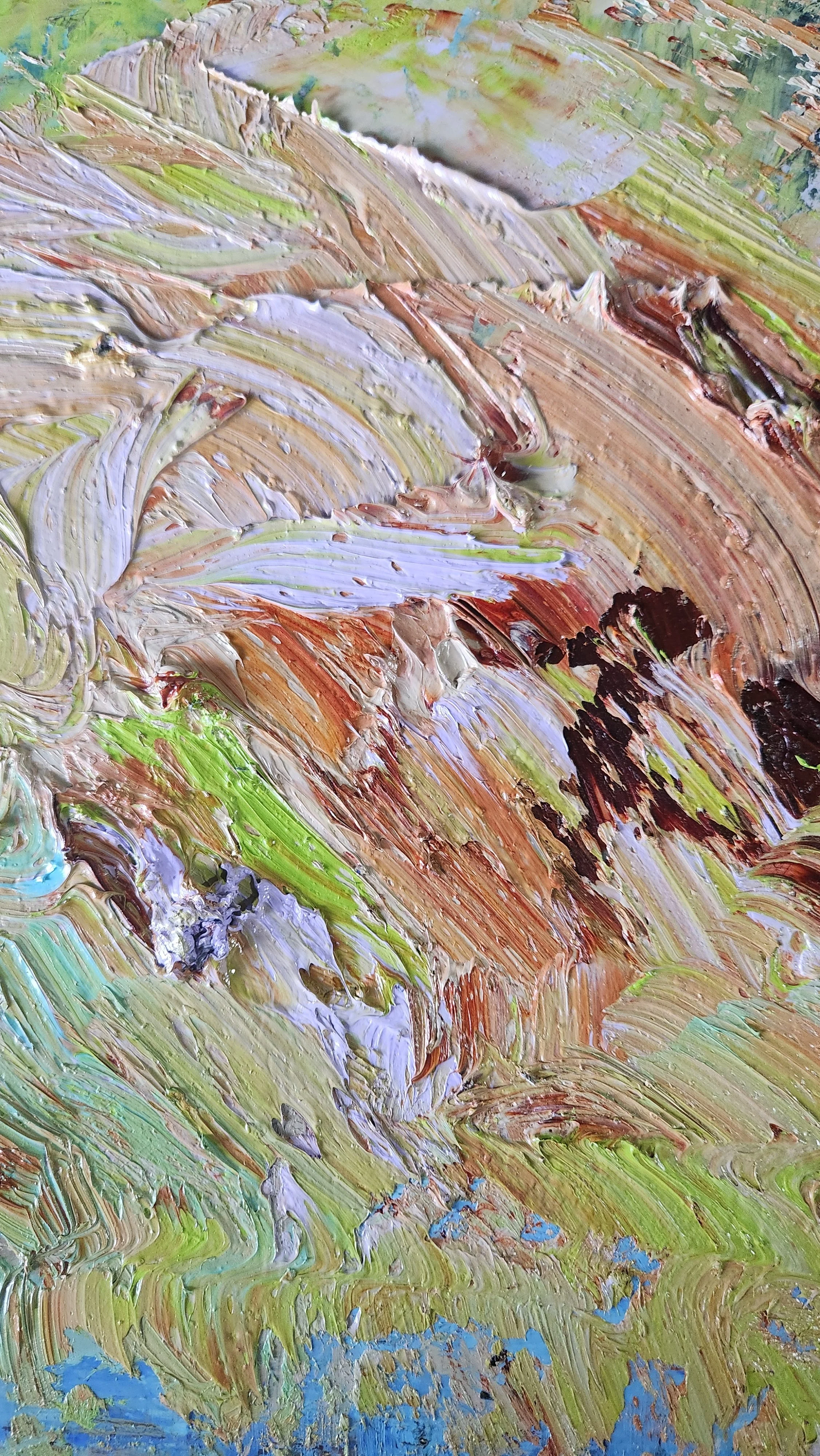
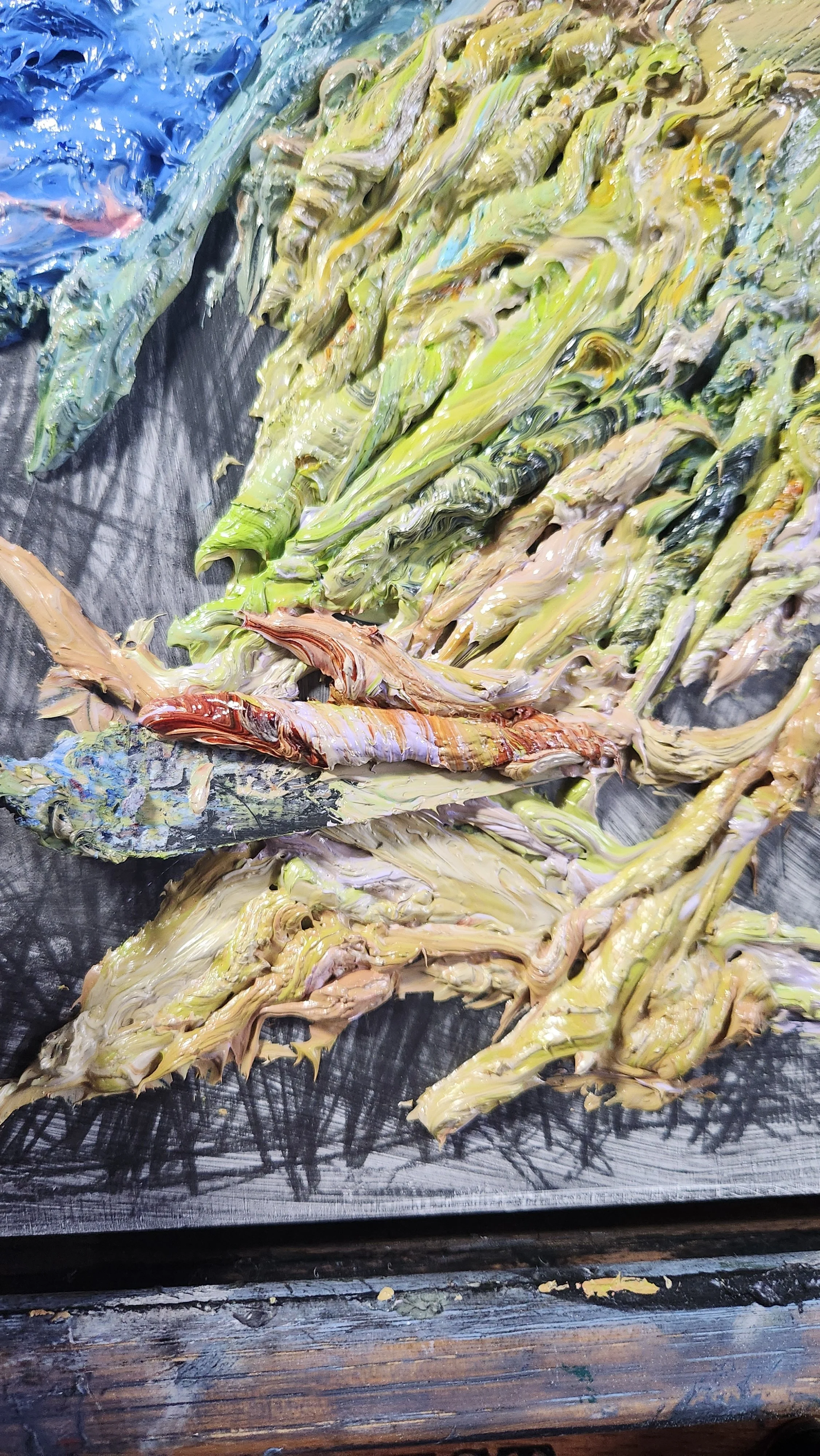
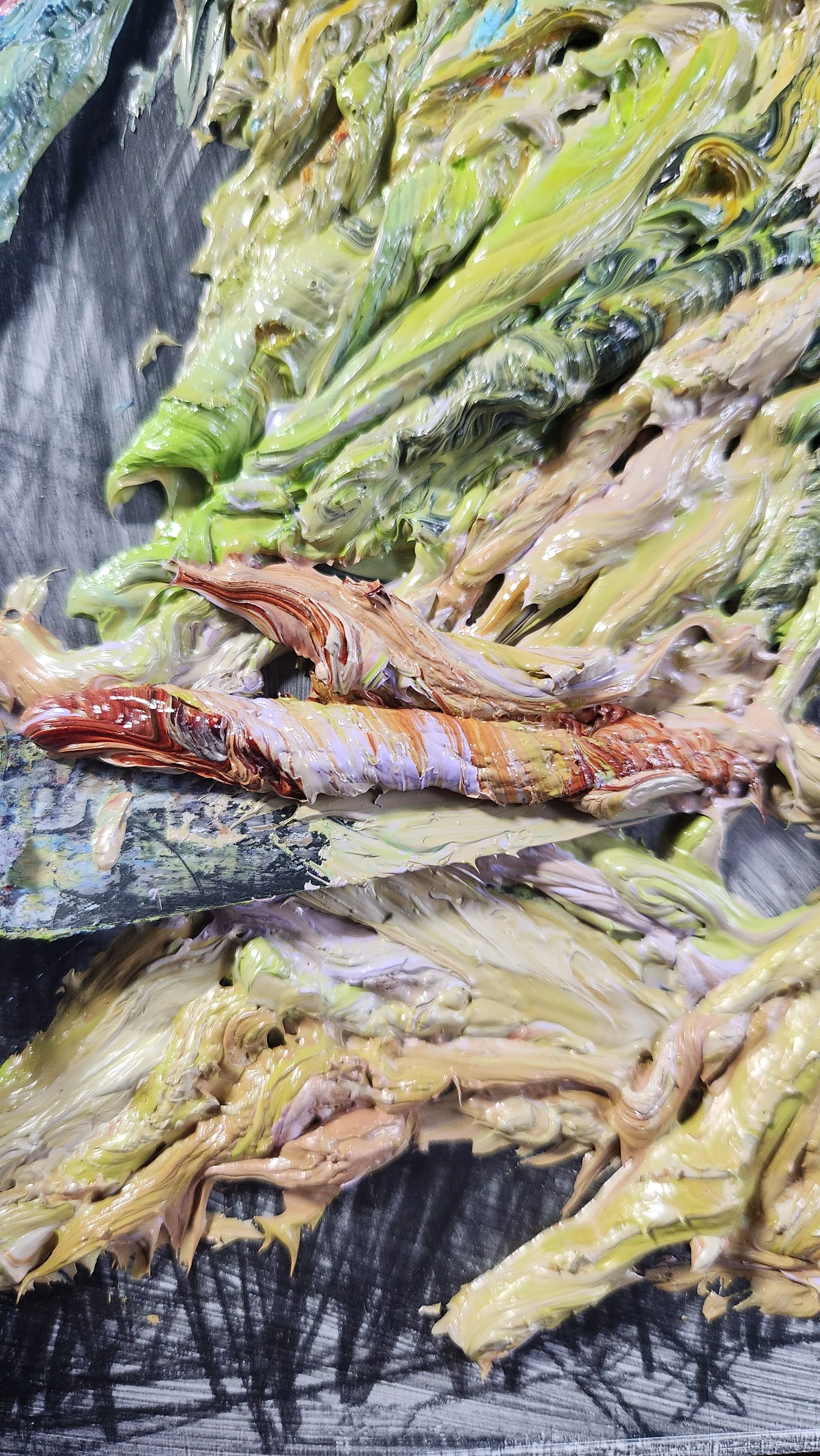
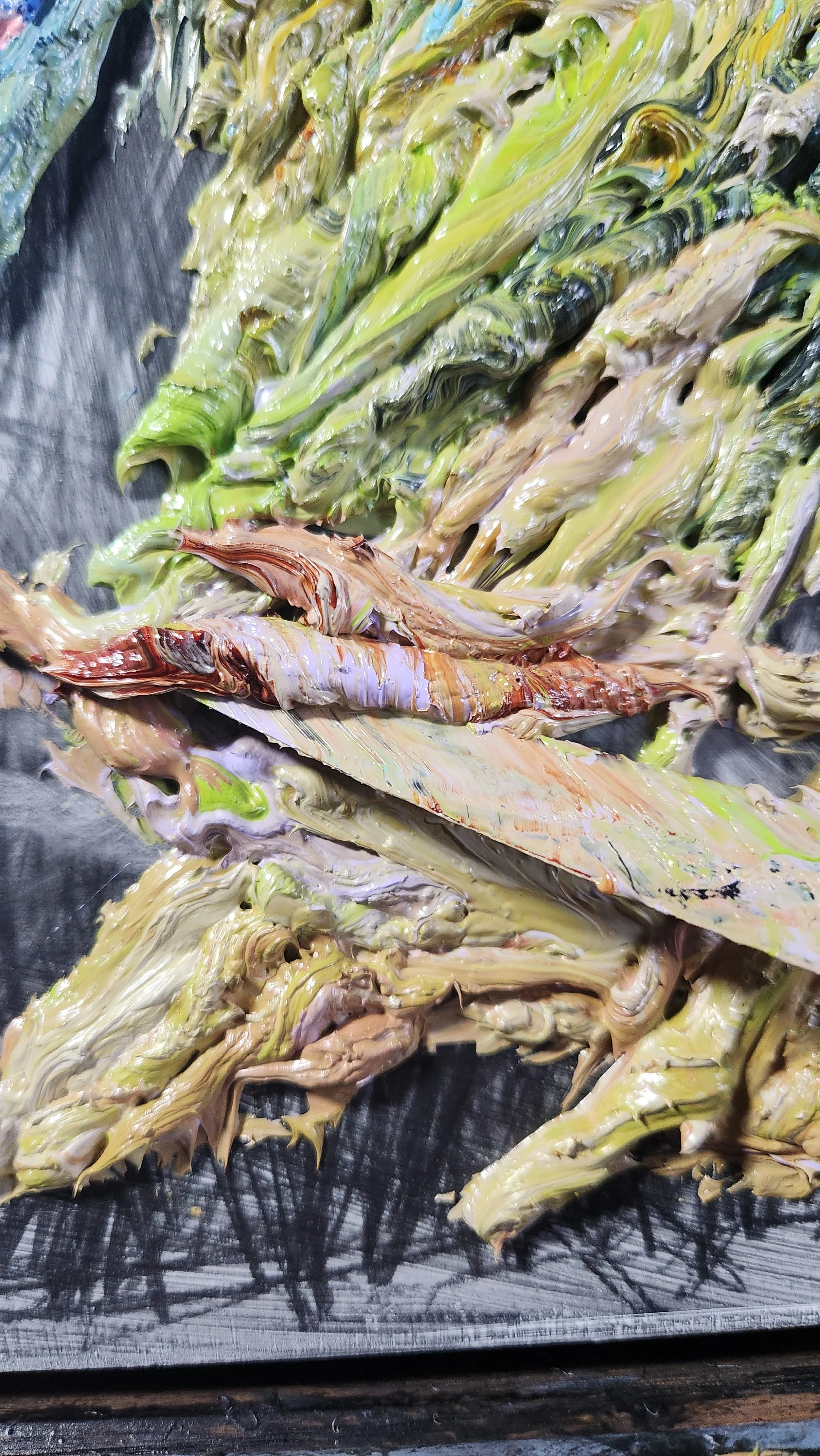
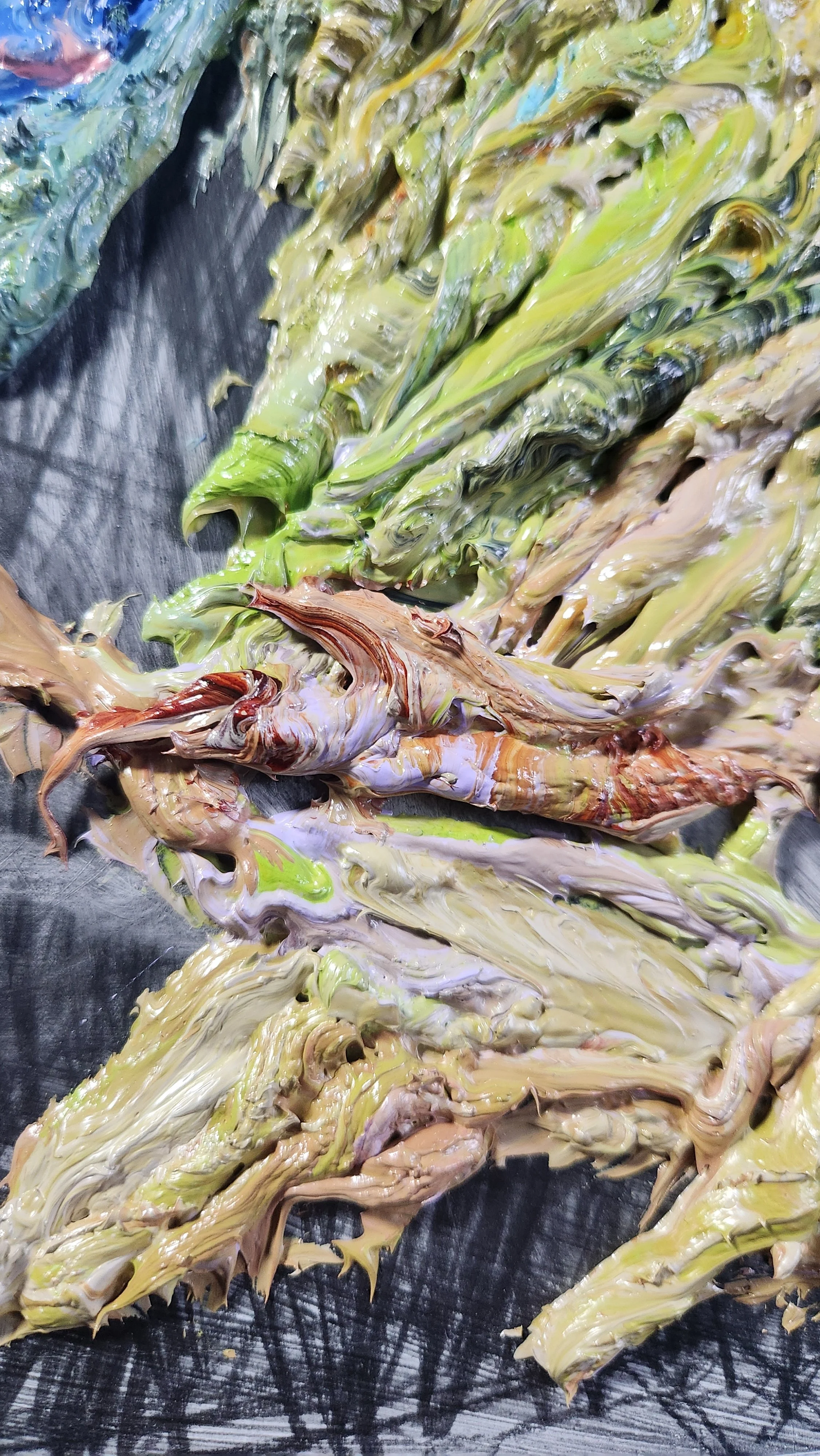
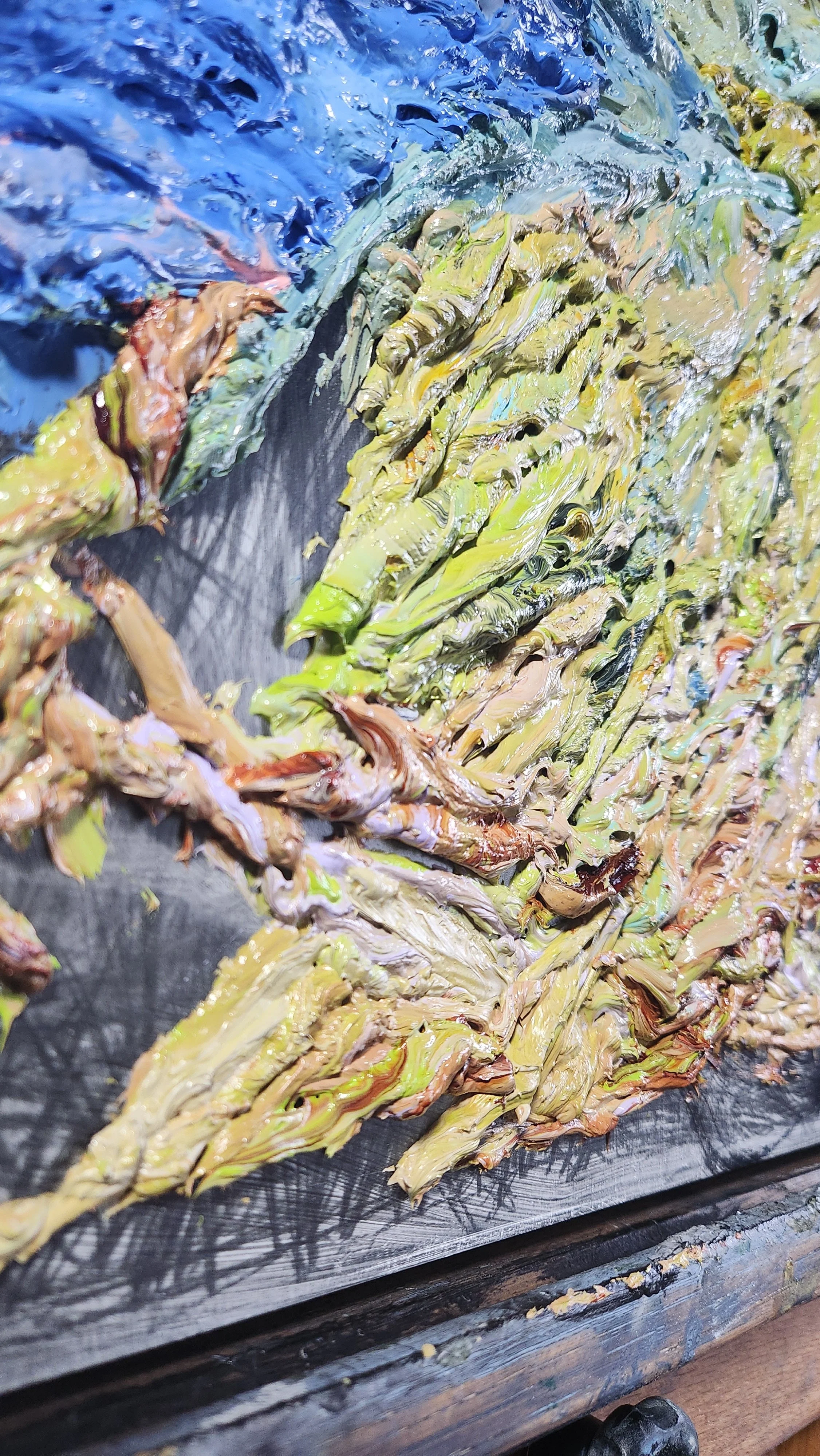
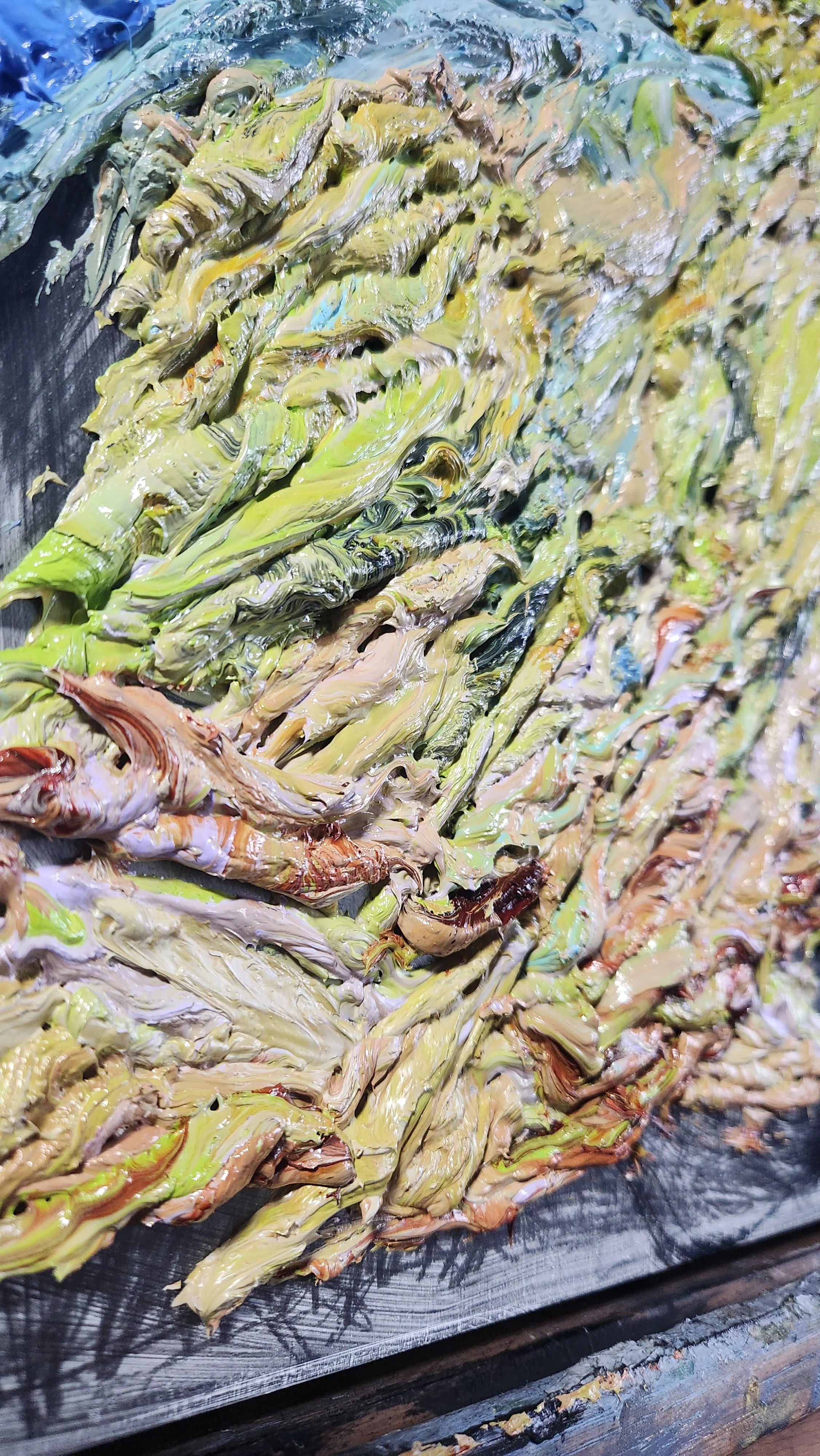
Note: Something that’s very important to me is that, as an artist, I’ve always found joy in understanding how a work is made. When I go to a museum or a gallery, beyond how the work makes me feel, I’m also looking at the object itself: getting up close, looking from different angles, noticing the side of the frame, and seeing what support it’s on.
Pro tip: if you see someone studying a painting like an object, they were likely trained as an artist.
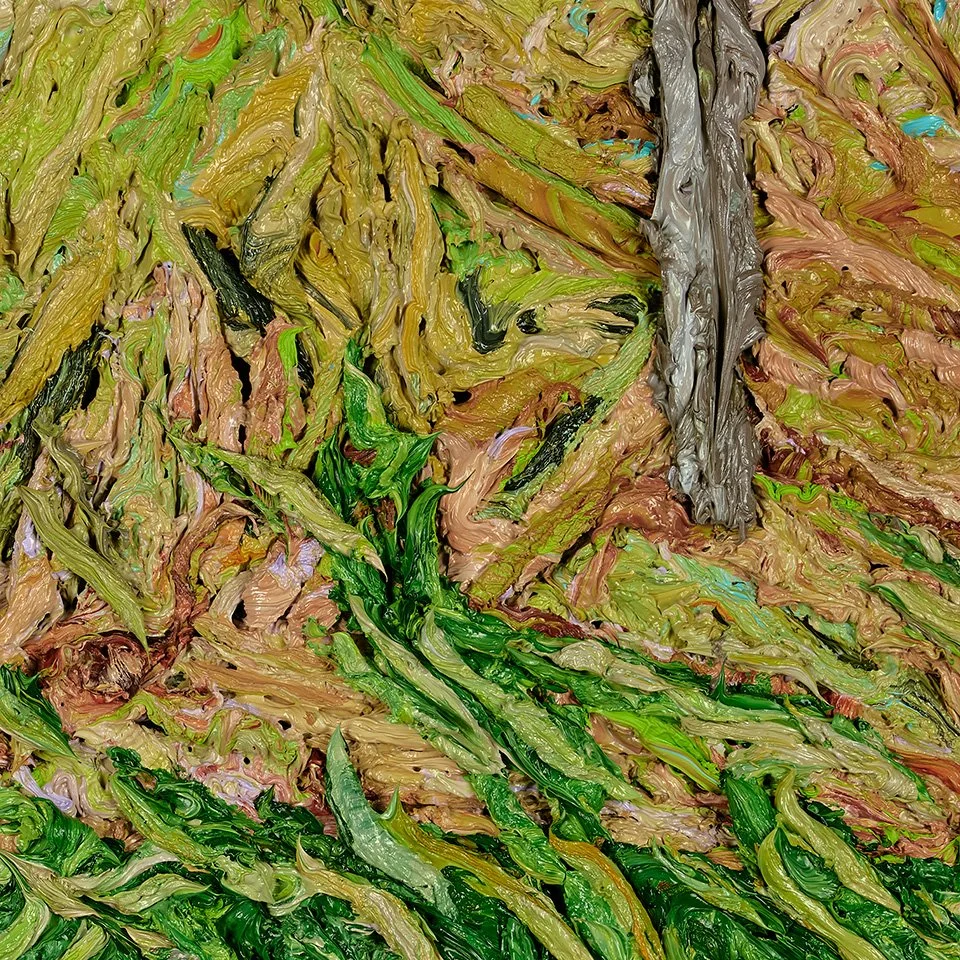
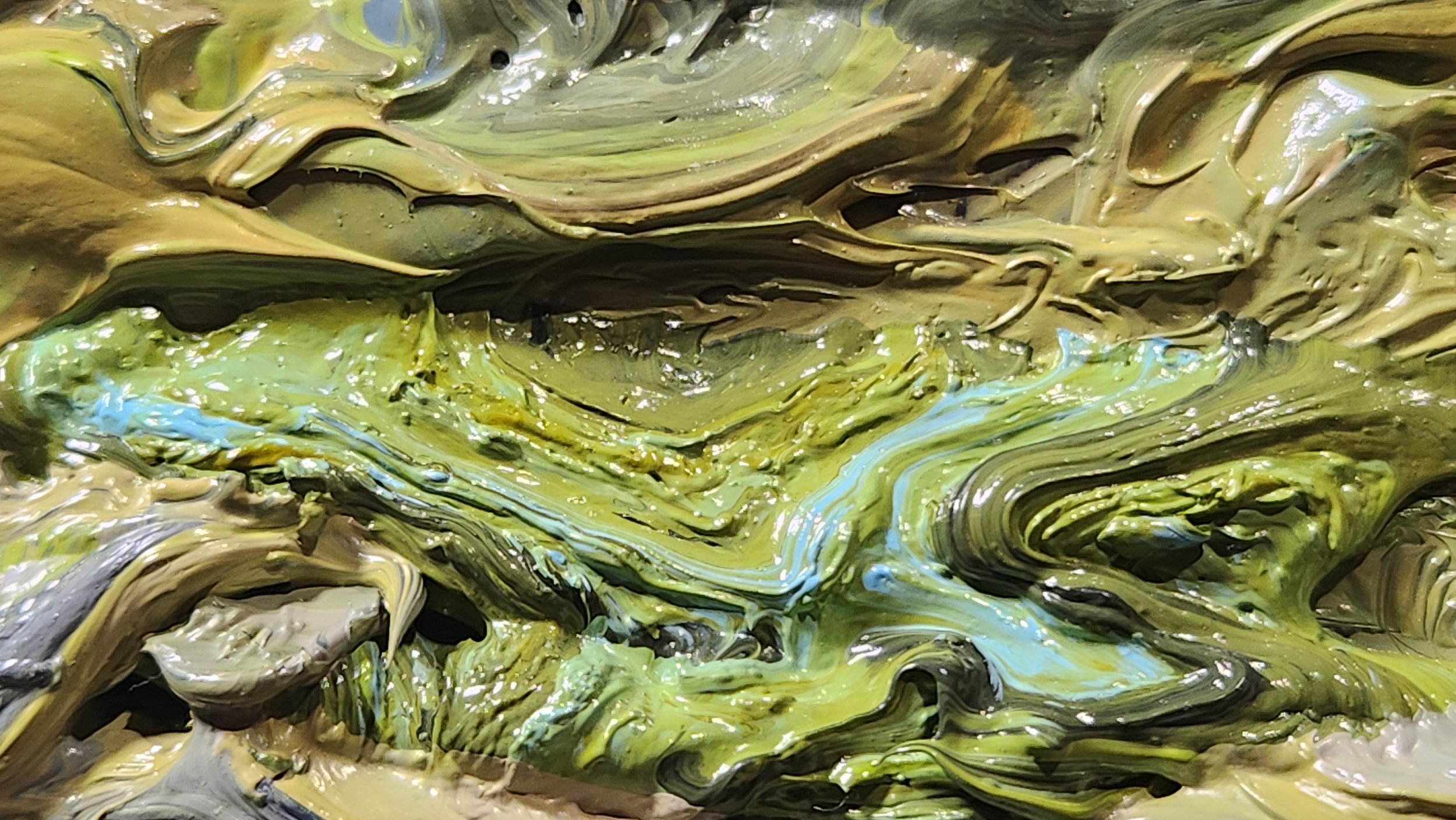
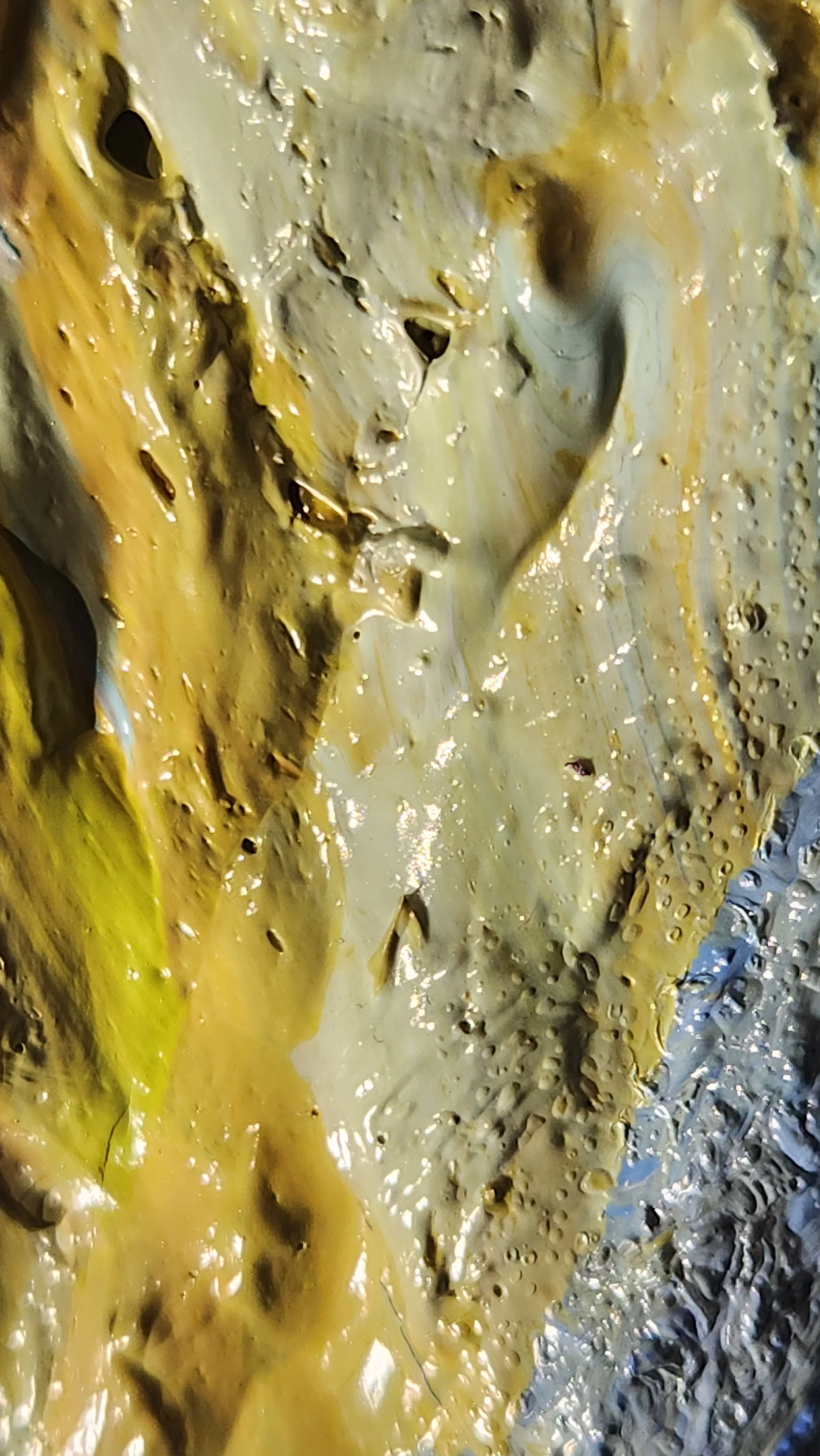
Historically, I think impasto painting has rewarded that kind of close looking. But I also felt there was something missing, something that could be more exciting in the act of getting close. With these works, I’m trying to reward the viewer for approaching closely by building temporary supports that are incredibly detailed, with small moments that might otherwise be discarded or absorbed later as I sculpt the form into something bigger. It still surprises me how much those early marks show through. If you look at the small images I take, you’ll notice little dots of red, pink, or blue maintained from the surface integrity. Uncovering those details and letting yourself explore them is an exciting benefit of looking at my work.
May 4, 2025: Starting With Surprise
On May 4th, I started with a chaotic, surprising initial panel—something that didn’t feel safe.
And then I built outward from it—stealing and building, letting the surprising thing become the foundation rather than the accent.
There’s a moment in every painting where you can either protect what you’ve made, or you can threaten it.
This was a day for threatening it.
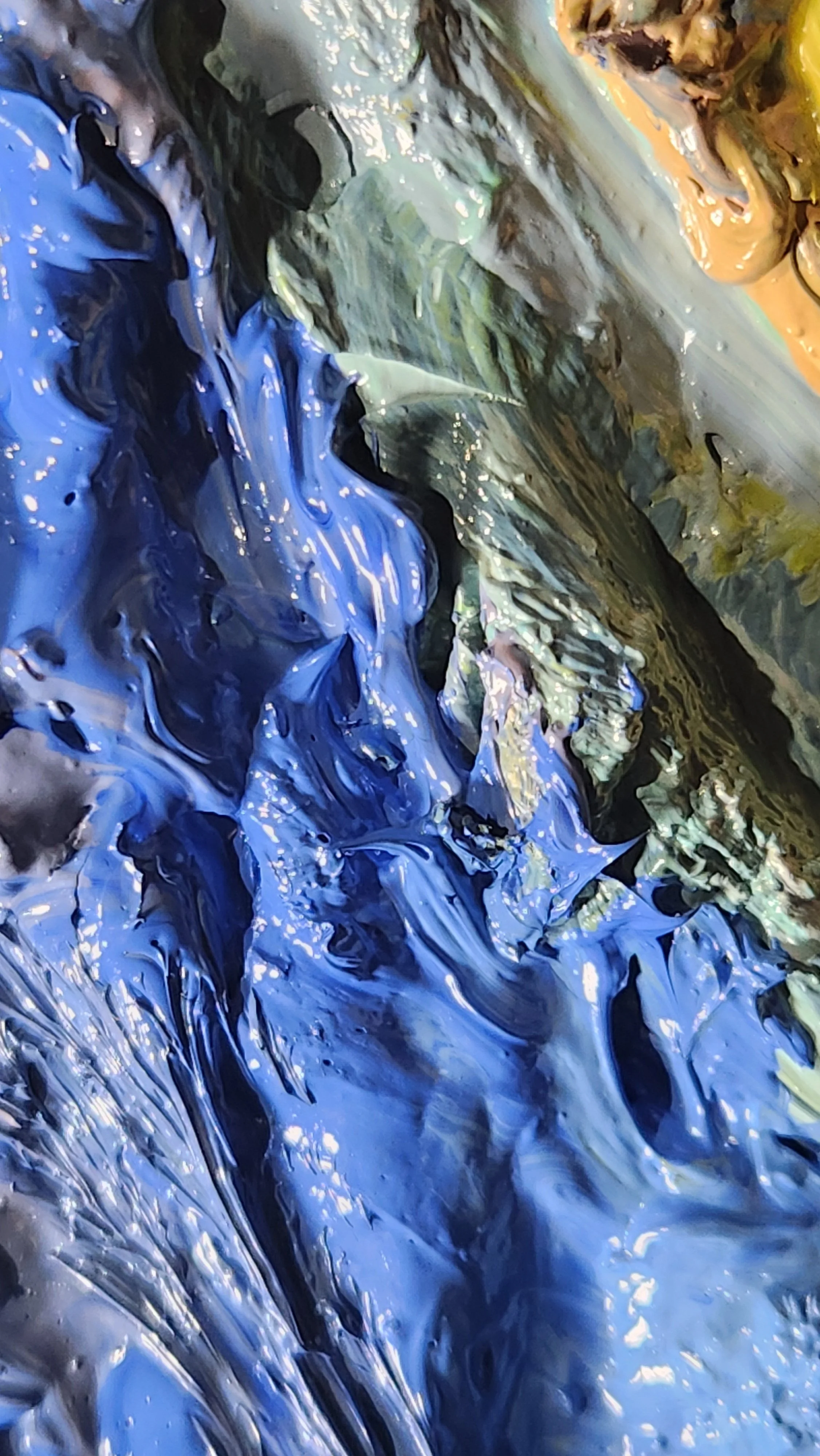
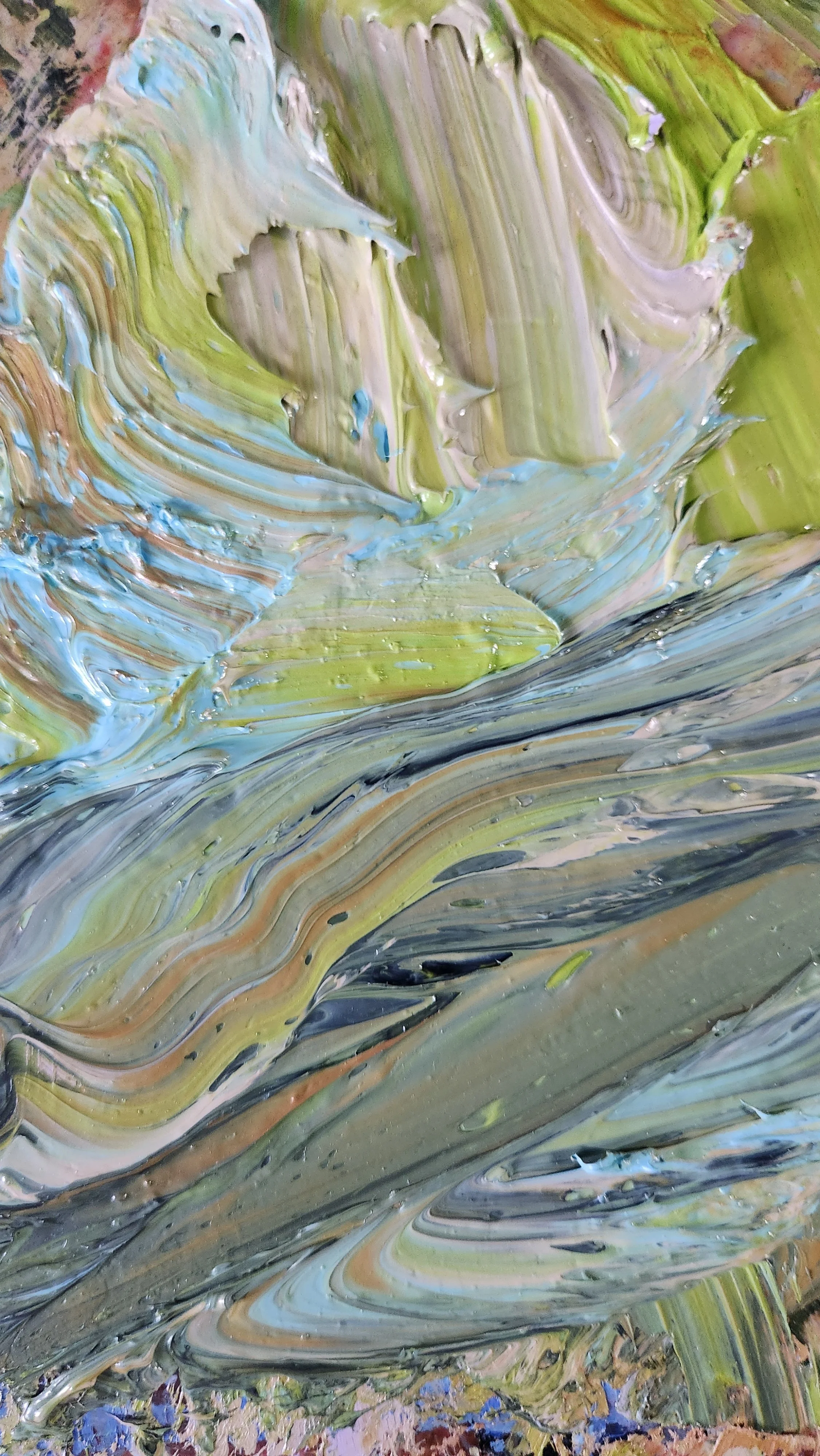
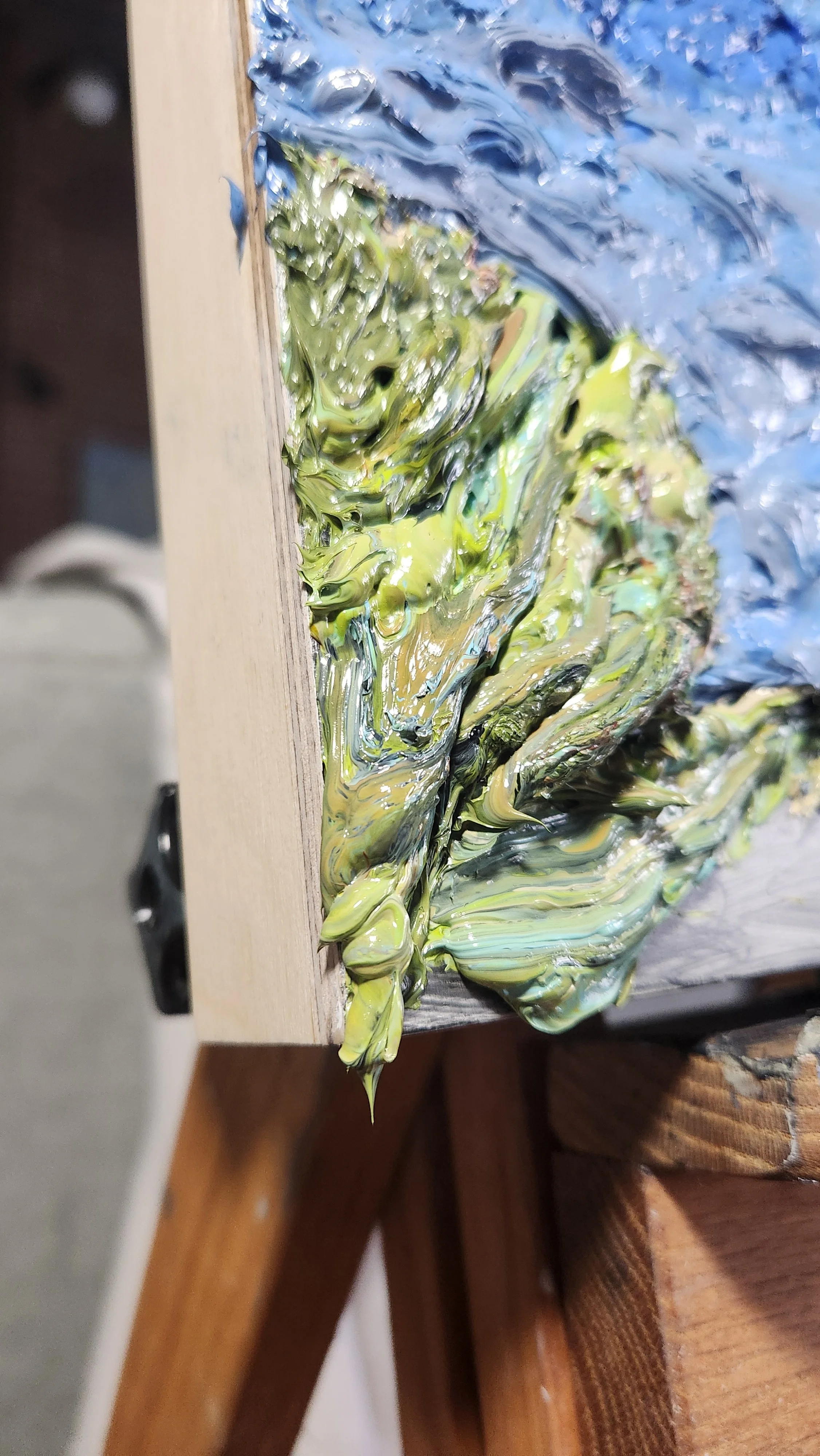
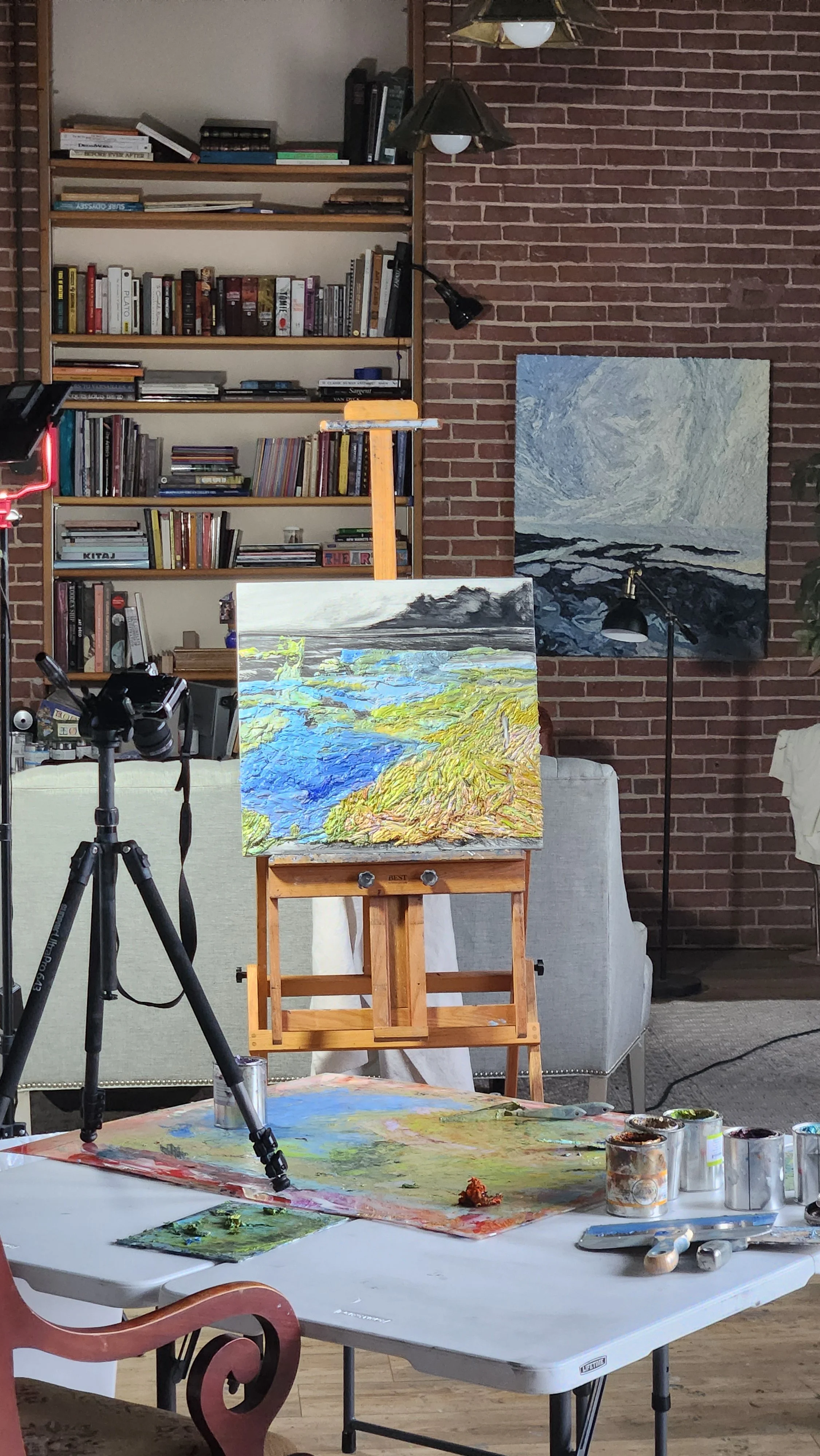
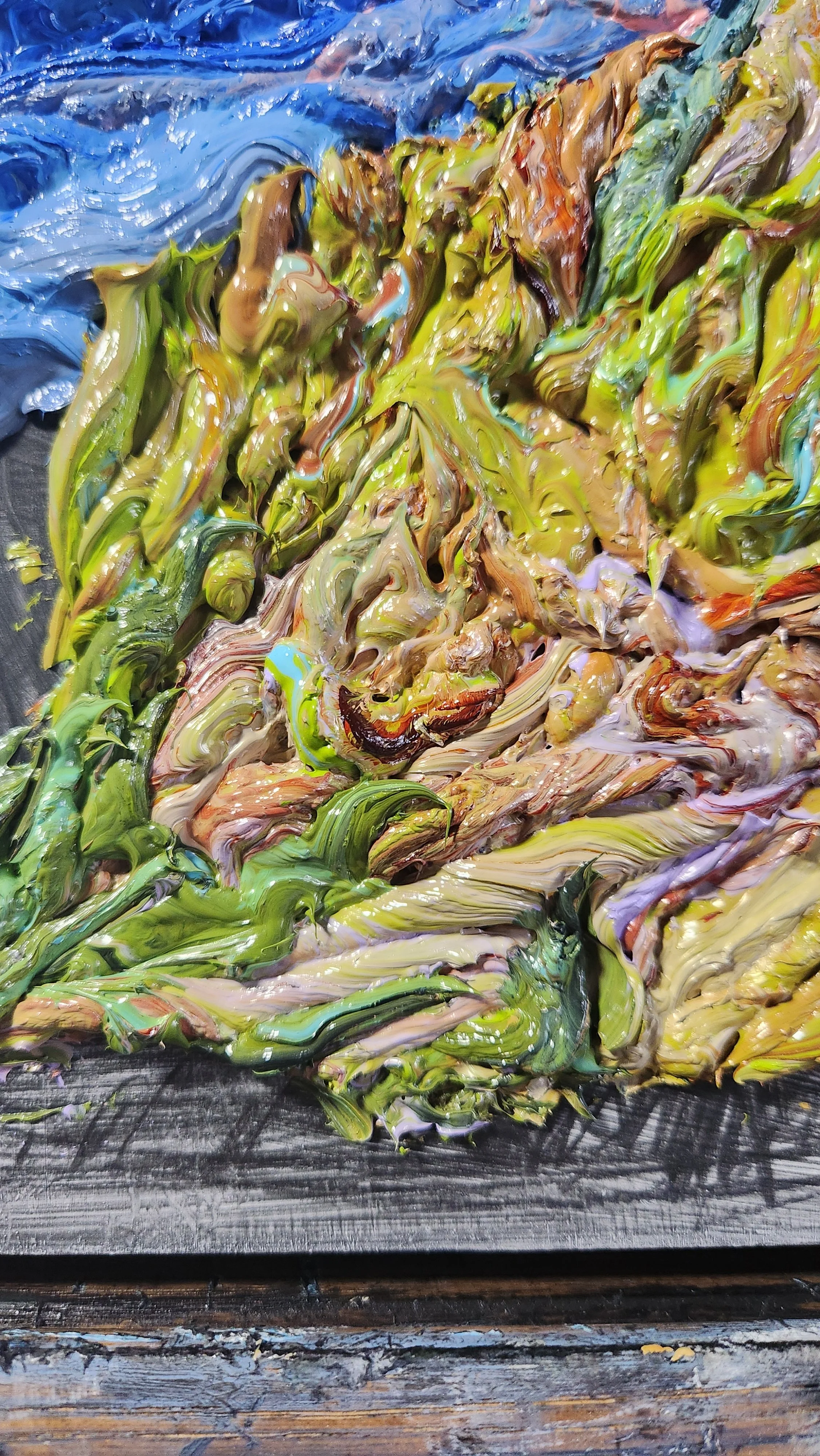
May 16, 2025: Near Completion (Weaving Paint)
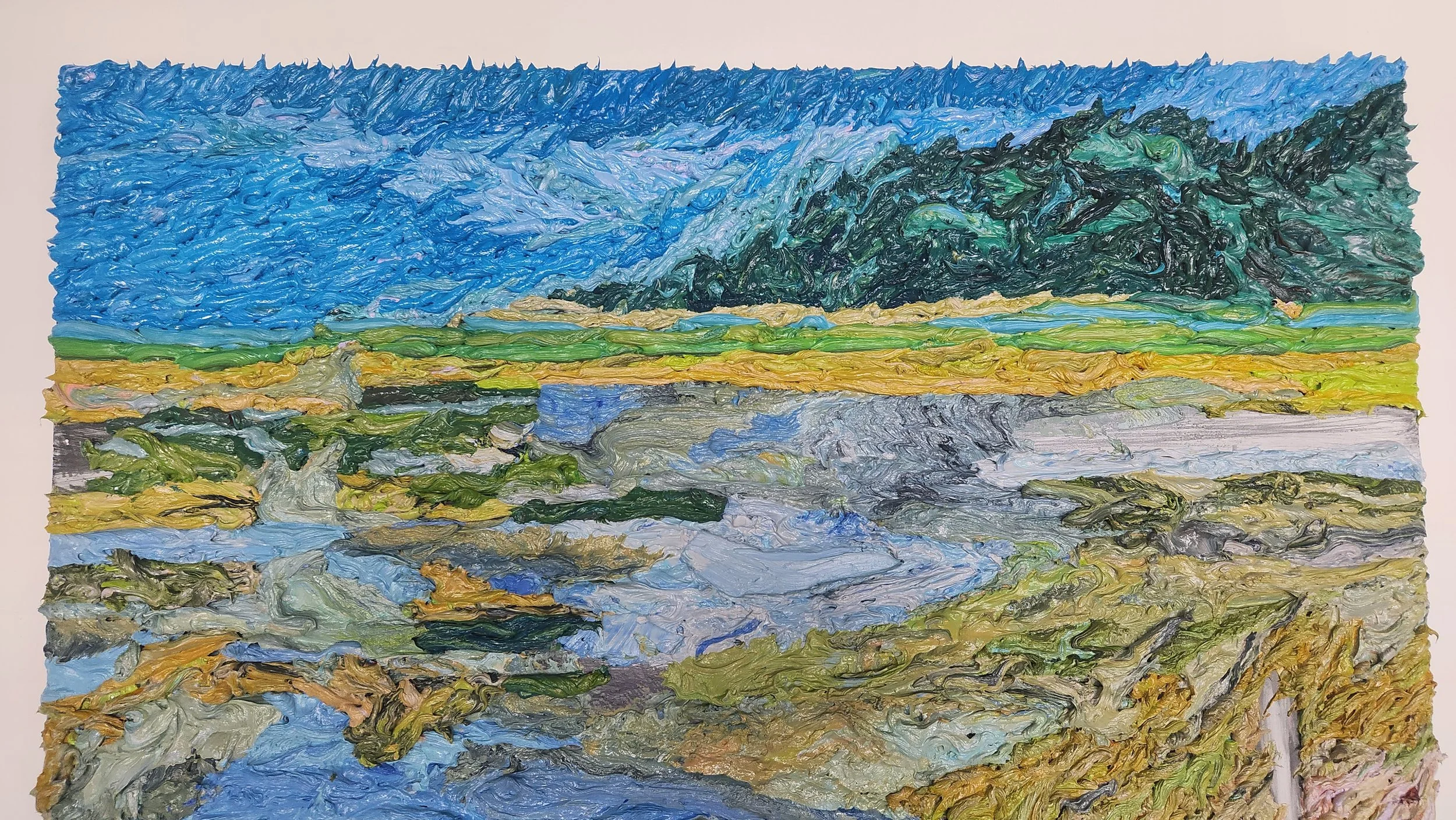
By May 16th, the painting was nearly finished. There were still open holes—places that hadn’t decided what they were yet—but the large problems were solved.
This stage is about overlap. Cutting through. Identifying. Weaving in colors that weren’t there before—colors that change the meaning of everything around them.
It’s less about adding.
More about insisting.
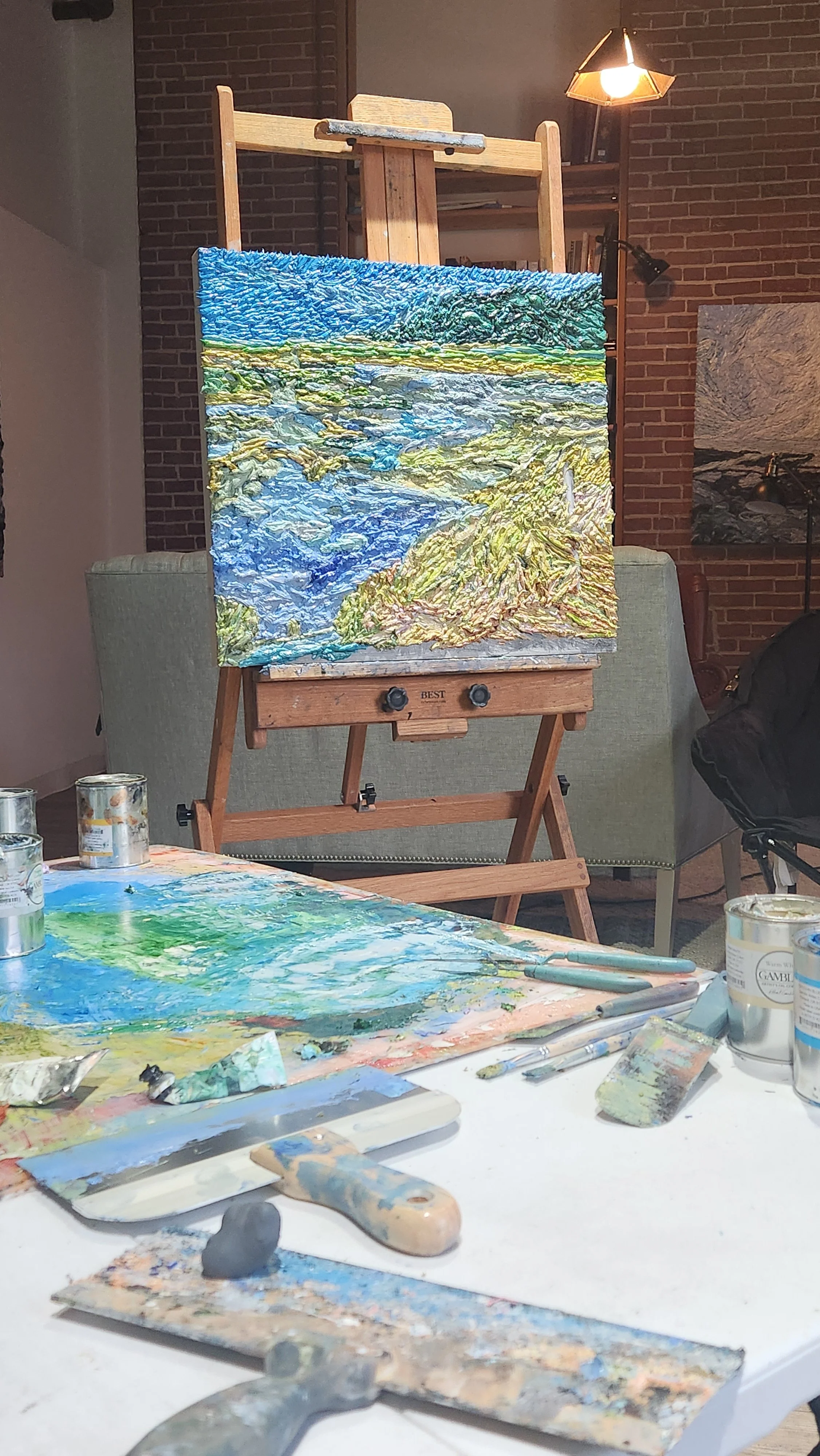
When I say a new color can change the meaning of everything around it, I don’t mean it only as a poetic idea. A color is only itself in relationship to what it sits next to. At this stage, I’m not thinking in a flat, two-dimensional way where a paint mixture simply “locks in” next to another so the cools recede and the warms come forward.
I’m adding a three-dimensional element: light. Shadows from forms create new relationships and new colors, and I’m trying not to be surprised by them. The architecture of the painting is already set—how the whole thing flows—so now it’s about building it out so the full cast supports the leads.
Another way to say it: I’ve done the exhaustive work of choosing the top performers in the ballet. Now I add the ensemble, the scenery, and the orchestra so everything complements the main pillars.
June 15, 2025: Finishing
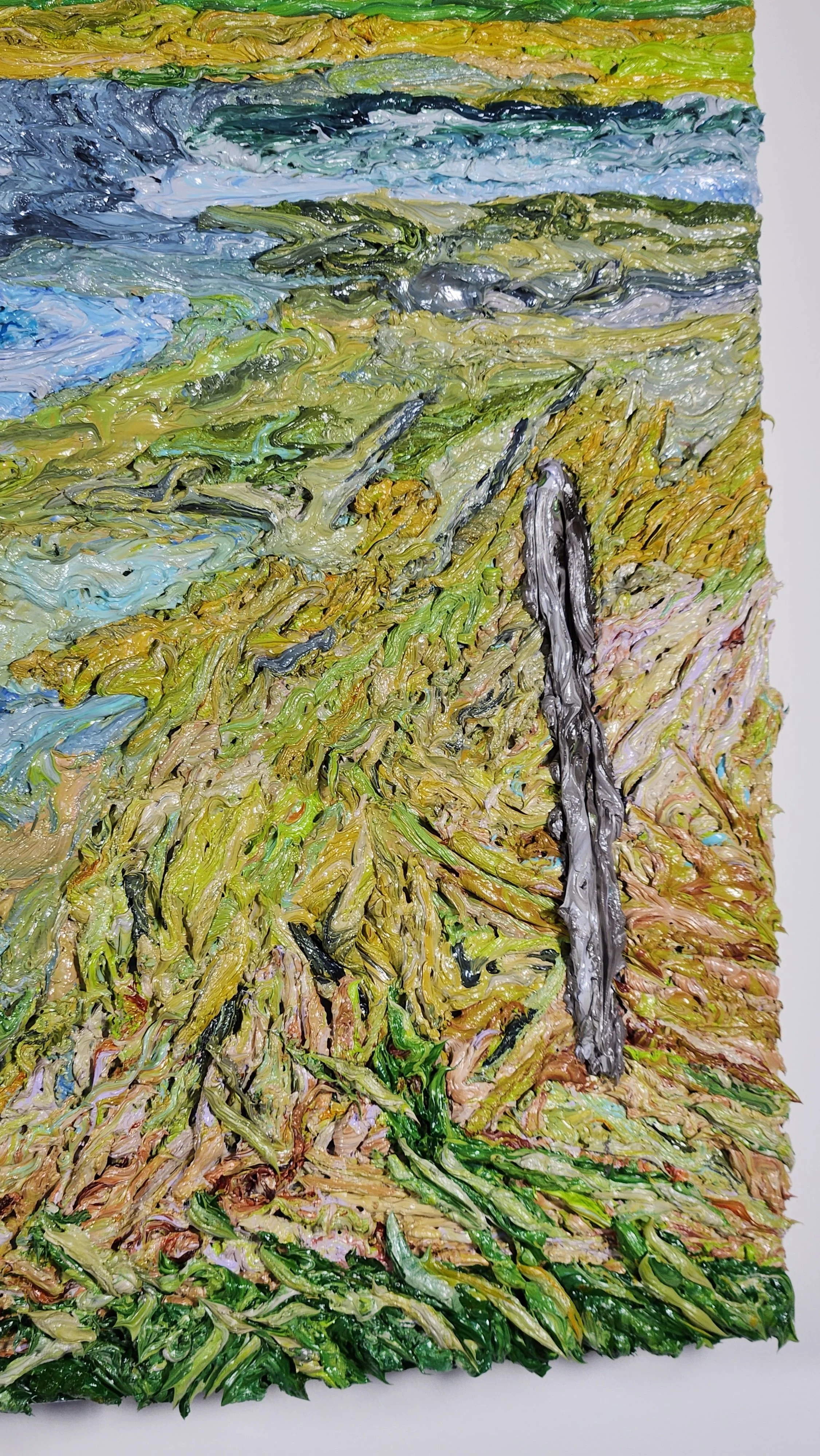
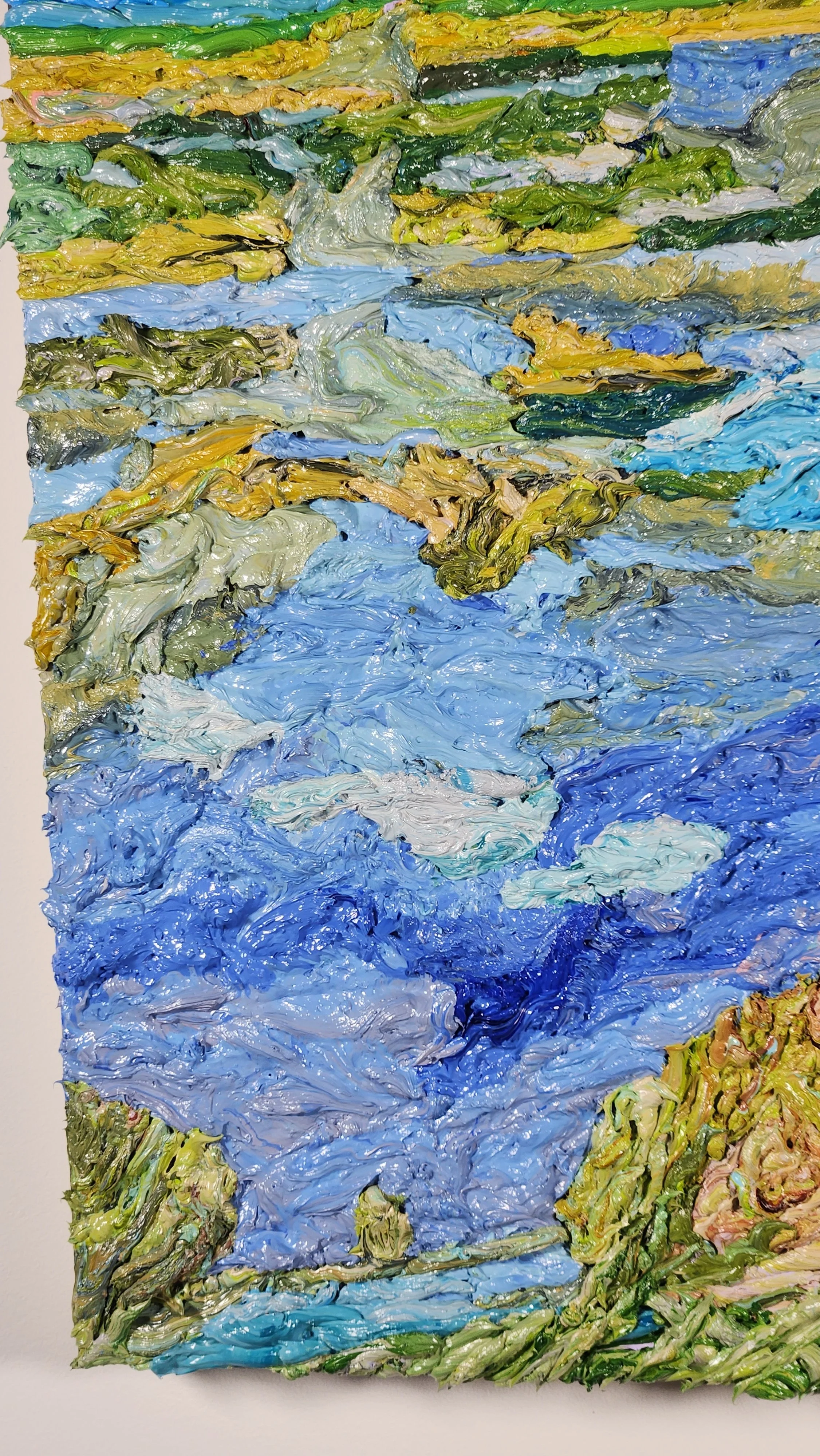
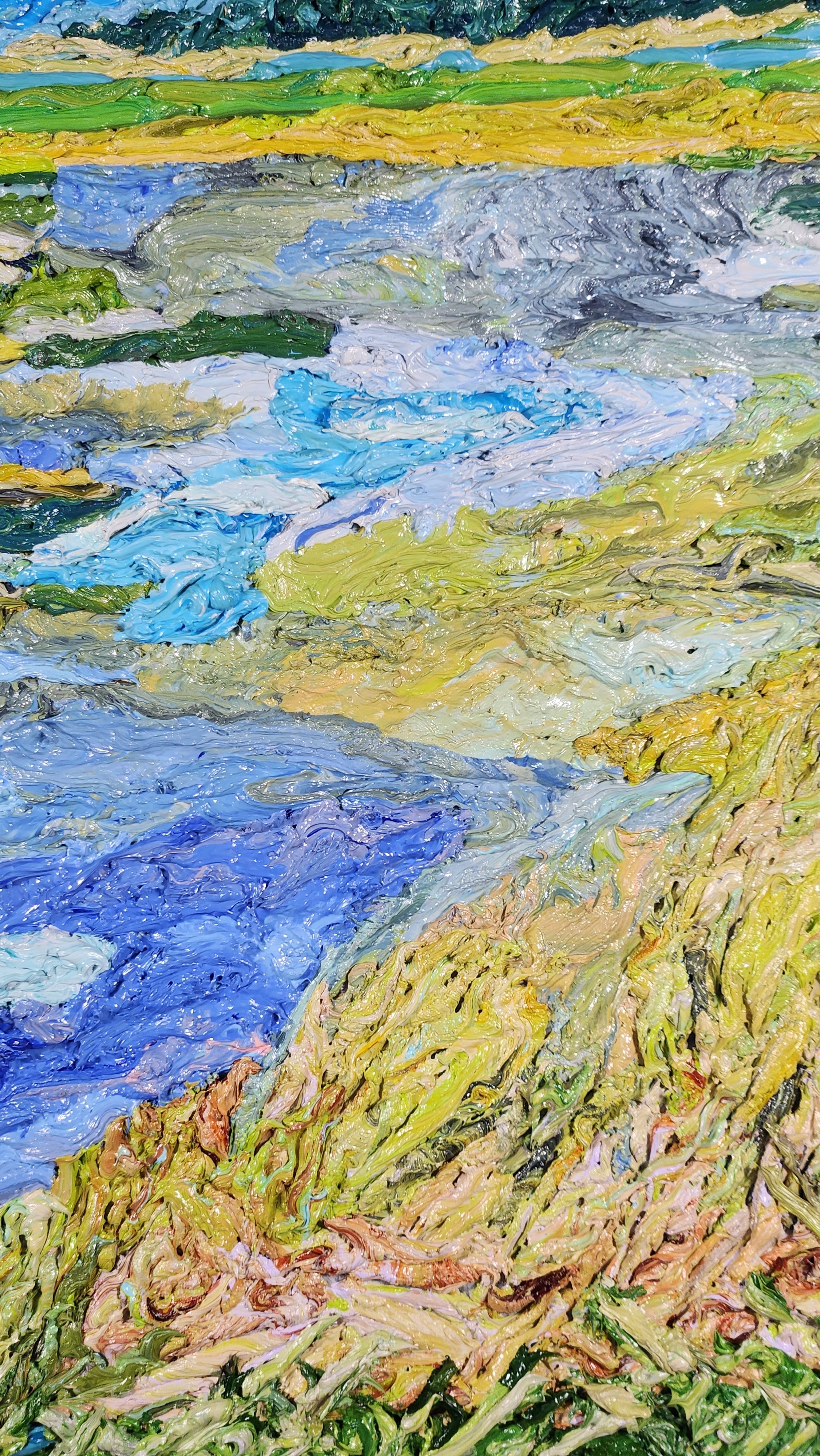
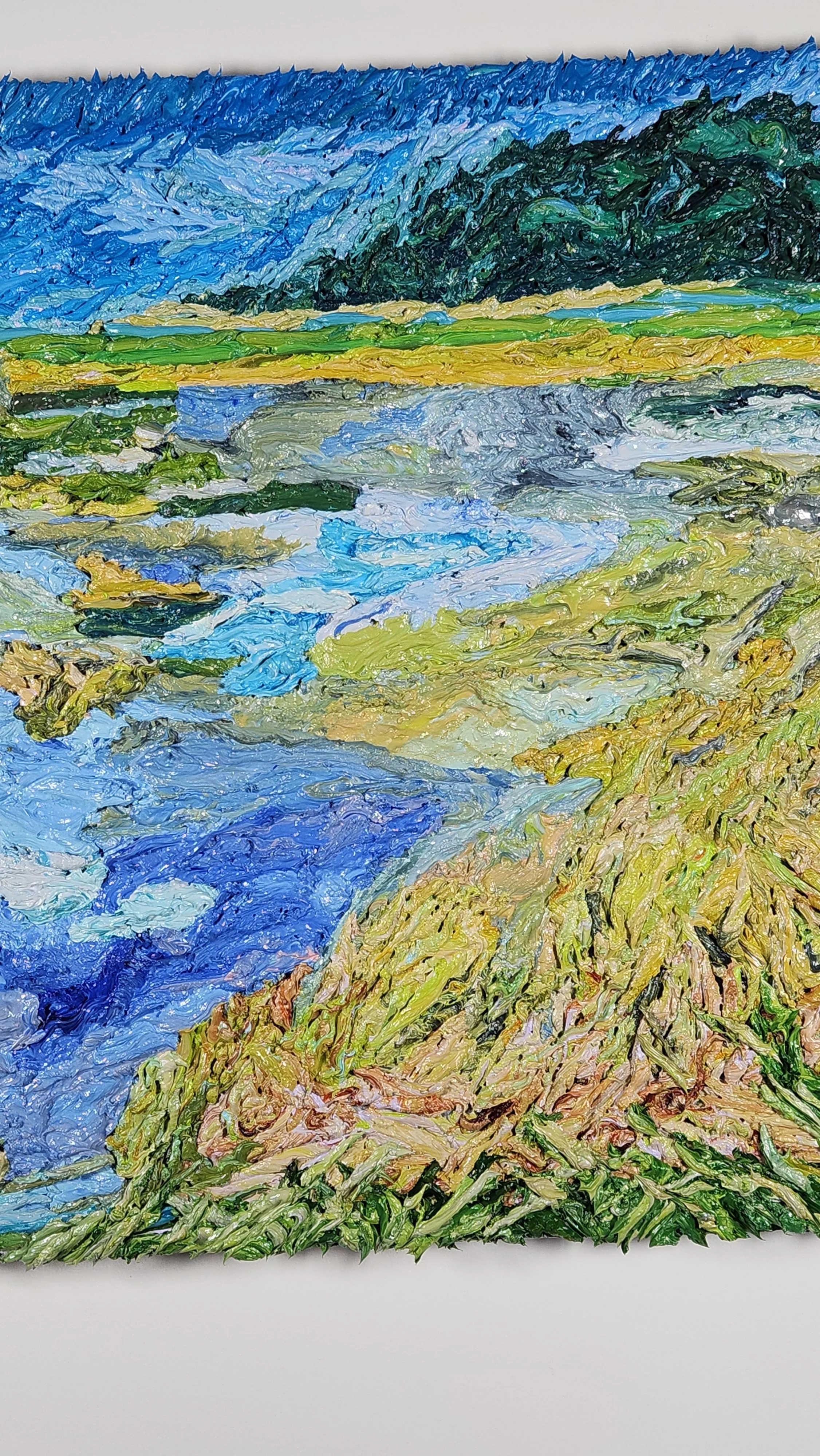
June 15th: the painting was finished.
That doesn’t mean every question was answered. It means the painting reached a point where it could stand on its own without me explaining it. Where the decisions held each other in place.
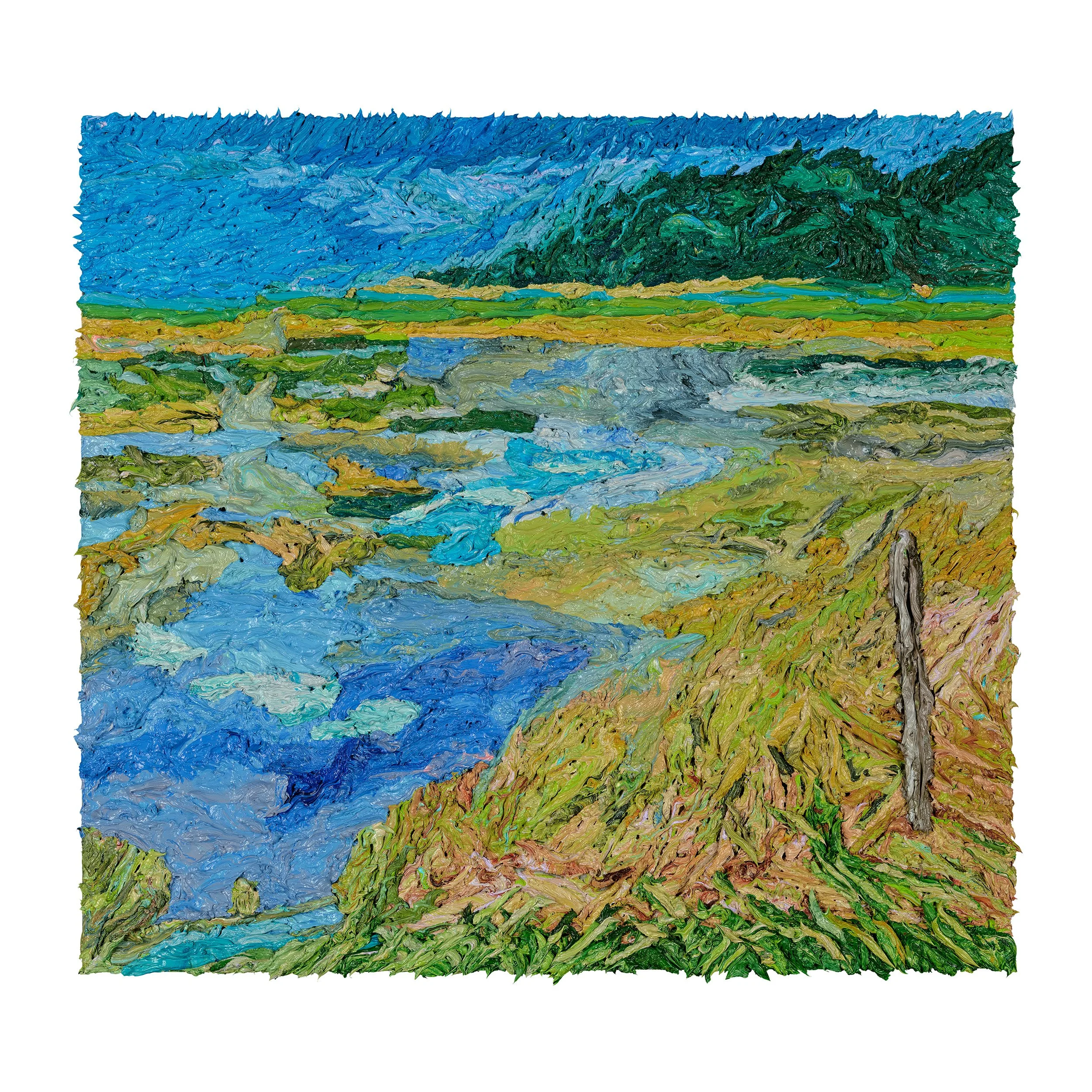
In Abundance
22in x 24in
Oil Paint on Panel
March 2026
In Abundance is brighter than what I typically do—more vibrant, more colorful, more openly energized. It sits a little outside my usual center of gravity.
But I’m excited by that.
Because it feels honest to what I was trying to do: not simply paint a place, but paint the act of rebuilding the world—one decision at a time.
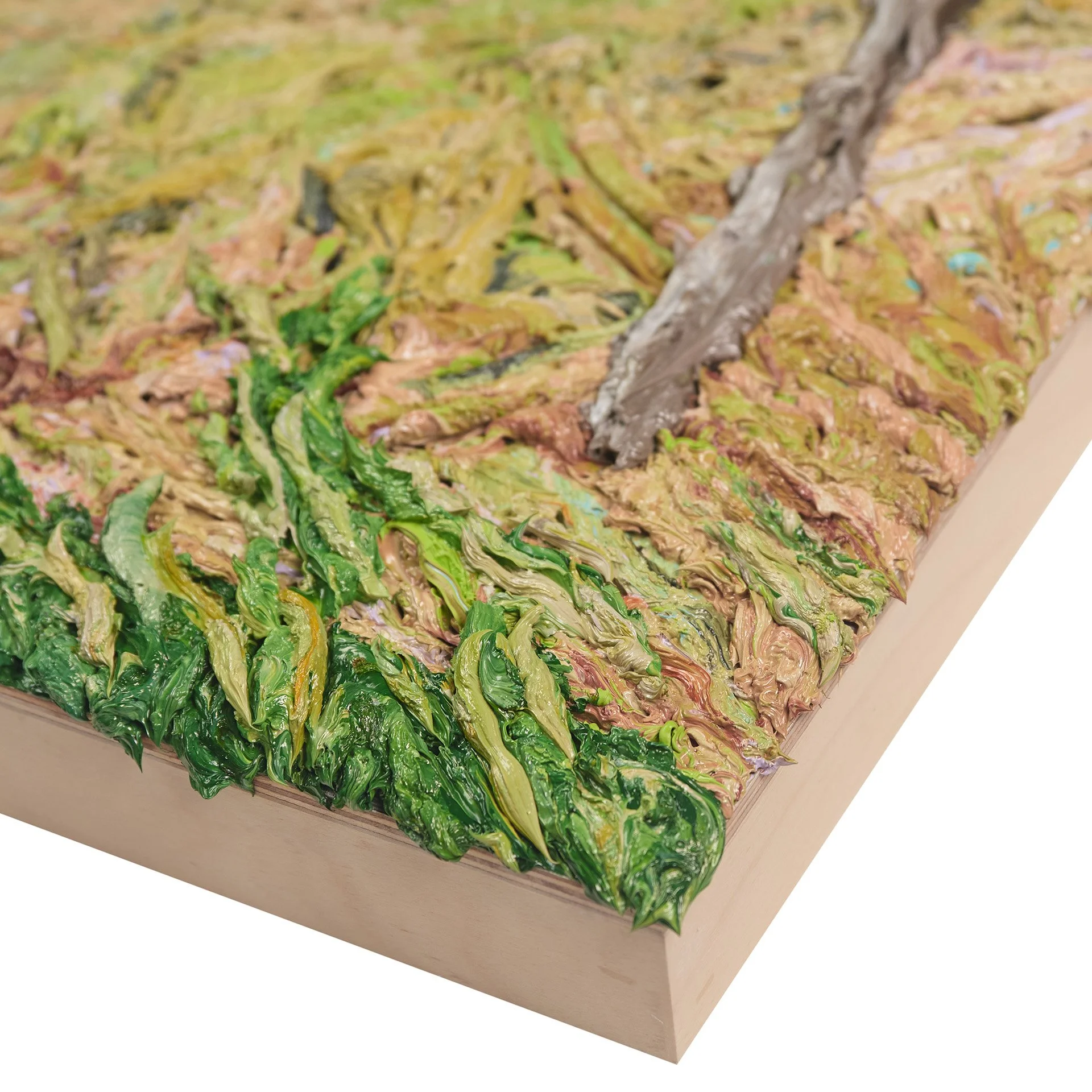
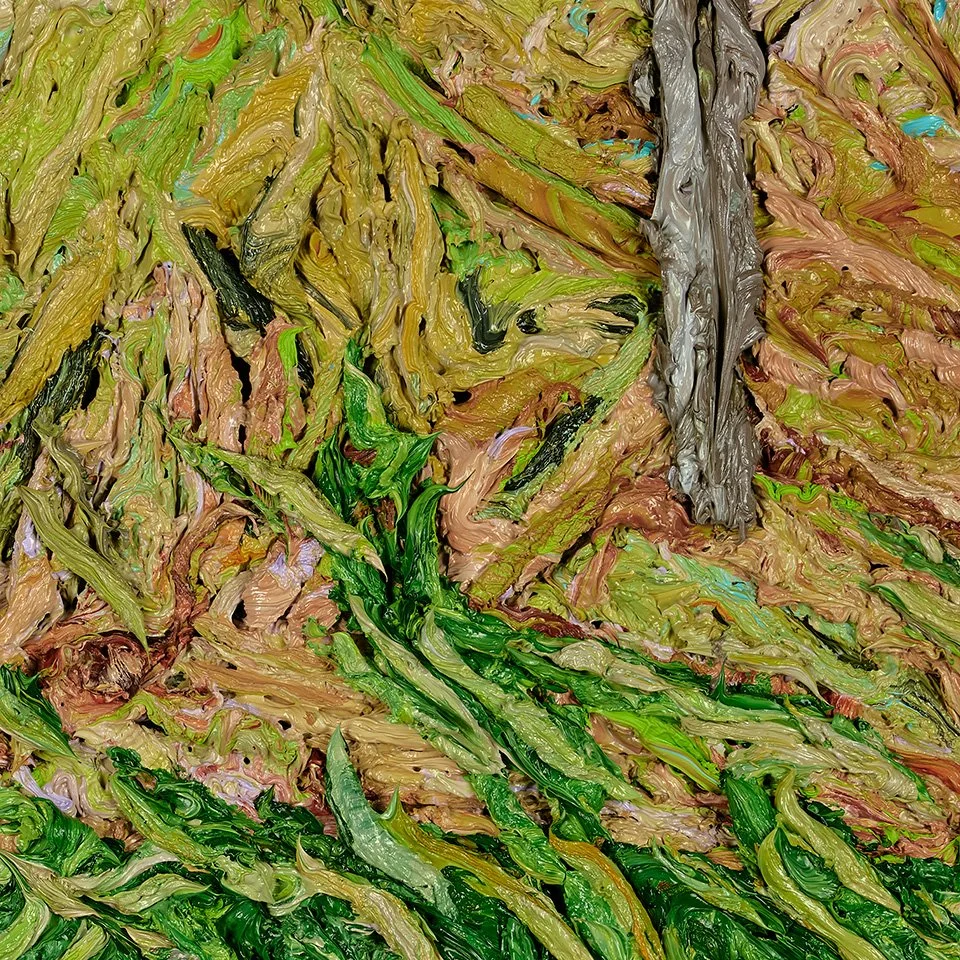
**Bonus**
I’m adding this little section at the bottom because I’m grateful to say that a print of In Abundance will be available in our October print drop. More details are coming soon.
But for March, to celebrate this release, we’re doing a print giveaway: I’m producing one original print and I’ll ship it to the winner!!
To enter:
If you’re already a newsletter subscriber, you’re basically in — just reply to this email, shoot me a message, or submit the form through the button below and I’ll make sure you’re entered.
If you’re new here, the only “requirement” is to join the newsletter using the button below — and you’ll be entered immediately.
I’ll also share updates on Instagram, and I’ll keep everything posted in the newsletter too. Click the button to enter.
43°33'31.2"N 70°12'18.2"W
Notes, Ramblings, and Ideas for 43°33'31.2"N 70°12'18.2"W
This is the process story behind my oil painting 43°33'31.2"N 70°12'18.2"W. It began as a return to the coast in Cape Elizabeth, Maine, where the light is so sharp and brilliant it feels almost demanding. I kept coming back, not to “capture” the place, but to understand what it does to attention.
My paintings are built from a stack of small studies. I’ll make dozens from the same area, then bring them into the studio and lay them out across the floor. From above, I start “stealing” the sections that feel charged. A collision of shapes, an edge that turns just right, a pocket of color that holds pressure. I rebuild those fragments like a mosaic, not as a copy of nature, but as a way of reassembling experience.
Mechanically, this means I’m constantly editing the surface. I scrape, carve, and re-draw into the paint. I sculpt edges. I reposition relationships. Even the shadows cast by raised forms become tools I can use on purpose, creating new values and new hinges in the composition. The goal is a surface that rewards attention at every distance: up close it is physical and alive, and from across the room it locks together as one body.
If this is the only thing you read here, this is what I want you to know: I paint as a way of slowing down and rebuilding clarity. I want the finished work to feel like standing in that place felt to me, not just what it looked like.
At the end of this post, I also share how the painting eventually found its owner, and how it took on a life beyond my studio.
Inception: Gathering Reference Materials
August 8, 2021
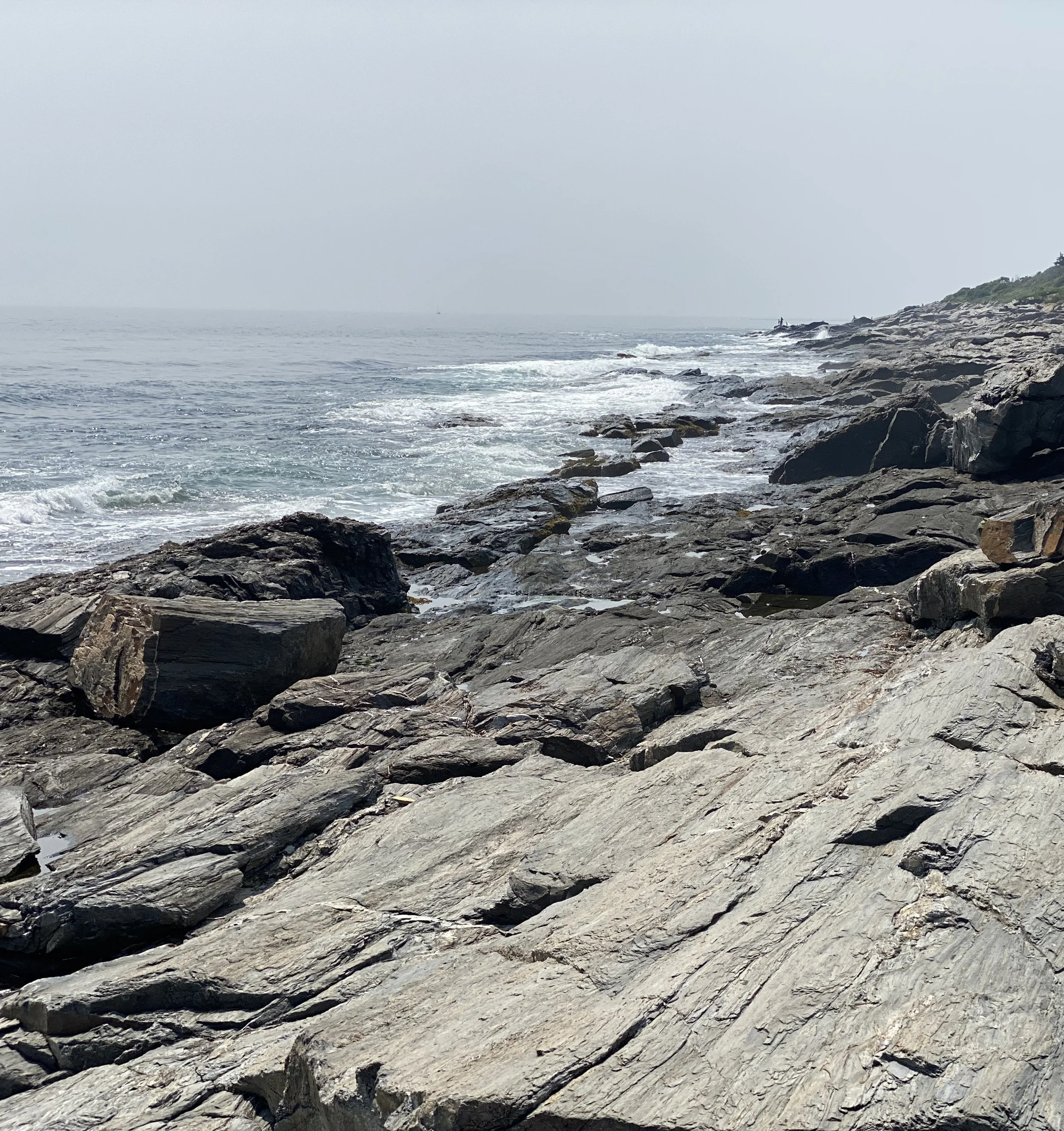
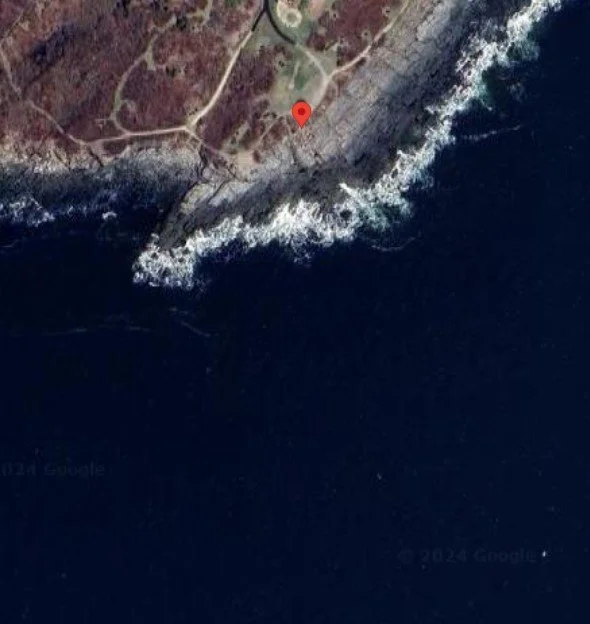
Exploring Cape Elizabeth, I noticed the light by the ocean—sharp and brilliant. In the many places I've traveled, light behaves differently. Sometimes it has a distinct color, like the ochre hue of Florence, Italy. Here in Cape Elizabeth, the light is brilliantly white, bringing clarity to everything in a slightly awe-inspiring way. I have to strain my vision. There is no relaxation for my eyes.
This quality of light transforms the landscape, highlighting every detail with surreal precision. The rocks, the waves, the distant horizon—all stand out with extraordinary clarity. It's as if the light strips away any ambiguity, leaving the scene in stark, vivid detail.
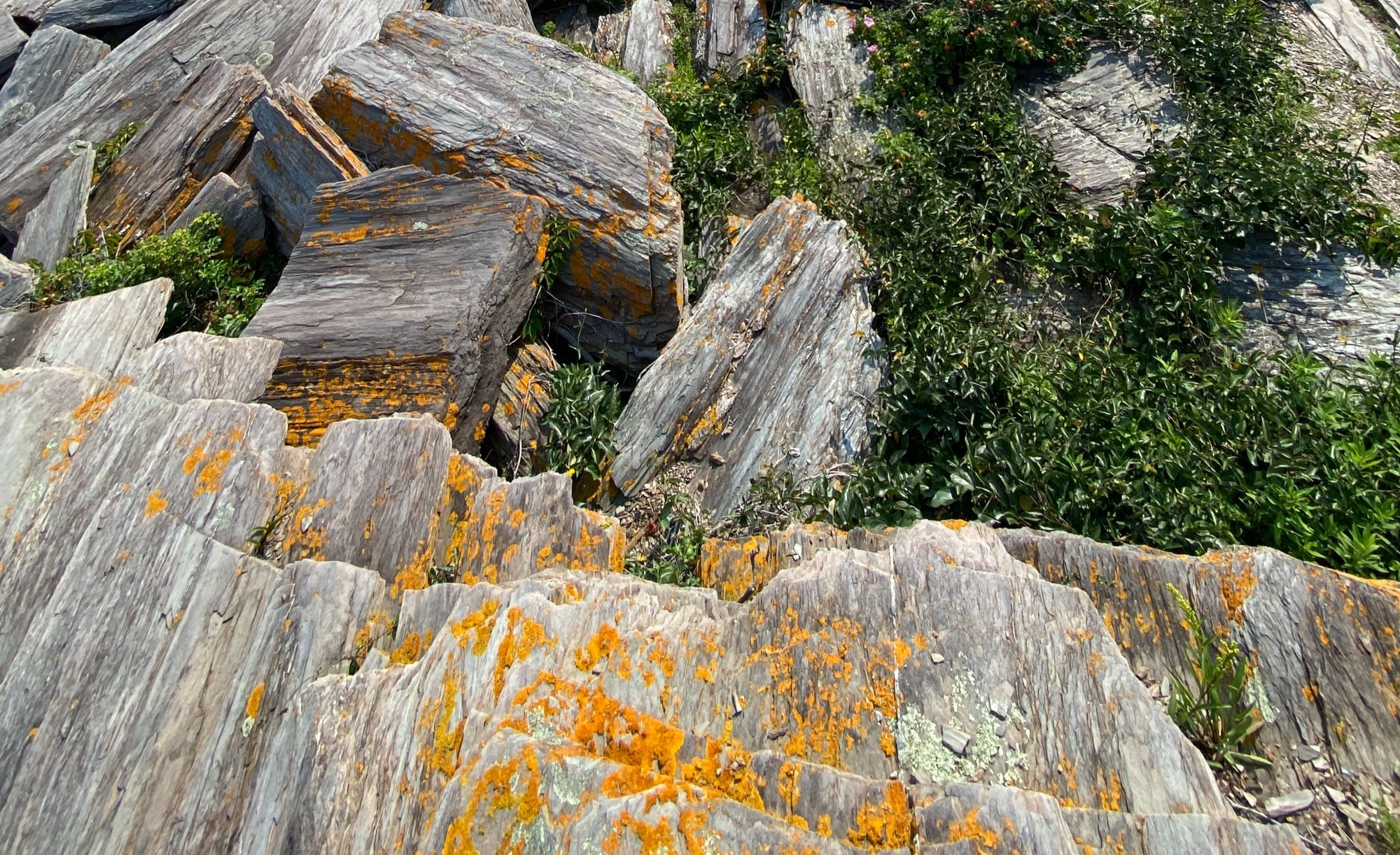
This yellow is incredible. It is known as Maritime Sunburst Lichen.
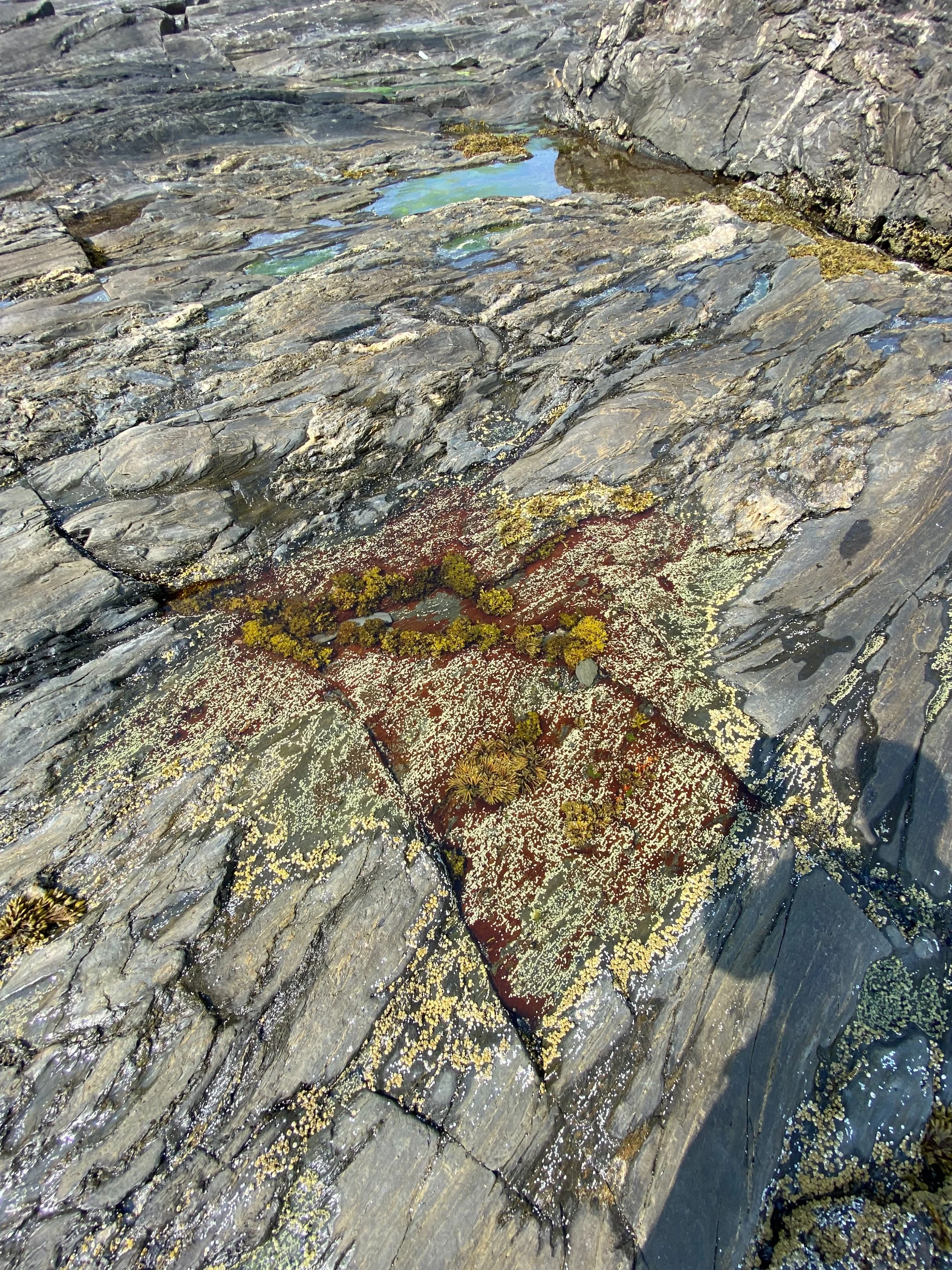
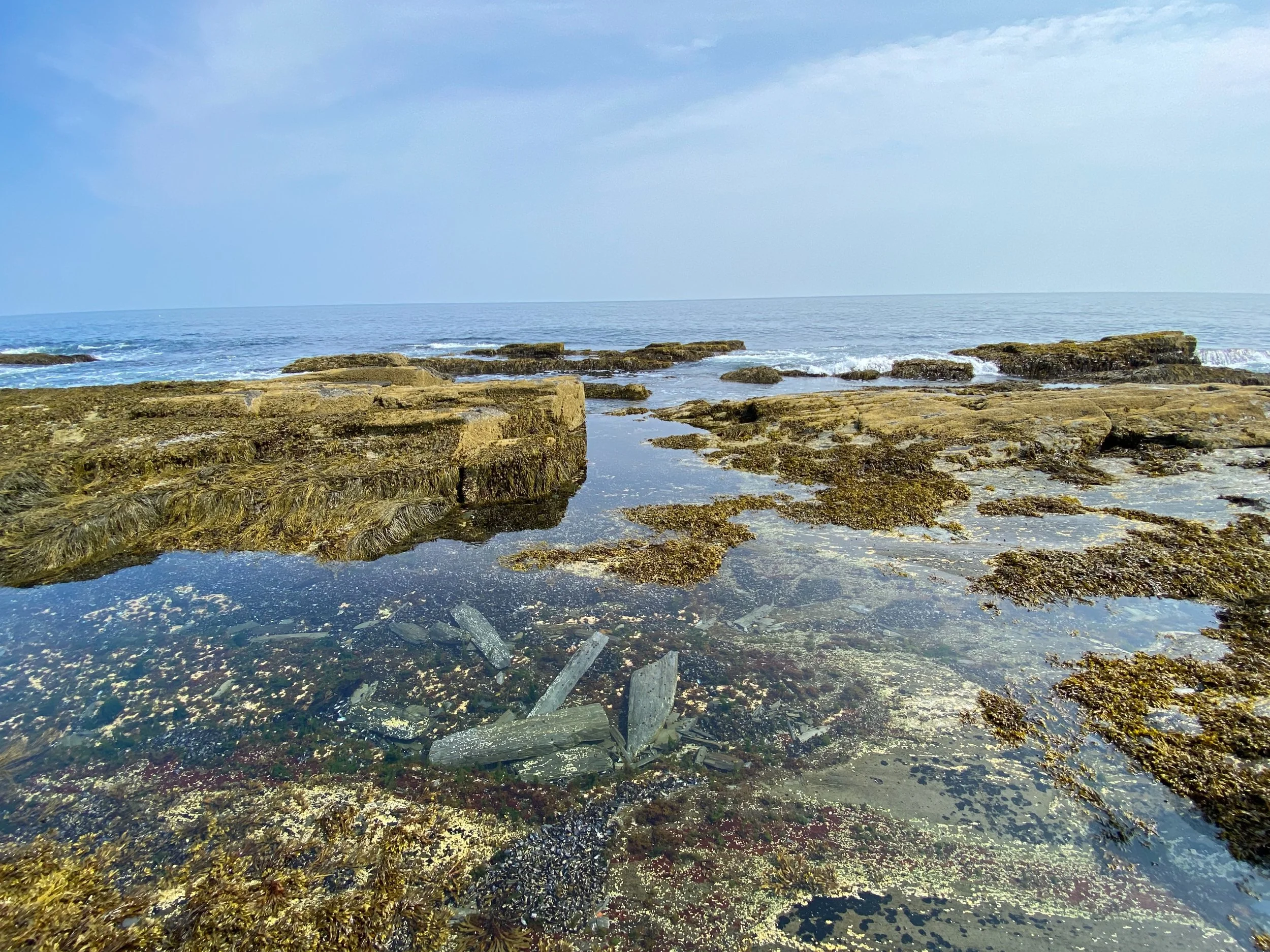
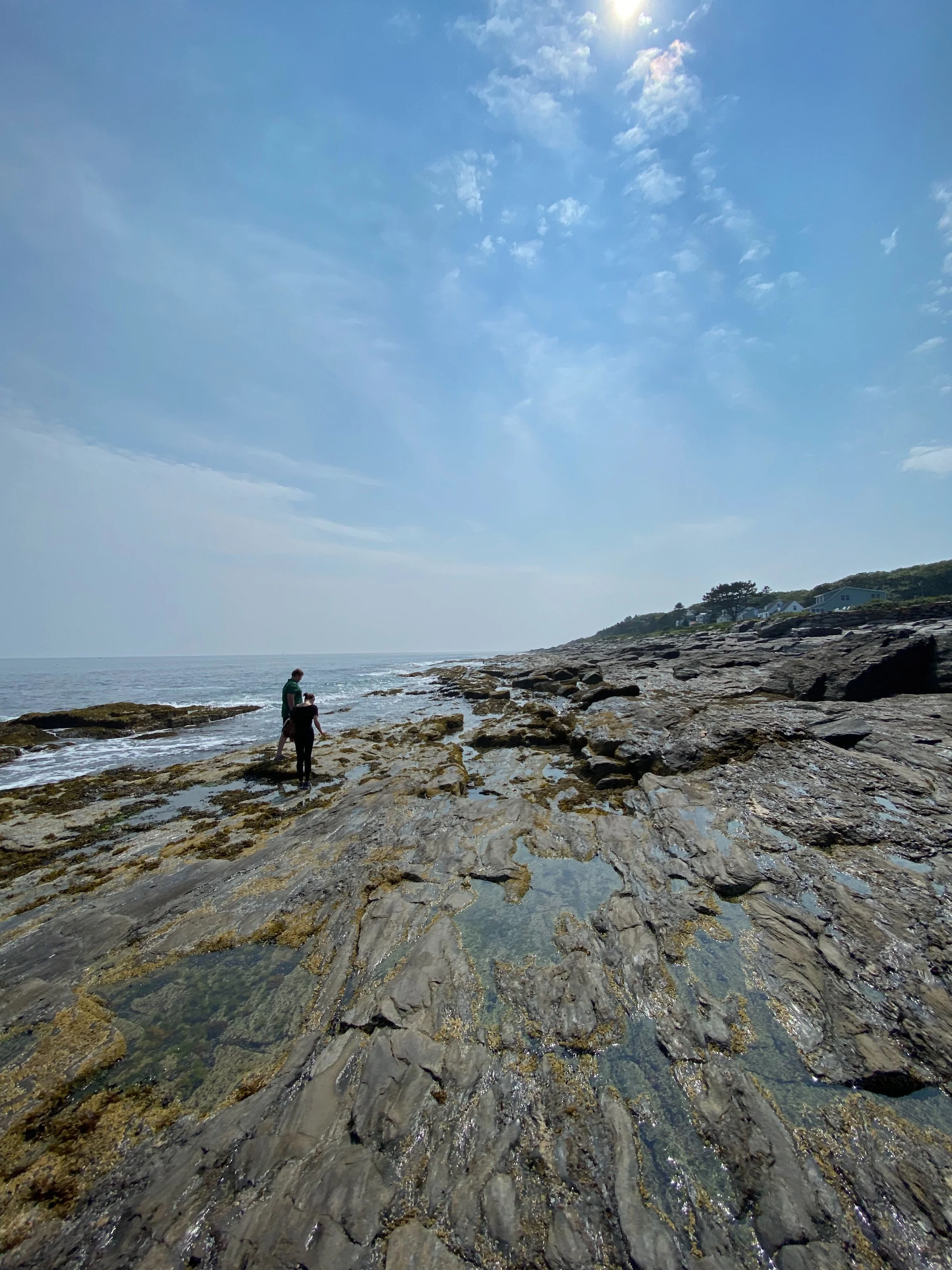
I love peering into these pools, surprised by the organisms’ rich colors. The greens look a little gross, but next to the reddish algae they seem even more brilliant.
It started with a feeling: standing near the ocean in Cape Elizabeth, overwhelmed by a light so clear and relentless it made the landscape feel almost unreal.
September 7, 2021 - Initial Sketch
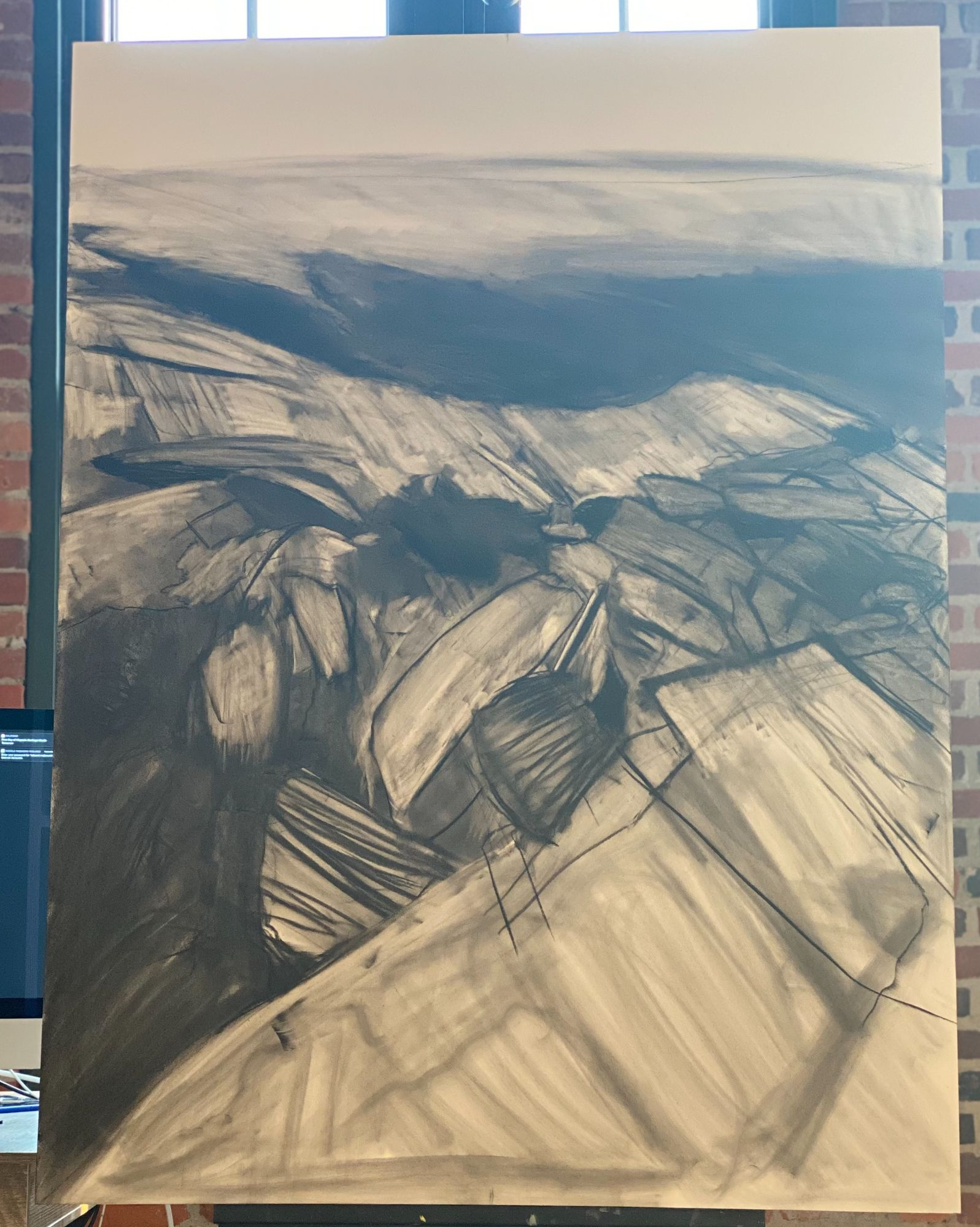
For my underdrawing, I'm focusing mostly on large forms. This feels more like an architectural drawing than anything else. I've gathered everything I need from my reference materials on color and detail. Now I need to understand how the forms will move. This type of painting needs to be built more like a mosaic.
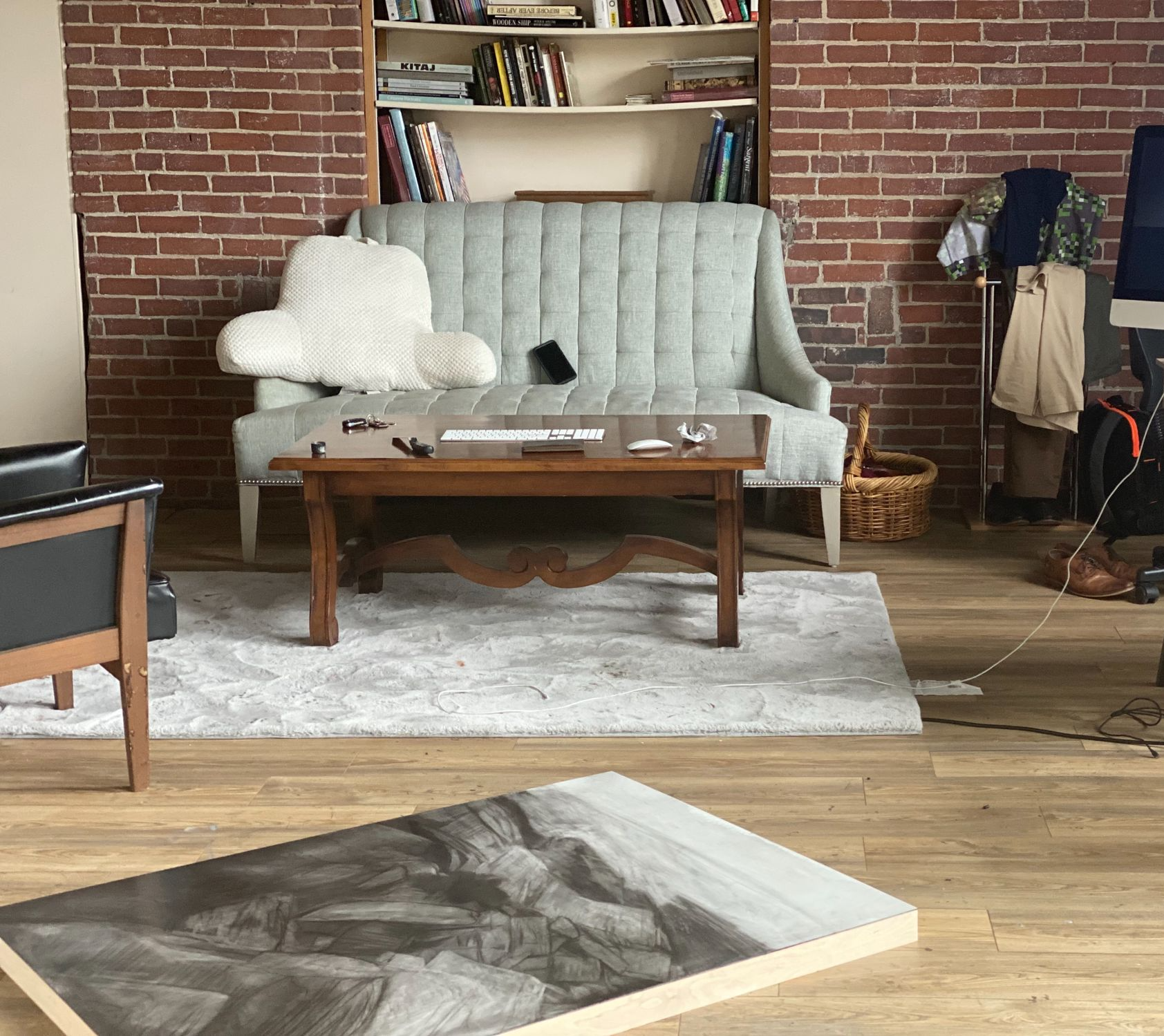
After using graphite for my sketch, I come back with a glazing medium and black paint to reinforce the areas of interest. In this process, I like standing over my piece from above and engaging my full shoulder to make large, gestural marks. I find that this swinging motion gives my mark making access to the full panel from top to bottom, much like how, when I’m holding a small sketchbook, I can reach the top and bottom of the page with a small lift of my wrist.
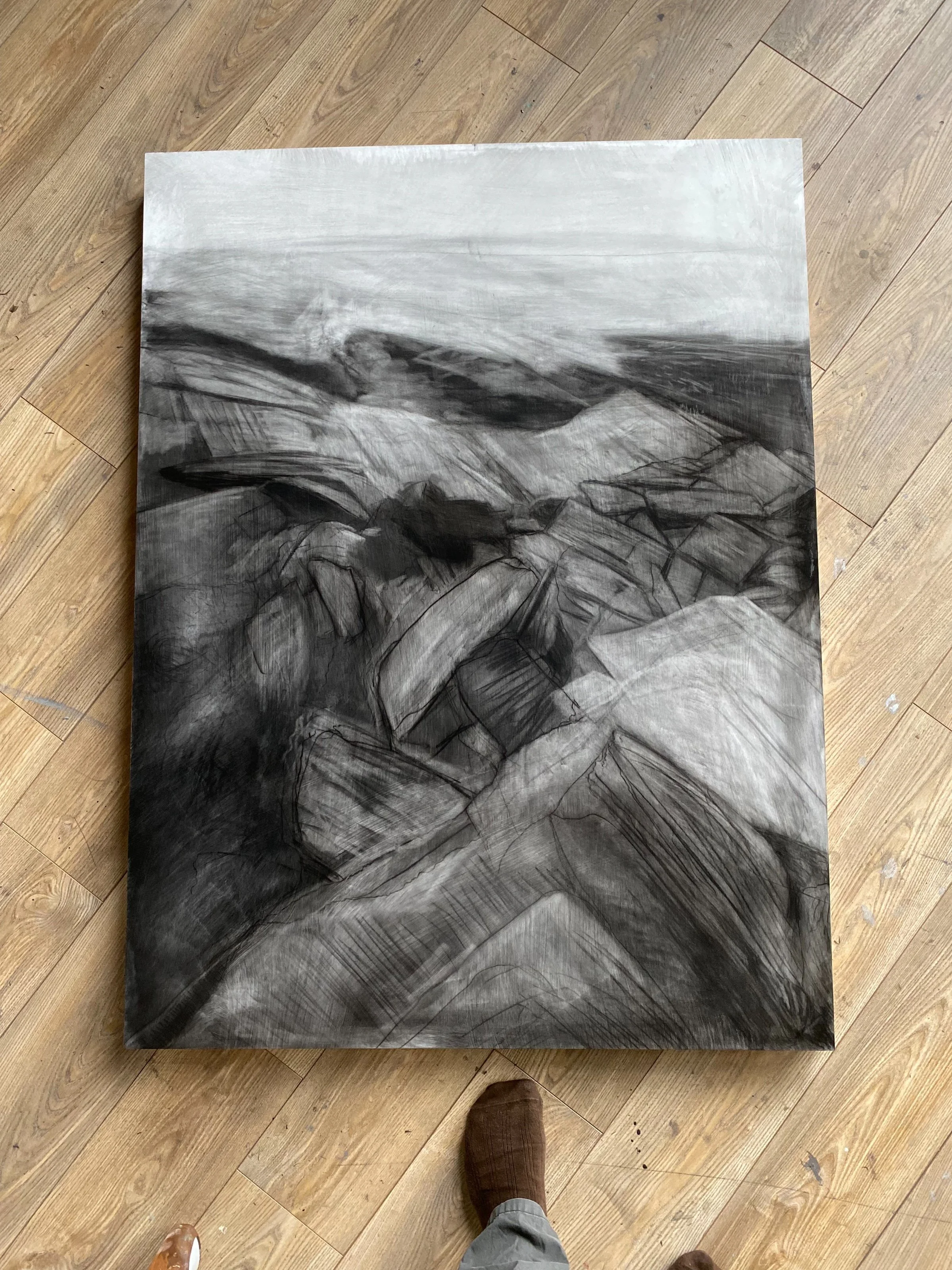
Standing over my piece, it feels good and right. I have a clear plan for how my forms will move and where I can improvise. The sky needs to behave differently from the sea, and the stones in the foreground need to behave differently from those closer to the ocean. This is a challenge I enjoy.
September 9, 2021 - Painting Begins
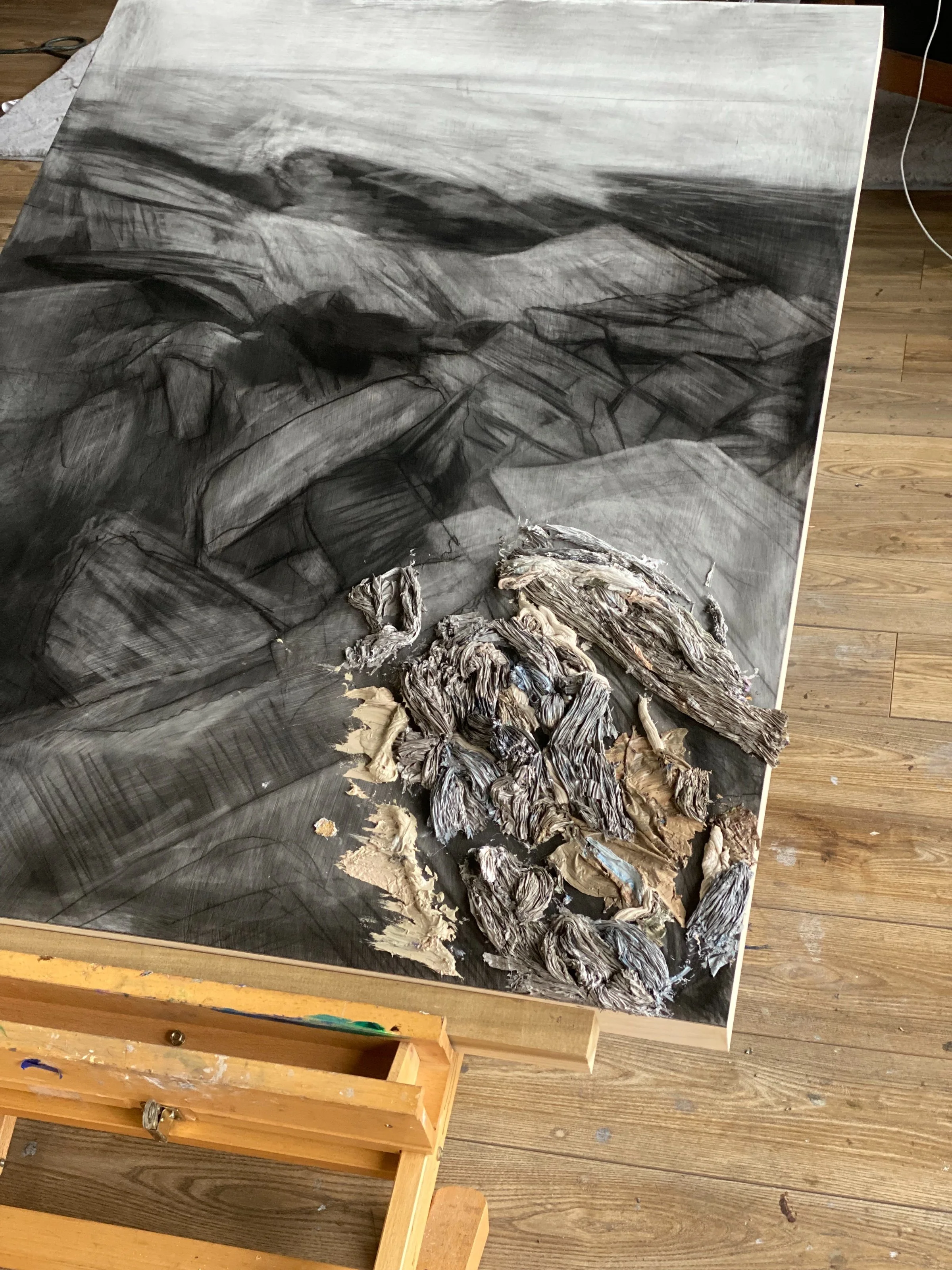
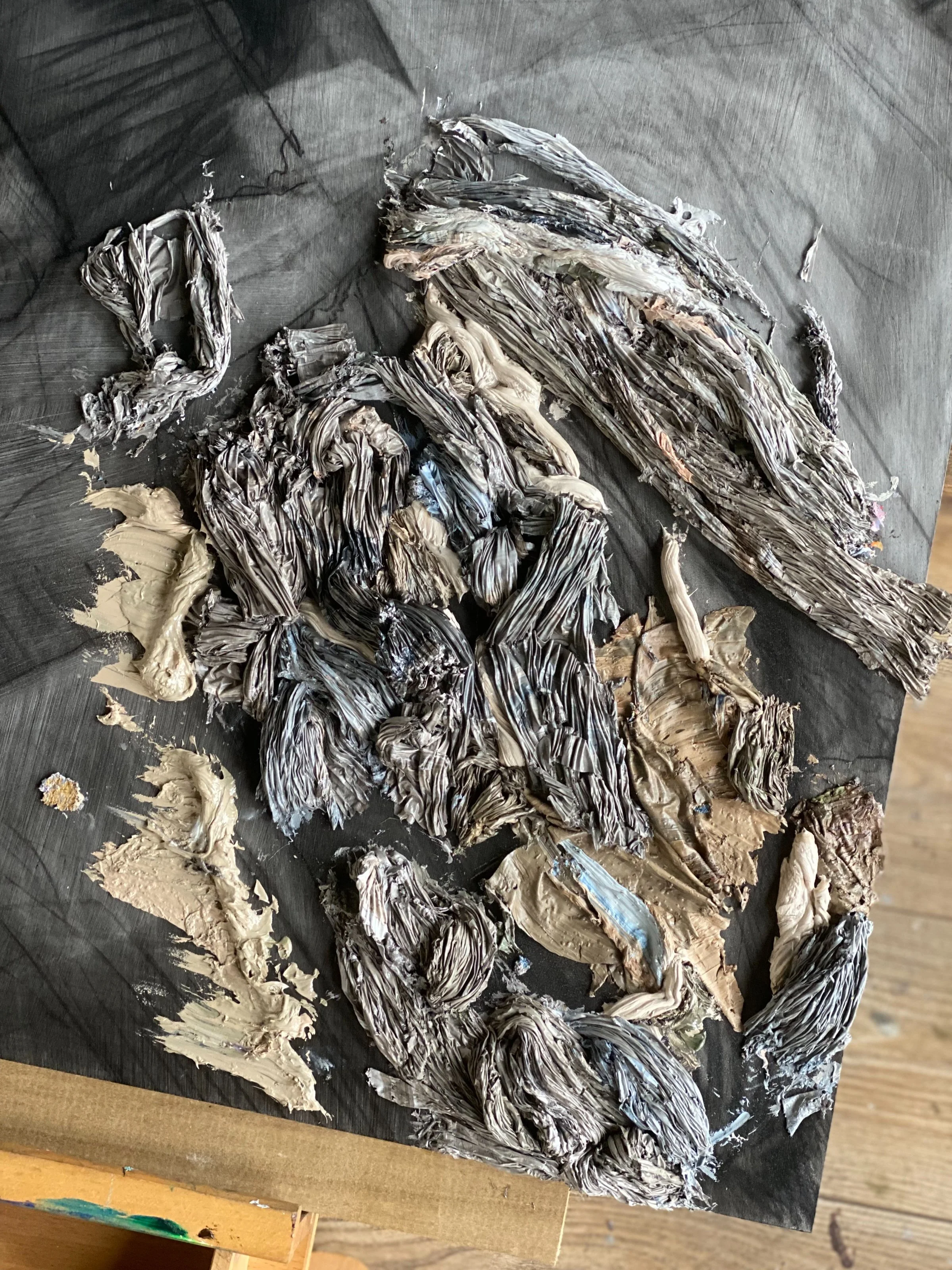
Sculpting what feels like the skin of my stone studies. Each form was once its own painting. I am focusing on midtones, and on building a base for the lighter tones that will come next. Once the base was established, the work became less about describing individual stones and more about engineering relationships: scale, edge logic, and the way the surface could carry light.
september 22, 2021
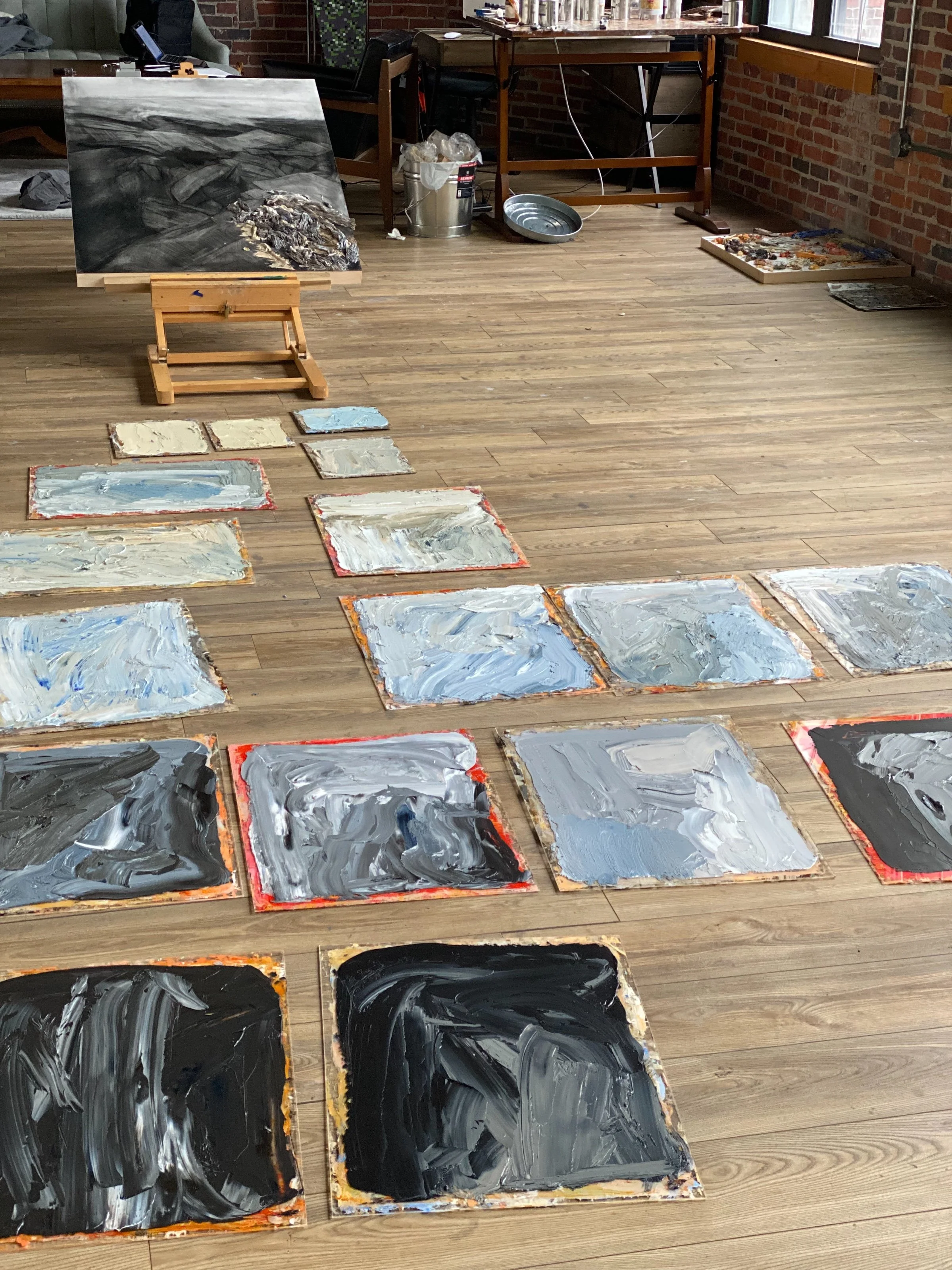
I return to the same place again and again, not to describe it, but to understand it. Each study is a way of testing relationships: how one form leans against another, how edges meet, how space holds between them. I’m painting the in-between things, the shifts and tensions that make a place feel alive.
I paint this way because it mirrors how my mind moves through the world. When everything feels loud, fast, and overfilled with information, building a painting from fragments helps me slow down and rebuild clarity. Laying studies out, comparing them, and piecing them together becomes a way to deconstruct experience and then reconstruct it into something I can actually stand inside of.
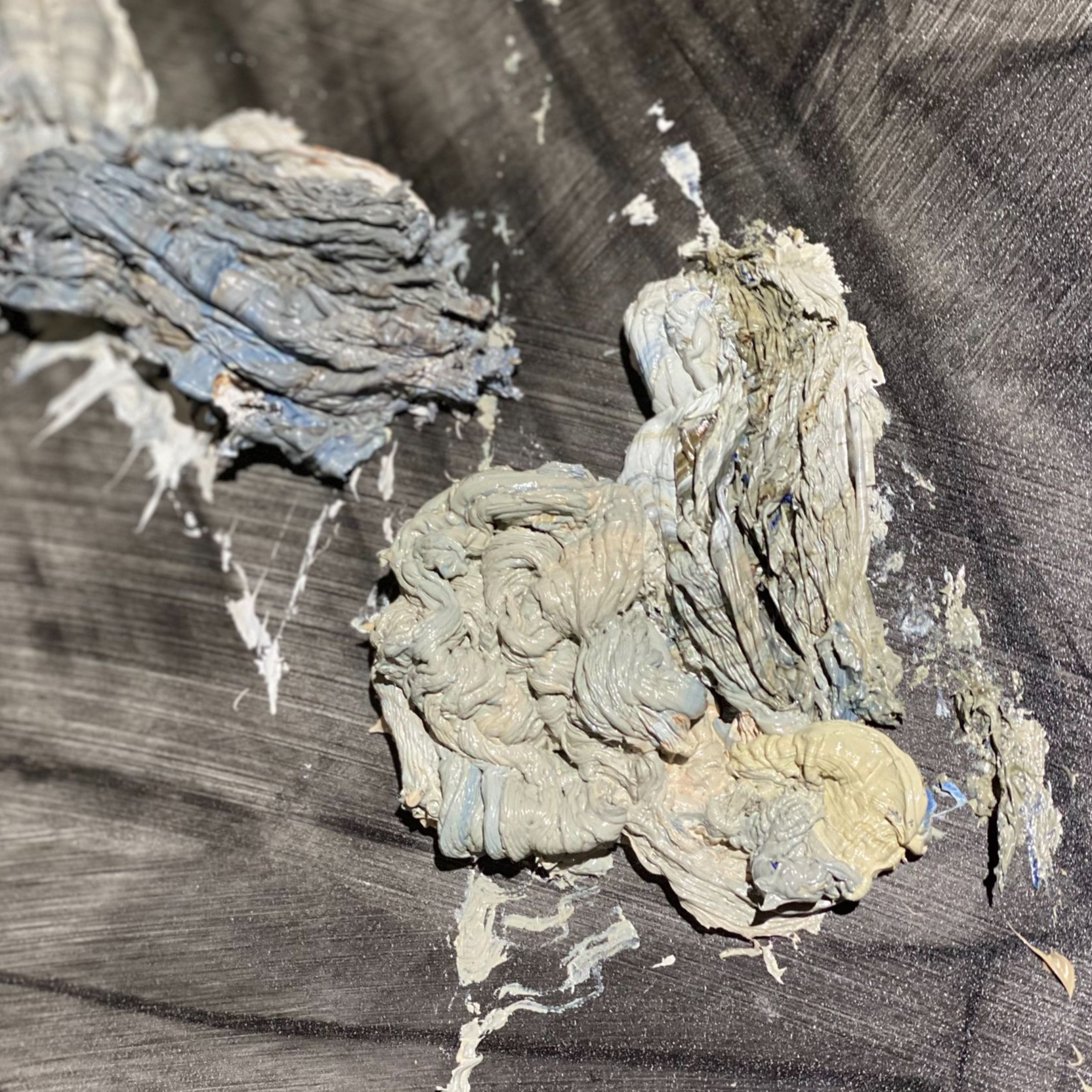
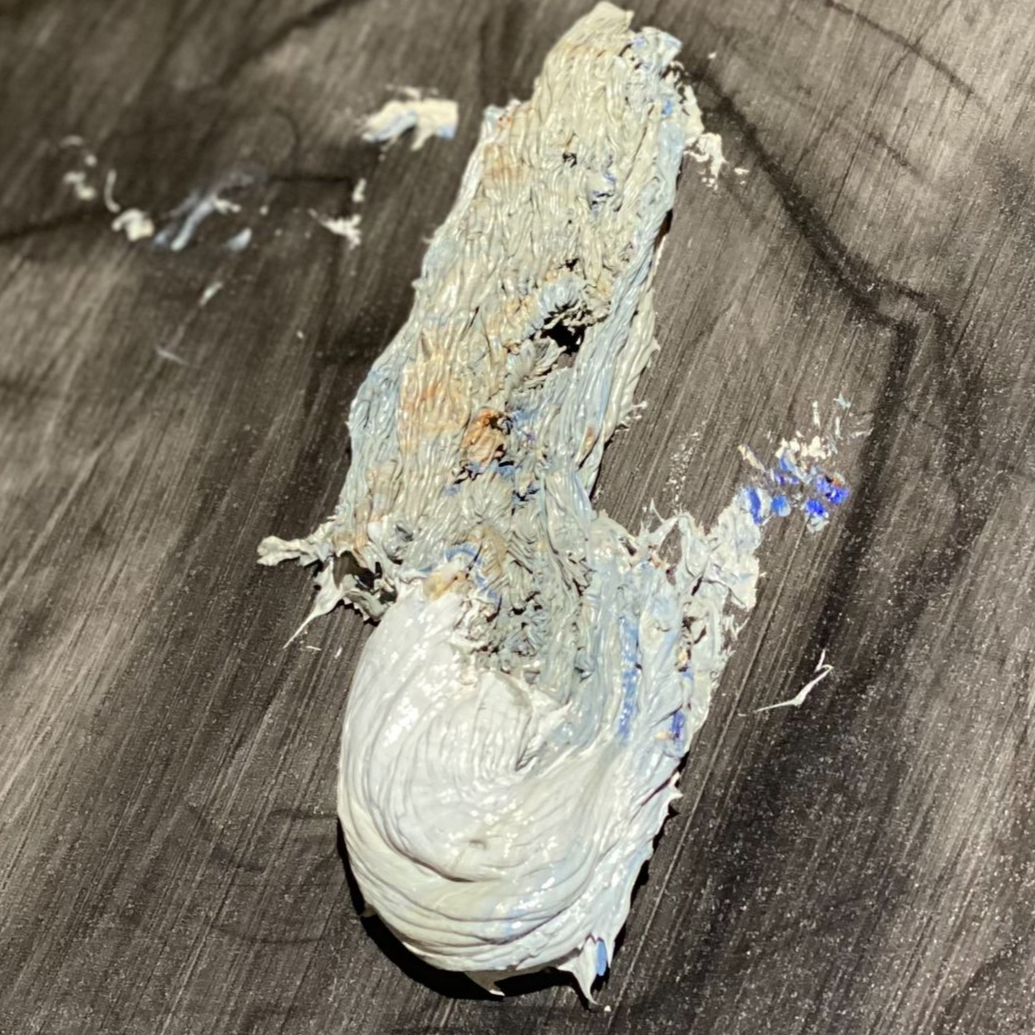
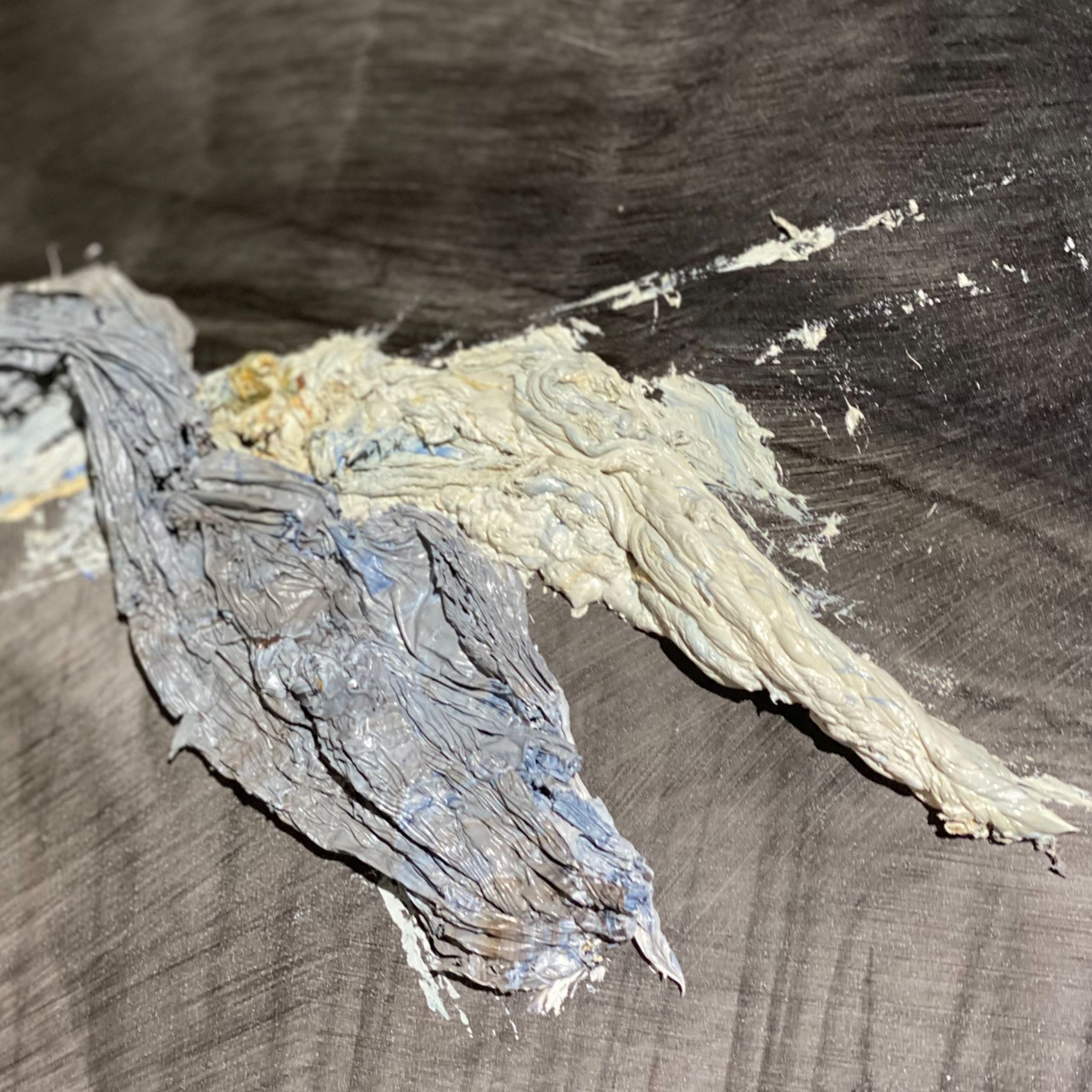
September 27, 2021
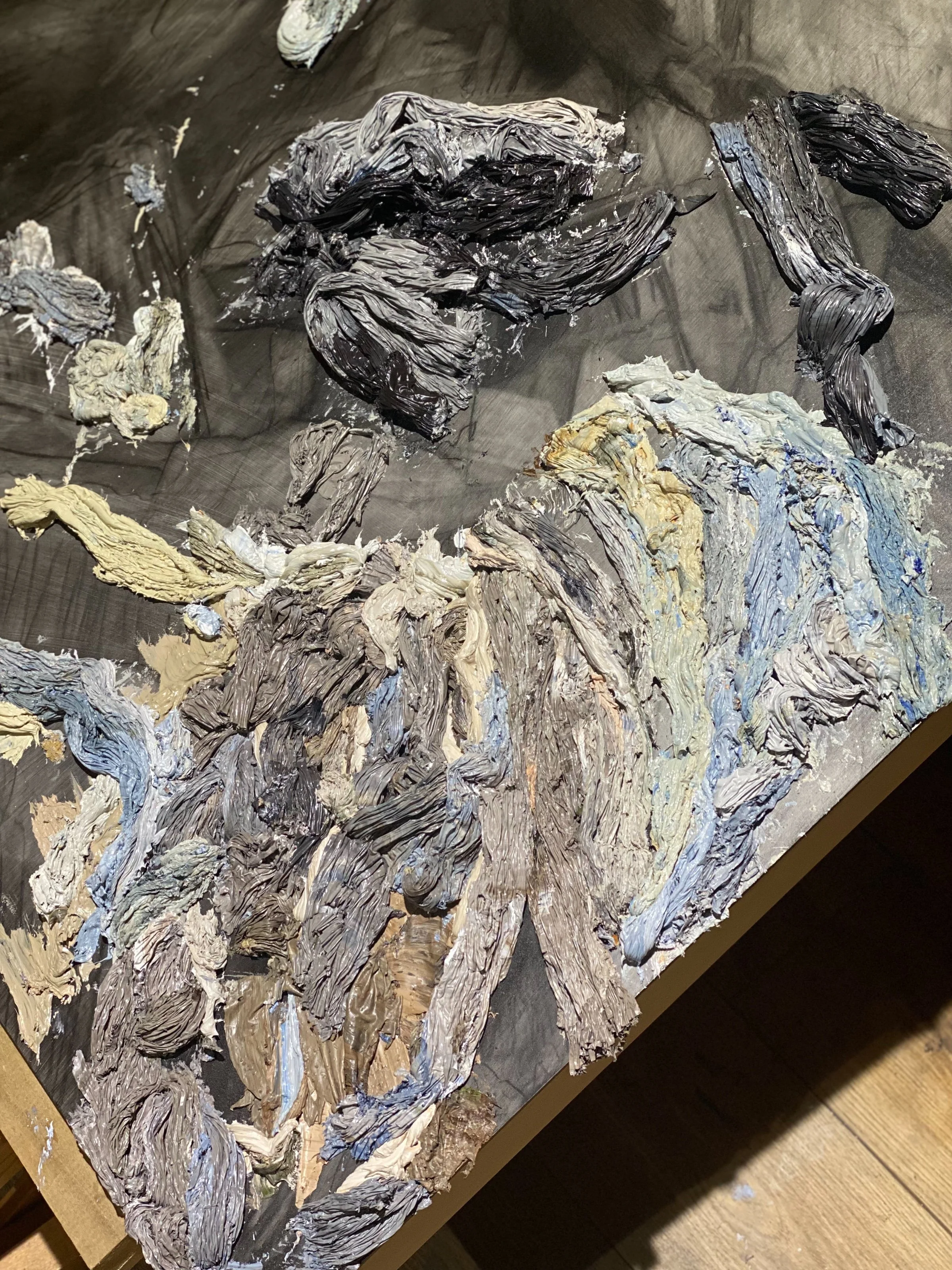
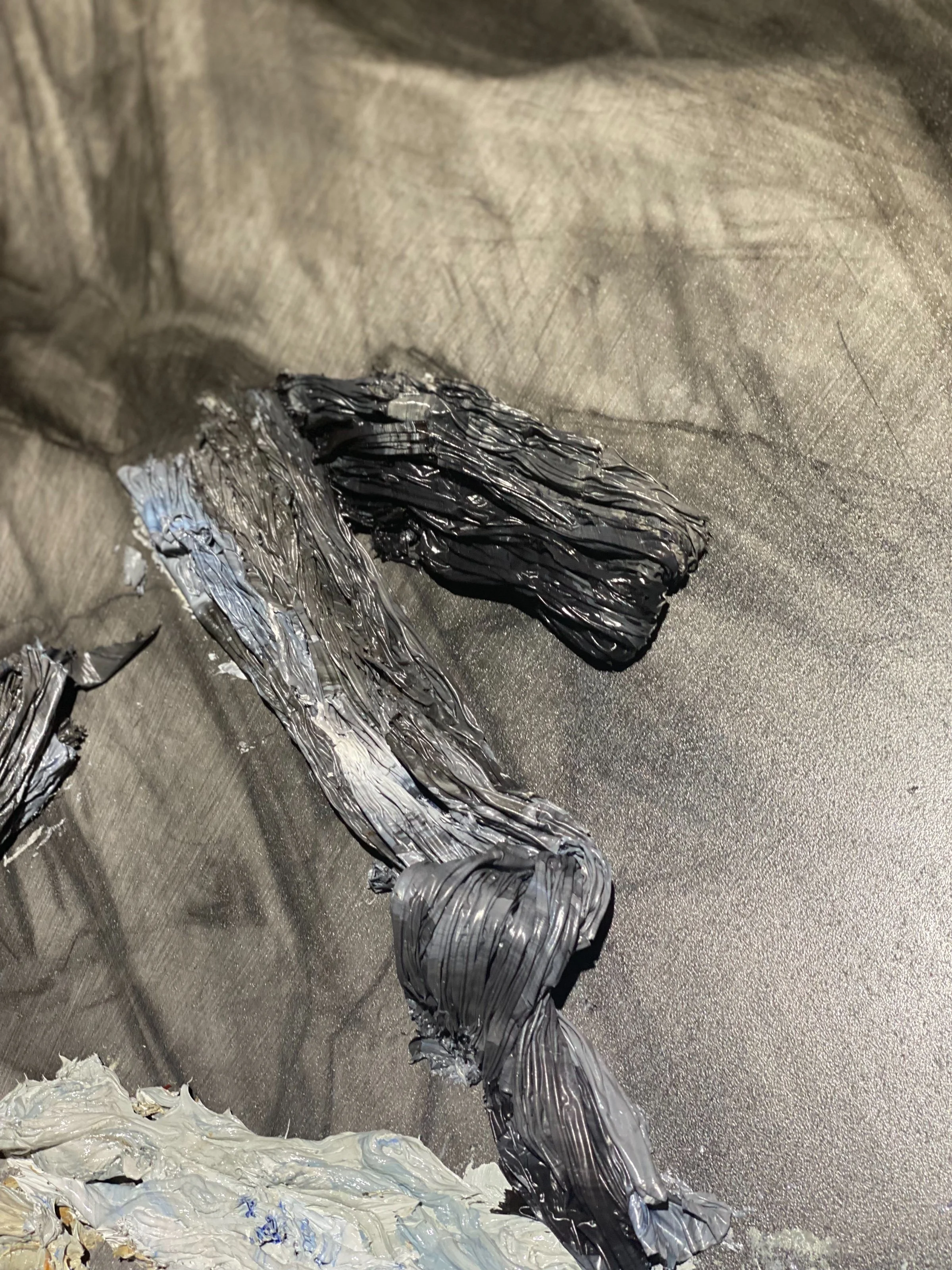
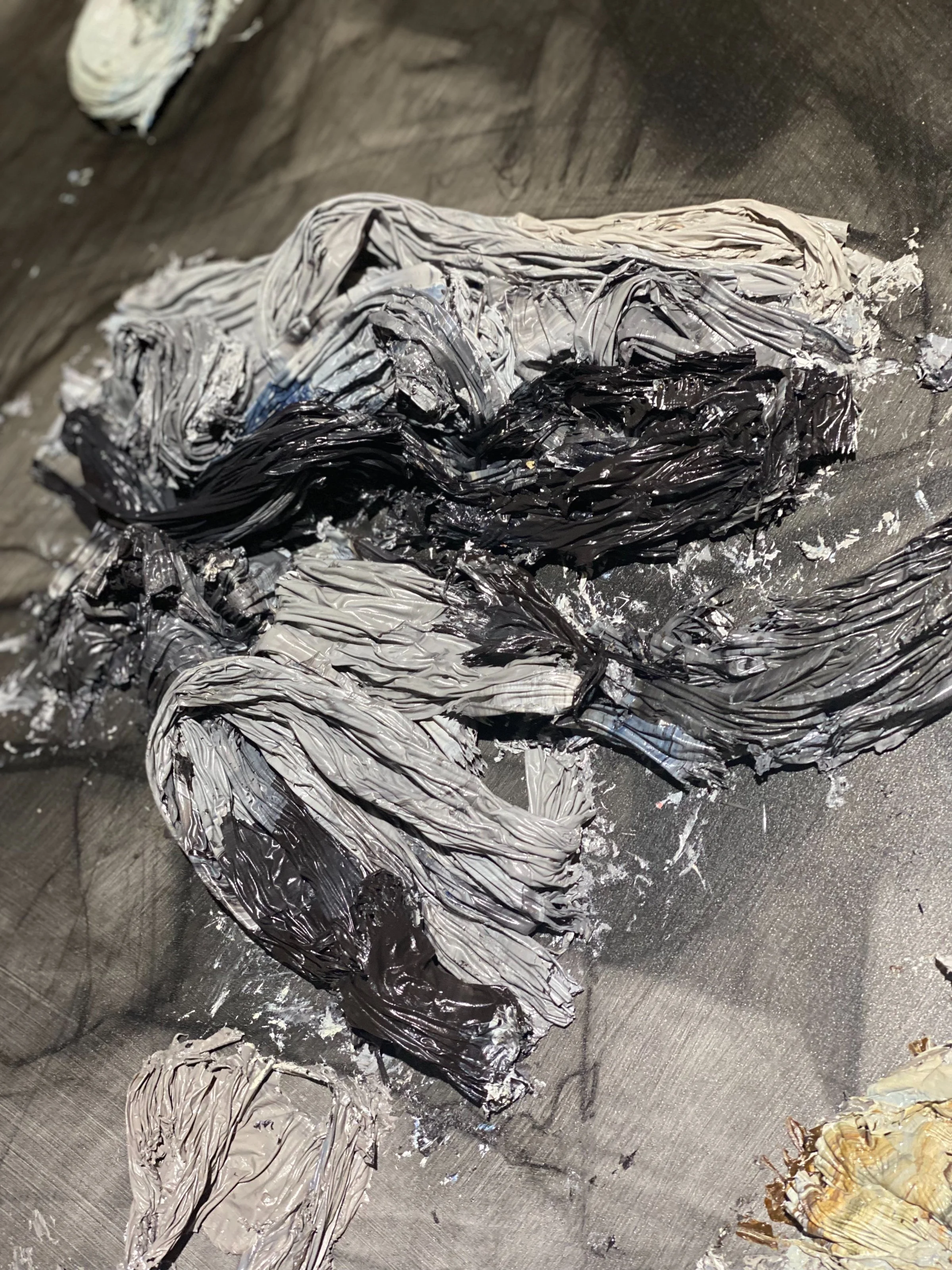
Mechanically, the work starts with a stack of small studies. I’ll make around a dozen from the same area, then bring them back to the studio and lay them out across the floor. From above, I “steal” sections that feel charged, an edge, a turn, a collision of shapes, and I begin to curate them the way you might arrange pieces of a mosaic. I scrape, carve, and re-draw into the surface, sculpting the composition by subtracting and rebuilding until the forms start to lock into place and the painting begins to move as one body.
September 28, 2021
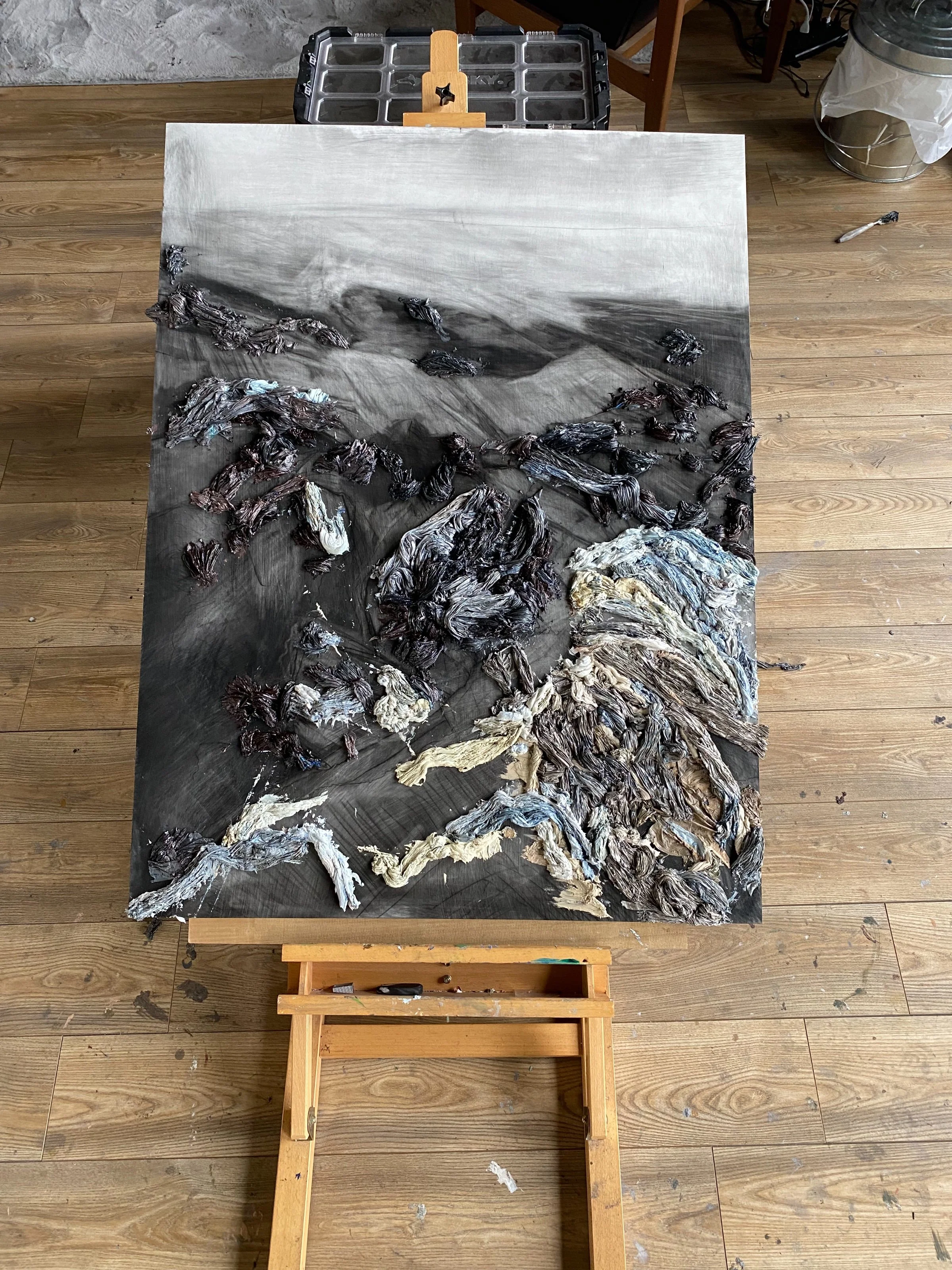
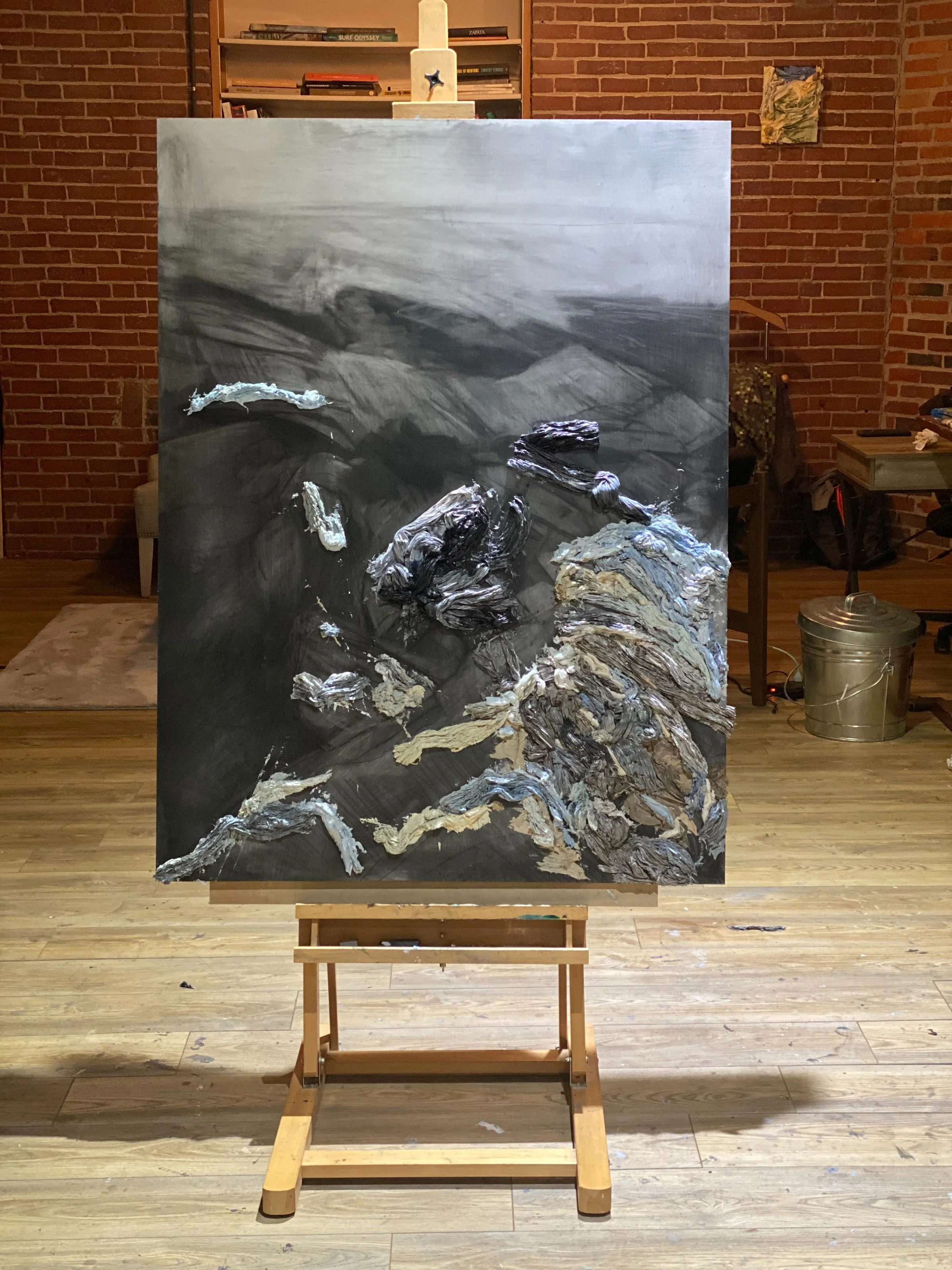
I’m very happy with the progress here. I’m setting myself up with a lot of spontaneity and improvisation before bringing controlling forms into the mix.
Having an easel that adjusts to lay flat is very important. If the light hits my forms in a way that creates an unintended shape, I will lose control of the outcome.
September 29, 2021
I’m currently working in the stones and grassy areas. In my reference material, the larger rocks feel balanced, almost stacked, with lichens and greens wedged between them, wrapping around edges, and pooling on top like a living mortar. That growth becomes its own structure. I am less interested in describing each rock than I am in locating the windows the greenery creates, the negative shapes that briefly reveal the foundation stone underneath. Those in-between pockets are where the painting starts to organize itself.
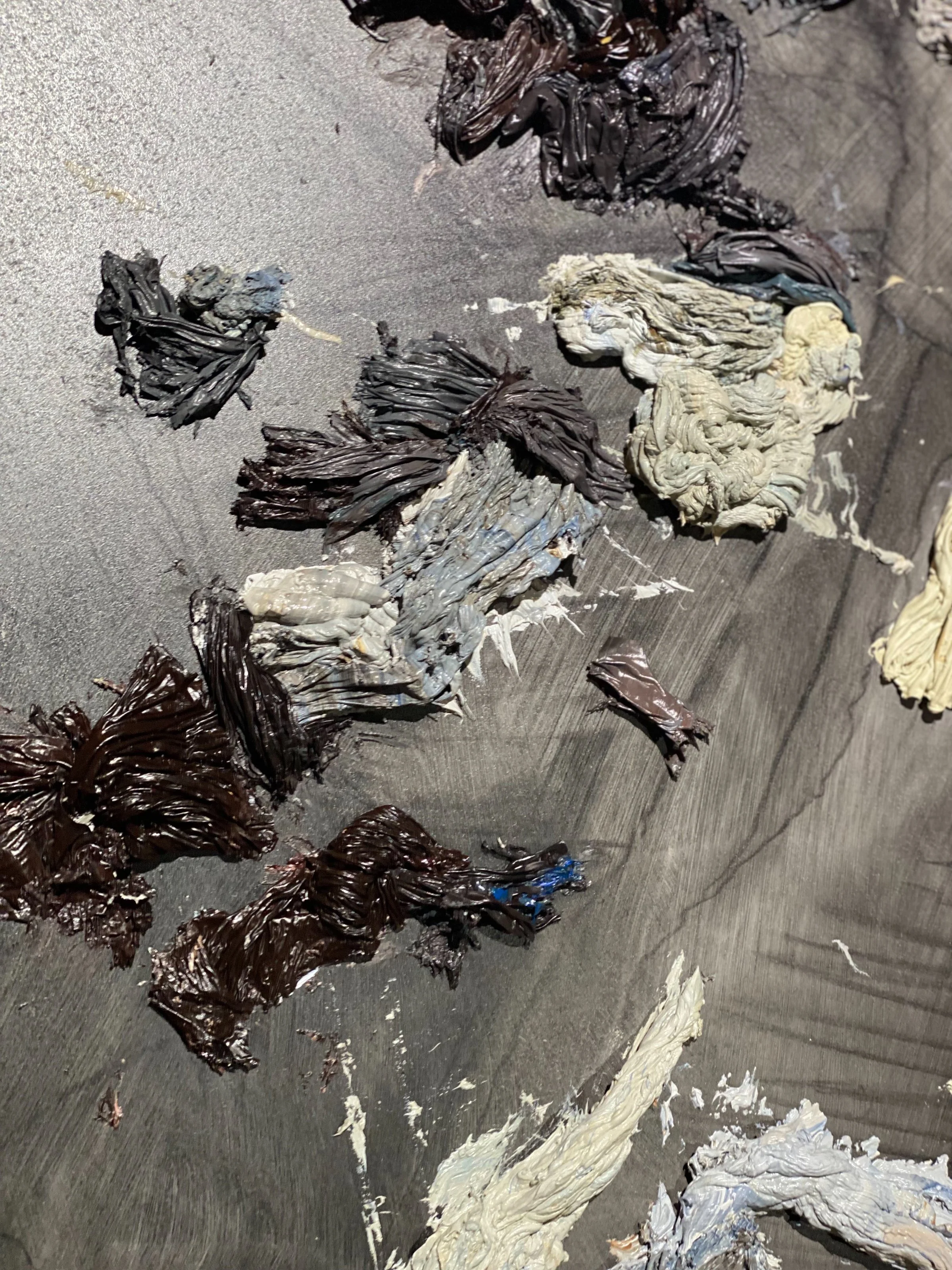
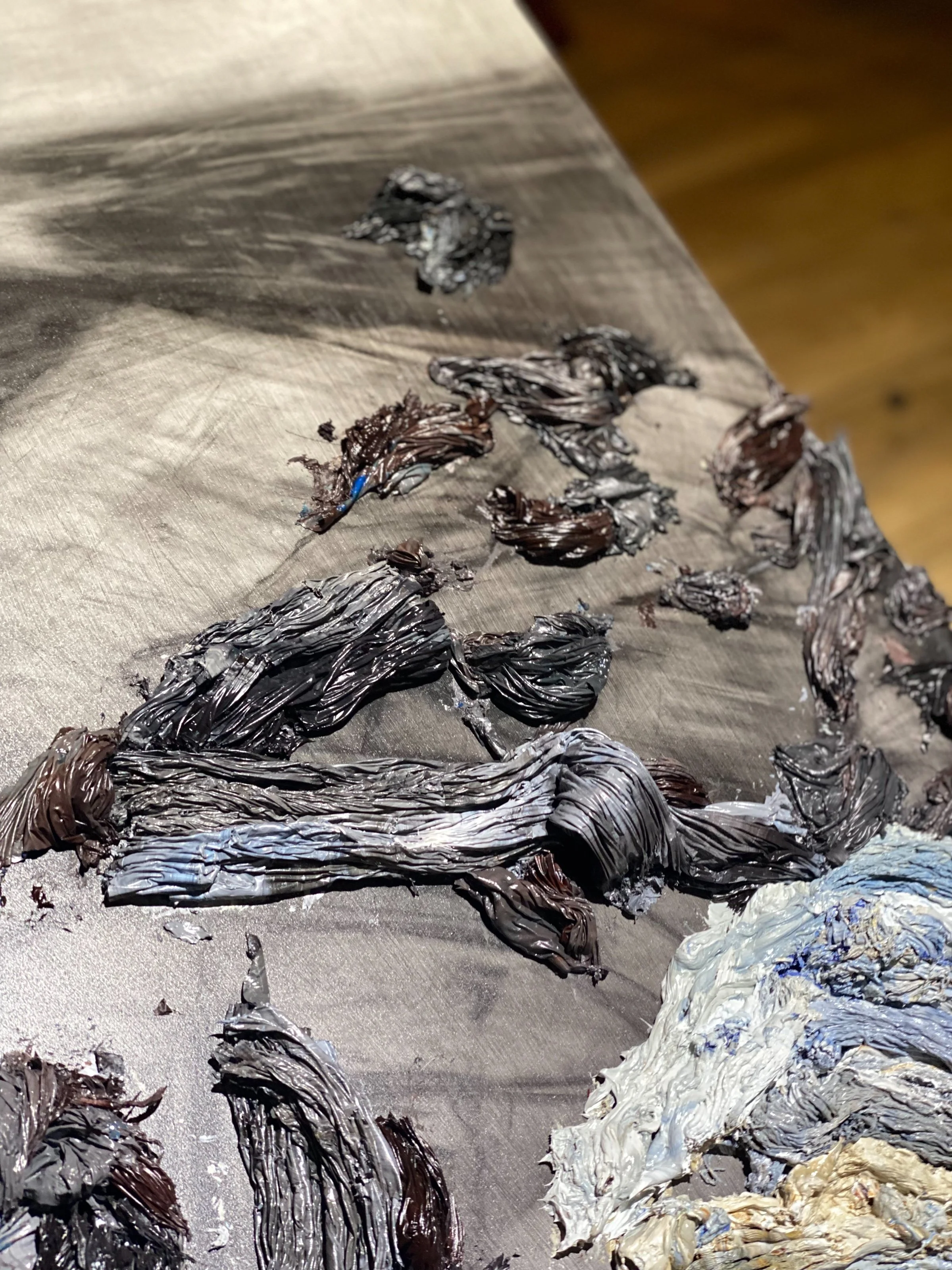
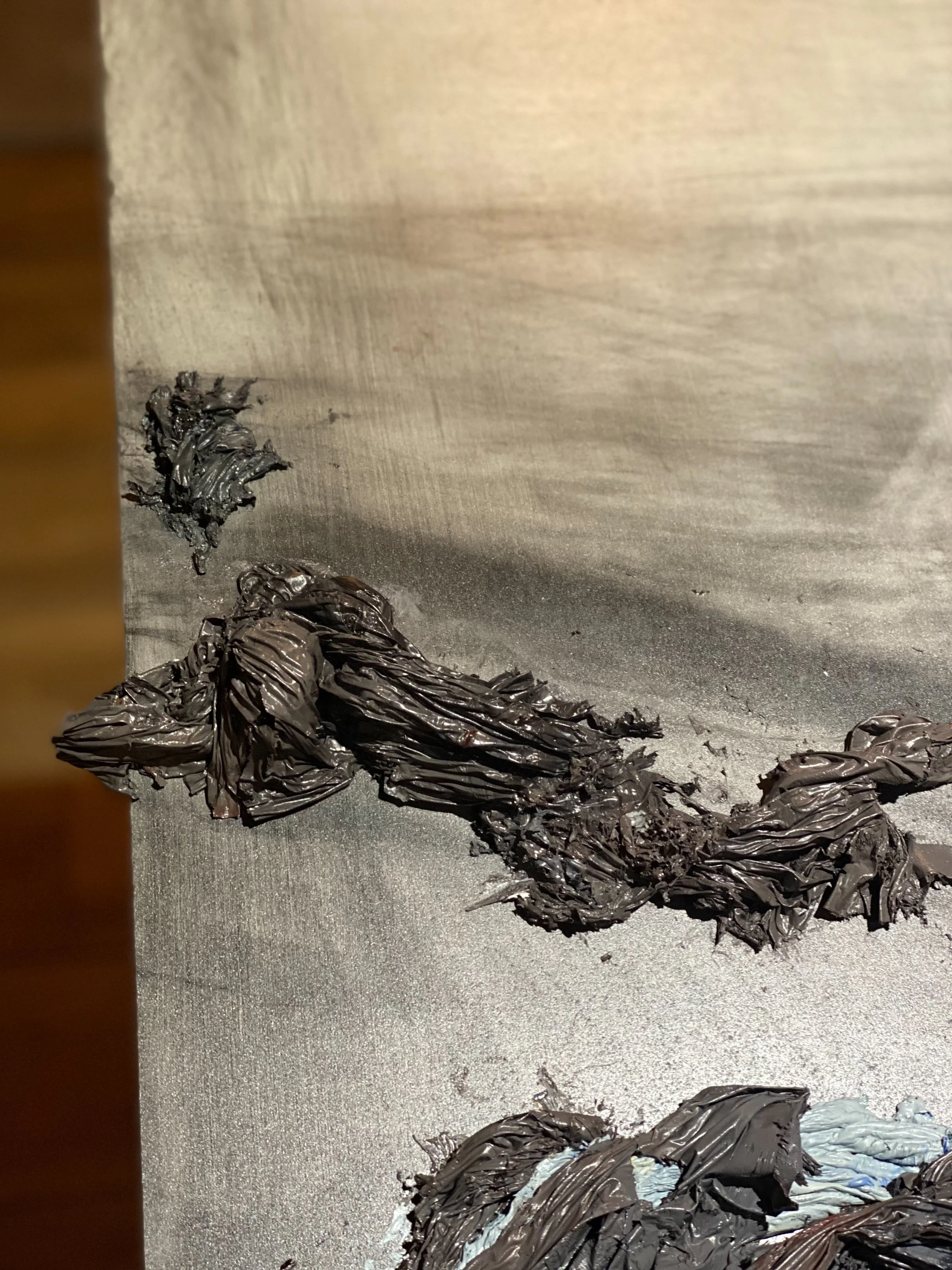
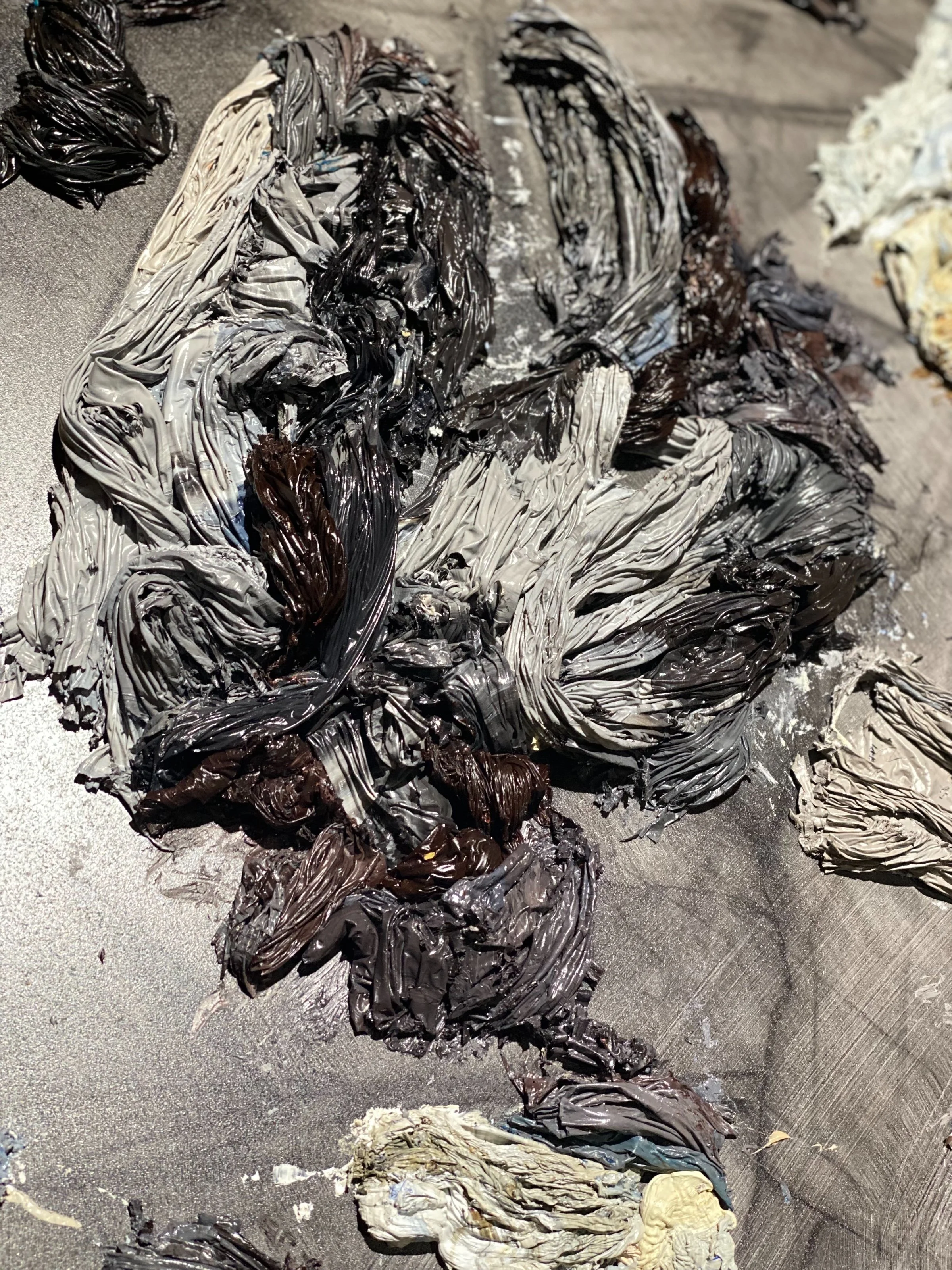
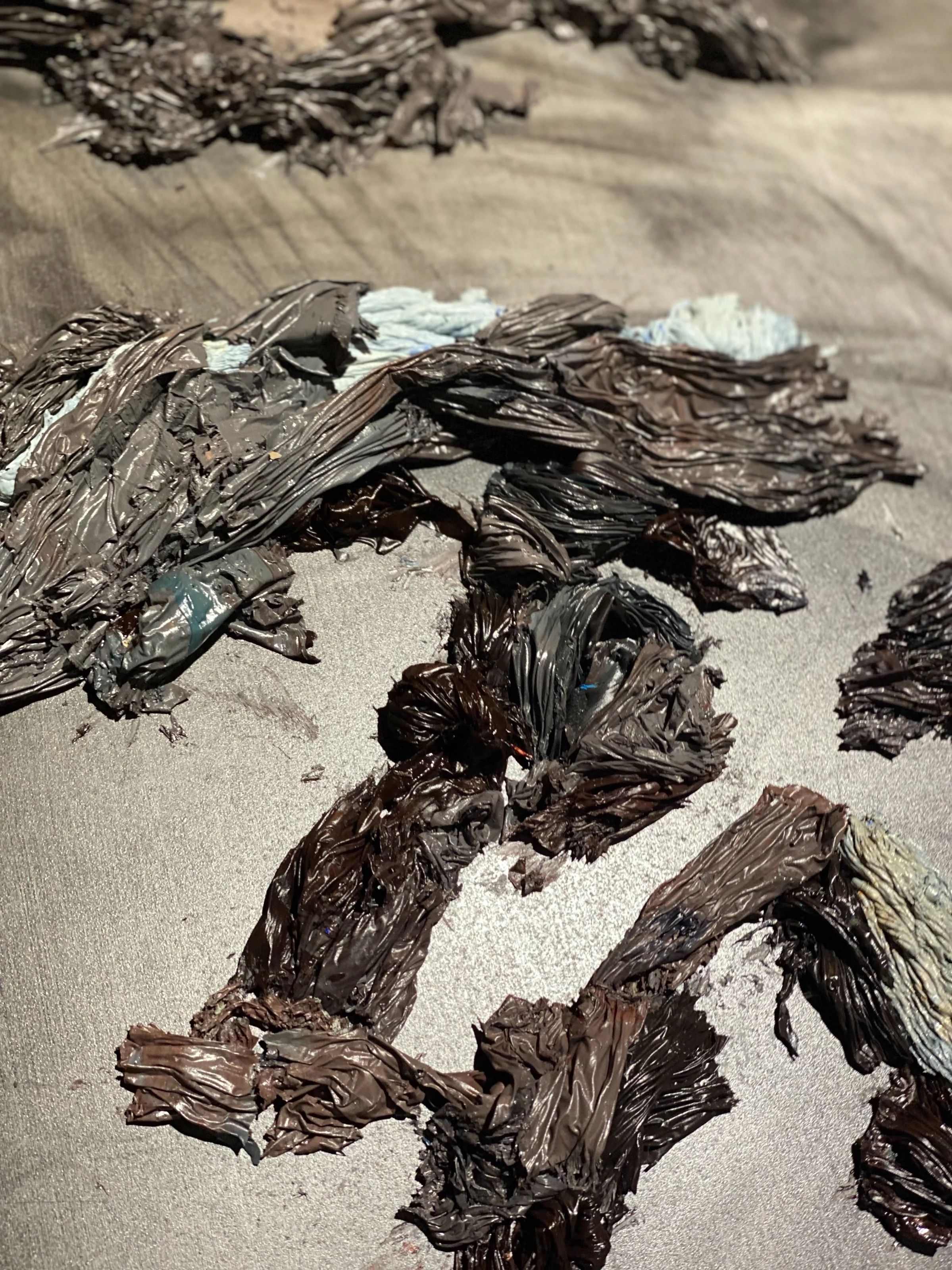
As I build, the forms sometimes begin to curl, like a bent cloth lifting off a surface. That curl matters, because I am essentially manipulating and sculpting the skin of one painting so it can be transported onto another surface while keeping its integrity. Sometimes I need a color on one side of a form to sit beside a different color within that same form, so I sculpt and re-position the edge until the relationship feels inevitable.
I also pay close attention to the shadows these raised forms cast. The shadows are not accidents. They are compositional tools that create new relationships and new values. If a shadow moves across the lightest area of the painting, it immediately generates a mid-tone, and that mid-tone becomes a hinge for everything around it. Every action is an opportunity.
Today, the curl gave me a way to emphasize the light blues in the same form twice: once through the color itself, and again through the shadow it throws. It is a small shift, but it changes the whole logic of the passage. The painting starts to feel less like separate studies stitched together and more like one body, turning in light.
October 5, 2021
At this point the painting started to read as a whole, and new problems appeared. The biggest one was spatial: how to preserve a foreground without making the distance feel too loud.
The final result is starting to emerge, but I still need to develop the rest of the image and the relationships within it. I'm a bit concerned about the size of the forms at the top of the piece. Although the shapes are correct, if the forms at the top are larger than those at the bottom, it will affect the viewer’s ability to perceive a foreground.
That might be interesting, but it’s not what I’m aiming for this time.
October 6, 2021
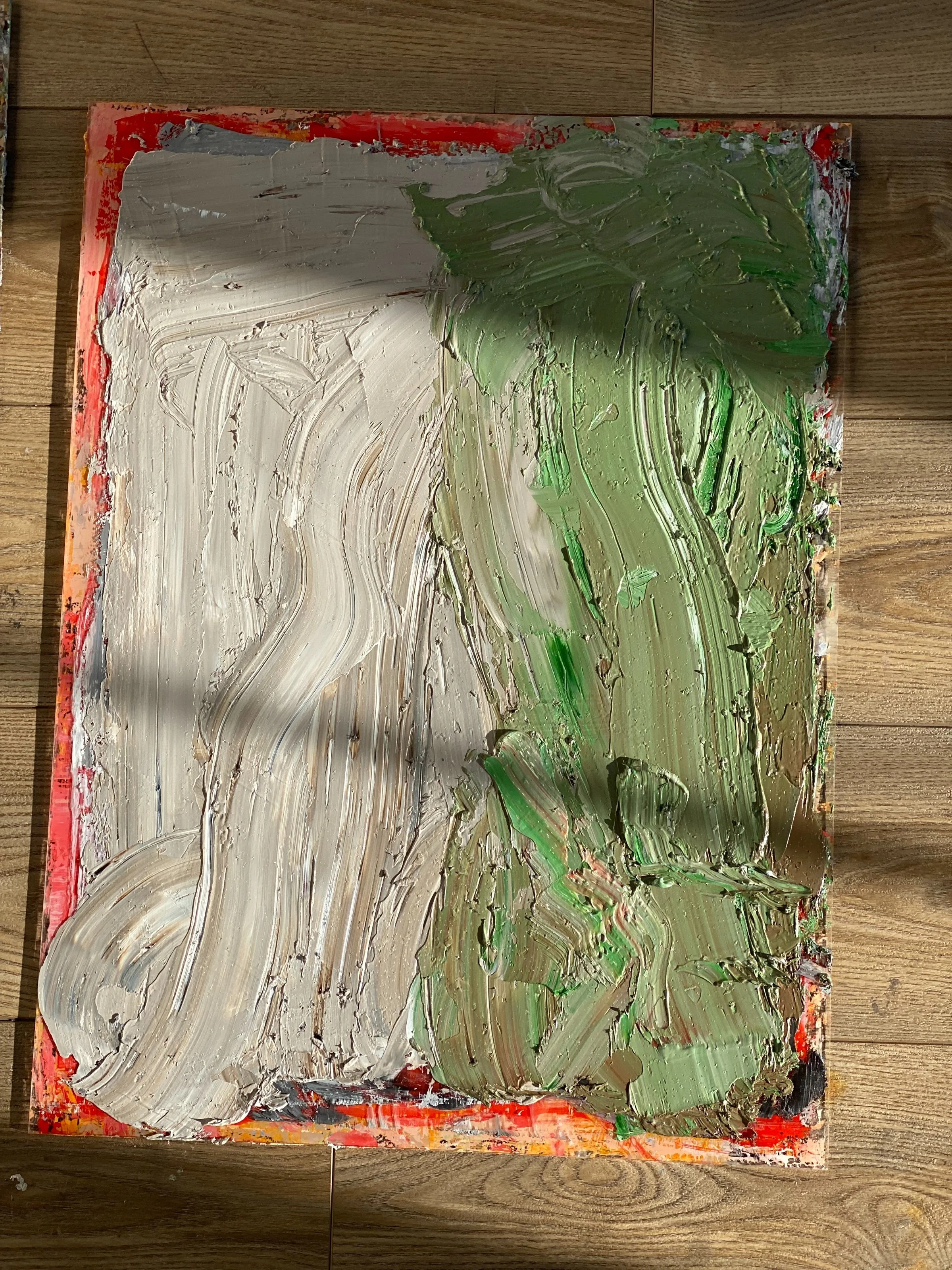
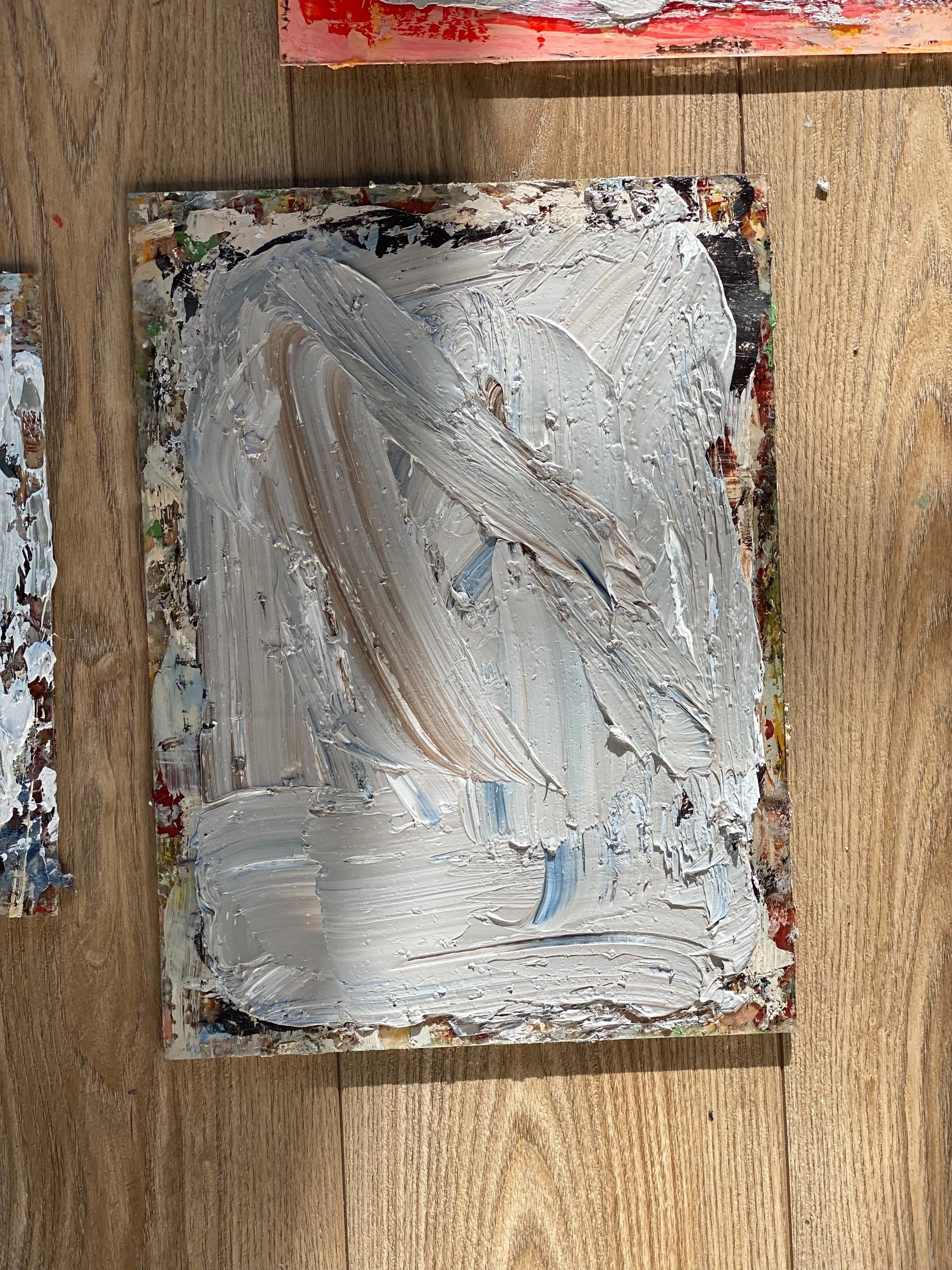
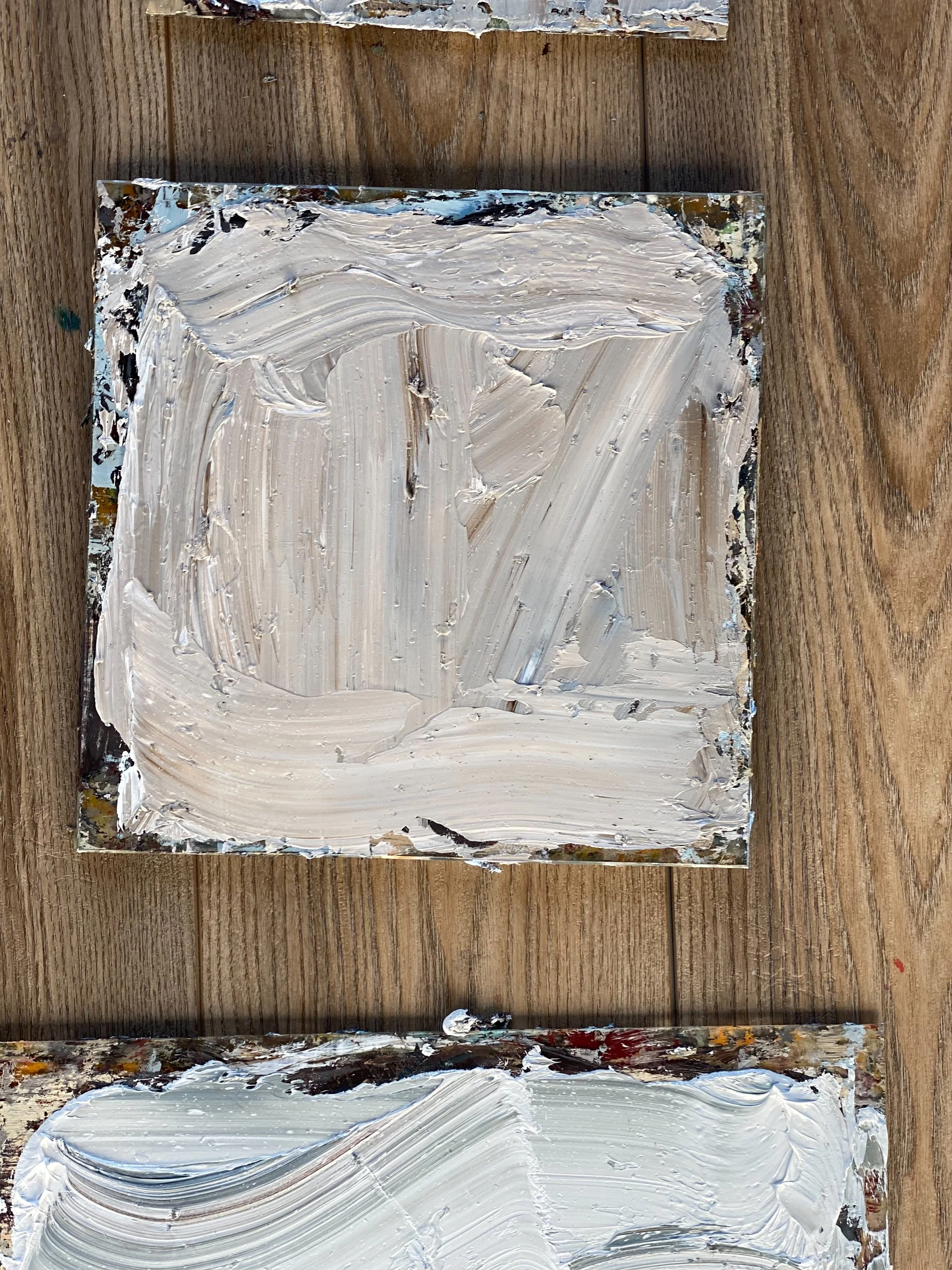
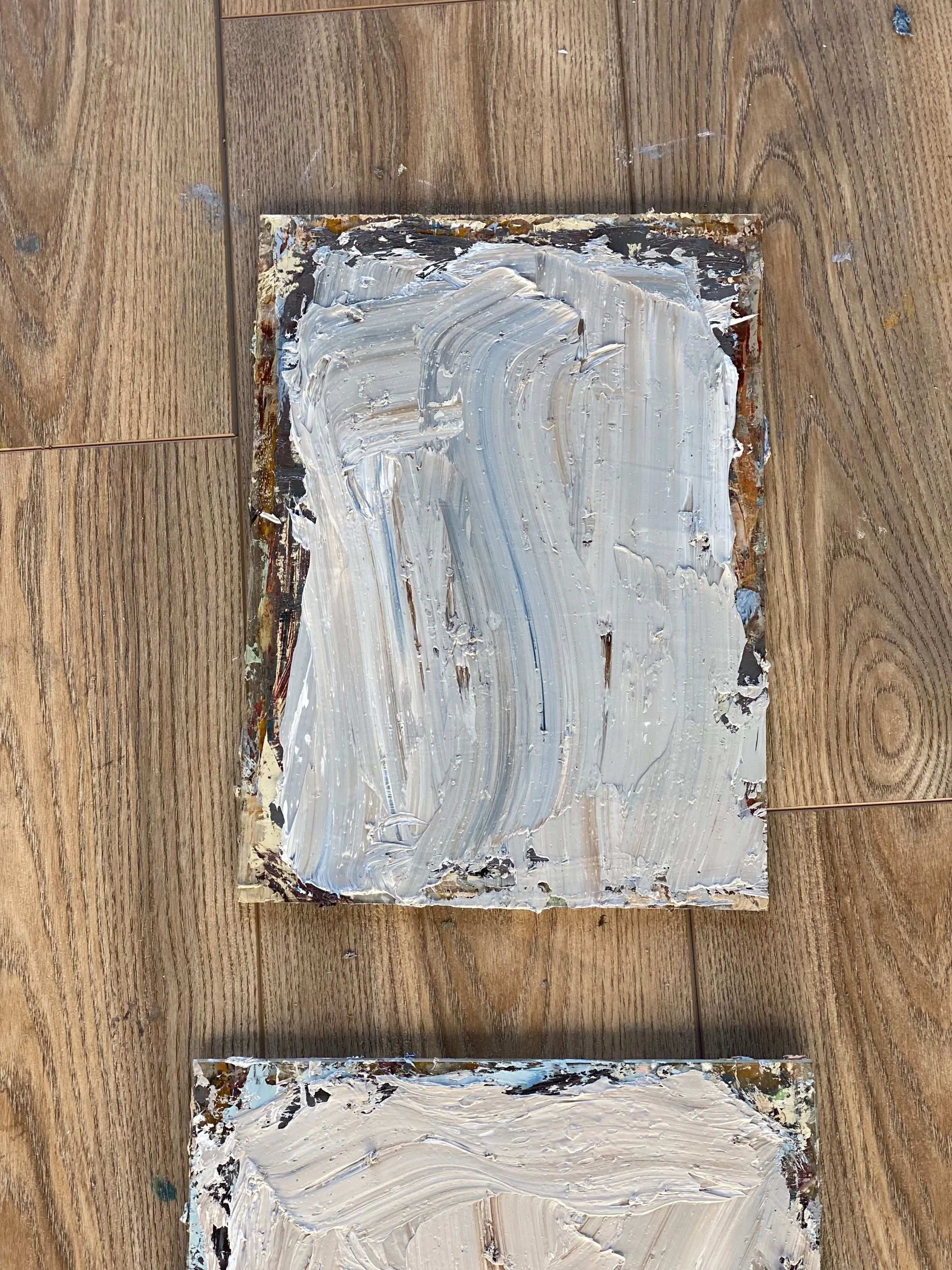
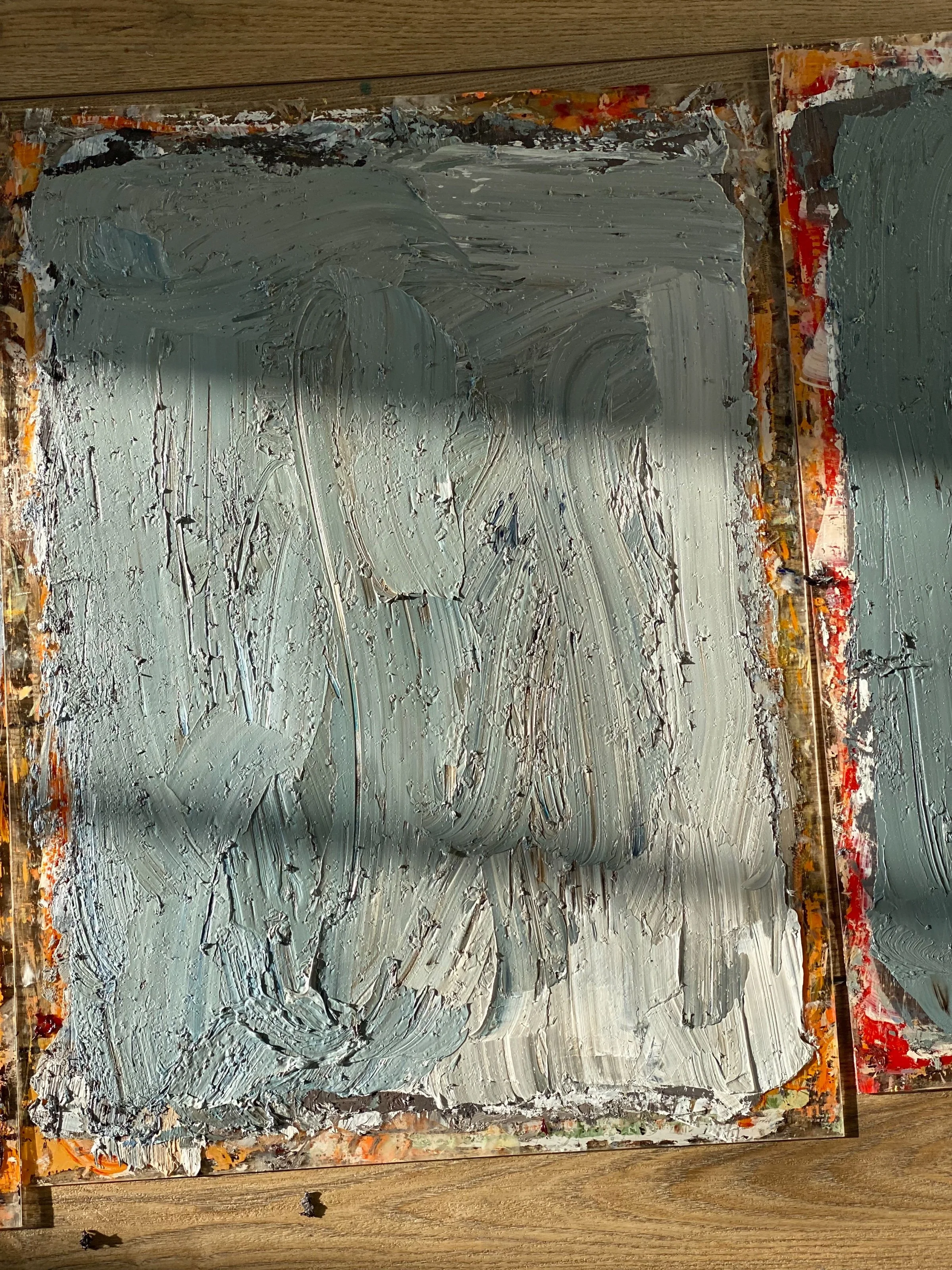
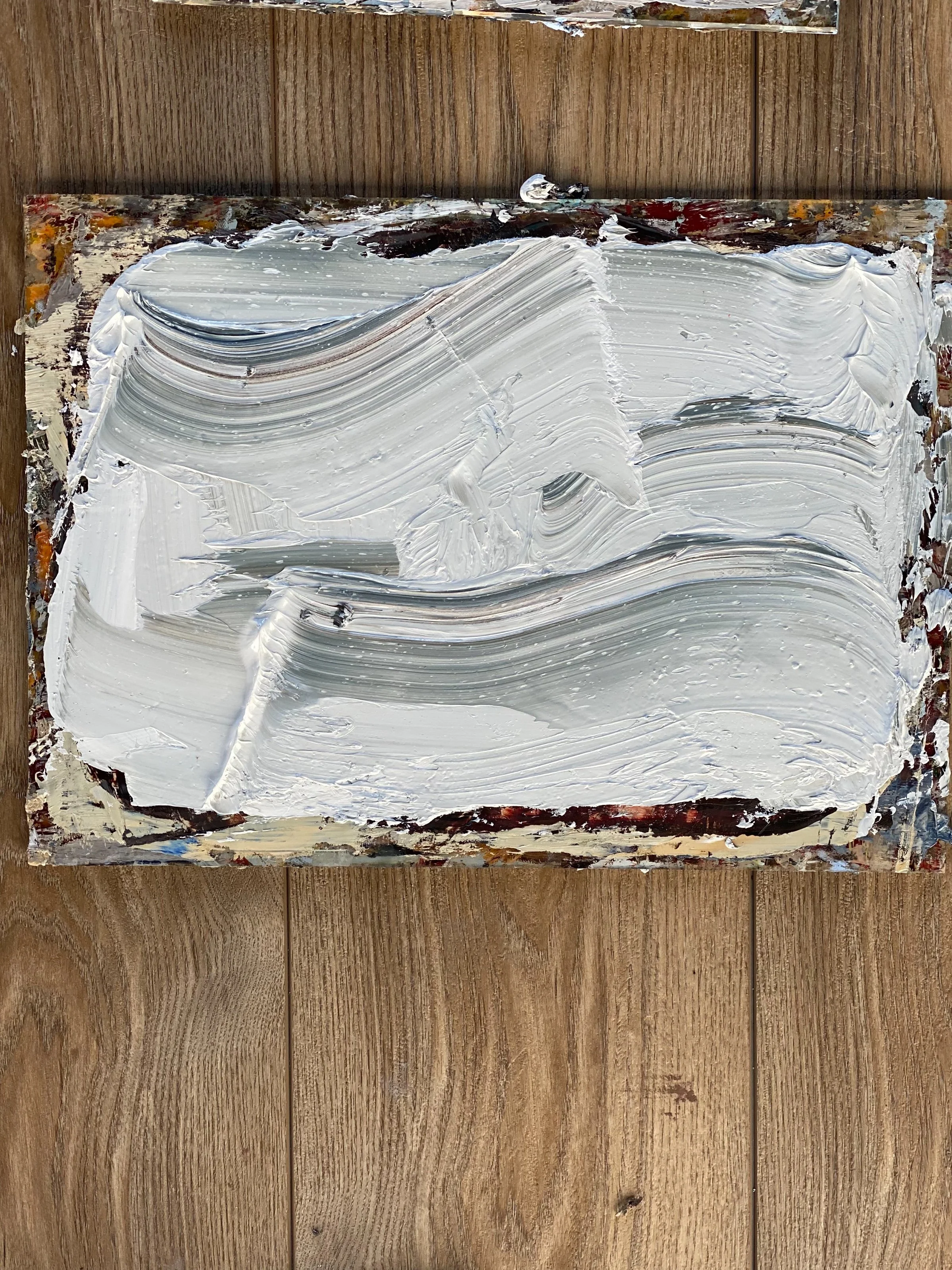
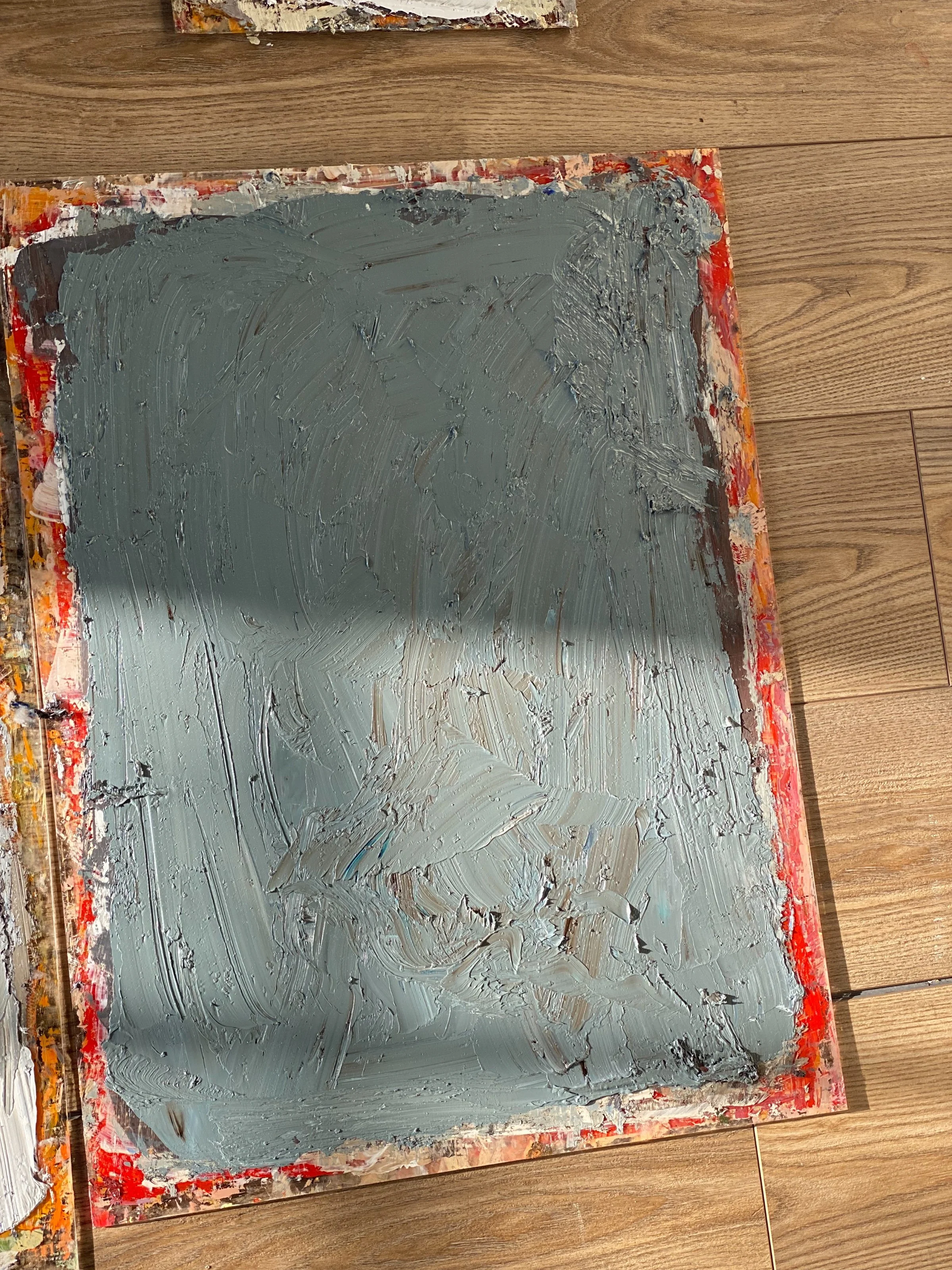
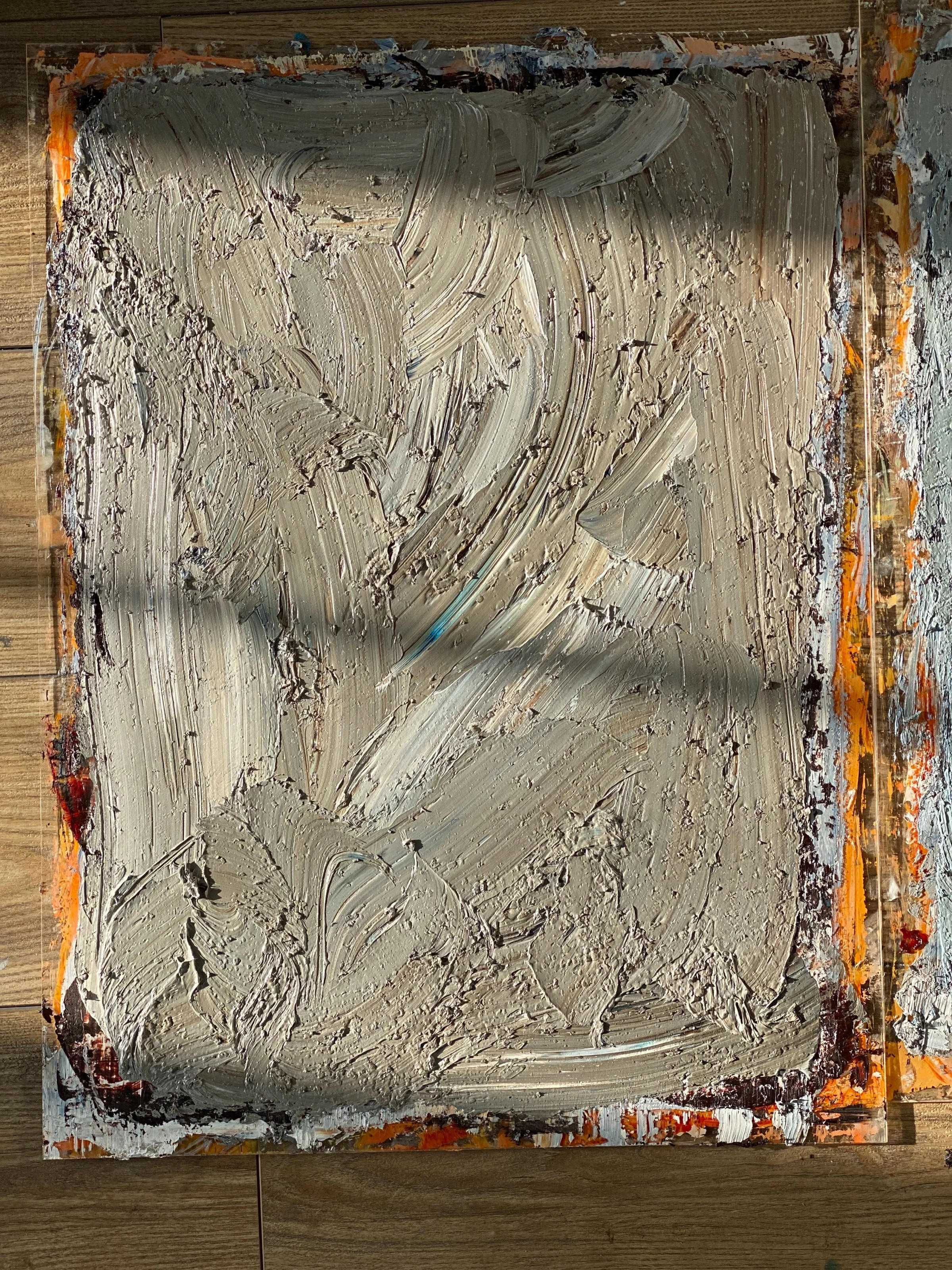
I’m looking to build on the progress I made the other day, but I can feel what the surface is asking for next. The forms I have already created carry a sheen, a kind of light-catching clarity, and now I need a texture that can sit beside that gloss without competing with it. It has to complement the shine, not flatten it. It has to give the eye somewhere else to land.
This is where the studies become more than references. In each one, I’m testing not only what needs to be added, but how it needs to behave. I am hunting for textures I might need, and noticing the ones I should avoid or neglect. Some marks look exciting in isolation, but collapse the structure when they are asked to live next to a quieter passage. Other textures do the opposite, they hold the painting together, they create a rhythm, they let the sharper forms feel even sharper.
Up close, I want the experience of looking at this work to feel as vivid as being there in person. That is the point of the controlled variety. I want the surface to shift as you move: slick against matte, scraped edges against soft transitions, dense clusters of information against open breathing room. The painting needs to reward attention at every distance, but it still has to read as one coherent body.
October 9, 2021
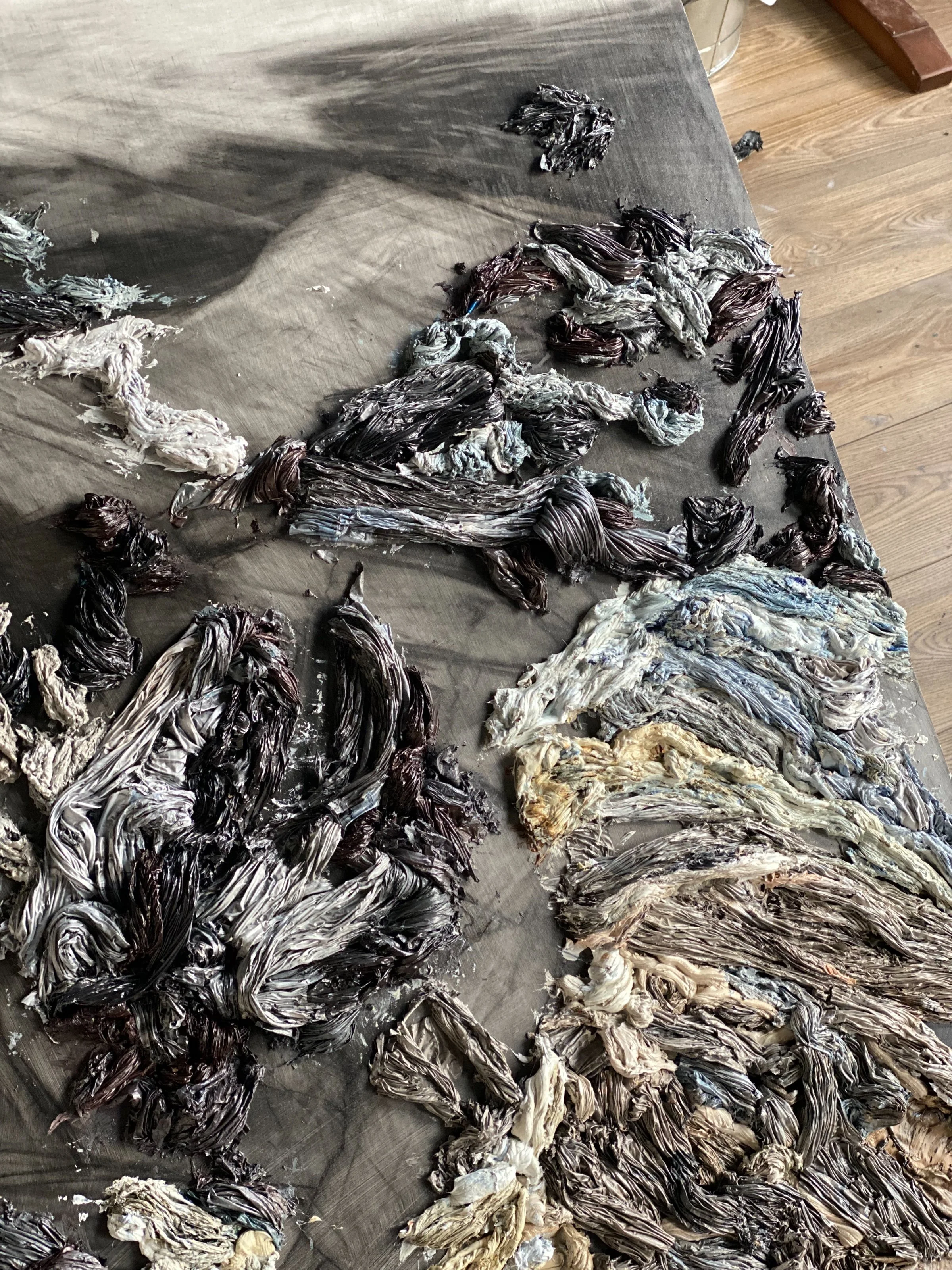
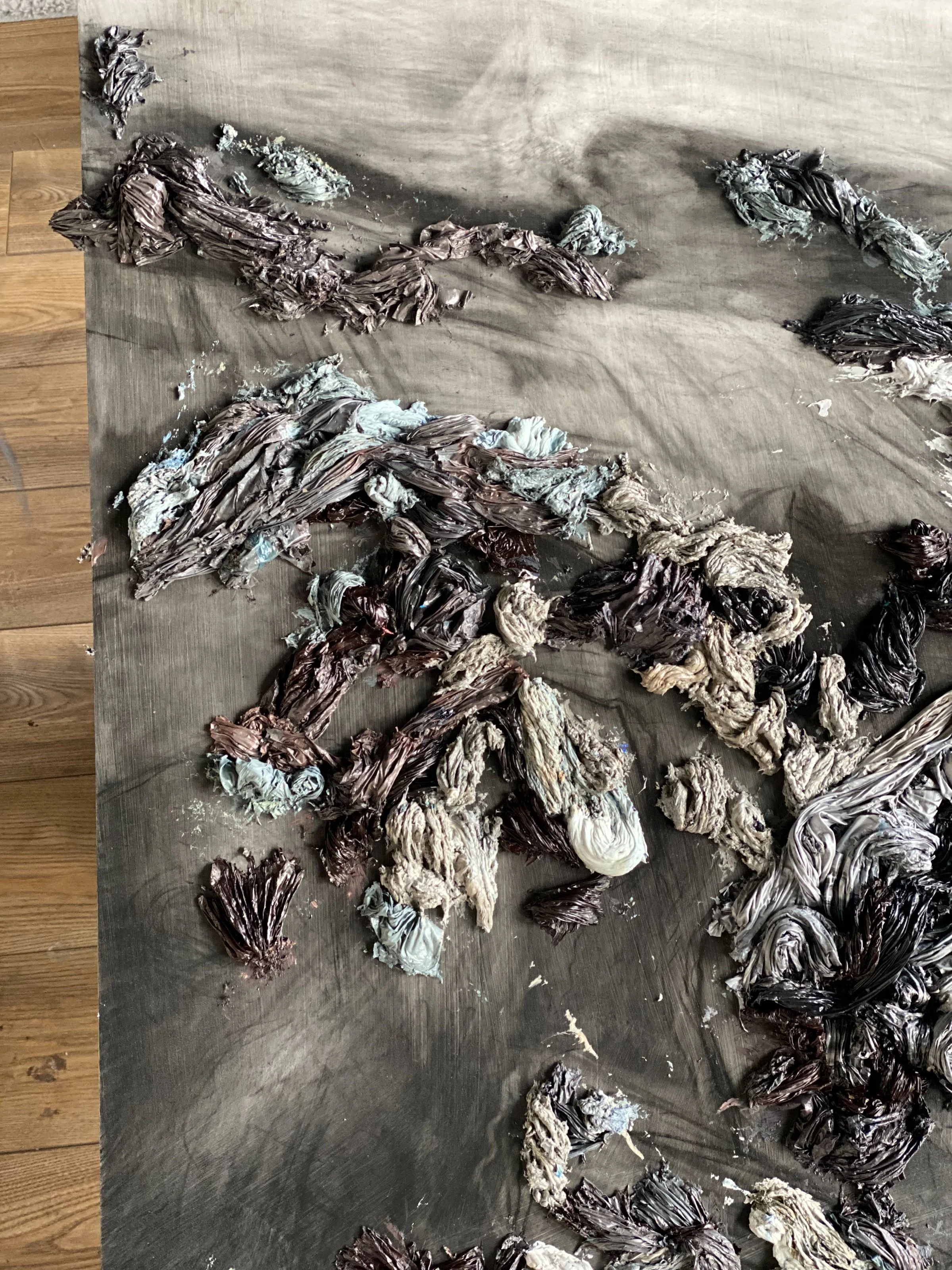
I’m very excited about this progress. I get a lot of enjoyment from sitting and deliberating over my work. Before I touch the surface again, I take time to think through my objectives, define the next steps, and strategize a few possible outcomes. This kind of painting I’m developing, my painting, lets me deliberate over decisions in a way that actually suits how I think. The work is built to be paused, reconsidered, and re-entered with intention.
In a more traditional academic sense, when I sit down to paint, it is on one primed and ready surface. I continue to apply, thin, and manipulate material until a satisfactory state is achieved. Then I step away, and I can theorize how the next session will go.
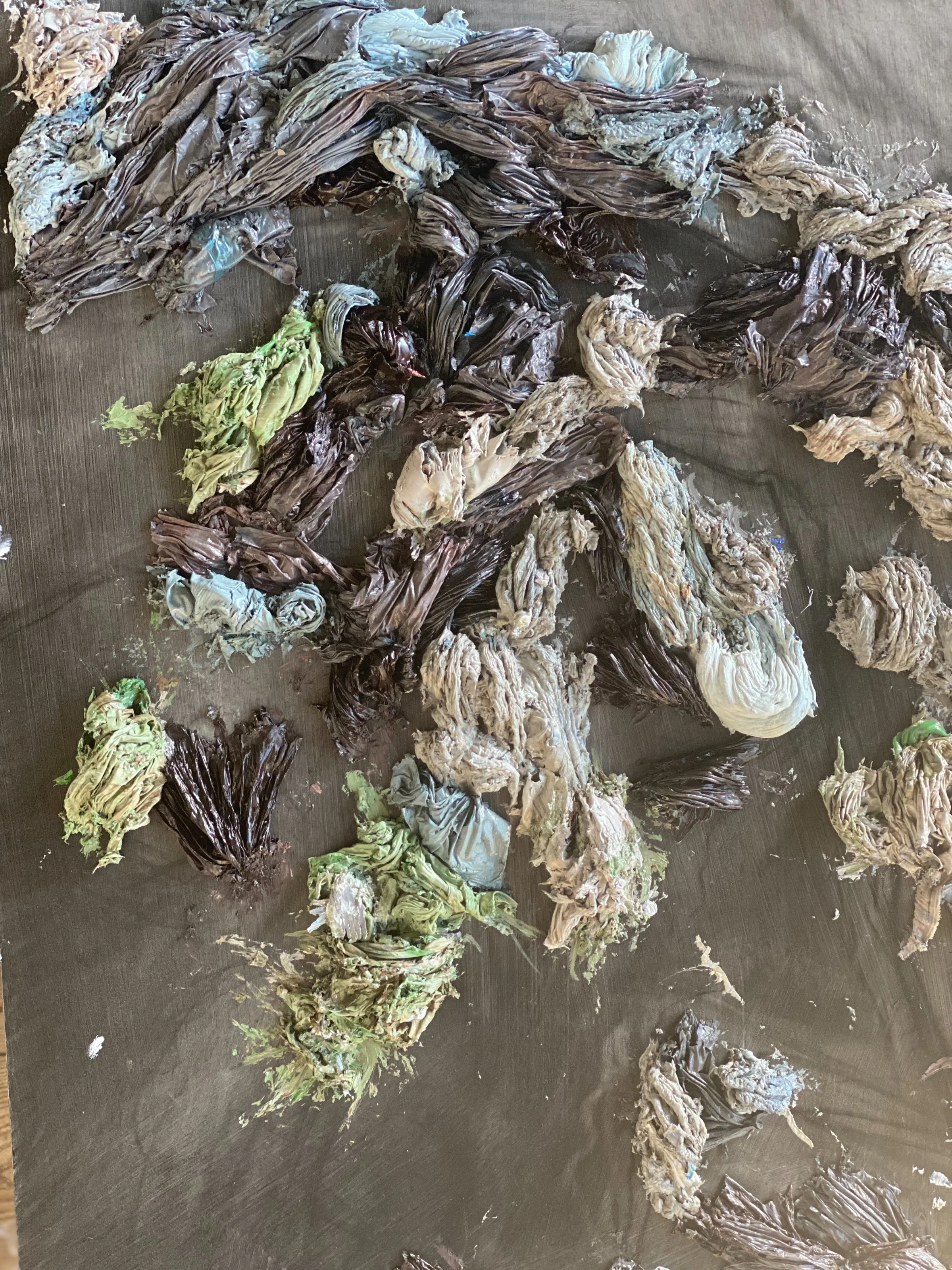
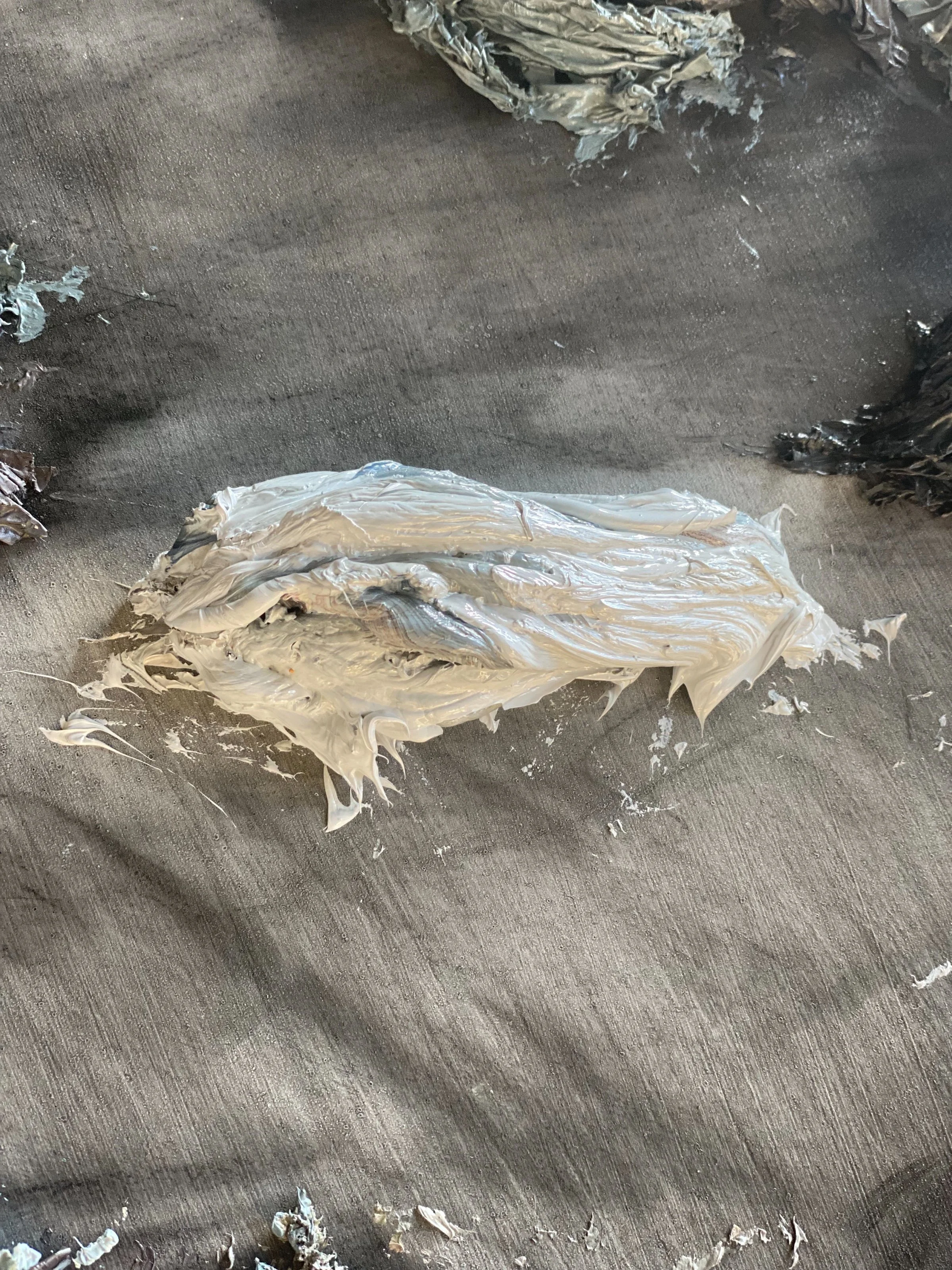
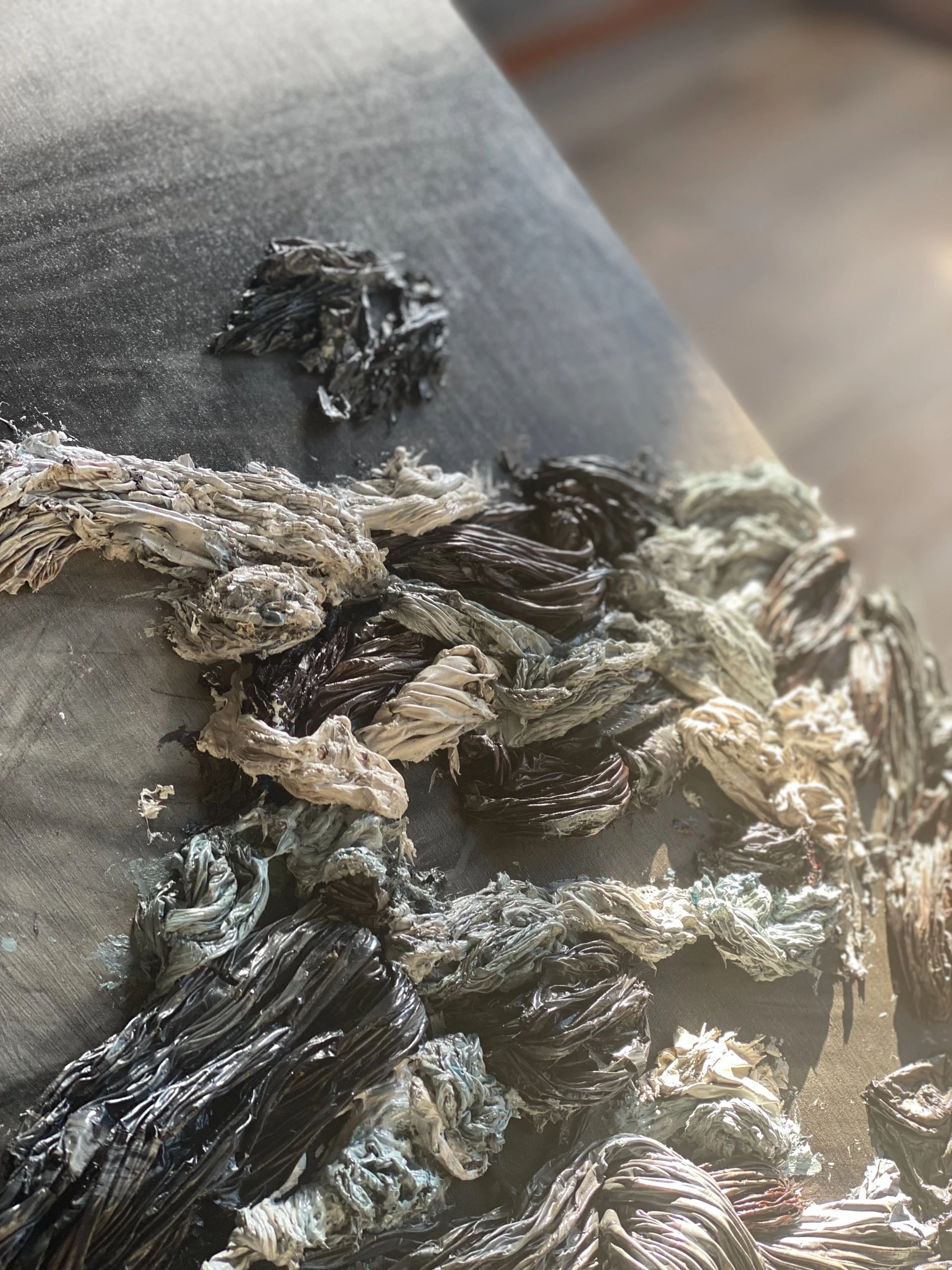
But with these works, the theorizing is not something that only happens after a stopping point. It happens inside the making. Because I’m working from multiple studies, building relationships, and physically sculpting the surface into new arrangements, each session becomes a series of decisions I can weigh against one another. I can test a direction, pull back, and re-compose without losing the integrity of what I have already learned. The process is not just execution. It is planning, revision, and discovery happening in the same breath.
October 18, 2021
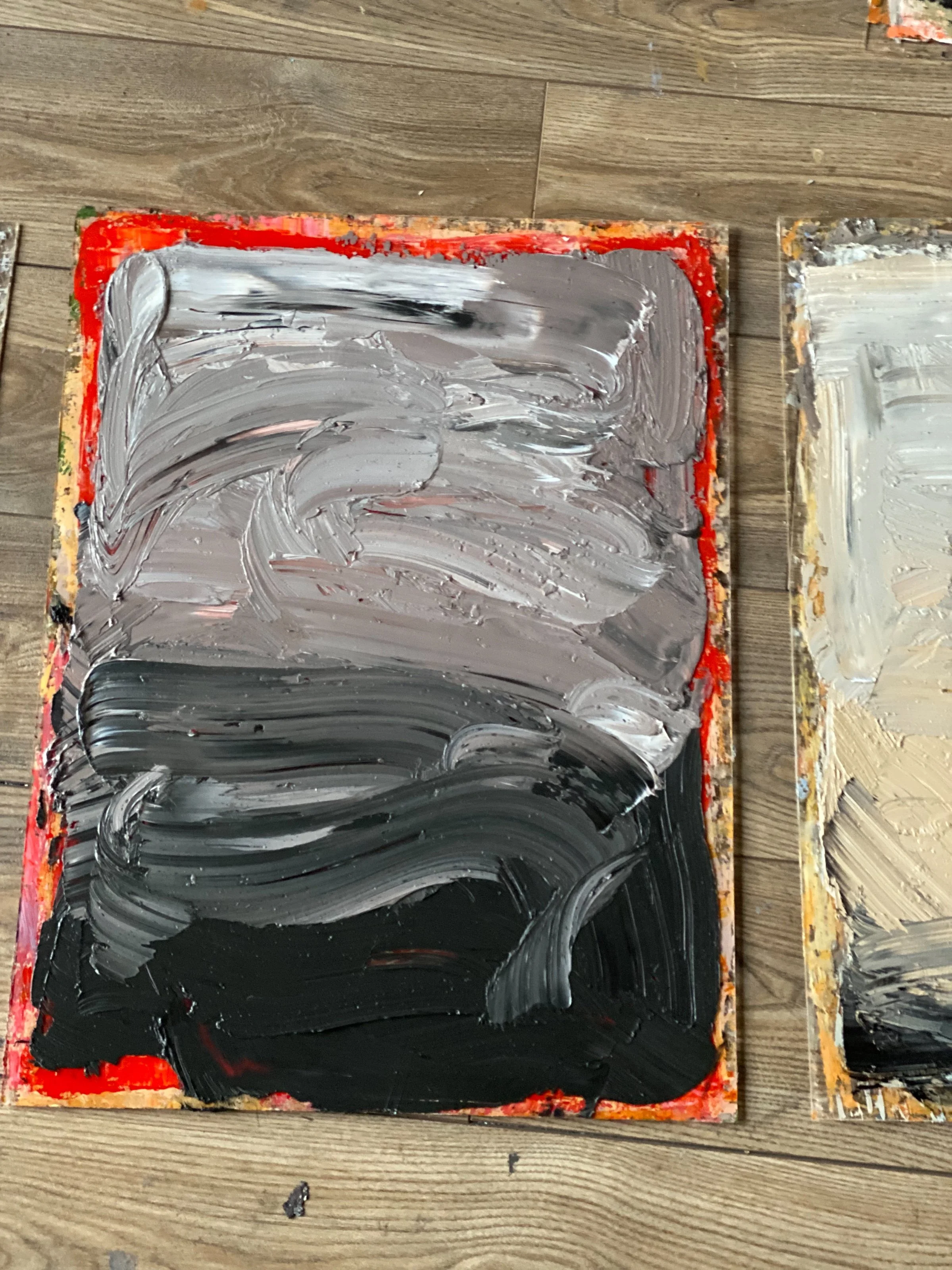
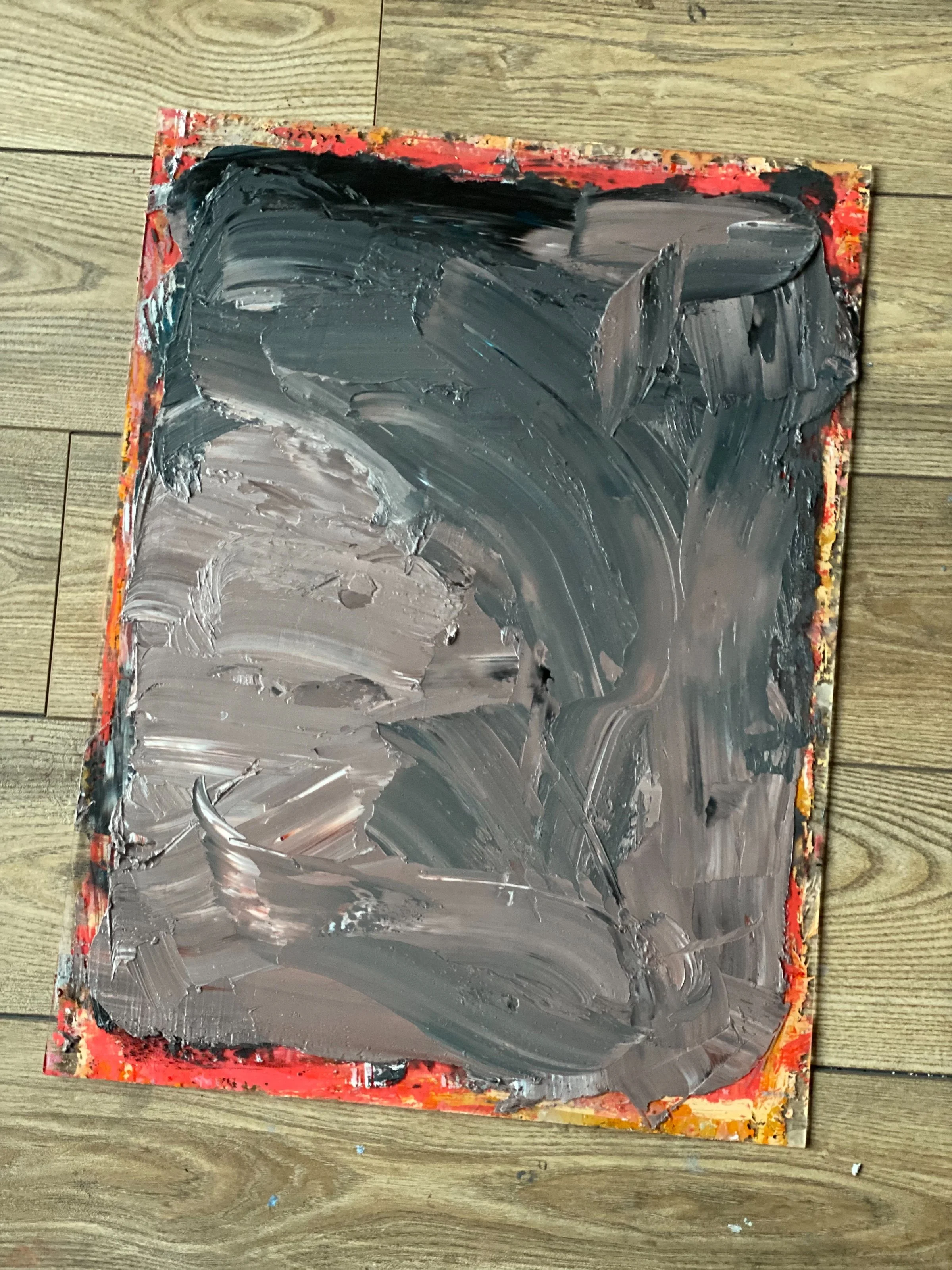
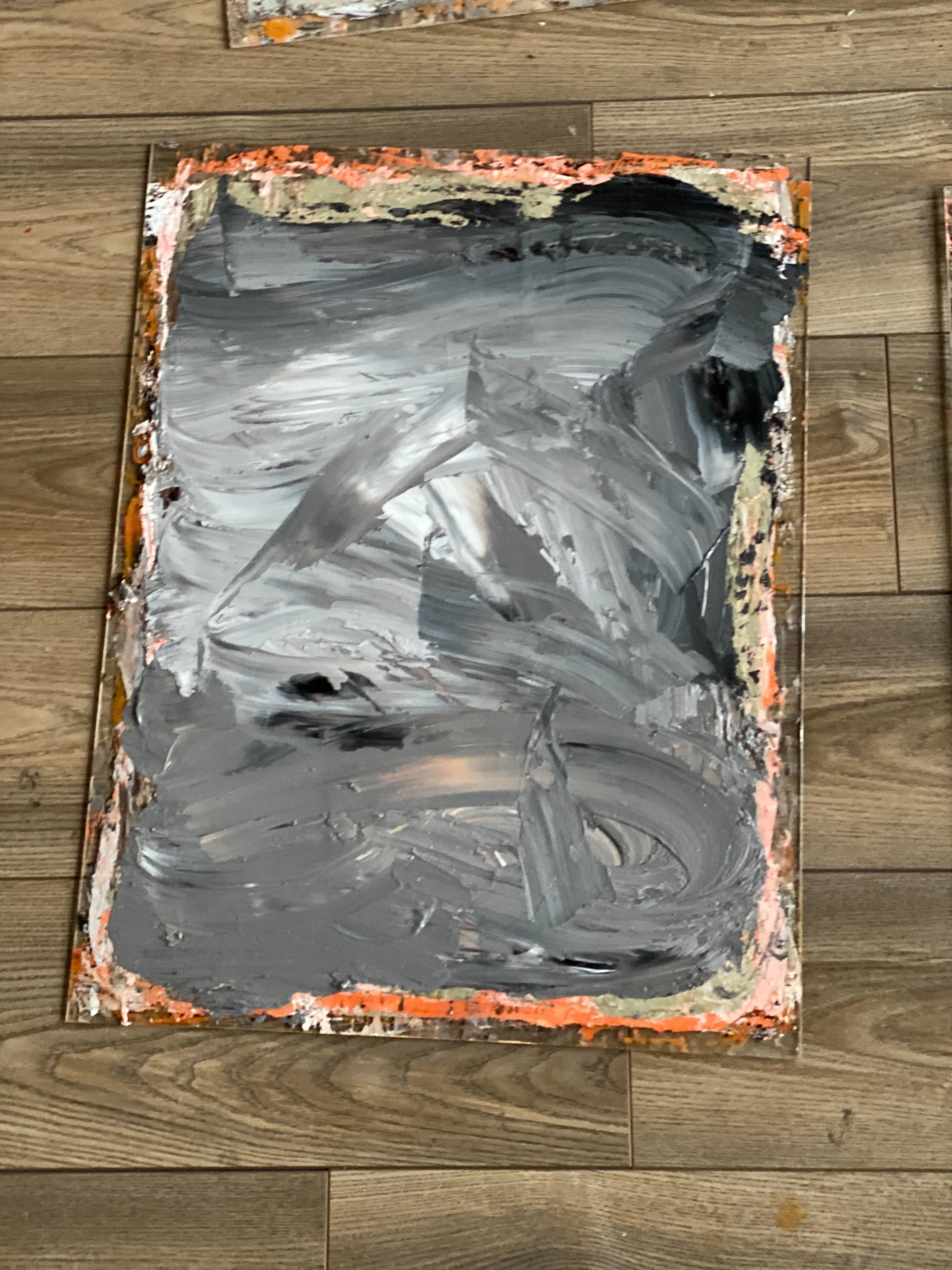
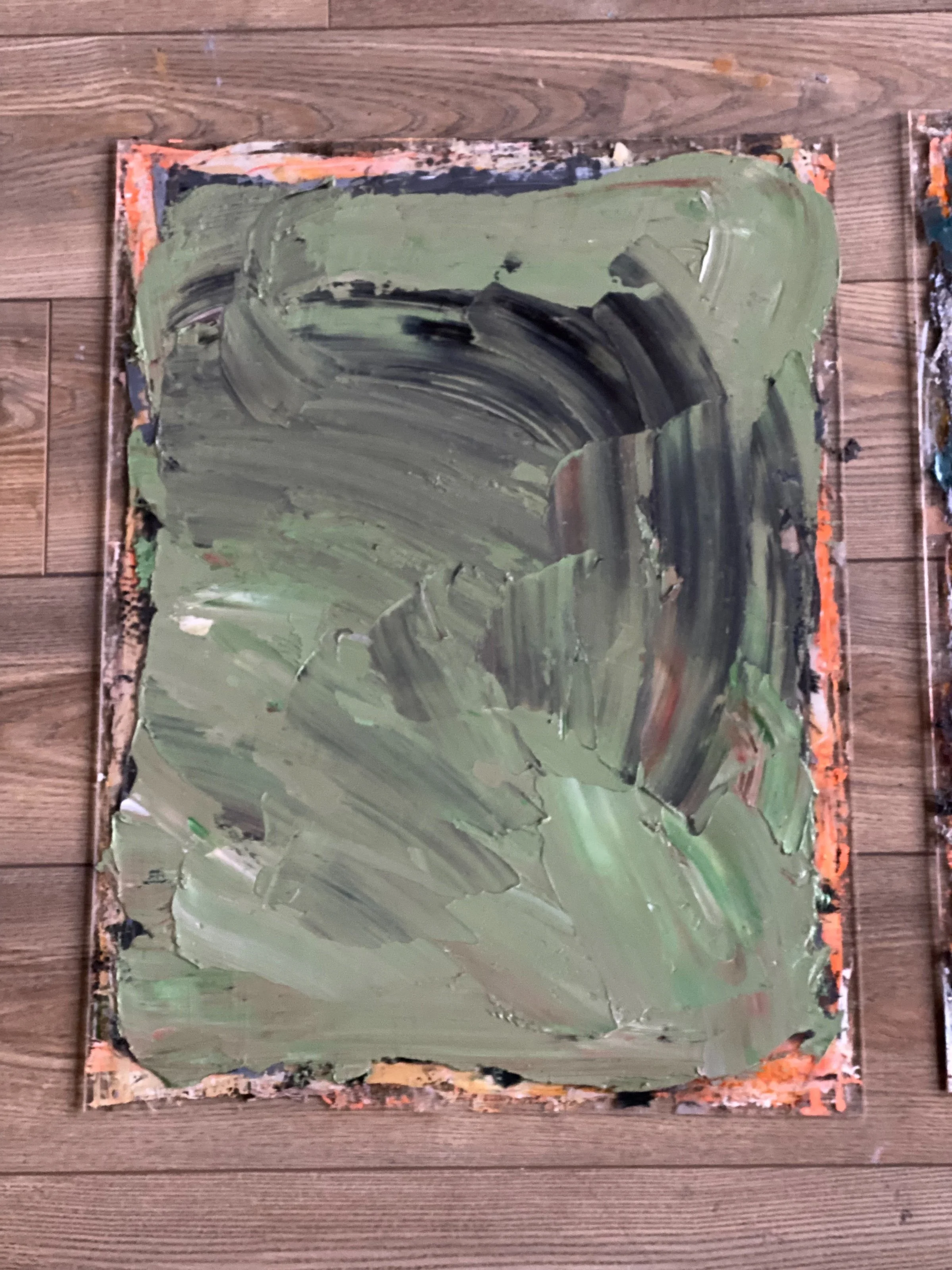
More Panels today. I need to flush out all of the in-between spaces.
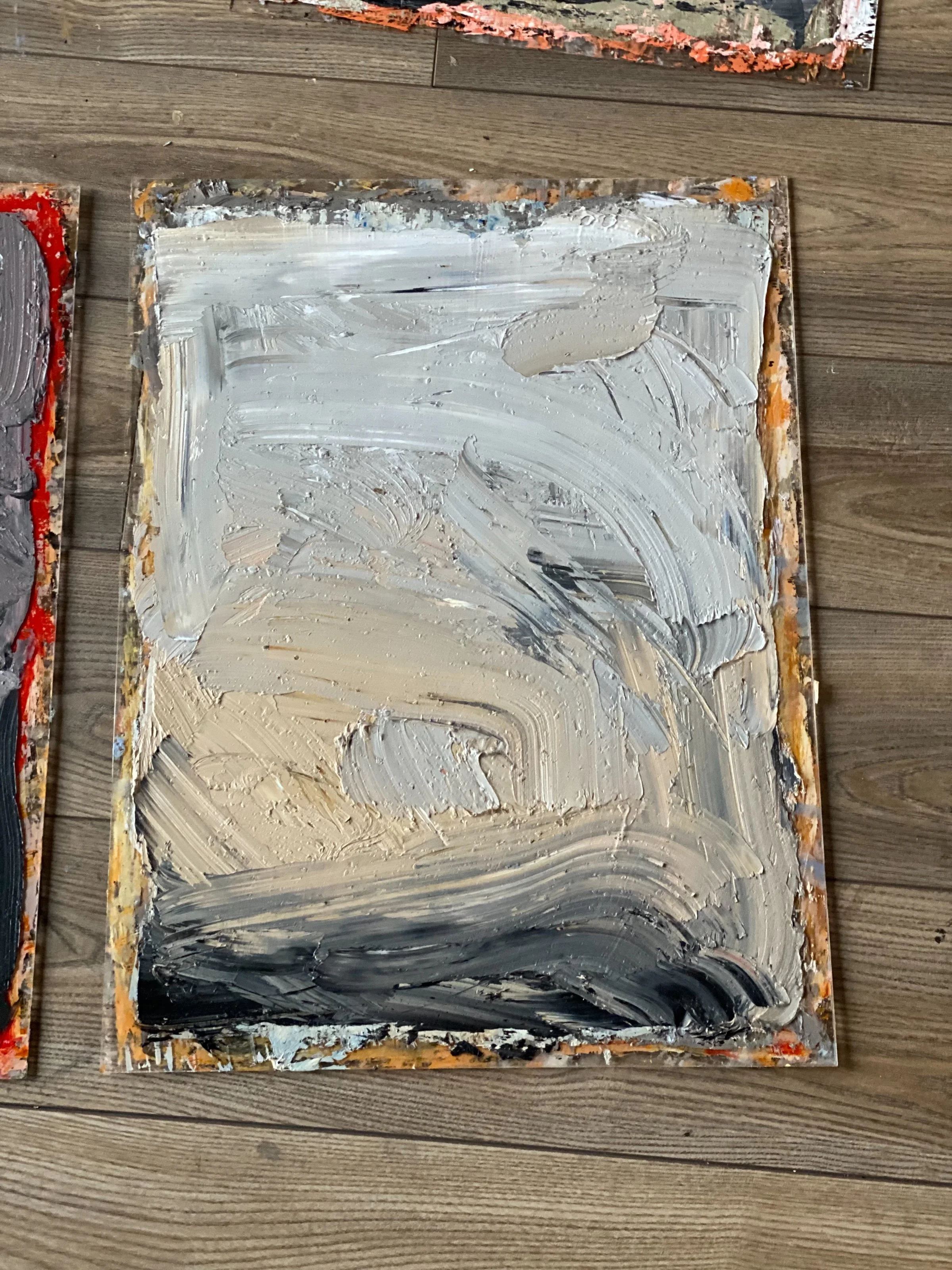
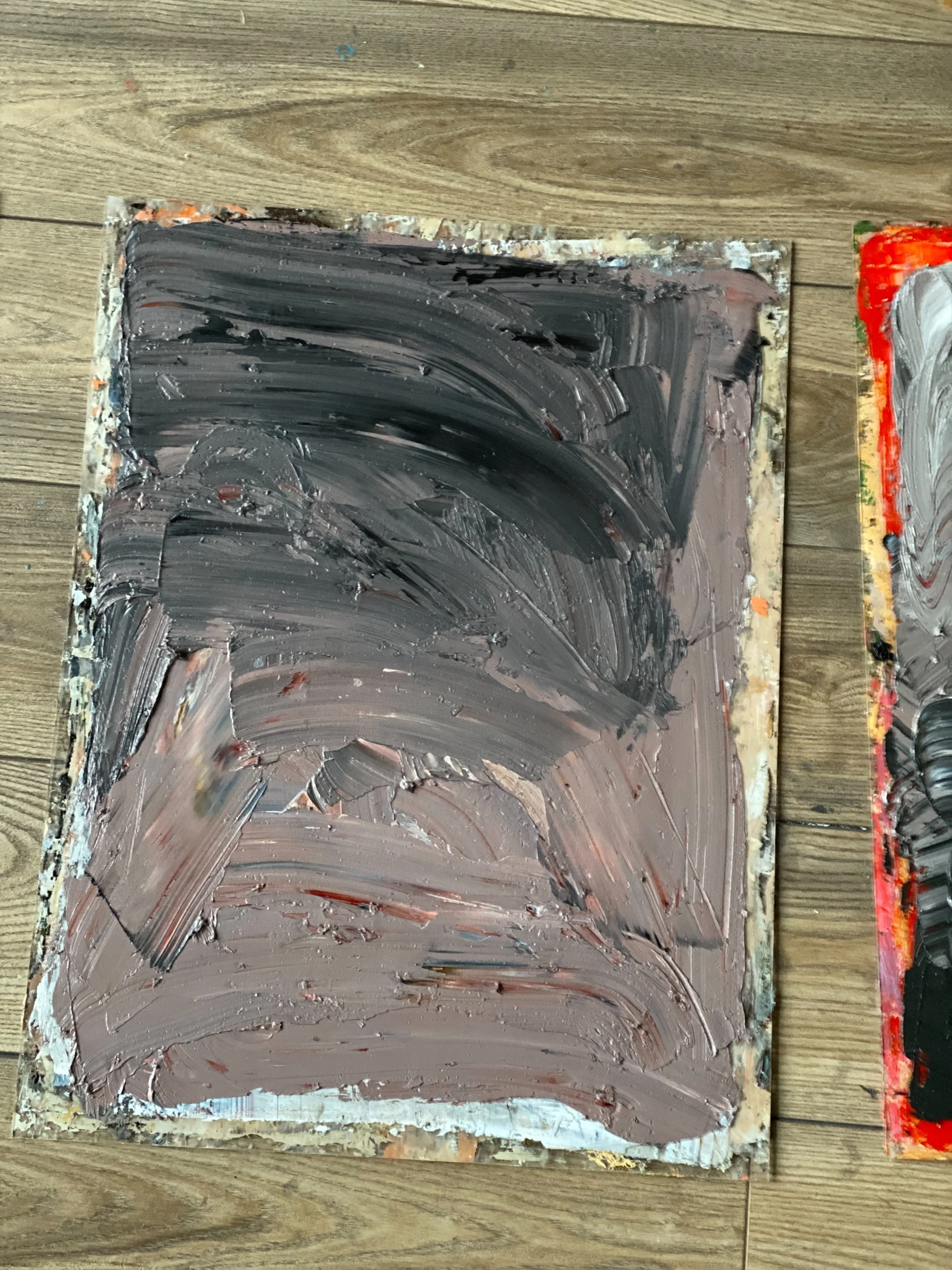
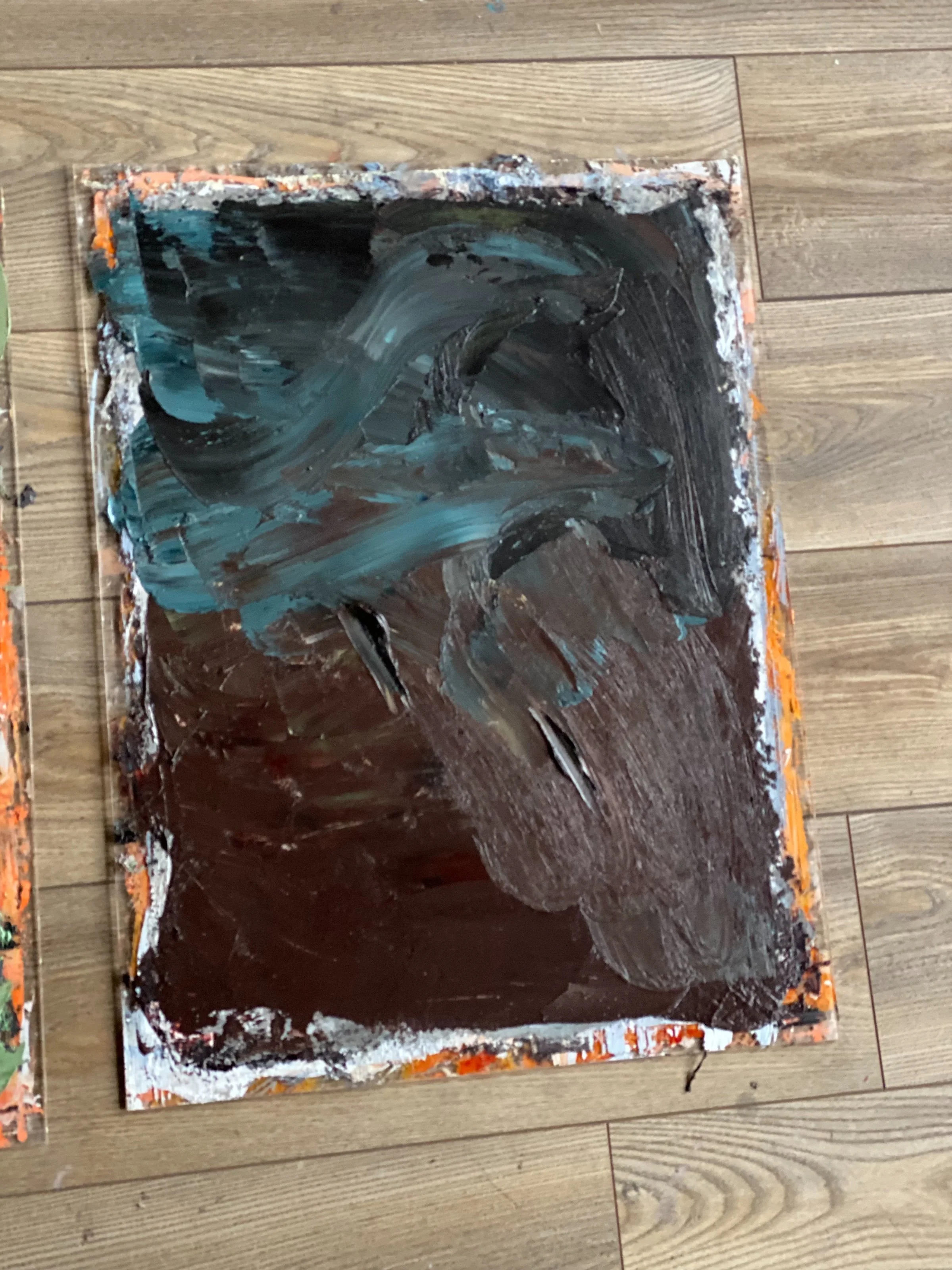
October 20, 2021
Mission accomplished. At times, a single form can extend across subjects. A form can be a stone, but it can also be the ocean. A more obvious example is focusing on panels with a stark distinction between colors.
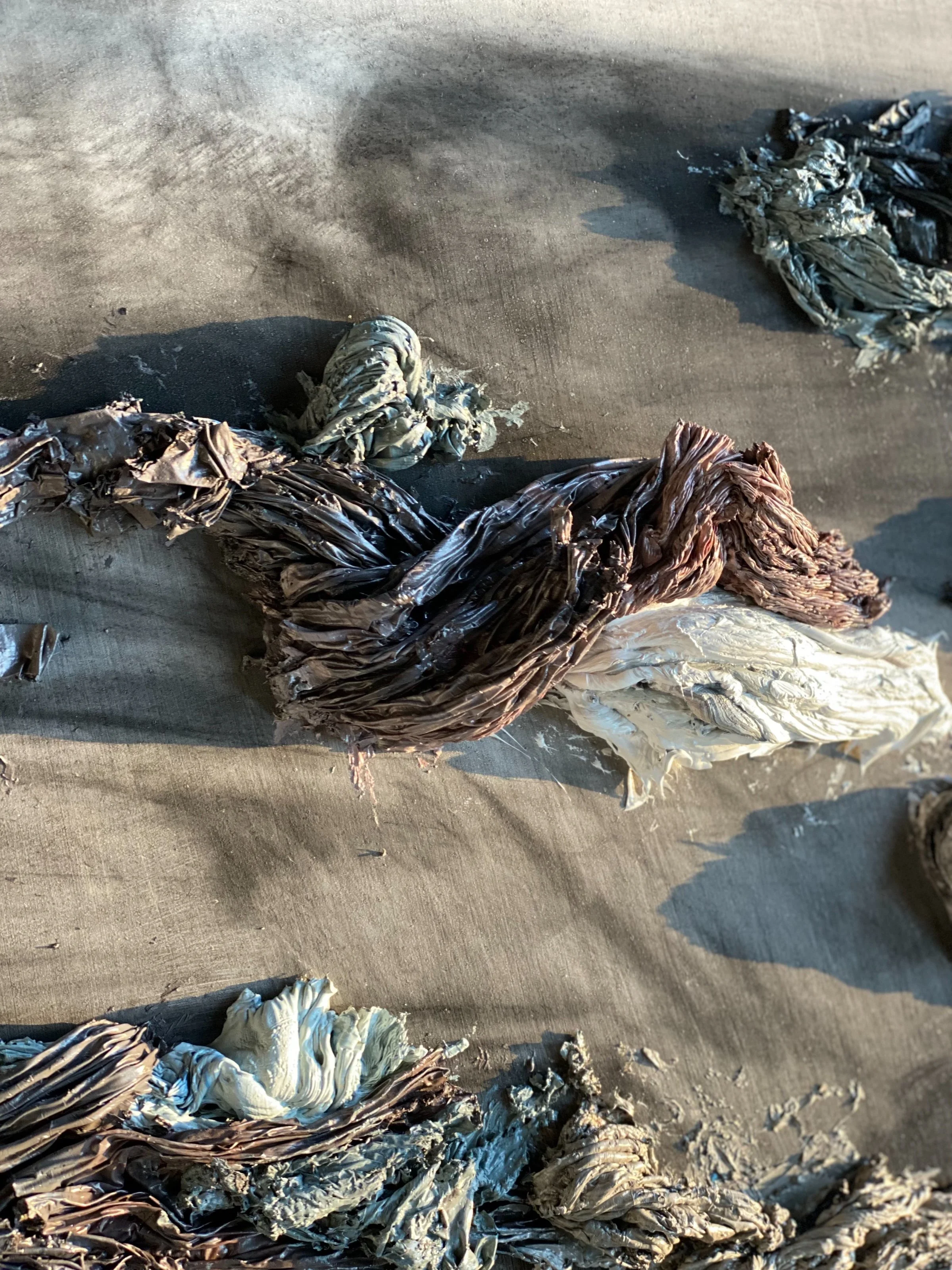
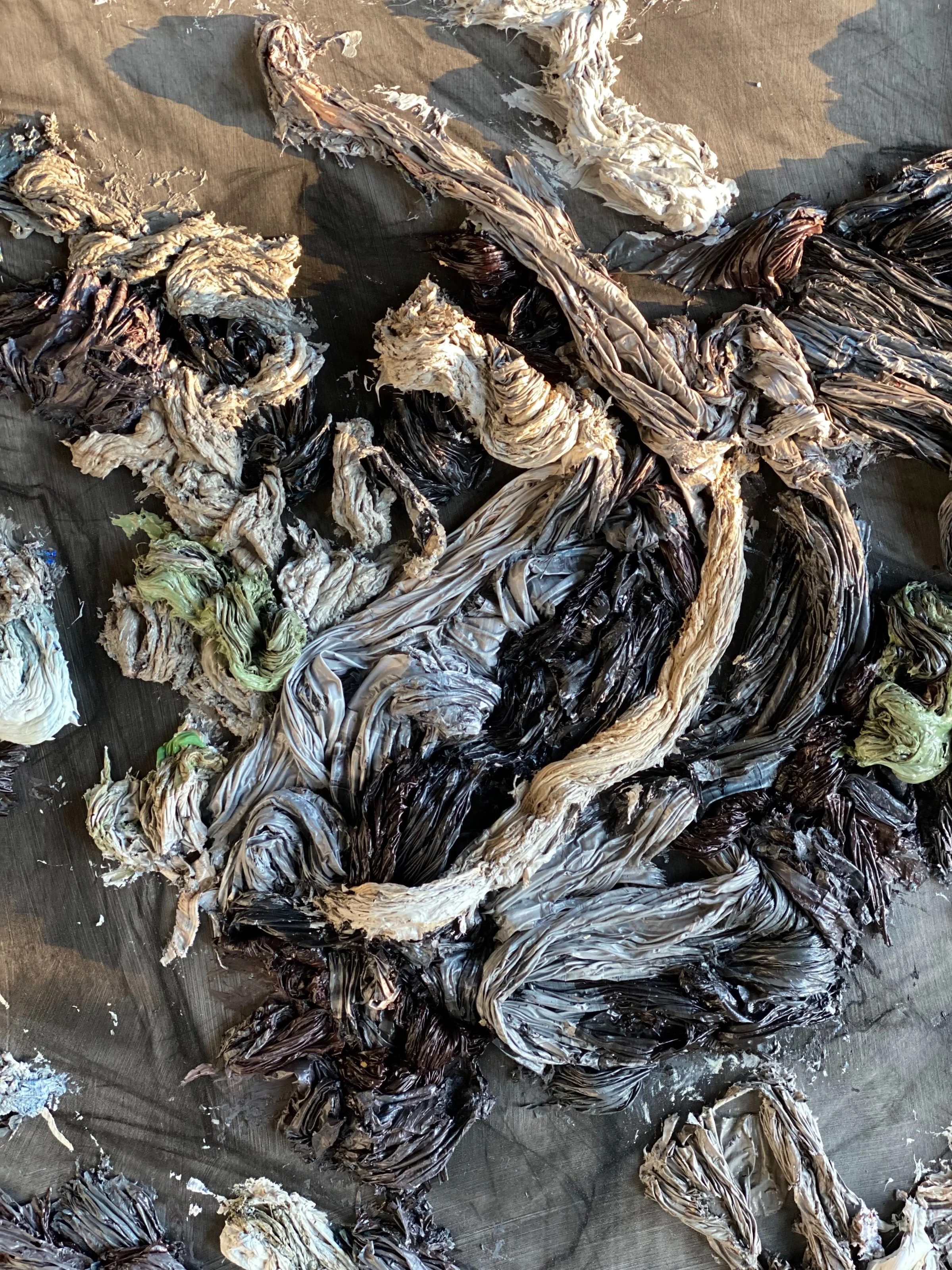
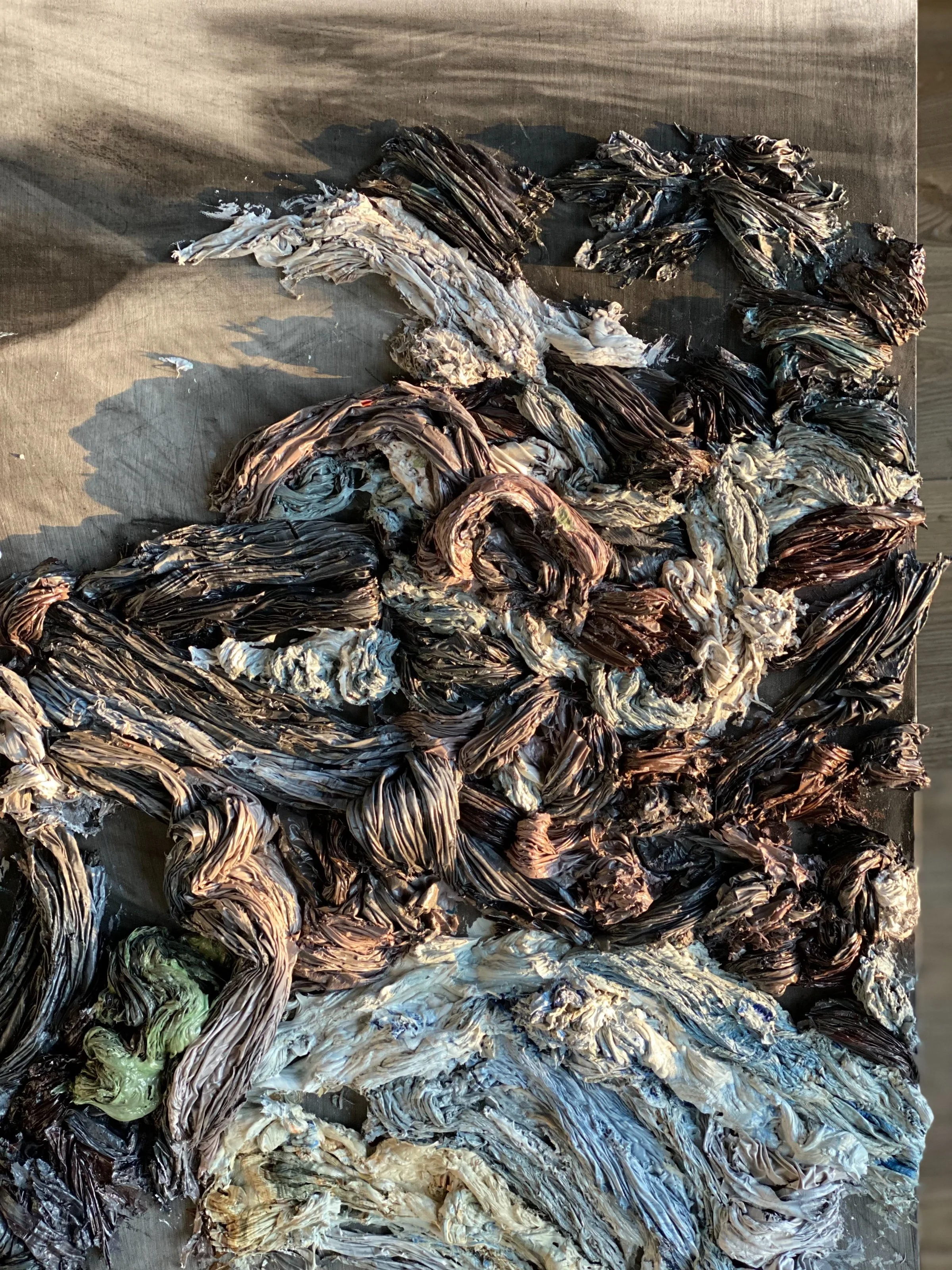
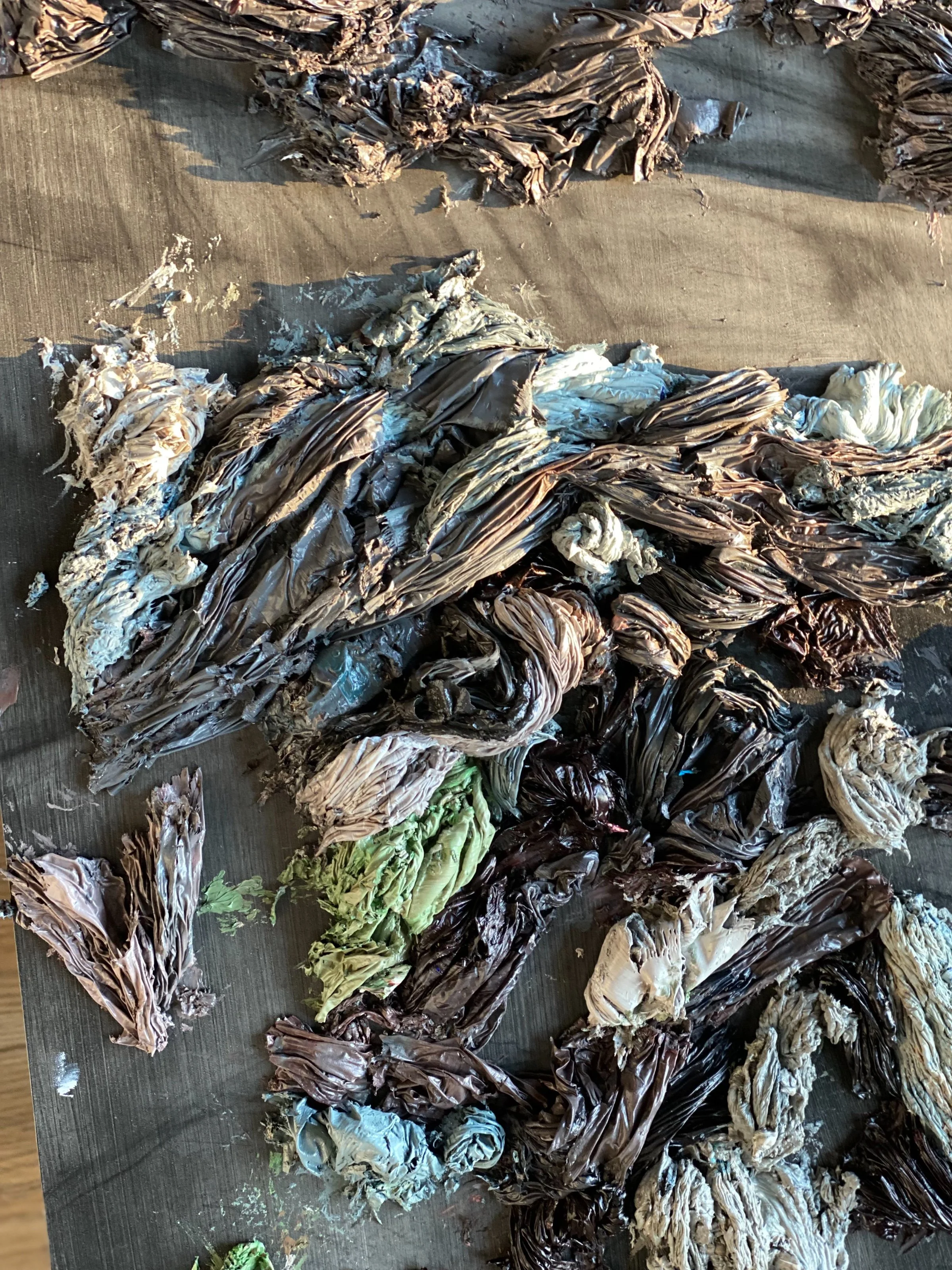
Today was a great day to be in the studio.
October 25, 2021
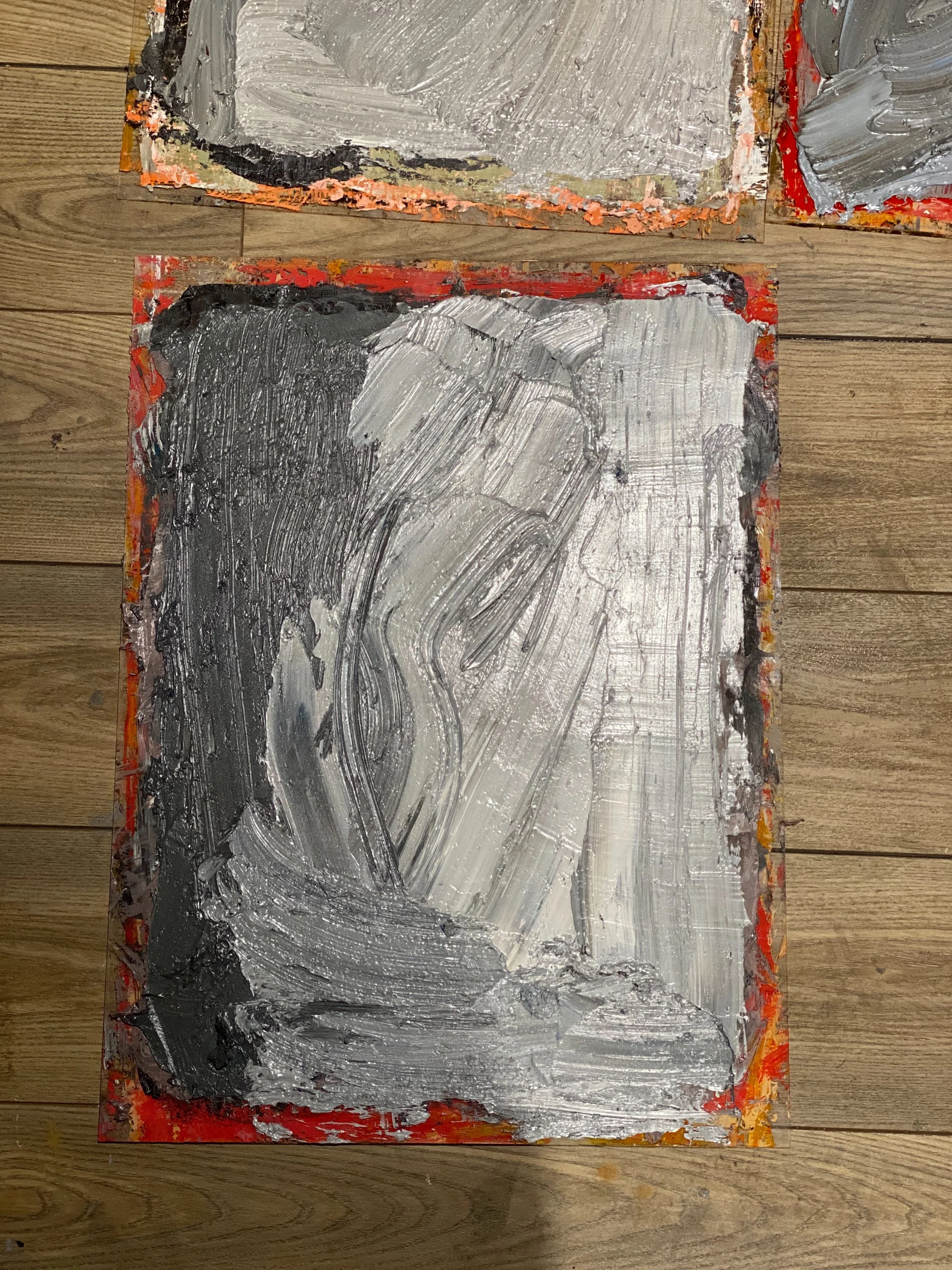
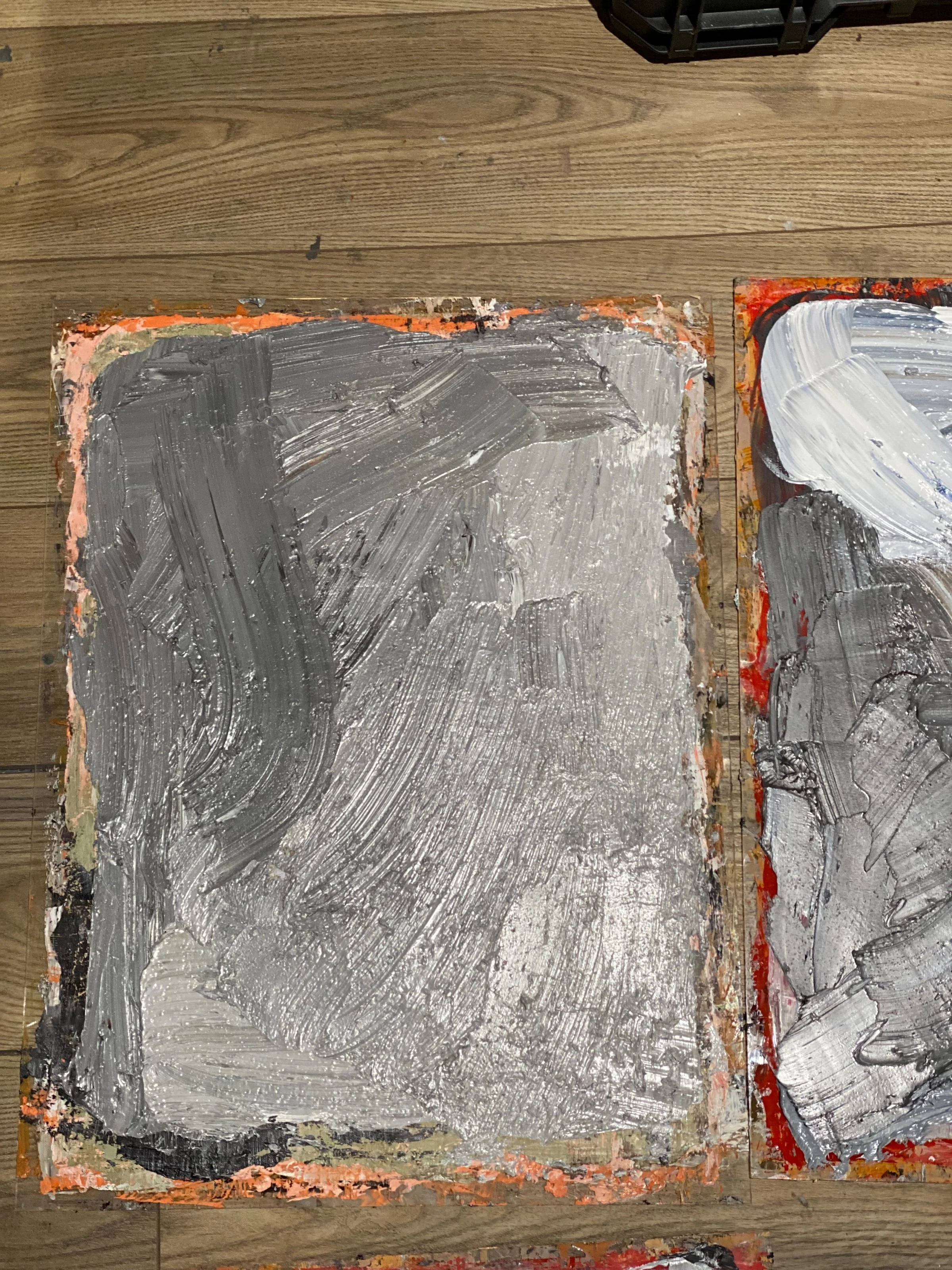
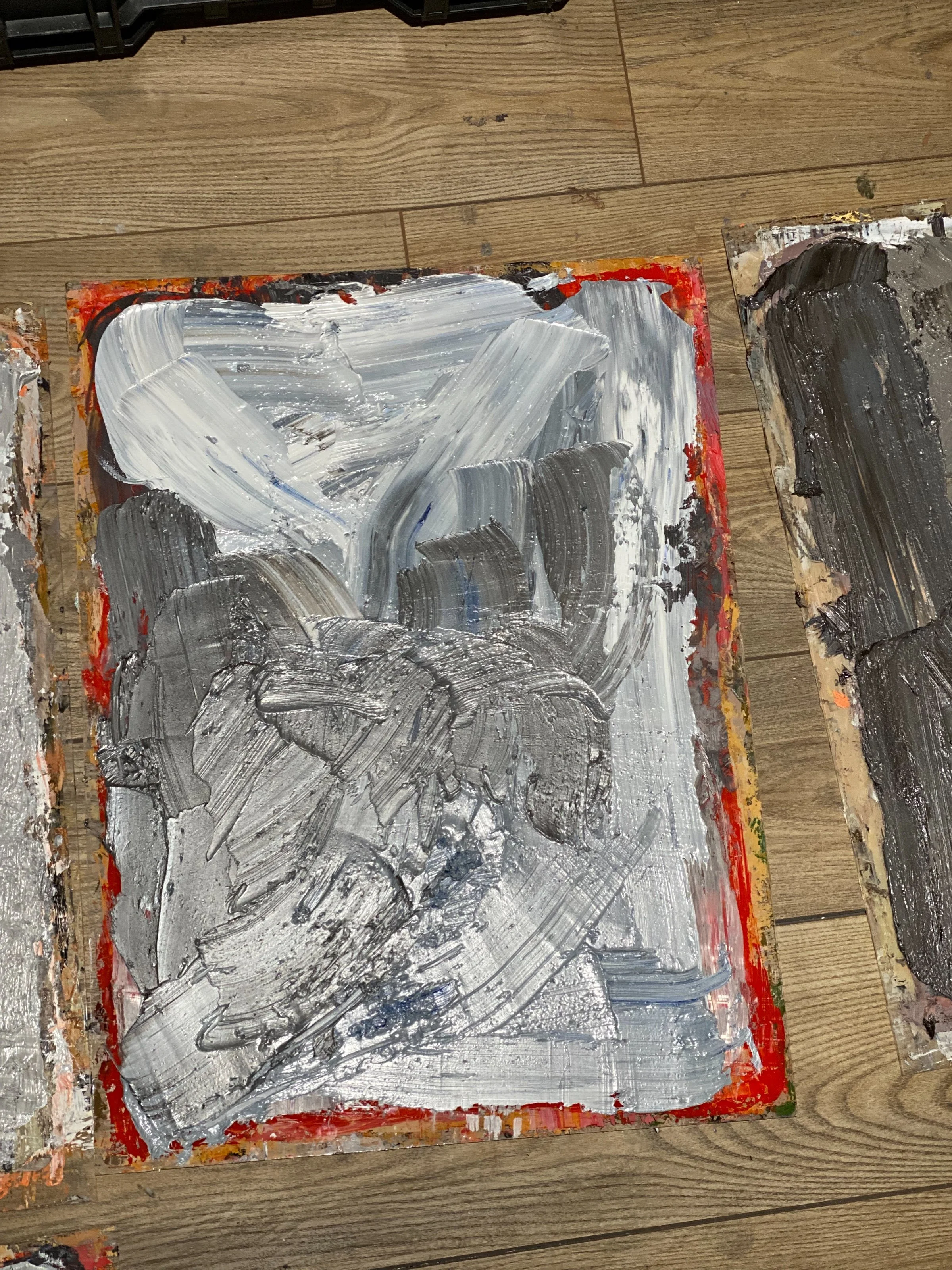
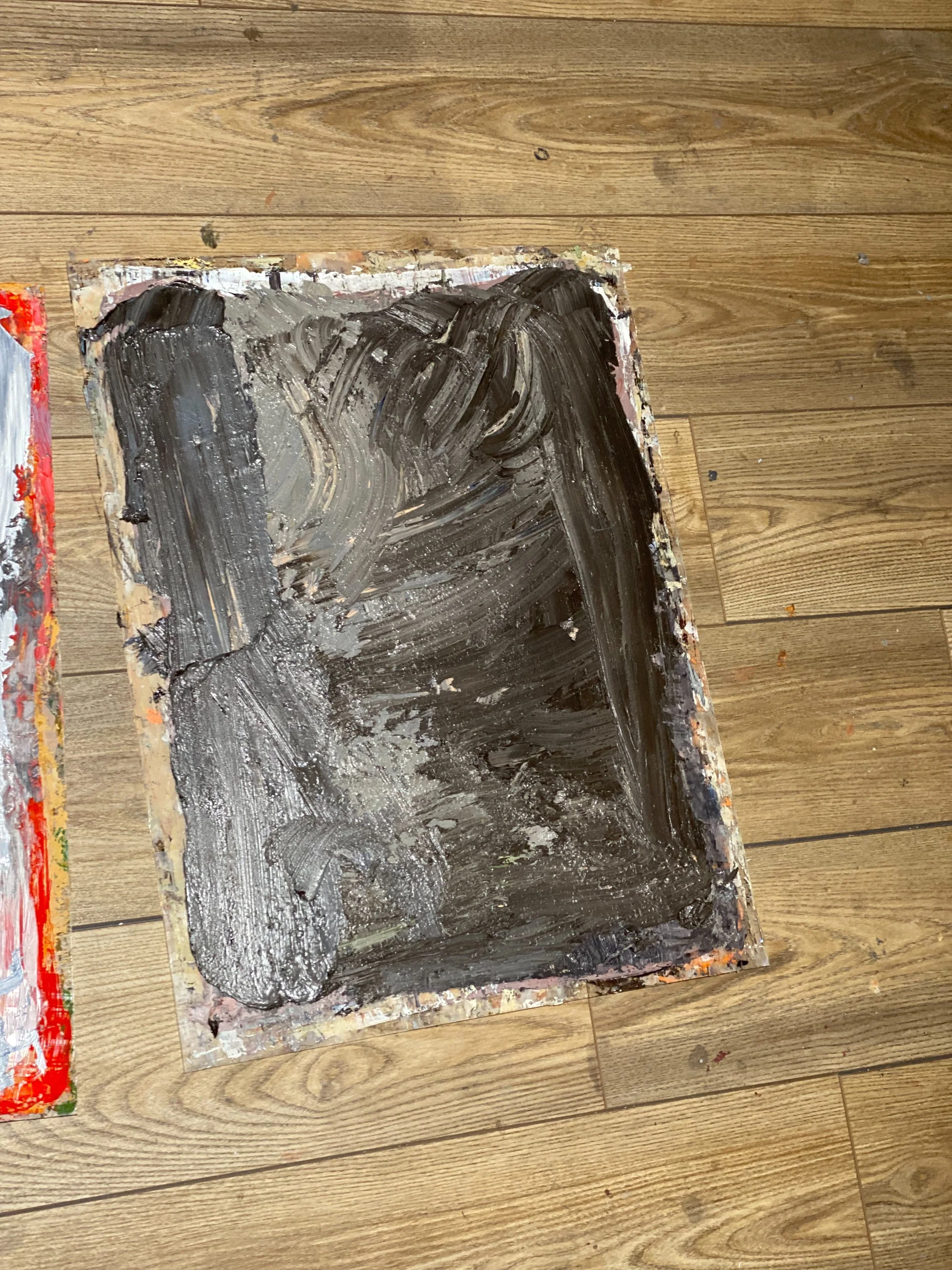
I am focusing on the unique textures and structures where the stones meet, isolating those elements. I am wary of the steps required when I move on to more fluid shapes.
October 27, 2021
Great progress made. I want to be in the grays for as long as I can.
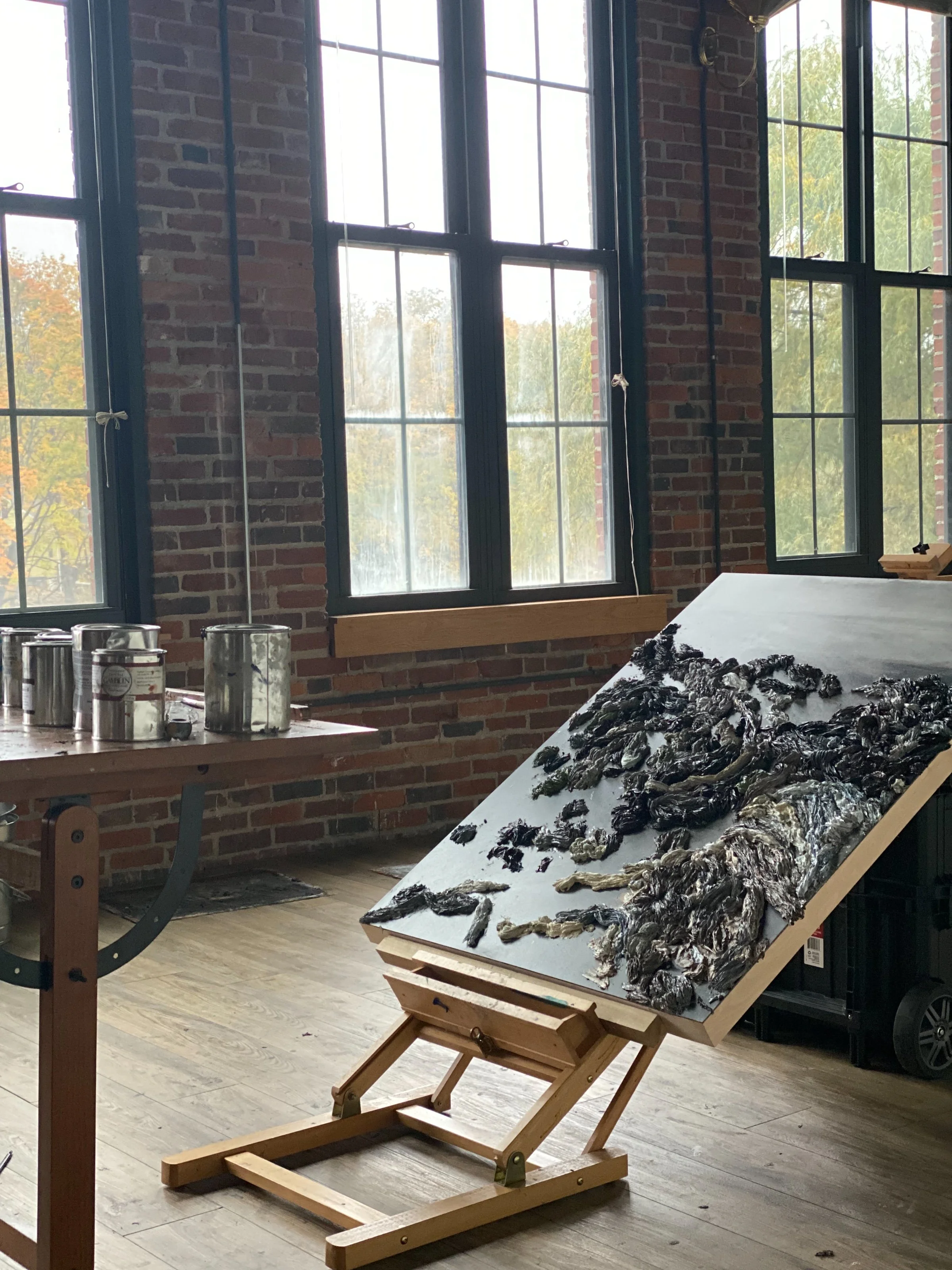
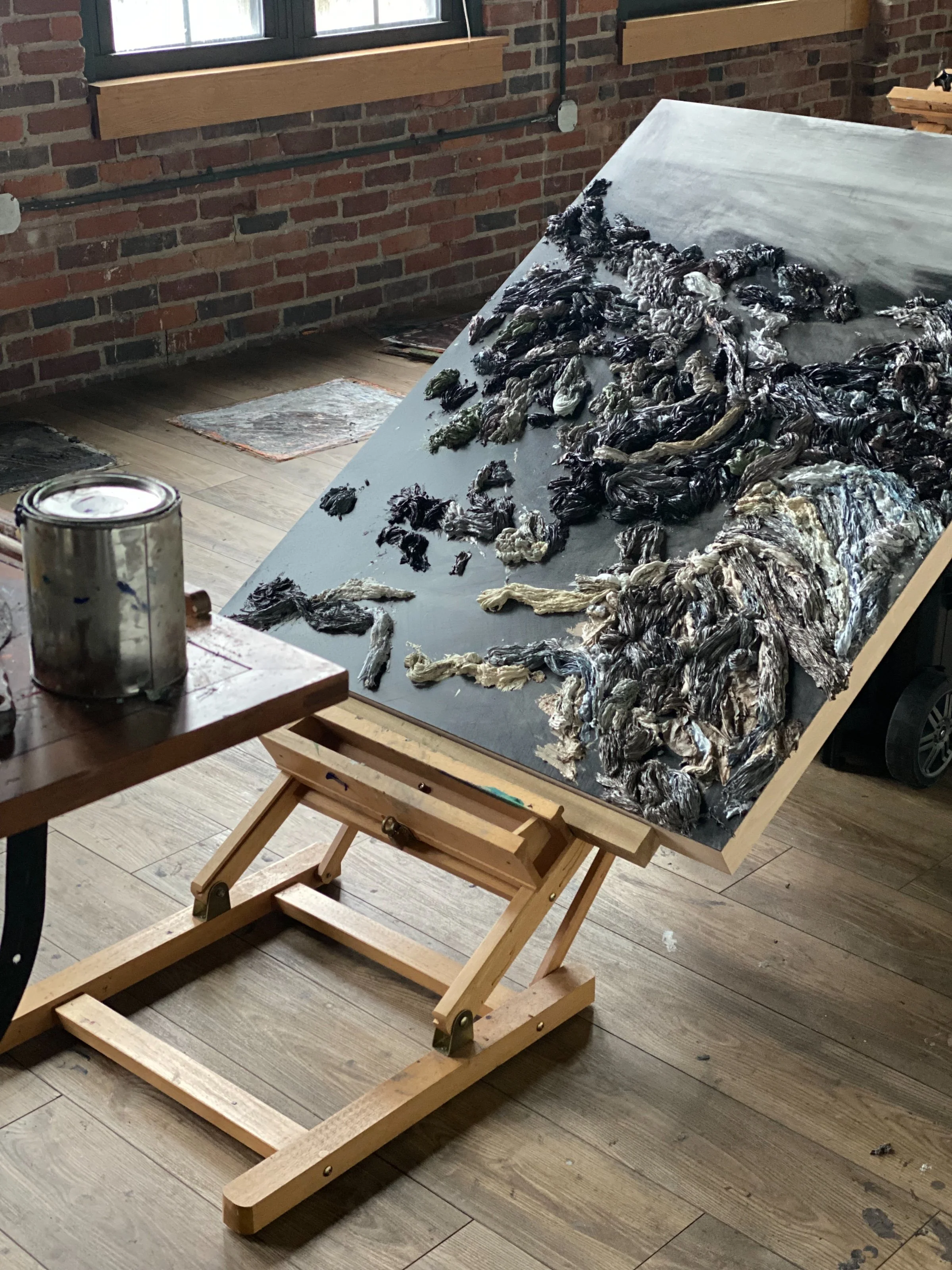
October 30, 2021
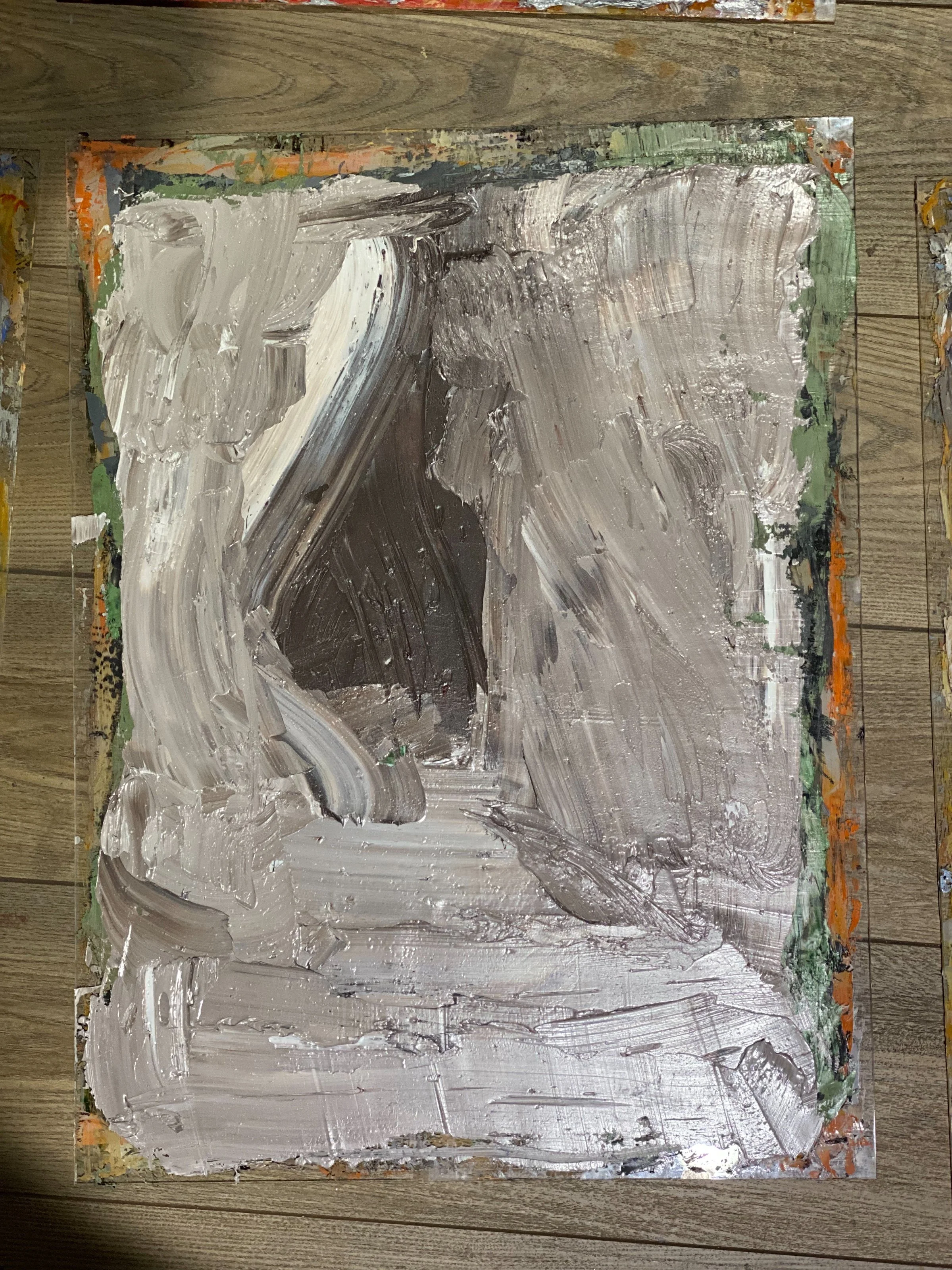
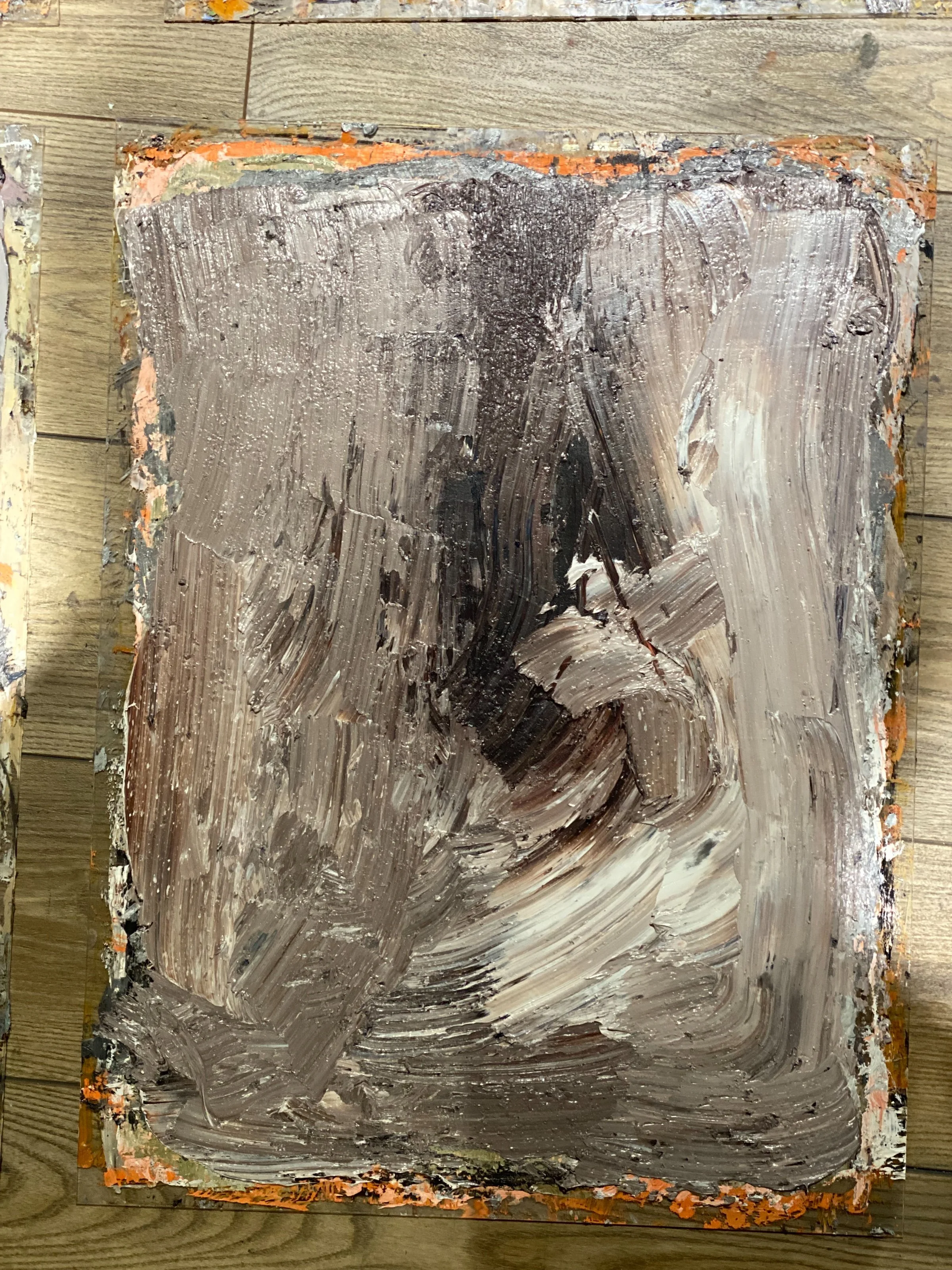
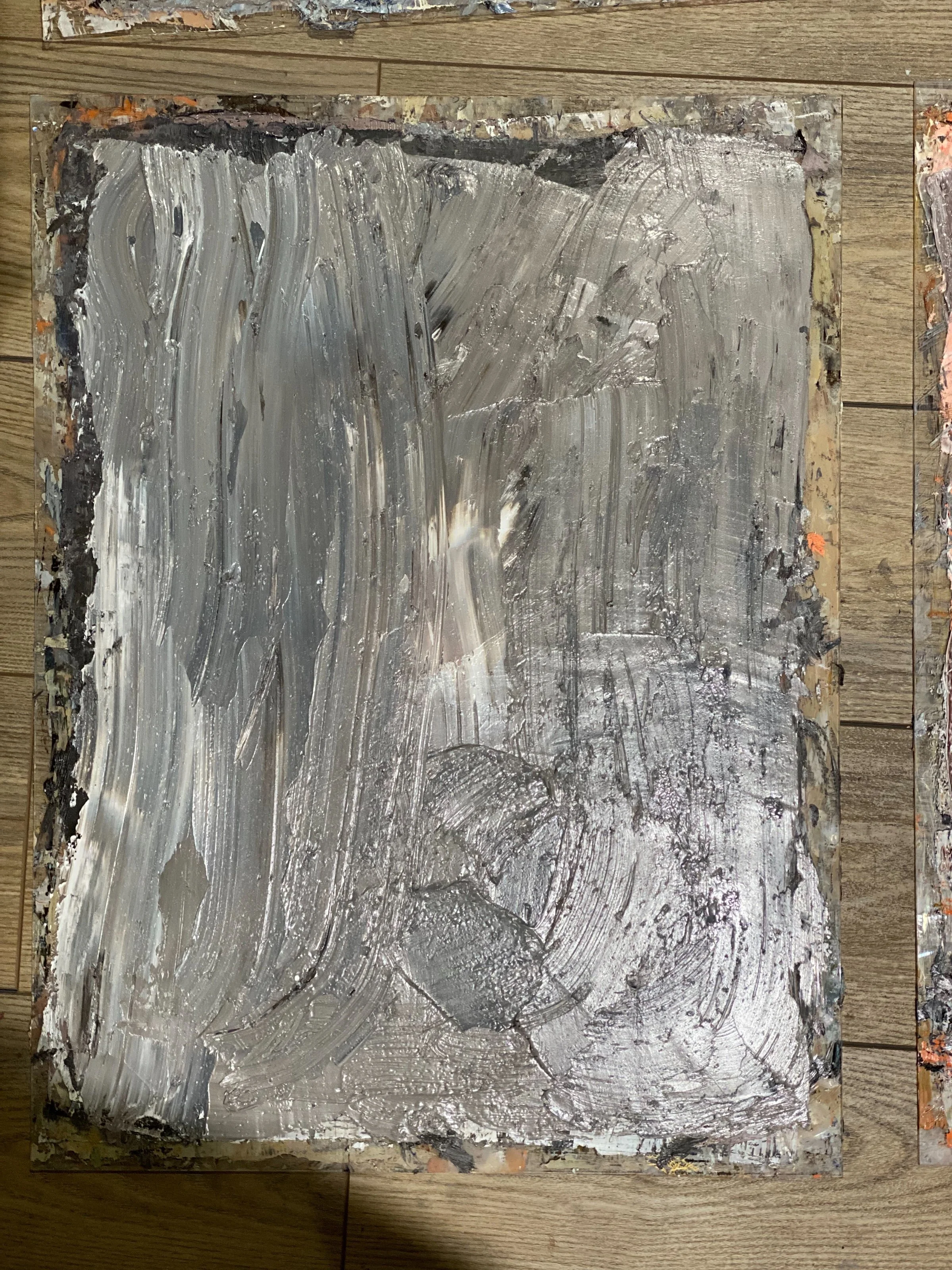
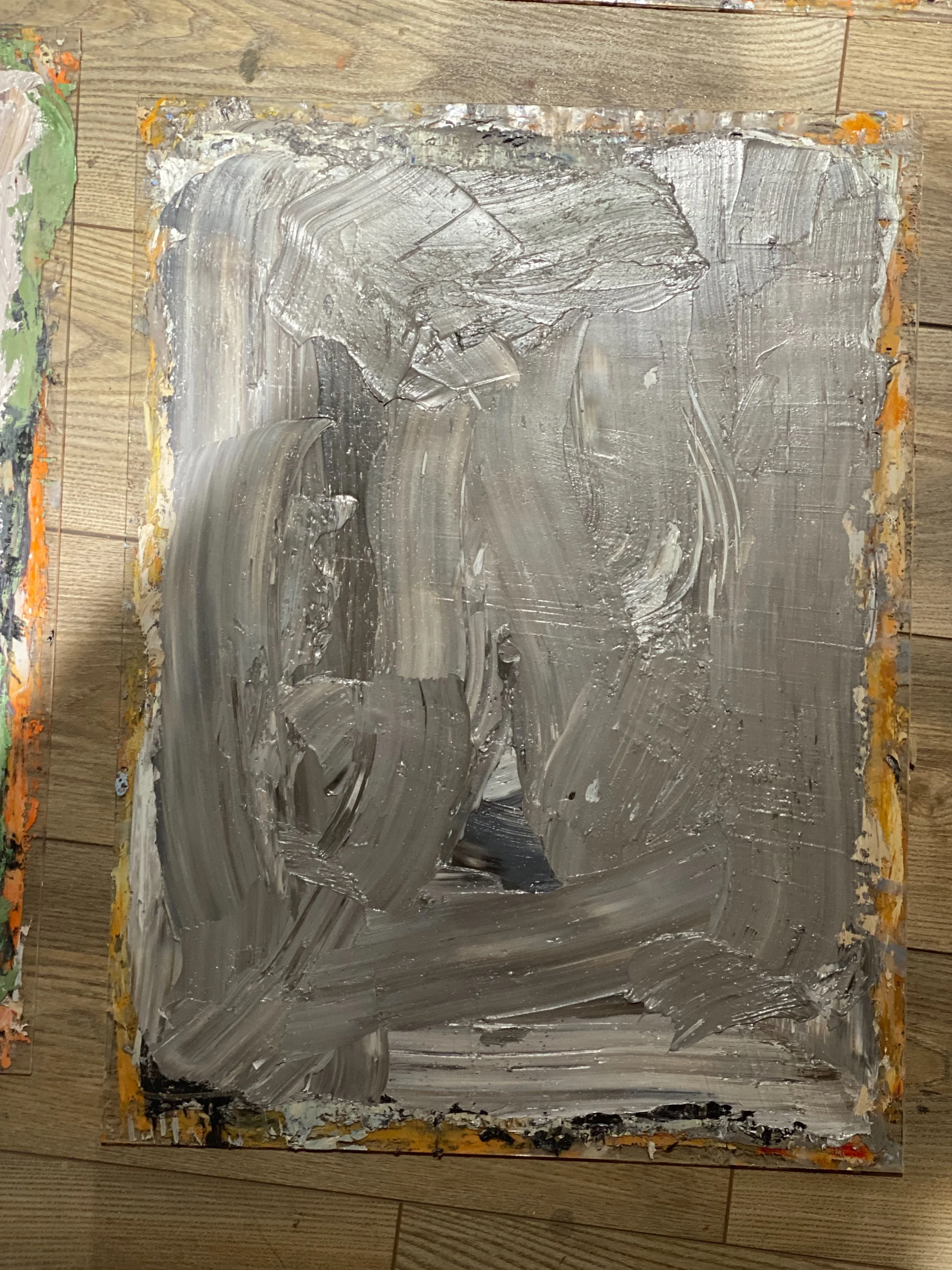
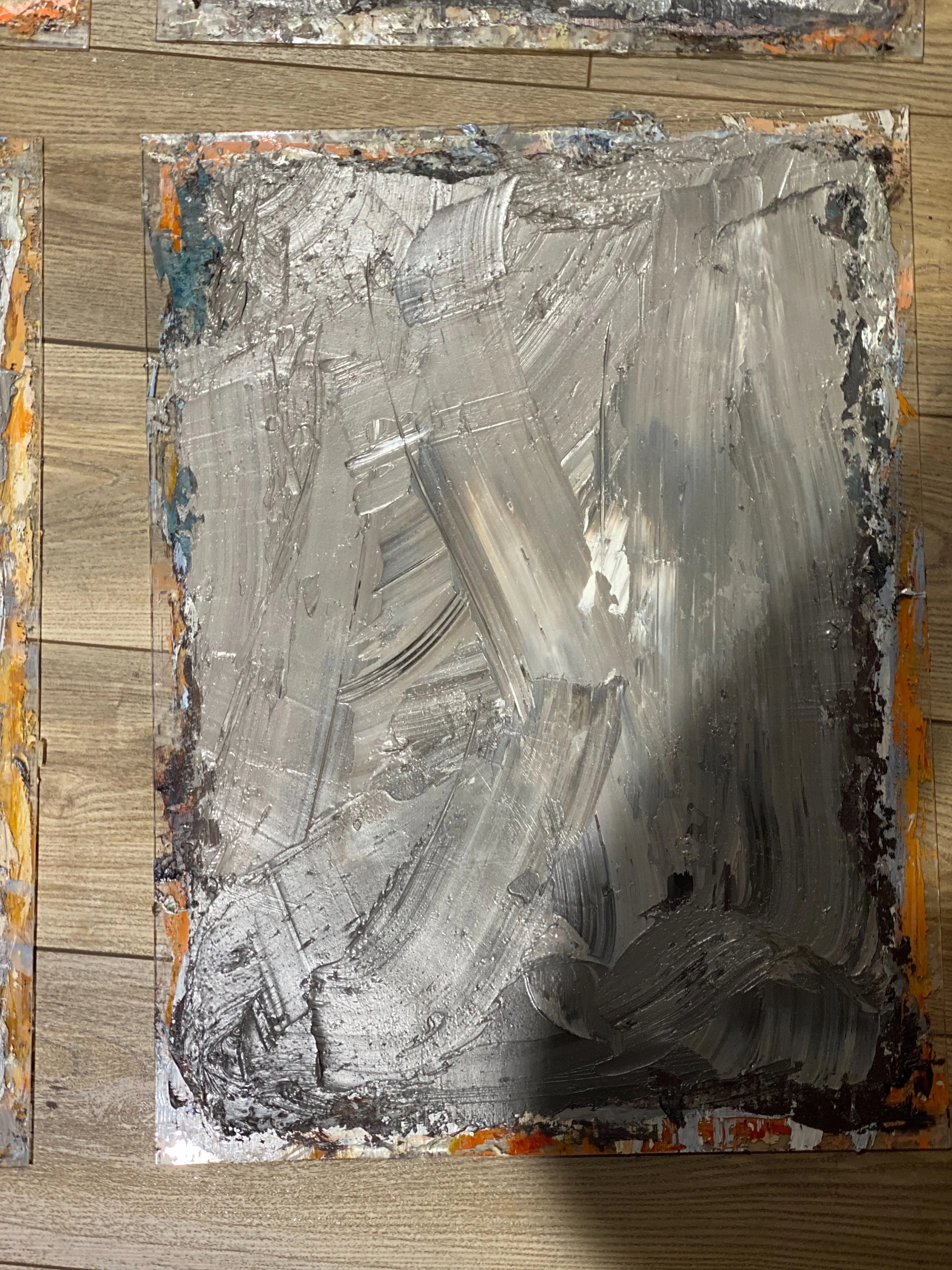
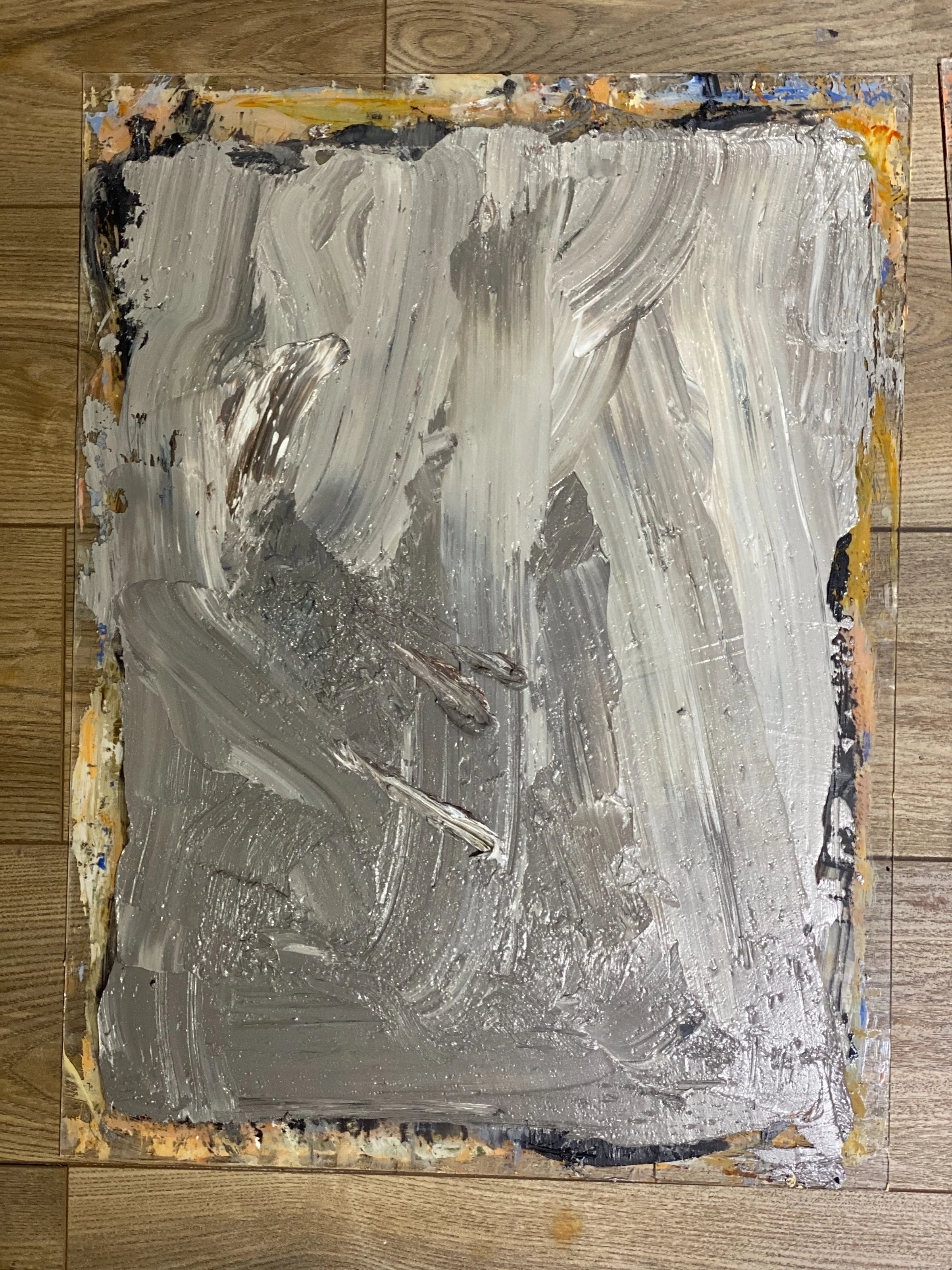
It’s raining hard today—my favorite time of year to be in the studio. I’m creating panels that will become smaller forms in the upper part of the work. These stones should feel very far from the viewer.
November 1, 2021
Last of the grays for now. For weeks I stayed in grays to keep the structure honest. Eventually the painting asked for risk again. Color changes the rules.
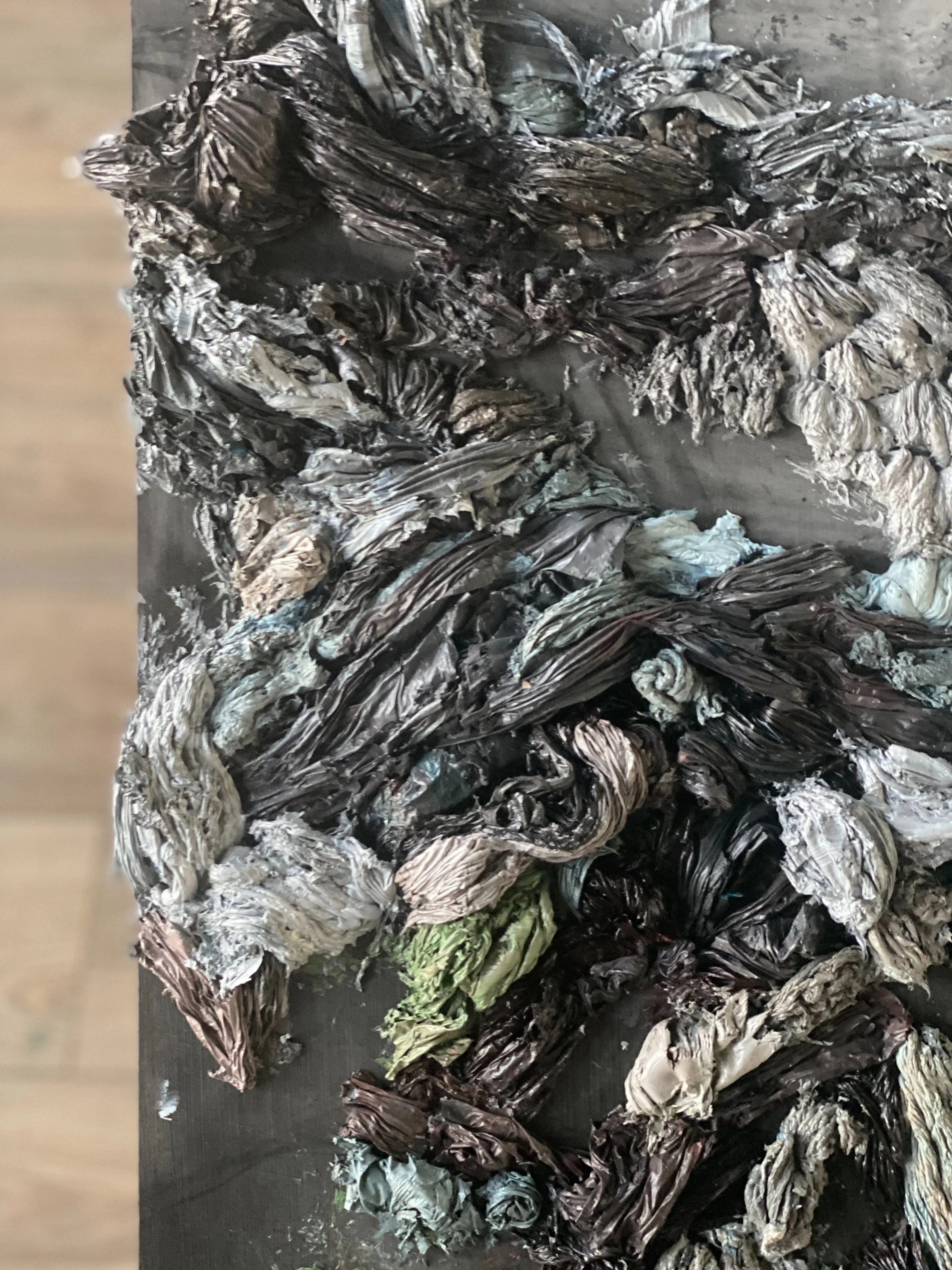
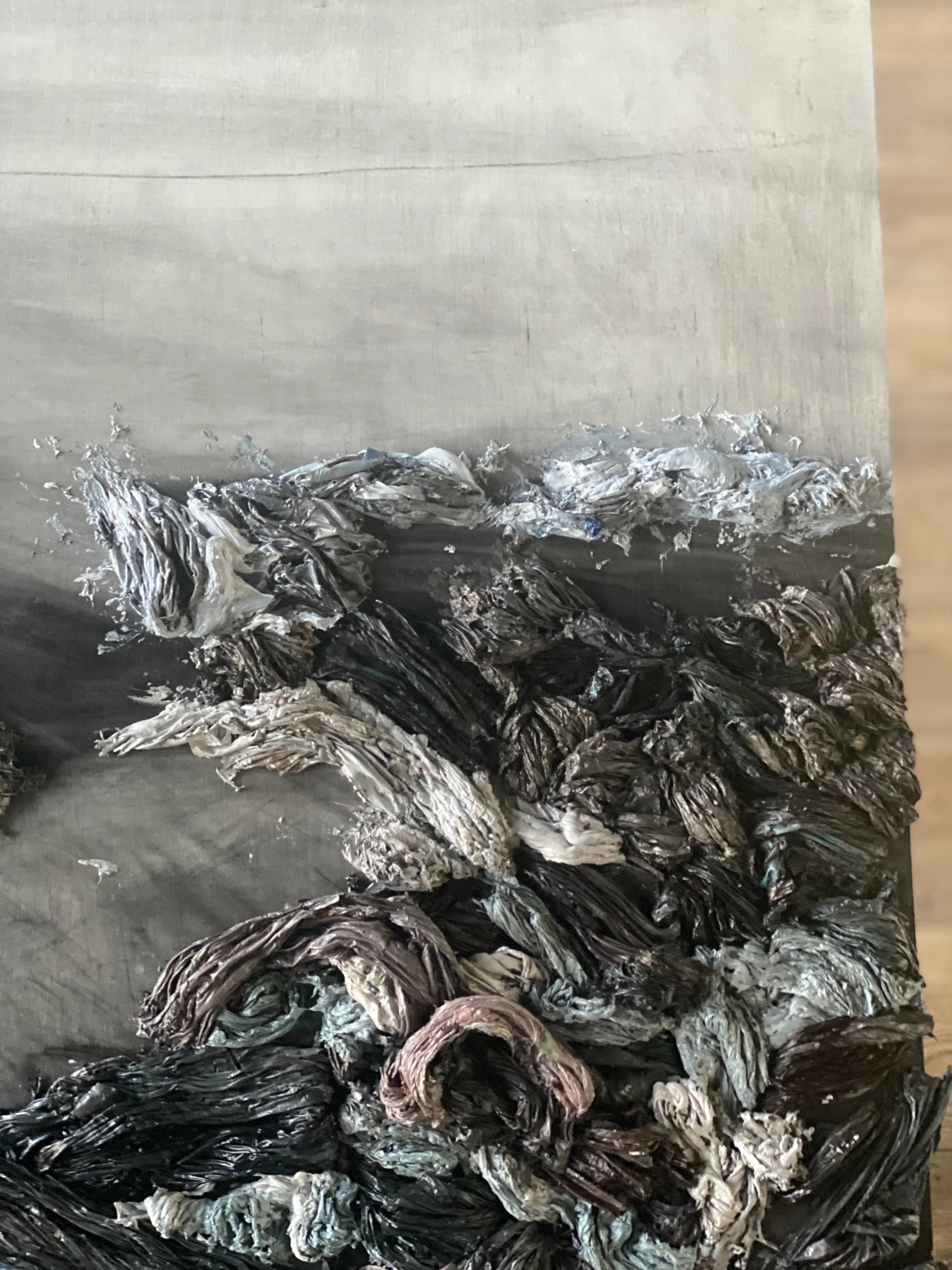
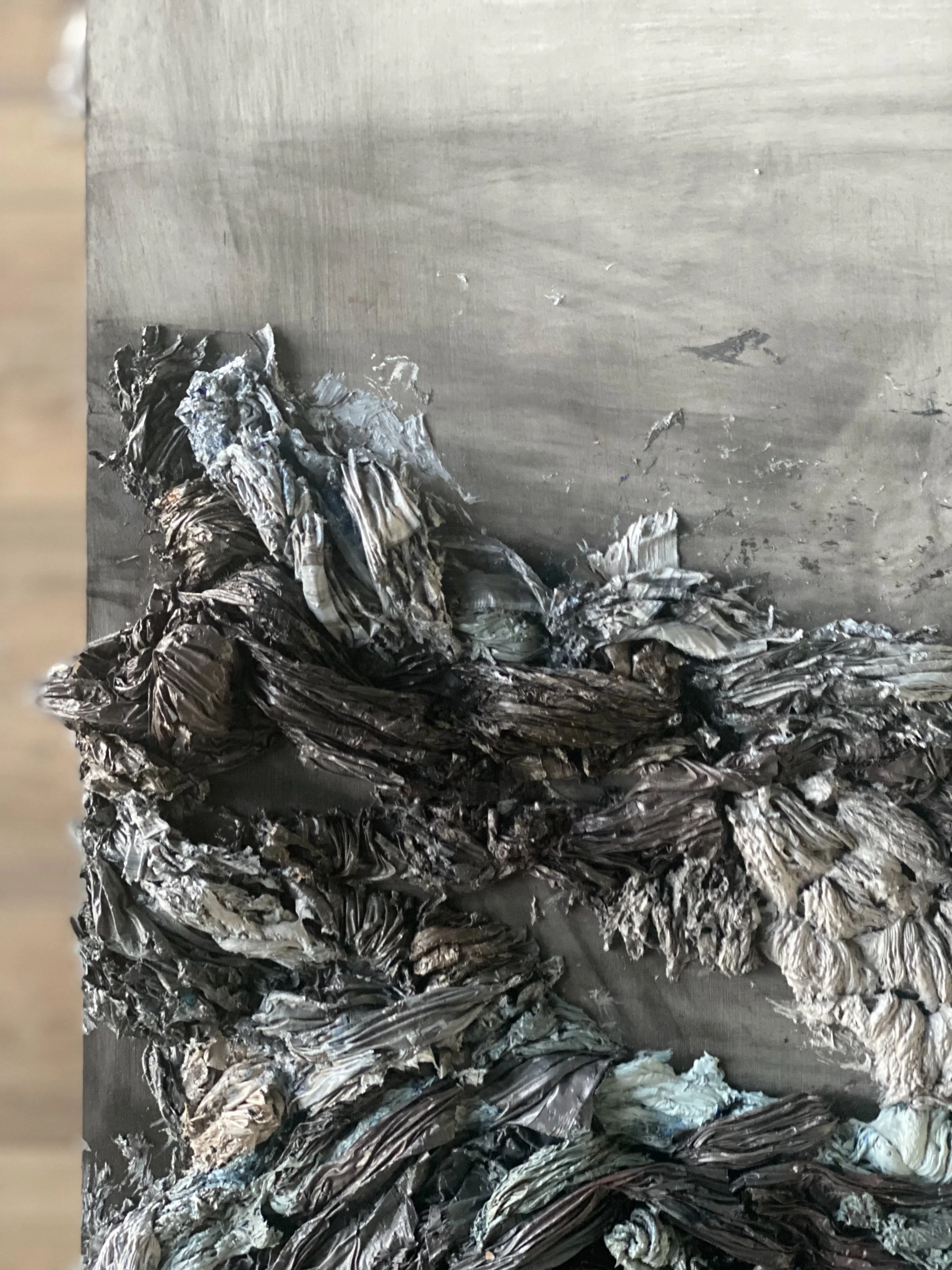
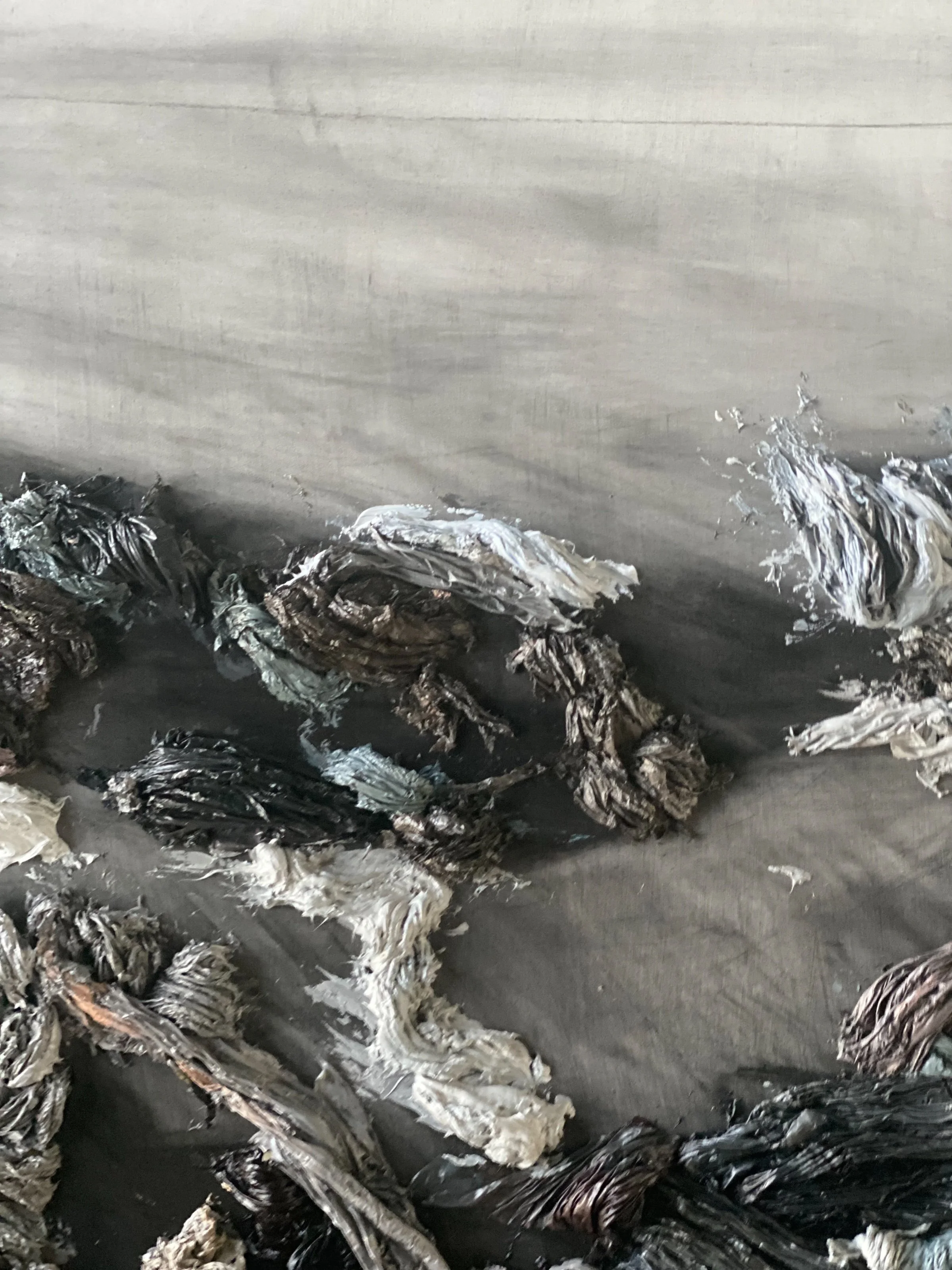
November 2, 2021
Throwing caution to the wind, time for color.
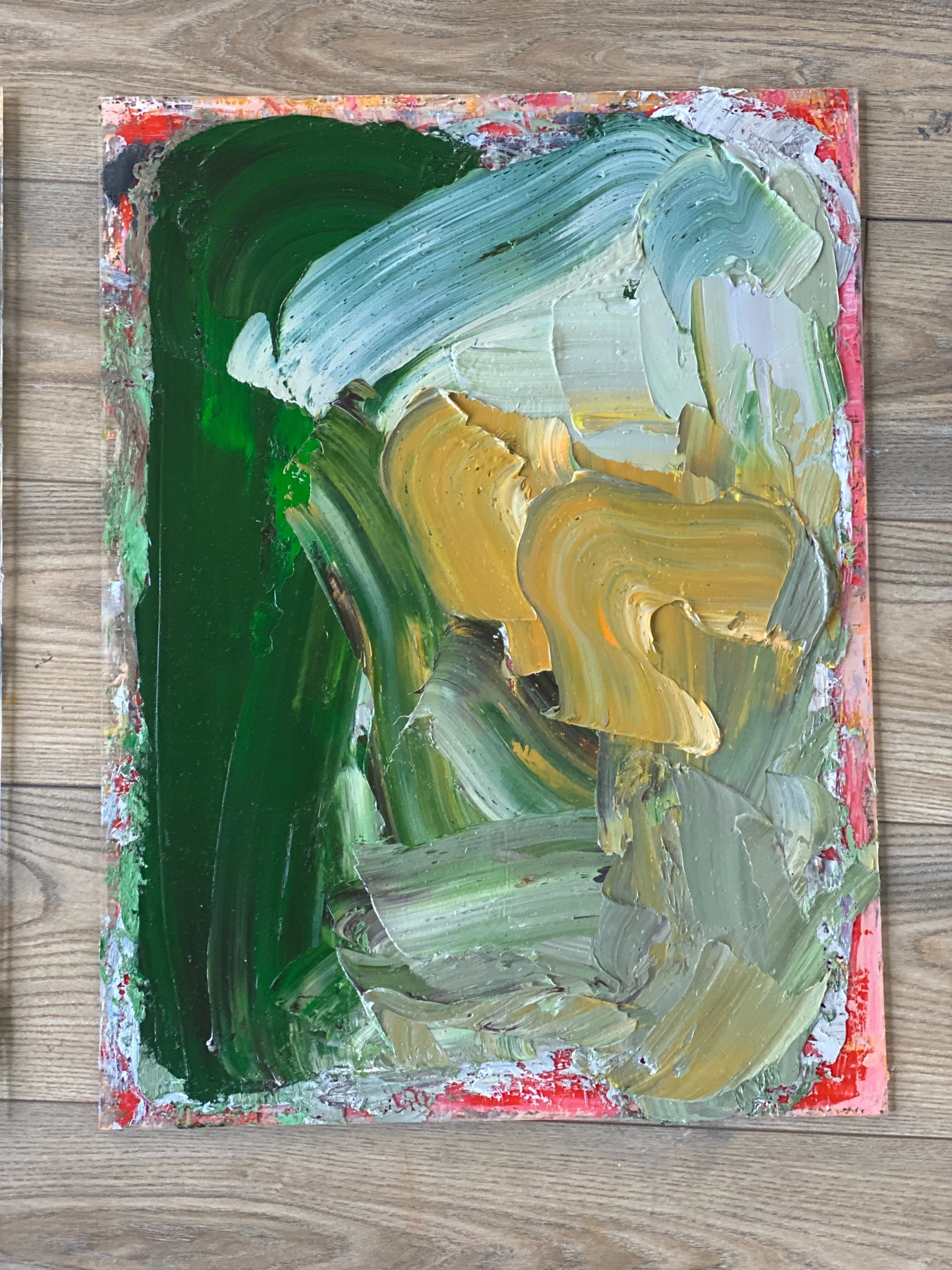
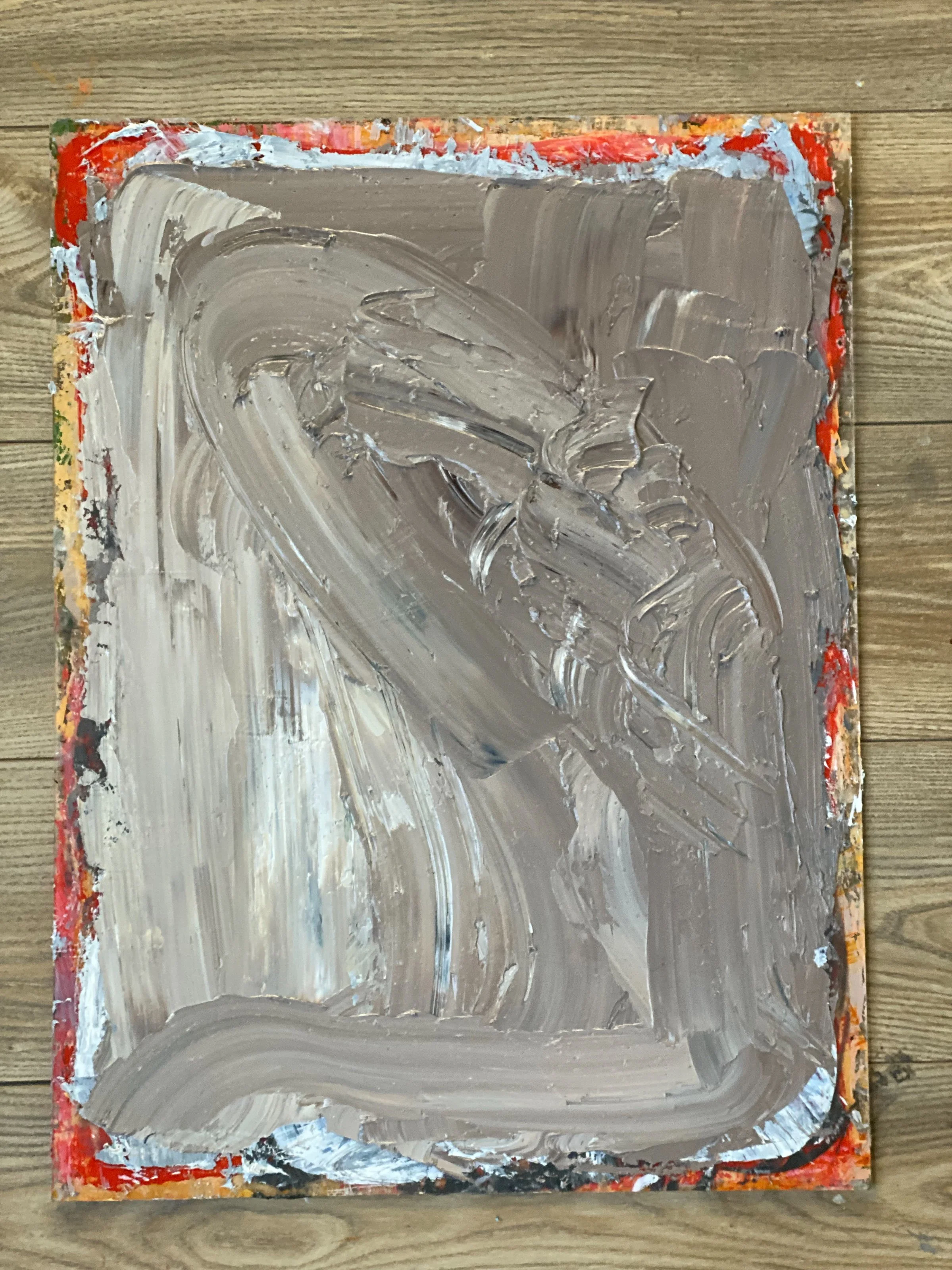
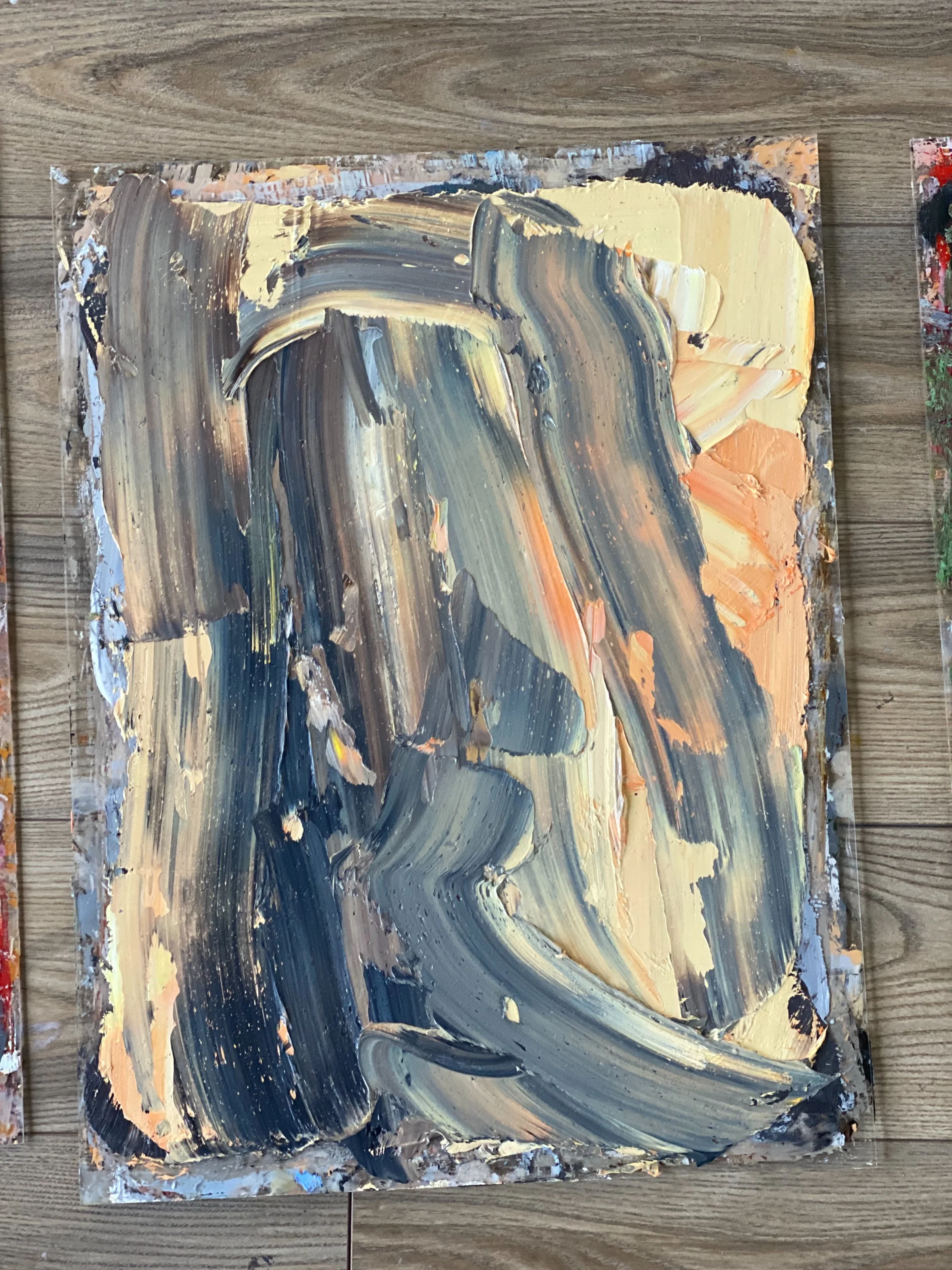
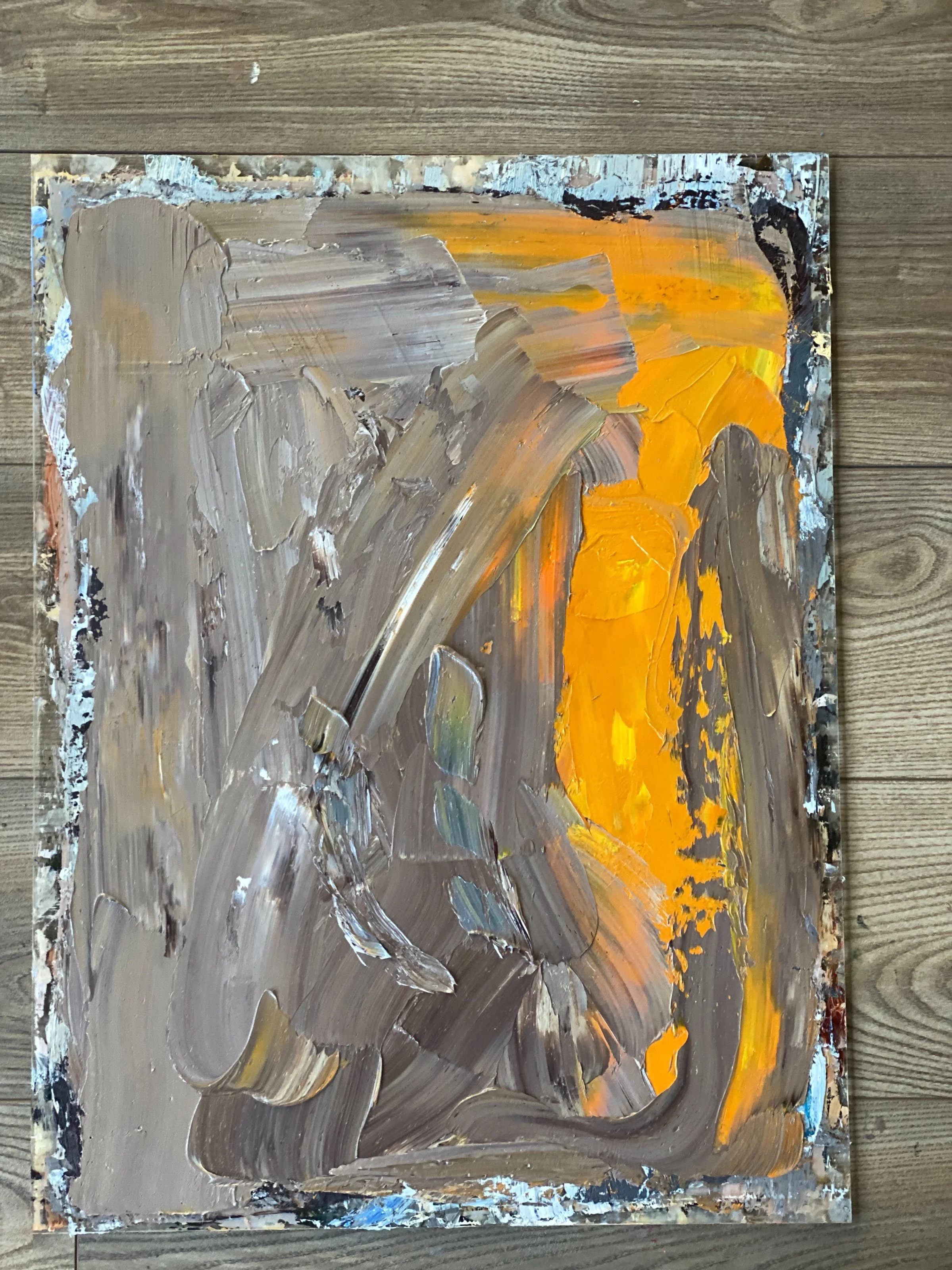
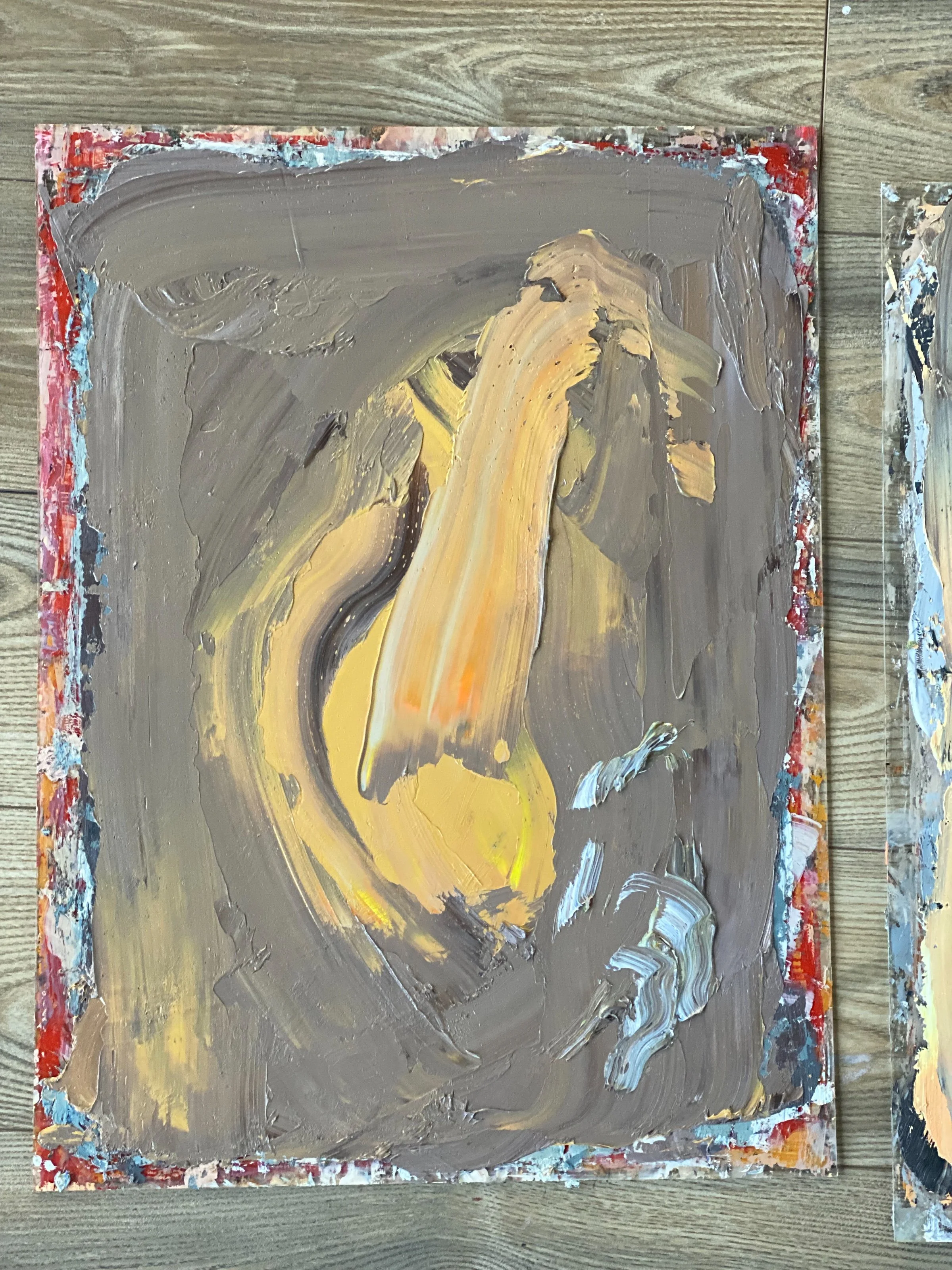
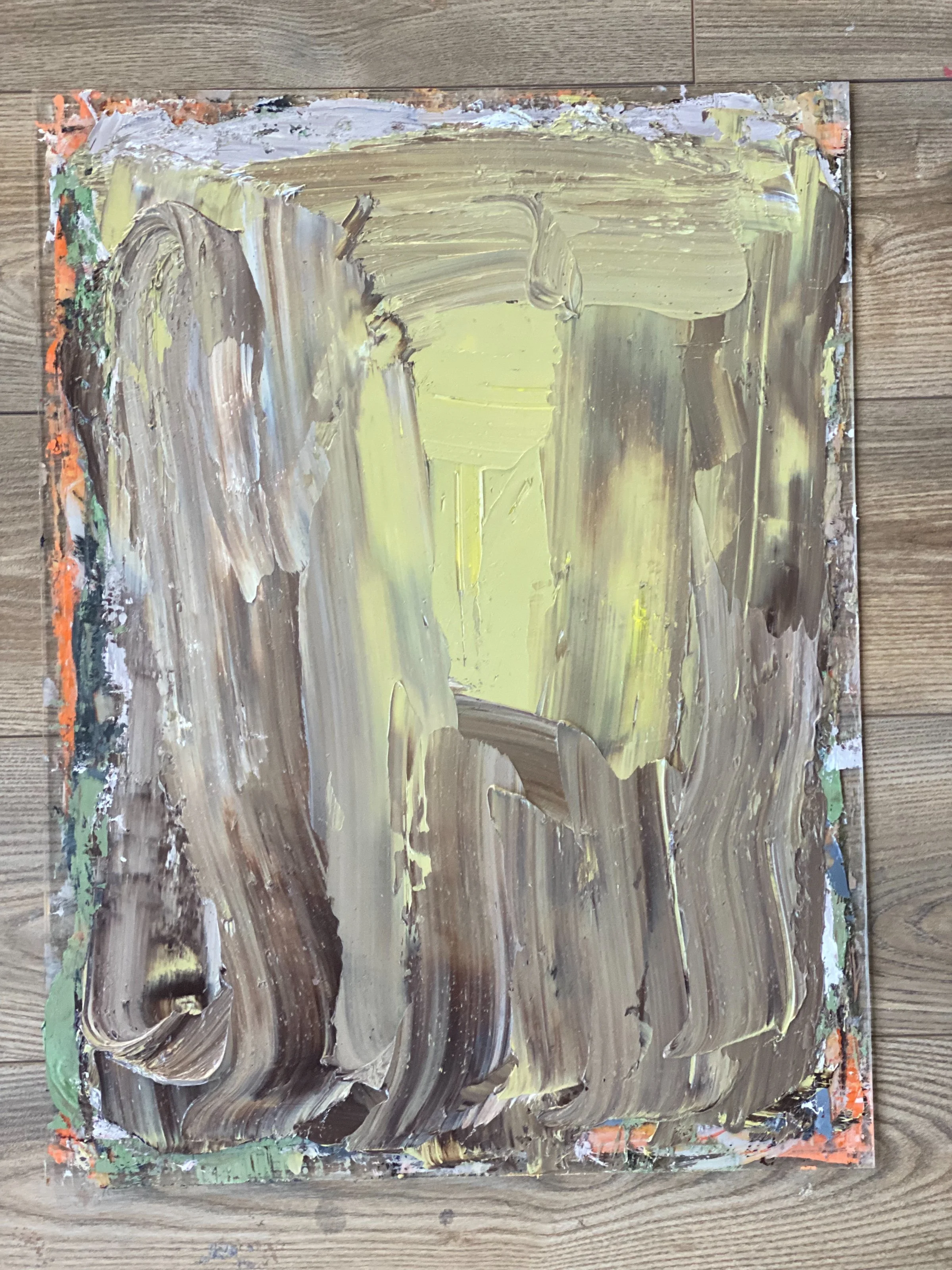
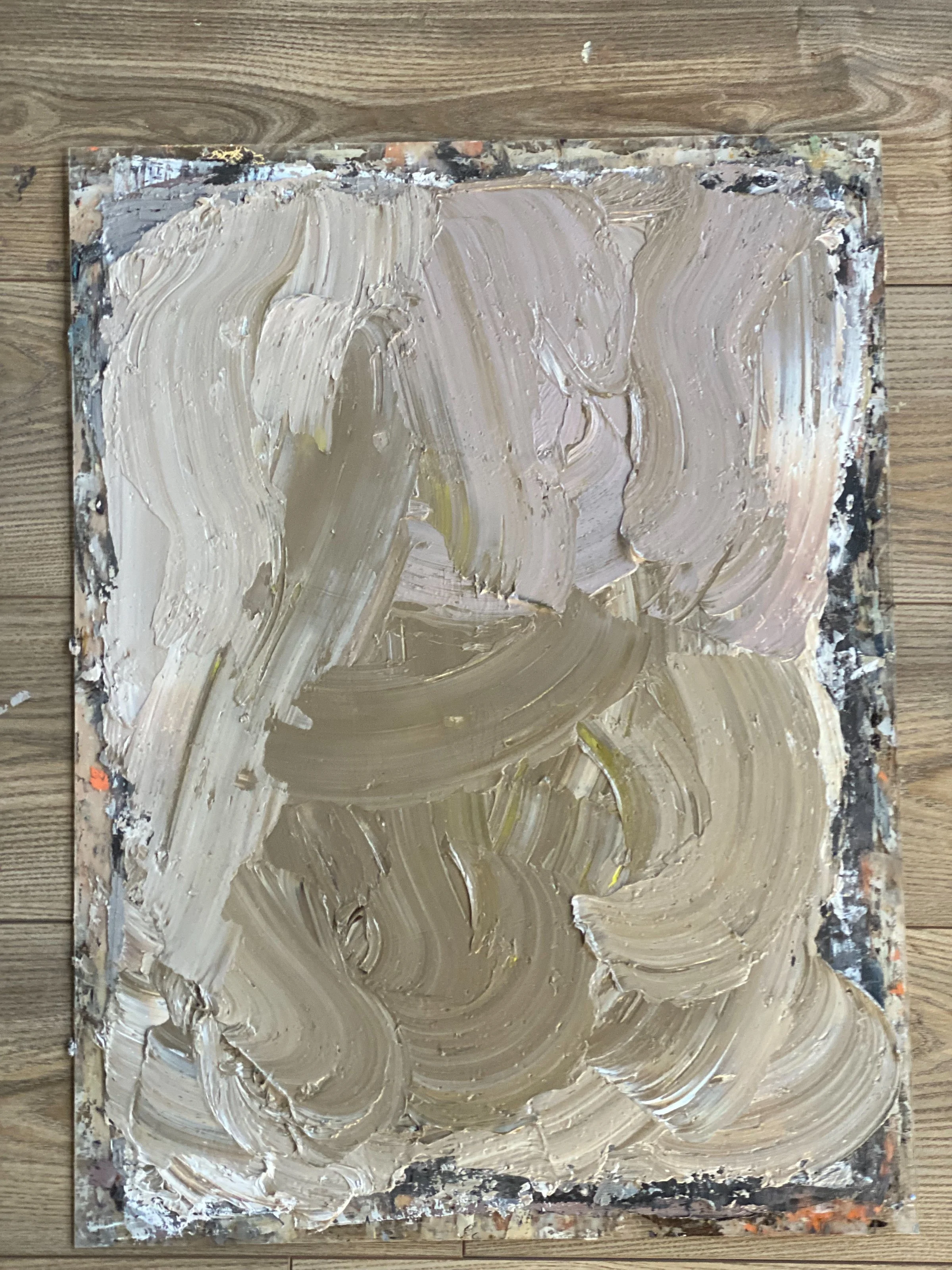
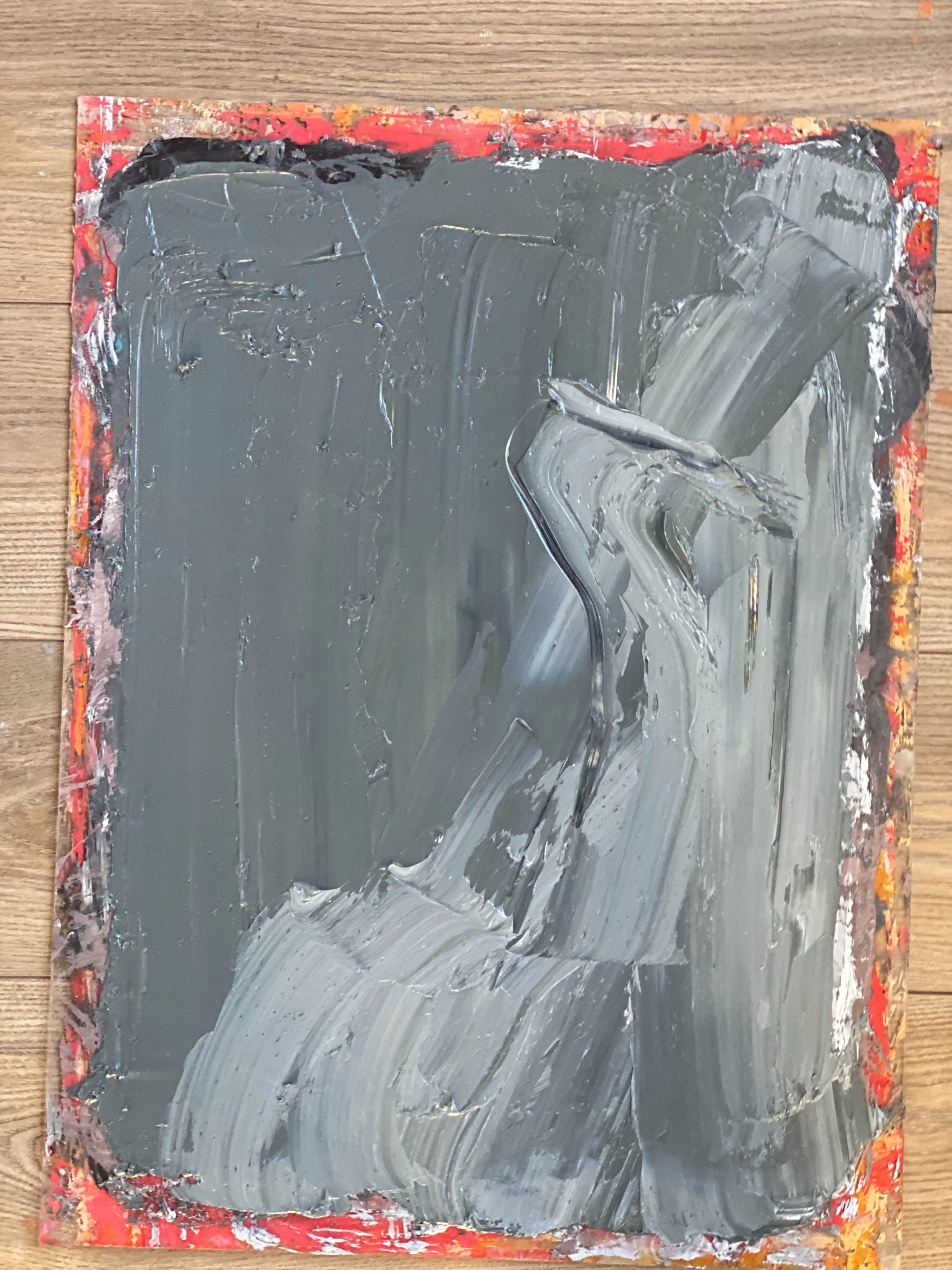
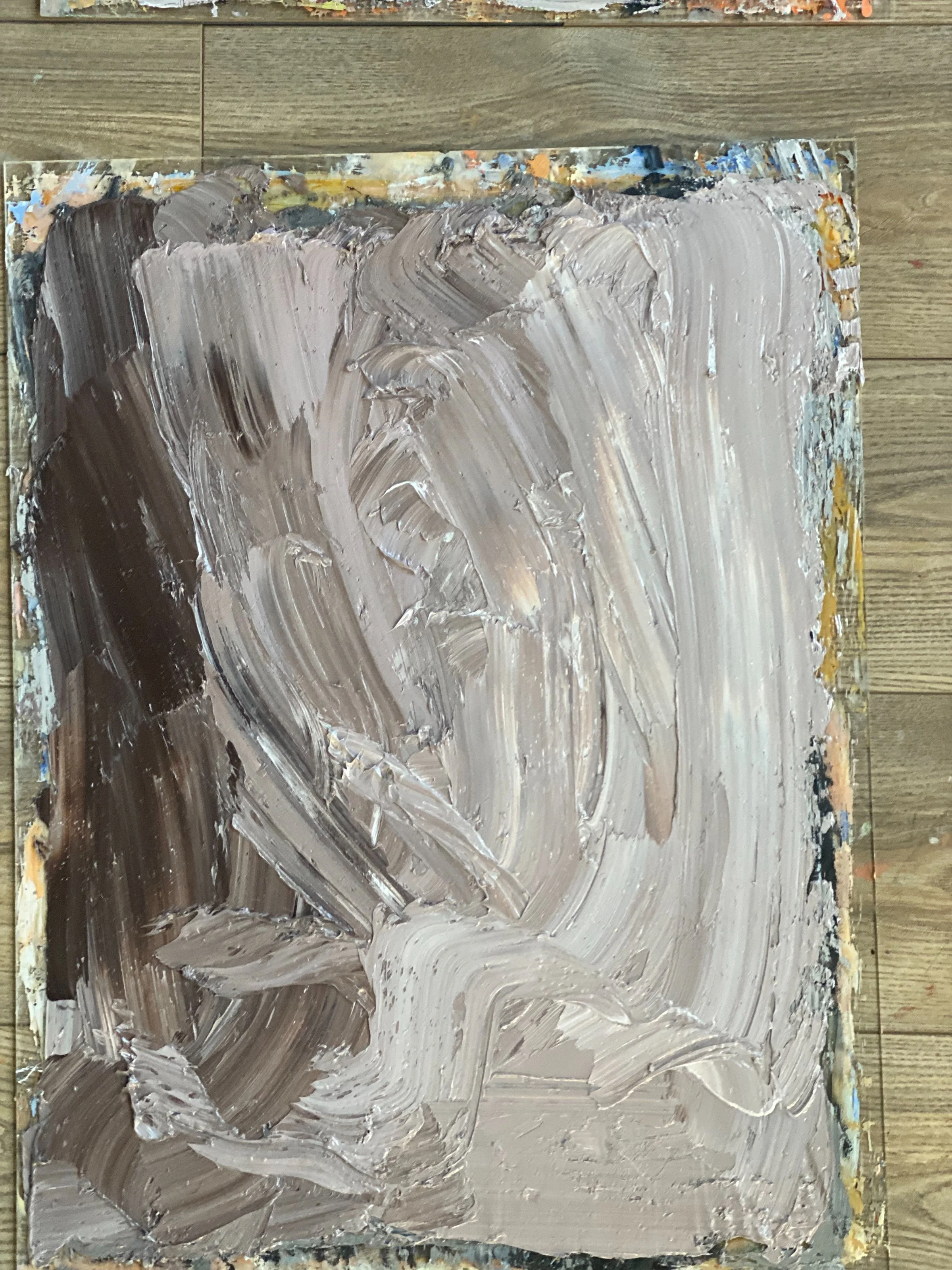
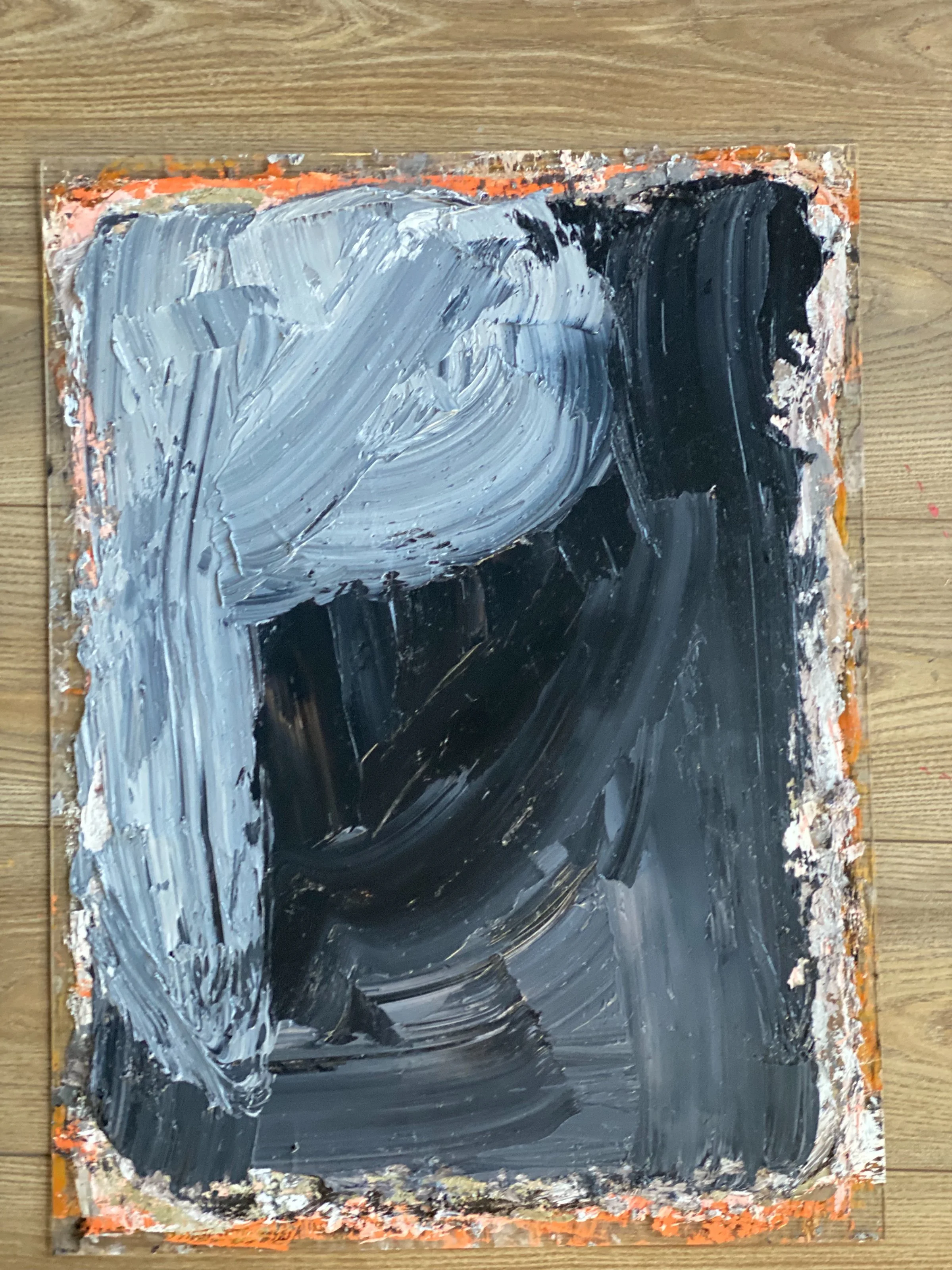
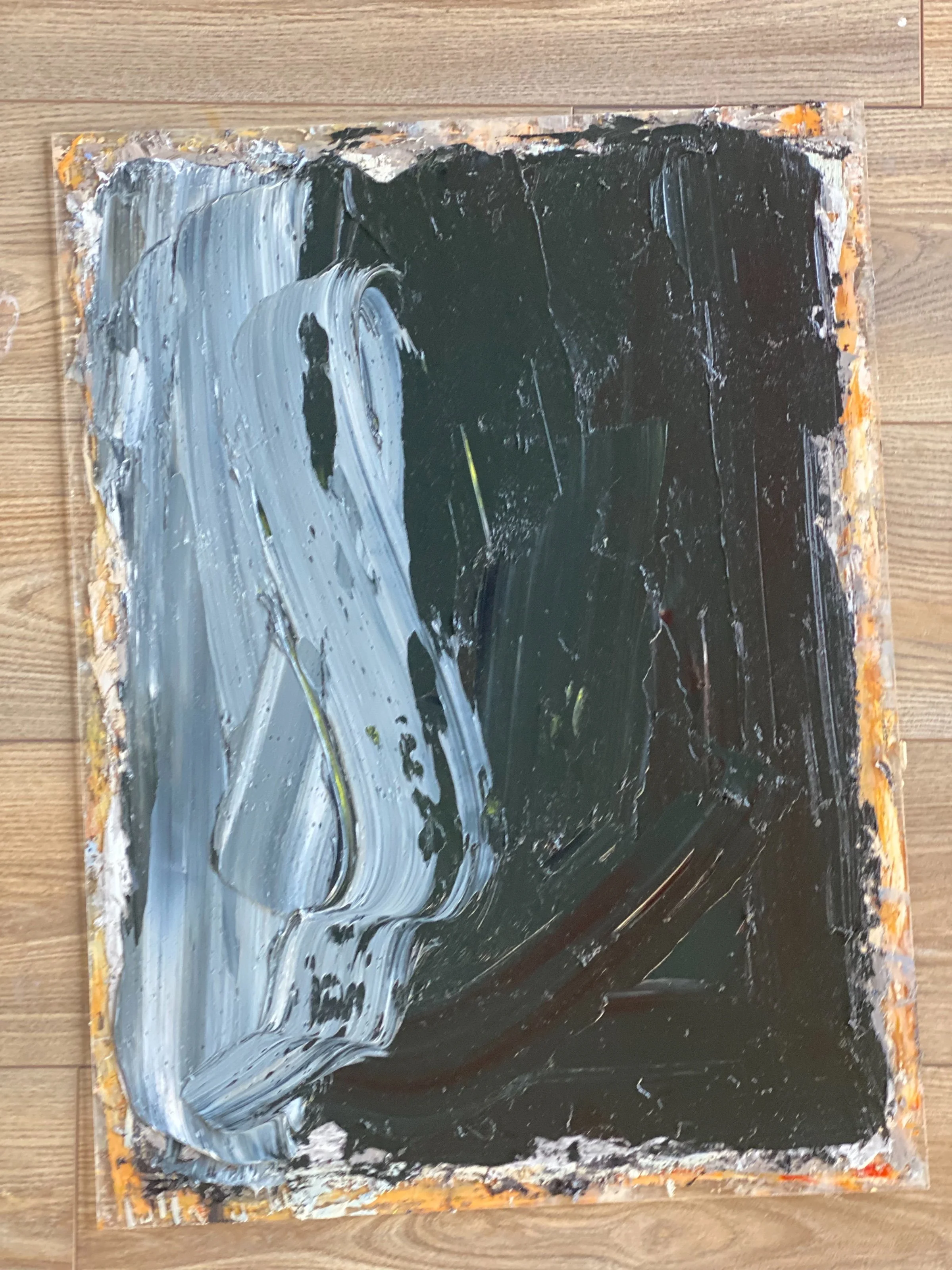
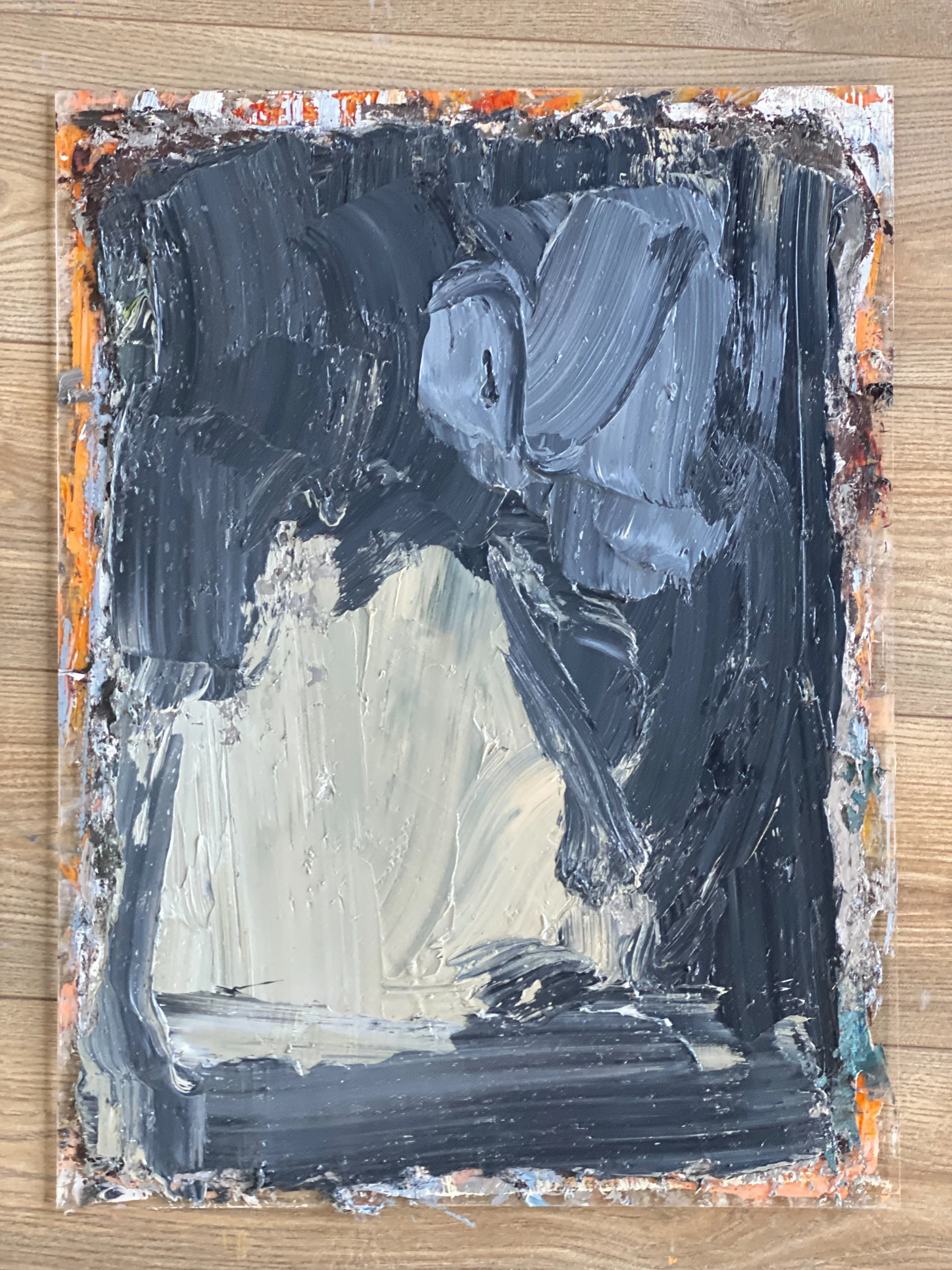
November 7, 2021
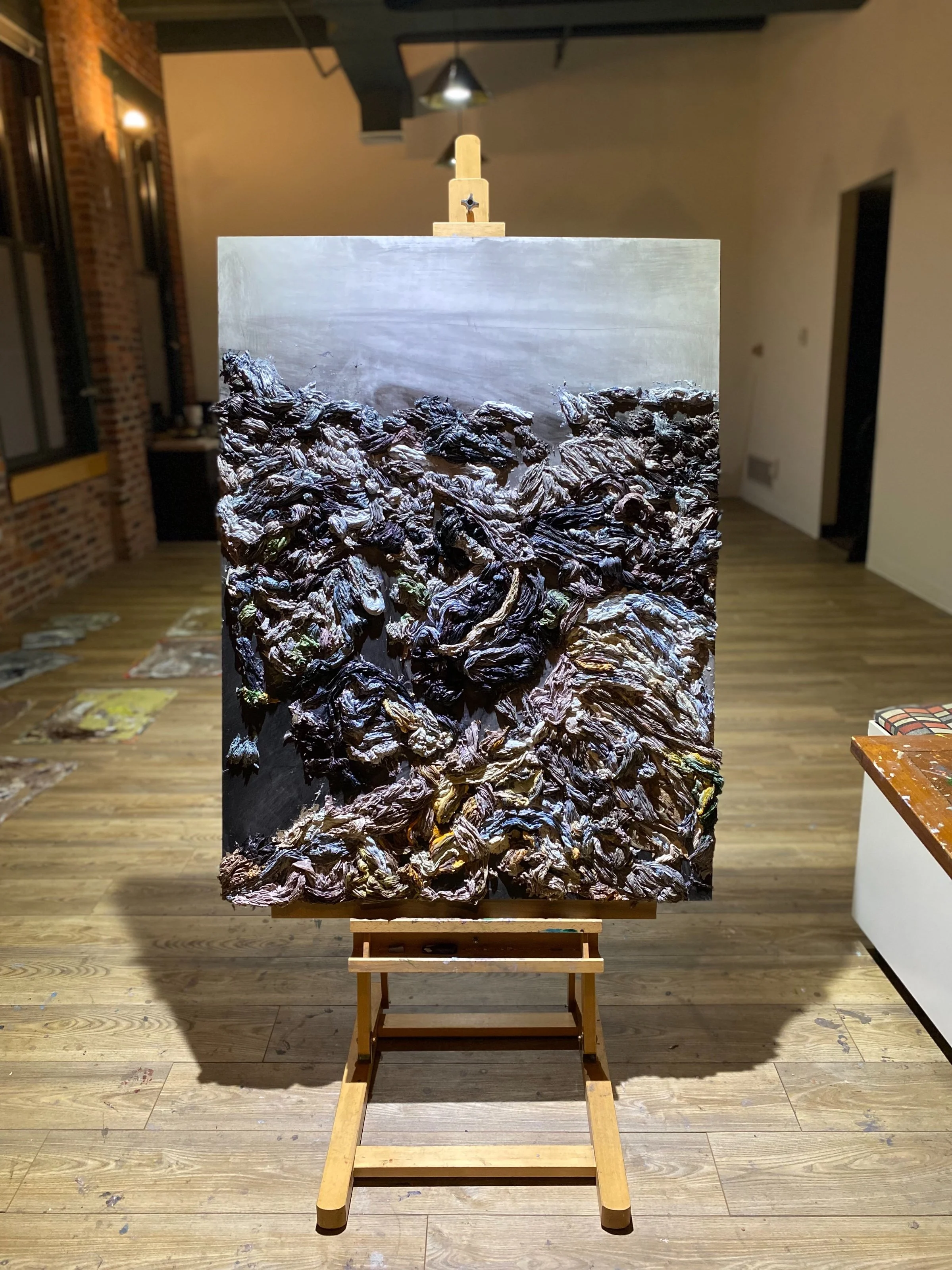
November 10, 2021
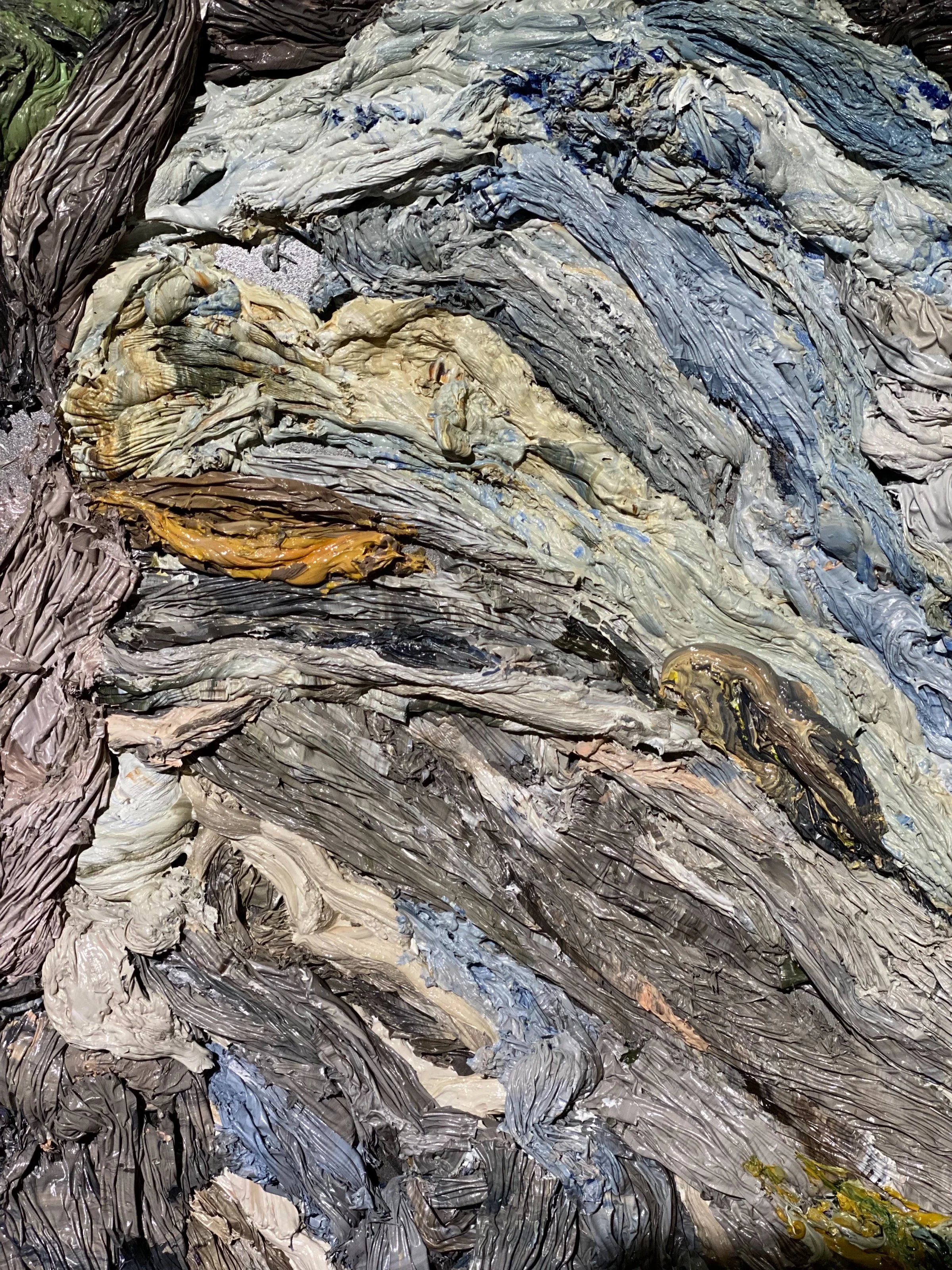
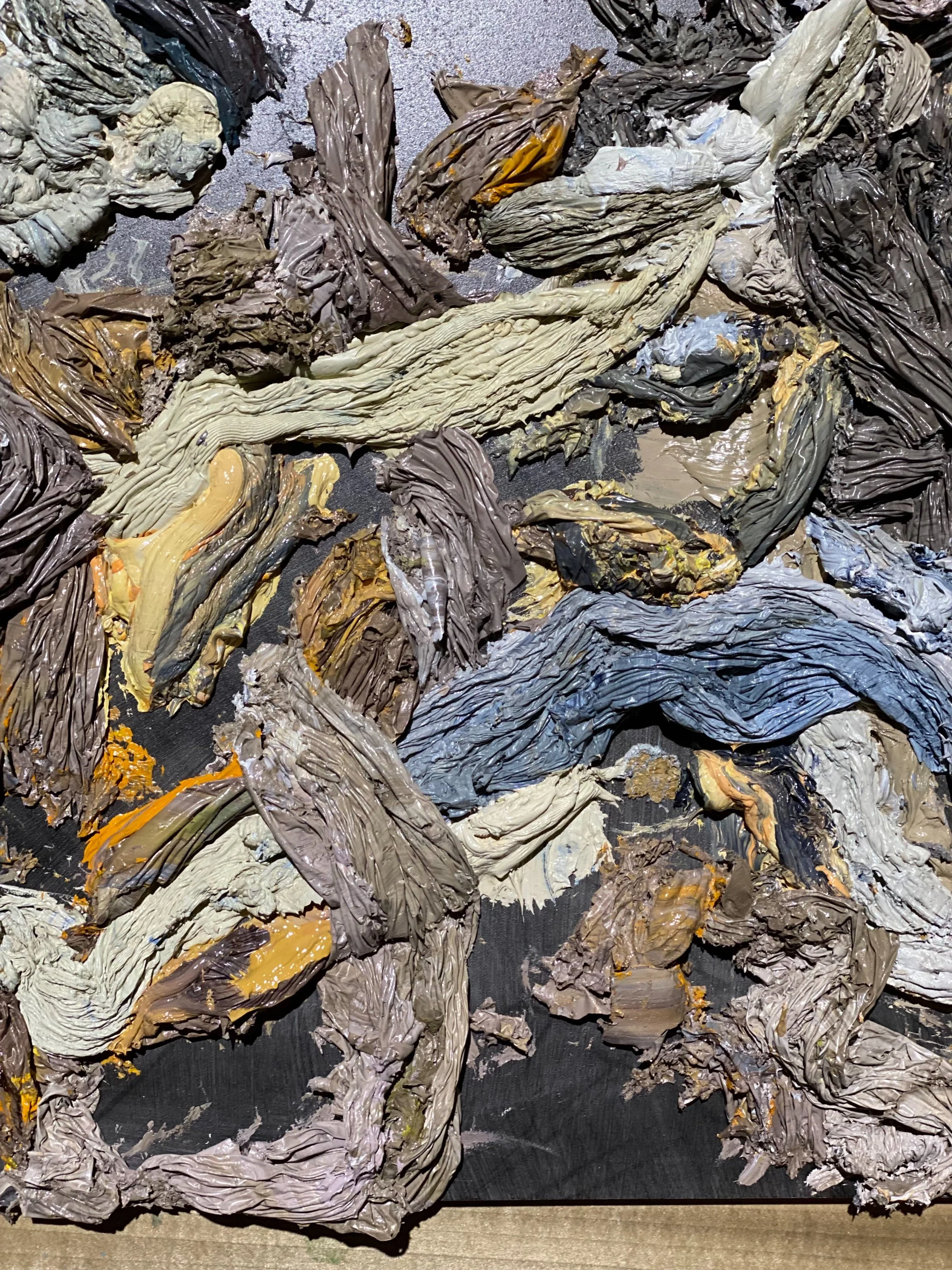
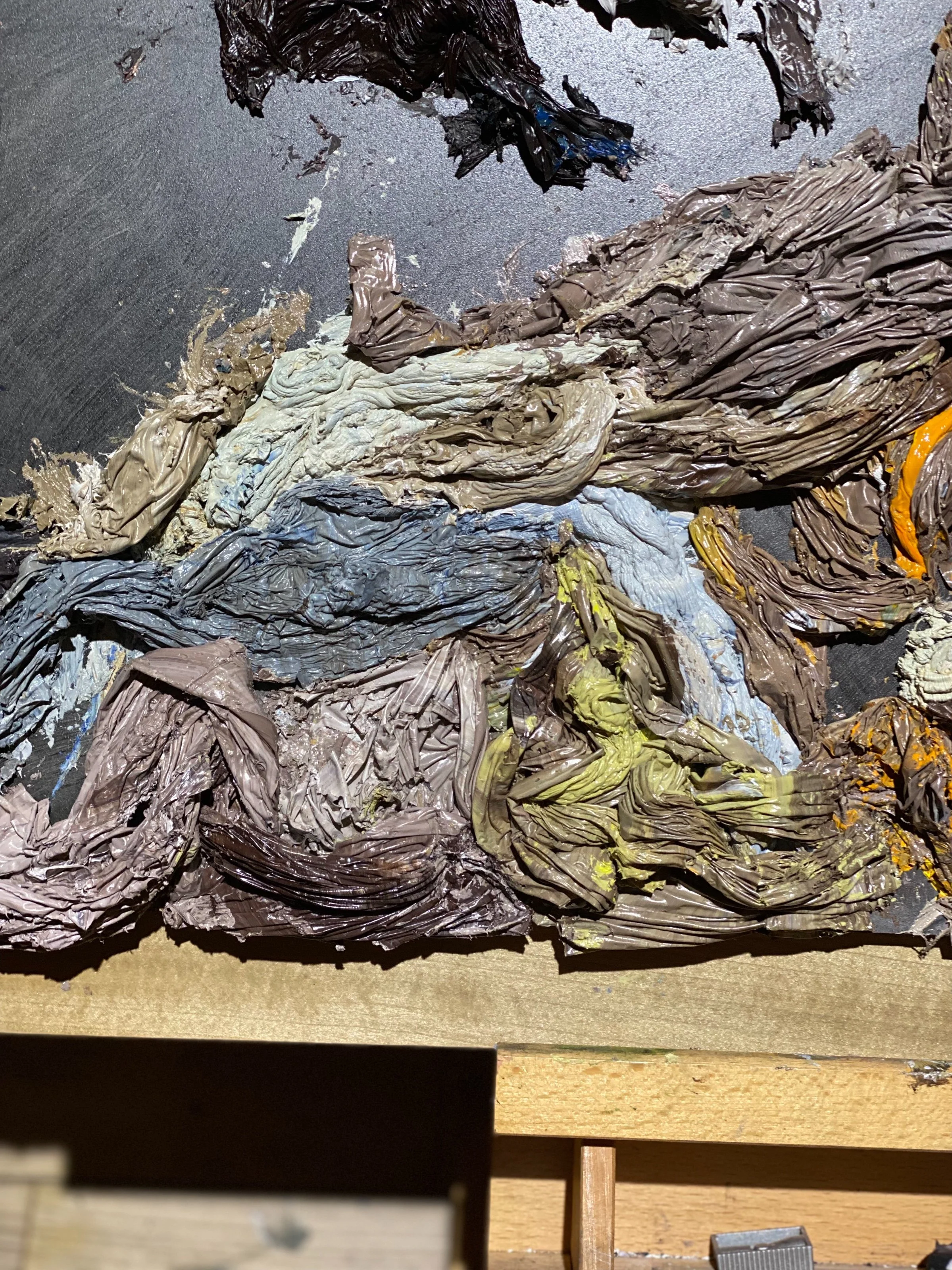
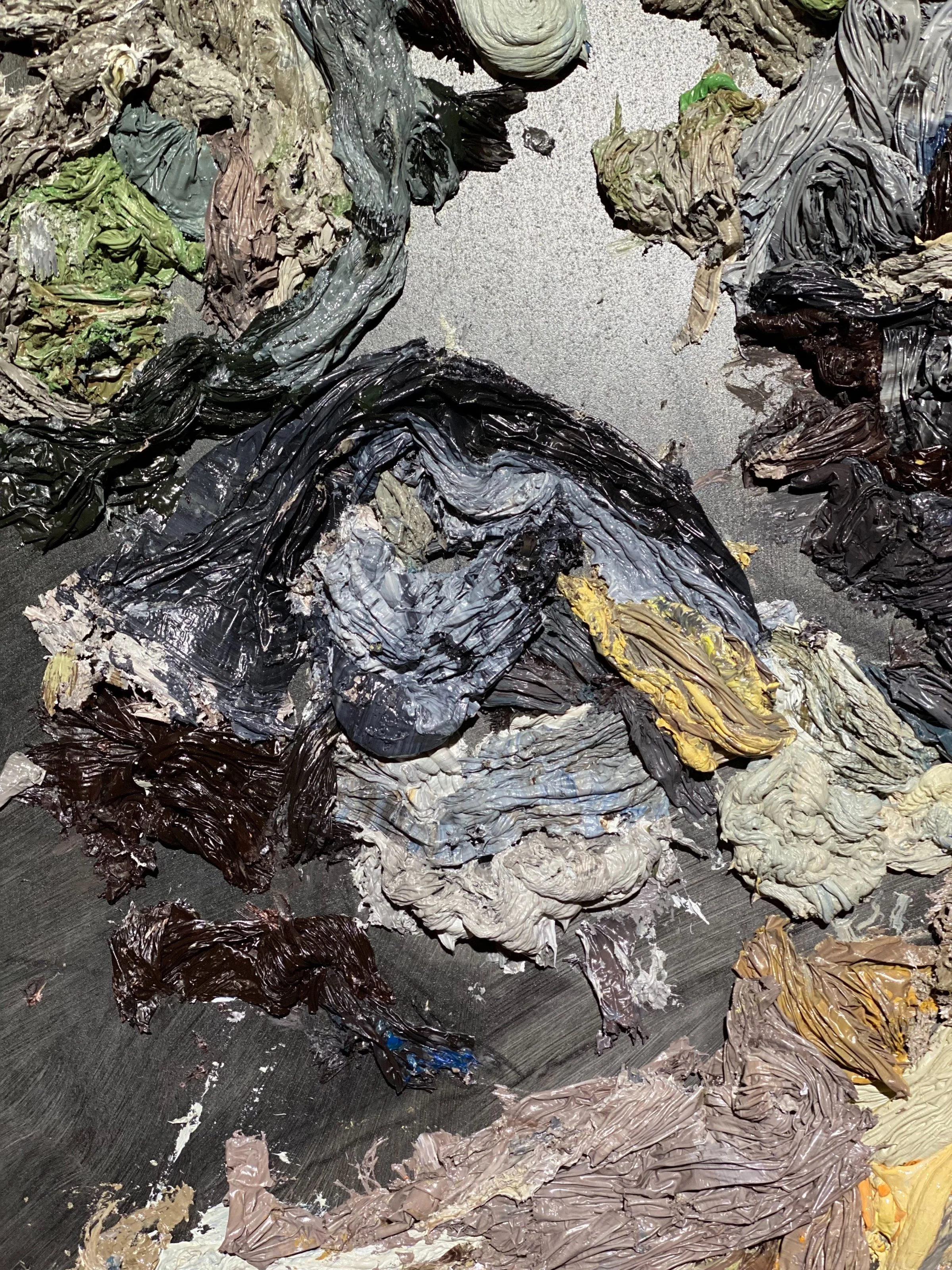
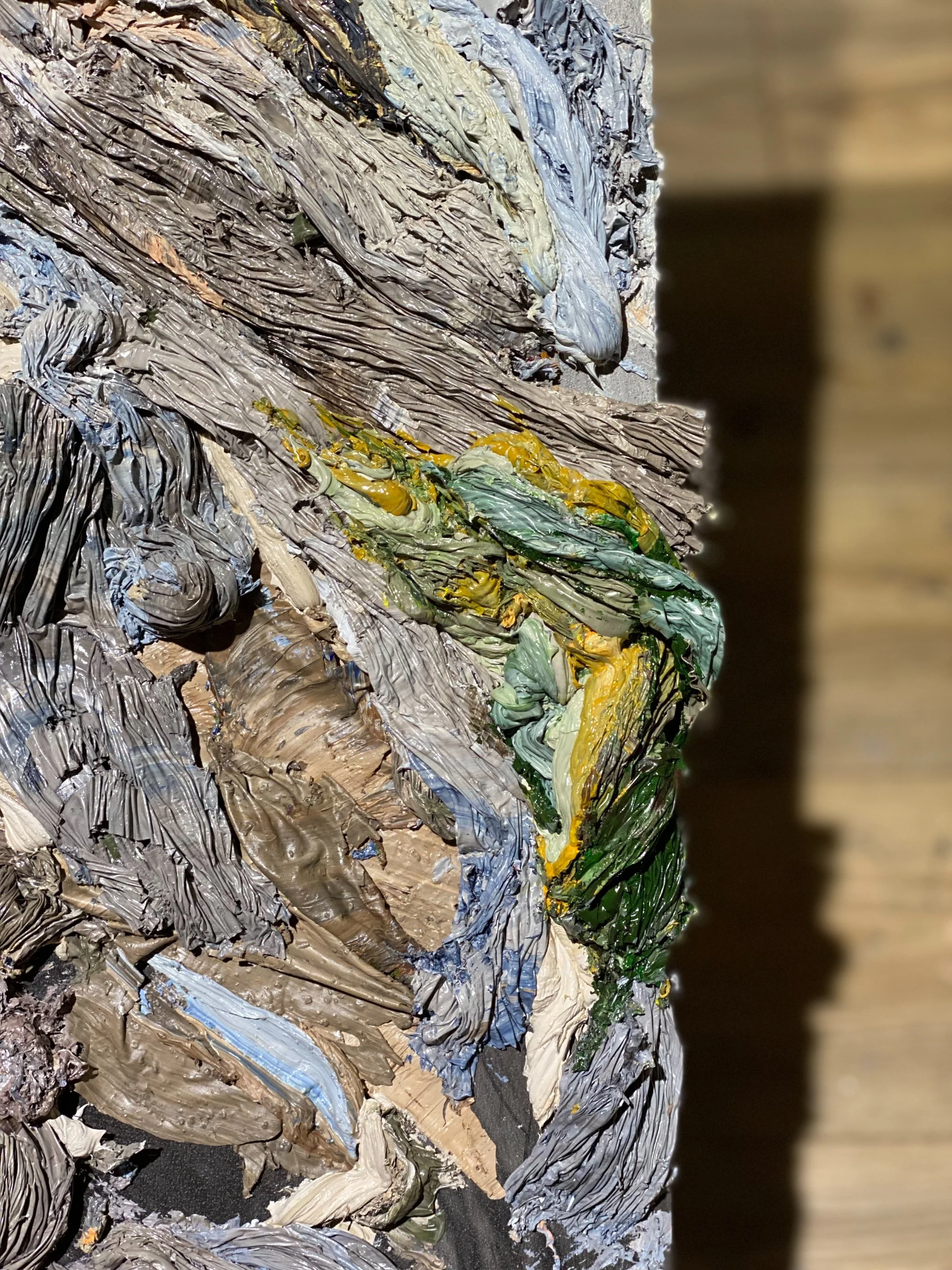
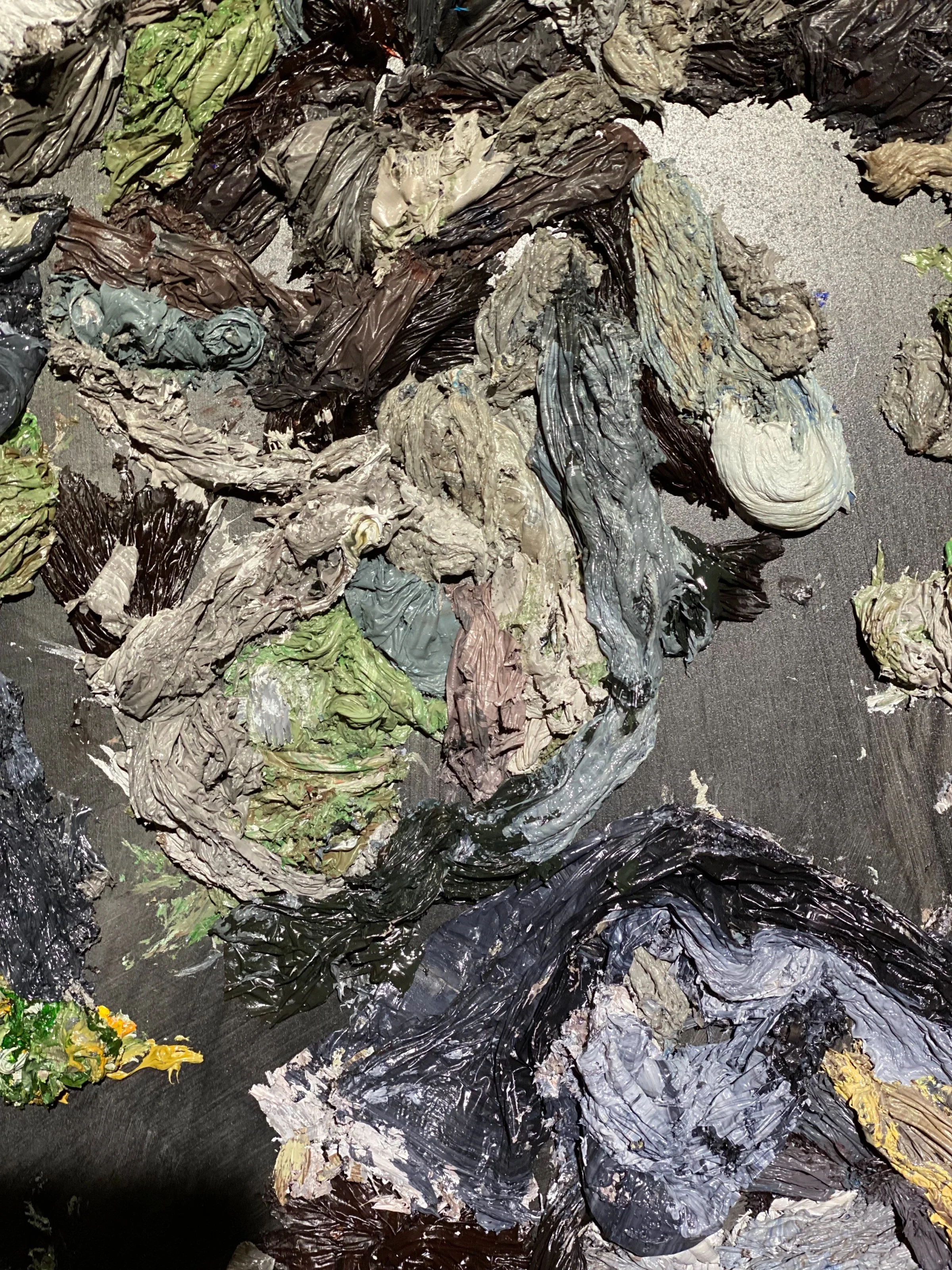
There is a kind of weaving happening here. Being close to this work is overwhelming. It’s a dance of paint that isn't just a rendering of shapes floating in space but actual material. Each form has its own character.
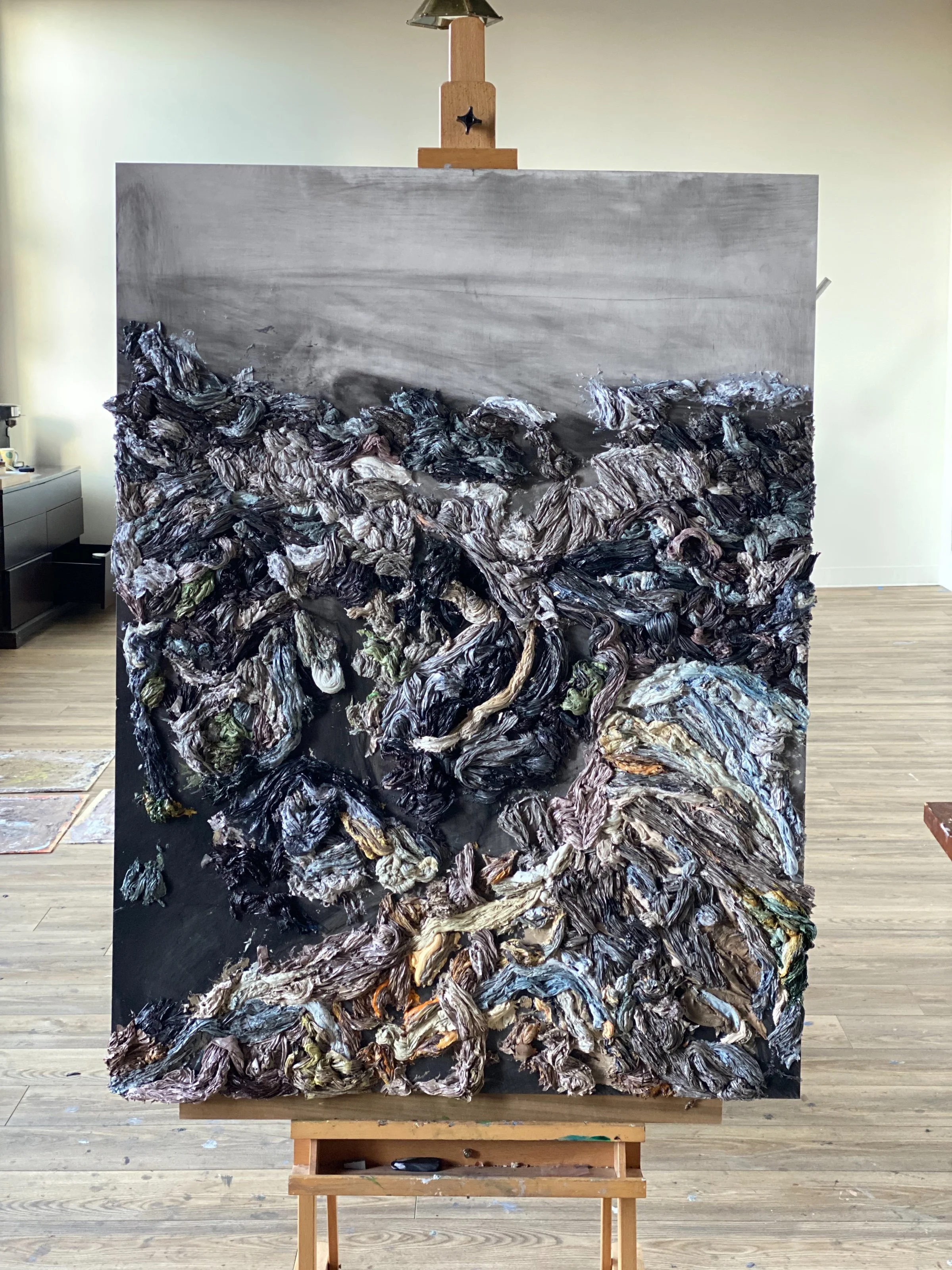
November 19, 2021
Finally working through the greens, I wanted to establish as much of the image as possible before focusing on these forms. That way, they would have distinct character and behavior, and they could dance differently.
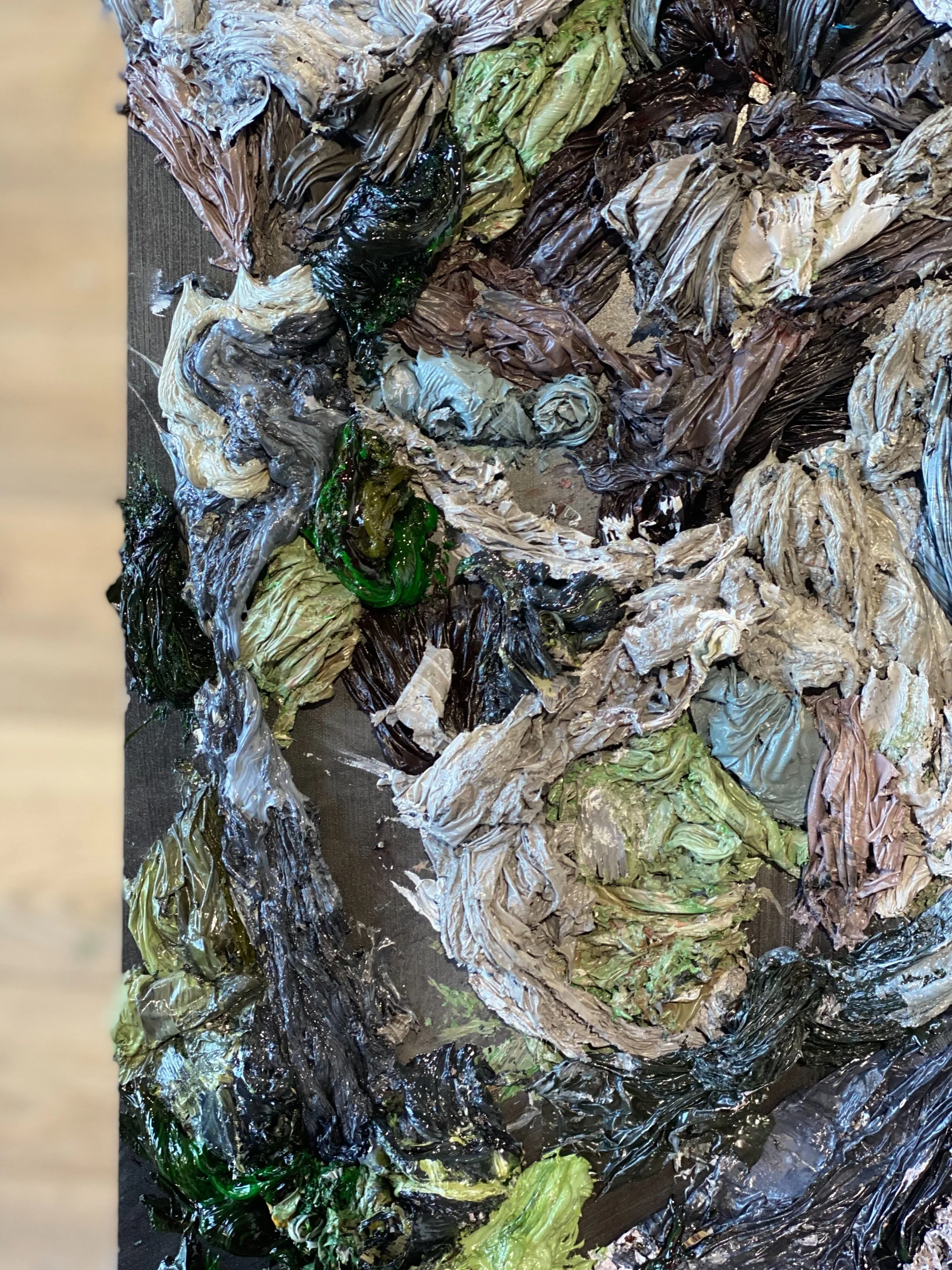
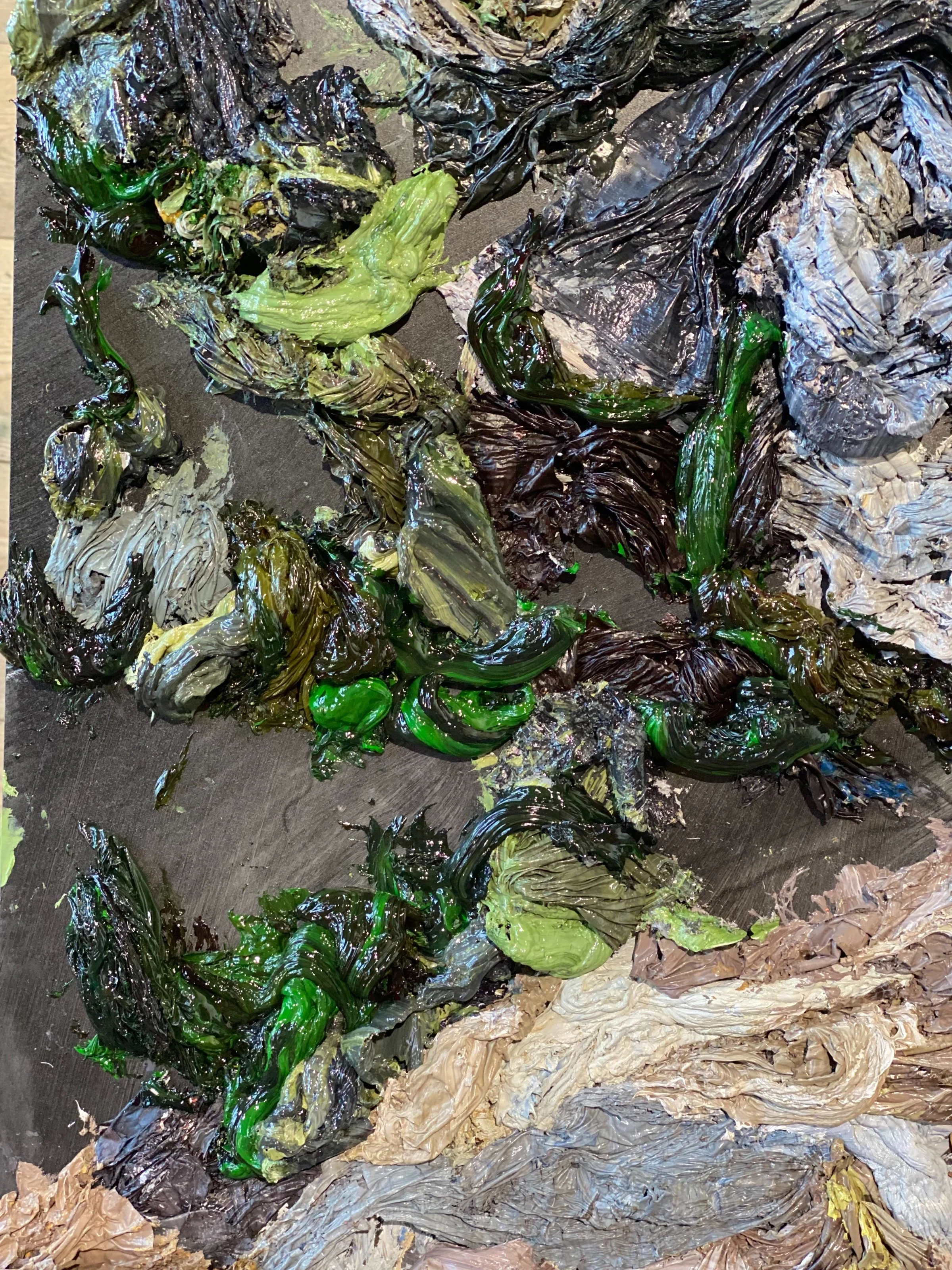
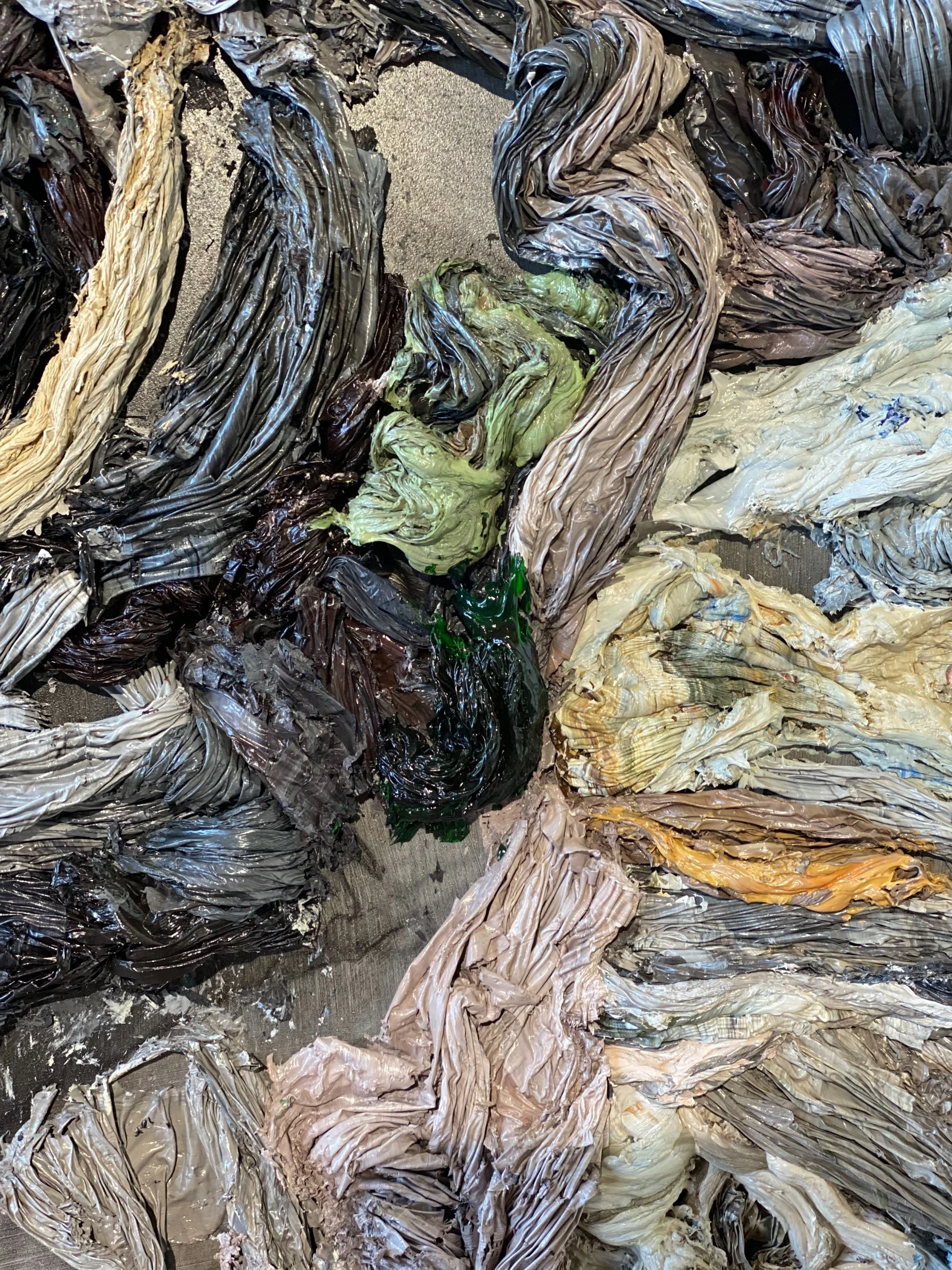
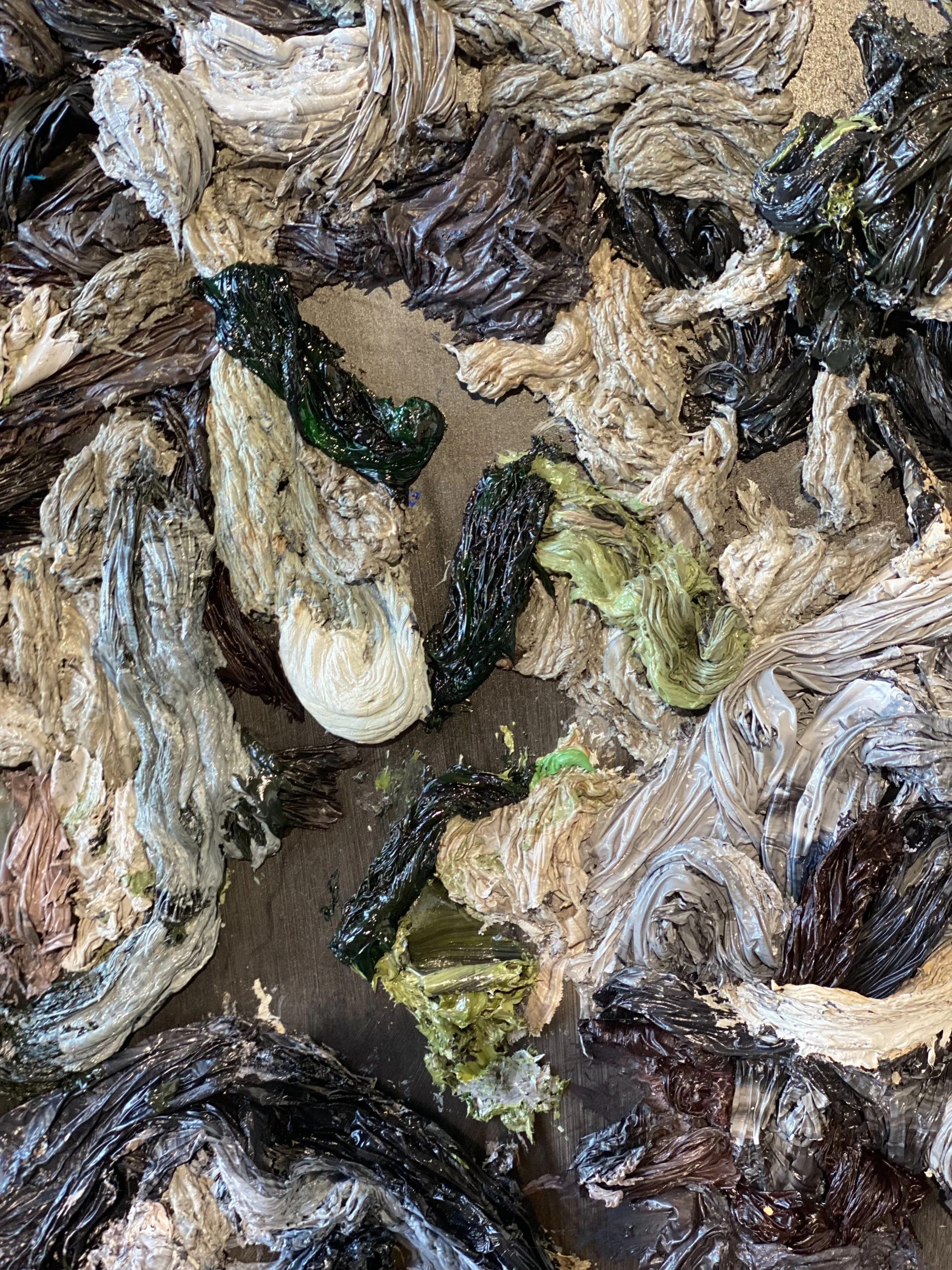
November 20, 2021
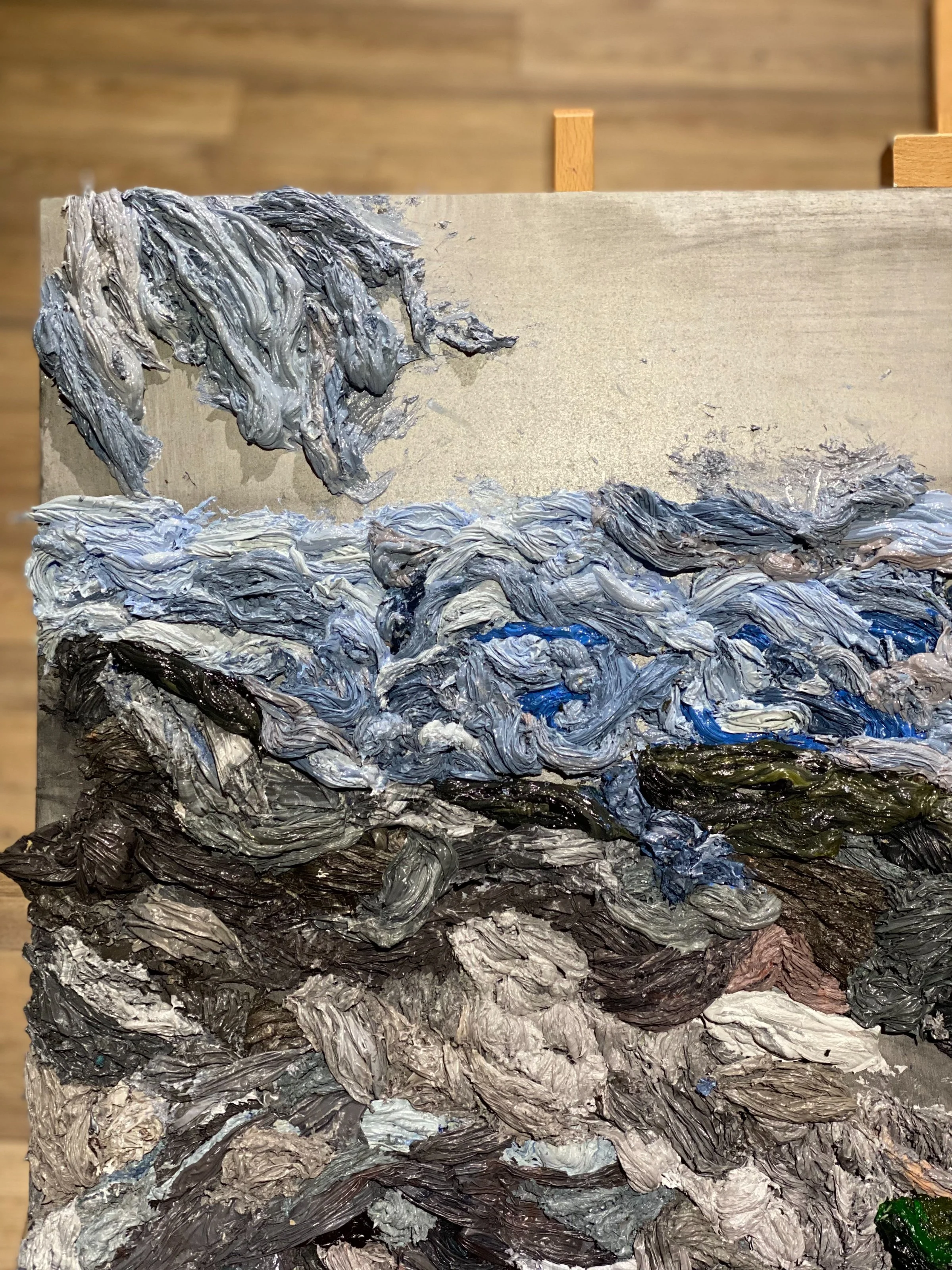
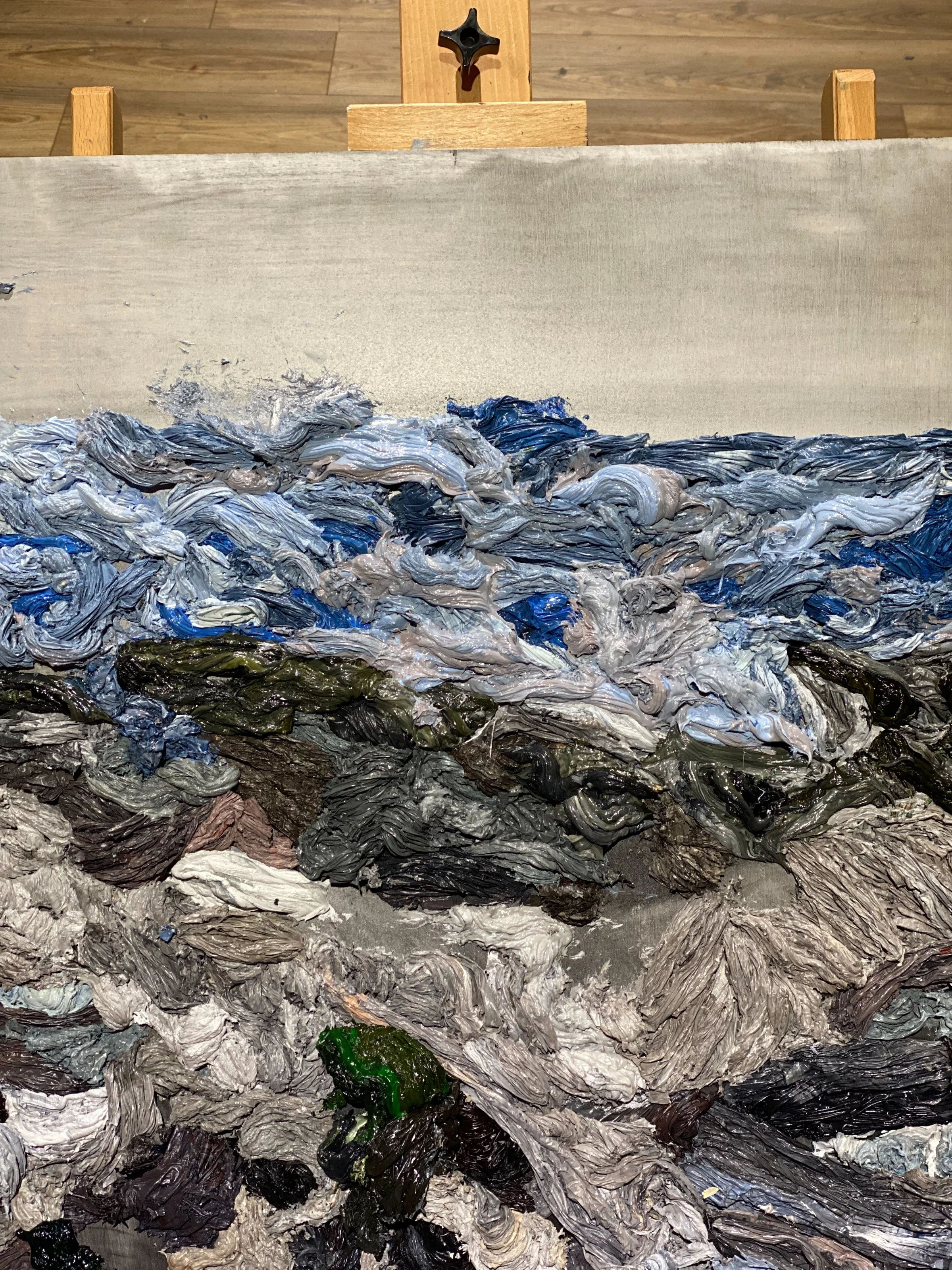
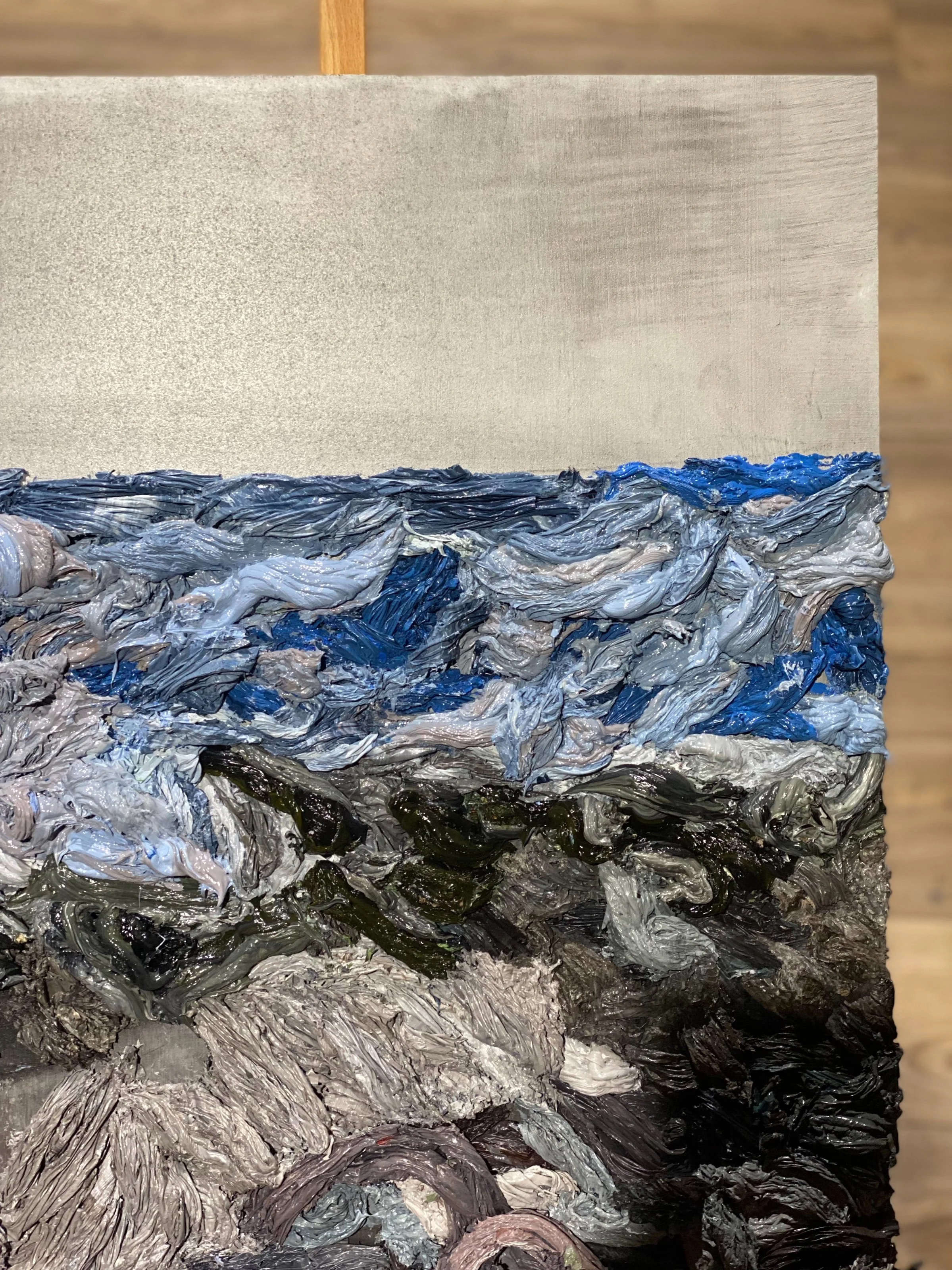
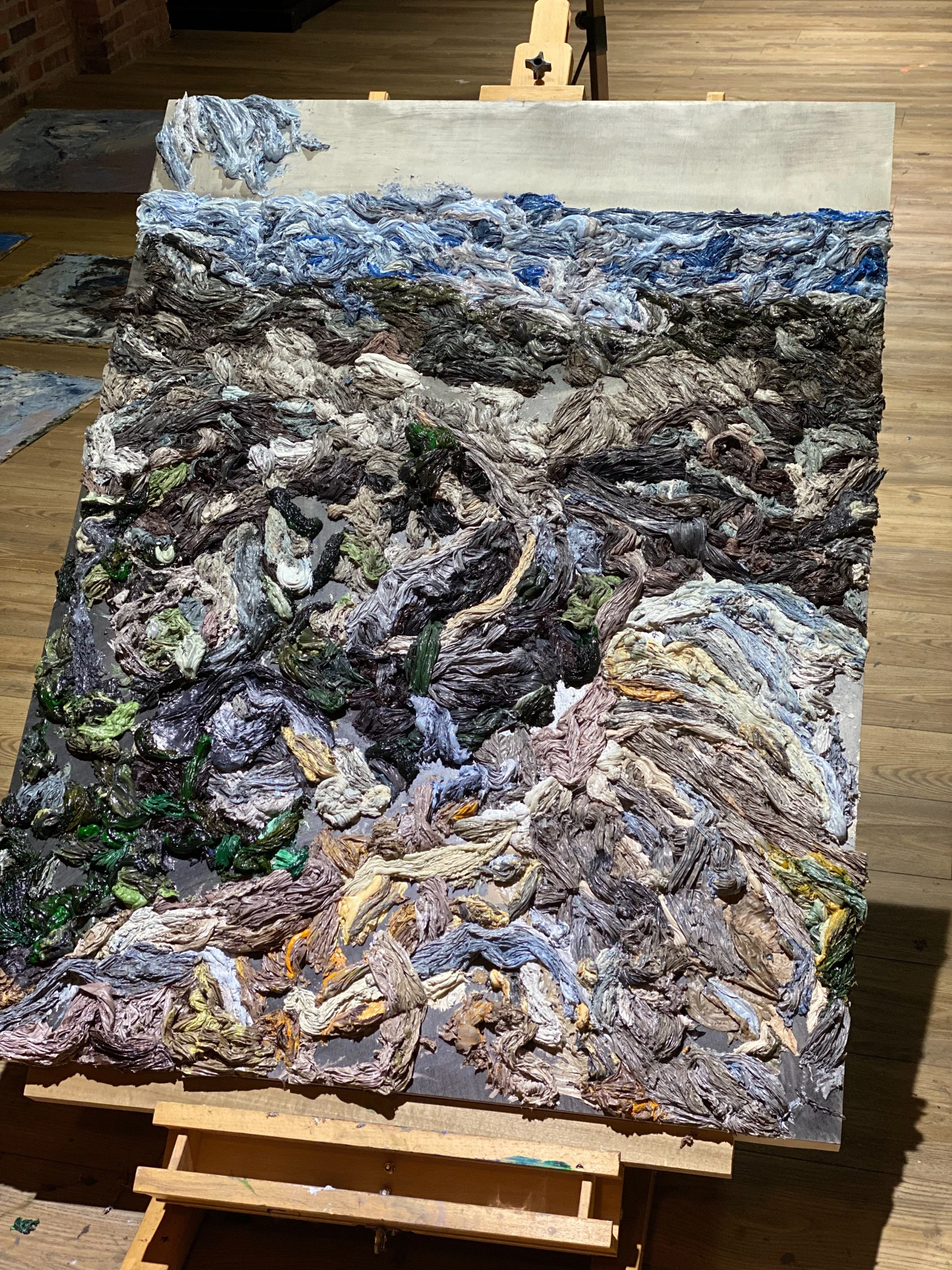
december 1, 2021
So much painting today, leaving the studio physically drained.
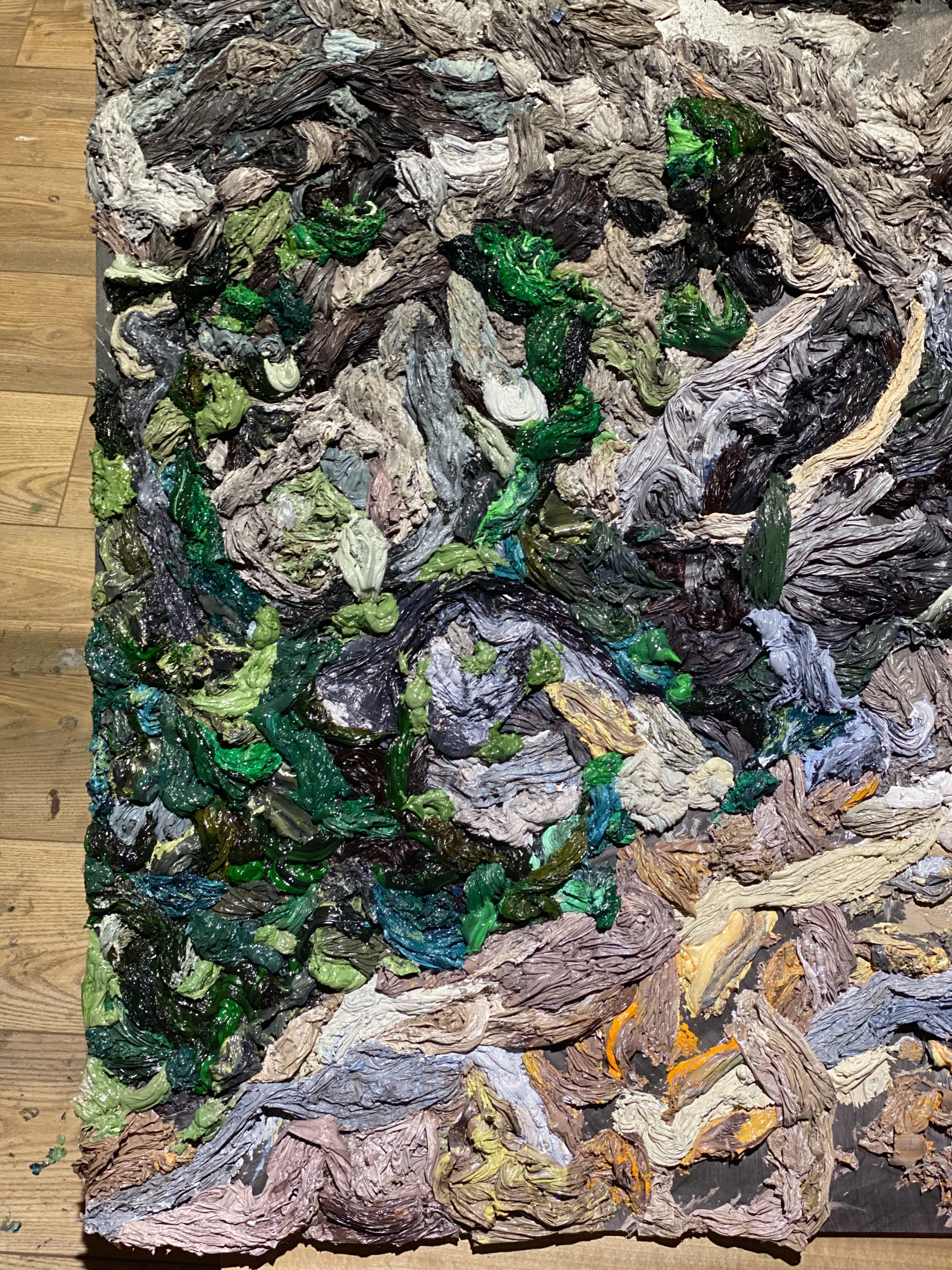
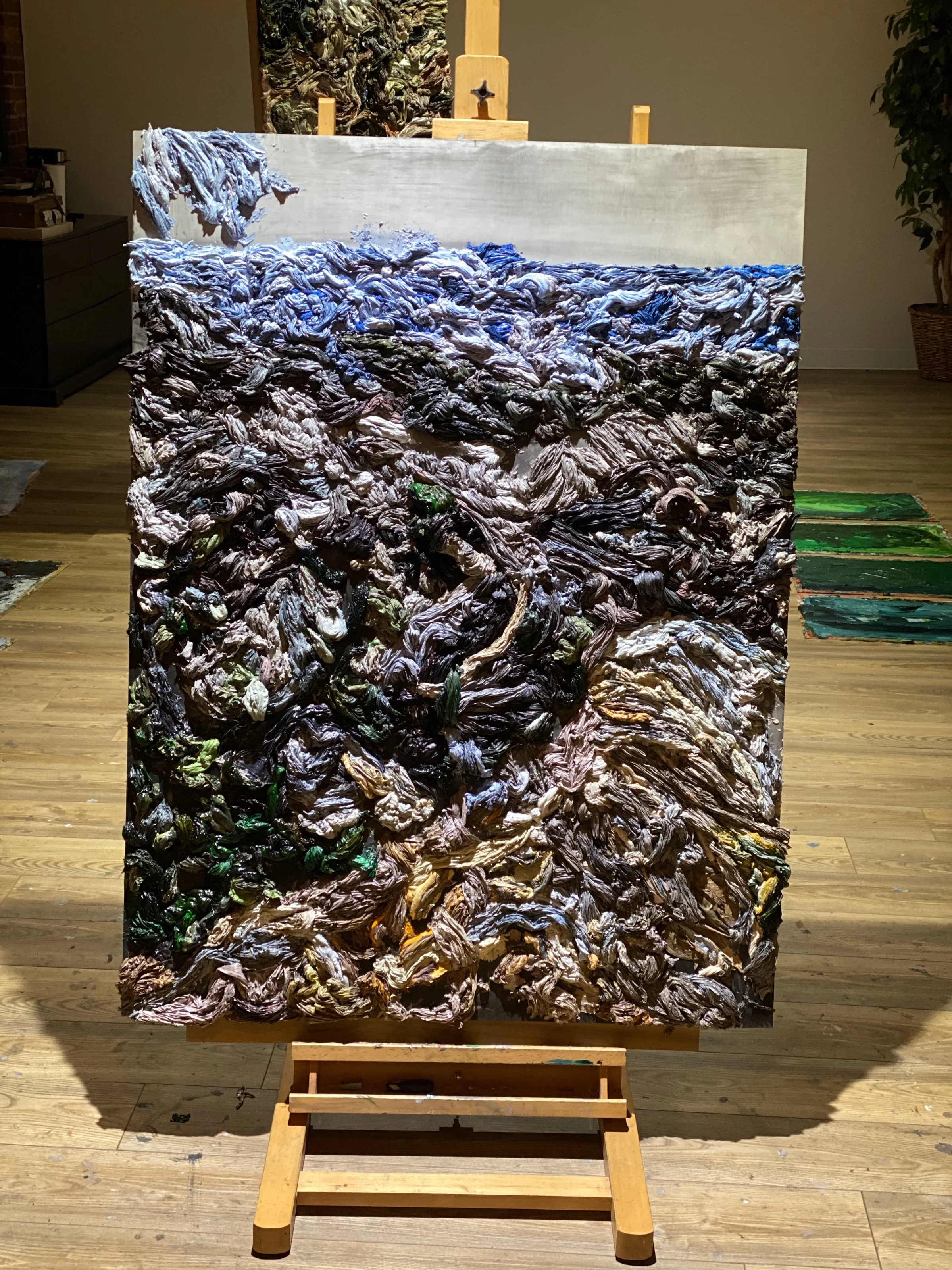
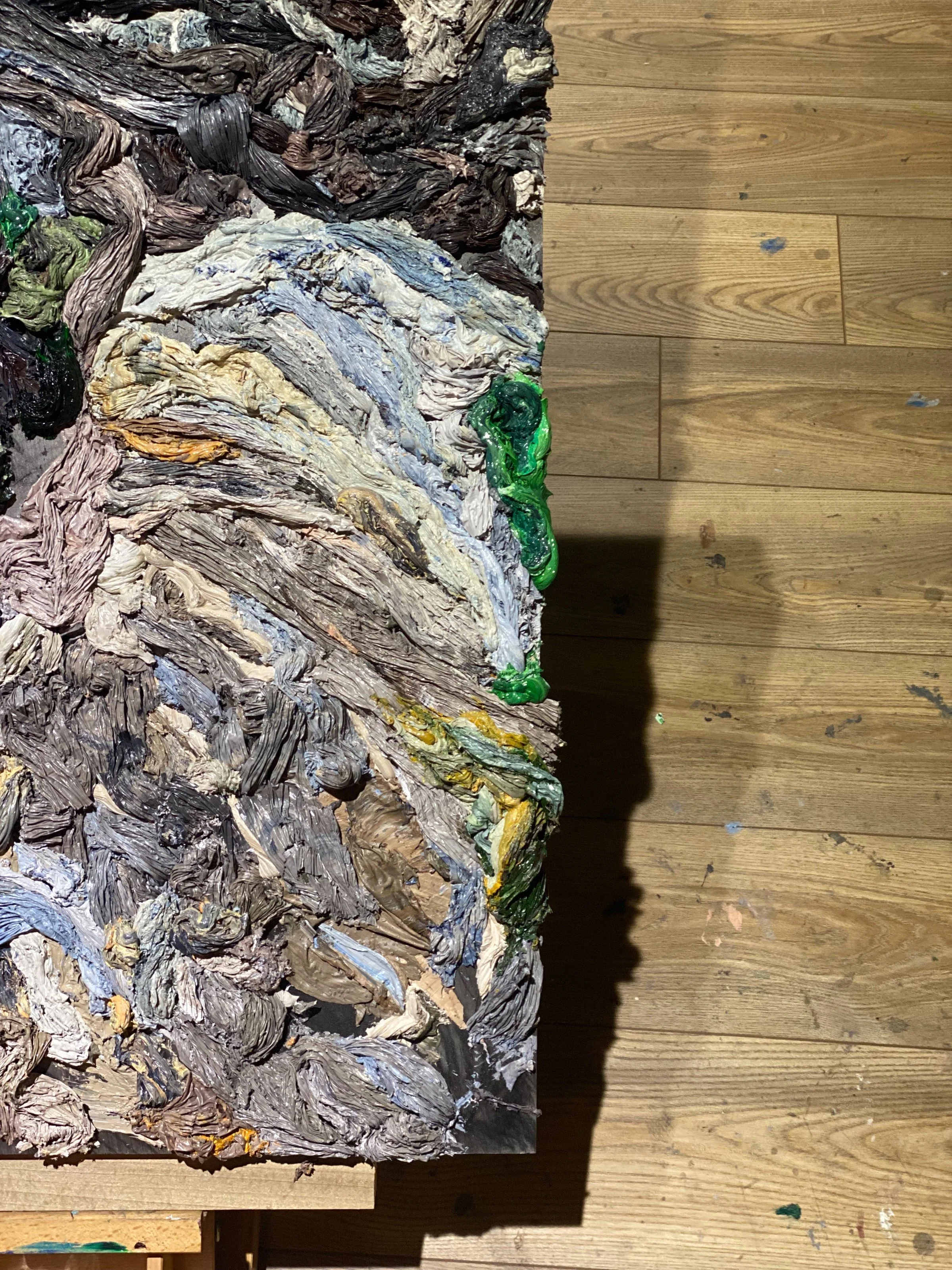
December 2, 2021
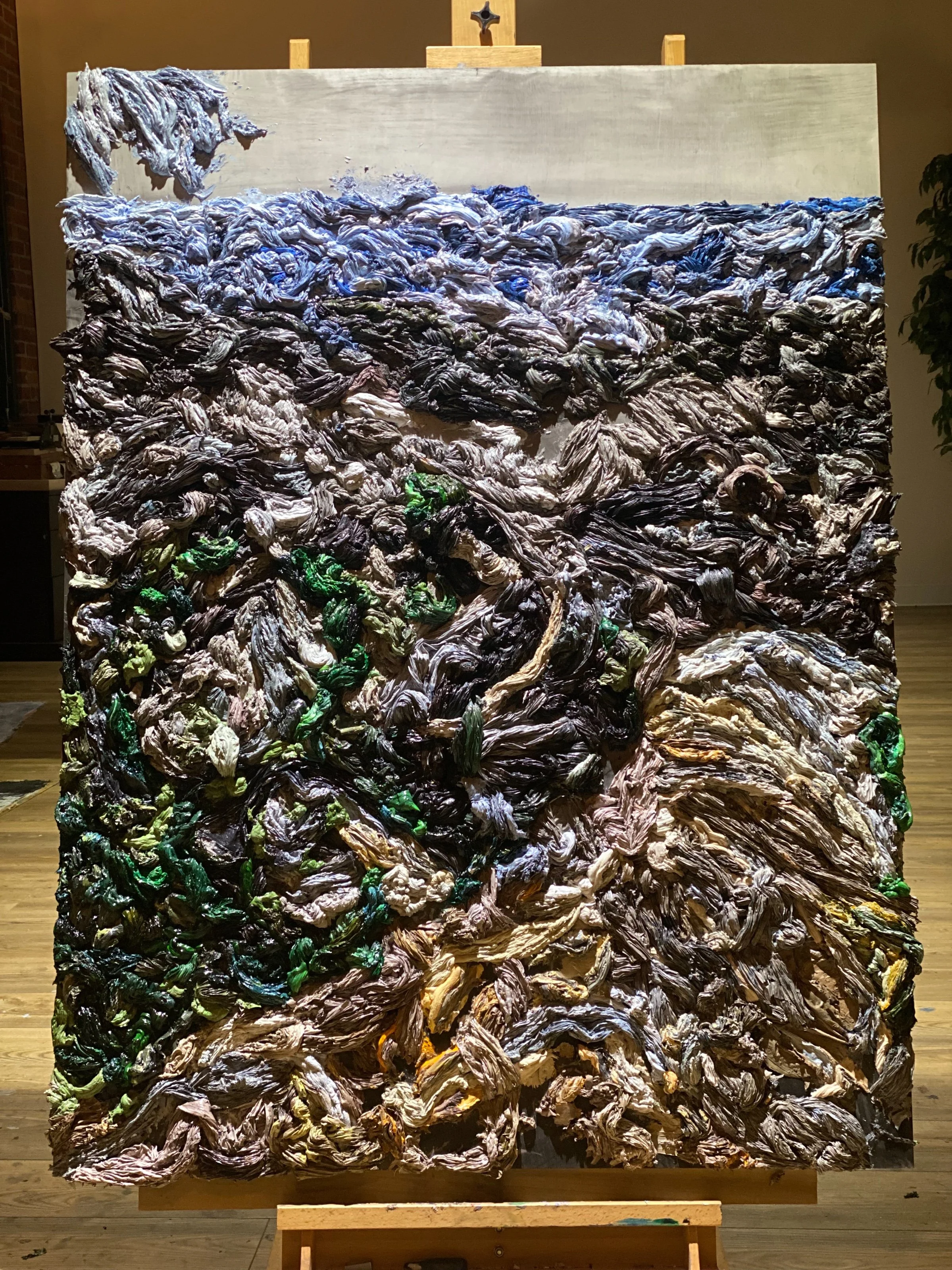
More Green.
Studio is in Factory mode. My Favorite.
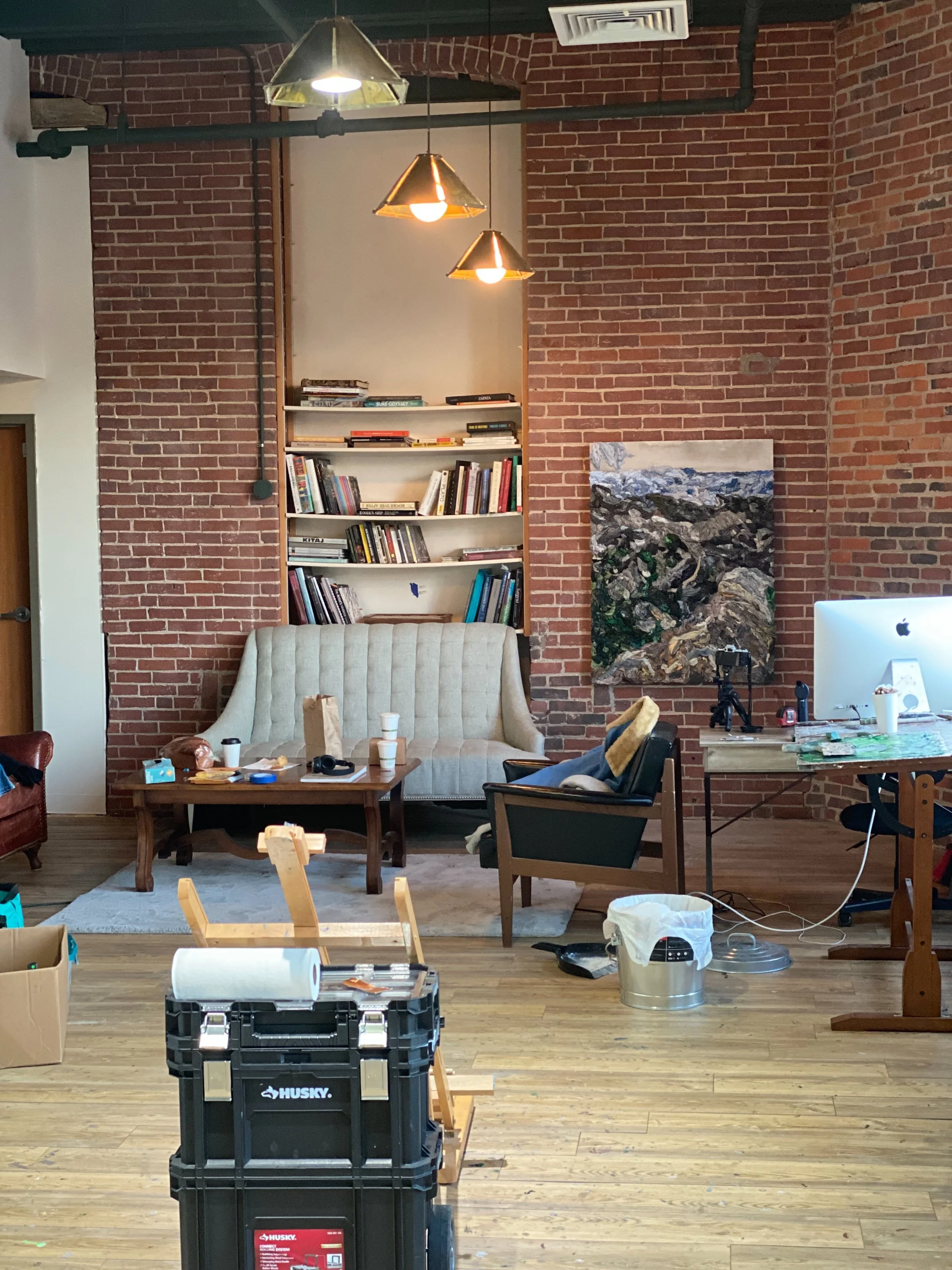
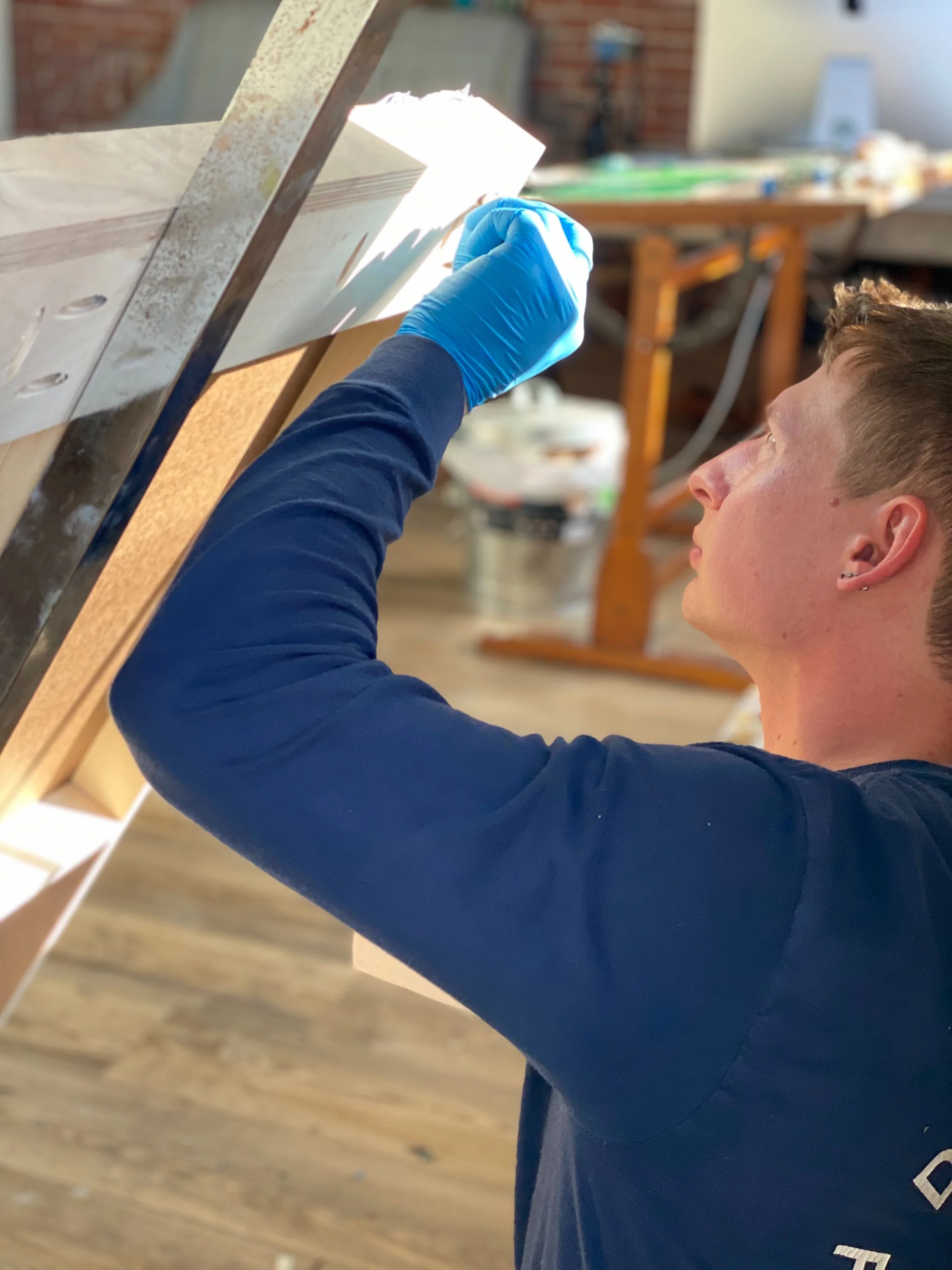
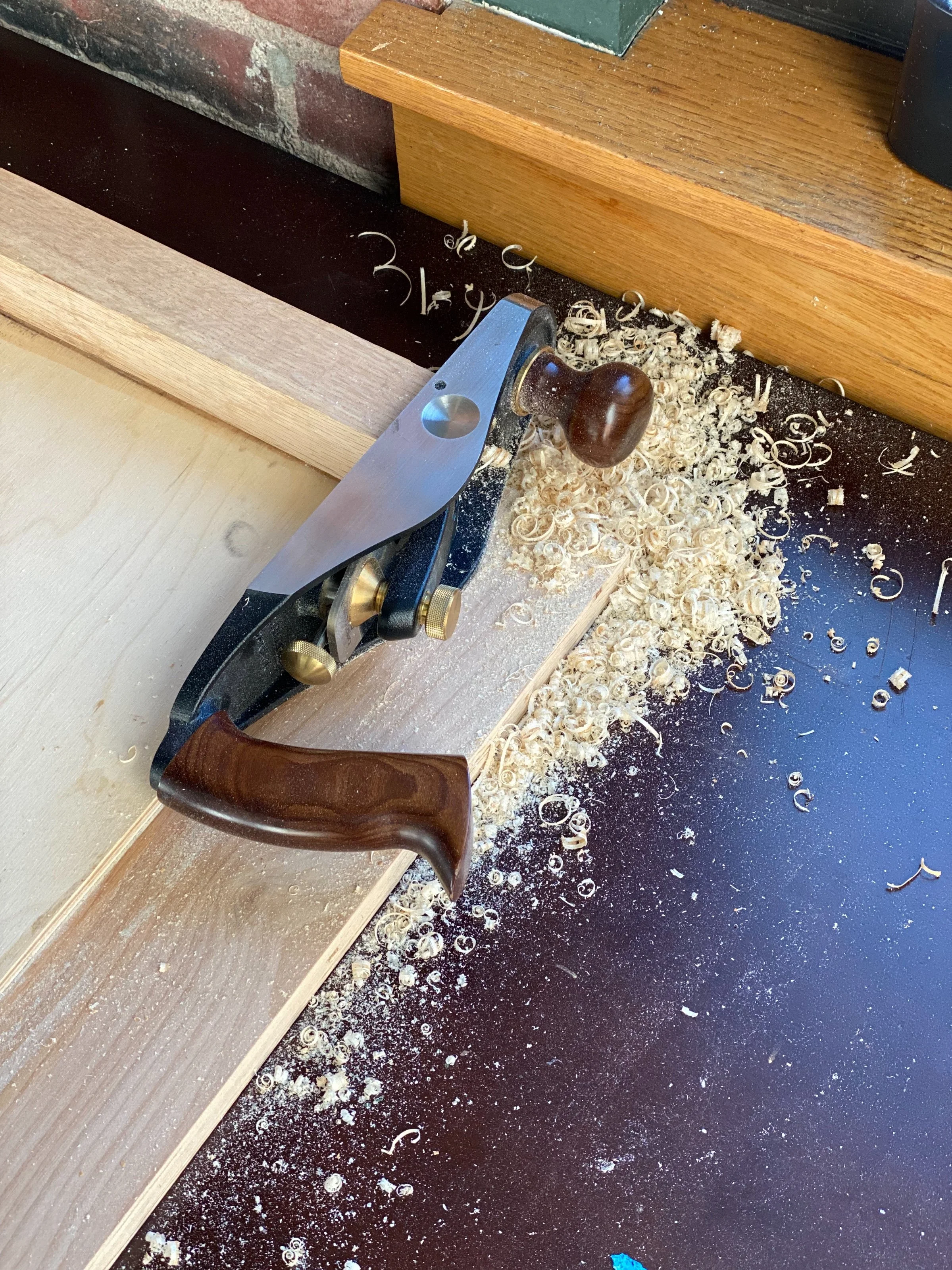
December 4, 2021 - Installing Hanging Hardware
Cody is our woodworker for the studio, assisting with hanging, installing, and infrastructure. We want to ensure that our paintings are safely hung.
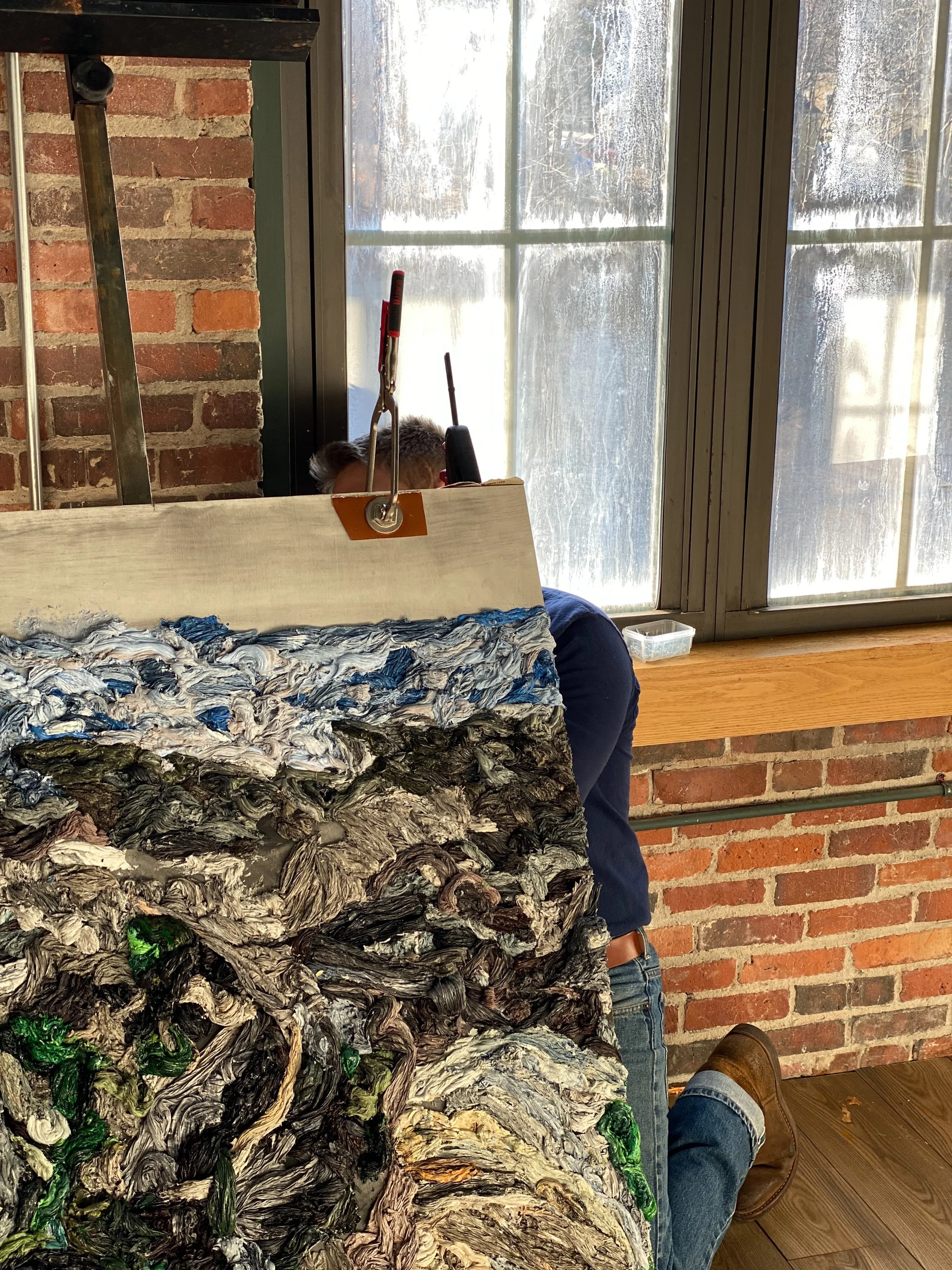
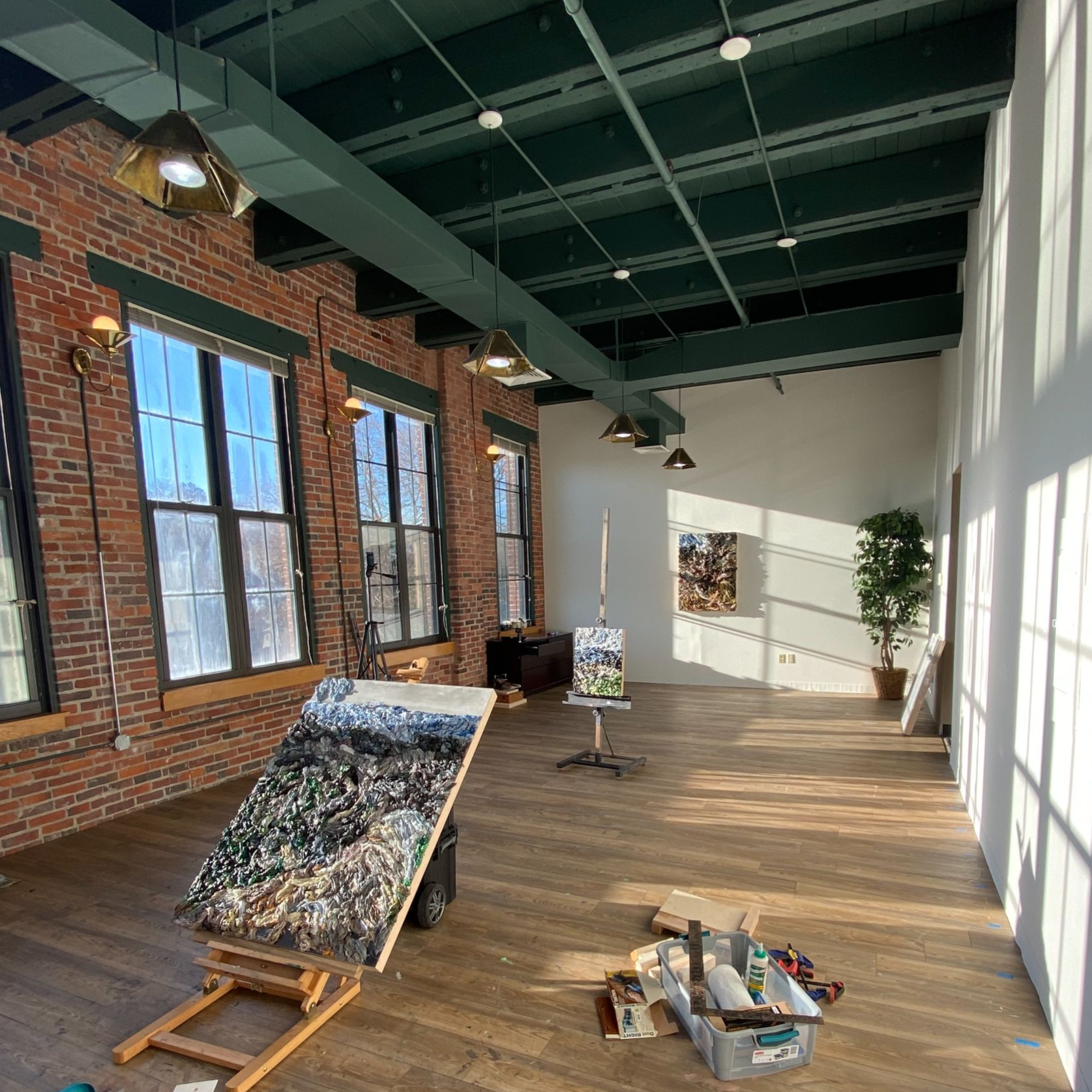
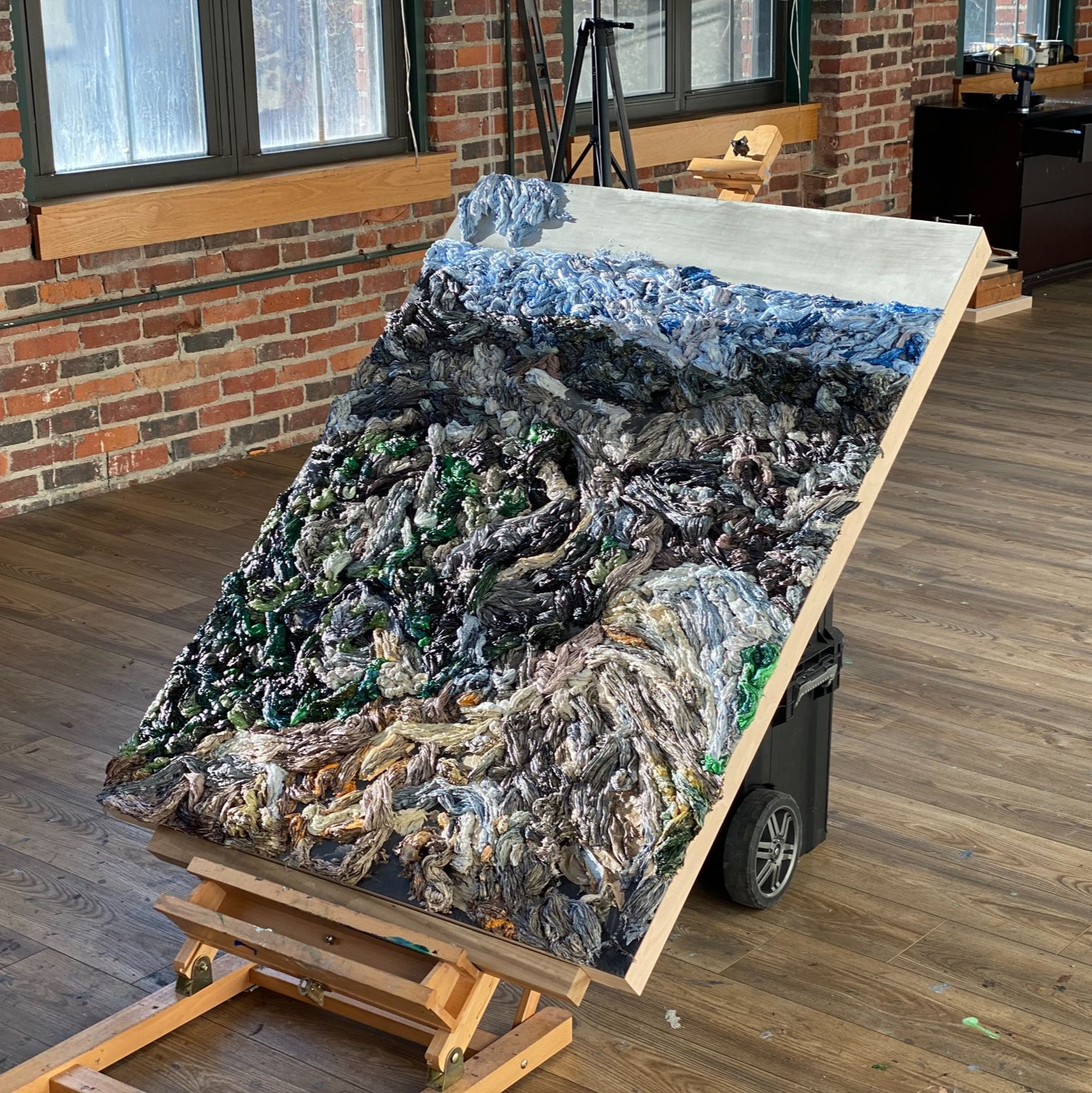
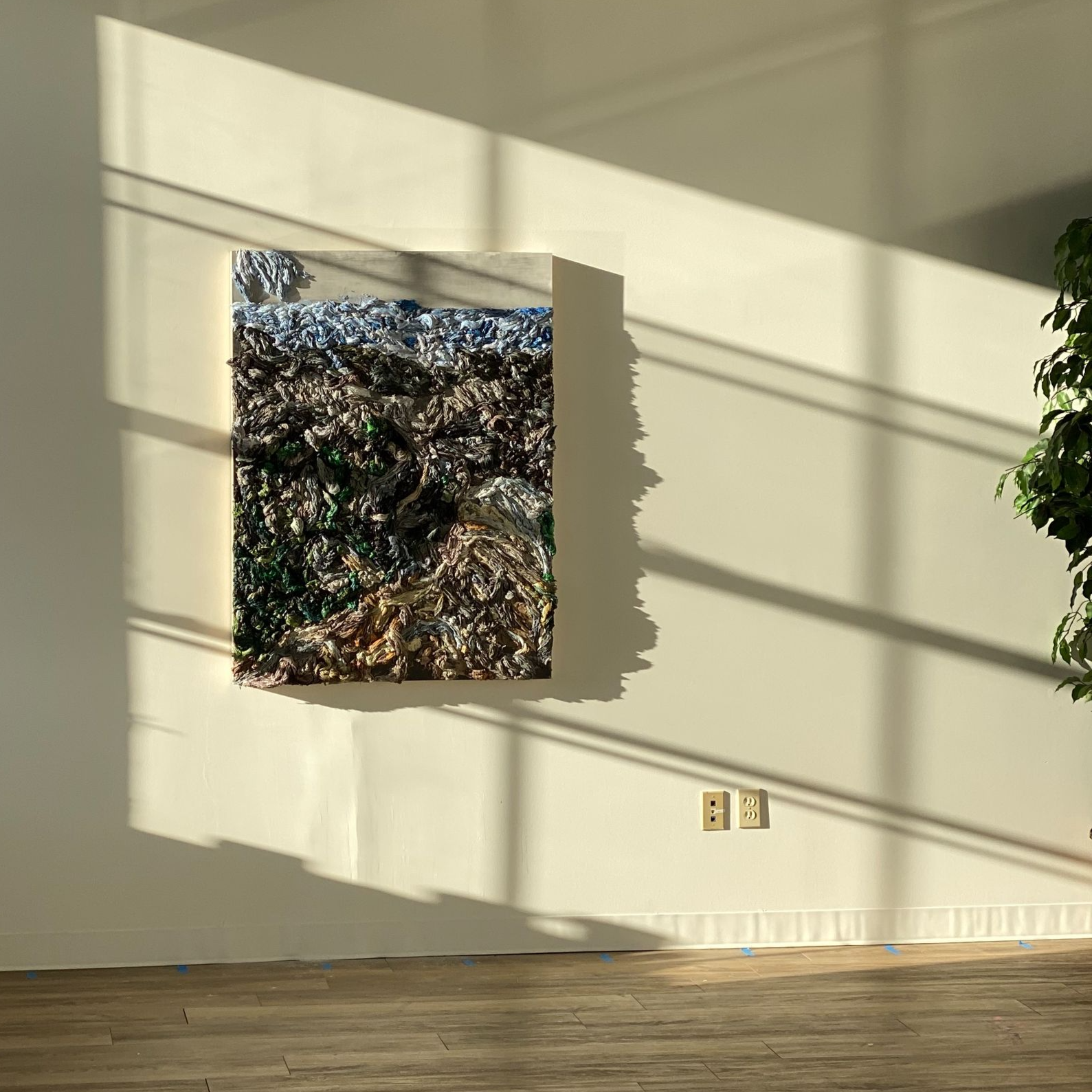
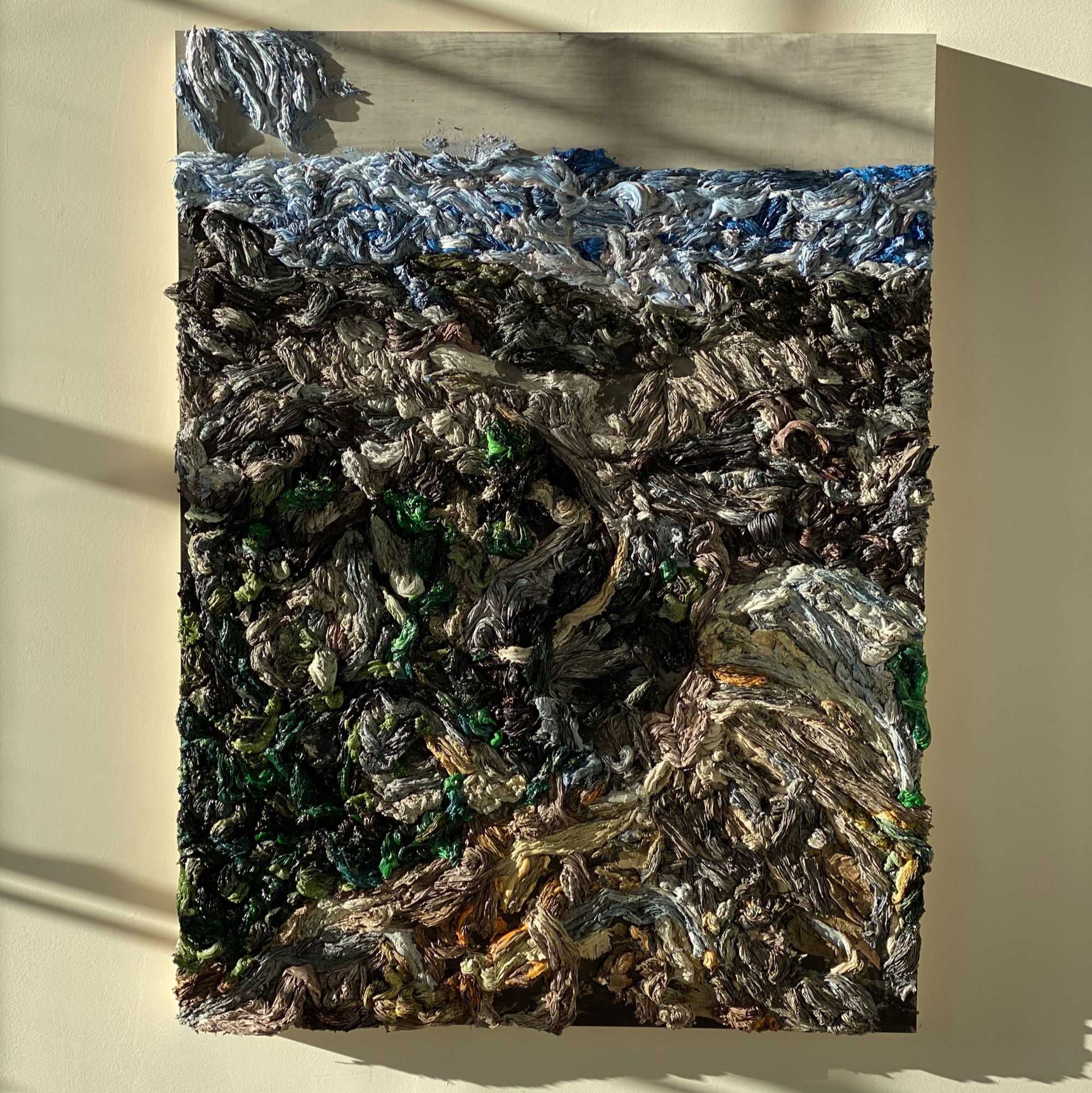
December 5, 2021
Thrilled with the progress made so far, my photos make the painting appear much closer to being finished than it actually is. It’s amazing how much the shadows contribute to the overall composition.
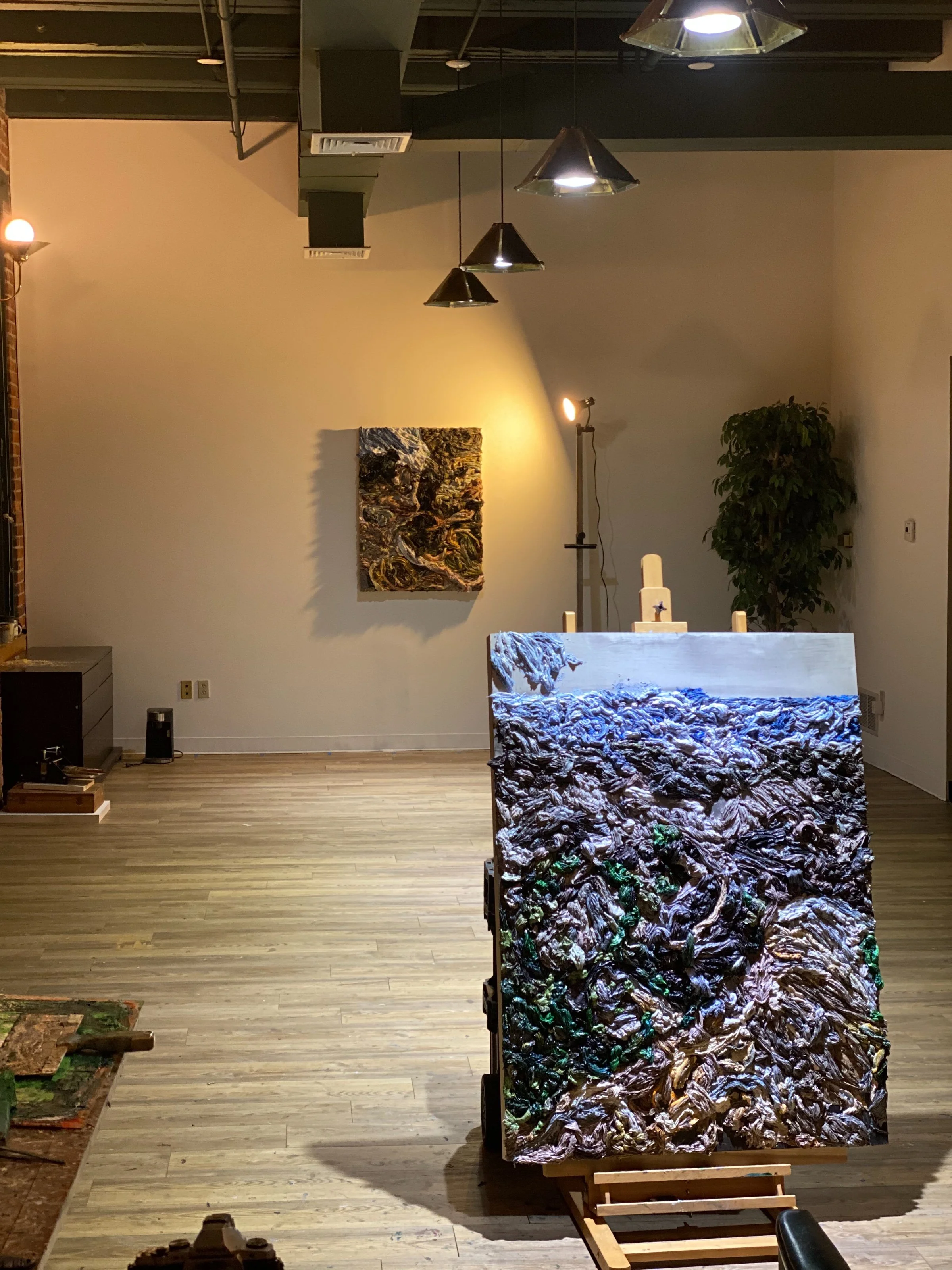
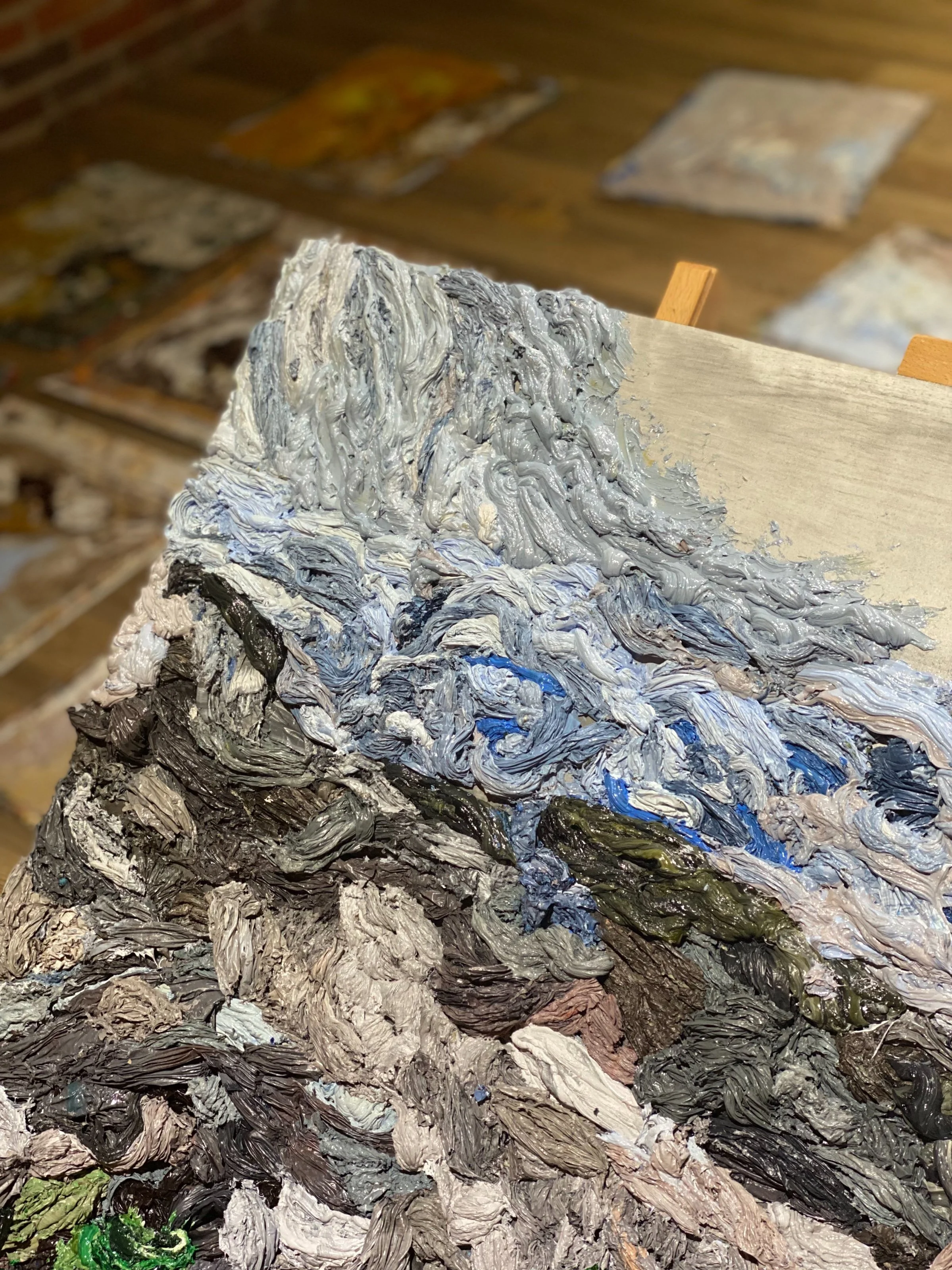
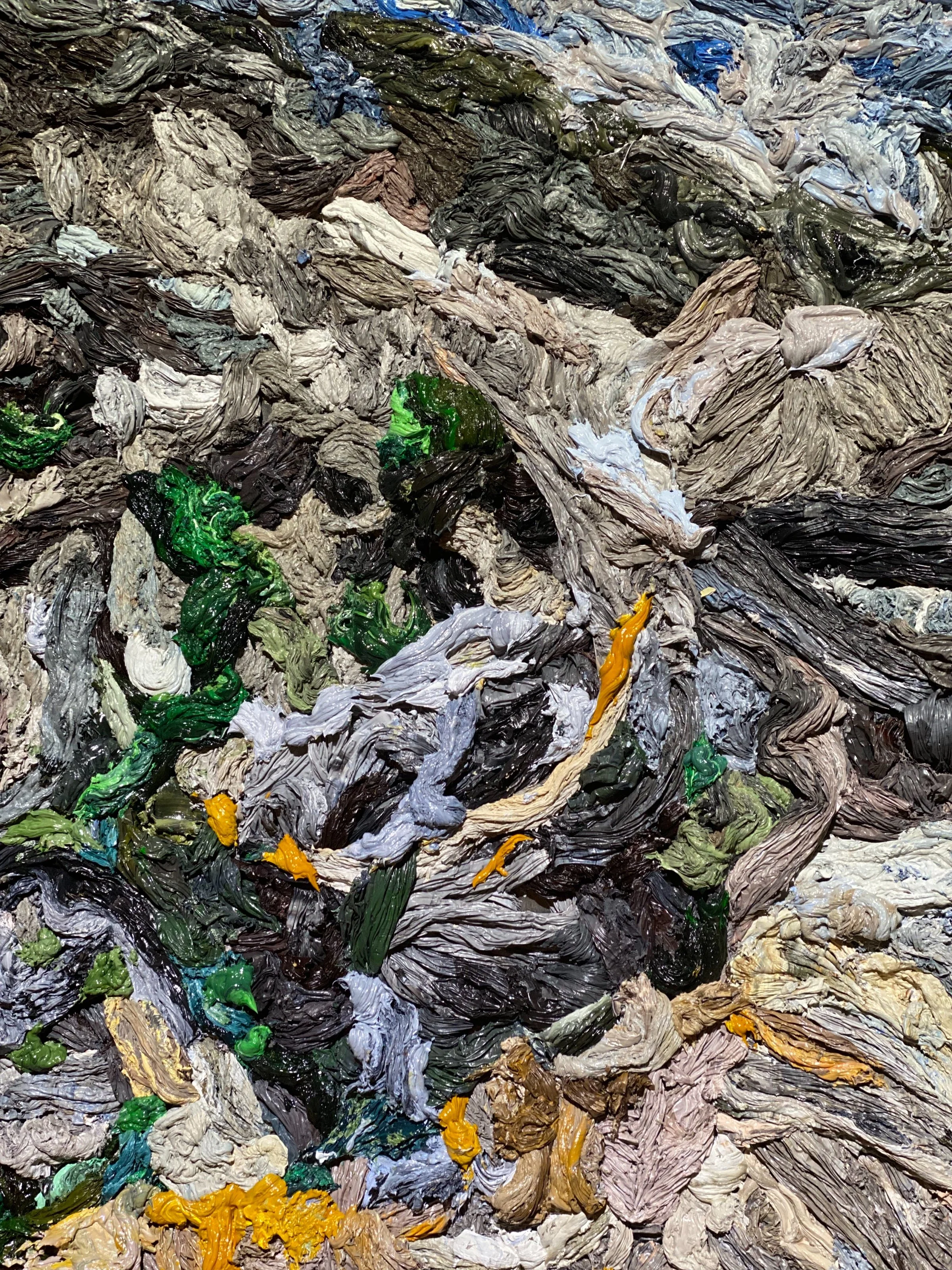
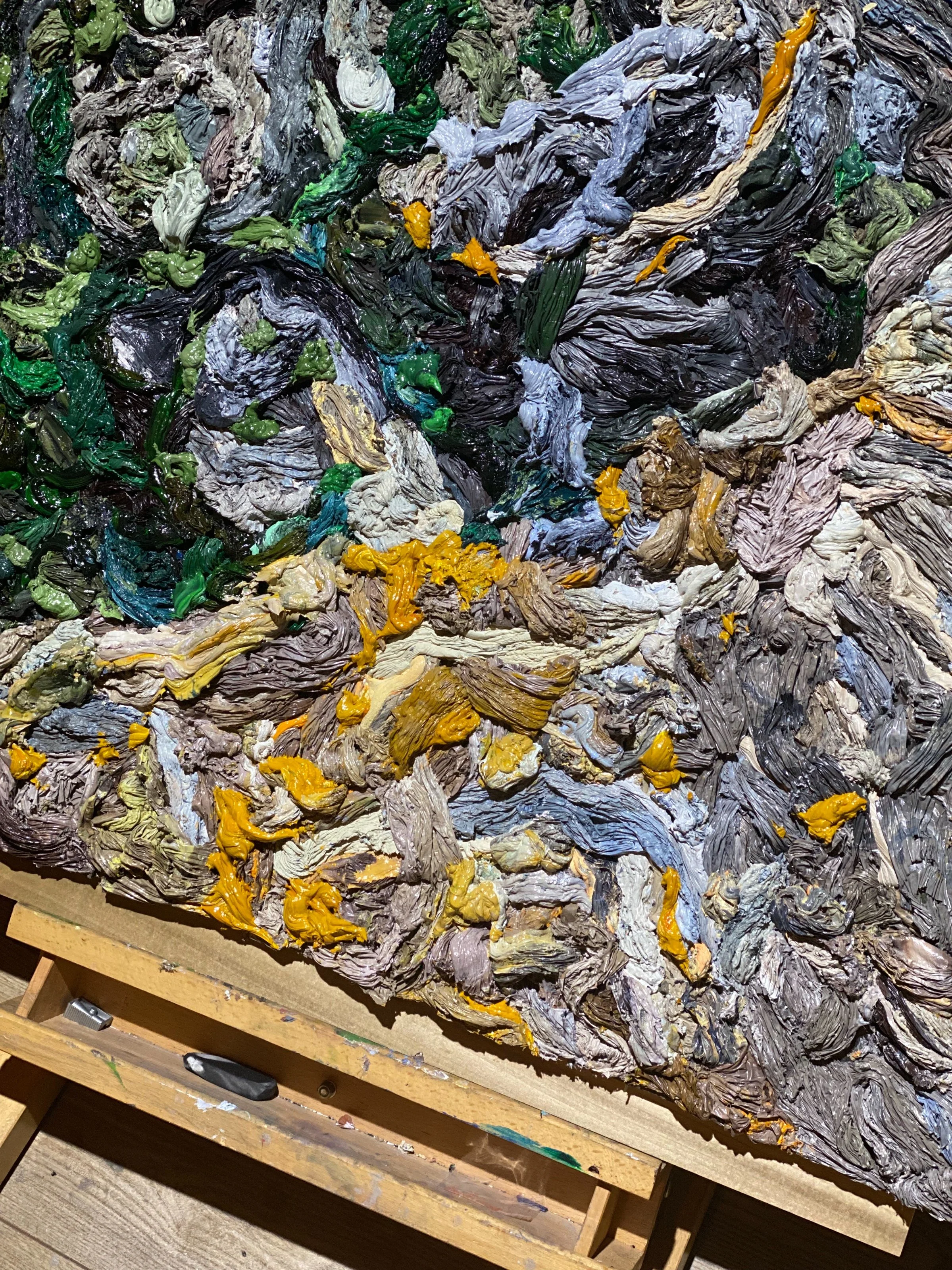
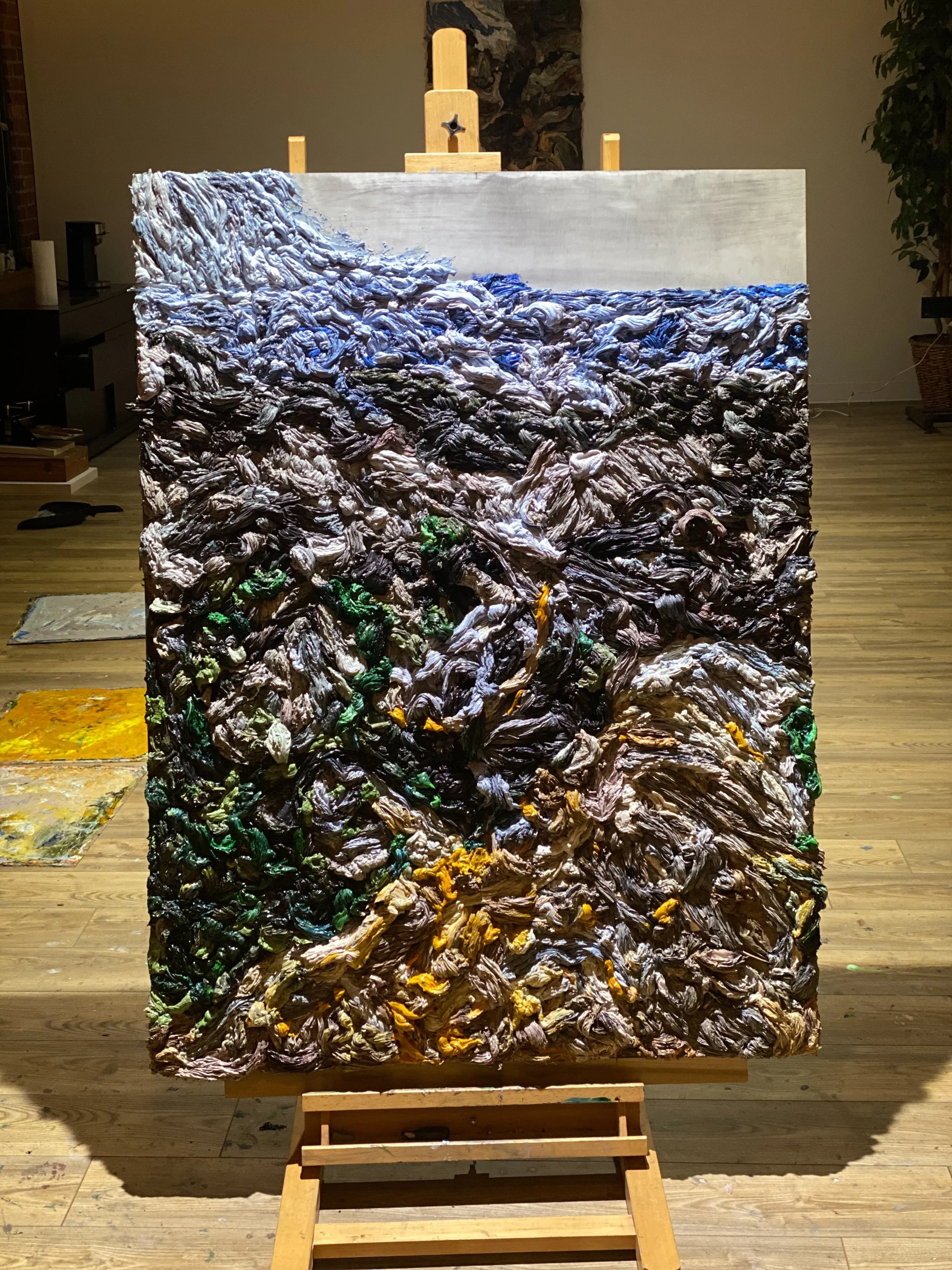
December 6, 2021 - Final Touches
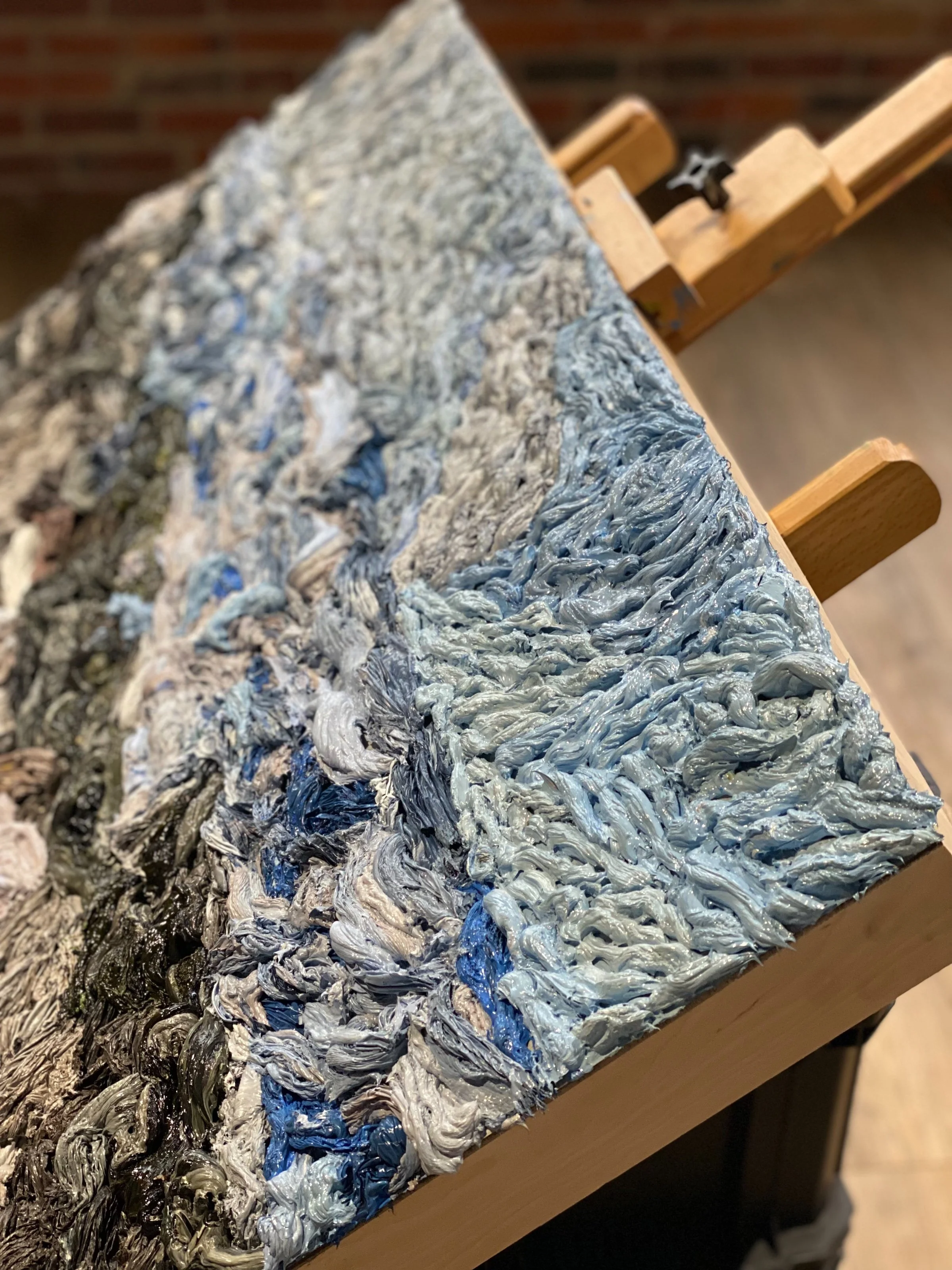
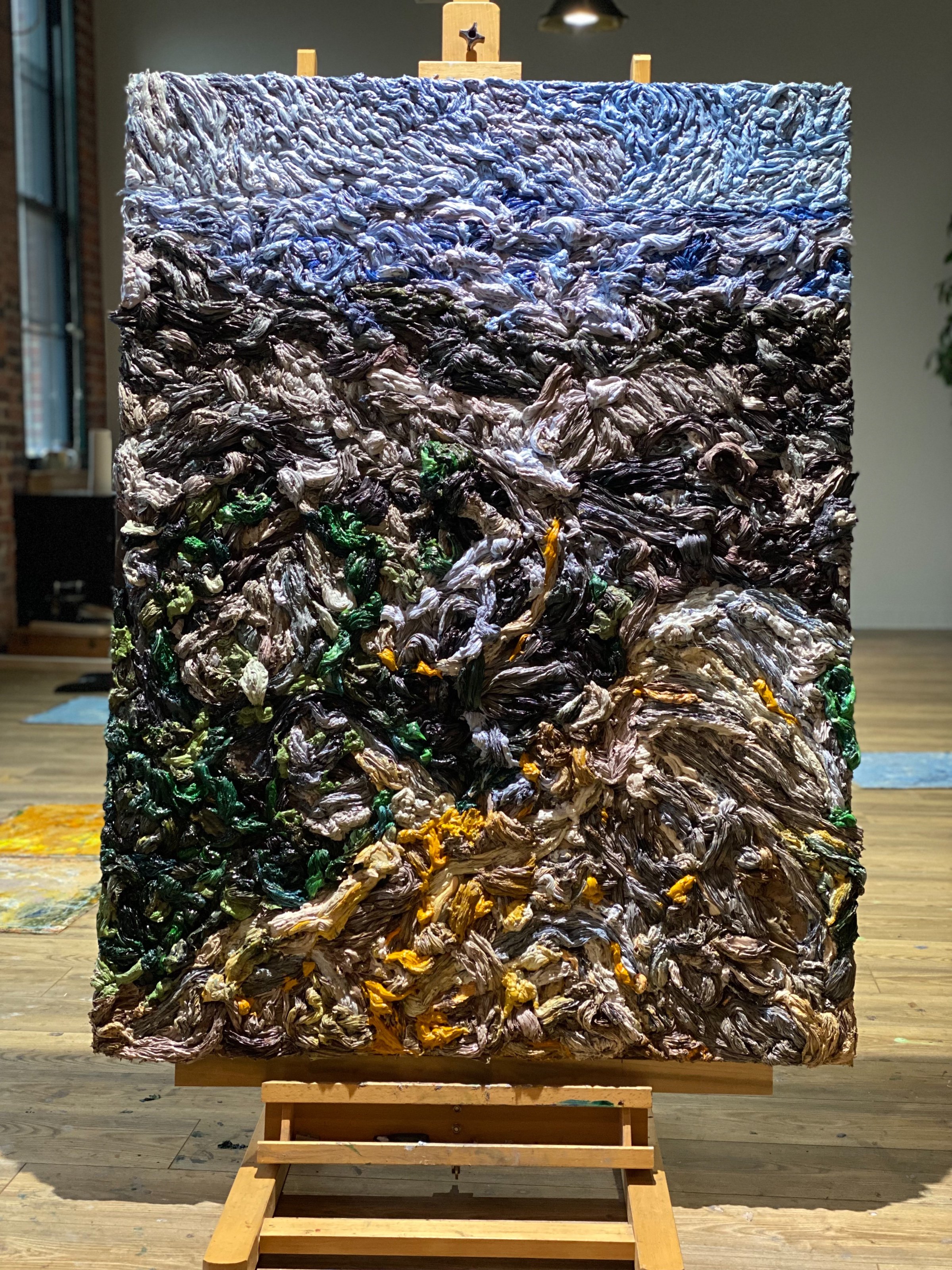
By December 10th, the painting was finished.
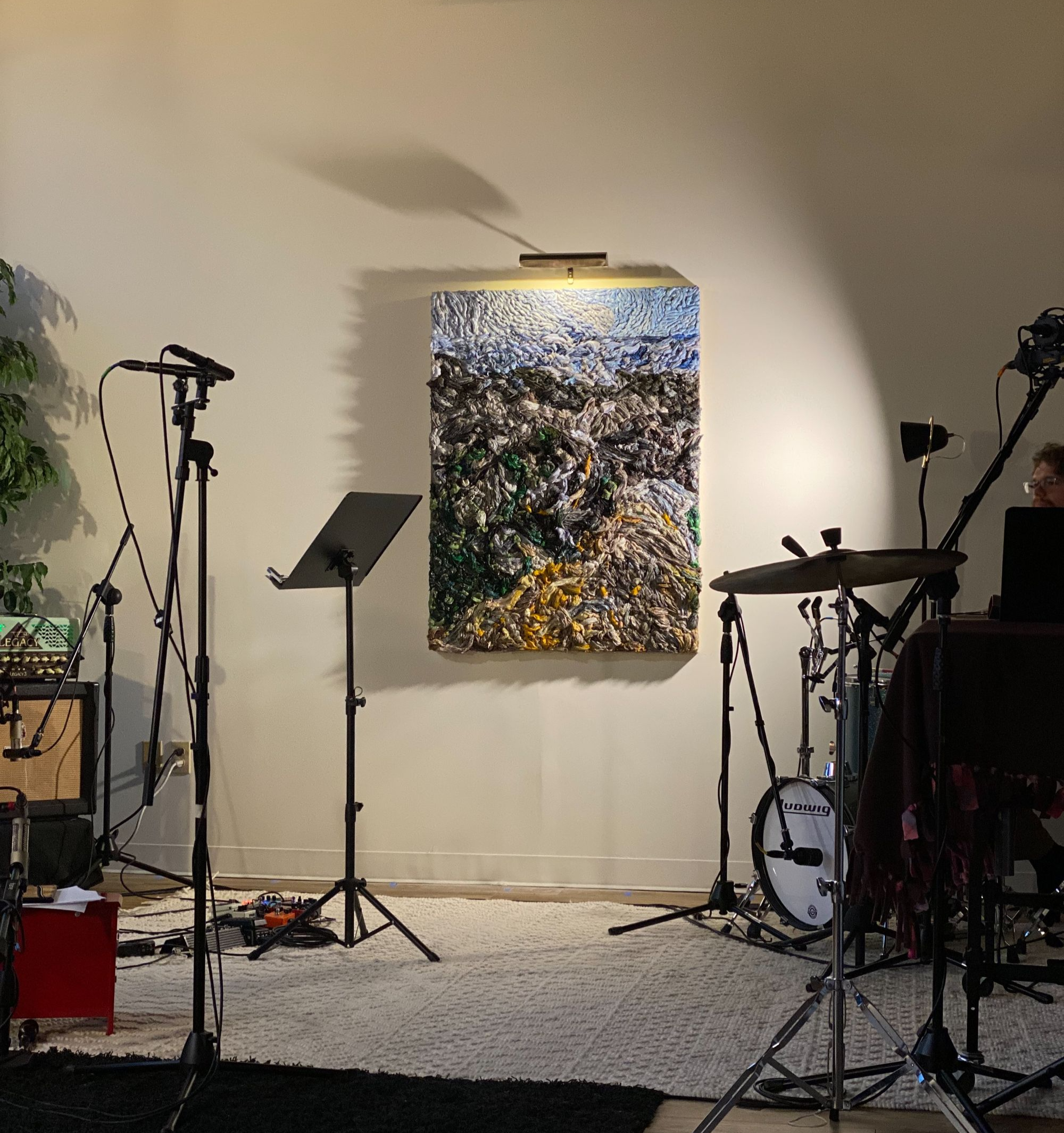
That night, we hosted a concert in the studio for our friends’ new album release. The event happened as the weather turned cold and COVID lockdowns began tightening again, which made gathering in person feel especially rare.
Finishing, for me, isn’t a clean ending where I sit down and summarize what happened. It’s more like a switch flips and suddenly the painting is no longer “in progress” or “a problem I’m solving.” It becomes a presence in the room.
I didn’t really have time to think after the last touch. We immediately moved into the concert, and the studio filled up with sound and people and energy. But I kept circling back to the work all night, pacing, admiring it, watching it from different angles, letting it exist without my hands on it for the first time. That was the first real moment of finished: not a conclusion, but a kind of release, where the painting could finally hold its own weight and I could just witness what we had made.
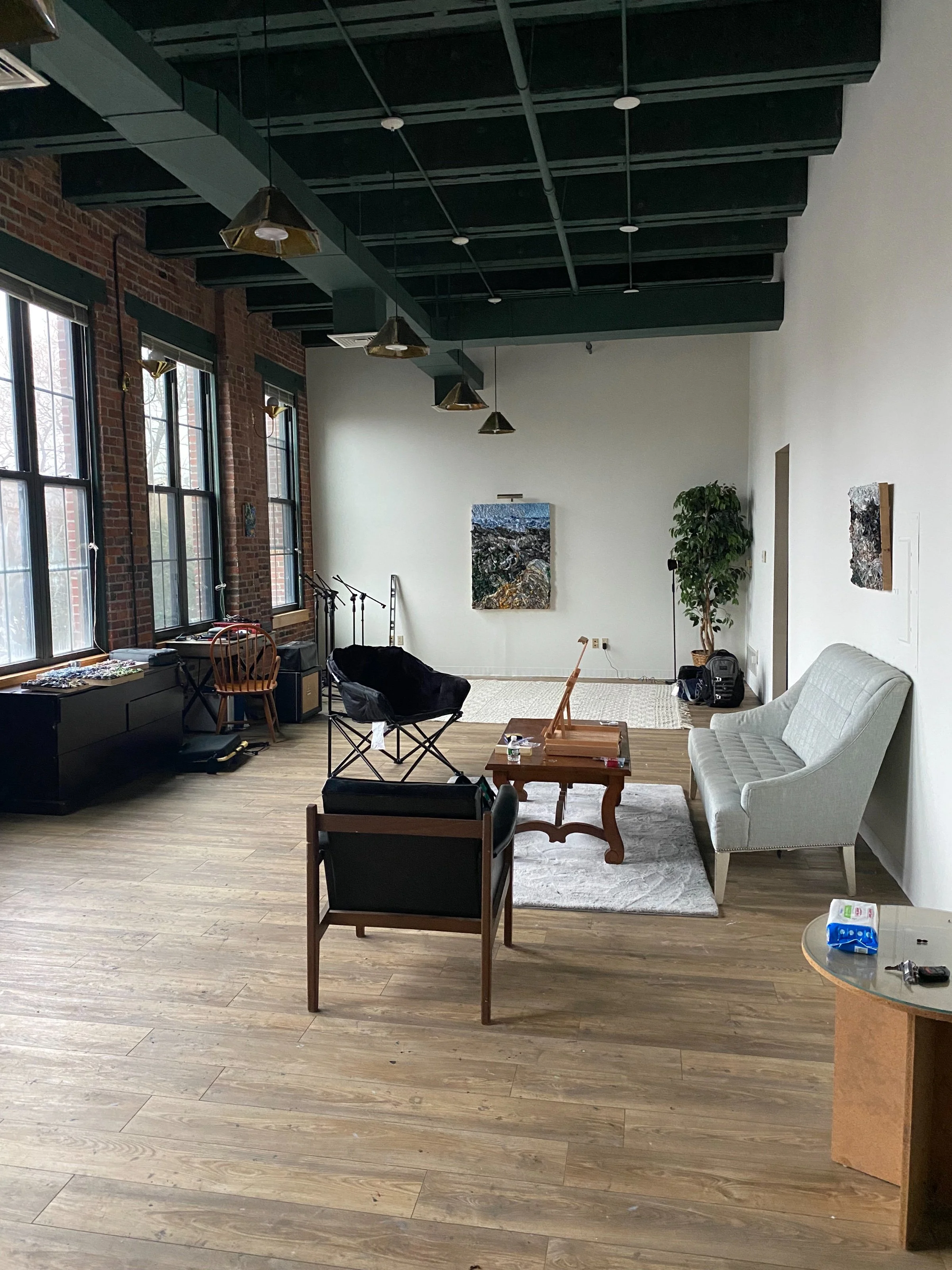
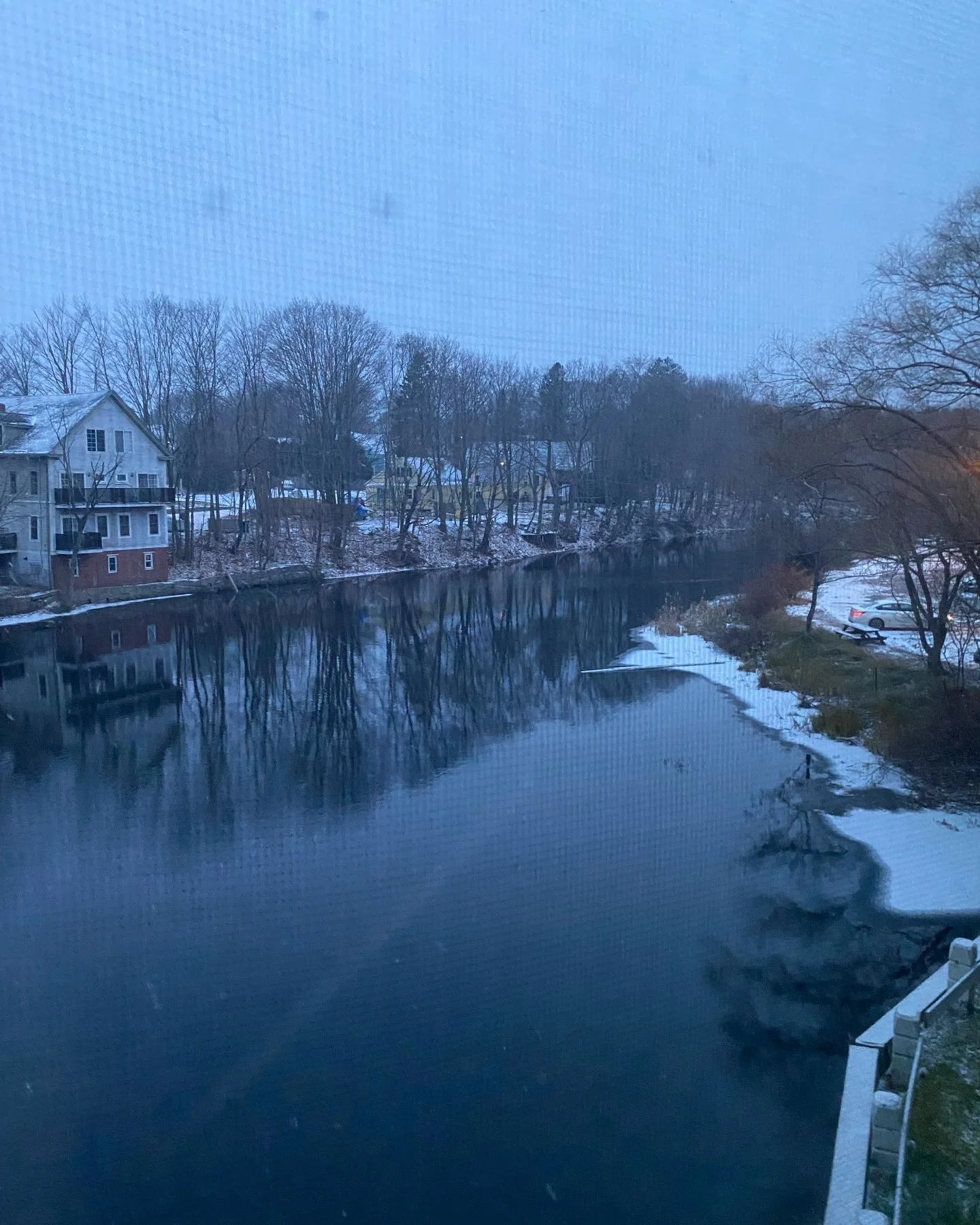
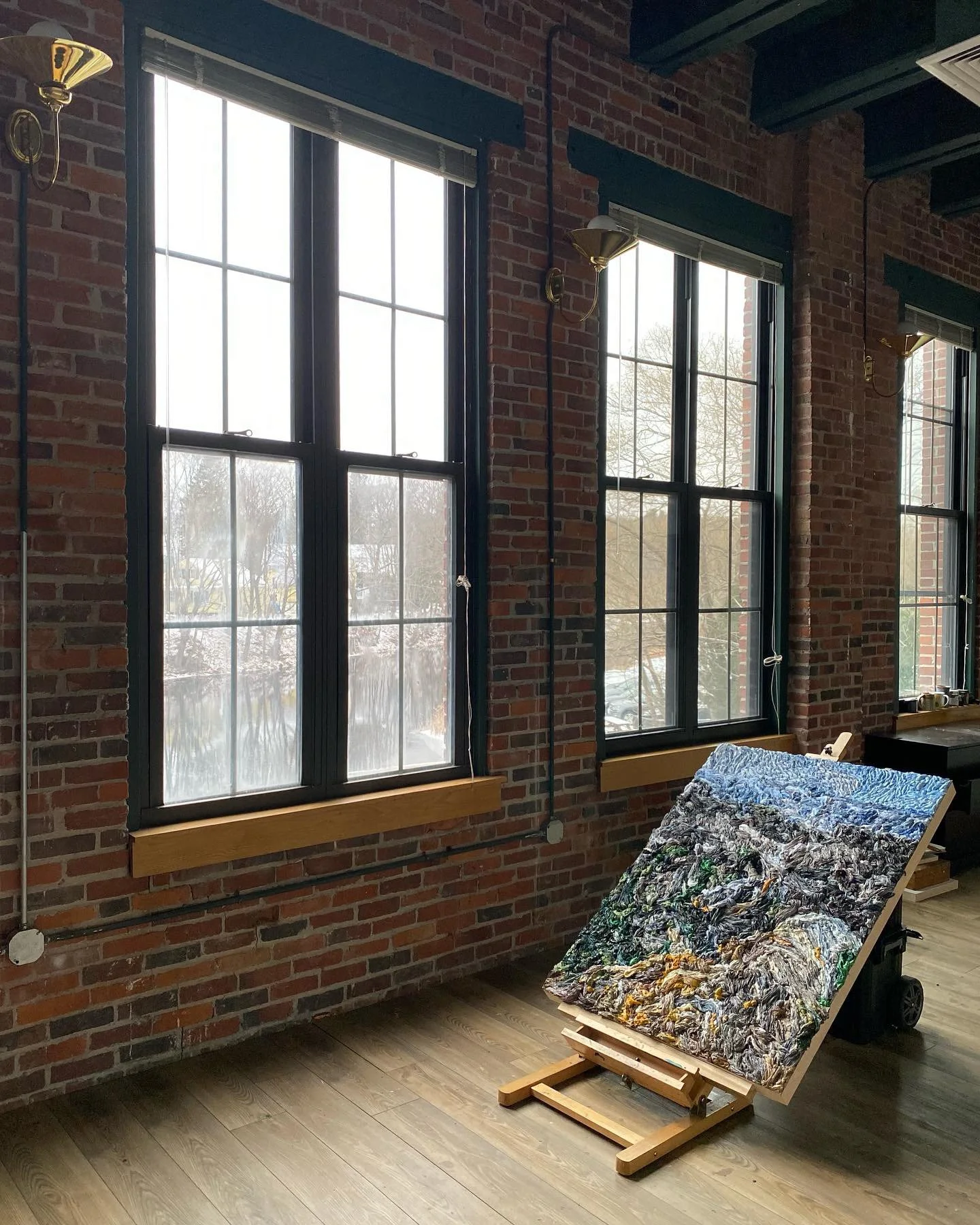
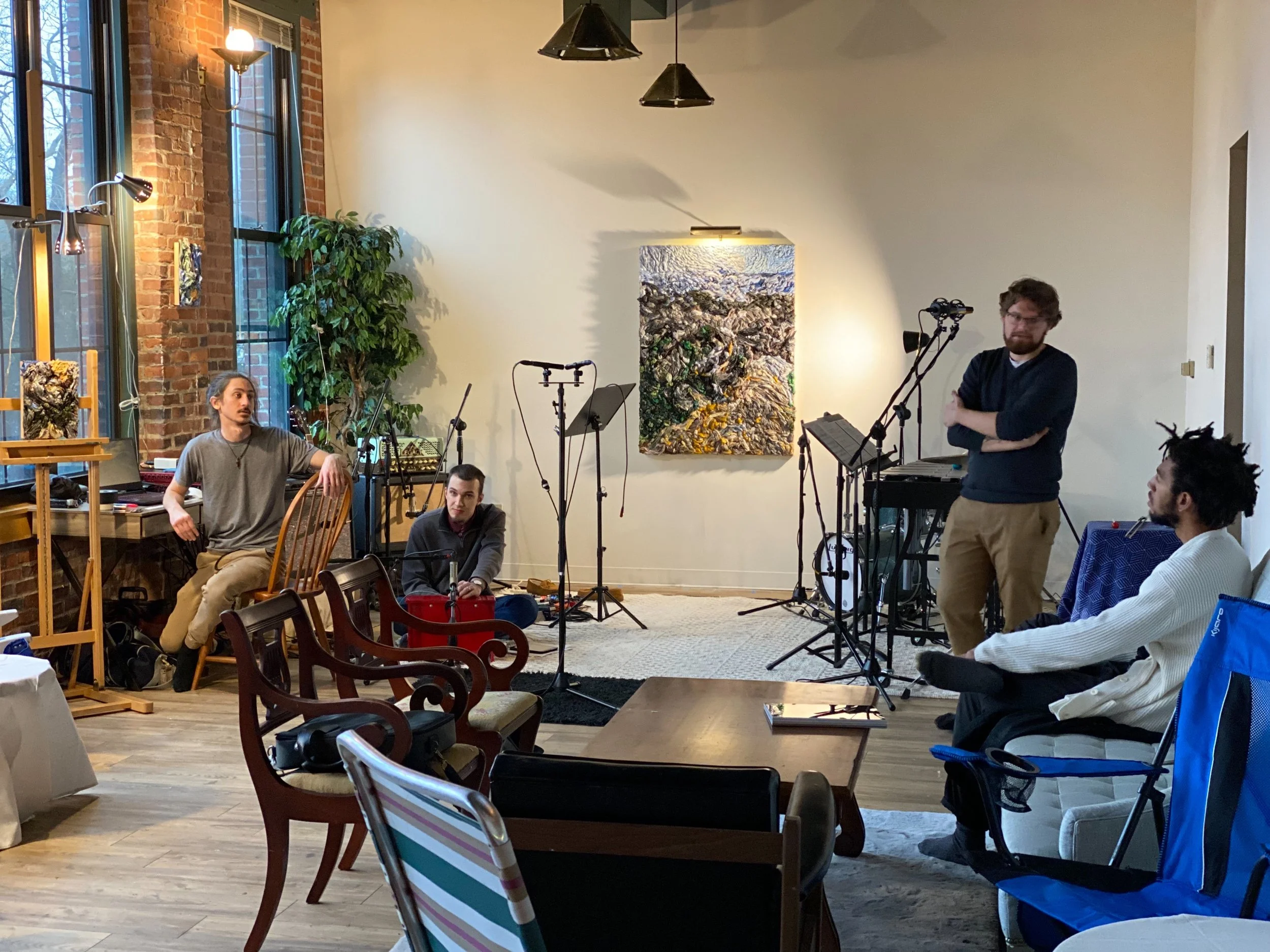
Concert with Ictus Novus - December 11, 2021
Covid was a very challenging time for many. In the summer of 2021, there was a brief break in restrictions in New England. But as the weather got colder and people started getting sick again, it became difficult to find venues, and even harder to plan gatherings that felt safe.
I had done several album artworks for my friends in Ictus Novus, and I wanted to offer them a small, controlled space to rehearse and put the show together. The studio was familiar, easy to manage, and large enough for people to spread out.
Here are a few photos from the rehearsal before the show:
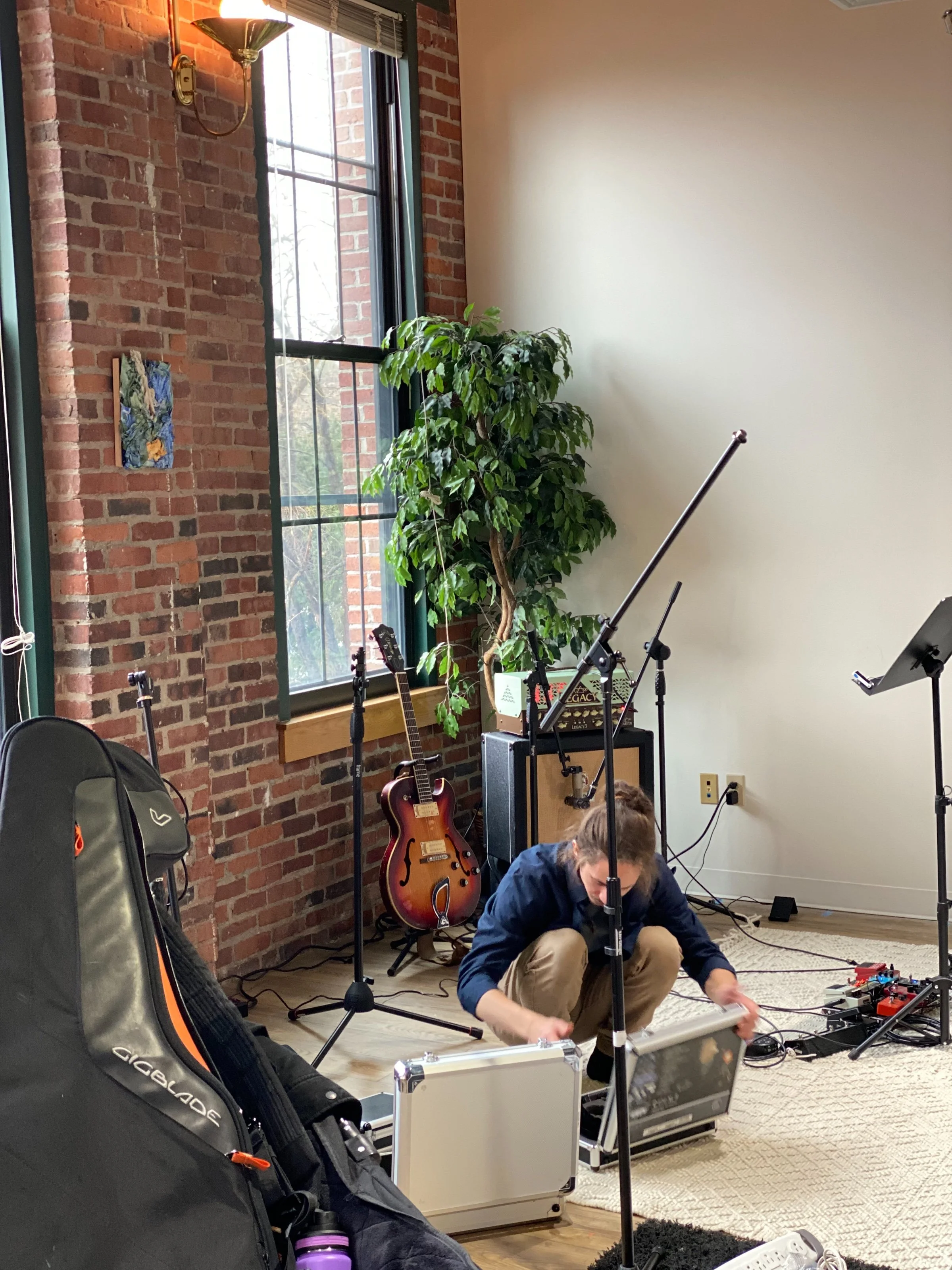
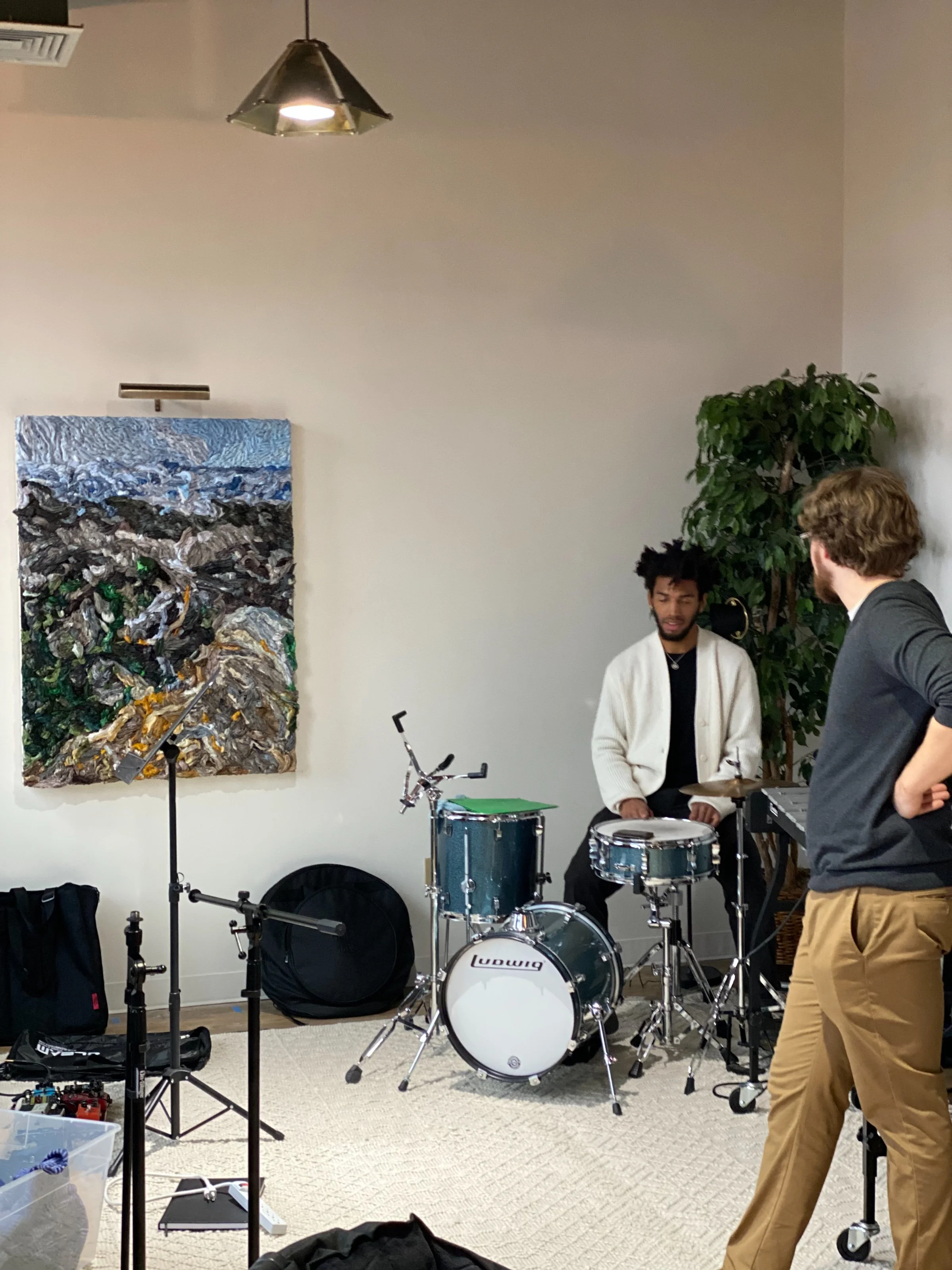
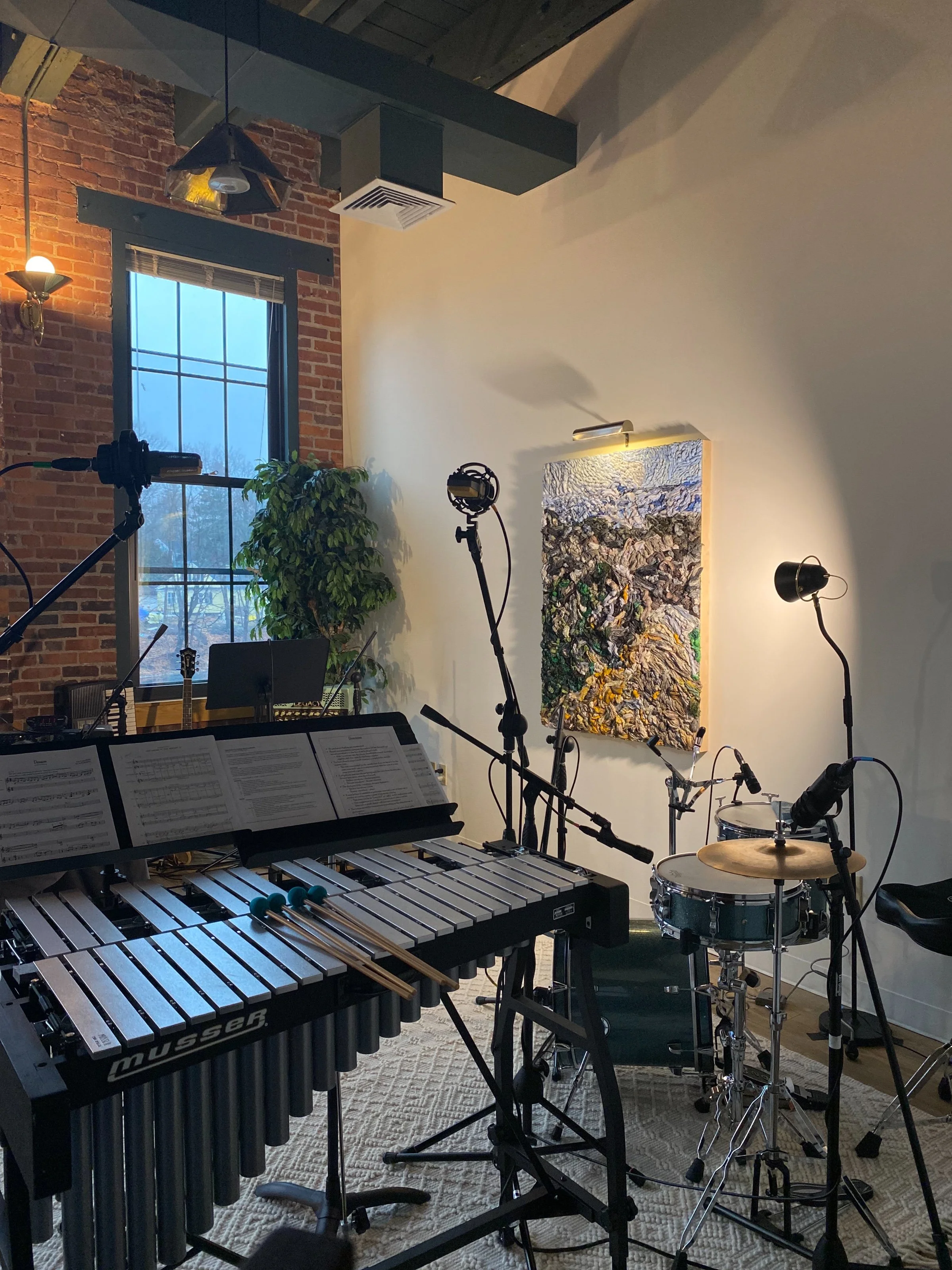
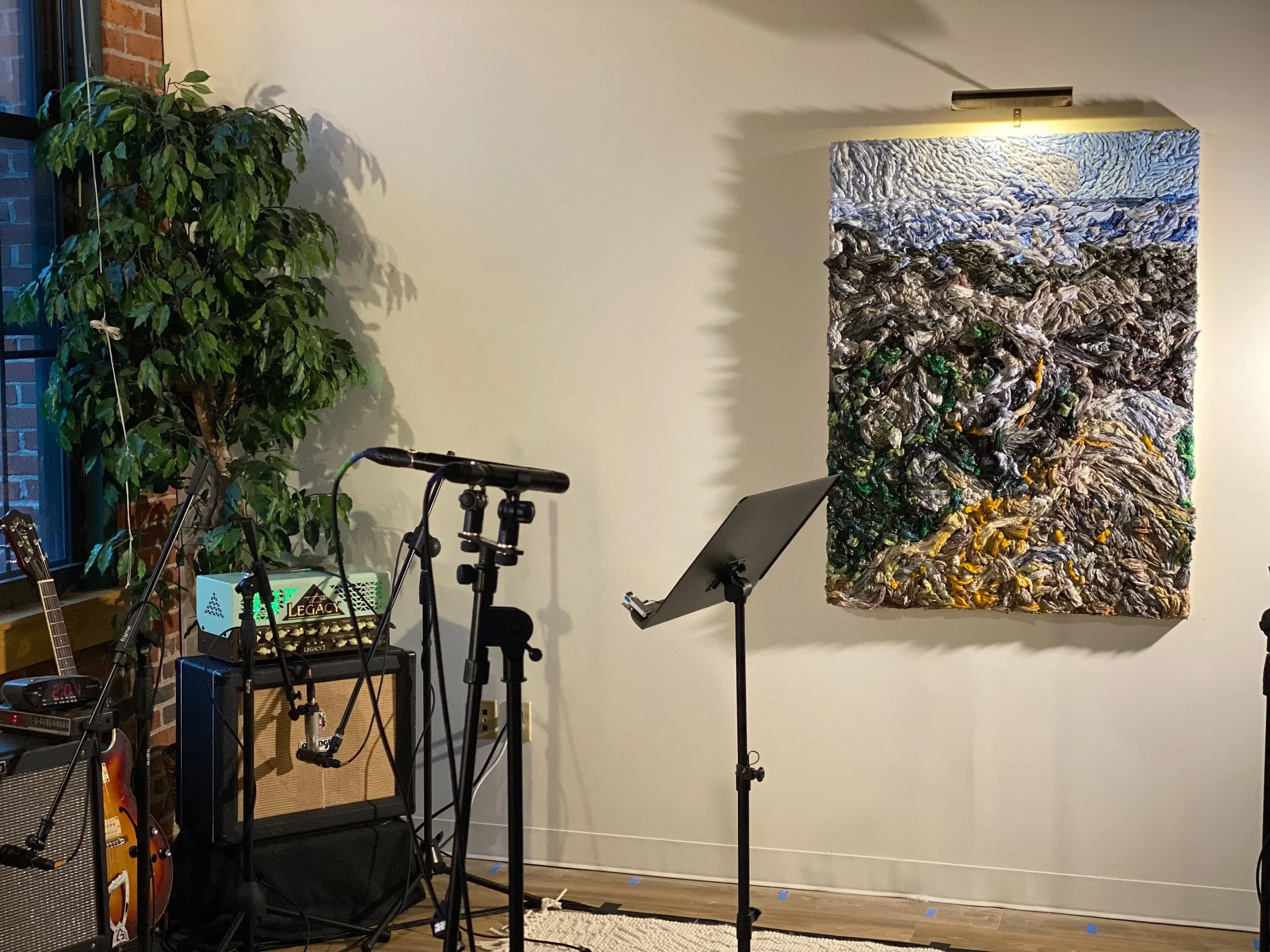
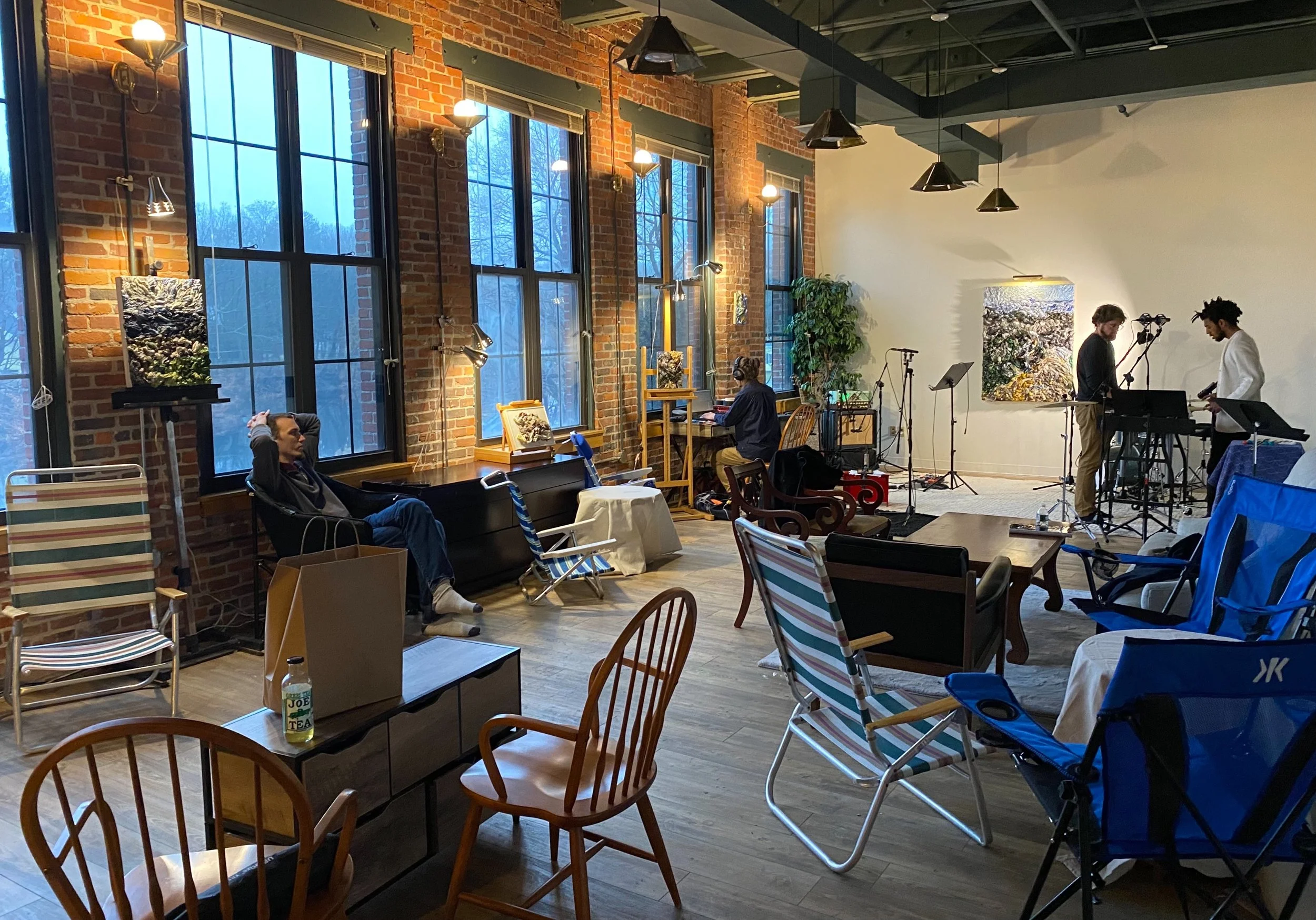
SOLD! Collector Interview with Rachel Wells of Headwater Wellness.
After the painting and the concert, the work took on an unexpected life before it found its new home.
In the video below, I speak with Rachel about how the painting 43°33'31.2"N 70°12'18.2"W became part of her Expressive Arts practice, and how it helped shape the way she approaches her work through Headwaters Wellness.
In this conversation, we cover:
How Rachel brings together music, art, and therapy in the structure of Headwaters Wellness
Rachel’s relationship with art
Why the painting resonated with Rachel
What Rachel hoped the painting would offer her practice and patients
What reactions and outcomes she has seen from the collaboration
How and why the painting has had an impact in Rachel’s professional and personal life, and more
For the full story on how Rachel and I met , check out the video below:
Cliffside Symphony
Notes, Ramblings, and Ideas for Cliffside Symphony: Oceans Rushing Crescendo
This publication documents the creative journey behind the painting Cliffside Symphony: Oceans Rushing Crescendo. It's a collection of thoughts, inspirations, ideas, and ramblings gathered from my journals during the process—from December 31st, 2020 to June 24th, 2021.
Inception: Gathering Reference Materials
December 31, 2020 Acadia National Park and Reflecting on the Covid-19 Pandemic
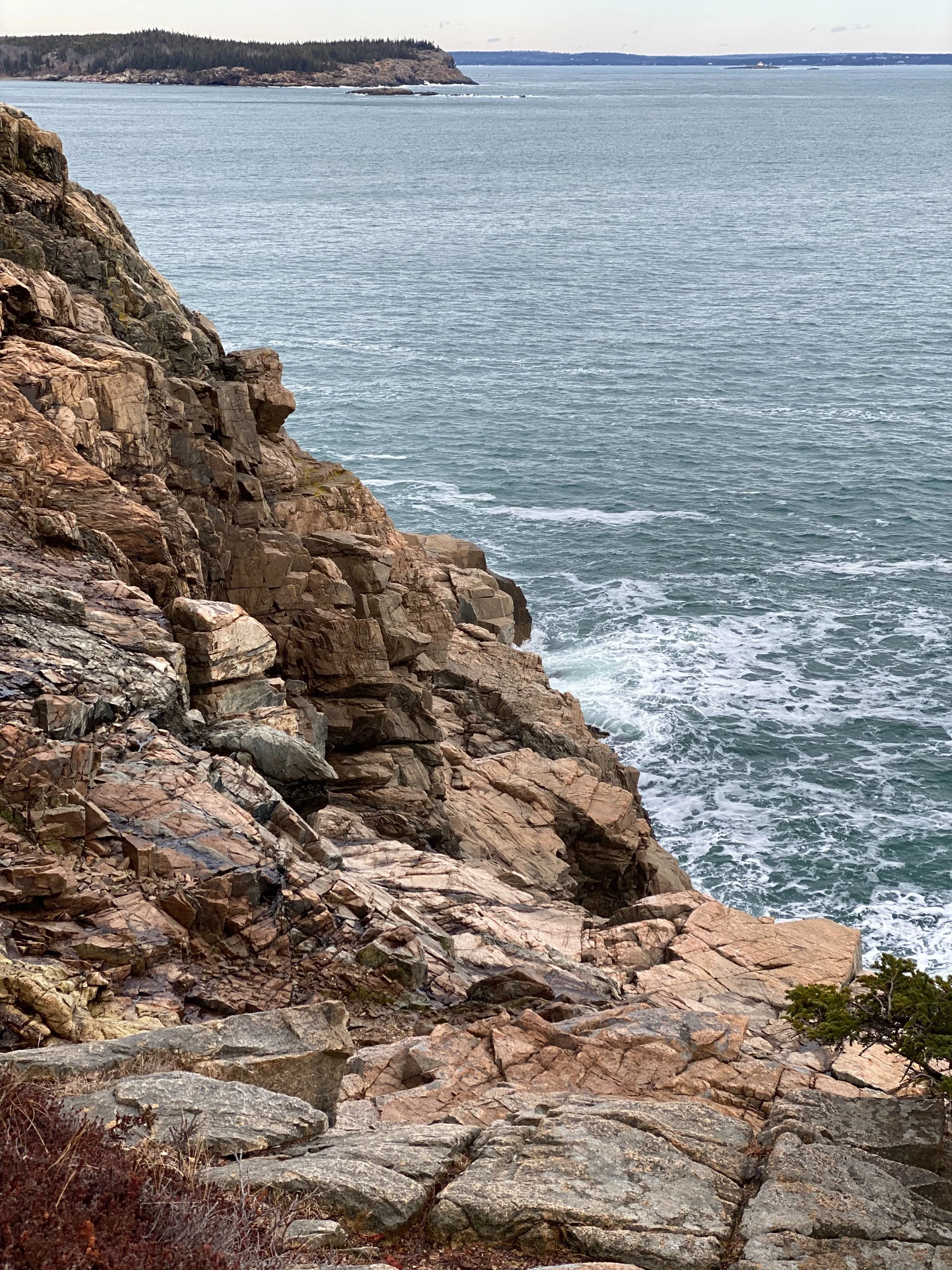
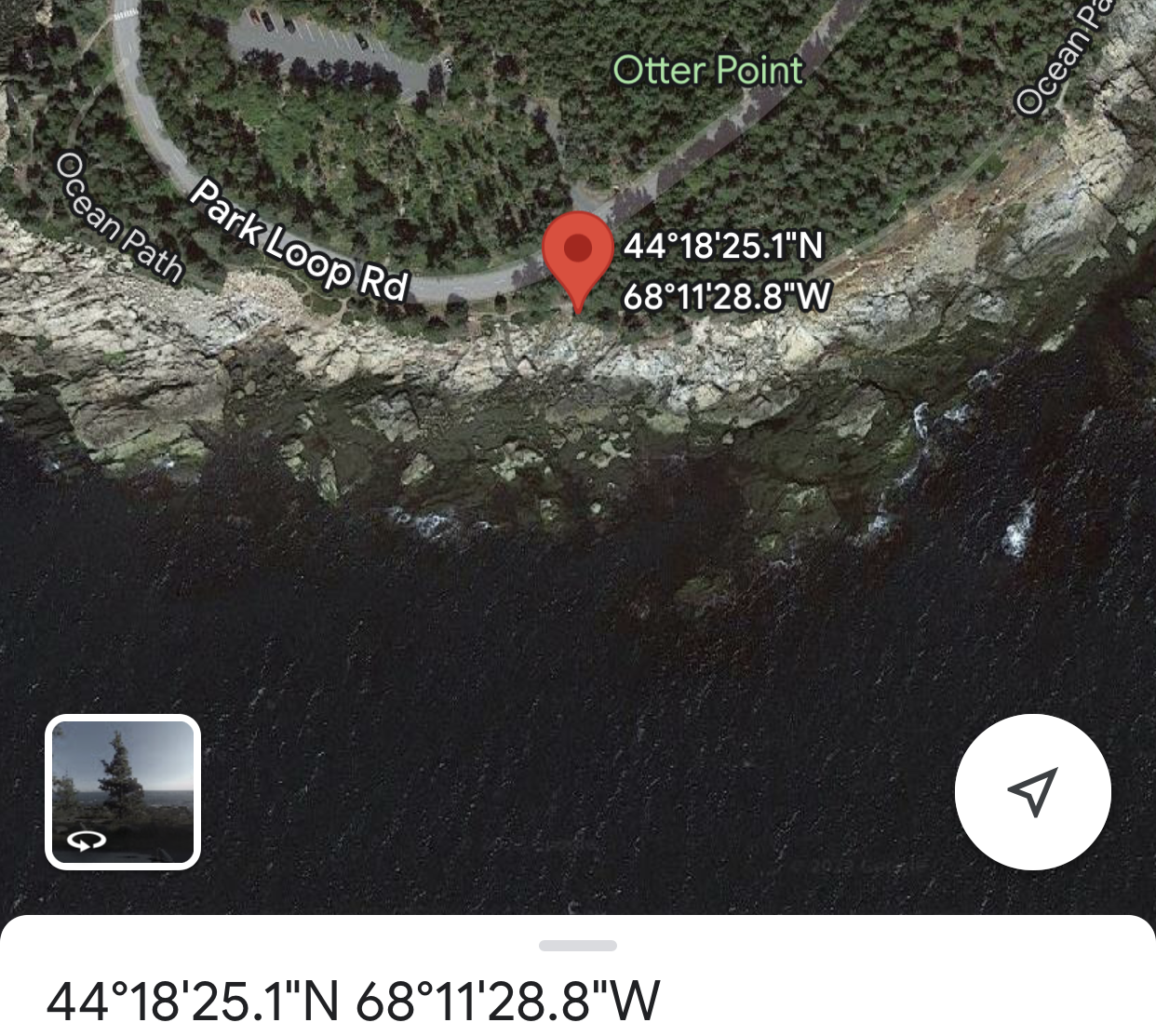
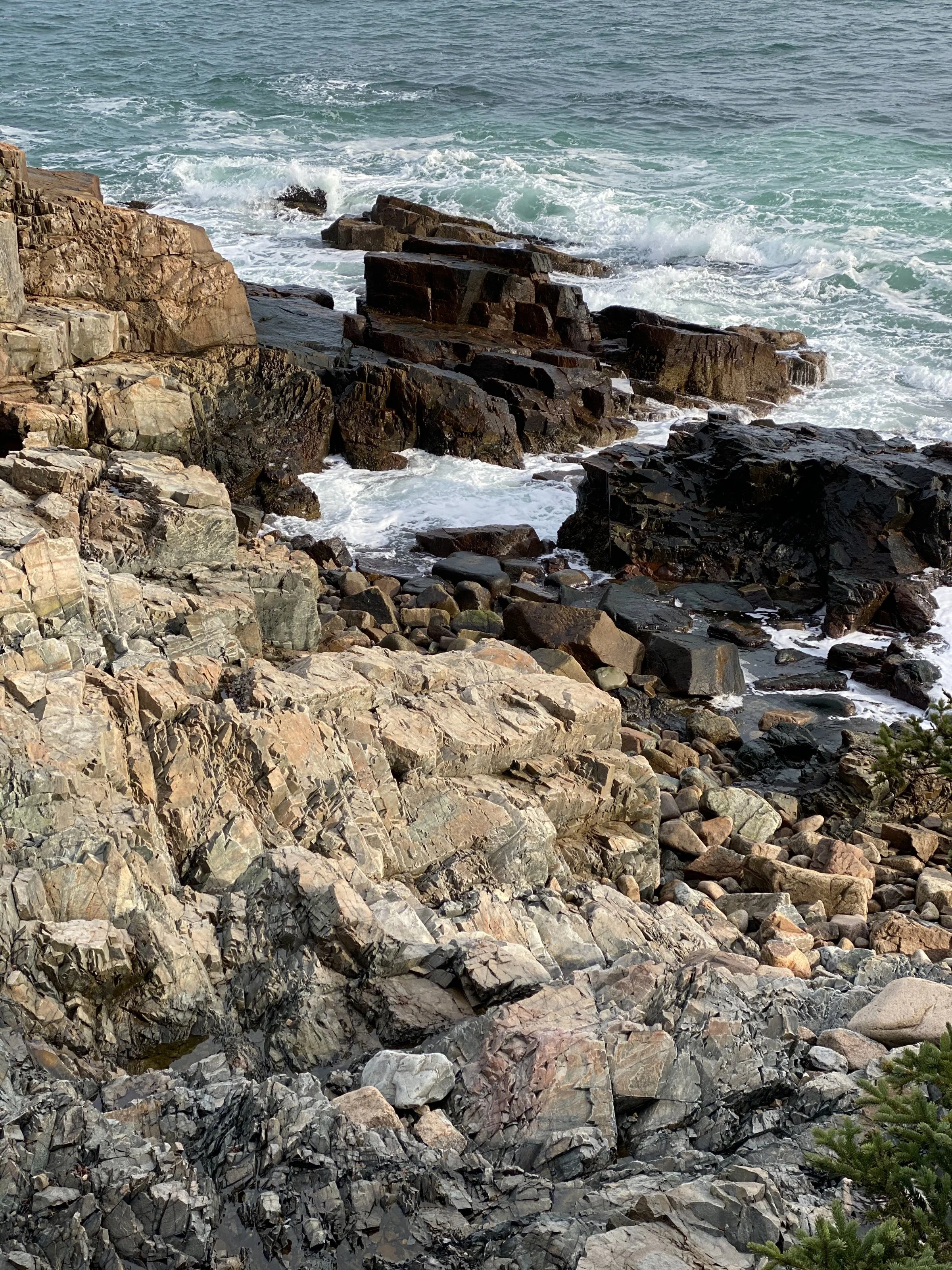
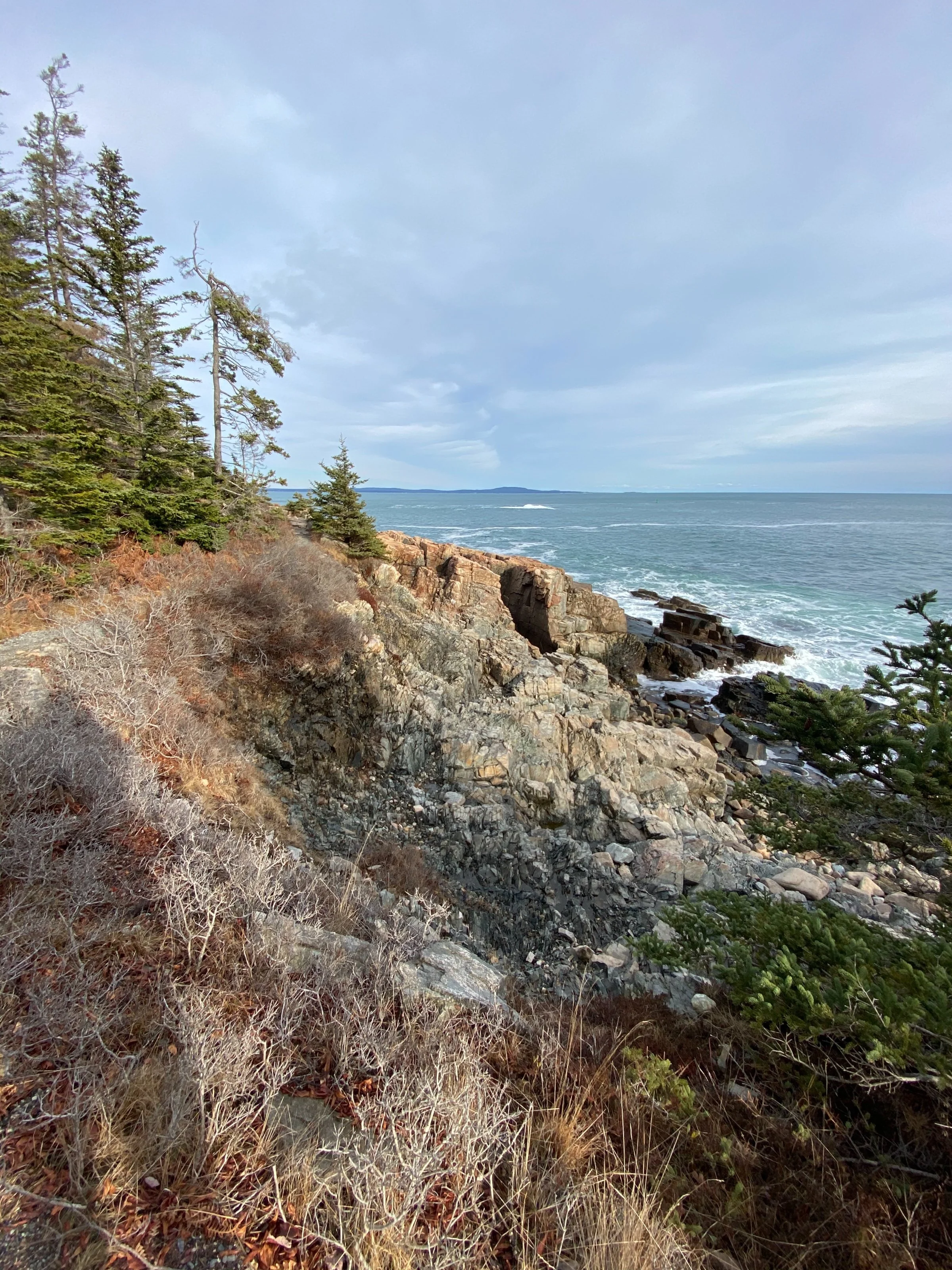
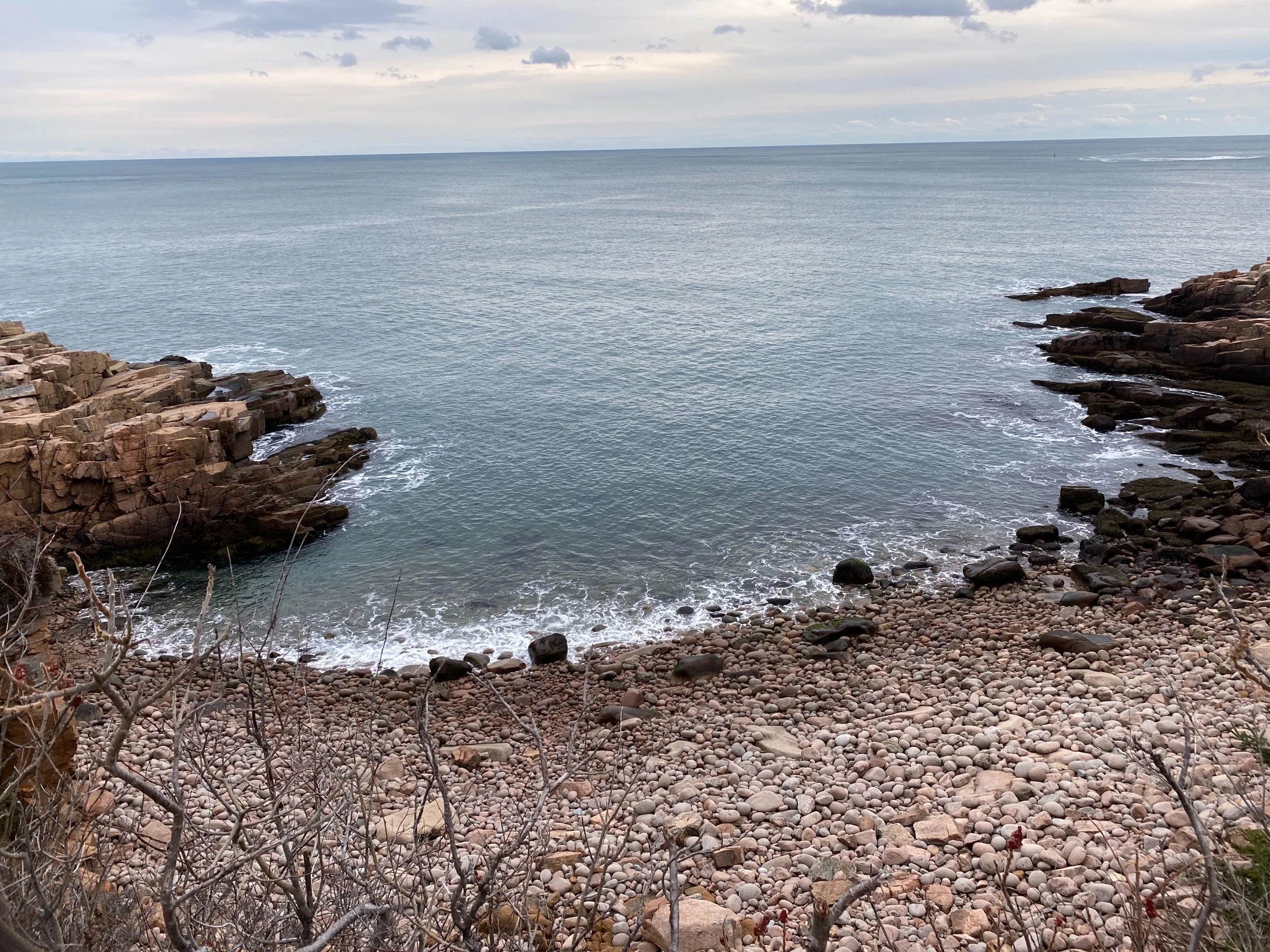
What's it like to visit Acadia National Park in winter for New Year's? Bone-chillingly cold, eerily quiet, and hauntingly empty. The ocean's vibrant hues stand in stark contrast to the jagged stones lining the shore.
At the end of 2020, Catherine and I decided to visit Acadia National Park. We struggled to find a vacation spot amidst all the madness of the year. For me, the end of the year has always been a time of reflection and contemplation. During the sudden rise of the COVID-19 pandemic, all you could do was reflect on the uncertainty and frustration that everyone experienced in their own way.
I struggled to keep my day job, which grew more challenging and emotionally draining with each month we missed our targets. At the same time, I felt pressure to support Catherine through the immigration process and keep her safe while she waited for her work permit—another source of worry and panic.
We were living with my family—hunkered down with my Mom, Dad, Grandmother, three brothers, sister, and my brother Frank's friend Masa from Japan. Masa was stranded in the US, unable to return home from their boarding school. He became a reluctant yet honorary member of the family. With Catherine and me, that made 10 people total.
The experience wasn't bad or uncomfortable—my family is good people. The constant yelling is more out of necessity because we're generally all fat (speaking for the biological Majkowski/Vitanza folk), we stomp around, talk smack, and those who aren't find other ways to stir things up. We enjoyed great, lengthy dinners together, chatting and savoring Grandma's cooking and baked goods. Since my Grandma, Mom, and Dad were all cancer survivors with varying immune system strengths, COVID-19 demanded a level of caution that many others weren't experiencing. We played lots of games, and I carved out space in our basement for a small painting studio. We all eventually got sick, but our caution ultimately paid off. We were isolated, and that wasn't so bad.
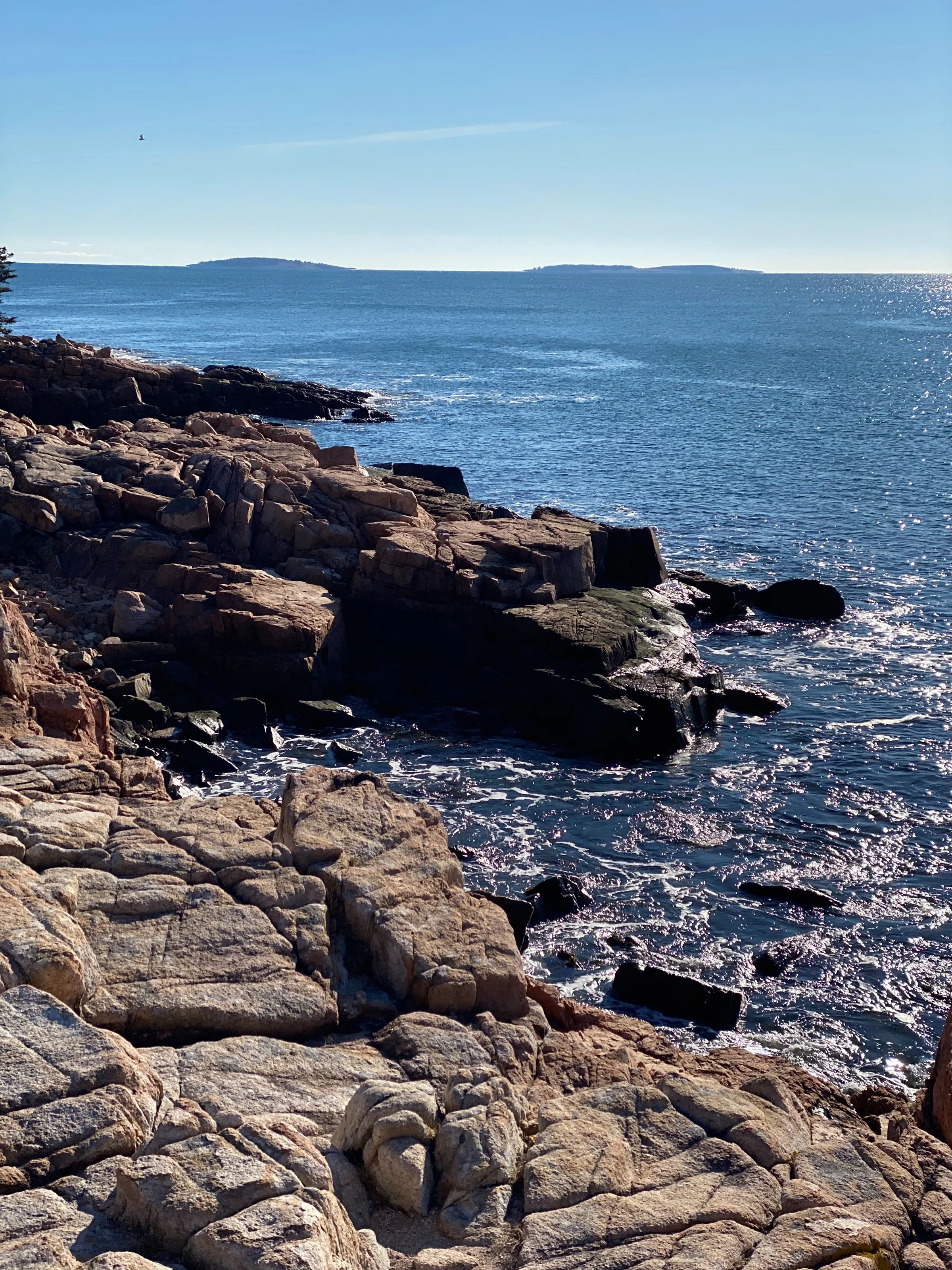
In our town, people enjoyed being outdoors and walking.
It was a pleasant area near the ocean, so we generally saw people outside, and this didn't change much. The only noticeable difference was the routes people took. Instead of gathering near the water or parks, they now explored backroads and dead-end cul-de-sacs.
We saw people who usually kept to themselves coming outside. Others rented Airbnbs to escape the city's claustrophobia. We'd spot them on their phones, walking their pets.
I pondered deeply about what these people were discovering here. The conversation always centered on escape. But then what? You're here now, you've done it. The moment of respite is upon you. What are you doing with it?
I recall taking numerous walks during this time, contemplating and people-watching from a socially responsible distance.
When alone on these walks, my mind often raced. I describe it as a swelling sensation, the mind churning, filled with small realizations of things beyond your control. When it becomes overwhelming and frustrating, you remind yourself of a random quote, a moment, or something sobering. A small voice says,
"Okay, I need to move forward.
That's a beautiful tree there.
What can I control?
What's my first step?"
Then comes a moment of clarity where I can truly see what's in front of me, the walk's beauty no longer obscured by racing thoughts.
But soon, the swelling begins anew.
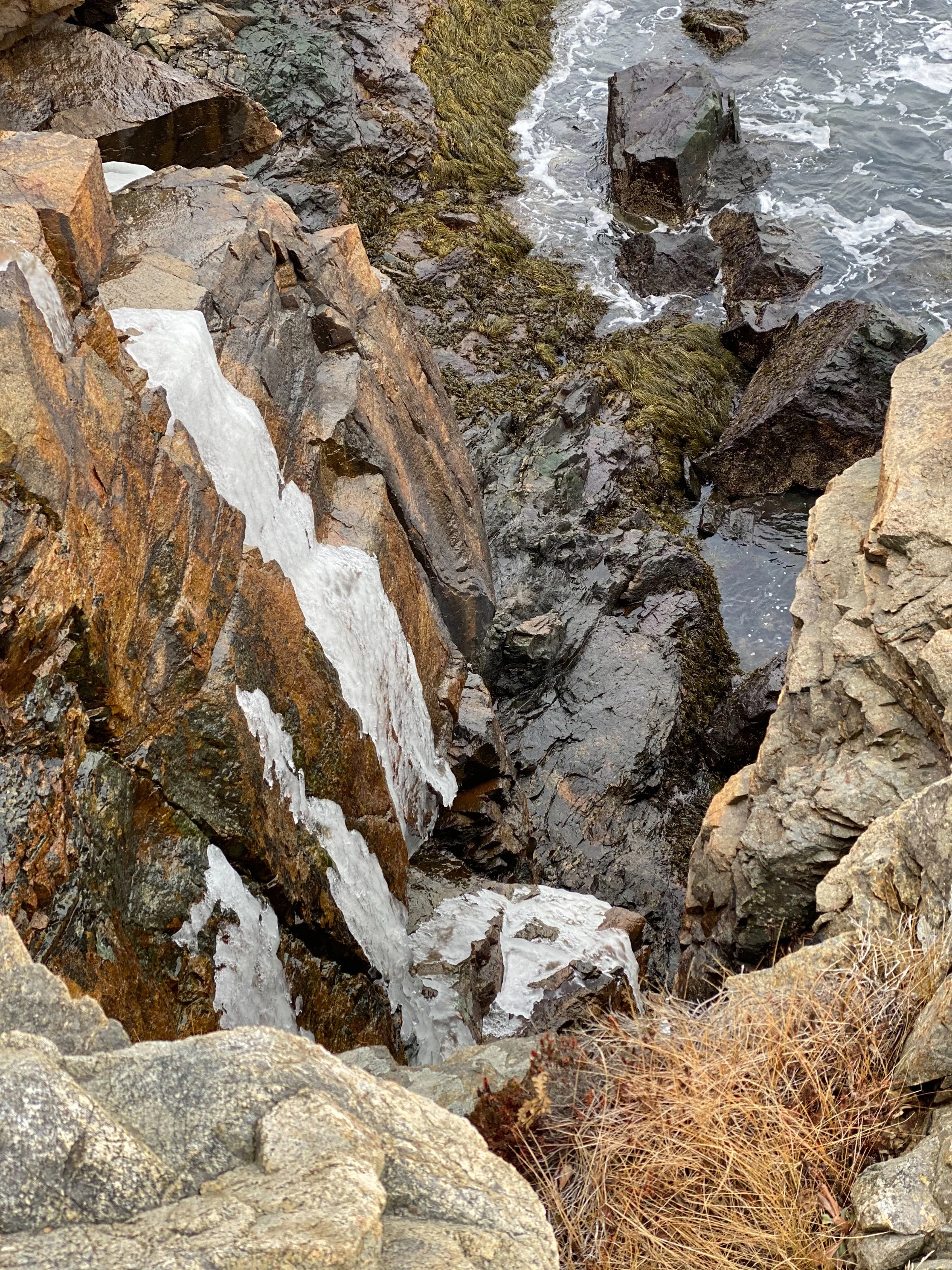
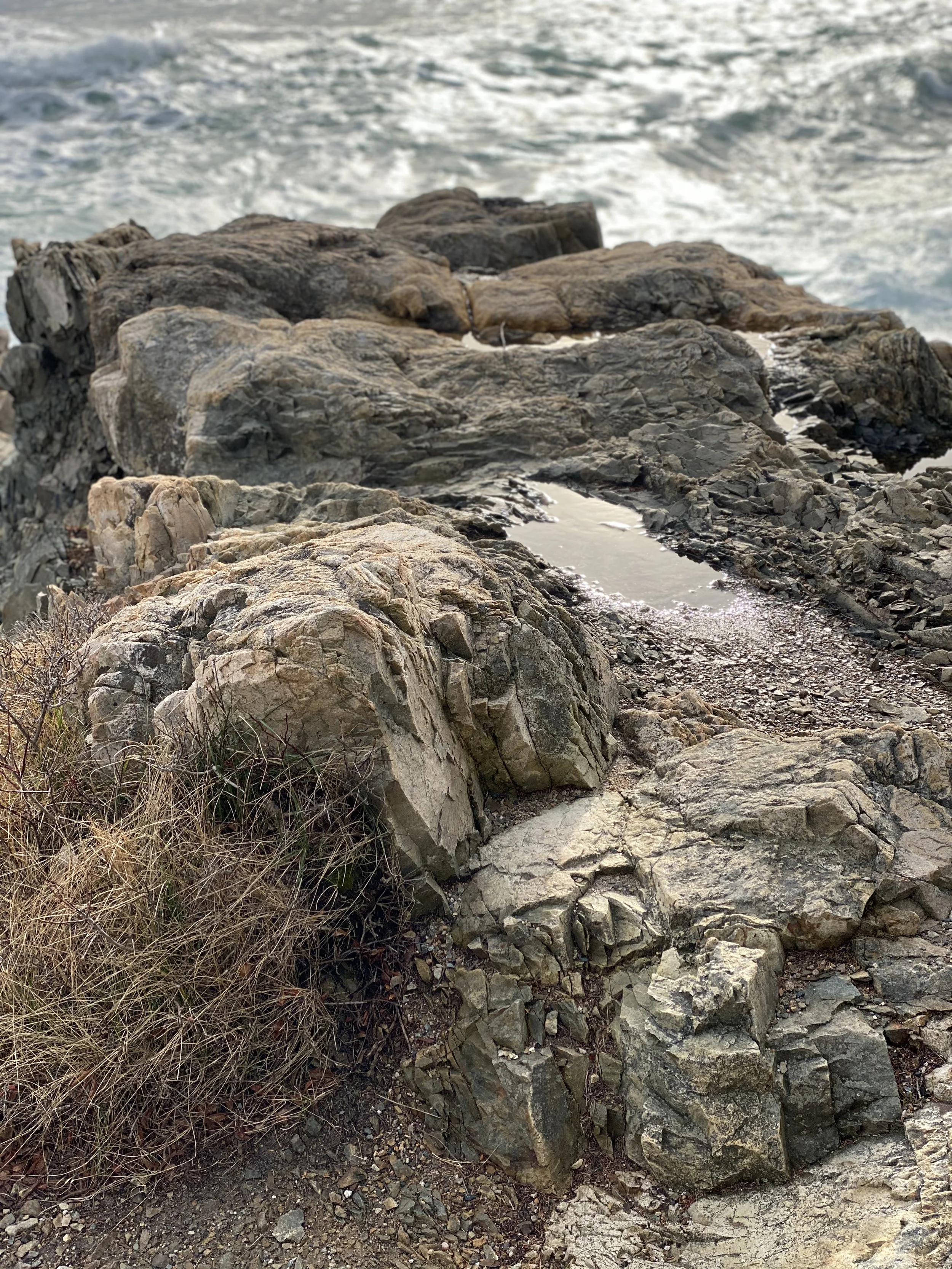
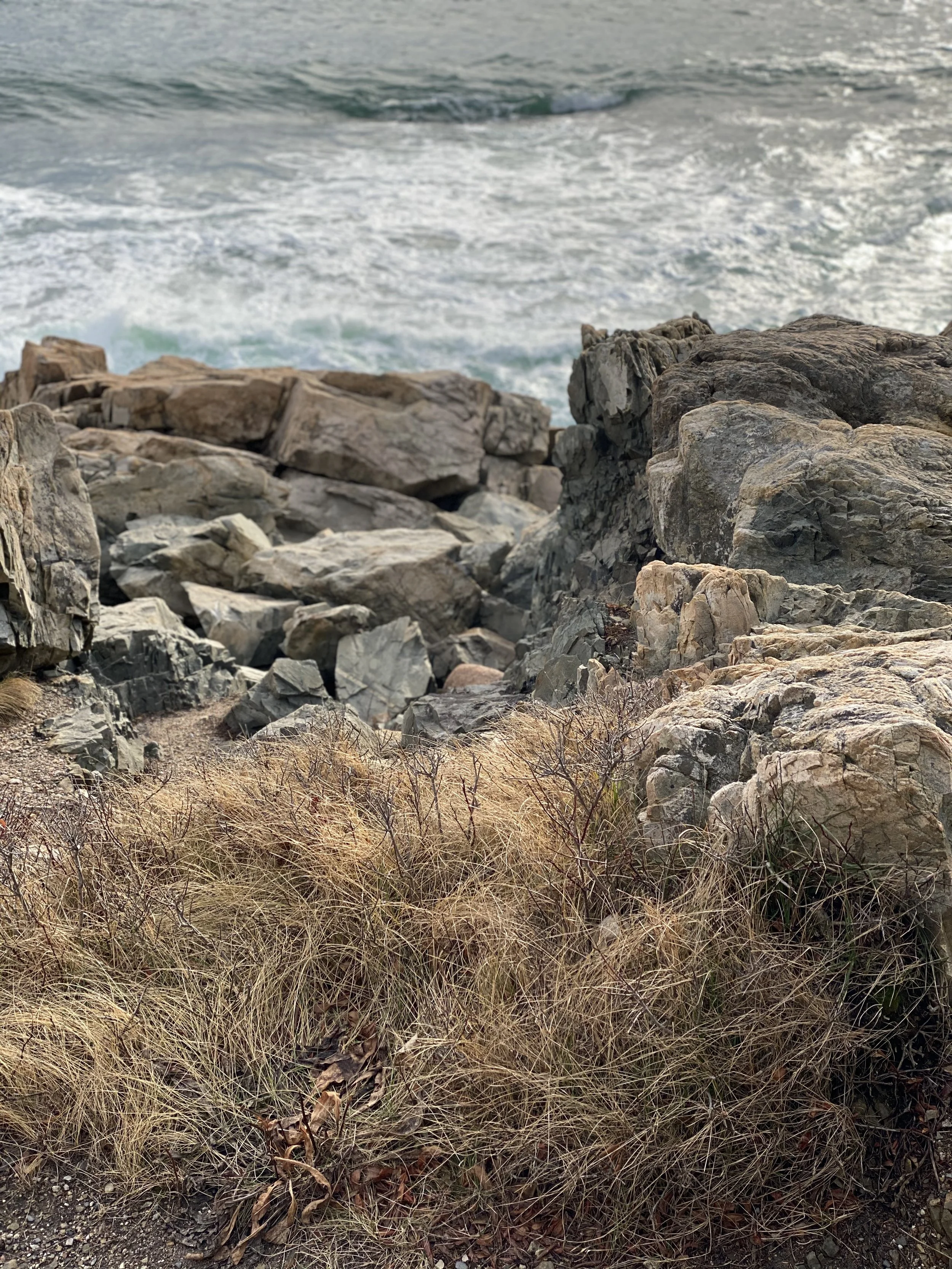
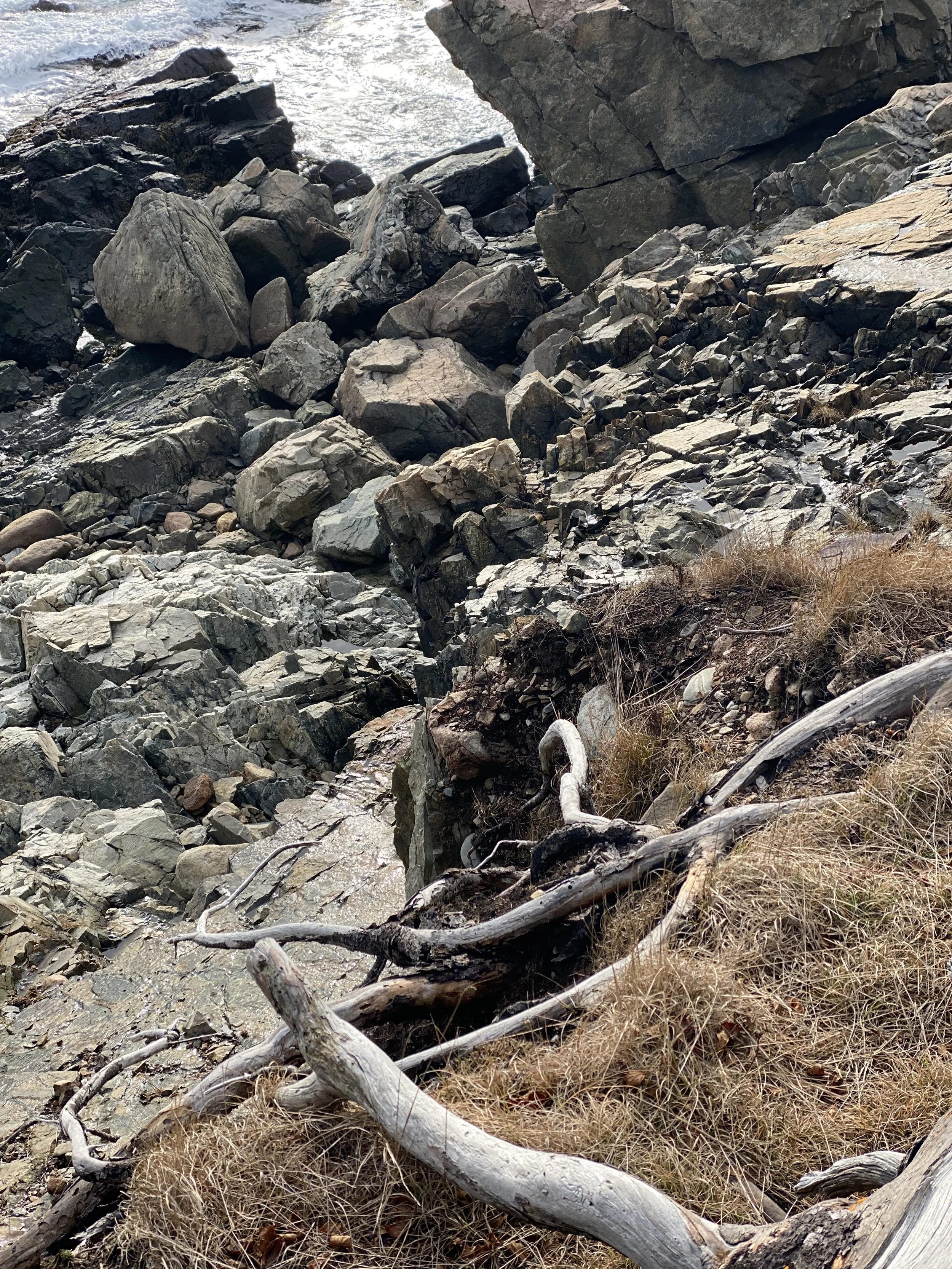
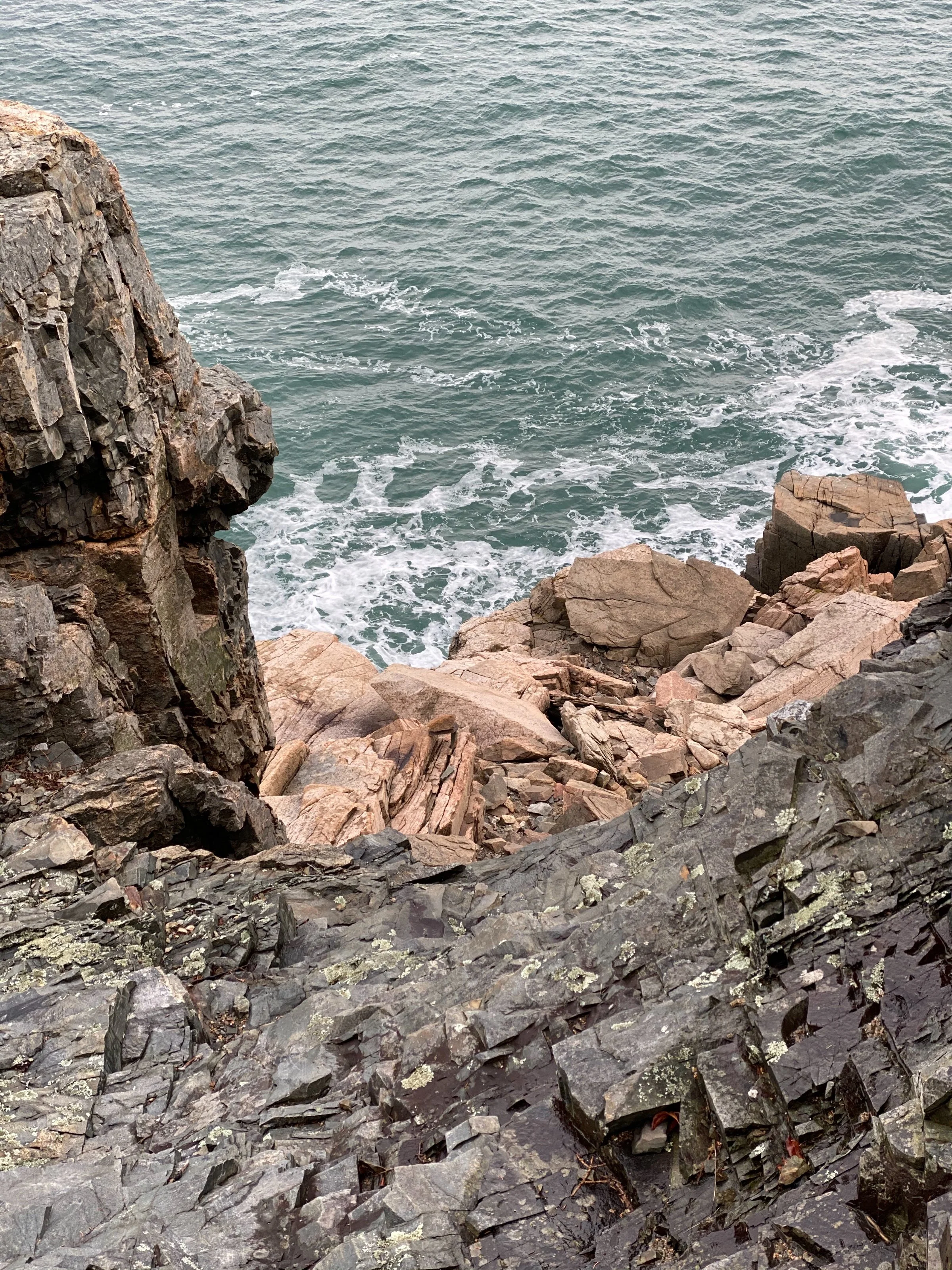
So here we are in Acadia, one of the most beautiful national parks in the US, visiting during a historically quiet season and an unprecedented lull in travel. Standing atop these cliffs, huddling behind rocks to escape the harsh winds, we were mesmerized. Peering down at the stones and dry, lifeless grass, we watched as freezing white water relentlessly crashed and retreated, revealing beautiful blue and green hues. The water being so cold and clear became glass like—only to be followed by another crash and a spray of icy, salty mist.
The sound and intensity shocked us out of our thoughts for a while. Yet it reminded me of how my mind worked—that swelling of thoughts that seems to wash away just as you take a deep breath or have a revelation. It felt like this.
I've chosen a challenging path for myself. I relish overcoming hardship and tackling difficult tasks. I find myself drifting away from those who seek an easy life or let things slide by. Instead, I deeply admire resilient people—those who repeatedly leap into the fire solely for the wisdom they'll gain.
Despite the pain, frustration, and anxiety I endured during this period of my life, I'm grateful to have emerged stronger. I want to capture that sensation in paint, to remind myself of those moments of respite on these cliffs. I want to paint it as I felt it.
New Years Eve 2021: Cooking by the fire
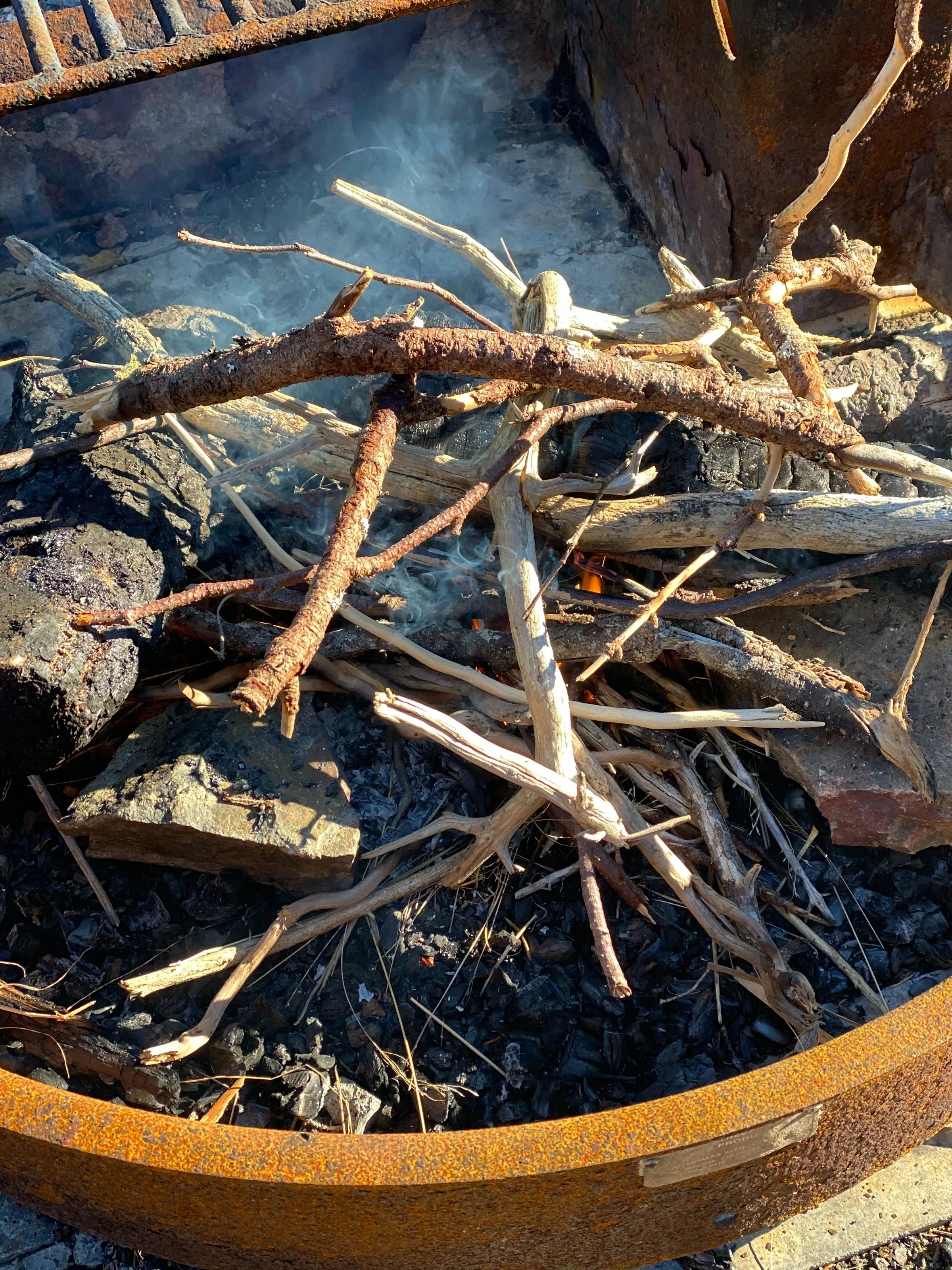
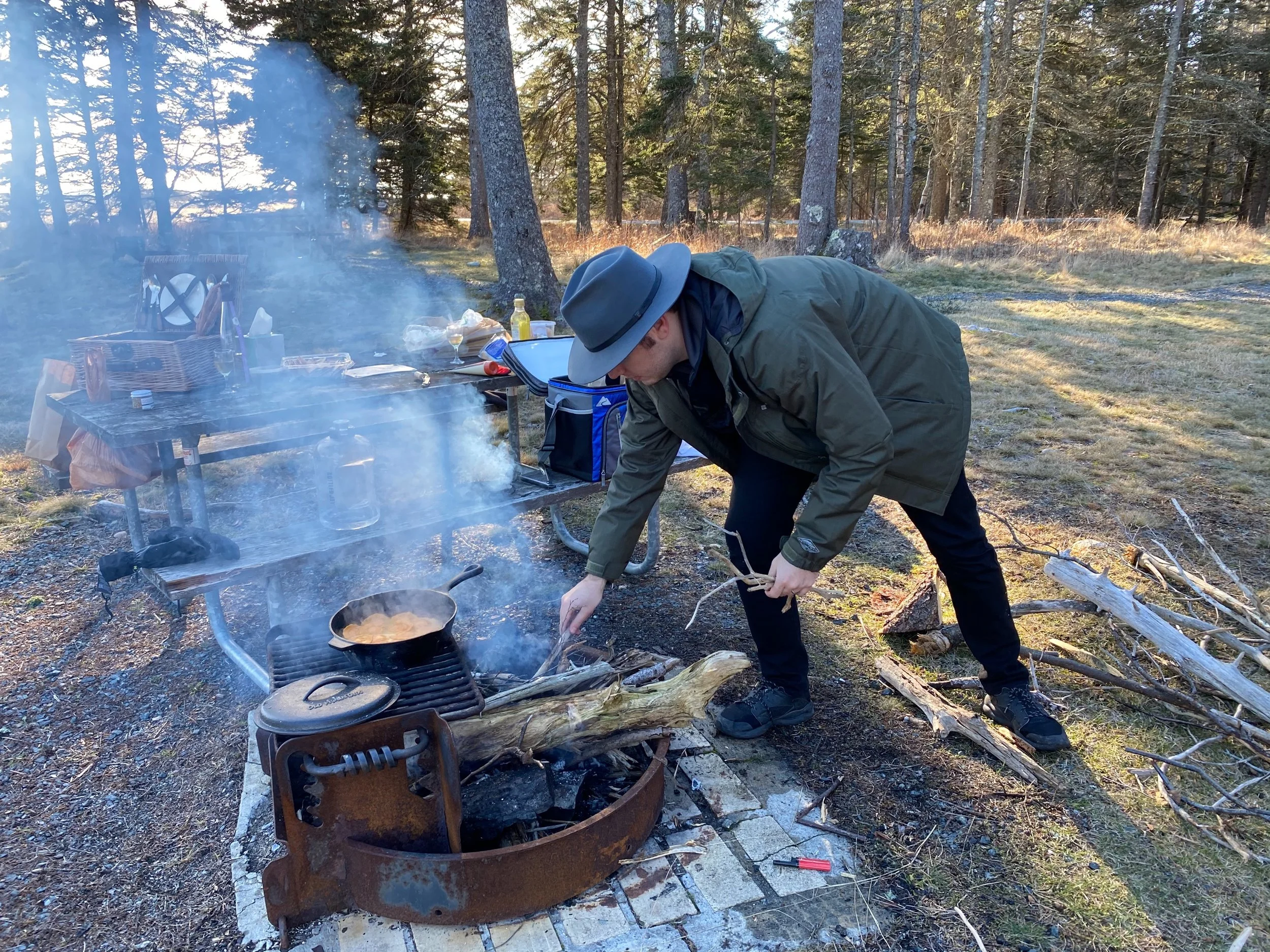
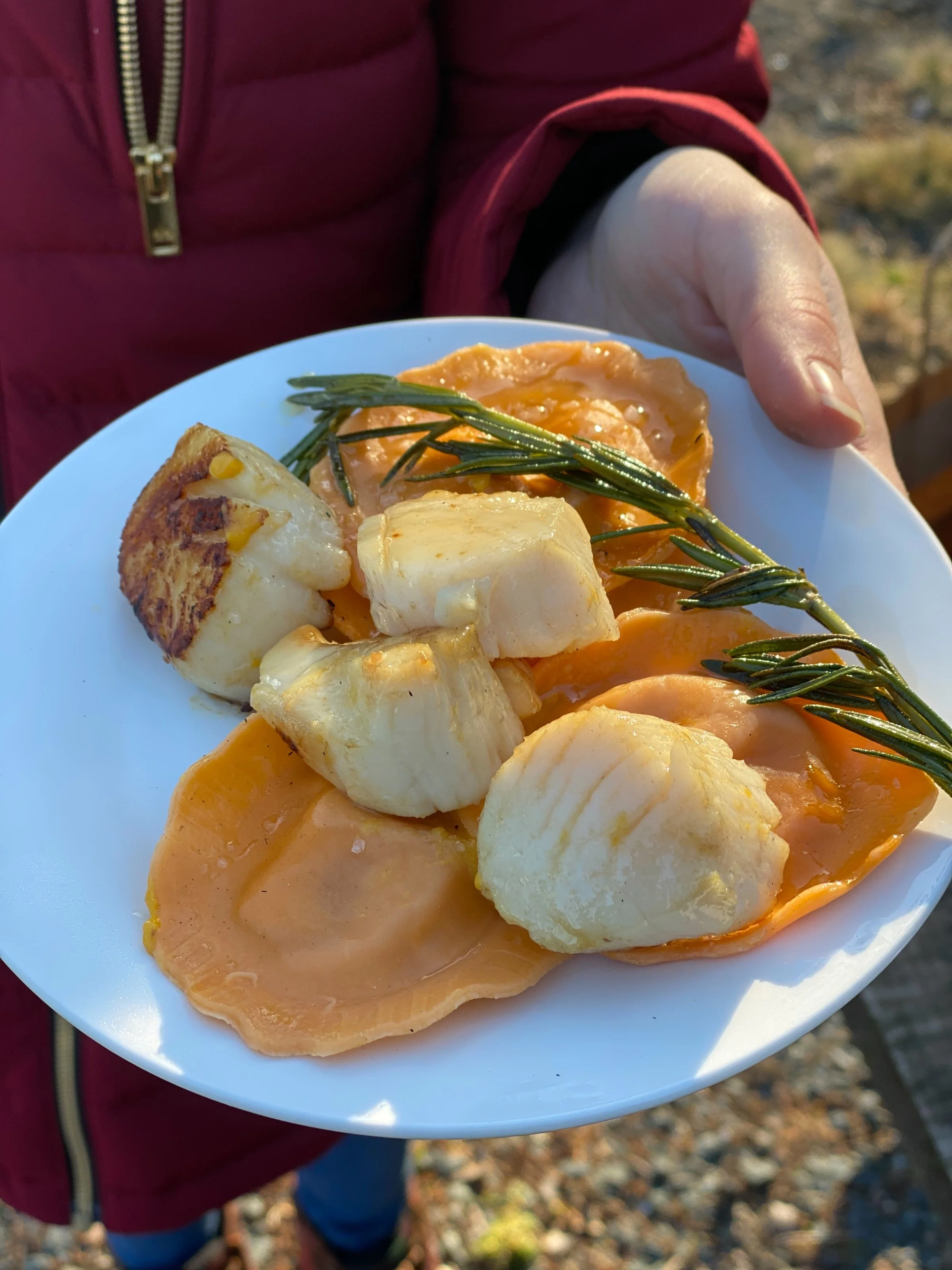
Pan-seared scallops and flame-cooked tortellini in cast iron. We had hoped to catch a glimpse of the Northern Lights. Though they eluded us, we spent hours in hefty sleeping bags in the back of my Jeep watching and mesmerized.
April 5, 2021 - Preliminary Sketch
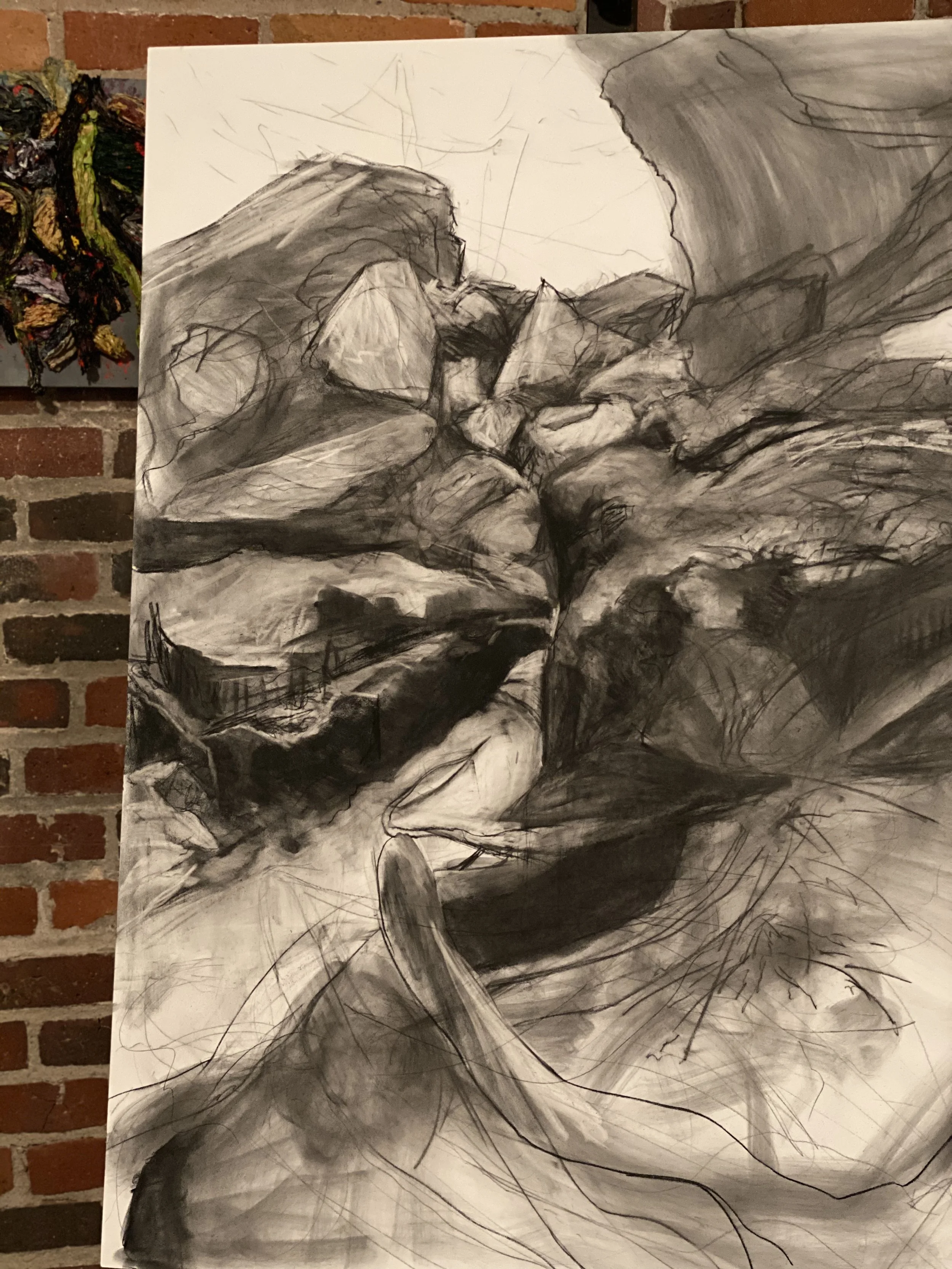
In this initial sketch, I'm trying to capture the sensation of looking down and forward at the same time. Even though I'm peering down a cliff, the vast expanse of water and stones appears to loom directly in front of me. This flattens the image in an interesting way.
April 14, 2021
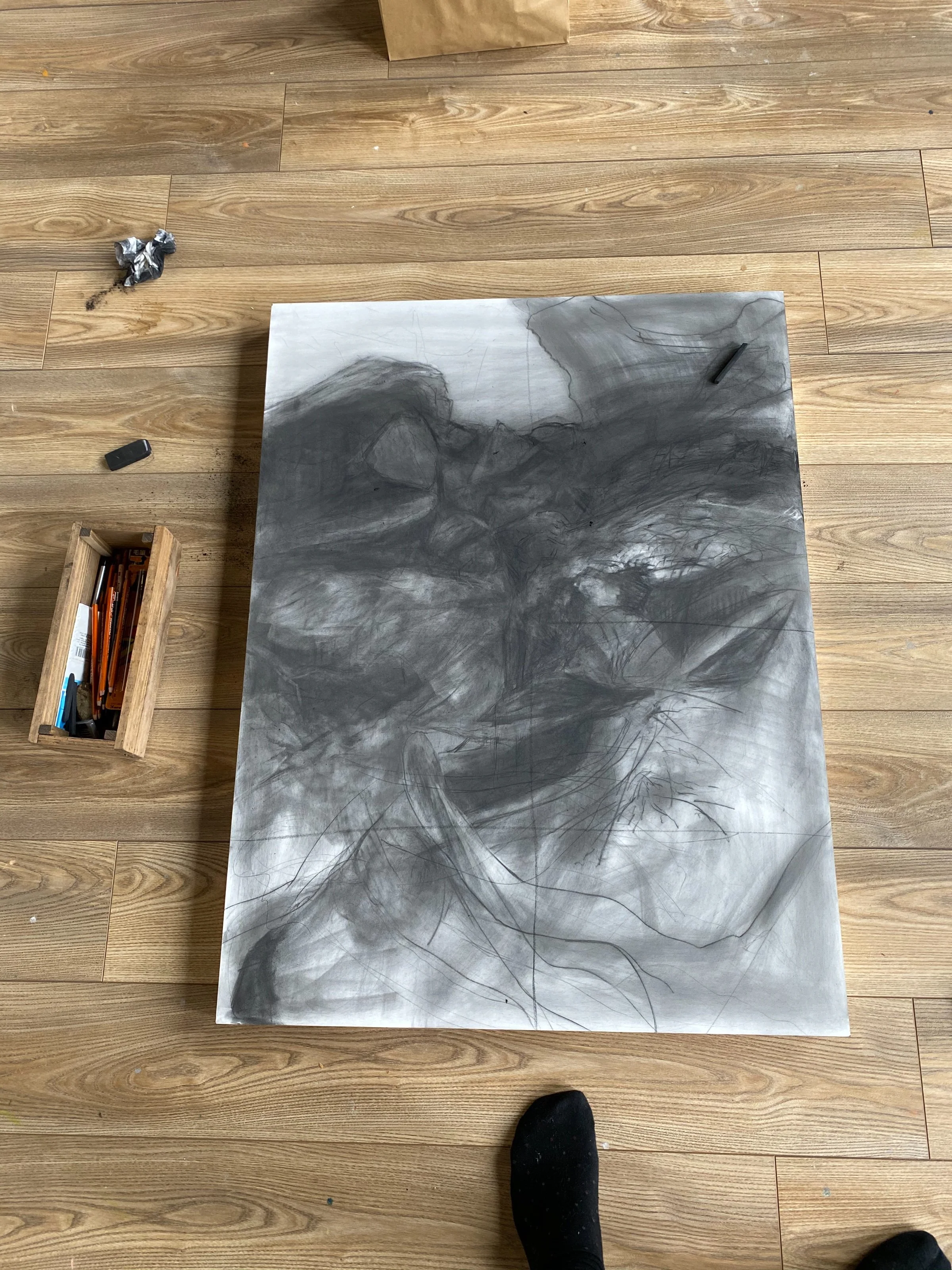
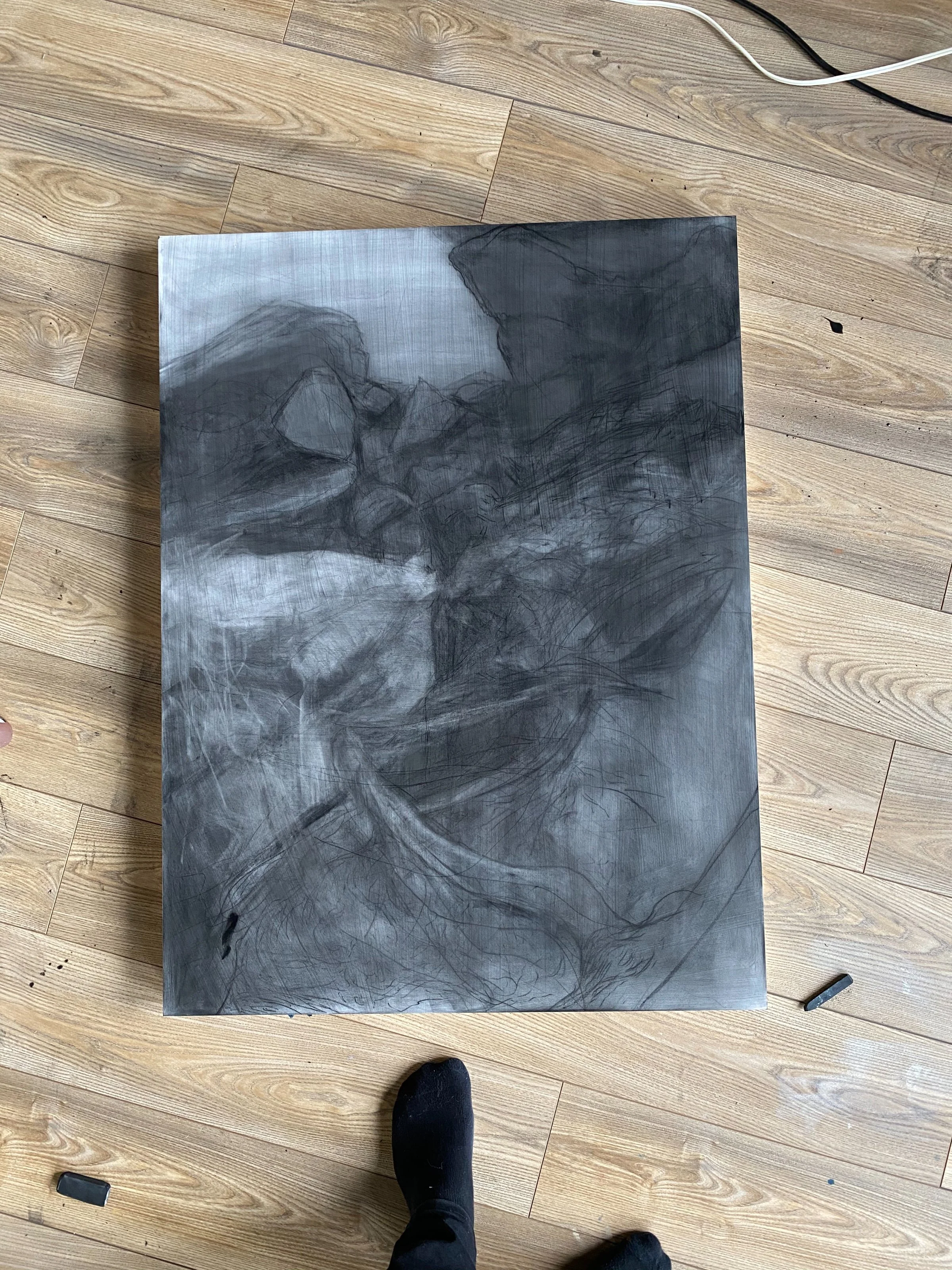
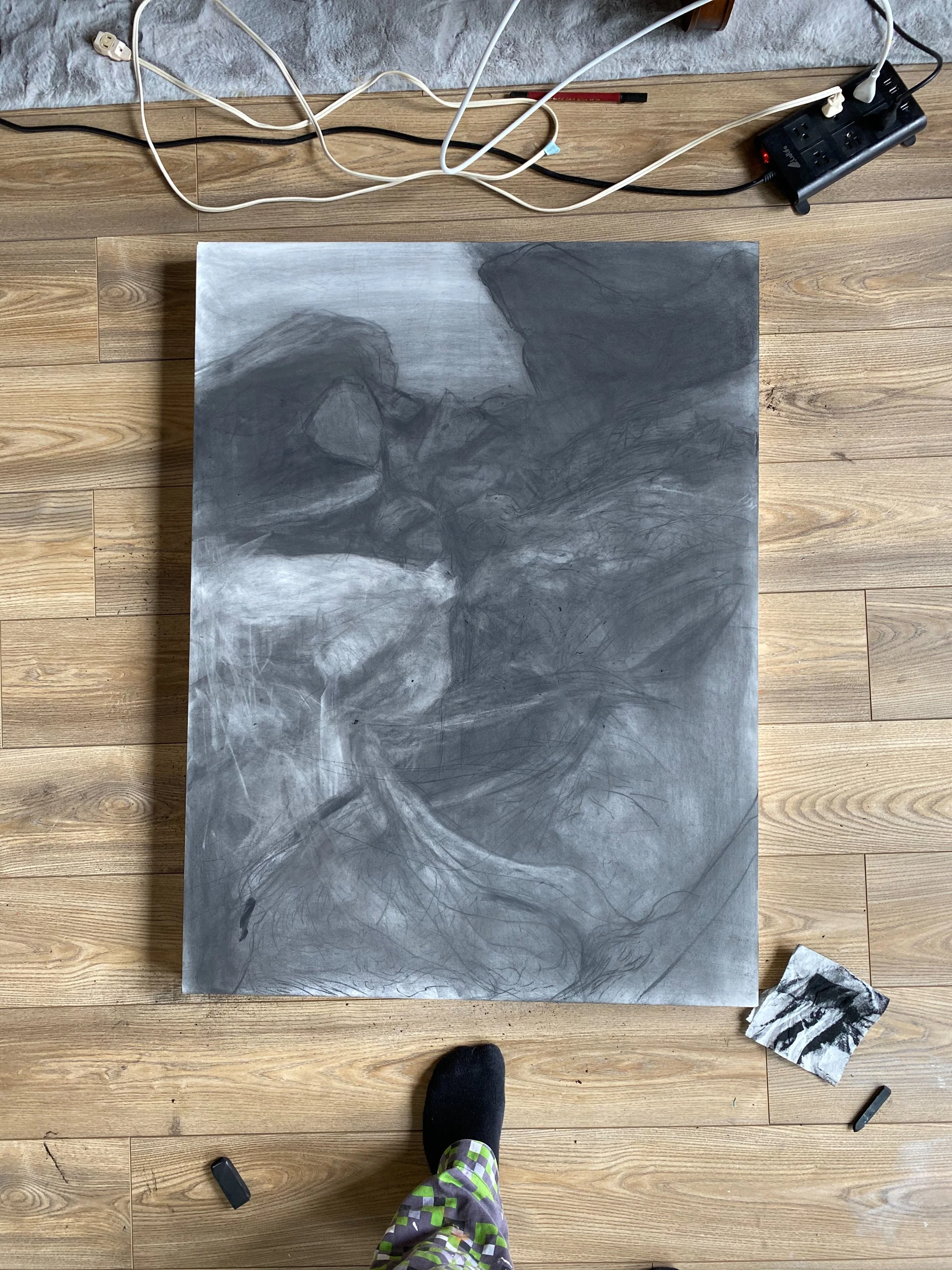
I'm enjoying the process of discovering and emphasizing these winding roots. I want viewers' eyes to be drawn into the image by these large, root-like structures—pushed around by massive forms converging from all directions toward the center. My goal is for the entire painting to embody a tumultuous internal energy, as though it were at odds with the energy of the ocean crashing through the stones toward the viewer. The direction and architecture of my paint forms express this movement.
Painting Begins: April 19, 2021
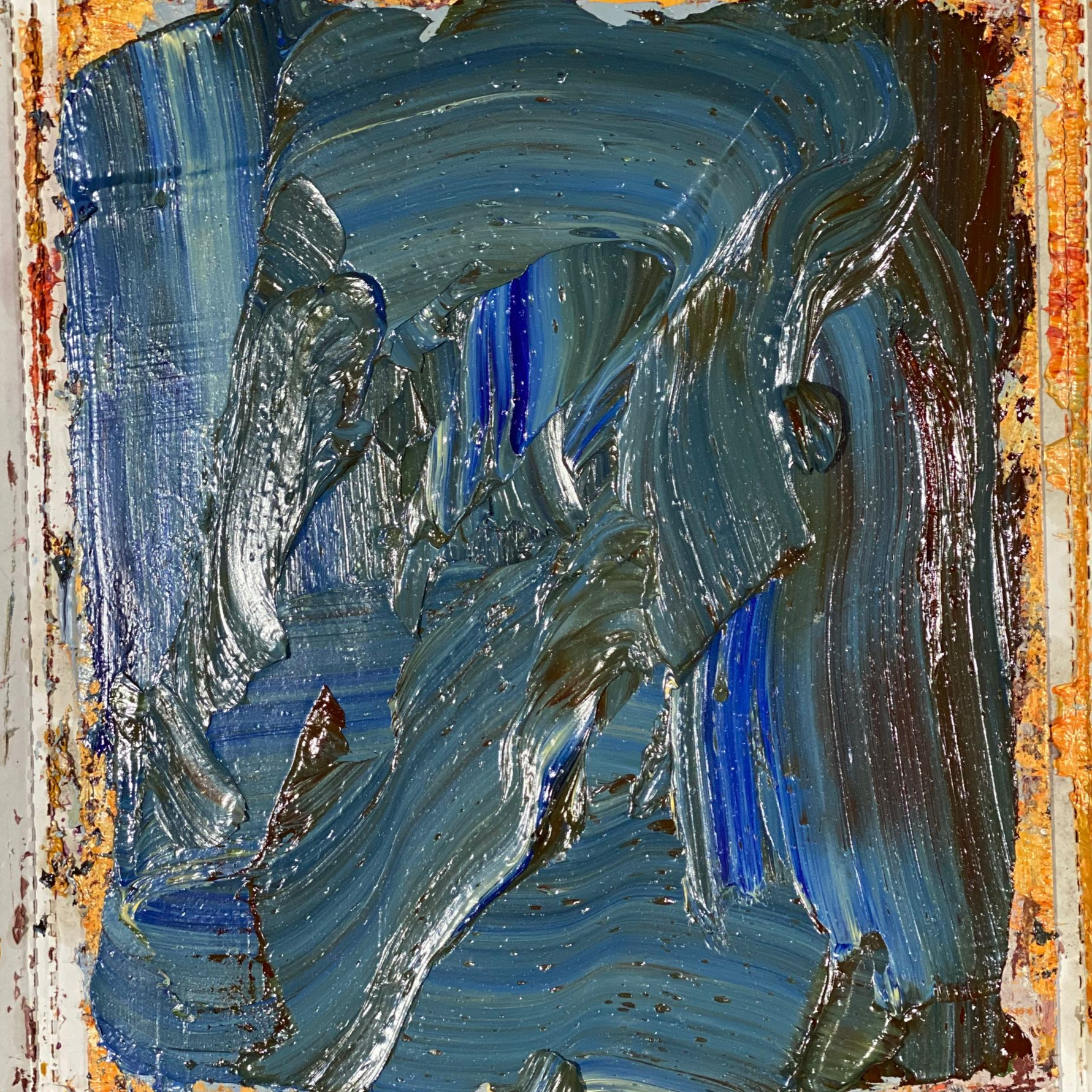
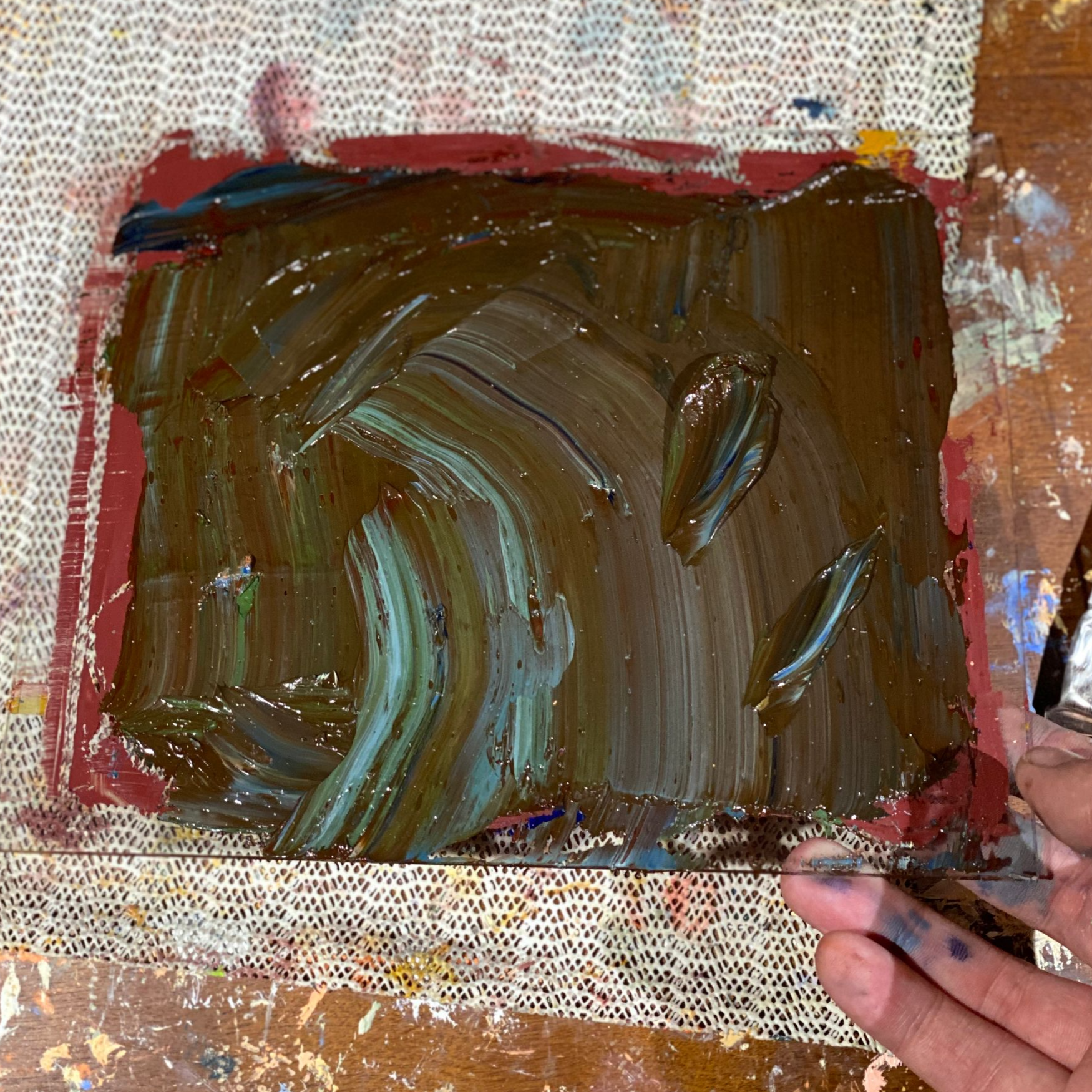
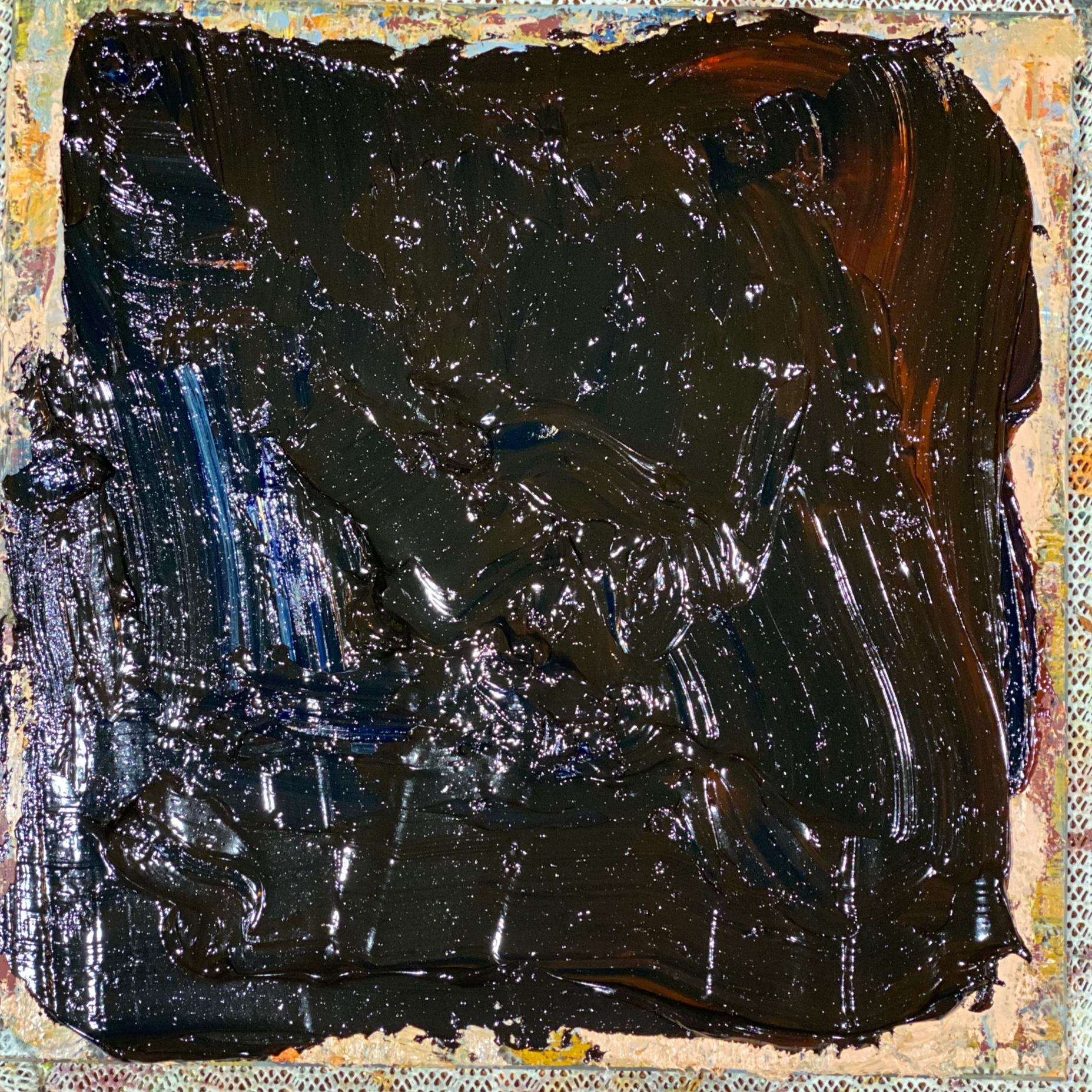
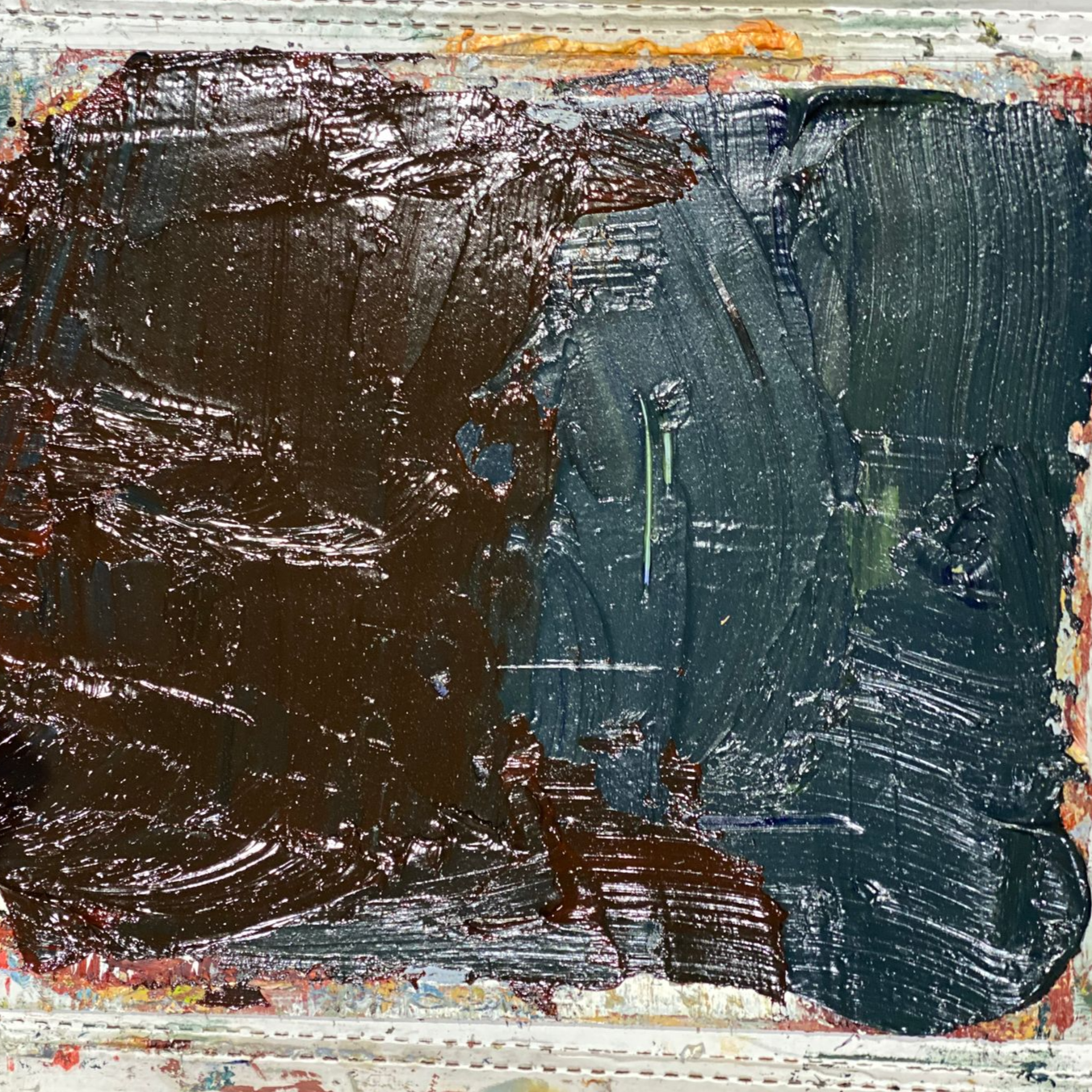
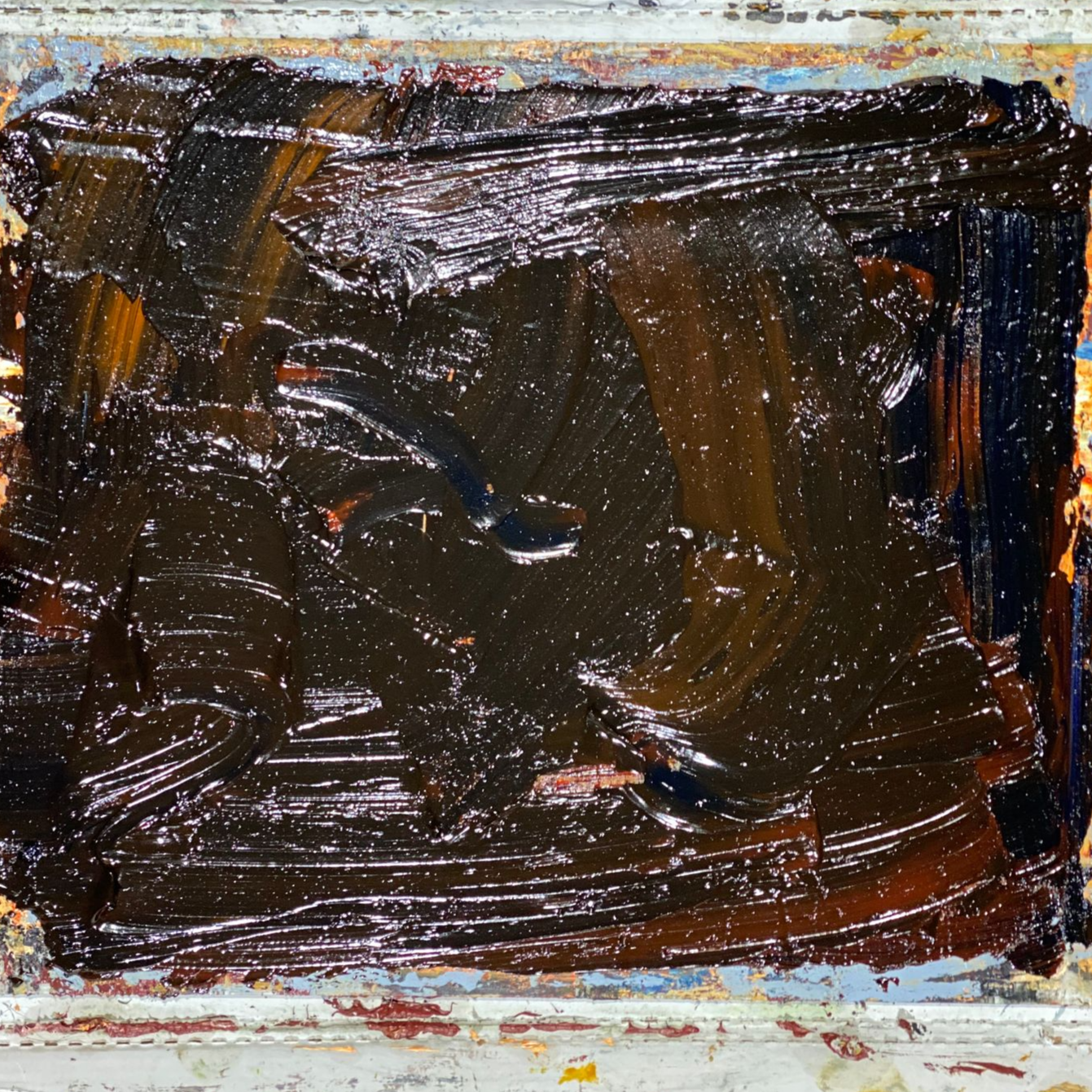
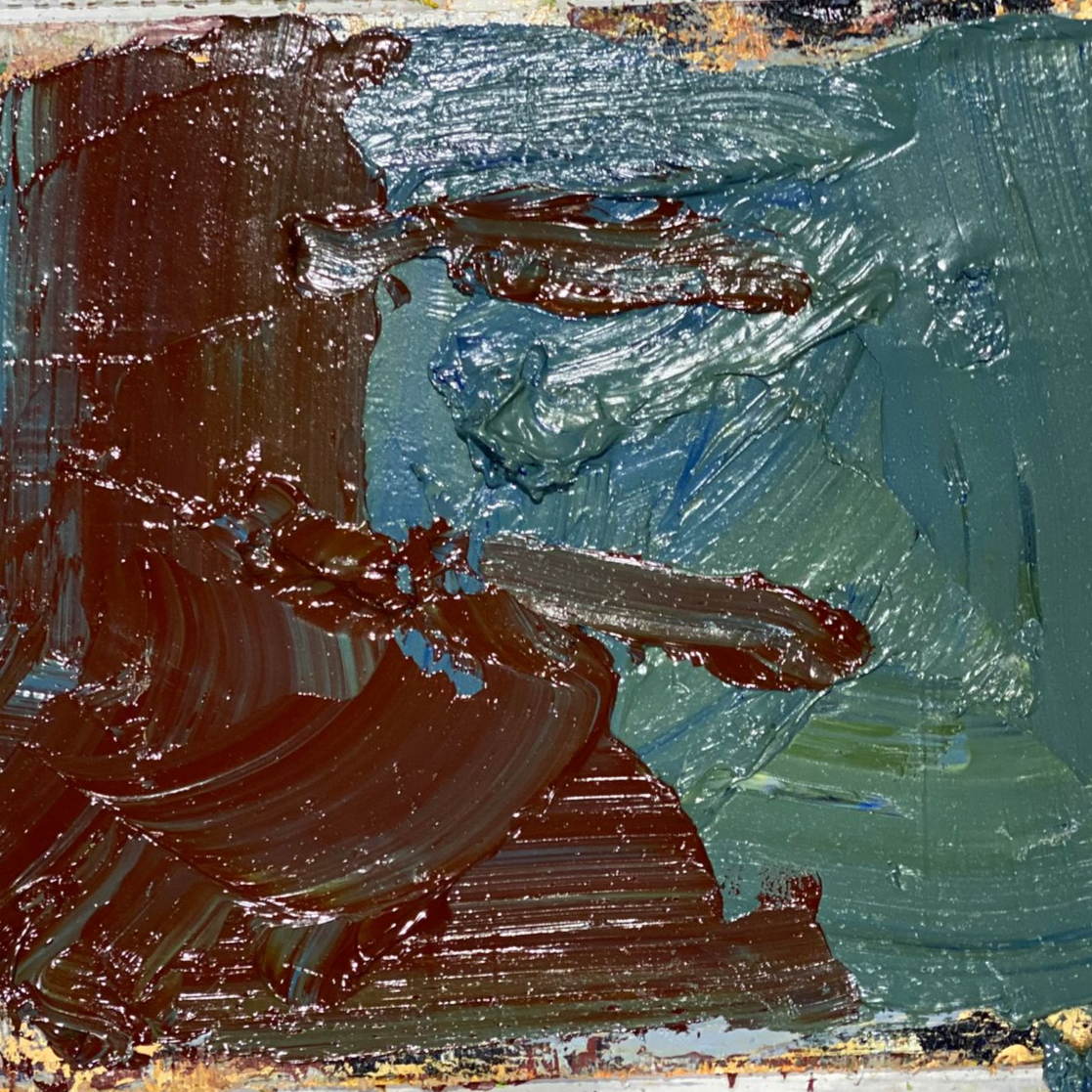
Today, I'm focusing on the middle-toned darks. My goal is to create a vibrant, colorful base that the larger forms will later temper and balance. The process of making a painting is very important to me. Typically, when someone sets out to create a painting, they take a single surface and build layer after layer—adding and rendering with various tools, brushes, or clever tricks—until it looks like what they wanted or they reach a point of resolution.
I firmly believe that the massive changes of 2020—when our communities were huddled inside and everyone was online—fundamentally changed the human experience. This time changed how people interact, earn their livelihood, find joy, handle loss, and where they go when they need to escape.
With everything coming from everywhere all at once, I observed an existence that depended on decision-making. Fast, articulate decision-making. A desire to take everything we know, lay it on the ground, organize and categorize it, and build it back together.
The painting process I developed is meant to be exactly that experience. In these studies, I let myself freely add colors and gestures and iterate with a kind of freedom.
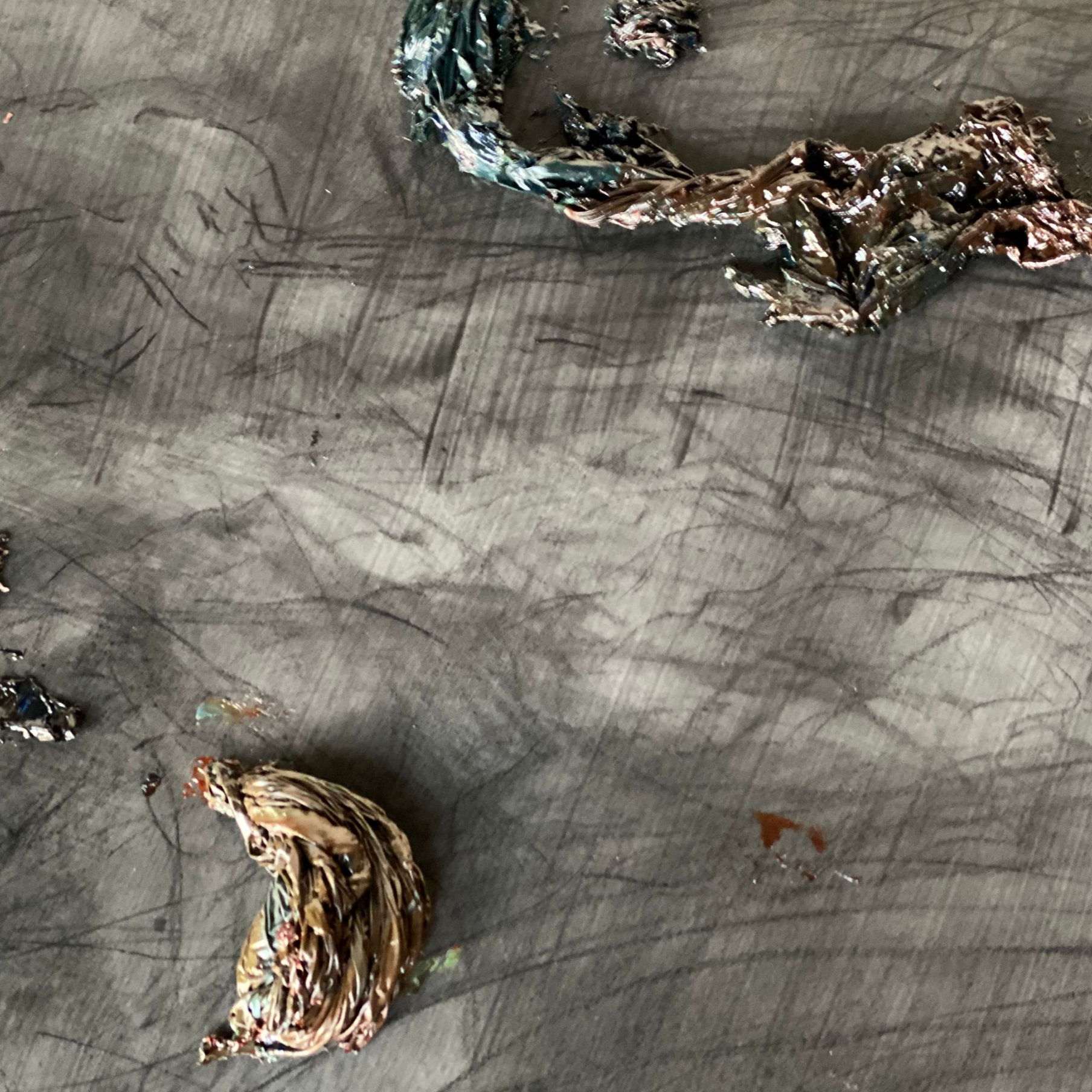
April 24, 2021
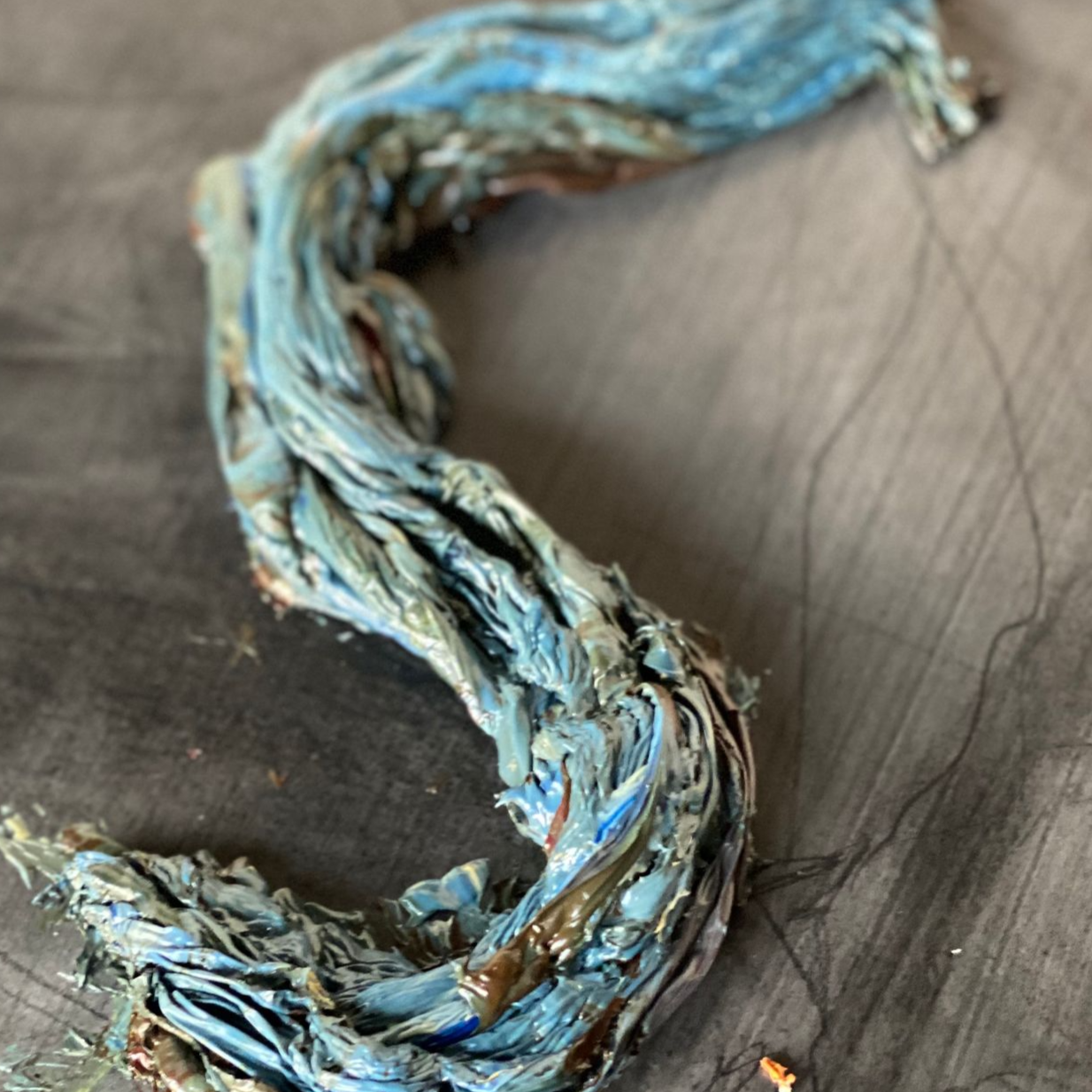
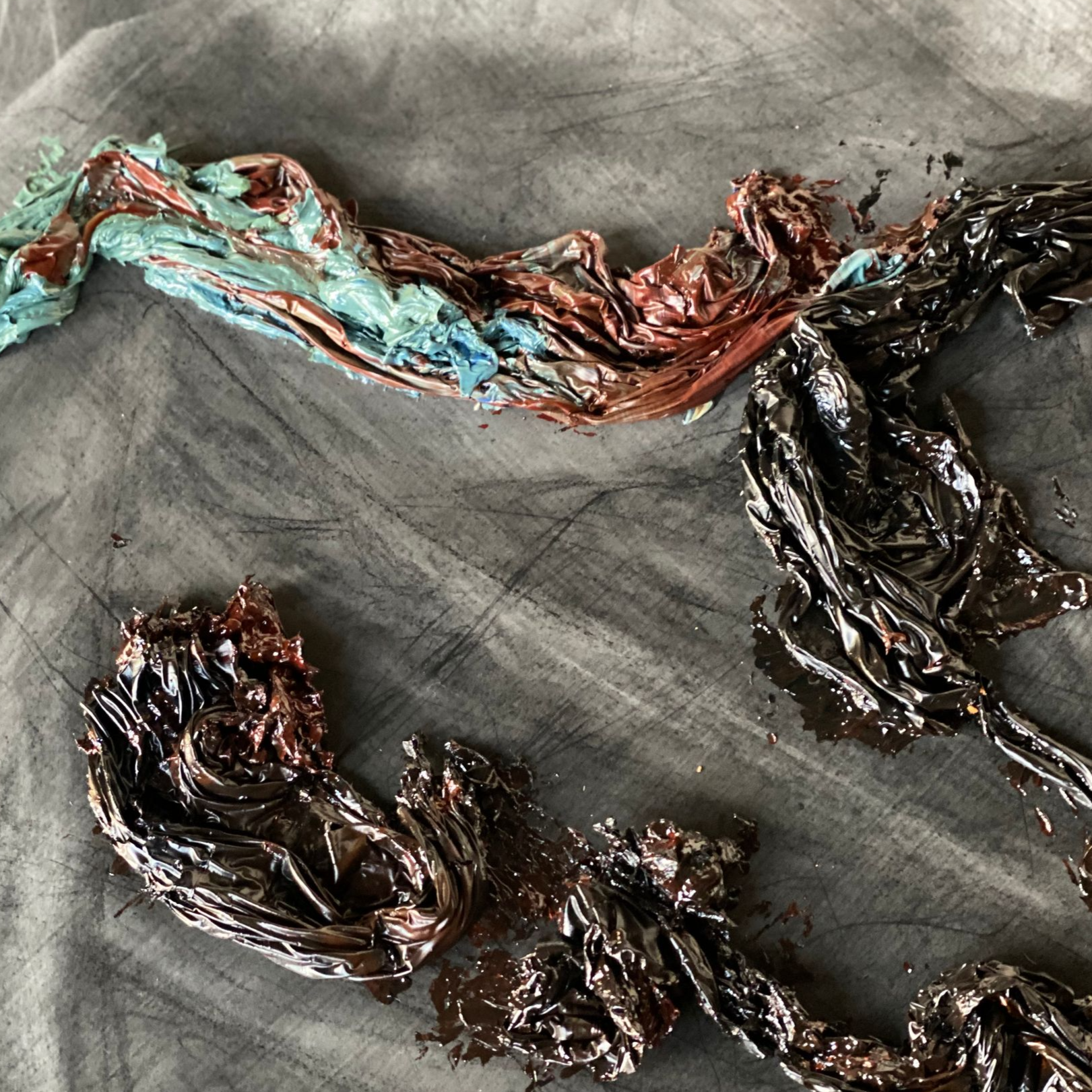
I believe there is freedom in deliberation. This type of painting creates a kind of luxury where I can deliberate in a way similar to an artist who makes mosaics, carving the exact piece. Except in this case, I am able to sculpt paint into these kinds of forms—forms in their sculptural sense that have their own character and can embody a kind of gesture or "mark" similar to the character found in drawing.
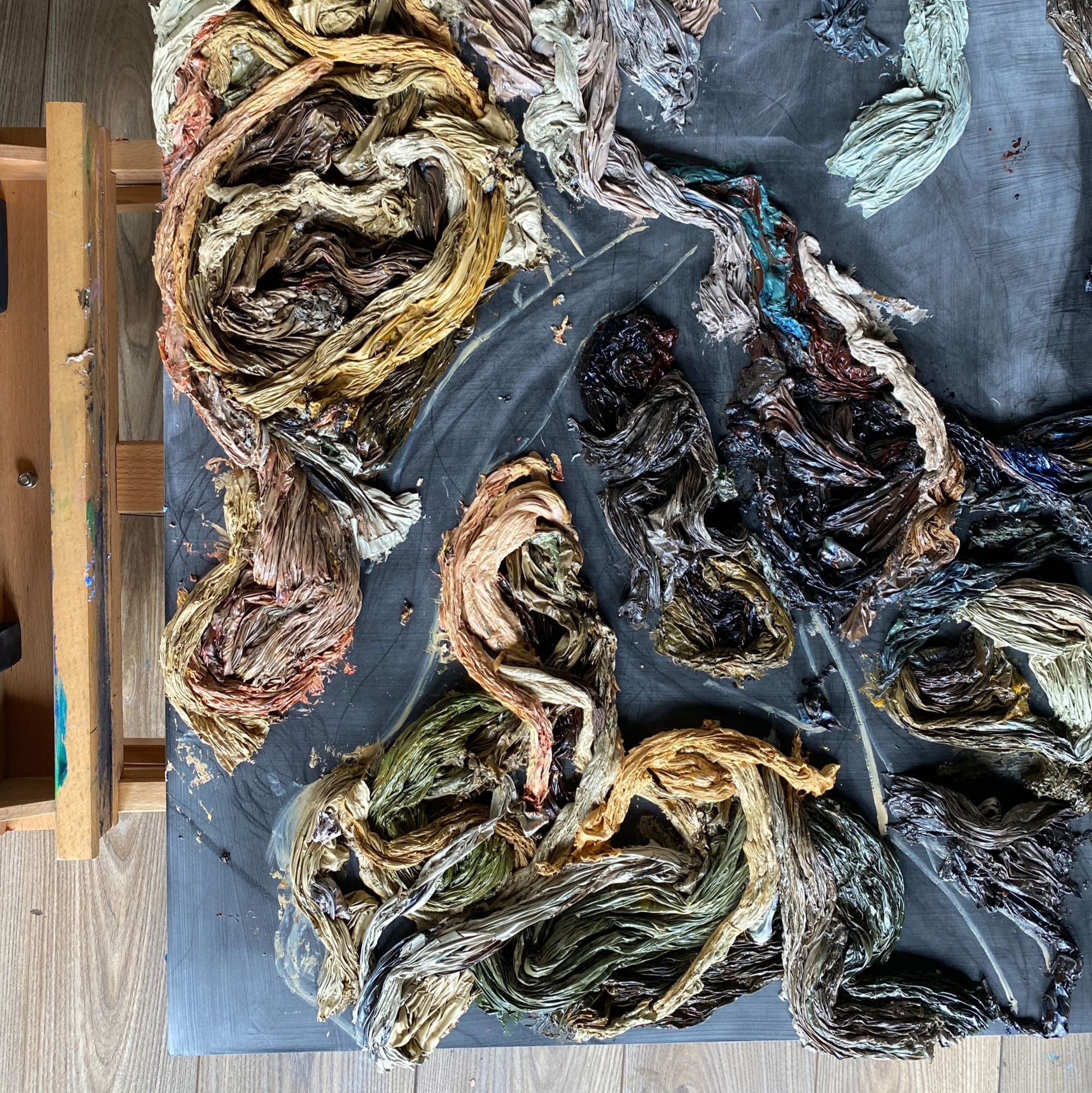
I created these forms by essentially stealing moments from the studies above—preserving the integrity of their surface and, in a metaphorical sense, rebuilding a view of the world. This process creates a kind of separation from reality—the process of thinking so critically and freely that one loses oneself from reality, from what is in front of them—then piece by piece rebuilds a new world. But never losing sight of the individual pieces and how they relate to themselves.
In sculpting these forms, I'm aiming to unite multiple objects from the reference material. I'm generalizing the shapes of various shadows, rather than rendering individual stones. This approach allows me to later cut in with smaller forms, achieving the desired effect.
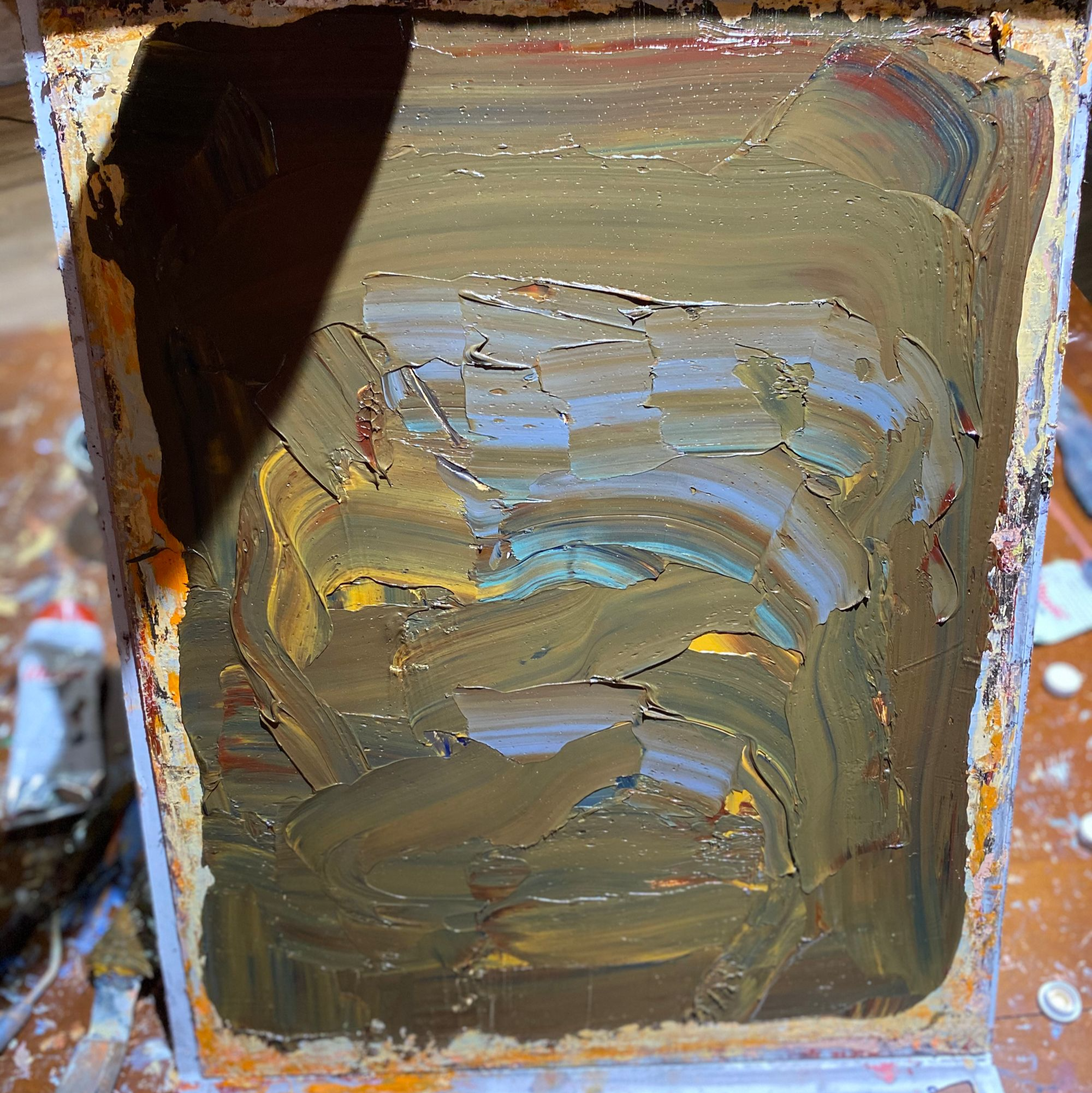
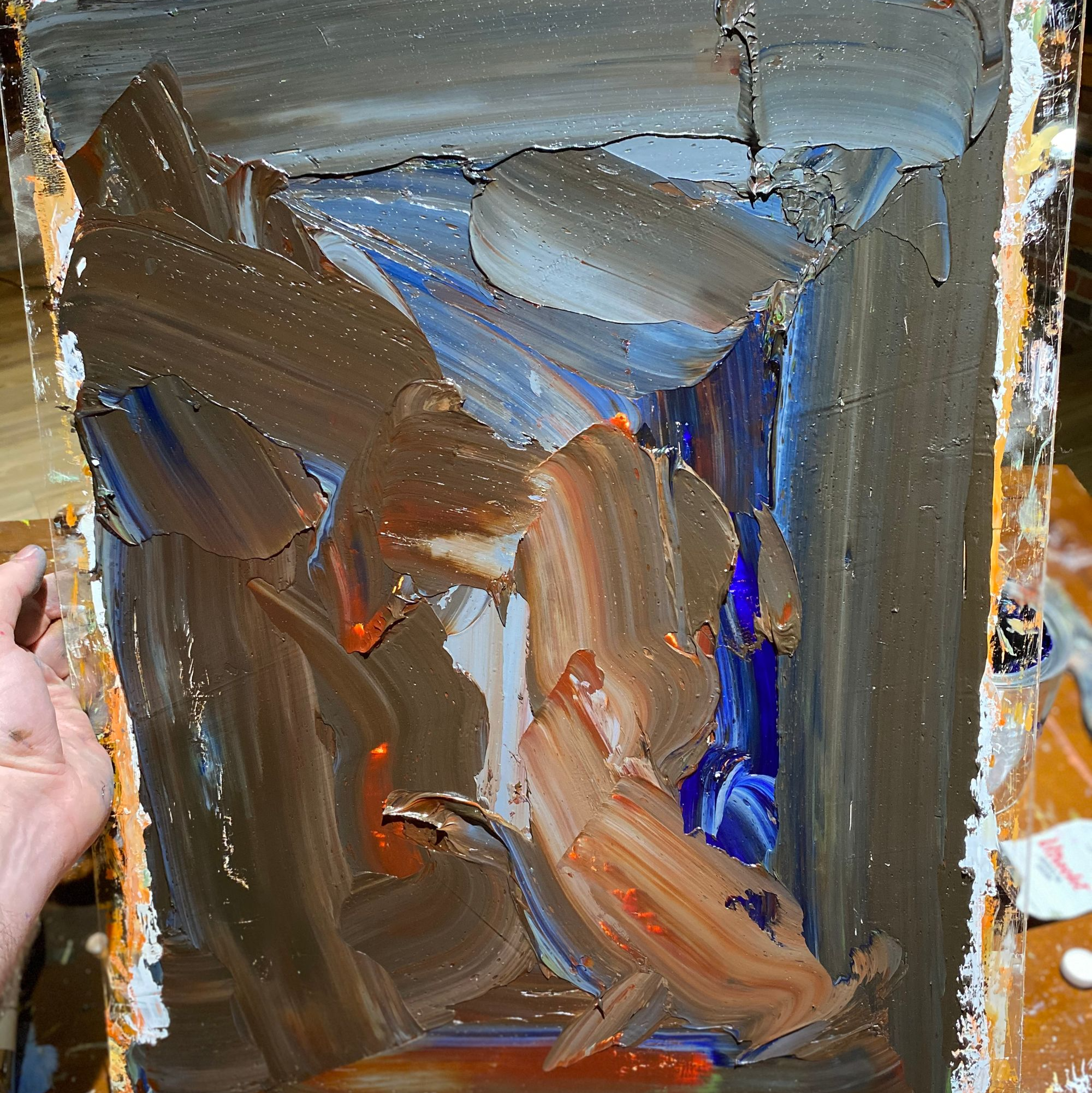
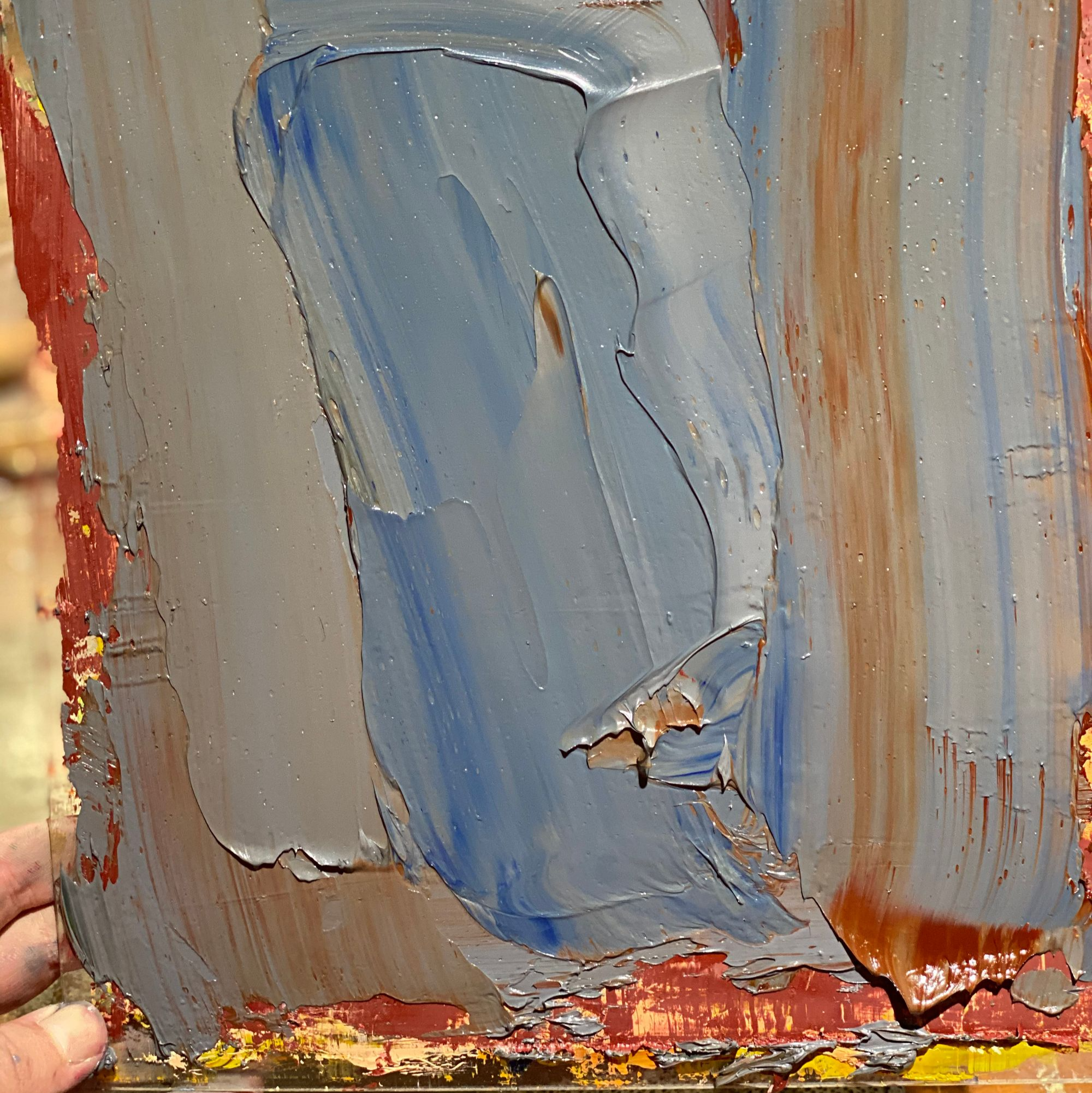
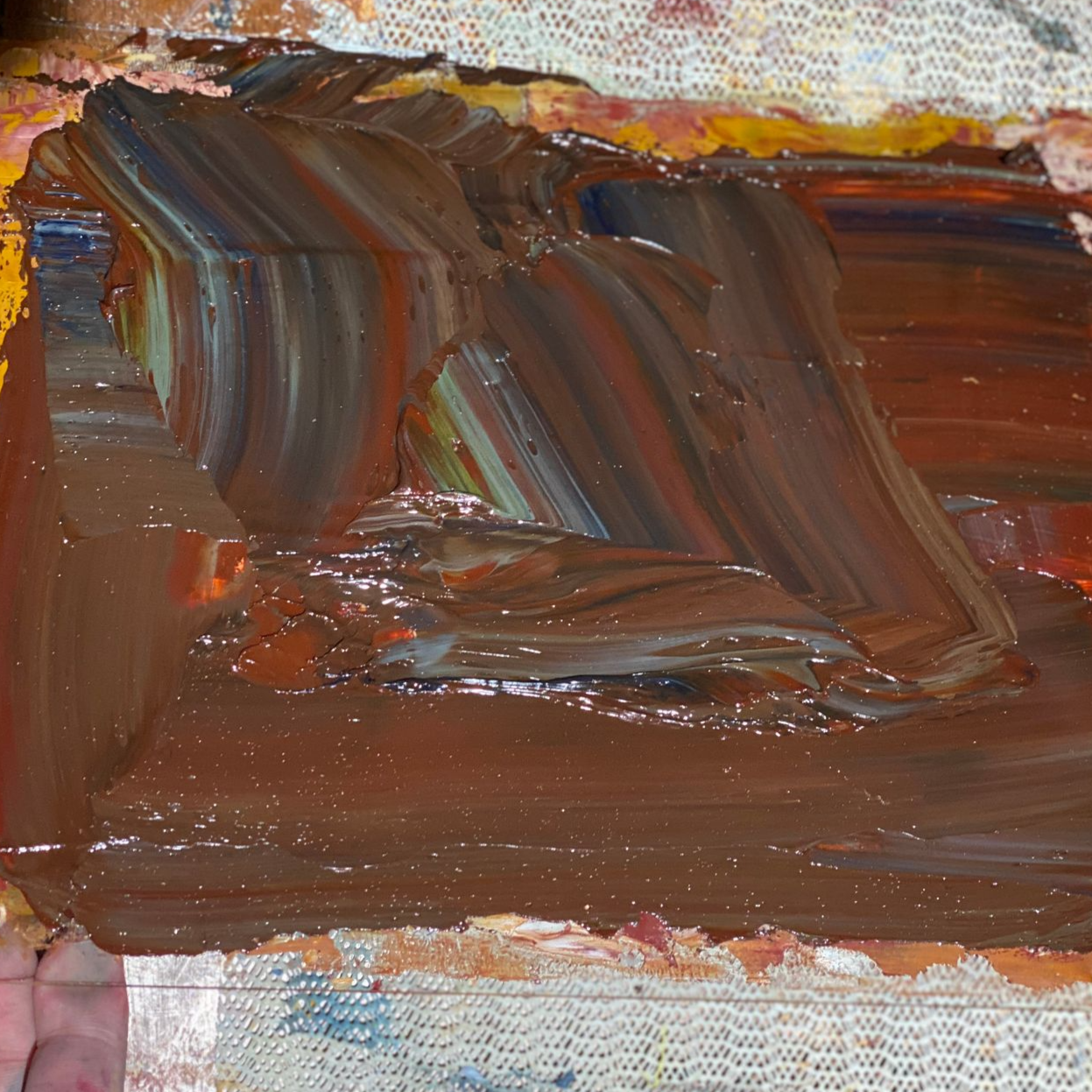
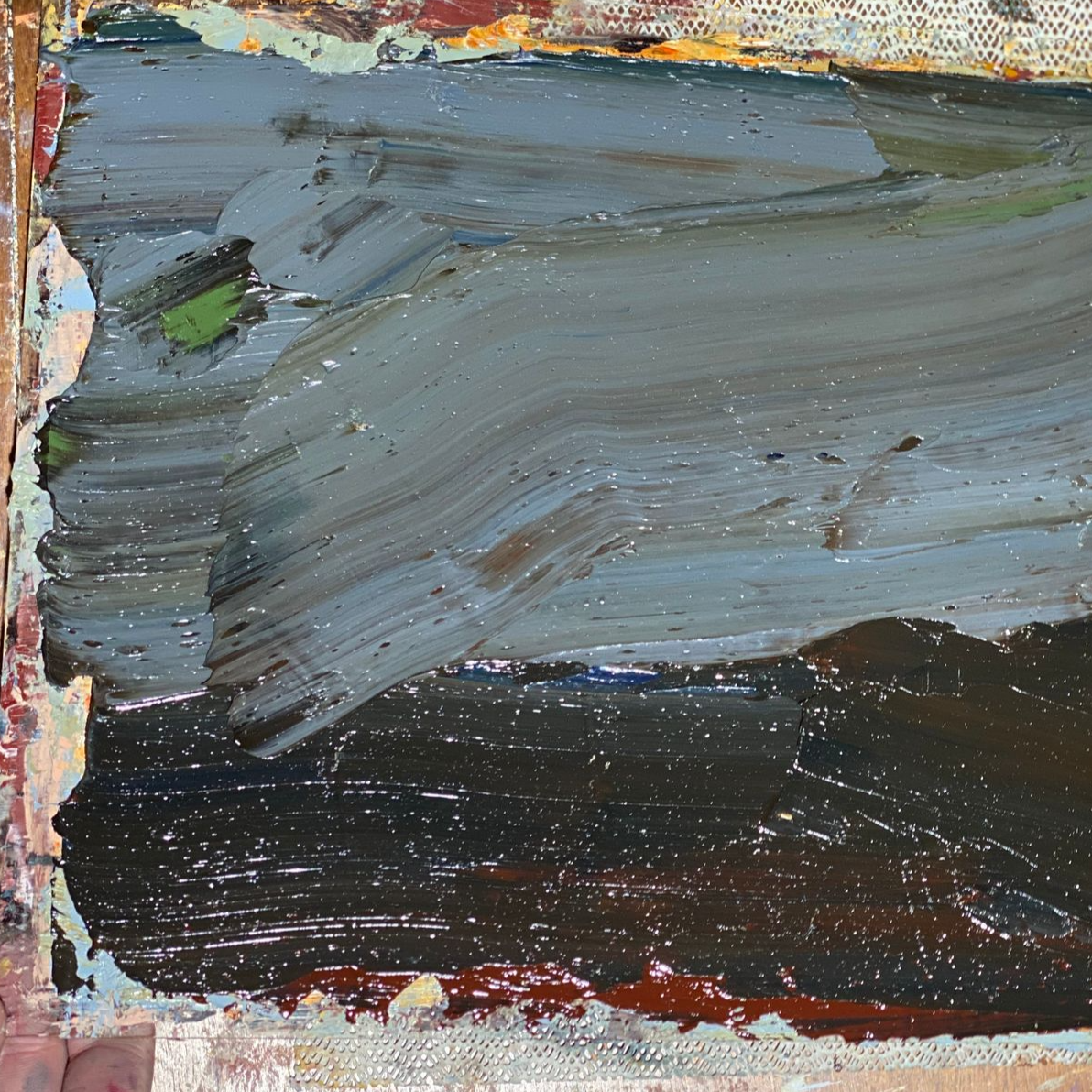
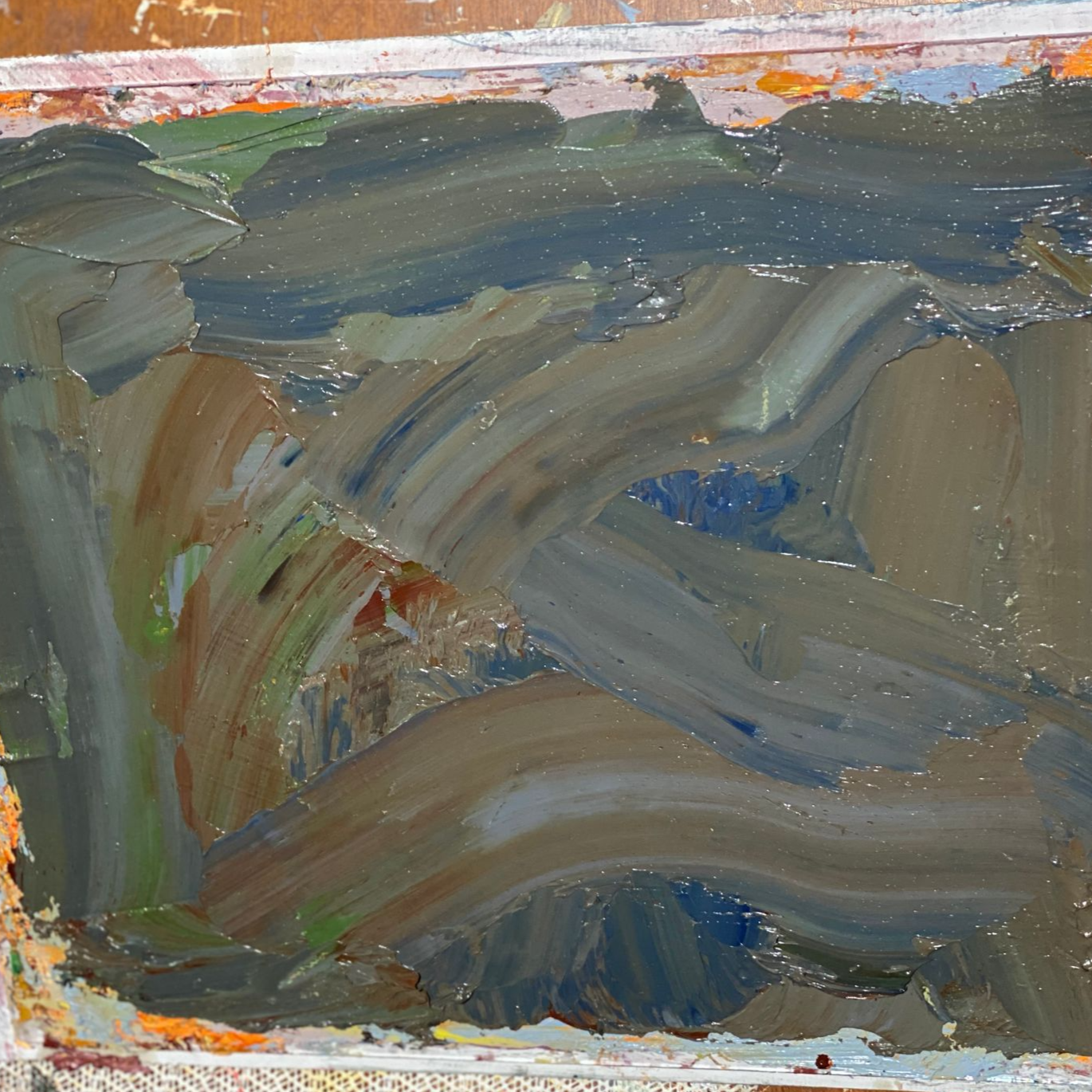
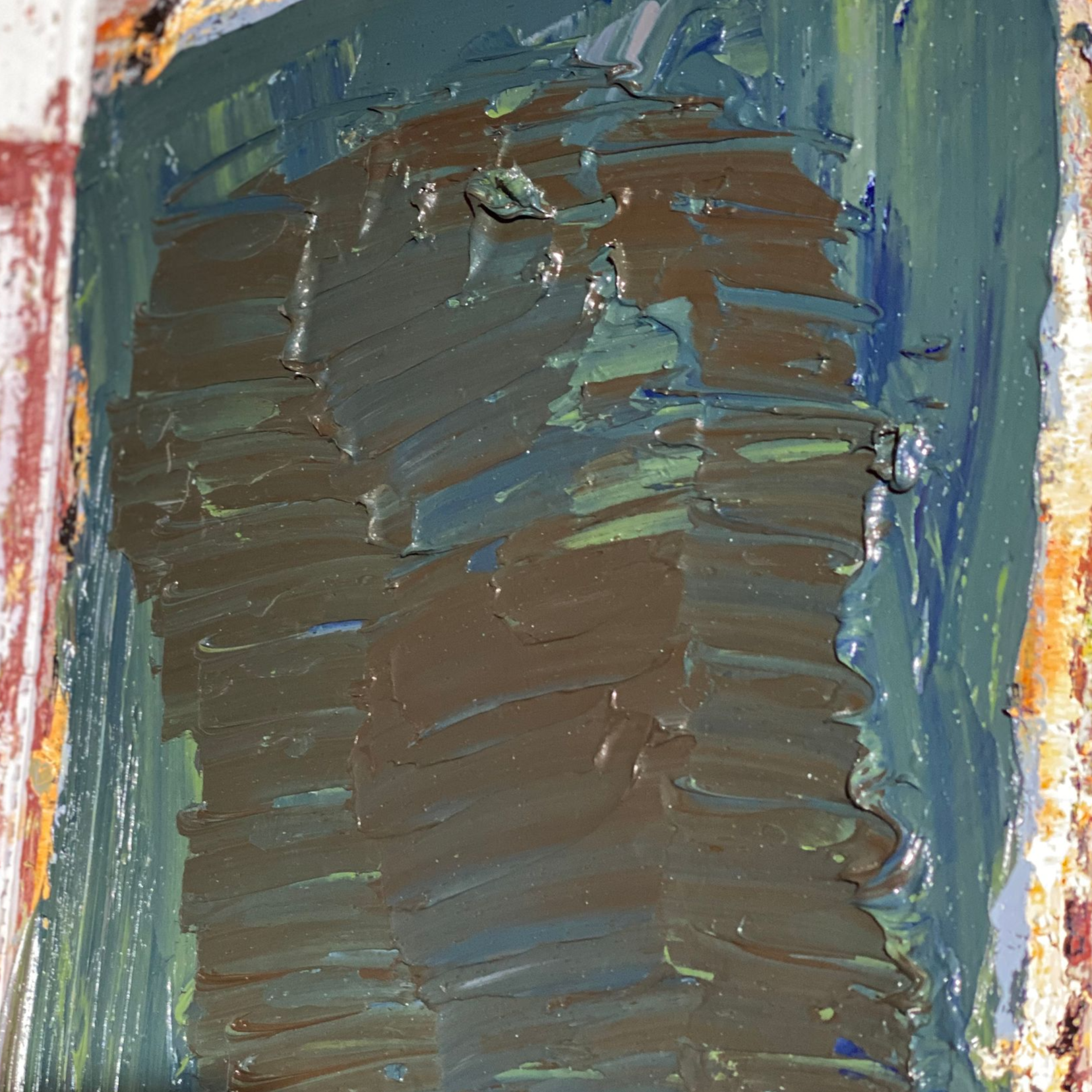
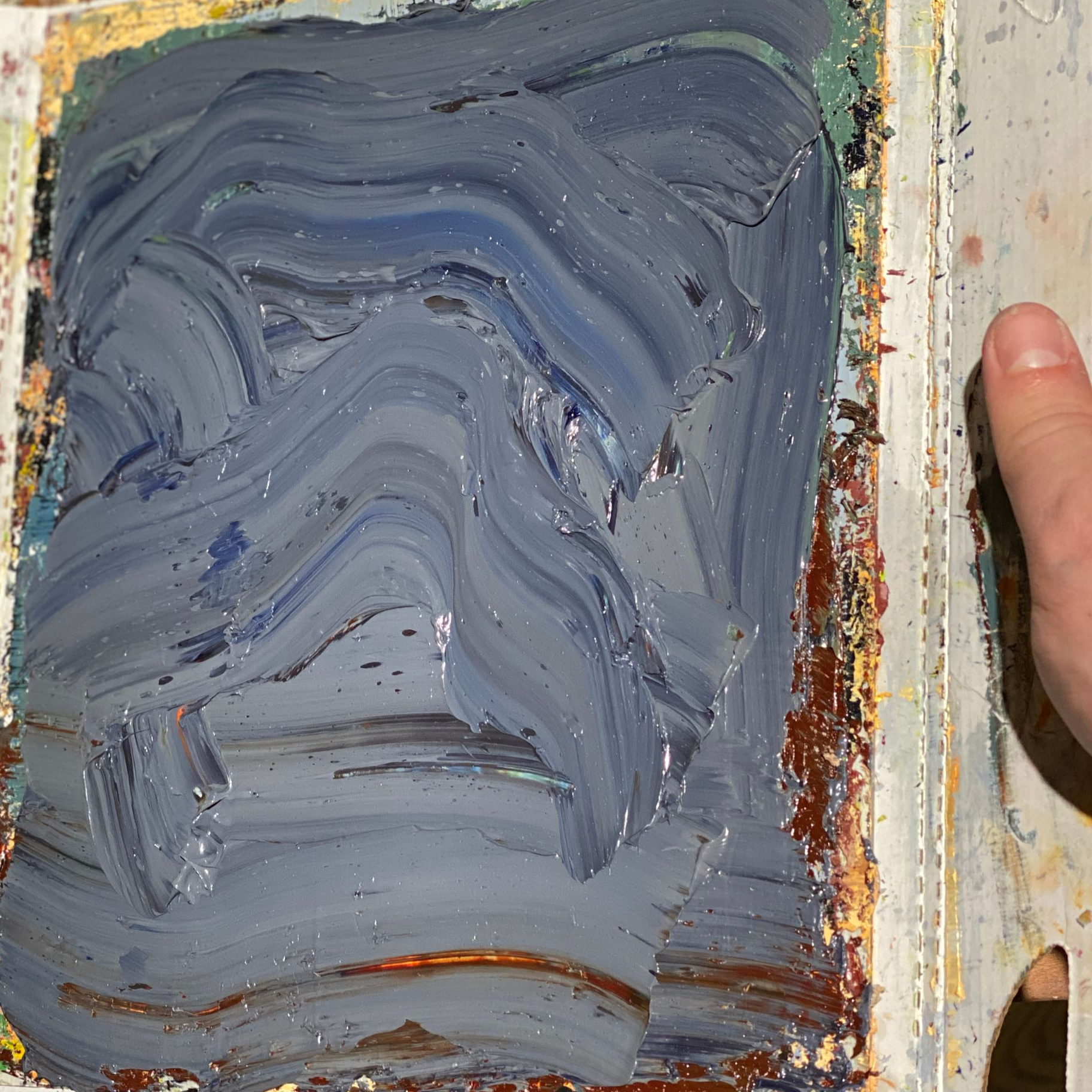
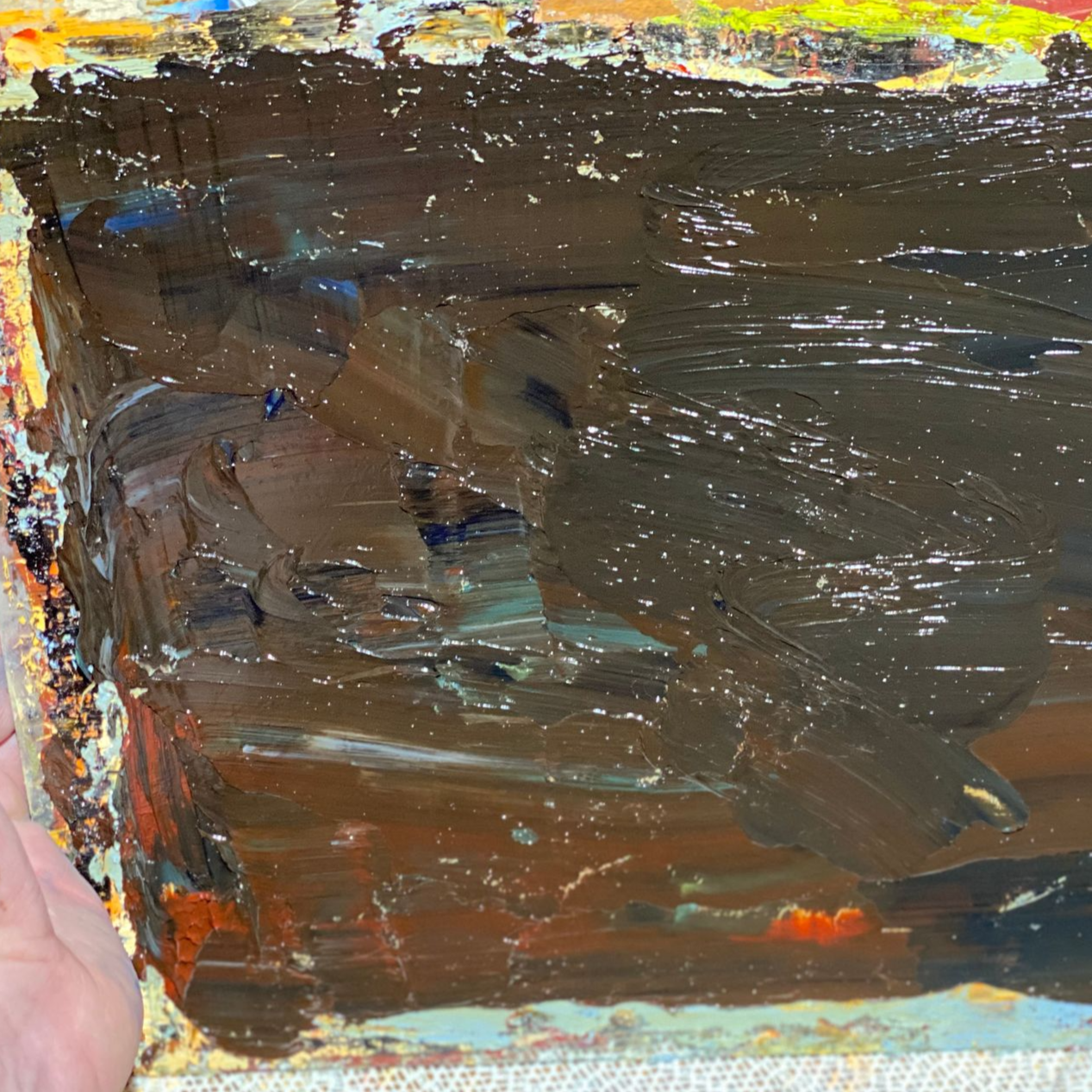
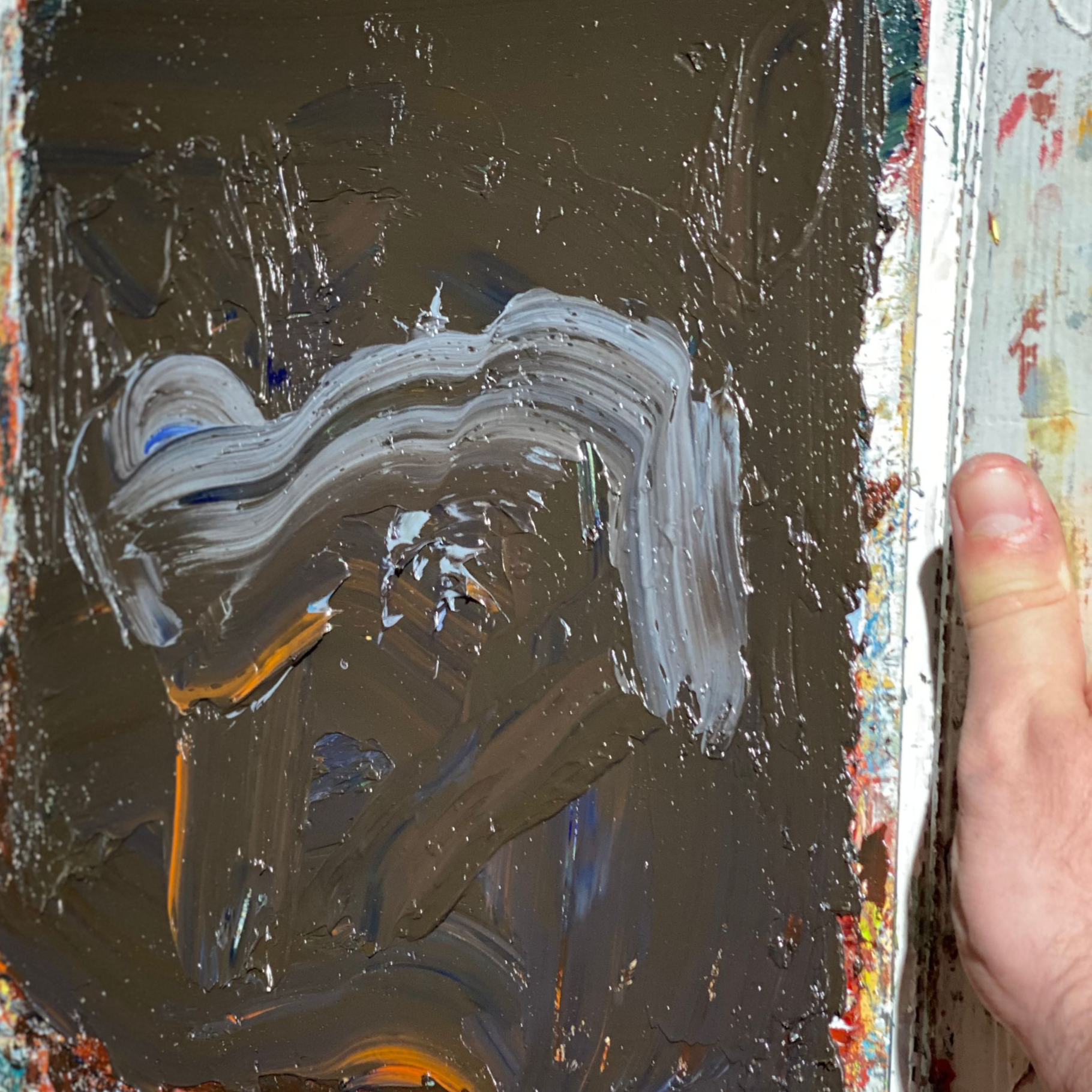
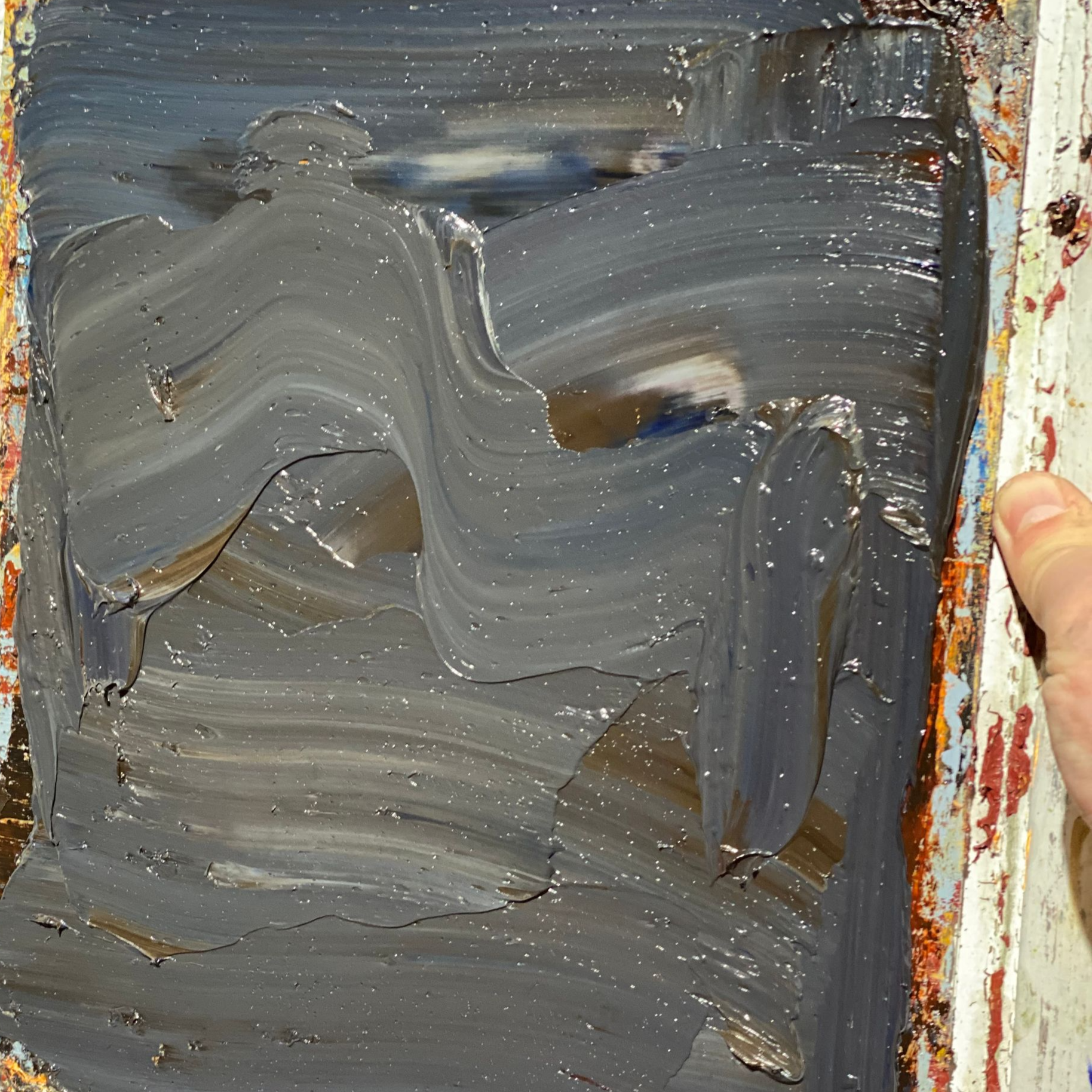
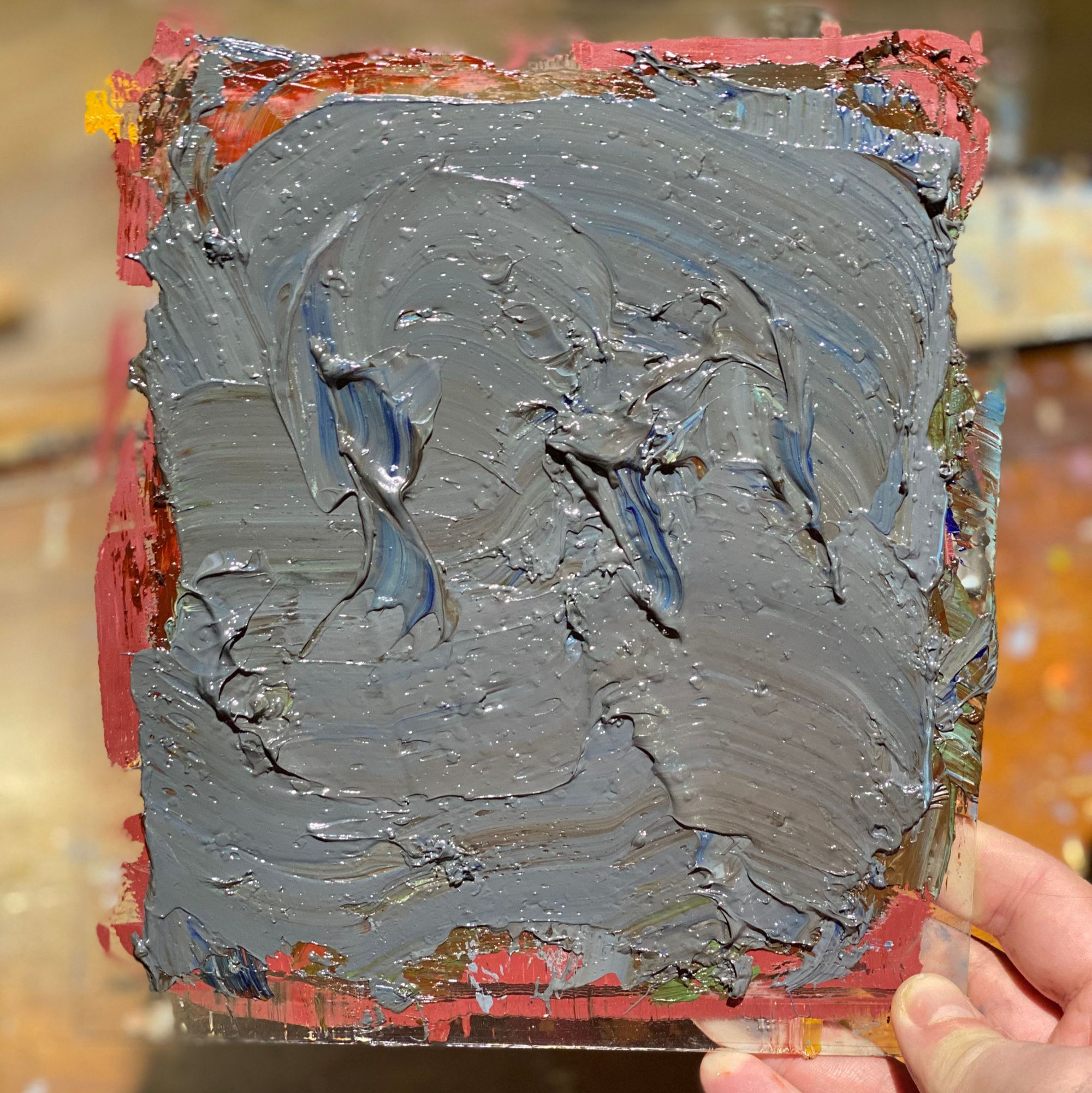
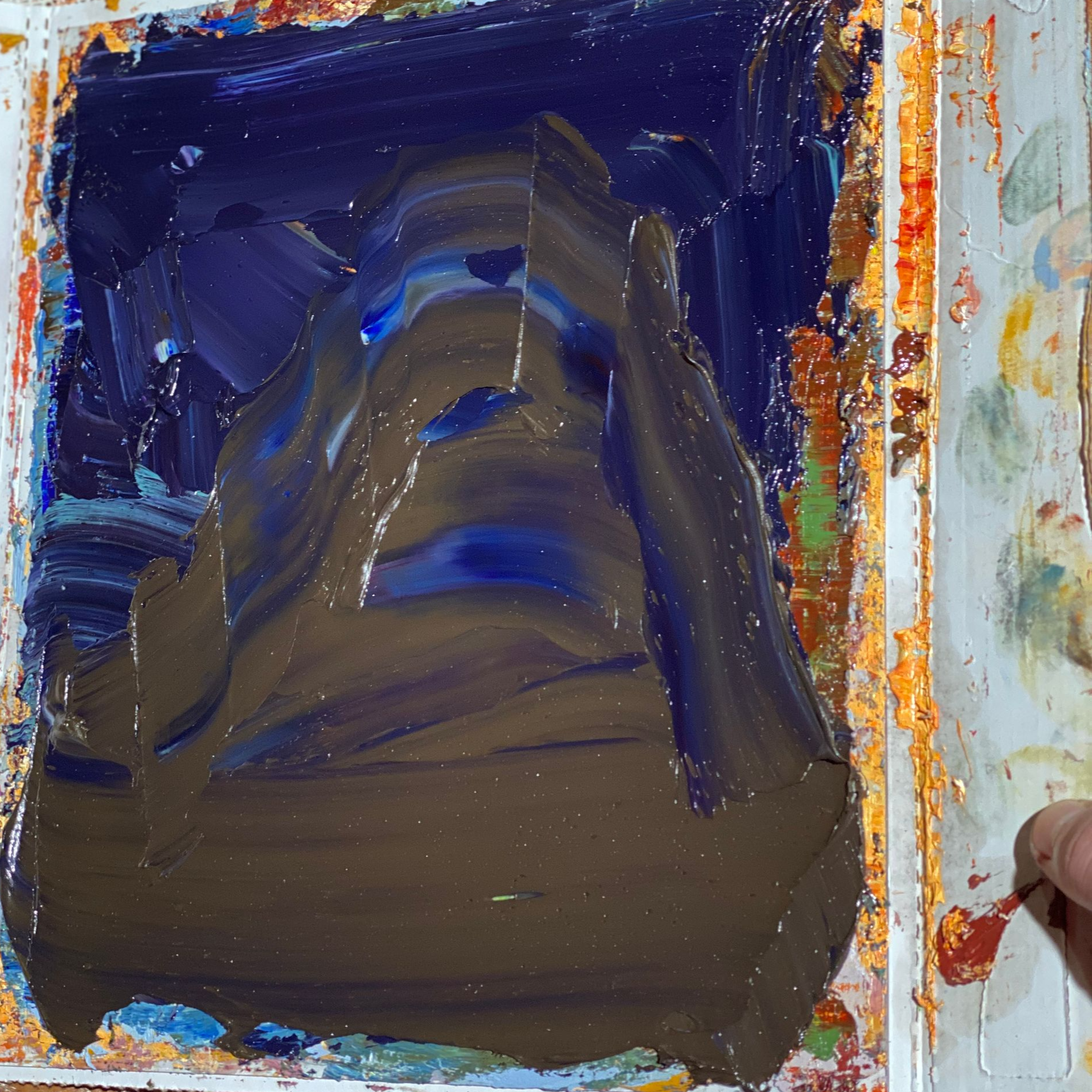
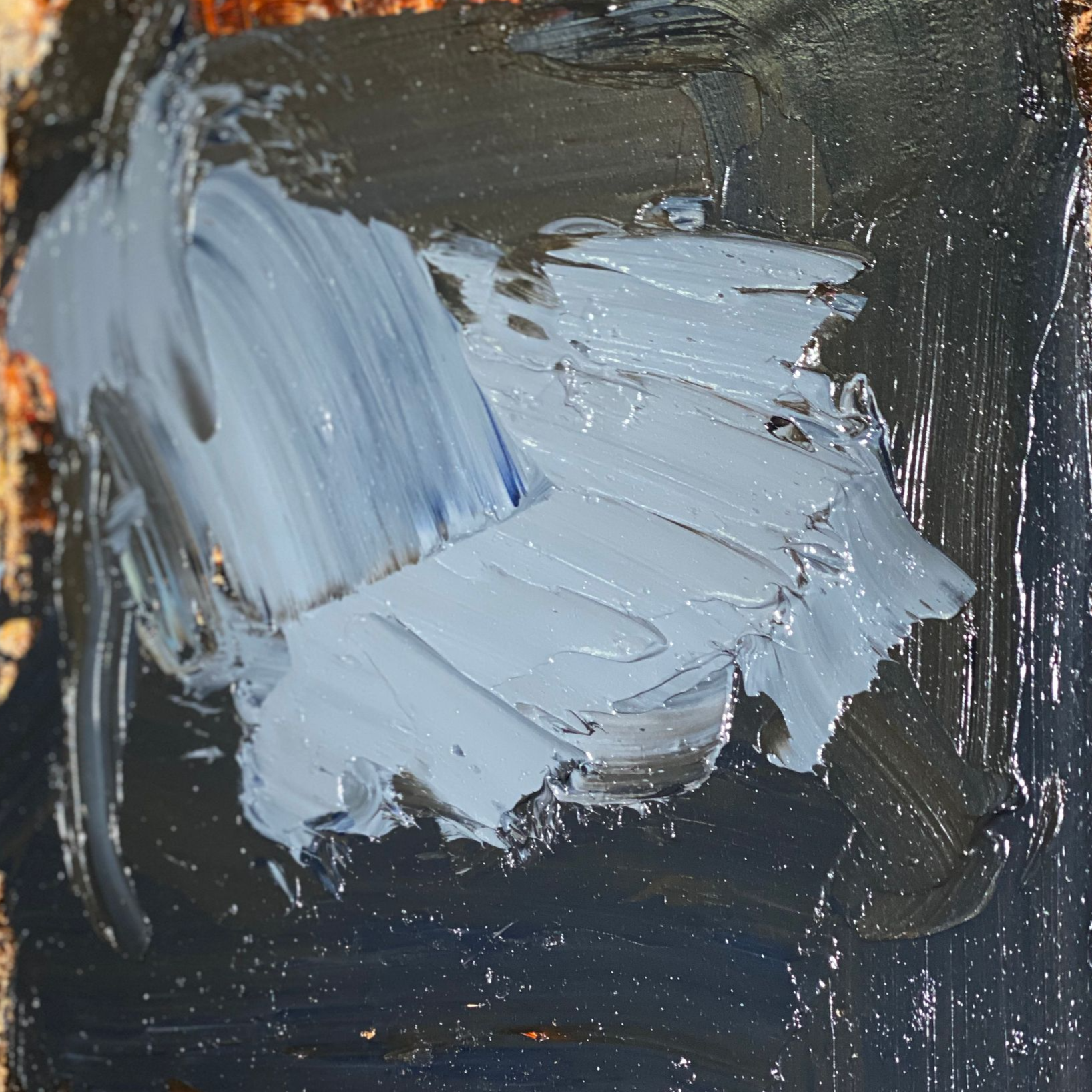
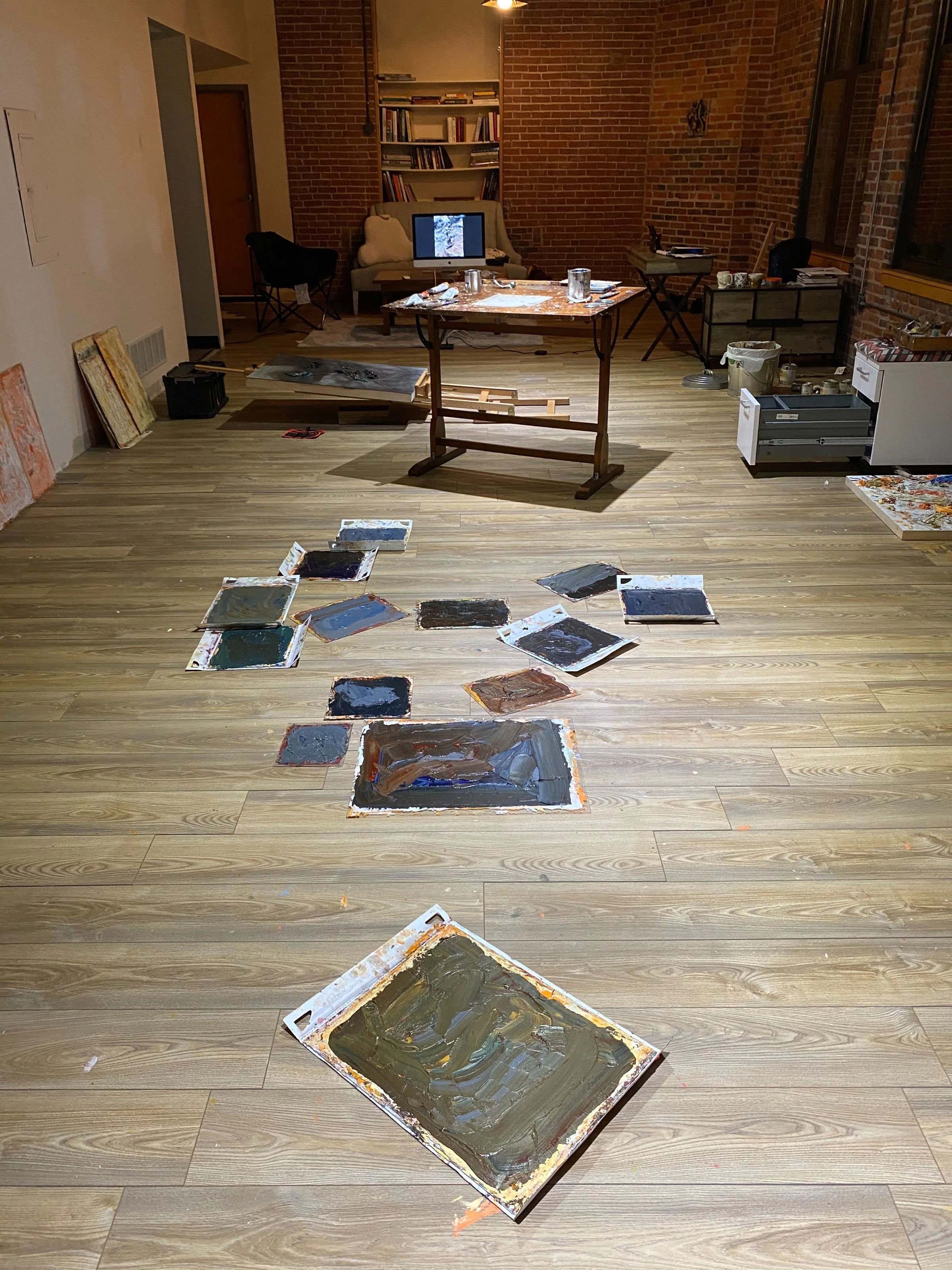
Warmer forms come forward while cooler ones recede, theoretically creating balance and depth.
I'm concerned about softness. As objects stack in the distance, their forms should become softer and blend into the light. I need to ensure these distant forms are less defined. I'm laying out my panels and organizing my composition, strategizing on the next steps and their timing.
April 26, 2021
This is my process. This approach—with its inherent limitations—feels like thought itself. I'm taking everything I know about the world and reassembling it for myself.
Each form becomes a decision point, a moment of consideration where I can choose how to represent what I see and feel. The limitations of working with discrete forms don't constrain me—they focus me. They force me to distill complex visual information into essential shapes, to decide what matters most in each moment.
April 29, 2021
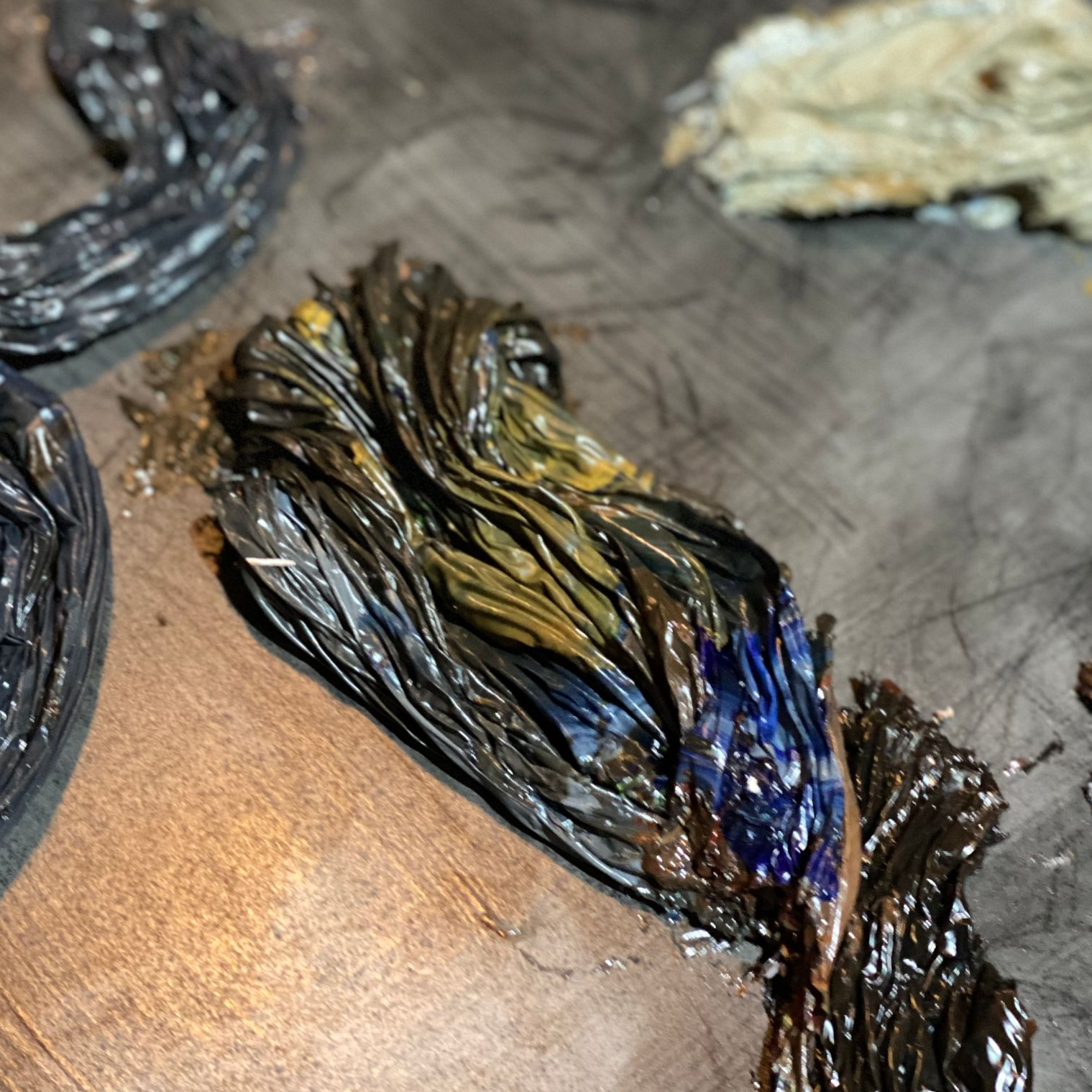
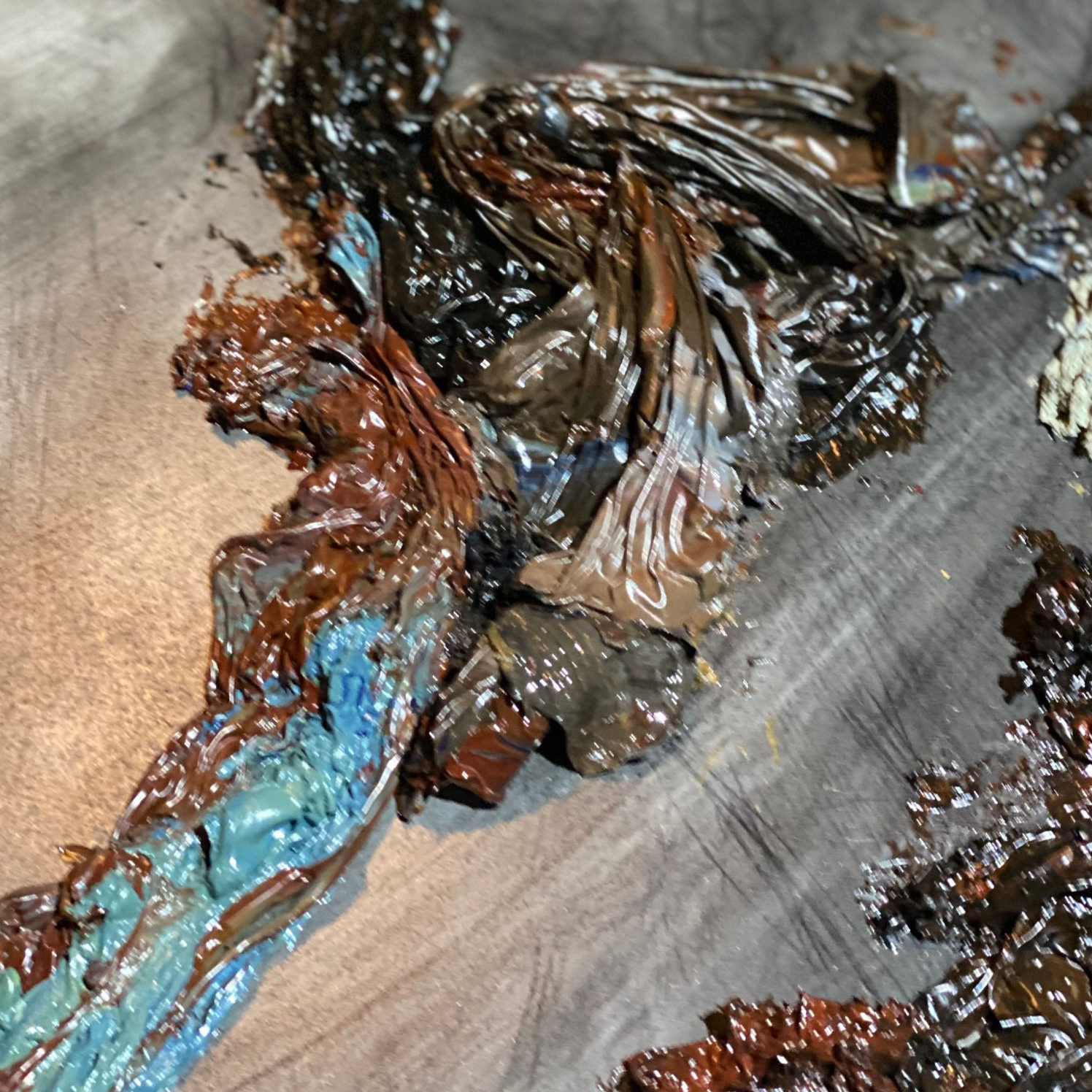
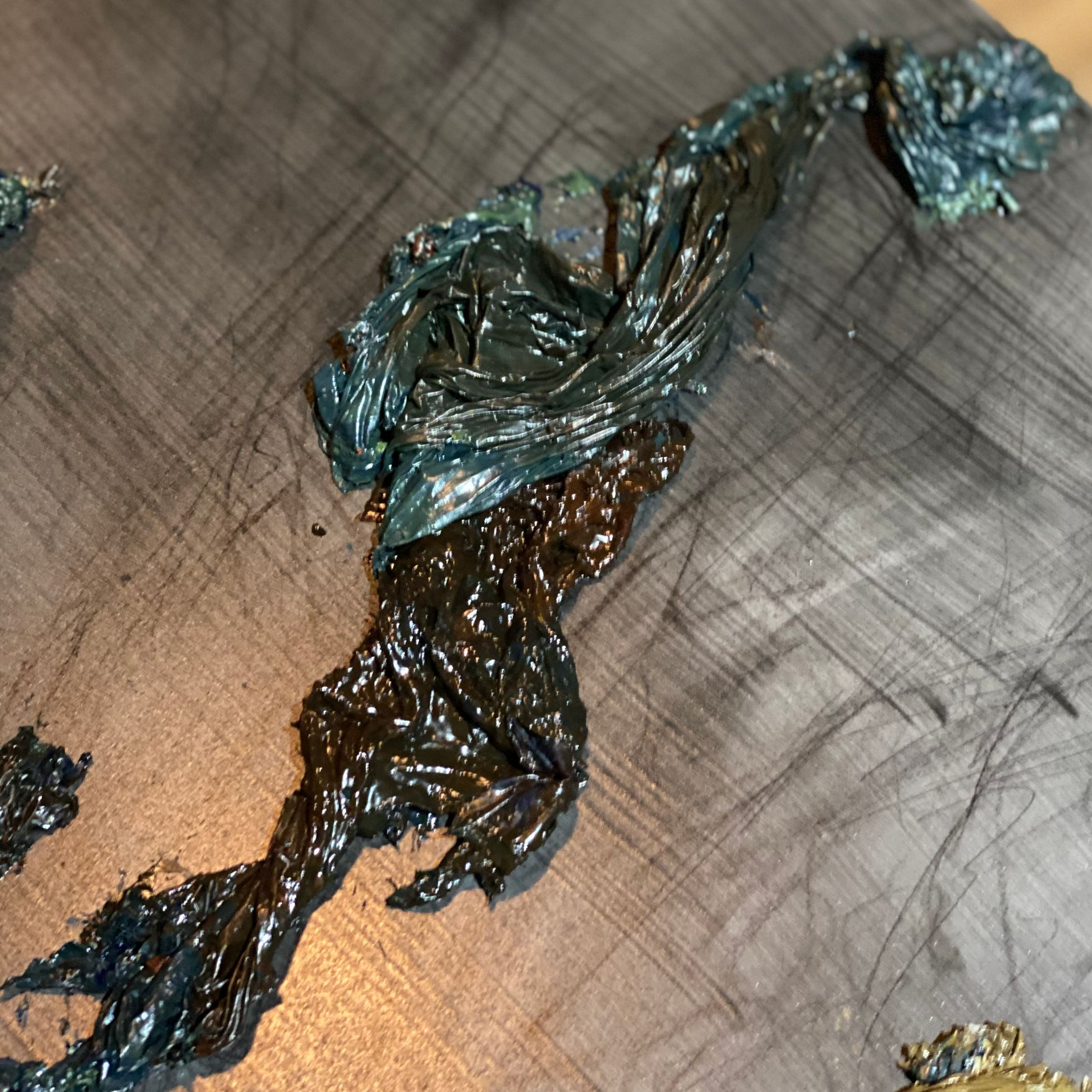
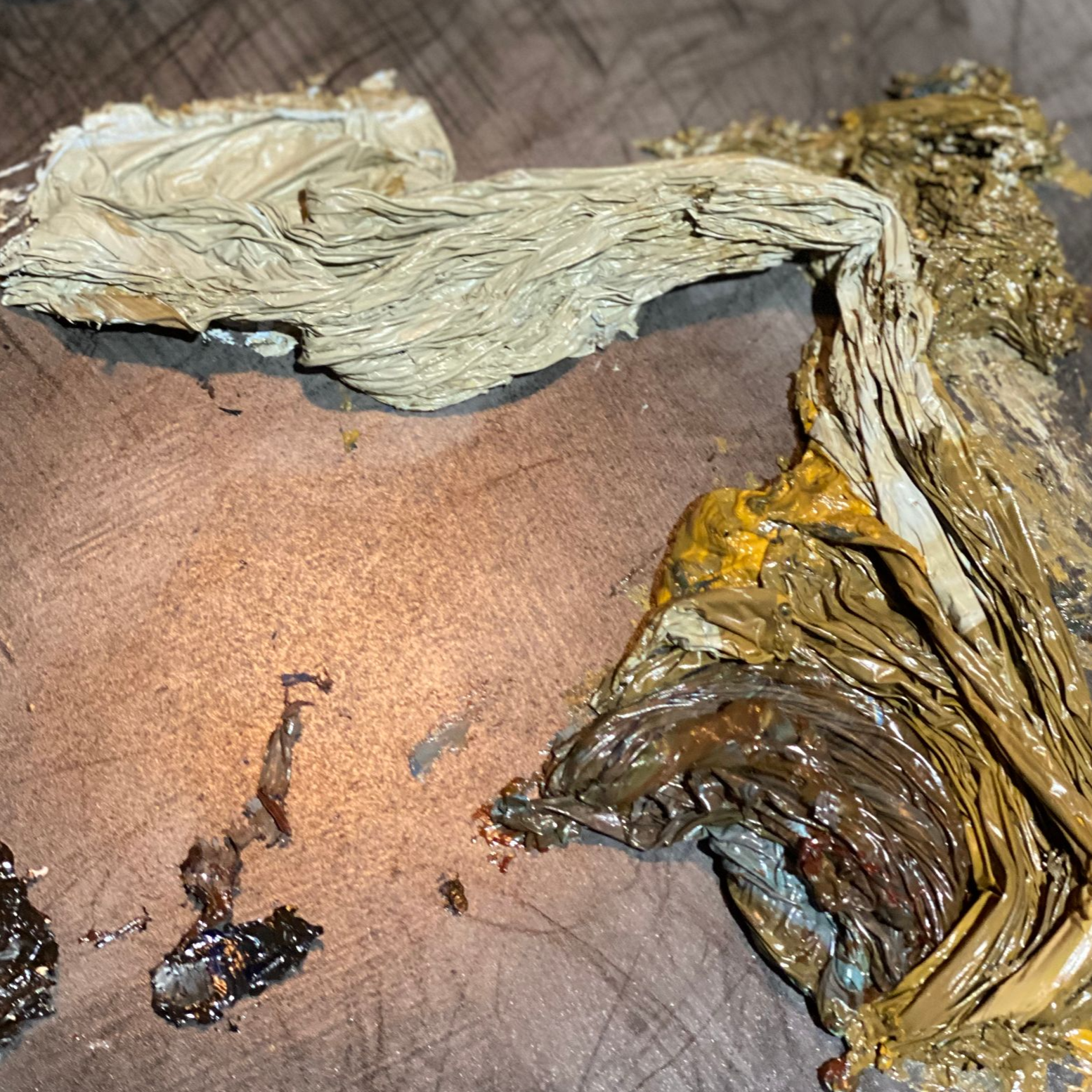
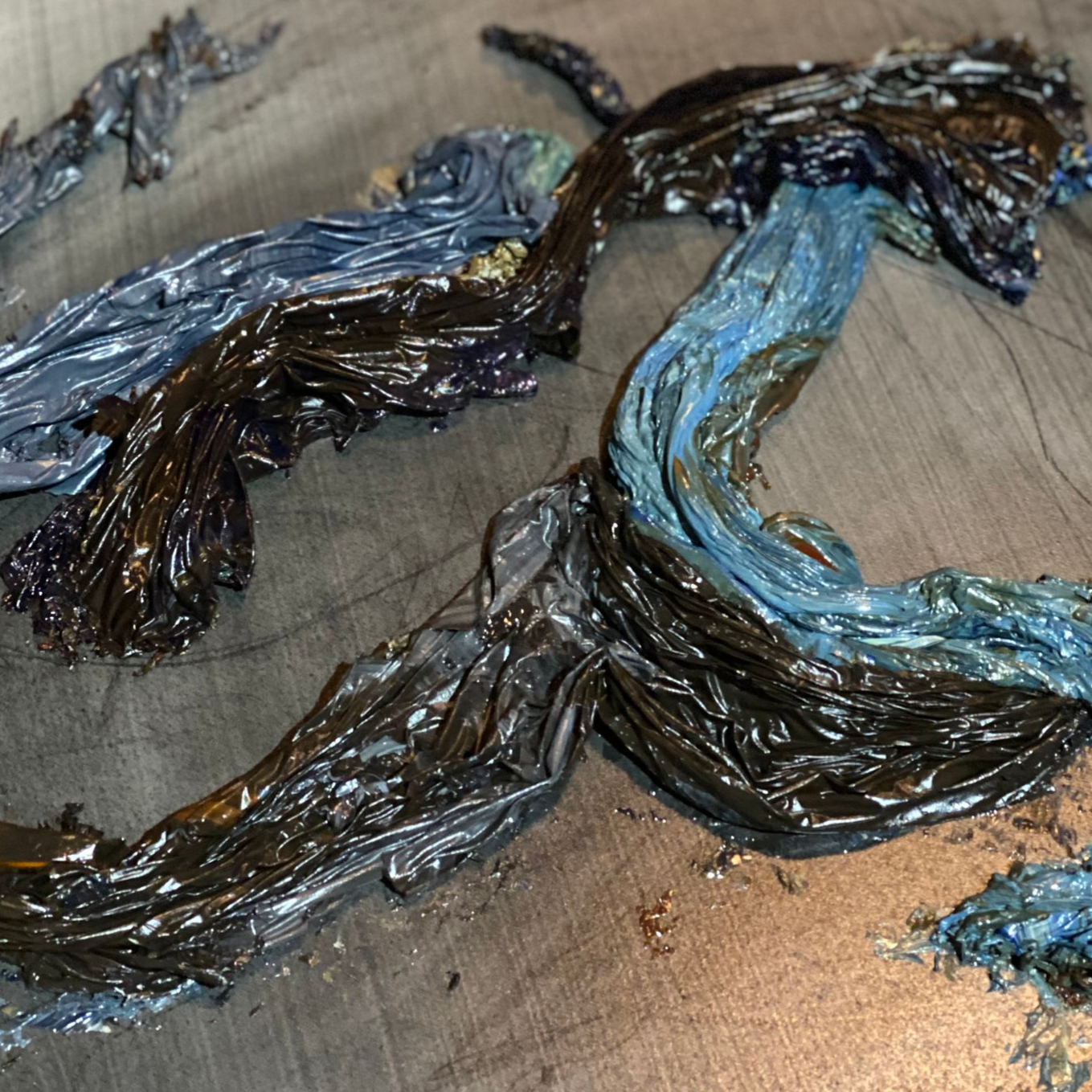
There's something deeply human about this process of disassembly and reconstruction. It mirrors how we process experience itself—breaking down the overwhelming flood of sensory input into manageable pieces, then reconstructing meaning from those fragments. The painting becomes a map of my decision-making, a record of how I chose to see and interpret the world in that particular moment.
May 1, 2021
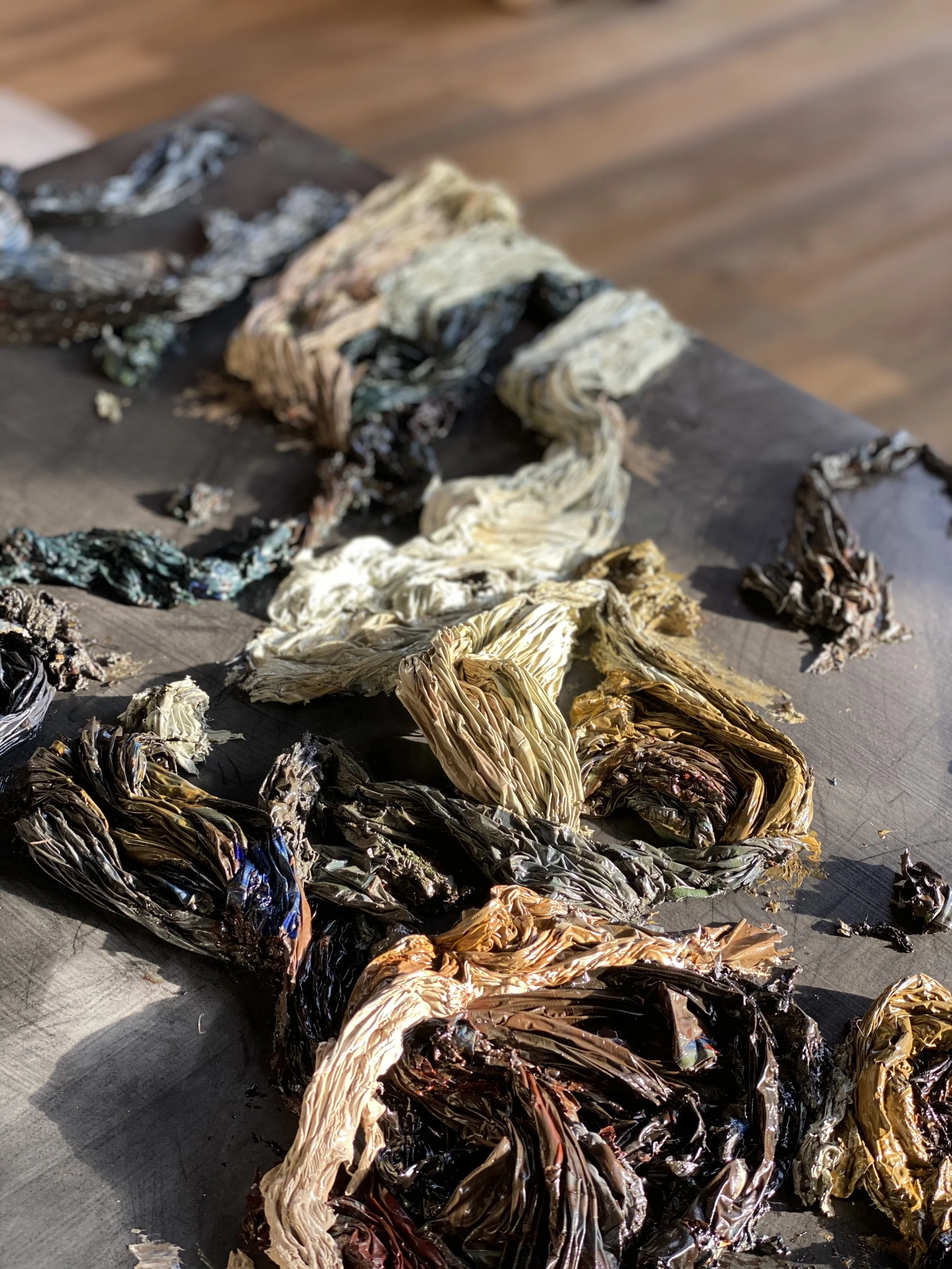
A brief pause. I'm savoring how the natural light streams in, embracing the surface of the painting.
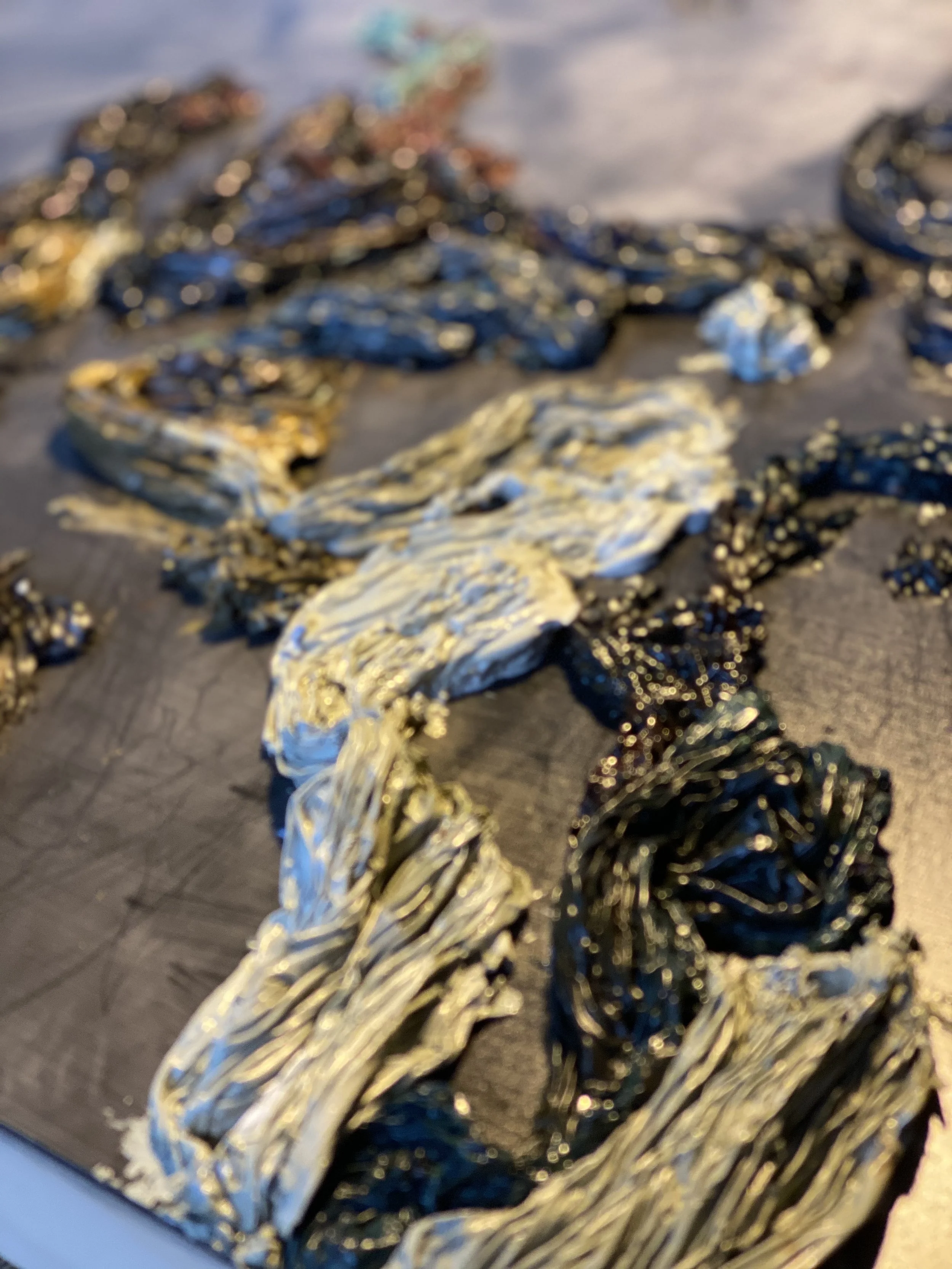
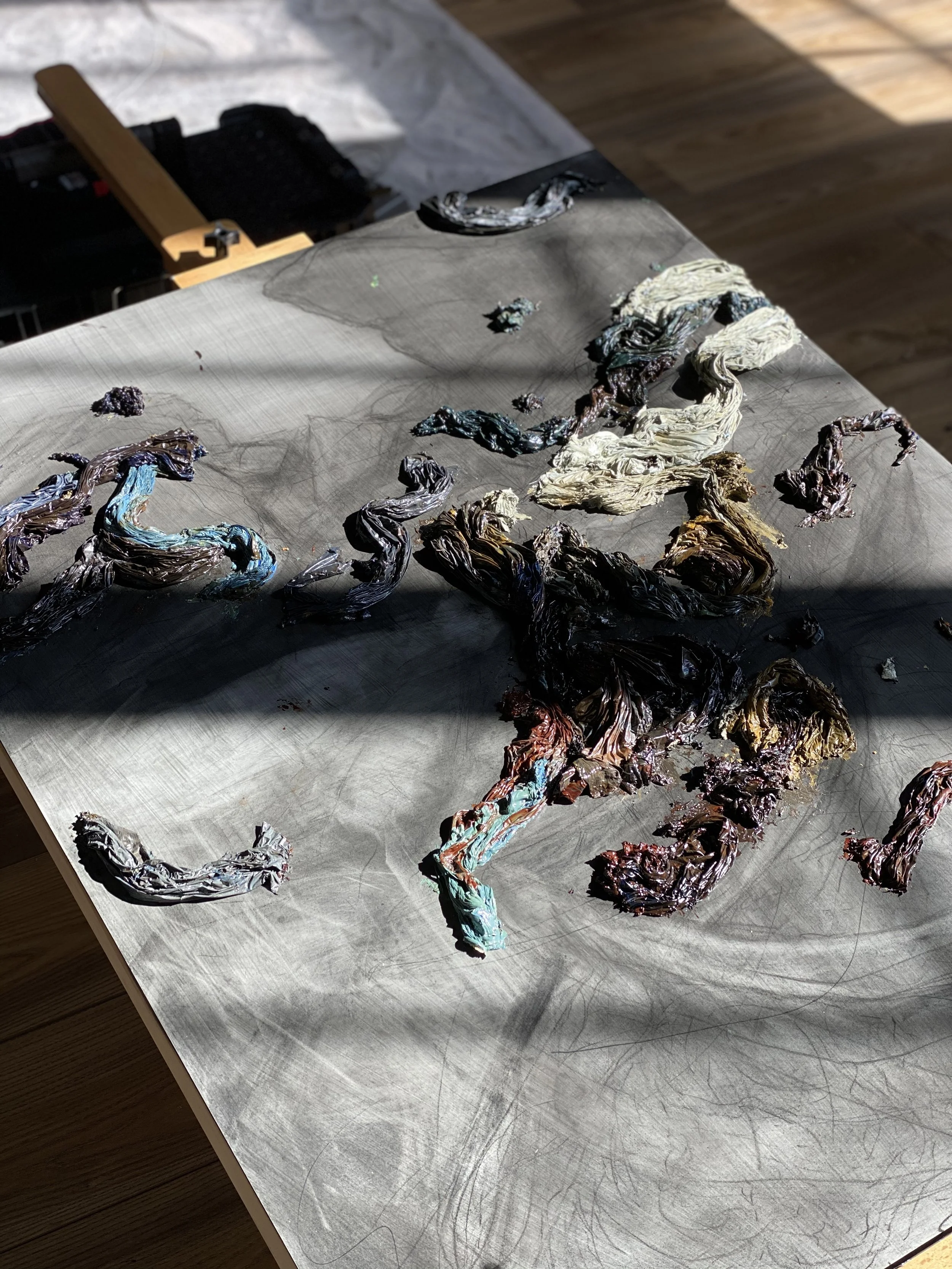
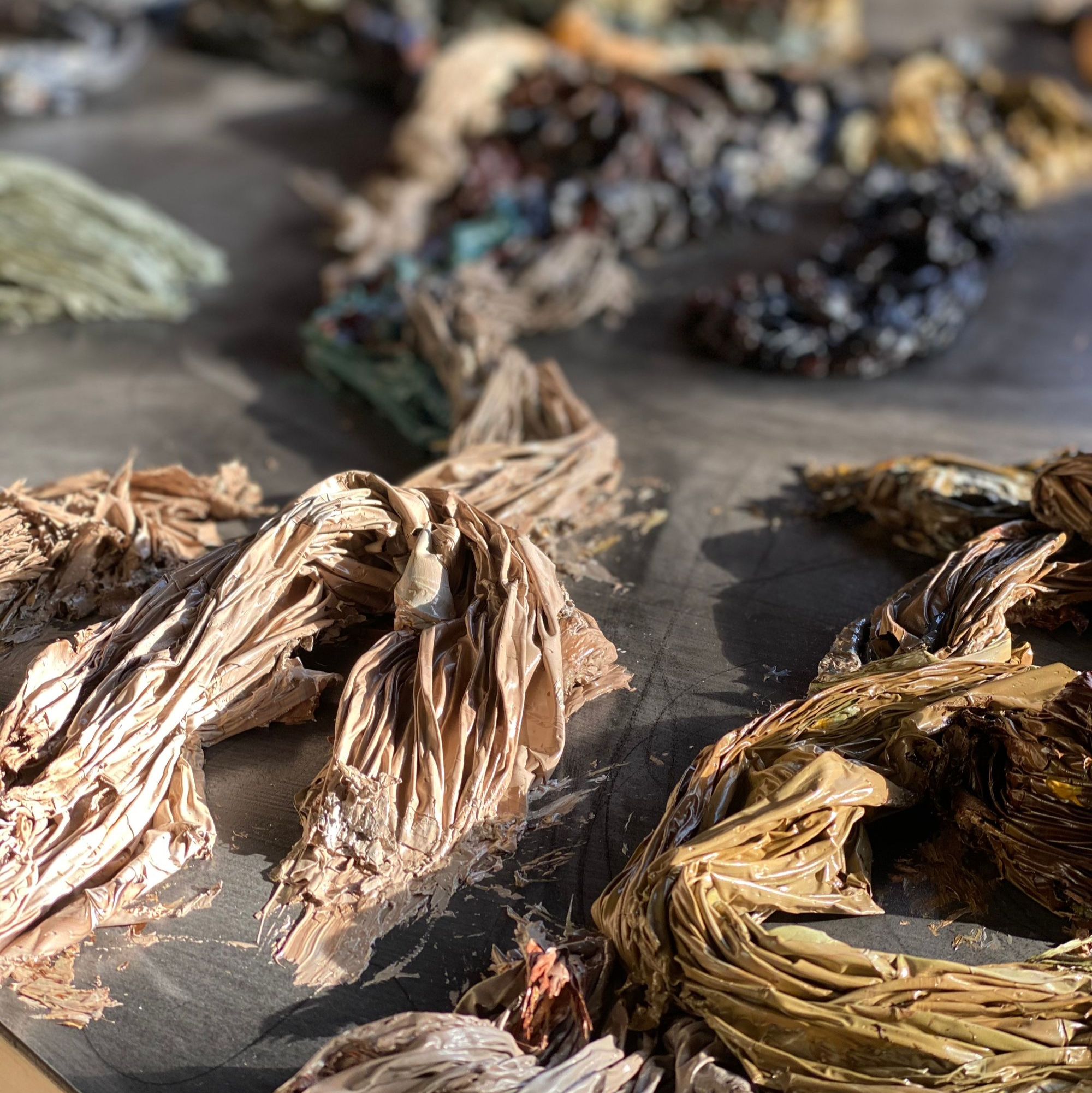
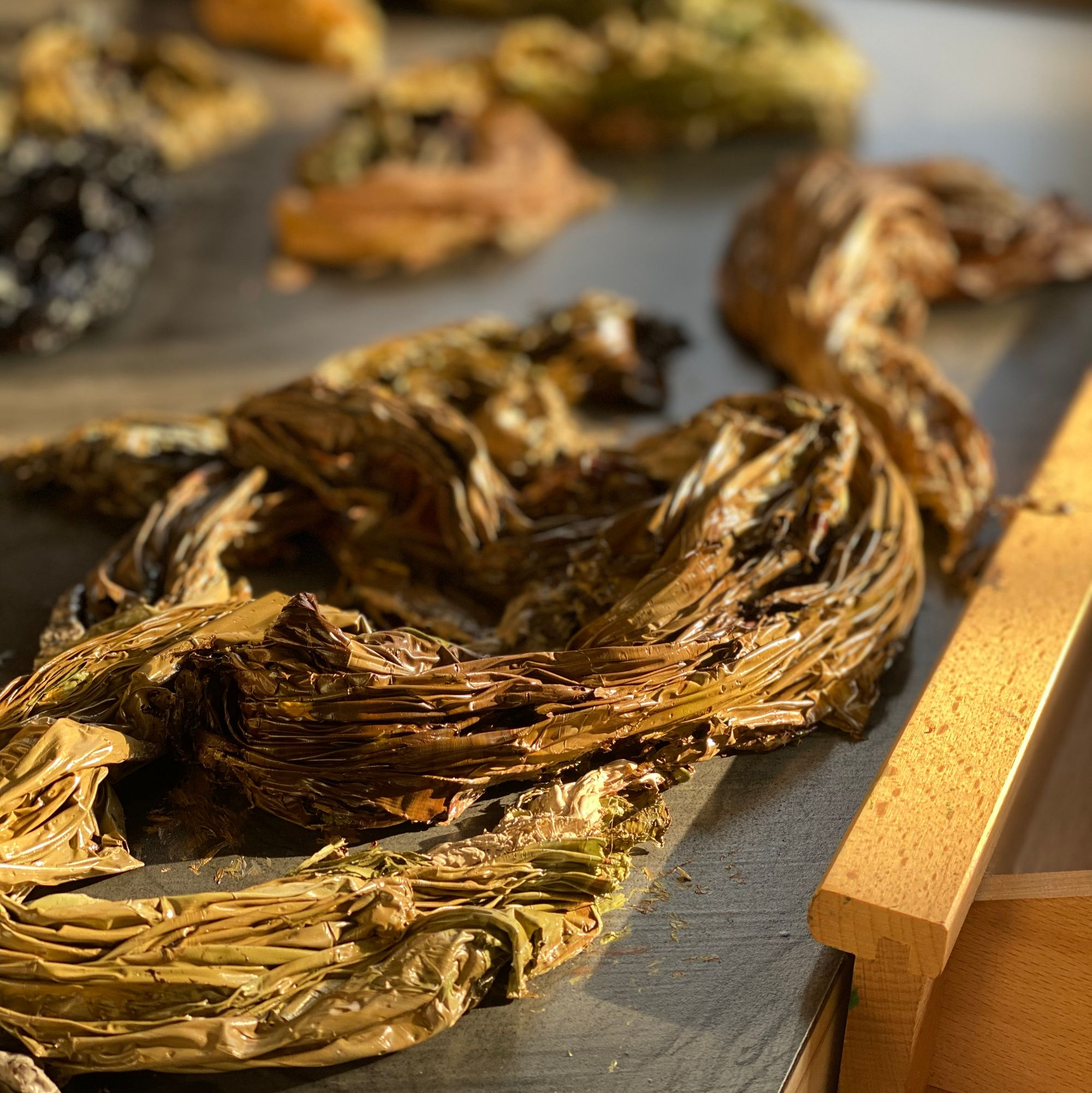
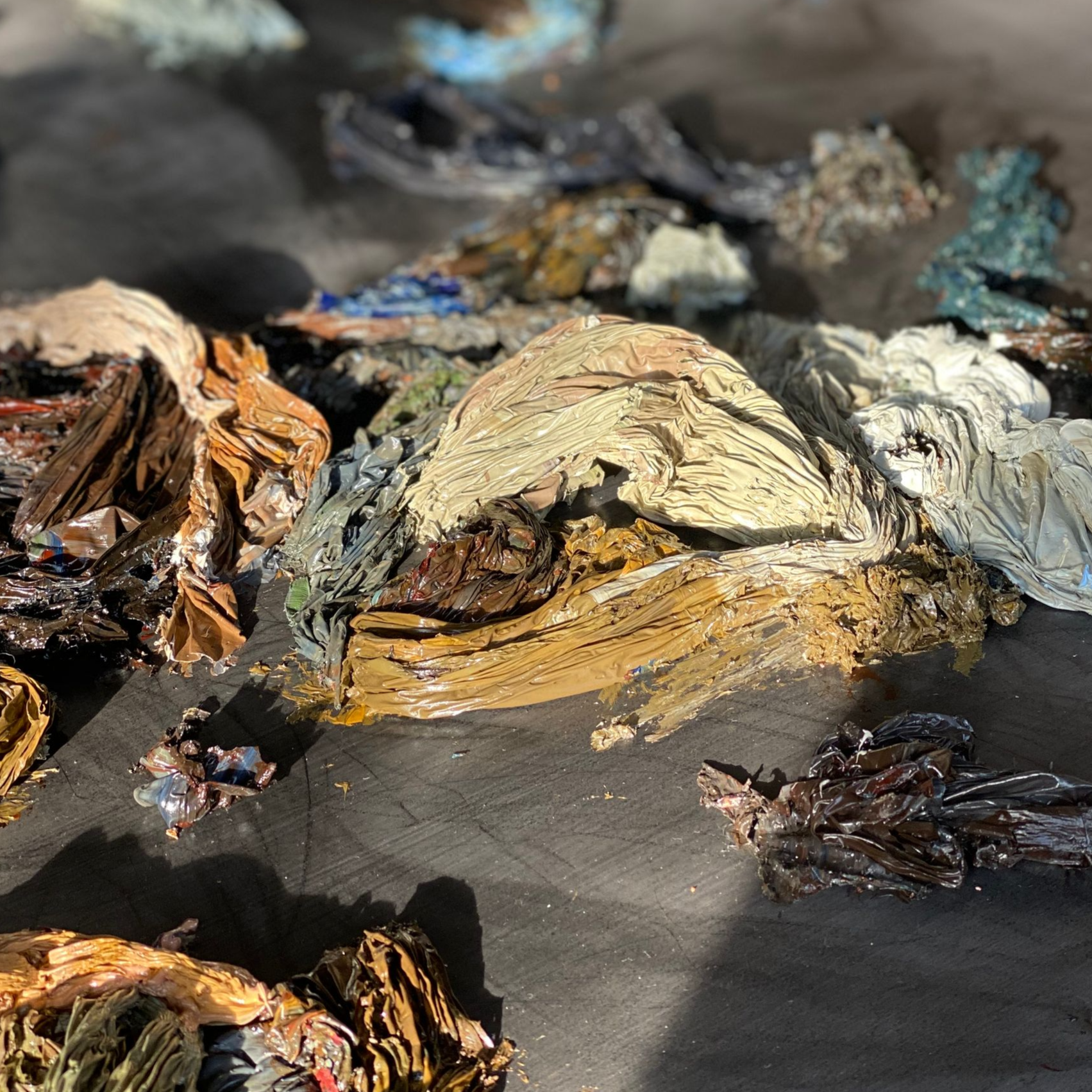
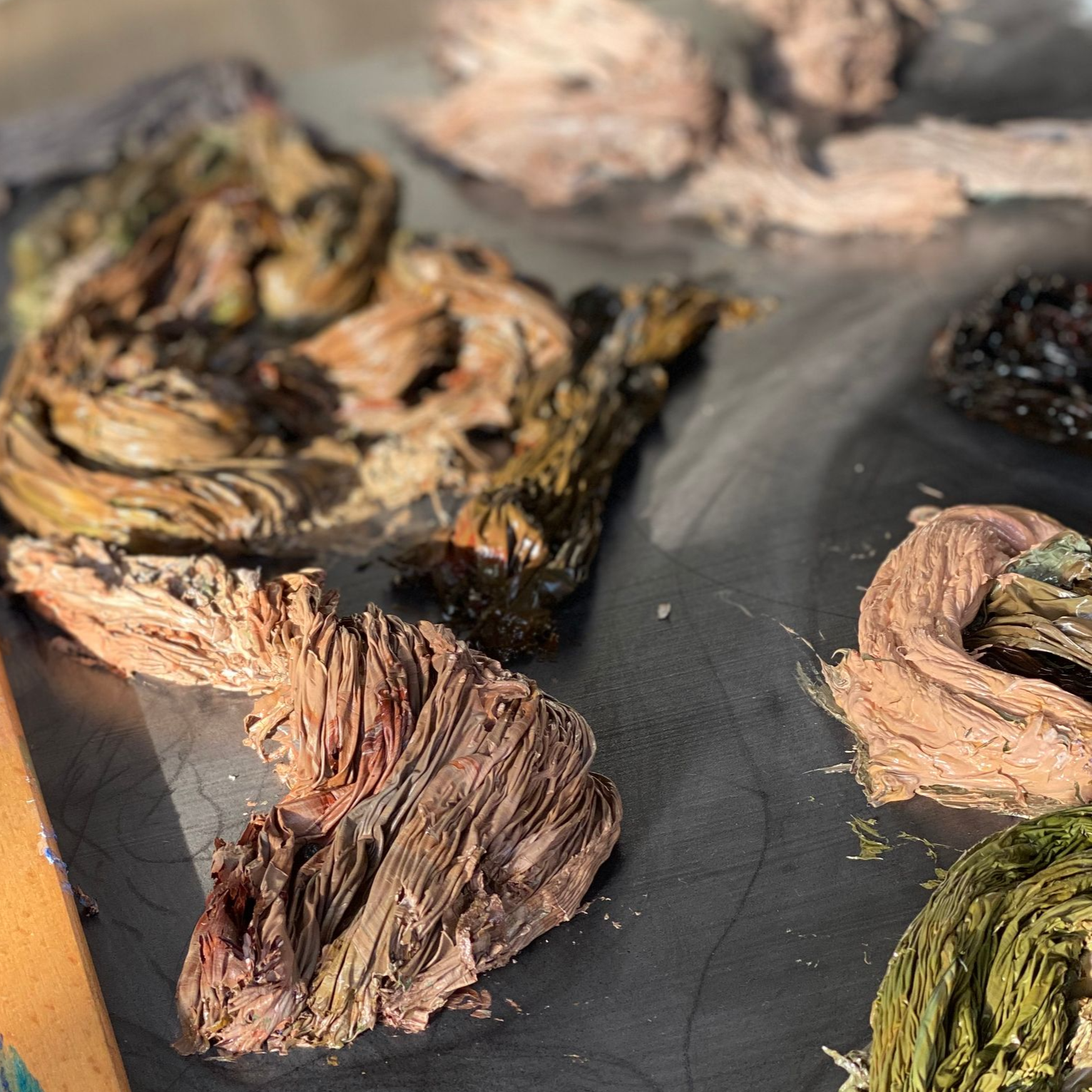
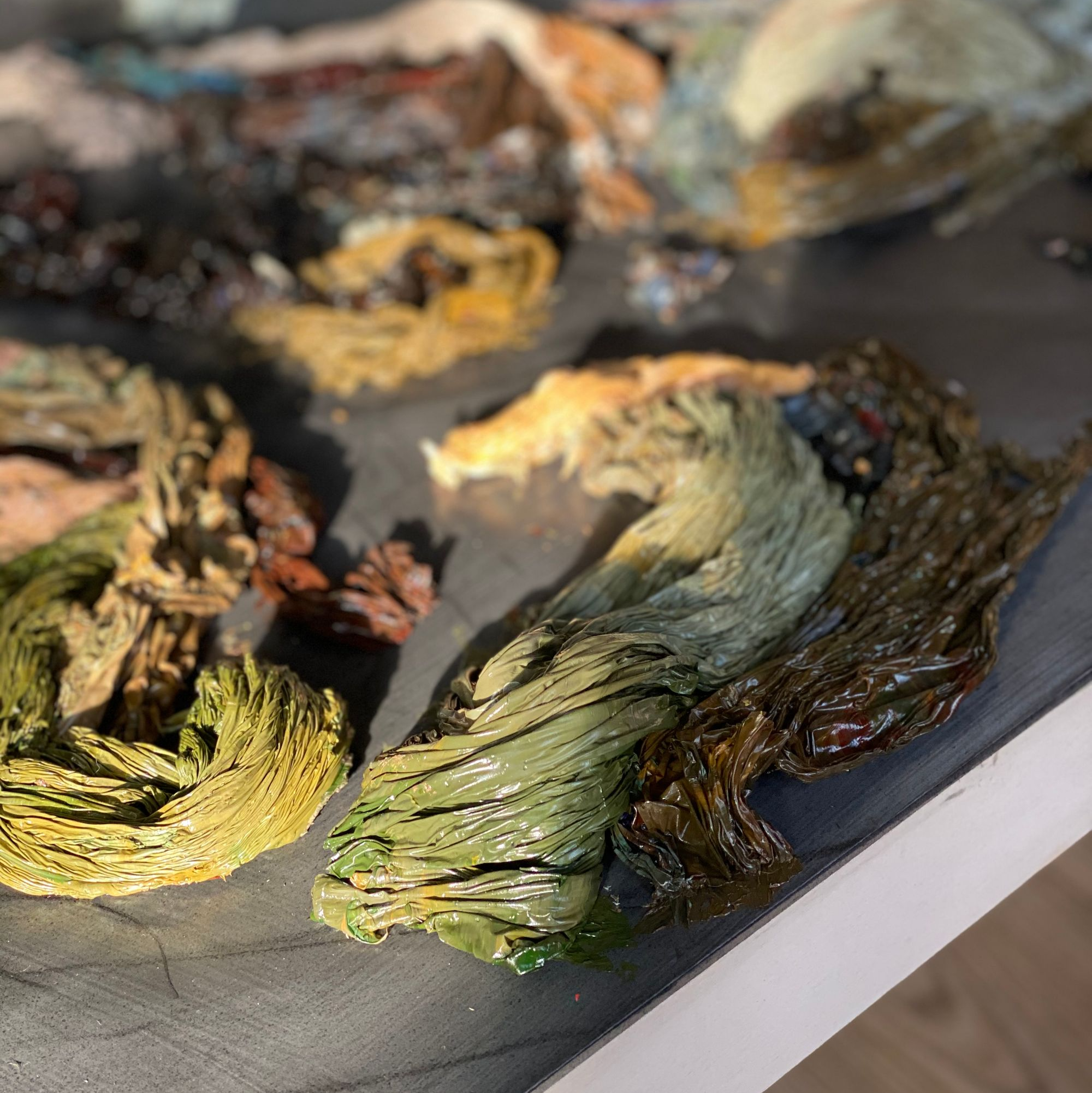
This method creates a dialogue between control and spontaneity. While I'm making deliberate choices about each form, the interaction between forms—how they sit next to each other, overlap, or create new relationships—often surprises me. It's in these unexpected moments that the painting comes alive, when it stops being simply a reconstruction and becomes something new entirely.
May 3, 2021
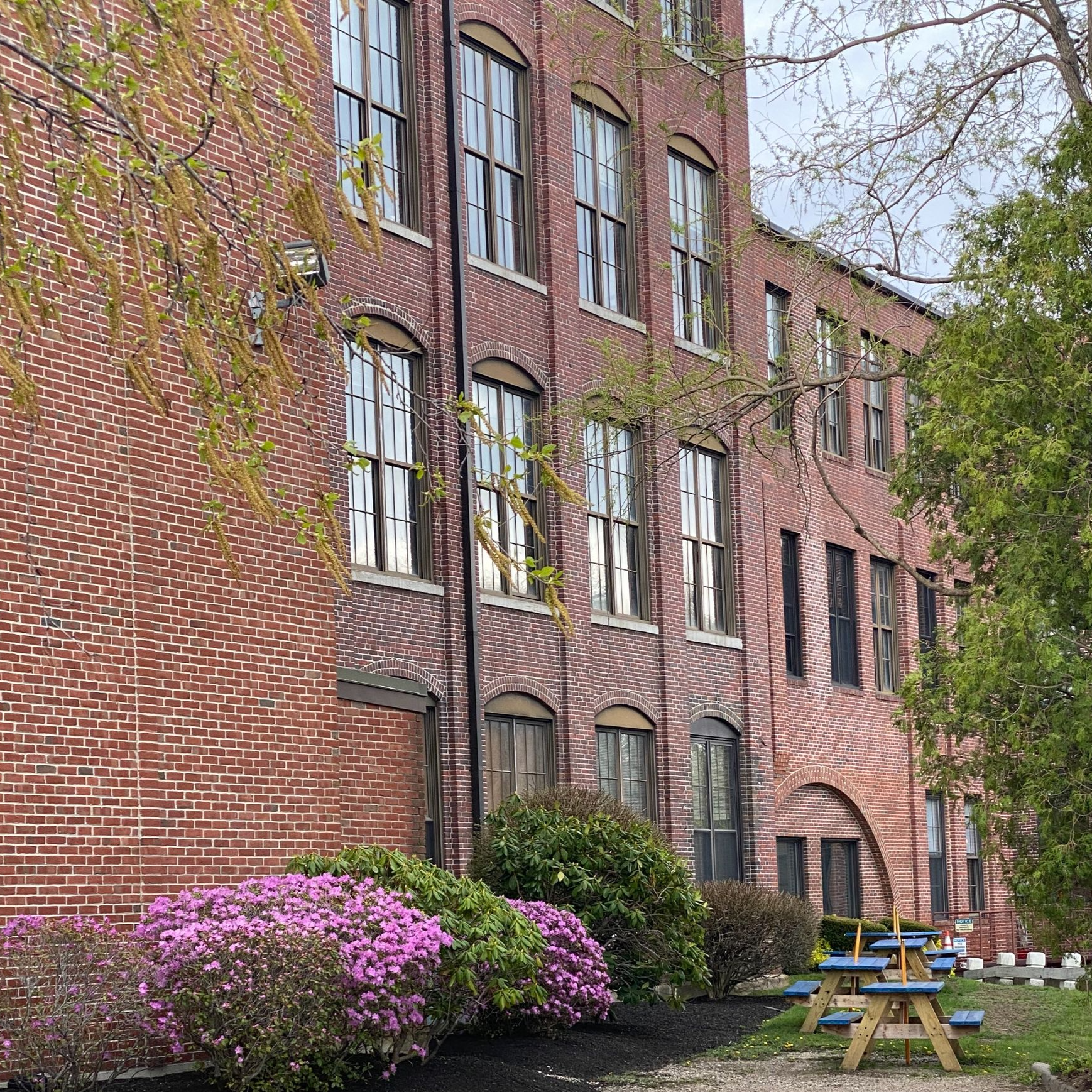
Beautiful Spring Day to be in the studio
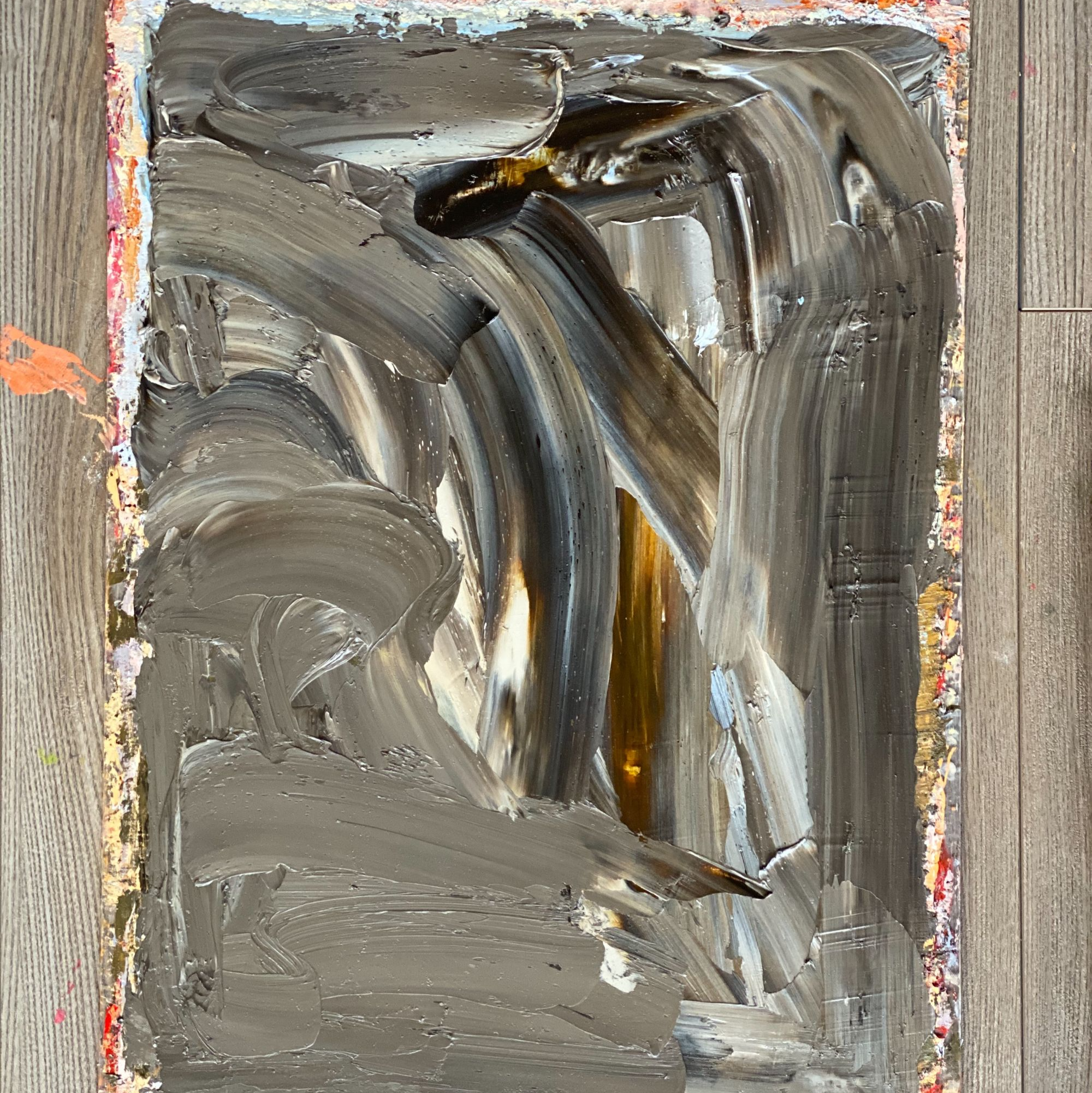
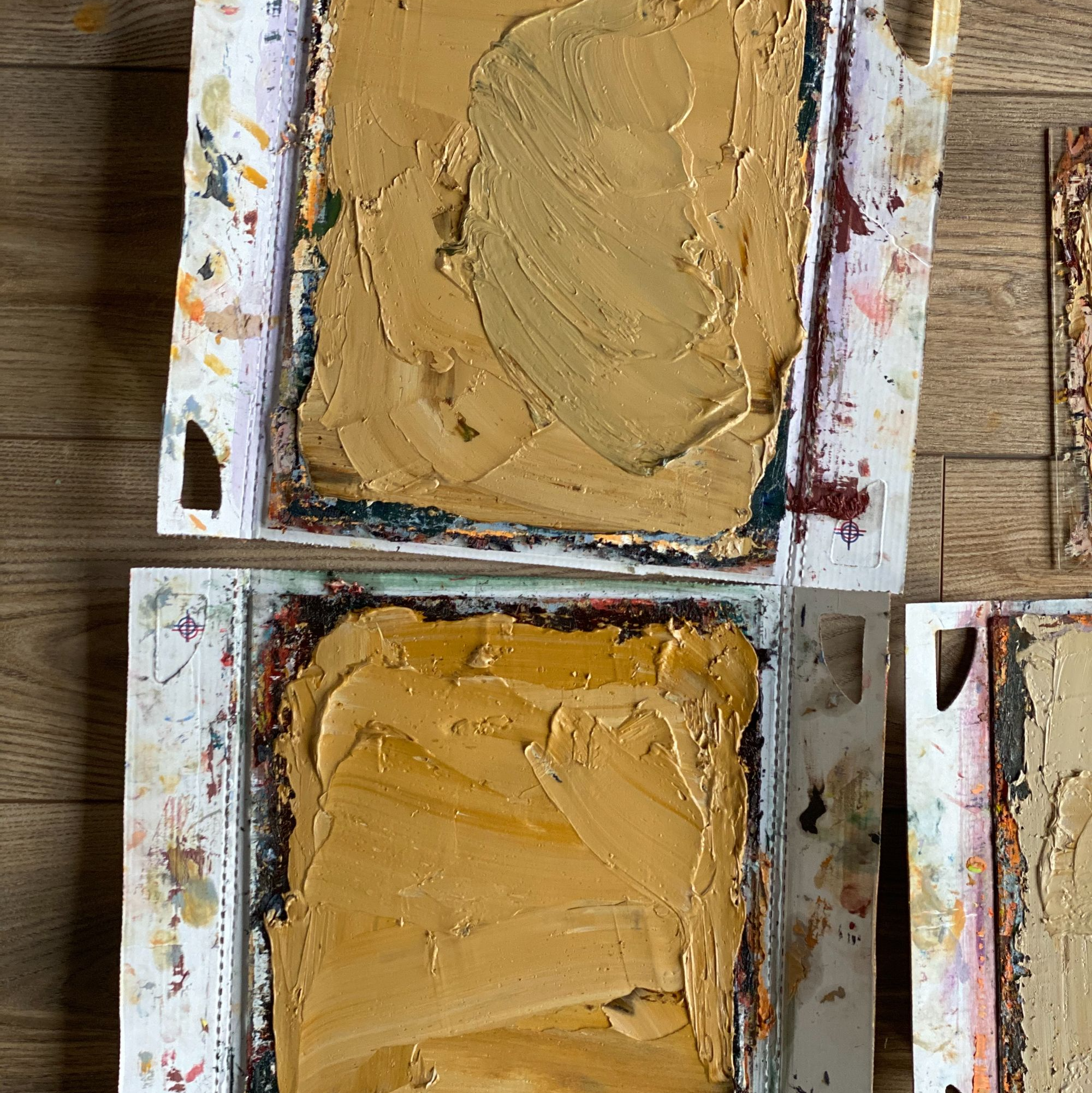
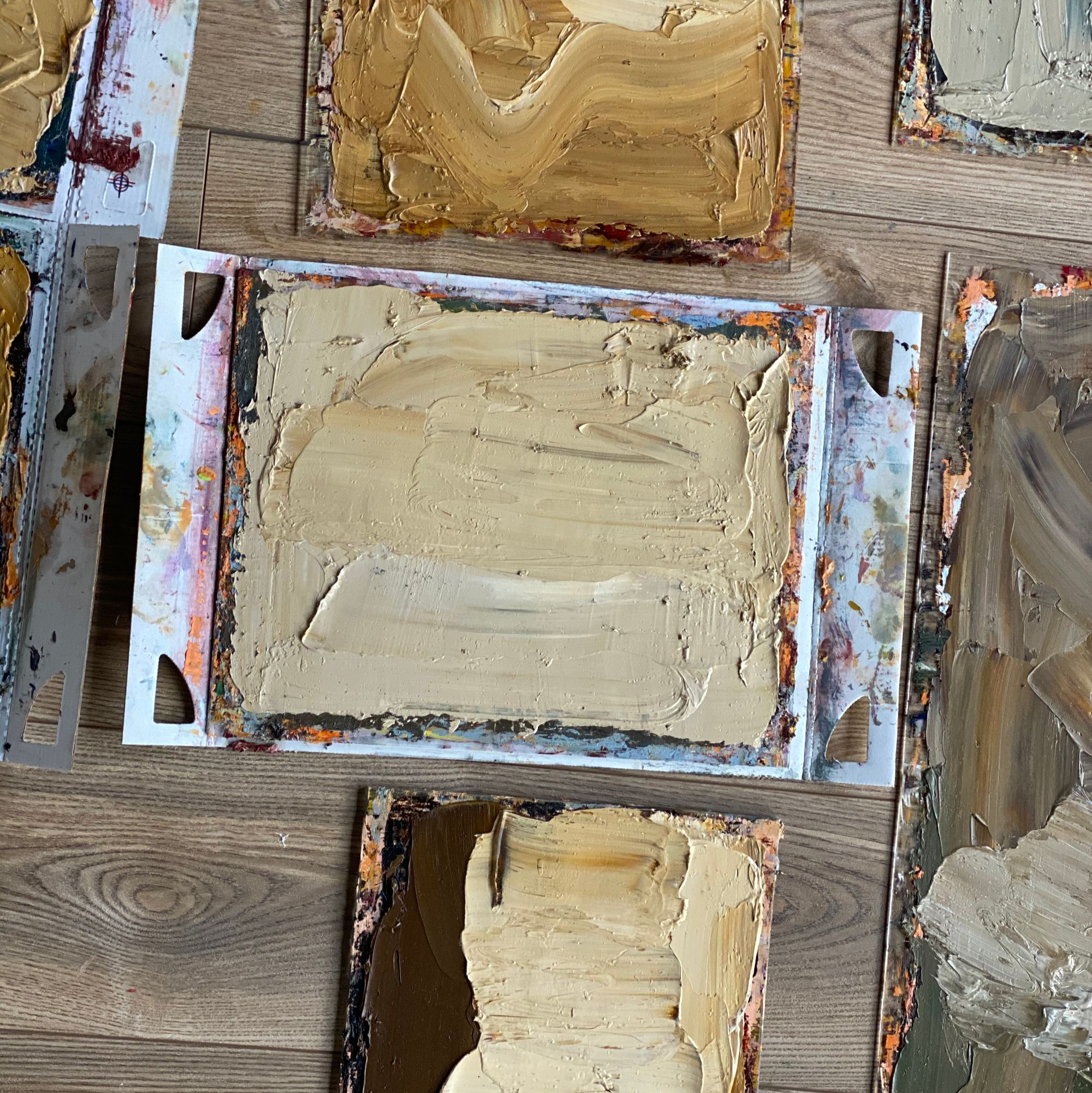
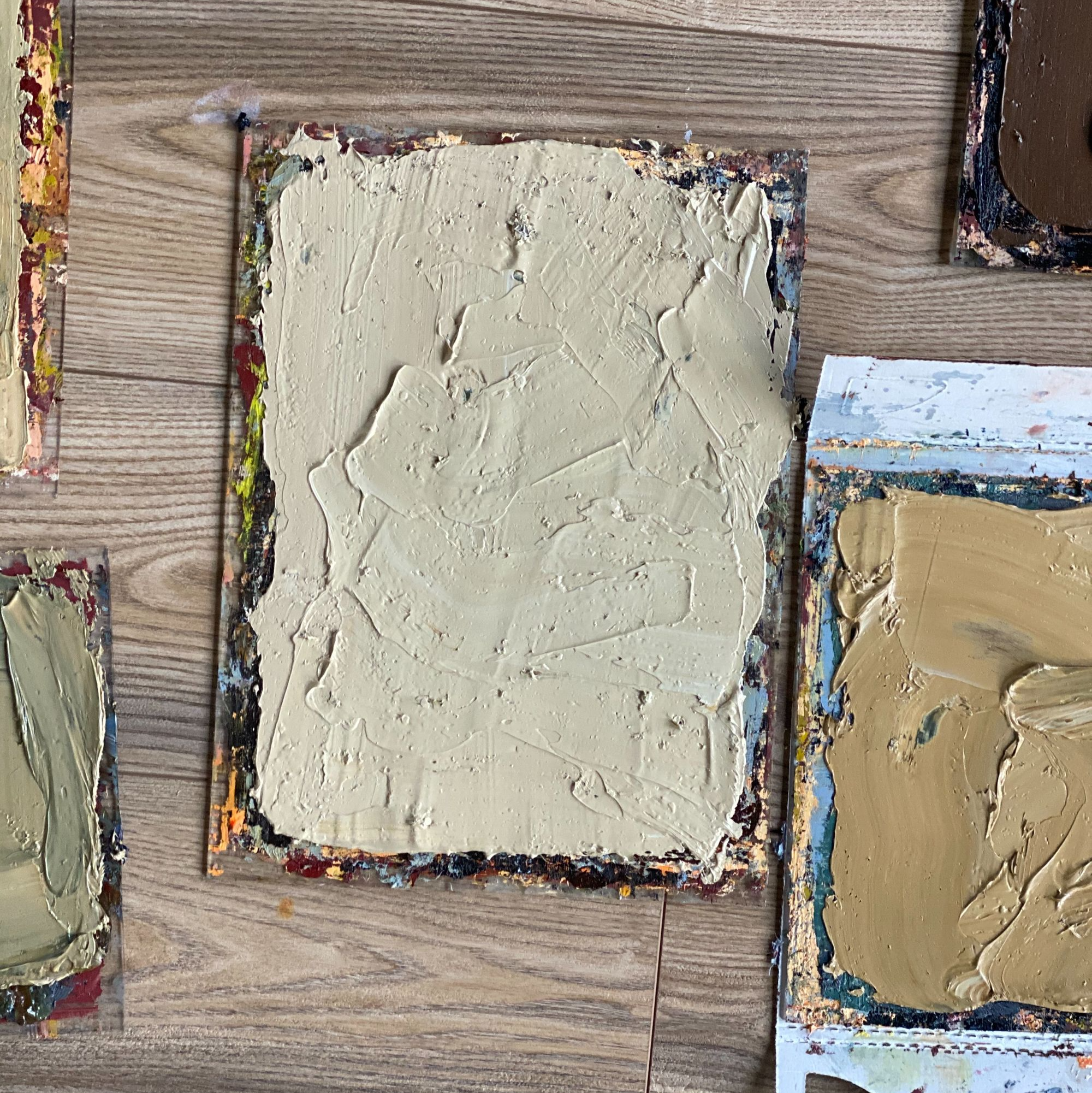
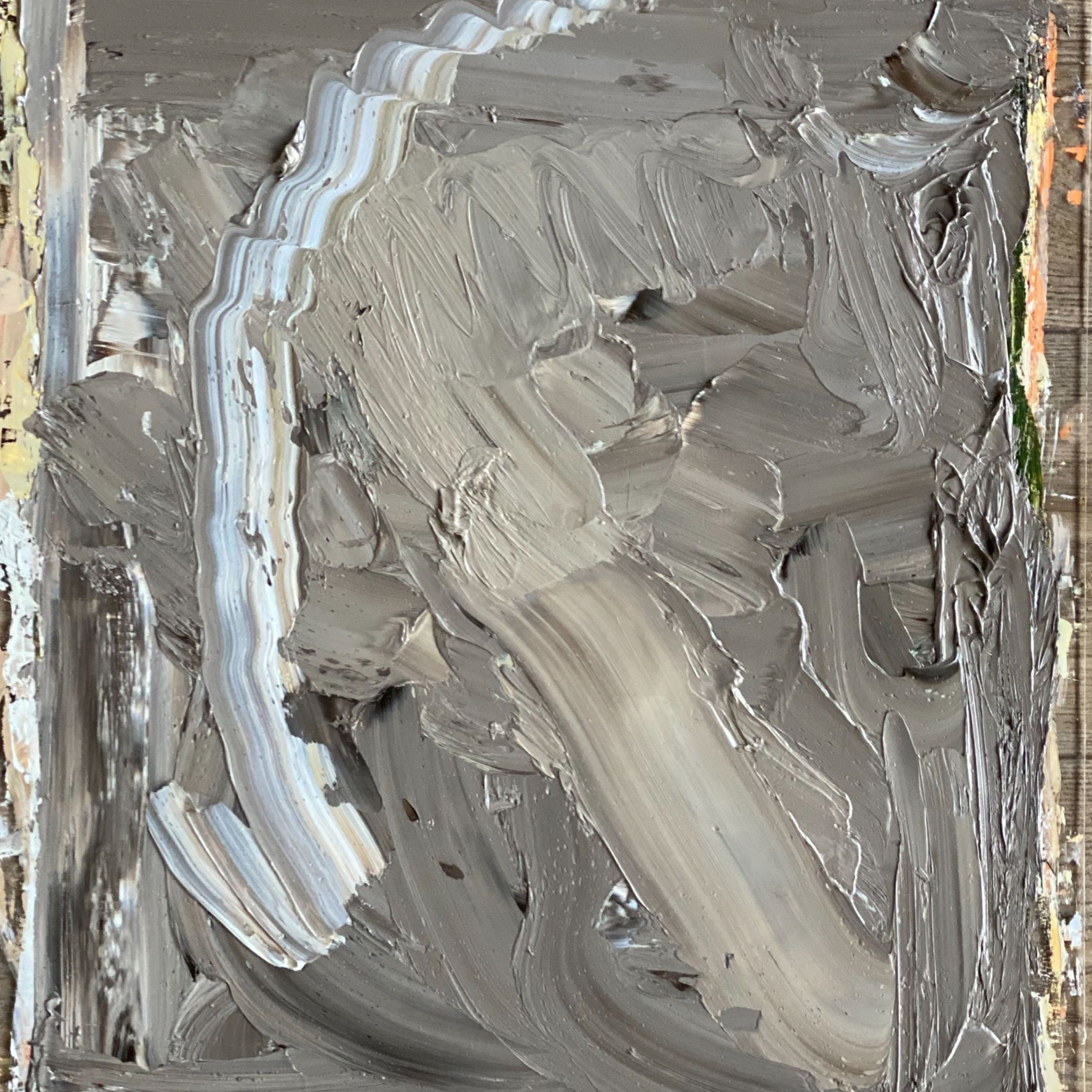
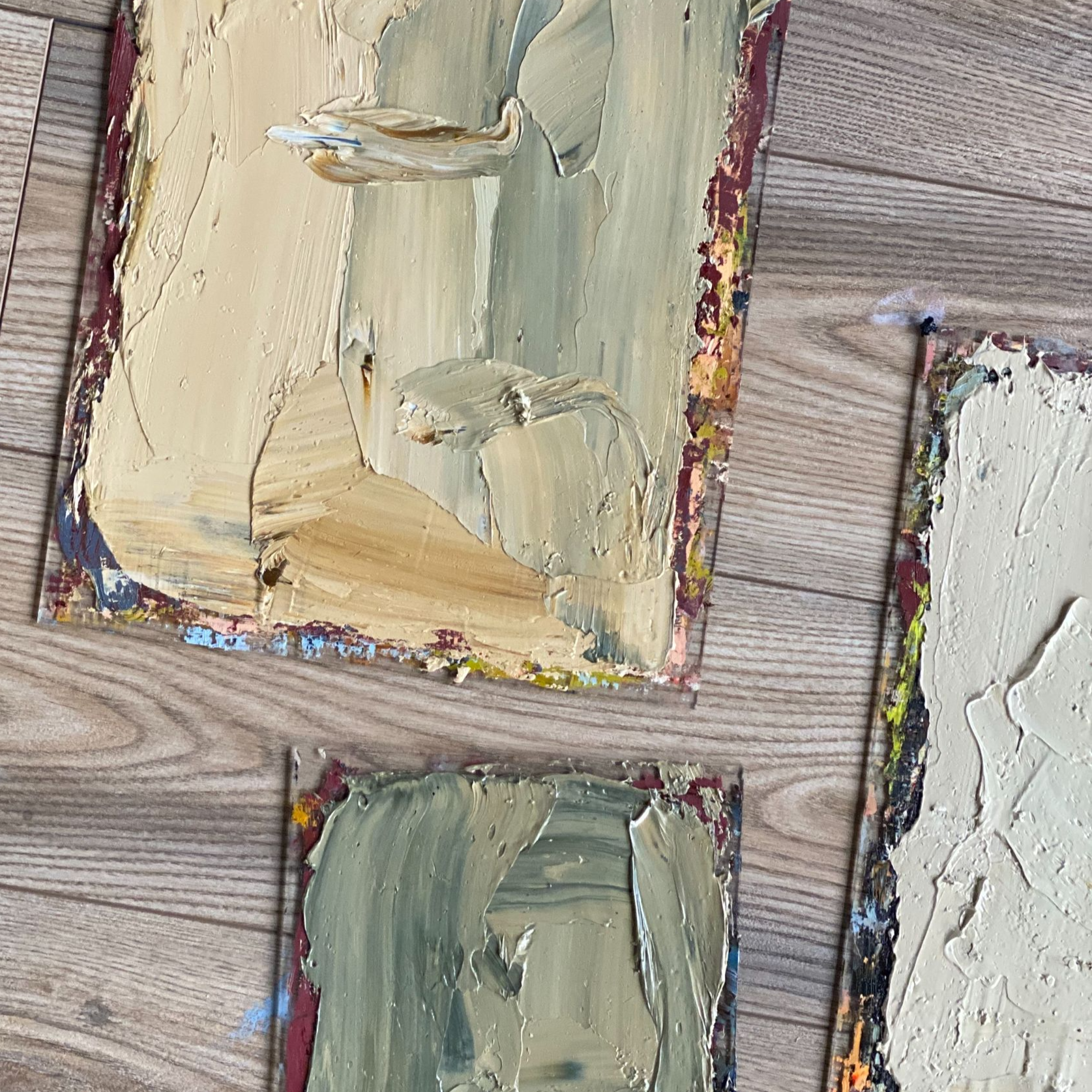
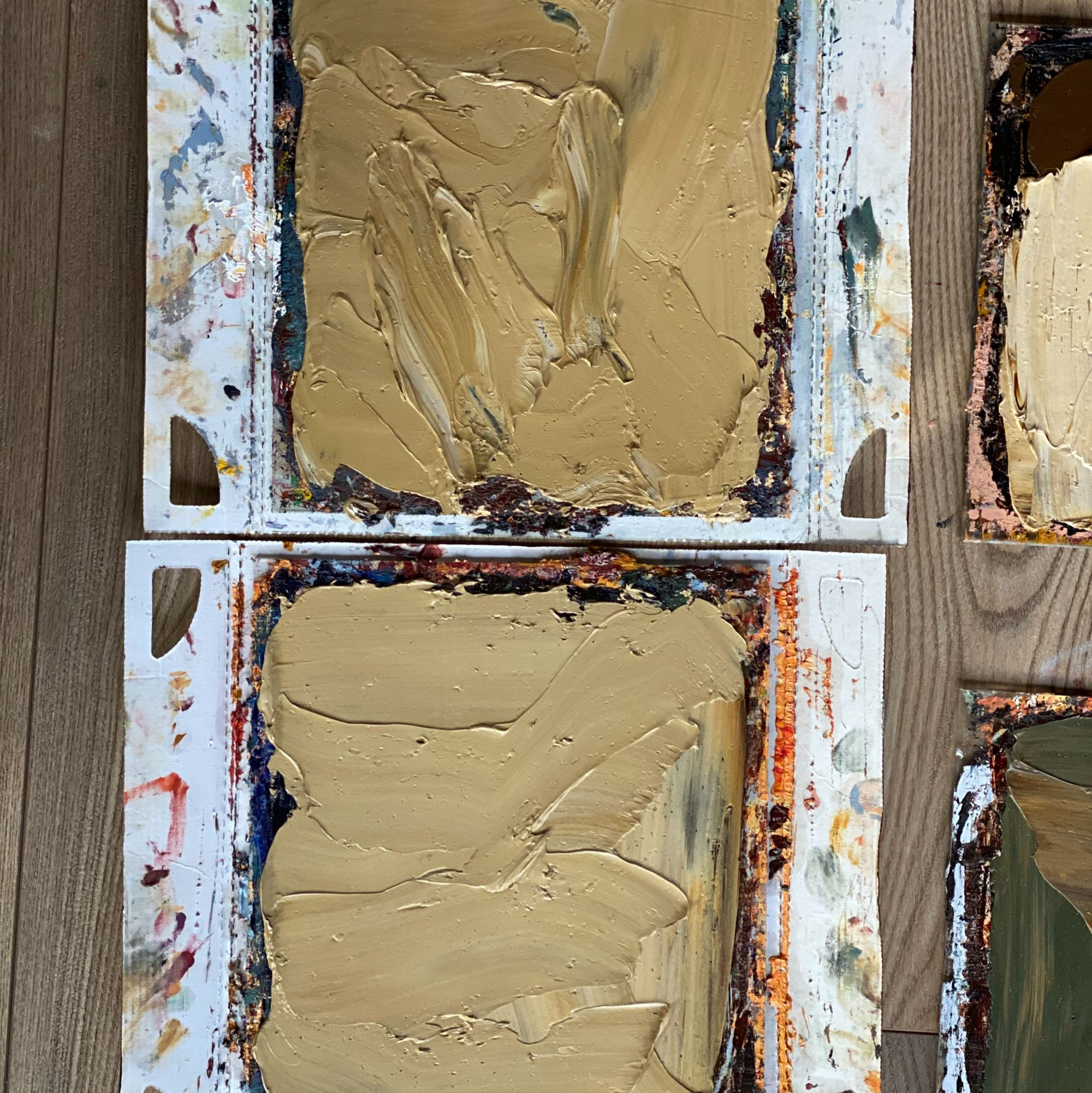
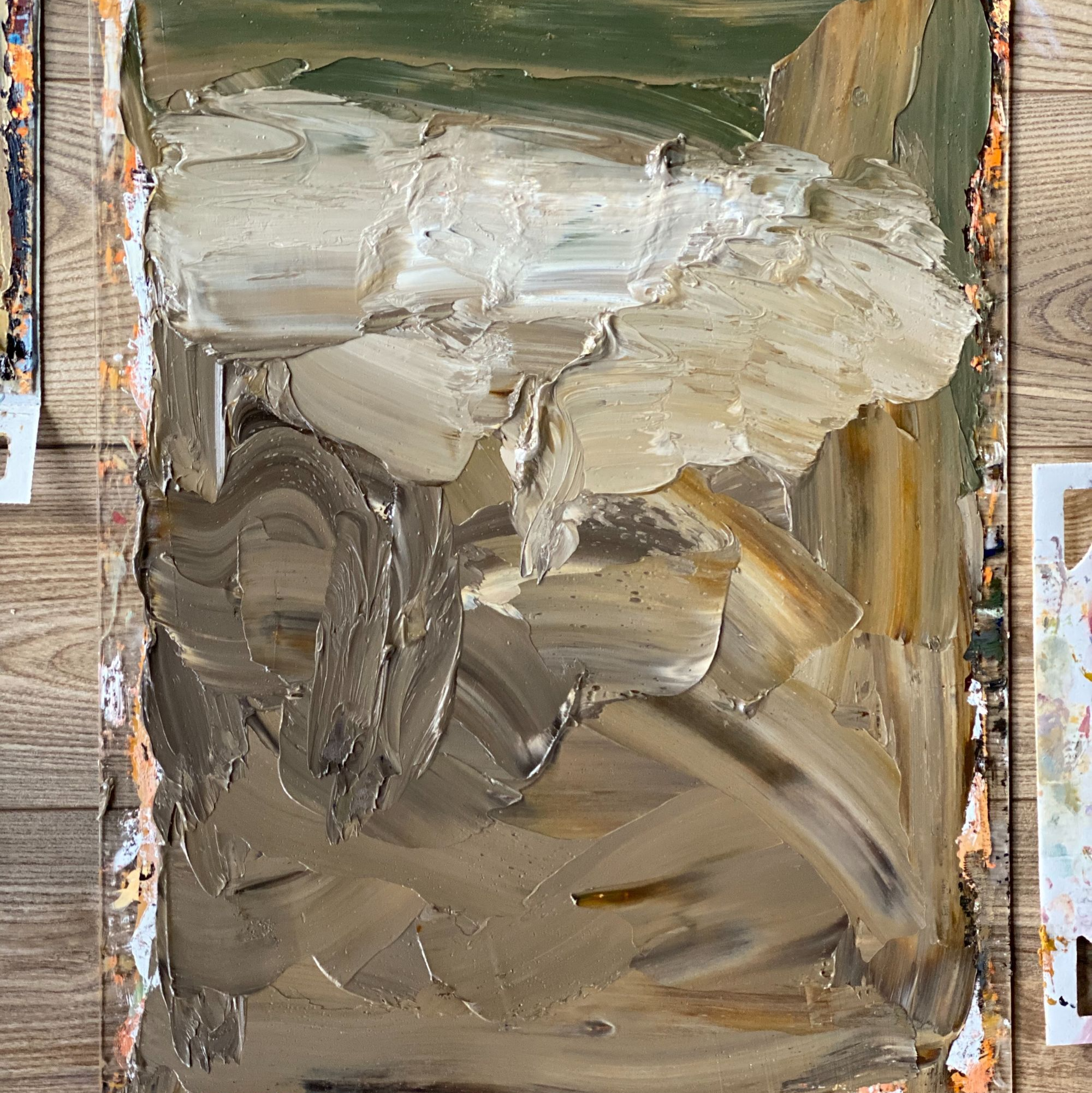
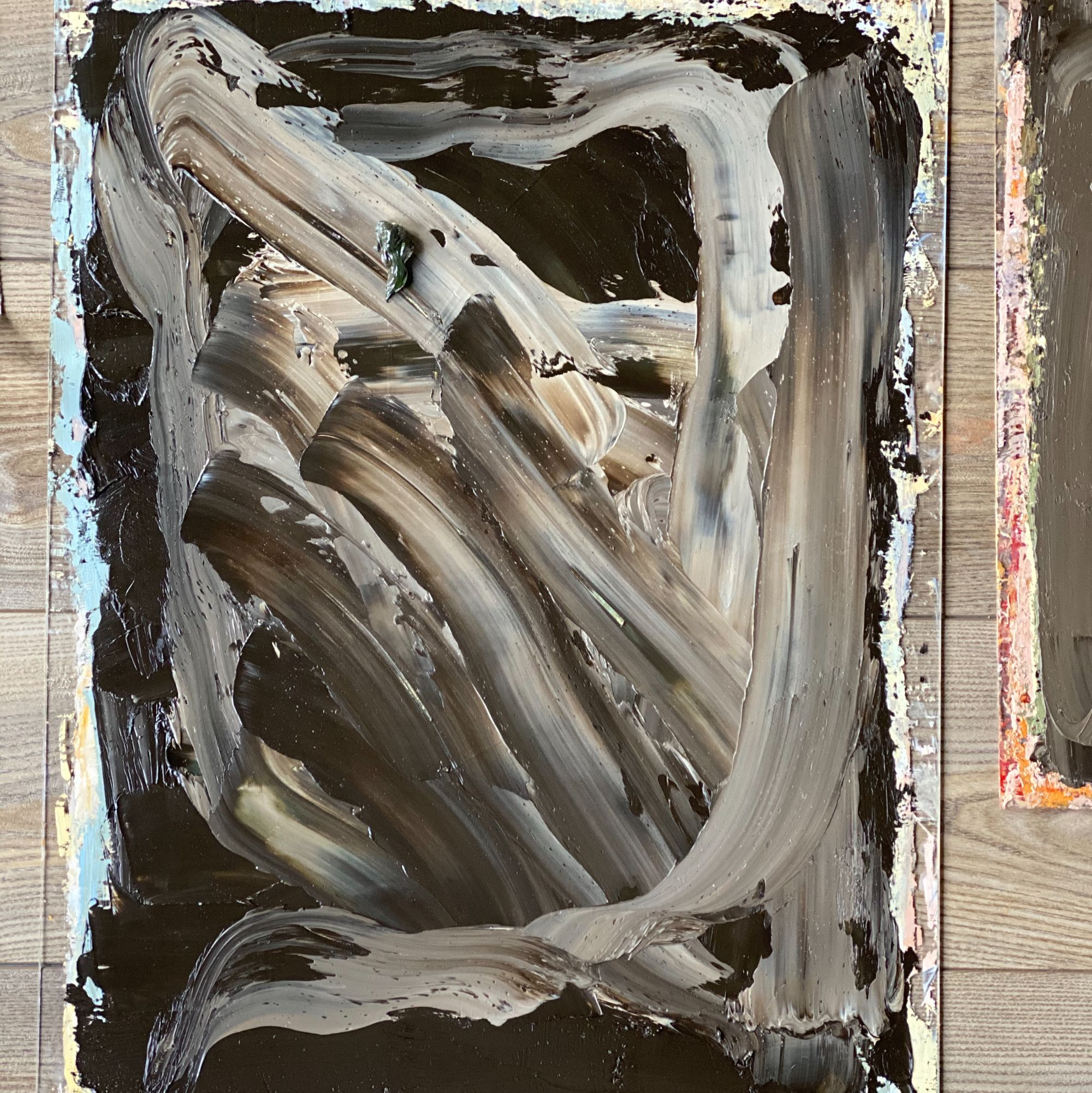
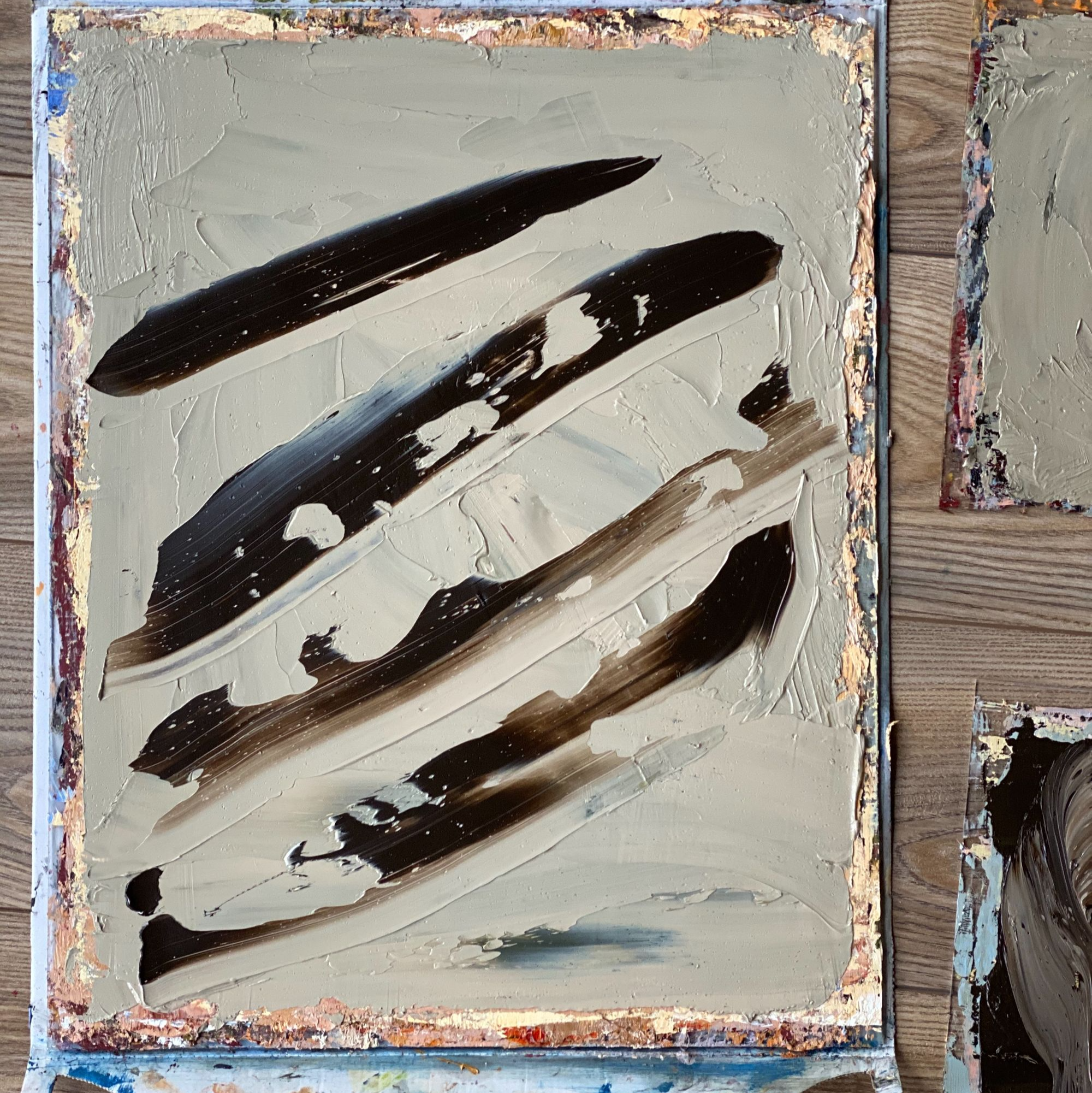
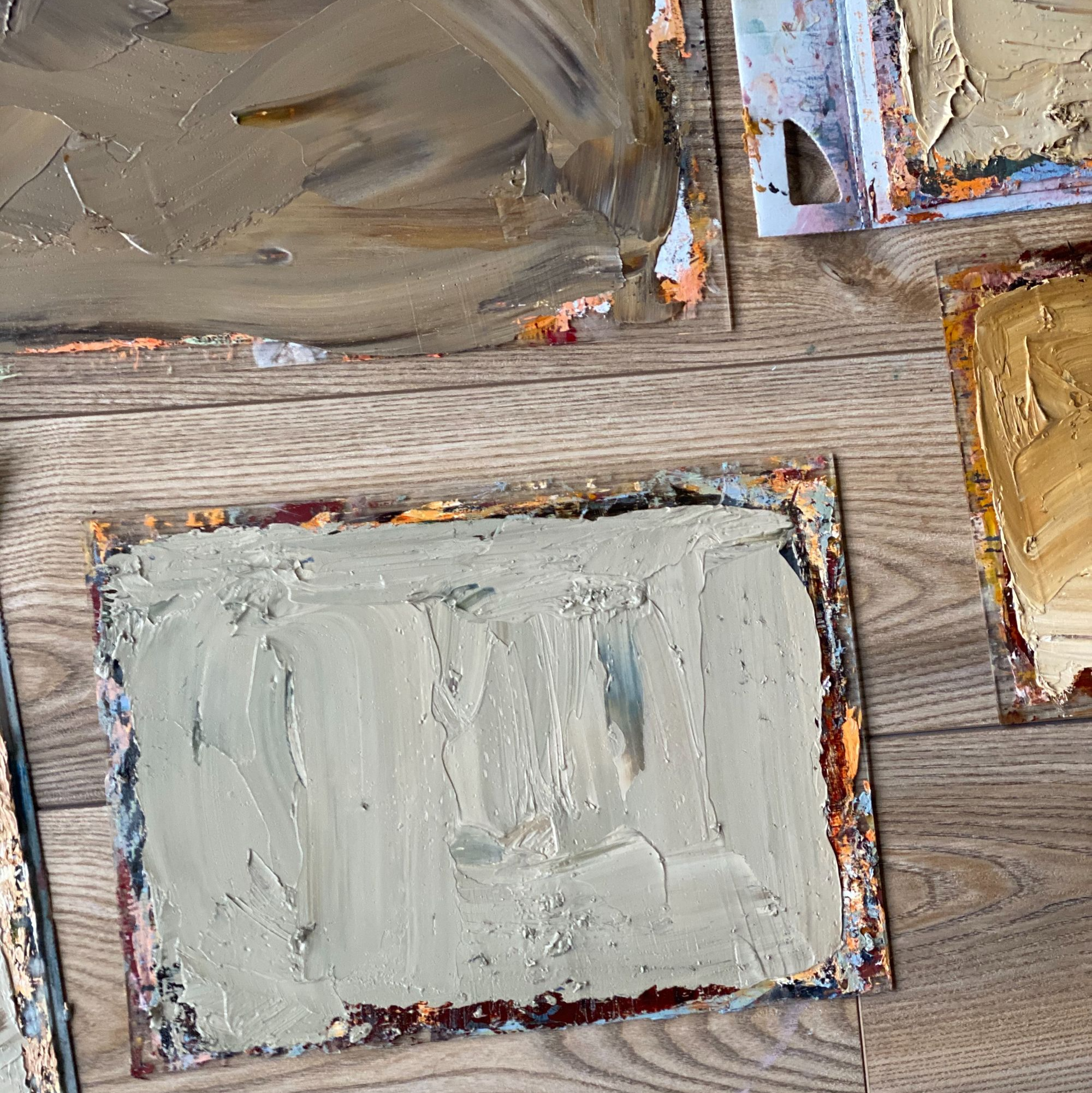
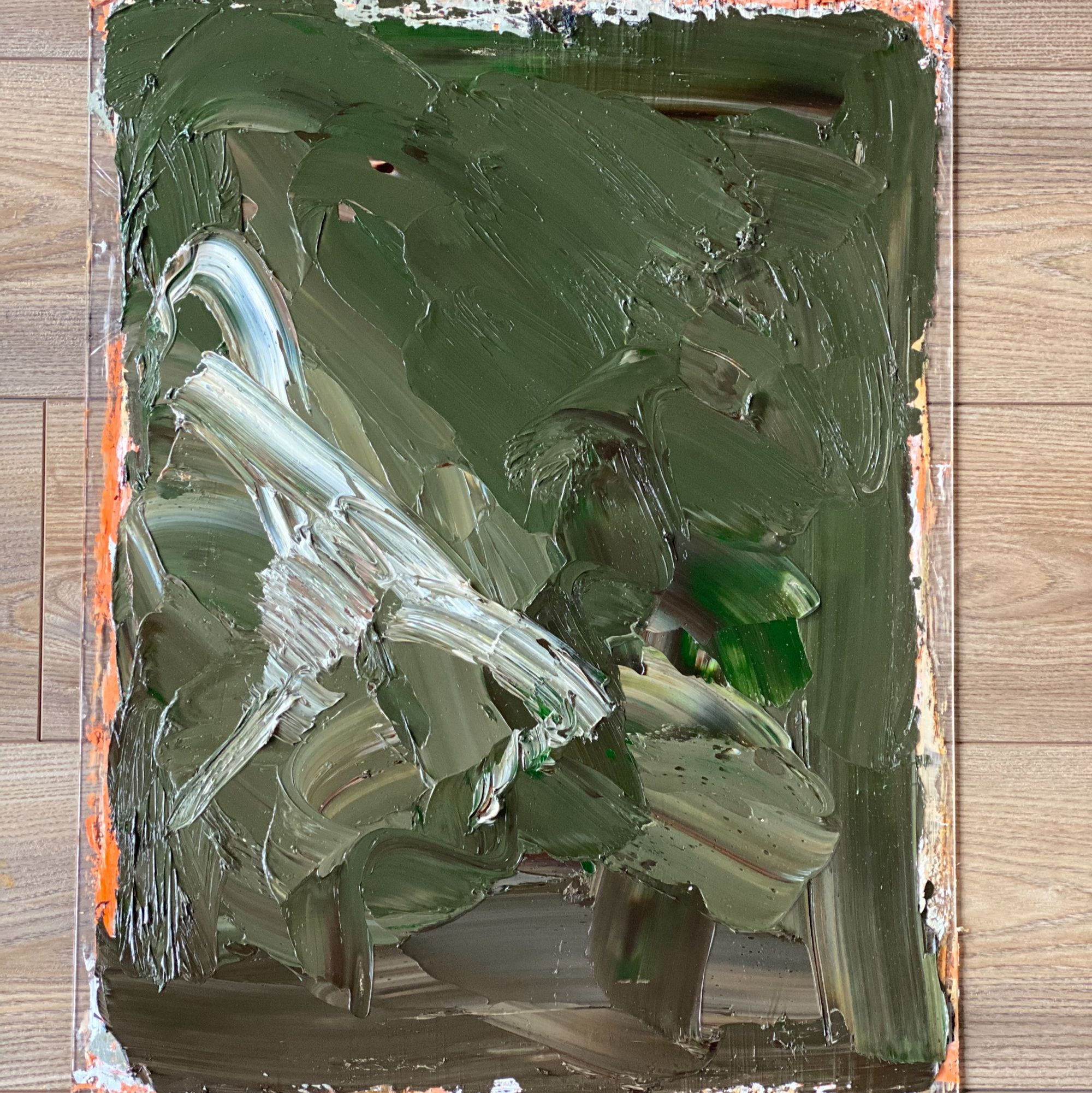
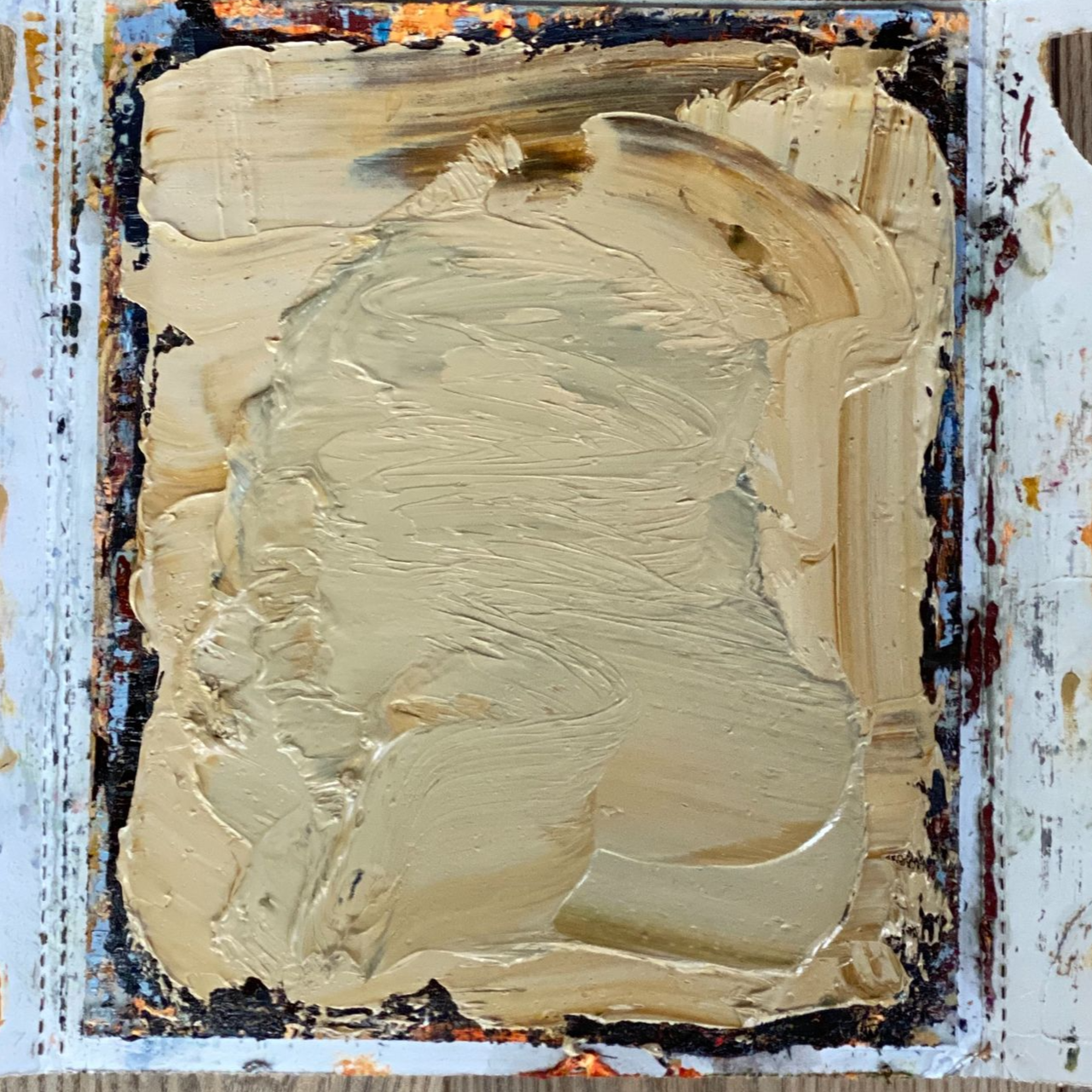
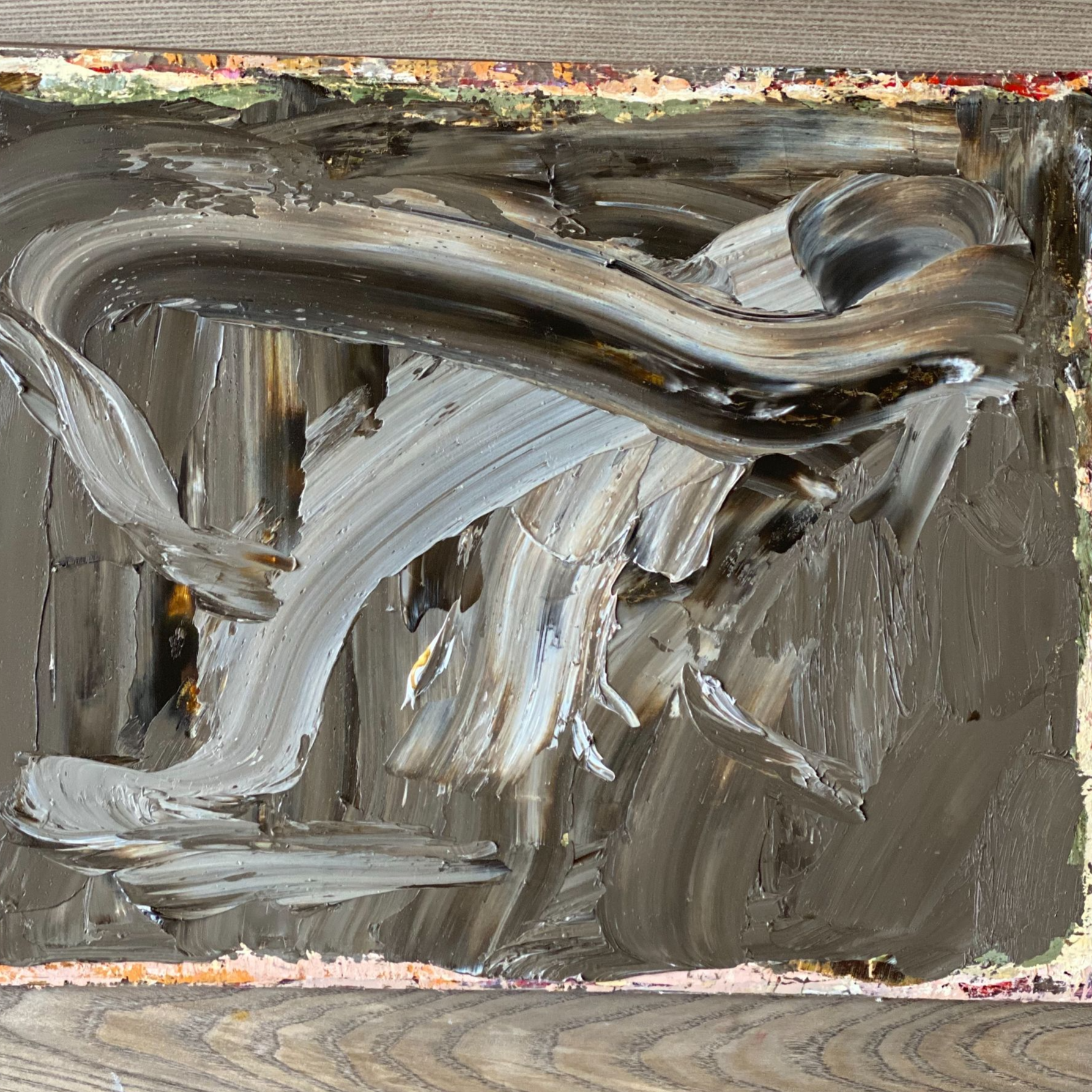
In this session—now that I've established a solid foundation—I need to be strategic about what comes next. I want to enhance and complement the forms I've laid down, but I must be careful not to become precious about any single element at the expense of the whole.
Some forms have interesting, sometimes surprising colors. These might emerge from the history of previous paintings on this support, or because I deliberately placed them there. If I'm drawn to a particular blue, I'll seek out a red or complementary color to accentuate it. Each decision shapes the final work.
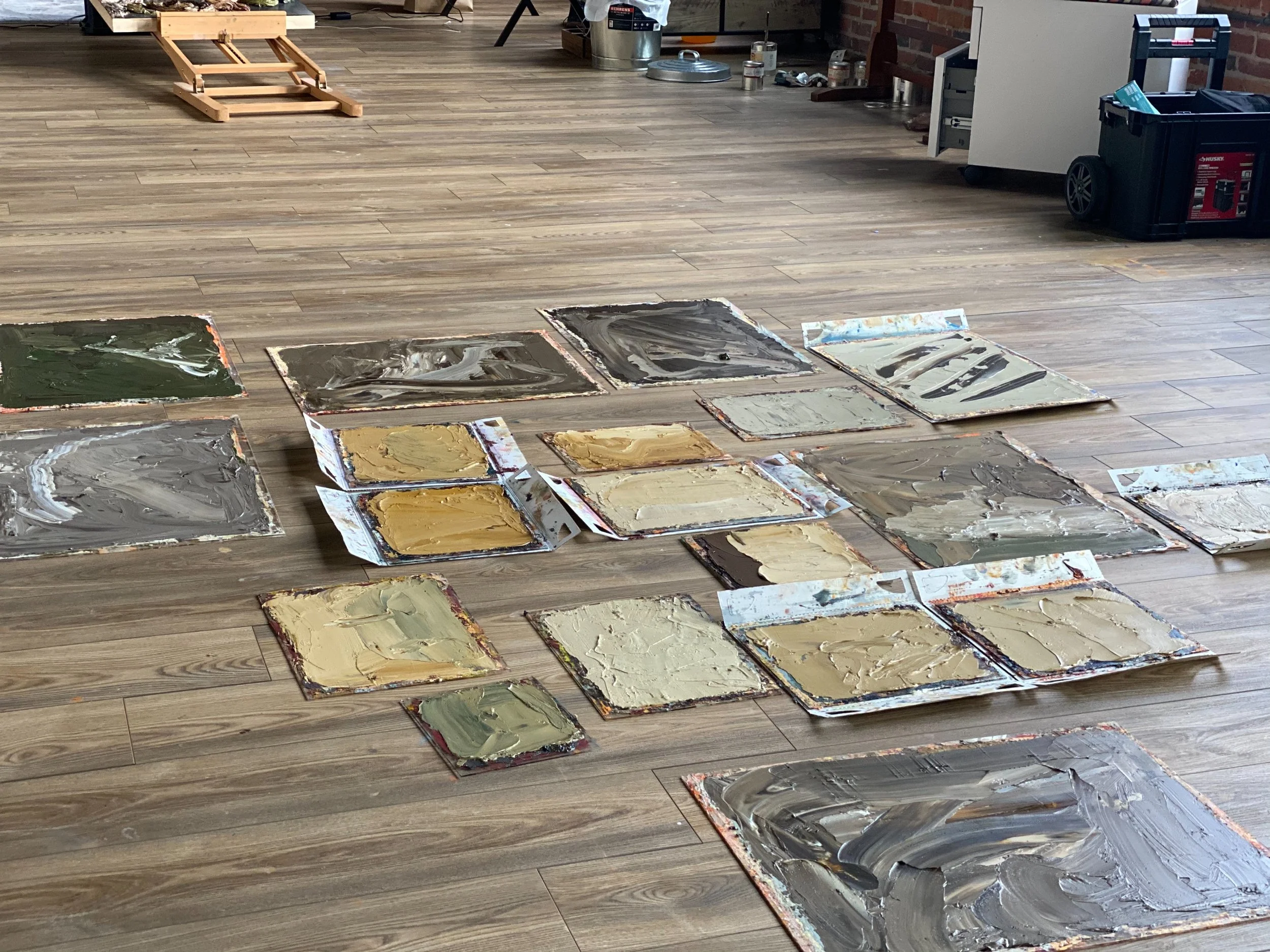
One final shot before leaving.
May 7, 2021
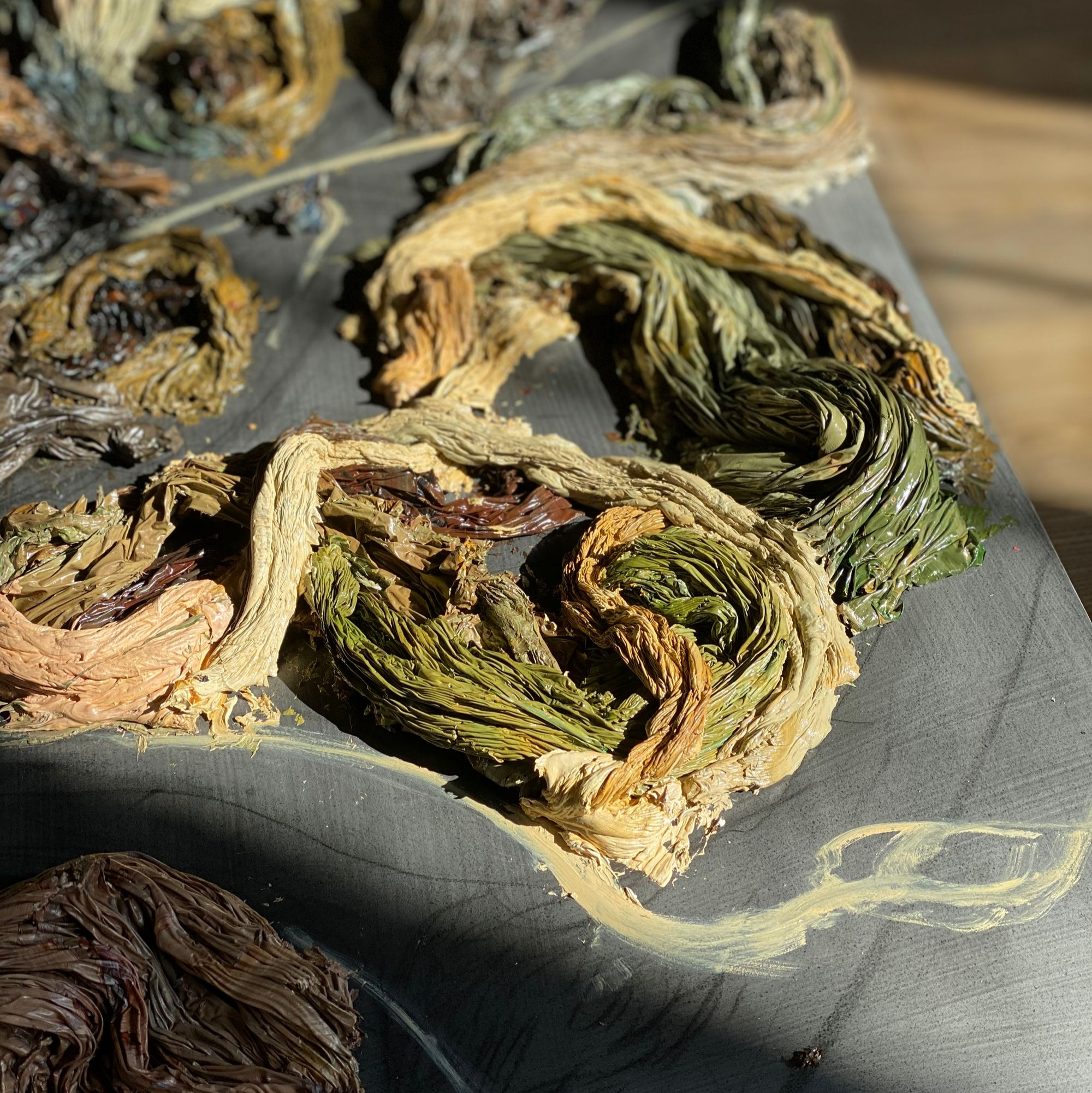
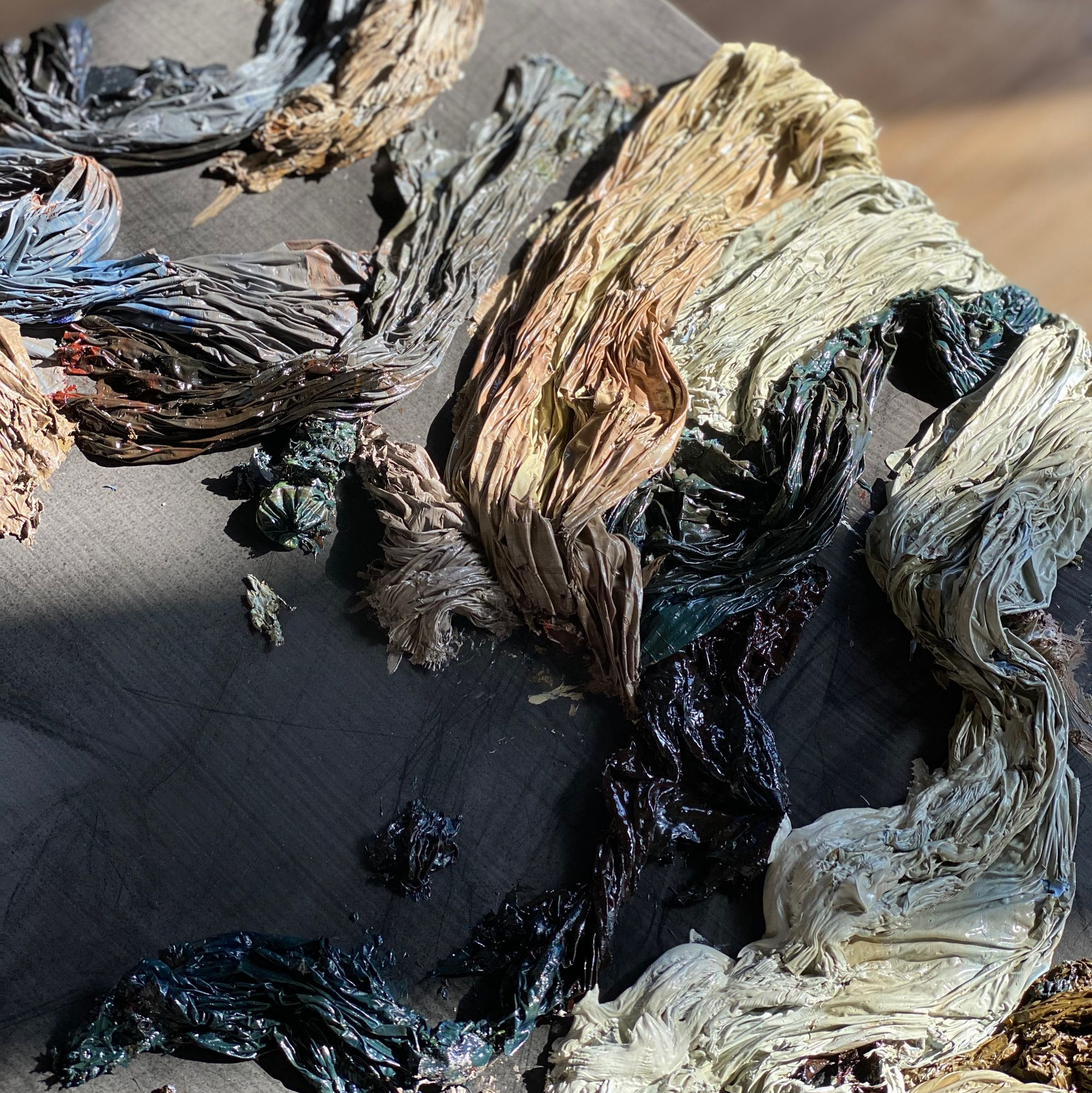
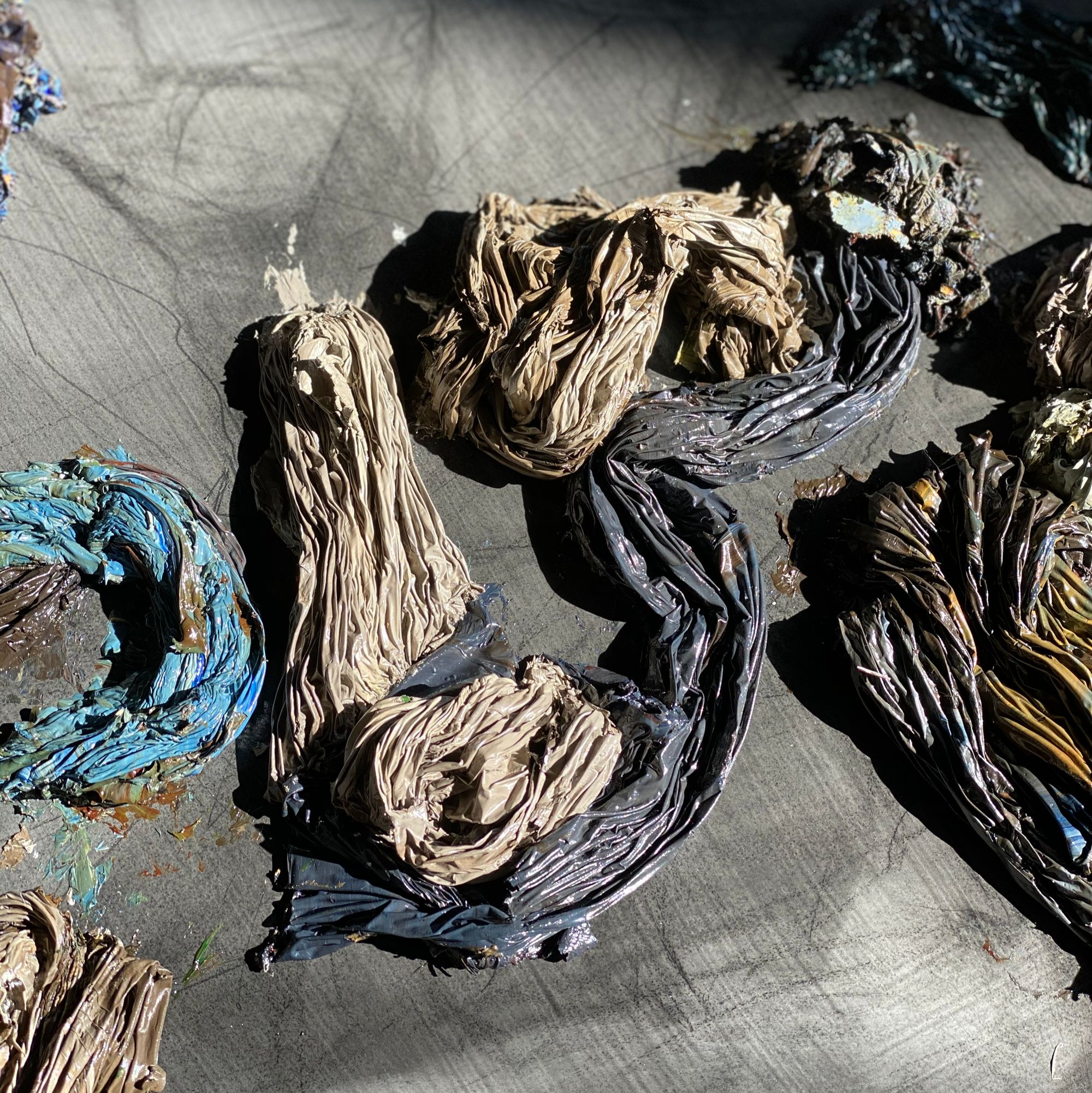
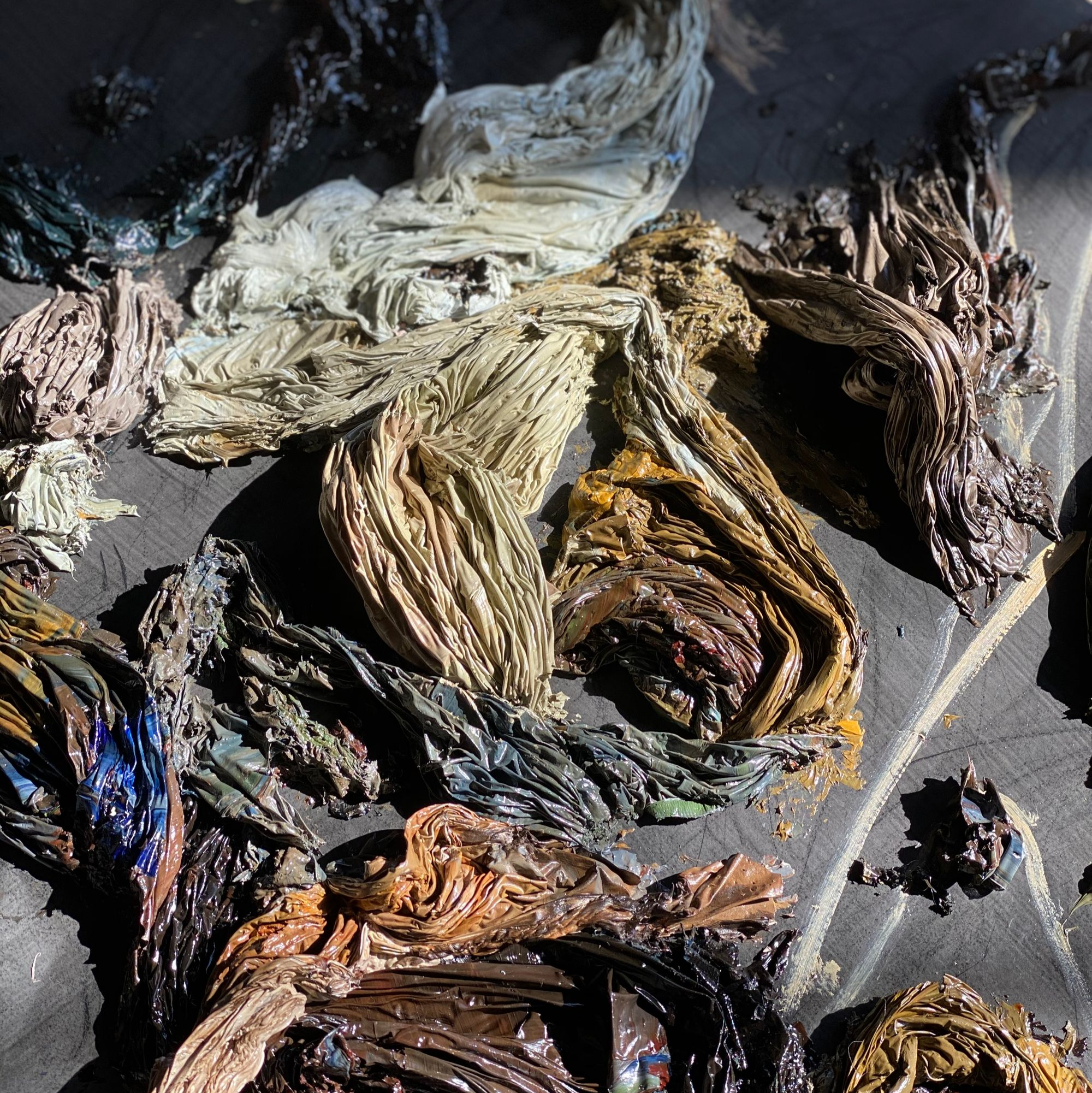
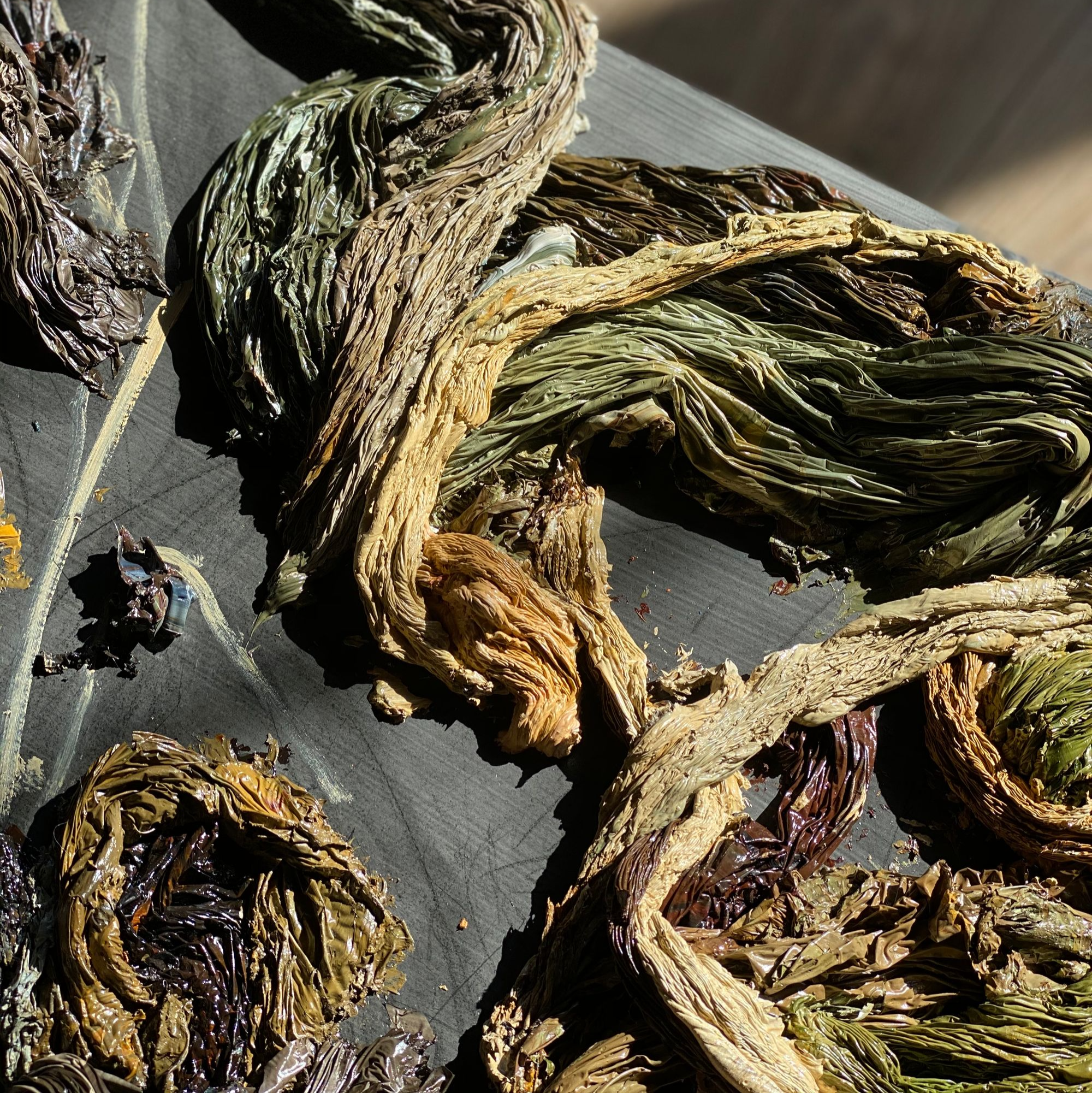
May 11, 2021
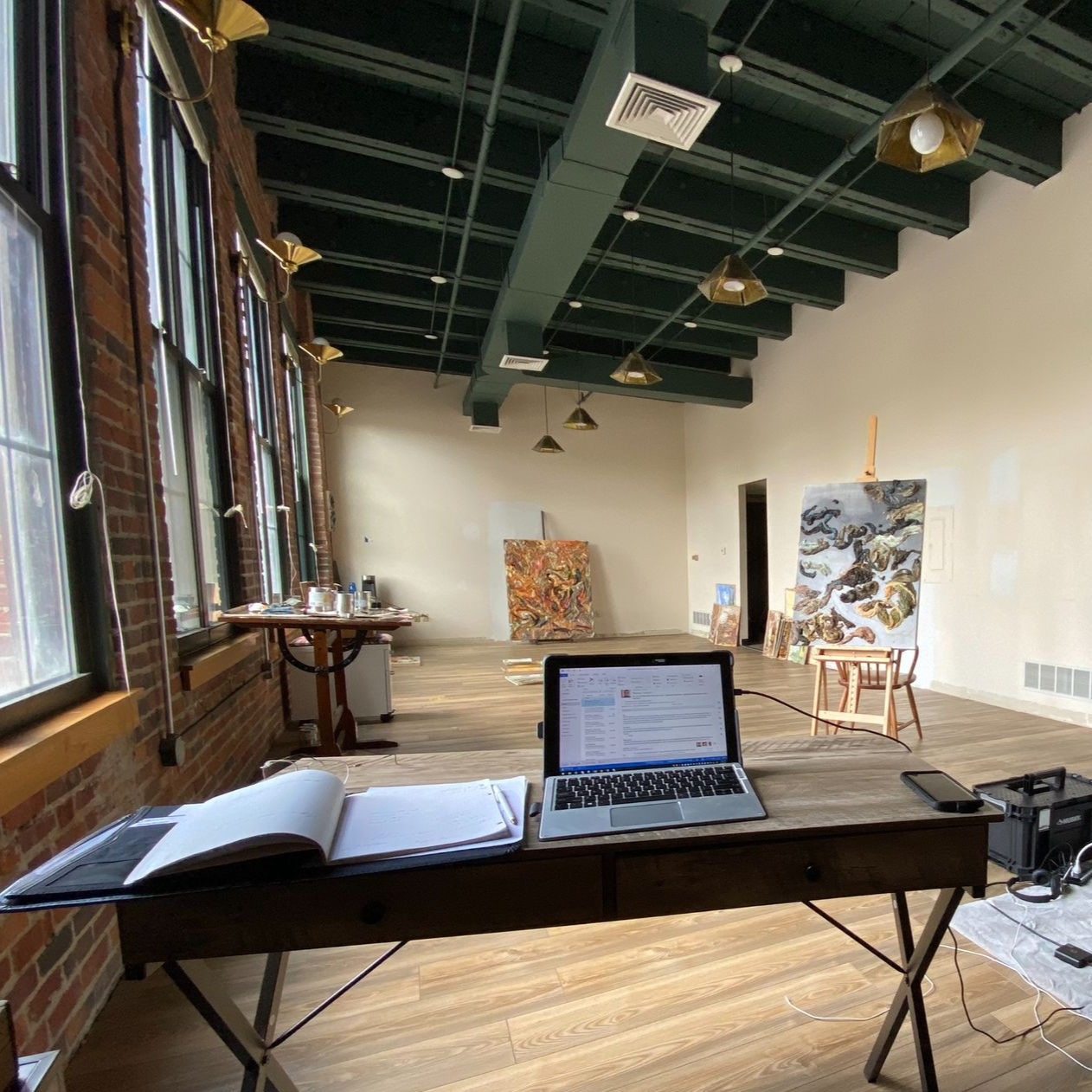
Just a bit of admin work today before I can get busy. This is the reality of it all. I get the opportunity to perform at a day job and stare at my work—deliberating over the panels on the ground as I pace around on the phone. In the end, we hang up the call and get busy.
May 12, 2021
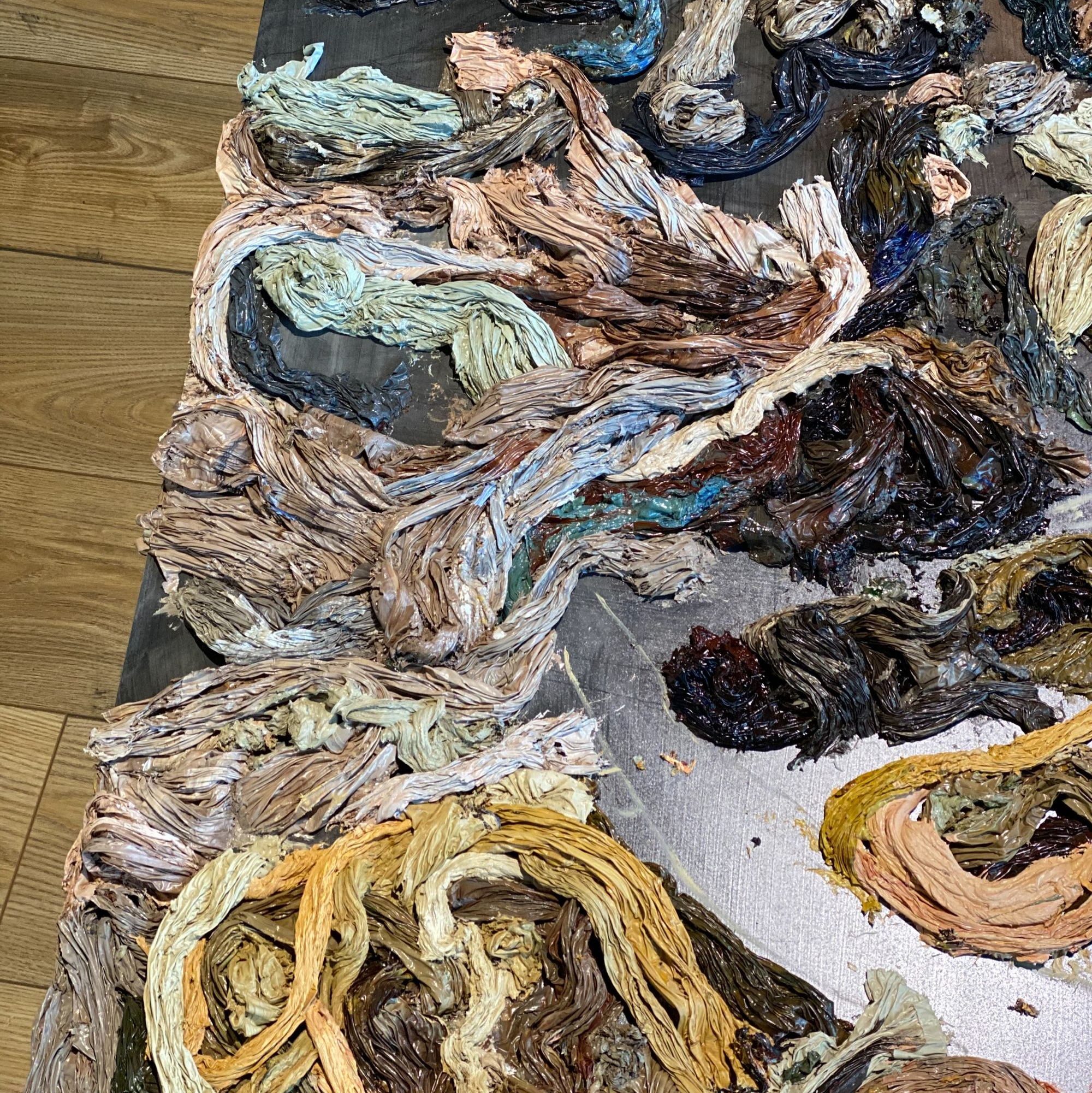
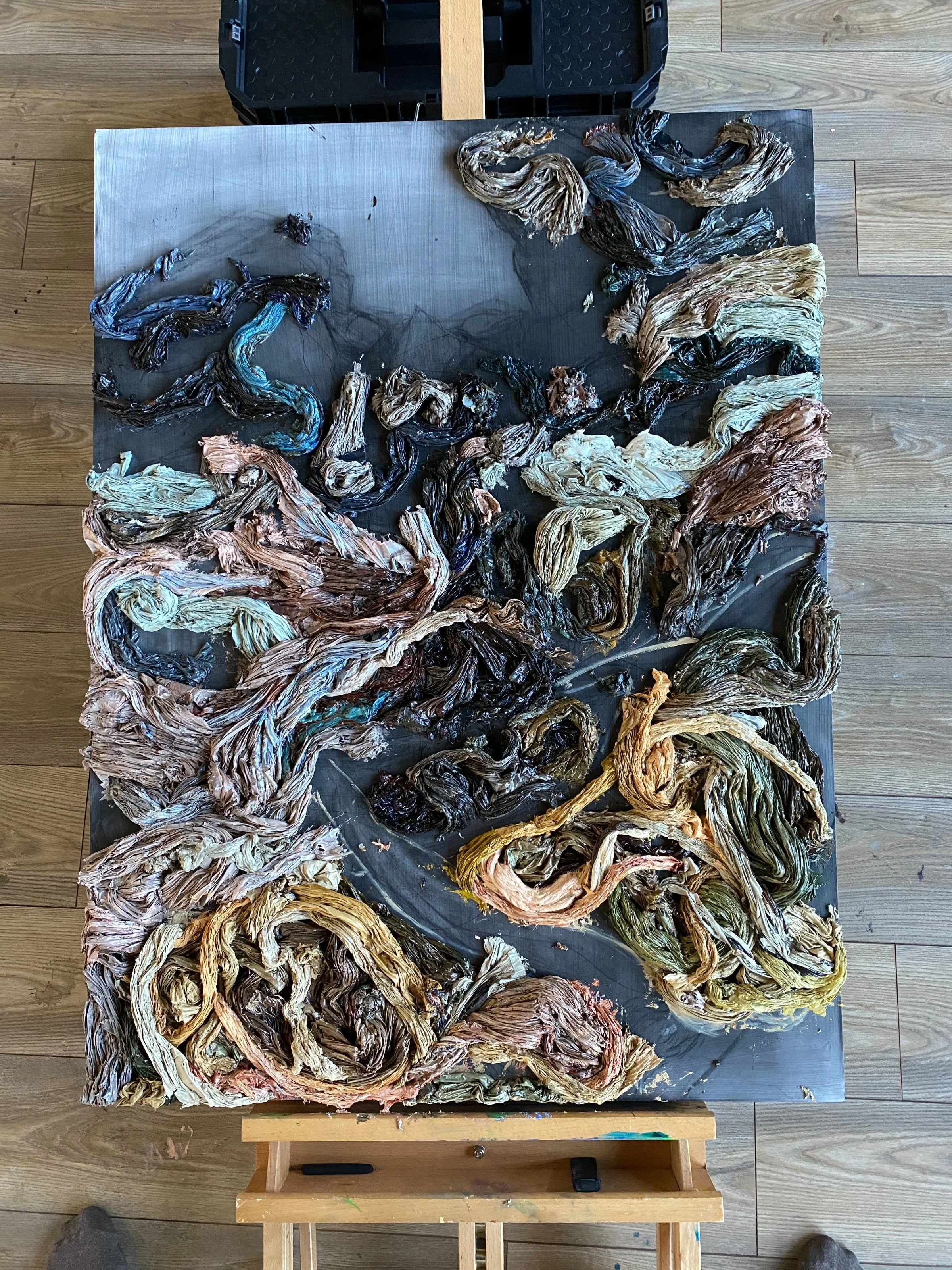
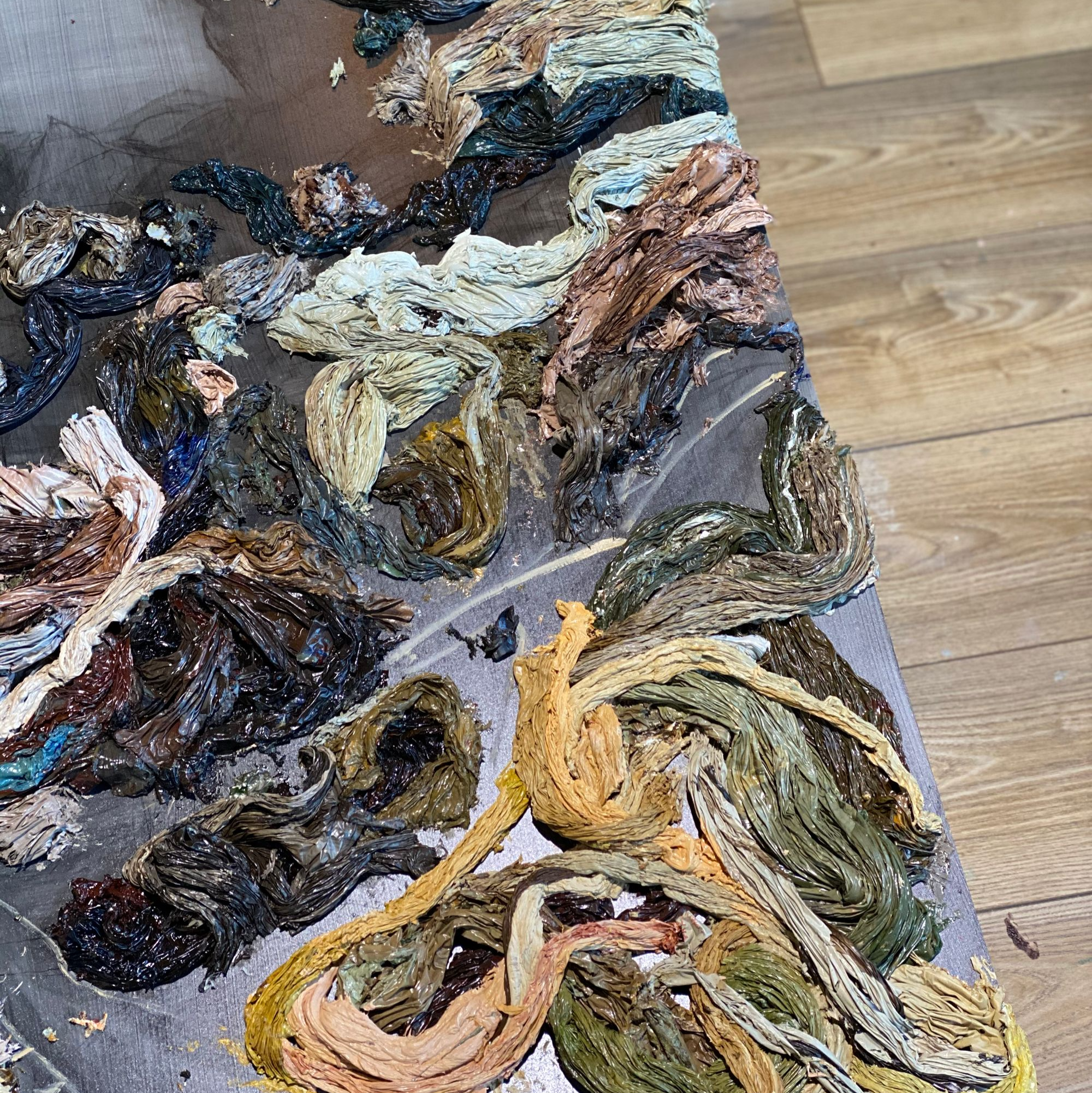
May 13, 2021
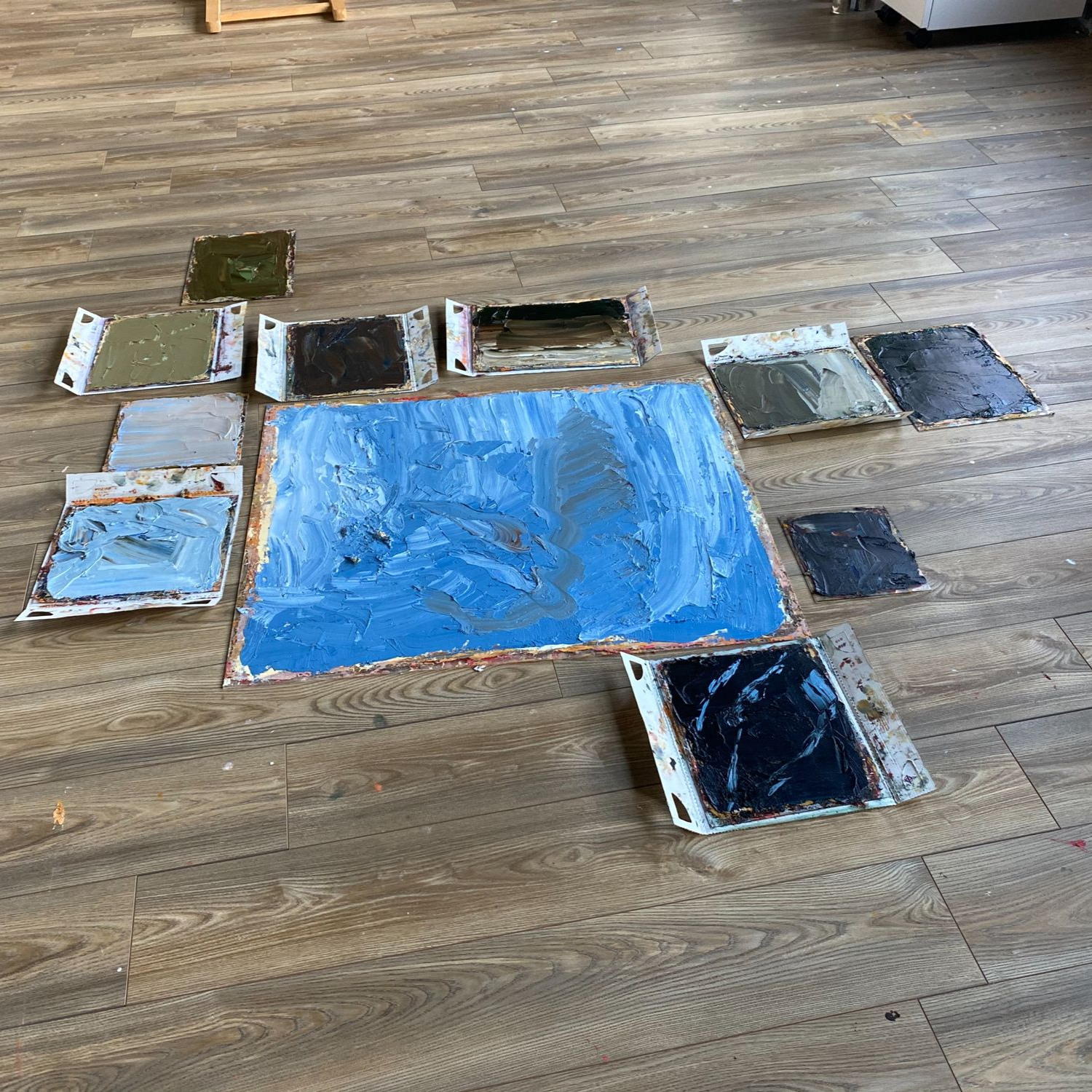
I'm settling into a great rhythm with this piece. The question now is where to go next. My instinct is to start at the top—the objects farthest from the viewer. I can make these forms smaller and more directional. Working this way, I'll have a better sense of scale when I reach the objects closer to the viewer. I'm also eager to work with the blues today.

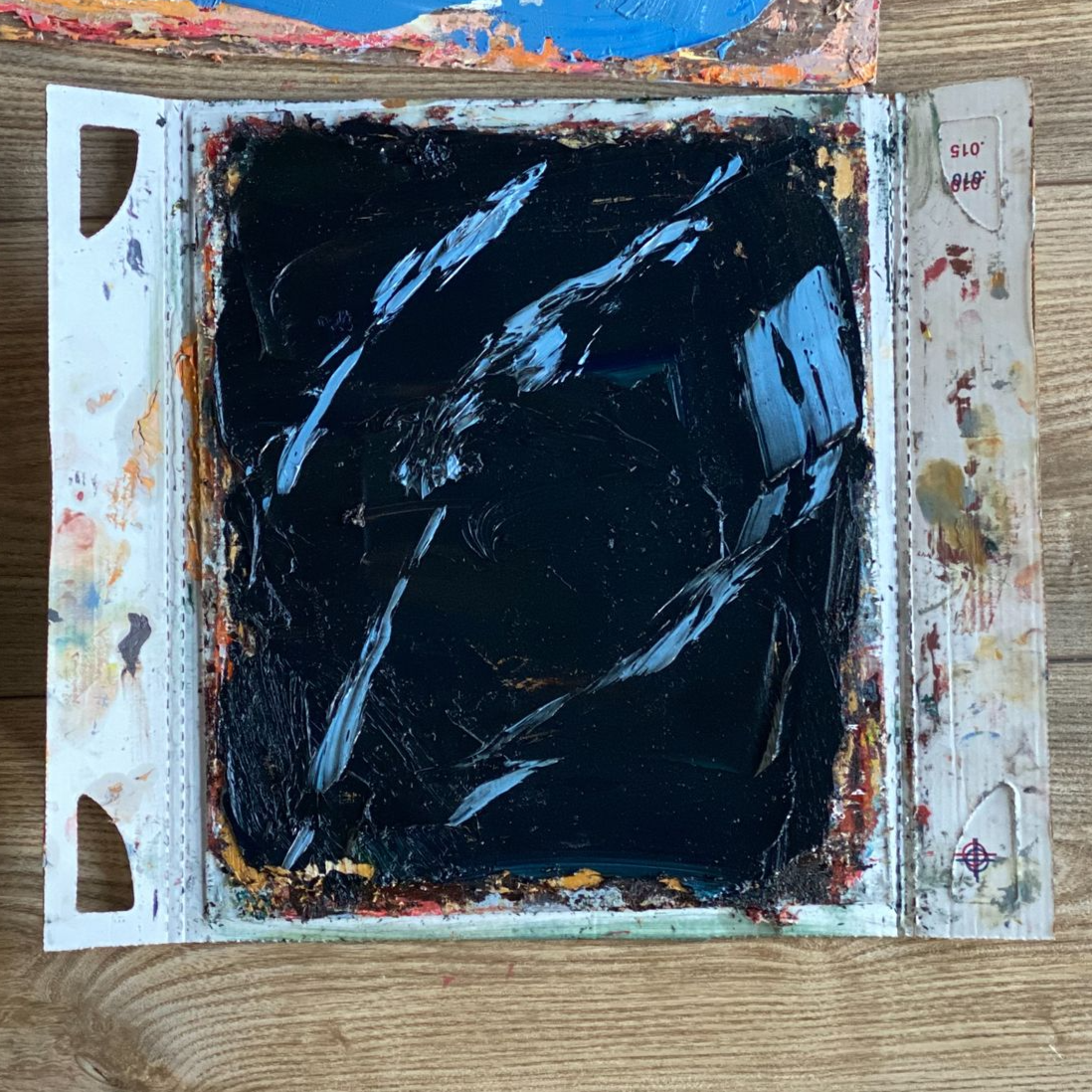
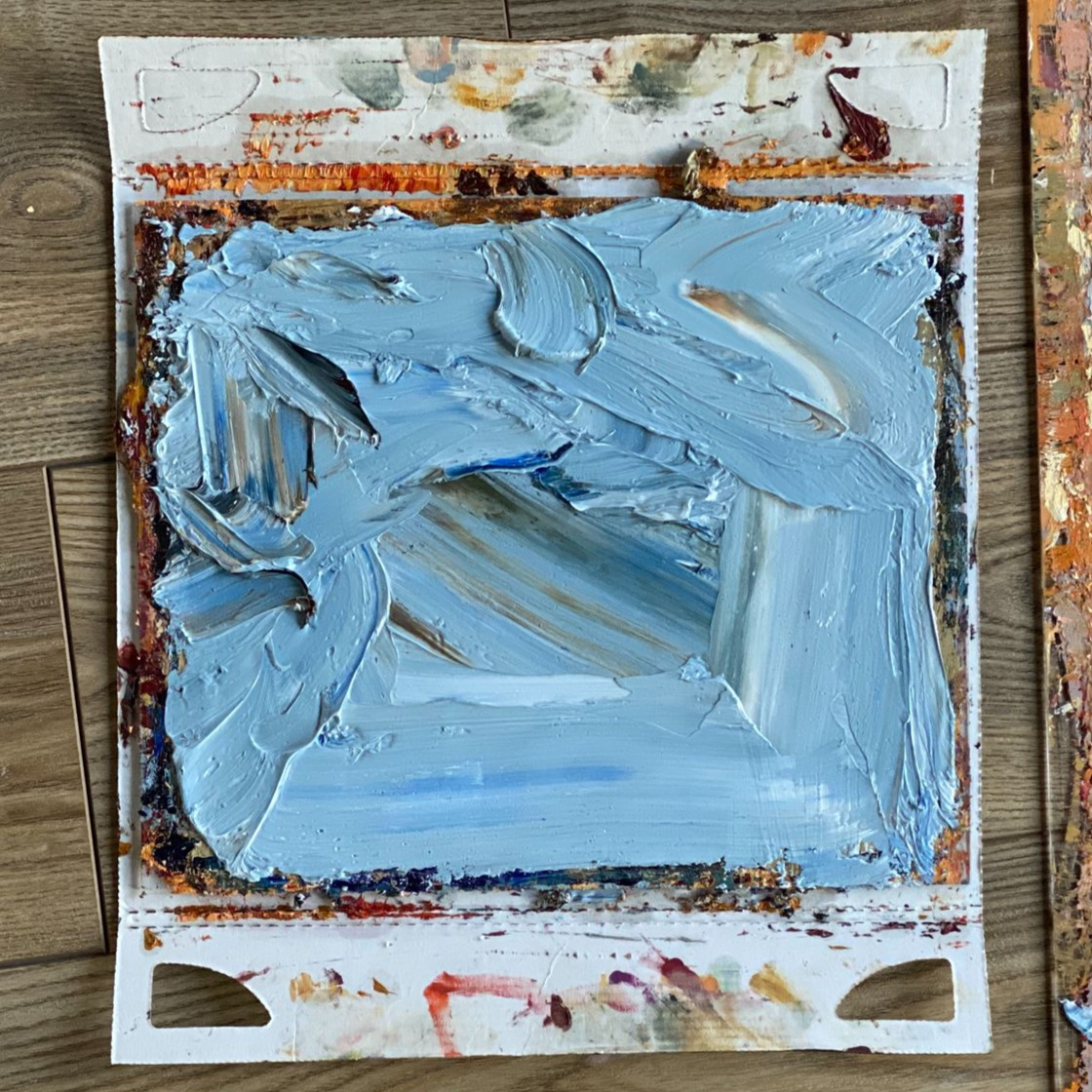
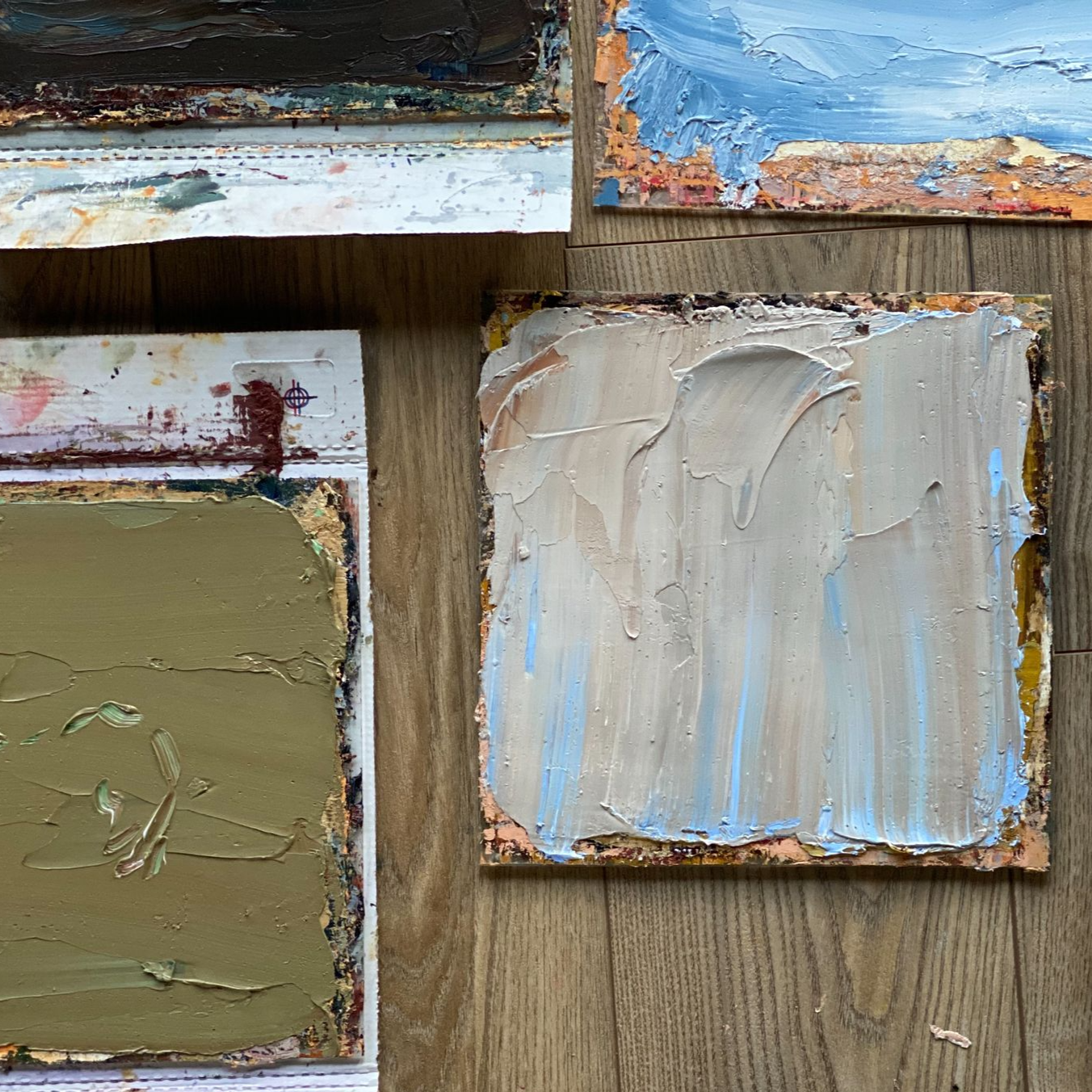
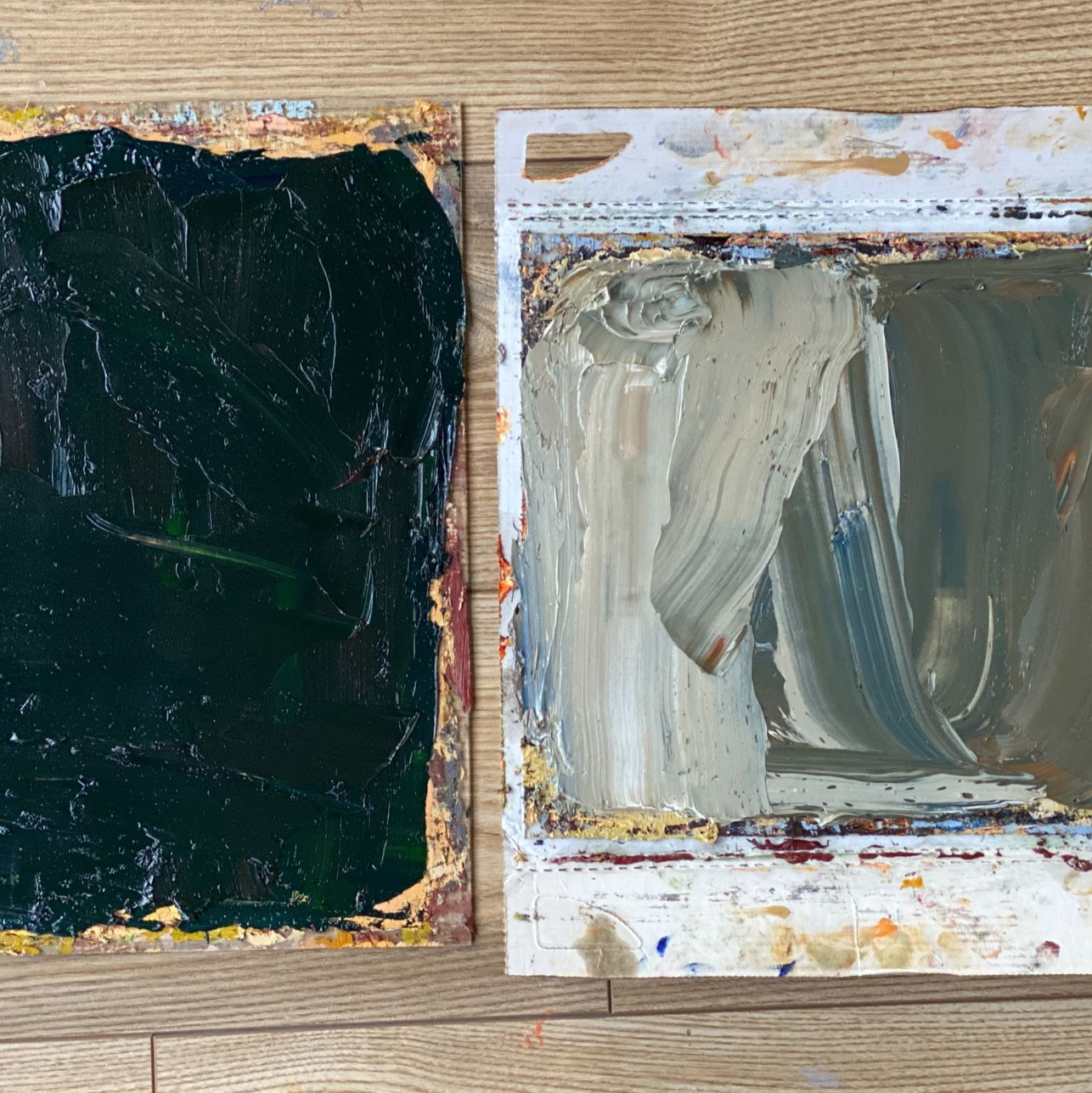
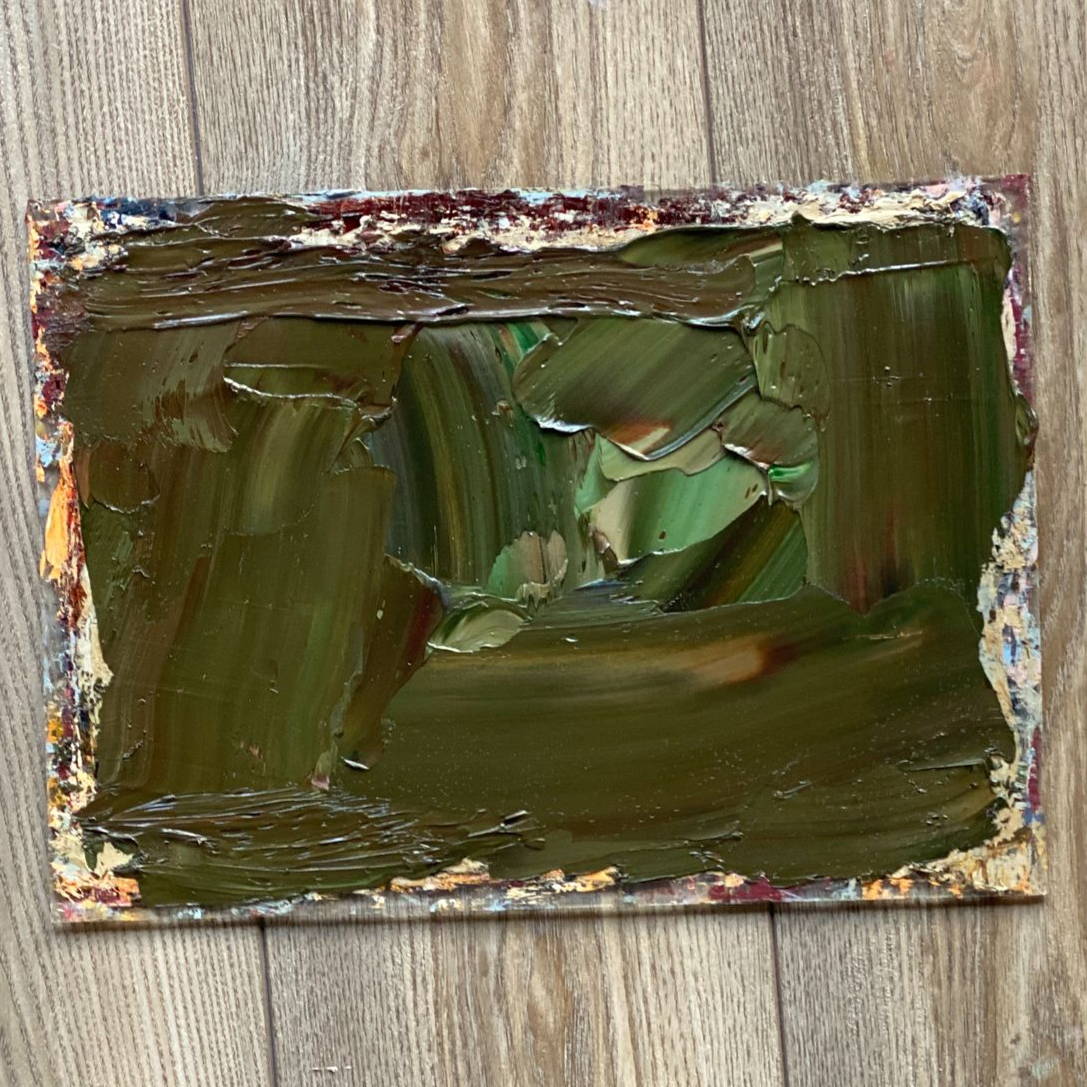
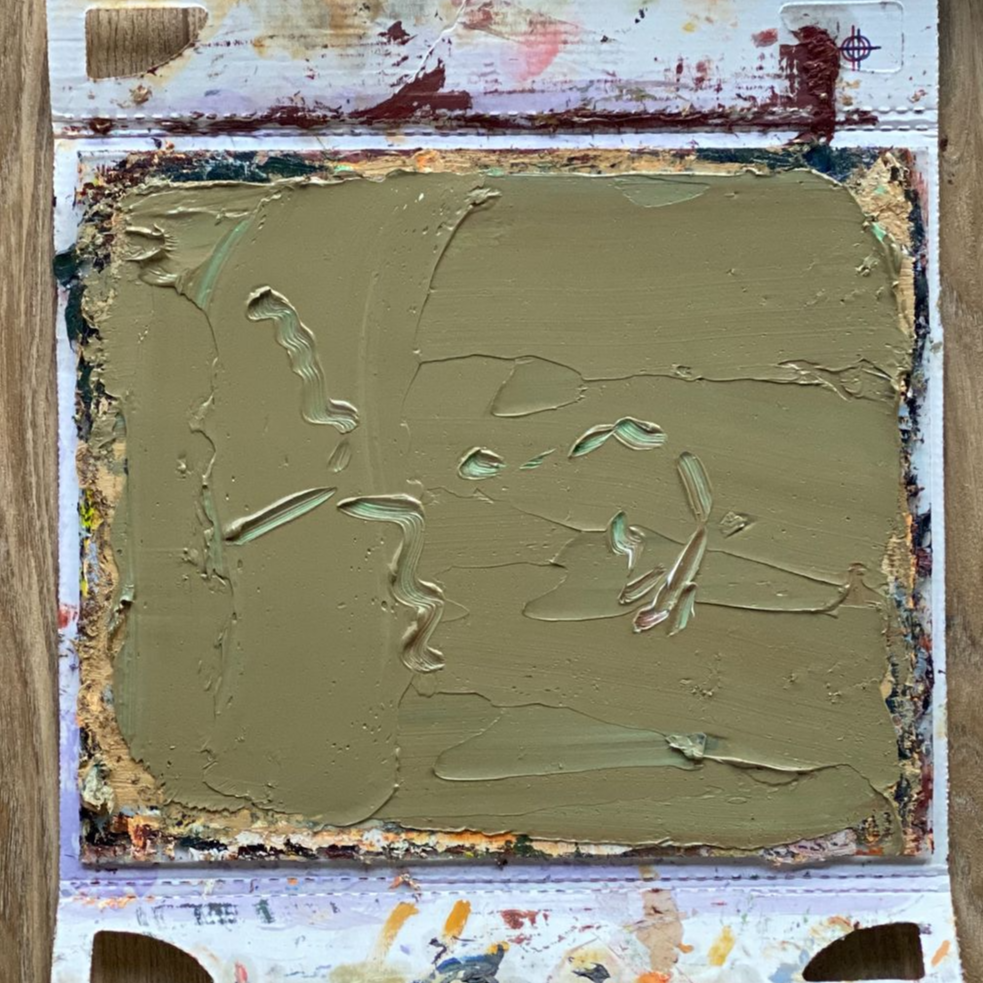
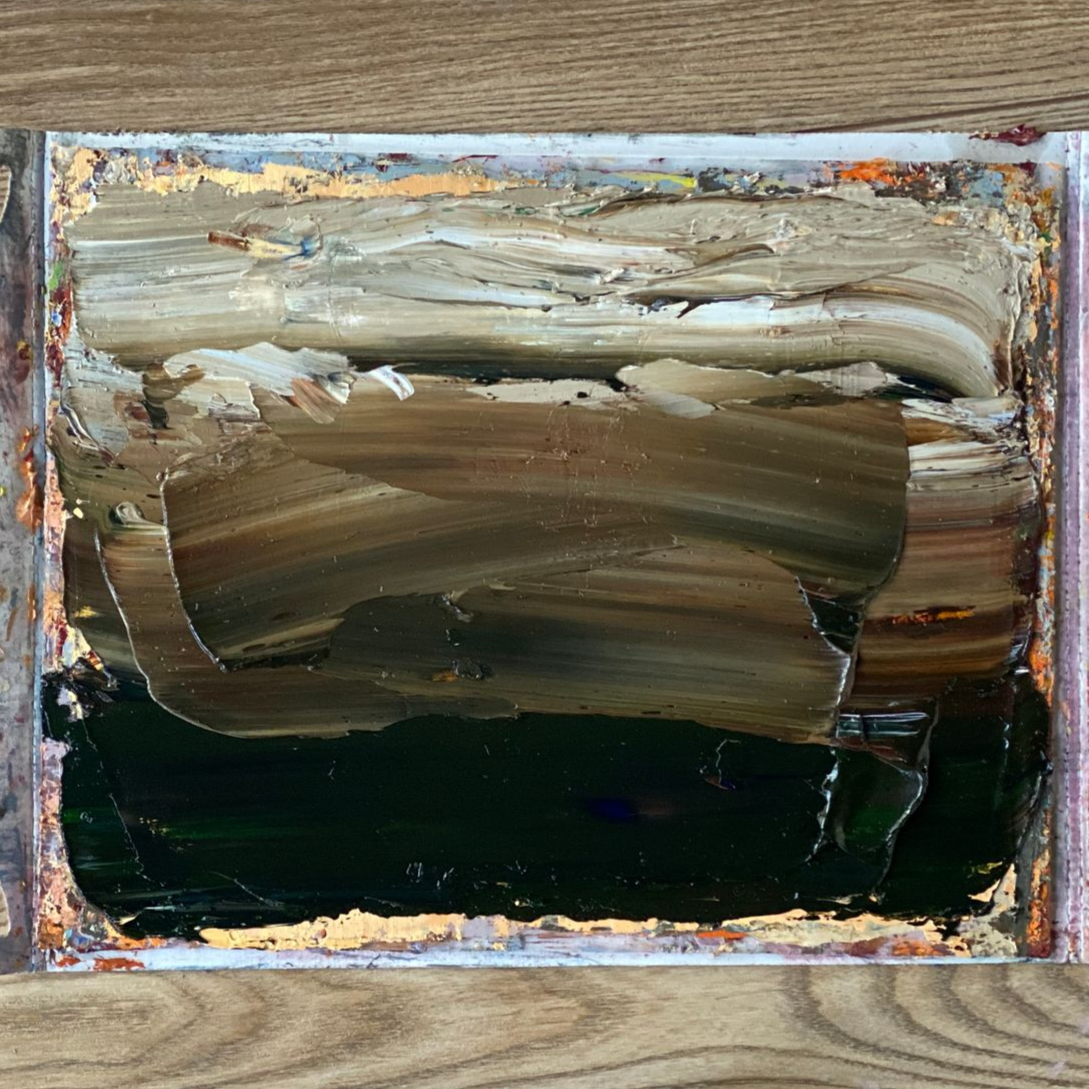
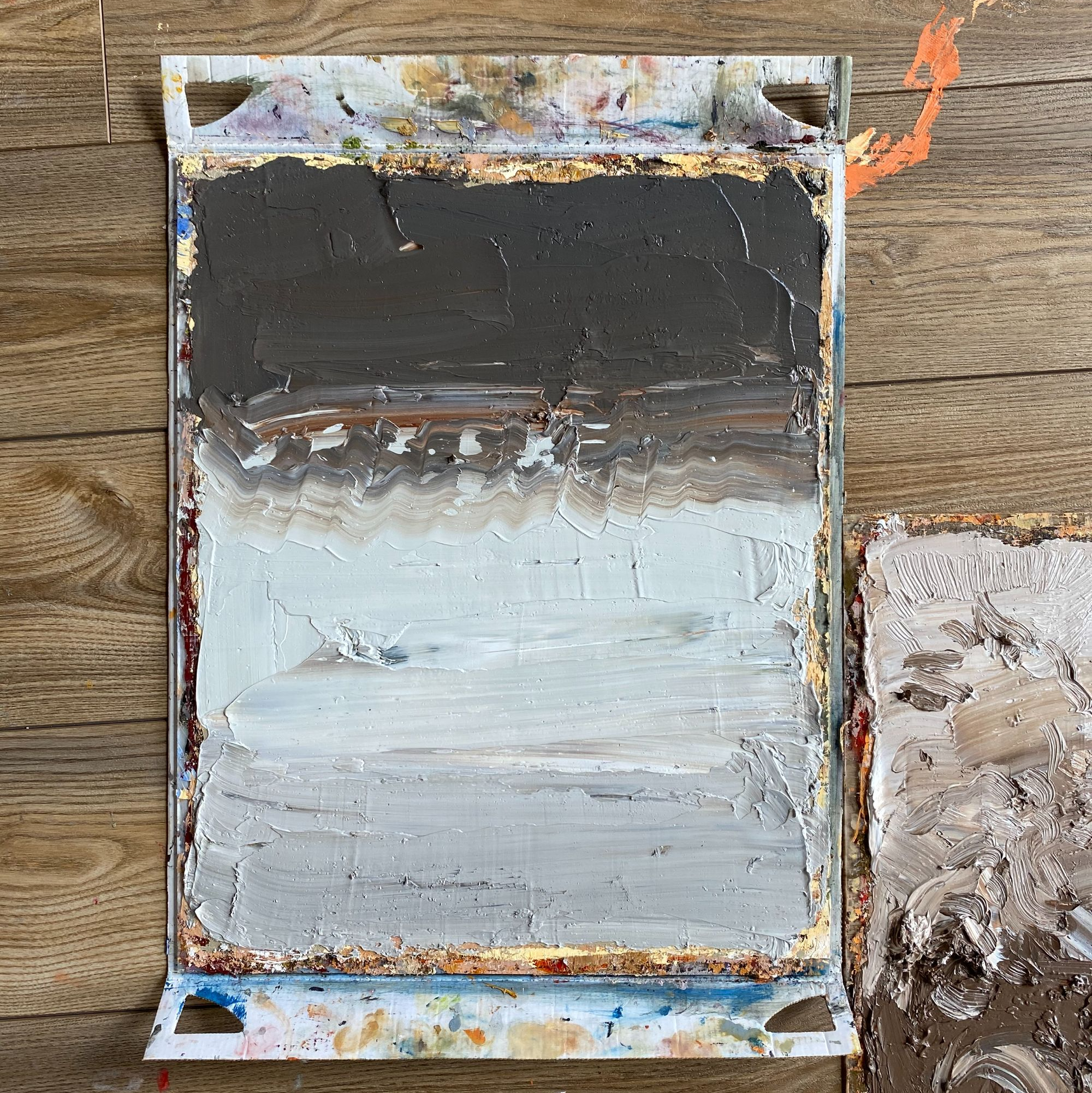
I hope the music of these studies comes through. In making them, just focusing on an individual area that excites me in my reference material and expanding on it.
May 15, 2021
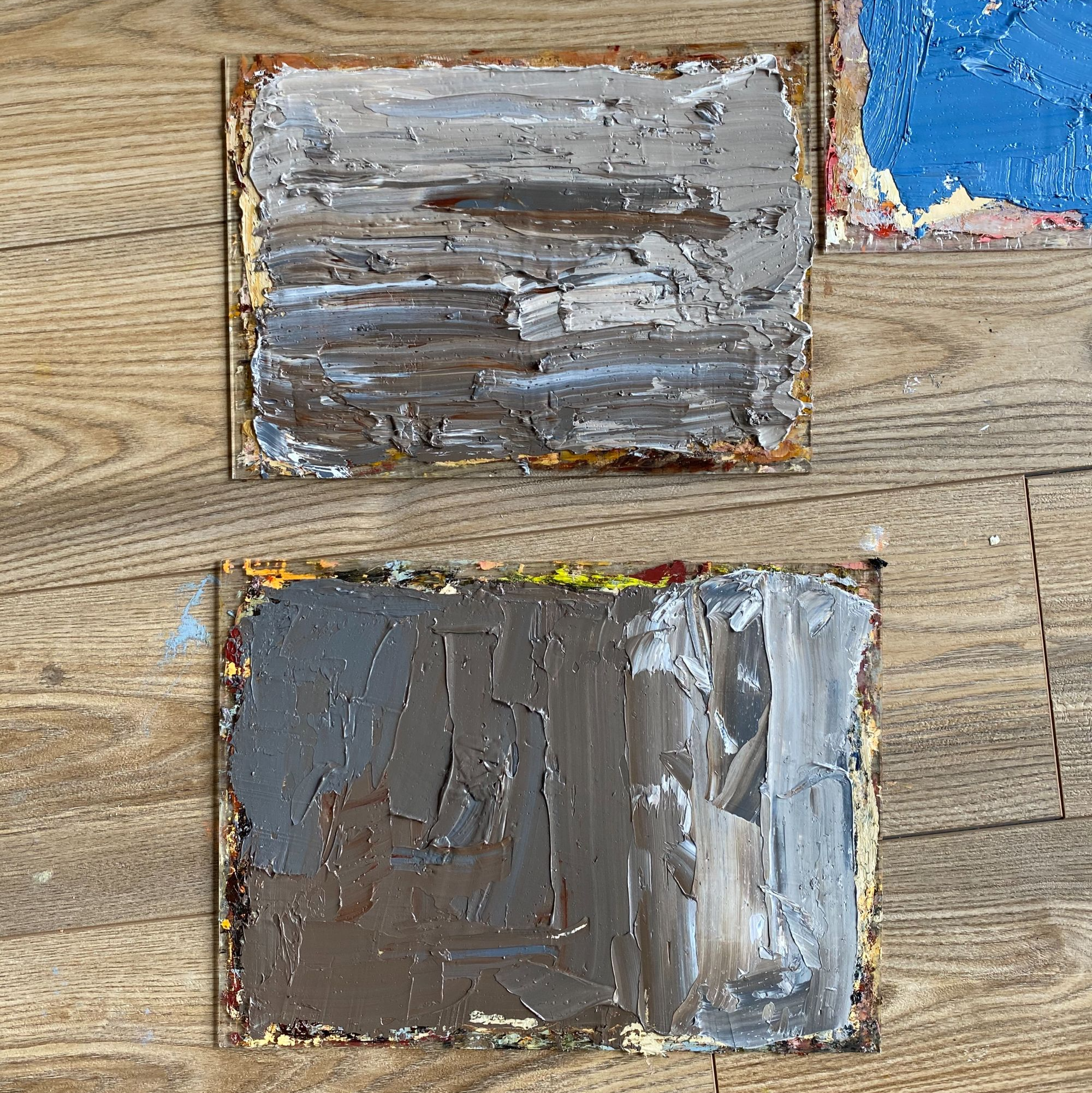
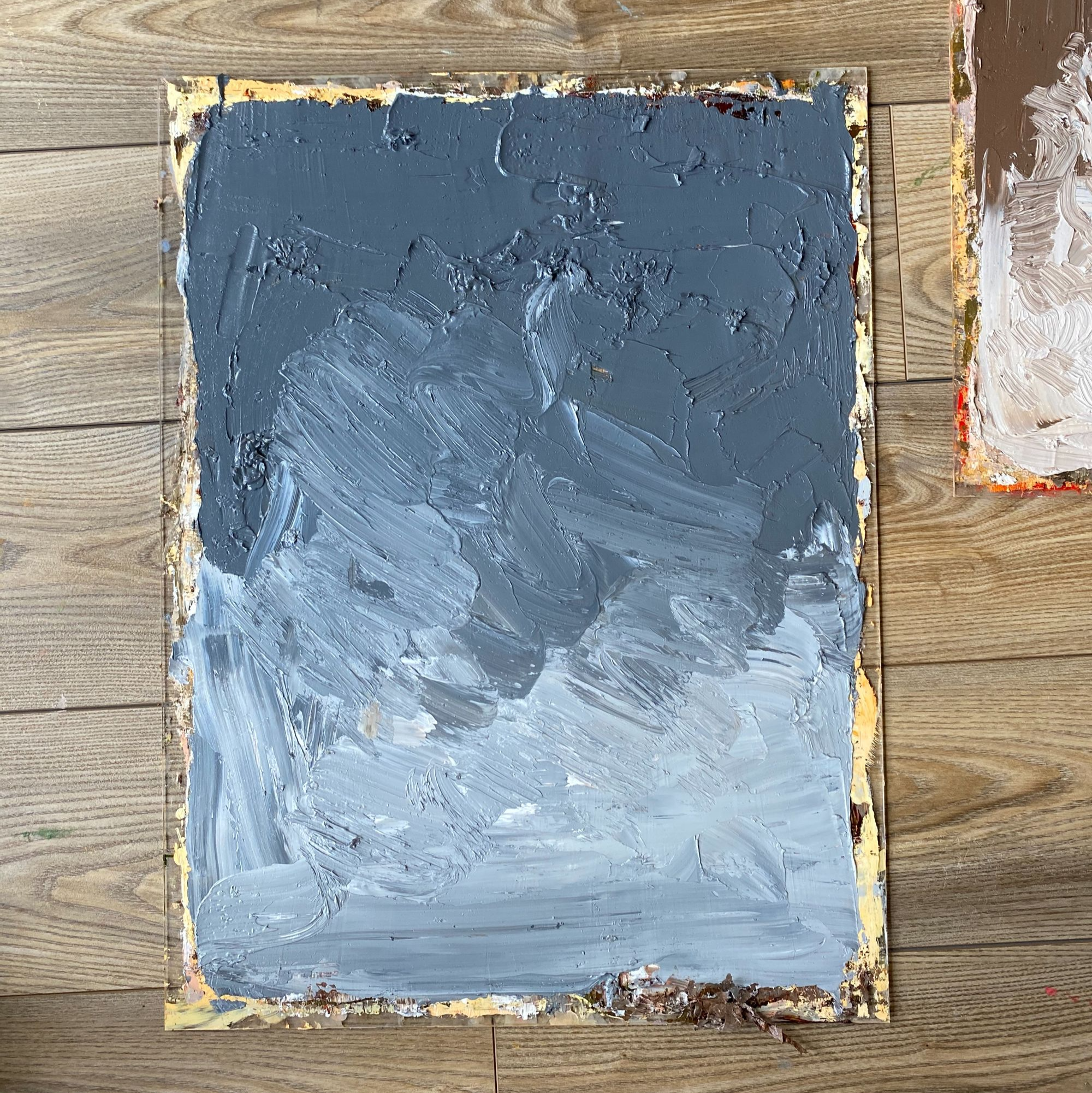
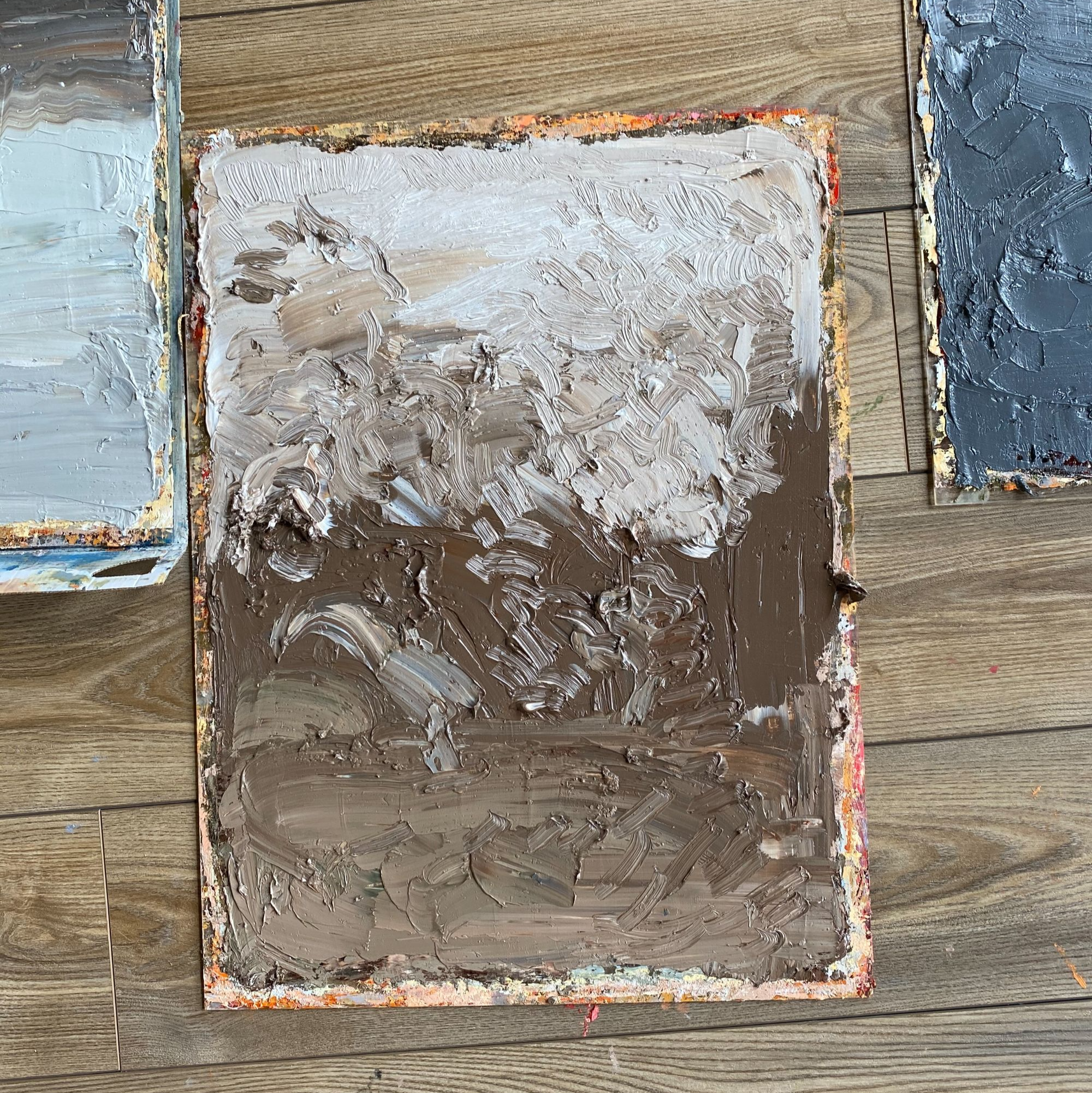
May 17, 2021
May 22, 2021: Trip to Portland Museum of Art
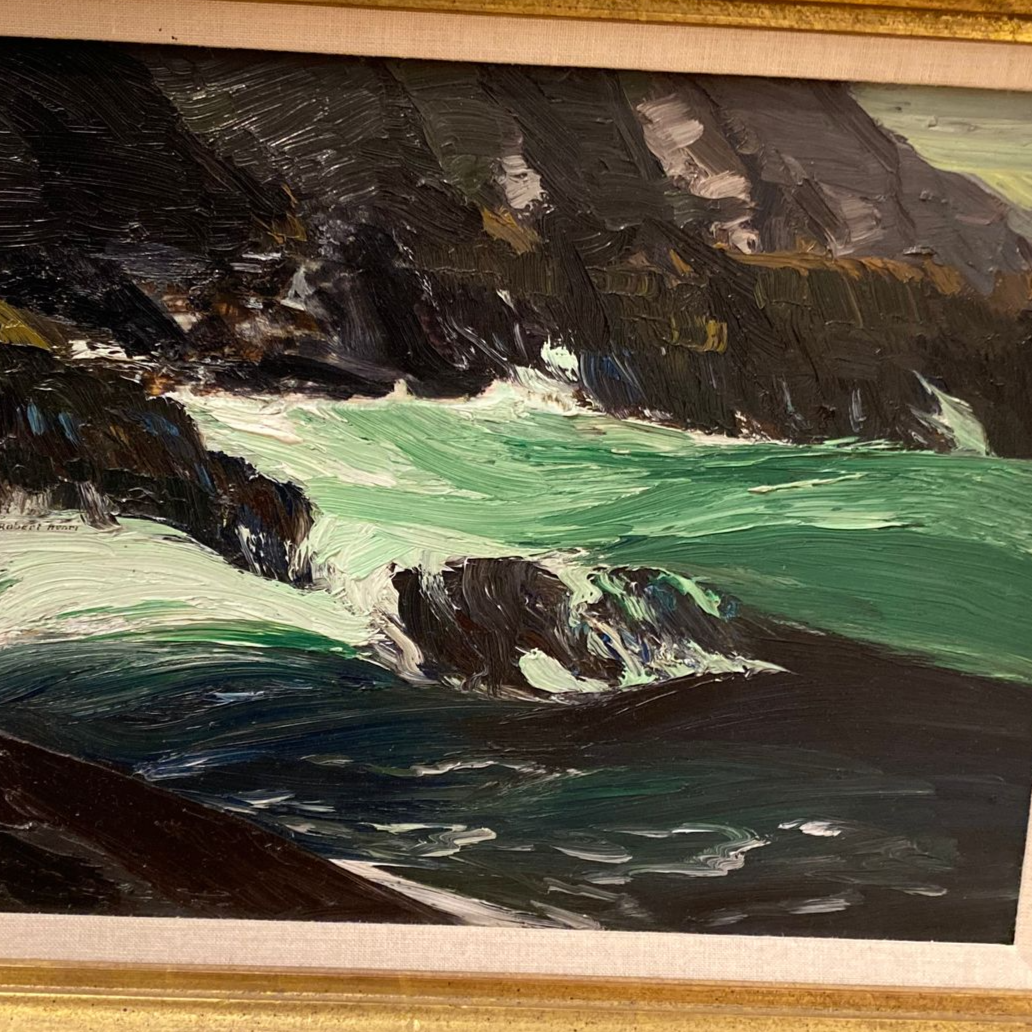
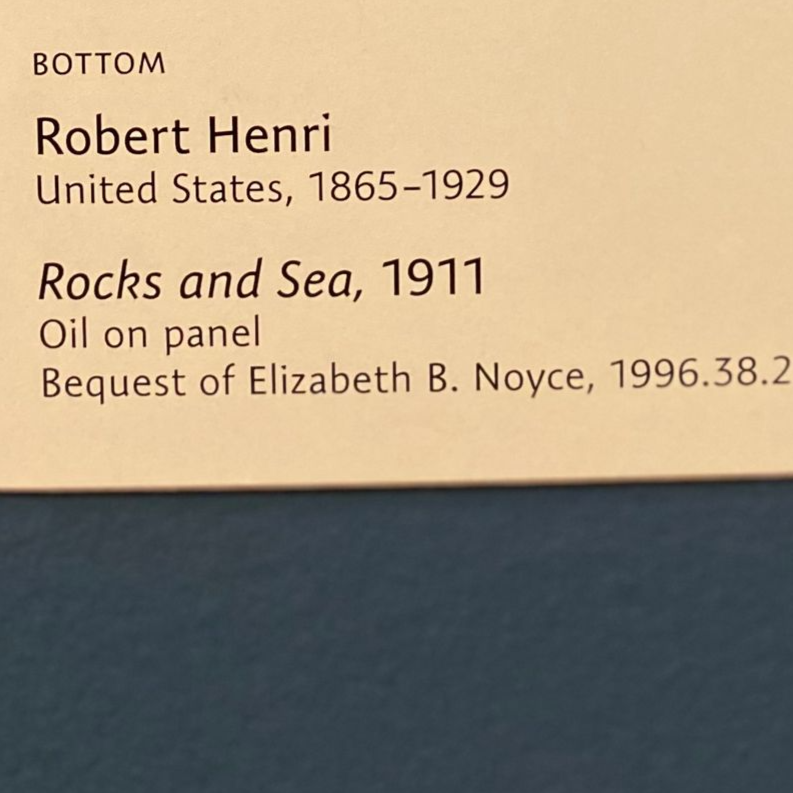
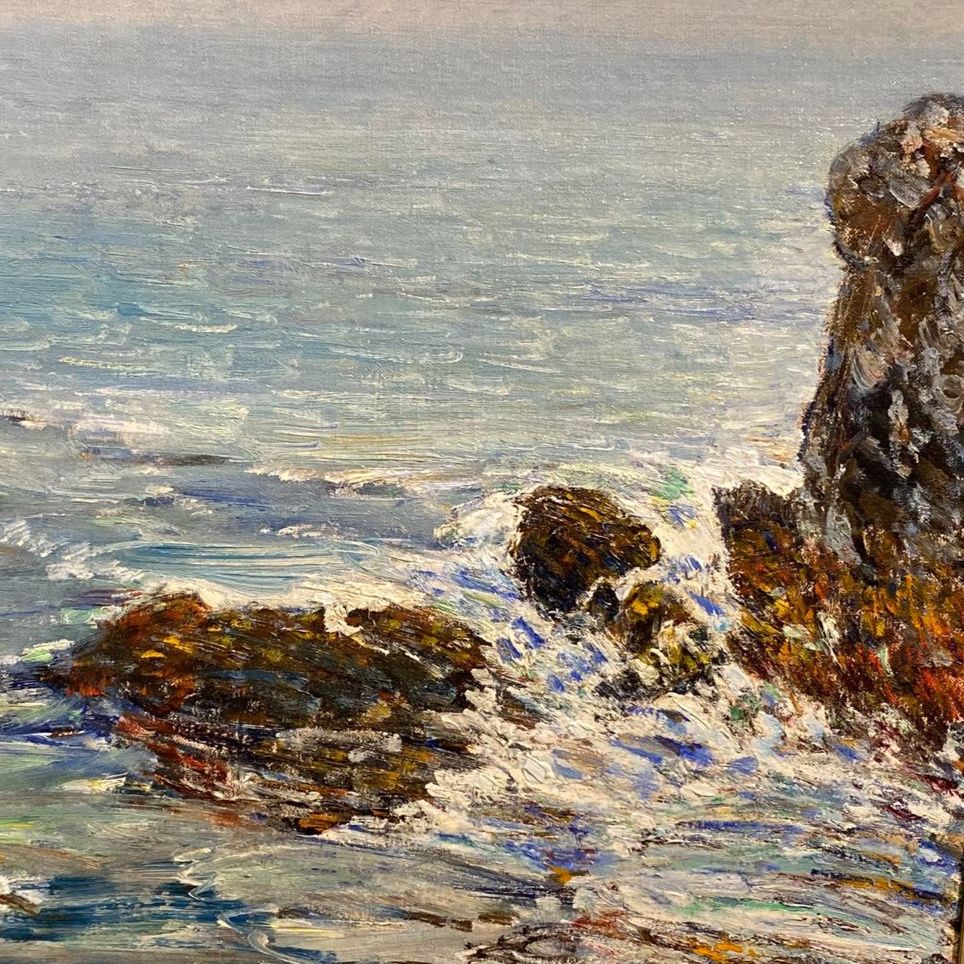
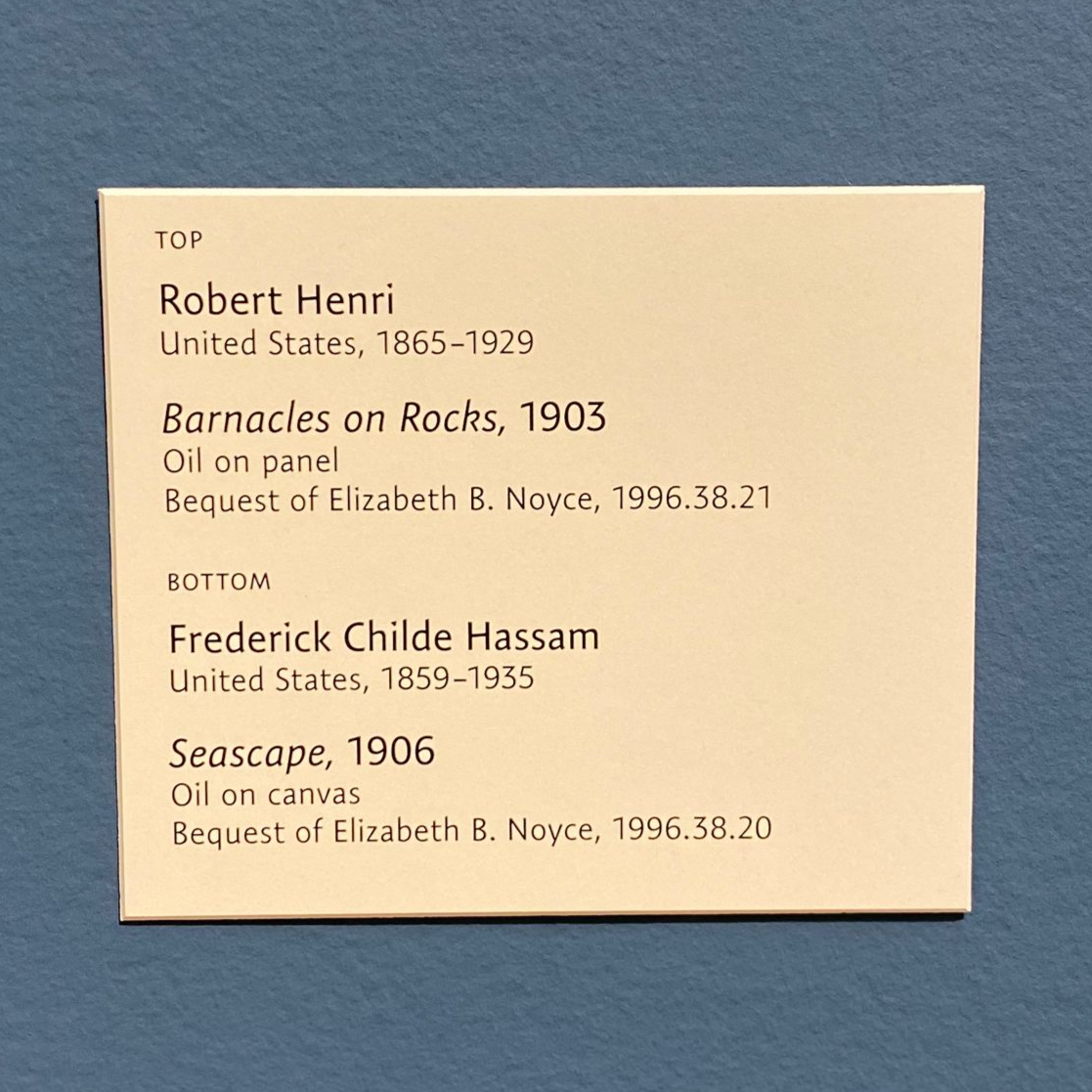
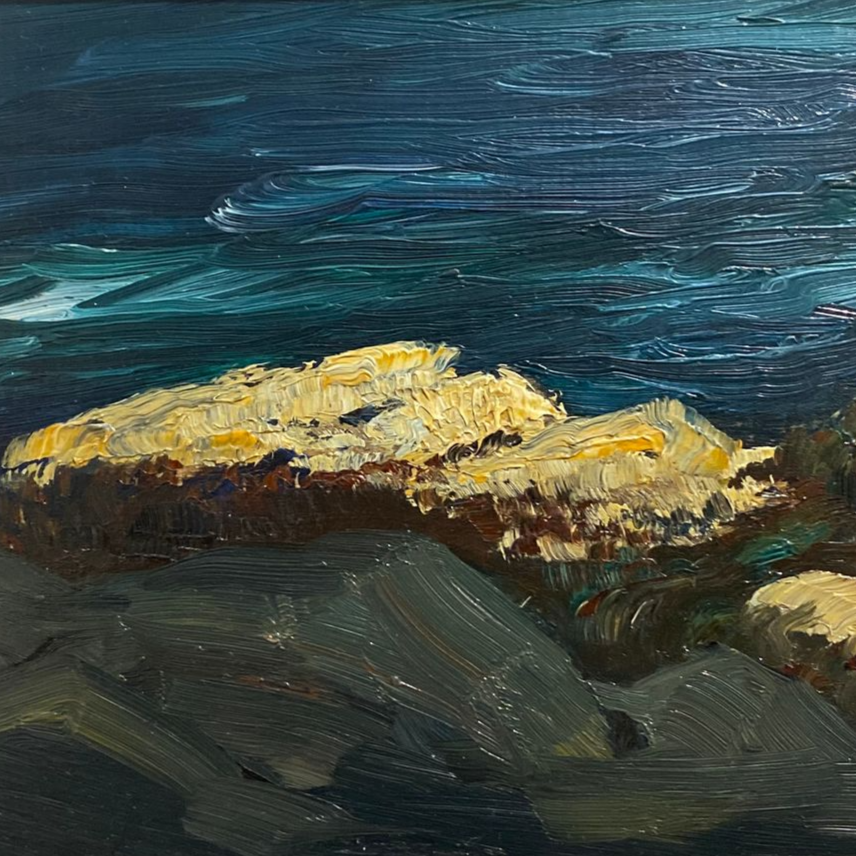
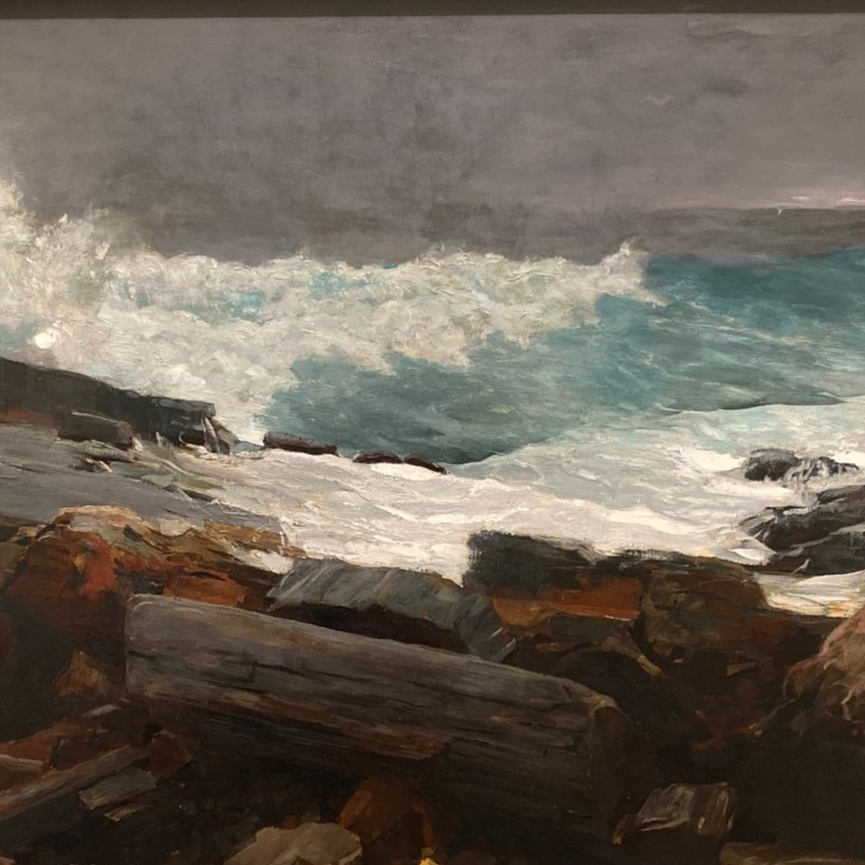
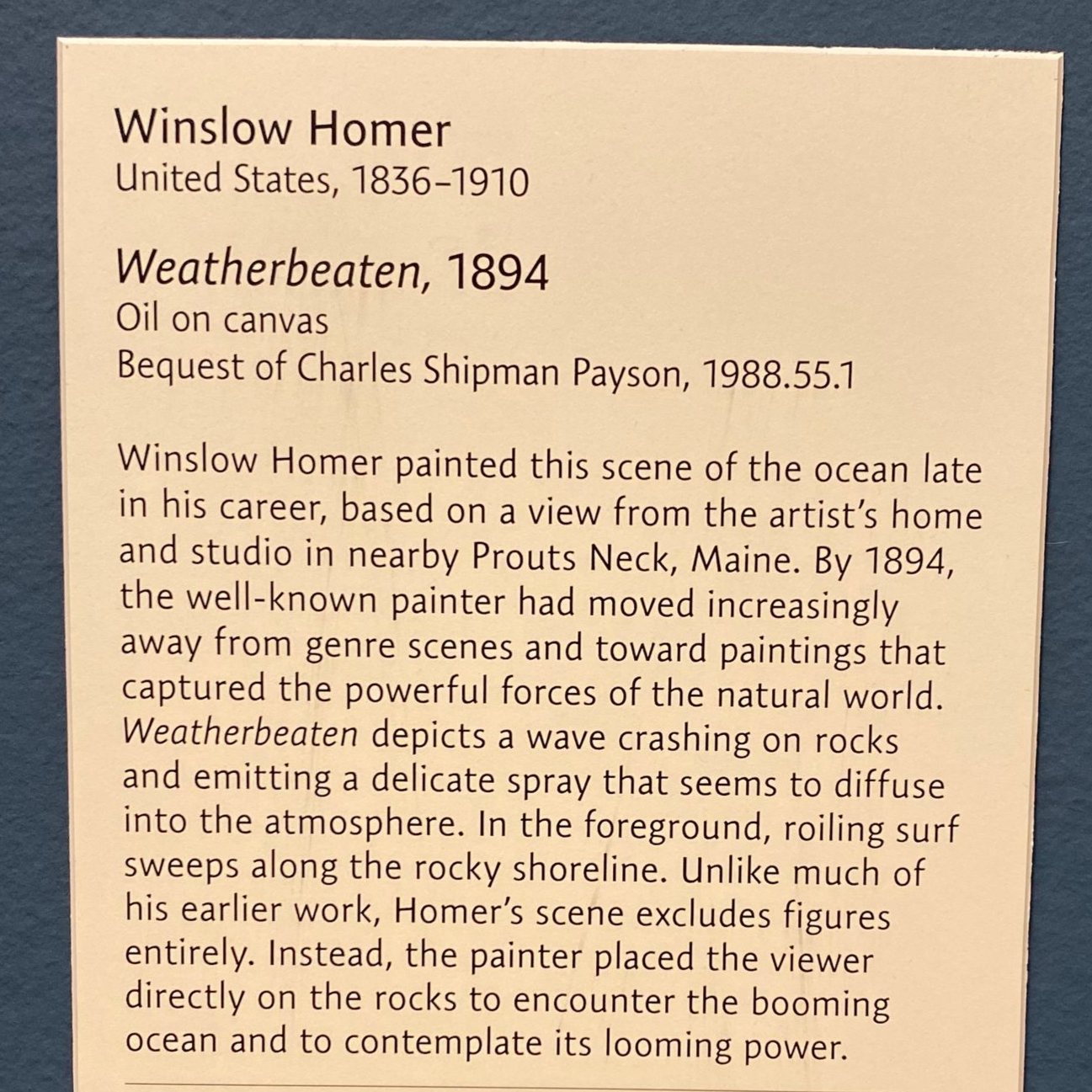
Just imagine if each of these confident brushstrokes were tiny microcosms.
May 23, 2021
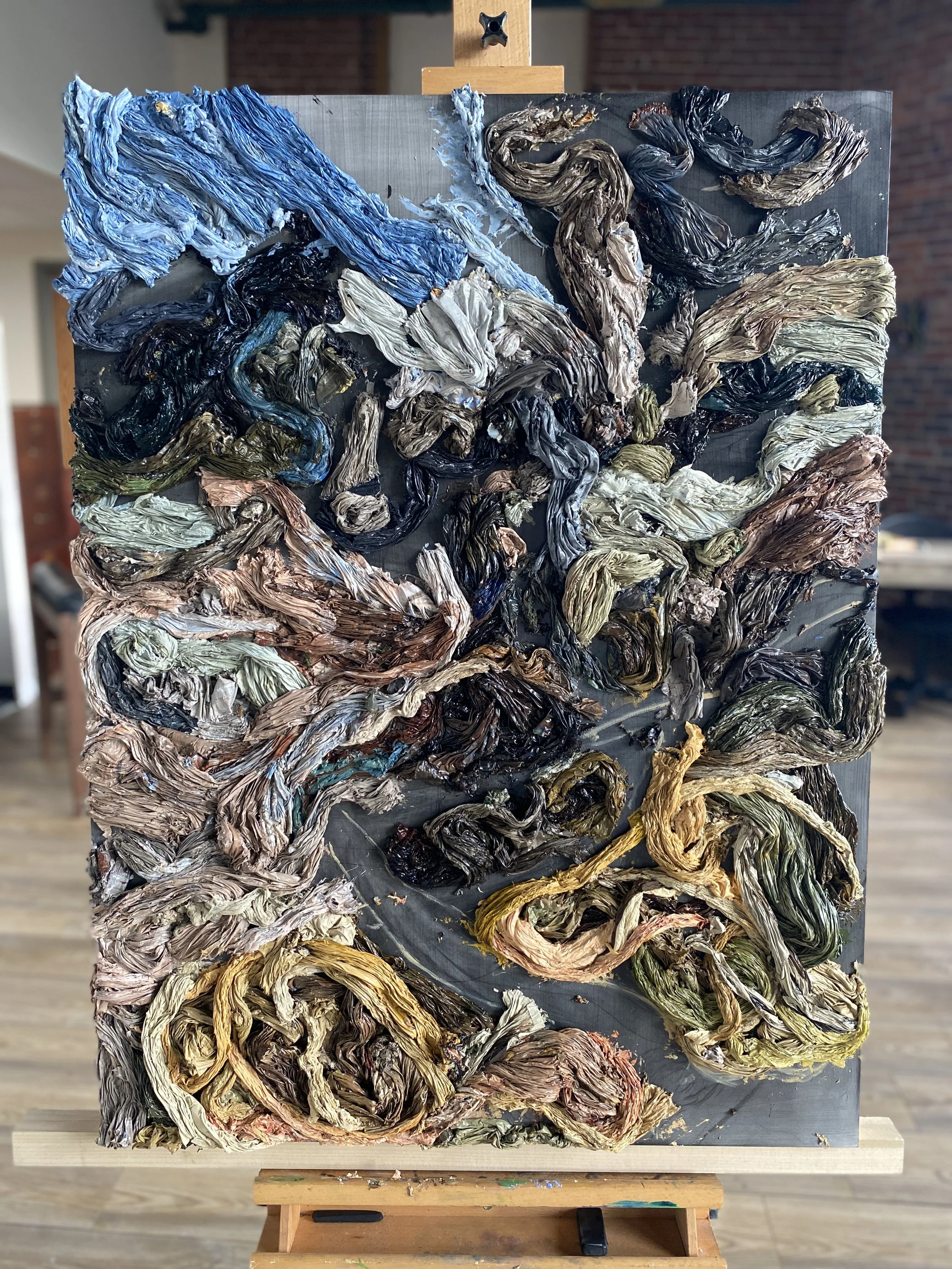
May 26, 2021
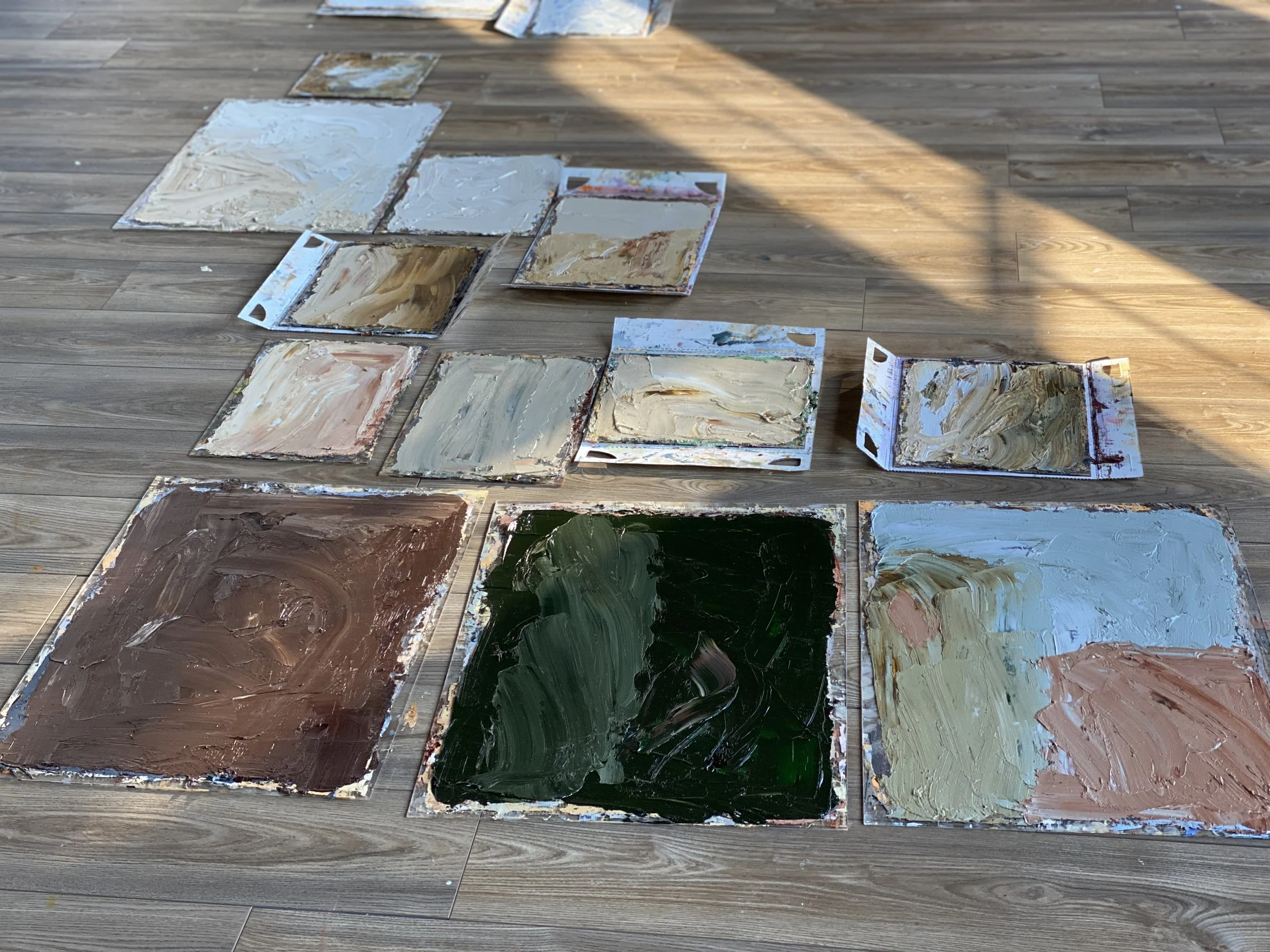
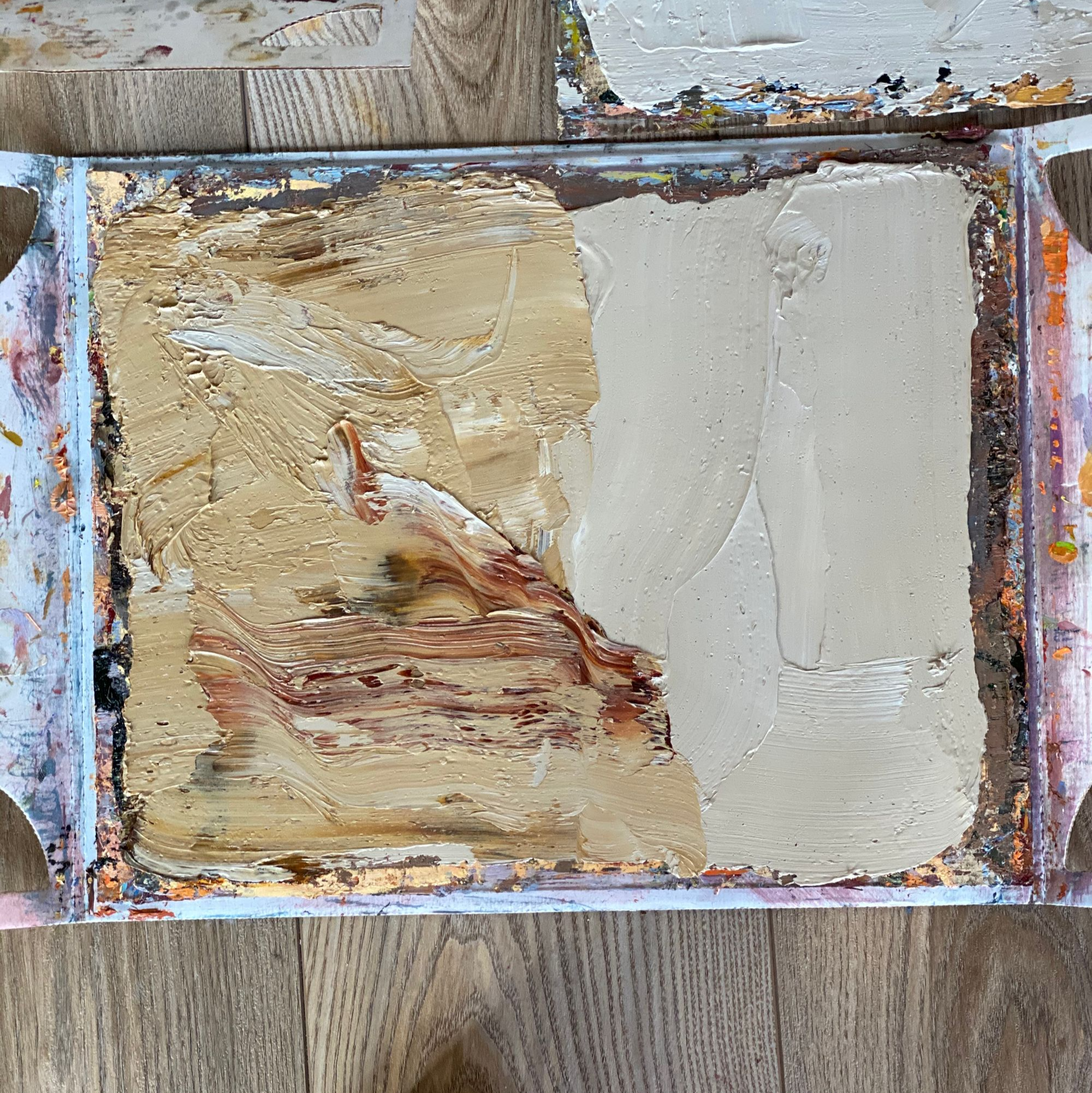
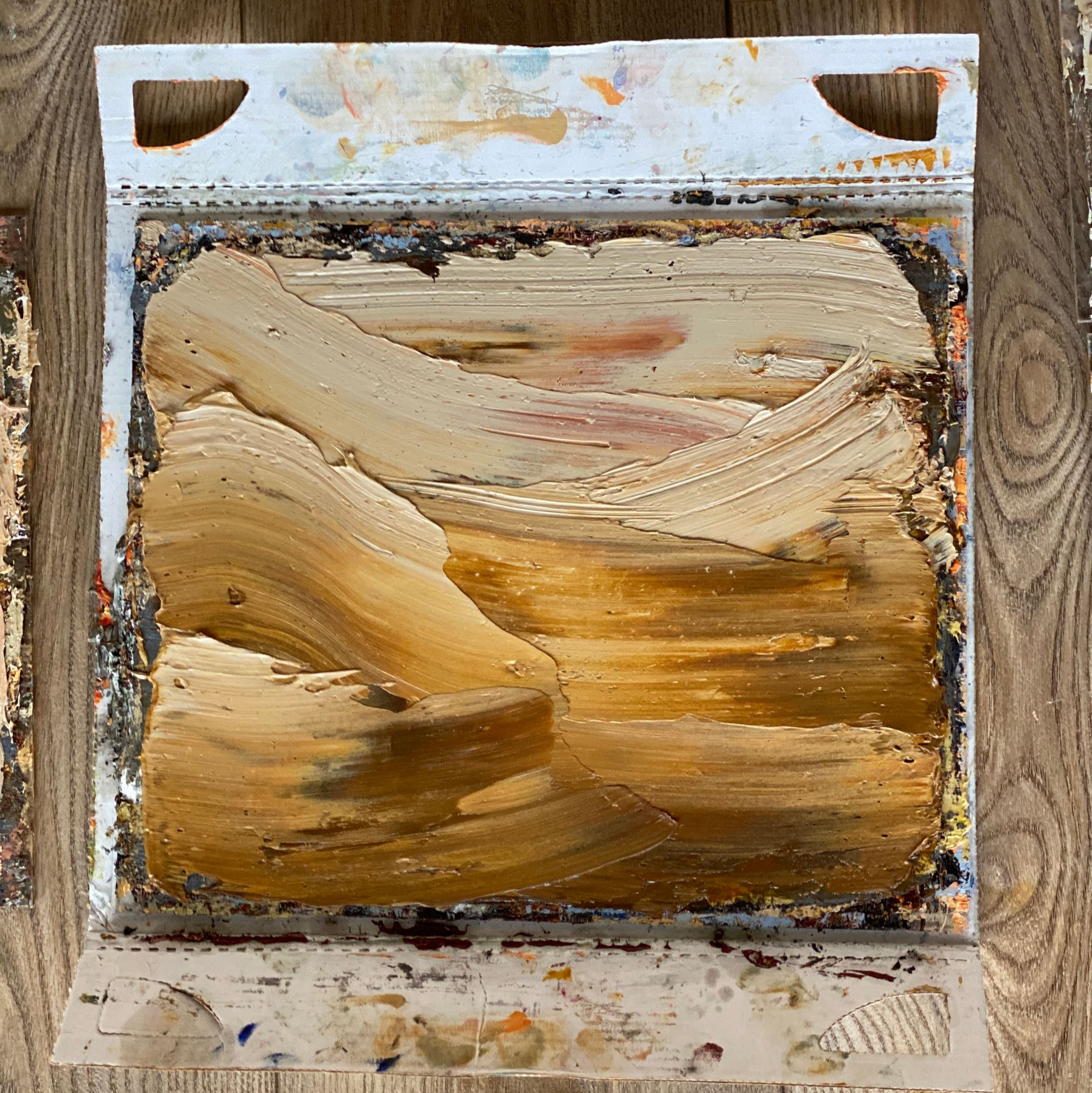
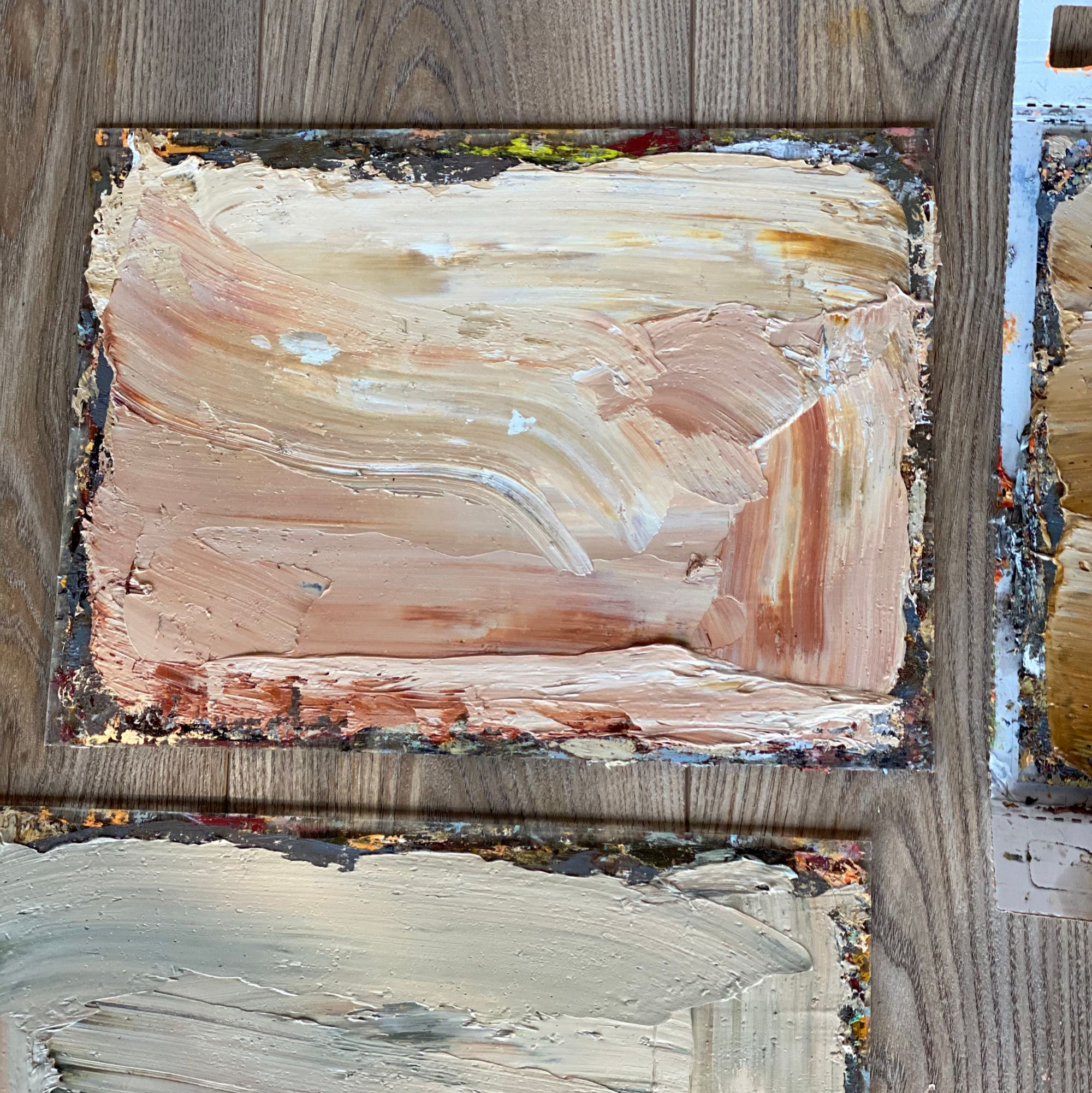
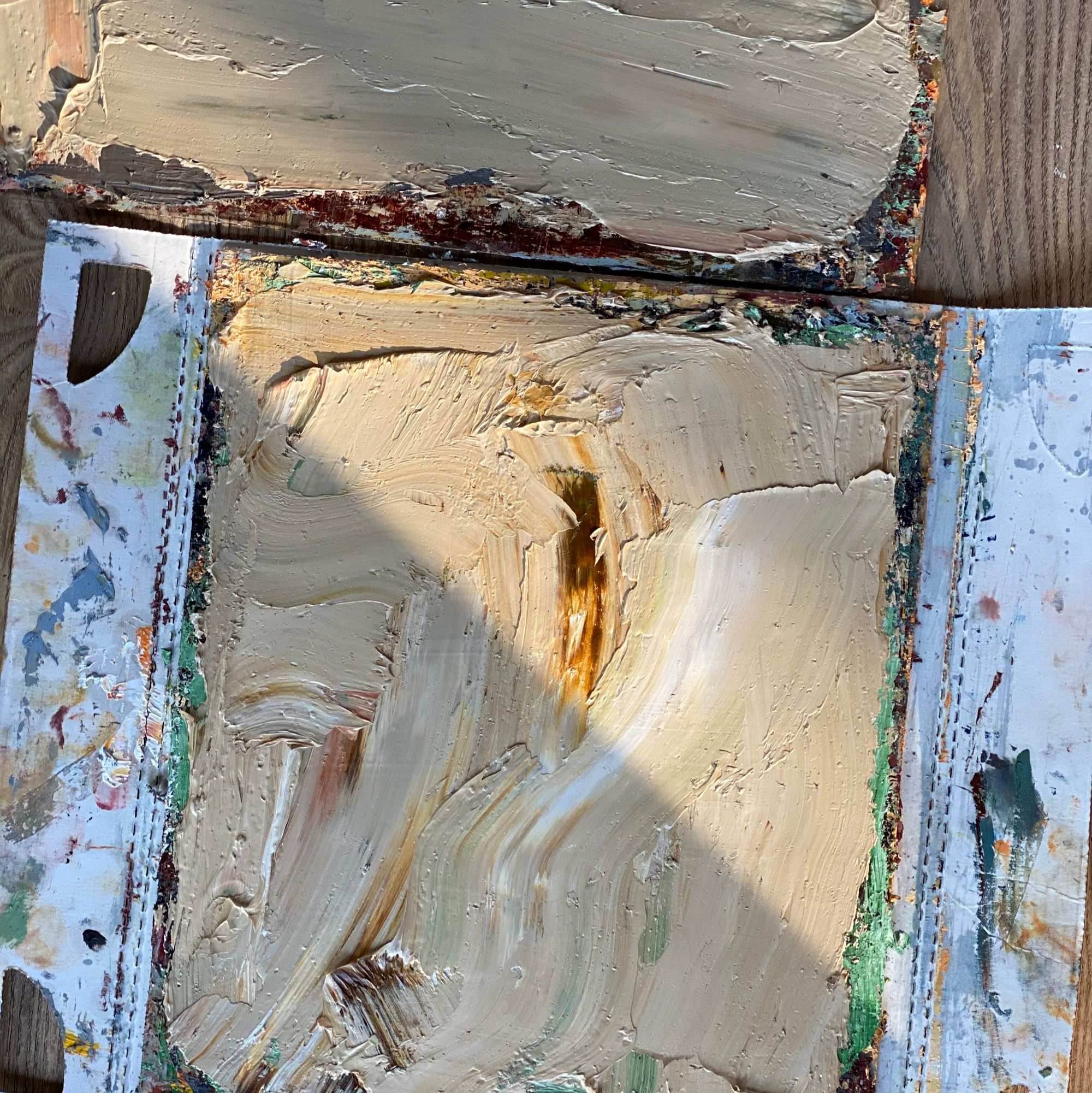
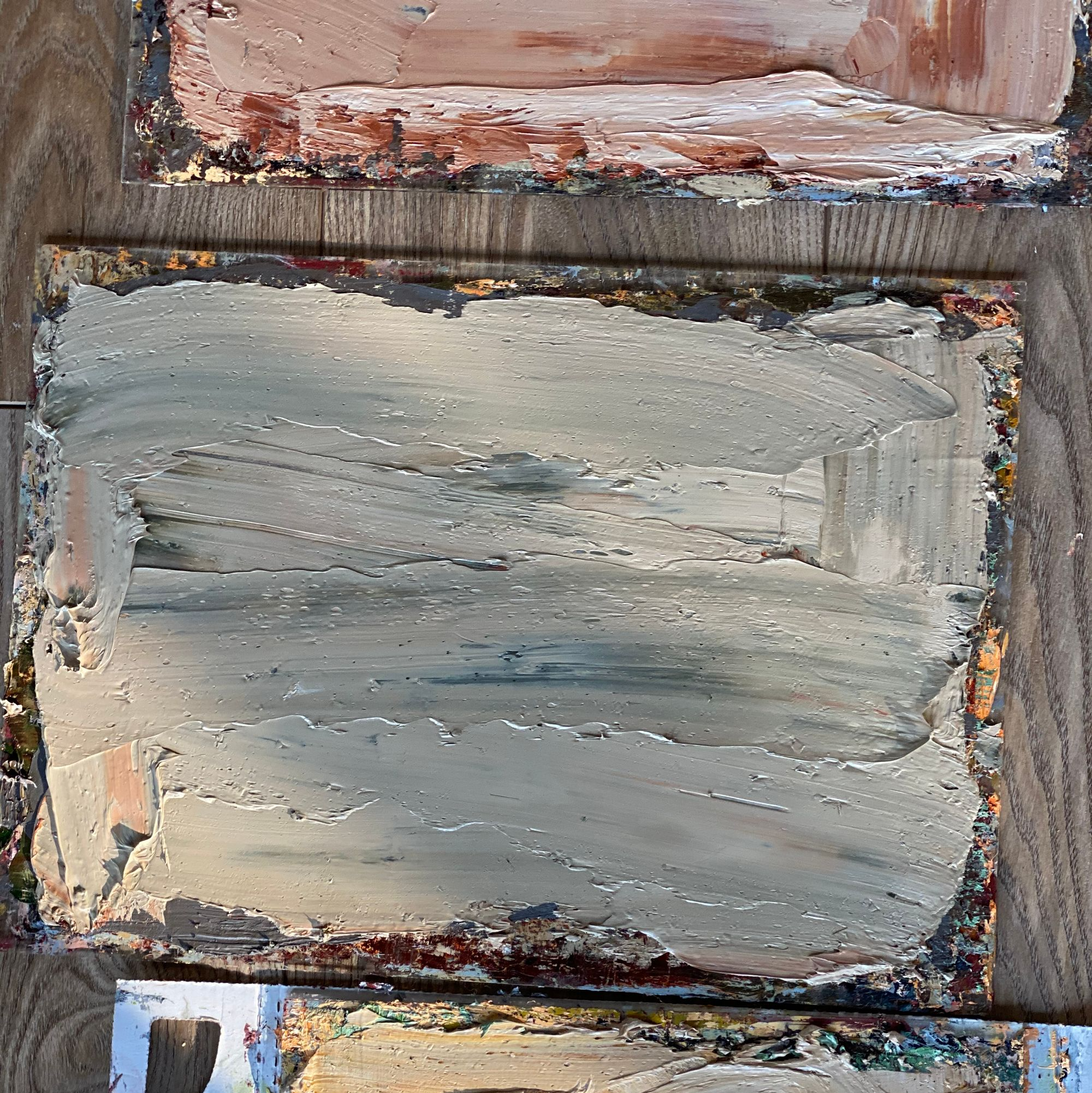
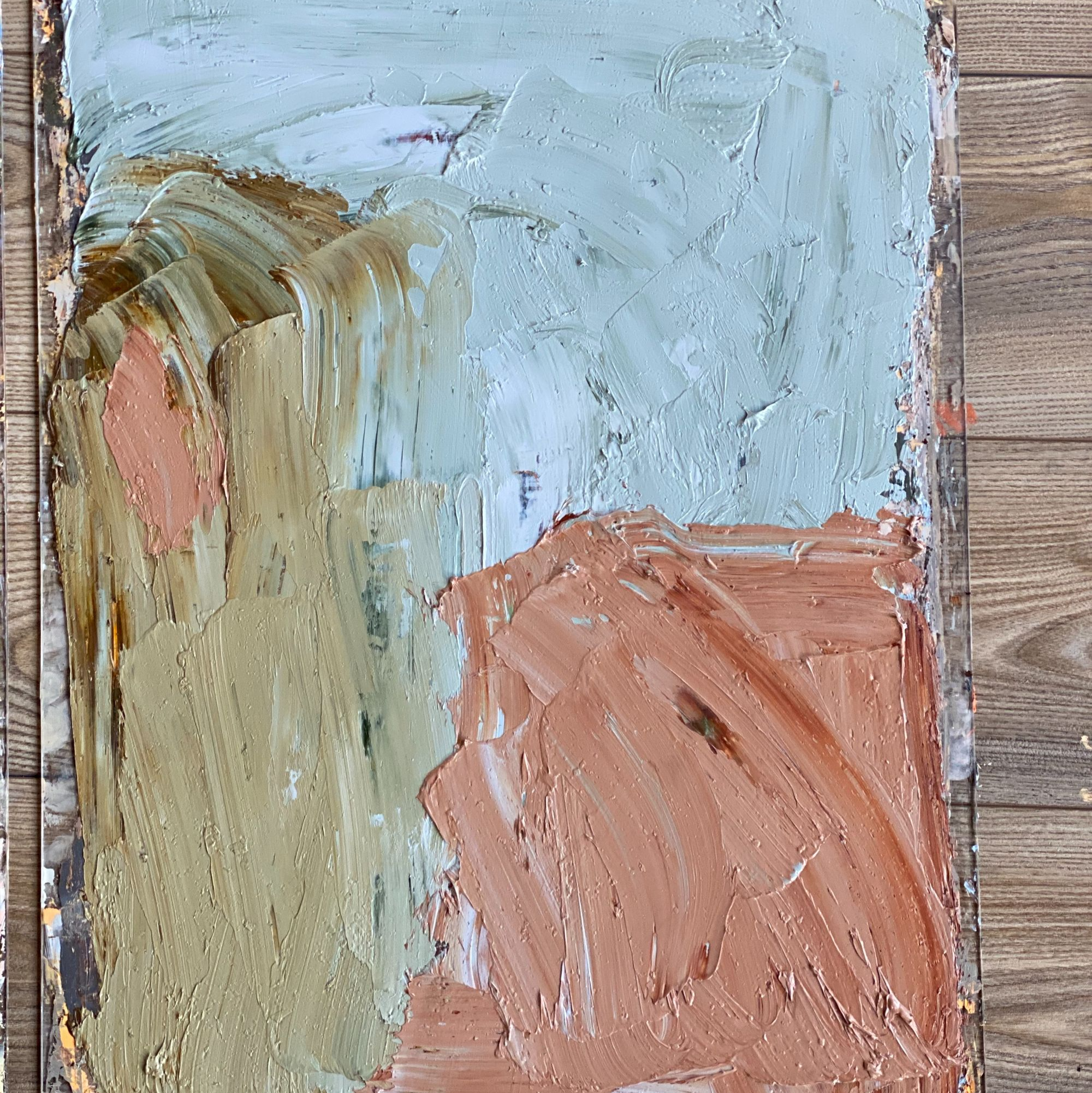
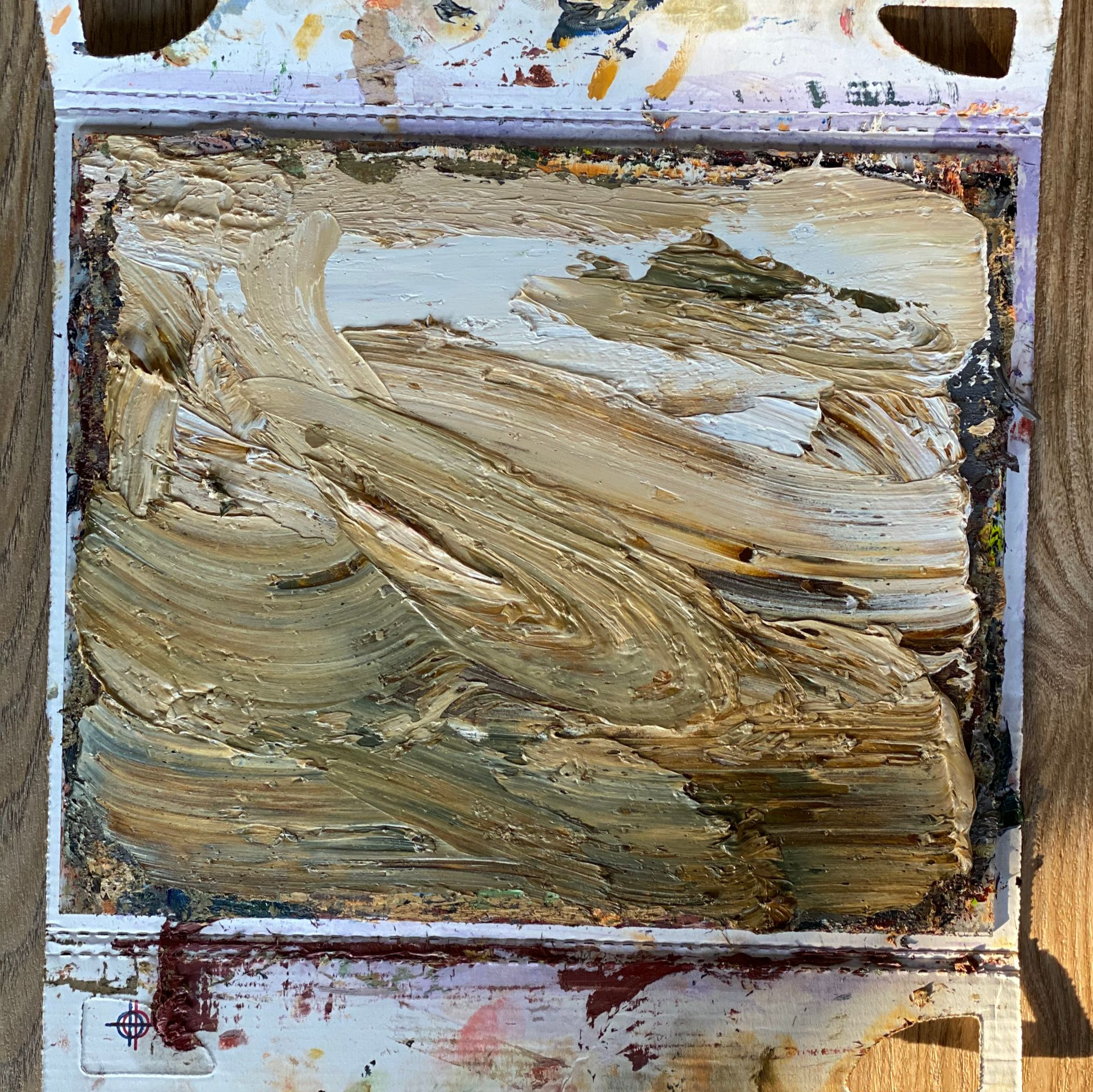
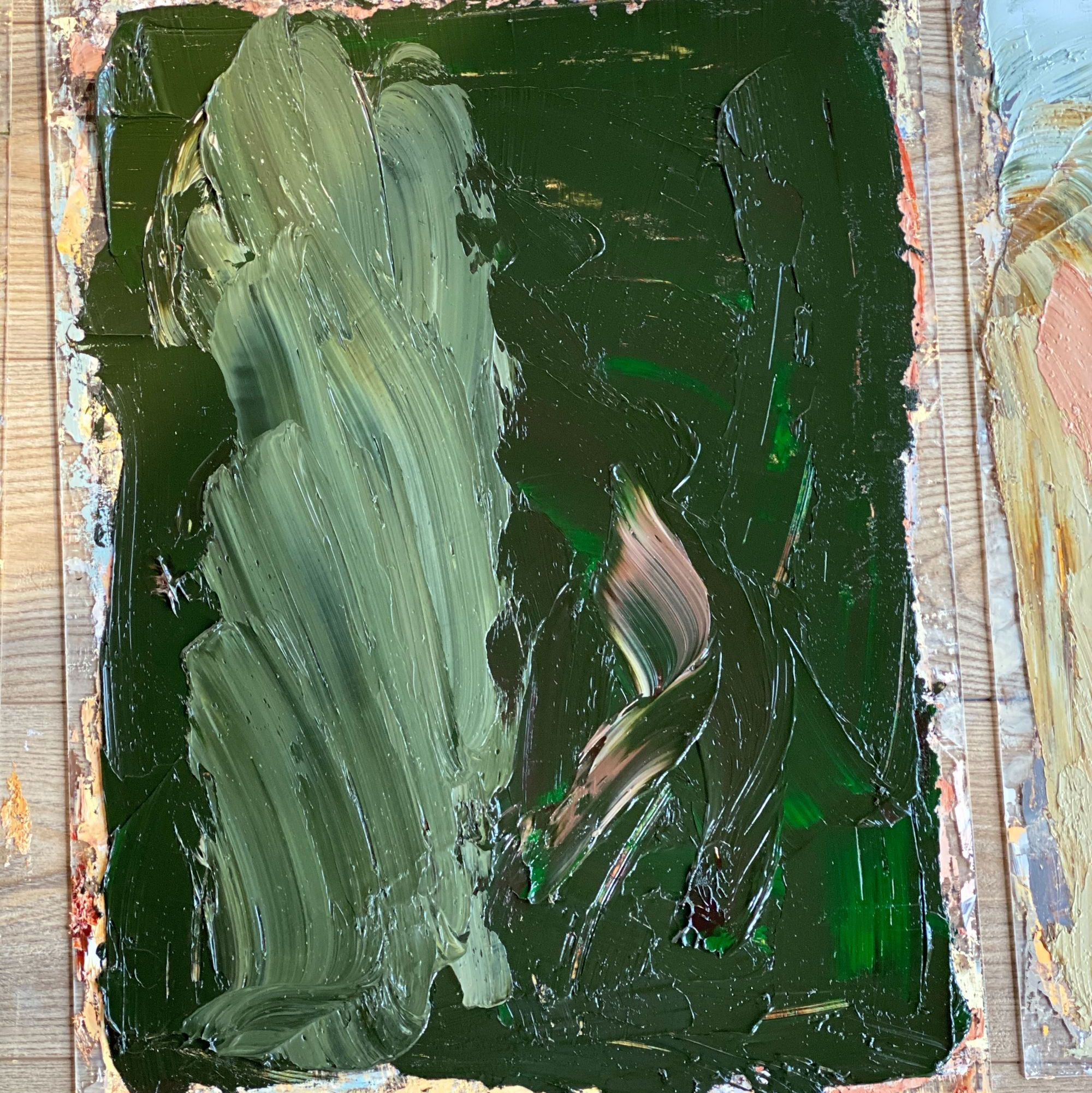
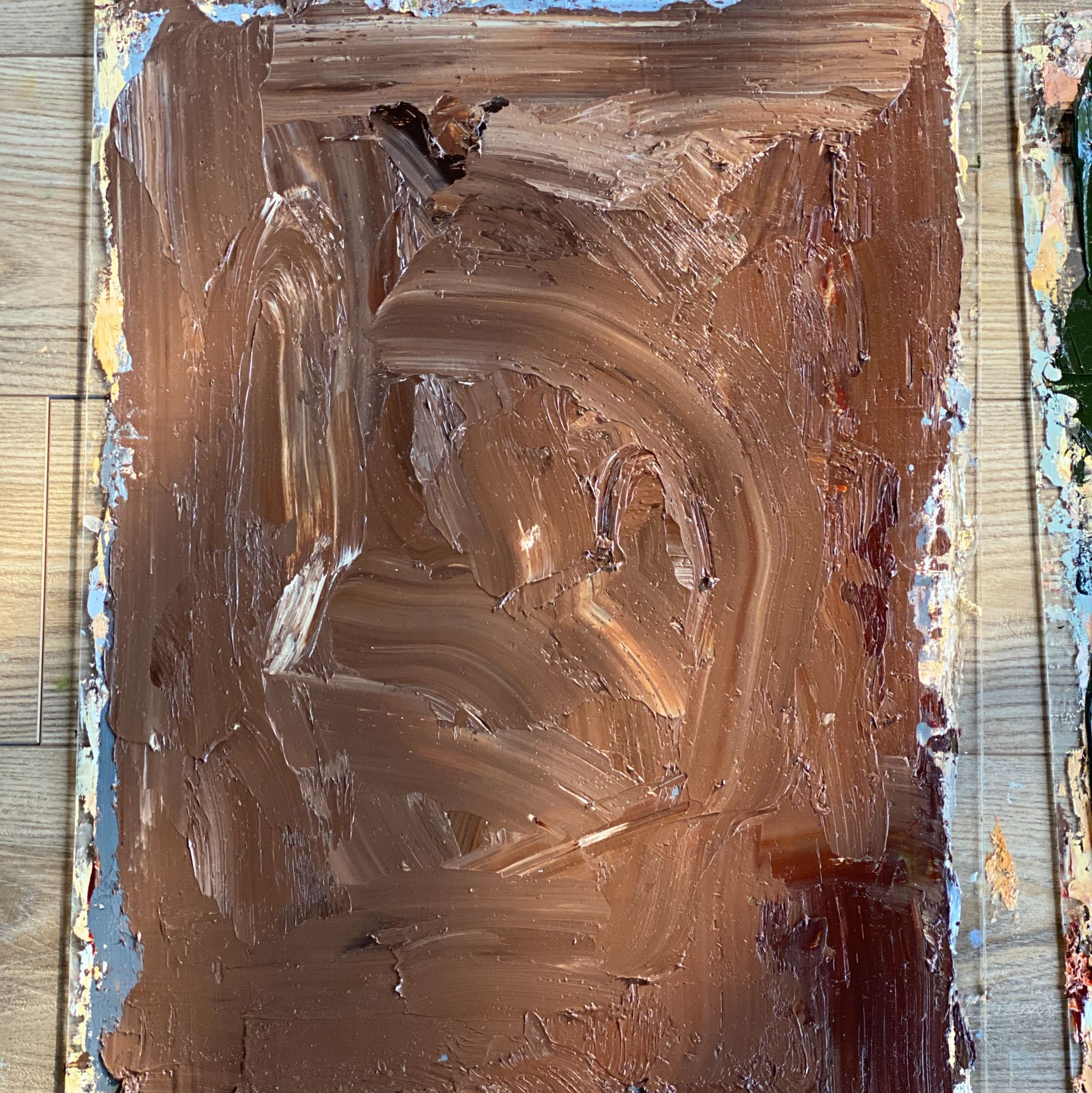
May 31, 2021
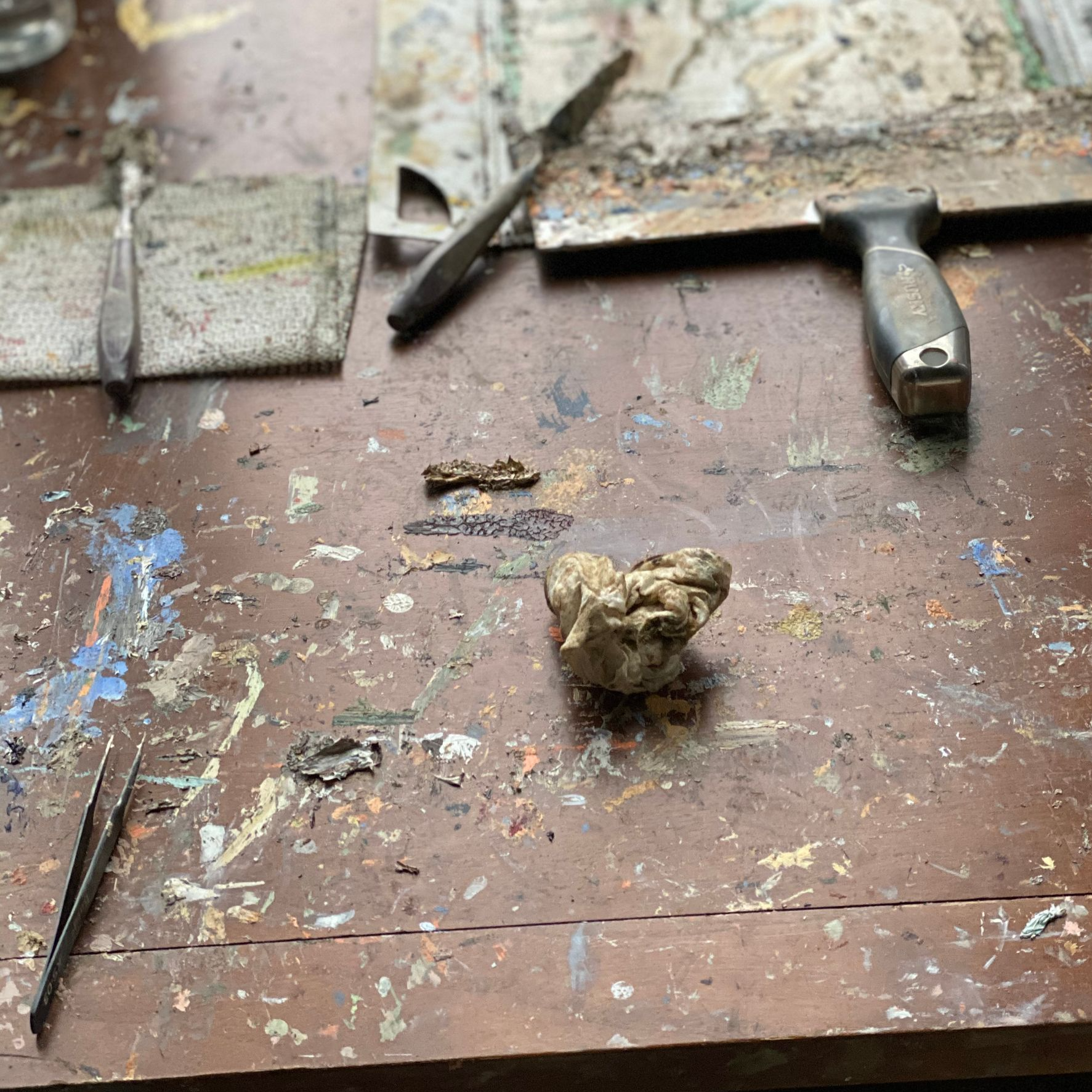
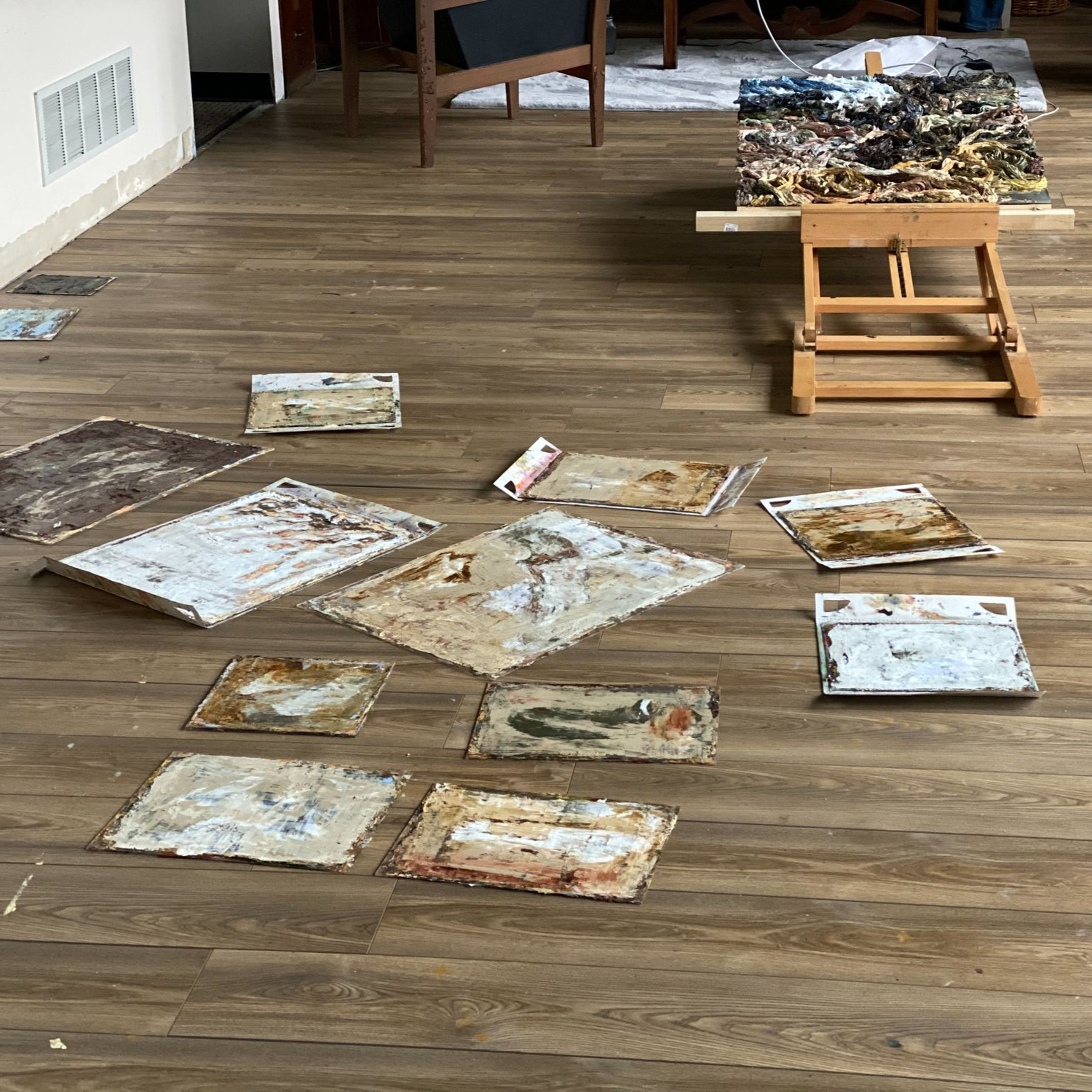
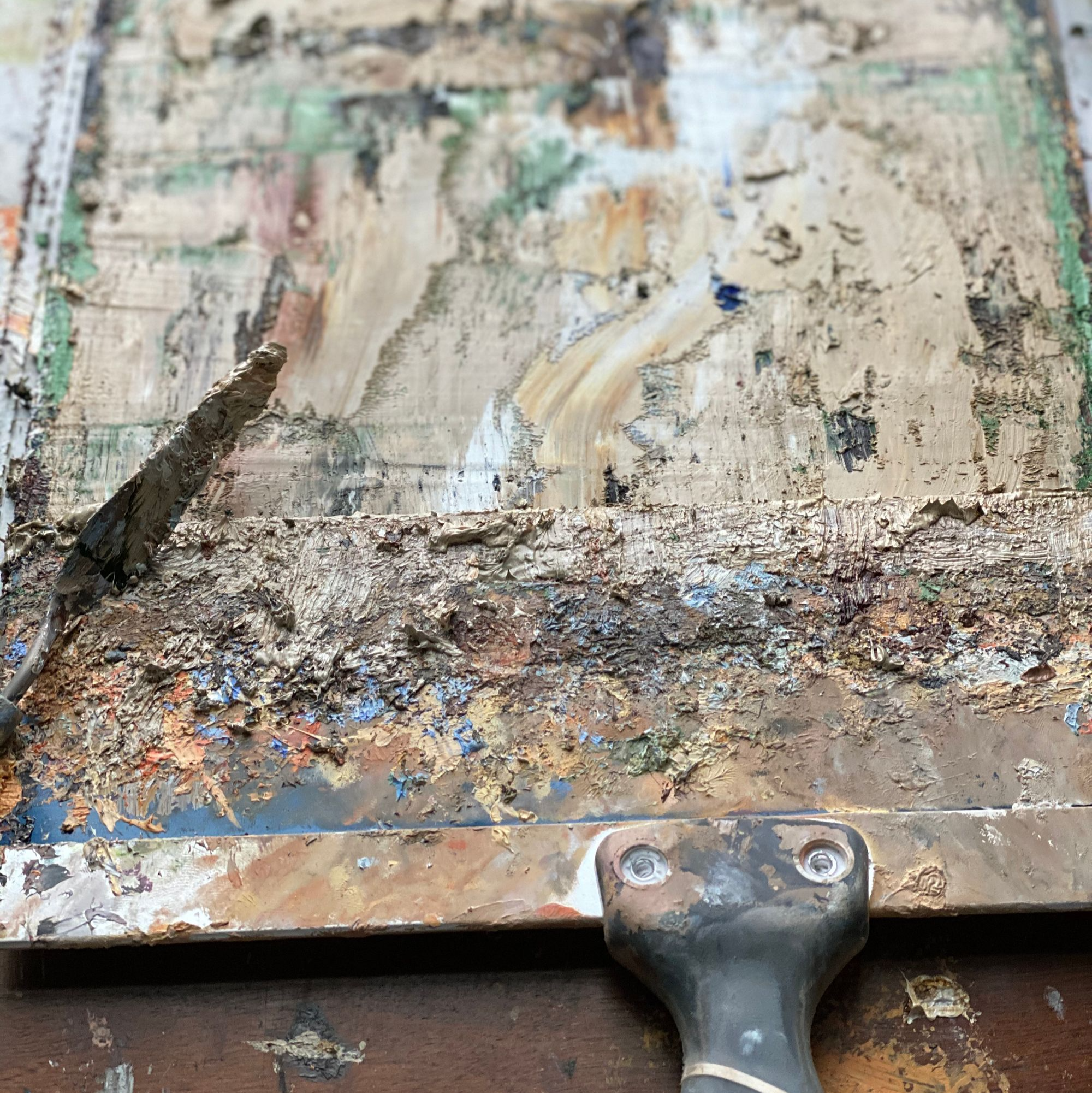
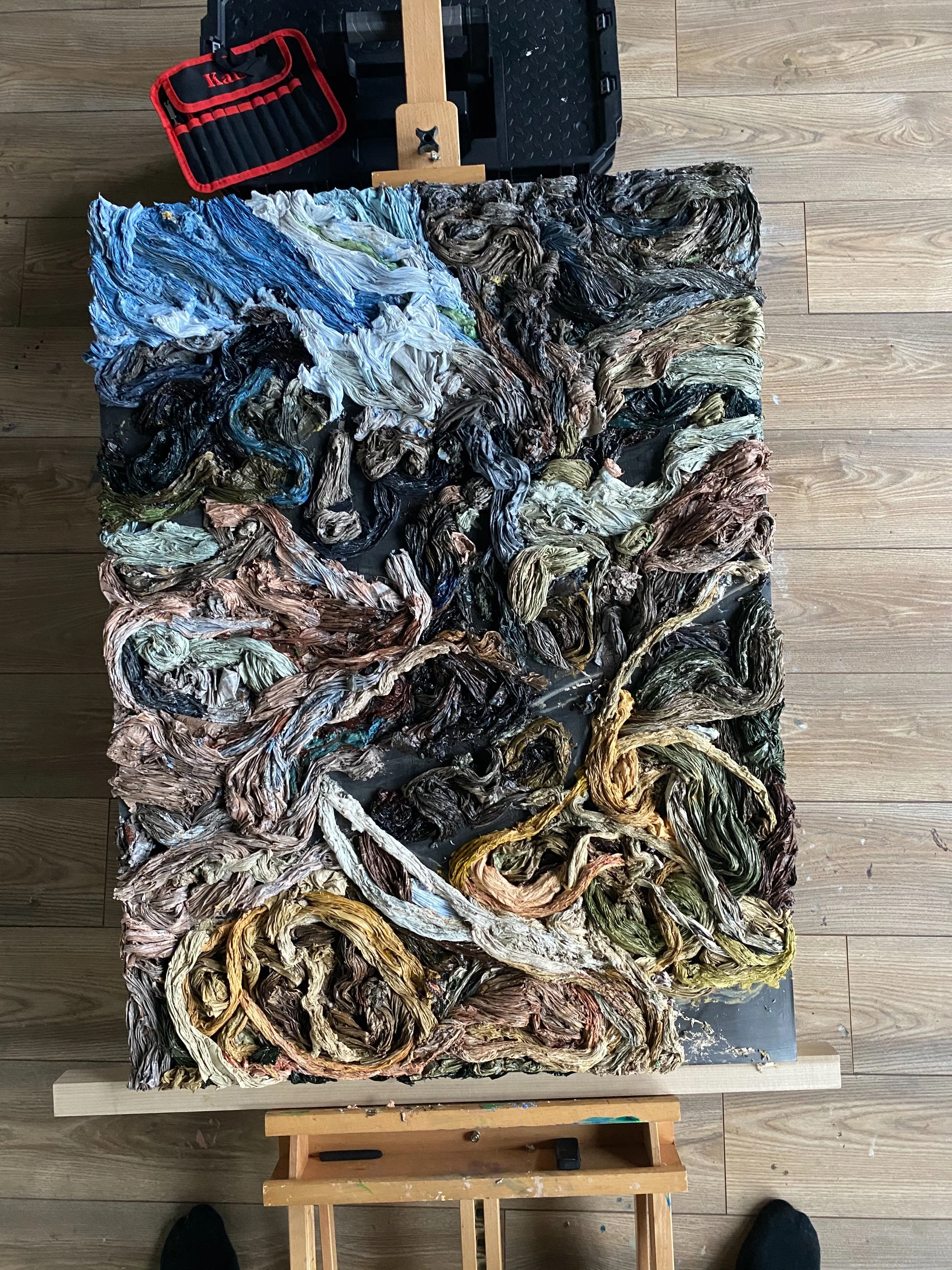
June 2, 2021
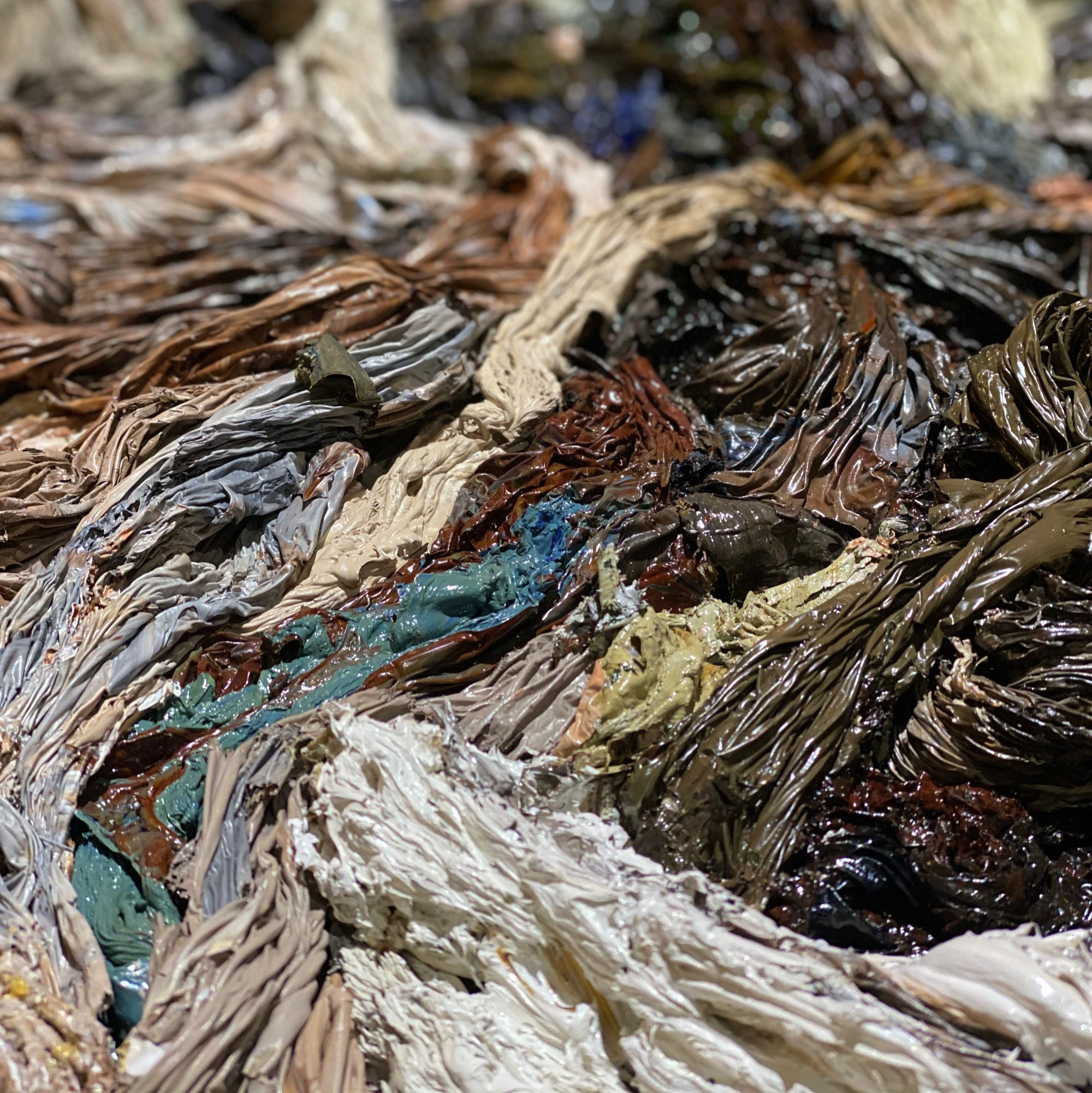
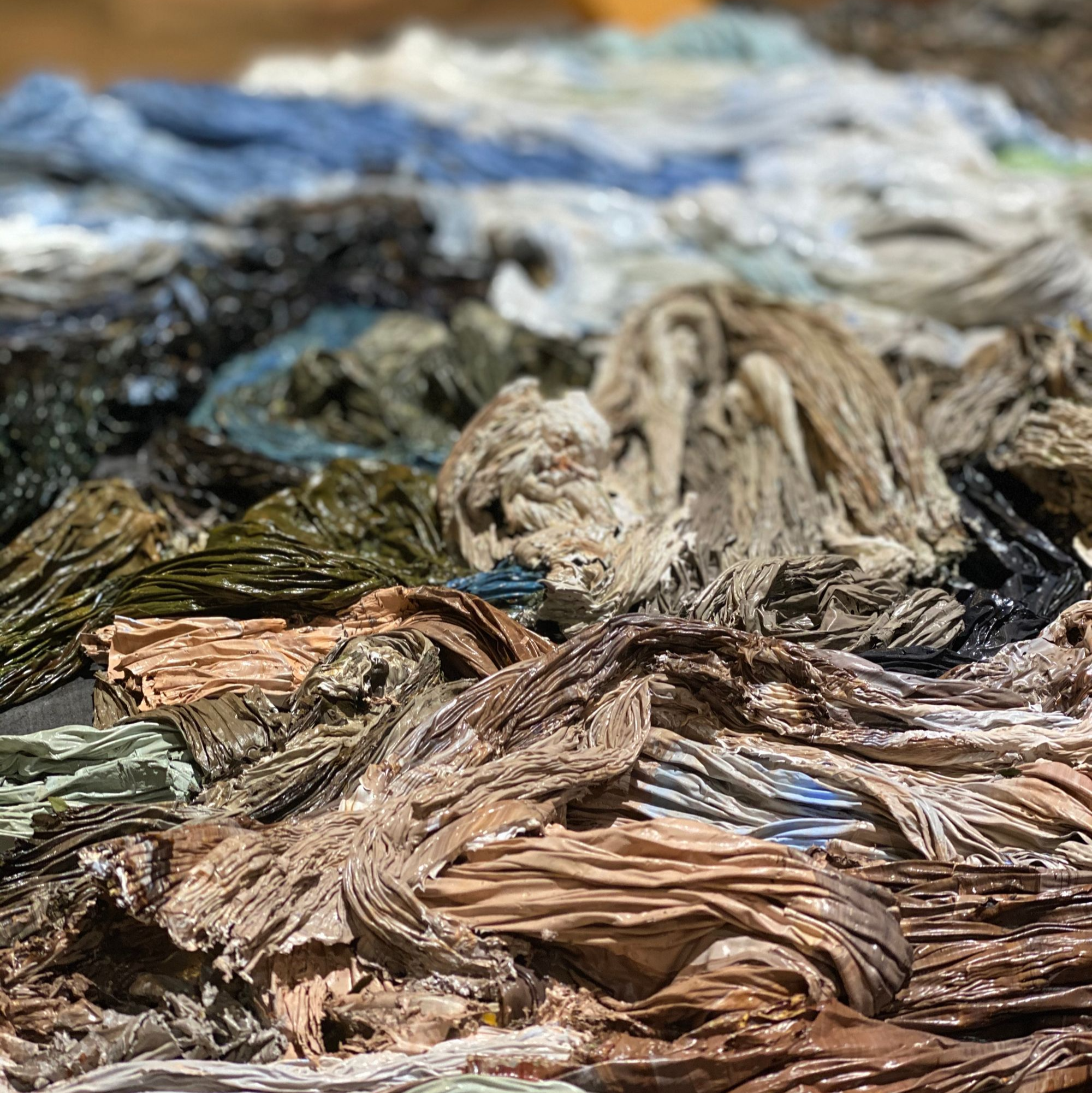
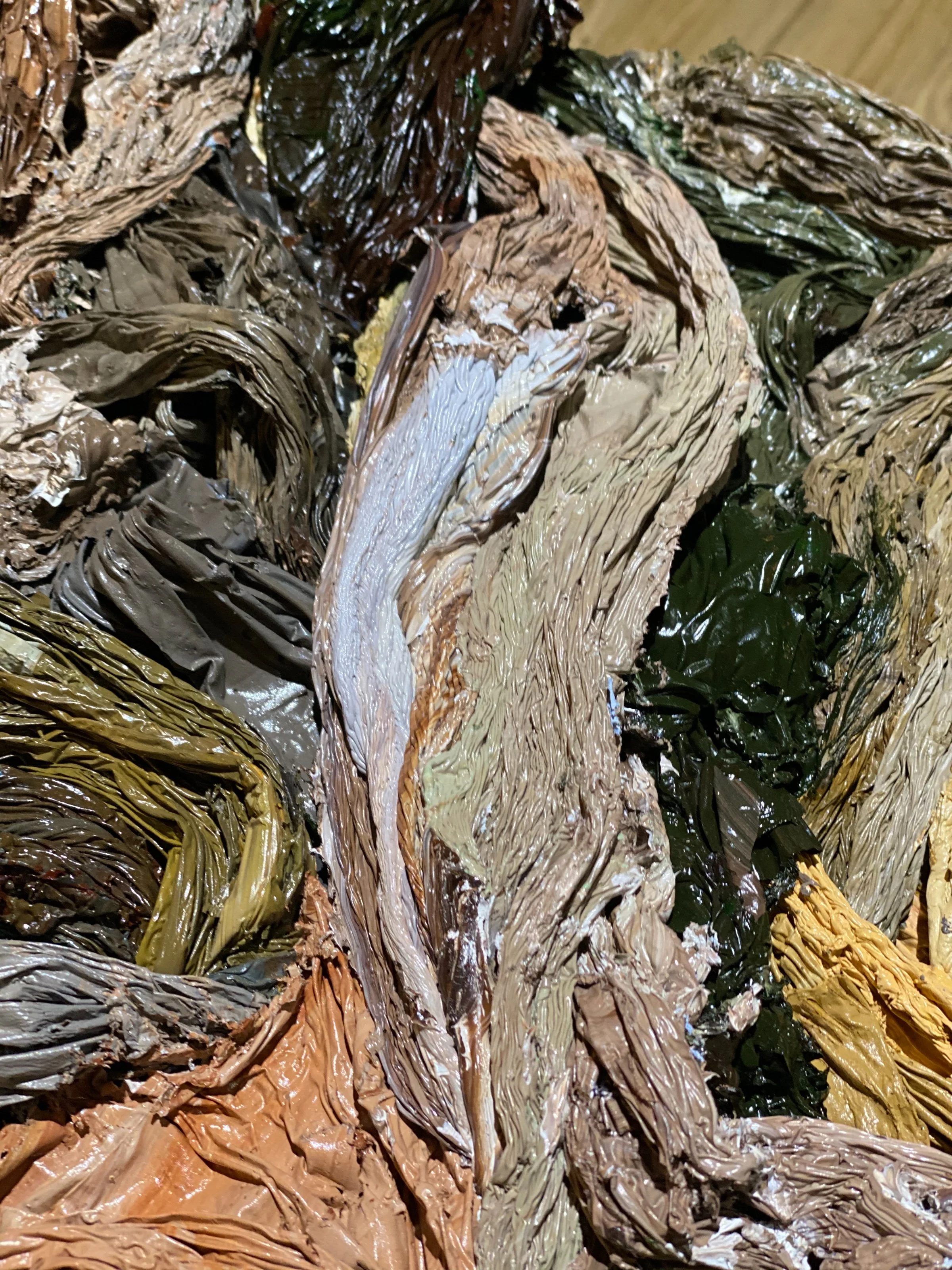
June 10, 2021
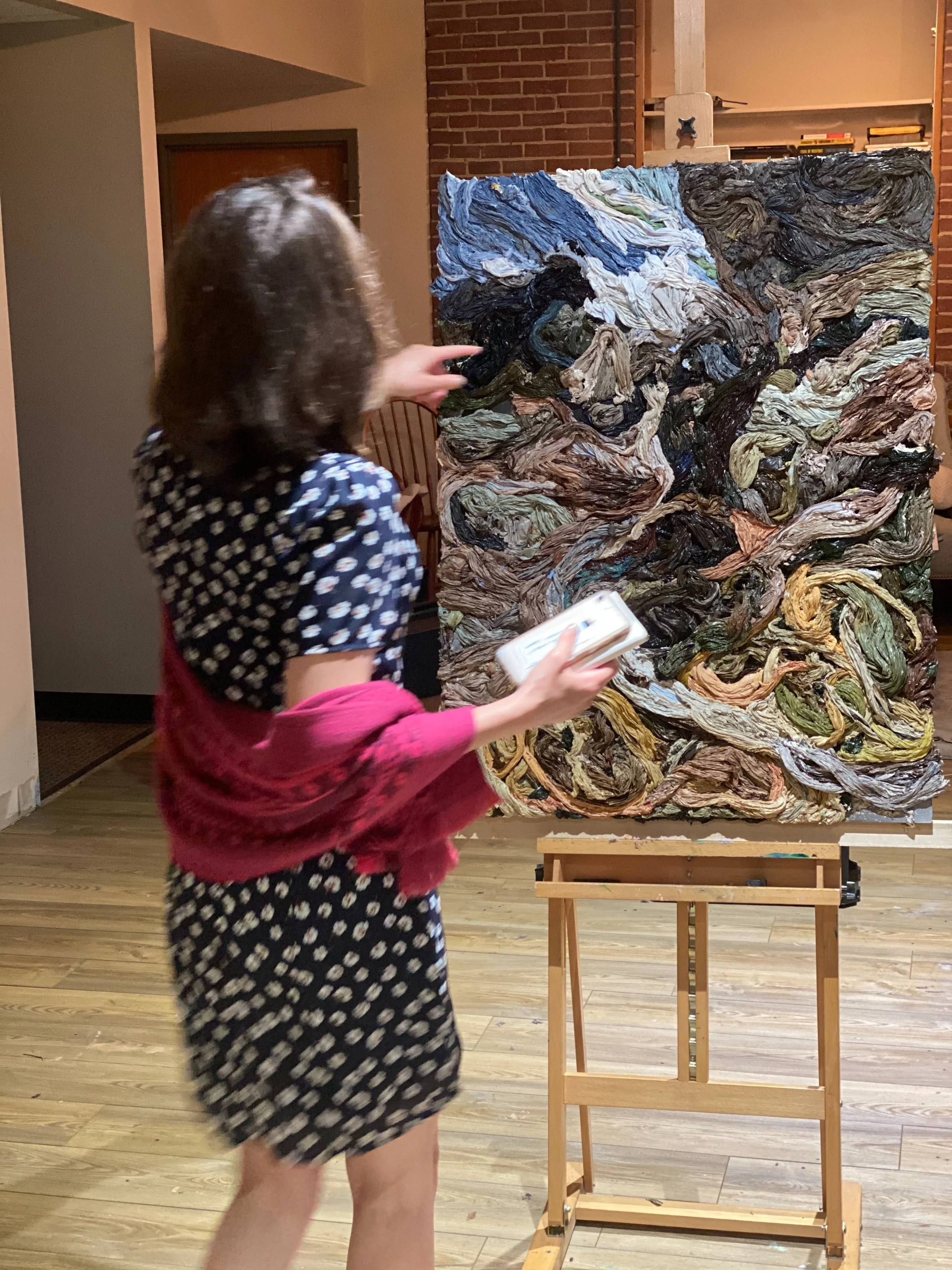
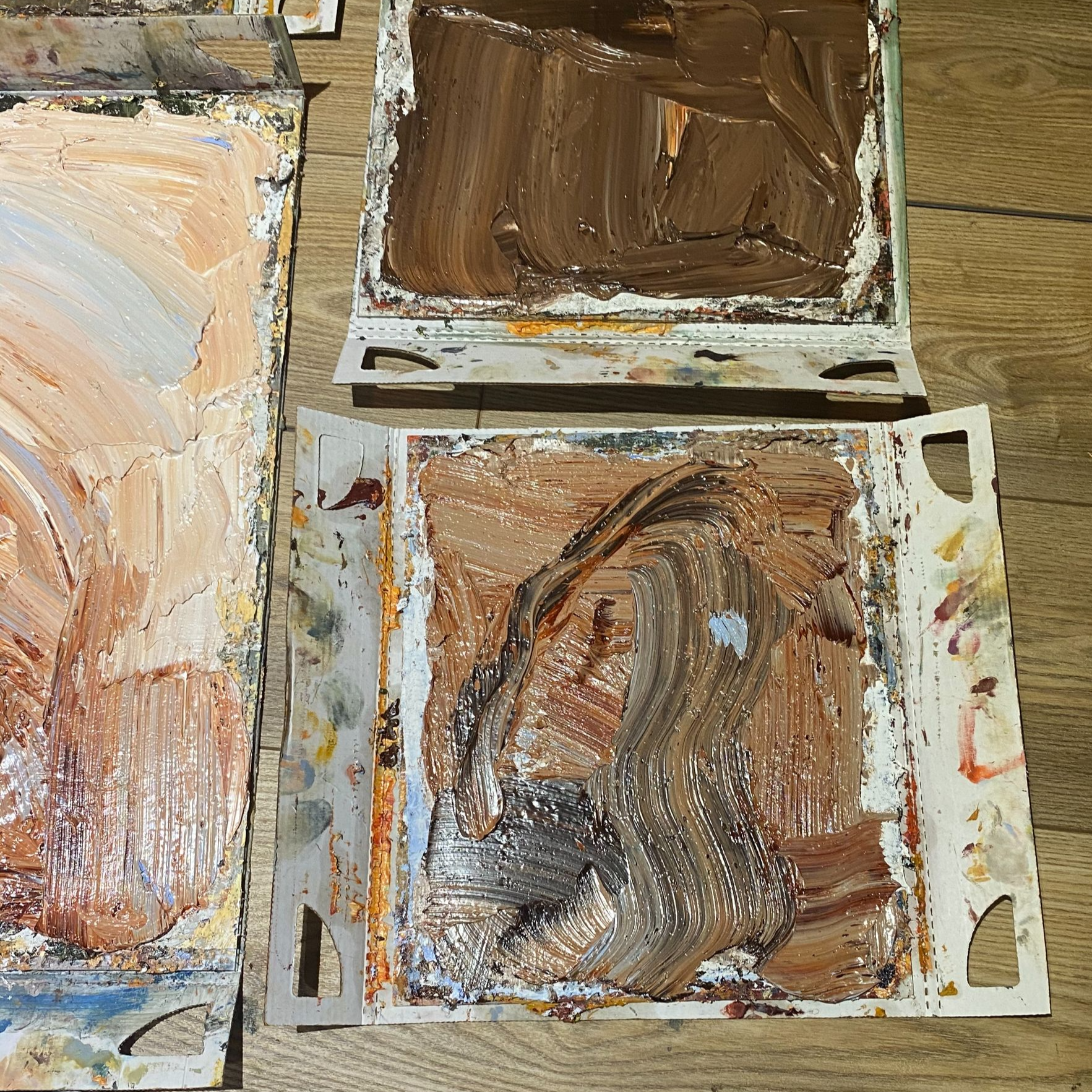
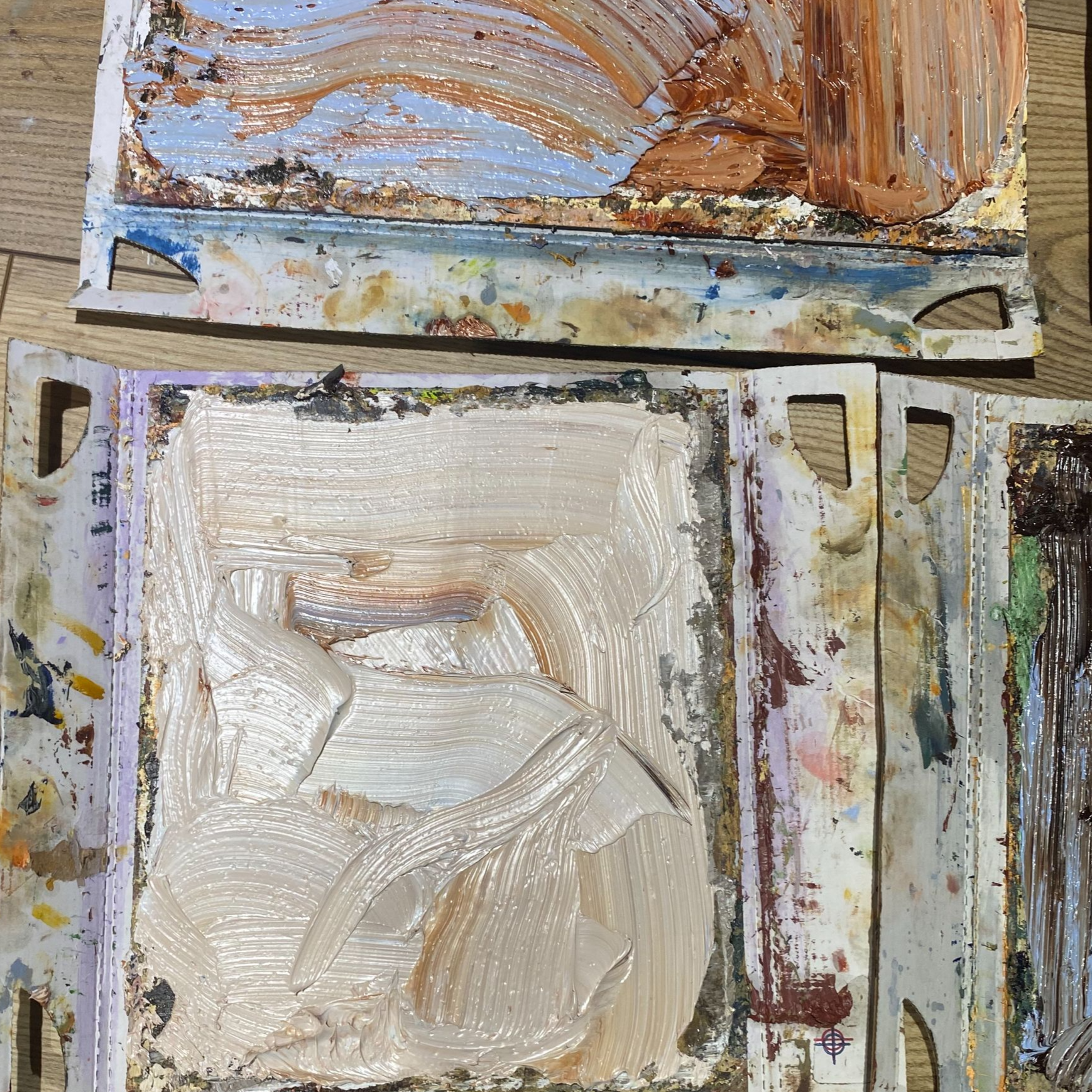
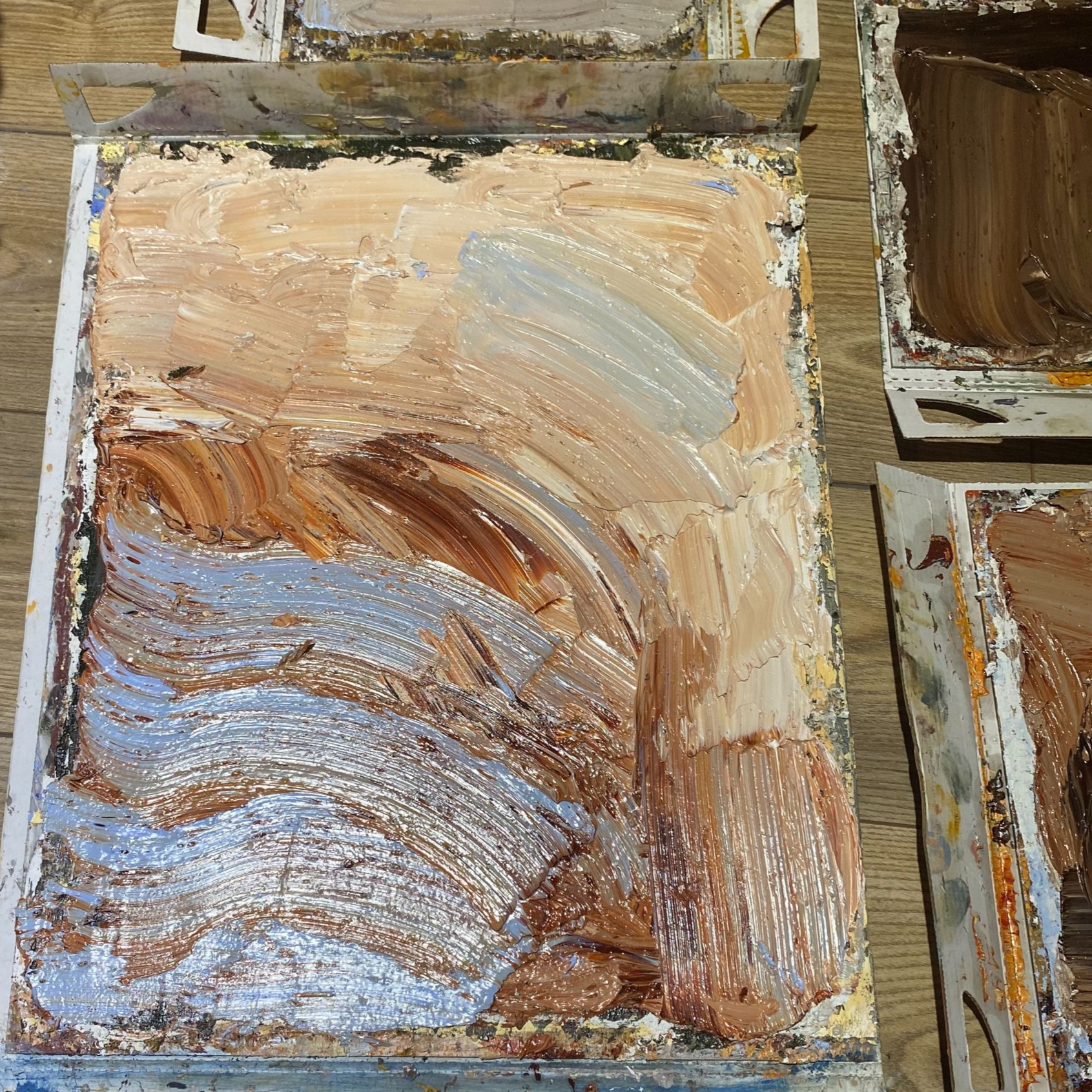
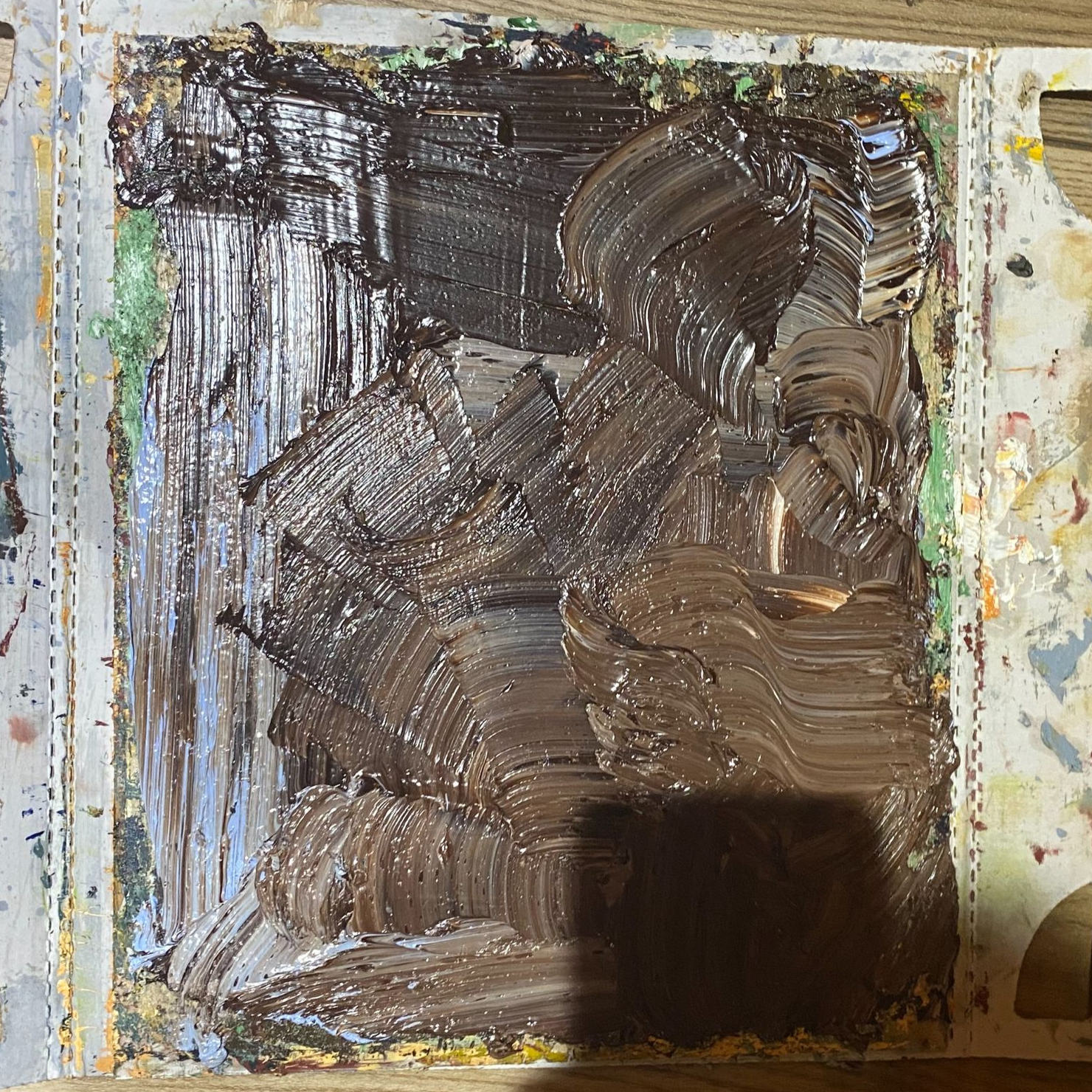
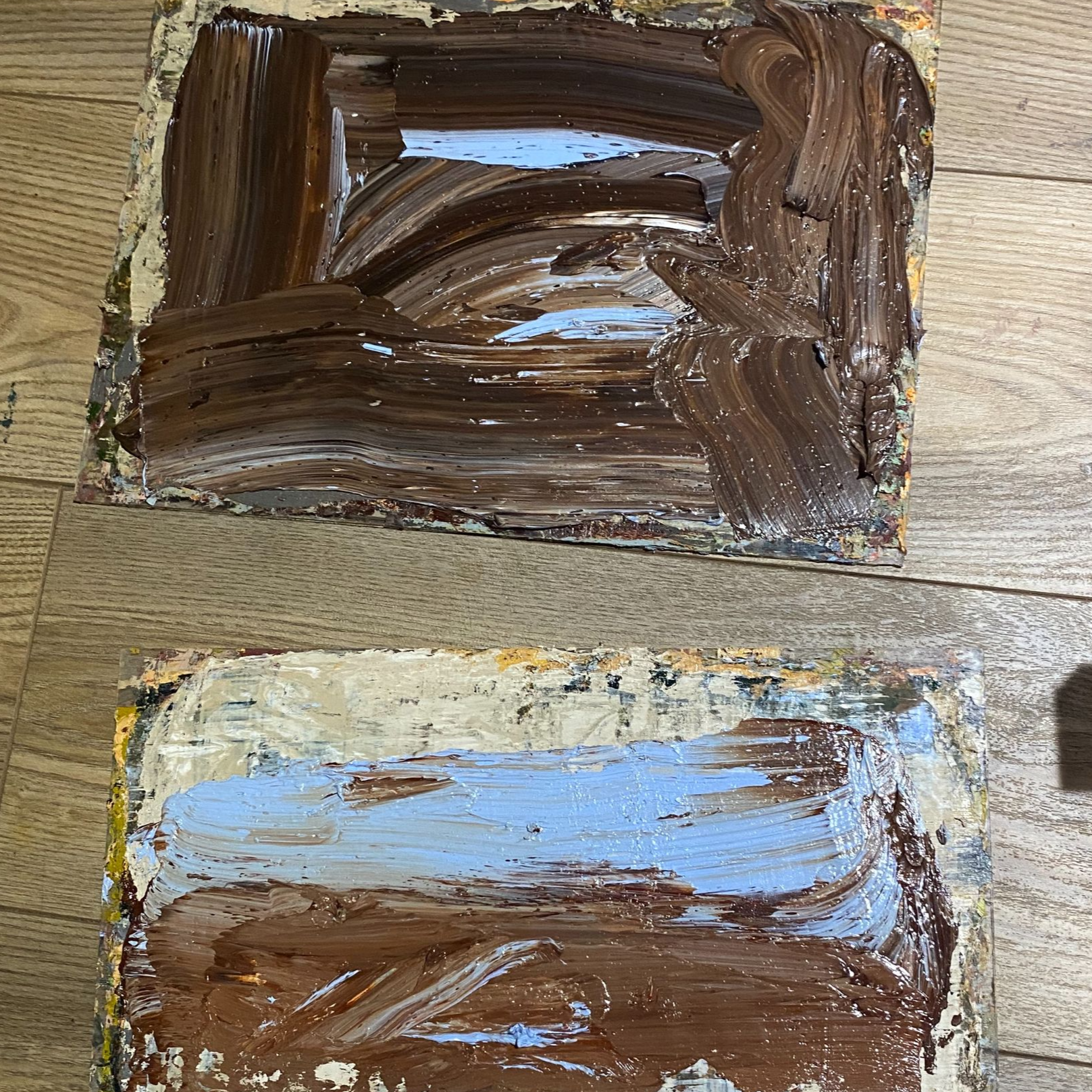
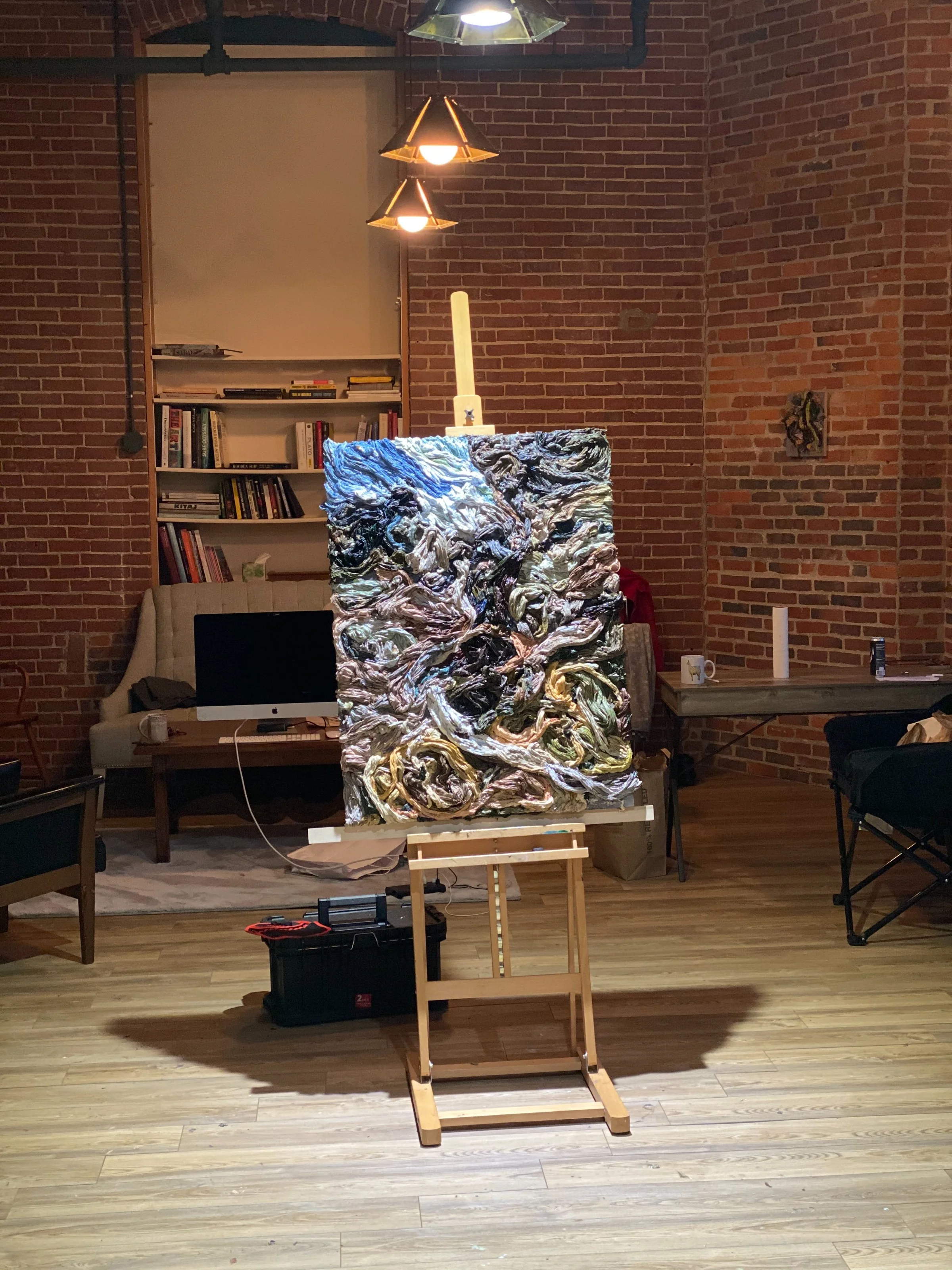
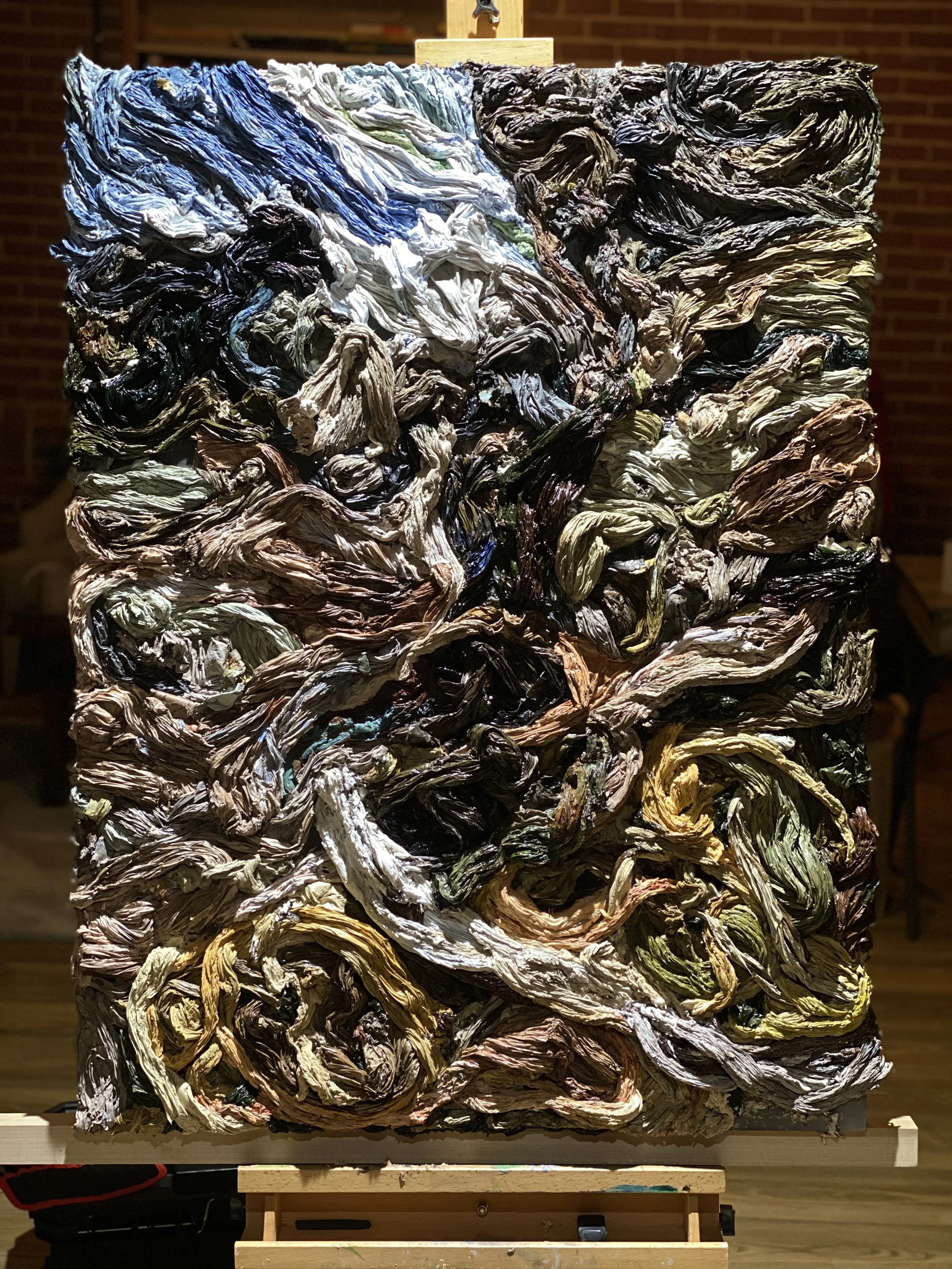
June 12, 2021 - Final Touches
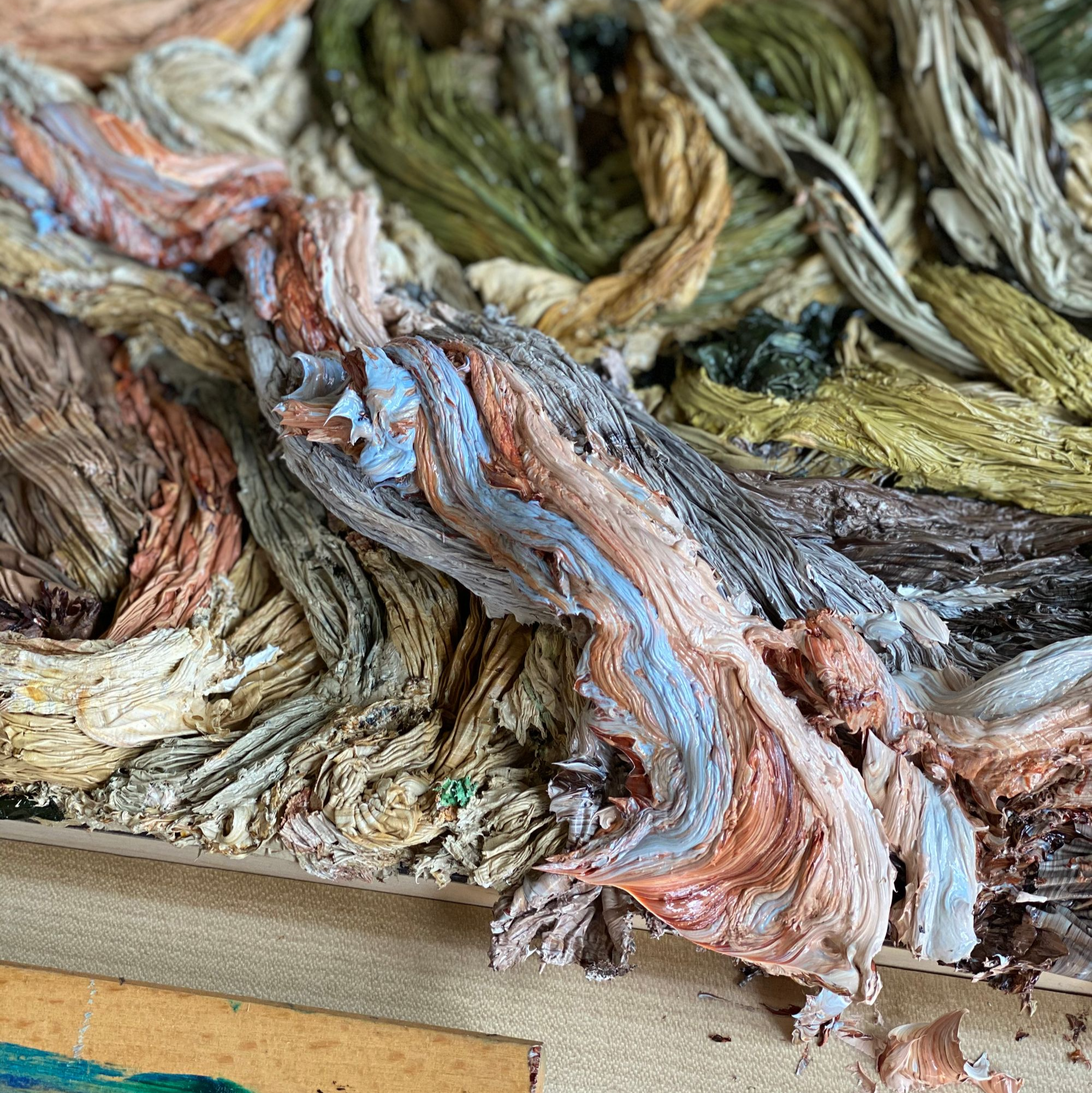
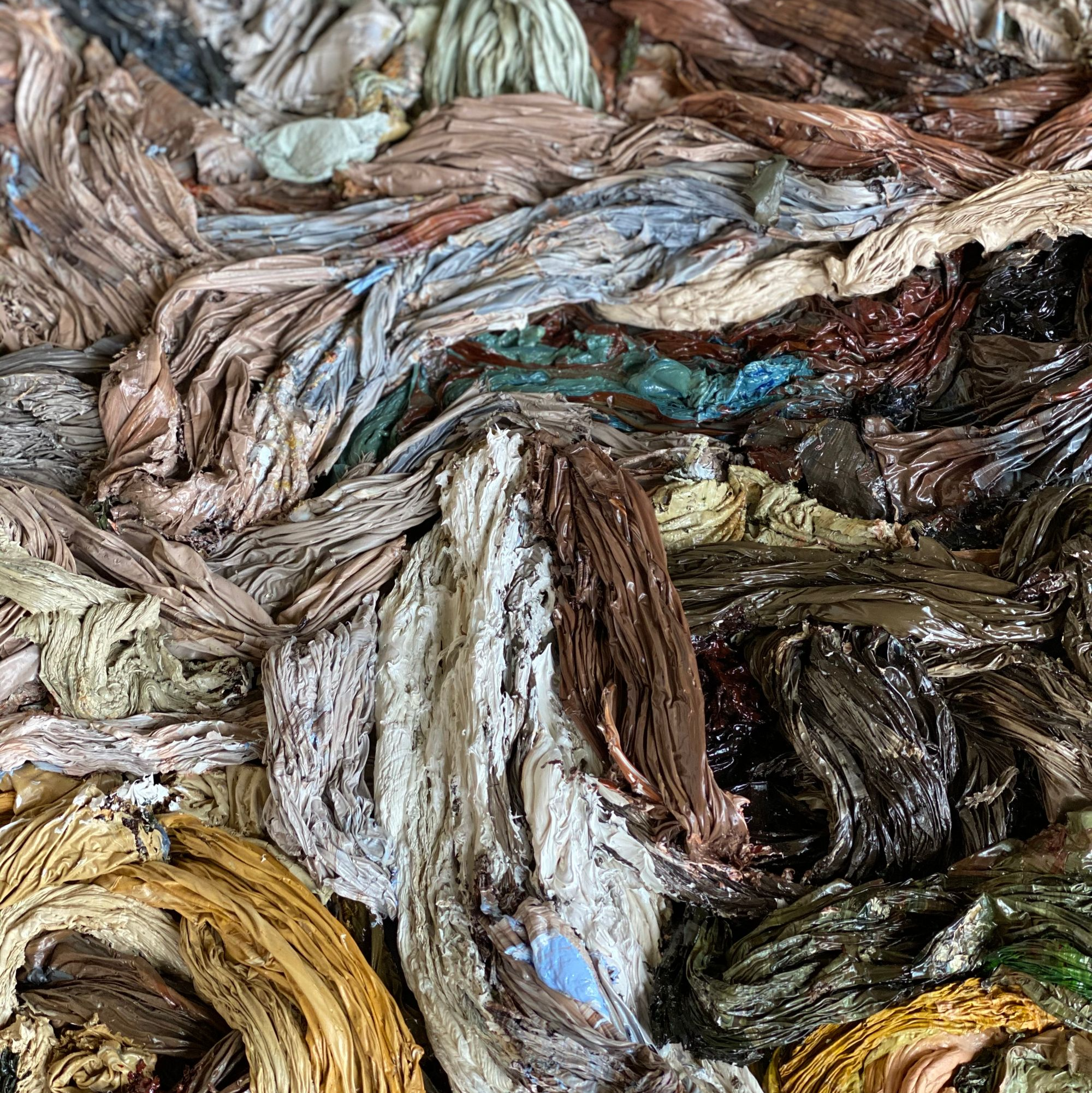
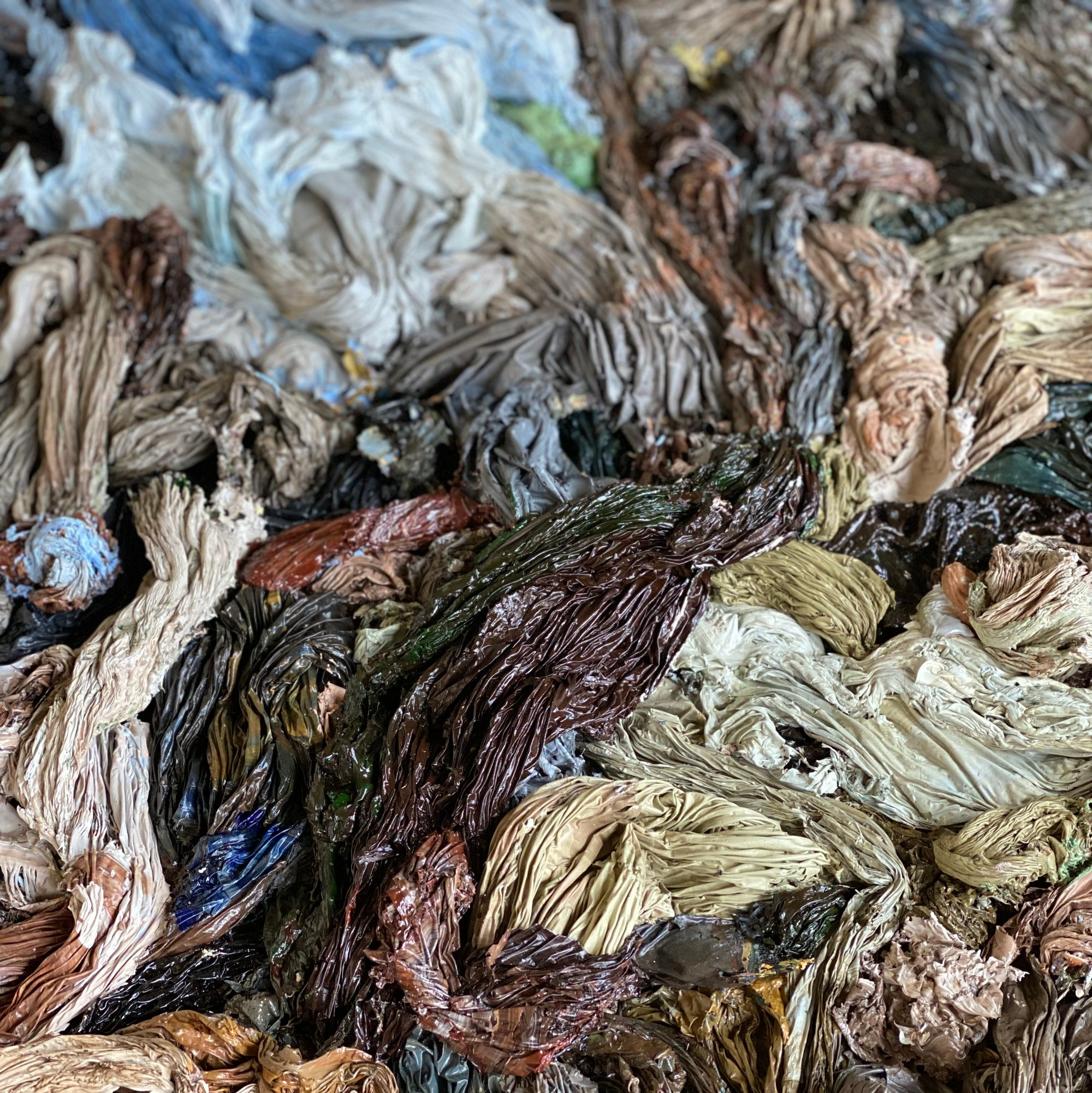
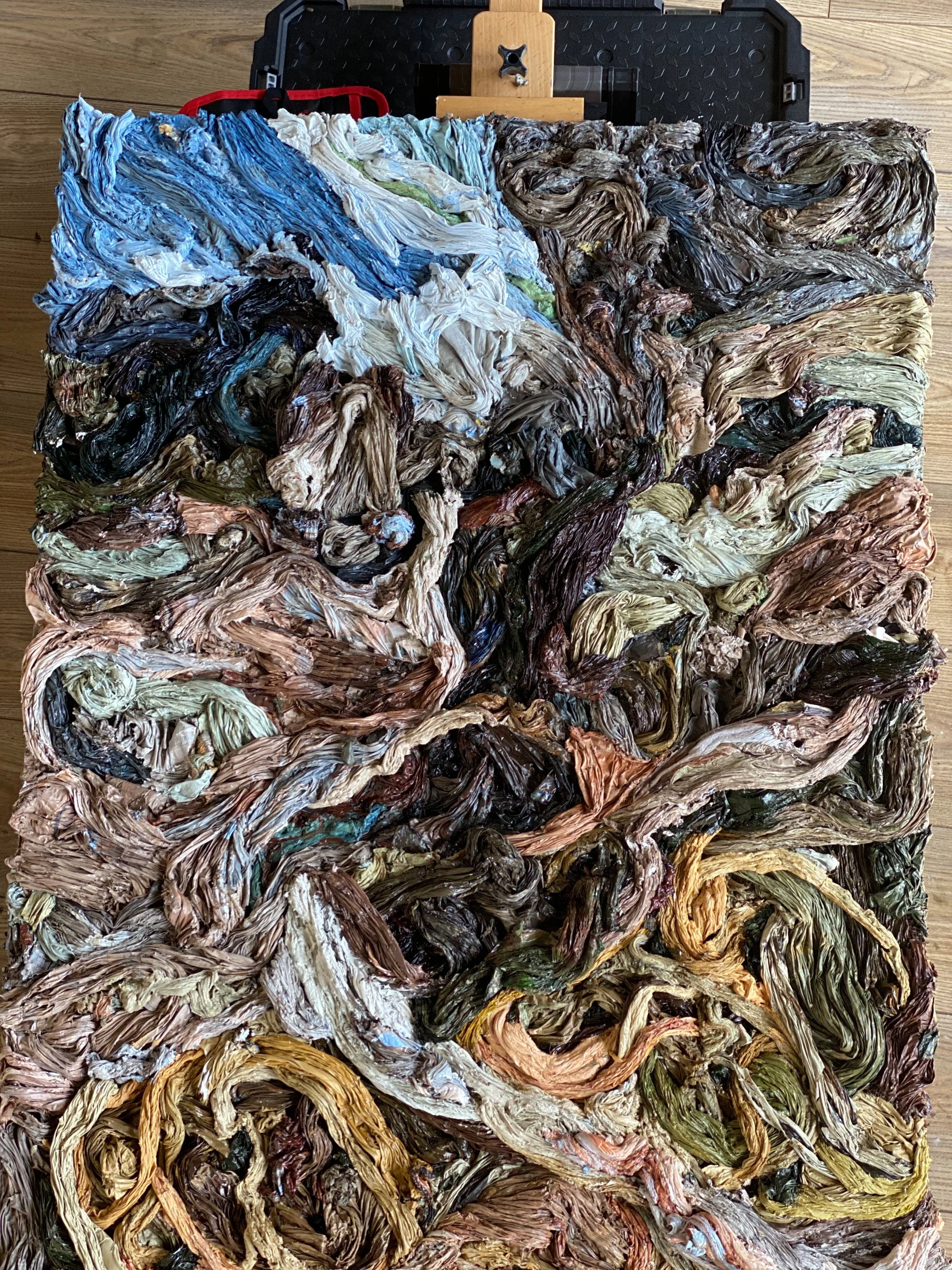
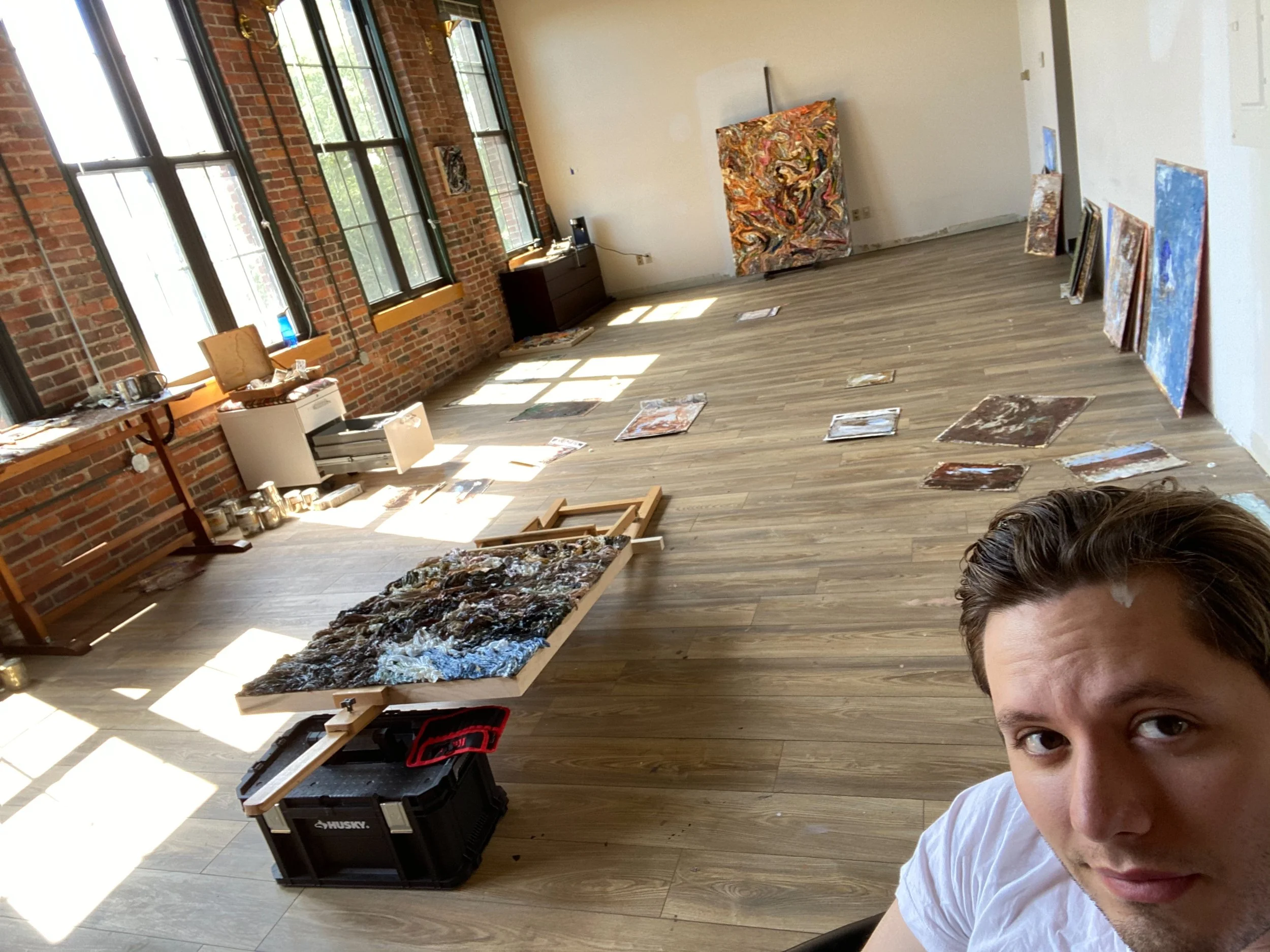
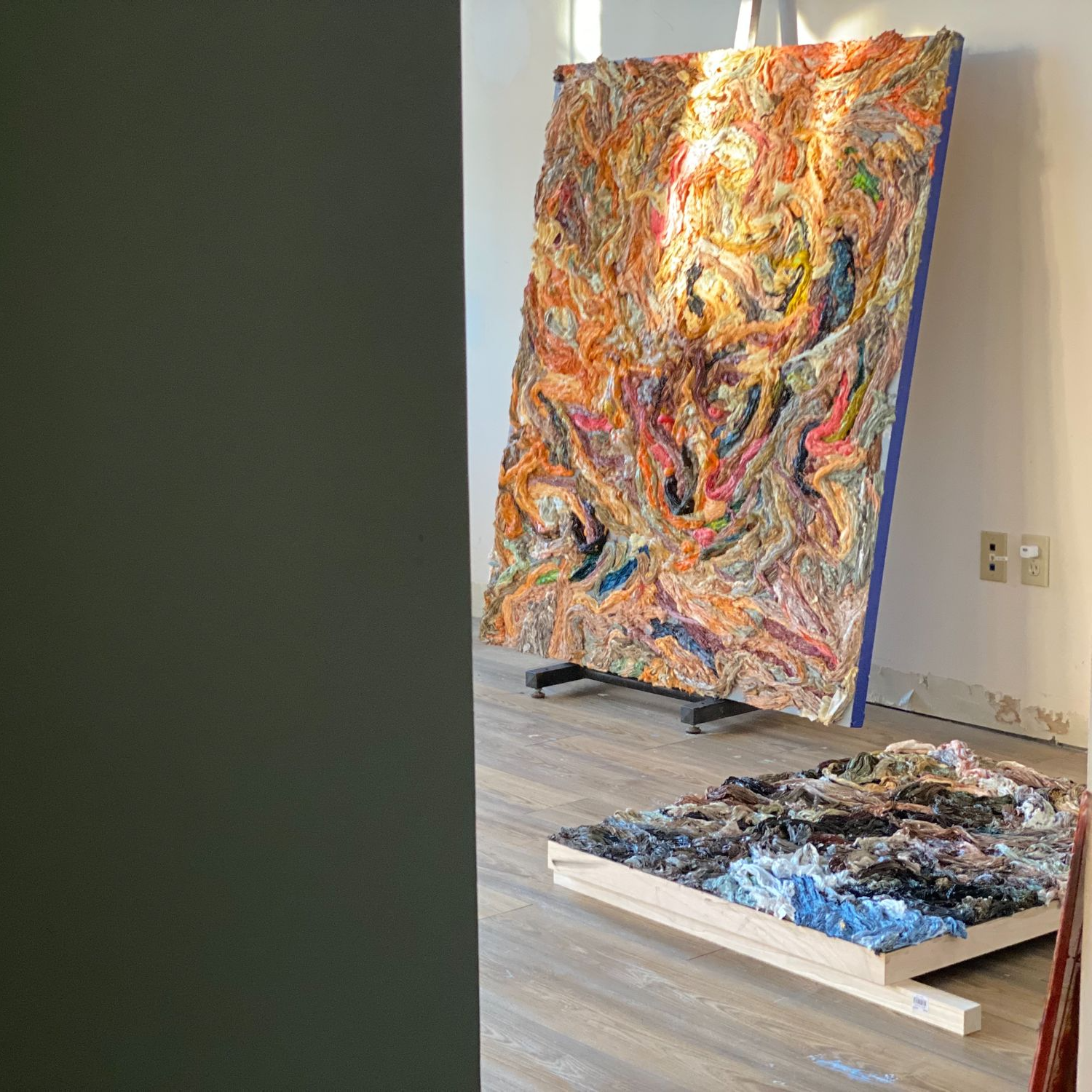
Just a few notes I had scribbled down in my chair after finishing:
I paint what I see.
During quarantine, I yearned to be outside—to escape the place where I was confined. When I finally ventured out, I was overwhelmed by the intense bursts of vibrancy in everything around me.
Each time I step outside, the world feels new. This vibrant sensation of novelty fades quickly as my attention shifts. If I force myself to linger in one place, I begin to sense the writhing of my thoughts—I feel pressure.
Webster defines pressure as "continuous physical force exerted on or against an object by something in contact with it."
A whole new world is being created where people gather, and the responsibility to engage with it constantly taps me on the shoulder.
Oil paint, my sole medium, has historically been used metaphorically by those who master the art of applying it in thin layers across surfaces to precisely describe and communicate what they see and feel.
I sculpt it into forms, constructing my vision of the world.
I've experienced that glow before—the "just finished a painting" glow—and it's exhilarating. While I'm uncertain about the complete accuracy of my earlier words, they felt genuine when I wrote them. Now, I can't bring myself to alter them.
The Roar of Spring Rain
Notes, Ramblings, and Ideas for The Roar of Spring Rain
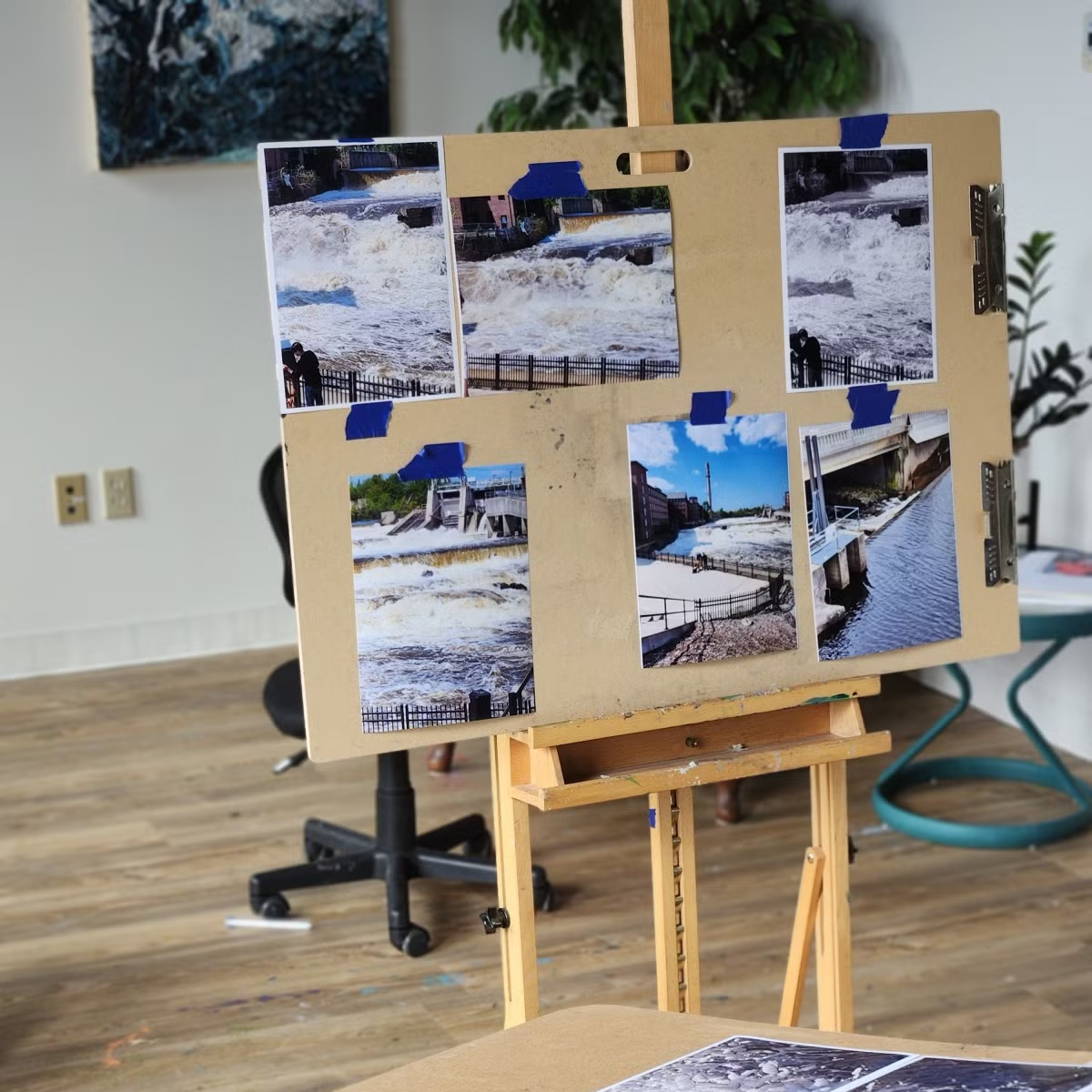
After days of heavy spring rain, the Saco River surged through the Biddeford rapids with a force that felt almost architectural. The water was loud enough to fill the space between the mills, and I couldn’t stop watching it. I knew immediately I wanted to paint that feeling, not just the scene.
This is the process story behind The Roar of Spring Rain: gathering reference at the flooded rapids, starting en plein air to capture the water’s energy, and then spending months in the studio experimenting with form, texture, and light until the painting finally held both chaos and calm at once.
Inception: Gathering Reference Materials
May 2, 2023 The Rain Stopped
Spring rain can be gentle and light, or it can pour for days. On this particular May, heavy rains and winds of 20–70 mph knocked out power for many homes and businesses, flooding roads and causing rivers to surge.
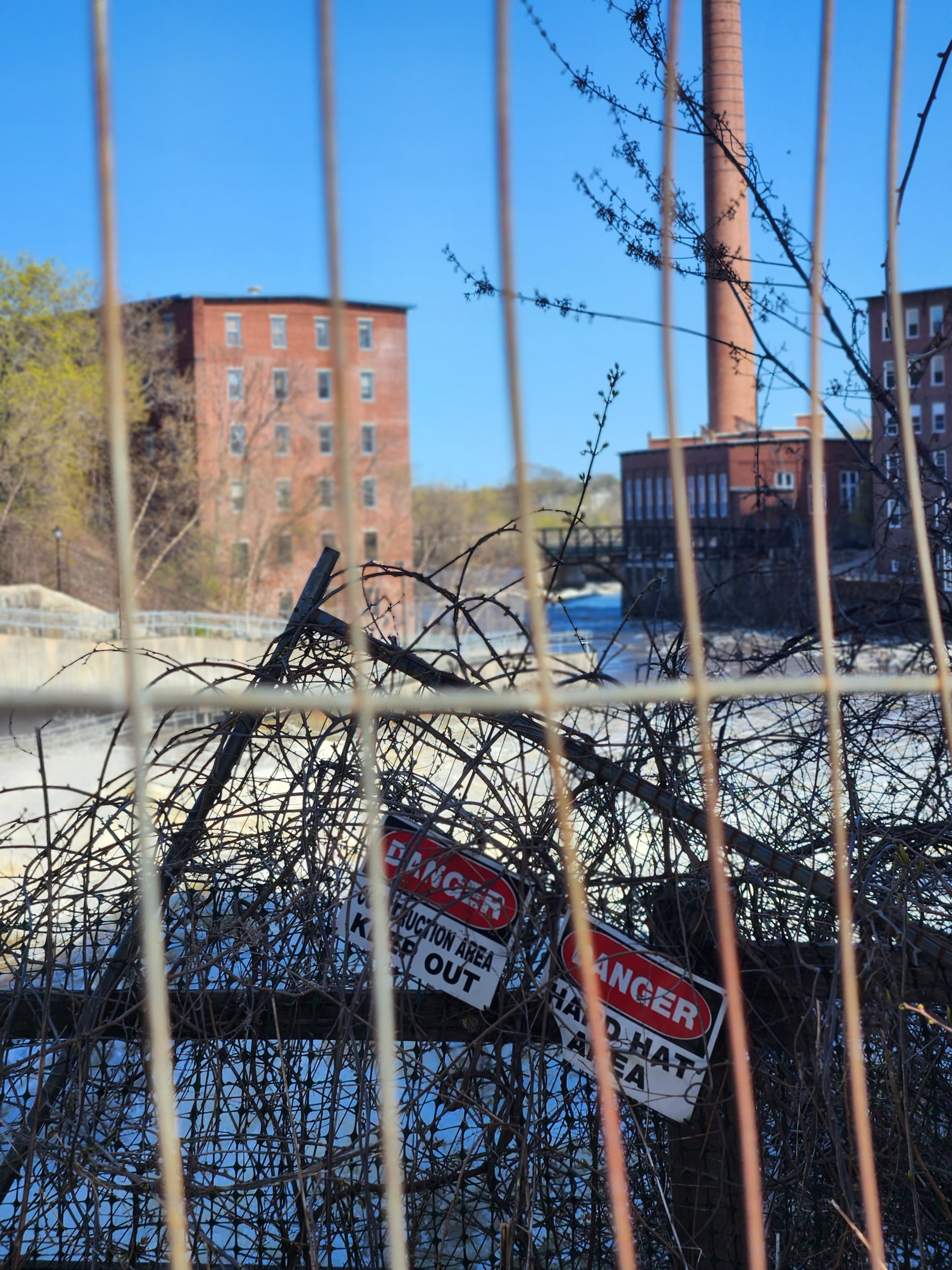
The day after, I took a walk down to the river to watch the water. I never realized how expansive and maze-like the Saco and Biddeford mills actually were. Built and developed since the 1600s, they strangely reminded me of my travels in Europe, where you're walking around city streets until suddenly you're looking at a gorgeous complex of buildings and foundations built by the Romans. As we've repurposed these buildings from water-powered sawmills and iron forges into apartments, hotels, and small businesses, these amazing places have taken on a new life.
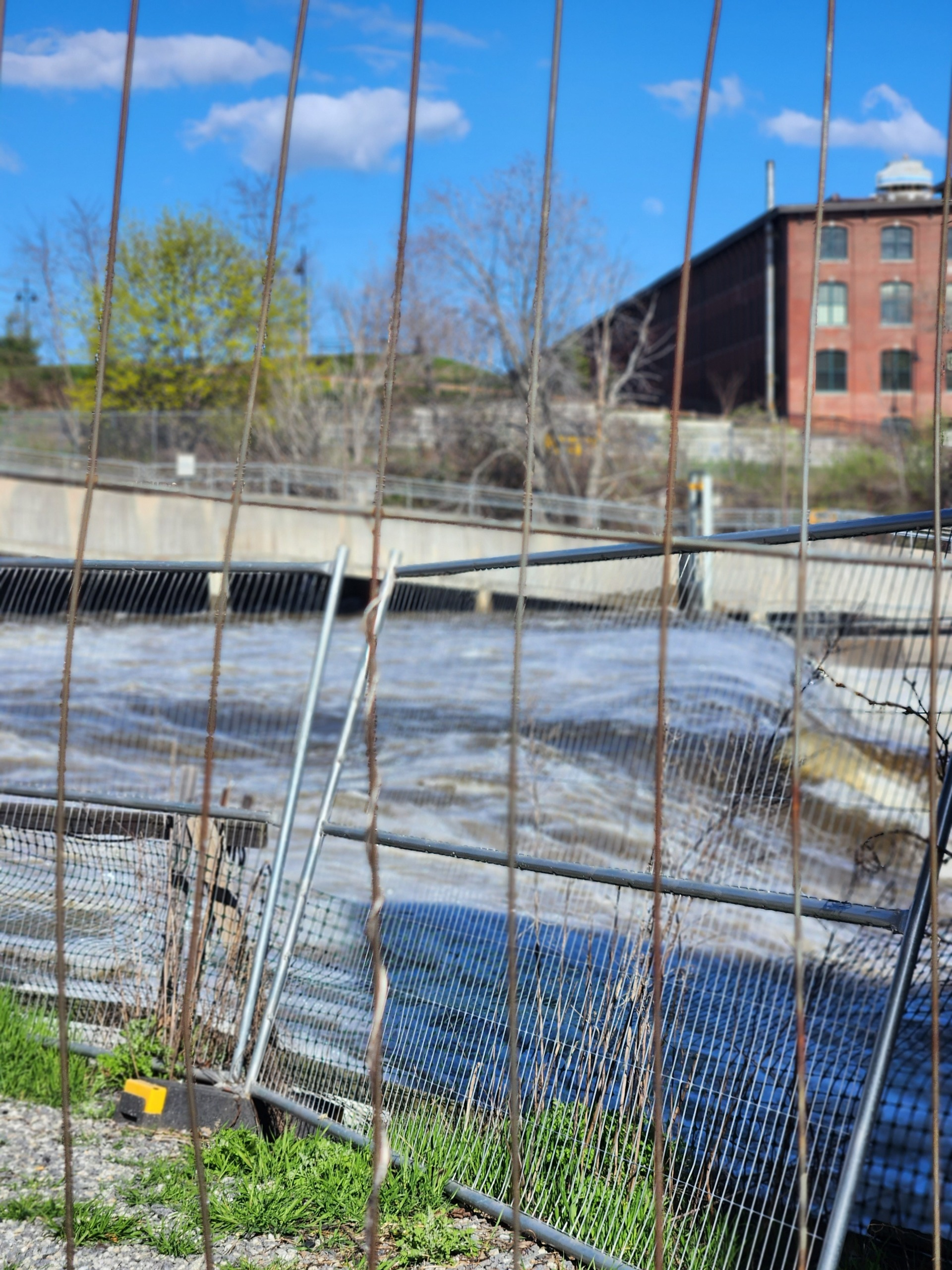
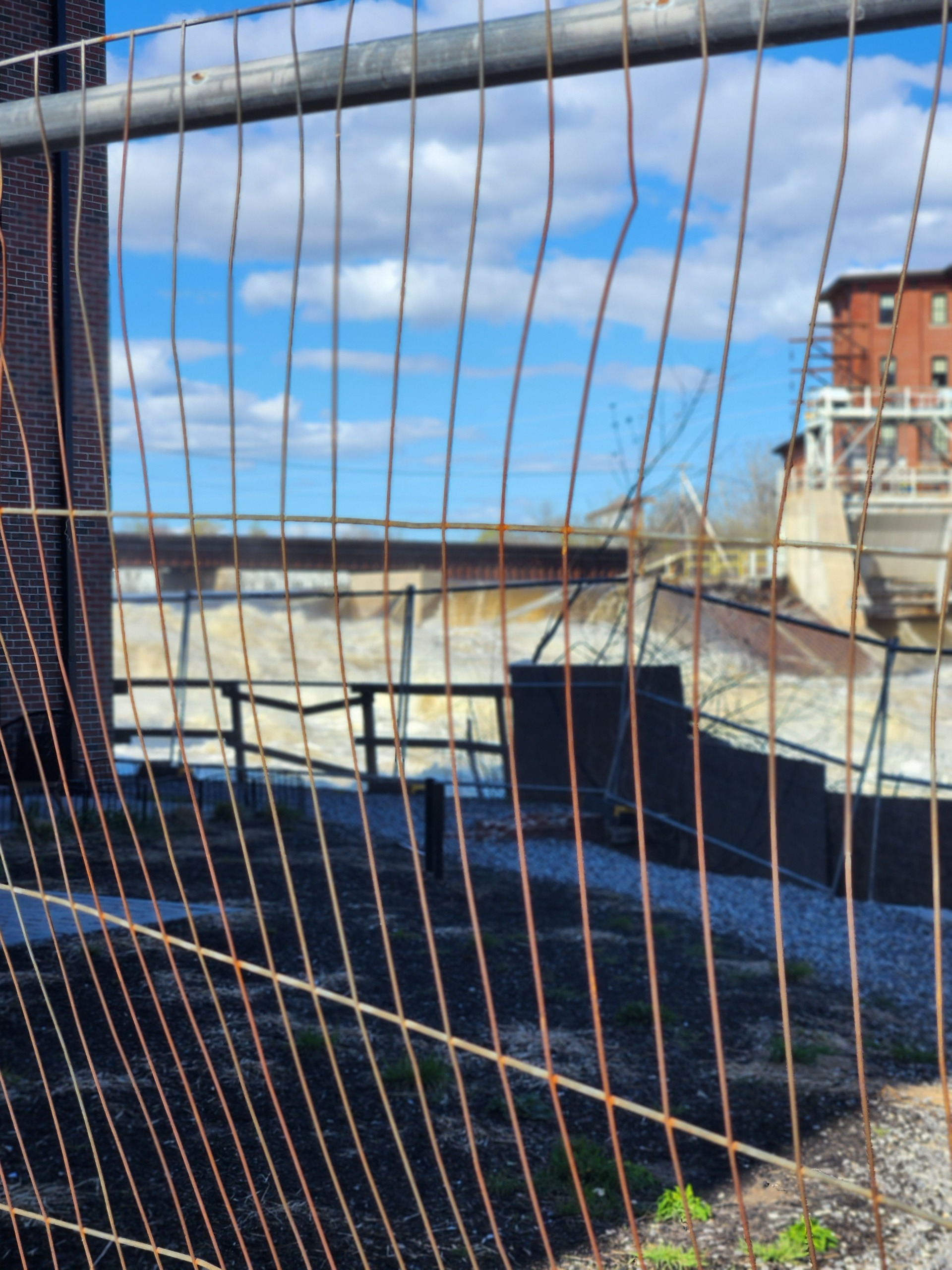
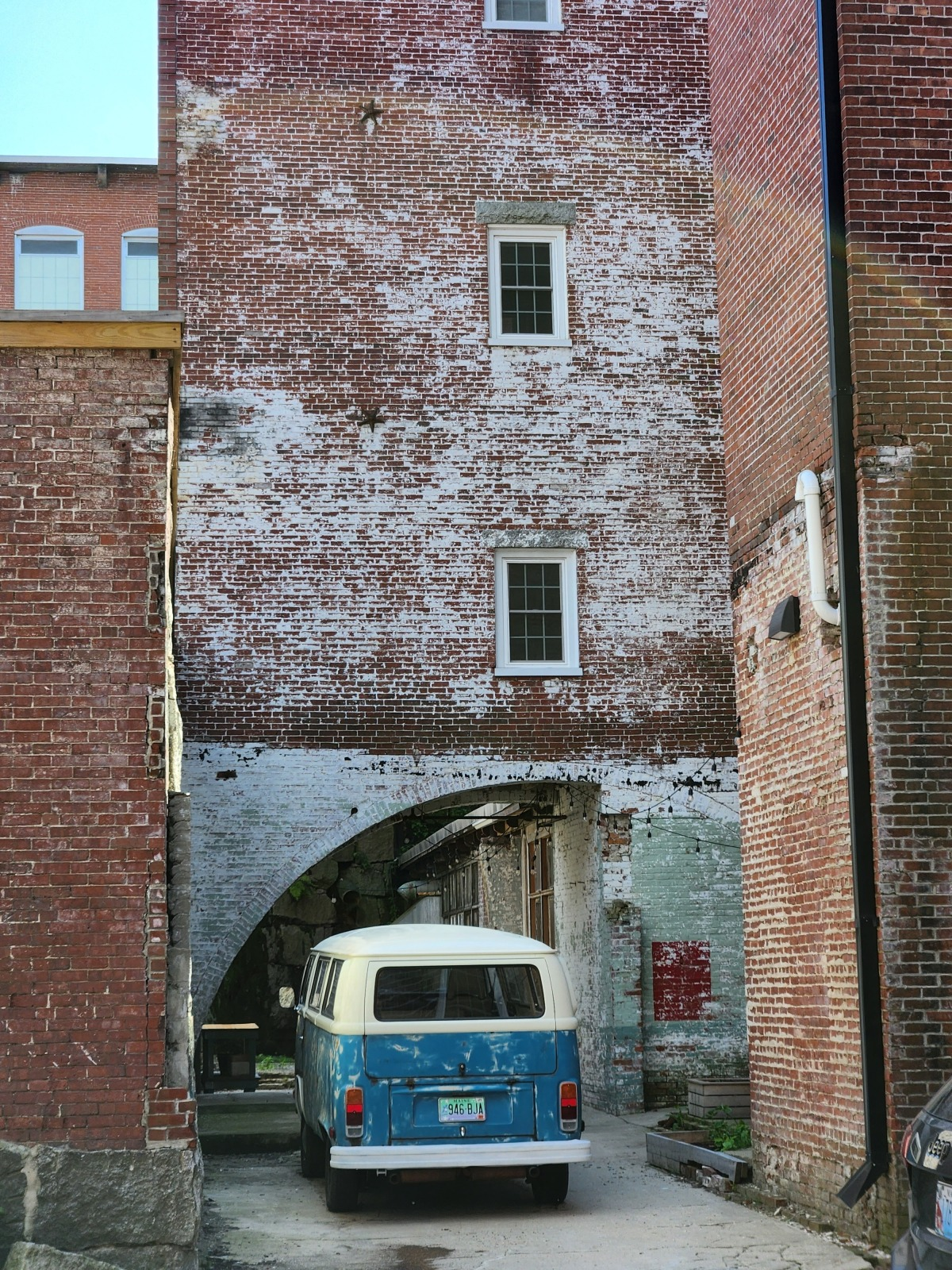
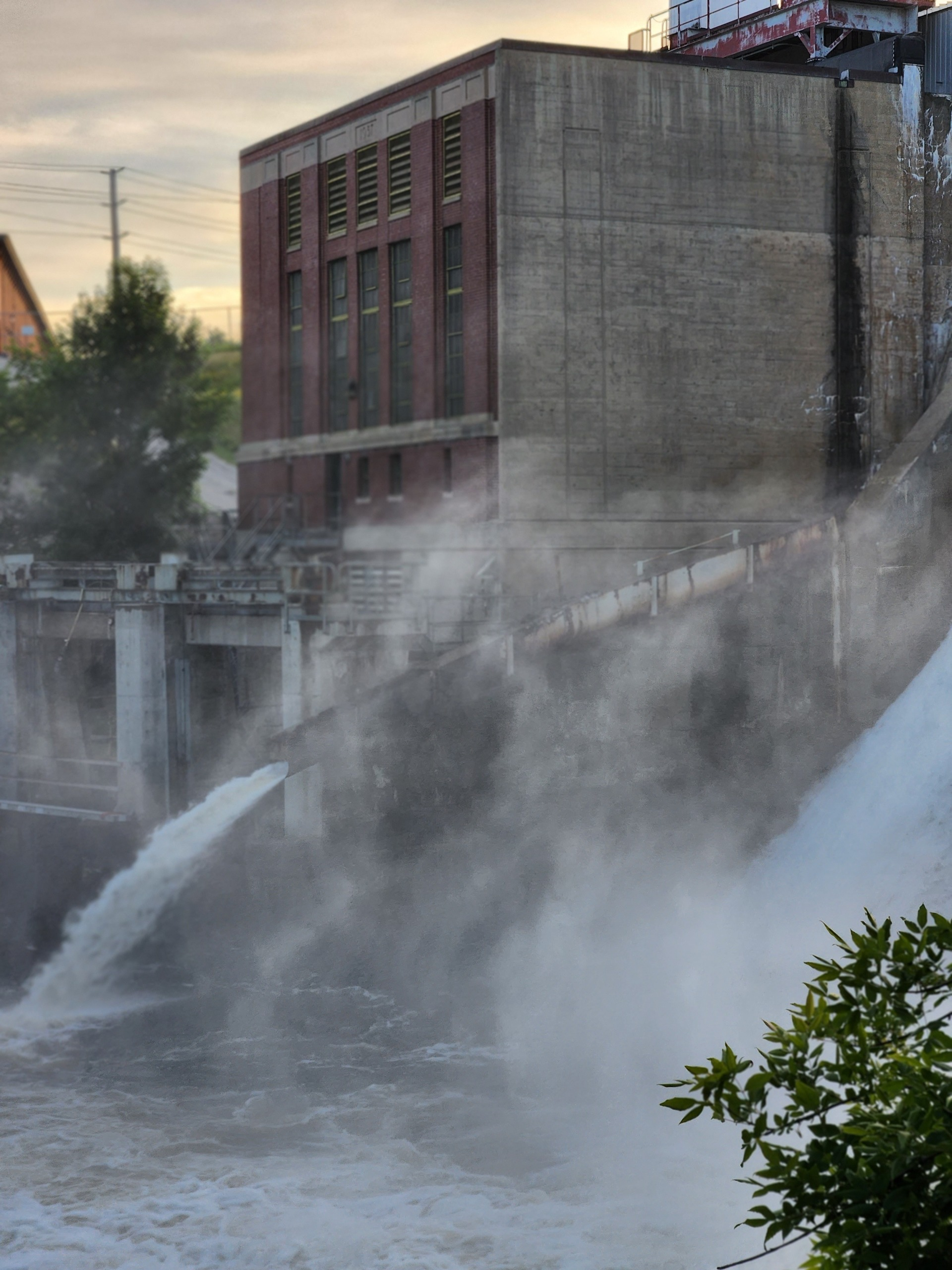
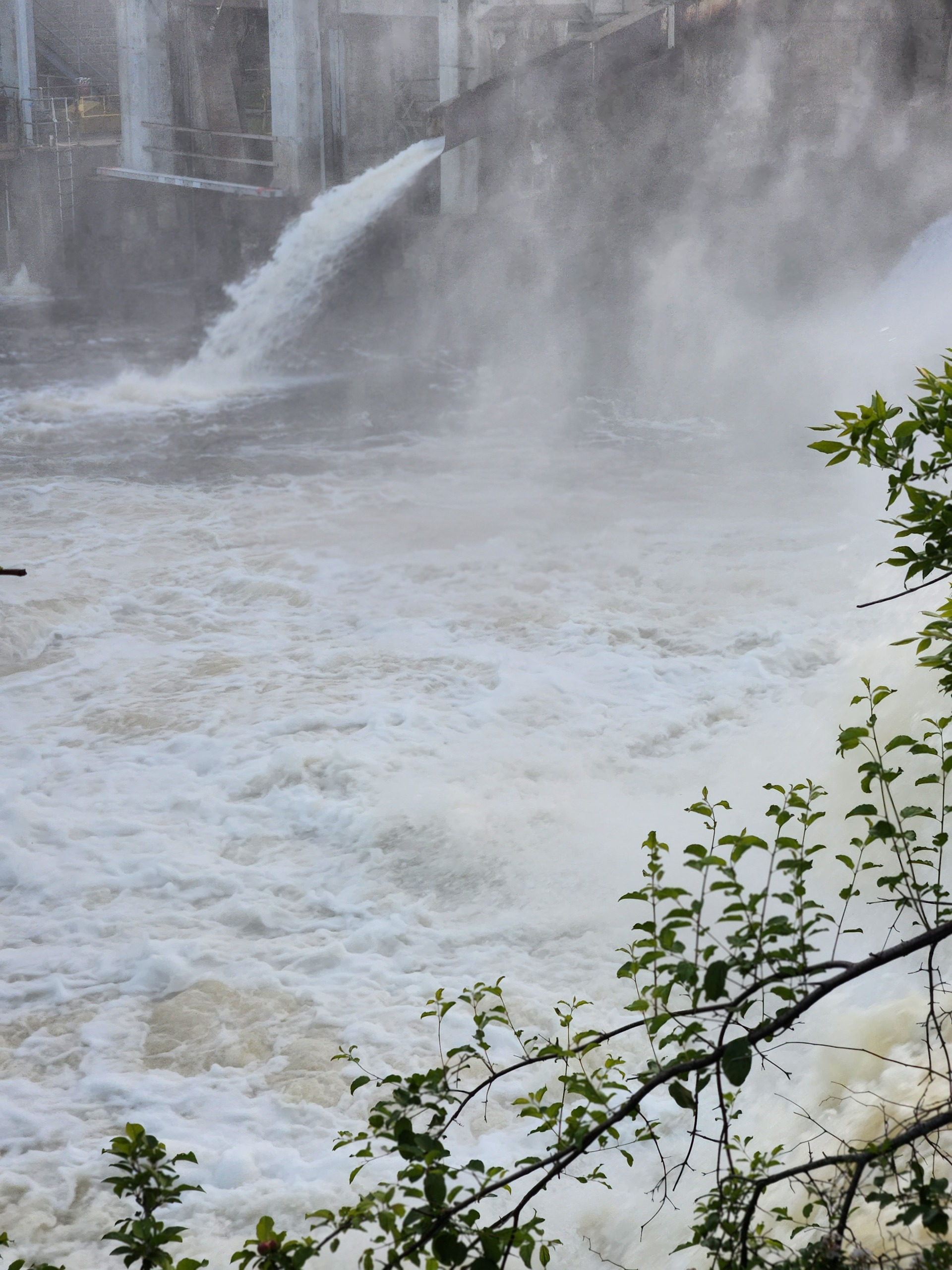
When we finally came upon the water, it was furious. Flowing green and yellow river water crashed through, turning white in an instant as it sloshed about the rocks, stones, and equipment from an era long since past. The looming brick buildings transformed the river beneath their shadows into hues of purple and blue. There was a beauty in the hard rectangular lines of the buildings cutting over the river, as if I were looking through a blue bottle.
Beyond the color, I was mesmerized by the water, so loud and booming as it rushed through and echoed between buildings along the seemingly narrow passes. The acoustics of the place and the sheer force of the water made me feel like I was in a grand concert hall, focused on the conductor watching their every movement. My attention was locked in, and I lost myself just watching.
The composition for a painting of this place at this moment wasn't obvious. No picture could really capture the sense of what I was looking for. Sometimes a collection of photographs can work well as reference material, as reviewing them before working—along with notes or journal entries from the time, or even listening to music that was playing—can transport you back to that moment. Other times, like in this particular moment, I needed to be here. Although the blue and green water that transformed into white mists would make beautiful forms amongst the brick buildings, greenery, and broken fences, it wasn't what I was looking for. The reason I was captivated by this place was because of how mesmerizing it was to be here. Understanding the circumstances, the weather, the history—all of it contributes as narrative elements to the piece. But that's not why I'm here. I'm here because I lost myself in the aggression and force. To capture that, I needed to sit here, come back, and try to figure it out with my material onsite.
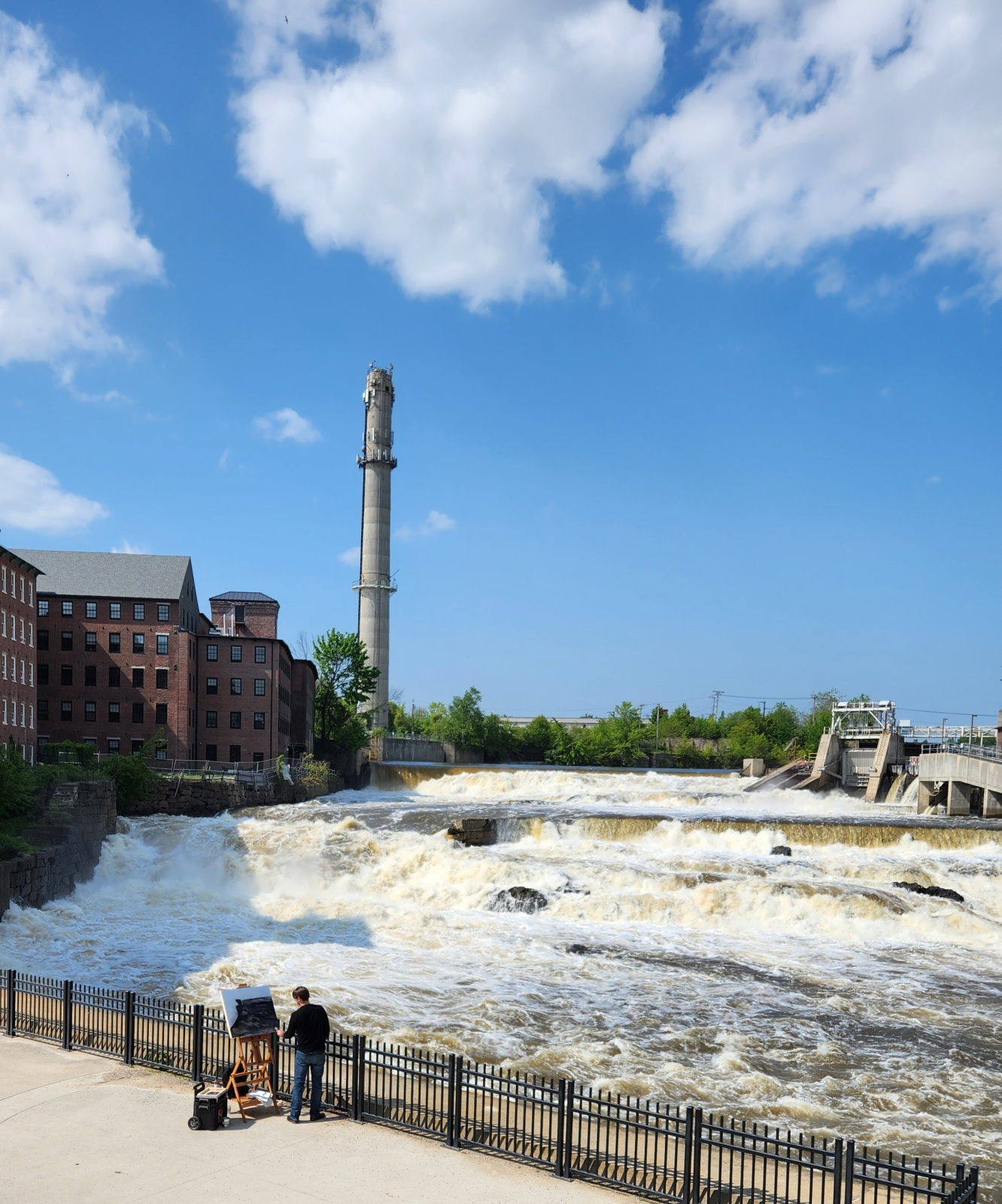
May 21, 2023 Initial Sketch en Plein Air
After waiting a few weeks for another storm just like it, I have my panel primed and ready, along with my easel and everything else I need. There's a logistical consideration when painting outside—especially the way I paint. My goal today is to bring my panel outside and take my time figuring out my composition. I want to recreate something very specific. We will make it happen today.
May 24, 2023
Back in the studio, the goal changed. The river was still the subject, but now I needed a language for it. I wasn’t trying to copy the rapids. I was trying to rebuild their energy in forms I could actually control. I'm seeking specific elements within the overall composition.
The energy I aim to capture will emerge from layering forms. I envision these forms as dancers—some positioned in the background, others closer to the foreground. My goal is to create forms with a sense of permanence, yet flexible enough to be altered, shifted, or obscured as the work progresses. While there's no predetermined "correct" placement for these forms, their presence will guide the painting's evolution. This is the moment to embrace the poetic as uninhibited.
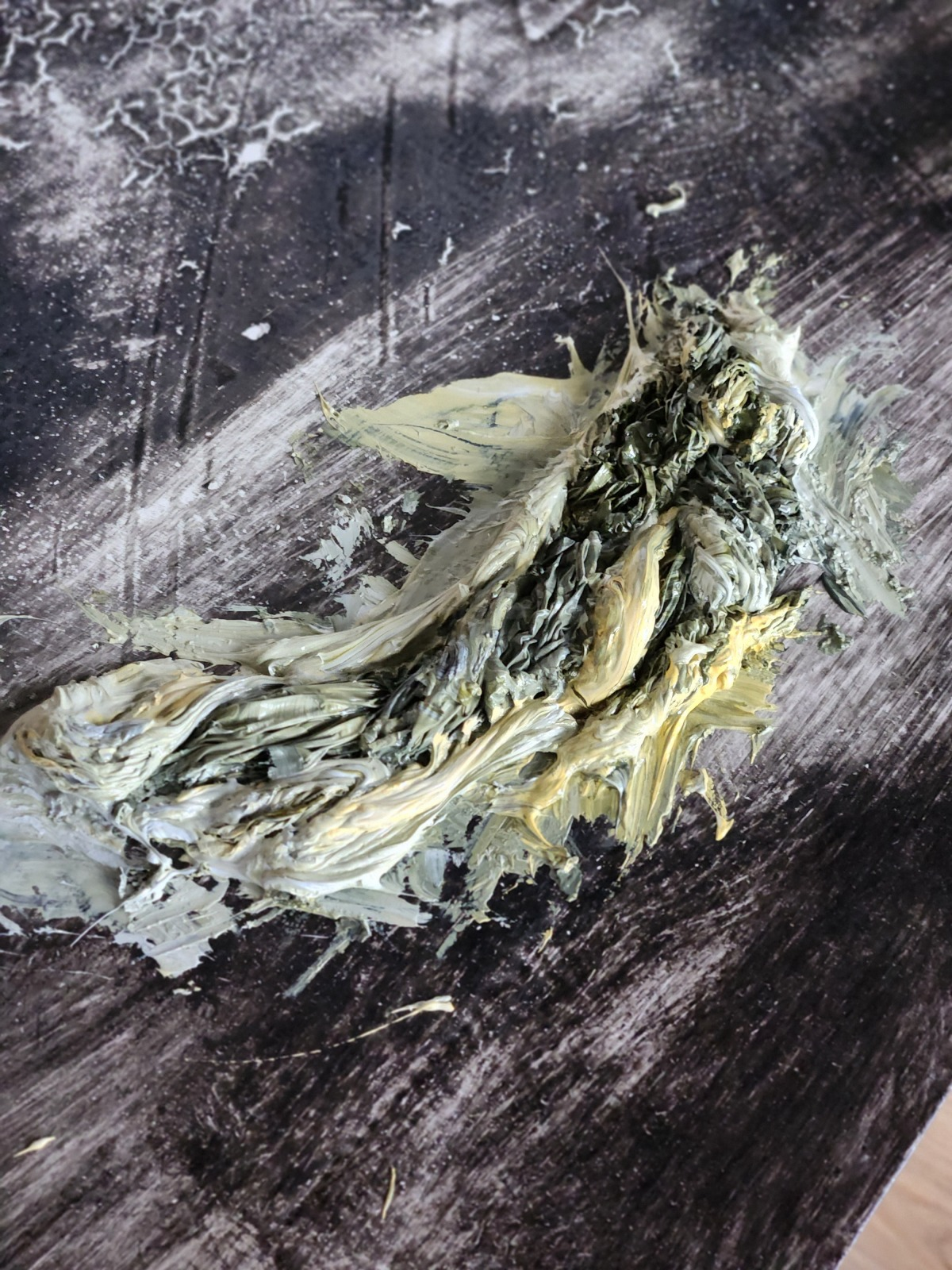
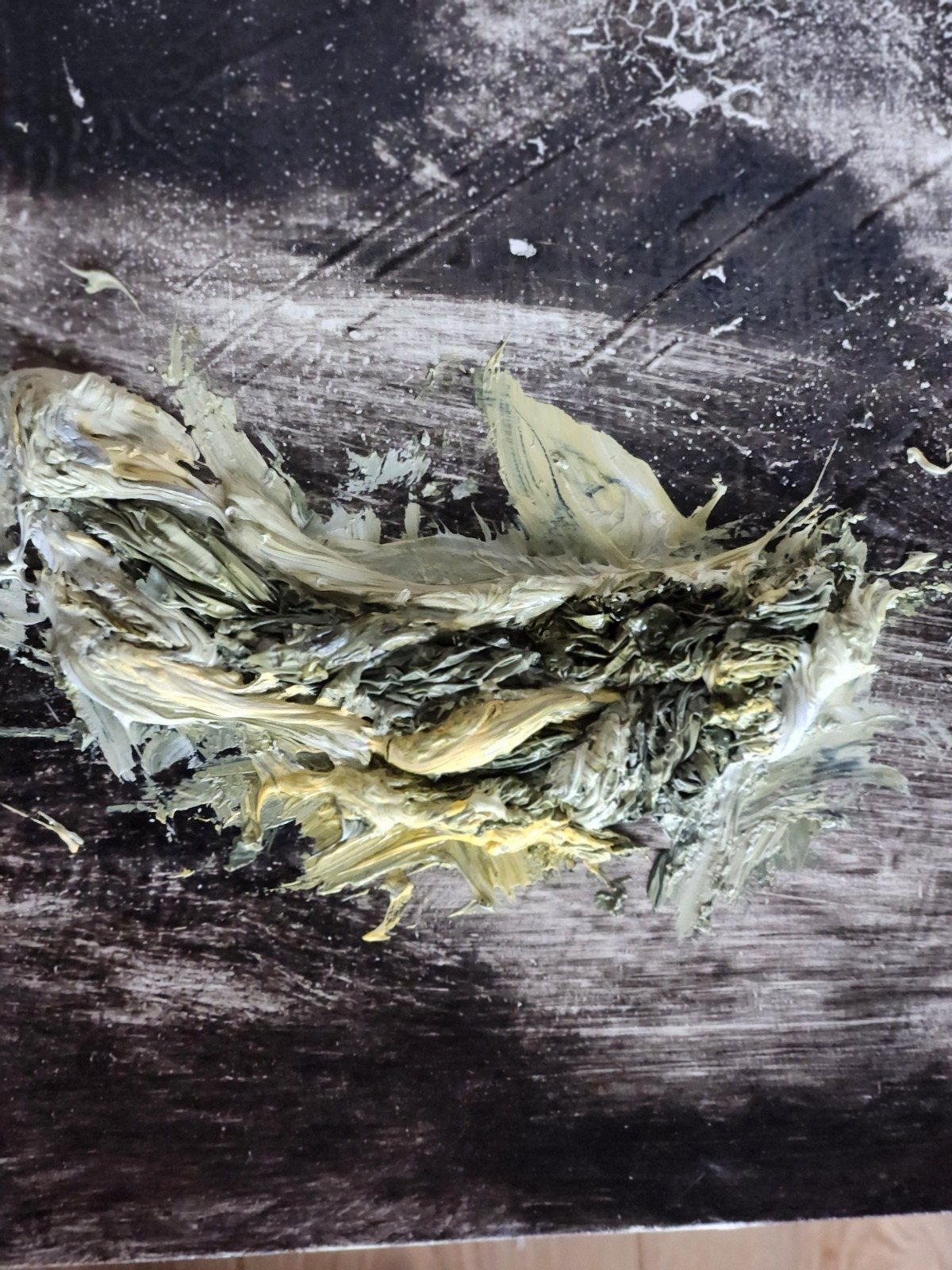
July 2, 2023
Over the next few weeks, the painting stopped cooperating. The early momentum was real, but the composition still felt like a collection of attempts instead of a single statement. I kept making panels, testing attitudes, and throwing most of it away.
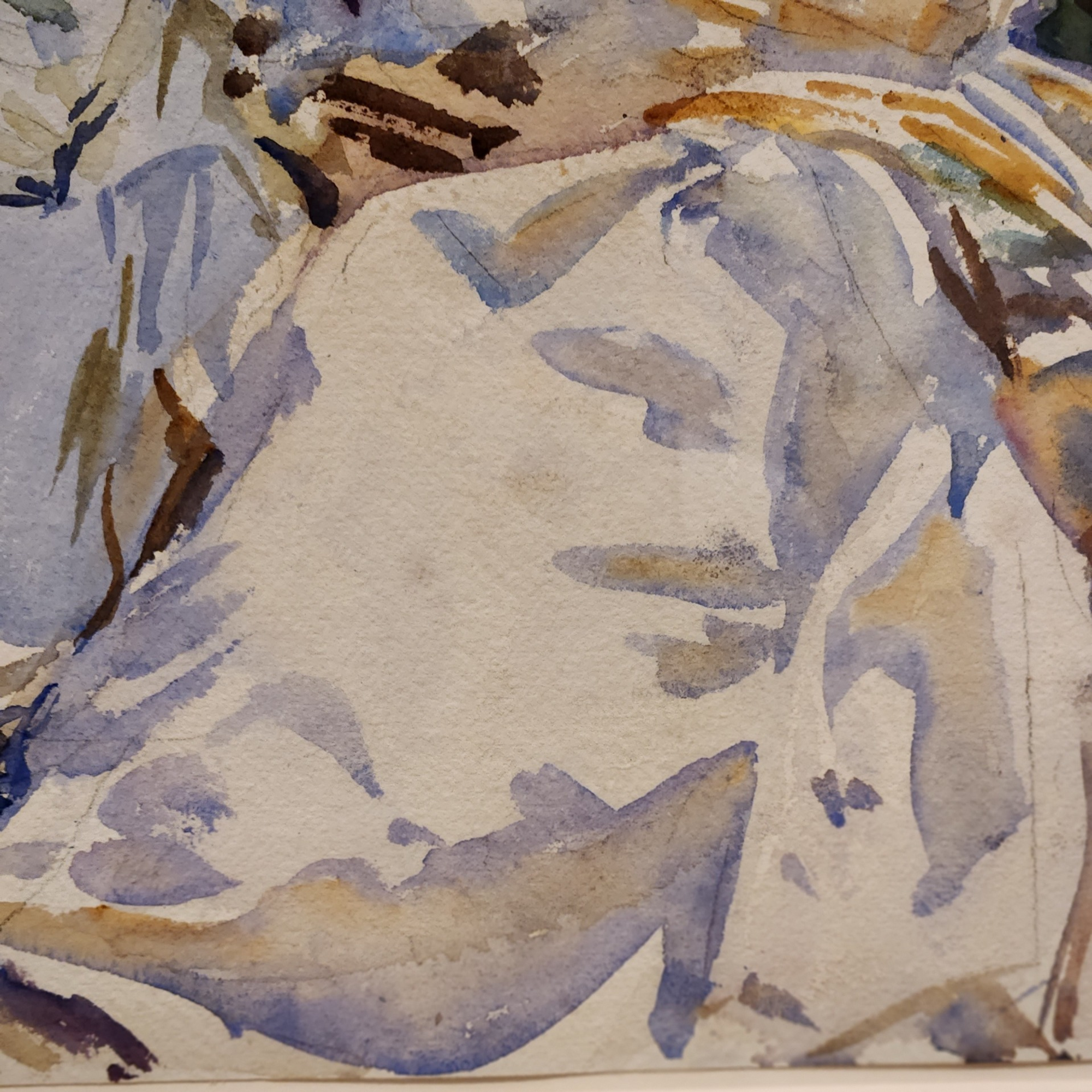
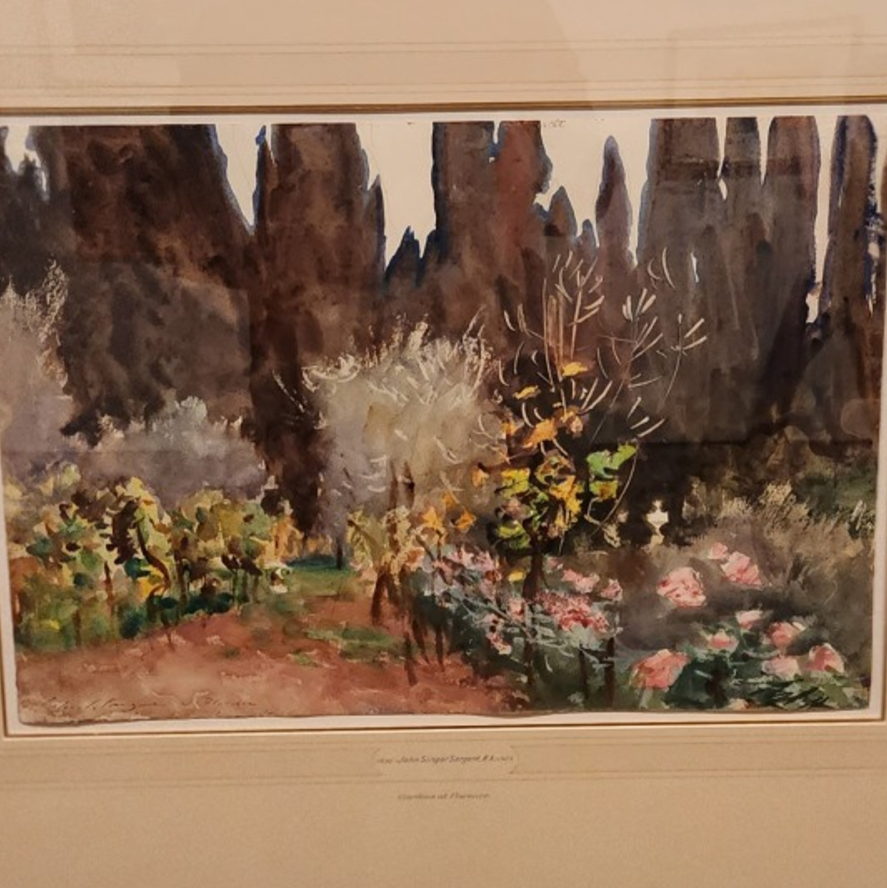
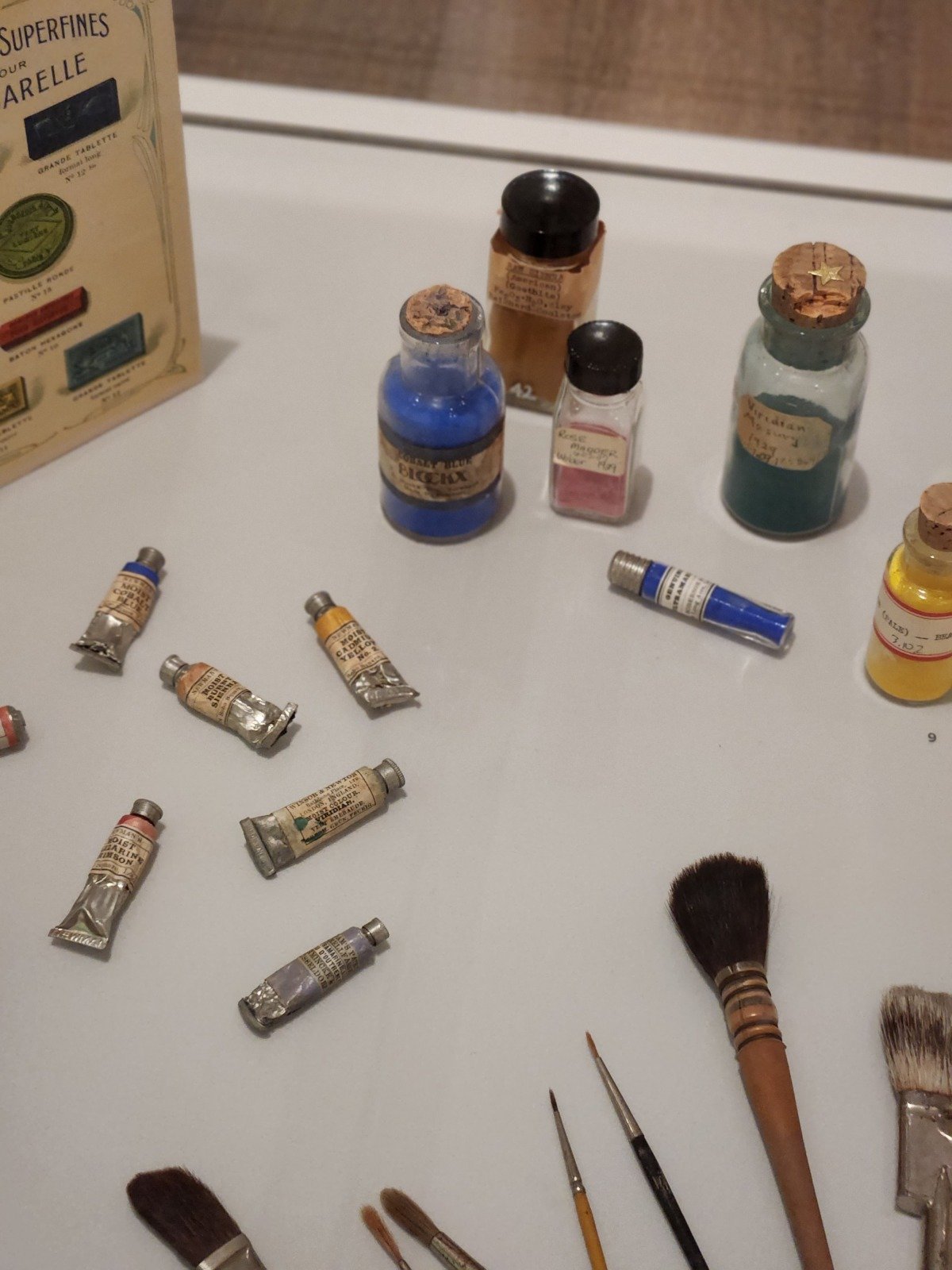
When I get stuck, I go look at something made with conviction. I needed to see scale, structure, and decision-making up close, then come back and face the surface again. We'll take a trip to Boston to see something.
July 6, 2023
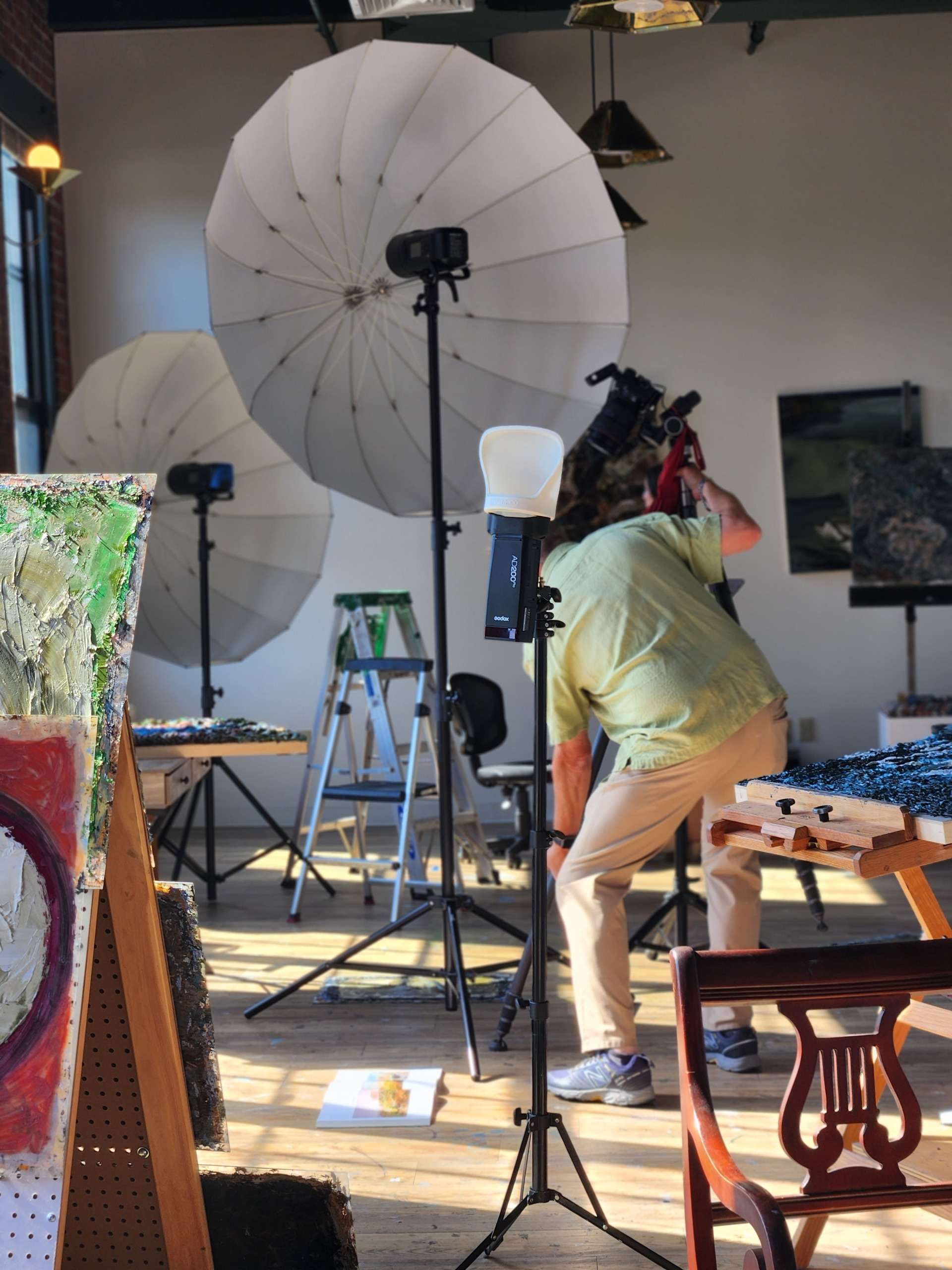
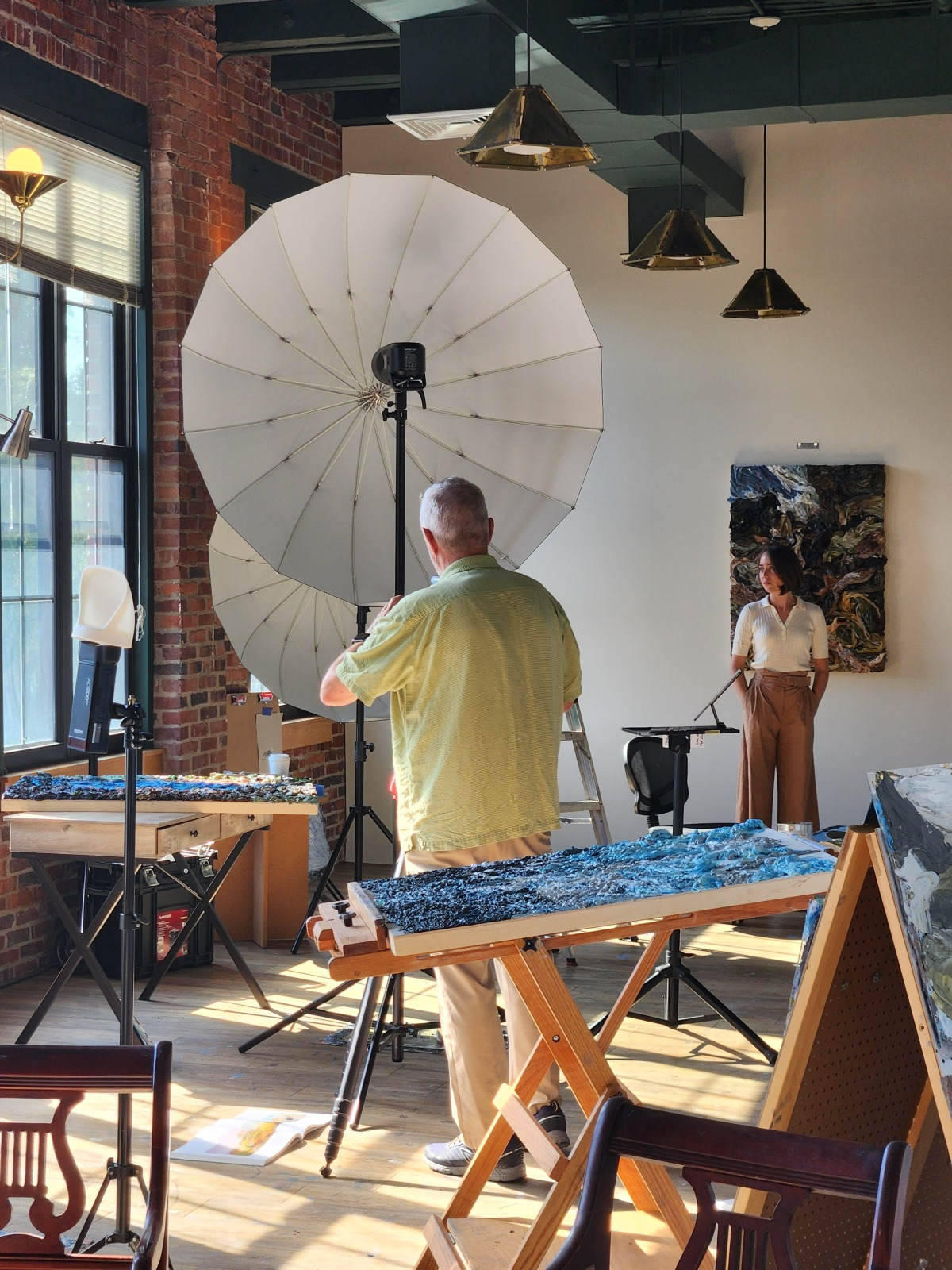
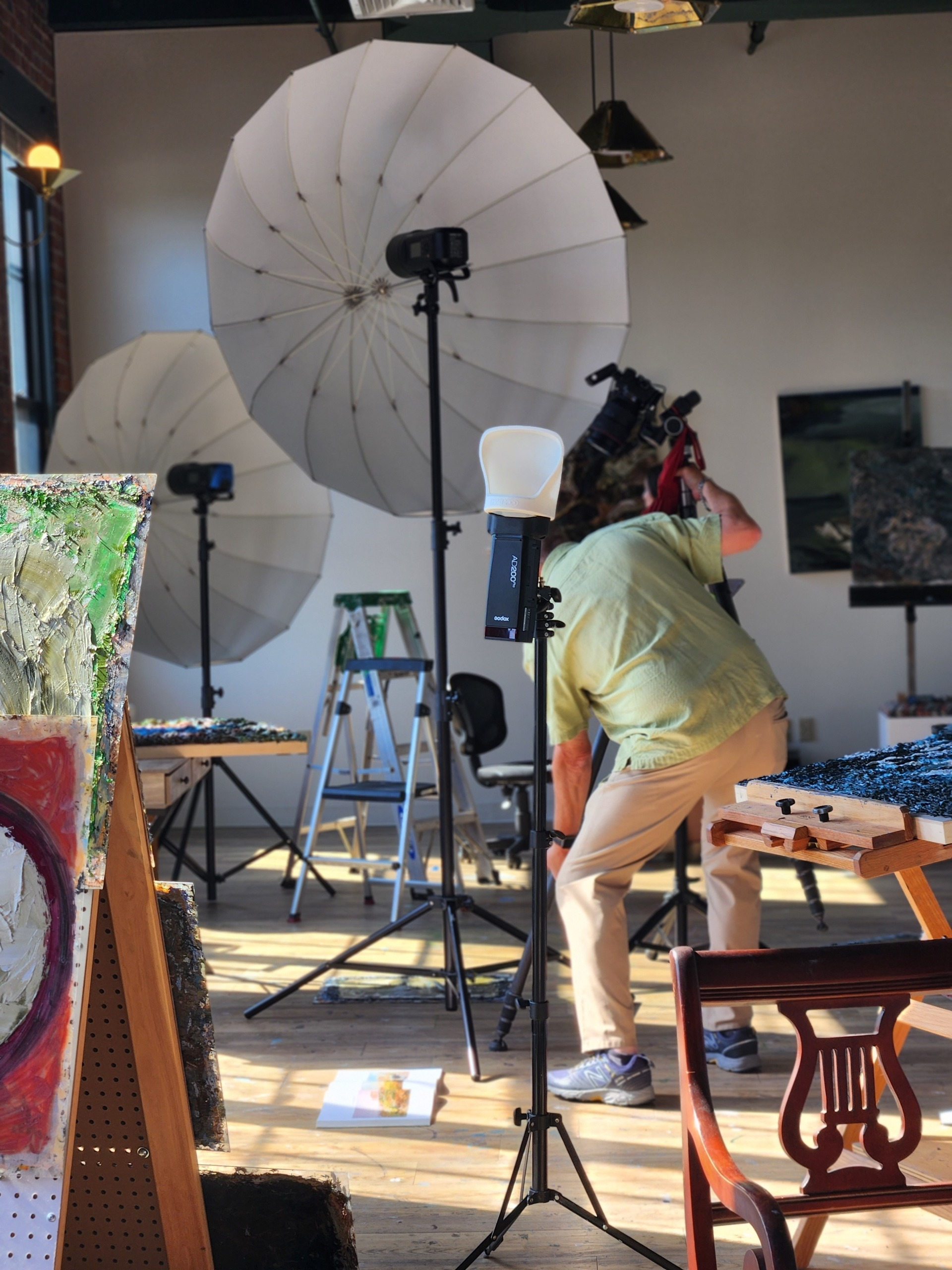
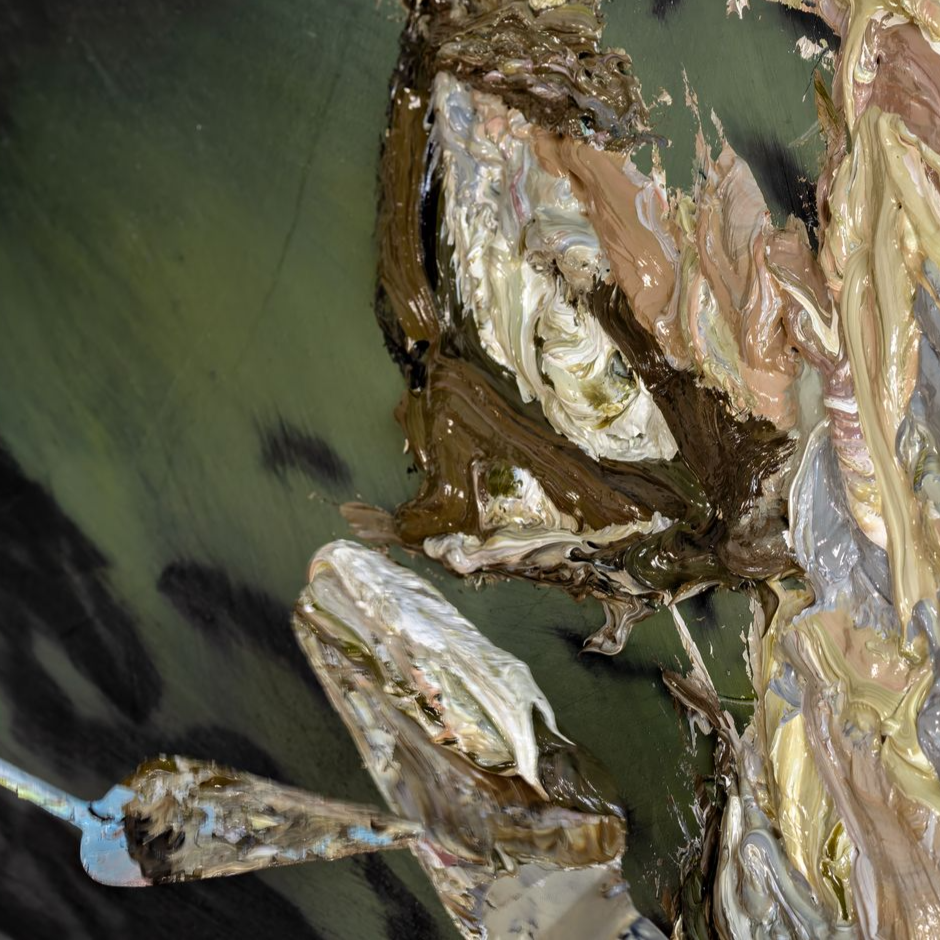
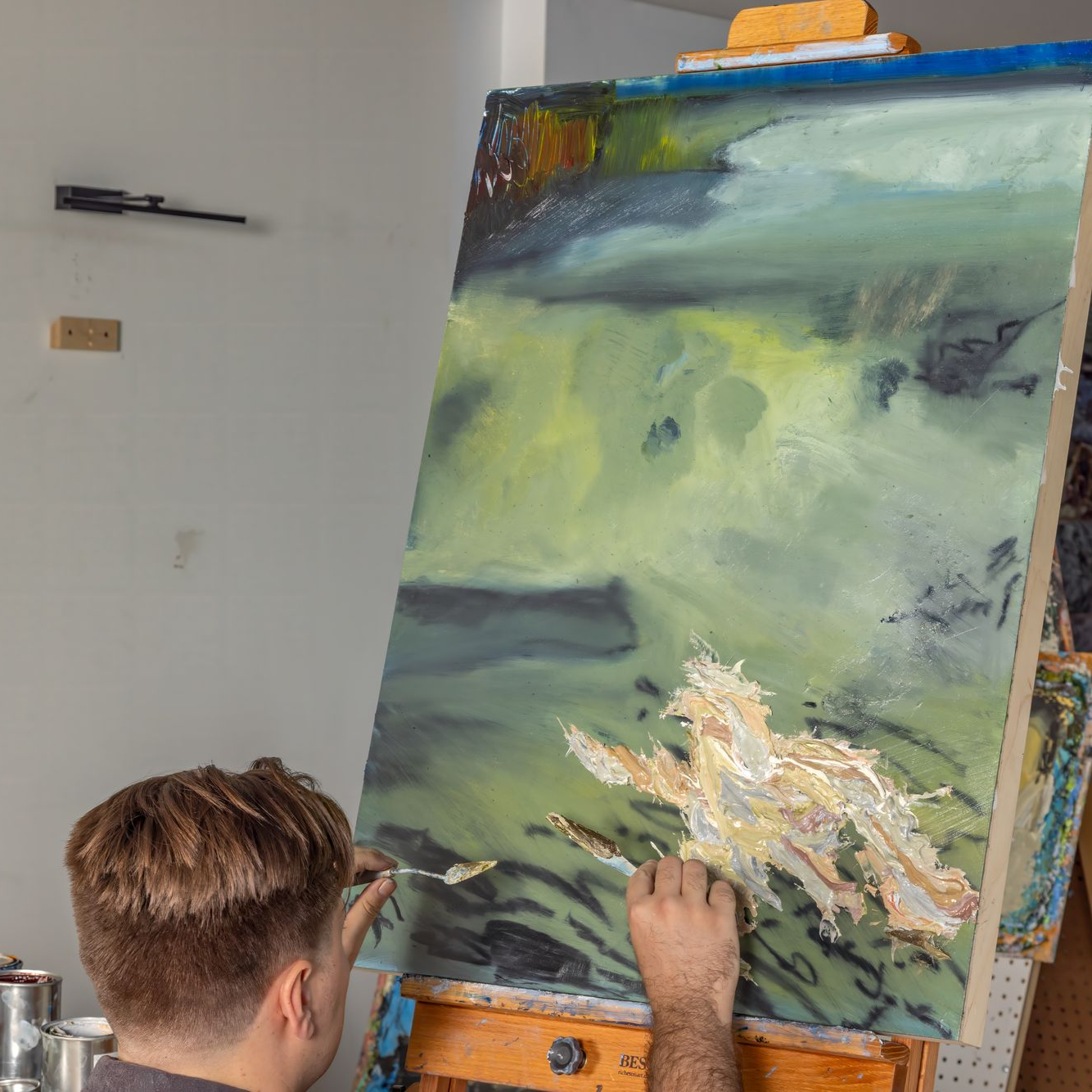
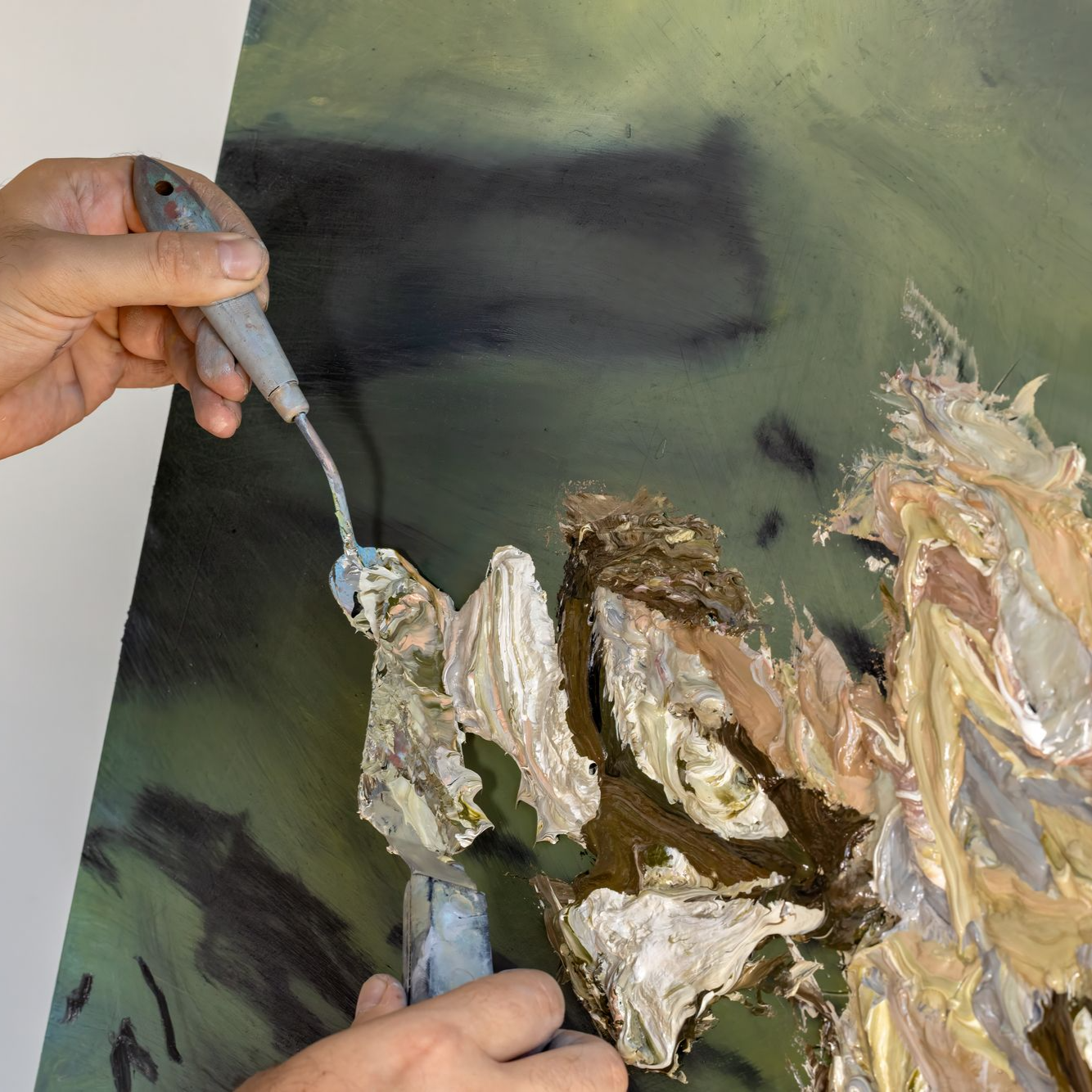
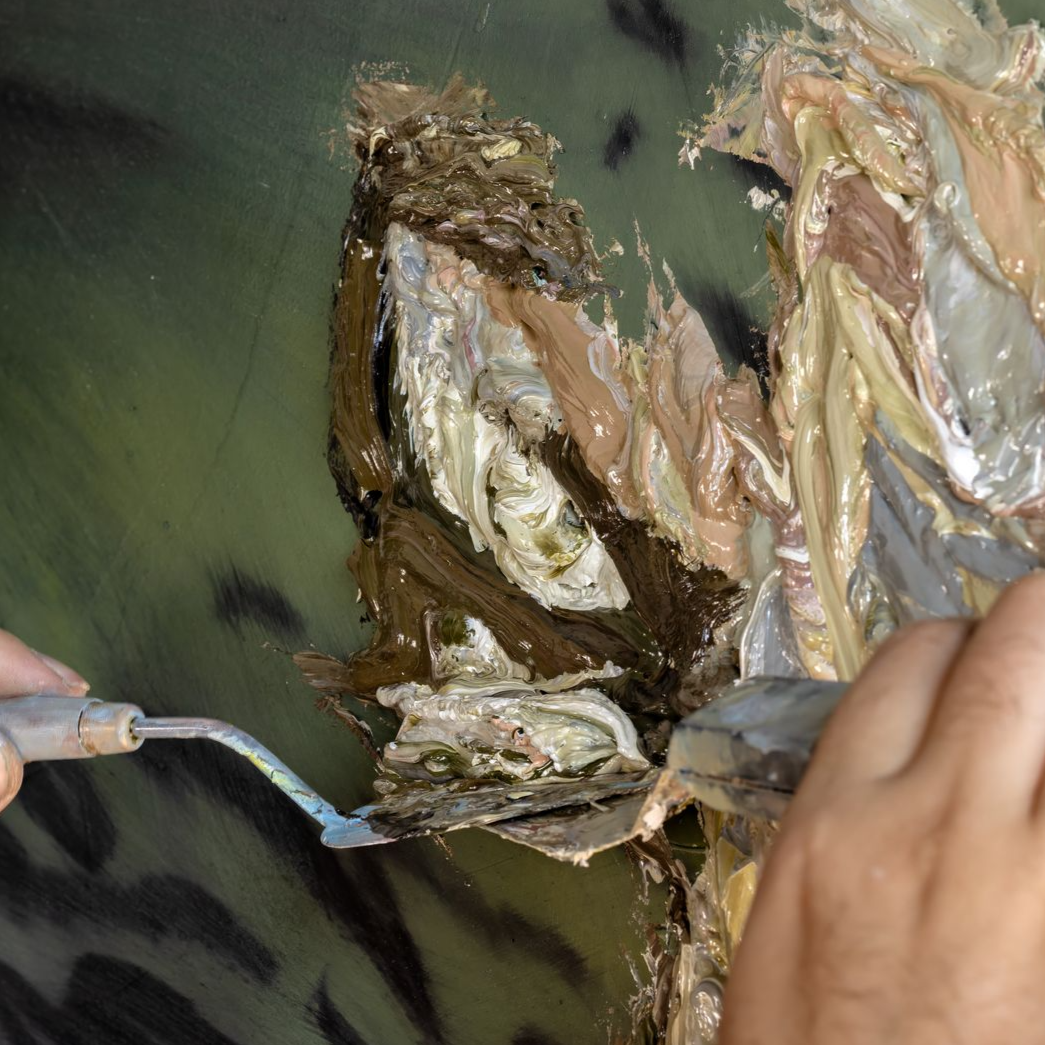
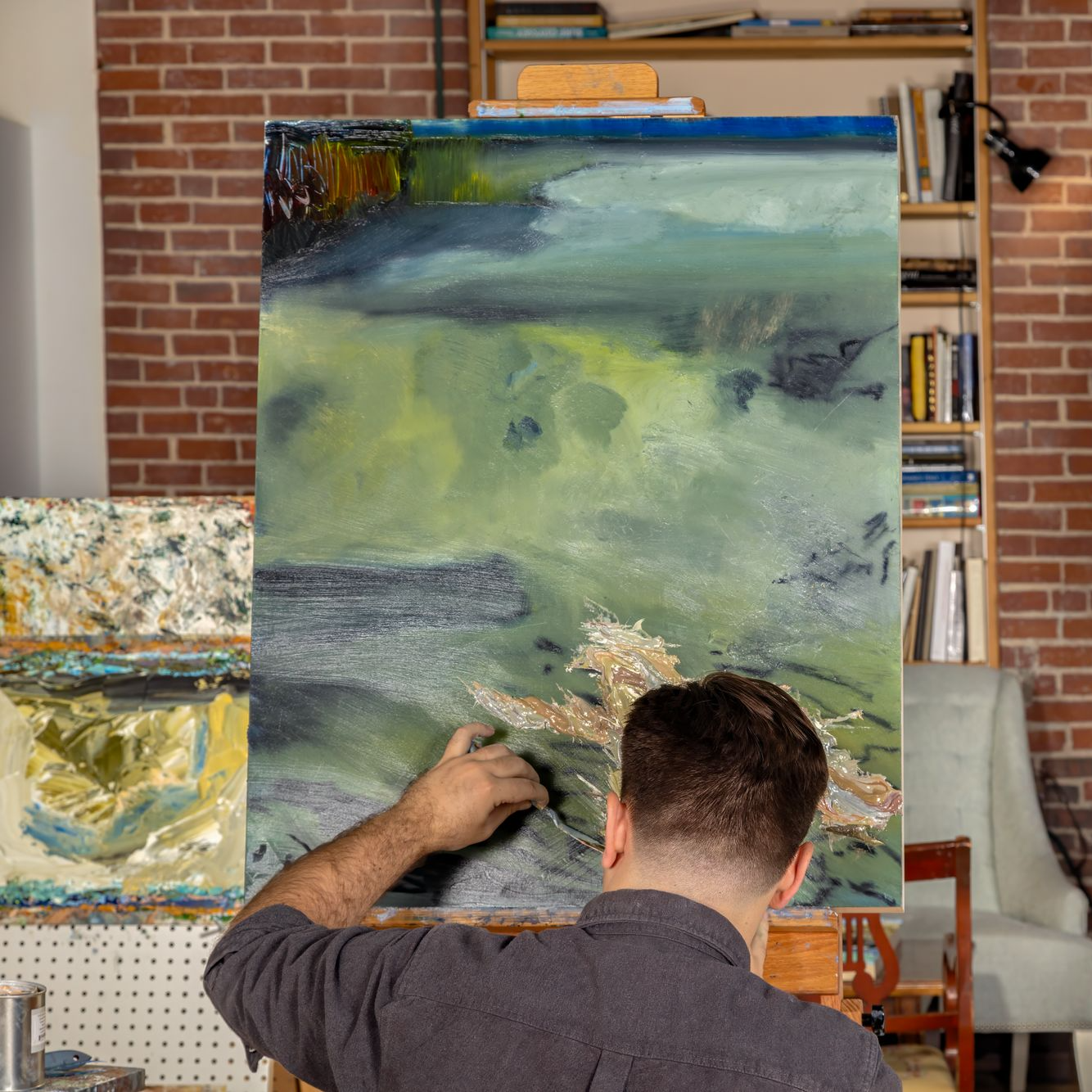
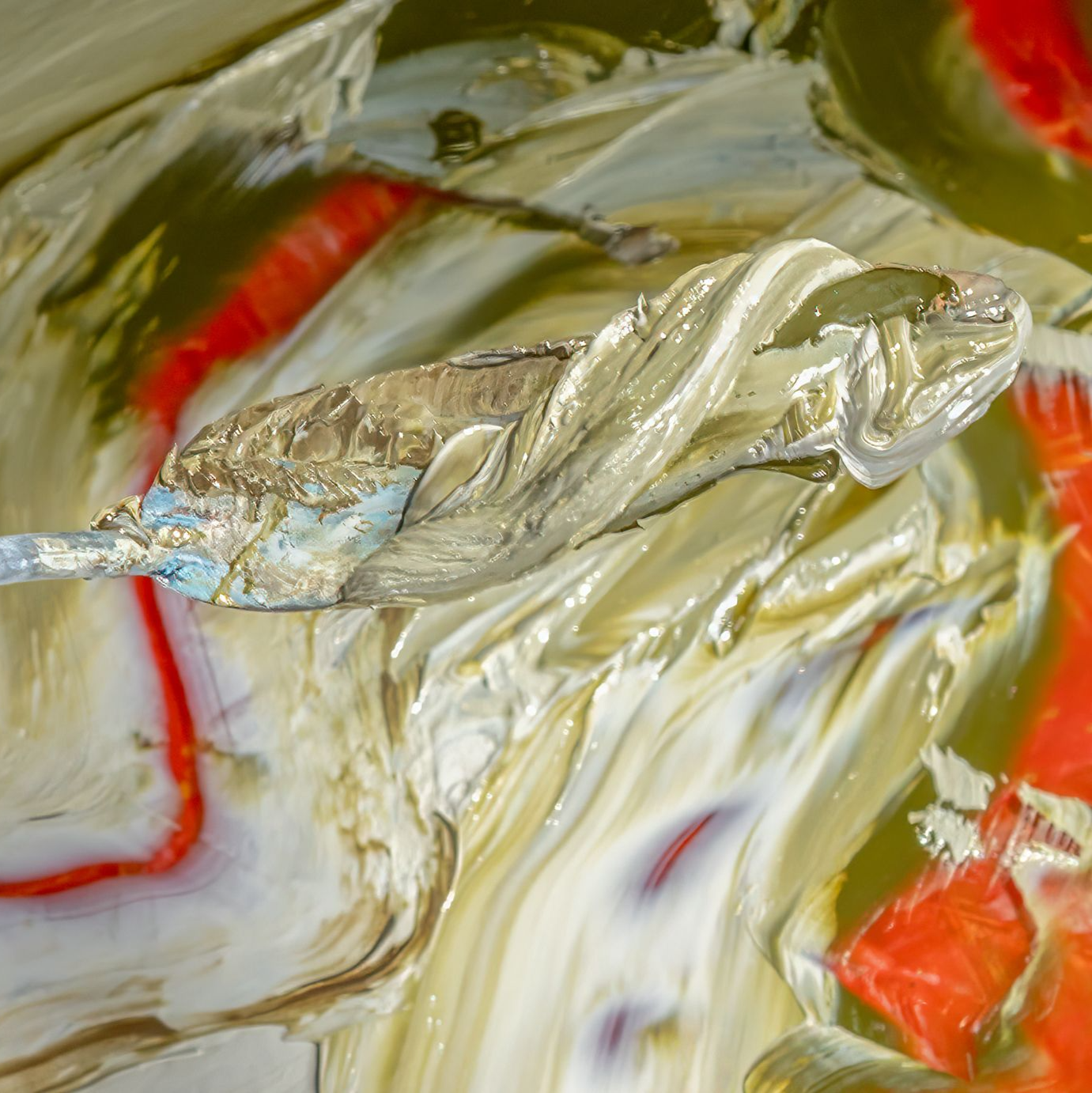
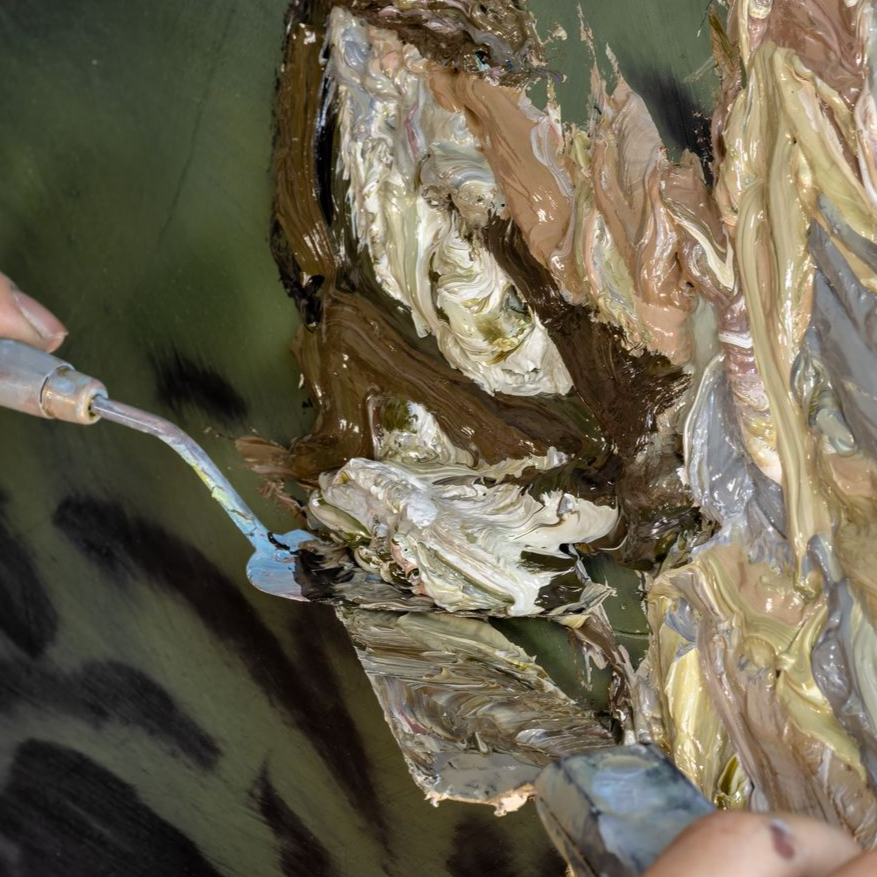
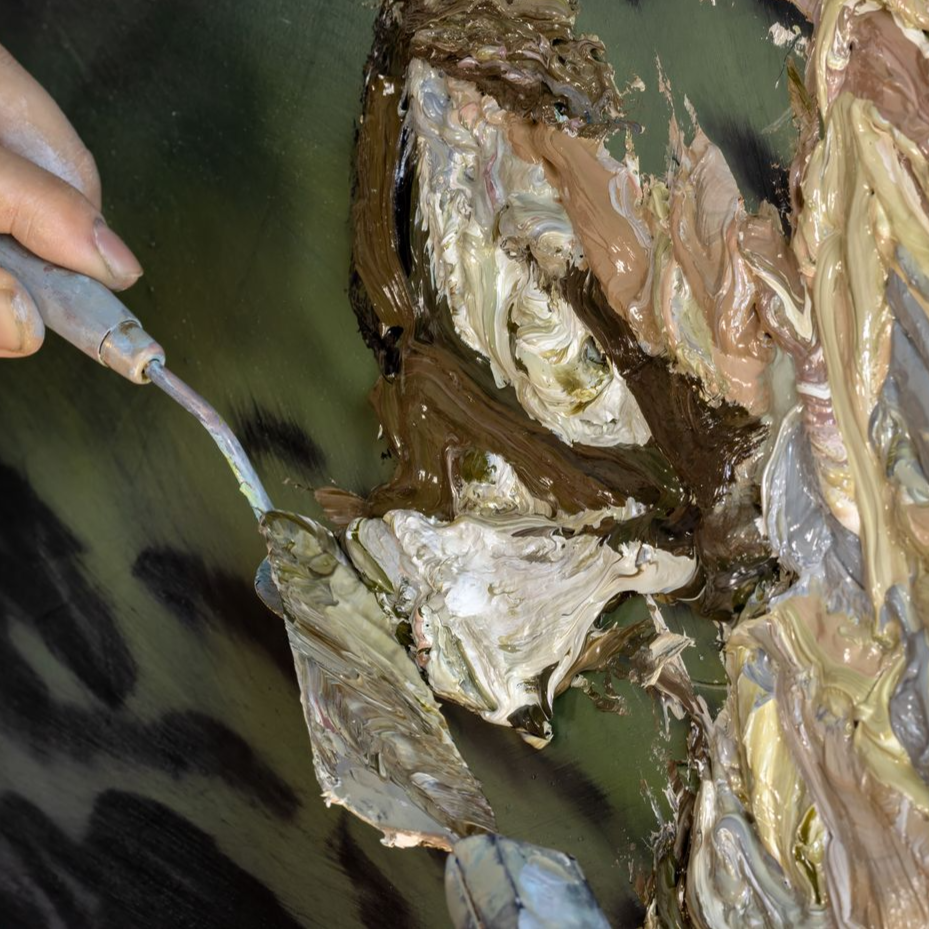
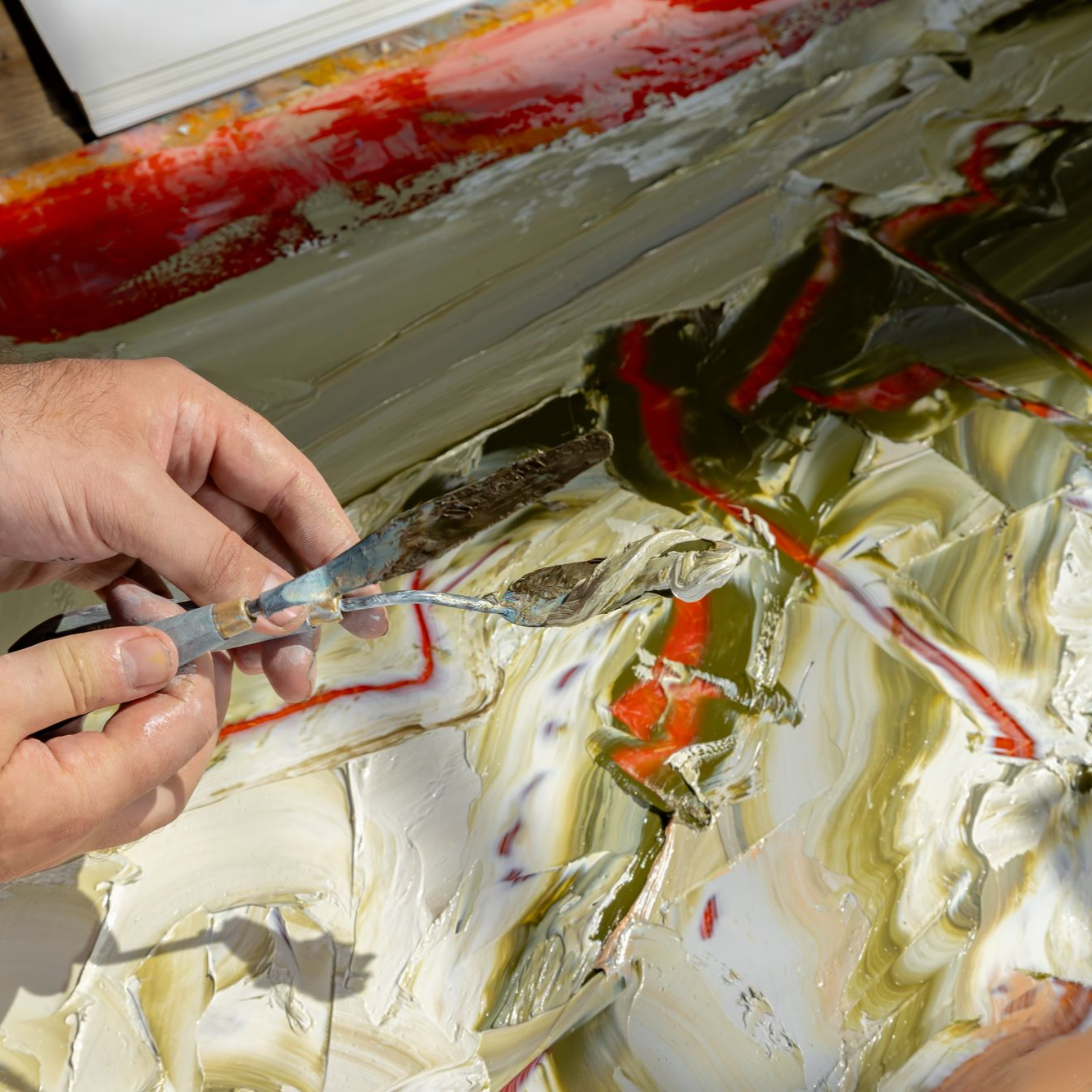
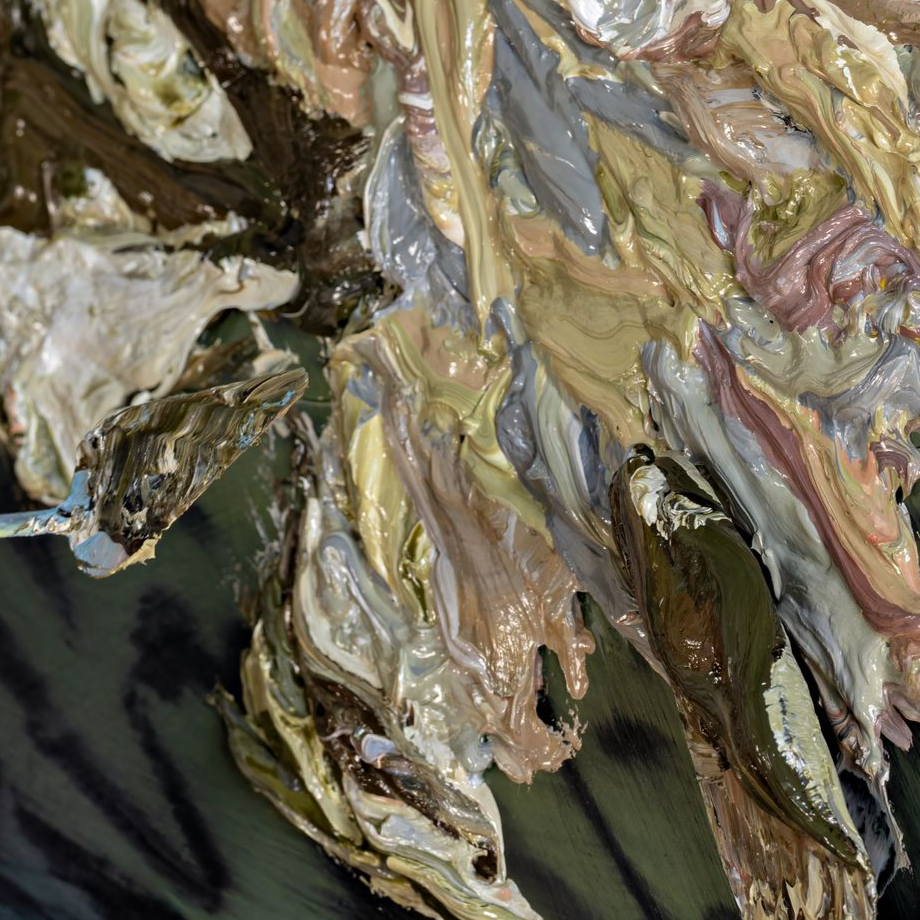
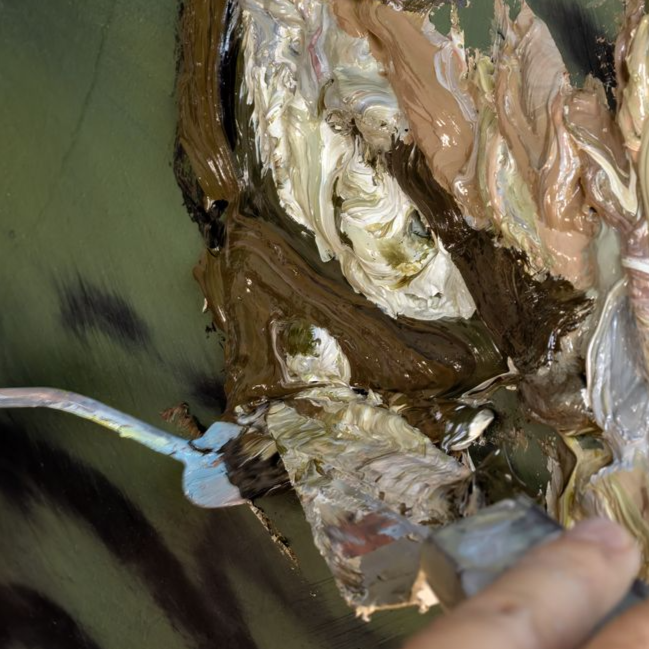
David Clough visited today to photograph my completed and in-progress works. One of the biggest challenges in sharing my art is getting high-quality photographs. My works have such varied surfaces that the light cast on them misrepresents what's truly there. After discussing this with David, I wanted to capture a few shots of my process from his perspective—to demonstrate my painting technique and see it through his eyes.
David is an exceptional architectural and commercial photographer who has captured the work of many artists I admire throughout New England. It was an honor to have him in my studio today and share my process.
Even with good documentation and a clearer record of the process, I still hesitated. The problem was not effort. It was desire. I had to decide what the painting was actually allowed to be.
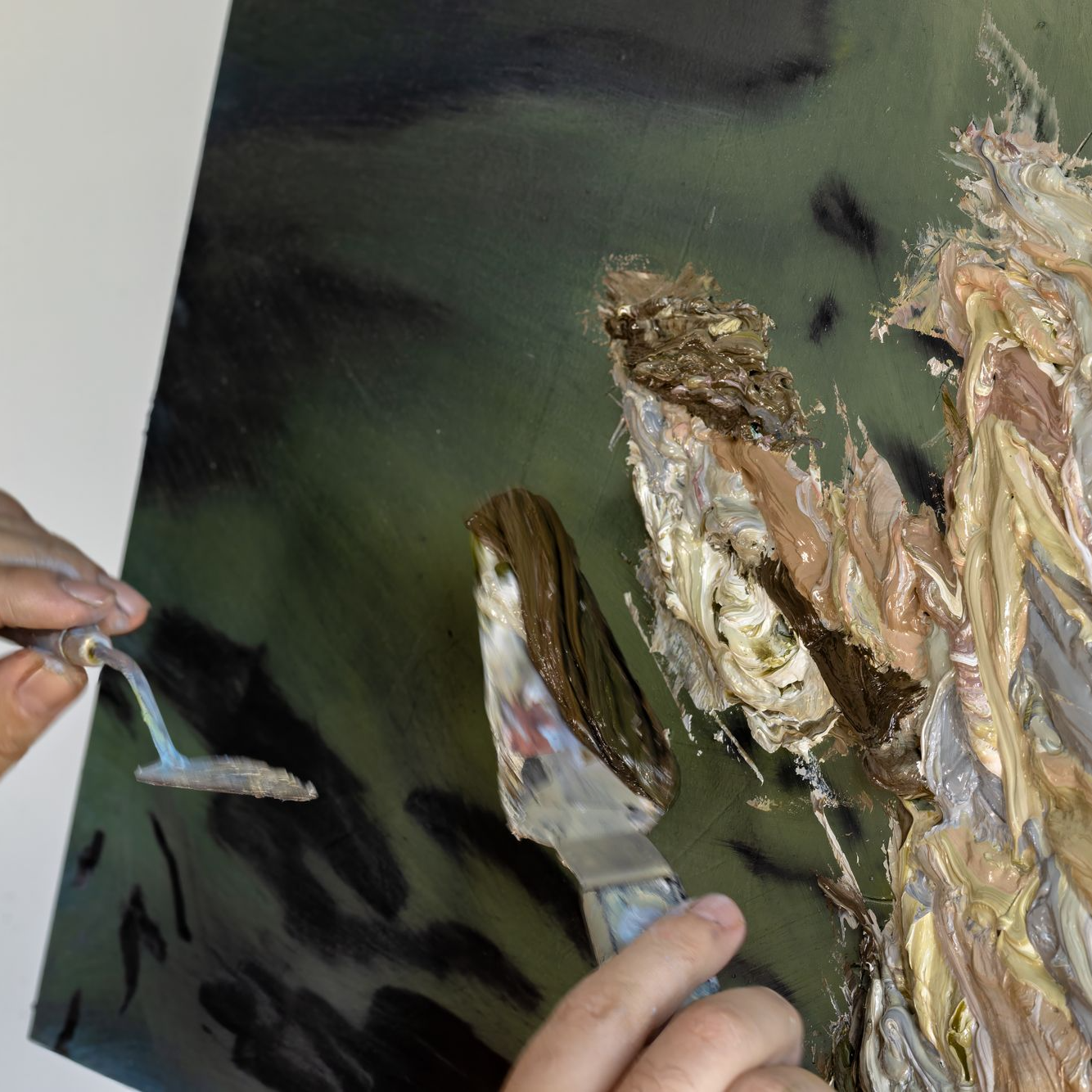
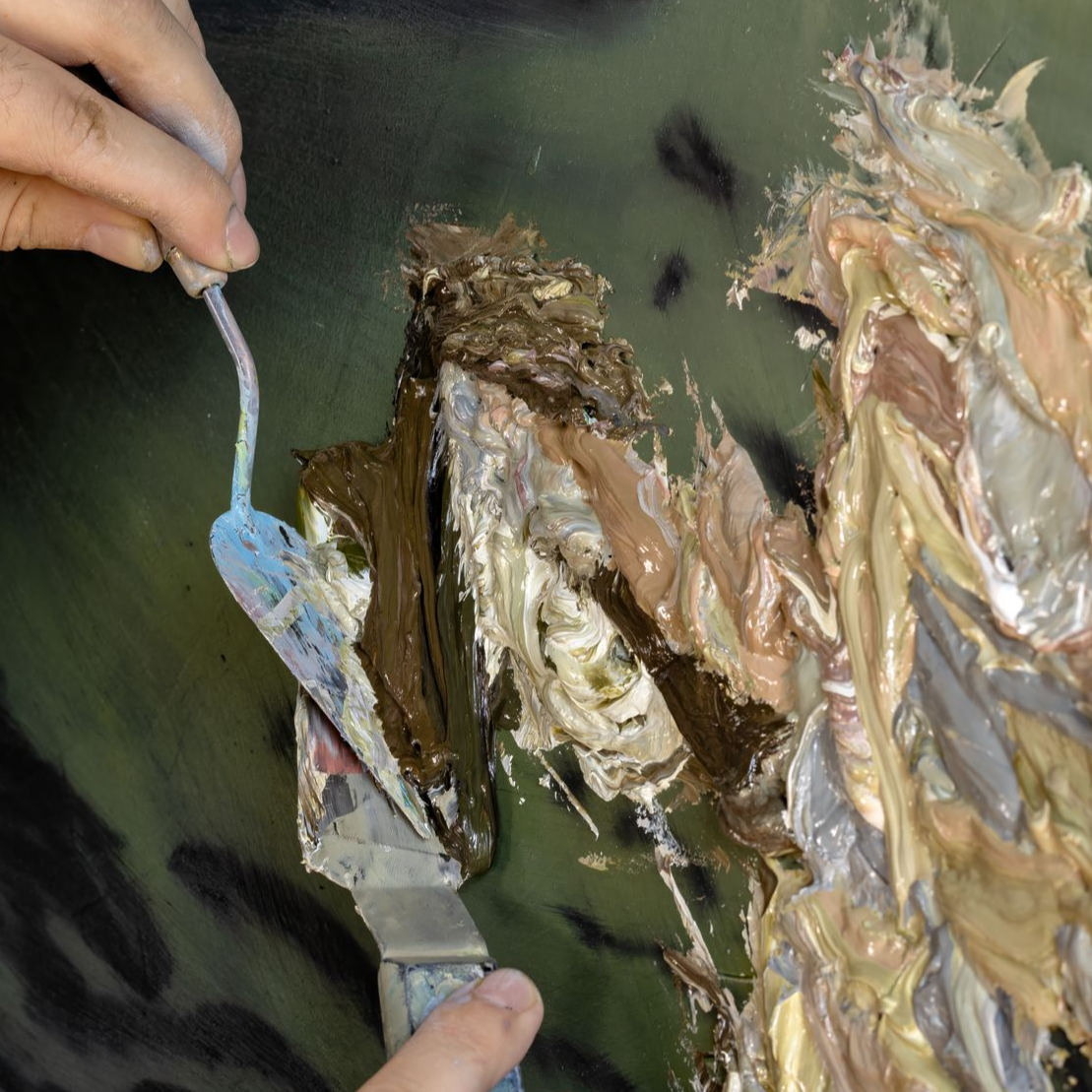
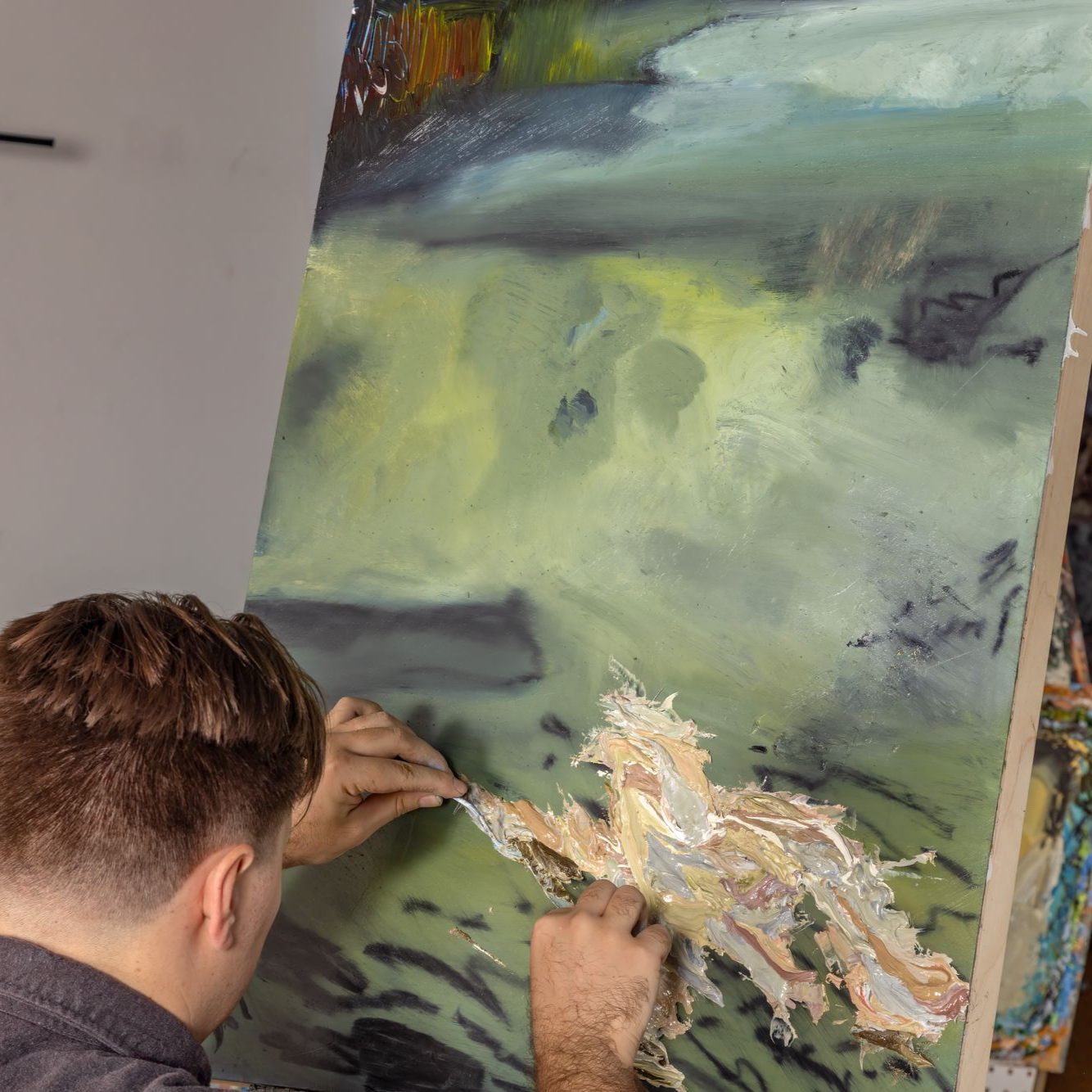
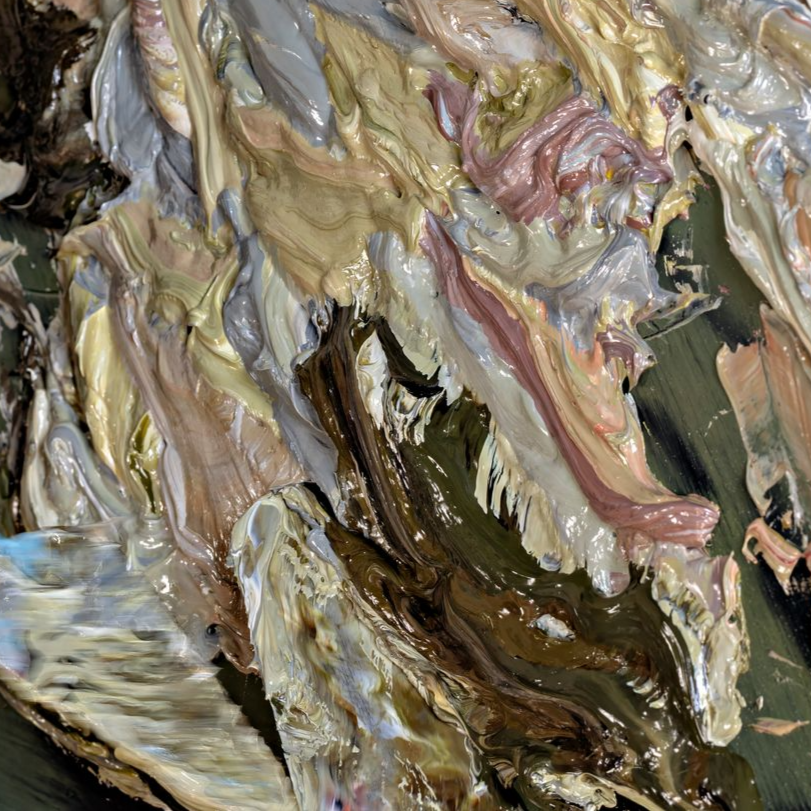
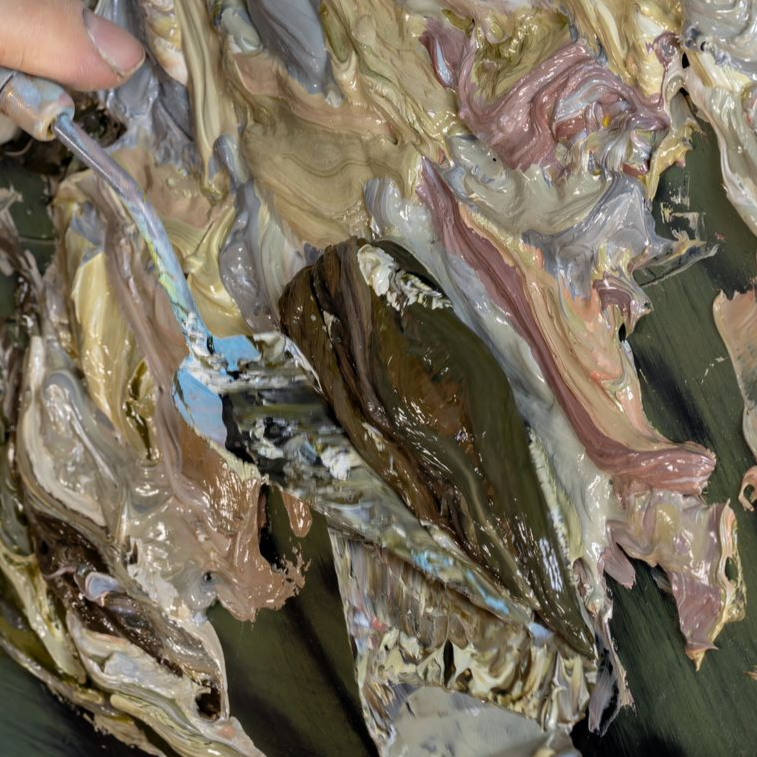
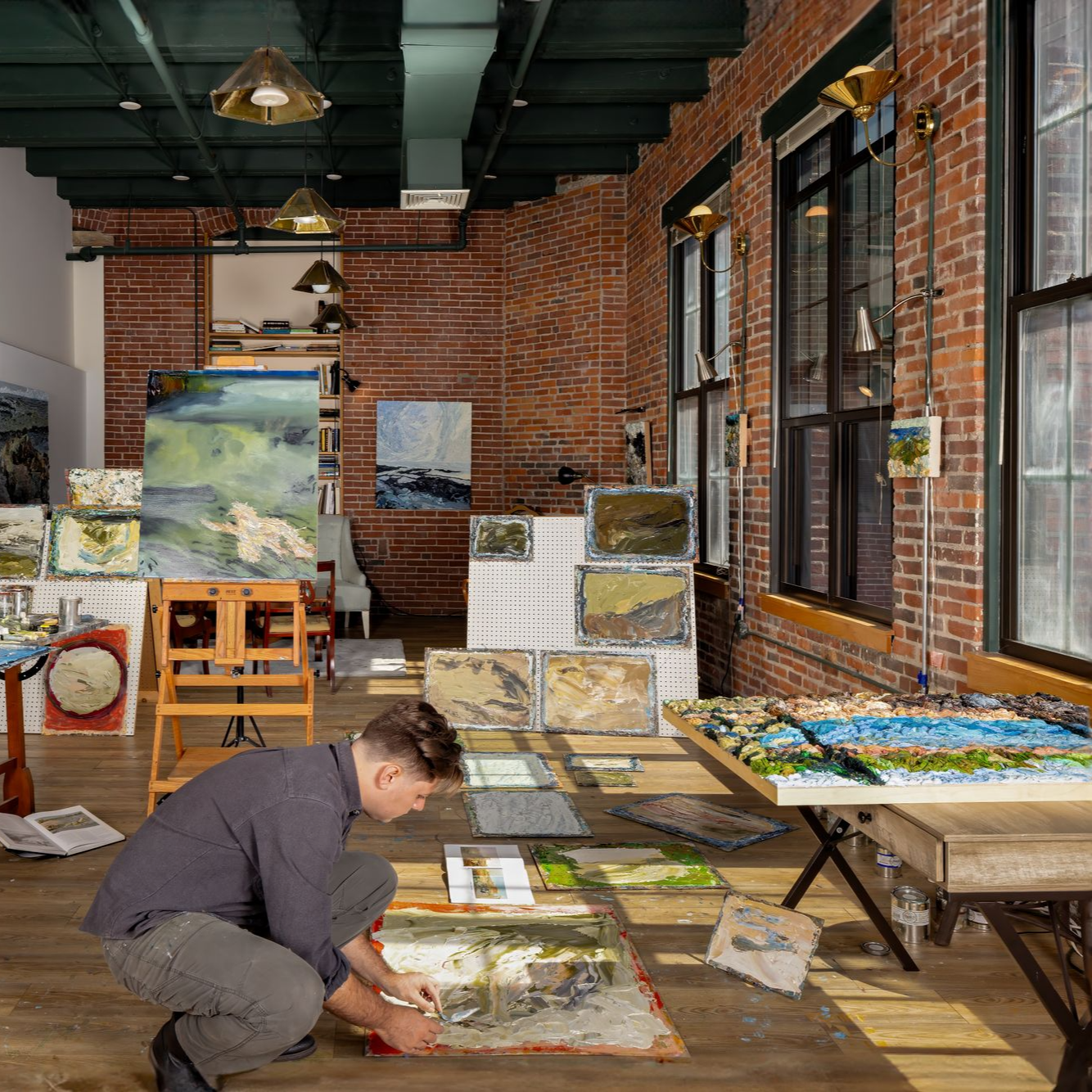
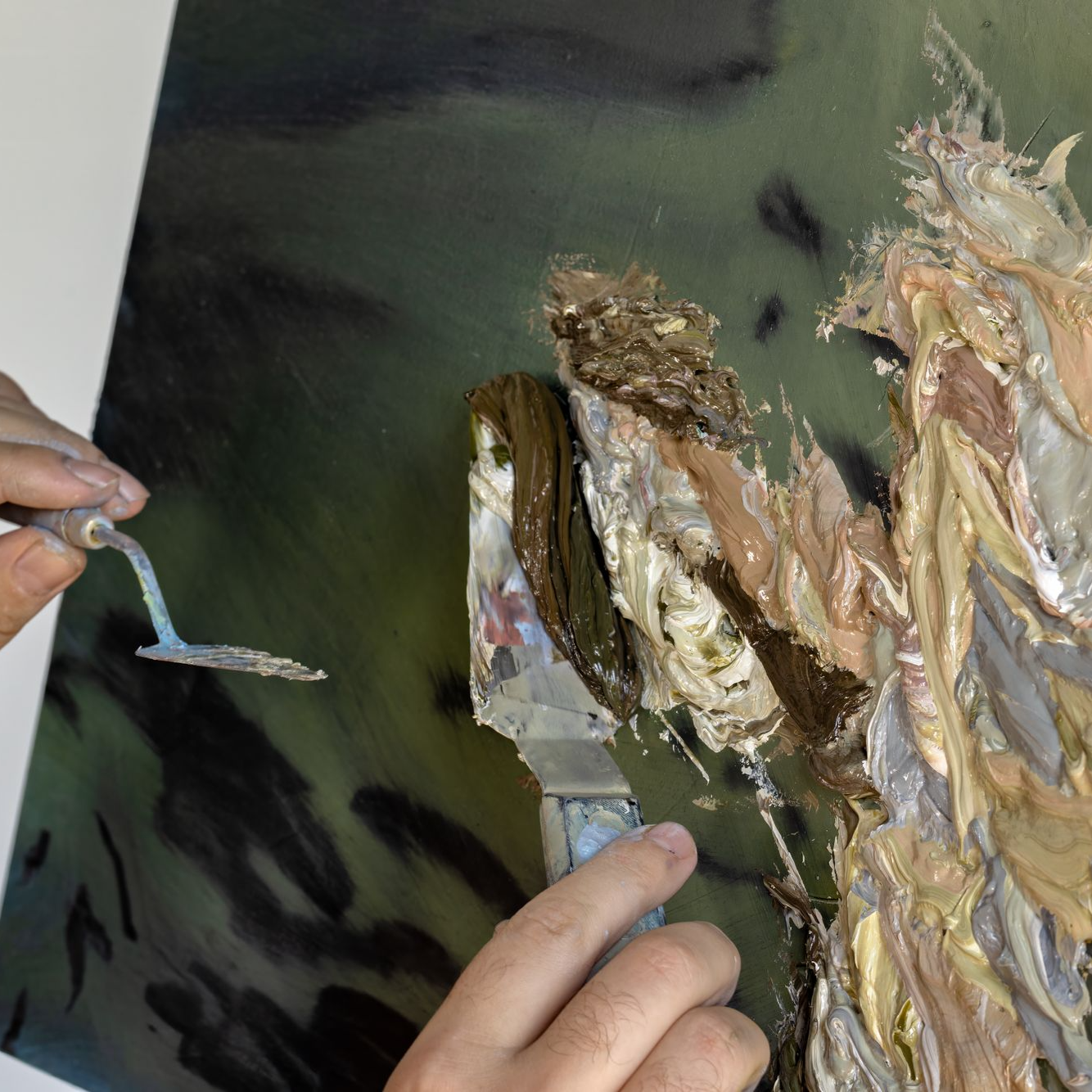
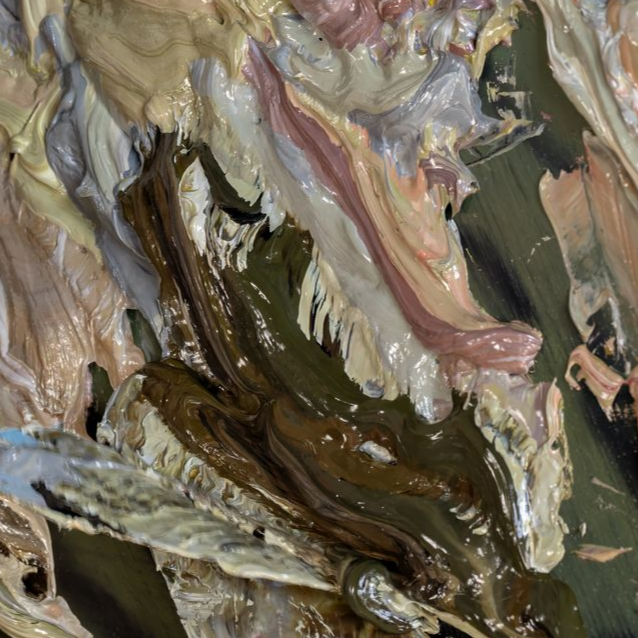
August 9th, 2023
Although we made excellent progress at the beginning of July, I haven't been able to sit still and work on this painting. Something is paralyzing me from making progress. Catherine and I decided to set a deadline—I would finish it by December 1.
In the meantime, we booked a dinner at Elda for our anniversary. Elda is in the Biddeford Mills, though at the time of writing this, it's closed.
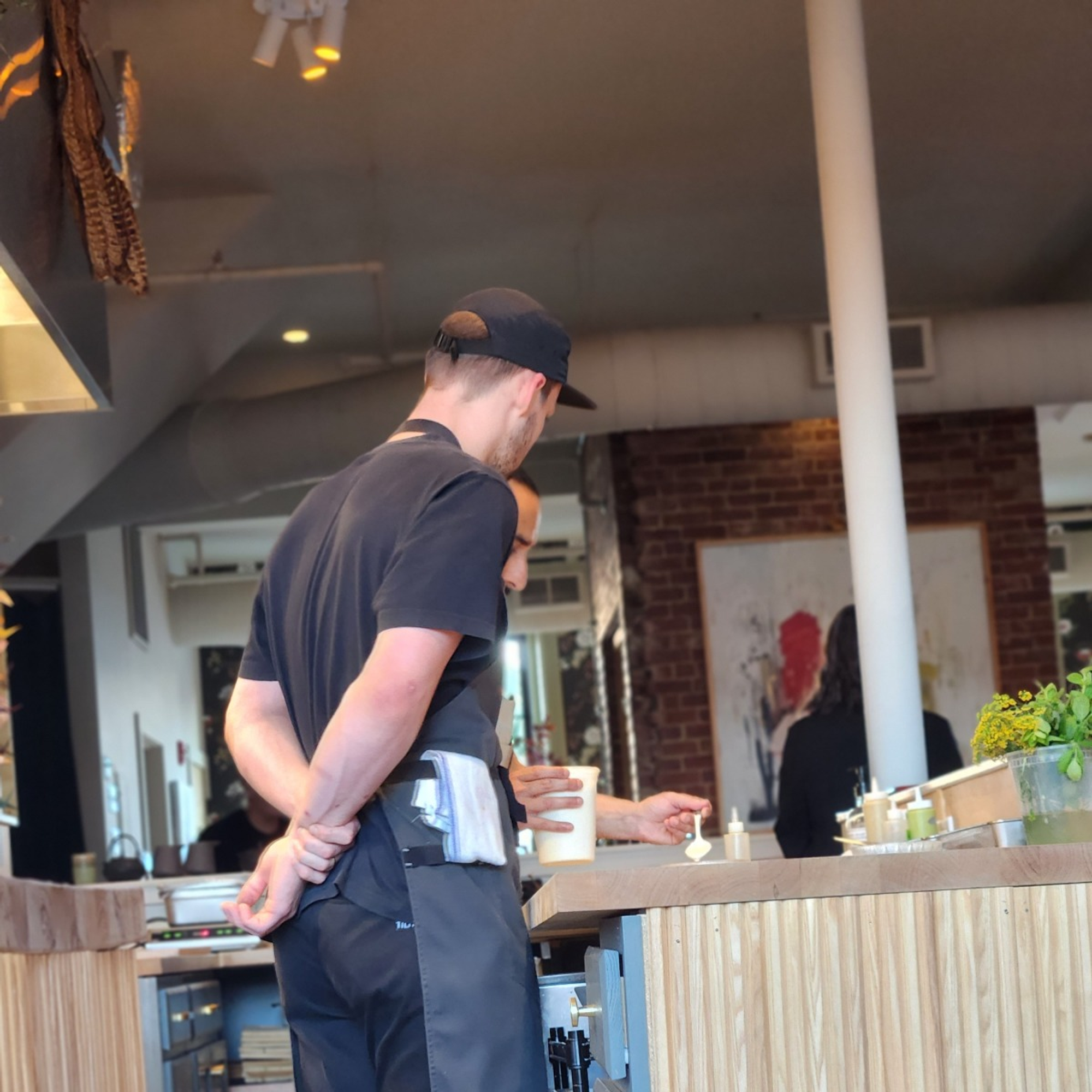
I did not expect a restaurant to unlock this painting, but it did. Watching how a chef builds restraint, rhythm, and care into a meal gave me a way to think about what this work needed: clarity without losing intensity.
Fine dining is one of my secret passions and a wellspring of inspiration. When I'm stuck in my creative process—overthinking a painting's purpose or my own identity—I've found an unexpected solution: viewing challenges through the lens of a chef at a high-end restaurant. This perspective has become a powerful antidote for my creative paralysis.
By focusing on a dish's beauty, I'm drawn to its simplicity. A great dish isn't overcrowded. Its portion size is carefully considered so guests feel satisfied after a multi-course meal. Each dish undergoes an iterative creative process similar to what I experience. We conceive an idea, bring it to life, then refine it—tweaking, pushing, moving, adding, and subtracting - all in service to complete result. Then onto the next.
Success comes when everything works as a whole. In a series of dishes, one that's too distracting or different might need to be scrapped, adjusted, or refined.
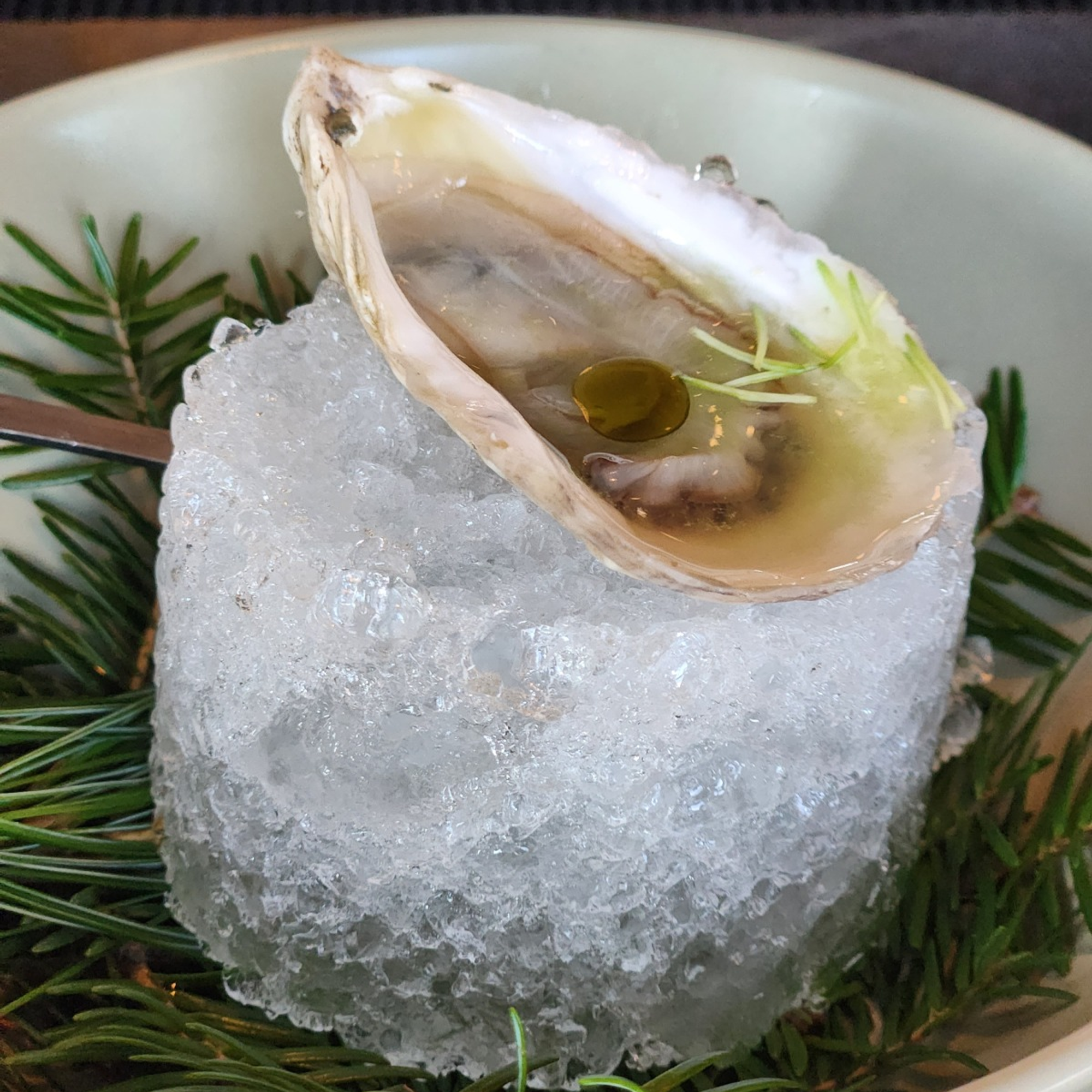
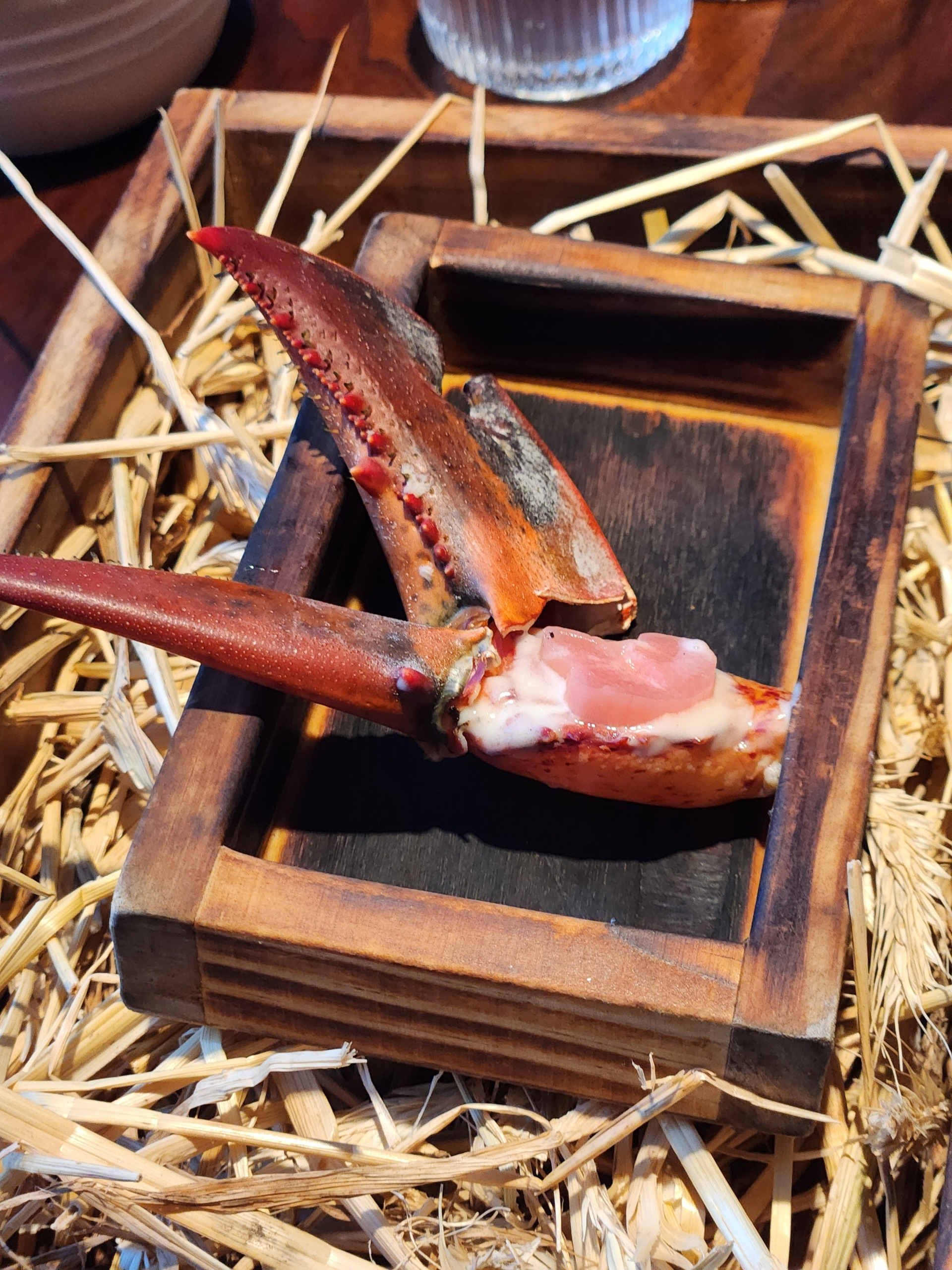
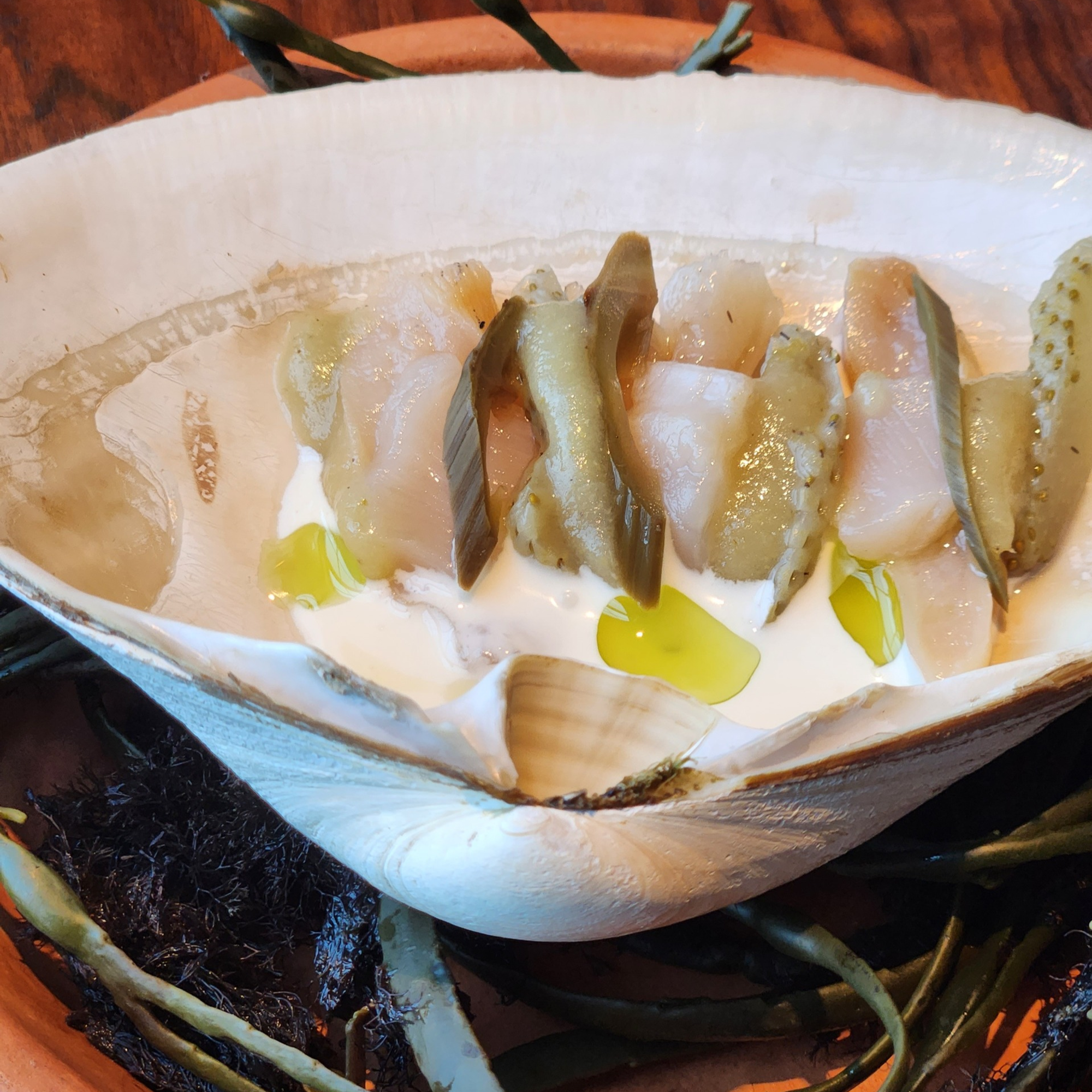
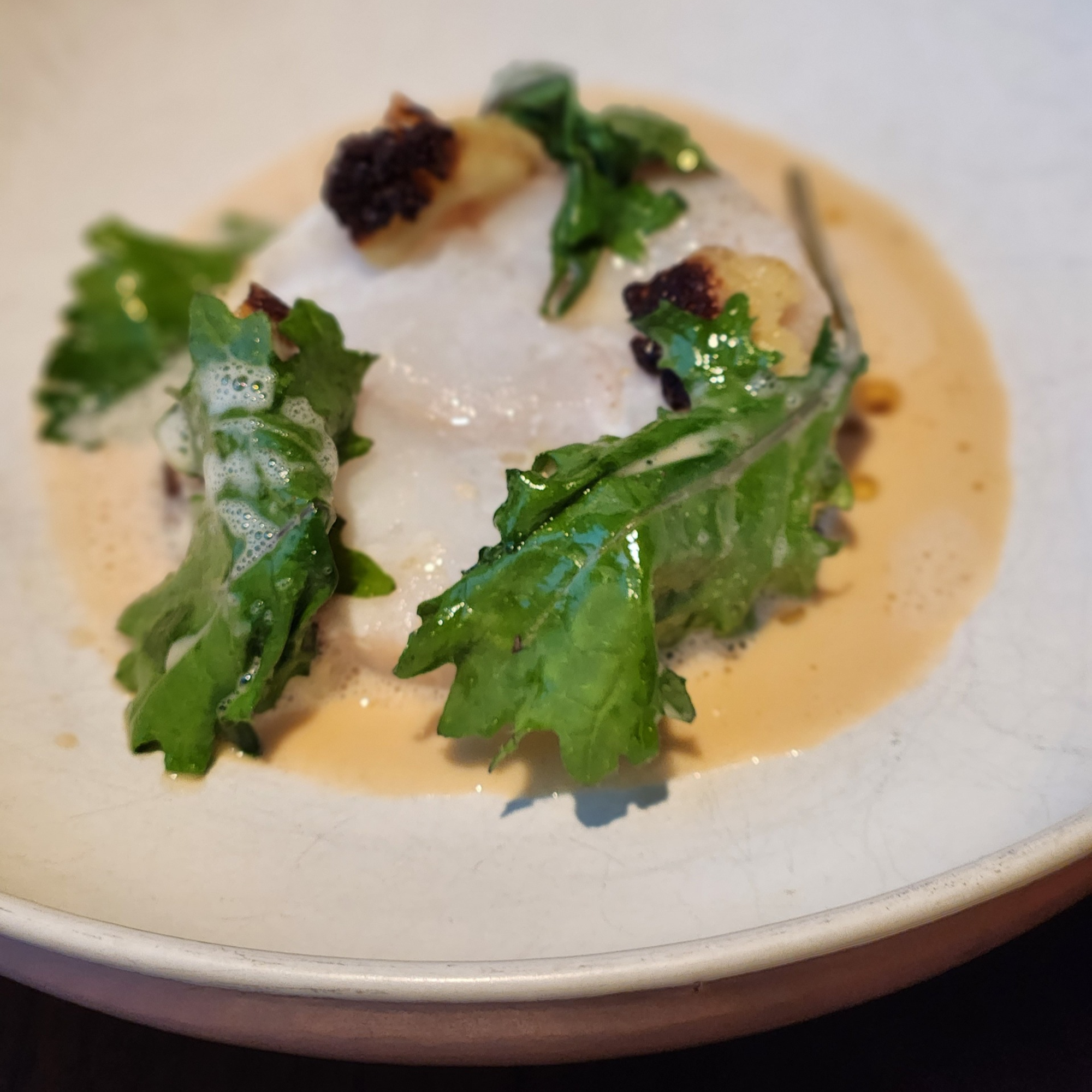
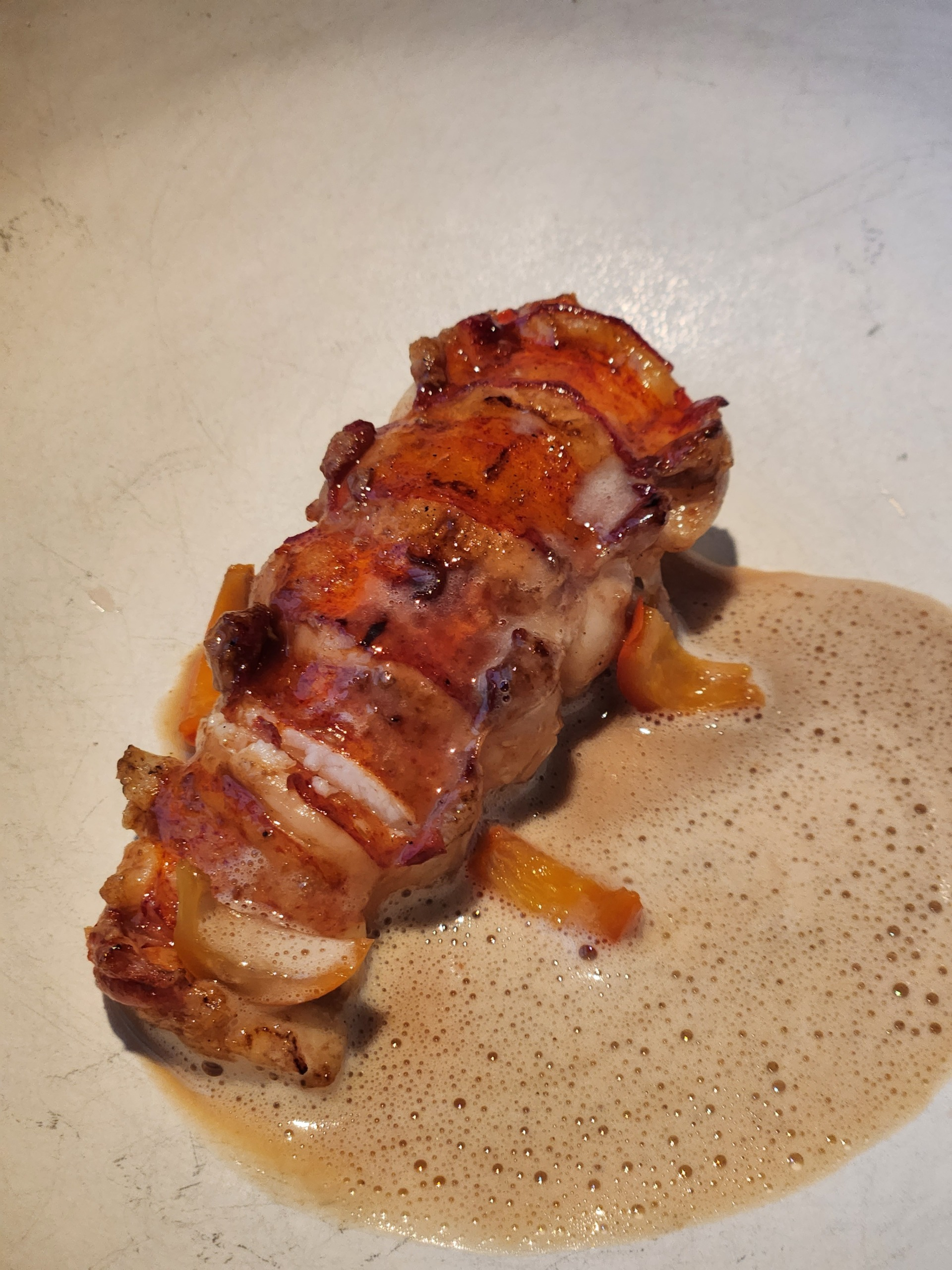
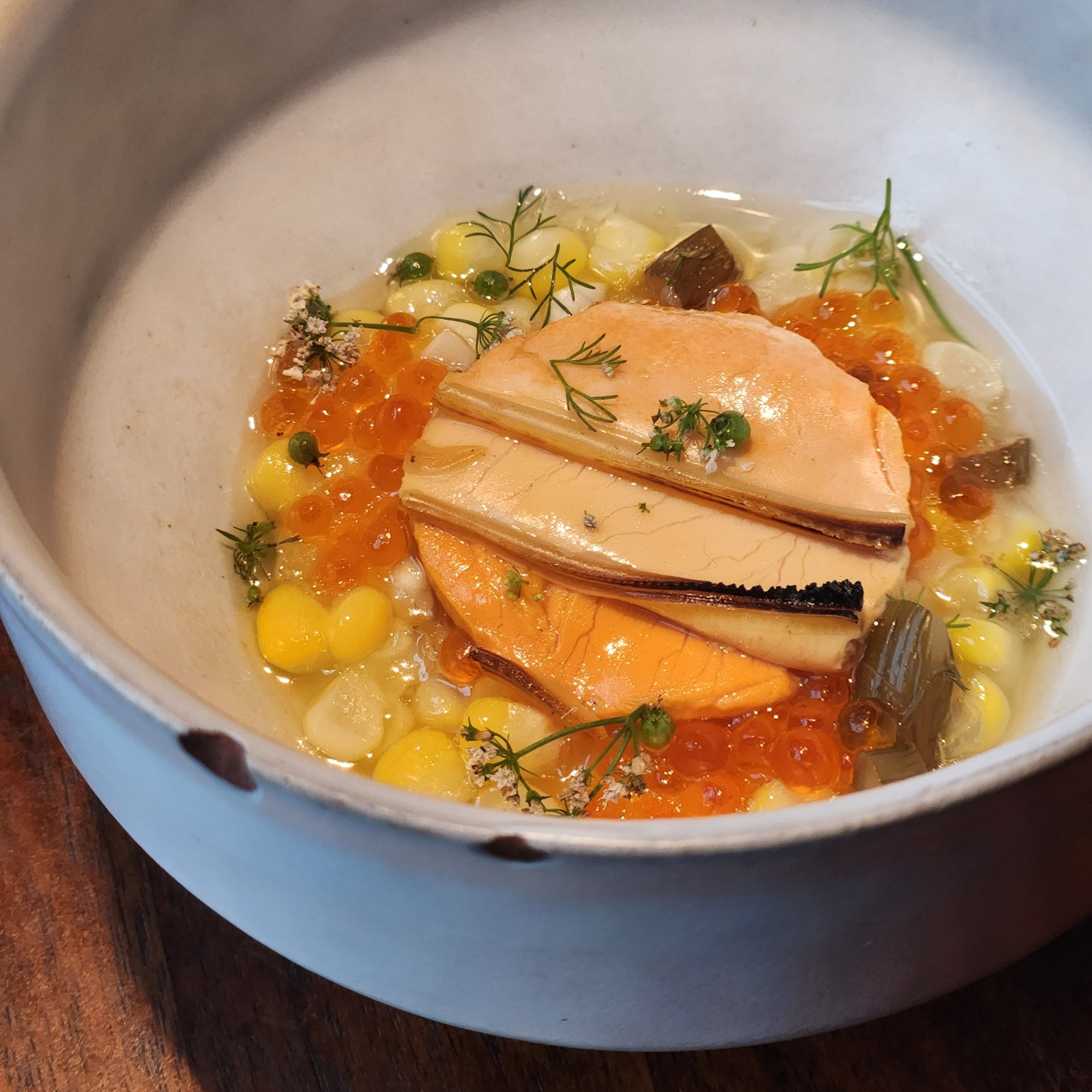
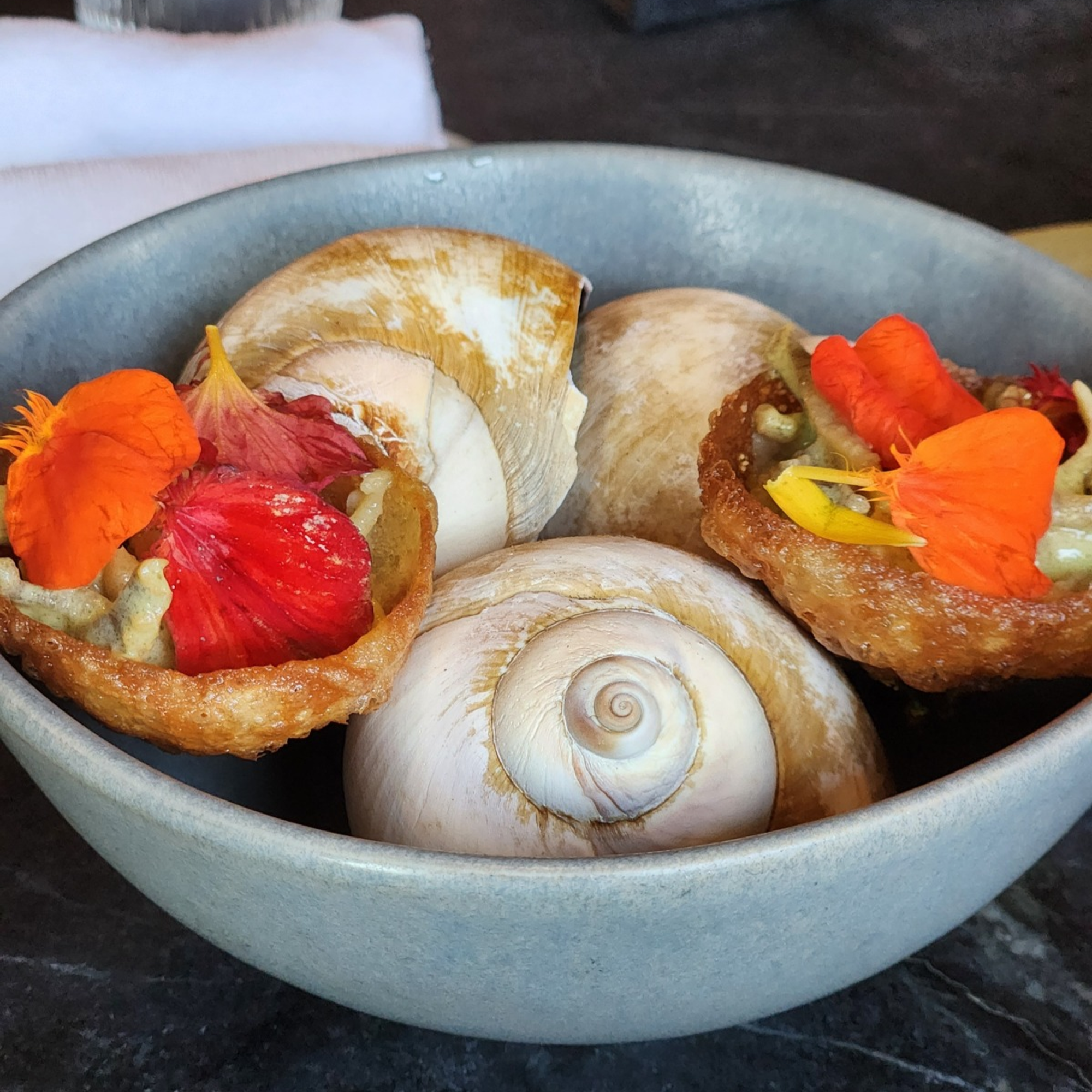
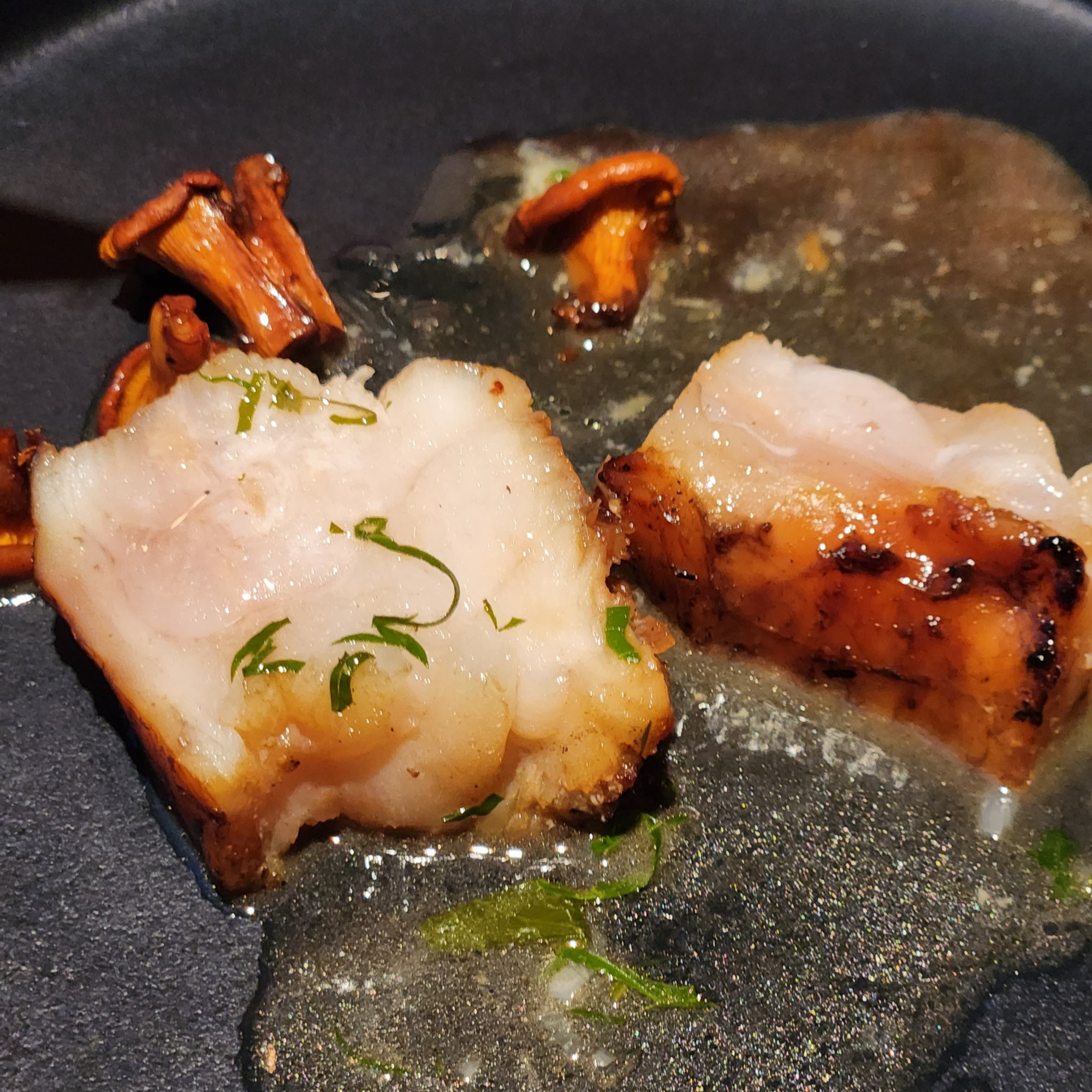
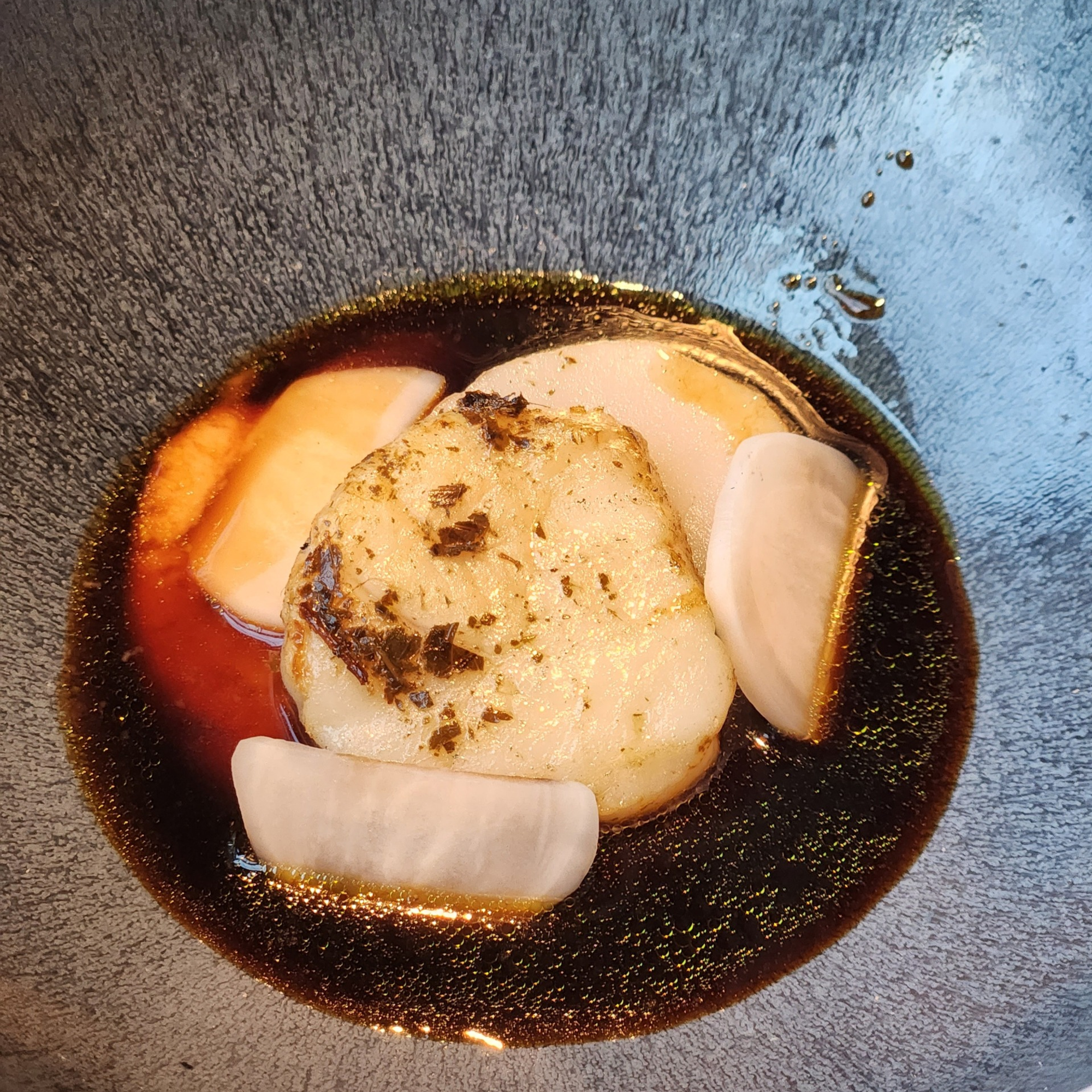
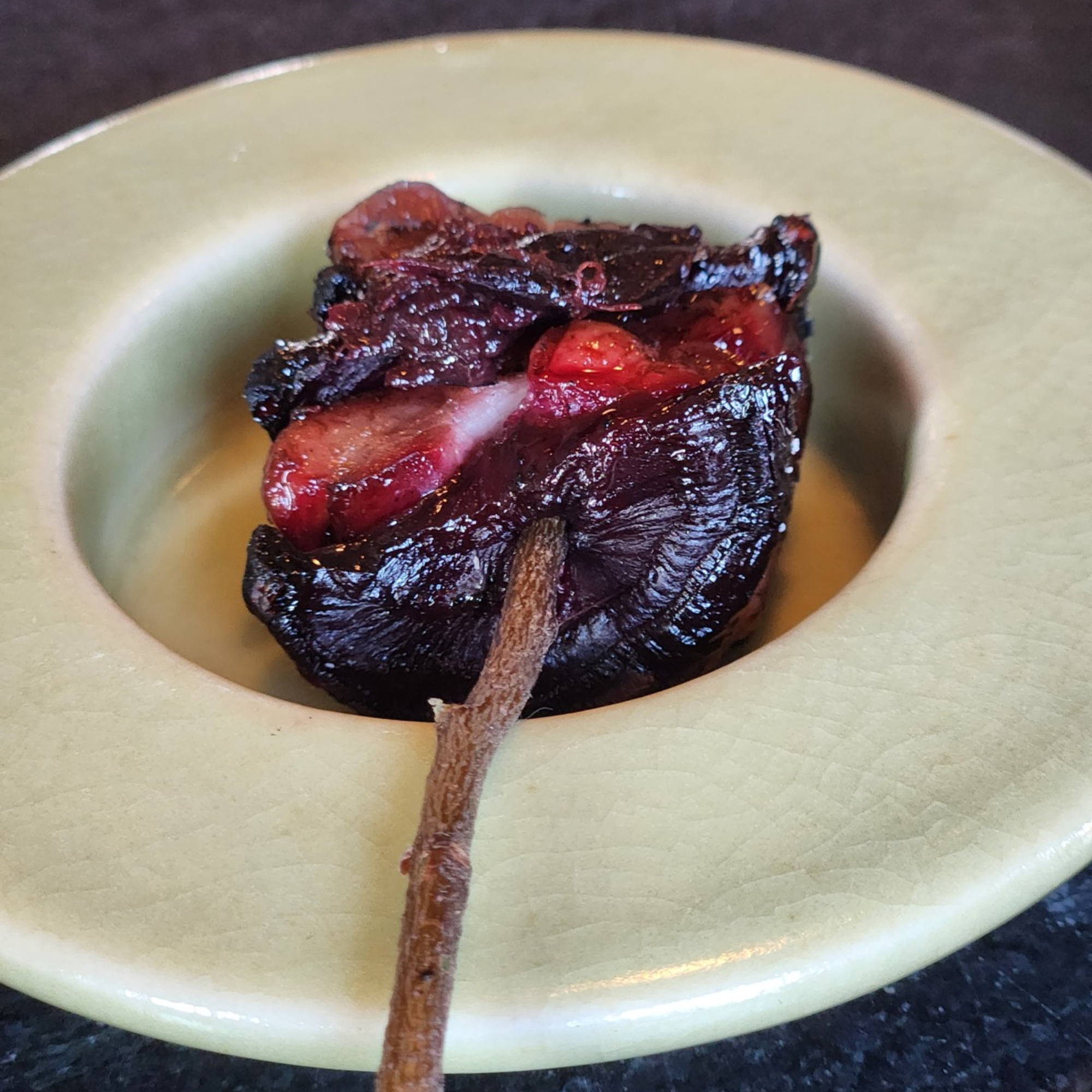
Cooking well for strangers is an act of care and hospitality. Chefs meticulously prepare wonderful experiences for people they don't know and don't need to know. Painting can be deeply personal—at times so sticky with sentimentality that viewers struggle to find their place in it or a place for it in their lives. Great fine dining, however, walks a tightrope between being meaningful and considerate while remaining inclusive of the diner's experience. It manages to be both sentimental and special. When my Italian grandmother presents you with food from her culture, you're tasting something precious to her. She feels validated when you enjoy and remember it. It's humble and beautiful, reminding me not to take myself too seriously.
At Elda, they incorporate native vegetables, plants, lichens, and sea creatures from Maine's coast. The love that goes into collecting and foraging for these meals is remarkable.
As I reflect on my painting, I did not need more reference. I needed a clearer standard for what ‘finished’ should feel like. Fine dining became that standard for me here, because the best meals do something I want this painting to do: they are precise without being cold, generous without being overcrowded, and memorable without asking the guest to understand the chef’s entire inner life.
August 28, 2023
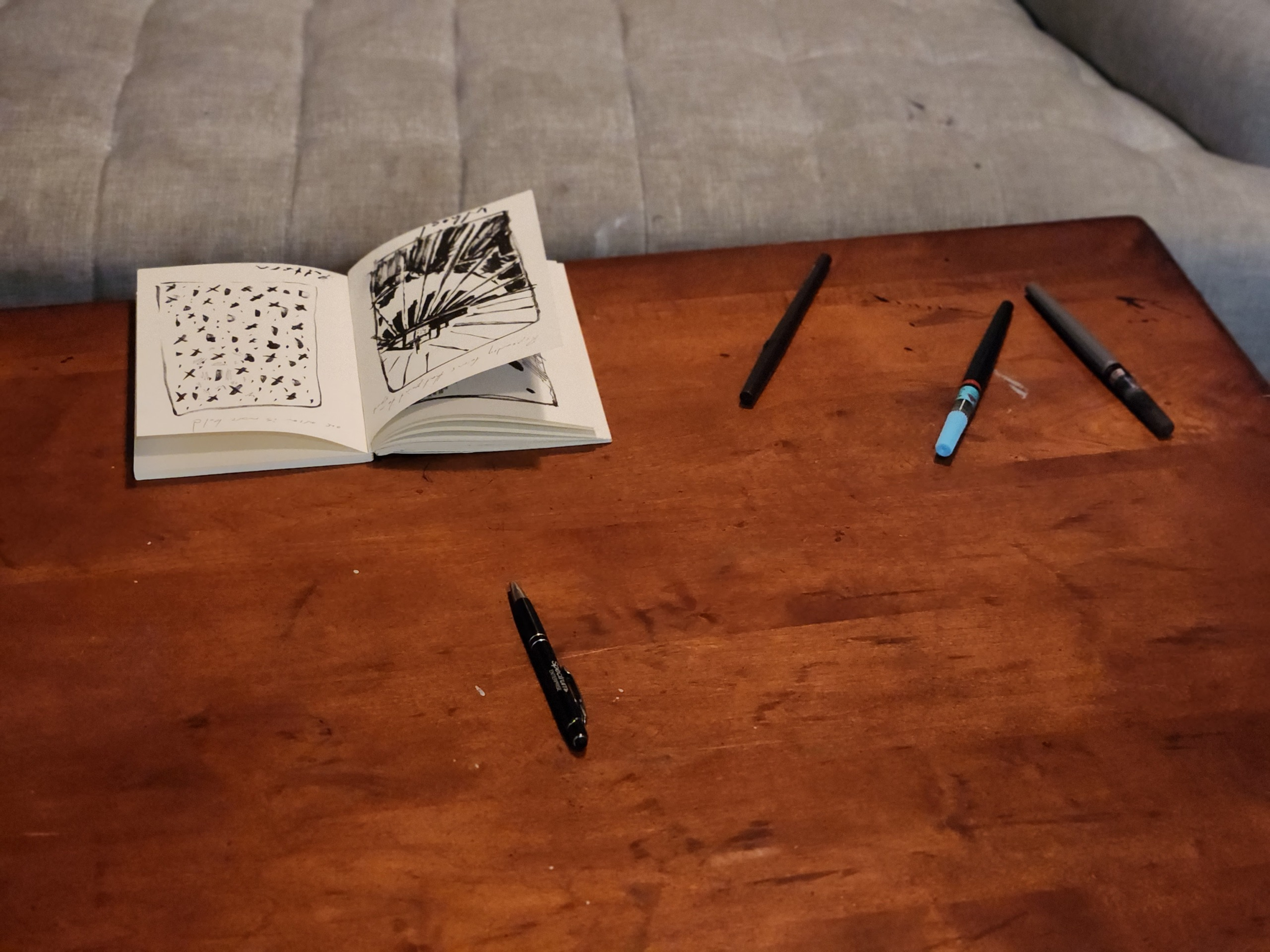
I've been staring at and sketching possible compositions, rotating the painting horizontally and vertically several times to keep my options open for either orientation.
I keep asking myself, "What do I want?" You can't control how viewers will feel when they look at your painting, but you can use visual cues and angles to guide their eye movement. If you want the eye to rest on a specific area, you can suggest that through organized compositional elements.
In this place, there's so much noise and intensity that it paradoxically creates a sense of calm. How do I make my forms dance like this? How do I capture that interplay of chaos and serenity?
What's at stake here is the material itself—the inherent cost of oil paint. Mistakes are expensive, so I need to be deliberate.
At some point the planning has to turn back into paint. I stopped trying to solve the whole image in my head and went back to the material, one relationship at a time.
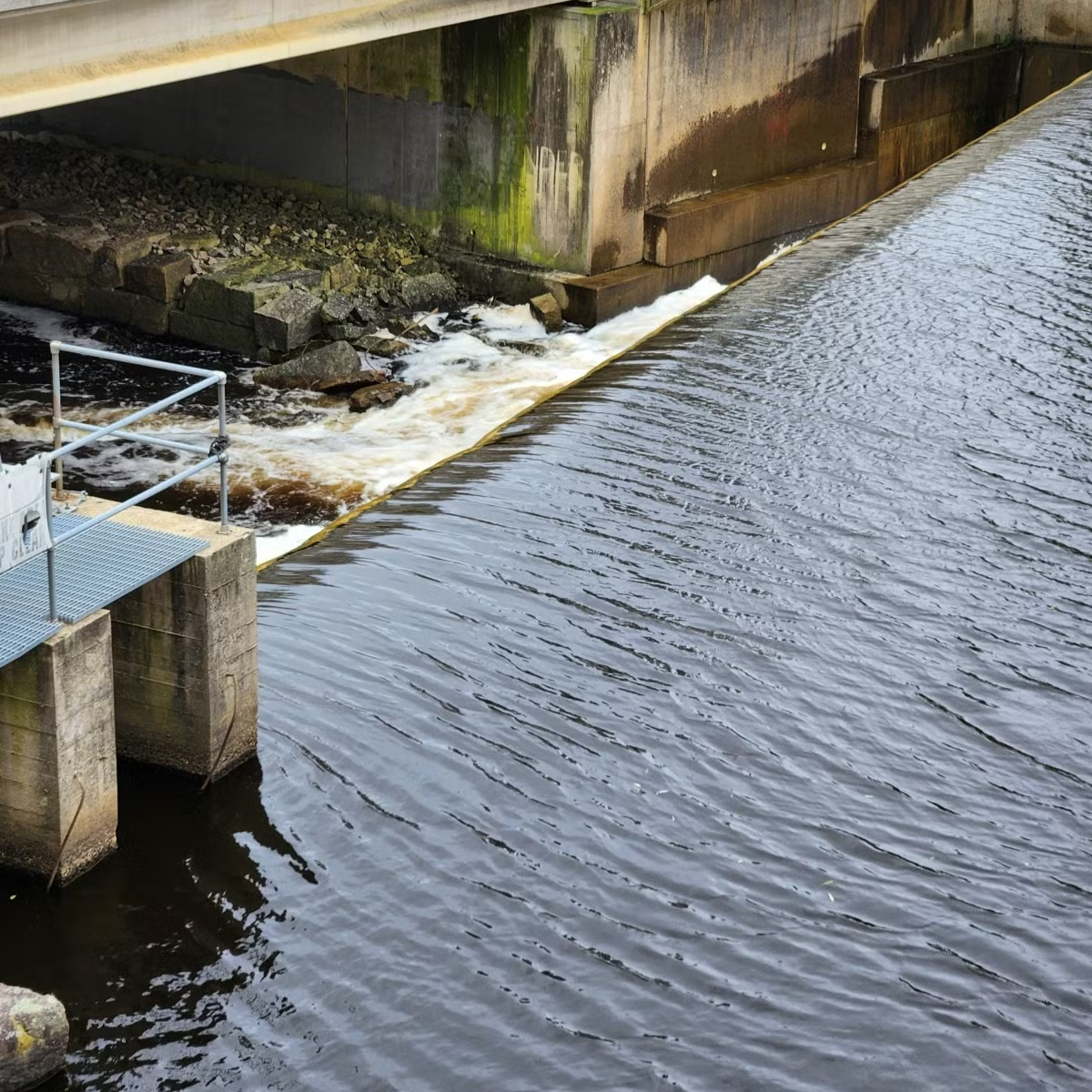
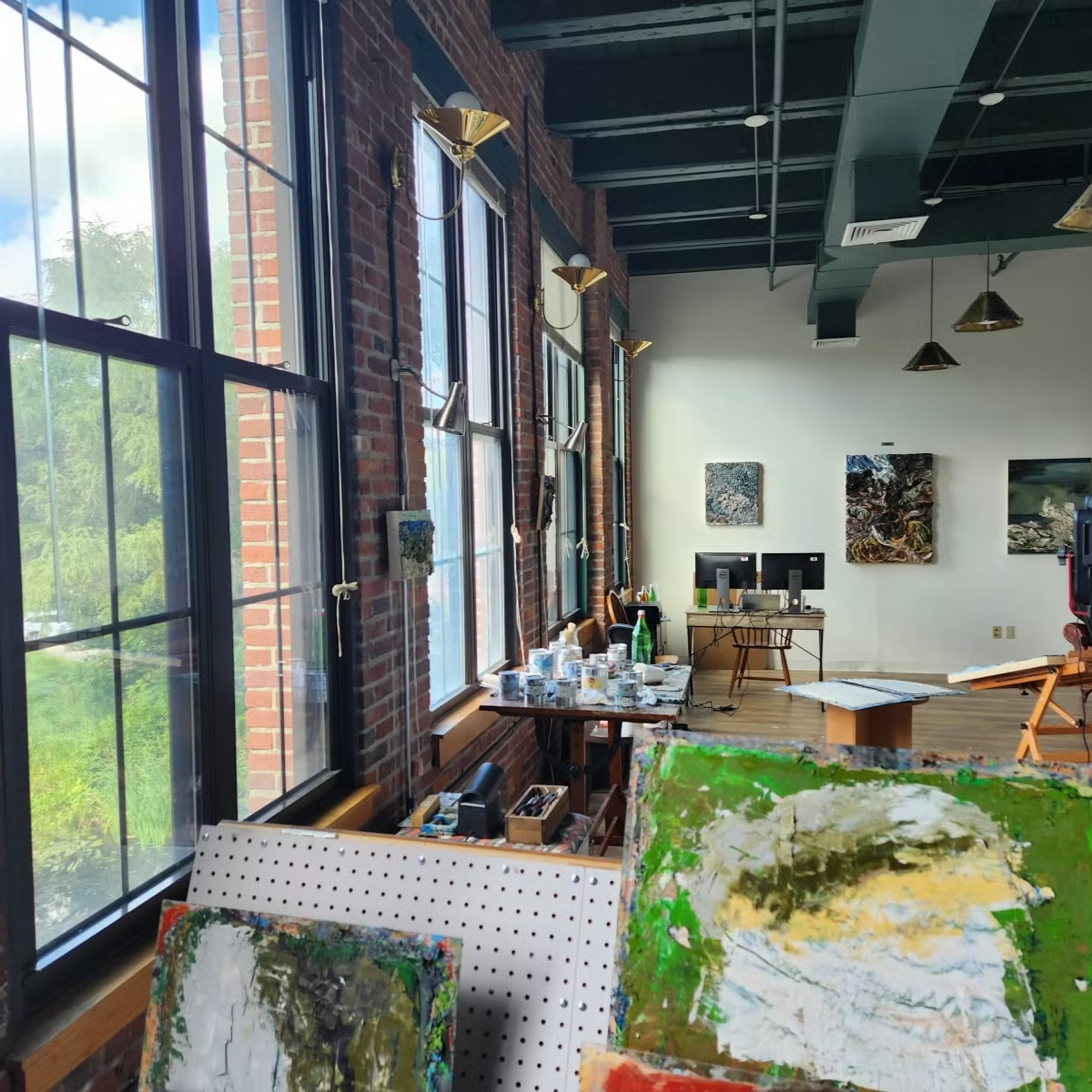
September 16, 2023
After a month of studying, staring, and calculating, I found myself mesmerized by the falling water foaming outside my studio window this morning. I glanced across the room and decided to print out all my photos and references.
As I continued to watch the patterns and flow of the water, I began painting some of the wild shapes with an energetic hand. I'm searching for very subtle relationships. At this stage, I'm confident in my color choices and the relationships I've established. It's just me and the materials in these studies—exploring what they can do.
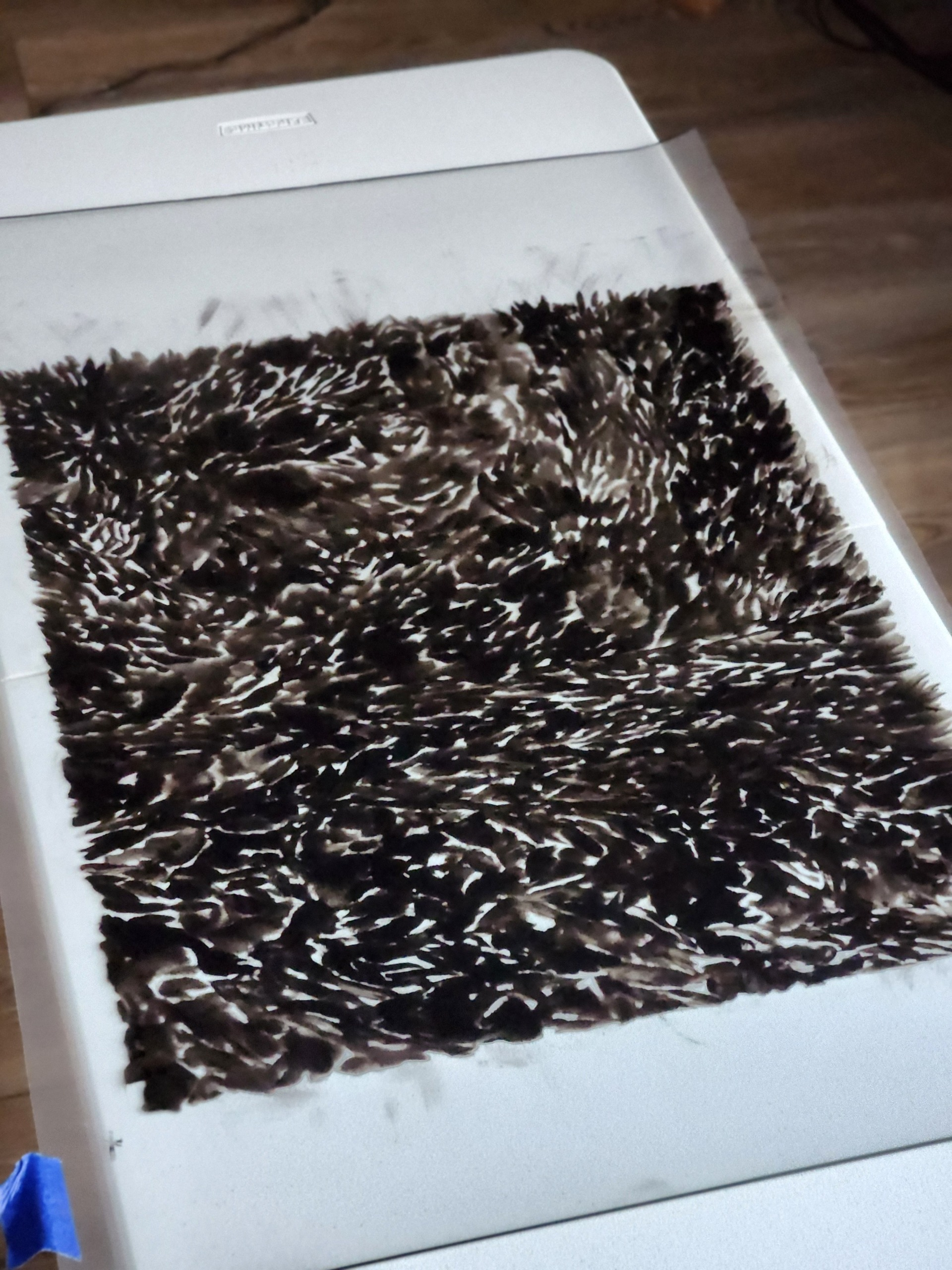
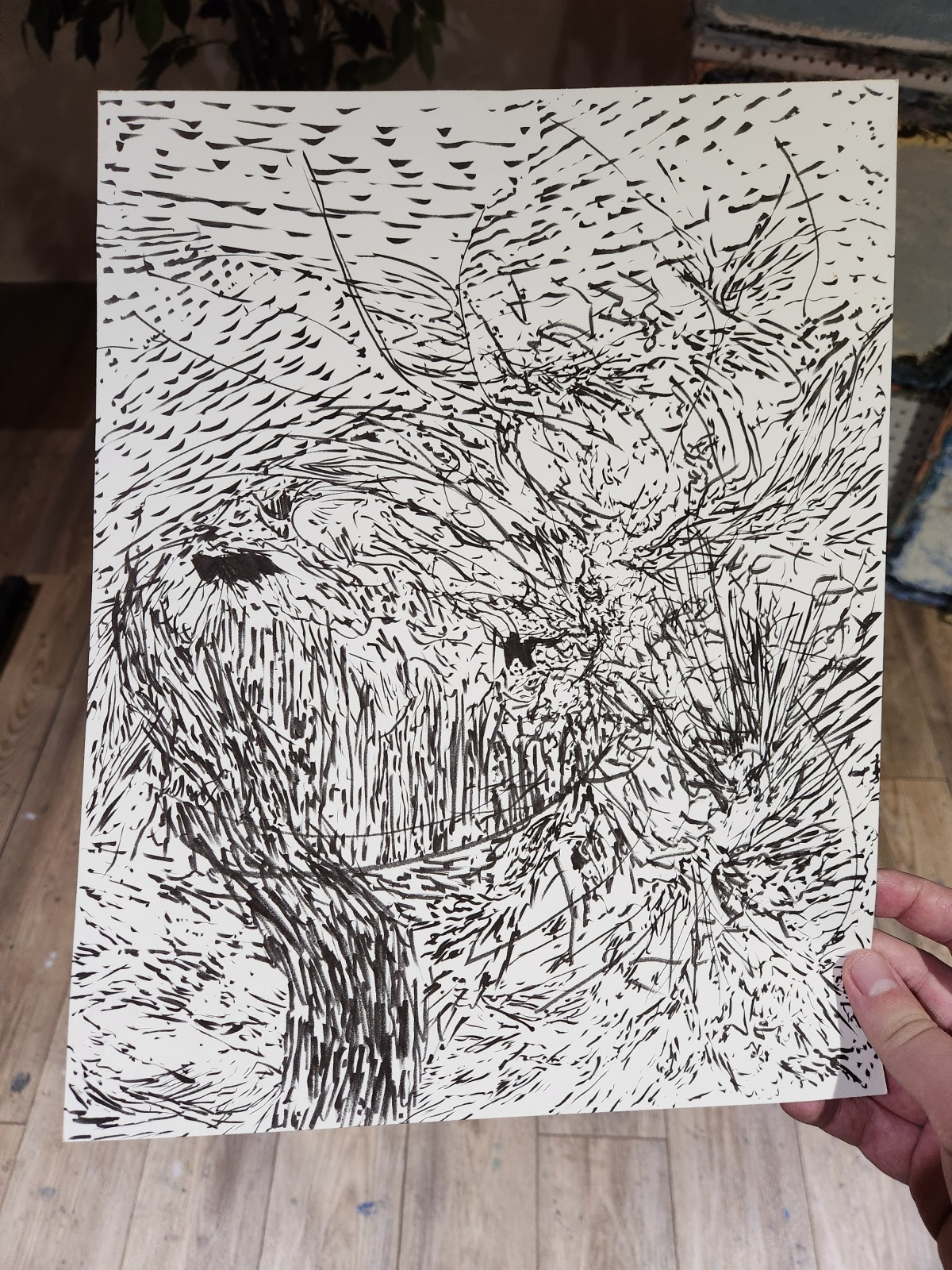
September 20, 2023
While the studies are drying to their perfect texture, I sketch a few architectural drawings before diving into painting. For me, these sketches break free from traditional light and shadow rendering rules. Instead, each dash and mark represents a form.
Essentially, I take areas of interest from my studies and steal them—the result is a sculpted form transplanted to the final surface. These forms need to be calculated and considered, kind of like a piece in a mosaic. But unlike a traditional mosaic where each tile is a carefully measured shard, these forms have character.
These drawings are the architecture of how the forms move. They help me identify the size of each form before I steal and sculpt it.
To help visualize this process, I play music by Charles Mingus—usually "Moanin'." I ask visitors to follow a particular instrument or group with their mind's eye. You'll notice a kind of weaving—sounds fading and coming forward, shifting in volume and prominence. This is how I think about my painting, how I think about the world, and how I feel in moments of being overwhelmed with life.
If just listening to or sharing Moanin was enough - perhaps I wouldn’t paint.
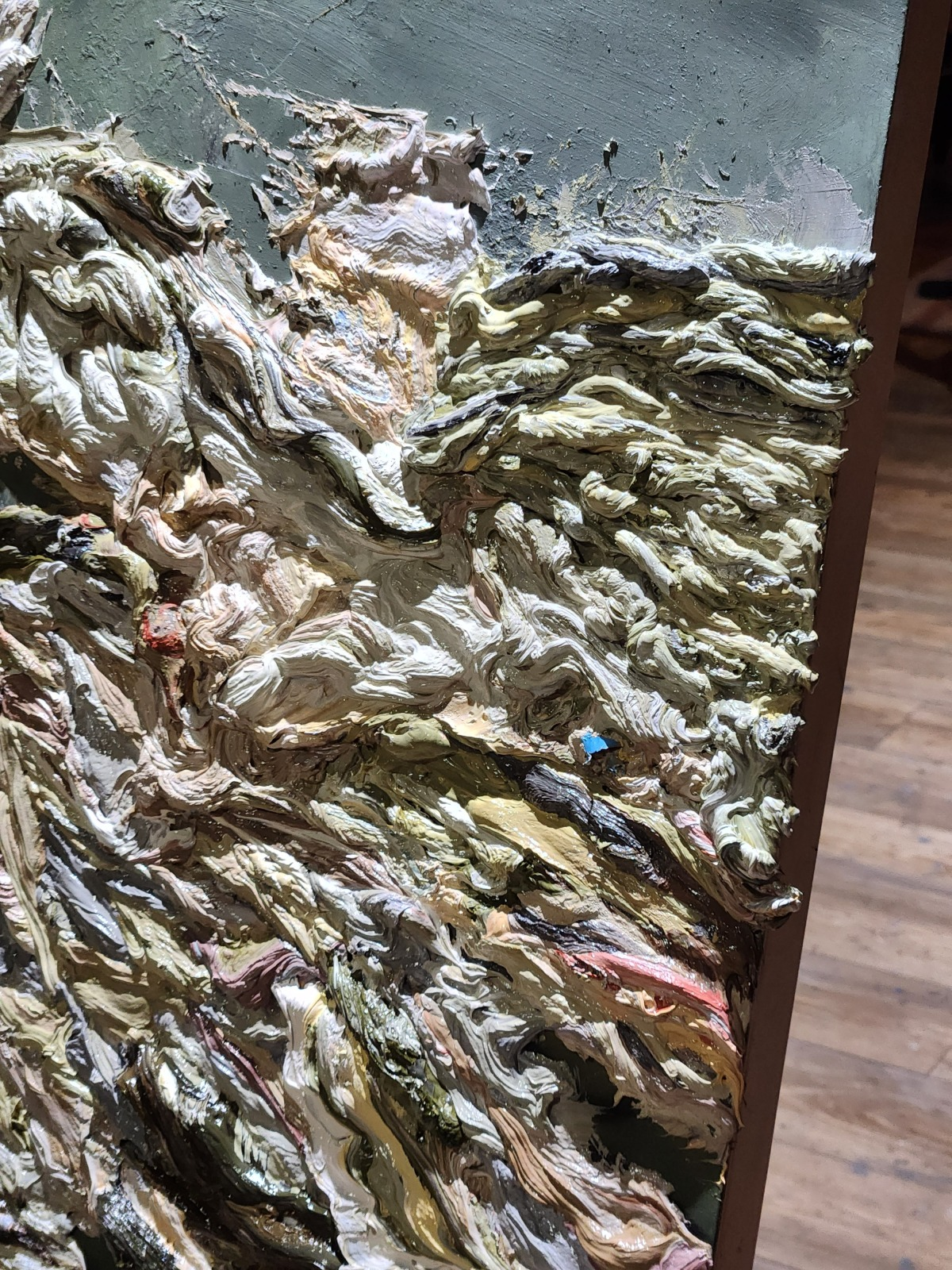
Considering the established work I've done since my last significant painting session, my goal today is to unify these elements into a cohesive whole. Once achieved, I can complete everything relationally.
September 21, 2023
Working with the painting under brilliant direct lighting from above creates shadows that fall on the forms. These darker values create shapes, forms, and new relationships—and I need to stay aware of them. Without this awareness, random shapes or colors can appear without my knowing it. Imagine rendering the fall of water and discovering, only after shifting the lighting, that a shadow has formed what looks like a demonic face staring back. Interesting, perhaps, but I should never be the last person to notice.
To avoid these surprises, I constantly update and refine my studies and sketches as I paint. It isn't an enormous mental exercise to maintain this awareness, but I do need to remind myself occasionally to step back and run through my checklist—systematically identifying what works and what doesn't.
Again, the hardest part of painting is deciding "what I want," and sometimes the only way you can get there is by identifying and eliminating "everything I don't."
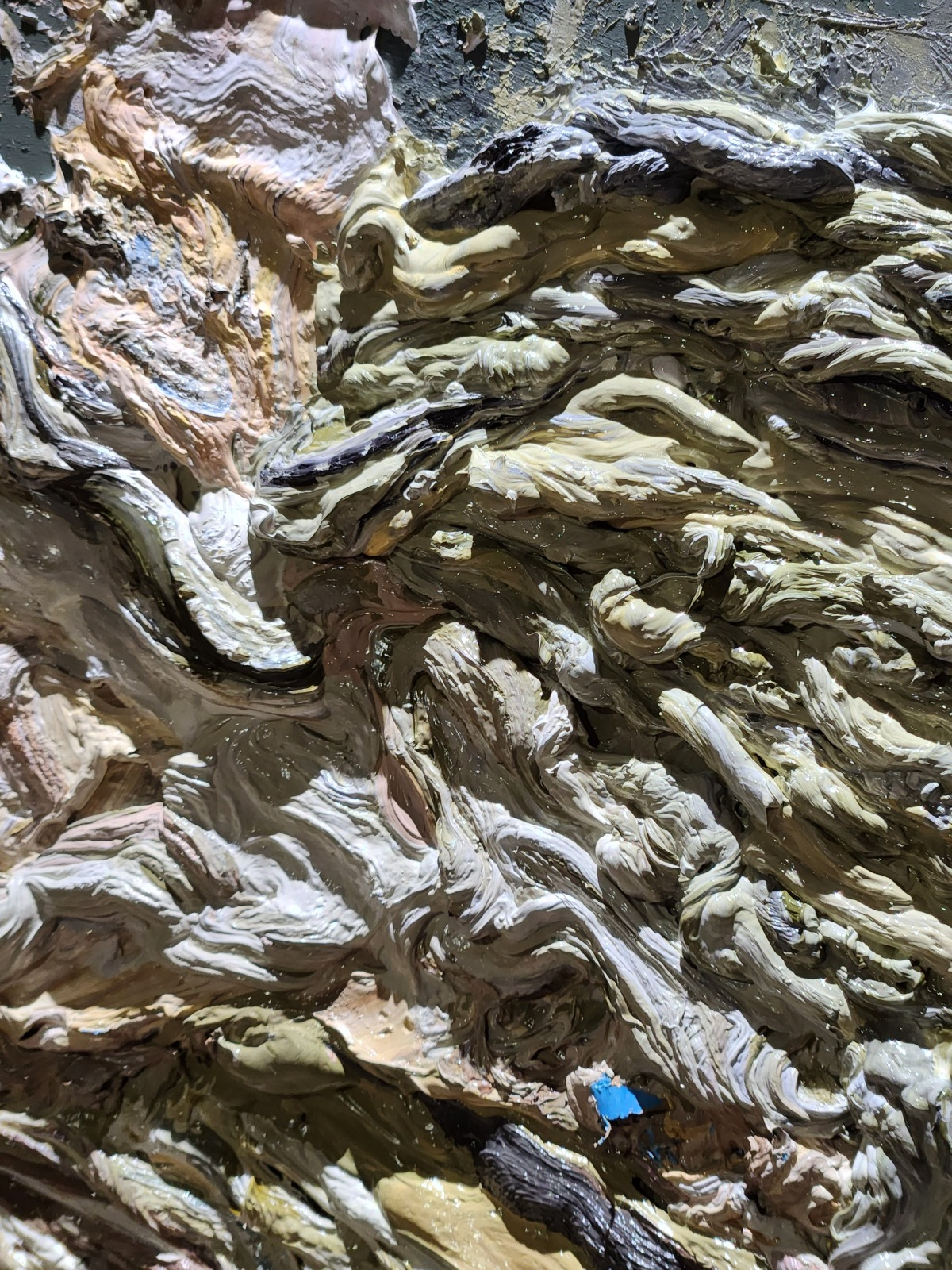
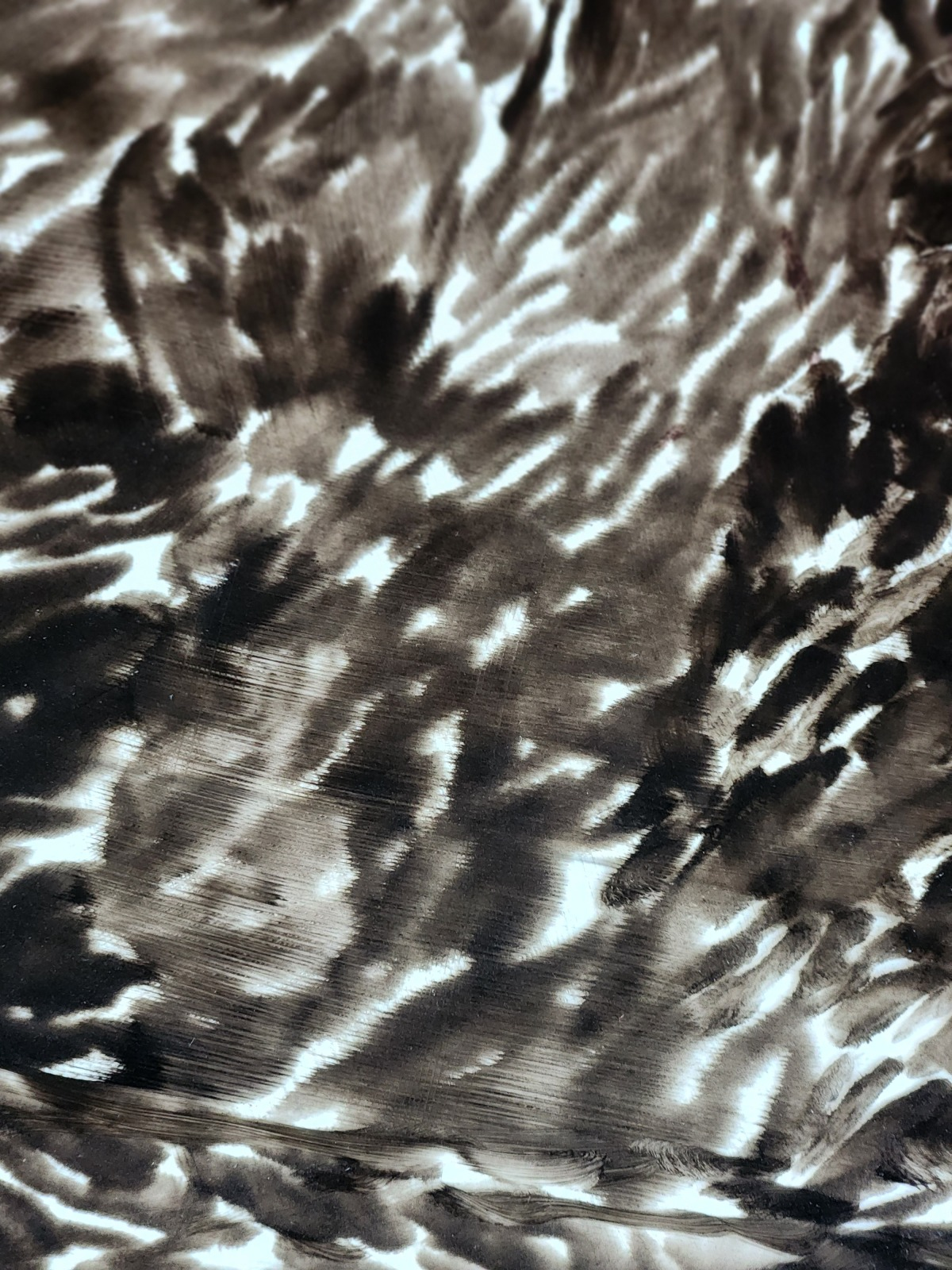
September 22, 2023
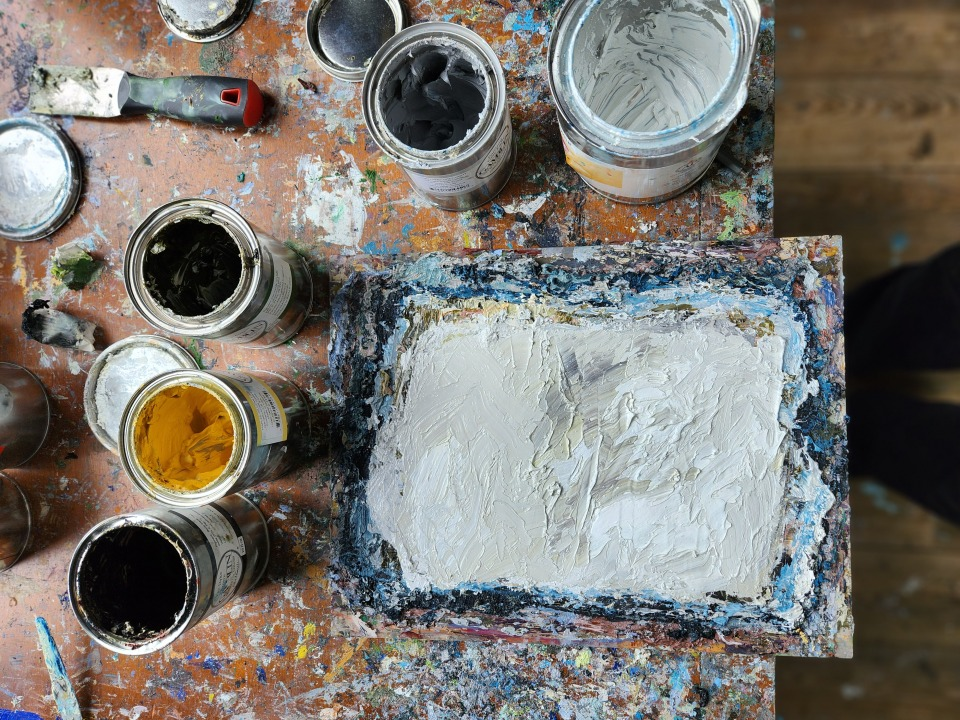
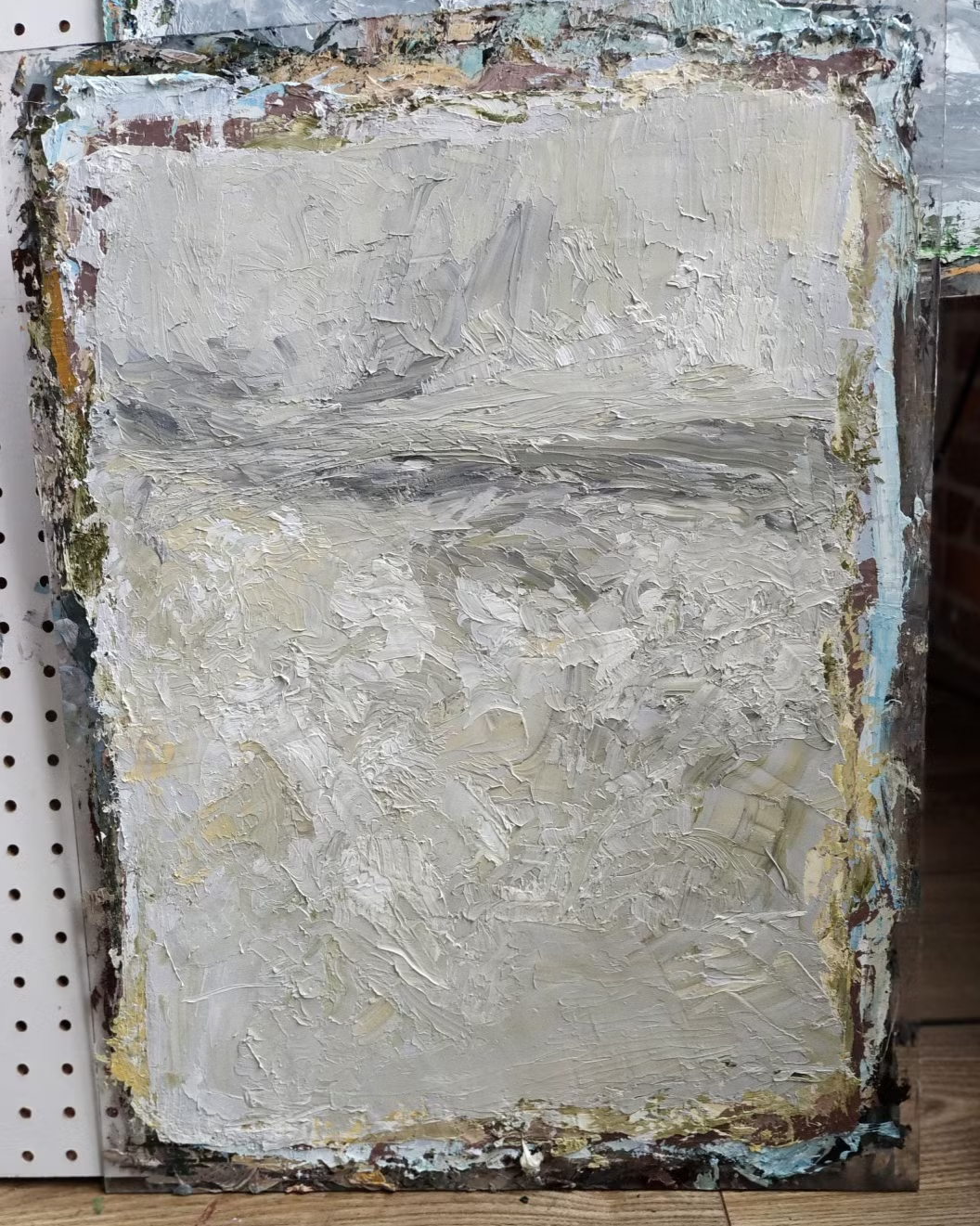
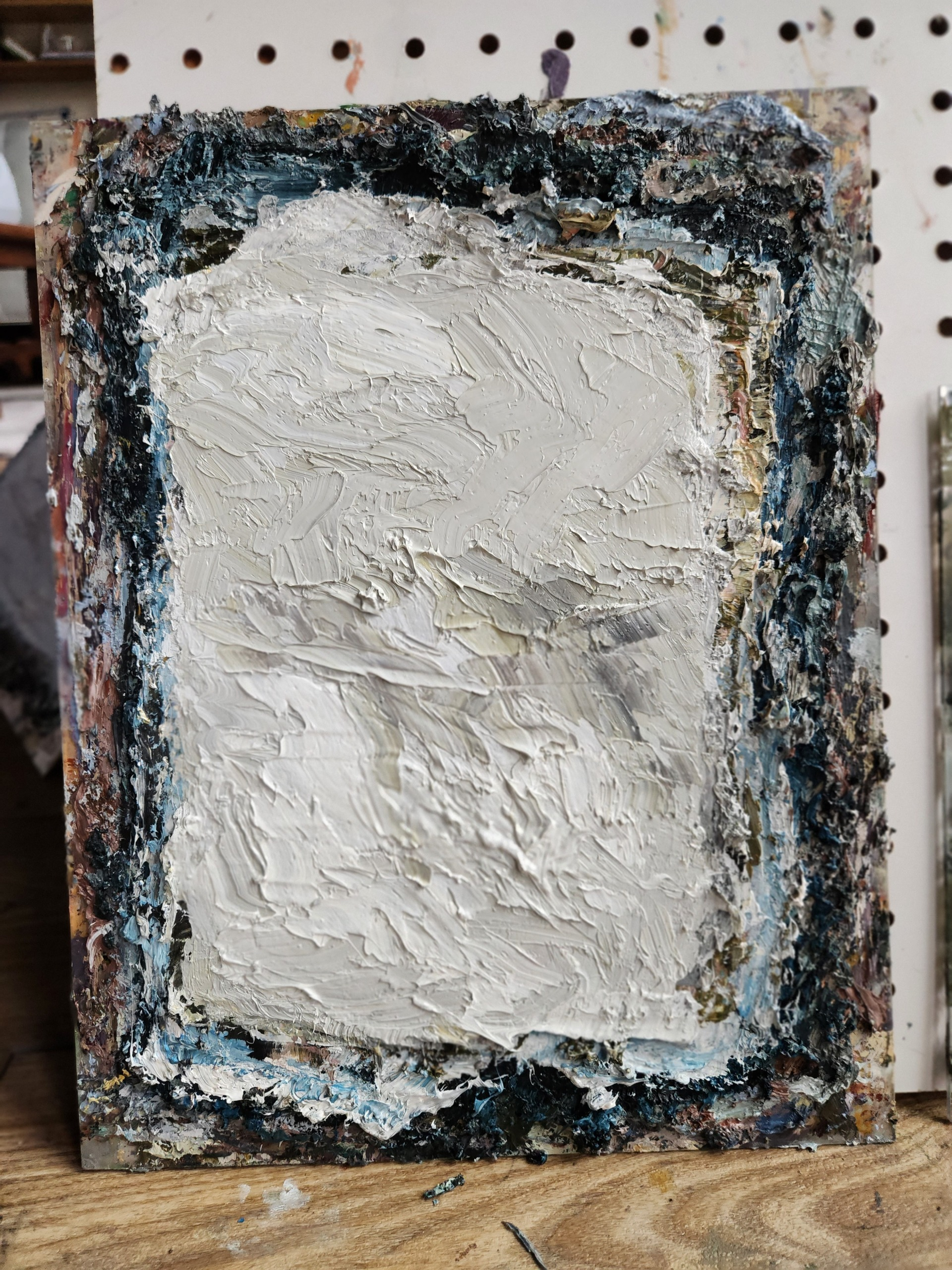
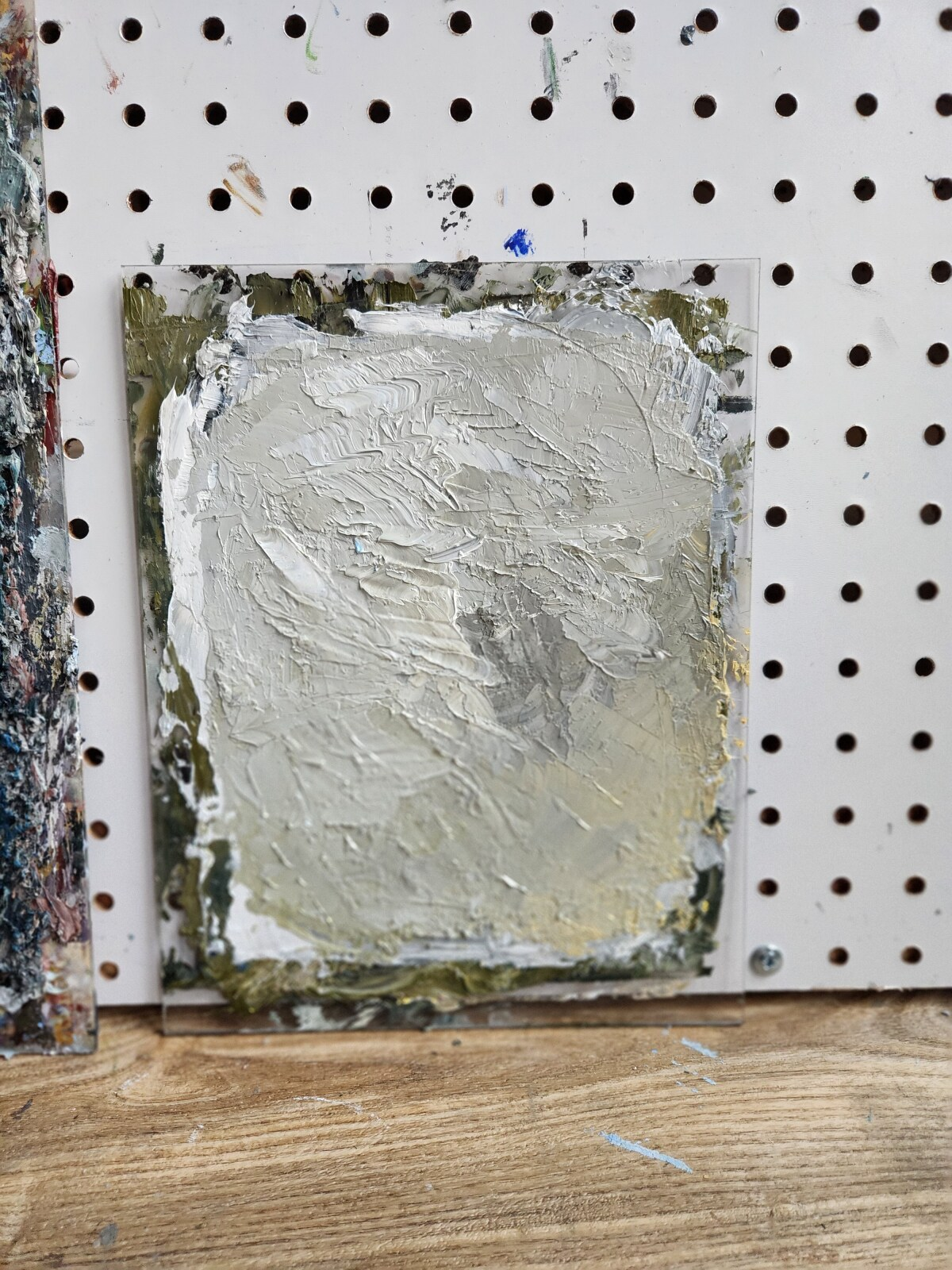
Here's a selection of panels from today's session. I'm examining the foaminess of the water, contemplating how to capture the subtle shifts in light.
September 27, 2023
Now the work was about accumulation. Form by form, the painting started to behave like water again. Not literally, but emotionally, with pressure, churn, and release.
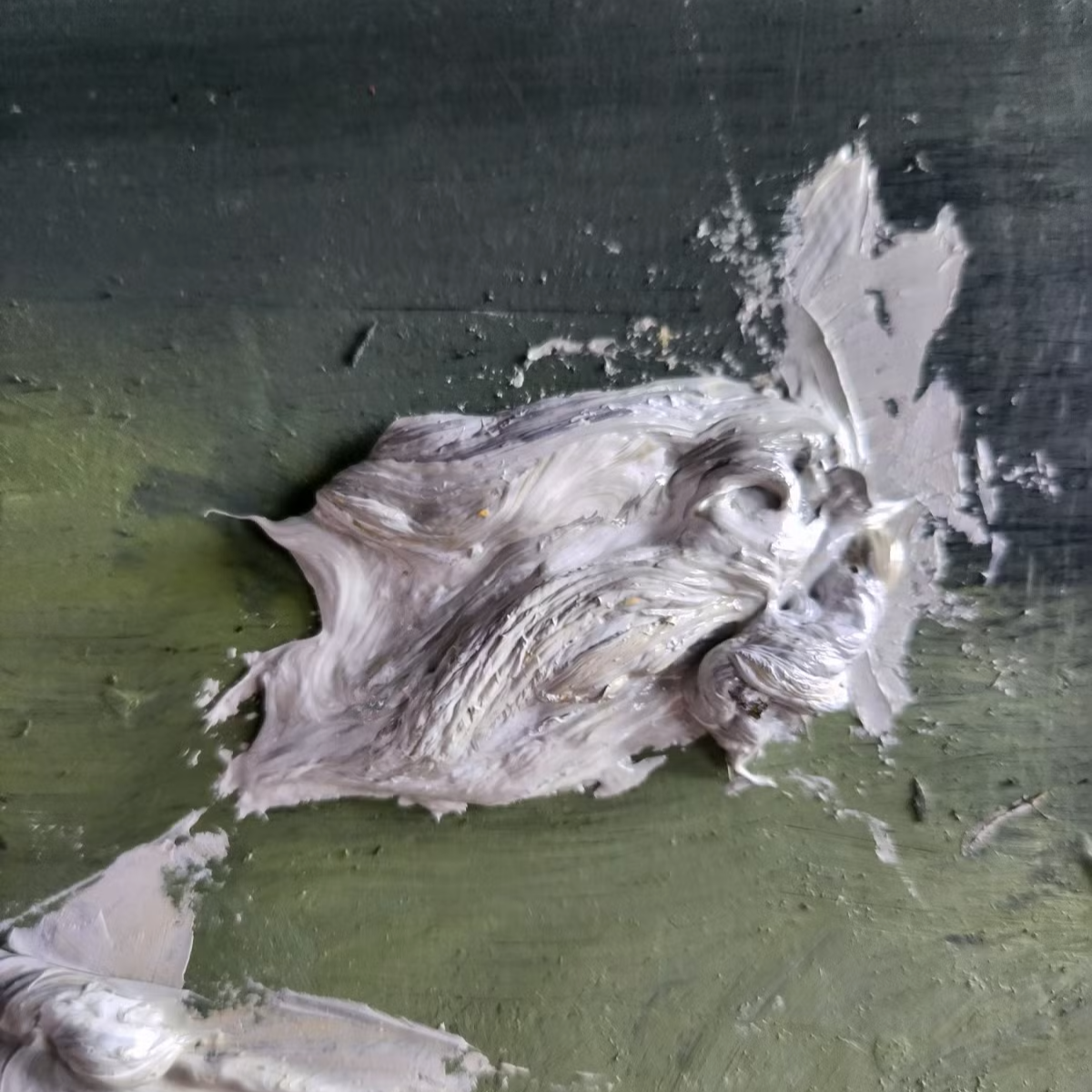
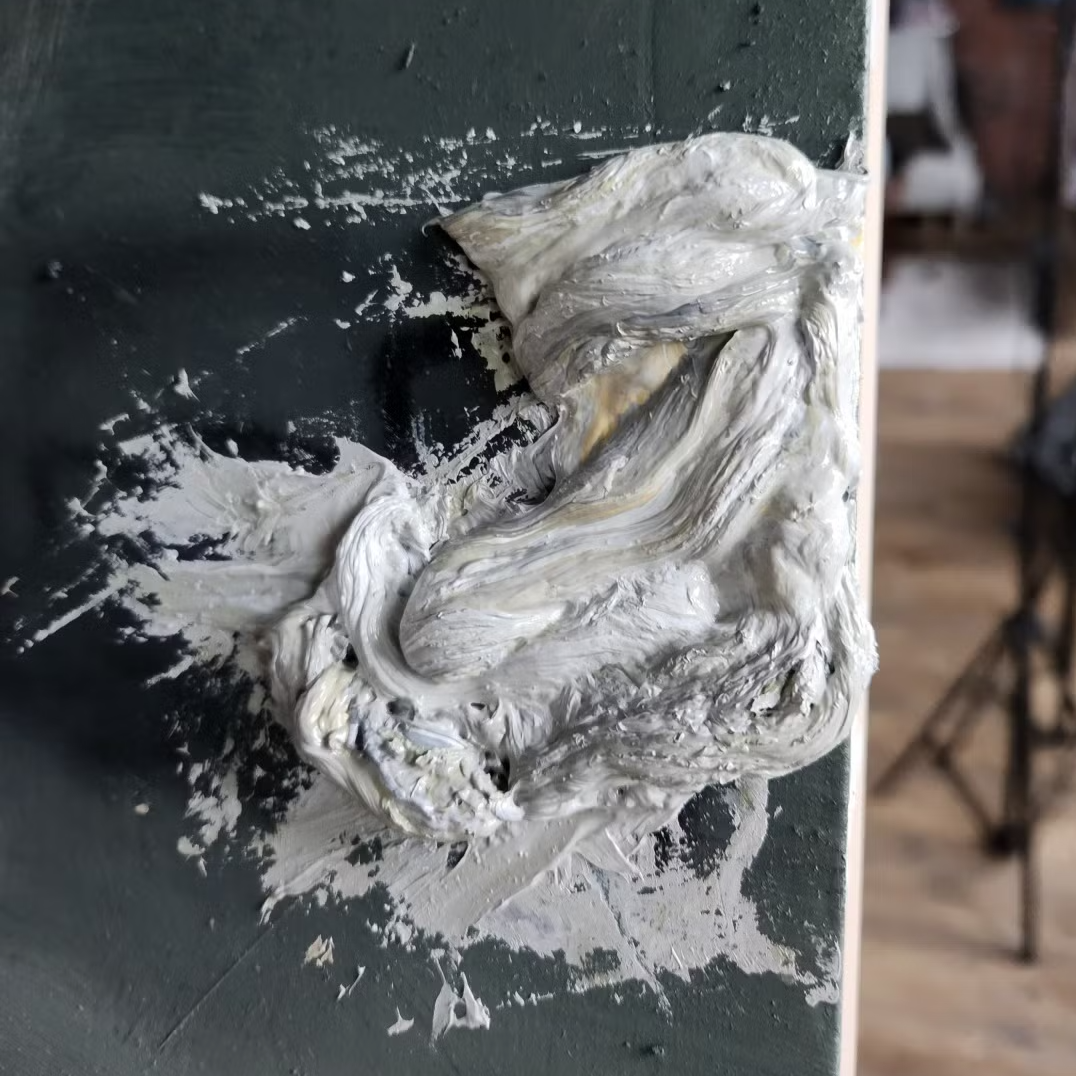
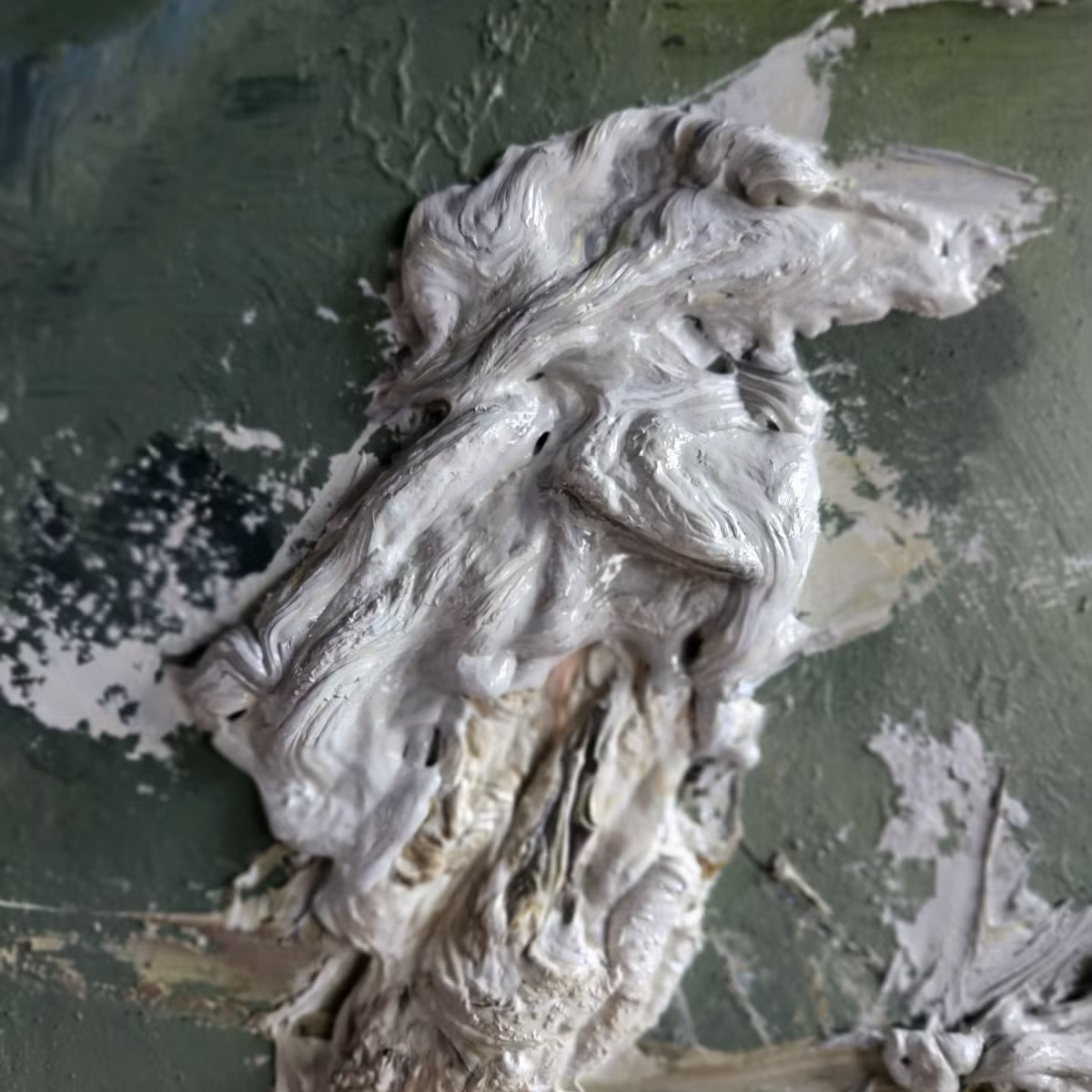
Painting on my birthday. Catherine picked me up for a lovely dinner. I'm thrilled with our progress so far.
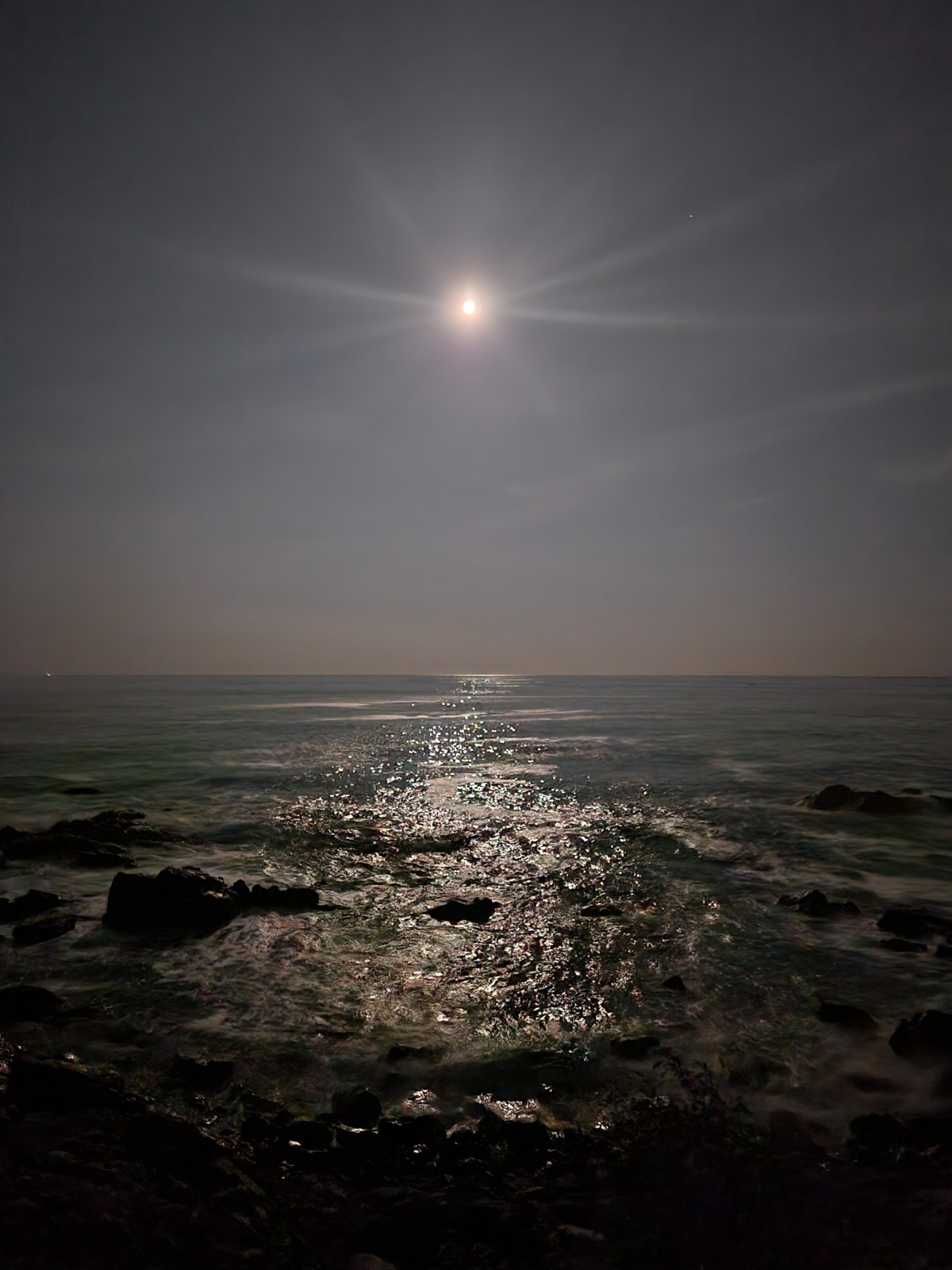
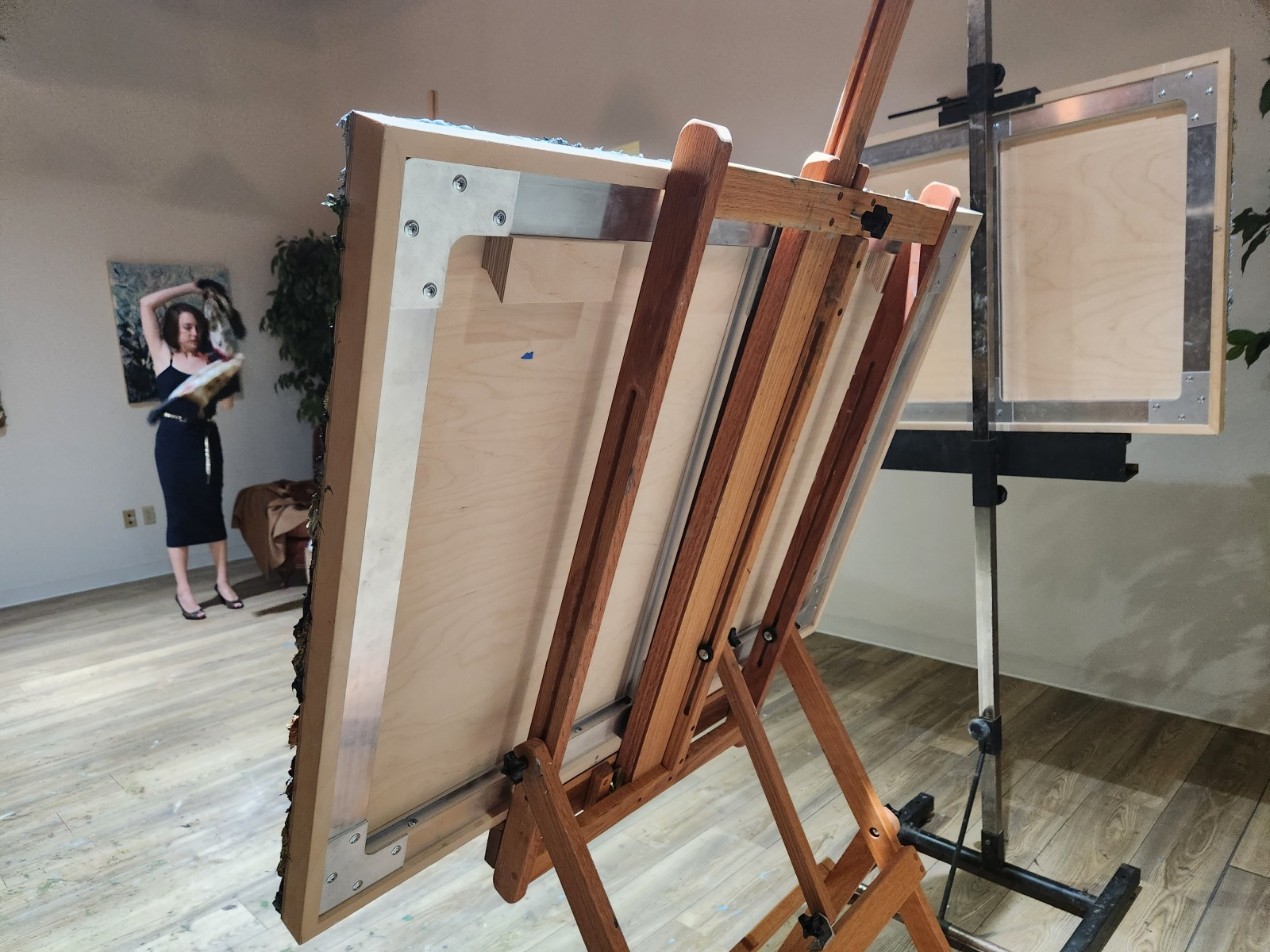
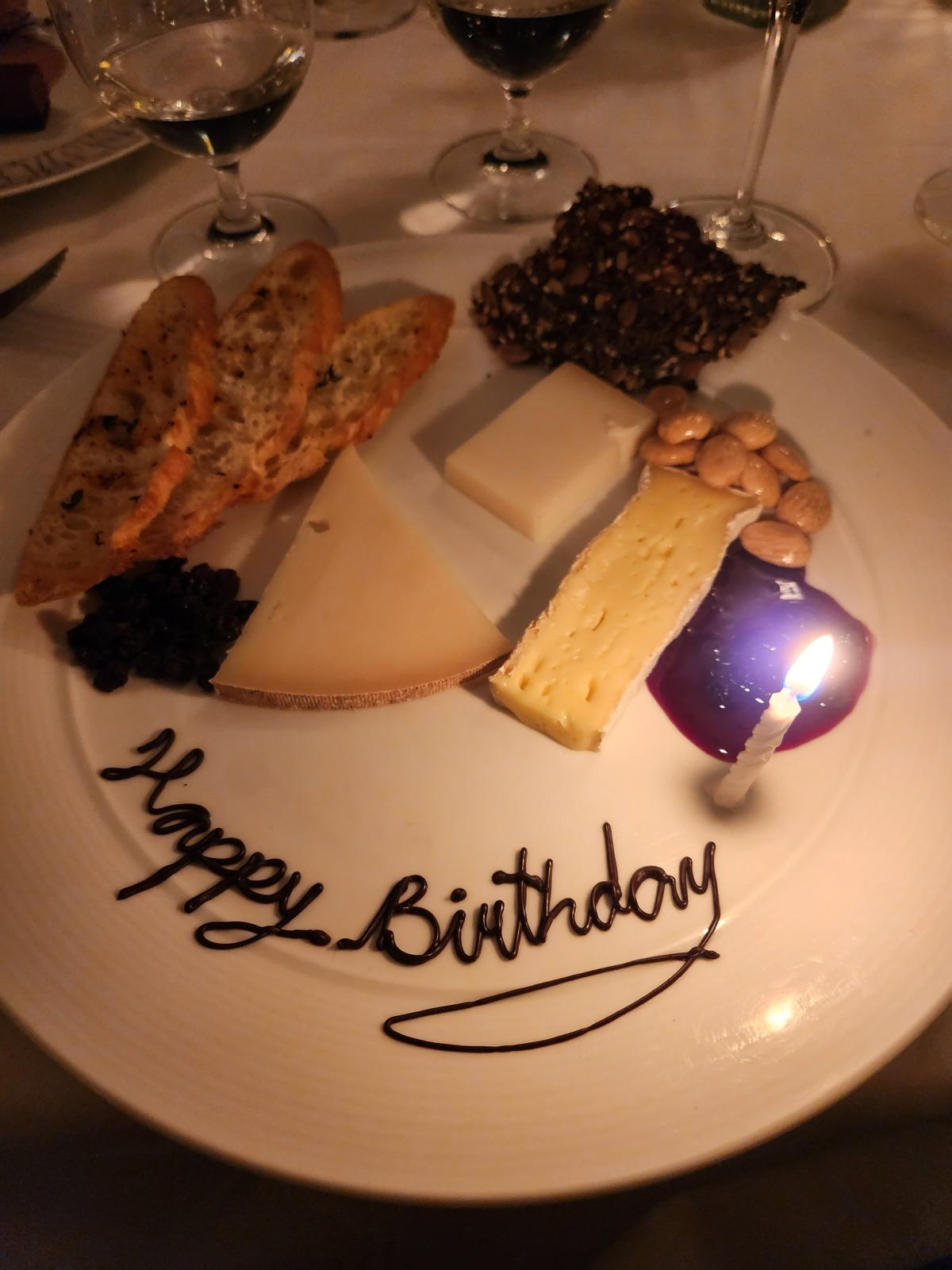
October 20, 2023
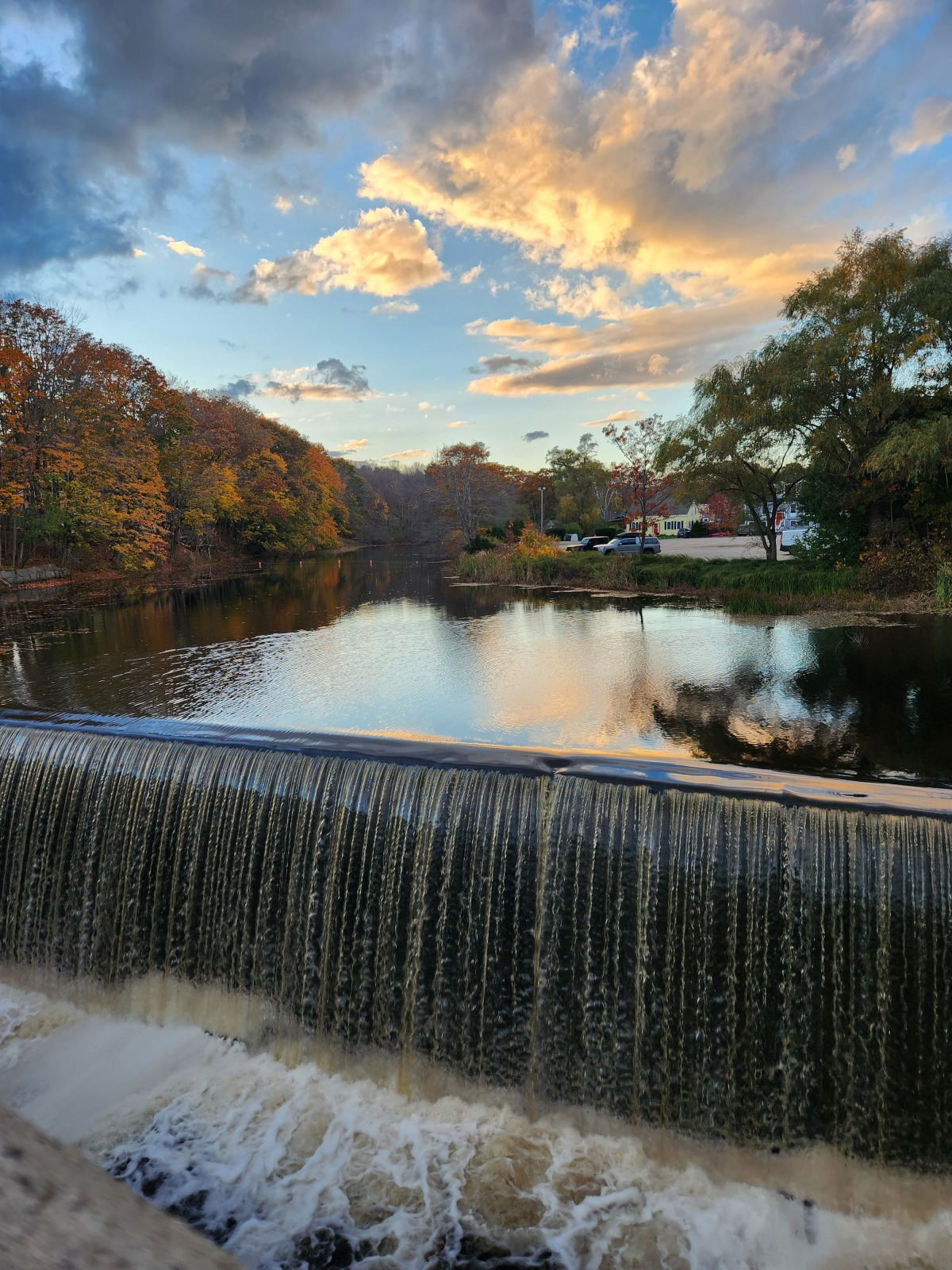
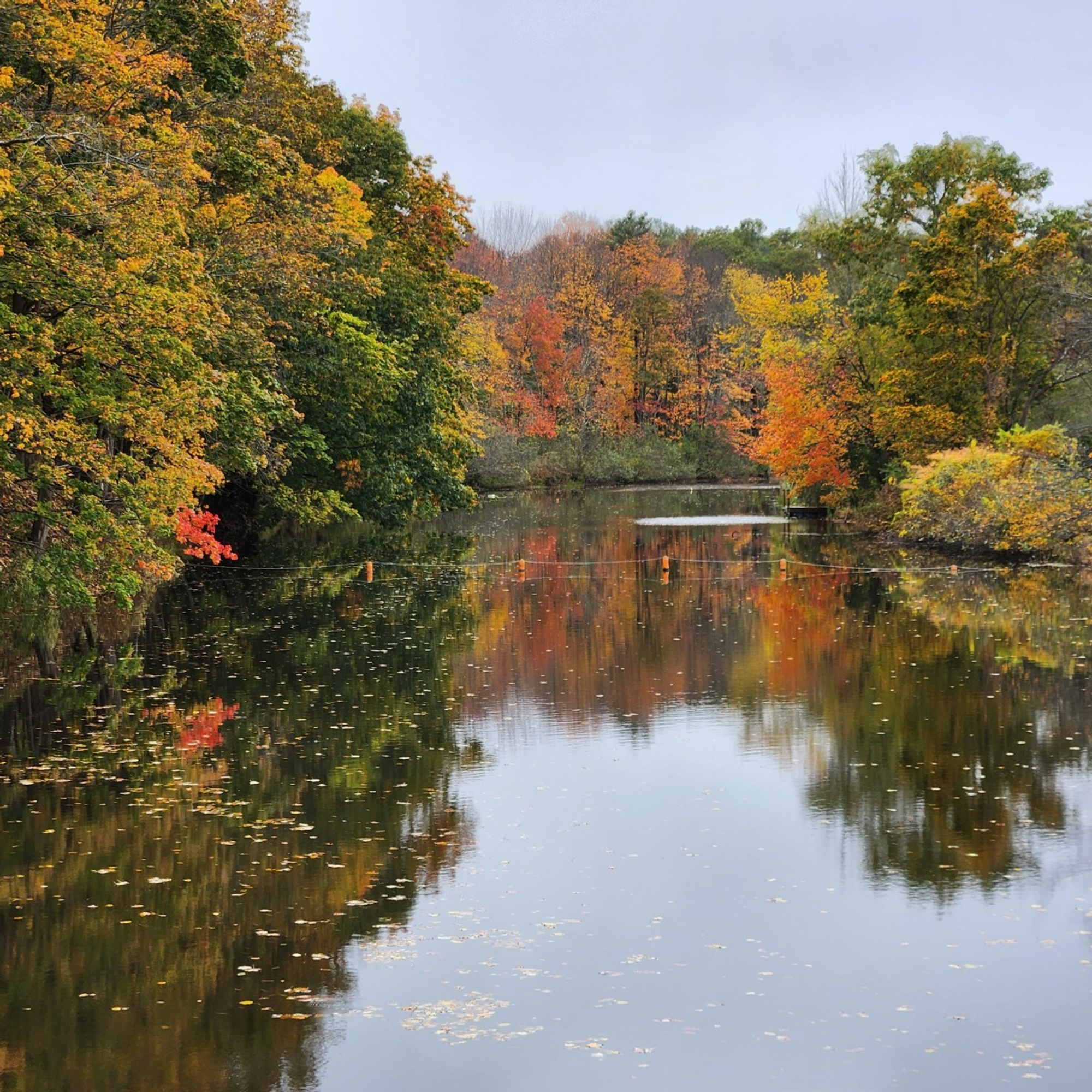
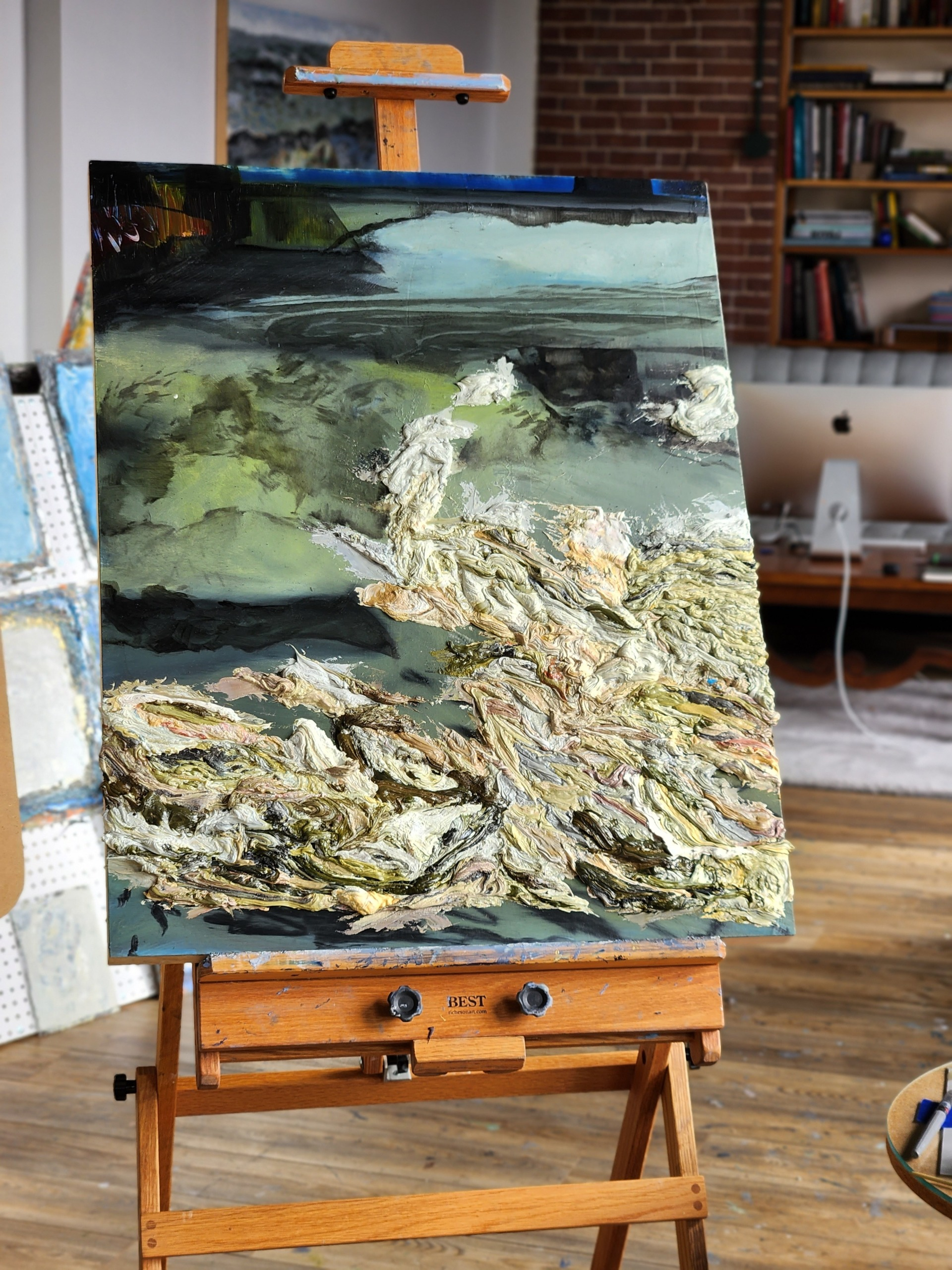
Fall has truly arrived now. This is my favorite season to be in the studio, painting. From here on, progress came in quieter ways. Less invention, more calibration. The big decisions were made, and the rest was the slow work of making the whole thing believable.
October 22, 2023
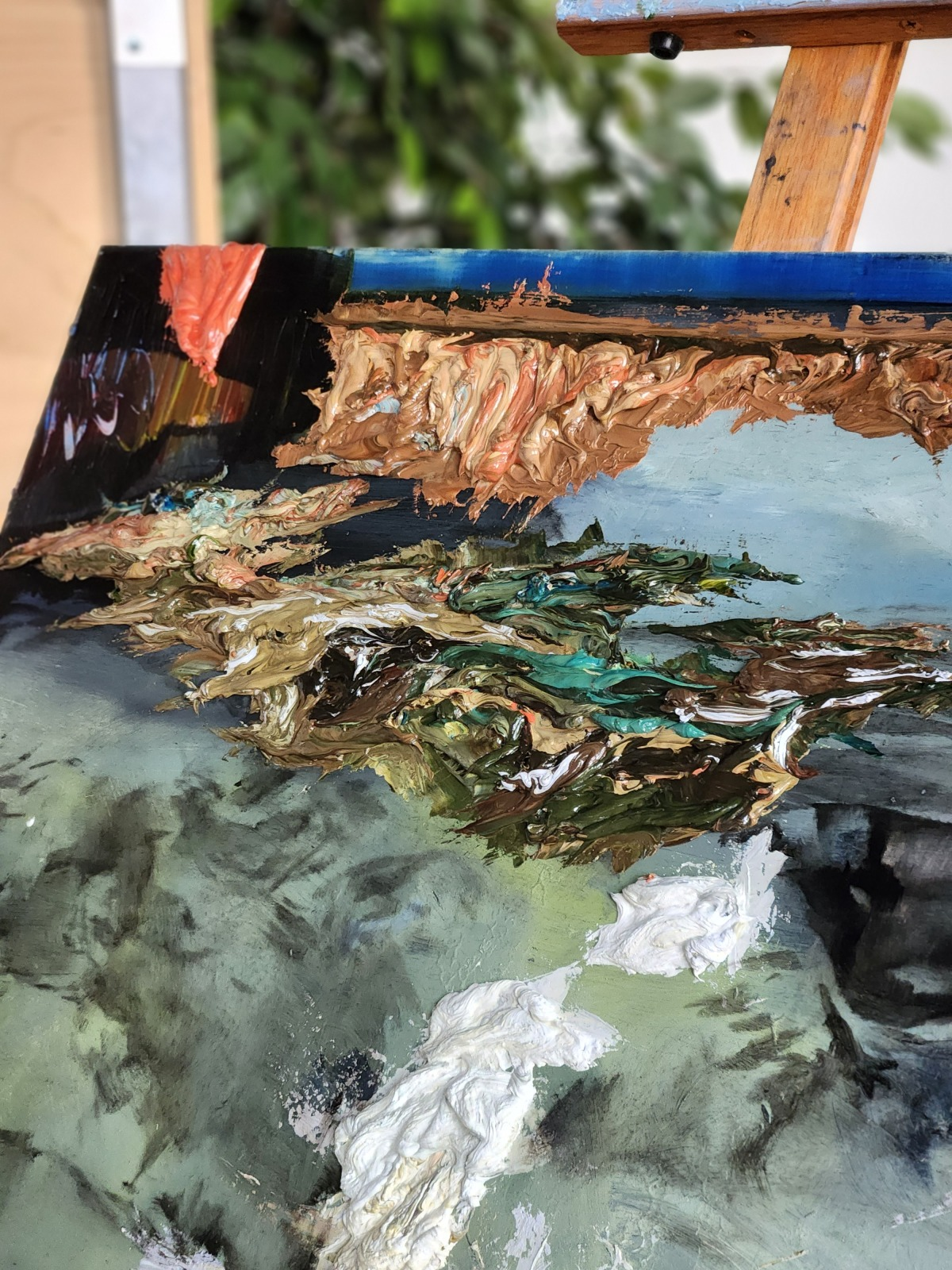
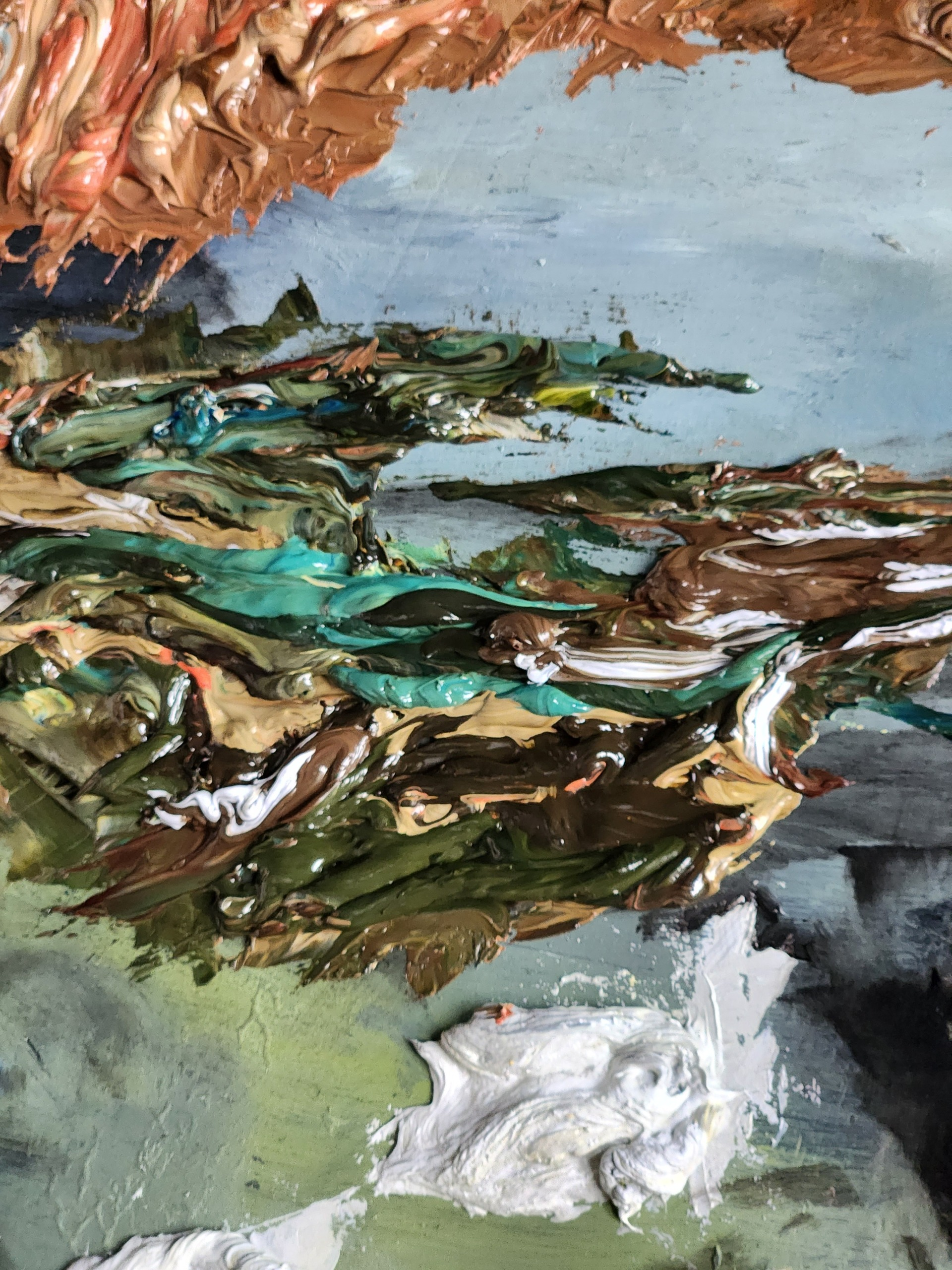
I'm searching for the most captivating in-between colors at the waterfall's crest. This will create a striking contrast when I eventually paint the foamy whites.
November 5, 2023
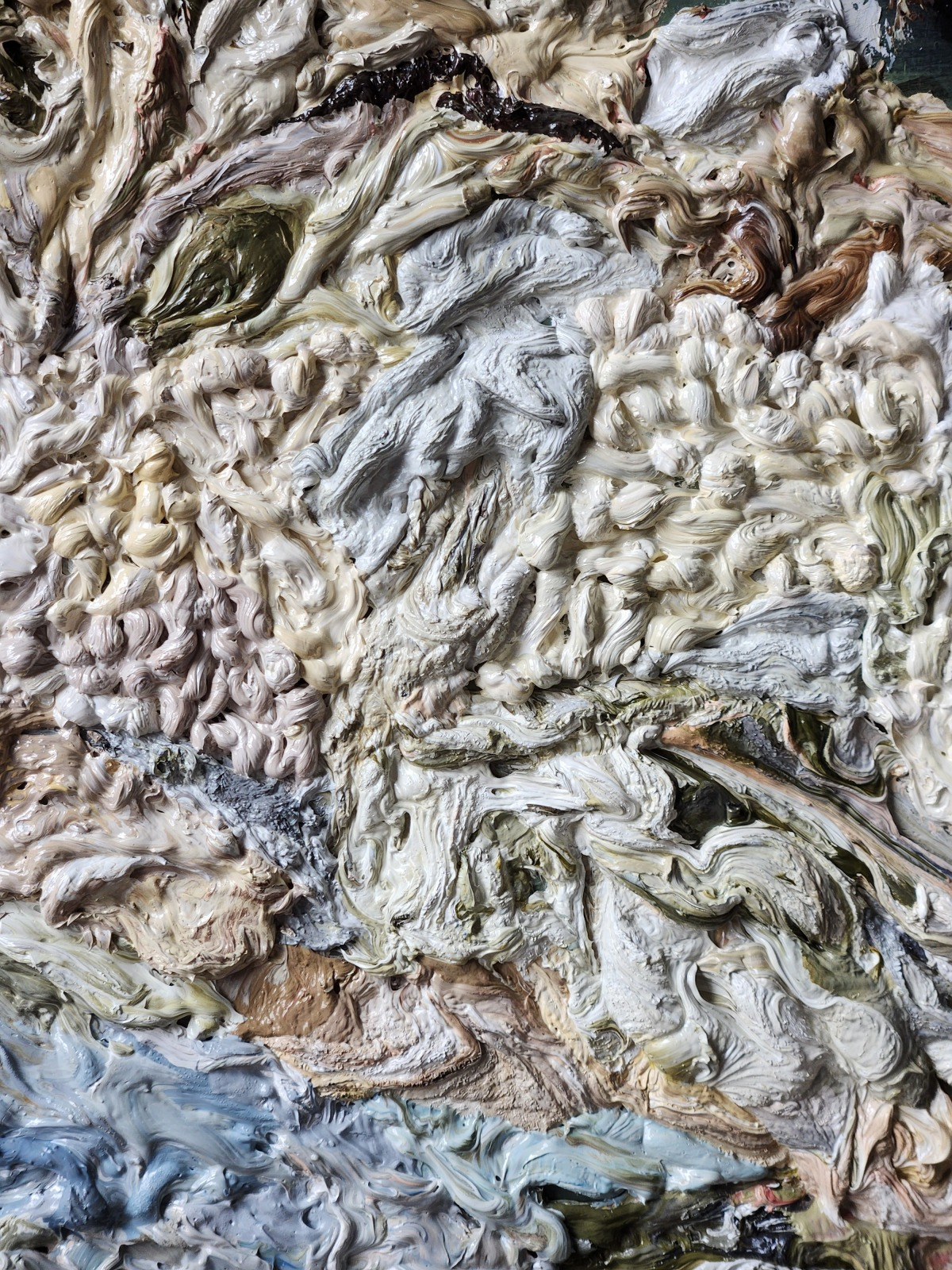
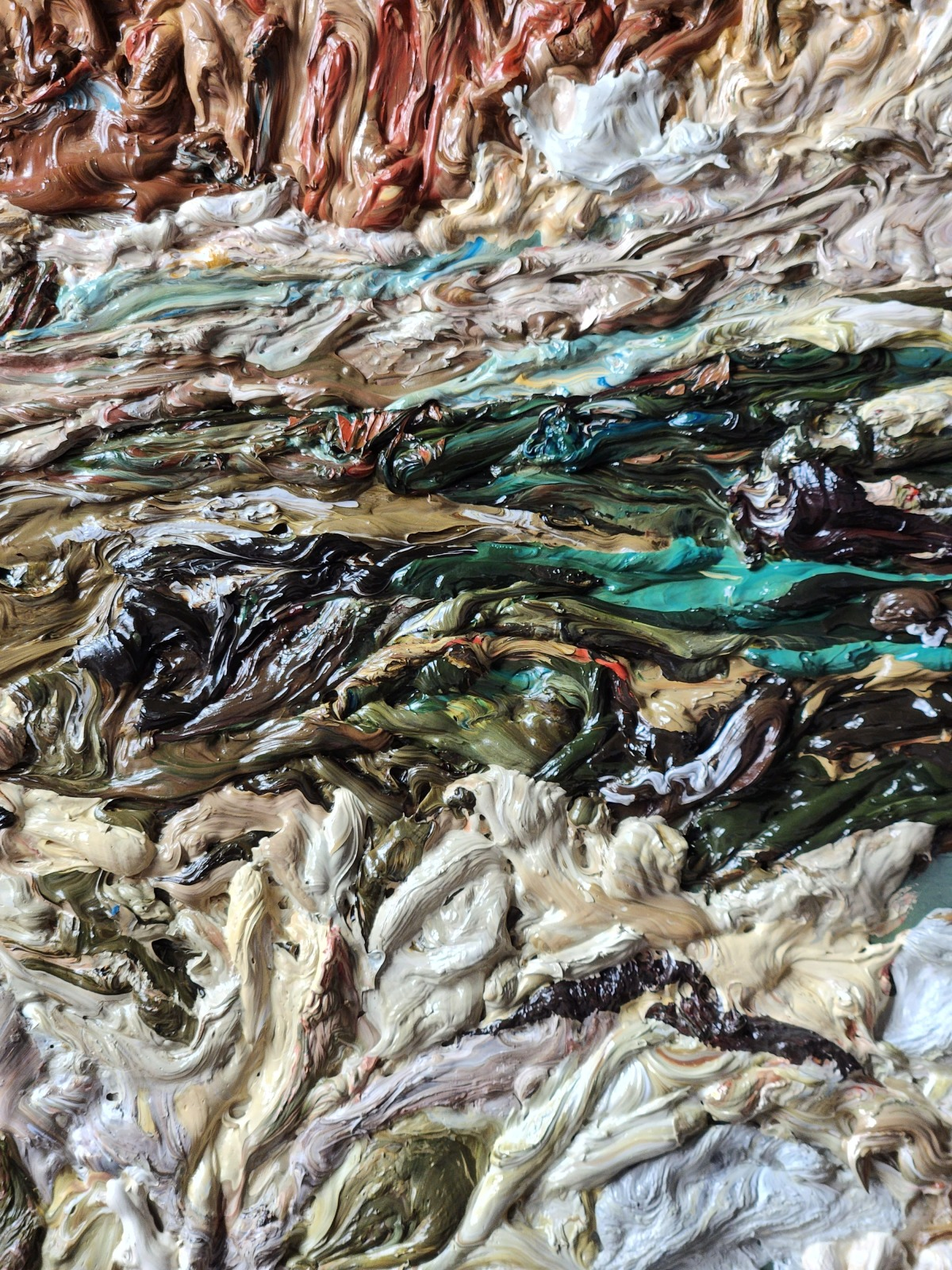
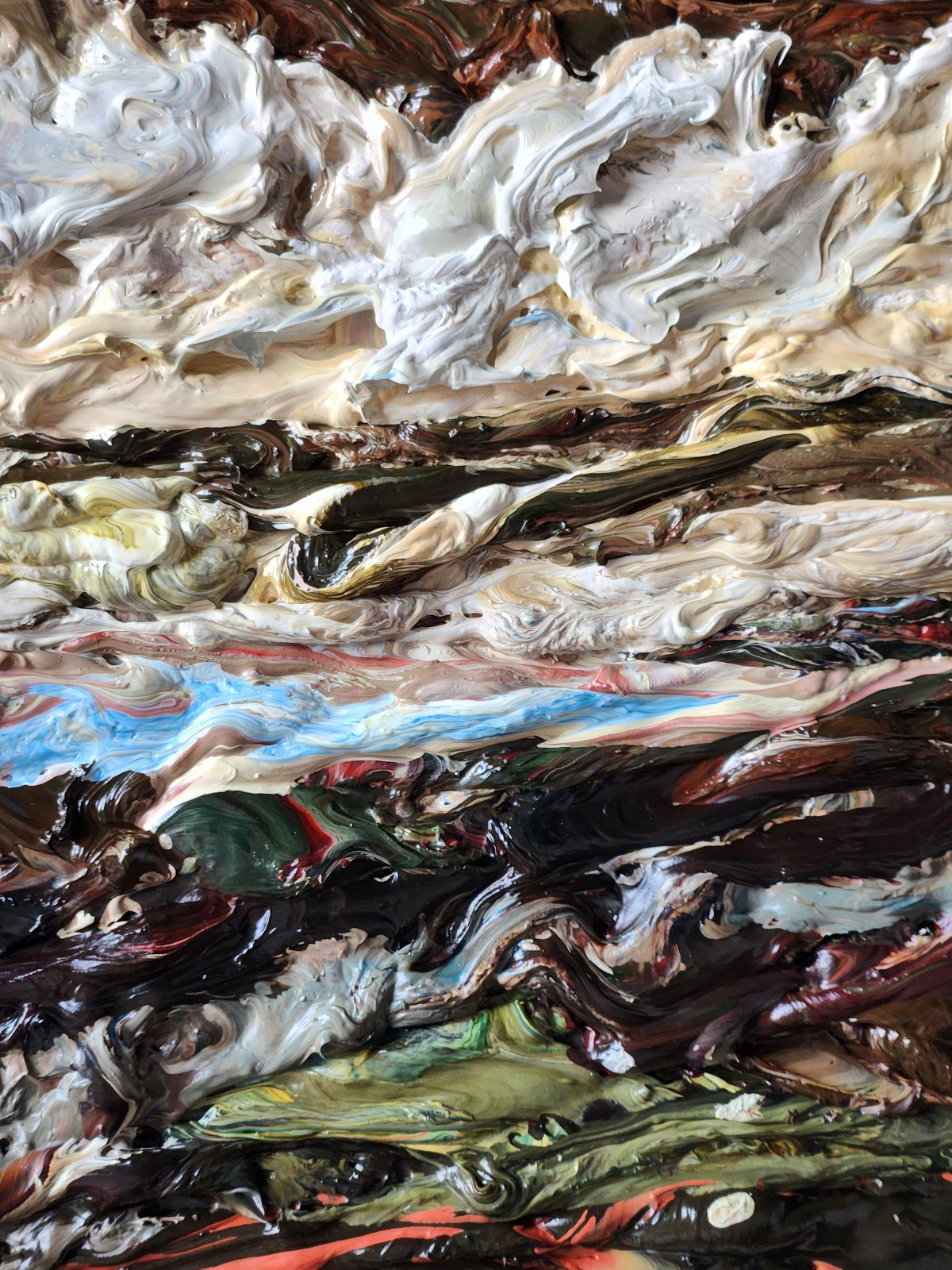
As I build up the forms, I've been deliberately adding more and more detail. The result is striking when viewed up close.
November 11, 2023
Nearing completion, just need a few more tweaks. The last stretch of a painting is never heroic. It is obsessive. I kept returning to the same passages, adjusting edges, value shifts, and the foam’s brightness until the chaos felt organized and the calm felt earned.
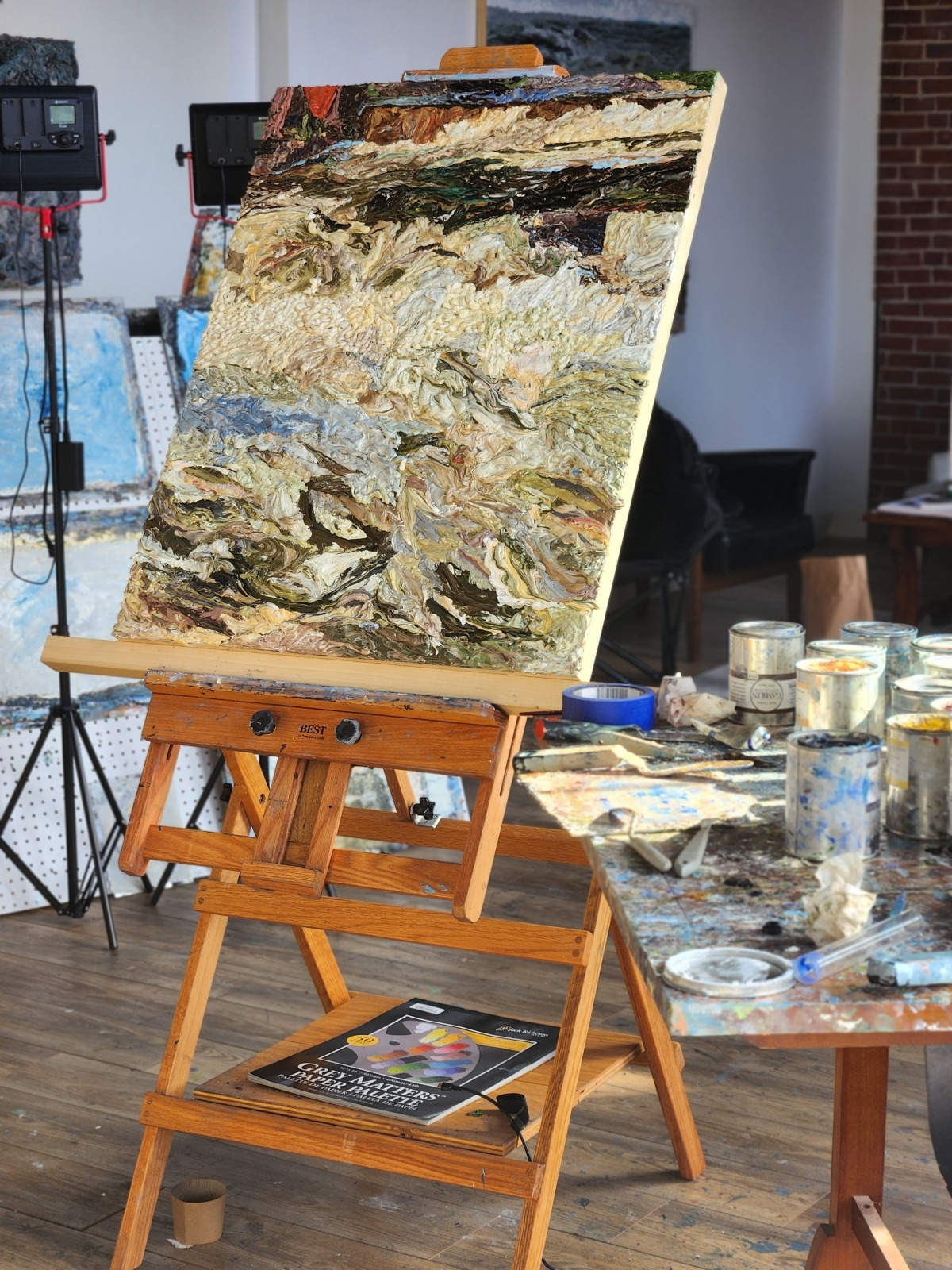
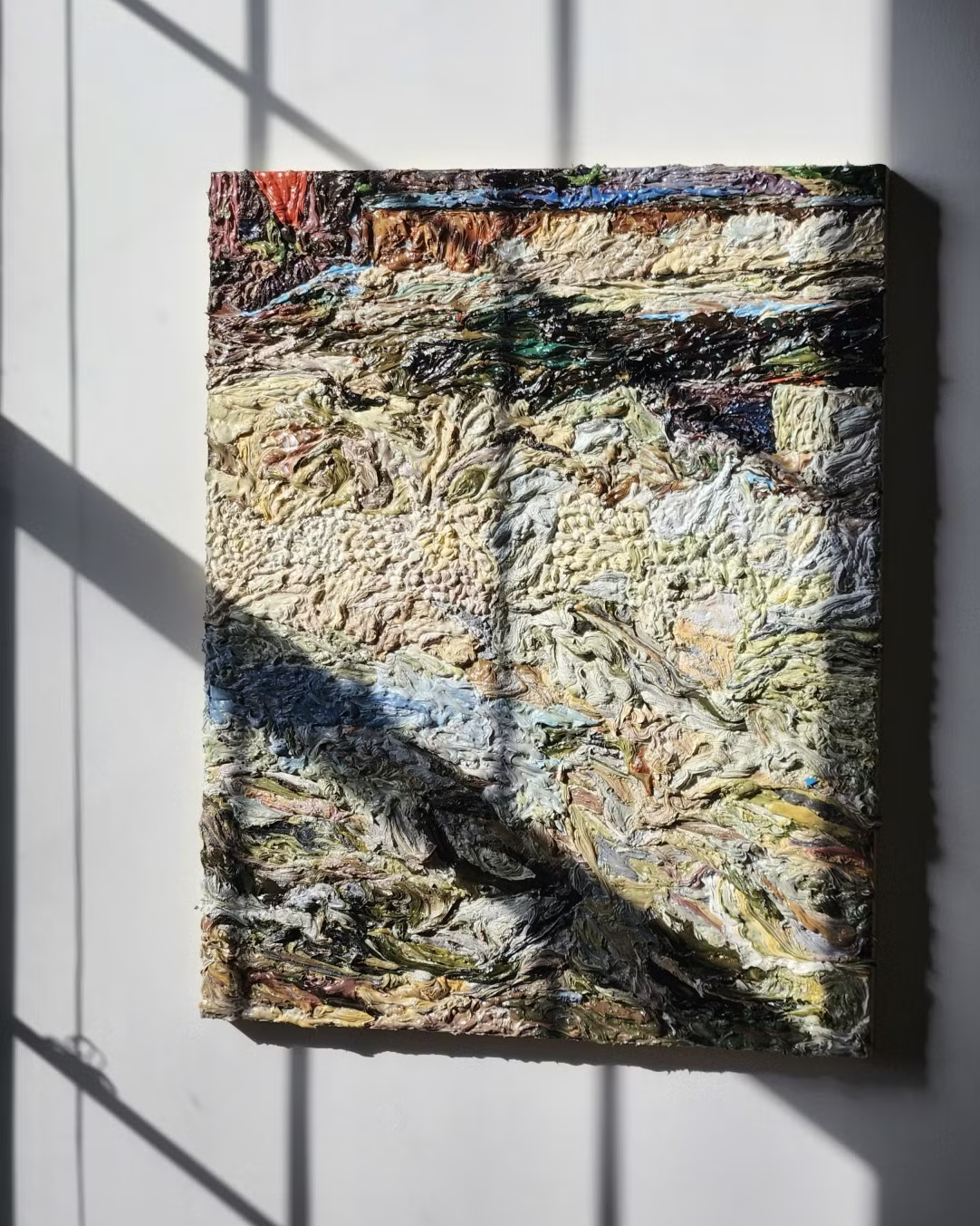
FINISHED
Done didn’t feel like a victory lap.
It felt like the painting finally held its own weight. After months of studies and revisions, the chaos stopped reading as chaos and started reading as intention.
From the beginning, I was chasing one experience: the roar of the Saco River trapped between the mills, loud enough to erase thought, mesmerizing enough to make time disappear. The hard part was keeping that intensity while building clarity—so the surface could be overwhelming up close, but coherent from across the room.
When it finally clicked, I could stand there and feel the river again. Not as a scene, but as pressure, rhythm, and release. That was the finish line.