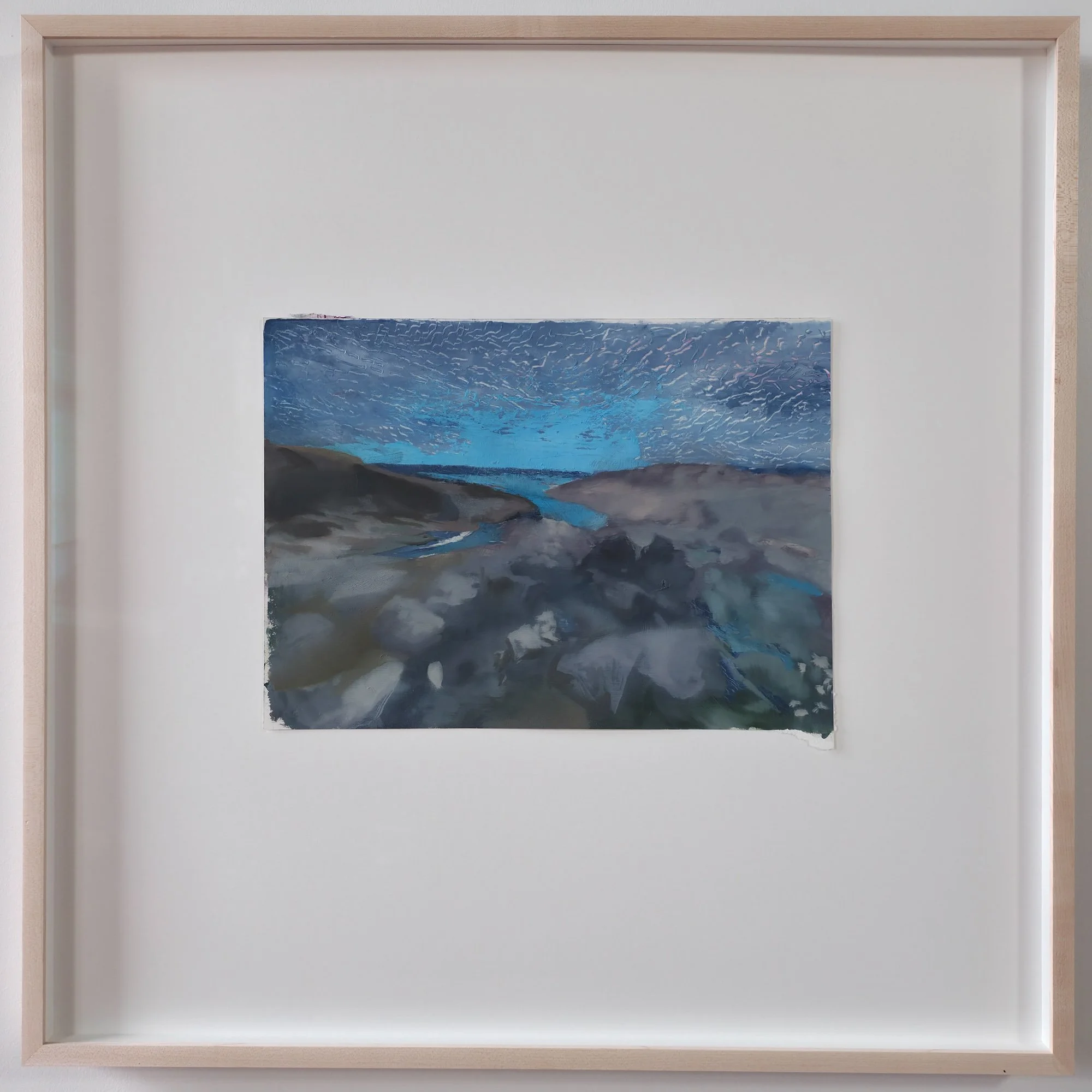
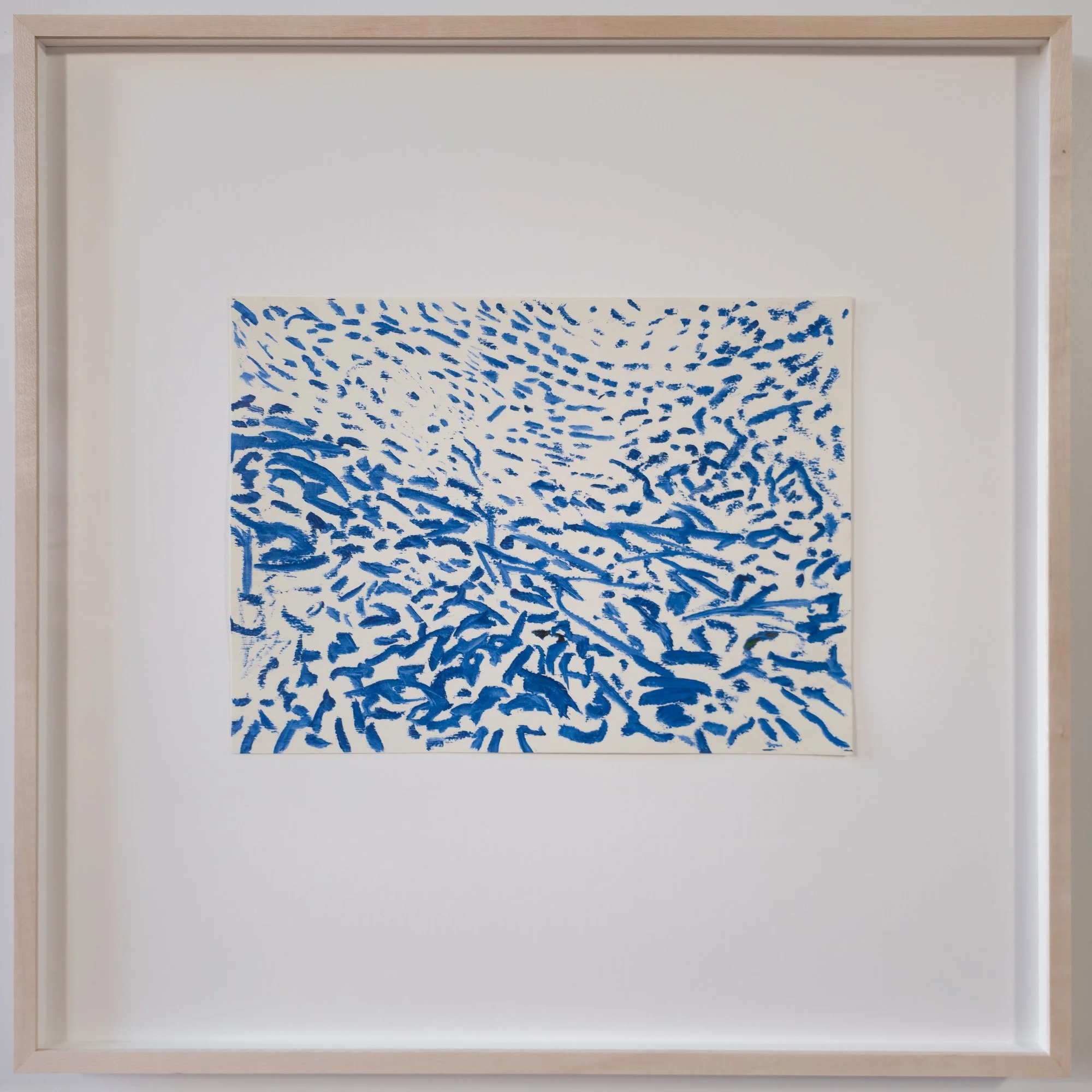
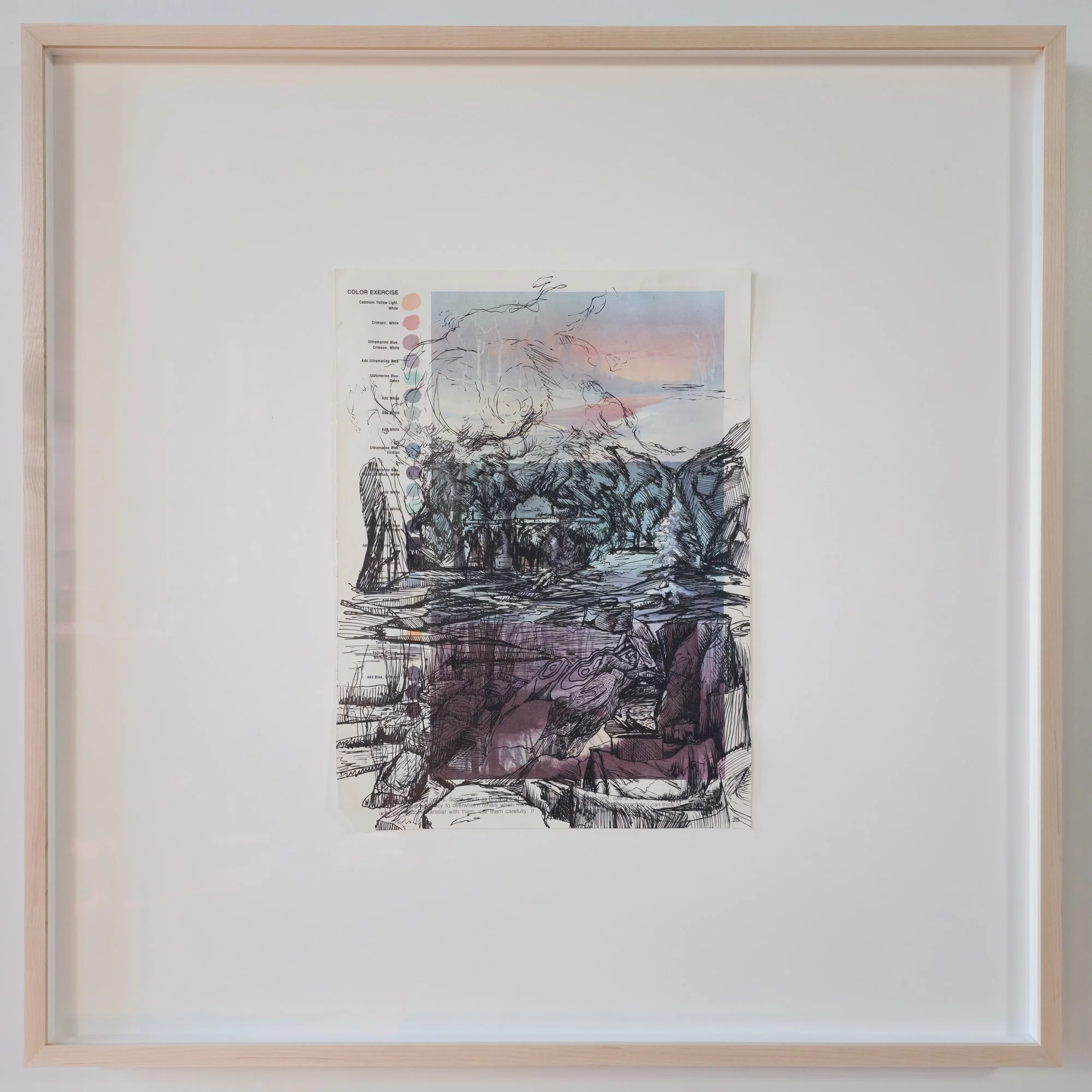
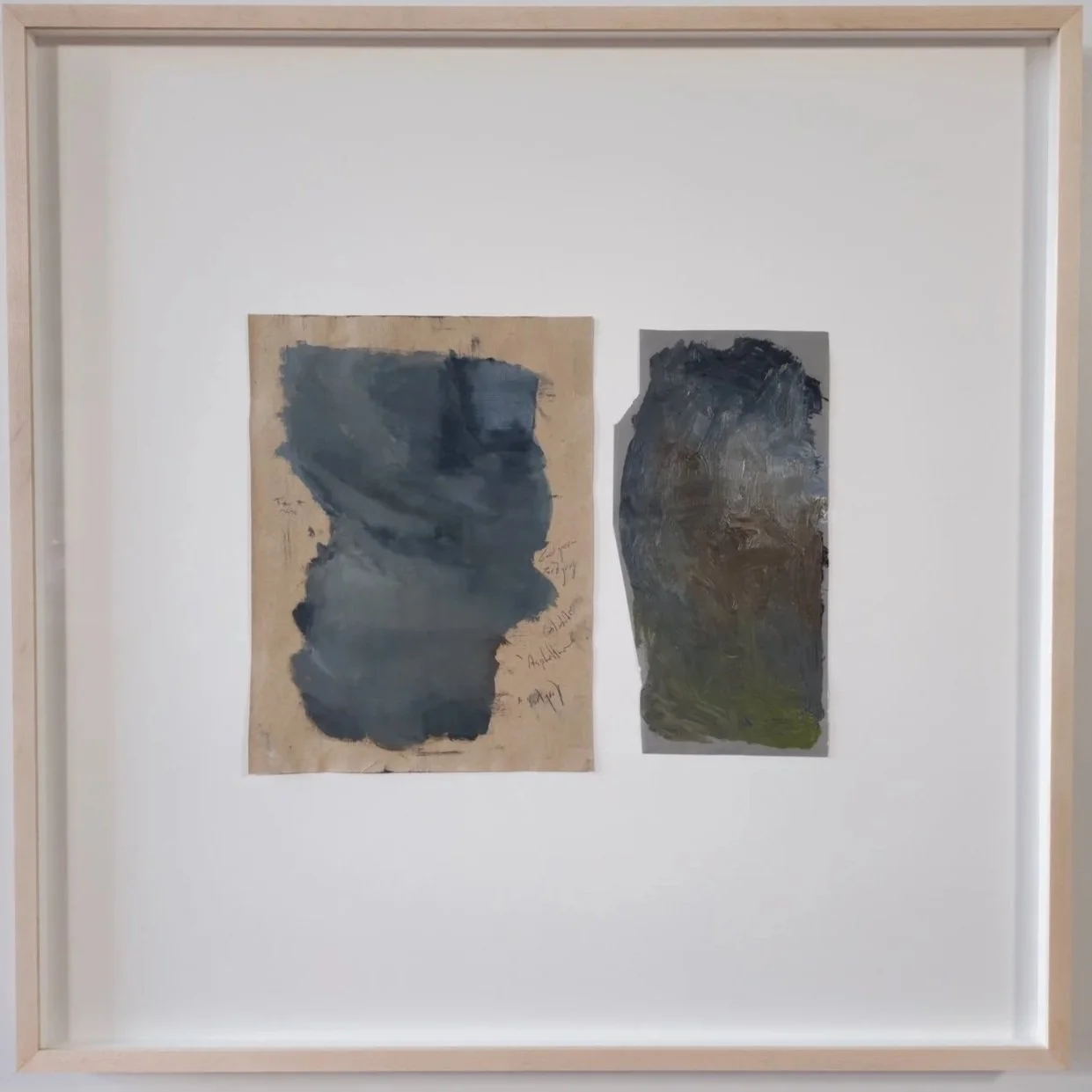
ARTIFACTS
What the Work Leaves Behind
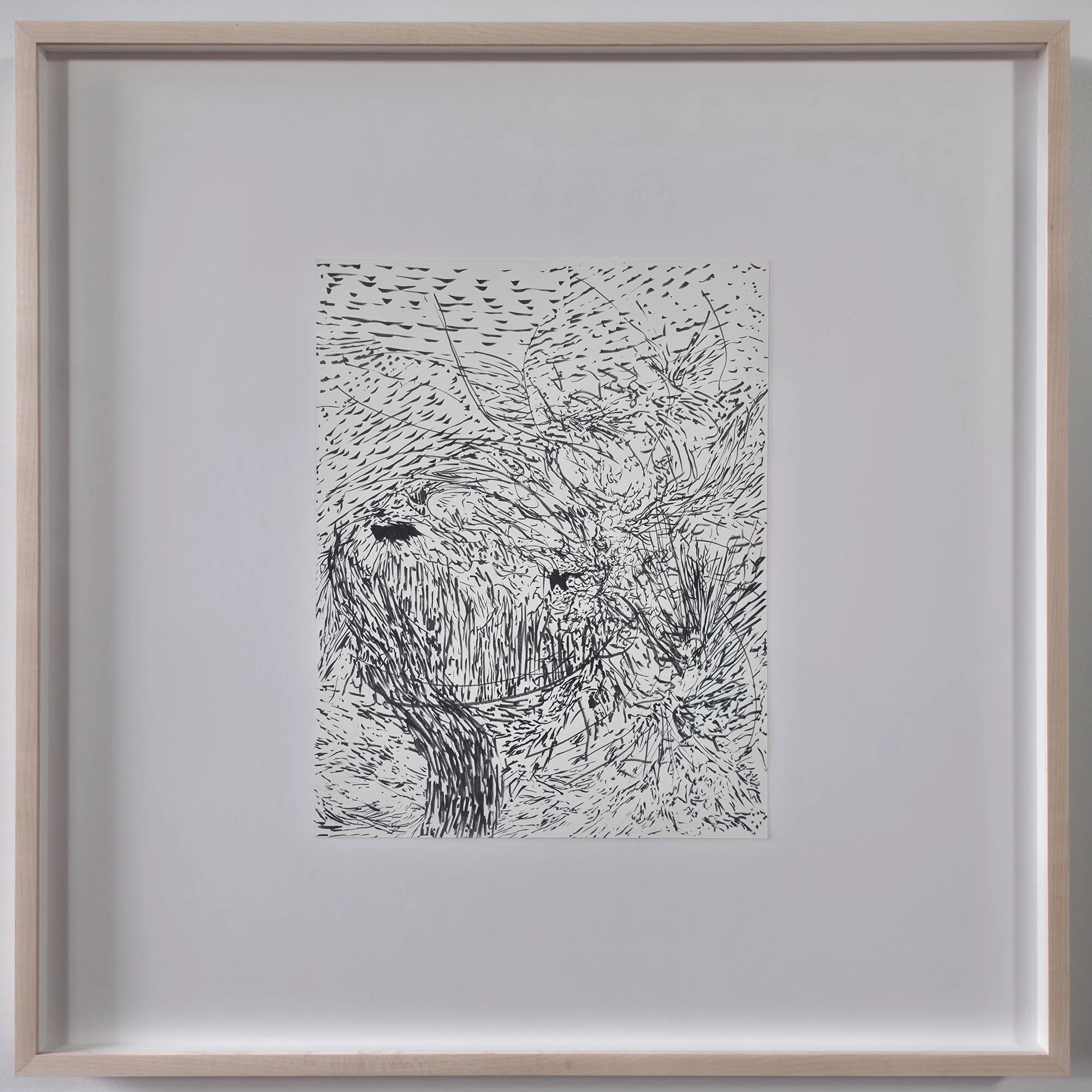
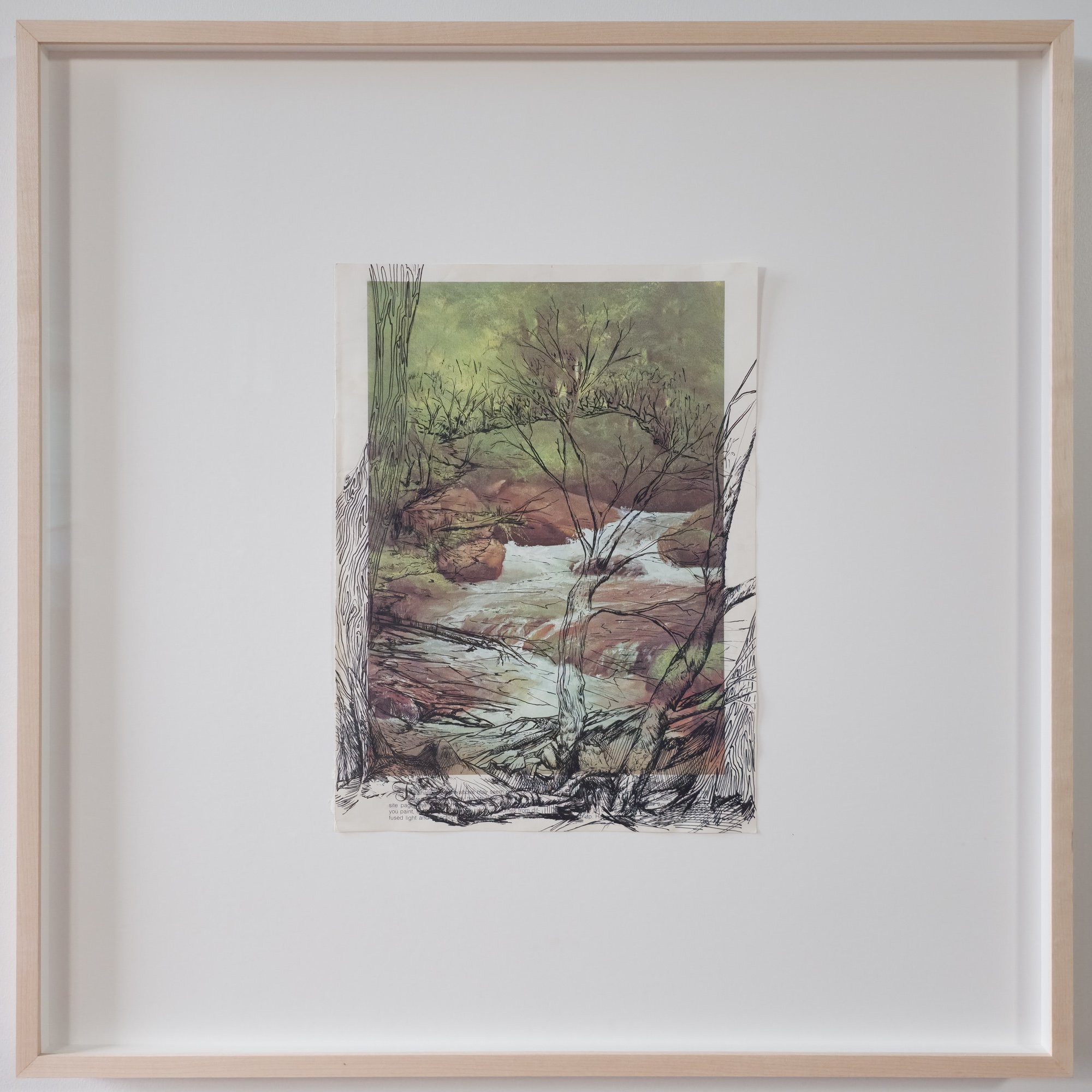
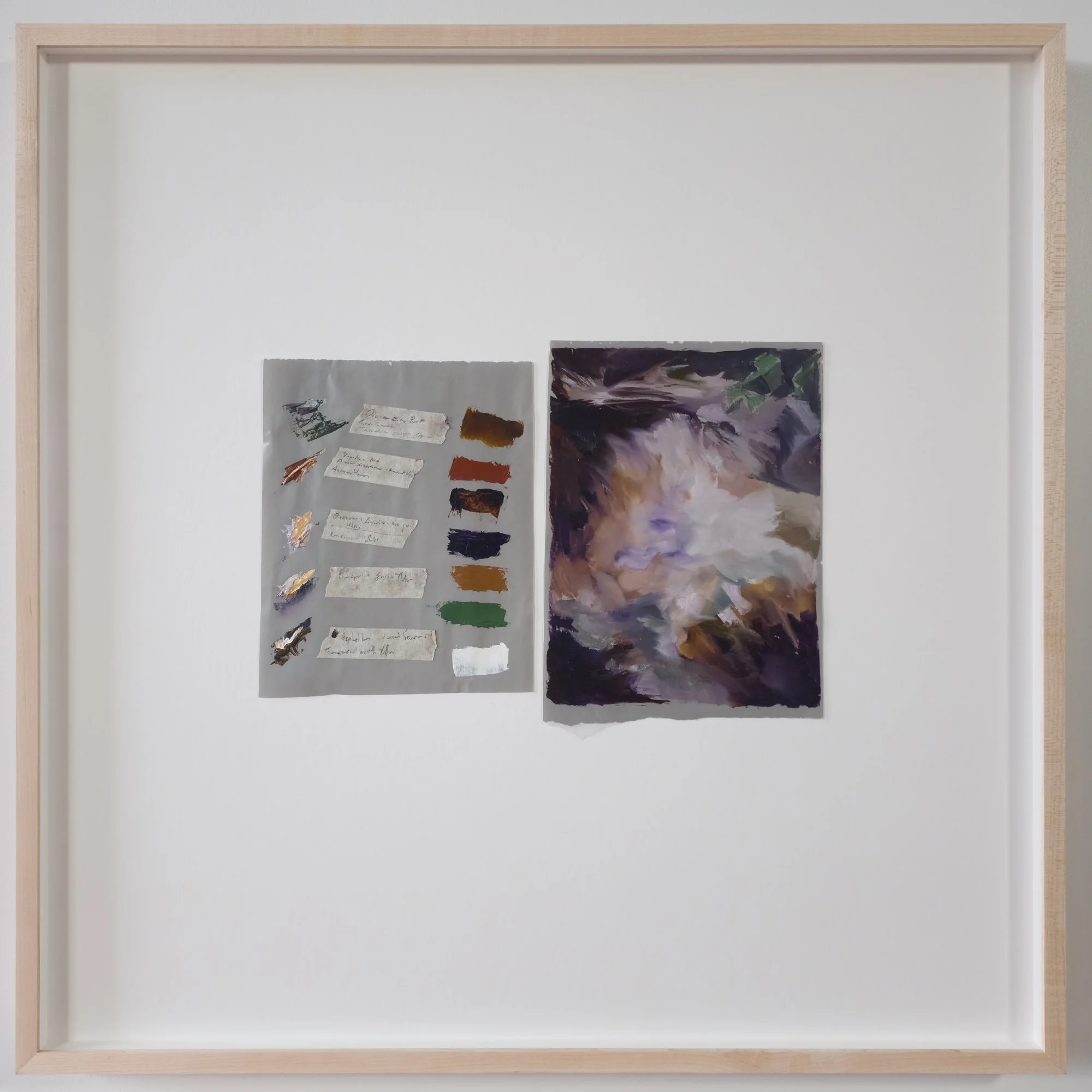
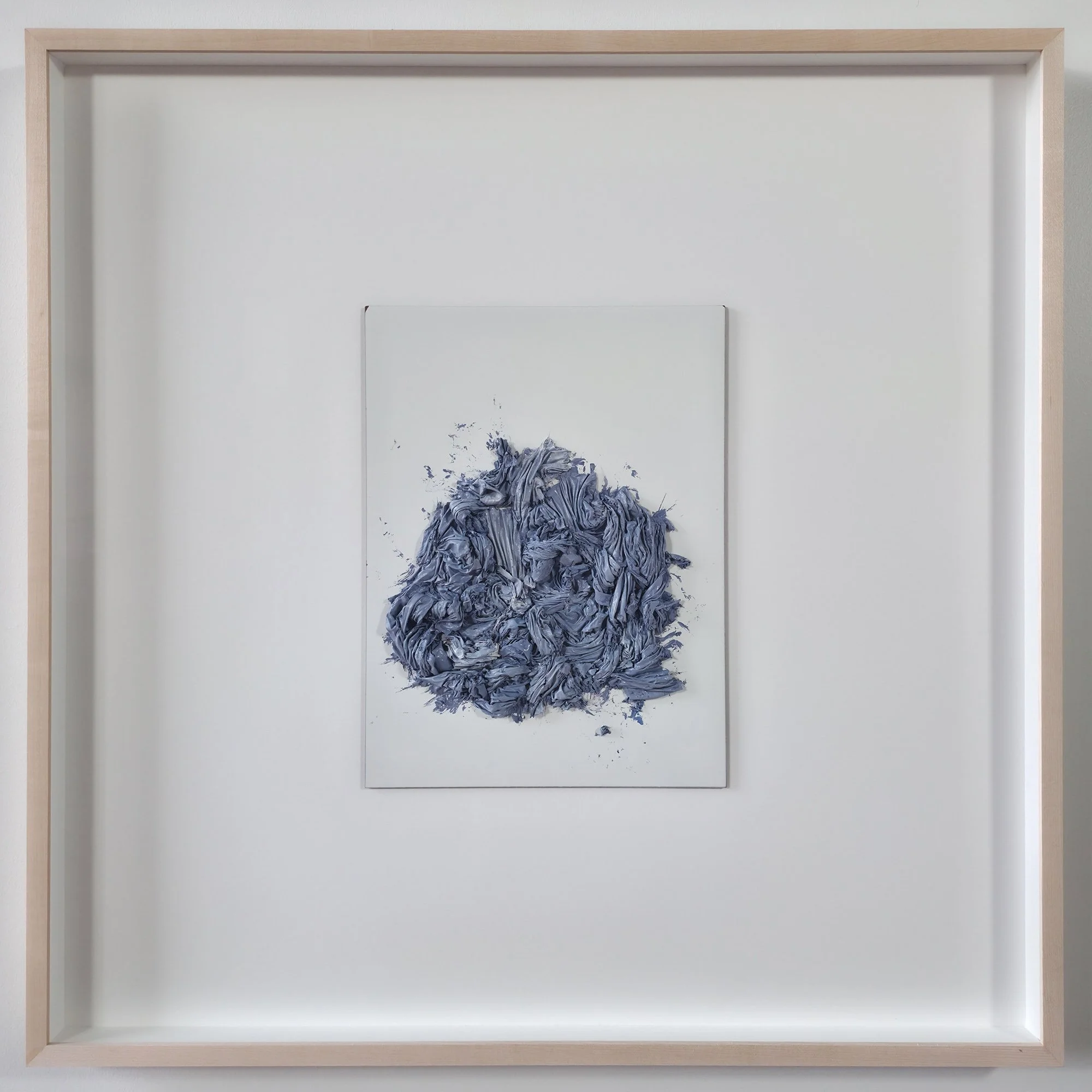
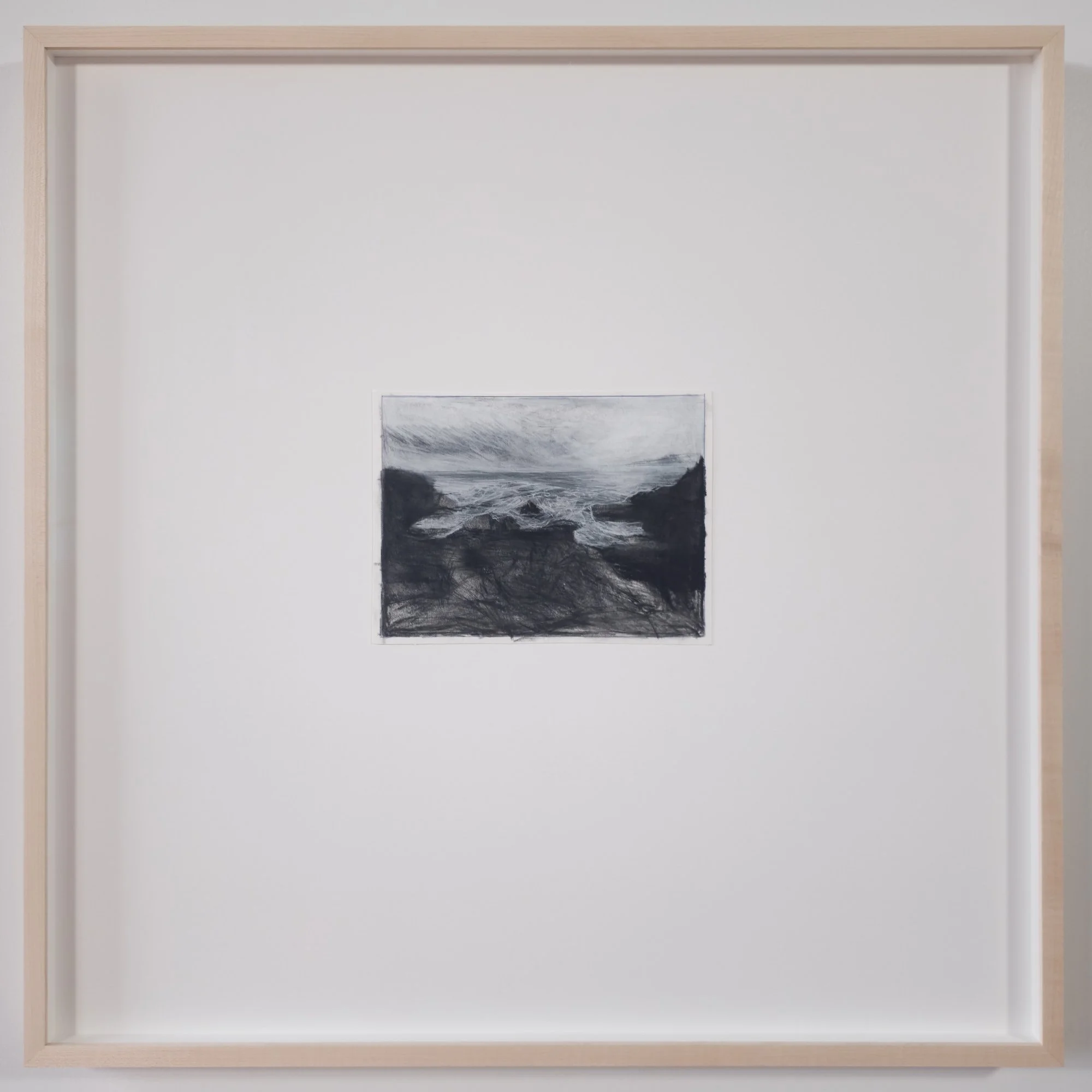
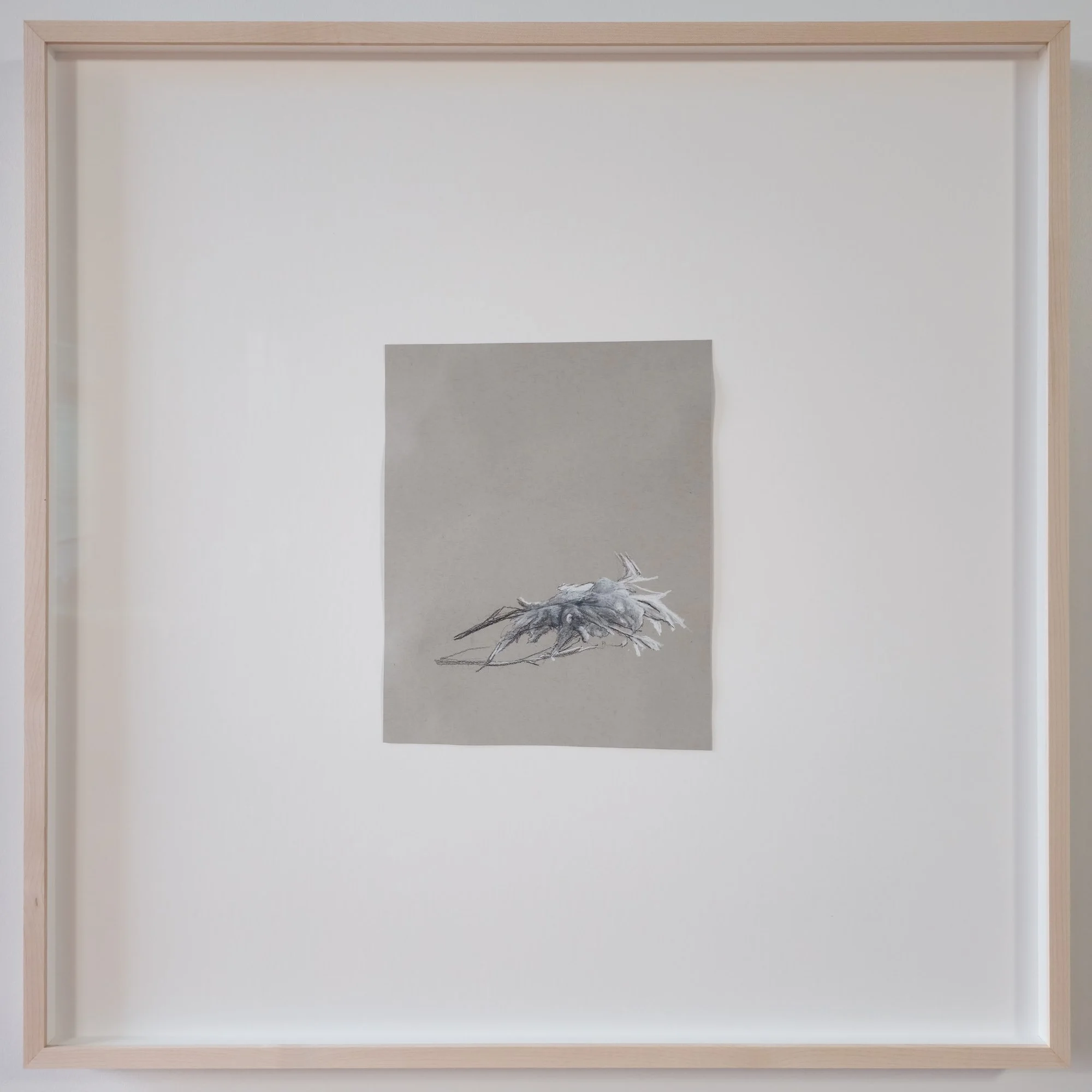
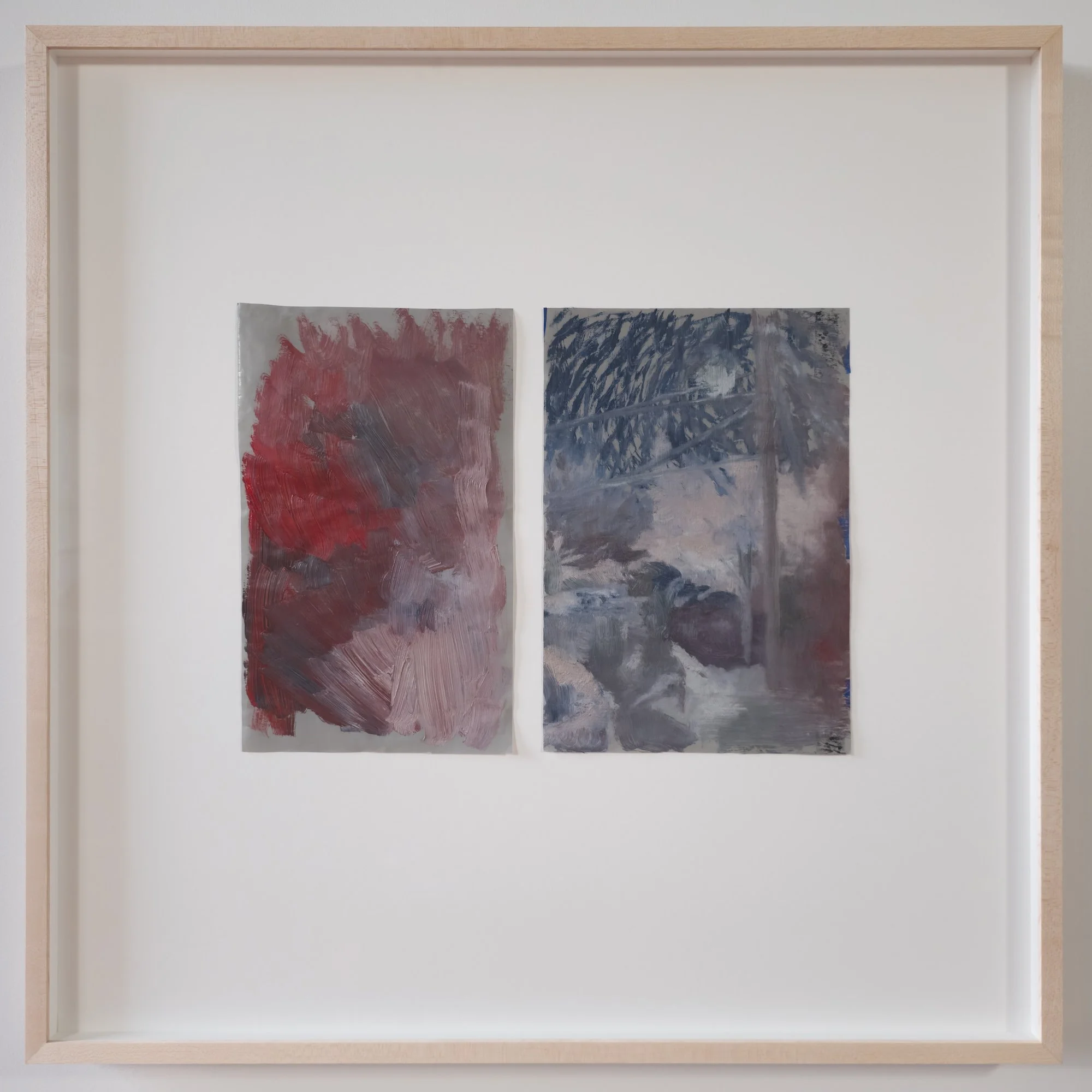
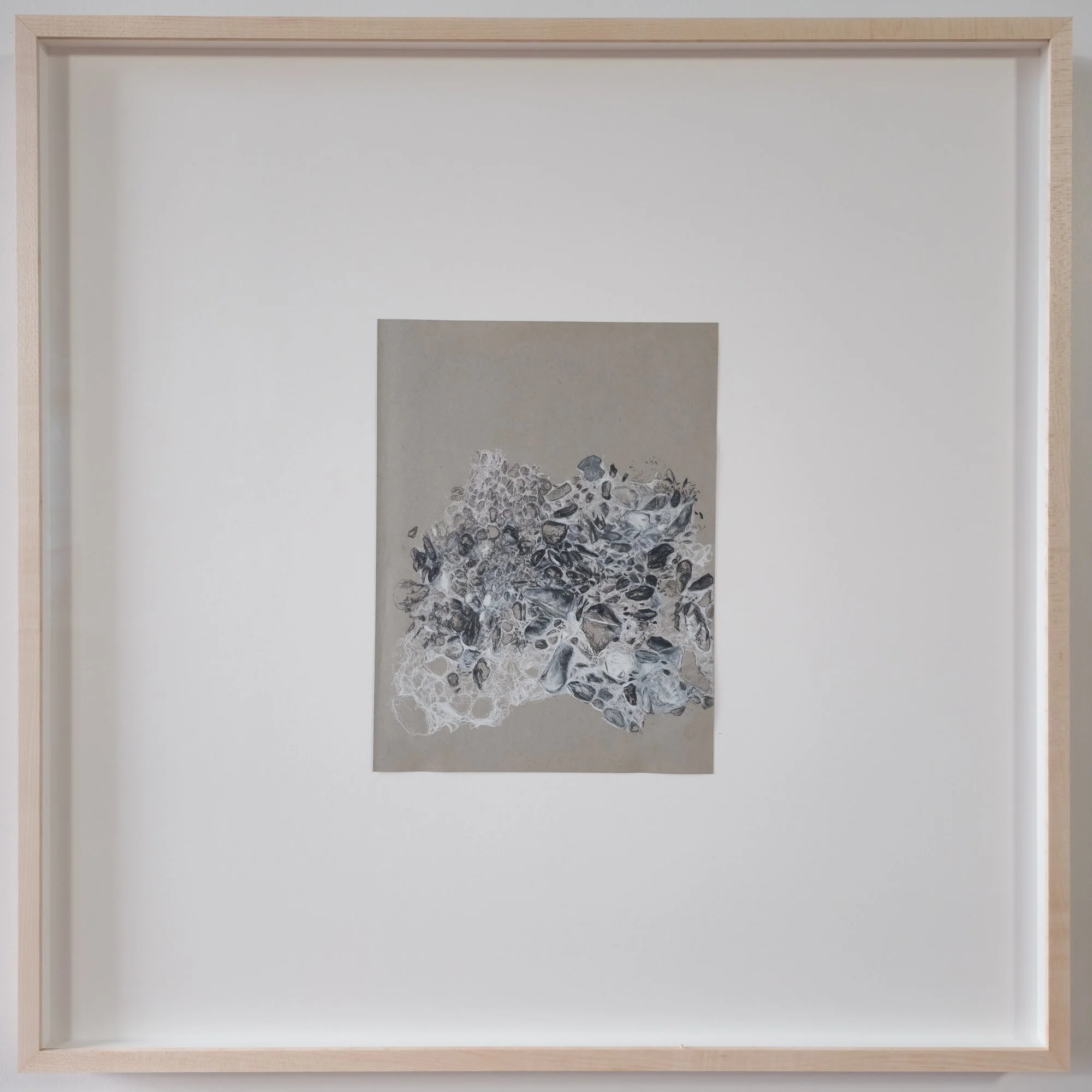
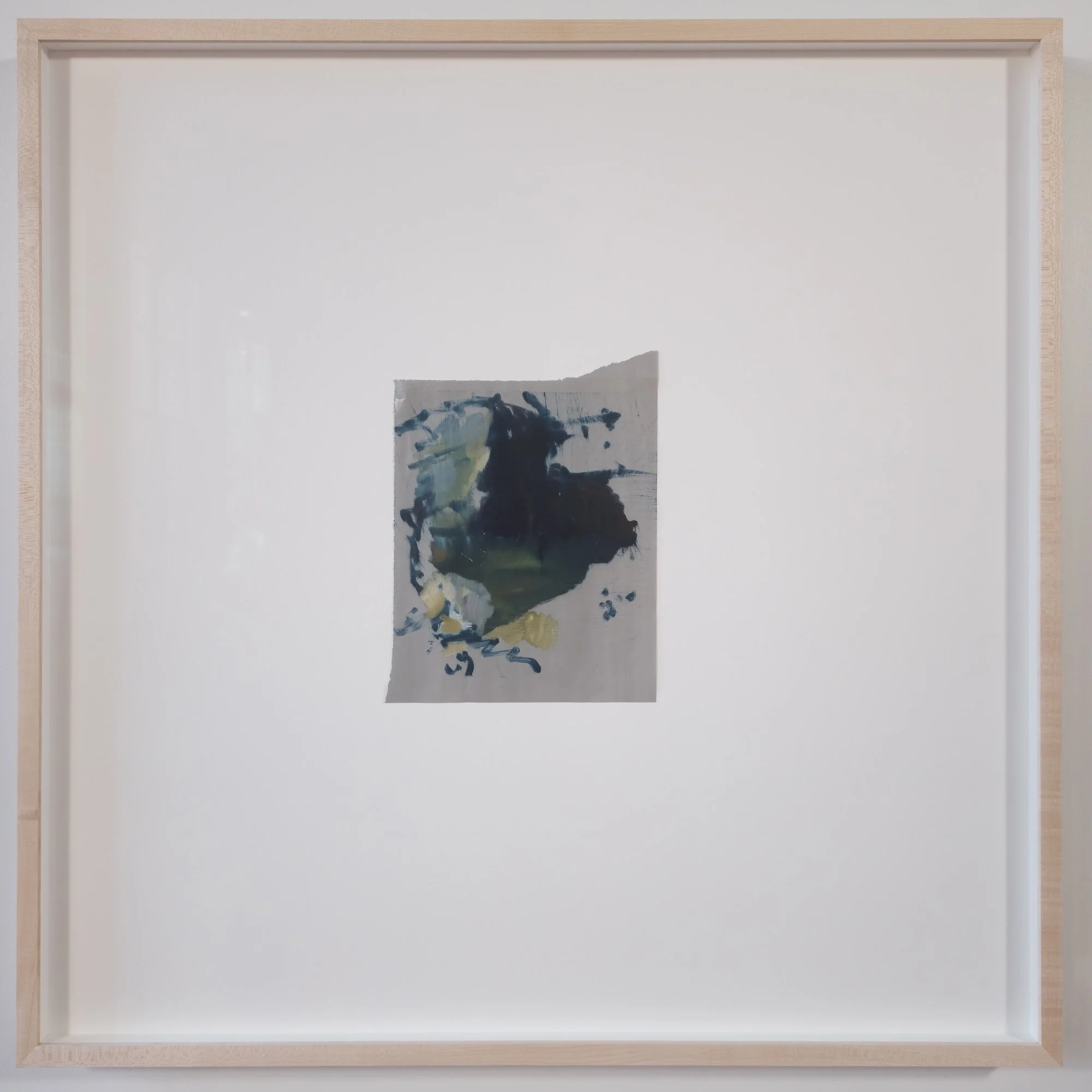
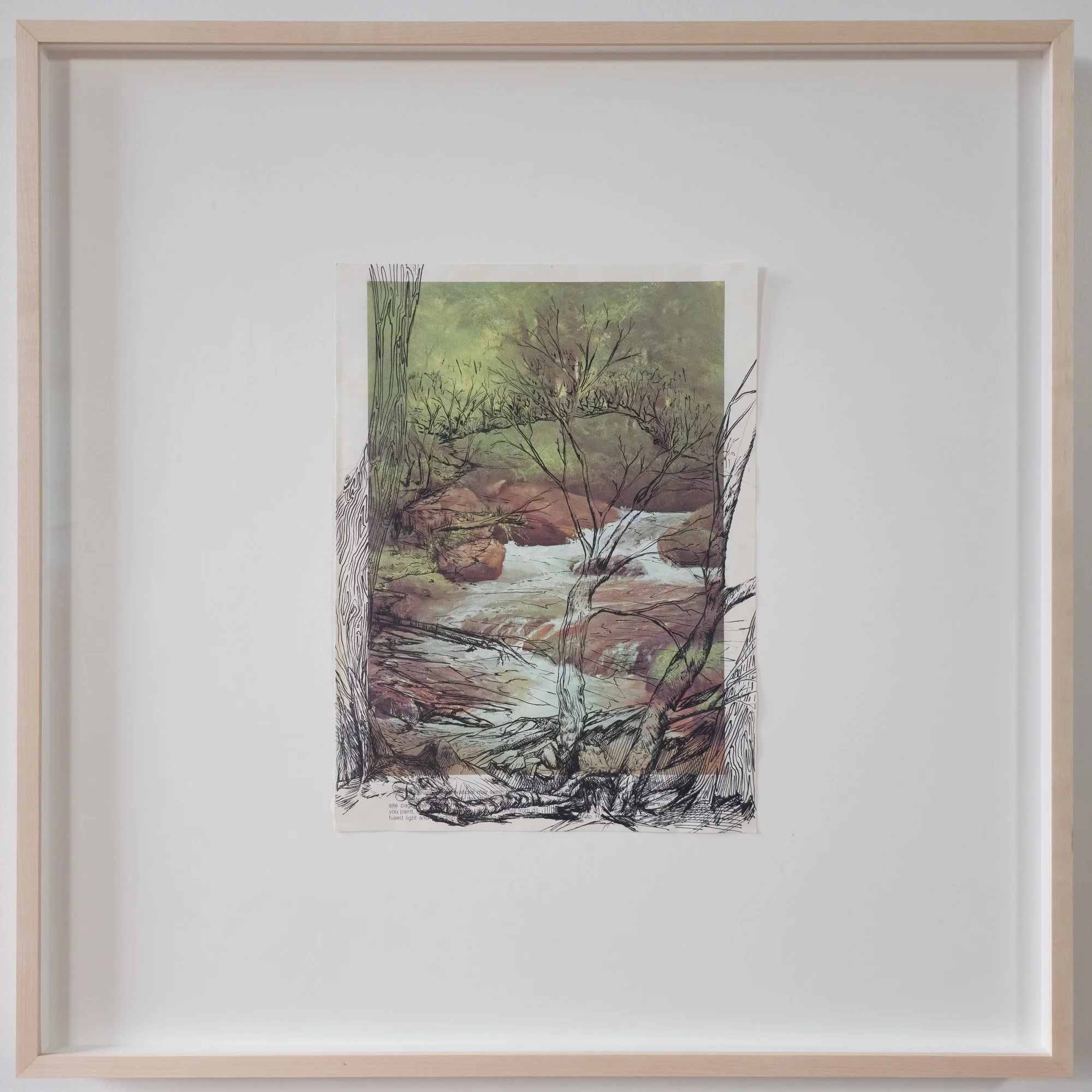
Thirteen small objects from the studio archive.
In July 2025, a pipe burst in the floor above my studio. The flood took a wall of storage. I spent that night cleaning up, and I spent the weeks after opening everything I owned to count what was left. Flat files. Boxes. The shelf of filled sketchbooks. The loose pages living between books.
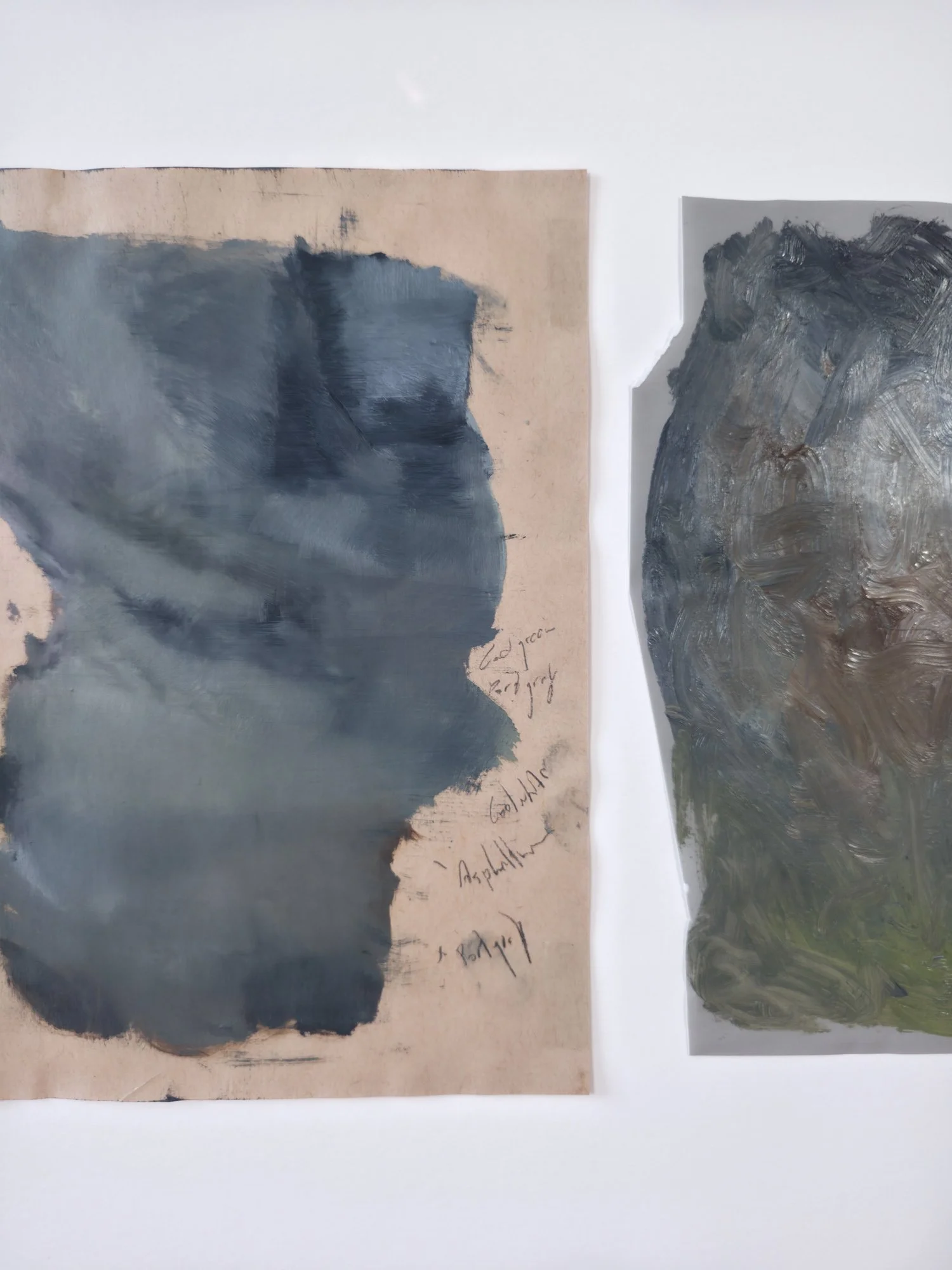
The count turned up small works I never intended to show anyone. I made them in frustration, or during a stretch of intense thinking, or after a period of silence, to find my way back into the work. Each one spent weeks propped on the studio wall while the finished painting went on nearby. Then the sketchbook closed and went to the shelf. The loose pages went into the stacks. For years I glanced at them and moved on.
I had just discarded work I can never remake. I kept these out.
This series is called Artifacts. Thirteen of those objects, preserved, framed, and shown for the first time.
What these objects are
A bucket sits in the corner of a garage with motor oil pooled at the bottom. Most people walk past it. A careful observer stops, because the oil is evidence. It came out of an engine. The engine propelled a car. The car carried an owner. The owner had a life. The bucket is seven steps removed from that life and part of every step of it.
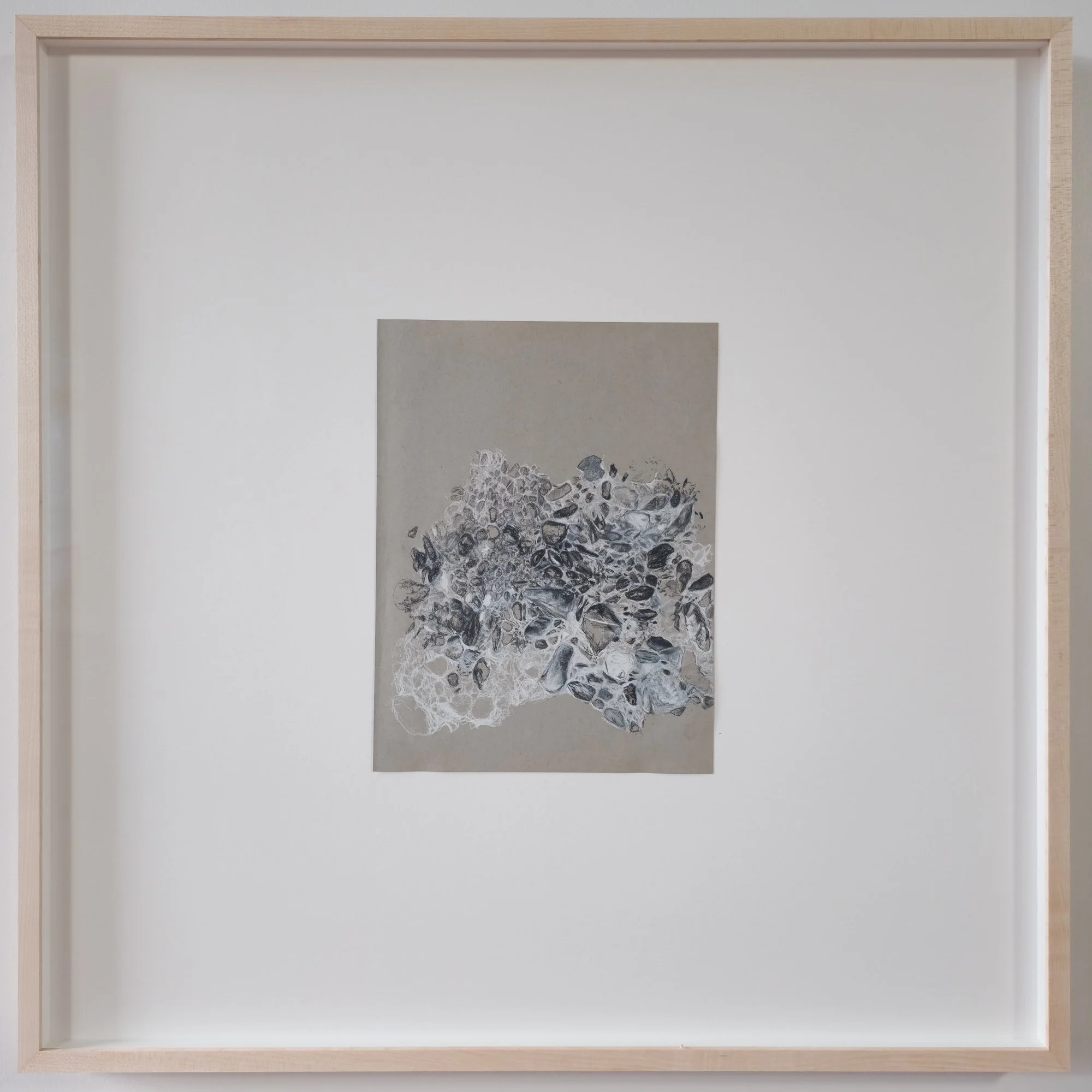
These objects work the same way. I could have called them studies, and several carry the word in their titles. A study names a purpose. These outlived their purposes. An artifact is a made thing that testifies to a process, to a set of hands, to the how and the who behind the need to make anything at all. That is what they give back when I look at them.
The titles are the studio's private grammar, published without translation. Flow Instruction. Overwritten Rules. A Study of Instincts. Architecture of Thoughts. They are documents from an internal rulebook.
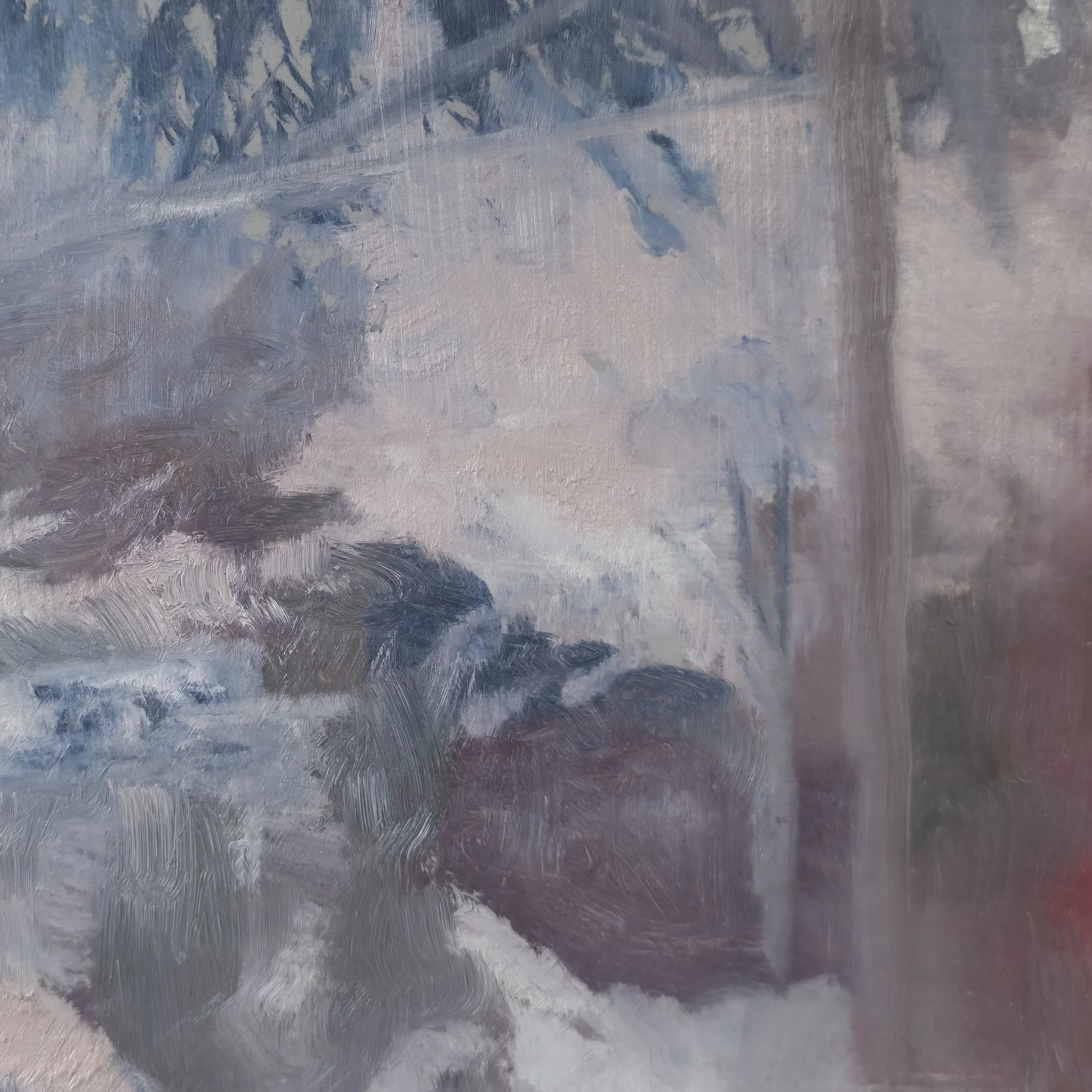
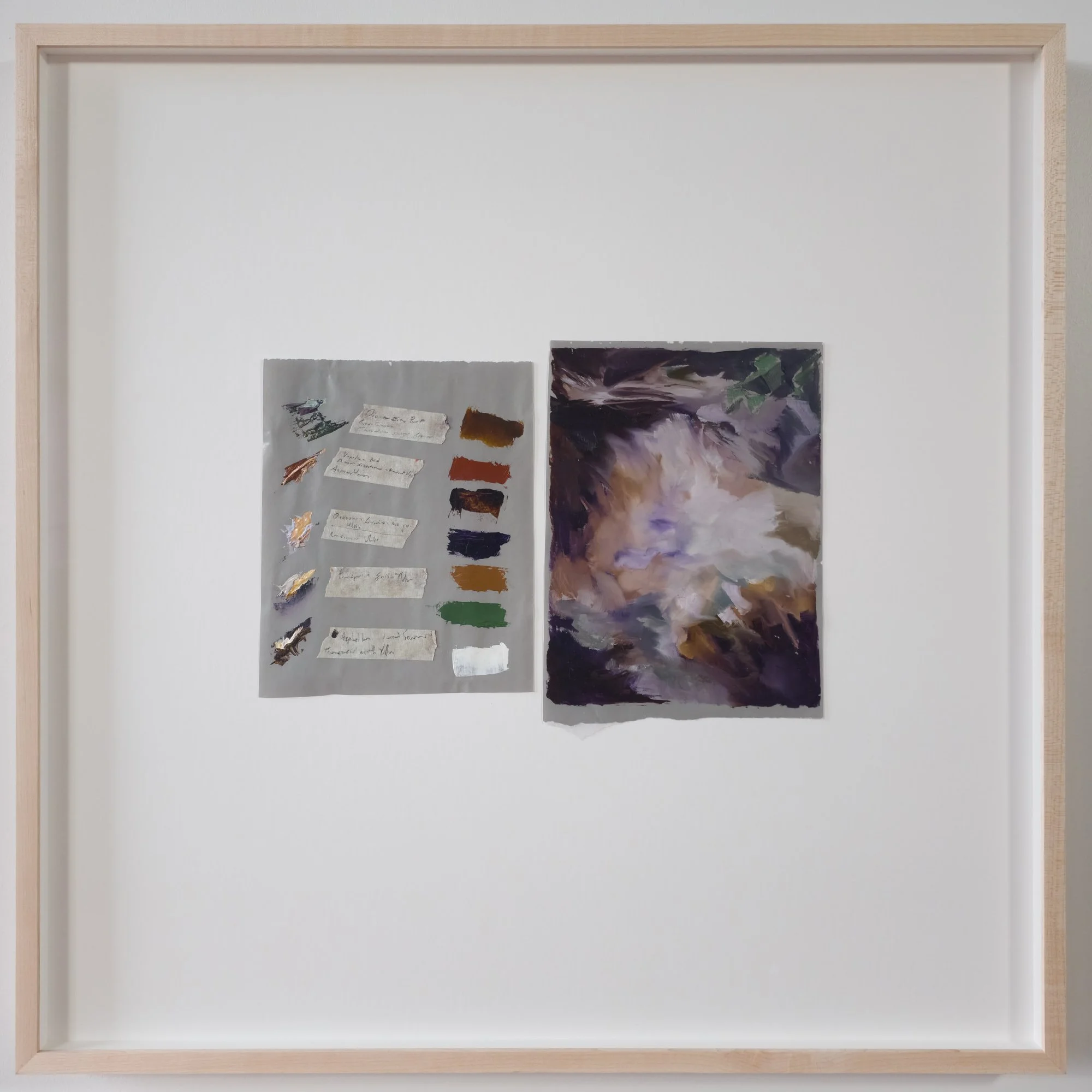
What the method leaves behind
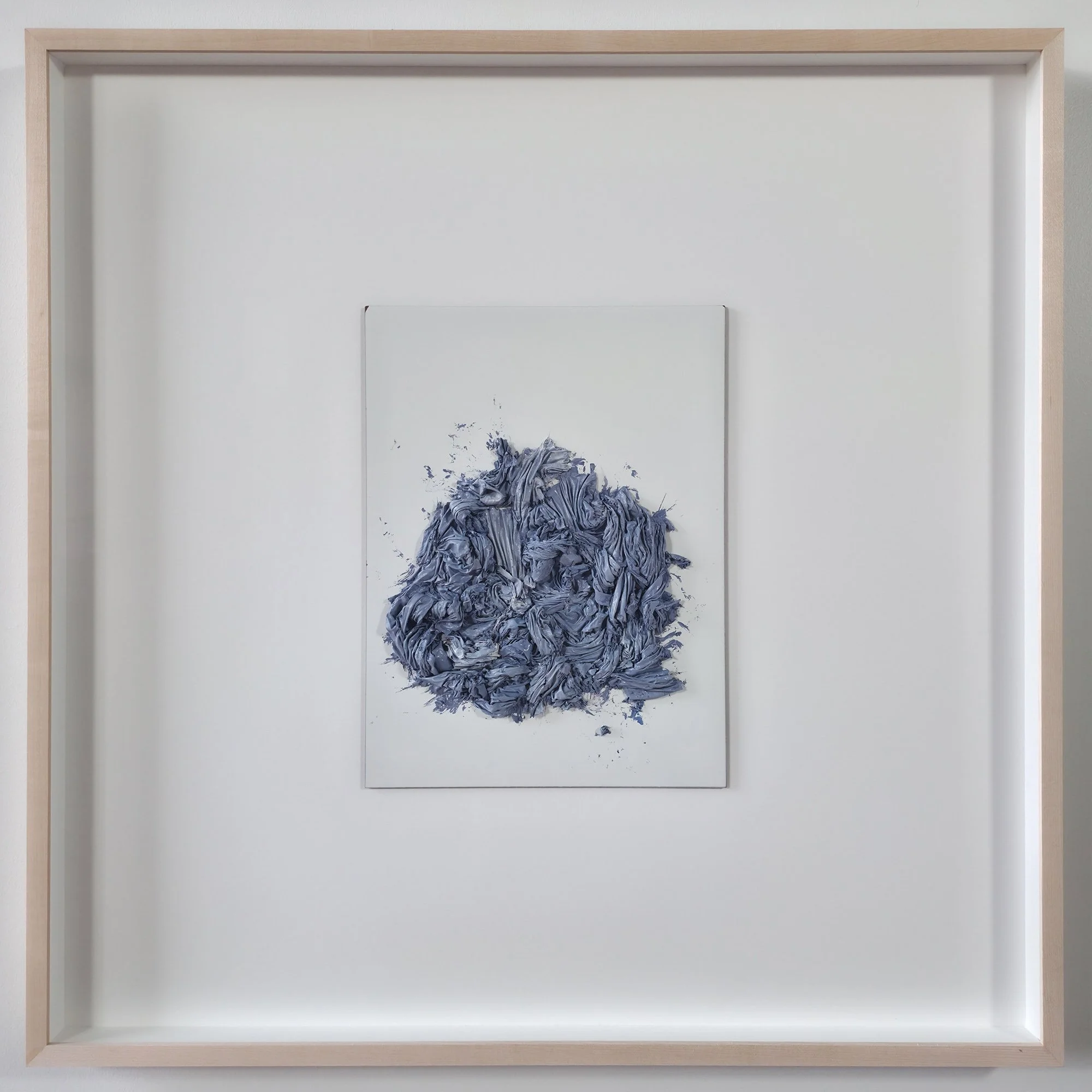
Readers of the Violet Rapids essay know the method. I paint a place many times, outside, on temporary supports. The studies are the thinking. I lay them across the studio floor, find the few square inches where something happened that I did not engineer, cut those free, and sculpt them together onto a single panel. The finished works are sculpted oil paintings on panel.
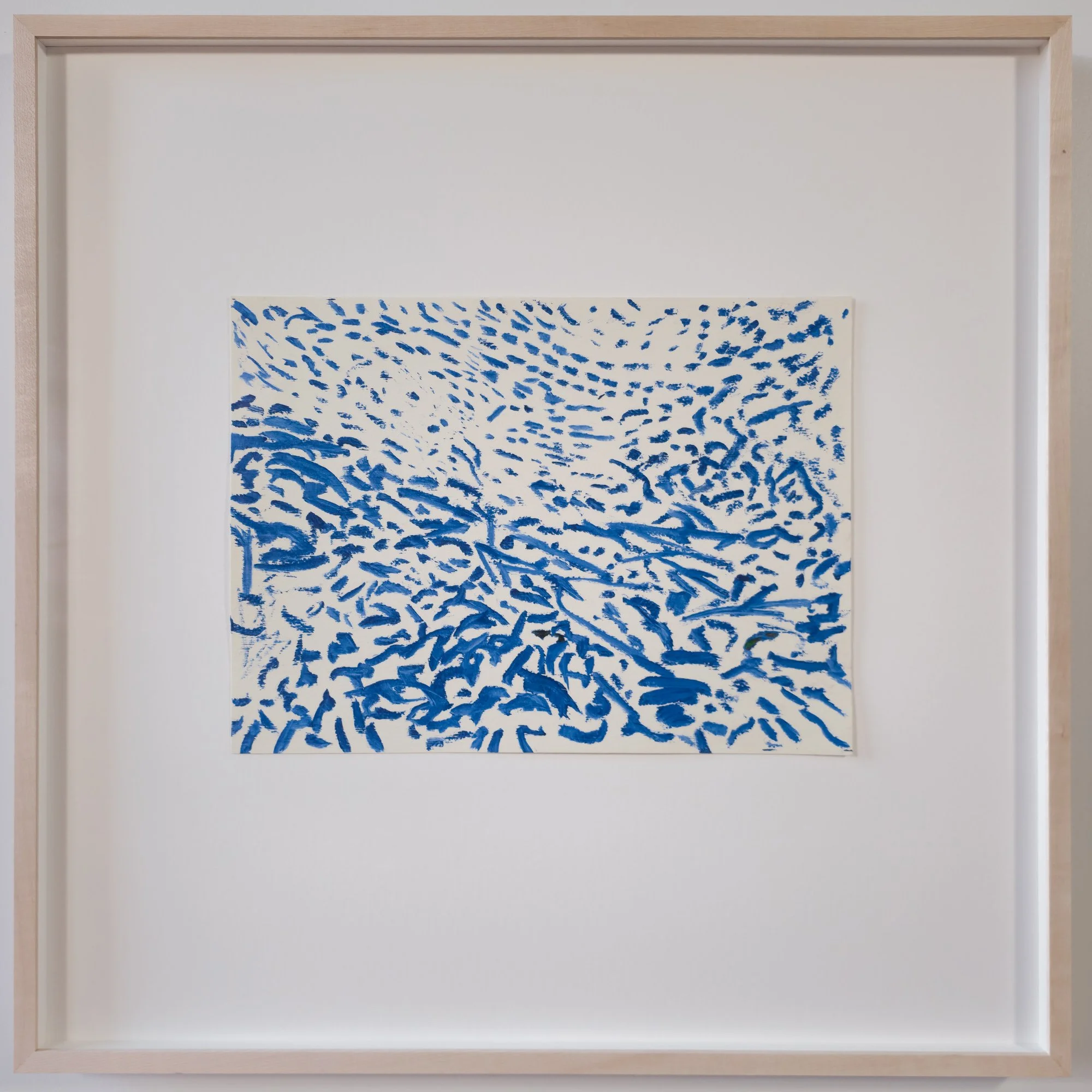
The method requires me to empty myself completely — every motivation, every crevice of ability — and build something new from what I find. Most of that thinking never reaches the panel. The Architecture of Thoughts drawings are plans: which direction the forms will move, what sizes they will take, how they will dance across a surface. Planning exercises. Illustrations of what could be.
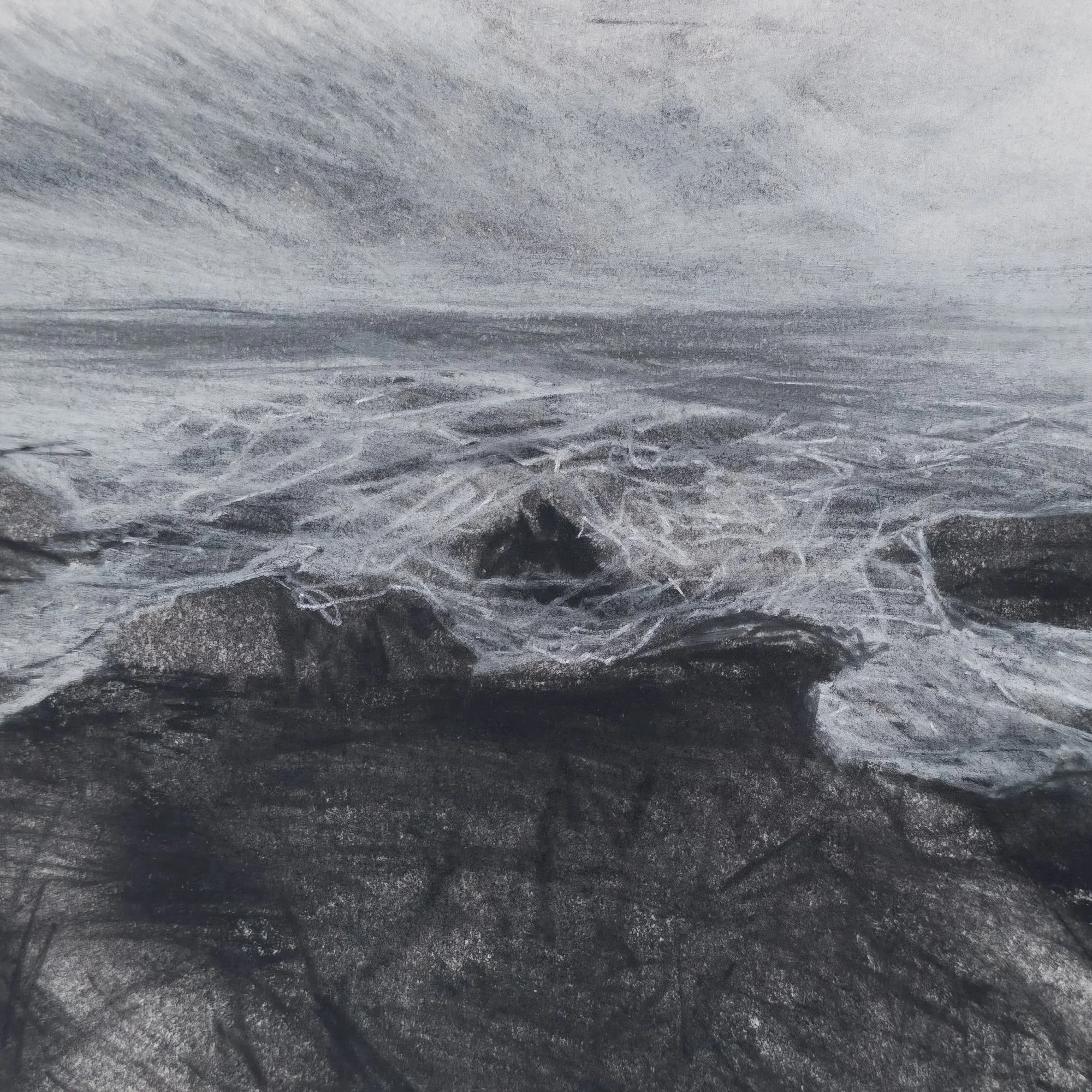
I want to paint the way a great chef cooks. Every ingredient considered. Some components rebuilt from scratch to reach an uncommon result. Applied to painting, that means unraveling every component: the inception of the subject, the process of the final work, each element seen and unseen, and the story each element tells — one that would stay true spoken plainly in an entirely different context.
The artifacts are those components. Showing them is publishing the field notes behind a book. These are what I used to build. Beside the finished paintings, they show what something could be.
The frame
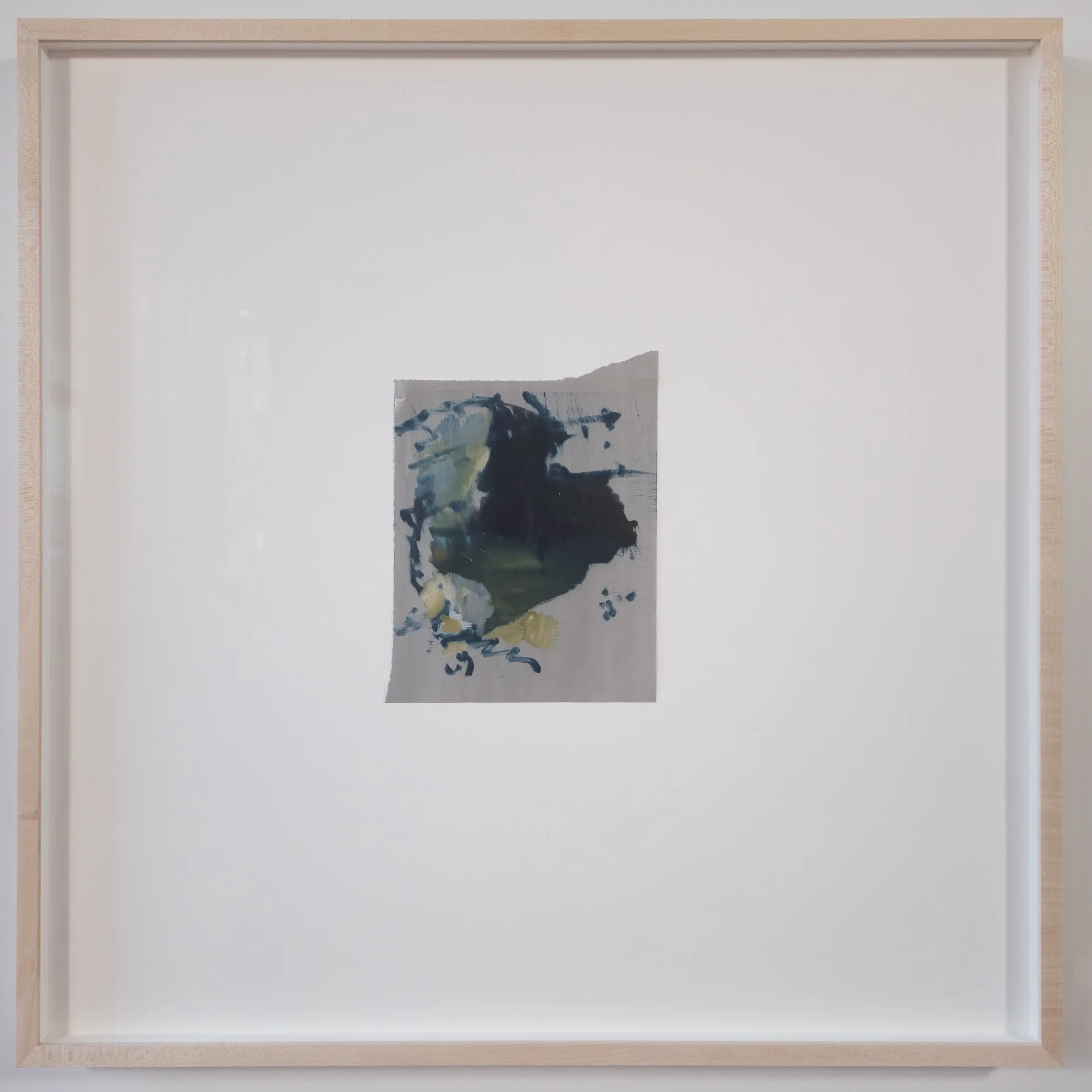
Each artifact is small. Each is floated in a wide white mat, behind museum glass that prevents glare, in a slim frame of raw pale wood. Framed size: 24 × 24 inches. The proportion of mat to image is deliberate. These objects spent years pressed into stacks and drawers. I wanted each one to have room, and I wanted them approached.
Stand three feet away. Then come closer. The glass holds no glare to push you back. Read them at the distance of a page, where the marks stop being an image and become decisions.
For the stranger
I want someone who has never read a word of mine to stop at one of these the way the careful observer stops at the bucket of motor oil. Notice the utility first: this object was used, and it served something now out of view. Then follow the utility backward. Engine, car, owner. By the time they walk away, I want them to hold a clearer picture of what the owner values.
Values the process of relentless becoming.