Violet Rapids
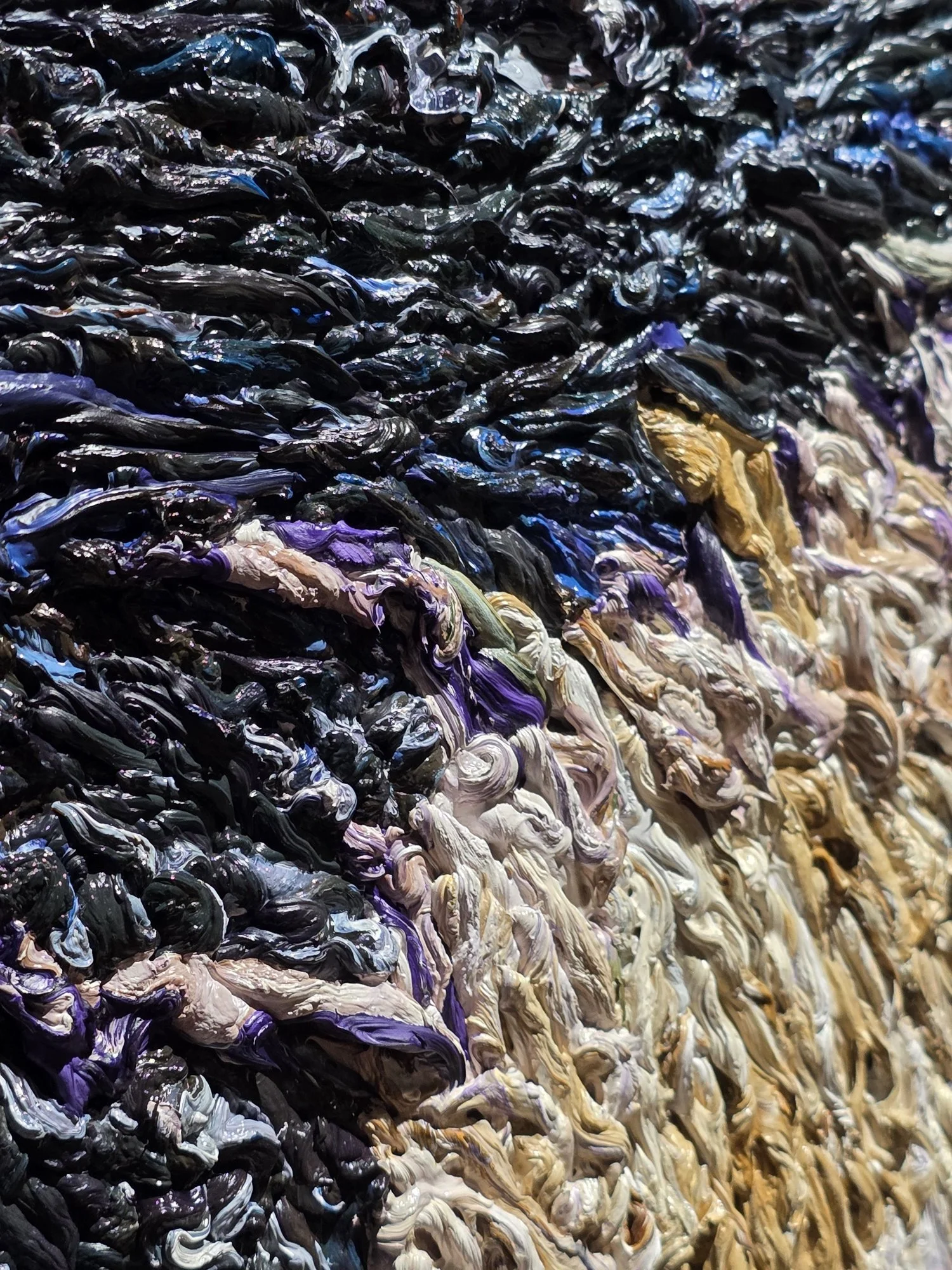
A note on a painting, and the conversation that pulled it out of me.
The bug was orange.
We don't get orange bugs in Maine — not like this, not bee-shaped and not the size of a thumb. It must have come through my car window somewhere between Paris and Mexico, landed on the passenger seat.
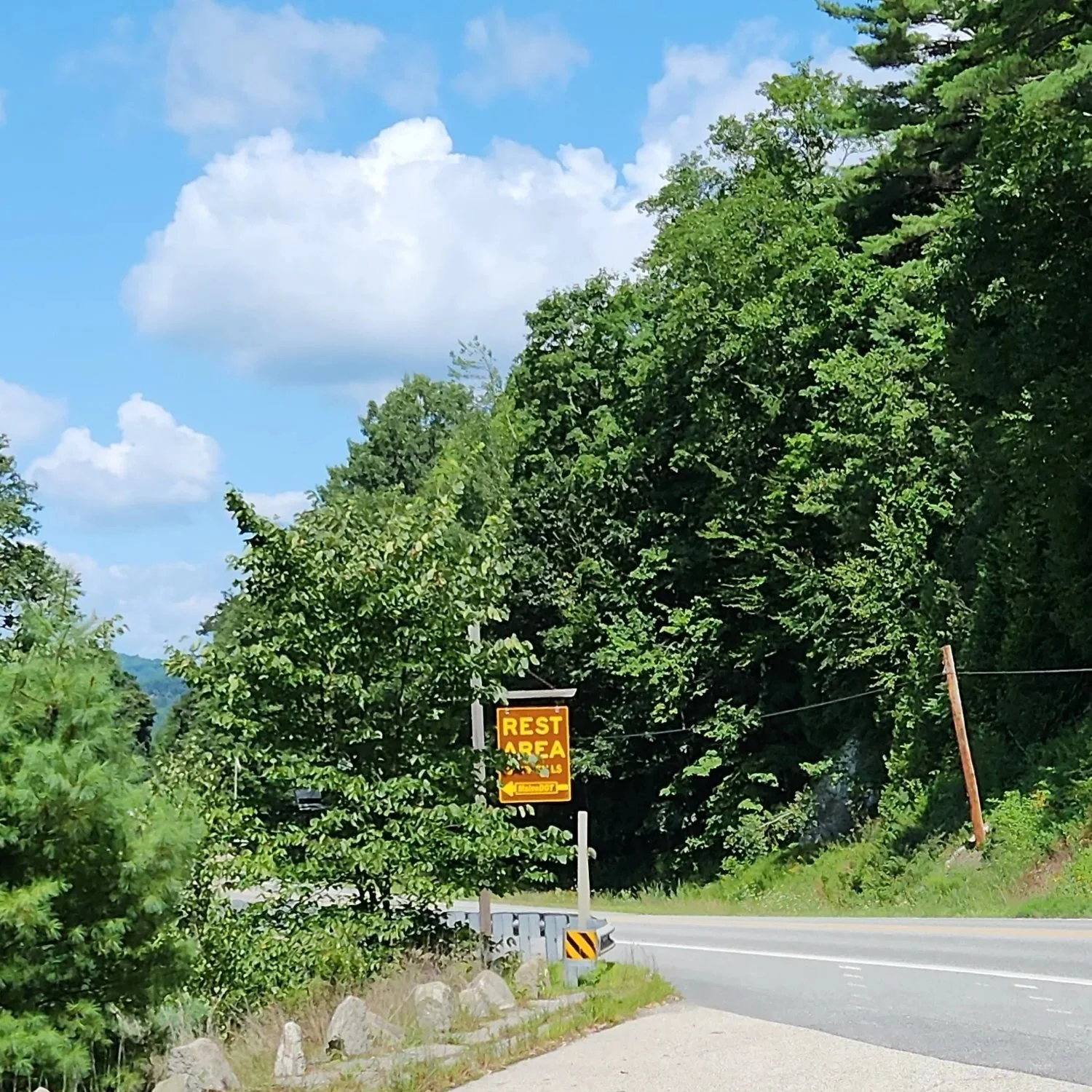
My finger jabbed the button lowering the passenger side window — wind blowing, shoving the beast into a deep panic, and now I was swerving. I was insane to be swerving. A rest stop sign appeared at the edge of my vision and I pulled in without thinking.
It turned out to be a waterfall.
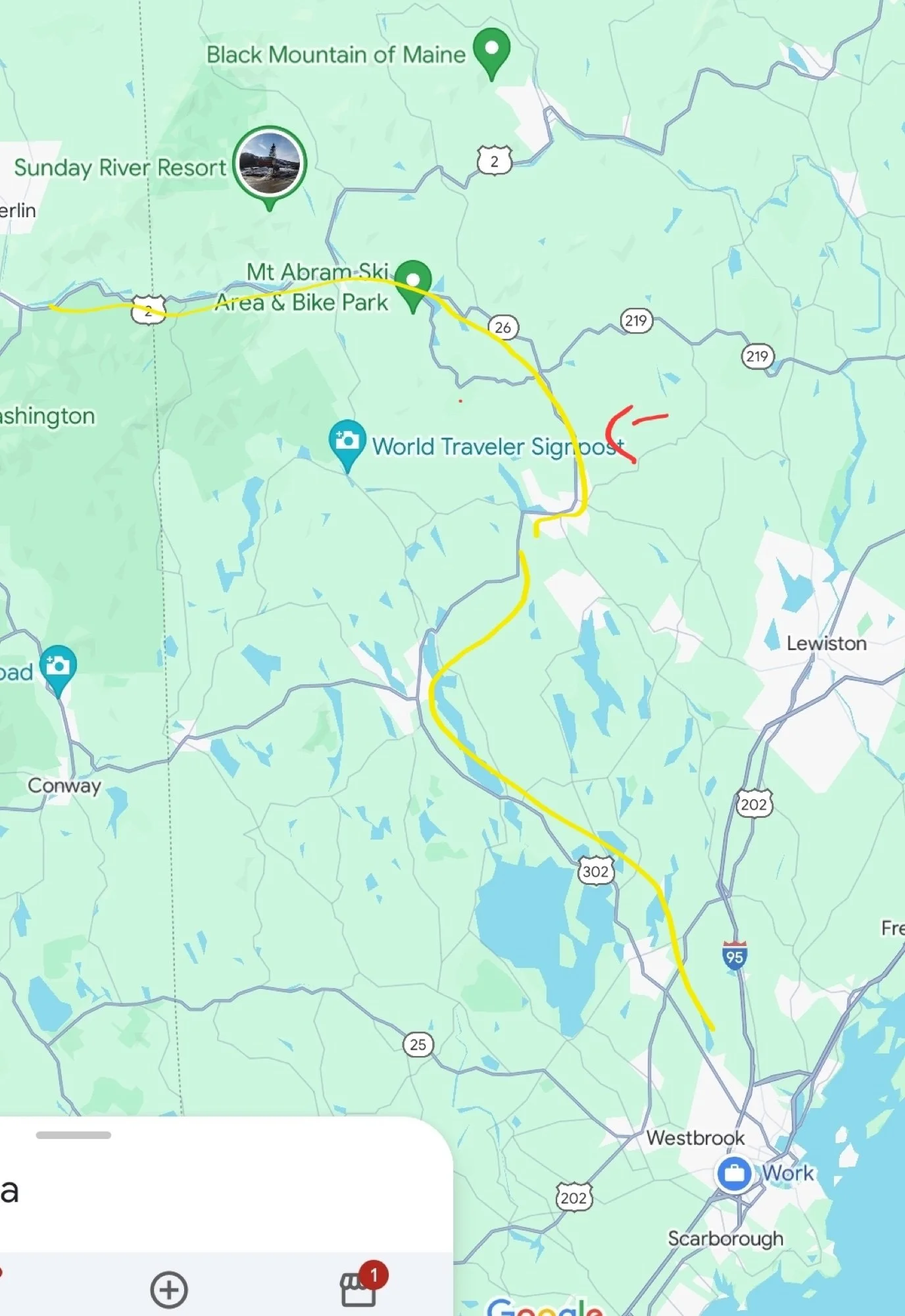
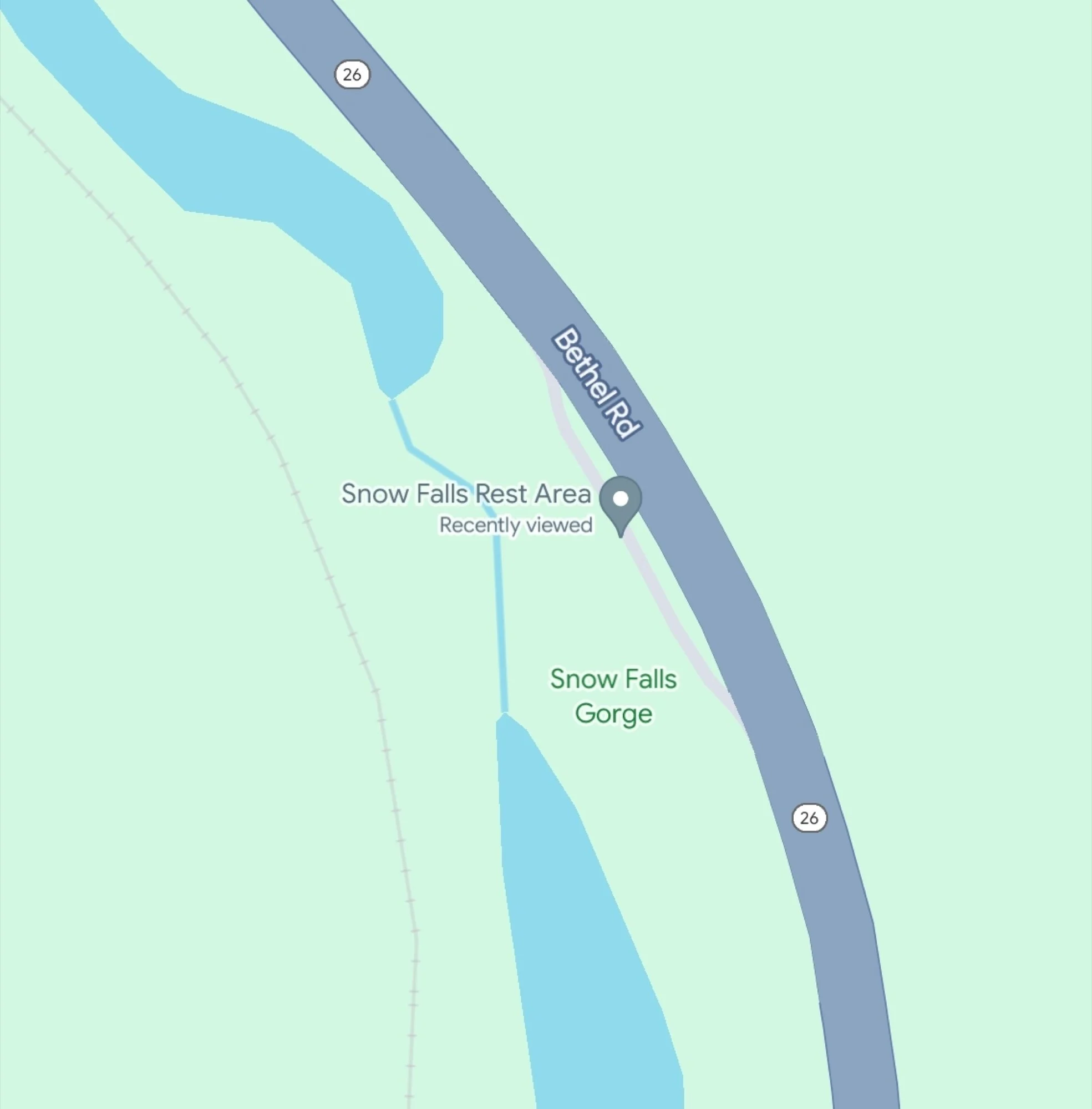
Not a scenic overlook. Not a place you'd find on purpose. A national park tucked into a wedge of land between a fast-moving highway and a set of railroad tracks — protected, I imagined, because no one could build on it and no one wanted to live there. Too loud, too close to the road, too cornered. But the water still moved through the rocks the way water moves, and it had been doing it for longer than any of us. Civilization built itself around this thing and preserved it by accident.
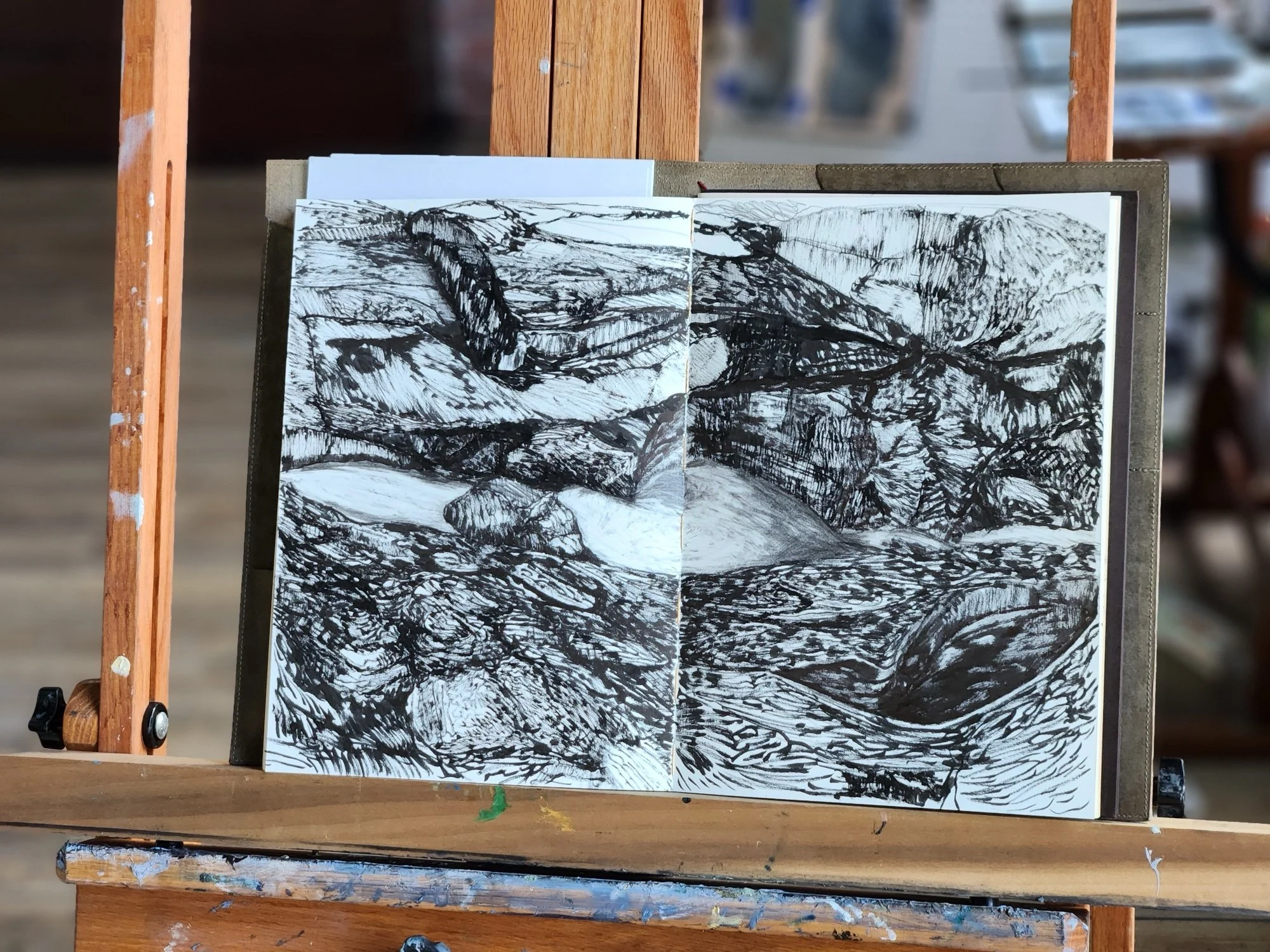
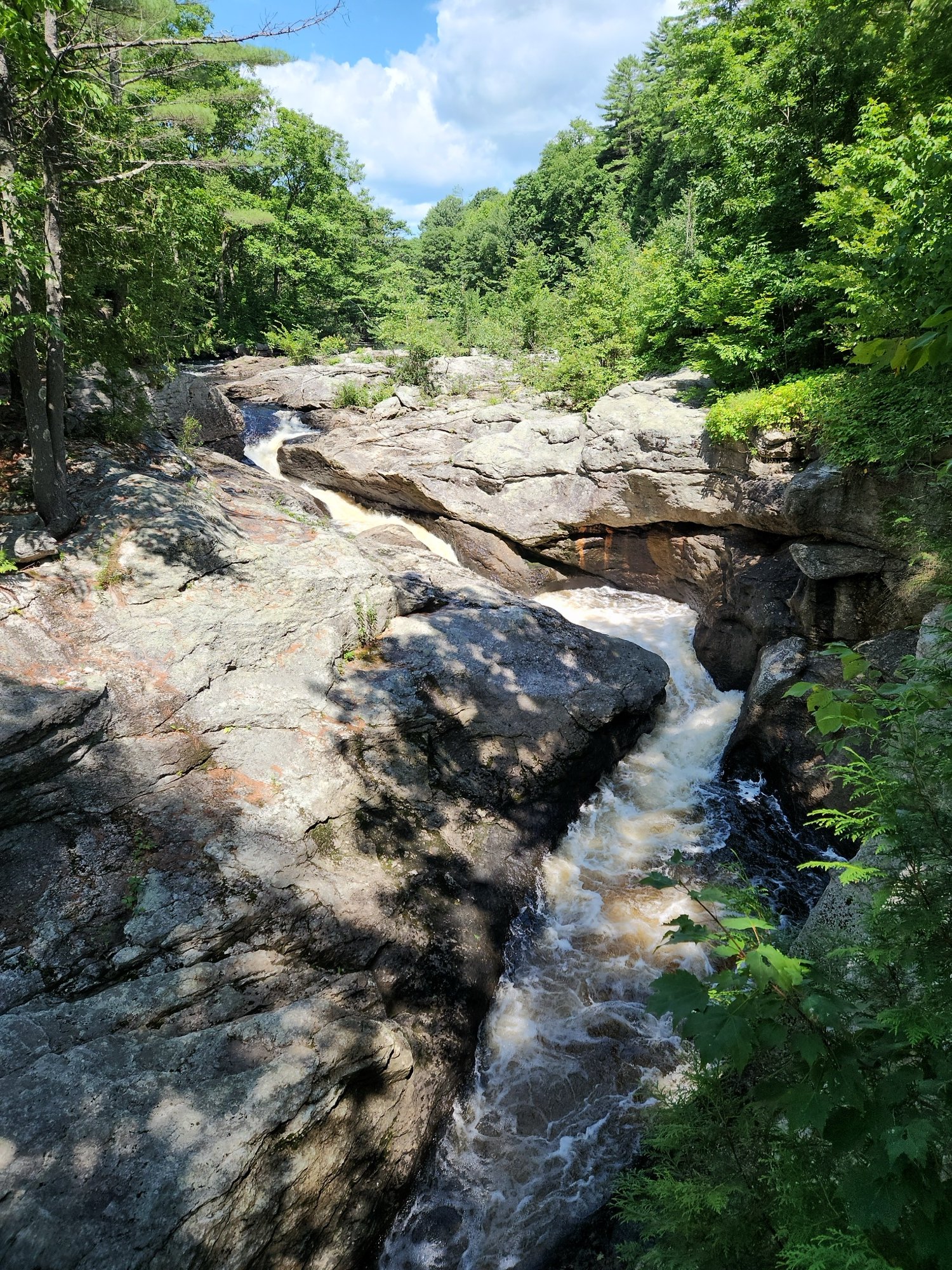
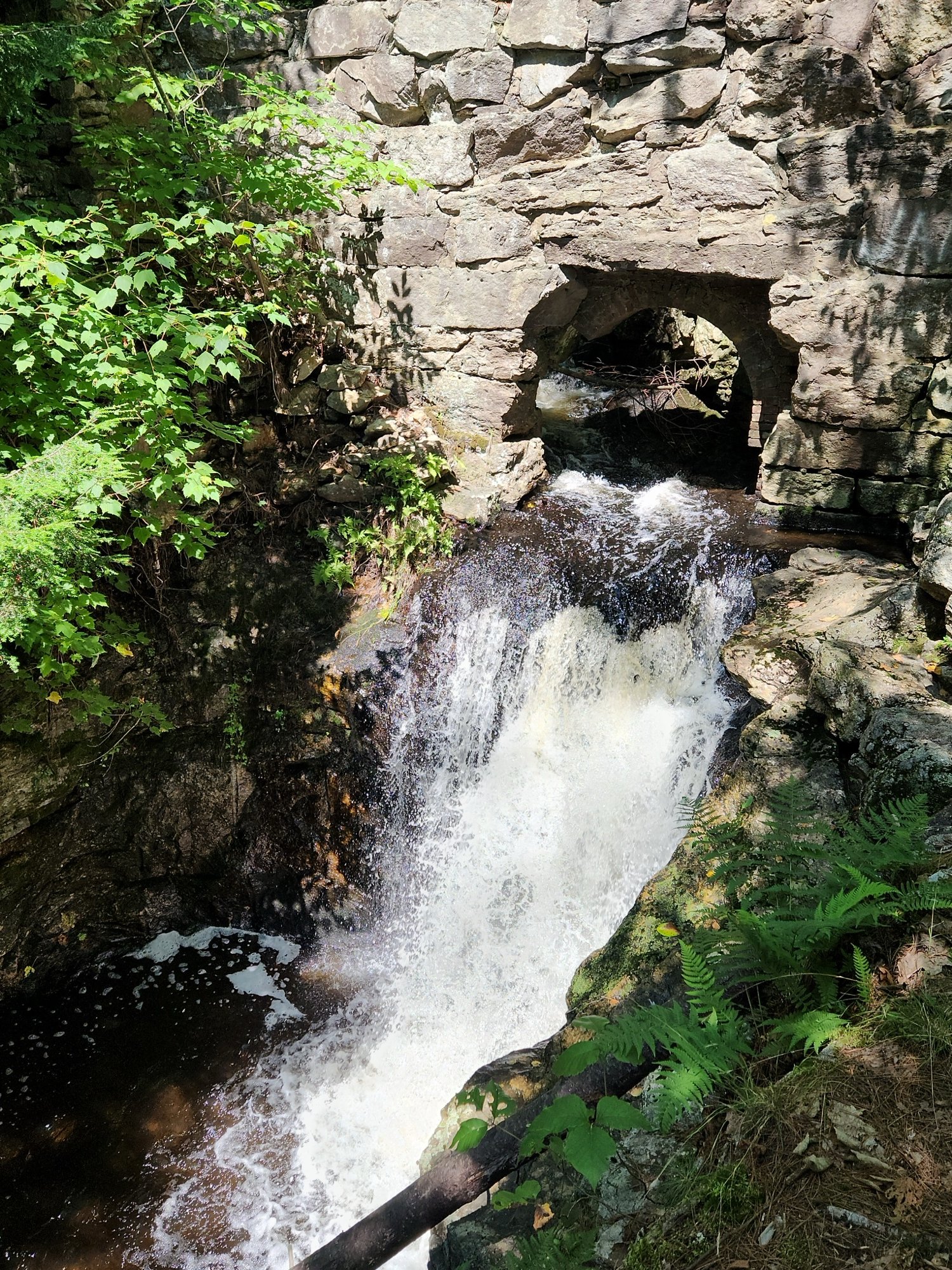
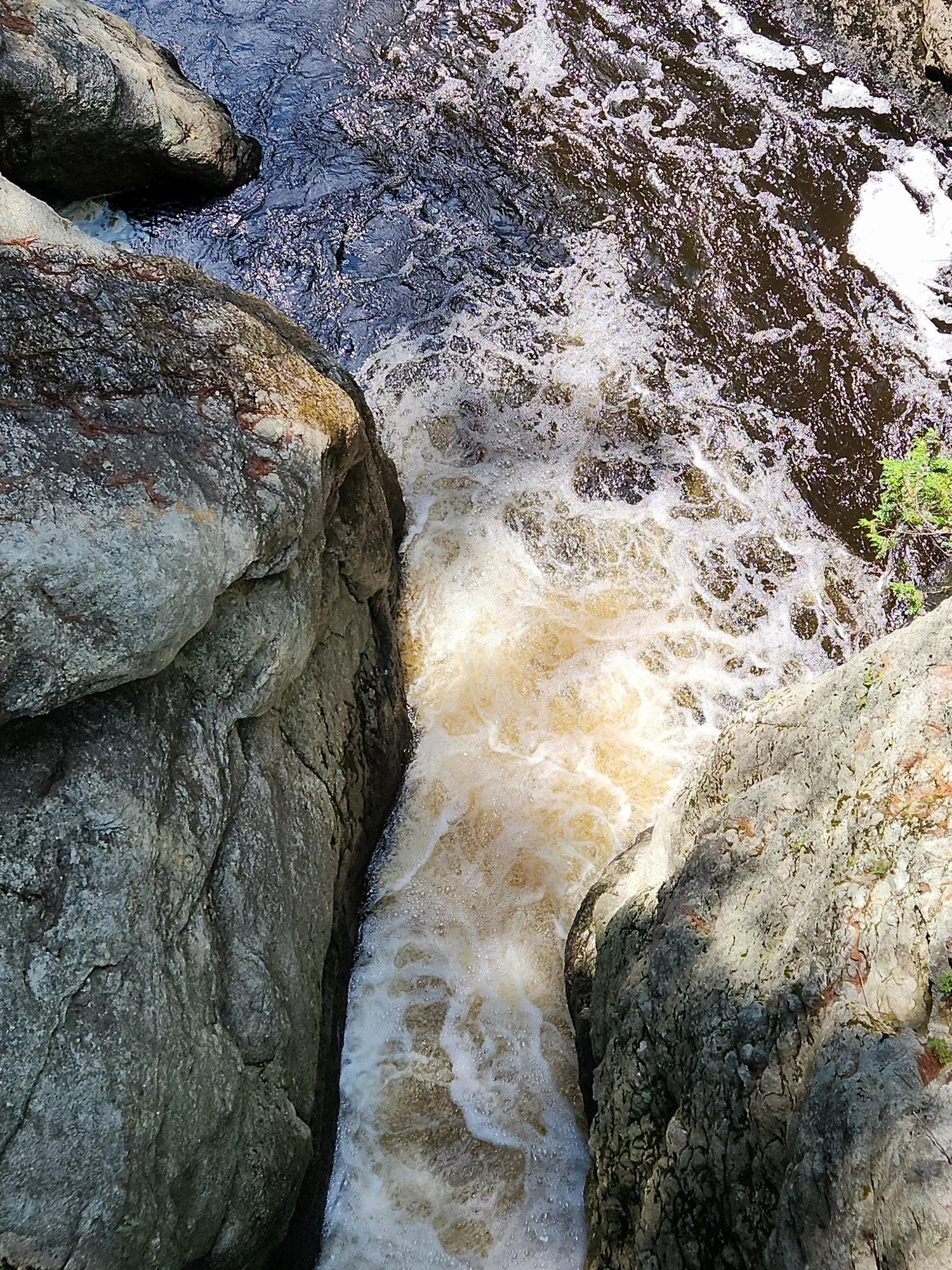
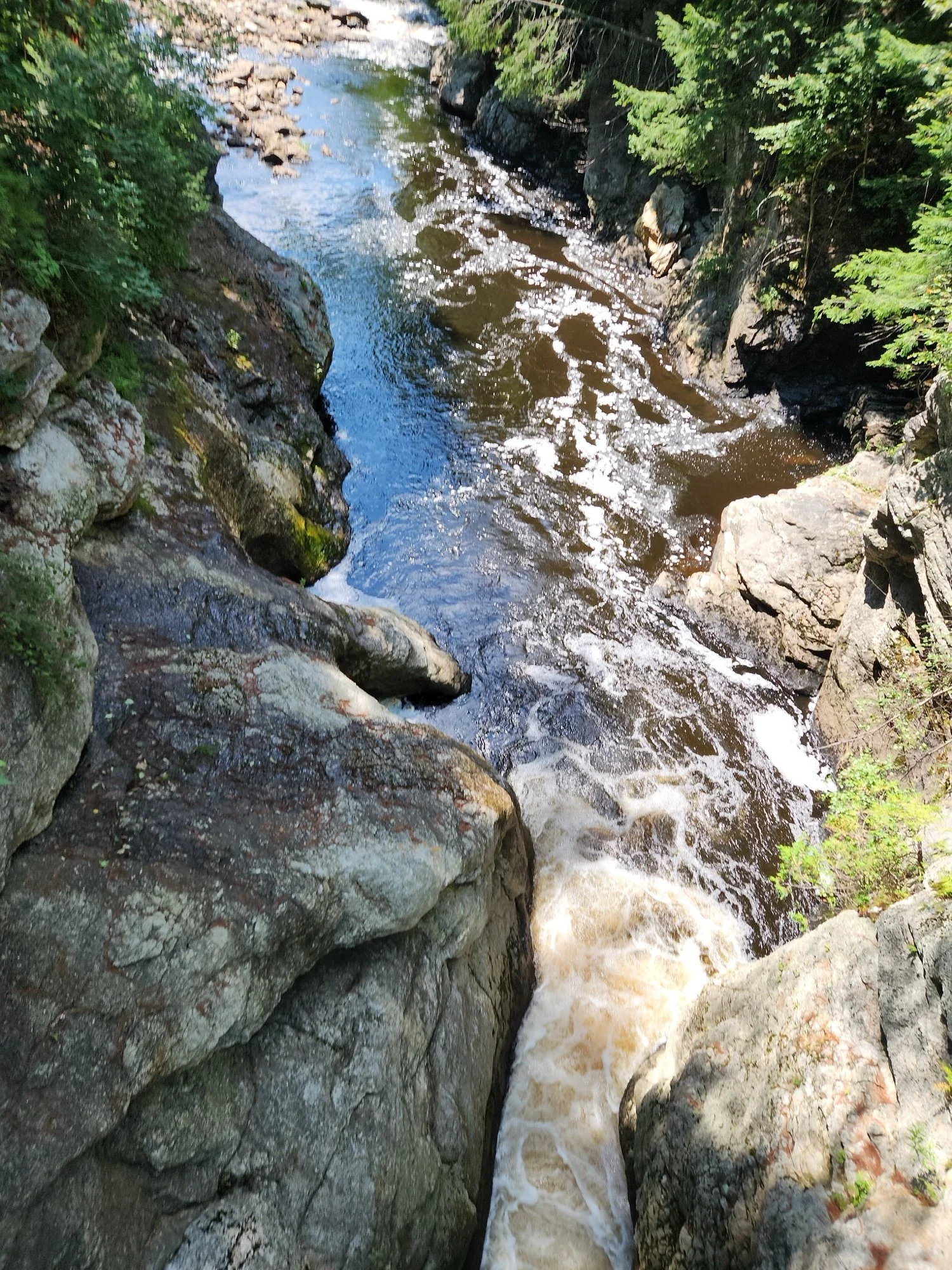
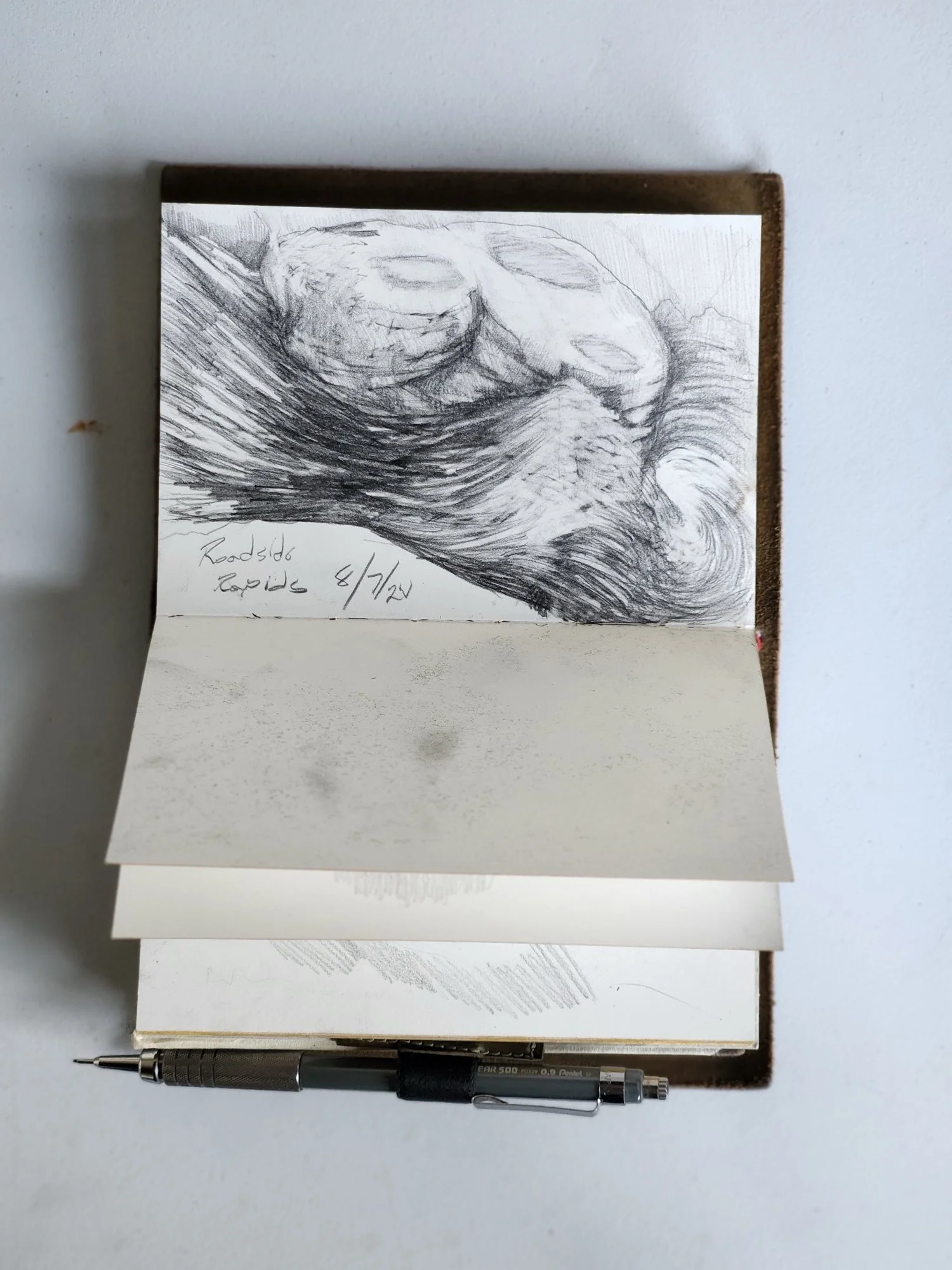
I stood there longer than I had time for. I took out my phone and recorded a few seconds. I drove on to my appointment.
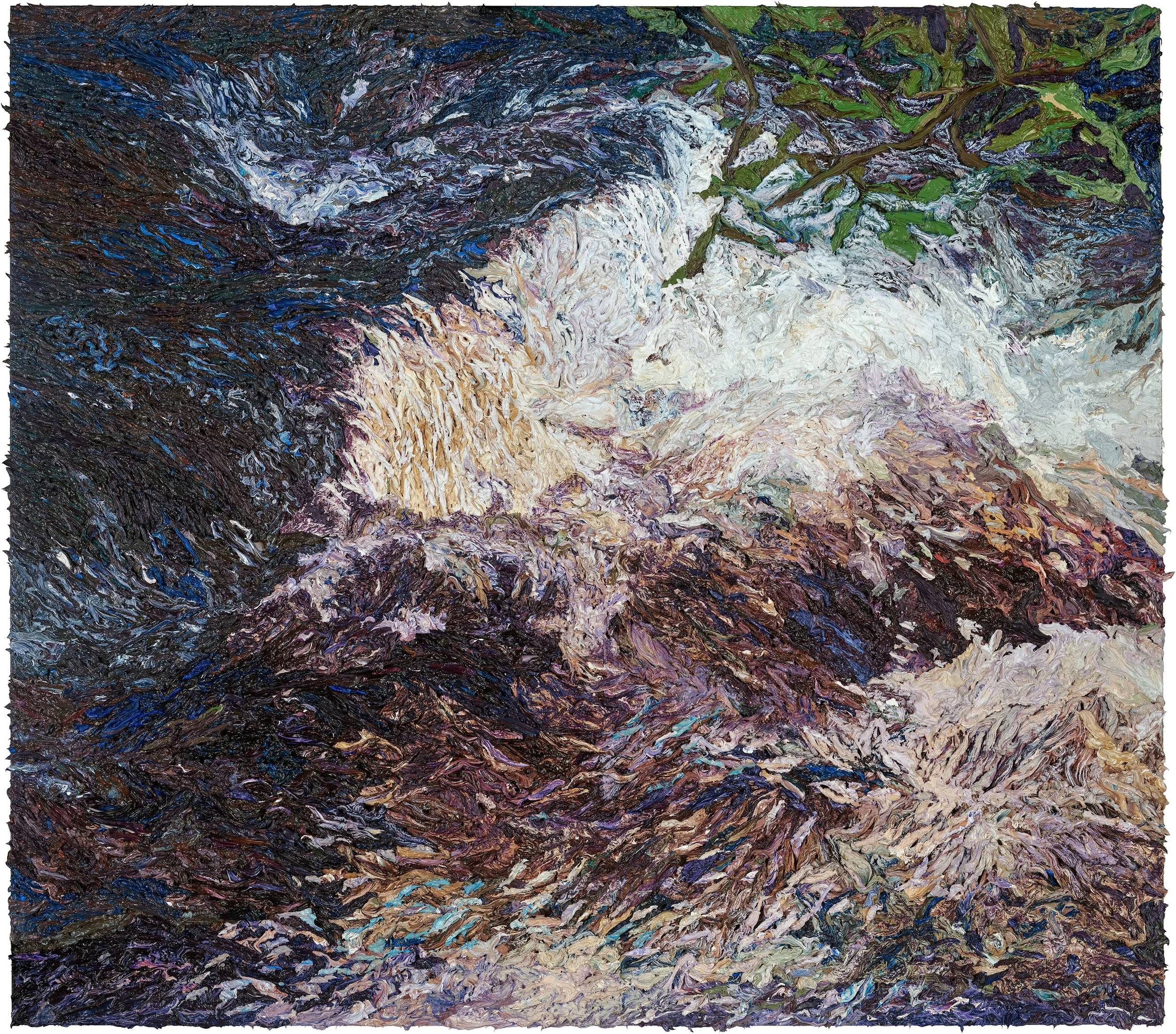
That was August 2024. The painting I eventually made from that day is called Violet Rapids, and last week Catherine sat across from me with a list of questions — and asked me to defend it. What follows is what I found while answering.
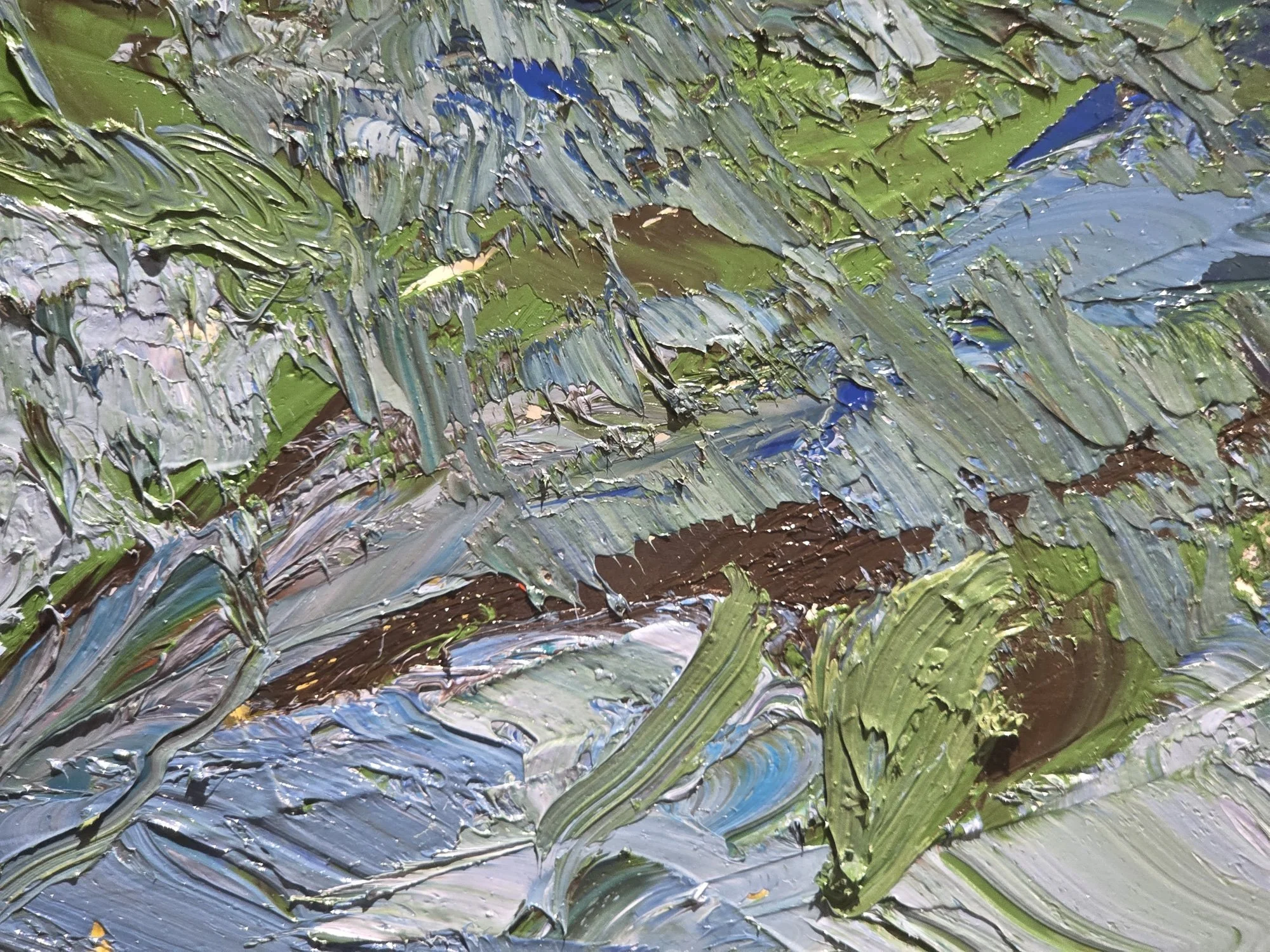
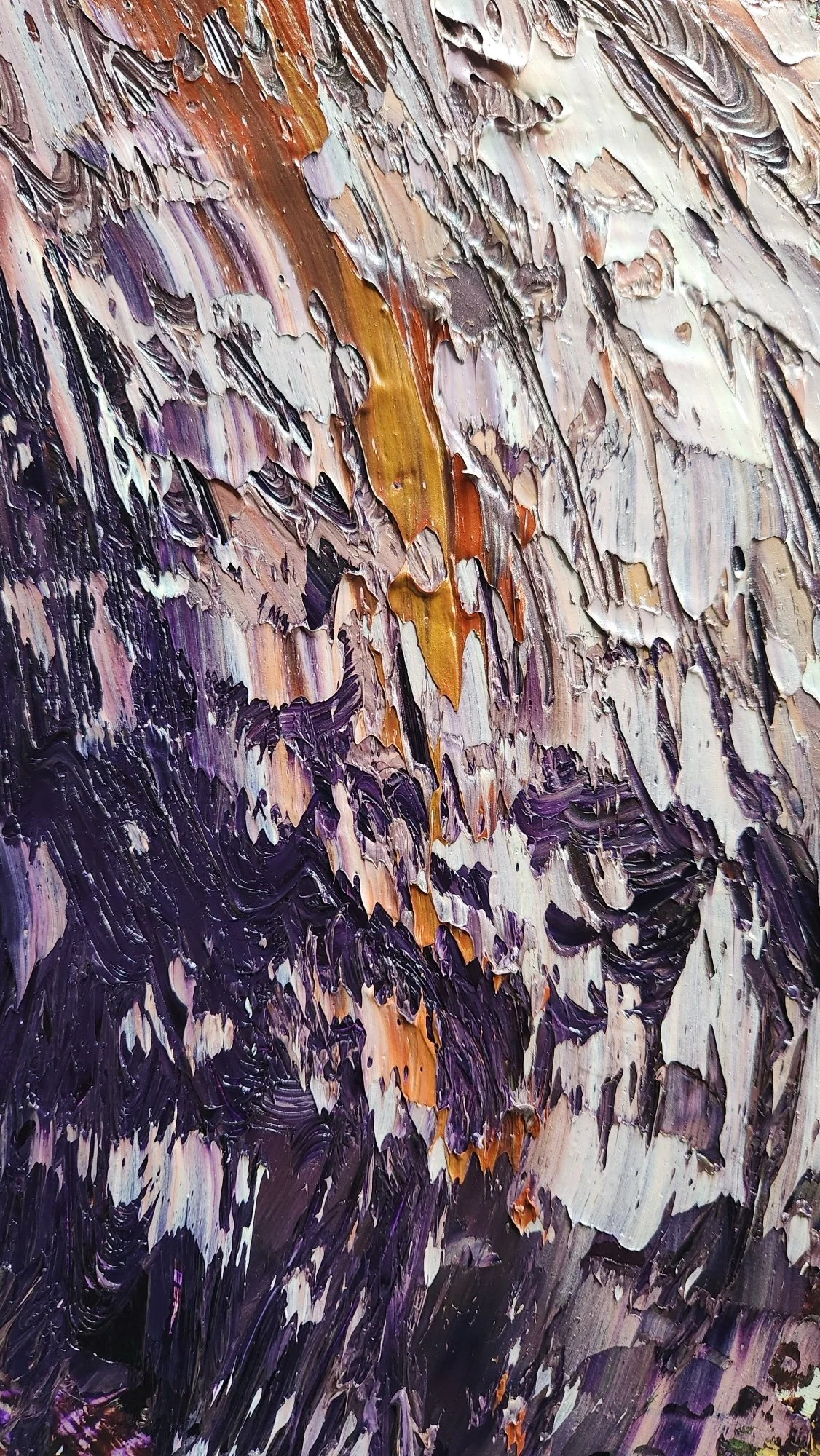
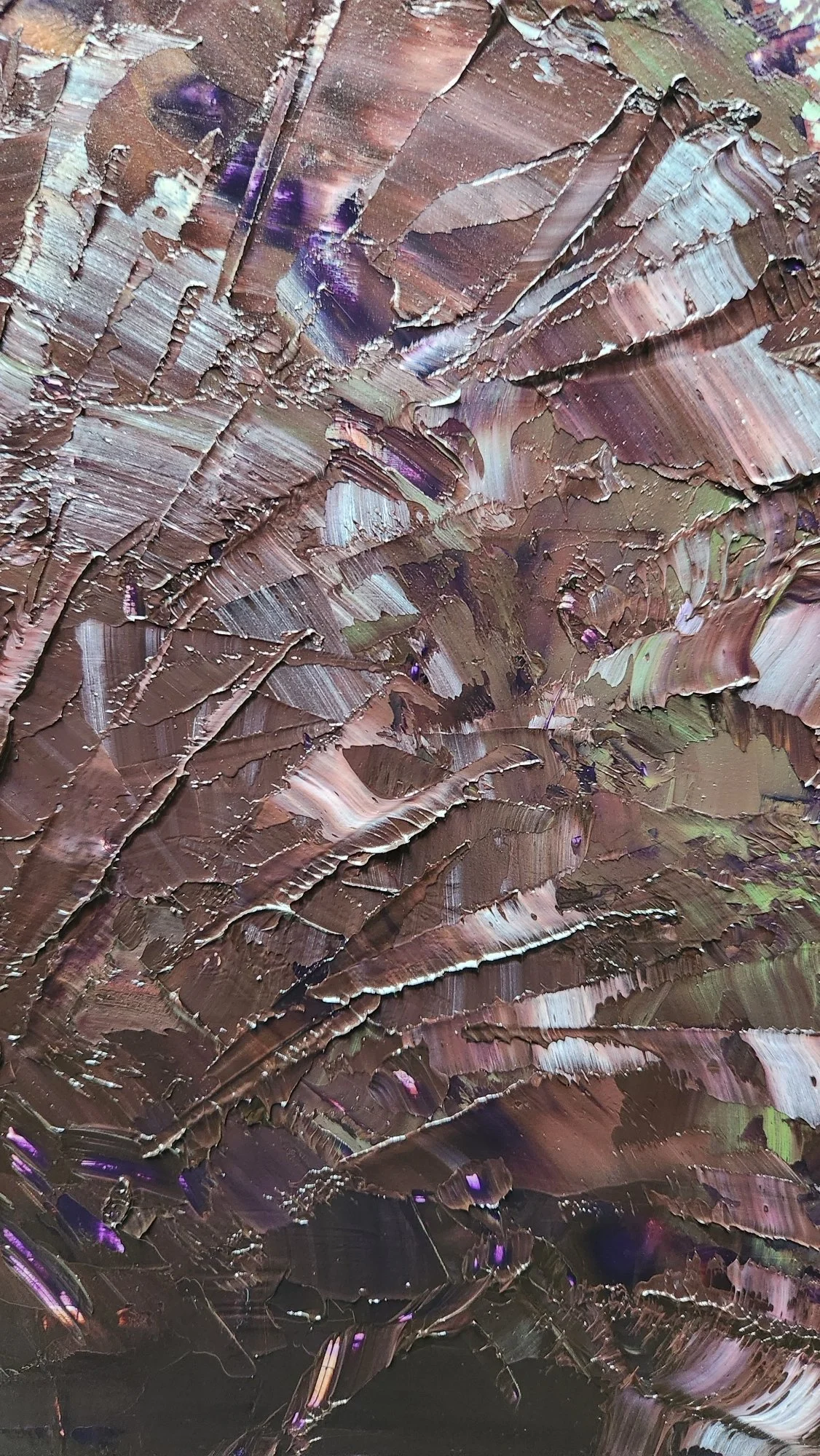
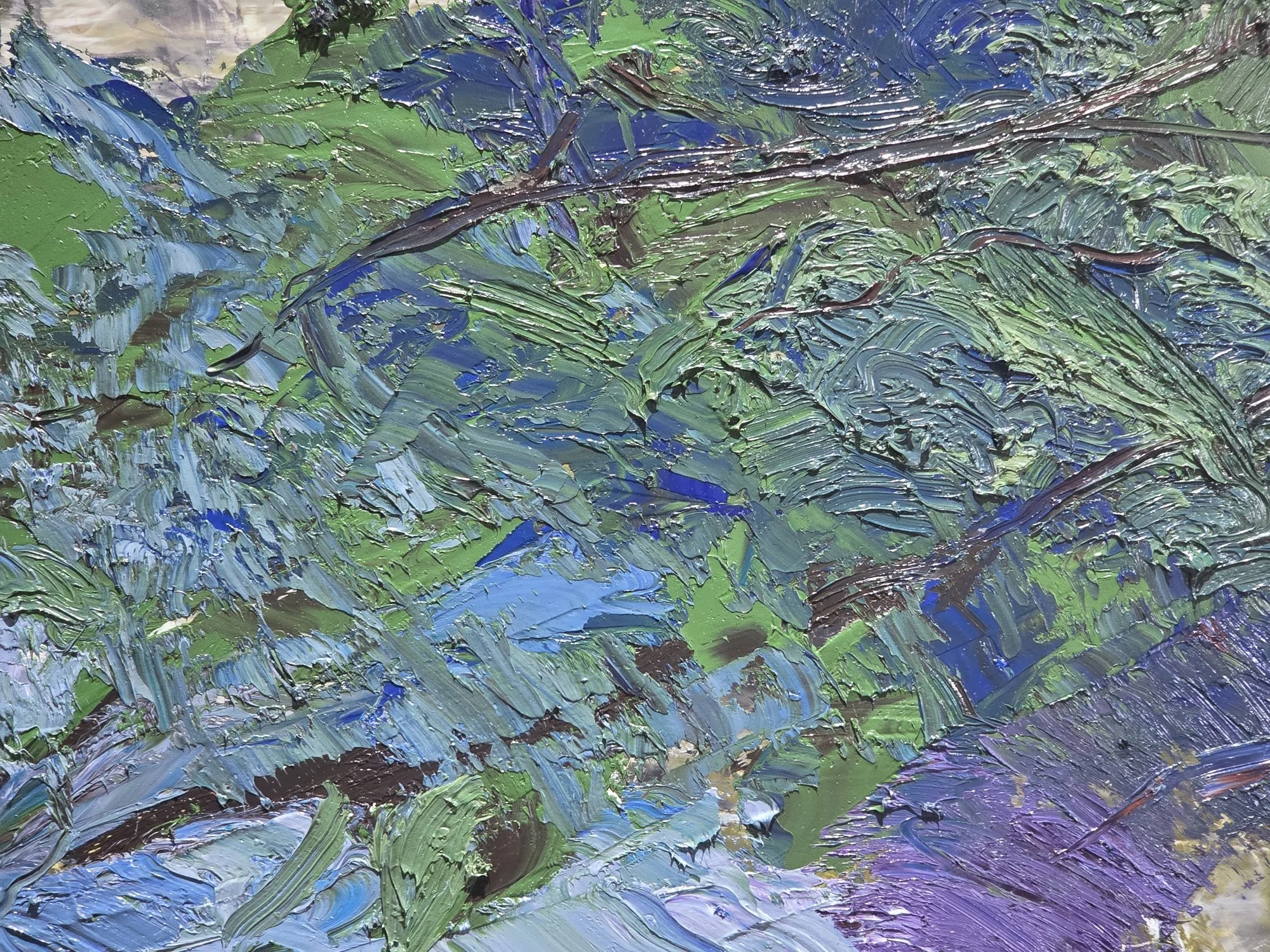
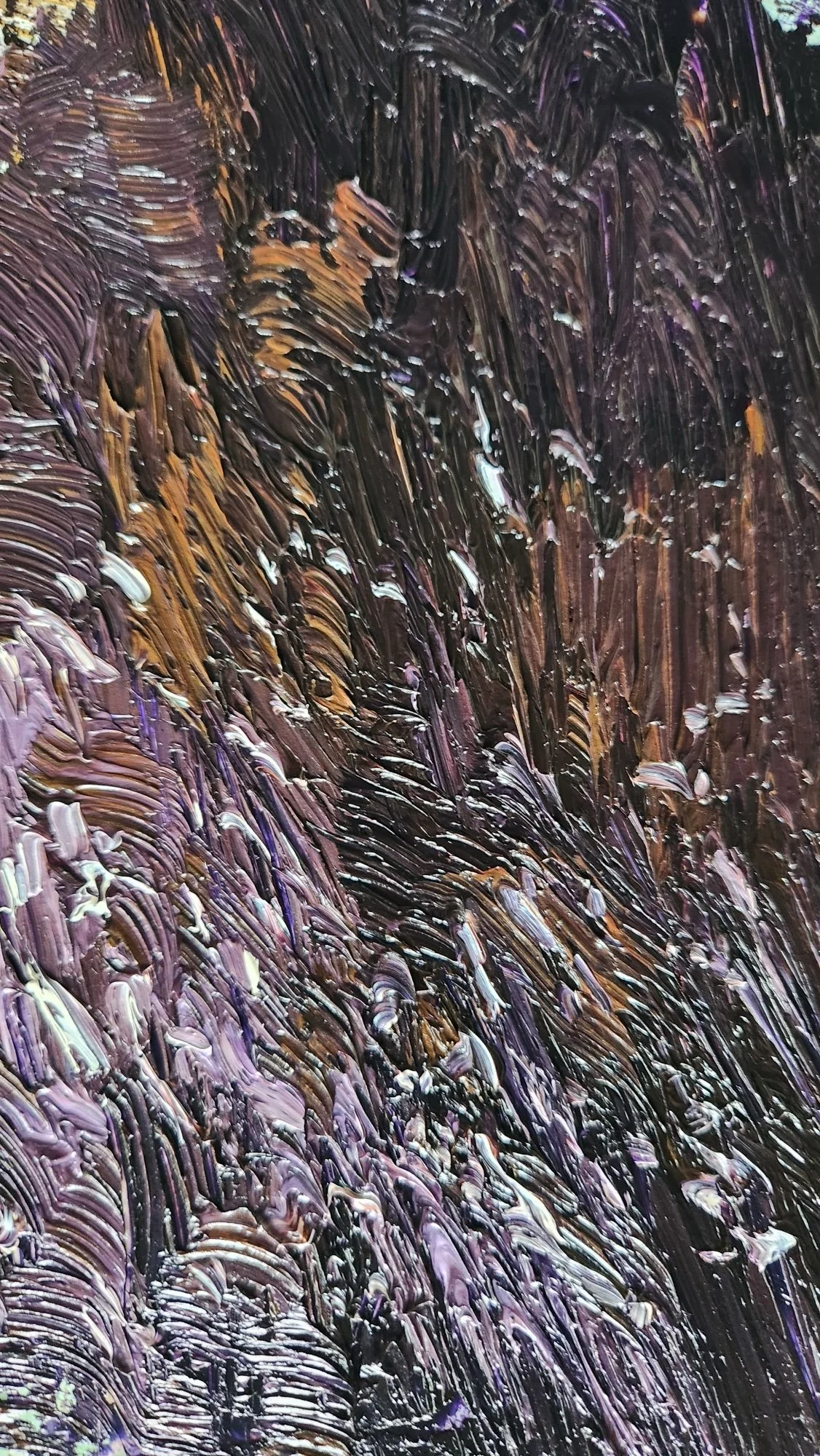
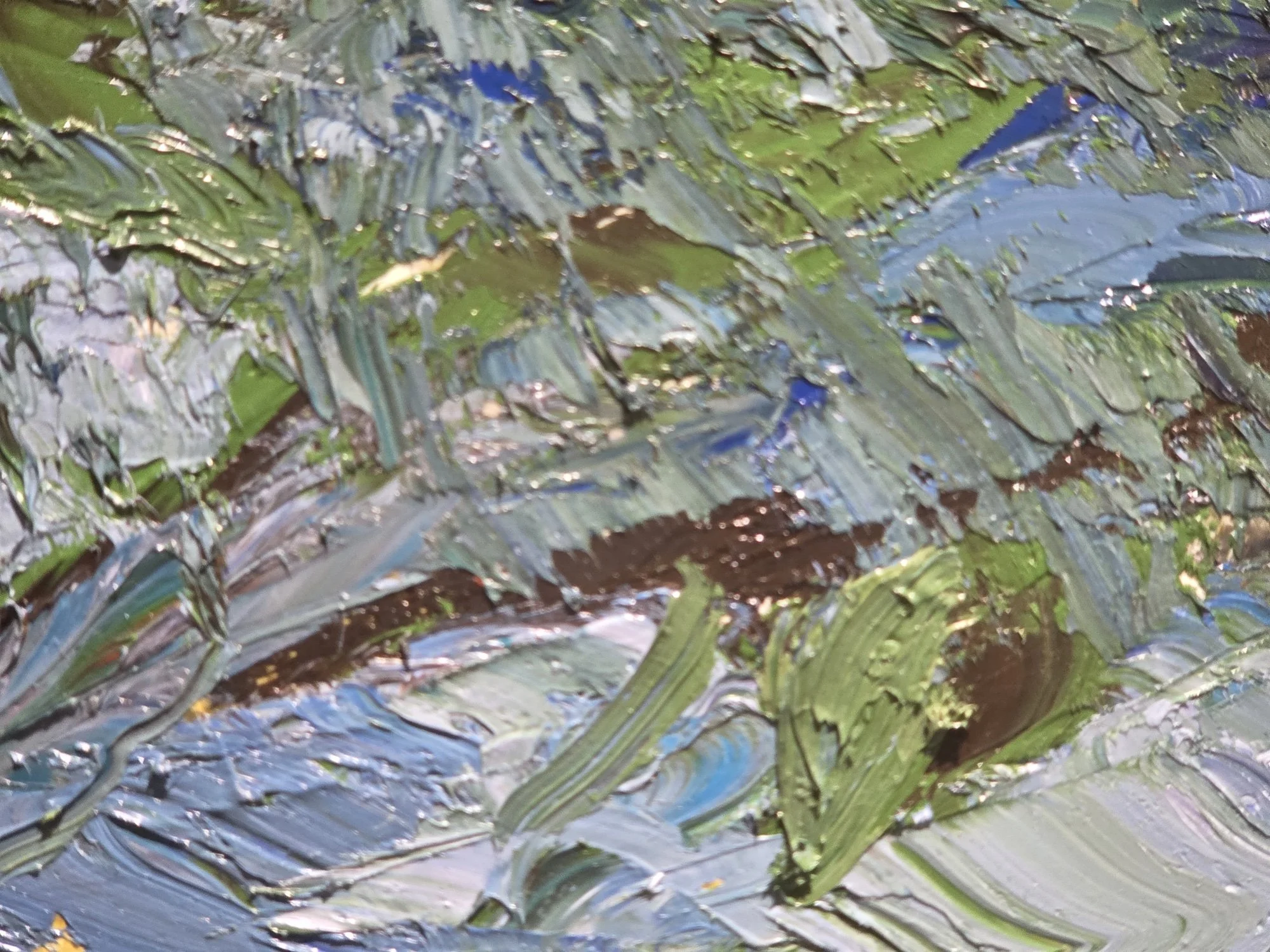
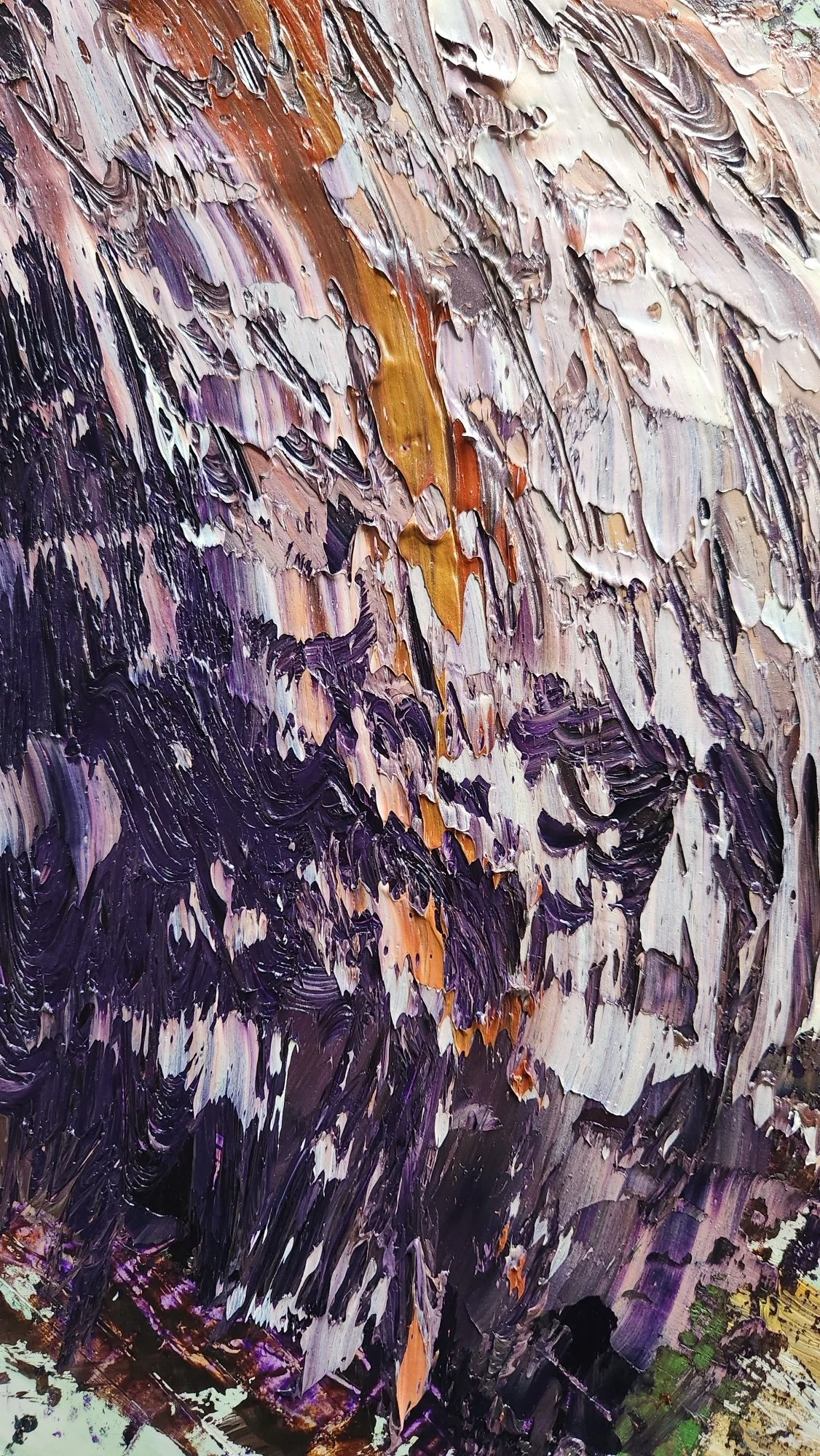
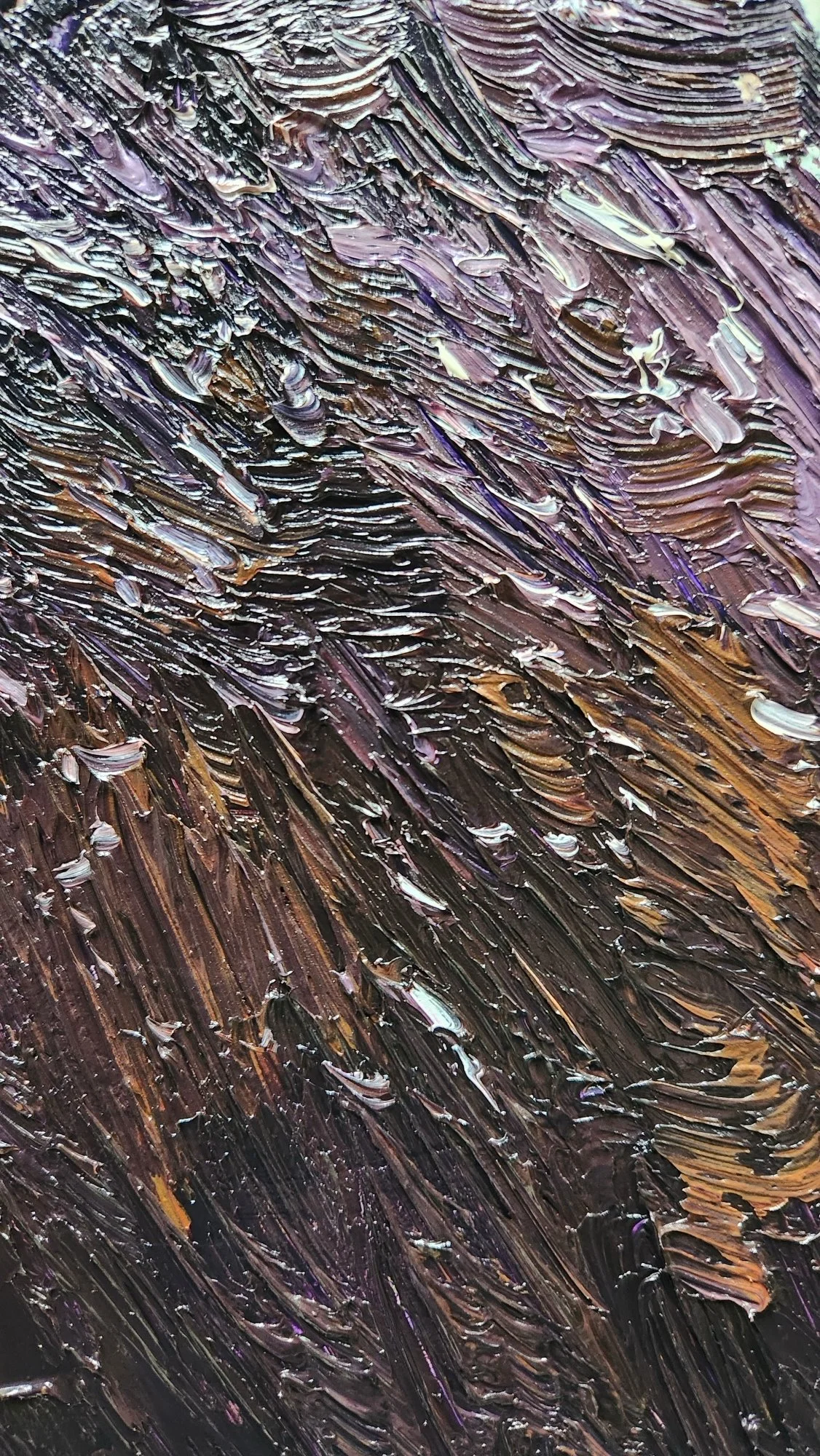
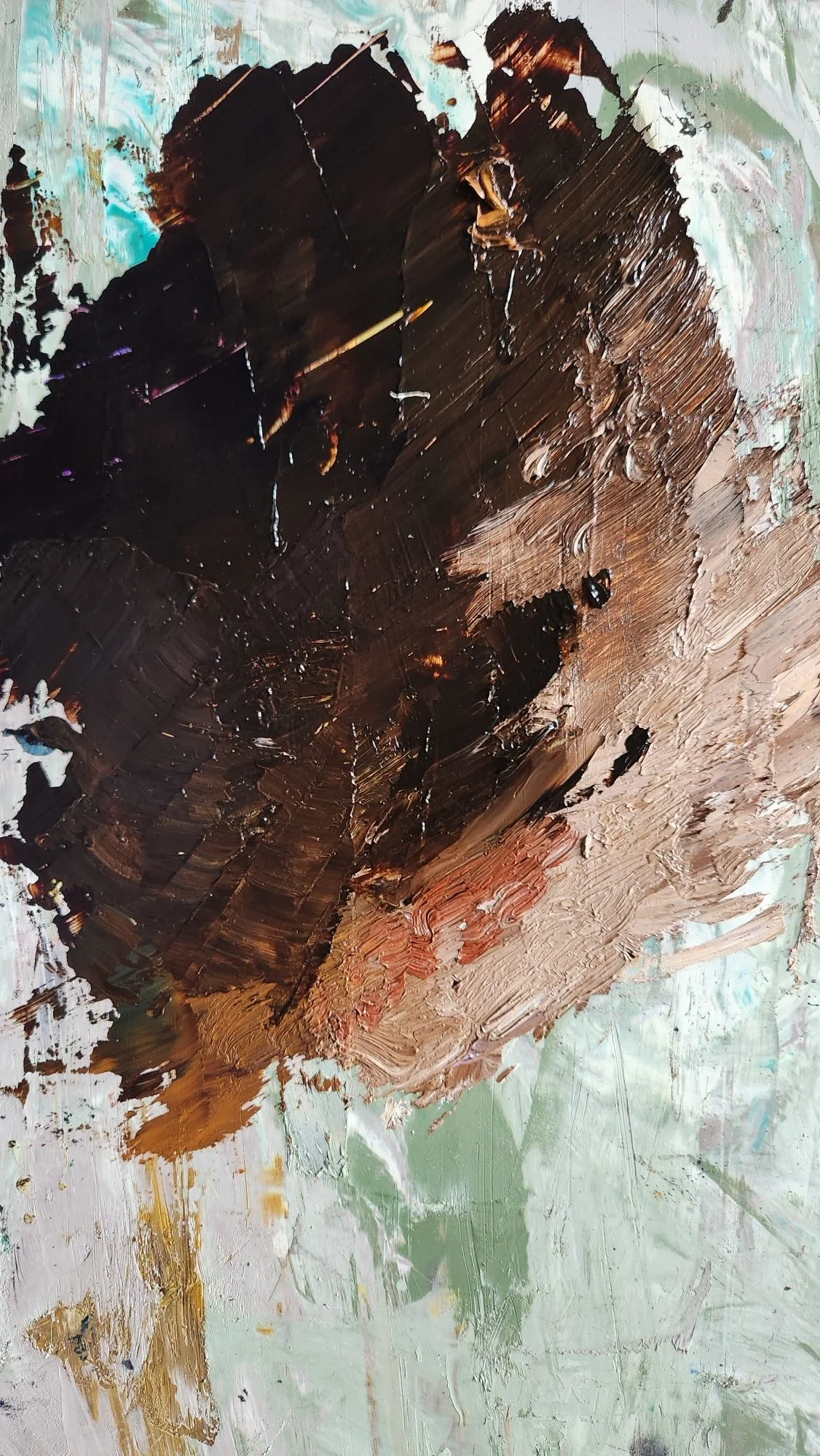
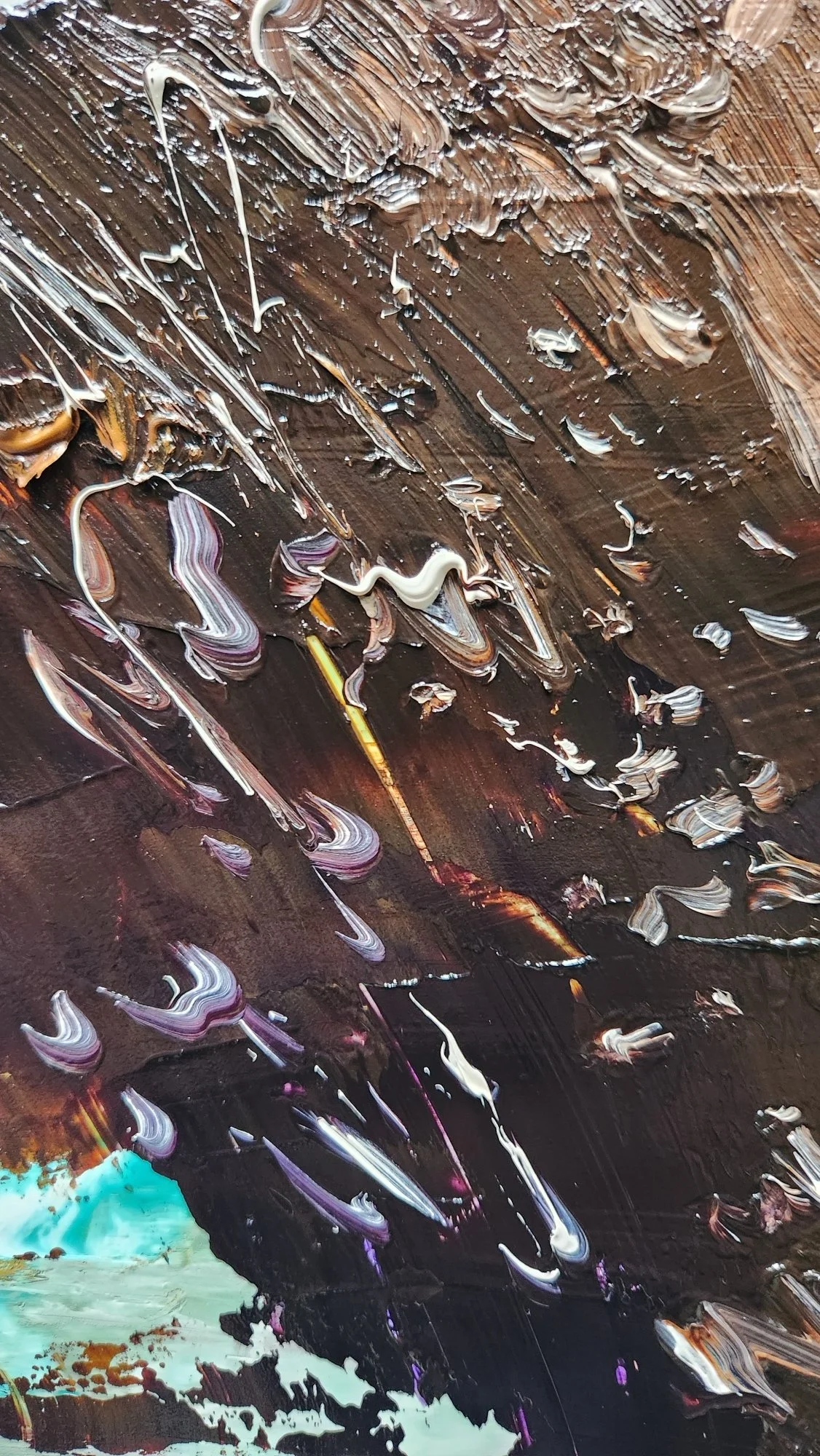
The method, briefly
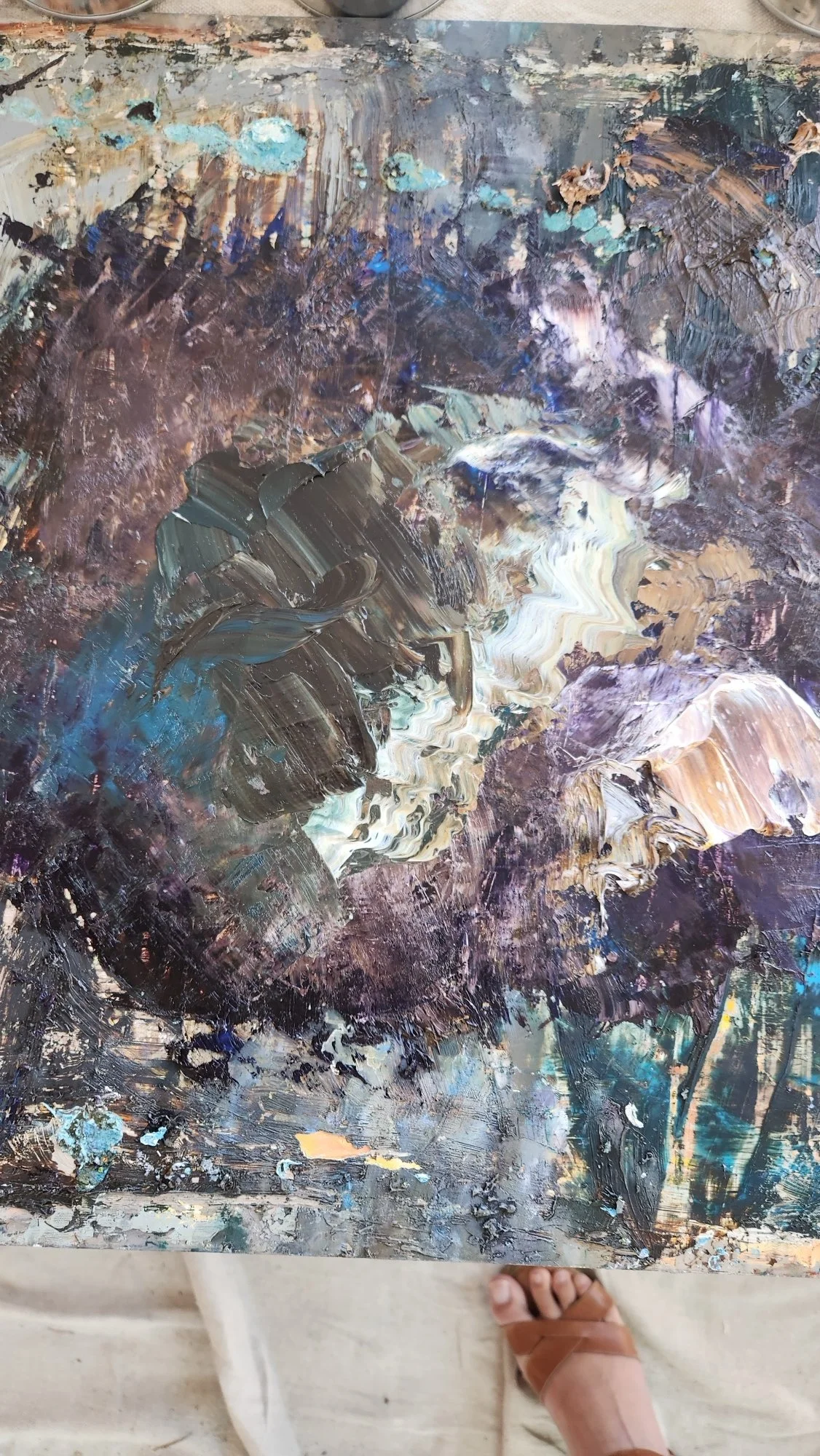
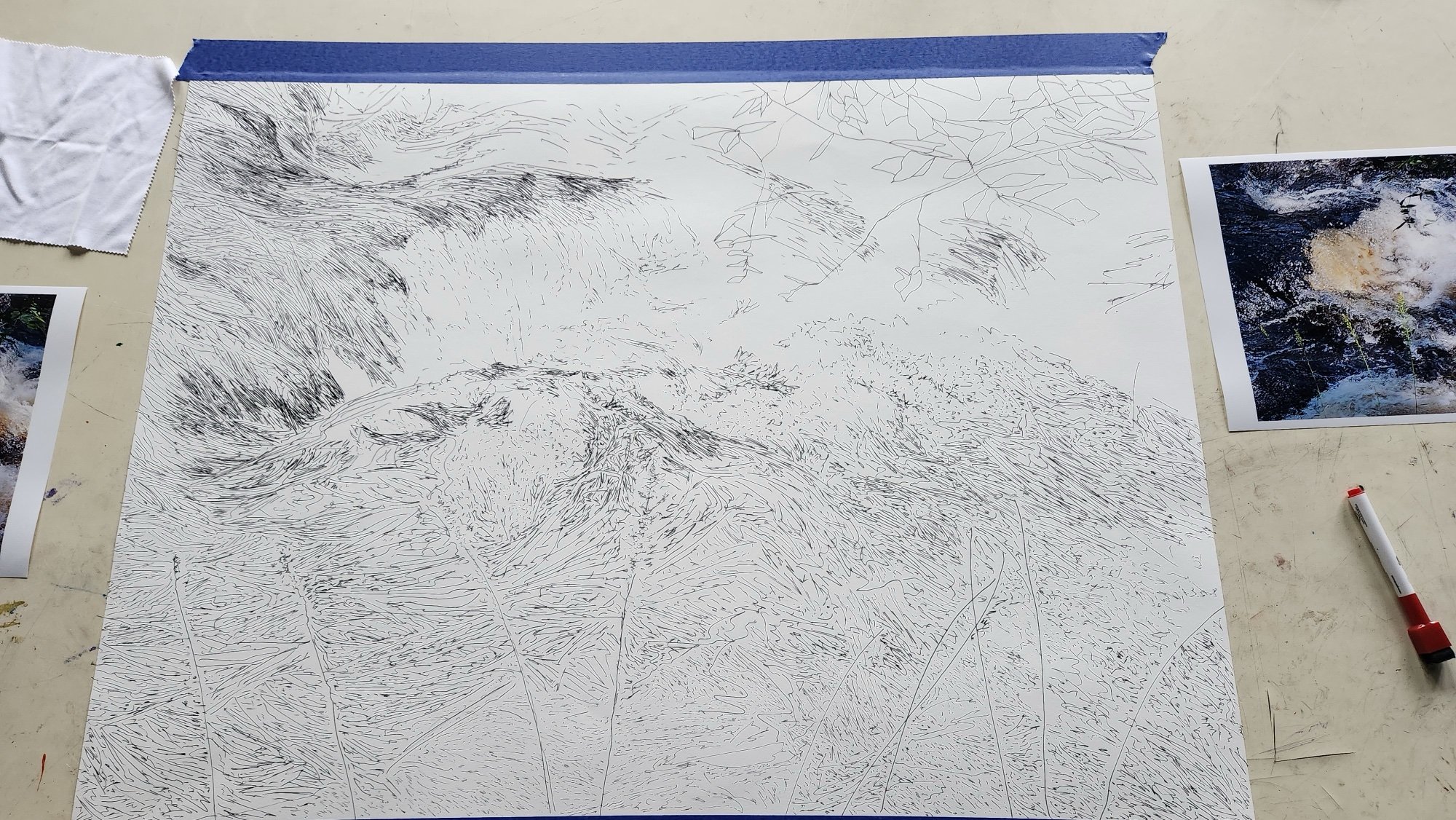
I make these paintings outside. I visit the same place many times and paint dozens of versions of it on temporary supports. The studies are not practice for the painting. The studies are the thinking. When I have enough of them, I bring them back to the studio and lay them on the floor.
Then I begin to steal.
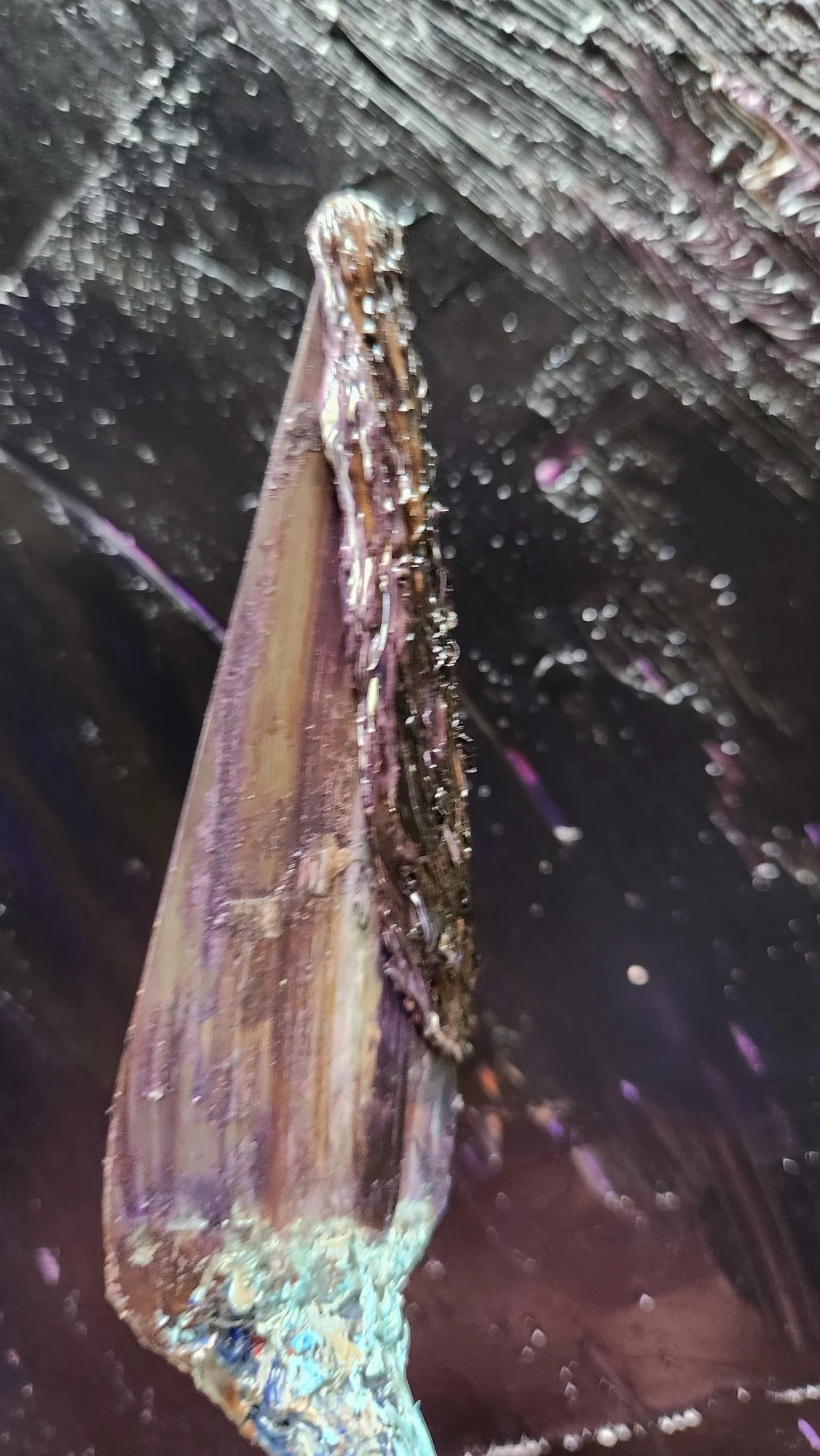
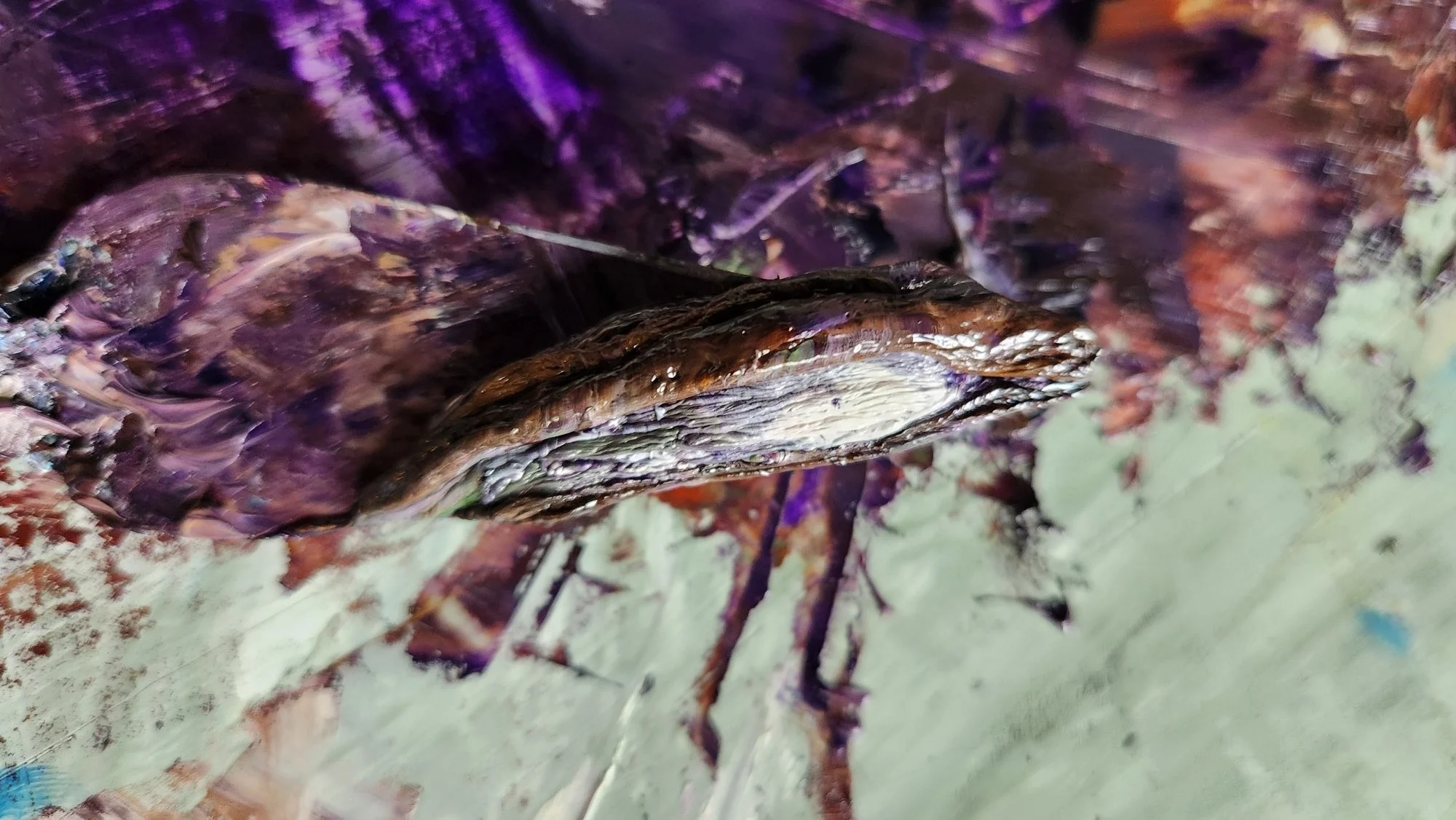
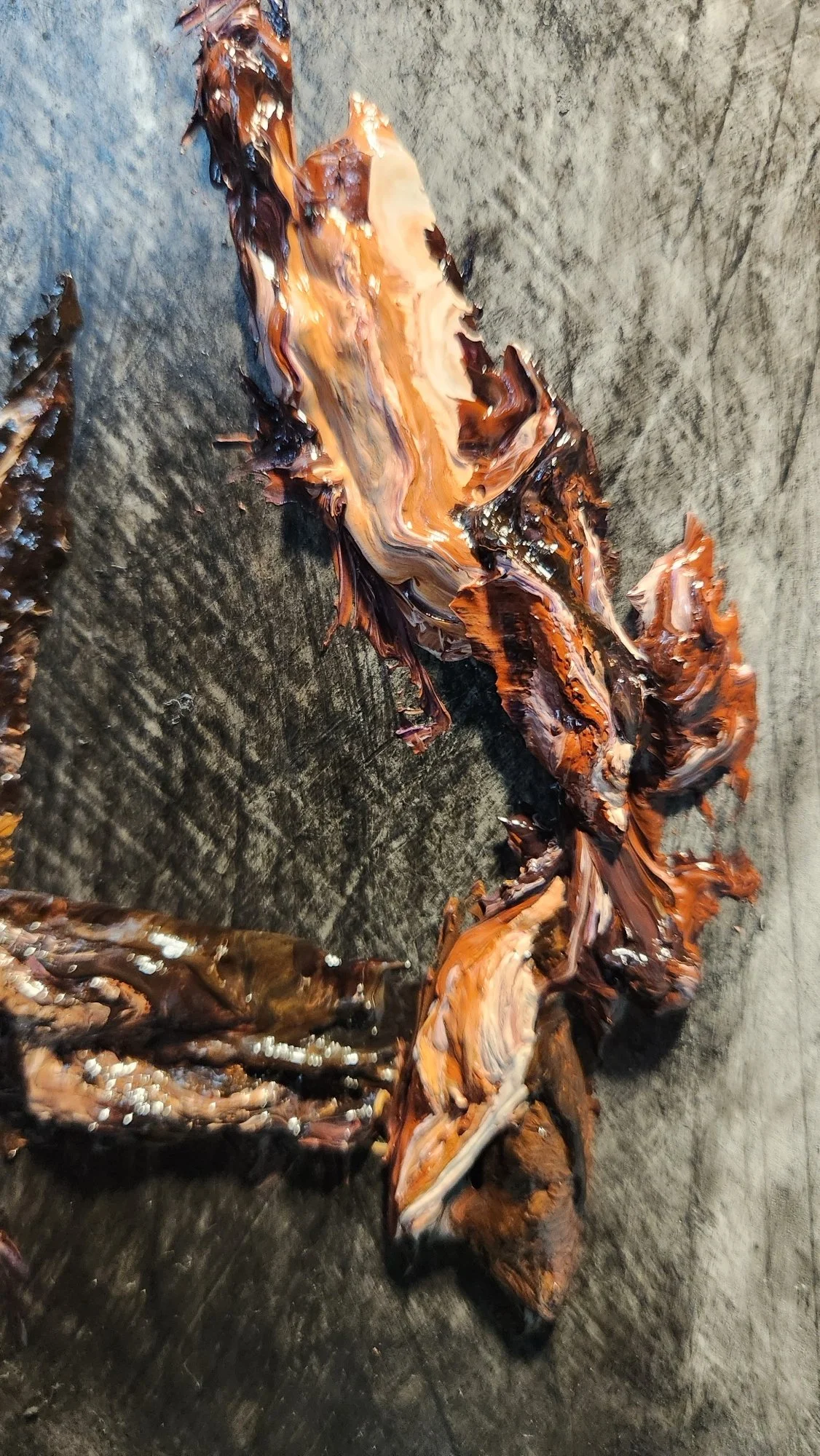
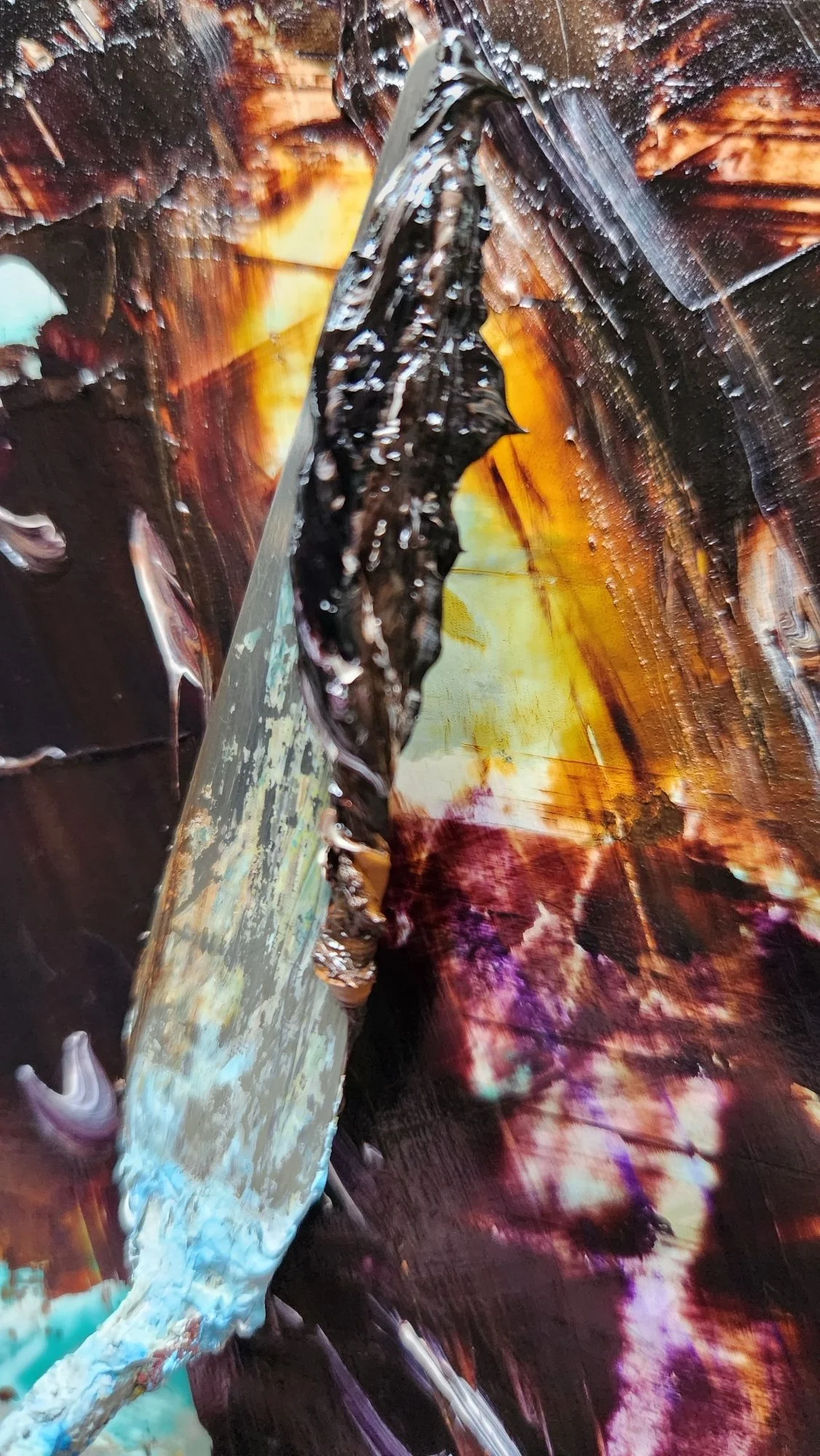
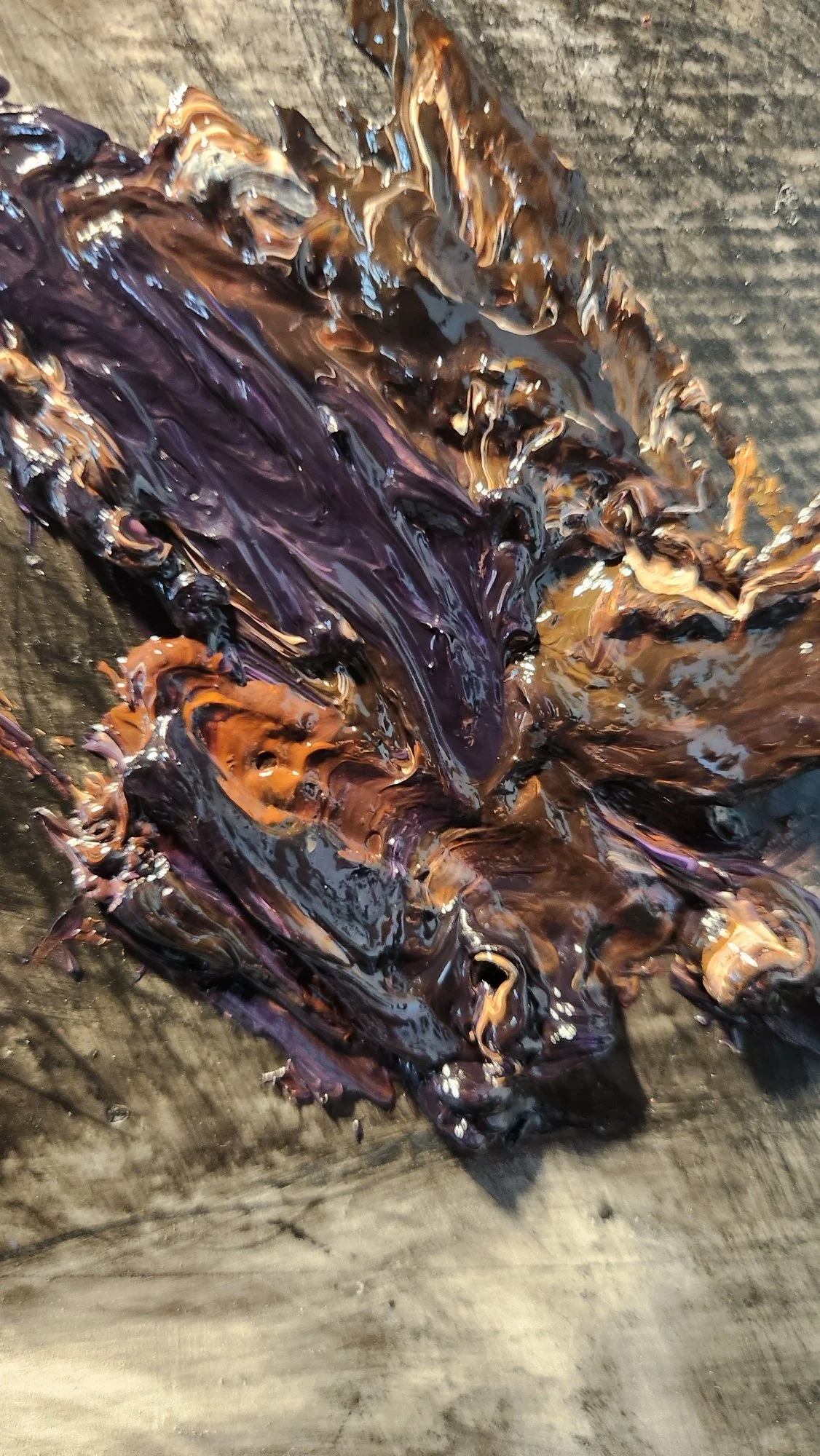
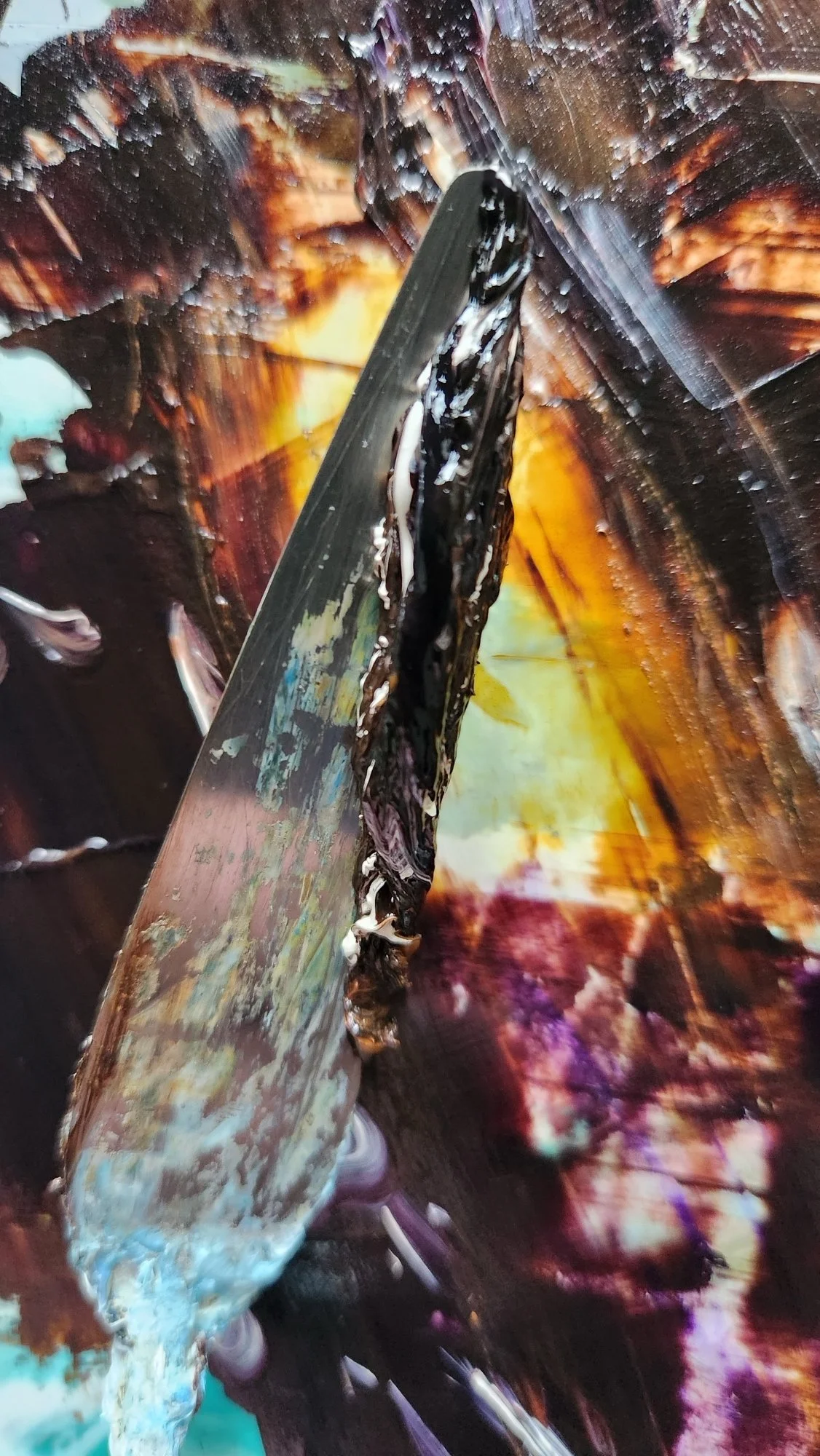
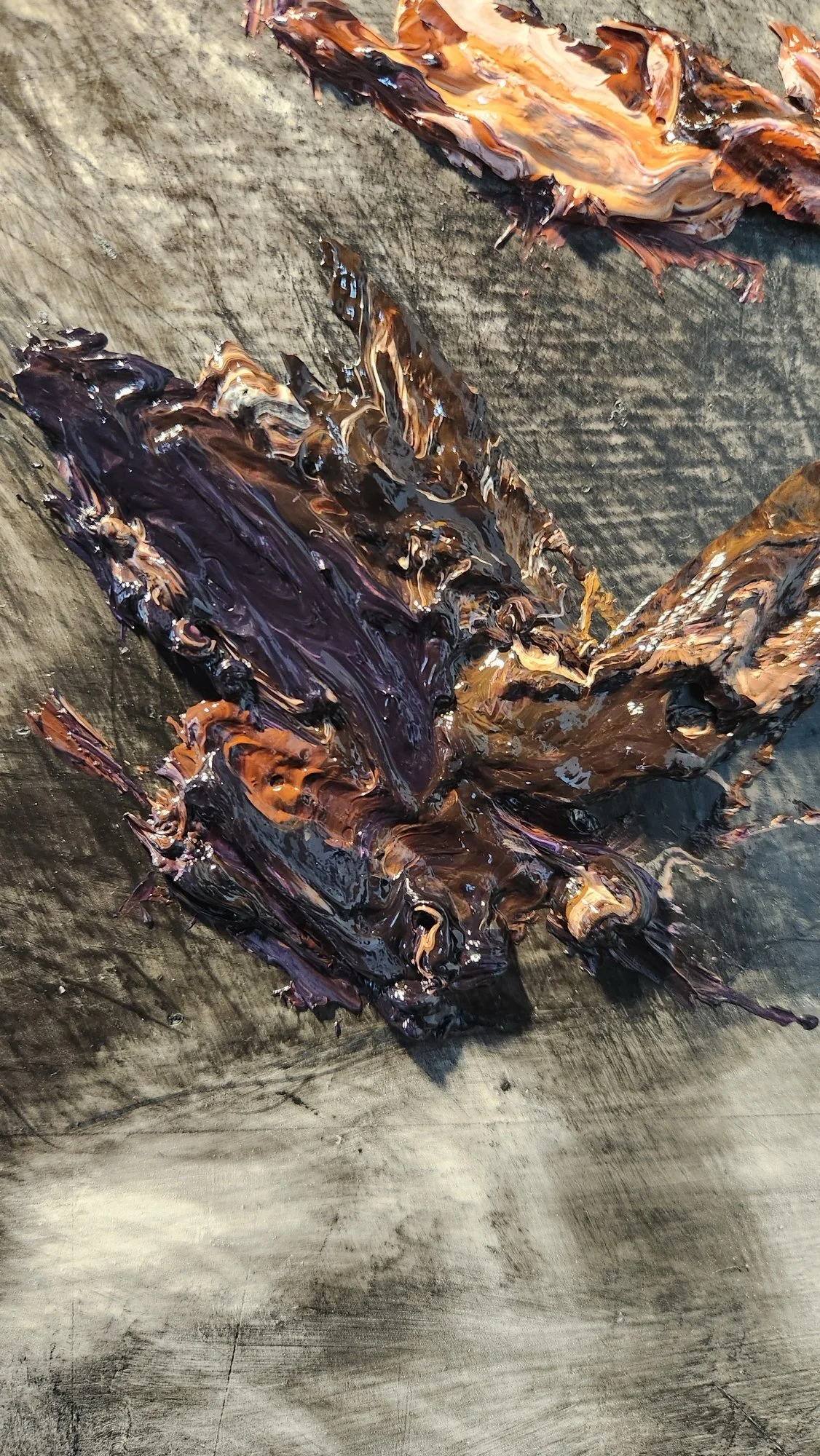
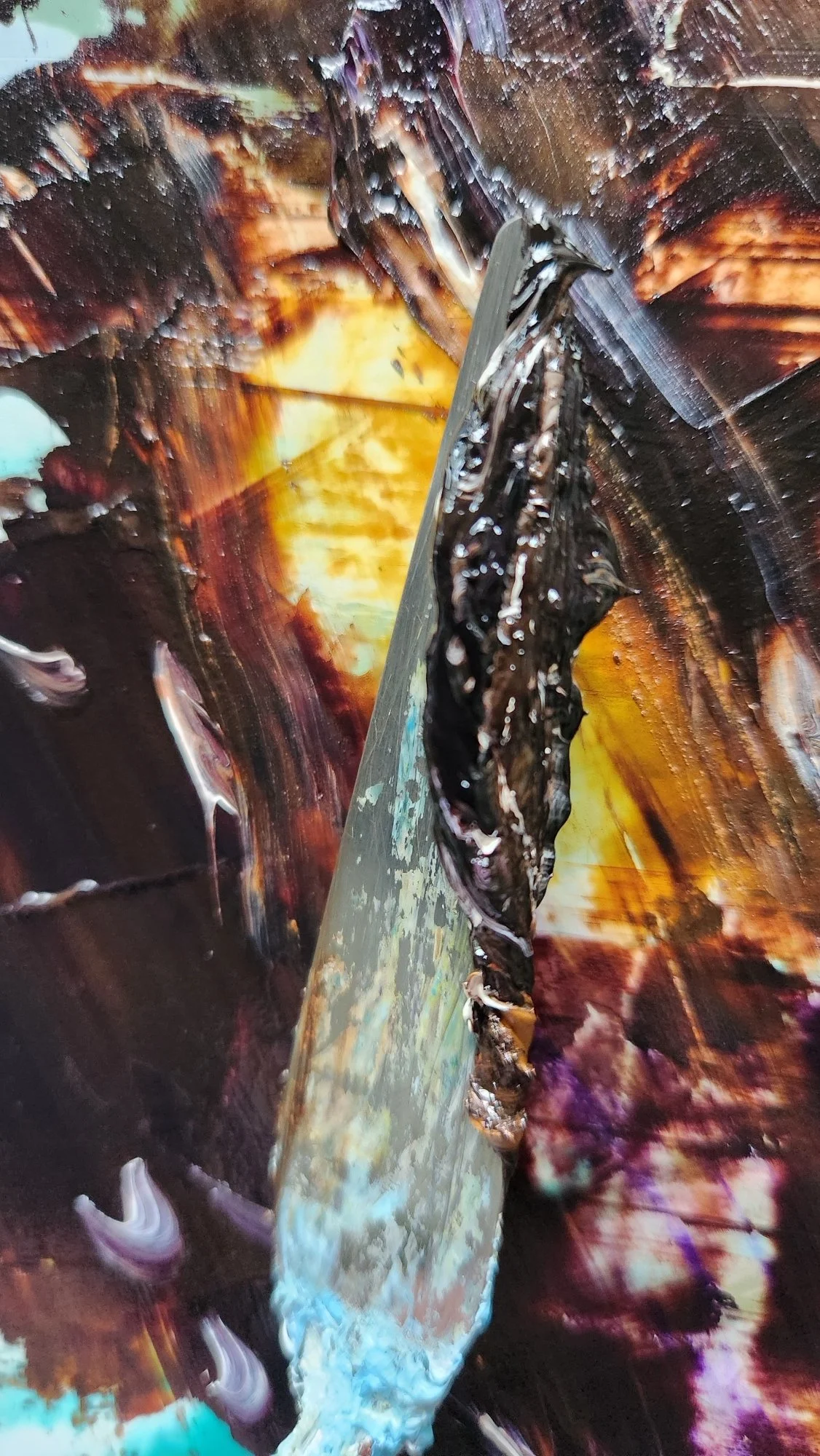
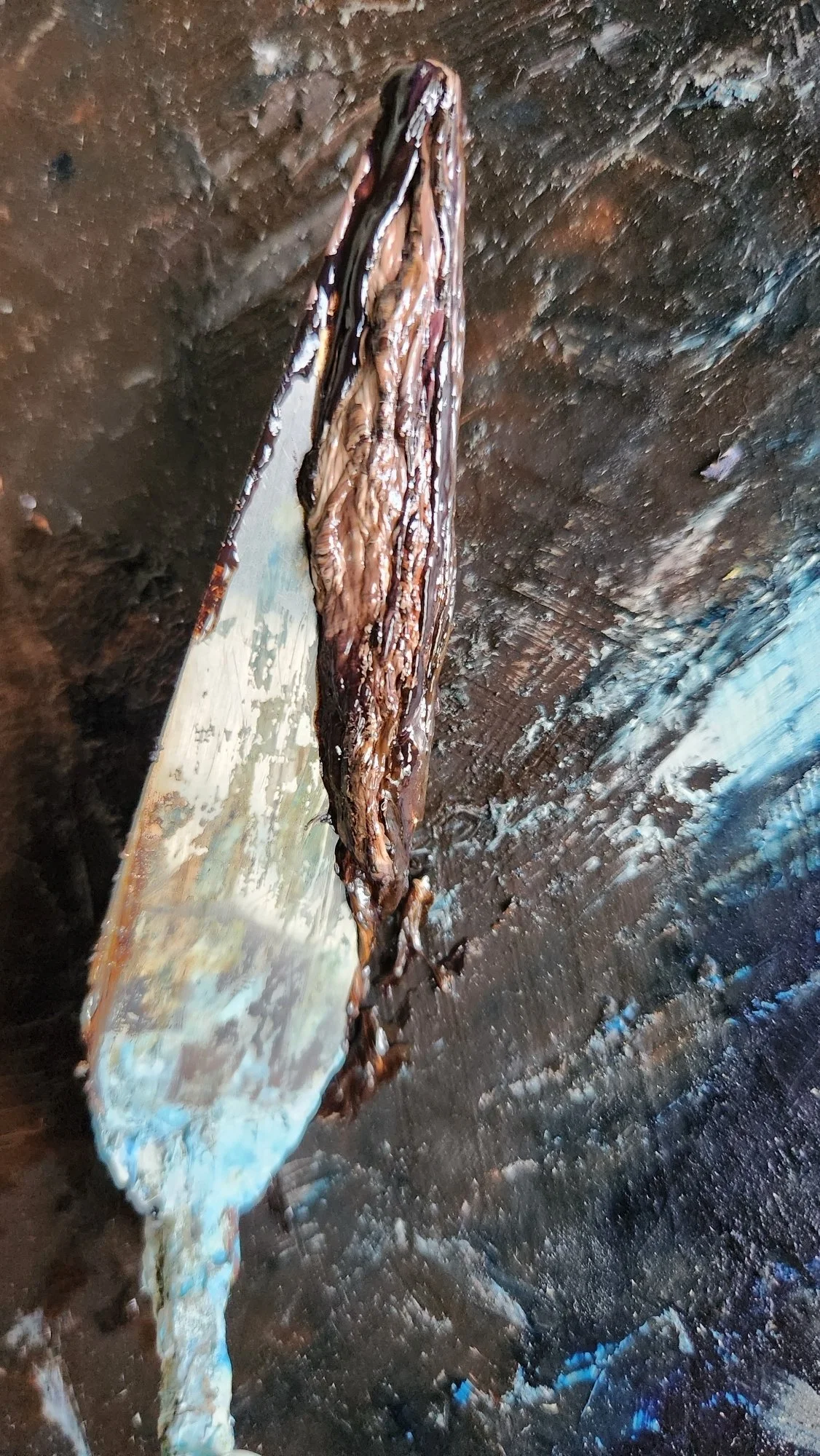
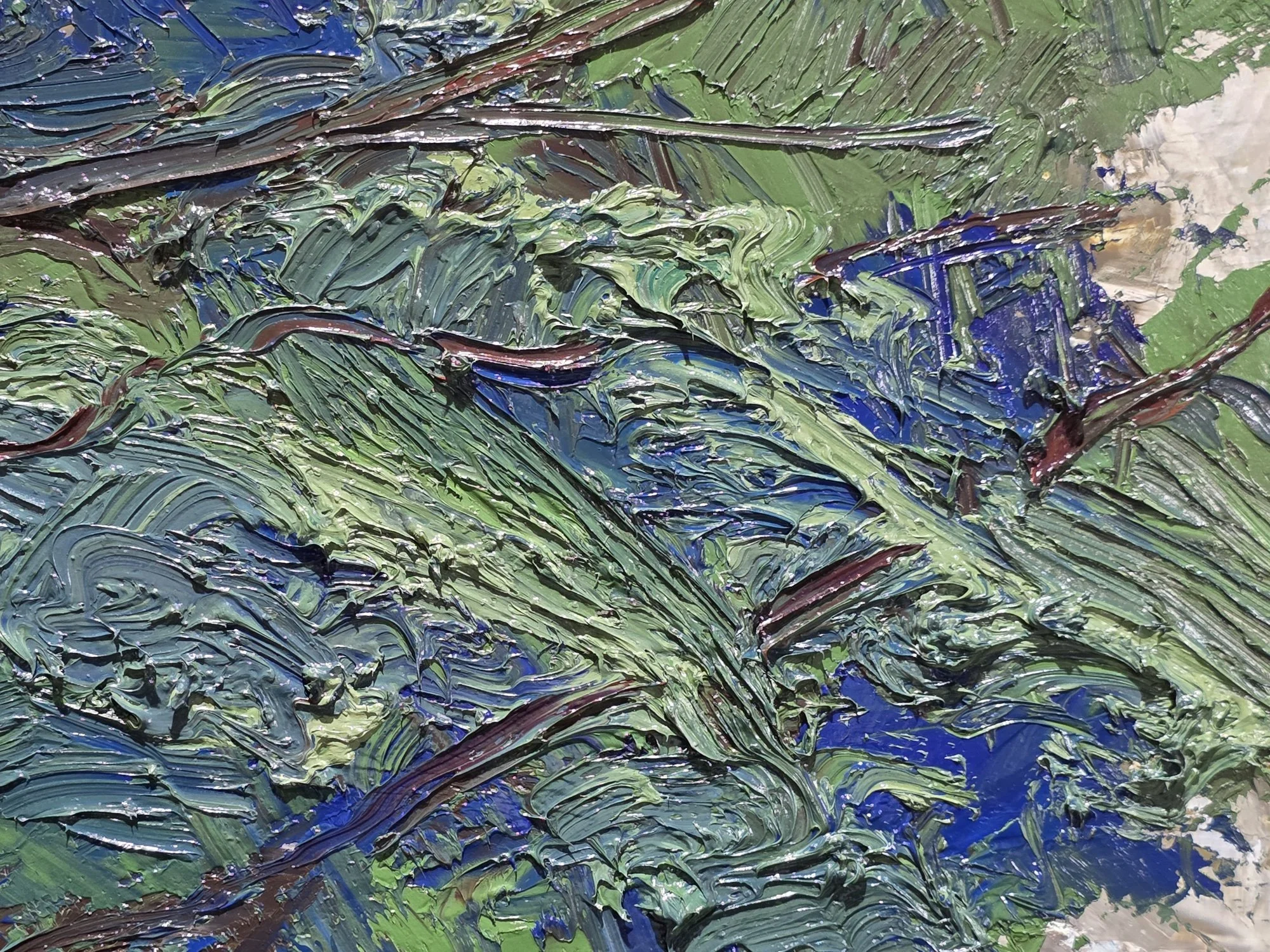
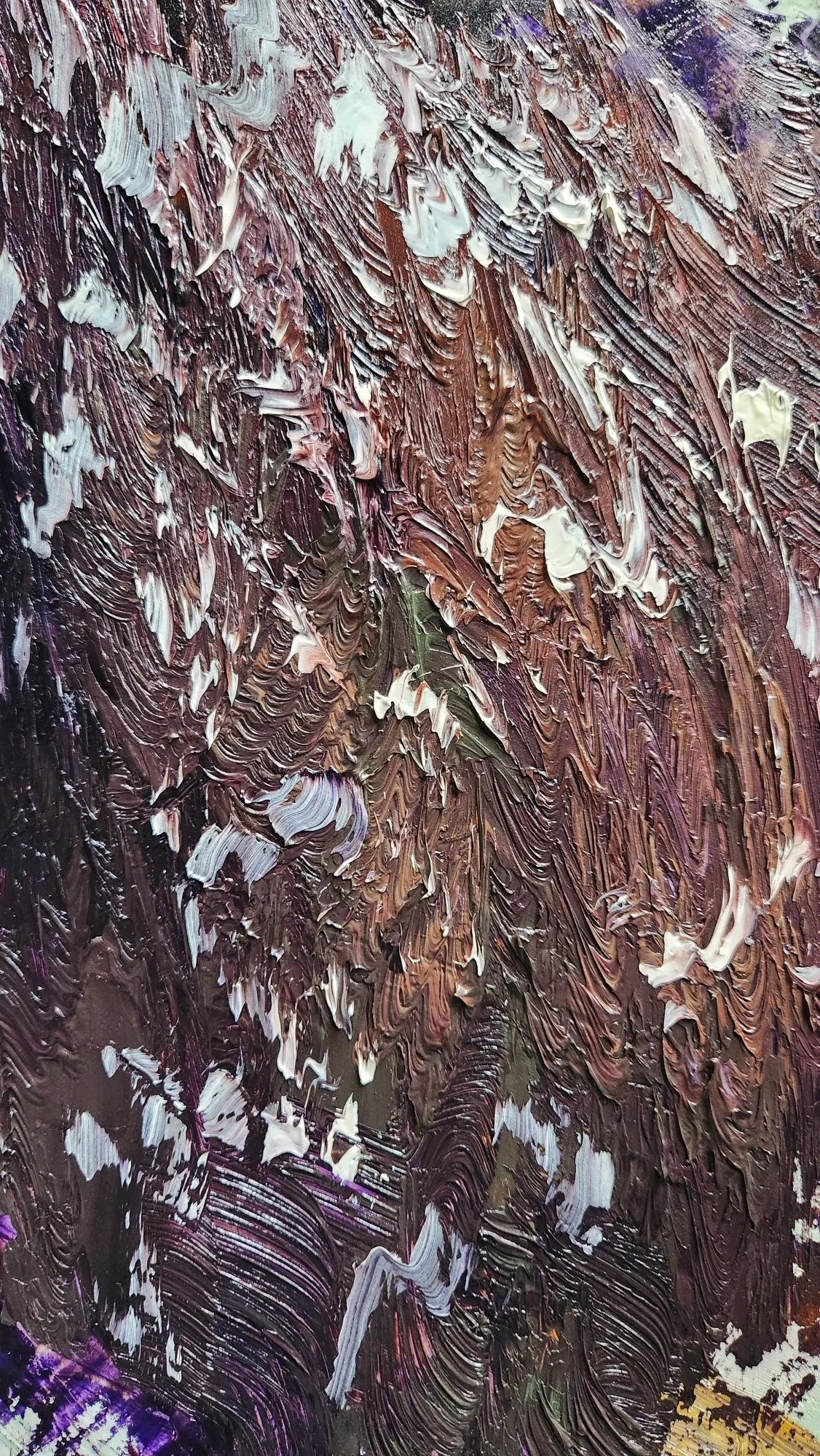
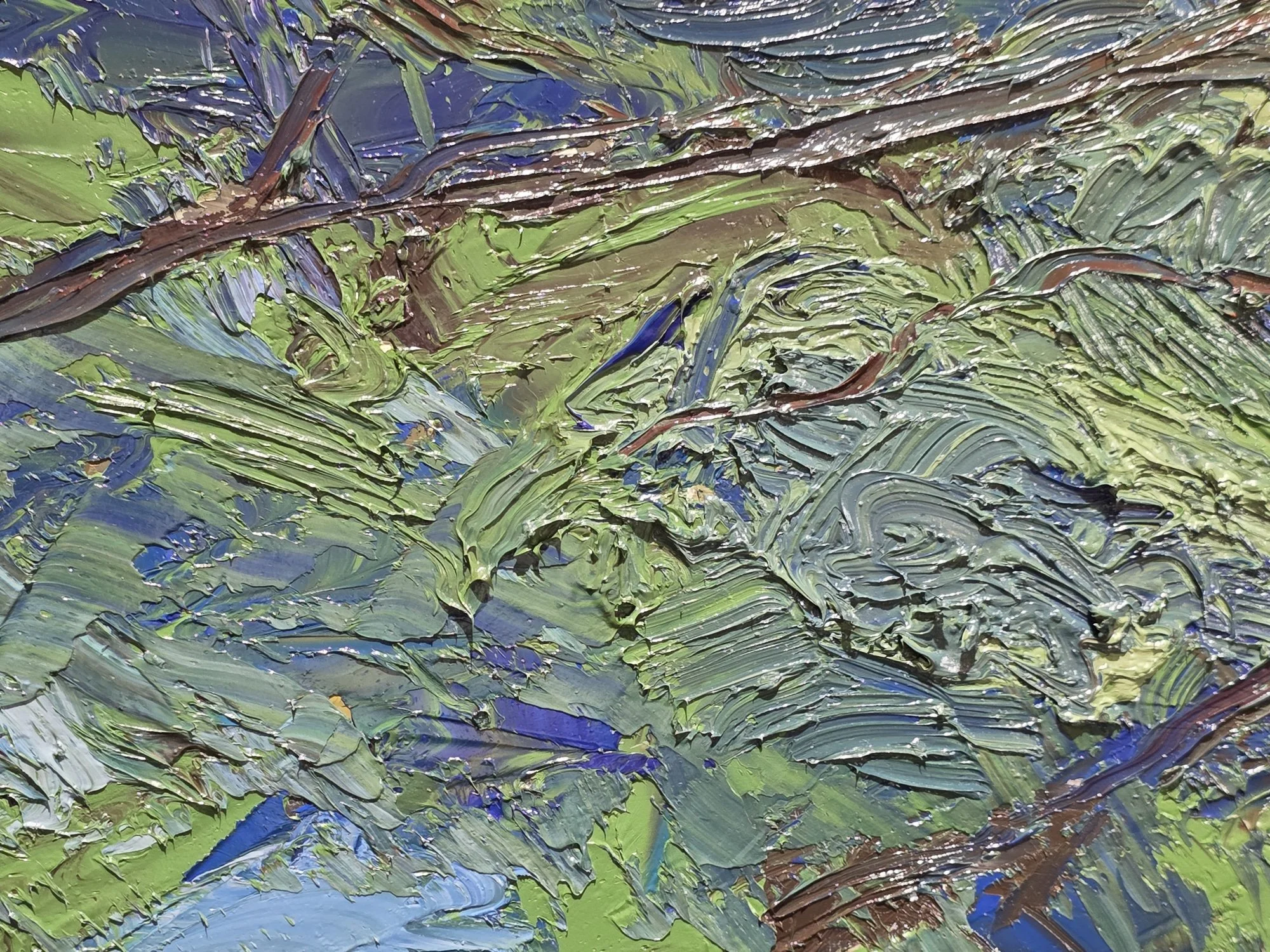
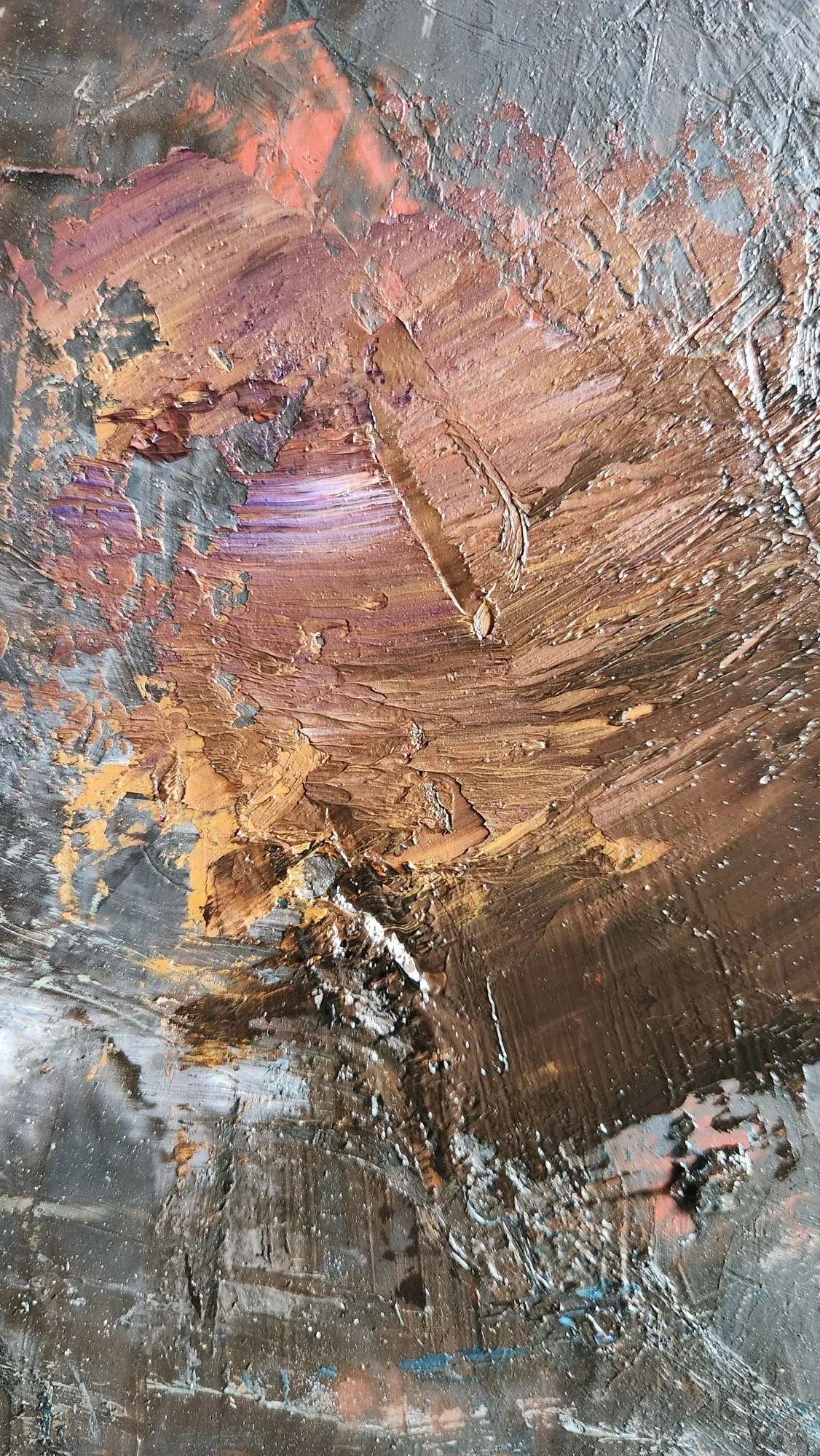
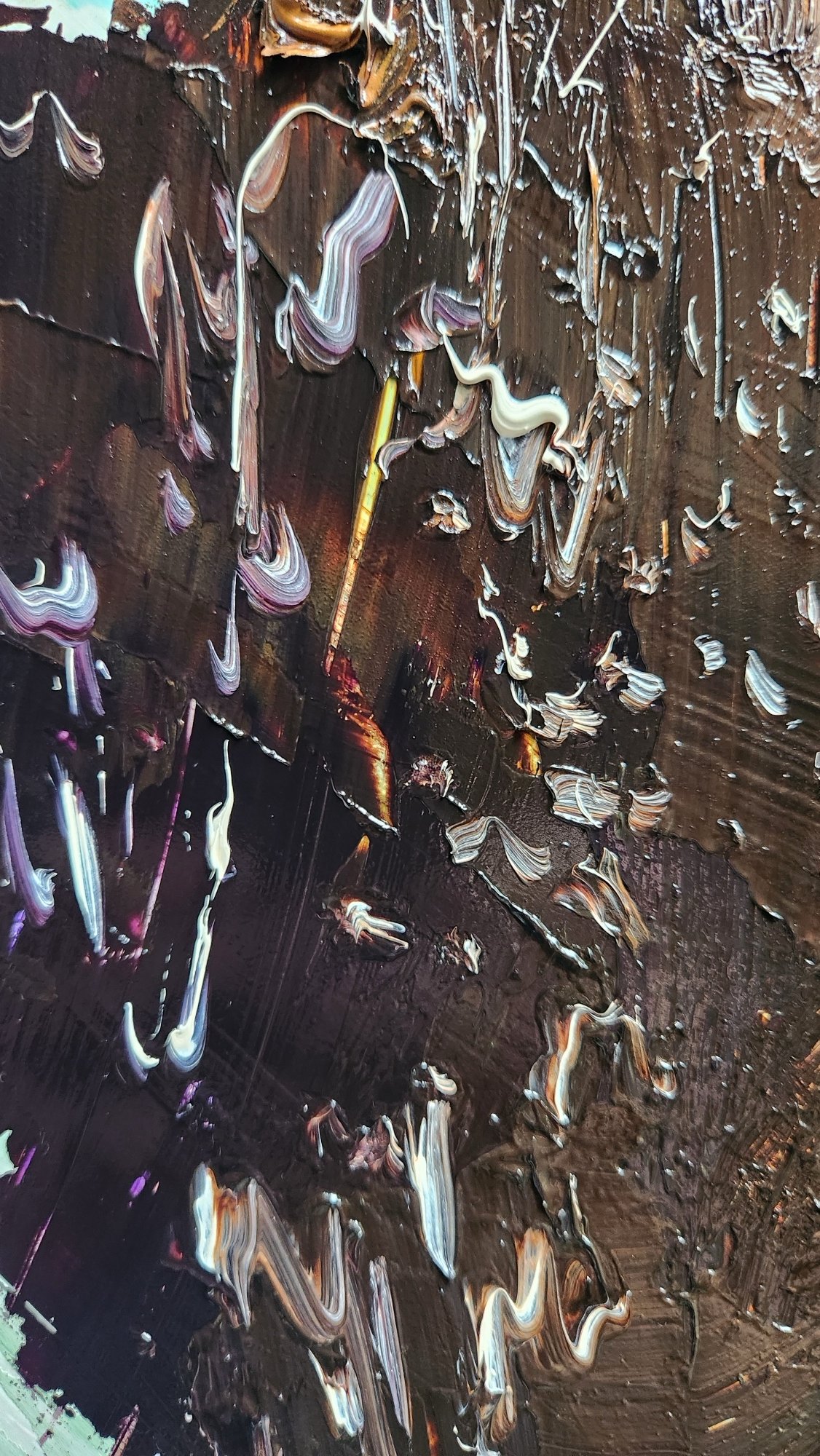
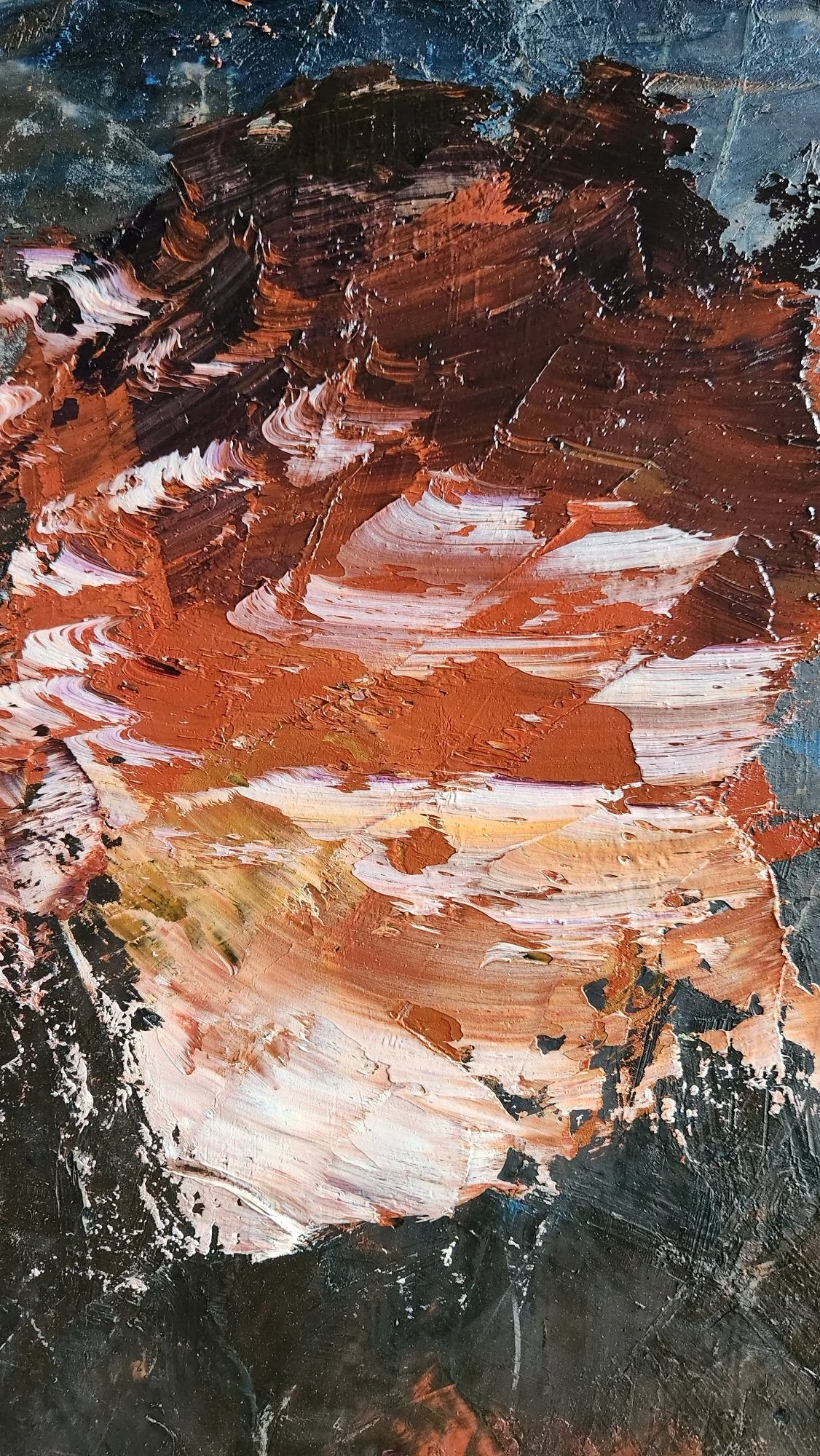
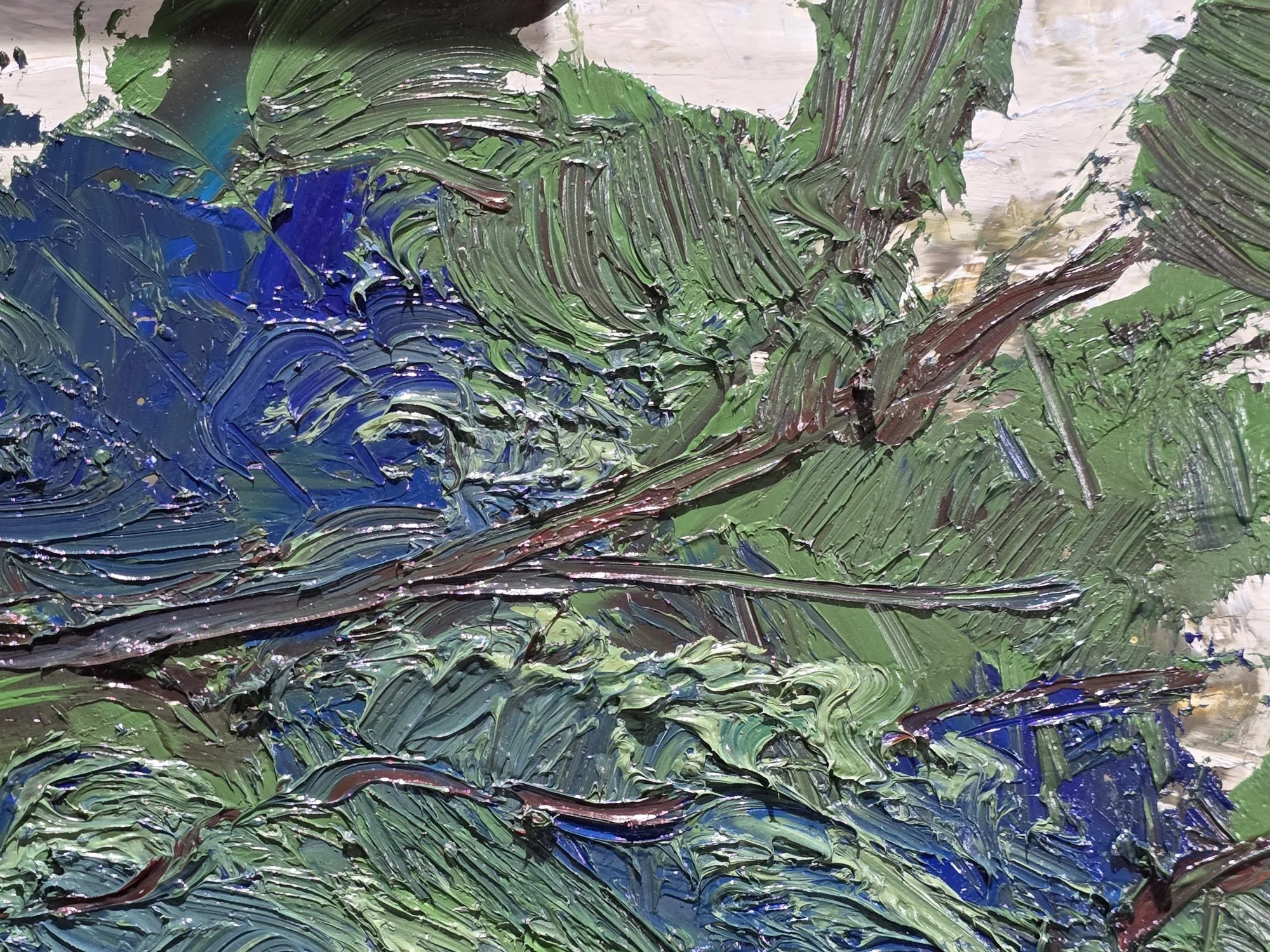
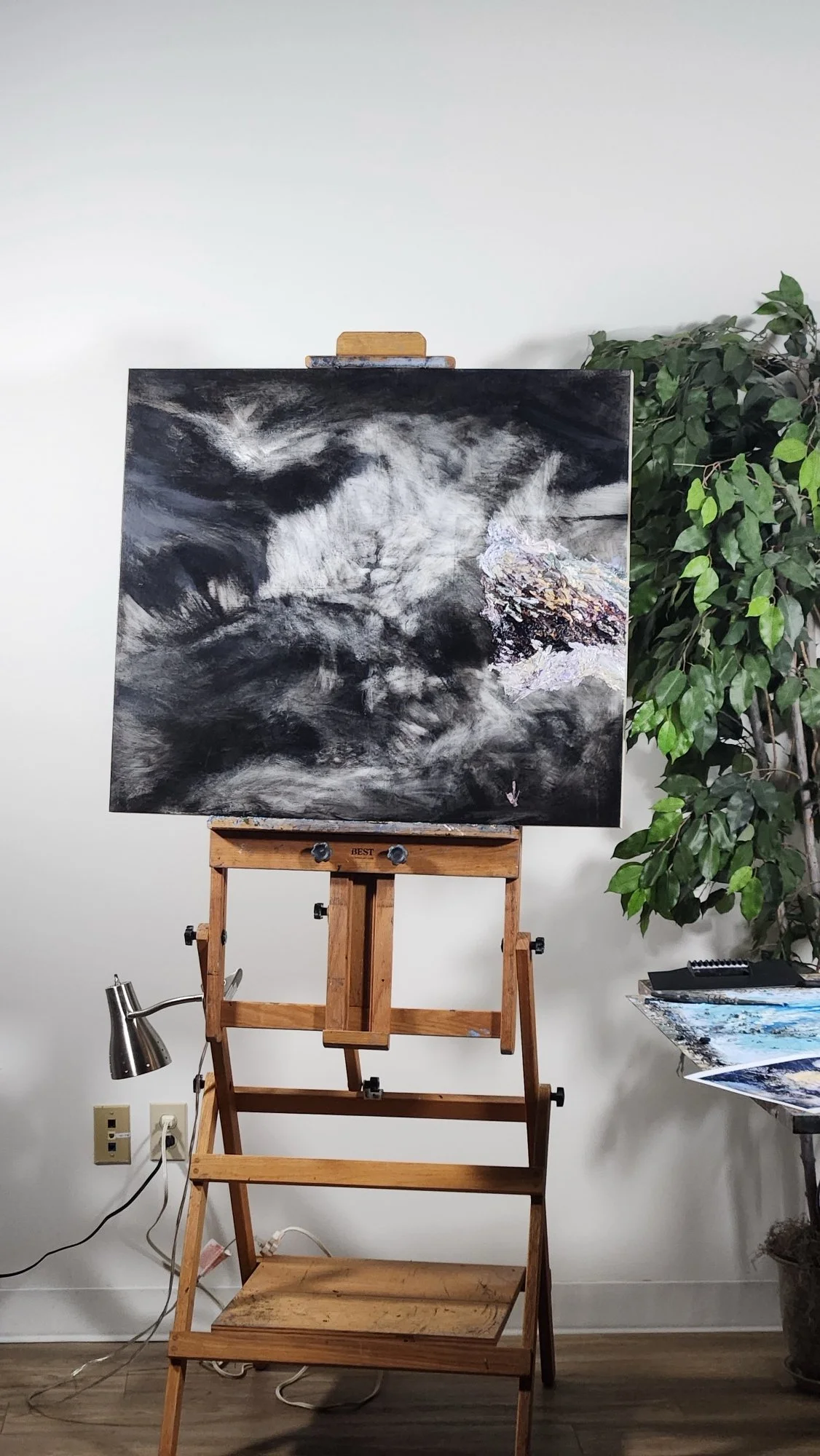
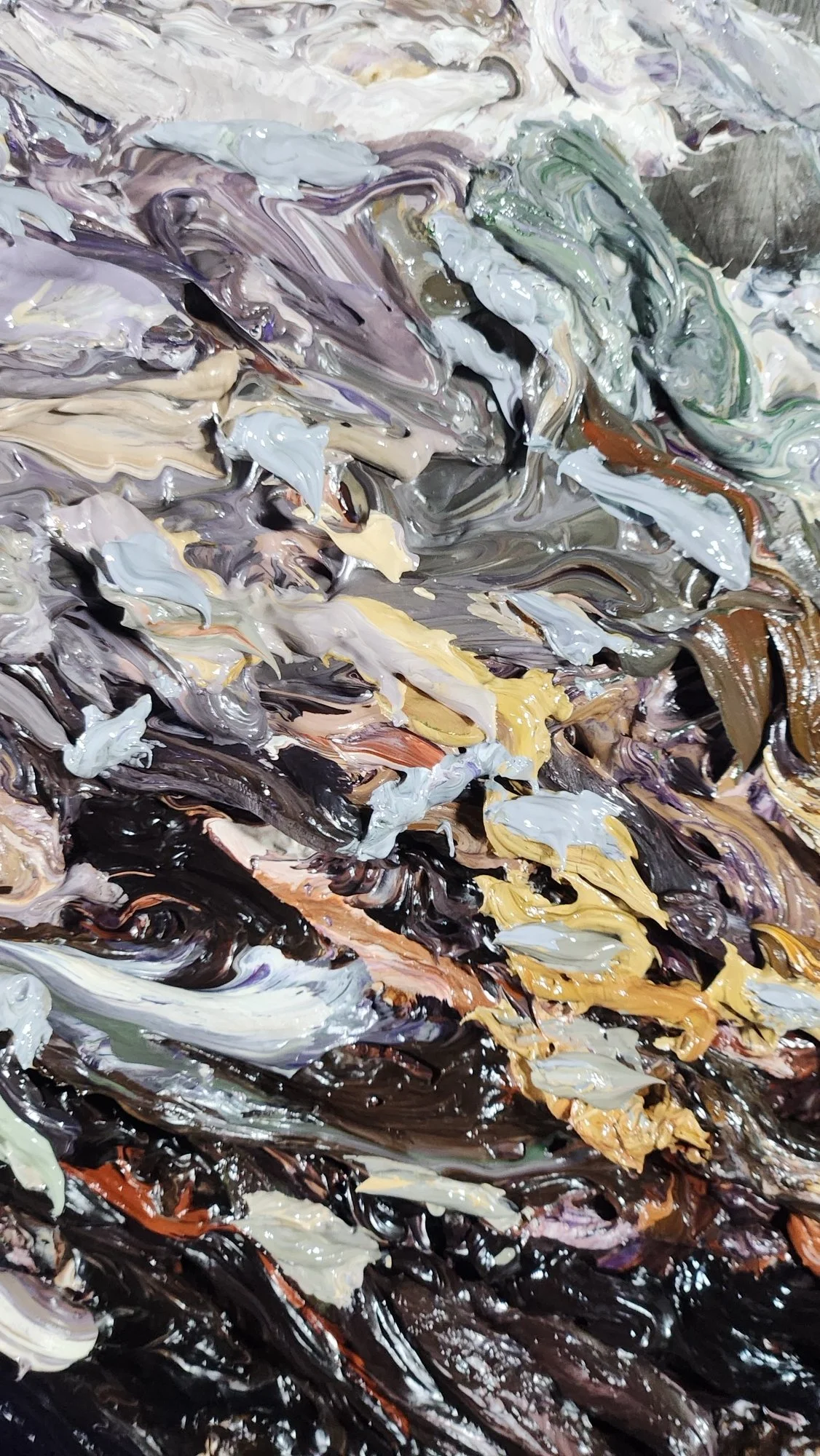
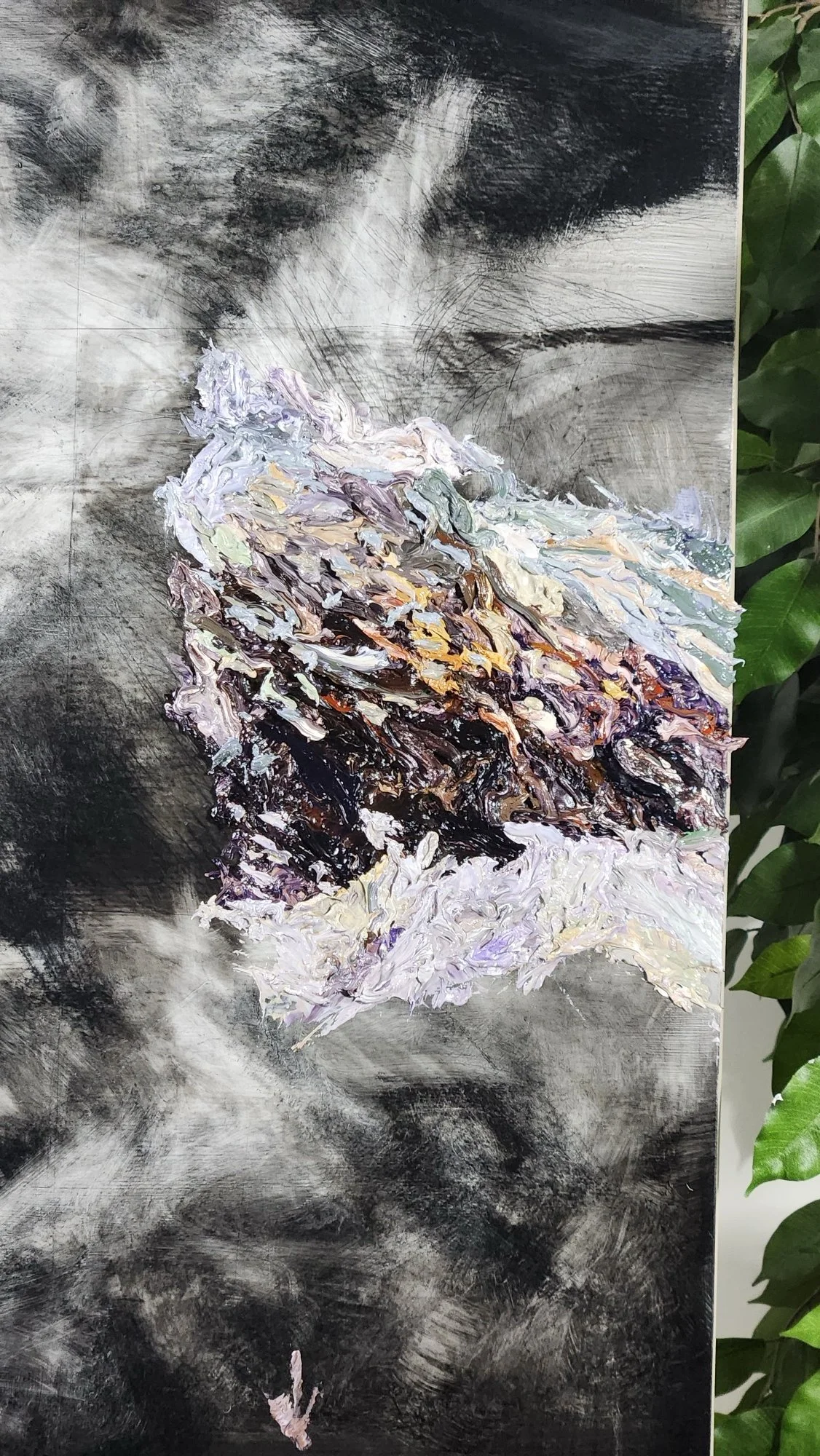
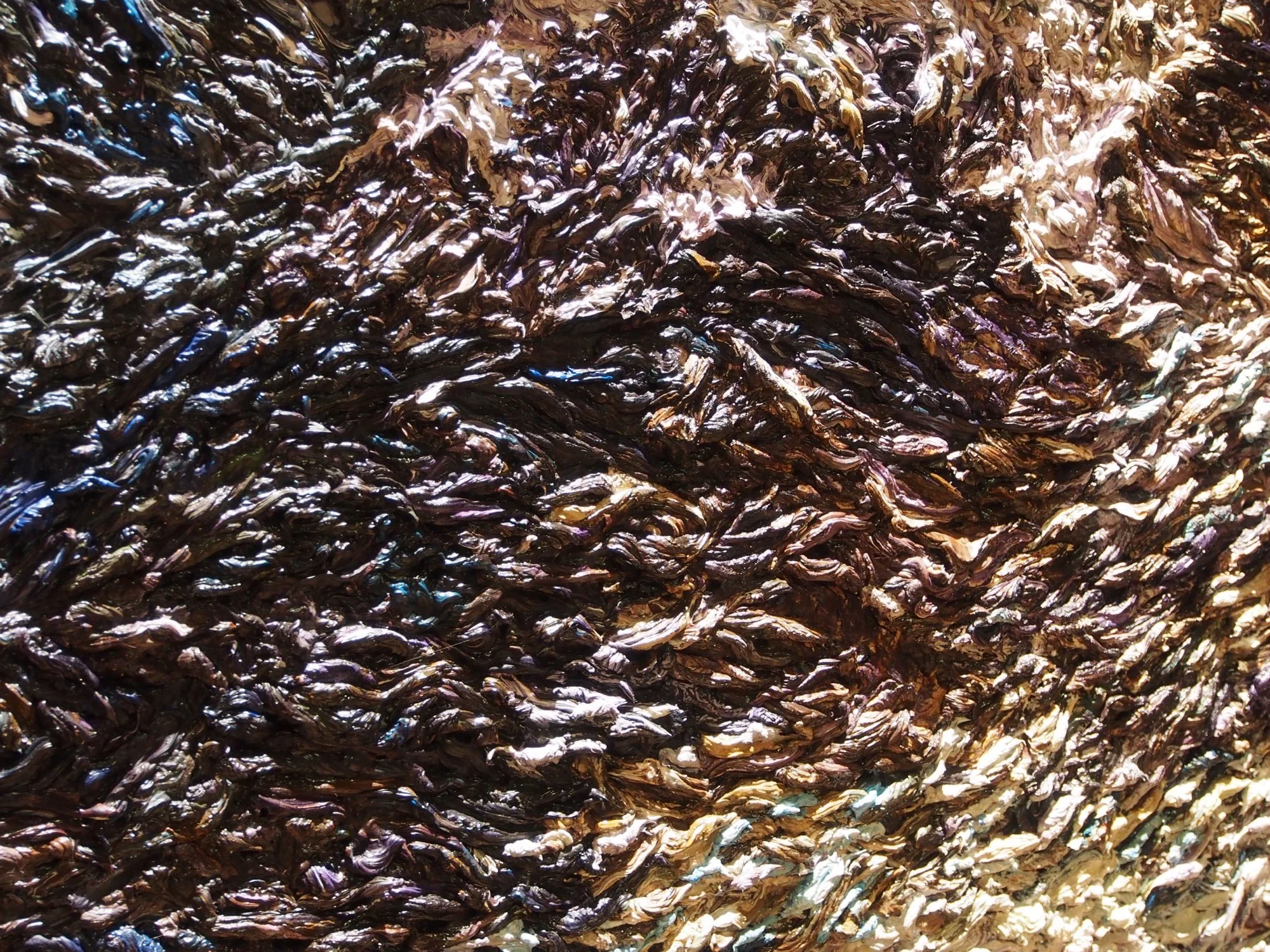
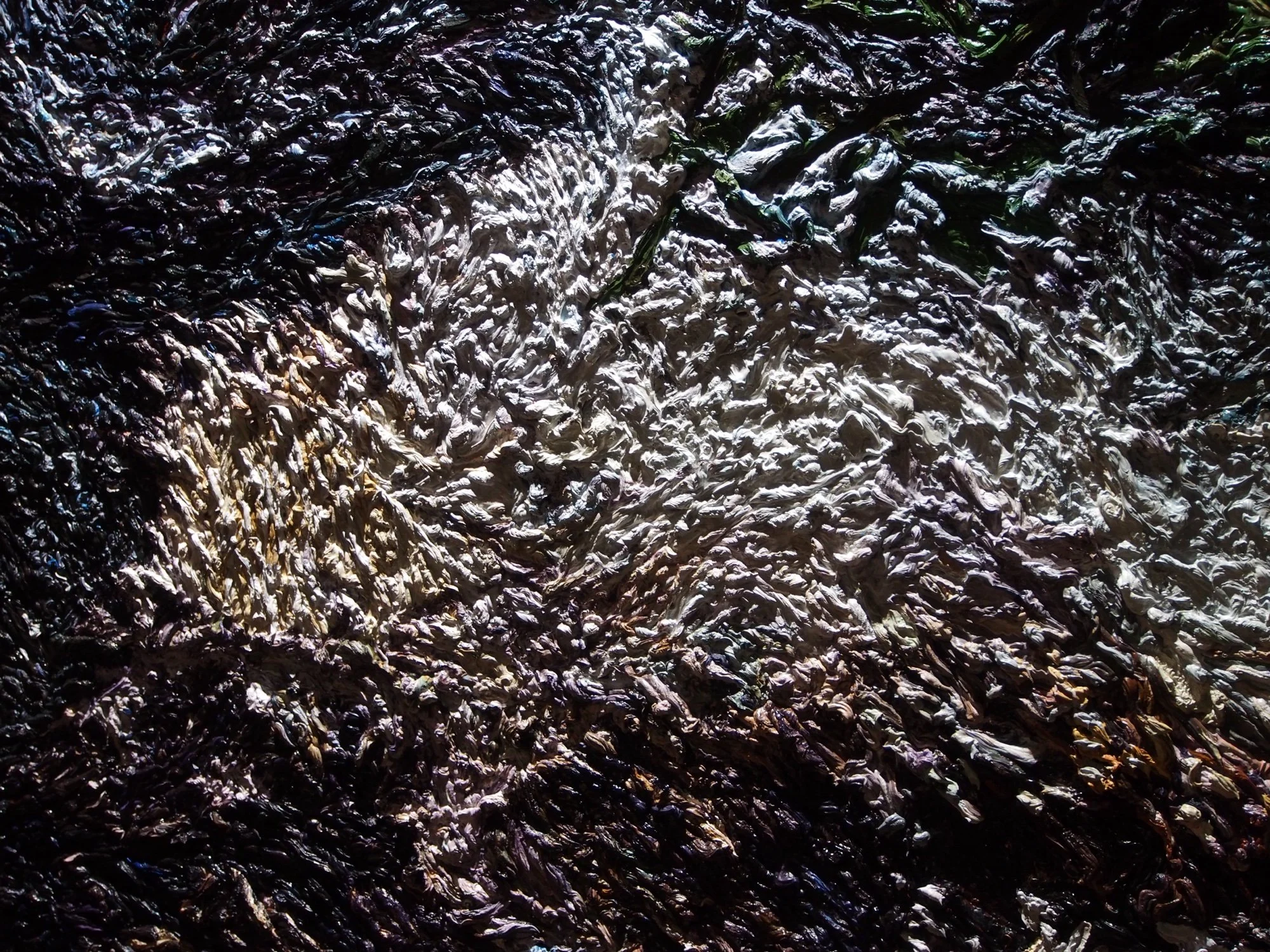
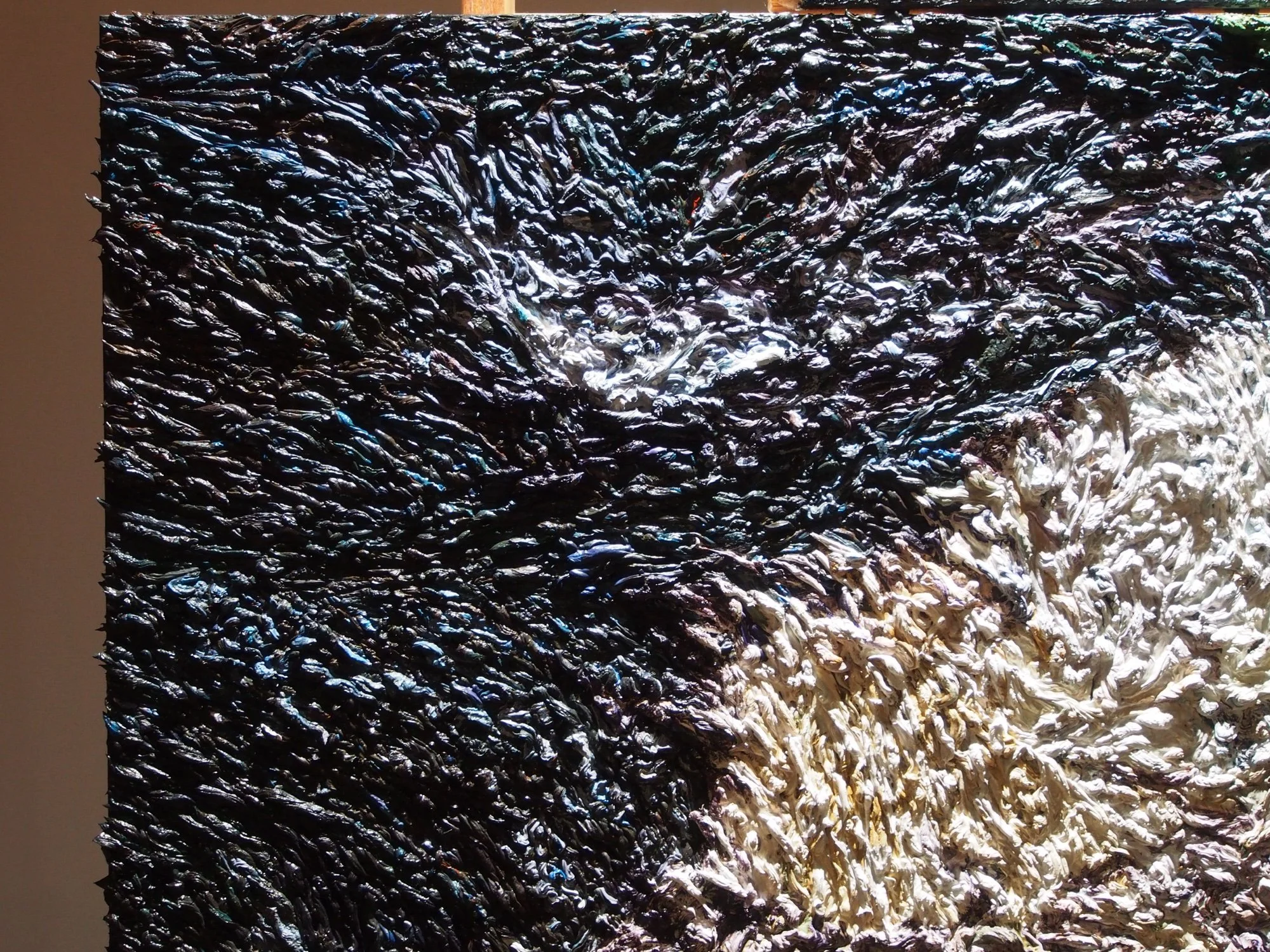
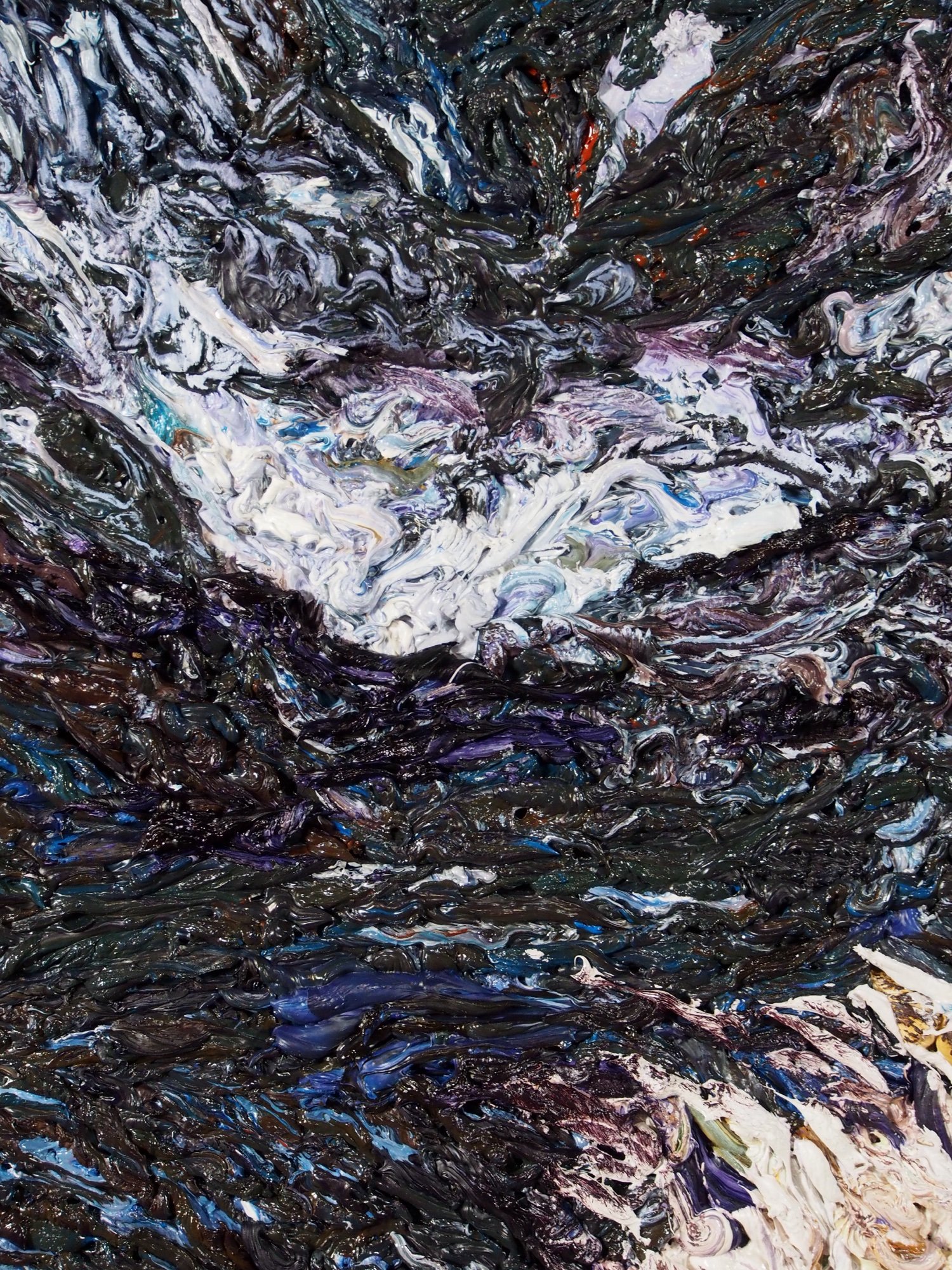
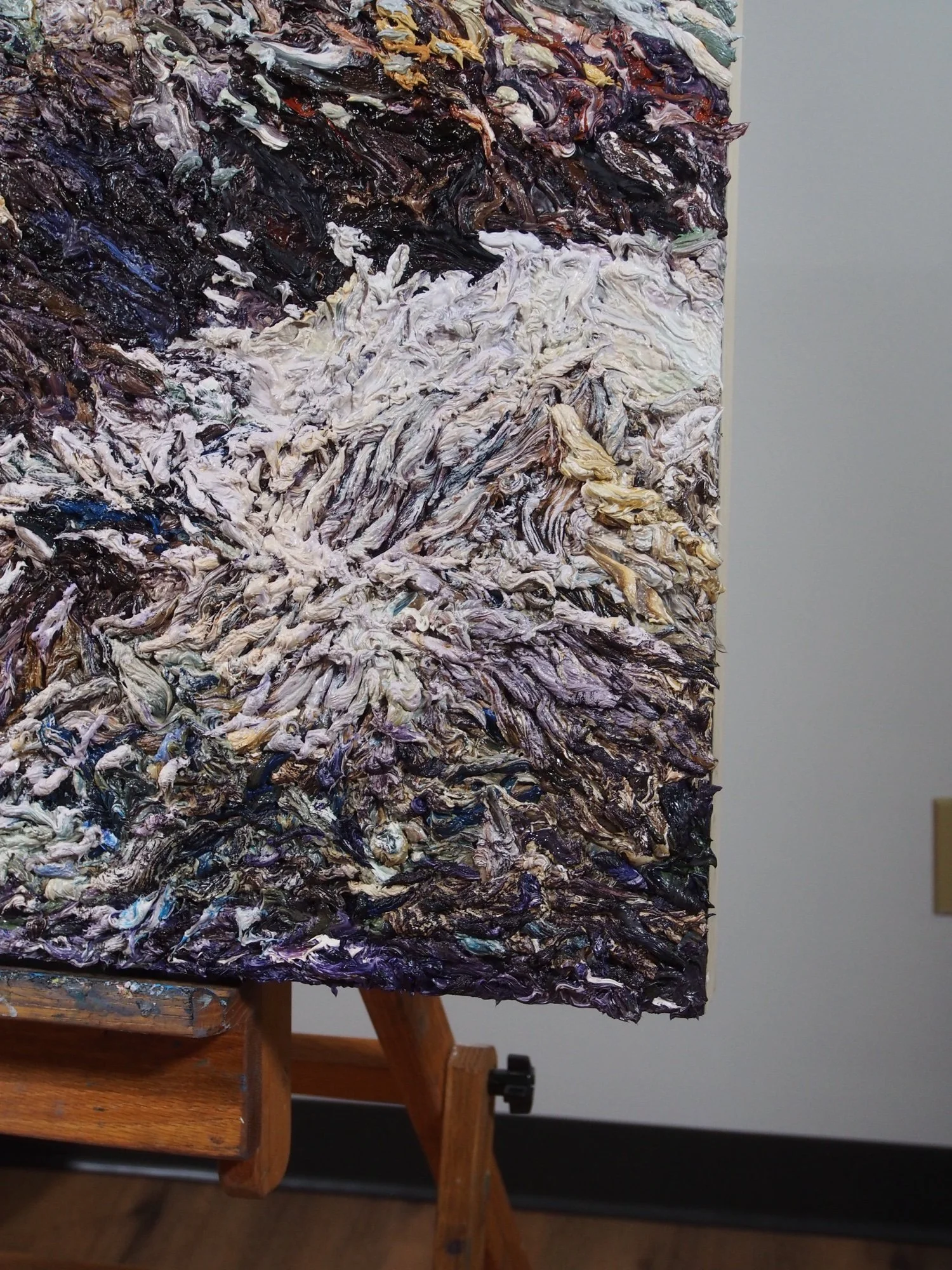
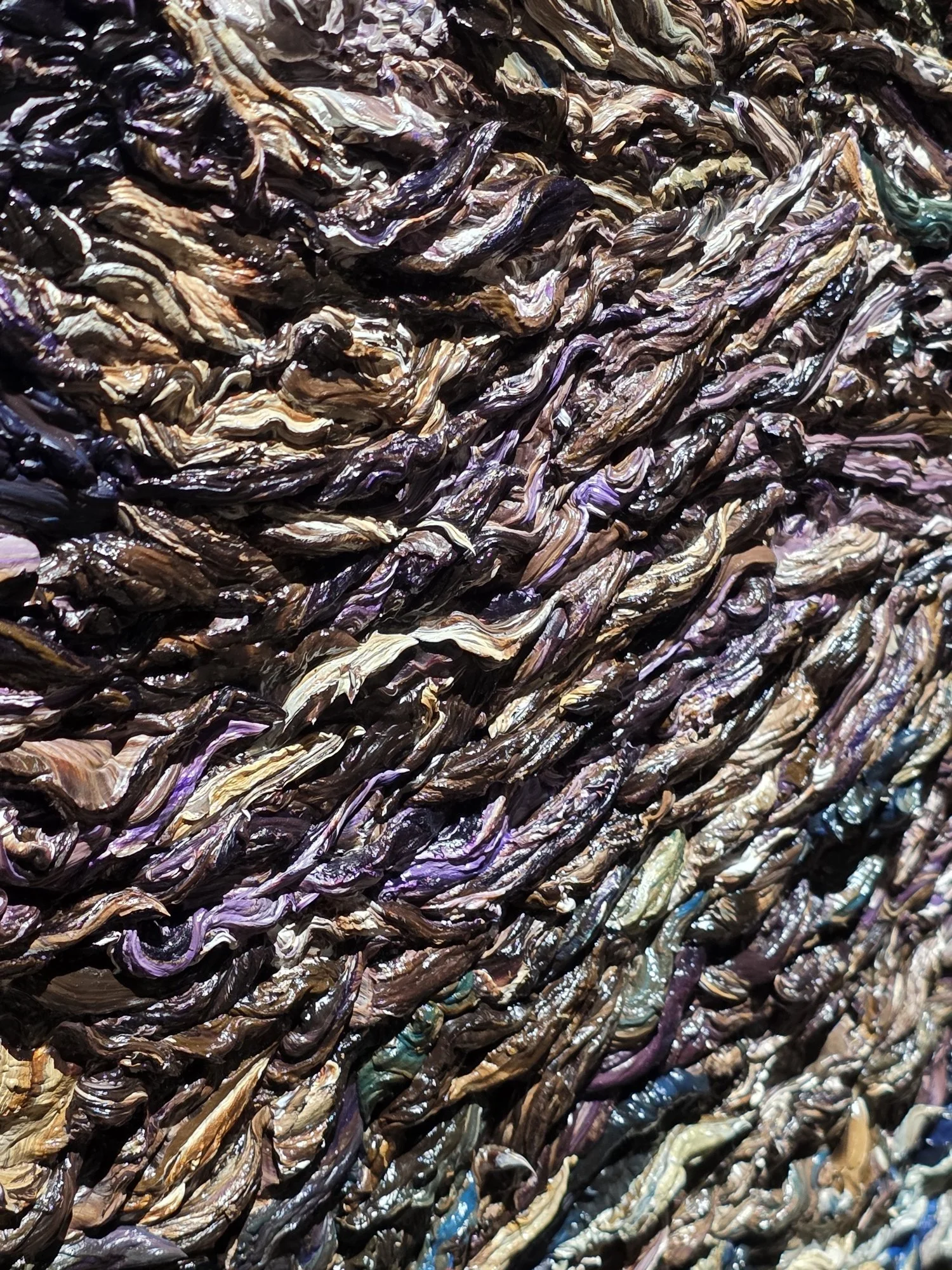
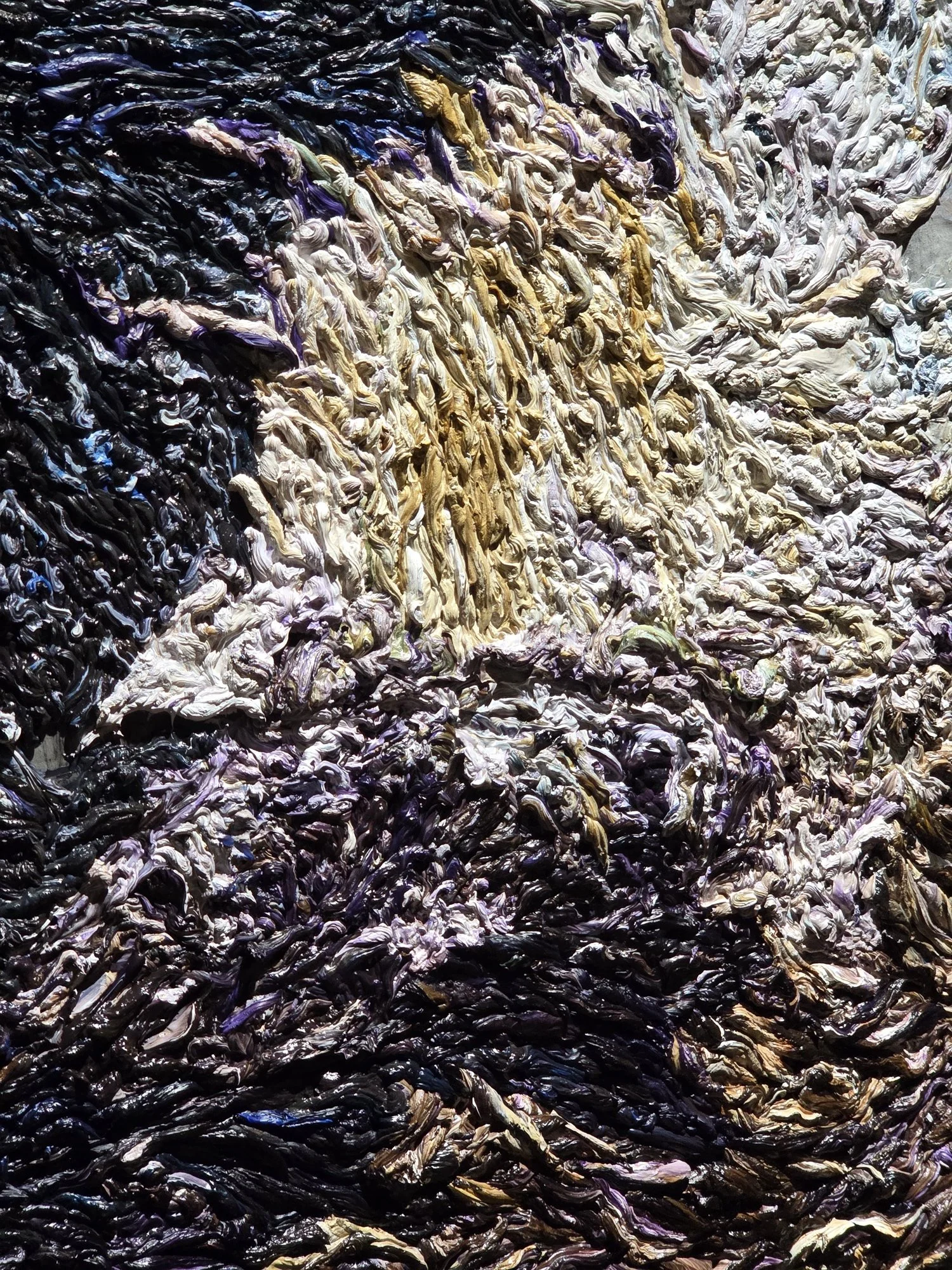
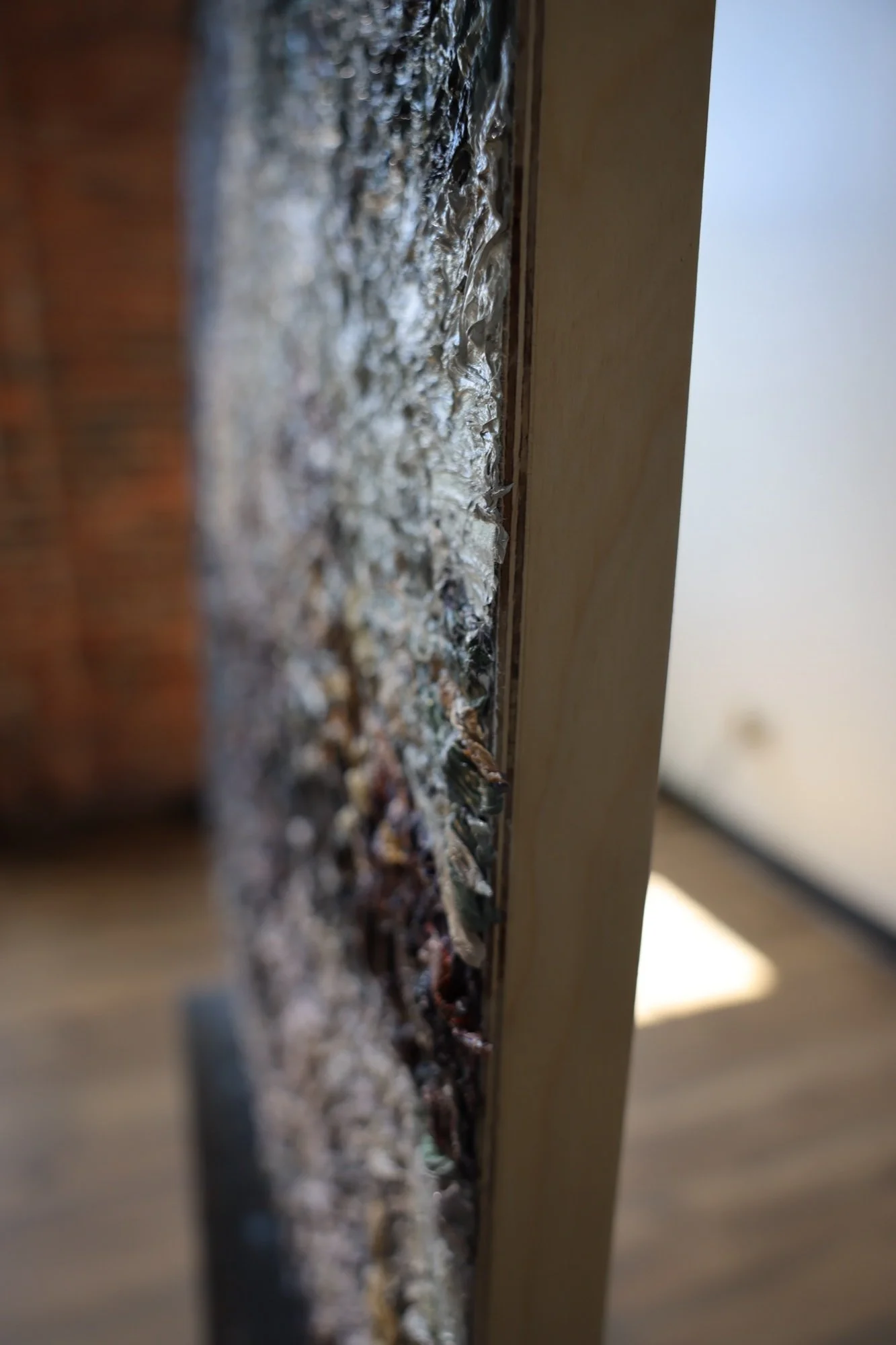
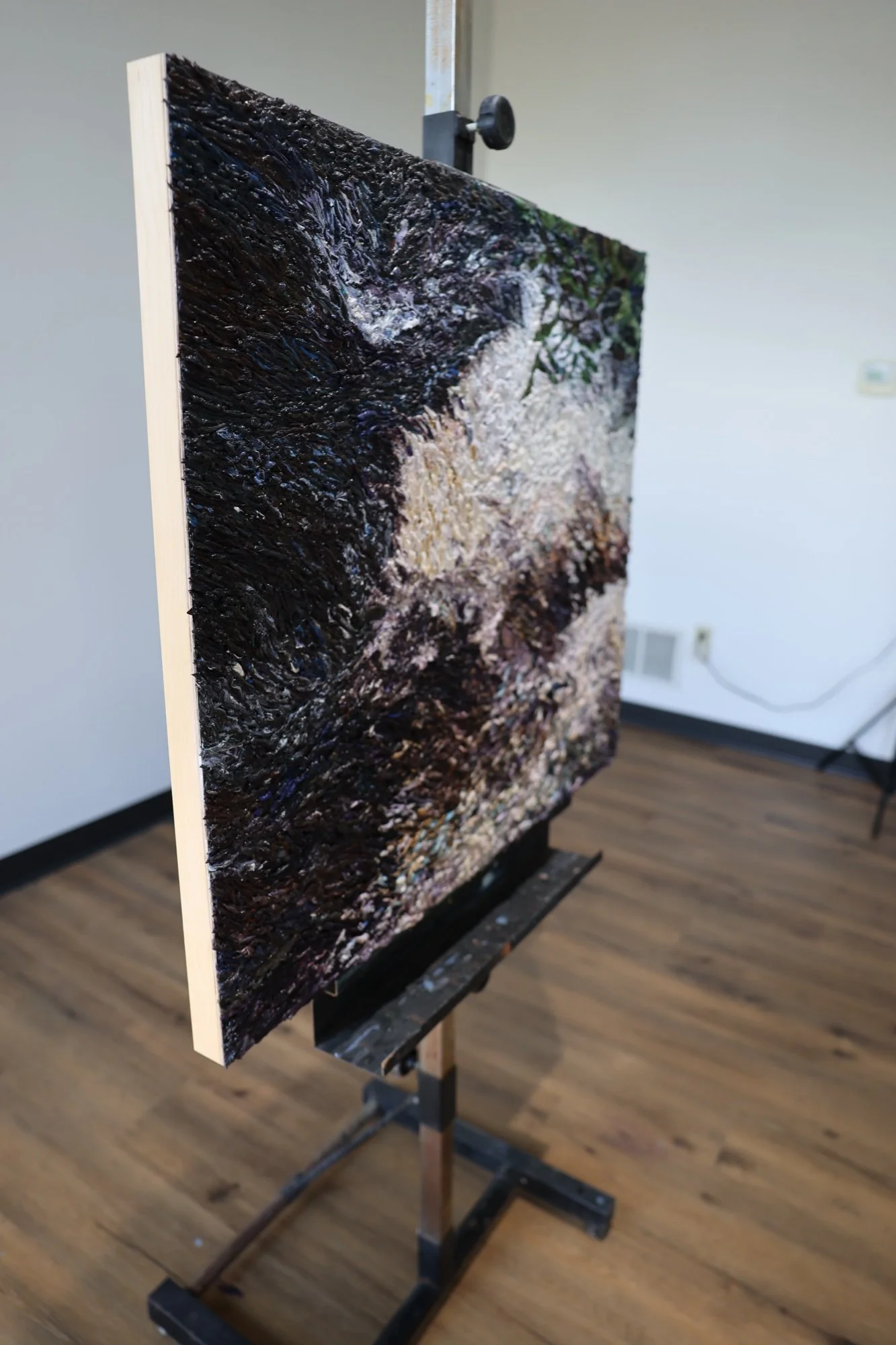
I look across the field of studies and I find the small areas where something happened that I didn't engineer. A few square inches of a mark that has its own life. I cut those out and I sculpt them together onto a single panel. Each painting becomes a mosaic of stolen moments, preserved with their surface intact, arranged into forms that read as landscape from far away and refuse to read as landscape up close.
I have been asked, often, why I work this way. I used to give a craft answer. The conversation last week pushed me into a different one.
What the method is for
When I am rendering an image the traditional way — building up layers, pushing brushes around, adjusting until the thing in front of me starts to look like the thing I'm studying — I do not feel like I am describing what it is like to be alive right now. I feel like I am describing what it was like to be alive in another century.
The tools we use now reward a different muscle. We are being trained, by the technologies most of us use every day, to articulate exactly what we want so that we can be given exactly what we want. The precision lives in the language. The skill lives in the prompt. It is a real skill. It is also turning each of us into something close to an omnipotent figure inside our own day — we think, and we receive.
There is a strange flatness to that. I don't have a complaint about it. I have a description of it.
Plein air painting, for many people today, is a discipline practiced as a kind of hobby and a method for relaxation. It aligns the painter with careful observation, and there is a peace in that — layer after layer of paint, decision after decision, rendering an image until you arrive at a finishing point.
I'm not the first person to name painting as disconnected from the time. But what I am naming is that the peace this practice has traditionally offered is itself getting harder to reach. The overwhelm follows the painter to the easel the way it follows everyone else into the room they hoped would be quiet. So I wanted a method that didn't pretend otherwise.
The mosaic — going out, getting completely empty, then standing over a floor full of studies and choosing what to save — is closer to how decisions actually feel now. You do not arrive at the final painting by adding. You arrive by selecting from a glut. You arrive by being honest about what was actually alive in the work versus what you wanted to be alive in it. What a painting made this way can give a viewer is the experience the method itself runs on — the felt difference between articulation and discovery, between asking and finding. That is something a generated image, by definition, cannot offer. It can describe a place. It cannot offer the residue of a person standing in front of a place across many afternoons, deciding what was true. That is not a story about painting. That is a description of being inside any work that matters right now.
What I refused
The first instinct with Violet Rapids was to use very few forms. Large, bold, declarative. I drew it that way. I tested it that way.
I refused it.
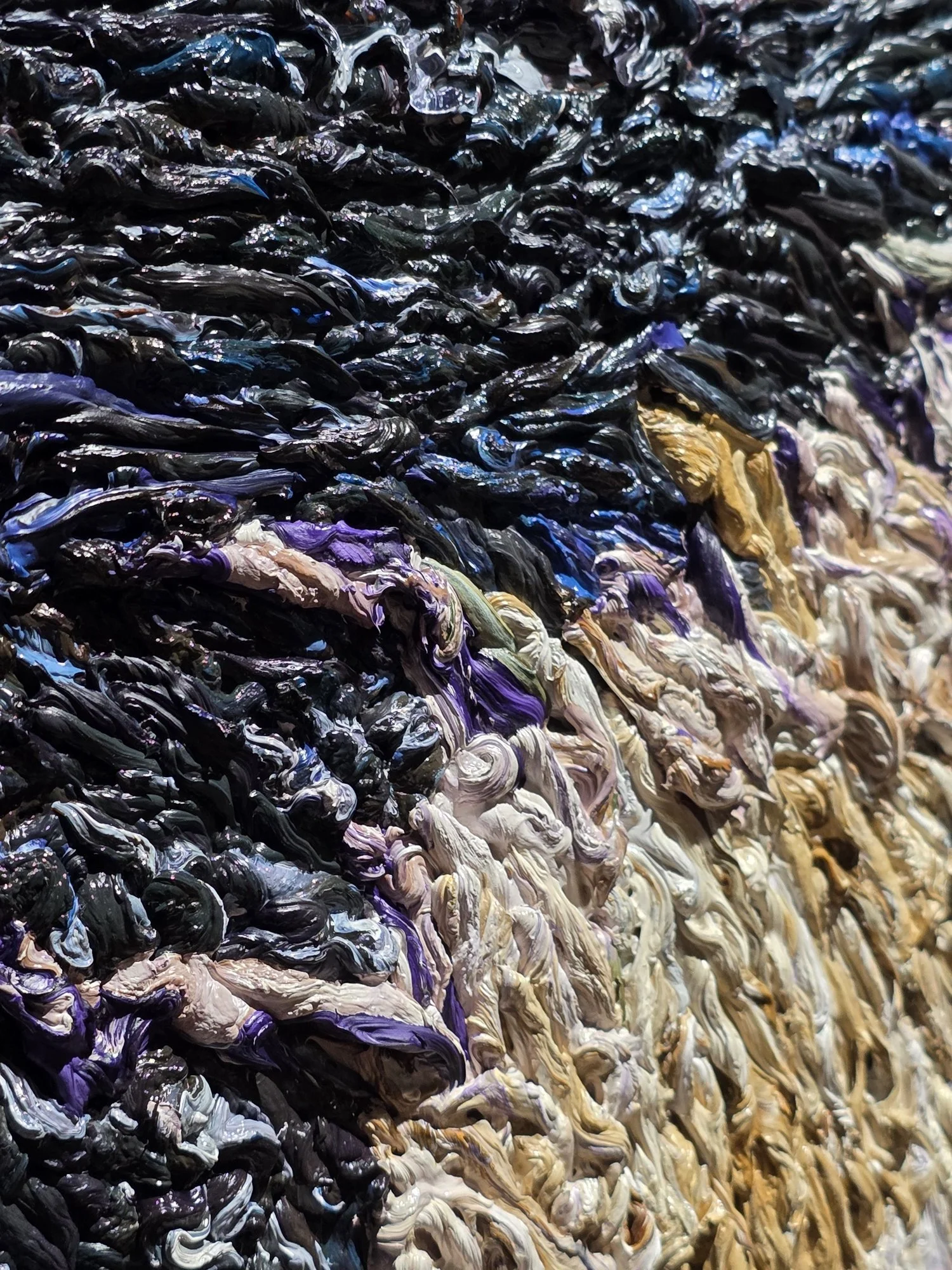
The painting wanted smaller forms. More of them, packed tighter, intentionally pushing toward something hypnotic and chaotic.
Enjoying a painting — seeking out the experience of being in front of an excellent one — isn't exactly akin to seeking entertainment. Perhaps my reader can relate to this: walking through a museum like the Met or the Louvre, filled with incredible paintings, has very little in common with scrolling Netflix while your dinner cools on the table in front of you. Both involve looking at something. Only one of them is asking anything of you.
I paint, and I seek out great painting, for the same reason I want to wake up early to watch a sunrise — there is a fullness there, a spiritual quality, a sensation you can stand inside for a minute. Violet Rapids wanted to be a place you could stand inside but exist in the room with you. Simultaneously.
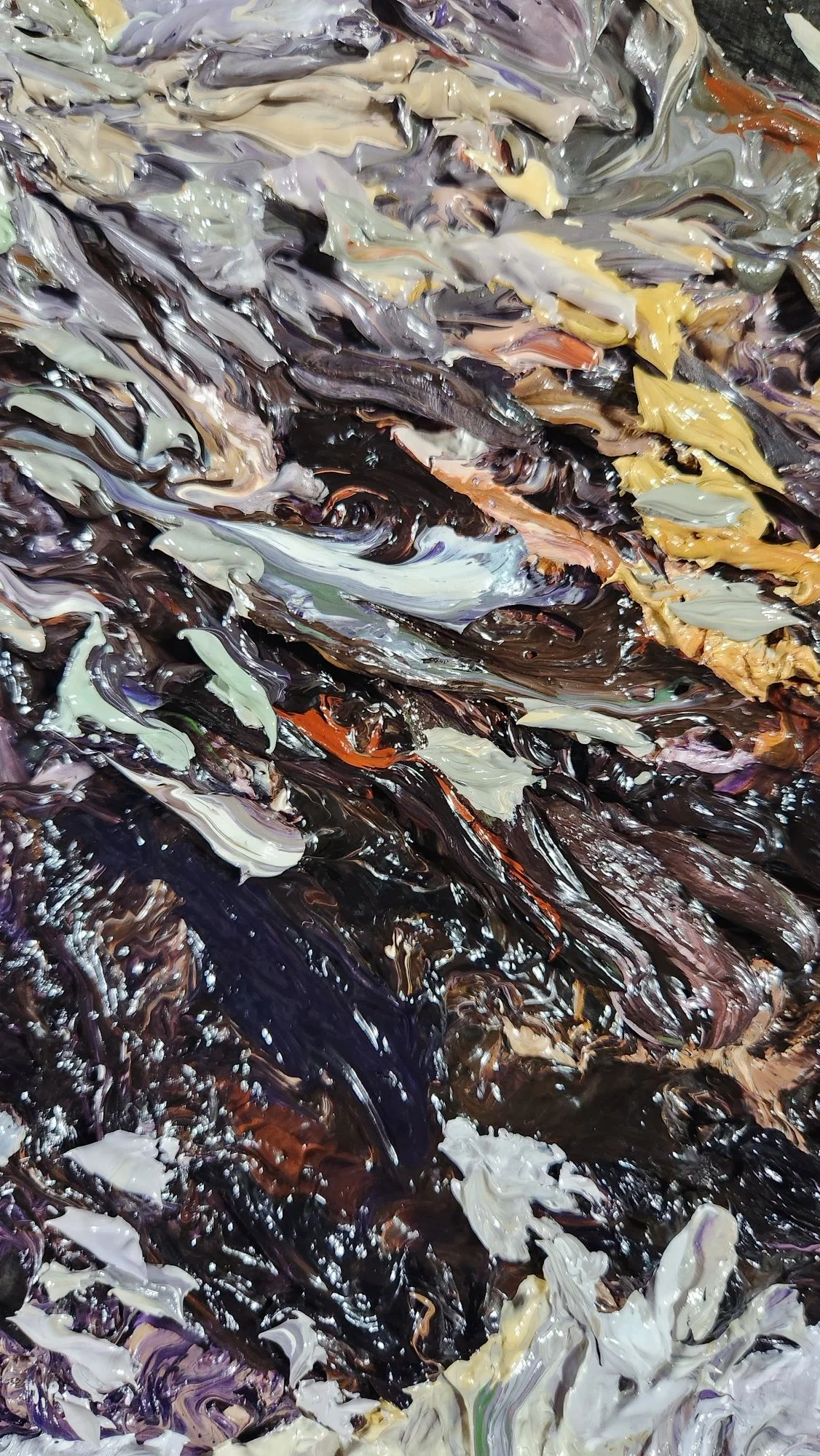
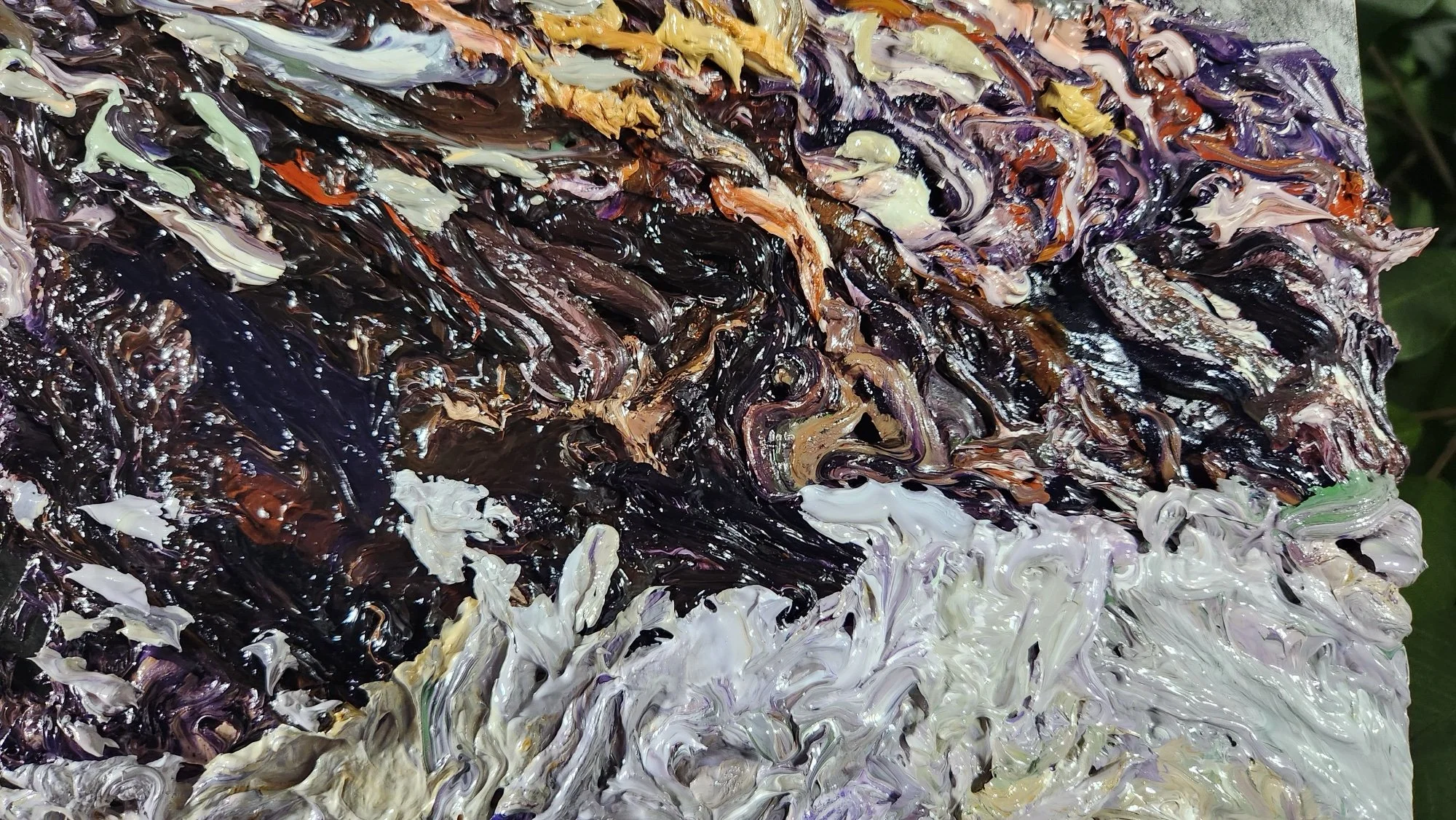
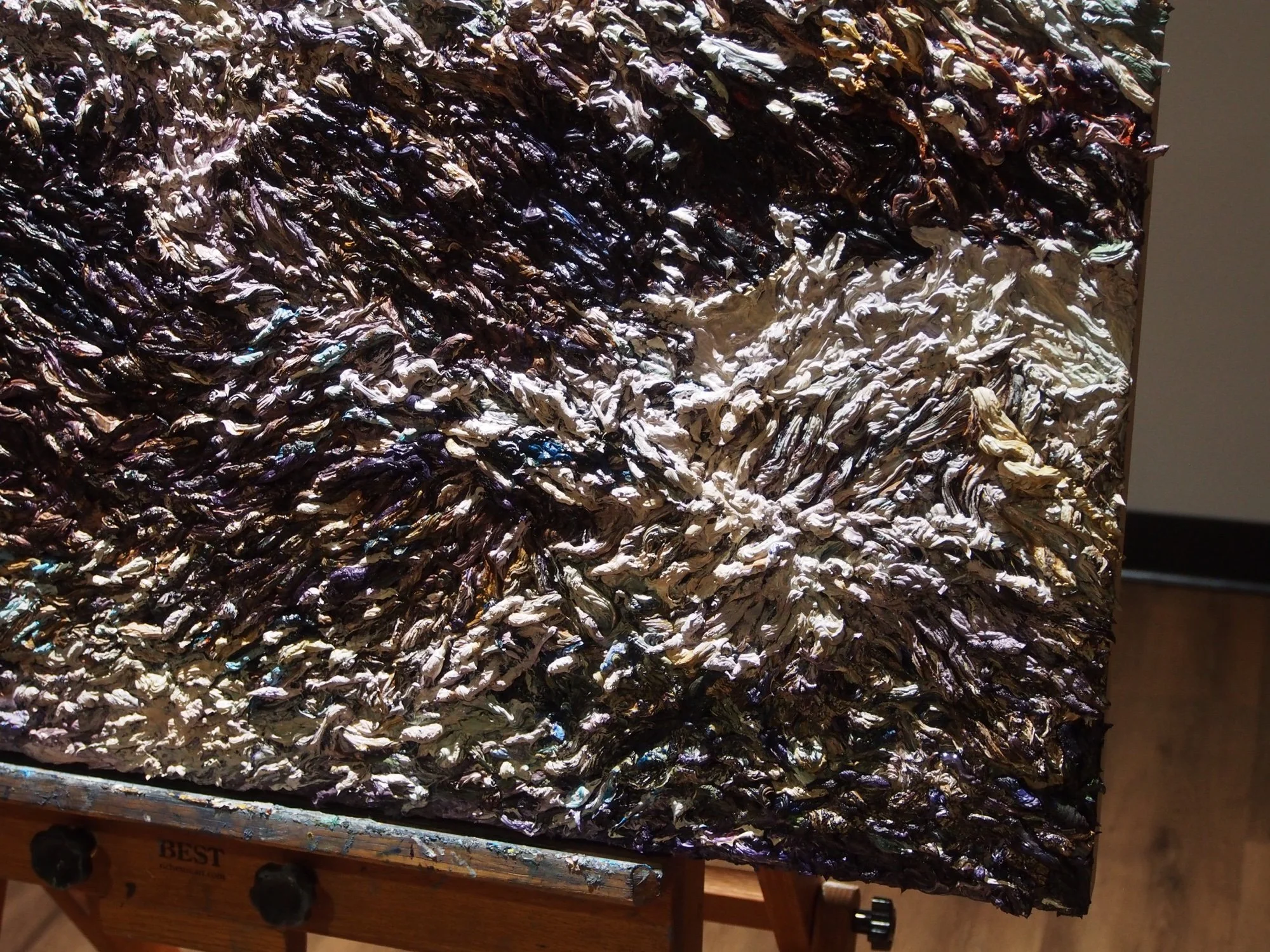
The bold version would have given the viewer a thing to admire. The dense version gives them somewhere to go. You can see what I mean in the lower-right quadrant of the painting, where the smaller forms crowd together against the current — the eye keeps trying to settle on one and slipping to the next, and the slipping is the point. A few large declarative forms in that same passage would have closed the door the painting is meant to leave open.
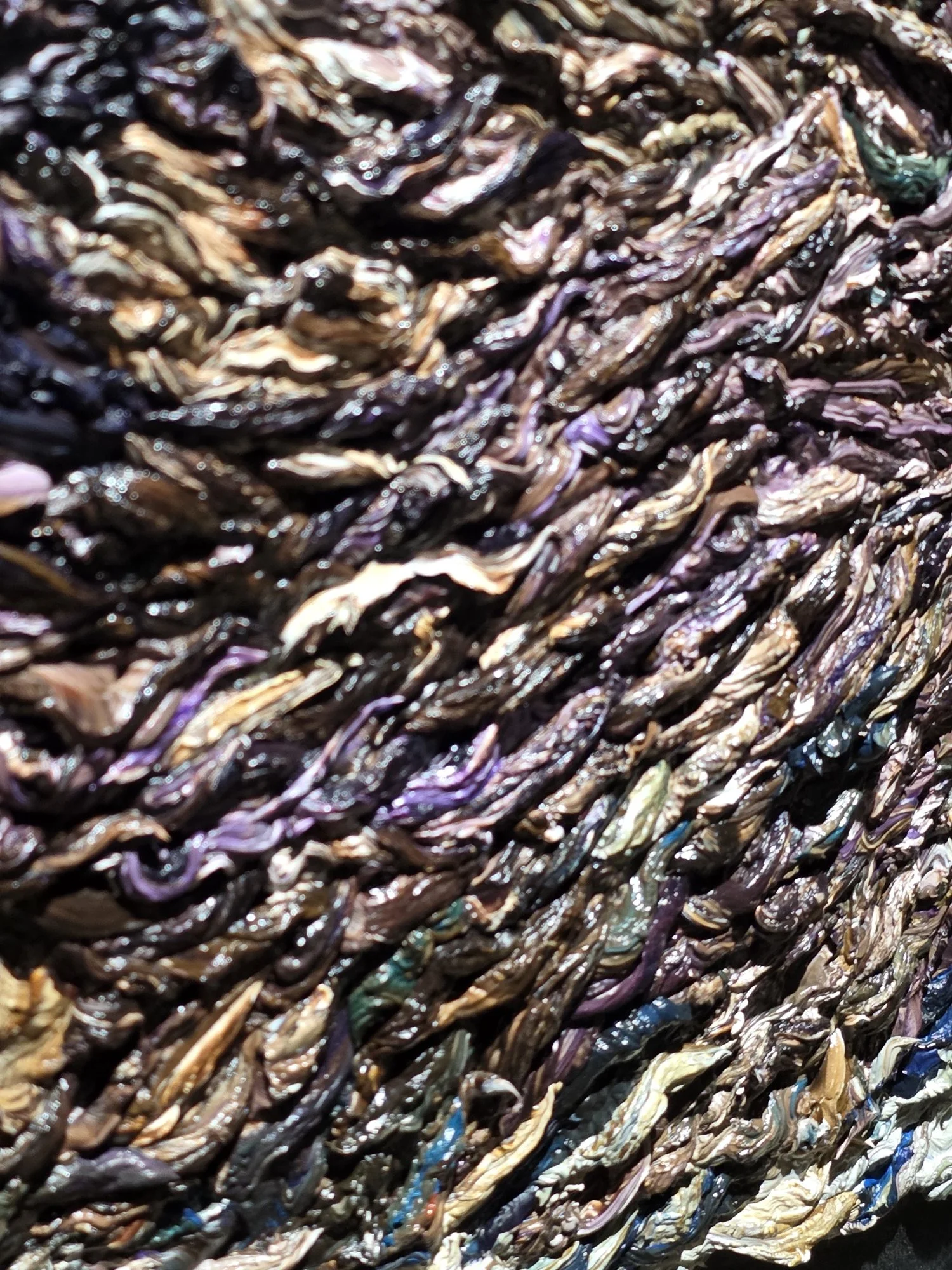
(There were material refusals alongside the formal one. Some of the stolen pieces were dried for weeks before I cut them — those have a thicker, almost plastic-bag quality, and they cast small shadows that make their own color relationships I didn't plan. Other pieces were lifted within a day of being painted, while they were still wet, and those moved and shifted into the sculpt. The dry forms and the wet forms behave like different actors in the play. I had to let them be different. I had to work around what they did.)
What it does up close that it does not do far away
A painting like this should reward two distances and nothing in between. From across the room, the forms cohere — there is a landscape there, water moving through rock. Up close, the landscape disappears and what remains is the texture of dozens of separate small decisions, each preserved with their original surface.
The painting is about spacing out. About losing yourself and rebuilding from the field of what's left. The moments I am most aware that this is happening are the moments I am zoned out — and what Violet Rapids does up close is enhance that condition. It rewards the kind of looking where you've forgotten you're looking.
The flood
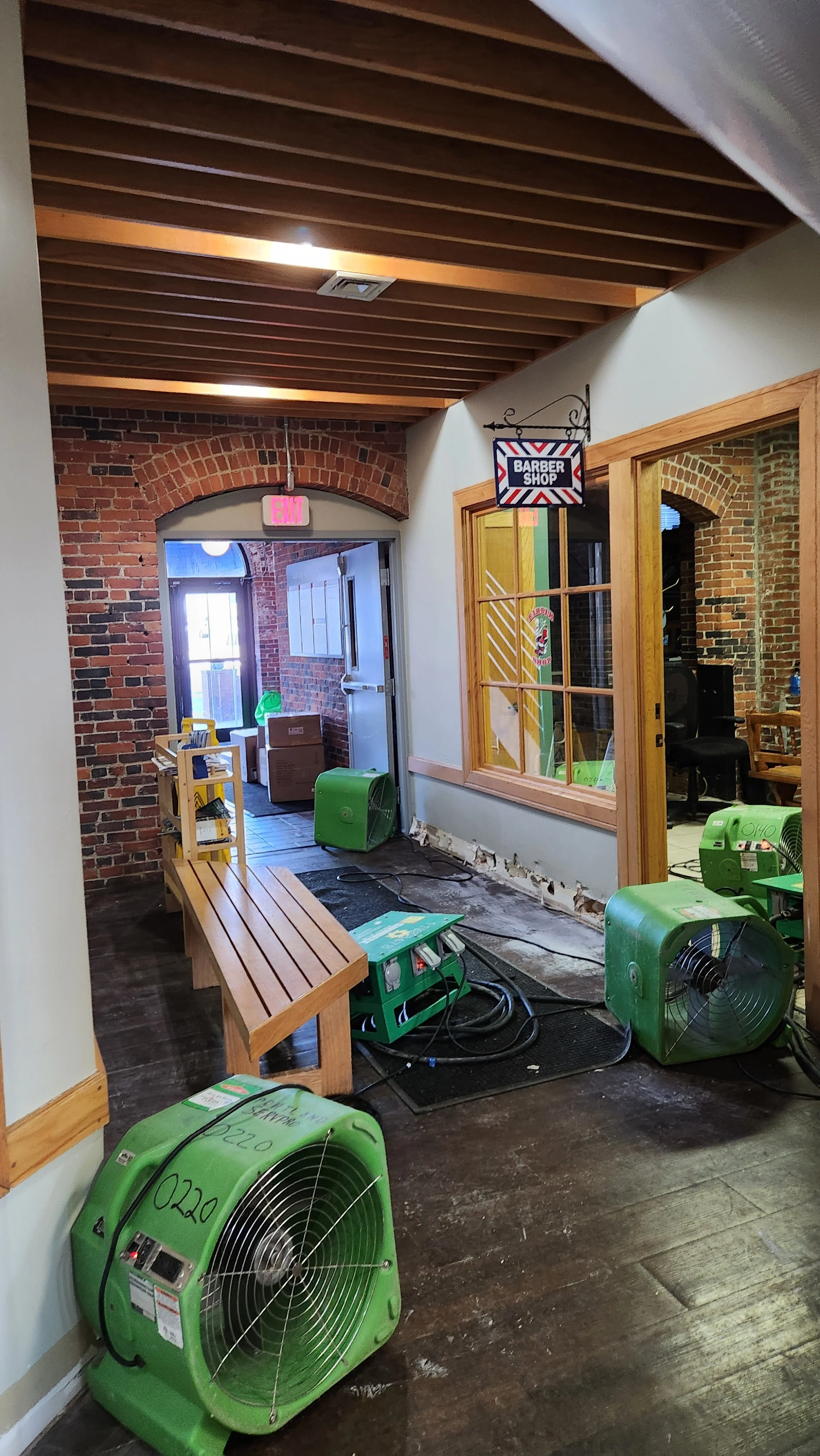
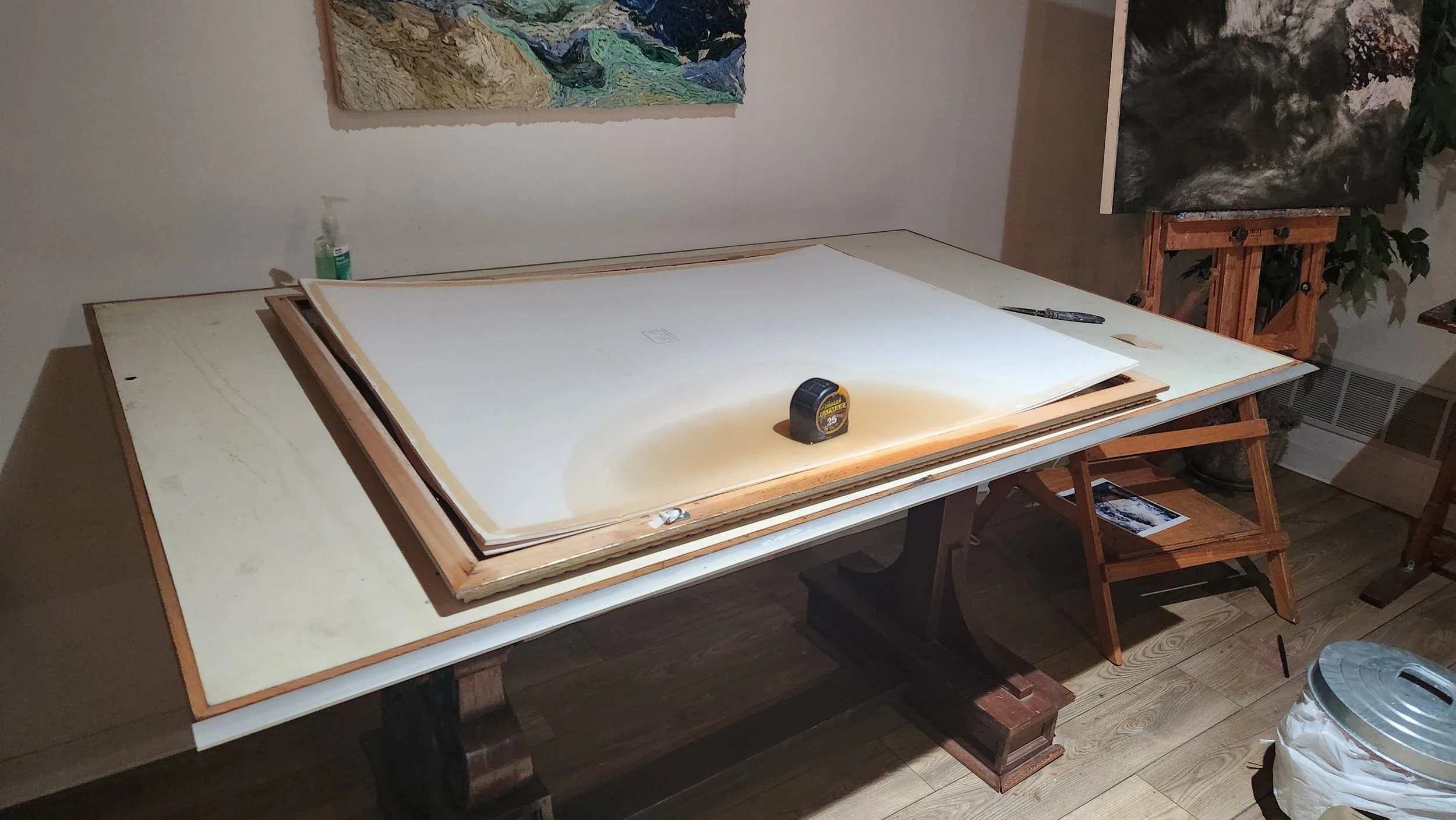
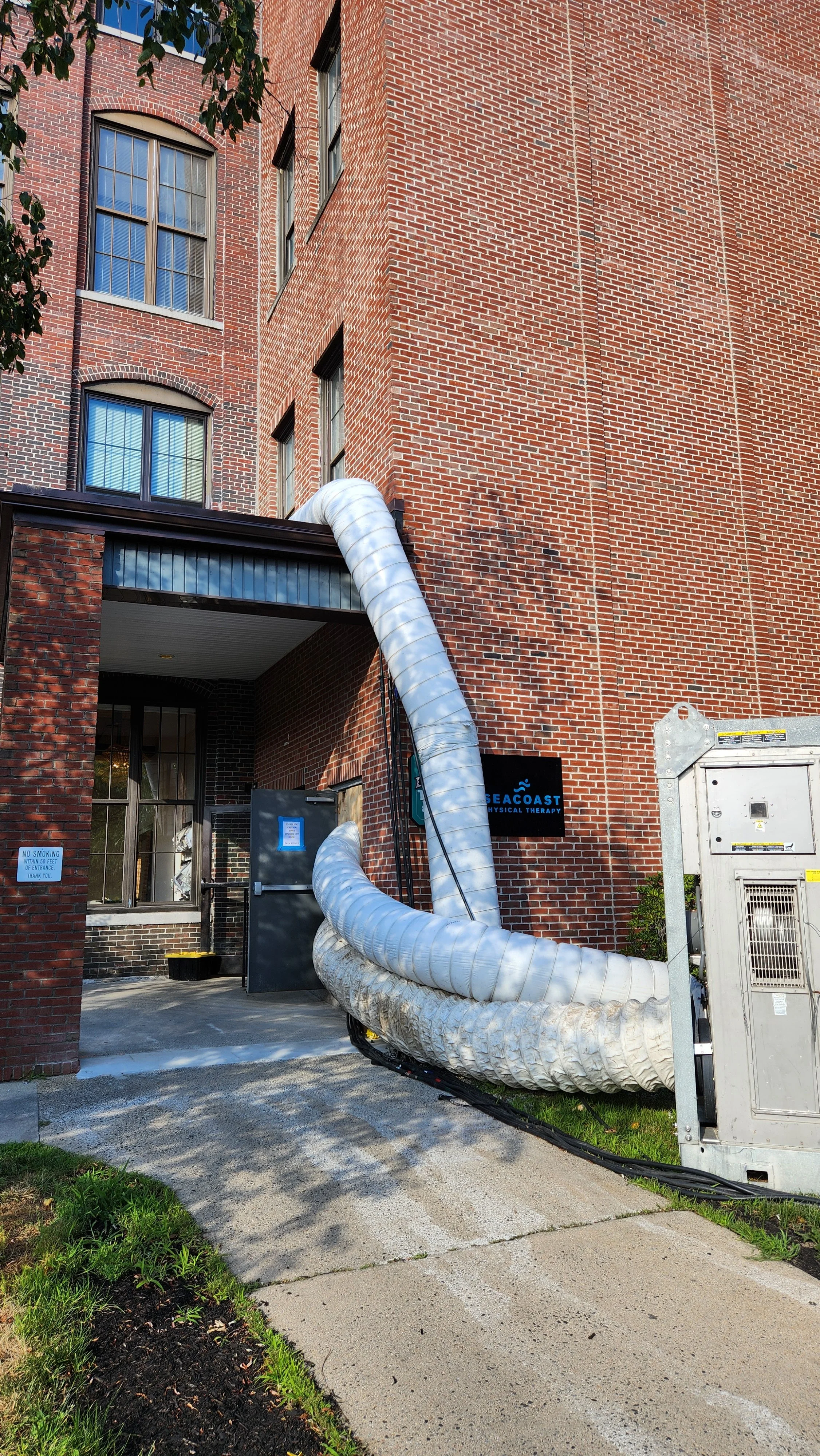
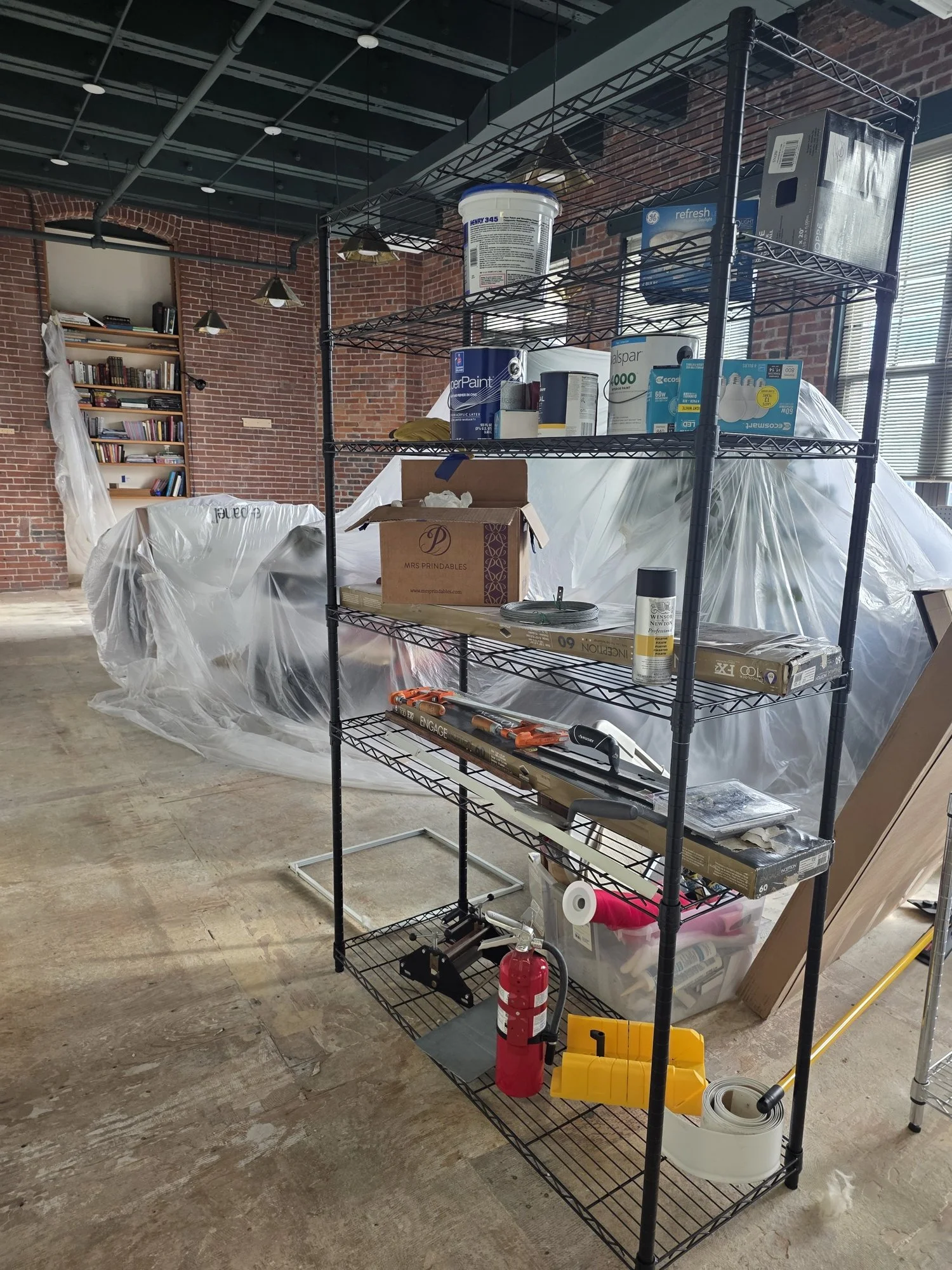
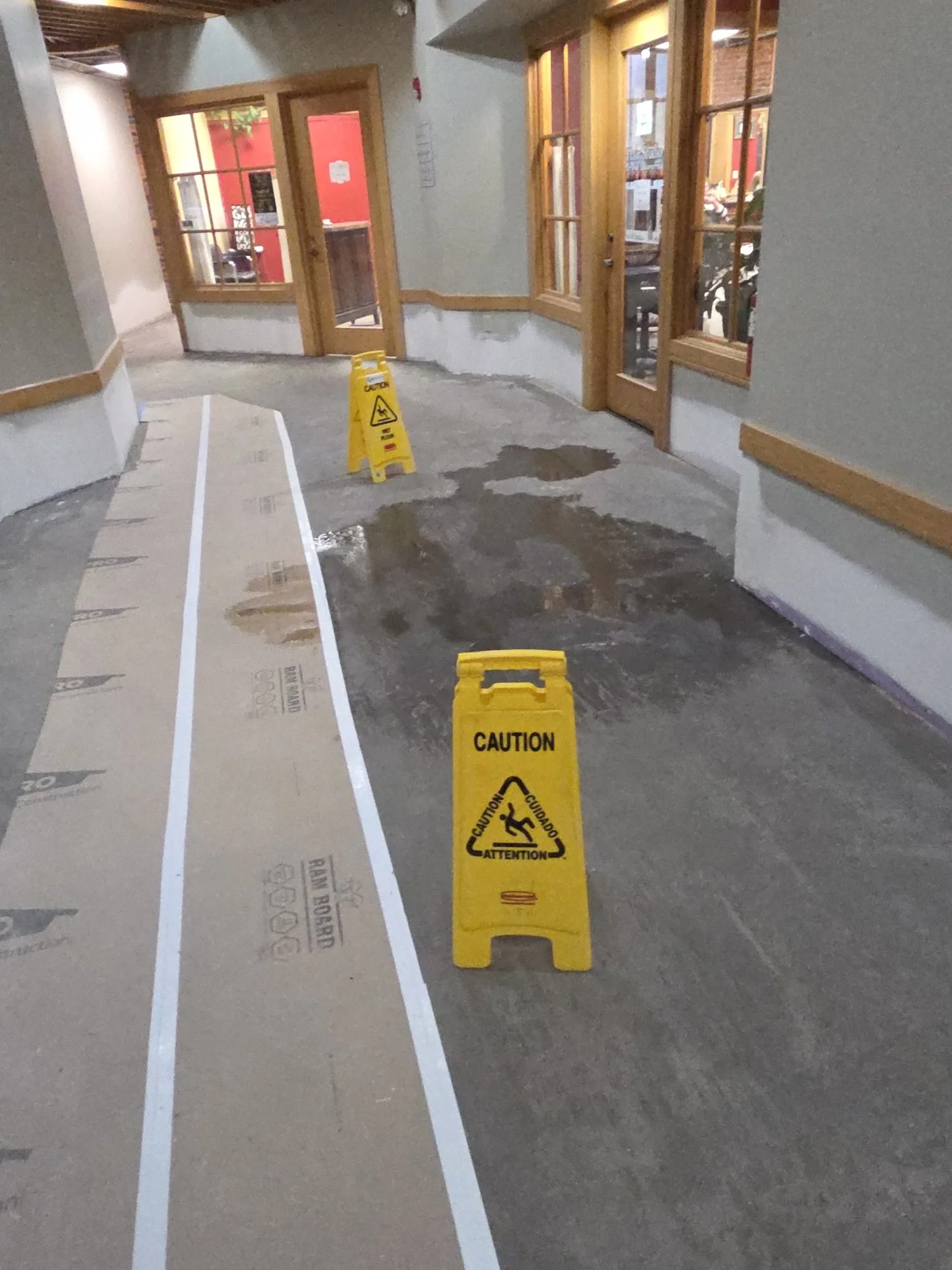
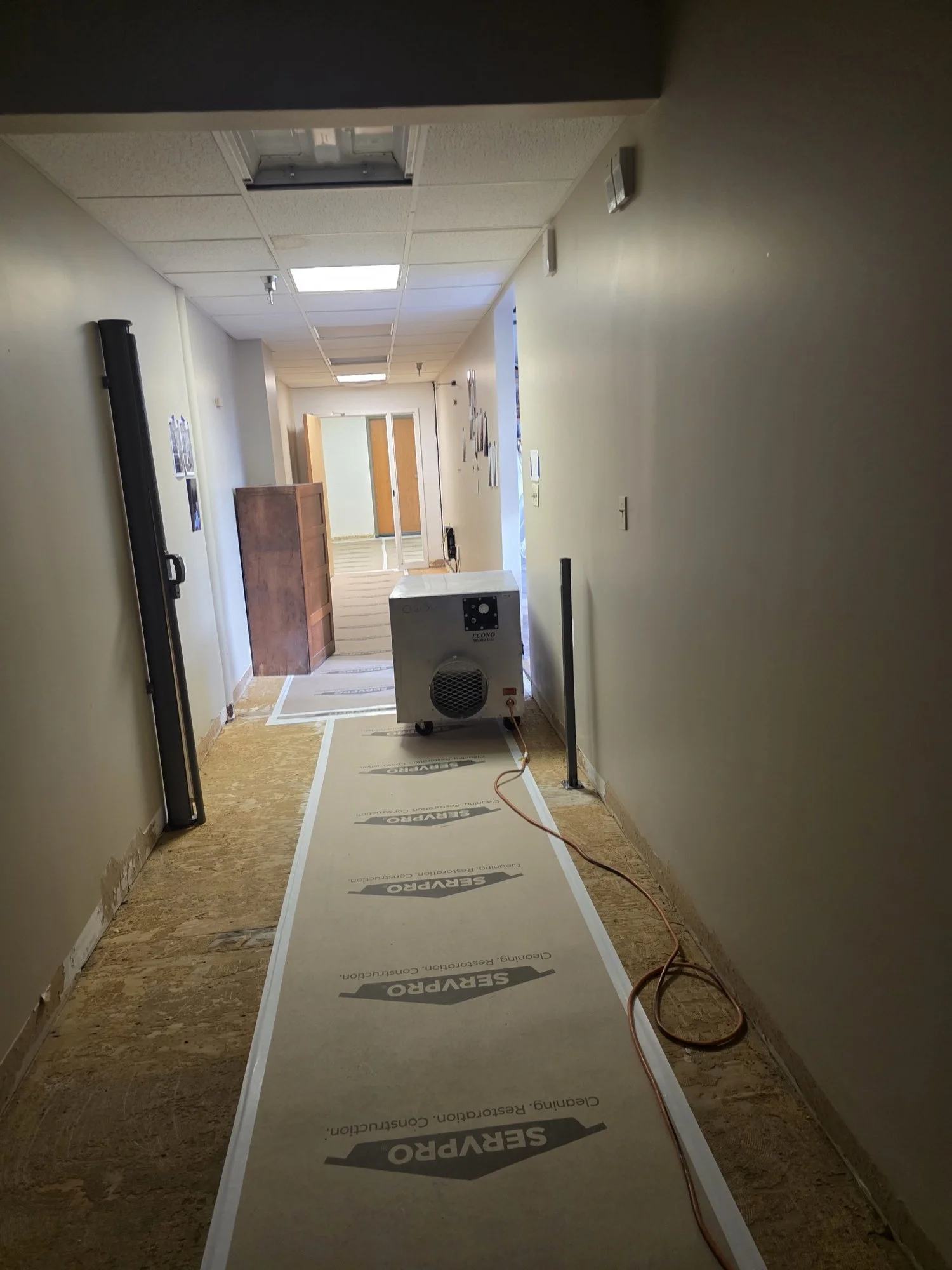
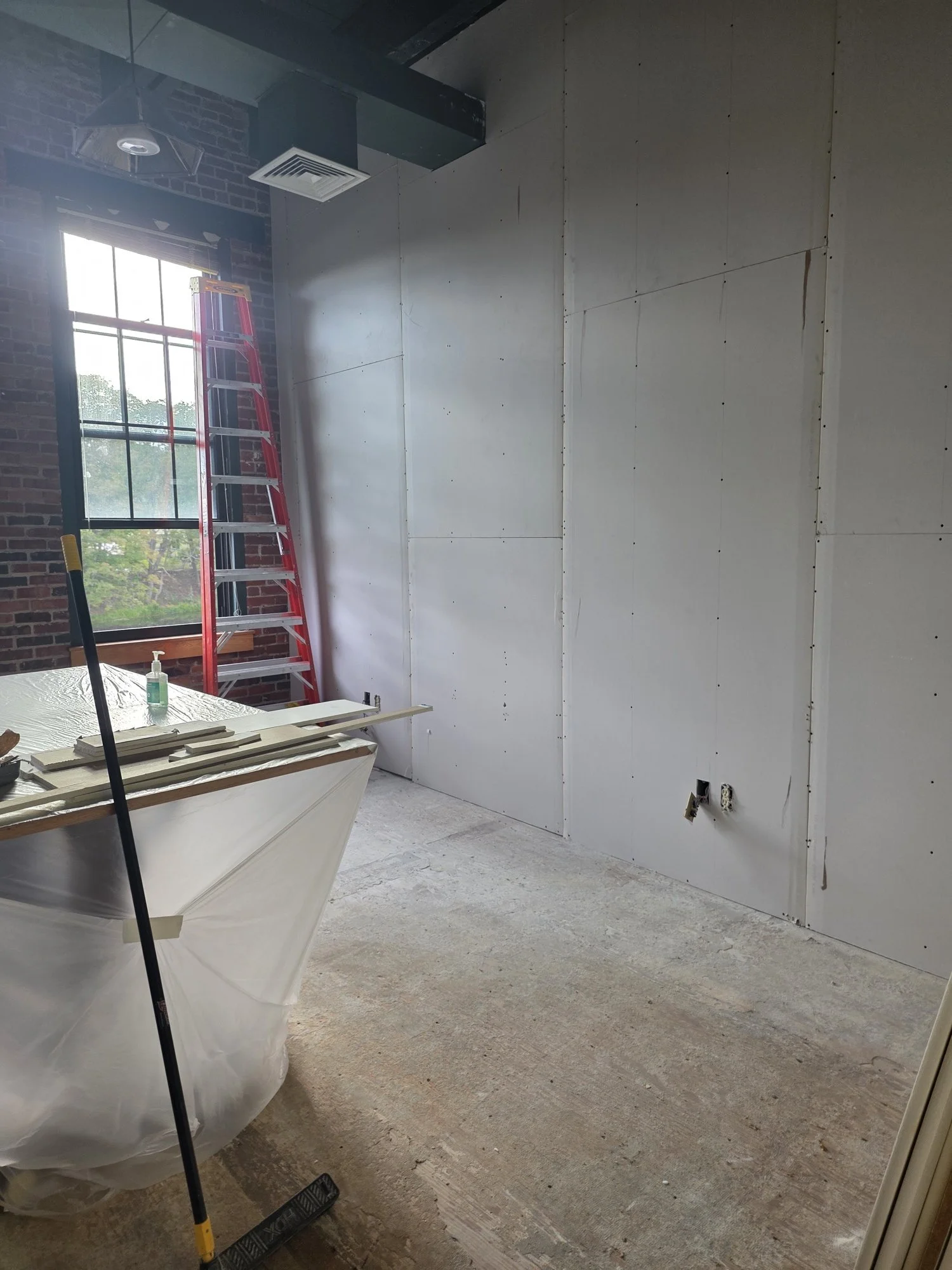
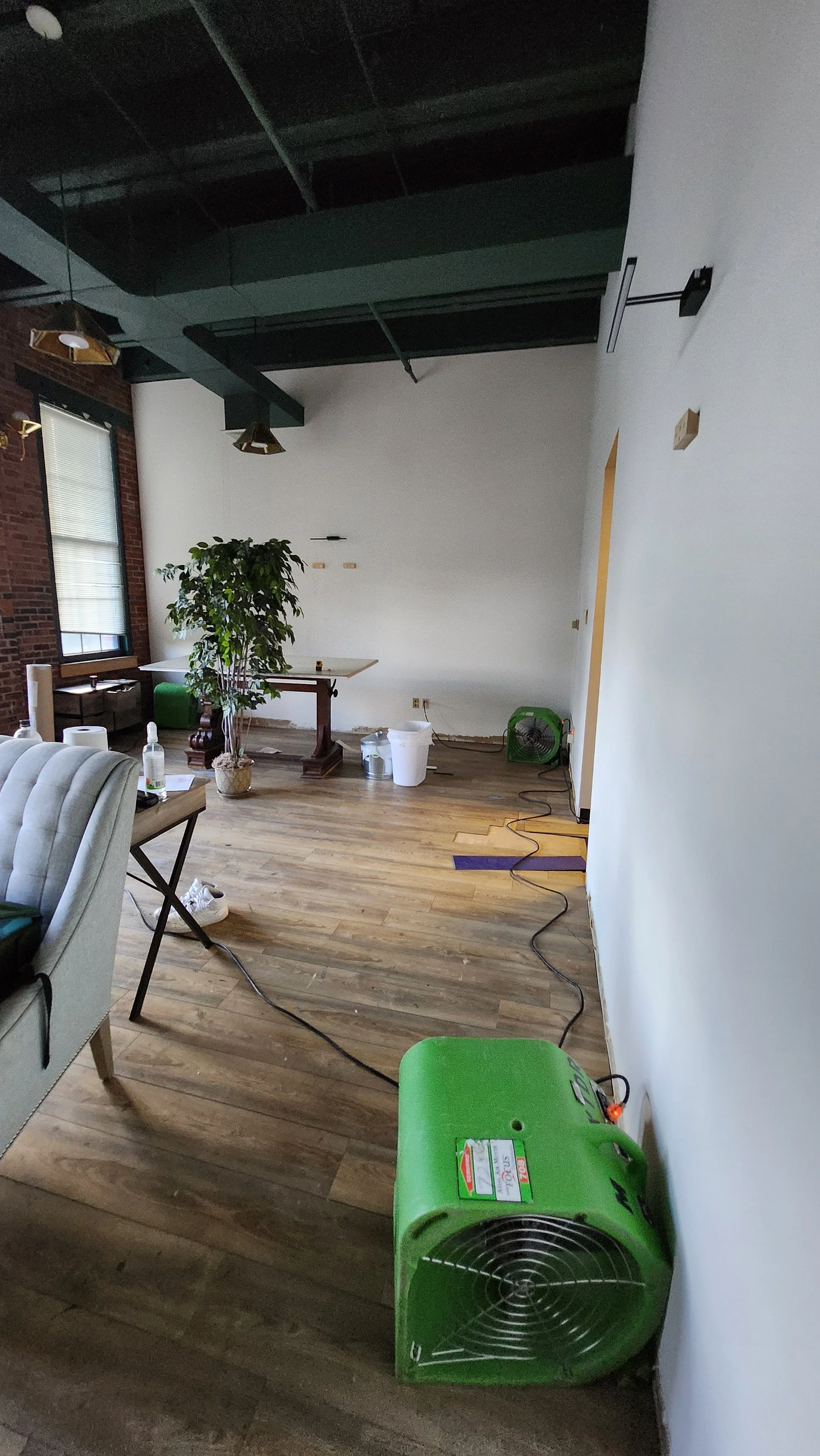
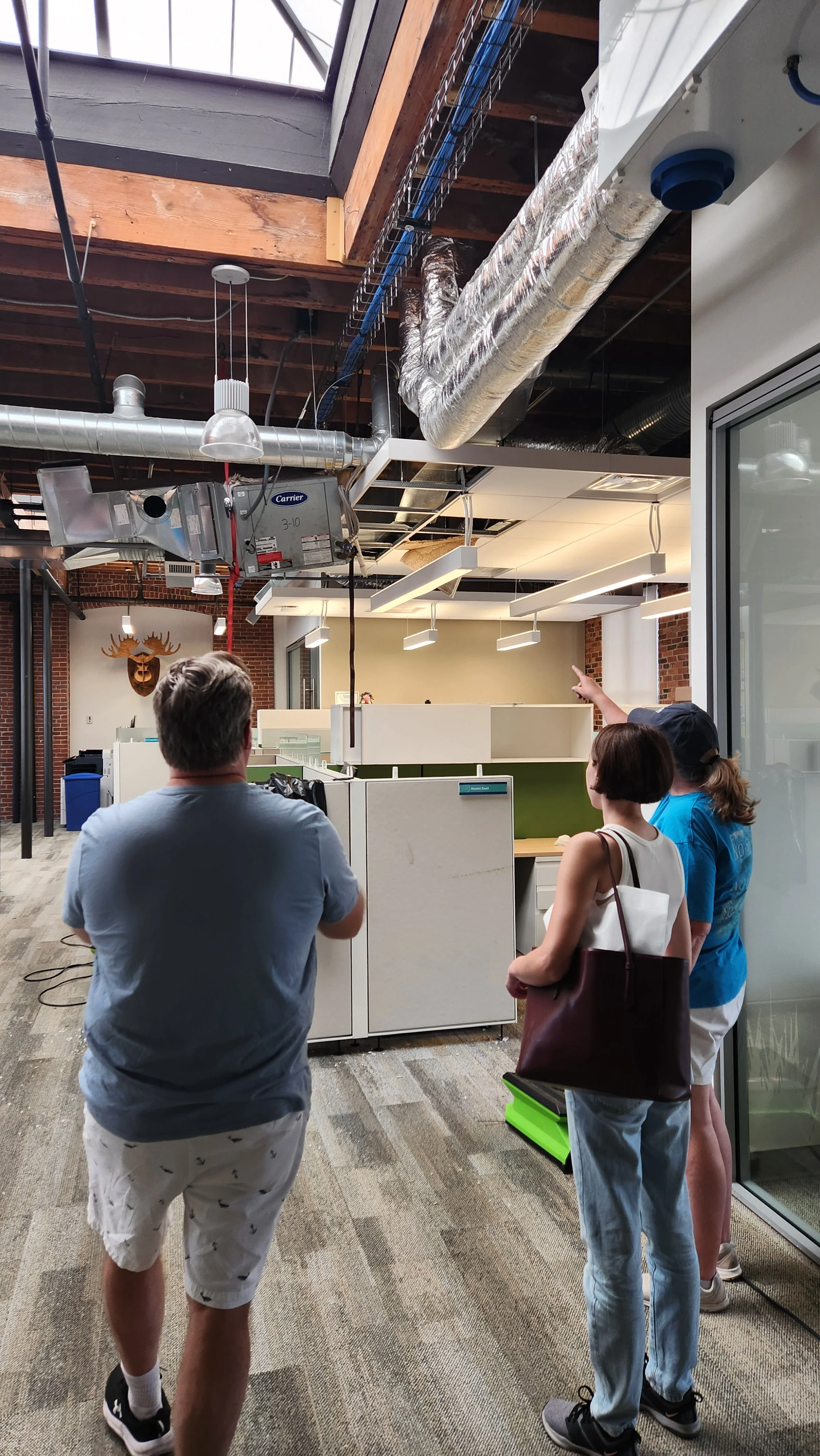
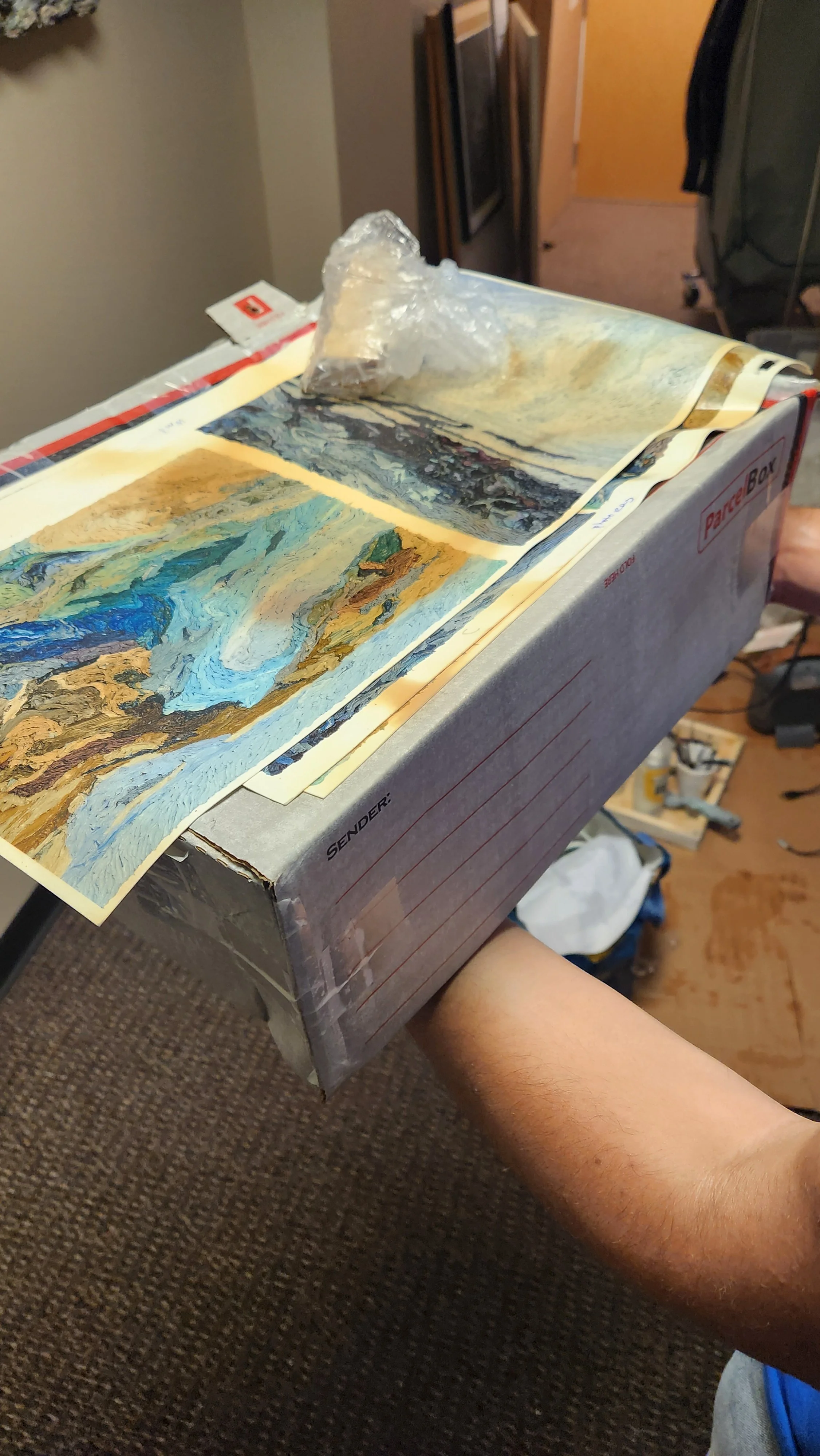
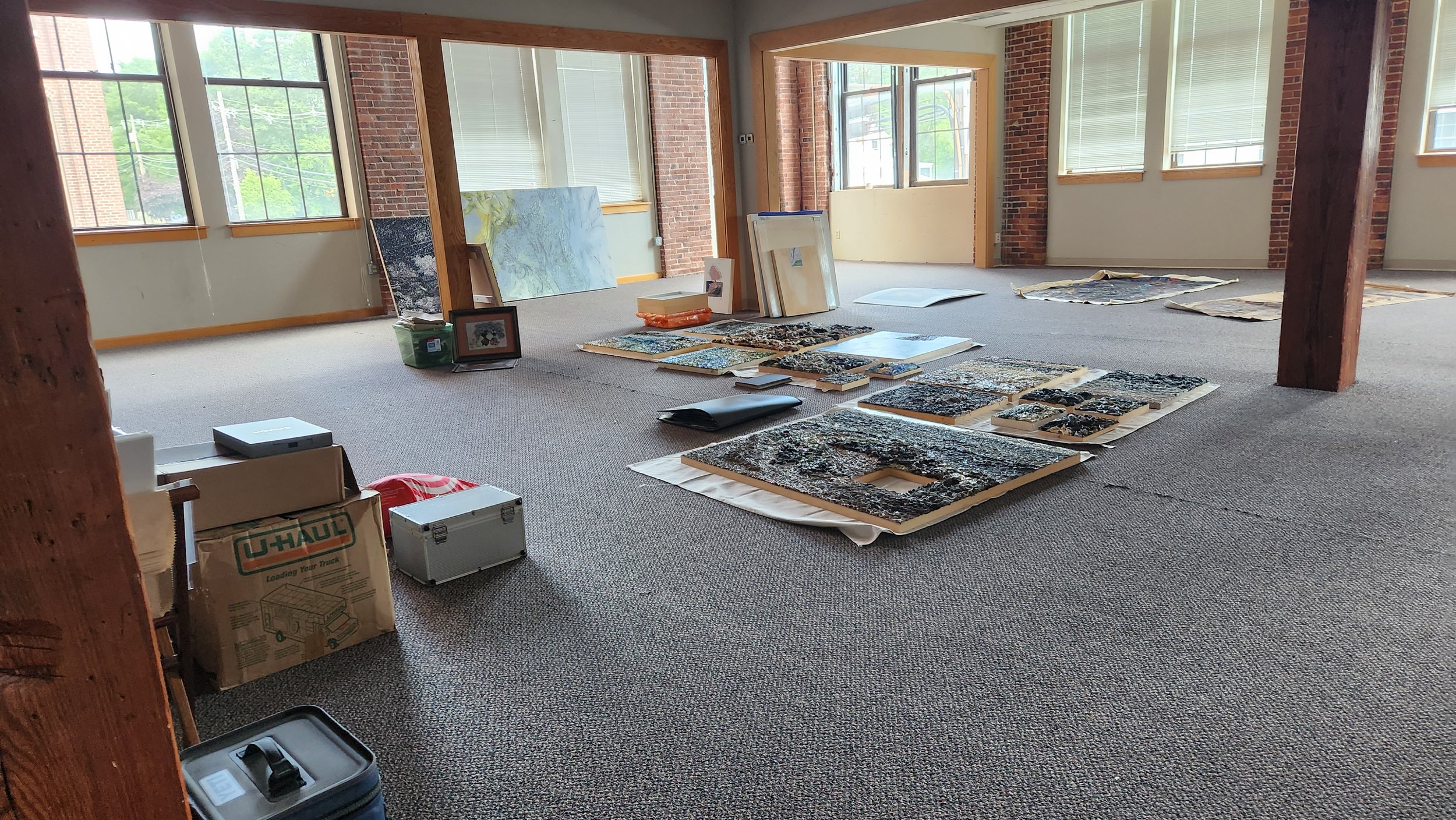
In July 2025, a pipe burst in the floor above my studio. It flooded the wall behind where this painting now hangs. Several works were severely damaged. A significant portion of my storage was destroyed. I was in the building at two in the morning trying to clean it up, looking up at the green-painted ceiling and the cracks where over a hundred years of dust from the old shoe-mill above have been transmuted into mud covering and penetrating the crevices of my paintings.
I wanted to stop. I wanted to let it bury me. The dust and the flood and the long nights were saying, enough now.
What got me through was a small and slightly stubborn idea: that I needed to look back at these years — the long nights, the cleanup, the failure — with fondness. Not because they were good. Because they were mine. I have worked hard to make a space where I can chase my own version of an authentic painting practice, and giving up on that practice in the middle of cleaning up after a flood felt like the wrong story to end with. And I knew, in a way I cannot fully defend, that someone needed this painting. Not in an abstract way. Someone. And the way I knew that was simpler — I needed to know that this painting existed.
I finished Violet Rapids not long after that.
What I want a stranger to take away
I was asked, at the end of the conversation, what would have to be different in someone's life if they watched the whole thing and went back to it unchanged.
I have one sentence.
It is not so simple to sit still.
People know this already. When the overwhelm gets loud, we make a pilgrimage — to the woods, to a trail, to the side of a road, to water. We go looking for a stillness we are pretty sure exists somewhere outside the rooms we work in. Most of the time we are right that it is there. What I have come to observe is that just occupying the place is no longer enough. The stimulus follows us in. Finding the stillness, once we've made the drive, takes work.
That is frustrating, and it is largely outside our control. What I have noticed is that the people who don't give up on the settling are the ones who eventually notice the in-between — a moment, somewhere between arrival at a place and stillness within it, where you are neither still nor hyper-stimulated. A dynamism. An awareness specific to the in-between. It does not last long, and most of us miss it because we are still negotiating with the overwhelm we brought with us.
That is the place I want to paint. The only way I know how to paint it is to build a situation — a method, a series of circumstances — where it can reveal itself.
Violet Rapids is one of those situations.
Not arrival. The opposite of arrival.
A place you keep returning to, and a discipline you keep failing to fully possess.
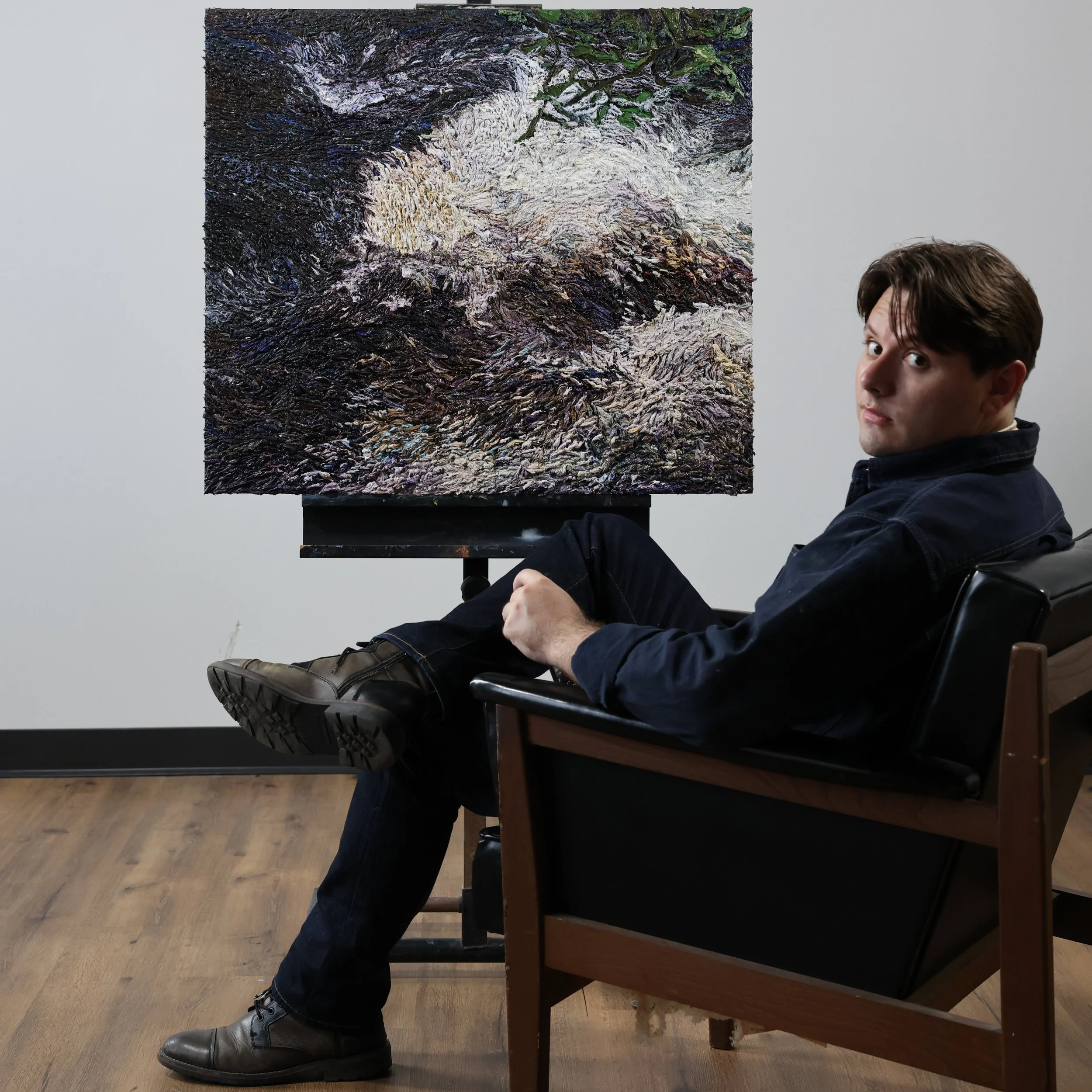
Violet Rapids will be on view at my studio in Kennebunk on the second Friday of June, July, and August, 11am–8:30pm — part of my solo summer exhibition, The Pressure of Looking — Studies in Stillness. Walk in those days, or visit by appointment. Book at majkowski.studio.
If you'd like to know when the next one of these is finished, I write about the work occasionally — sign up for the list below.
For inquiries about availability, write me at majkowski.studio@gmail.com
Violet Rapids, oil on panel, 2025. Studio: Biddeford, Maine. The waterfall is on Route 26 between Paris and Mexico, Maine — the Saco watershed begins not far from there and ends at the sea fifteen minutes from my studio. This work was made on land originally cared for by the Wabanaki peoples, including the Pequawket and Abenaki.
